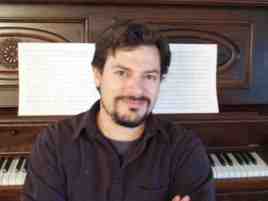
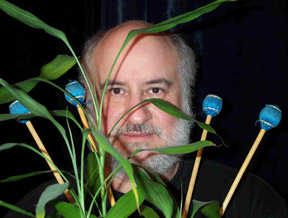
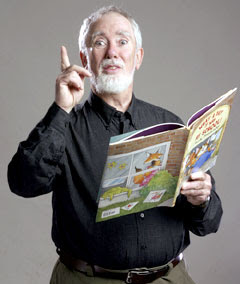
Elliot Moore finds the Longmont Symphony “fun to drive” going into a new season

Opening program features music by Bernstein, Shostakovich and Mahler

By Peter Alexander Oct. 1 at 10 p.m.

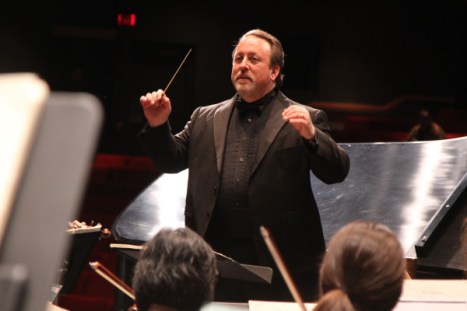
Elliot Moore is energized and inspired as he starts his second year as music director of the Longmont Symphony.
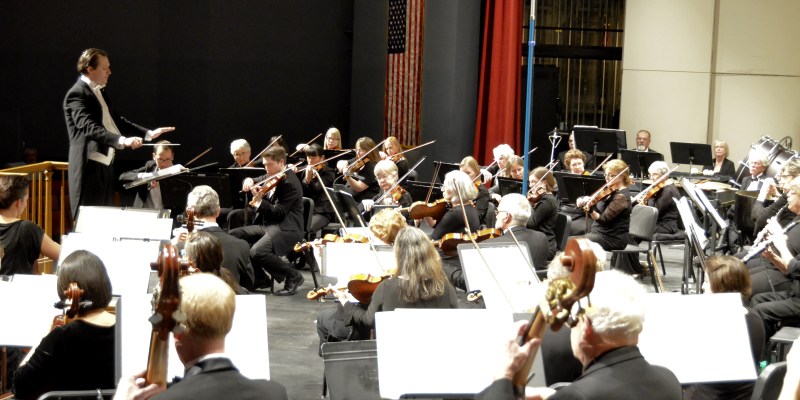
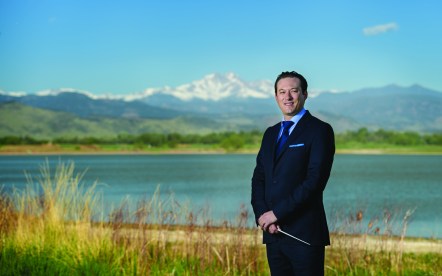
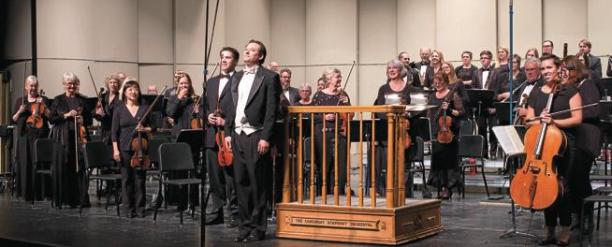
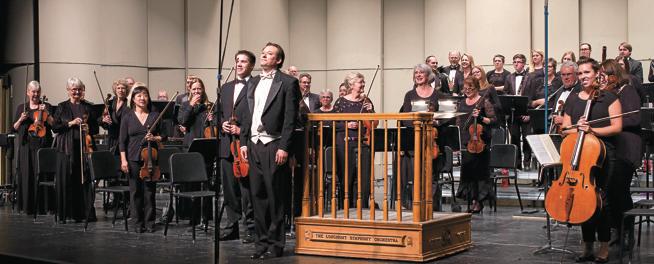
Elliot Moore with the Longmont Symphony 3.smiling_elk

Elliot Moore with the Longmont Symphony

“I often think about conducting an orchestra as like driving a car,” he says, “and the orchestra is really fun to drive right now. How I’m able to do my job as music director has changed in a very positive way, because the level of musicianship continues to ascend.”

For evidence of the change, one need look no further than the recent auditions for places in the LSO, which kept the auditioning committee busy until 1 a.m. “It’s my understanding that we had about a 400% increase in people applying for the Longmont Symphony,” Moore says.

“I think that means that there is excitement about the Symphony, and that people want to take part in it. And it shows that the future of music in Longmont is very, very bright.”

The first concert of the 2018–19 season, a celebration of this year’s Bernstein Centennial, is Saturday (Oct. 6) in Vance Brand Civic Auditorium. Unlike other Bernstein concerts this year, the LSO is not playing any of the well known, popular works that we have heard recently. Instead, they will present one of the great under-appreciated works that Bernstein wrote, the Chichester Psalms.

Other works on the program are pieces by composers that Bernstein was associated with as conductor: Shostakovich’s aptly named Festive Overture, and Mahler’s Symphony No. 1.
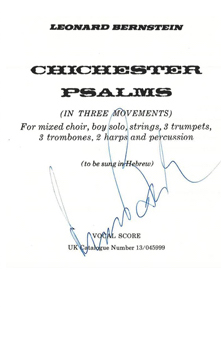
chichester-psalms-1447933896The Chichester Psalms were composed in 1965 for a choral festival at Chichester Cathedral in England. The Hebrew text comes from several of the Psalms, including Psalm 23 (“The Lord is my Shepherd”). The setting is for a small orchestra of brass, percussion, two harps and strings, with a boy soprano, chorus and soloists.

The boy soprano will be Wade Hartrick of the Boulder Children’s Chorale, Kate Klotz, artistic director. The choral voices will be from the Longmont Chorale, Scott Hamlin, conductor.

The Chichester Psalms were written during the Vietnam War, and their call for unity and peace had both religious and political meanings. “One of the things that I find compelling about (the Chichester Psalms) is the overarching message about unity, and how unity is needed in the world,” Moore says.

“It’s beautiful how Bernstein uses melody and harmony to underscore his message, and the need for peace in the world. I find that to be a compelling message on the one hand, and today in our current political climate.”
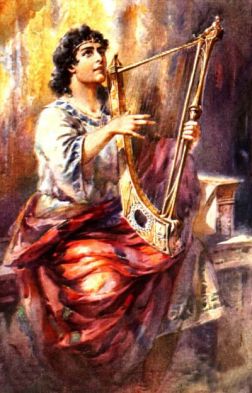
King David

King David as a boy, with harp

The second of the three movements distills Bernstein’s message. It opens with a beautiful melody, the boy soprano singing the 23rd Psalm (“The Lord is my Shepherd”) with harp accompaniment. “The role of the harps is critical because the Psalms were written by King David,” Moore explains. “When David was a boy, he played the harp and sang to King Saul. That’s why there’s a boy soprano accompanied by harps at the beginning of the second movement.”

The melody sung by the boy is taken up by the women of the chorus, who are suddenly interrupted by a violent theme in the men’s voices, singing the 2nd Psalm (“Why do the nations rage”). In the end, the women return with the opening theme, and the two different musical ideas—representing peace and war—are juxtaposed until the end of the movement.

The third movement ends with a moment of hopefulness, as the full chorus sings the 133rd Psalm (“Behold how good and how pleasant it is, for brethren to dwell together in unity”). In a moment of exquisite tone painting, the voices of the choir gently resolve to a single note on the Hebrew word “Yaḥad,” meaning “unity.”

“There’s a lot of tone painting that’s in here,” Moore says. “Its’ a rich, rich score, an absolutely fabulous piece.”

Moore programmed the Shostakovich Festive Overture not only because it is a brilliant concert opener, but because Bernstein programmed and recorded so much of Shostakovich’s music. Shostakovich heard Bernstein performing his Fifth Symphony and other works when the New York Philharmonic toured the Soviet countries in 1959.

Bernstein was known for his flamboyant and exuberant performances, which were not always faithful to the pessimistic side of the Russian composer. “Lenny sometimes did some things in Shostakovich’s music that truly weren’t in the score,” Moore says, “but Shostakovich adored Bernstein.”
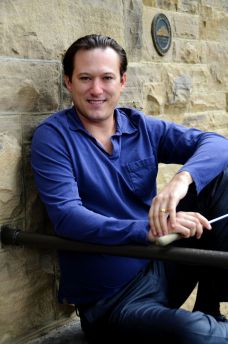
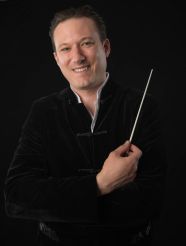
LSO Music Director Elliot Moore 2_preview

Elliot Moore

The programming of the Mahler symphony points to parallels between the two composer/conductors. “My intention was to draw the link between Bernstein and Mahler, both of whom were music directors of the New York Philharmonic,” Moore says. “At the same time I think there’s a subtler message, that conductors have a role in bringing great music to their audiences, and Bernstein did that with Mahler.”

Moore also sees a link to the theme of the entire season of the LSO. which is “Musical Journeys.” “Mahler’s First Symphony is absolutely a musical journey,” he says. Even before the First Symphony, Mahler had written his “Songs of a Wayfarer,” which described the loss of an unrequited love.

“He continues that narrative in the First Symphony, describing how he’s able to overcome (the loss),” Moore says. “He describes a whole journey that is a beautiful one to know about, a beautiful one to learn about, a beautiful one to listen to and experience in the concert hall, with this First Symphony.

“So this symphony goes along with what we are about this season, which is taking people on a journey.”

# # # # #
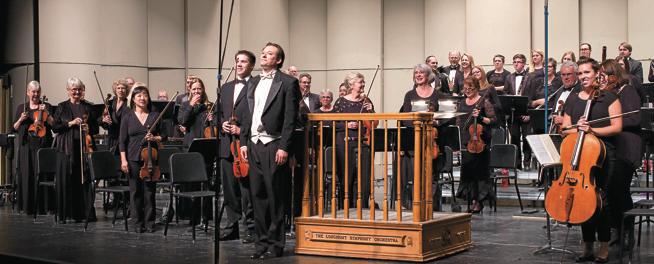
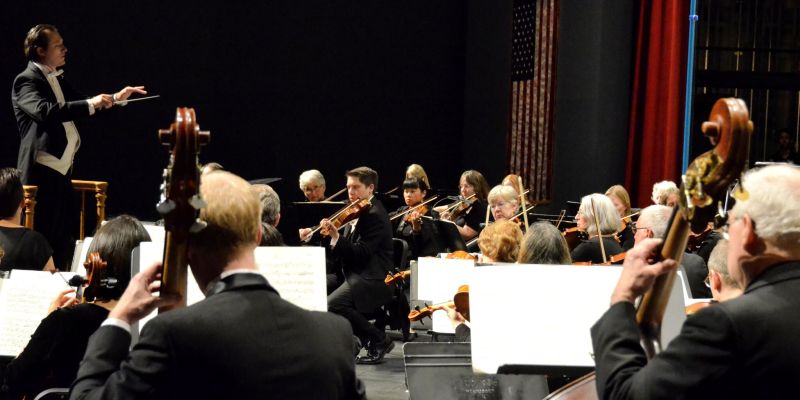
20170927__29AELSO~1

“Happy Birthday, Lenny!”
Longmont Symphony, Elliot Moore, conductor
With Wade Hartrick, boy soprano

7:30 p.m. Saturday, Oct. 6
Vance Brand Auditorium

Shostakovich: Festive Overture
Bernstein: Chichester Psalms
Mahler: Symphony No. 1

Tickets

NOTE: Corrected Oct. 8 to state that Wade Hartrick is a member of the Boulder Children’s Chorale, not the Colorado Children’s Chorale as was originally written.
Longmont Symphony 2018–19: ‘Musical Journeys,’ Beethoven cycle

Season will include Colorado premieres and two chamber orchestra concerts

By Peter Alexander May 18 at 12:40 a.m.

The Longmont Symphony Orchestra, going into its second season with new conductor Elliot Moore, is aiming high.

20170927__29AELSO~1

Elliot Moore and the Longmont Symphony Orchestra

Moore’s first season was both financially and artistically successful. Building on that, the LSO has added a second chamber orchestra concert featuring classical-era repertoire at the Stewart Auditorium, and has included ambitious repertoire through the season (see the full listing below).

Elliott.Moore.2

Elliot Moore (Digital Lane photography)

“Our audience is telling us that they want more,” Moore says. “The players have proven that they are capable of playing some really fantastic pieces that are very challenging, and doing it at a very high level. We’ve certainly seen that this year.”

The theme of “musical journeys” can be interpreted in more than one way for the coming season. For example, there are a number of pieces that are inspired by or reflect specific places or scenes, including Debussy’s evocation of the sea in La Mer, Smetana’s depiction of a voyage down Bohemia’s Vltava river in The Moldau, and Samuel Barber’s nostalgic recollection of lazy summer nights in Knoxville: Summer of 1915.

But Moore is thinking in broader terms, too. The season’s second main series concert (Nov. 10) celebrates Longmont’s sister city Chino, Japan, by featuring pianist Taka Kigawa—a Juilliard-trained pianist from Chino—as soloist. The same program also celebrates the journey of musical influences across cultures: Kigawa will play Ravel’s Piano Concerto in G, which was influenced by American jazz; the orchestra will play the Colorado premiere of How to Relax with Origami by Boulder-based composer Conor Abbott Brown, a piece obviously reflecting on Japanese culture; and the concert will conclude with La Mer, which was partly inspired by a famous woodcut by Japanese artist Hokusai that Debussy owned.

Christie-Conover-cropped

Christie Conover

There are journeys around America on the season as well. The third concert (Feb. 23, 2019) includes Copland’s familiar music from Rodeo and Libby Larsen’s Cowboy Songs, along with Knoxville: Summer of 1915 and the Colorado premiere of Robert Kurka’s Symphony No. 2. Soprano Christie Conover will be the soloist.

The first concert of the season will be a tribute to Leonard Bernstein—celebrating the 100thanniversary of his birth—including  a performance of his Chichester Psalms with the Longmont Chorale and boy soprano Wade Hetrick. Composers that Bernstein particularly championed will fill out the program with Shostakovich’s Festive Overture and Mahler’s Symphony No. 1.

It turns out that the LSO has already embarked on a musical journey. Their “Museum Concert” in the Stewart Auditorium this past April included Beethoven’s First Symphony. Moore has now announced that was the beginning of a cycle of all nine Beethoven symphonies, to be completed over a 4- or 5-year span. The second of the coming season’s Museum Concerts, April 14, 2019, will add the Second Symphony to the cycle.

Both the Beethoven cycle and the expansion of the chamber orchestra series at the Stewart Auditorium are important parts of Moore’s vision for the orchestra. For 2018–19 there will be two Museum Concerts—Oct. 21 with music of Haydn, Mozart and Richard Danielpour; and April 14, 2019, with music of Beethoven and Shostakovich—and for the following year, three.

IMG_0633

Stewart Auditorium. Photo by Peter Alexander.

“Making sure that we have time to delve into the performance of the classical style” with the chamber orchestra is a part of Moore’s vision, he says. “The orchestra really responded well to learning about that style [this past year], and that will serve us well as we go forward.”

Moore acknowledges that he has not shied away from programming difficult music. “There are certainly aspects that are challenging in this season, but I don’t think it’s that much more challenging,” he says. “They are all programs that the orchestra will sound really great on, that they are able to shine.”

Mahler’s First Symphony and La Mer are two works that give the orchestra the opportunity to shine, but the greatest challenge will come with the last of the main series concerts (April 6, 2019), when Moore has programmed The Moldau, Tchaikovsky’s Violin Concerto with soloist Sharon Roffman, and notably, Bartók’s Concerto for Orchestra.

“I’m excited that as our final masterwork we have a work that features all the wind soloists as well as different sections throughout the entire orchestra, and shows the strength of our Longmont Symphony musicians,” Moore says.

In addition to the four main series concerts of orchestra masterworks and the two Museum Concerts, the season will include a Pops Concert, a Family Concert, the usual Nutcracker performances with Boulder Ballet, and the Candelight Concert of holiday music (see all dates below).

Six‐concert subscription packages go on sale on Monday, May 21. Call 303‐772‐5796, 10 a.m.­ to 4 p.m. Mondays, Tuesdays and Thursdays, or 9 a.m.to 3 p.m. Fridays. The office is closed on Wednesdays.

Series package buyers receive 20% off single ticket prices. Single tickets for Main Series concerts are $25 for adults, $22 for seniors and active military, $5 for students age 12–18 ($10 for the pops concert), and free for age 11 and under. Single tickets go on sale on Monday, Aug. 27 via phone and here.

# # # # #

LONGMONT SYMPHONY ORCHESTRA
201819 SEASON
MUSICAL JOURNEYS

CONCERT IN THE PARK

Longmont Youth Symphony, Longmont chorale, Longmont Symphony
11:30 a.m. Wednesday, July 4, 2018
Thompson Park, 420 Bross Street, Longmont
Free and open to the public

MAIN SERIES CONCERTS
All concerts in Vance Brand Auditorium at Skyline High School,
600 East Mountain View Ave., Longmont
Elliot Moore, conductor

Opening Night: Happy Birthday, Lenny!
Longmont Chorale, with Wade Hartrick, boy soprano|
Shostakovich: Festive Overture
Bernstein: Chichester Psalms
Mahler: Symphony No. 1, “Titan”
7:30 p.m. Saturday, Oct. 6

taka-Ruby Washington:The New York Times

Taka Kigawa. Ruby Washington/The New York Times

A Cultural Affair
With Taka Kigawa, piano
Conor Abbott Brown: How to Relax with Origami (Colorado Premiere)
Ravel: Piano Concerto in G Major
Debussy: La Mer
7:30 p.m. Saturday, Nov. 10 

Sounds of America
With Christie Conover, soprano
Robert Kurka: Symphony No. 2 (Colorado Premiere)
Samuel Barber: Knoxville: Summer of 1915
Libby Larsen: Cowboy Songs
Copland: Rodeo
7:30 p.m. Saturday, Feb. 23

DSC_3356

Sharon Roffman

Tchaikovsky Violin Concerto
With Sharon Roffman, violin
Smetana: The Moldau
Tchaikovsky: Violin Concerto
Bartók: Concerto for Orchestra
7:30 p.m. Saturday, April 6

Pops Concert: The LSO in Space!
Celebrating 60+ years of spaceflight in the auditorium named after astronaut Vance Brand, including film music from Star Wars and E.T. as well as Holst’s The Planets and Strauss’ Also Sprach Zarathustra.
7:30 p.m. Saturday, May 11 

MUSEUM CONCERTS
Stewart Auditorium, Longmont Museum
Elliot Moore, conductor

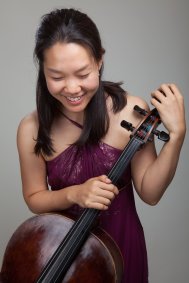
Alice+VIII_1

Alice Yoo

Haydn & Mozart
Longmont Symphony Chamber Orchestra
With Alice Yoo, cello
Richard Danielpour: Lacrimae Beati
Haydn: Cello Concerto No. 1
Mozart: Symphony No. 41 in C major, K551 (“Jupiter”)
4 p.m. Sunday, Oct. 21

Beethoven Cycle
Longmont Symphony Chamber Orchestra
Beethoven: Overture to Egmont
Shostakovich: Chamber Symphony, Op. 110a
Beethoven: Symphony No. 2 in D major, op. 36
4 p.m. Sunday, April 14 

HOLIDAY EVENTS

The Nutcracker with the Boulder Ballet
Elliot Moore, conductor
4 p.m. Saturday, Dec. 1 and 2 p.m. Sunday, Dec. 2
Vance Brand Civic Auditorium, Longmont 

Candlelight Concert
Longmont Symphony Chamber Orchestra with the Longmont Chorale Singers
Elliot Moore, conductor
Schubert: Mass in G Major
Carols from around the world
4 p.m. Sunday, Dec. 16
Westview Presbyterian Church, Longmont

FAMILY MATINEE CONCERT

Elliot Moore, conductor
With the Longmont Youth Symphony
Young Artist Competition Winner, TBA
Erik Kroncke, bass‐baritone
Tchaikovsky: Symphony No. 5 (Finale)
Michael Close: A Child’s Book of Animals (World Premiere)
4 p.m. Saturday, Jan. 19
Vance Brand Civic Auditorium

For more information and tickets, click here.

Longmont Symphony offers “spectacularly beautiful music”

“Tales from the Sea” features pieces by Mendelssohn, Elgar and Rimsky-Korsakov

By Peter Alexander April 3 at 5:10 p.m.

One of the things Elliot Moore has heard most about since becoming conductor of the Longmont Symphony is the 2013 flood.

FLOODING

2013 Flood in Longmont (Matthew Jonas/Times-Call)

Moore was first interviewed for the position with the LSO in November of 2016 and he was hired the following spring. The current 2017–18 season is his first with the orchestra.

“I heard over and over that the flood of 2013 was a pivotal moment for Longmont,” he says. “Hearing so many stories about the flood, and how it’s still affecting life today, was the impetus behind this program. Because everyone had a story about the flood, I thought a program around water stories would speak to a Longmont audience.”

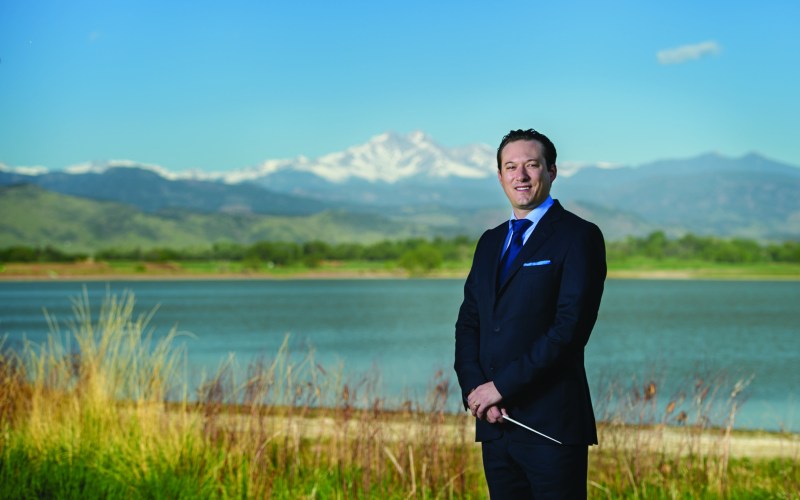
Elliot Moore at Lake McIntosh - credit - Photography Maestro (1)

Elliot Moore. Photo by Photography Maestro

The program in question will be performed 7:30 p.m. Saturday (April 7) in Vance Brand Auditorium. There are many pieces of music about water, but Moore decided on two short pieces before intermission, and one longer one after: Mendelssohn’s overture The Hebrides to open the concert; Sea Pictures by Edward Elgar, with mezzo-soprano Sarah Barber; and filling the second half of the program, Rimsky-Korsakov’s popular Arabian-nights tone-poem, Scheherazade.

The Hebrides are a group of rugged island off the west coast of Scotland. Mendelssohn visited the islands, and a particularly picturesque cave carved from hexagonal columns of basalt known as “Fingal’s Cave” (another name for Mendelssohn’s overture).

Fingal01

Fingal’s Cave in the Hebrides

“The Hebrides could be described as a postcard that Mendelssohn wrote when he visited the Hebrides,” Moore says. “As an outsider coming into Longmont, all the feelings that people were conveying to me are things that are (in) Mendelssohn’s overture. It’s a nostalgic and lonely piece, but it also includes a communal feeling.”

If Mendelssohn’s overture will be familiar to many in the LSO audience, the same cannot likely be said of Elgar’s Sea Pictures. In fact, it was not well known to Moore before he started preparing for the concert.

“I didn’t know the piece that well when I programmed it,” he admits. “So it’s been a real opportunity for me to get to know the music, and I have fallen in love with this piece. On the program, this is the piece I’m most looking forward to conducting.”

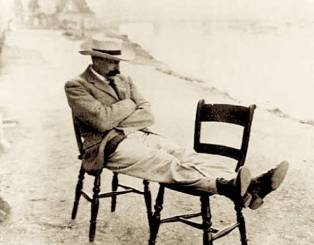
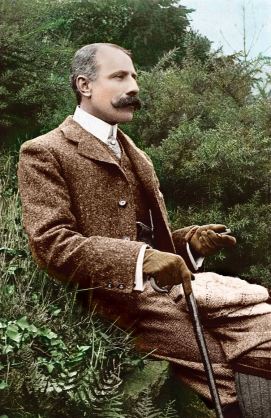
Elgar.Beach.Chair

Sir Edward Elgar at the beach

The Sea Pictures are five short movements, settings for mezzo and orchestra of five different poems by five different poets. “The water represents many things in Sea Pictures,” Moore says.

“It can represent the passage of time, and the feelings and the dangers for people when they’re around water. The third song is about a ship, and it’s a metaphor. The ship is essentially a congregation, and how we relate with other people and survive the challenging moments in our lives.

“It is spectacularly beautiful music that is rarely performed. I’m excited we’re bringing it here.”

SARAH_HOME_Sm-3a

Mezzo Sarah Barber

Barber is a graduate of CU Boulder who has performed extensively in the front range area. She has sung with the Eklund Opera at CU, at Central City Opera, Opera Ft. Collins, the Colorado Symphony, Colorado Springs Philharmonic, and the Black Hills Symphony, among others. Twice a regional finalist of the Metropolitan Opera Guild Competition, she has won other awards in college and professionally.

While the first half of the concert expresses feelings Moore encountered when people talked about the flood—feelings of danger, of uncertainty, of loss—the music of the second half is more exotic and less exclusively about water. Scheherazade is based on the 1001 Nights, in which a young bride keeps herself alive by telling ever more gripping tales to her bloodthirsty husband.

R-3804352-1374178228-1240The piece has four scenes that Rimsky describes in brilliant music that conveys a mood without being too literally programmatic. The first and last scenes are related to water and the sea. The movements are: ”The Sea and Sinbad’s Ship”; “The Kalandar Prince”; “The Young Prince and the Young Princess”; and “Festival at Baghdad. The Sea. The Ship breaks apart against a Cliff surmounted by a Bronze Horseman.”
There is one aspect of the story behind the music that Moore wants the audience to notice. “Over the course of the symphonic work, in many ways it becomes more critical that she tell a great story,” he says. “She’s coming to the end, and the question is, what will the end be? Will it be death?

“You can hear the voice of Scheherazade, which is the violin playing, as it becomes more and more urgent. And the sultan is so dying to know the end that he’s completely wrapped up in this story. So throughout the course of the work there is an evolution of the characters.”

You should also listen to the soloists within the orchestra, because Scheherazade is one of the great orchestra showpieces of the 19th century. “There are a lot of solos, and one of the things that I like about it is that it features all the principal winds—it’s very virtuosic for so many players of the orchestra,” Moore says. “And of course, there’s the violin and there’s the harp as well!

“It’s quite a virtuosic piece for the orchestra.”

# # # # #

“Tales from the Sea”
Longmont Symphony Orchestra, Elliot Moore, conductor
With Sarah Barber, mezzo-soprano

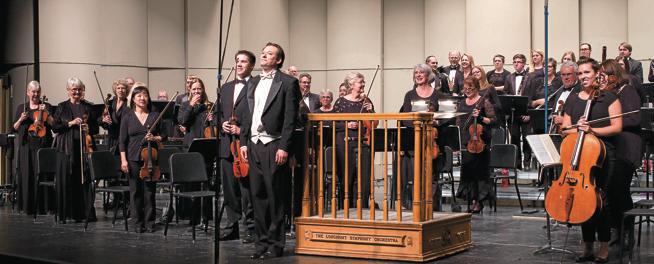
Elliot Moore with the Longmont Symphony 2_preview.smiling_elk

Elliot Moore with the Longmont Symphony

Mendelssohn: The Hebrides (Fingal’s Cave)
Elgar: Sea Pictures
Rimsky-Korsakov: Scheherazade

7:30 p.m. Saturday, April 7
Vance Brand Civic Auditorium, Longmont

Tickets


Longmont Symphony continues exploring ‘New Frontiers’

World premiere by Michael Udow, music by Saint-Saëns and Tchaikovsky Feb. 24

By Peter Alexander Feb. 23 at 9:45 p.m.

Elliot Moore and the Longmont Symphony are opening doors and exploring new frontiers this season.

20170927__29AELSO~1

Elliot Moore and the Longmont Symphony Orchestra

This is Moore’s first year with the orchestra, and when he arrived last fall, he was the first new conductor of the LSO in more than 30 years. For Moore, who had never lived West of the Mississippi, the move to Longmont was a new frontier in itself. The season itself is called “New Frontiers,” and the same spirit carries over into the individual concerts.

The next program, to be presented at 7:30 p.m. Saturday, Feb. 24, in Vance Brand Civic Auditorium, will open with the world premiere of Mountain Myths for orchestra by Michael Udow. Not only is that a new work, it is also the LSO’s first collaboration with Udow, a Longmont resident.

Also on the concert will be the Cello Concerto No. 1 of Saint-Saëns, performed by guest artist Matthew Zalkind. This will be a kind of new frontier as well, since it will be a rare excursion into the French repertoire for the LSO.

The performance will conclude with Tchaikovsky’s Fourth Symphony, a well known staple of the orchestral repertoire, but one that Moore relates to new frontiers in contemporary society.

Udow.Michael

Michael Udow

Mountain Myths was originally written for brass and percussion and premiered at the Music in the Mountains Festival in 2017. “It was for their opening concert last year,” Udow explains. “(They) wanted something that would celebrate the glorious mountains, a type of extended fanfare.”

Not long after the Music in the Mountains performance, Moore reached out to Udow and said he was looking for a new piece for the LSO to play that reflected Longmont and the Colorado mountains. Udow suggested he listen to Mountain Myths.

“I heard the brass version of it, and I thought it was great,” Moore says. “I commissioned him to make an orchestration of it, so this is the world premiere of the orchestra version.”

Udow says his inspiration came from the way that mountains figure in many different cultures, combined with the idea of communication from one peak to another. “It begins with an upheaval, from the bottom of the orchestra all the way through the top instruments,” he says.

“In my mind that was the emergence of the Rocky Mountains. There’s five brass players in the balcony, and the rest of the orchestra onstage, and there’s a back and forth” that represents calling from one mountain top to another.

But rather than listening for details, Udow hopes the audience will take a larger message away from the performance. “I would suggest that the audience experience the music for what it is,” he says.

“Hopefully there will be a sense of gloriousness about the area where we live and the beauty of the mountains, and that it’s not just showing up and being a face in the audience. (I hope) that some level of inspiration generates discussions about life and future generations and the well being of our planet.”

Matthew Zalkind

Matthew Zalkind

Moore recalls that he and Zalkind, the soloist for the Cello Concerto, met in New York around 2008, and both later went to the University of Michigan at the same time. Having heard Zalkind perform several times Moore is unstinting in his praise. And when he came to Longmont, he was pleased to learn that Zalkind is on the faculty of the Lamont School of Music in Denver.

“He is really an extraordinary cellist,” Moore says. “I said to myself, this would be fantastic to have him in our first year, as one of our soloists. So I was really happy that he was able to make this work in his schedule.”

The Concerto is not particularly long—about 19–20 minutes—but it’s a piece that Moore is excited to perform. “It’s a wonderful piece of music,” he says. “I think it’s a great concerto, and I think it’s going to be a really exciting performance. I’m really looking forward to working with Matt. He’s going to bring a lot to our performance.”

The final work on the program, Tchaikovsky’s Fourth Symphony, is a highly emotional work that was written during a crisis in the composer’s life. He had left a brief and catastrophic marriage that he entered hoping to quell rumors about his homosexuality. Unable to change his identity as a gay man, he had fled only a few days after the wedding.

LSO Music Director Elliot Moore_preview

Elliot Moore

The symphony opens with a fanfare that the composer identified as “Fate, the decisive force that prevents our hopes of happiness from being realized and . . . is suspended over our heads and perpetually poisons our souls.” The meaning in the context of the composer’s life are clear, but nonetheless the symphony ends with a sense of victory in the final movement.

To Moore, the theme of fate and its resolution at the end reflect the composer’s struggle with his sexual identity, and his ultimate acceptance of who he was. “In some ways it’s an autobiographical account of ‘This is my fate,’” he says. “Accepting himself became the triumph at the end of the Fourth Movement.”

Moore put that struggle together with contemporary social issues when he heard a performance of the symphony in 2015. “The marriage equality act of 2015 had just passed, and I thought to myself, this music is more relevant now than when it was written,” he says. “Today, when gay rights and marriage equality are in the news, and all of these things go back and forth, I think this is a new frontier.

“So I think the symphony is actually very current. It’s been played a thousand times, but the context of the symphony now changes at least some of the meanings.”

# # # # #

“A Longmont World Premiere”
Longmont Symphony, Orchestra, Elliot Moore, conductor
With Matthew Zalkind, cello

Michael Udow: Mountain Myths (World Premiere)
Saint-Saëns: Cello Concerto No. 1
Tchaikovsky: Symphony No. 4

7:30 p.m. Saturday, Feb. 24
Vance Brand Civic Auditorium, Longmont

Tickets

Renowned Children’s Author Jack Prelutsky joins LSO for Jan. 27 Family Concert

Longmont Youth Symphony, Young Artist Competition winner Alisa Johnson will also be featured

By Peter Alexander

When Elliot Moore wanted to bring in a superstar for the Longmont Symphony’s Family Concert, he knew whom to call.

BeholdtheBoldUmbrellaphantIn the world of children’s literature, no stars are more super then Jack Prelutsky, the first-ever U.S. Children’s Poet Laureate and multi-award winning author of more than 50 collections of poetry for children. He is also a friend of Moore’s family, and has had one of his most popular books of poems set to music, making him the perfect choice.

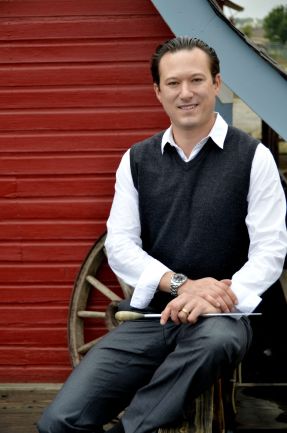
For the concert (4 p.m. Saturday, Jan. 27, in Longmont’s Vance Brand Civic Auditorium), Prelutsky will narrate the performance of composer Lucas Richman’s score for Prelutsky’s Behold the Bold Umbrellaphant, and also read his poems for selections from Camille Saint-Saëns’s classic Carnival of the Animals.

Other works on the program will be the first movement of Mendelssohn’s Violin Concerto, featuring the LSO’s Young Artist Competition winner Alisa Johnson, a senior at Niwot High School and student of James Maurer; and the finale of Sibelius’s Symphony No. 2 in D major, performed together with the Longmont Youth Symphony.

Prelutsky

Jack Prelutsky

Prelutsky is a musician as well as an author. A folk singer in the late 1950s and early ‘60s, he sang for several years in the Bainbridge Island (Washington) Evergreen Singers, which was conducted by Moore’s mother. “At some point he told her that somebody had set his poetry to music, and it had been recorded with the San Diego Symphony,” Moore says. “My mom gave me a phone call, so that’s how I heard about Jack and this piece, Behold the Bold Umbrellaphant.”

The book is a set of poems about creatures that are part animals and part inanimate objects, such as the umbrellaphant, the panthermometer and the clocktopus. Prelutsky says the poems were written when he was sitting in a hotel in Hawaii, unable to go to the beach because his foot hurt. “I wrote the poem ‘Shoehornets,’ thinking about shoes and feet and pain,” he says. “I had done a book, Scranimals, where I combined animals with each other and with flowers and trees. I thought this was the next step, to combine them with ordinary objects. And so it grew from there.”

Later Prelutsky met Richman, who is conductor of the Bangor (Maine) Symphony Orchestra as well as an accomplished composer. “I was very lucky to meet him,” Prelutsky says. “We’ve become friends and we work well together.”

061-IMG_1597.JPG

Lucas Richman. Photo: Jeff Kirlin, Bangor Symphony Orchestra

Richman’s music takes eager advantage of all the musical hints in the poems. Every piece has its own character, across a wide variety of styles and musical types. The Umbrellaphant features horn calls that recall elephants’ trumpeting. The Panthermometer is a cool cat who can tell you the temperature. “He gives that one all kinds of incredible jazzy things,” Moore says.

“When we read through it, we got to the end of the Panthermometer, and we all laughed! We had a lot of fun rehearsing it, and bringing more of that jazz quality into our playing.”

Prelutsky’s poems for Carnival of the Animals came about it a completely different way, since the music existed first. The American humorous poet Ogden Nash had written a set of poems to accompany Saint-Saëns popular music in the 1940s, but Prelutsky’s publisher wanted him to write a new set of poems, because Nash’s originals were outdated. His editor called and asked, “Can you write me poems to go along with the music?”

“I said ‘I’m not sure, I don’t know, no I can’t,’” Prelutsky recalls. “I said, ‘the problem is that most of these animals I’ve already written about, and I’m not sure I have anything else to say.’ And I really meant that, but she said, ‘Give me a break, just do it.’”

“So I called her the next day and I said, ‘I finished.’”

LSO Music Director Elliot Moore_preview

Elliot Moore

Prelutsky’s appearance perfectly matches Moore’s philosophy in programming family concerts. “For me, one goal for the this concert would be to show what fun can be had in classical music, whether performing, or listening, or taking part in some other way,” he says.“Behold the Bold Umbrellaphant is the most fun work on the program. However, the Longmont Symphony has things that they have traditionally done to make this family concert engaging for youth. They have featured the Young Artist Competition winner, and I think that’s a brilliant thing to do, because it allows the children to see that mastery of your instrument by a certain age is possible.

“This concert will feature Alissa Johnson, and she sounds fantastic. And another thing that I’m really excited about is sharing the stage with the Longmont Youth Symphony. This is another way for children to say to themselves, ‘Wow! There are kids doing this, they’re receiving applause, and it looks like fun!’”

Prelutsky agrees that above all, the performance should be fun for the audience. “I hope it makes you enjoy language,” he says. “And I hope you get a laugh out of it.”

# # # # #

Family Concert: Behold the Bold Umbrellaphant
Longmont Symphony Orchestra, Elliot Moore, conductor

Alyssa Johnson

Alissa Johnson

LUCAS RICHMAN: Behold the Bold Umbrellaphant
     Jack Prelutsky, narrator
SAINT-SAËNS: Selections from Carnival of the Animals
     Jack Prelutsky, narrator
MENDELSSOHN: Violin Concerto, 1st movement
Alisa Johnson, violin, Young Artist Competition Winner
SIBELIUS: Symphony No. 2 (Finale)
With the Longmont Youth Symphony

4 p.m. Saturday, Jan. 27
Vance Brand Civic Auditorium, Longmont
Tickets


2017: The Year in Classical Music

Some outstanding concerts, and some changes of leadership in Boulder

By Peter Alexander

With the year drawing to a close, it is time to look back at 2017. It has been a tumultuous year in many realms, including some aspects of Classical music. But before that, it is good to remember the outstanding musical experiences of 2017 here in the Boulder area.

Pro Musica

The year began on an expressive high point when Pro Musical Colorado Chamber Orchestra, conductor Cynthia Katsarelis and soloists Jennifer Bird-Arvidsson, soprano, and Ashraf Sewailam, bass, presented Shostakovich’s rarely-heard Symphony No. 14.

I wrote at the time: “This somewhat gloomy meditation on death is not often given live, partly because of the difficult assignments facing the soprano and bass soloists, but mostly because of the difficult subject matter. But it is a major statement from a great composer—what Katsarelis calls ‘a piece that needs to be heard’—and so the rare performances are to be treasured.”

The February visit of Deborah (Call Me Debbie) Voigt to Macky Auditorium will be a cherished memory for fans of the classical voice. Voigt Lessons, the superstar soprano’s candid retelling of her struggles with relationships, substances, and weight that clouded her career not only showed some realities of life at the top of the opera world, it also revealed the very human person beneath the superstar image. For both reasons, this was a meaningful event.

Takasce SQ

Takacs Quartet

The Takacs Quartet always provides some of the year’s best performances. It’s hard to chose just one, but for 2017 I would single out their February concert including Beethoven’s Quartet in G major, op. 18 no. 2—performed while the Takacs was in the midst of a full Beethoven cycle at several venues—and CU music faculty Daniel Silver, clarinet, playing the Brahms Quintet in B minor, op. 115. An especially beautiful rendering of this beautiful work had at least one audience member in tears by the end.

March saw the arrival of another superstar in Boulder when Sir James Galway played at Macky Auditorium, and the departure of an important member of Boulder’s classical music community when Evanne Browne gave her farewell concert with Seicento Baroque Ensemble, the organization she founded in 2011.

BPhil.onstage

Boulder Phil at Kennedy Center

One of the biggest events of the year for Boulder performing arts was the visit in March of the Boulder Philharmonic Orchestra, conductor Michael Butterman and Frequent Flyers Aerial Dance Company to the Kennedy Center in Washington, D.C., for the first annual Shift Festival of American Orchestras. The Phil repeated a concert they had given in Boulder a few days earlier, including the world premiere of All the Songs that Nature Sings by Stephen Lias and Copland’s Appalachian Spring, performed with Frequent Flyers.

An audience favorite of the festival, the Boulder Phil played to a sold out house. Butterman wrote the next day, “It was a peak experience for me, and, I think, for all of us at the Phil. . . . To be there with our orchestra, with that crowd and with that repertoire—it was something I shall never forget. We had a great sense of pride in representing our hometown.”

Several important changes of personnel were announced for Boulder classical scene in the spring. In April, Jean-Marie Zeitouni announced that he was stepping down as music director of the Colorado Music Festival. He will remain with CMF as principal guest conductor, and conductor/violinist Peter Oundjian will serve as artistic advisor for the 2018 season. Later the same month, James Bailey left his position as music curator of the Dairy Arts Center, to be replaced by Sharon Park.

Elliot Moore at Lake McIntosh - credit - Photography Maestro (1)

Elliott Moore

In May, Seicento Baroque Ensemble announced the appointment of Kevin T. Padworksi as artistic director, succeeding Browne, and the Longmont Symphony announced the appointment of Elliot Moore to succeed long-time music director Robert Olson.

The same month, the Boulder Chamber Orchestra wrapped up its 2016–17 season with its largest performance to date, Beethoven’s Ninth Symphony presented in Macky Auditorium. The performance under conductor Bahman Saless was unfortunately the occasion of a protest by the anti-fracking group East Boulder County United. Seven members of EBCU blew whistles, shouted slogans and left flyers before the concert to voice their opposition to the orchestra having accepted a contribution from Extraction Oil & Gas.

Olga Kern

Olga Kern, photographed by Chris Lee at Steinway Hall.

Zeitouni proved to be anything but a lame duck conductor at the Colorado Music Festival. The 2017 season started at the end of June with an all-Russian program featuring exciting performances of Shostakovich’s Festive Overture and Rachmaninoff’s Second Symphony. On the same concert, one of Boulder’s favorite guest artists, pianist Olga Kern, gave scintillating performances of Prokofiev’s First Piano Concerto and Rachmaninoff’s Rhapsody on a Theme of Paganini.

Other high points over the summer included the return of CMF’s founding director Giora Bernstein to lead a concert of Mozart, Zeitouni conducting Beethoven’s Ninth as the CMF centerpiece, and the visit of violinist Gil Shaham at the end of the summer season. Up in the mountains, Central City Opera’s Downton-Abbey-inspired Victorian-era production of Mozart’s Così fan tutte was one of the year’s highlights for opera lovers.

Another delight for the opera crowd came in the fall, with the CU Eklund Opera Program’s serio-comic production of Lehar’s Merry Widow. In November, Saless and the Boulder Chamber Orchestra returned to its core repertoire with a lively concert featuring two youthful works for smaller ensemble: the Concerto for piano, violin and strings by the 14-year-old Mendelssohn, with violinist Zachary Carrettin and pianist Mina Gajić, and Janáček’s Idyll for Strings.

Zachary & Mina

Carrettin and Gajic

Carrettin and Gajić were featured performers in December when the Boulder Bach Festival gave one of its most intriguing and adventurous concerts in its increasingly adventurous schedule. With guest artist Richie Hawley, the program offered insight into the instruments and performance practices of the early 20th century, performed on Hawley’s 1919 Buffet clarinet, Gajić’s 1895 Érard piano, and Carrettin’s violin set up with strings typical of the period.


# # # # #

For the classical music world outside of Boulder, the biggest news was certainly the intrusion of a long-overdue reckoning for sexual misconduct that is going on in our society generally. The first bombshell, not unexpected by people in the business but a bombshell nonetheless, landed Dec. 3 with the suspension of conductor James Levine from the Metropolitan Opera and other organizations, including the Boston Symphony and the Ravinia Festival. Accusations against Charles Dutoit, artistic director and principal conductor of the Royal Philharmonic Orchestra in London, surfaced later in the month.

levine

James Levine

Both conductors are in the twilight of long careers. Rumors about Levine have been widely known in the classical music world; indeed I first heard them in the 1980s. Every music journalist I know has heard the same stories, but so far as I am aware, no one who experienced Levine’s assaults was previously willing to speak publicly. In the case of Dutoit, I had not heard the rumors, but I do know one of the women who spoke publicly about what happened to her, and I believe her unquestioningly.

As the controversy has swirled about the subject of sexual abuse, harassment and assault in classical music, several critics have written powerfully about the subject: Anne Midgette of the Washington Post, Jennifer Johnson of the Guardian, Andrew Riddles of Classical Ottawa to name three. Singer Susanne Mentzer has written about her personal experiences in the opera world for the Huffington Post, as has Dan Kempson for Medium.

There are certain to be more revelations. One major journalist has more first-hand information, with names including some of the of the most famous classical artists, and is preparing an article. I have no doubt that several men are nervously awaiting that story, or some other revelation that reveals past misdeeds.

Will this tidal wave reach Boulder?

It’s hard to say with certainty. I have spoken with many on the classical scene here, and the only rumor I have heard, from several sources, has been of inappropriate comments and behavior by one person, none of which reached the level of abuse or assault. “He might not have been hired today,” one person speculated, but as so often happens, the people who heard the comments preferred not to make an issue of it.

Another person told me he had never heard any rumor from the College of Music, so Boulder may escape the worst of this necessary but unhappy process. In the meantime, it is my wish for 2018 that society in general and the music world specifically create a safe environment, where powerful men do not feel free to behave like adolescent boys.

___________

Edited for clarity 12.31.17

Moore and Longmont Symphony explore “The American Frontier” in music

Veterans Day concert includes music by John Williams and Dvořák’s “New World”

By Peter Alexander

Conductor Elliot Moore and the Longmont Symphony Orchestra are approaching the 2017–18 season as a series of new frontiers.

Elliot Moore at Lake McIntosh - credit - Photography Maestro (1)

Elliot Moore in Colorado. Courtesy of Photography Maestro.

There are new frontiers for the orchestra, which has its first new conductor in more than 30 years. There are new frontiers for Moore, who moved to Colorado from Detroit to lead the LSO. And there are new frontiers for the audience, with new repertoire and new takes on old repertoire all year.

In the next concert—7:30 p.m. Saturday, Nov. 11, at Vance Brand Auditorium in Longmont—Moore and the LSO are celebrating “The American Frontier.” Because the concert falls on Veterans Day, the concert is presented “In Honor of our Veterans.”

“It occurred to me that with our second program falling on Veterans Day, that would be a wonderful opportunity (for) an American theme,” Moore says. “So I thought it would be good idea to make a statement about America and our music.”

All the pieces on the program are written by Americans or in America, and a couple are specifically patriotic. The concert will open with For the Uncommon Woman, composer Joan Tower’s 1992 response to Aaron Copland’s World War II Fanfare for the Common Man, which will open the second half of the concert.

Also on the program are “Hymn to the Fallen” from the film Saving Private Ryan by John Williams and Samuel Barber’s Violin Concerto, performed by violinist Andrew Sords. The concert will conclude with Antonín Dvořák’s Symphony No. 9 in E minor, “From the New World,” written in the U.S. in 1893.

JoanTower_NoahSheldon3

Joan Tower. Photo by Noah Sheldon.

Moore had a message in mind when he chose to open the program with Tower’s music. “It is a narrative in terms of what women can be doing,” he says. “Besides being equal partners to males in the military, women can be composers who have a lot to say, they can lead orchestras and be leaders in all different fields. So it’s a way of showing the possibilities that exist for equality.”

As a soloist and chamber musician, Sords spends a lot of time travelling. It’s not an easy life, but, he says, “Standing in front of an orchestra makes it all worth it, and I think how fortunate that I get to speak in the language of Samuel Barber.”

One of the most popular pieces Barber composed, the Violin Concerto combines soaring, Romantic melodies with jagged rhythms and spiky, contemporary harmonies. It is an unusually constructed work, with two leisurely, lyrical movements followed by a much shorter movement of non-stop virtuosity.

Sords.Picture046-large

Andrew Sords

Sords admits that he only recently added the concerto too his repertoire, although people had been urging him to learn it for about 15 years. “I was the only 30-year-old violinist on the planet who had never played it,” he says, laughing. But now he loves the piece. “It’s indulgent but not syrupy,” he says. “It’s lush and you get to pull a large sound out of the strings. It’s such a feel-good piece.”

Sords has worked with Moore before and is happy to be a guest with the LSO. “I’m just thrilled to be up there on stage a for the 22 minutes I get to share with the Longmont Symphony and Elliot,” he says. “He is a wonderful, classy, completely prepared conductor. I feel very safe with him on the podium.”

In his preparation to conduct Dvořák’s “New World,” Moore has looked carefully at the composer’s original score as well as the symphony’s history. From the score he las learned that many performance traditions are not based on what Dvořák wrote, and from the history he has learned about some American influences on the work.

“My approach before with this piece was that it was essentially a Czech symphony, written in the United States,” he says. “And now that I’ve been studying more of the history, I think that it is much more of an American symphony, that truly would not have been the same symphony had he not lived in the United States.”

Among other American elements, he learned about an opera Dvořák planned based on Longfellow’s Song of Hiawatha. Although he never wrote the opera, it is possible that the slow movement and the scherzo of the symphony were based on ideas taken from the Hiawatha story. (Moore will discuss the history of the symphony and the possible connection to Hiawatha in a pre-performance discussion at 6:30 p.m. Saturday.)

Dvořák’s visit to America, Moore says, is only one of the “new American frontiers” represented by the concert. Those frontiers also include Aaron Copland’s creation of a unique American style, Joan Tower’s original and creative response to Copland’s fanfare, Samuel Barber’s composition of what Moore calls “the first great American violin concerto,” and the most American frontier of all, music written for film as represented by John Williams’ “Hymn to the Fallen.”

# # # # #

20170927__29AELSO~1

The American Frontier—In Honor of our Veterans
Longmont Symphony Orchestra, Elliot Moore, conductor
With Andrew Sords, violin

7:30 p.m. Saturday, Nov. 11
Pre-performance conversation: 6:30 p.m.
Vance Brand Civic Auditorium, Longmont

PROGRAM :

JOAN TOWER: For the Uncommon Woman (for Orchestra)
JOHN WILLIAMS: “Hymn to the Fallen” from Saving Private Ryan
SAMUEL BARBER: Violin Concerto
COPLAND: Fanfare for the Common Man
DVOŘÁK: Symphony No. 9 in E minor, “From the New World”

Concert Information and tickets
Box office: 303-772-5796

Longmont Symphony Orchestra embraces ‘New Frontiers’

Elliot Moore, new music director, opens the 2017–18 season Oct. 7

By Peter Alexander

The Longmont Symphony Orchestra (LSO) enters a new era Saturday (Oct. 7), playing their first regular-season concert with recently-hired music director Elliot Moore.

Elliot Moore at Lake McIntosh - credit - Photography Maestro (1)

New LSO director Elliot Moore loves living in Colorado.

Titled “New Frontiers with Old & New Friends,” it will be the first major concert since the full retirement of Robert Olson, who was music director of the LSO for 34 years. “Having a new music director after 34 years is an entirely new frontier, for the orchestra, and maybe for the community,” Moore says.

The idea of frontiers runs through the entire season, from “New Frontiers and Old Friends” Saturday, to a program titled “The American Frontier” on Veterans Day, Nov. 11, to spring concerts featuring a world premiere, music evocative of the sea, and the LSO’s first-ever chamber orchestra concert in the Longmont Museum’s Stewart Auditorium. (See the full season here.)

The frontier theme also has a personal meaning for Moore. “Moving out here is definitely a new frontier, for both me and my wife,” he says. “I’m very happy to say that we love it here, we’re having a fantastic time living in the community.”

The additional theme of friendships old and new runs through Saturday’s concert. Foremost of course is the fact that Moore is making many new friends as he settles into the Longmont community. But that idea is also reflected in the music Moore selected for the program: Slalom by CU composition professor Carter Pann, Rachmaninoff’s beloved Rhapsody on a Theme of Paganini with pianist Spencer Meyer, and Edward Elgar’s Enigma Variations.

Meyer.1

Pianist Spencer Meyer

The first half of this program is devoted to new friends, including the pianist playing the Rachmaninoff, Spencer Meyer. “He and I share the same artistic manager and we’ve been hearing about each other for a long time,” Moore says. “I’m really excited to be working with him for the first time.”

In a sense the Rachmaninoff might be thought of as an old friend for musicians and audiences alike. With its virtuoso exploration of Paganini’s famous theme—used by numerous composers as a subject for variations—and the beautifully tender 18th variation, it’s a piece that everyone loves.

“Everybody does love this piece,” Moore says. “It has a lot to do with the great violinist Paganini and the story that Paganini sold his soul to the devil, and it includes the (melody of the) 13th-century Dies Irae chant throughout the work.

“When you know the meaning (of the chant,) which is the Day of Wrath, I think it gives the music more meaning and enhances everyone’s experience.”

OLYMPUS DIGITAL CAMERA

Composer Carter Pann

Pann is another new friend for Moore. “While we have never met, we’ve had wonderful exchanges on e-mail about his music,” he says. “I’m really excited to be working with him. Having such an incredible artist living right here within the community is inspiring.”

 Pann’s piece, describing a fast descent of a ski run, is filled with quotations from popular classical pieces. “In my head, I see Carter putting on his headphones,” Moore says. “He puts on his favorite playlist and starts zooming down the mountain. You’ll hear some works that are familiar to us all in his piece.”

Elgar’s Enigma Variations, the final piece on the program, is all about friendship. Each of the score’s 14 variations is a character sketch of one of Elgar’s friends. Elgar, who enjoyed puzzles, concealed the names of the people represented—some only slightly, by using their initials, others more carefully with puns or more cryptic designations. One titled “Romanza” is represented by a series of asterisks, which may stand for a local musical patron, who was away on a sea voyage, or a lost love of Elgar’s youth who had sailed to New Zealand years before.

Elgar-Edward-08

Sir Edward Elgar

Perhaps the most famous variation is titled “Nimrod.” In it, Elgar paints a portrait of a close friend and associate, Augustus Jaeger. In German Jaeger means “hunter,” which suggested the Biblical name of Nimrod, “a mighty hunter before the Lord.” Others portrayed in the piece include Elgar himself, his wife, and amateur musicians from Elgar’s circle.

Moore likes to note that some of the variations also tell a story that would be known to the subject. “One example is one of his friends, (who) liked to play fetch with his dog,” he explains. “The musical vignette is about playing a game of fetch, and the dog barking. That’s the story that the two of them knew about.”

The Enigma Variations can be enjoyed without knowing any of this, but Moore aims to provide as much information as possible. “I think the more you understand, the more fun you have,” he says. “I intend to give a talk, with some musical examples, to everyone who’s there.”

Enhancing listeners’ understanding and enjoyment of the concerts is one of Moore’s main goals as director of the LSO. Or in the poetic language of concert themes, introducing the audience to both new friends and old.

# # # # #

Opening Night: New Frontiers with Old & New Friends
Longmont Symphony Orchestra, Elliot Moore, conductor
Spencer Meyer, piano
7:30 p.m. Saturday, Oct. 6
Vance Brand Civic Auditorium, Longmont

Tickets

Elliot Moore is building bridges as director of the Longmont Symphony

First season is about connecting with local institutions—and friendship

By Peter Alexander

The Longmont Symphony Orchestra (LSO) has announced its 2017–18 season, the first under new music director Elliot Moore, and the consistent theme is building connections within the community.

Elliot Moore - credit - Photography Maestro

Elliot Moore. Photo by Photography Maestro

That and friendship. The first concert explicitly highlights friendships, and the entire season is filled with performances that developed out of Moore’s professional friendships.

“Building connections is something that I’m really passionate about with this orchestra and with Longmont,” Moore says. Some of the connections he has worked to establish over the coming season are with the Longmont Public Library, with local composers, with the Longmont Museum through a chamber orchestra concert in Stewart Auditorium, and with other local cultural organizations.

“These are friendships that I think are so valuable, and I’m happy that we’re highlighting that very thing on the first concert,” he says.

OLYMPUS DIGITAL CAMERA

Composer Carter Pann, one of Moore’s new friends

The season opening concert Oct. 7 features three pieces, each representing a different facet of friendship: Slalom by CU composer Carter Pann, who Moore counts as a new friend since coming to Colorado; Rachmaninoff’s Rhapsody on a Theme of Paganini with piano soloist Spencer Myer, a professional colleague and friend that Moore has worked with before; and Elgar’s Enigma Variations, in which each variation describes one of Elgar’s close friends, from his wife to his publisher.

In addition to Pann, the season includes another local composer, Michael Udow, a percussionist/composer who lives in Longmont. The LSO concert on Feb. 24 will feature the world premiere of Udow’s Mountain Myths.

Udow.Michael

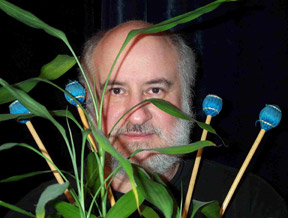
Percussionist/composer Michael Udow

Udow had been on the faculty of the University of Michigan when Moore was a student. “When I was guest conducting the LSO, Michael contacted me and said, ‘Oh, by the way, I’m living in Longmont,’” Moore explains. “I got to know some of his music, and thought that he writes really beautiful stuff. I was very happy to be able to draw on that connection with a fantastic composer who literally lives right there in Longmont, and it goes along with the theme of friends.”

Several of Moore’s friends will appear as soloists. In addition to Myer on the first concert, violinist Andrew Sords will play the Barber Violin Concerto on Nov. 11, and cellist Matthew Zalkind, Moore’s fellow student at Michigan who now teaches at the Lamont School of Music at the University of Denver, will play the Saint-Saëns Cello Concerto No. 1 on Feb. 24.

prelutsky2

Popular children’s author Jack Prelutsky

Another personal acquaintance on the season is sure to attract attention. “I believe this is going to be a real feather in the cap of this orchestra and this season,” Moore says. “The main work on our family concert (Jan. 27) is Lucas Richman’s Behold the Bold Umbrellaphant. People are going to have an unbelievable experience because the music is so good!”

In collaboration with the Longmont Public Library, the LSO is bringing in to narrate Richman’s piece the well known author and former Children’s Poet Laureate Jack Prelutsky. “Prelutsky is a music lover and a great singer,” Moore explains. “It just so happens that my mom conducted a choir, which she recently stepped down from, and Jack was in her choir.”

Another program that Moore wants to point out is the concert on Nov. 11, Veterans’ Day. Titled “The American Frontier: In Honor of Our Veterans,” the all-American program includes both Aaron Copland’s World War II-era “Fanfare for the Common Man,” and Joan Tower’s 1987 response to Copland’s iconic piece, “Fanfare for the Uncommon Woman.”

Other works on the program are “Hymn to the Fallen,” taken from John Williams’ score for the World War II film Saving Private Ryan, and the Barber Violin Concerto, played by Sords. The program closes with just about the first piece to enter the standard orchestra repertoire that was written in America, Antonín Dvořák’s Symphony No. 9, “From the New World.”

Balancing the needs of the orchestra and the audience, Moore has put together a season with a mix of styles and periods, known and unknown composers. There are several pieces by living composers, but also many of the most popular classical composers are on the schedule as well: Rachmaninoff, Elgar, Mendelssohn, Dvořák, Vivaldi, Bach, Sibelius, Tchaikovsky. And the season will end with a chamber orchestra concert featuring the two most loved classical-era composers, Beethoven and Mozart.

Six‐concert subscription packages will go on sale by phone only on Thursday, July 6 (303‐772‐5796; 10 a.m.–4 p.m. Mondays, Tuesdays and Thursdays, and 9:30 a.m.–3:30 p.m. Fridays). Prices and details will be available on the LSO Web page. Single tickets go on sale on Monday, Aug. 28 by phone or online.

# # # # #

Longmont Symphony
Elliot Moore, music director
2017–18 Season

(All performances at Vance Brand Civic Auditorium except as noted)

Opening Night: On the Frontier with Old & New Friends
7:30 p.m. Saturday, Oct. 7
Elliot Moore, conductor, with Spencer Myer, piano

Carter Pann: Slalom
Rachmaninoff: Rhapsody on a Theme of Paganini
Elgar: Enigma Variations

The American Frontier: In Honor of Our Veterans
7:30 p.m. Saturday, Nov. 11
Elliot Moore, conductor, with Andrew Sords, violin

Joan Tower: Fanfare for the Uncommon Woman
John Williams: Hymn to the Fallen from Saving Private Ryan
Samuel Barber: Violin Concerto
Aaron Copland: Fanfare for the Common Man
Antonín Dvořák: Symphony No. 9, “From the New World”

HOLIDAY EVENTS

The Nutcracker Ballet with the Boulder Ballet
Elliot Moore, conductor
4 p.m. Saturday, Dec. 2.
2 p.m. Sunday, Dec. 3

Candlelight Concert with the Longmont Chorale Singers
4 p.m. Sunday, Dec. 17
Westview Presbyterian Church, Longmont
Longmont Symphony Chamber Orchestra
Elliot Moore, conductor, with the Longmont Chorale singers & soloists

Vivaldi: Gloria
J.S. Bach: Jesu, Joy of Man’s Desiring
Respighi: Adoration of the Magi
John Rutter: Candlelight Carol and Angel’s Carol
Cynthia Clawson: O Holy Night
Holiday carols & sing‐alongs

Family Matinee Concert
4 p.m. Saturday, Jan. 27, 2018
Elliot Moore, conductor, with Concerto Competition Winner (TBA)
Longmont Youth Symphony
Jack Prelutsky, narrator

Matthias Bamert: Circus Parade
Sibelius: Symphony No. 2 (Finale)
Lucas Richman: Behold the Bold Umbrellaphant

A Longmont World Premiere
7:30 p.m. Saturday, Feb. 24, 2018
Elliot Moore, conductor, with Matthew Zalkind, cello

Michael Udow: Mountain Myths (world premiere)
Saint–Saëns: Cello Concerto No. 1
Tchaikovsky: Symphony No. 4

Tales from the Sea
7:30 p.m. Saturday, April 7, 2018
Elliot Moore, conductor, with Sarah Barber, mezzo‐soprano

Mendelssohn: The Hebrides (Fingal’s Cave)
Elgar: Sea Pictures
Rimsky Korsakov: Scheherazade

Museum Concert
4 p.m. Sunday, April 15, 2018
Stewart Auditorium, Longmont Museum
Longmont Symphony Chamber Orchestra
Elliot Moore, conductor

Mozart: Symphony No. 35, “Haffner”
Beethoven: Symphony No. 1

Pops Concert: Divas through the Decades
7:30 p.m. Saturday, May 12, 2018
Elliot Moore, conductor, with vocal soloists

In celebration of Mother’s Day, the LSO will feature music by and about women across decades and genres―from opera to cabaret, jazz and pop, and from Bernstein’s West Side Story to Lady Gaga.


Elliot Moore chosen to lead the Longmont Symphony

Moore will conduct the orchestra’s annual Fourth of July concert.

By Peter Alexander

The Longmont Symphony Orchestra (LSO) announced last night at their spring pops concert that its board has signed Elliot Moore to a two-year contract as its next music director.

Elliott.Moore.2

Elliot Moore, new director of the Longmont Symphony

Moore was selected at the conclusion of a year-long search that included appearances by four candidates with the orchestra. He conducted a concert with the orchestra in November. He will succeed Robert Olson, LSO director for the past 34 years. Olson conducted last night’s concert, titled “A Few of my Favorite Things,” concluding the orchestra’s 50th anniversary season.

Moore, who currently lives in Detroit, has said that he and his wife will move to Longmont by the fall, so that they can become part of the community. For the 2017–18 season, he will conduct all rehearsals and performances. These include six subscription concerts at Longmont’s Vance Brand Auditorium, the holiday candlelight concert and two Nutcracker performances with Boulder Ballet.

Because of the planning involved, it is likely that the 2017–18 season will not be announced until August. In the meantime, Moore will make his first appearance with the orchestra in their annual Fourth of July concert in Thompson Park. In the coming year he will also lead the orchestra’s community engagement concert for St. Vrain Valley School District fifth graders, and two concerts in the Stewart Auditorium of the Longmont Museum.

In a statement released by the Longmont Symphony, board president Robert Pilkey wrote, “The entire LSO family—musicians, board members, and our many volunteers—are thrilled to have Elliot Moore as our new music director. He will play a major role in civic and social activities throughout our community, paying special attention to our youth and the expansion of our community engagement programs. We’re delighted with Elliot’s enthusiastic commitment to continue the legacy of our iconic community orchestra.”

DSC_3078-2

Elliot Moore. Courtesy of the Longmont Symphony.

As part of a wide ranging conversation, Moore talked extensively about his move to Longmont. “The plan is definitely to become part of the fabric of the Longmont community and to really invest our lives here,” he said. “By being a member of the community, I hope that people will feel free to come up to me and introduce themselves.

“I hope people will stop me when they see me in the grocery store and have a conversation about what’s going on in the town, what’s going on in the community. I hope that my being here in the community will play a role in making the symphony an even more integral part of the Longmont community.”

Moore said he is looking forward to taking a role he described as the “full-time steward” of the Longmont Symphony. “I have various ideas about how an orchestra can really impact the community, how a symphony is a symbol of the community,” he said. “How players listen and respond to one another is symbolic of what a community does.

“One thing about a vision is not coming in with a preconceived idea, but communicating to community leaders, asking them questions, asking the orchestra questions, and asking the board members questions about their vision—where they would like to see the orchestra go in the next several years. So while I do come in with various ideas, I also want to make sure that what we do is authentic for Longmont.”

Moore is especially interested in the educational activities that the LSO offers. “One of the things that I am very excited about is the 5th-grade concerts that we have in January,” he said. “I want to have a further reach into education. One of the ideas I would love to do is to teach people who don’t have much knowledge about conducting—or even about music—what a conductor actually does.”

Moore has several engagements for the coming year outside Colorado. This is normal for any conductor of a less than full-time orchestra, in order to supplement his income, but Moore made it clear that the LSO will remain his top priority. “The rehearsal schedule and the concert schedule leave room for guest conducting with other orchestras,” he observed.

Moore was born in Anchorage, Alaska, and lived briefly in Denver when he was six years old. He has also lived in Texas, Cleveland, New York and Switzerland, as well as Detroit. He studied at the University of Michigan, where he received a Doctor of Musical Arts degree. He has been conductor of the Blue Period Ensemble in New York and the Detroit Medical Orchestra. In 2015 he also became director the Michigan’s Five Lakes Silver Band.

He has led rehearsals and/or performances with Mexico’s Orquesta Filarmónica de Jalisco, Canadian Chamber Opera of New York City, Sewanee Symphony Orchestra and Canada’s National Arts Center Orchestra, as part of its Summer Music Institute Conductors Program. After completing his doctoral work at the University of Michigan, Moore was invited back to lead programs of the University Philharmonia Orchestra and the Contemporary Directions Ensemble.