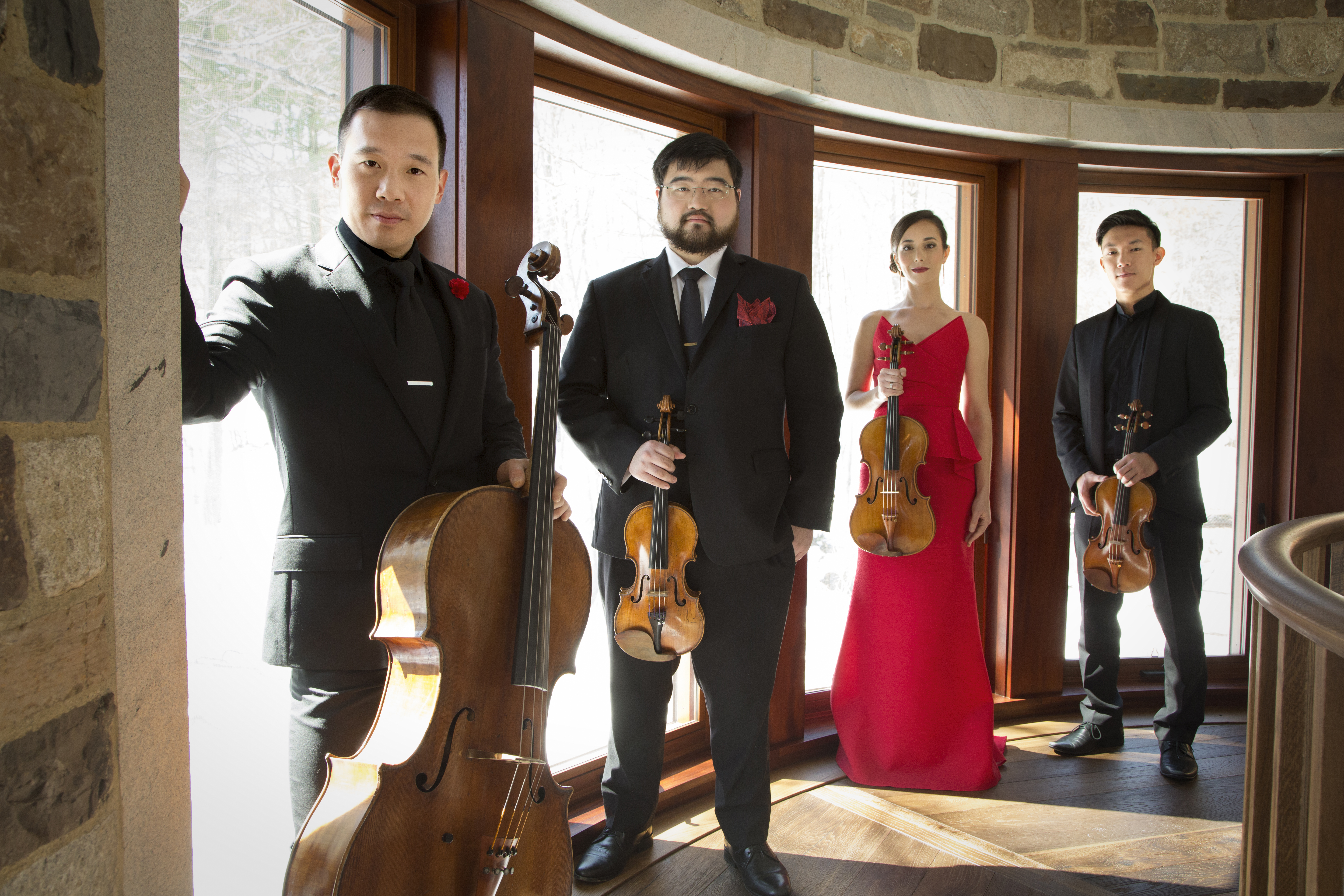
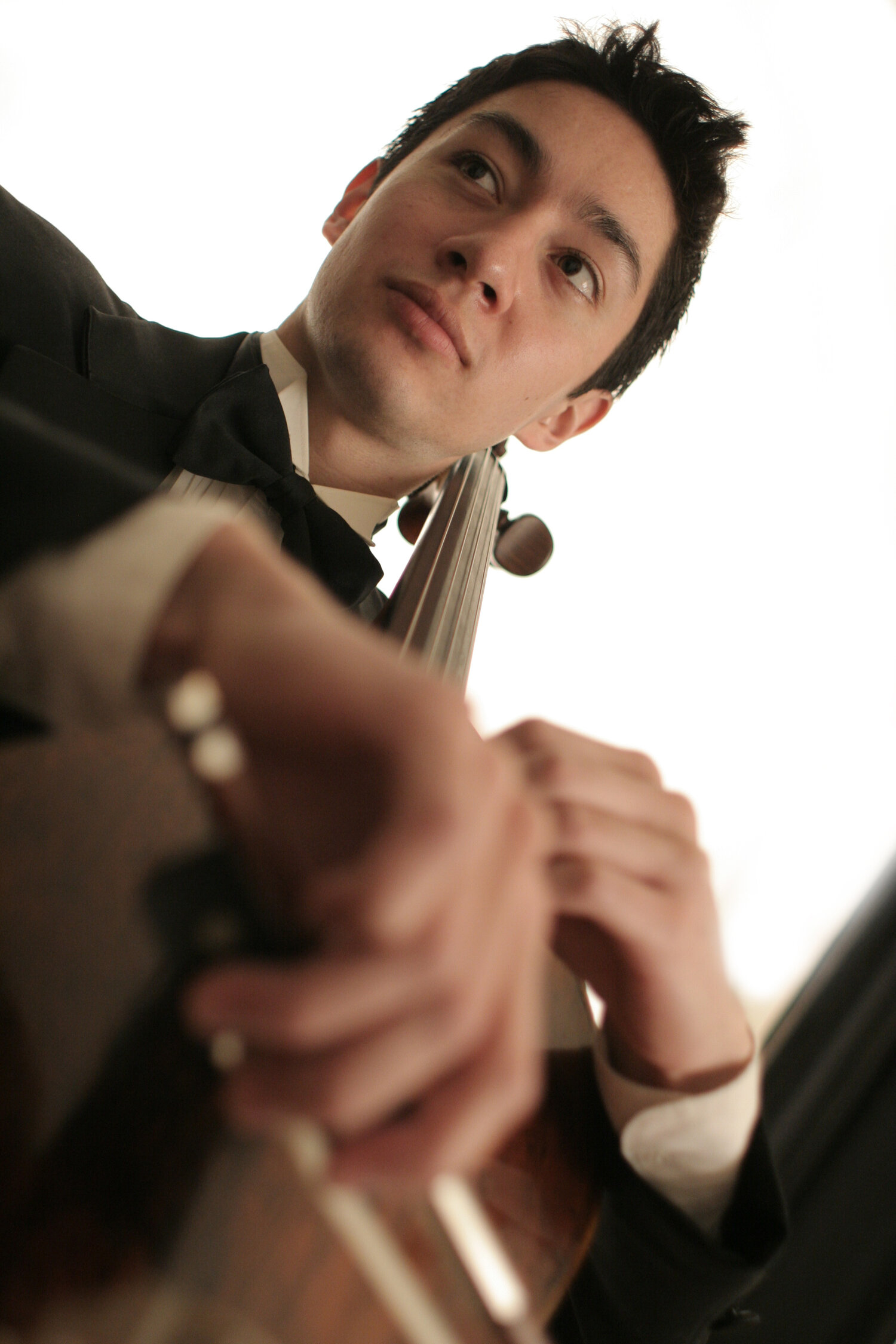
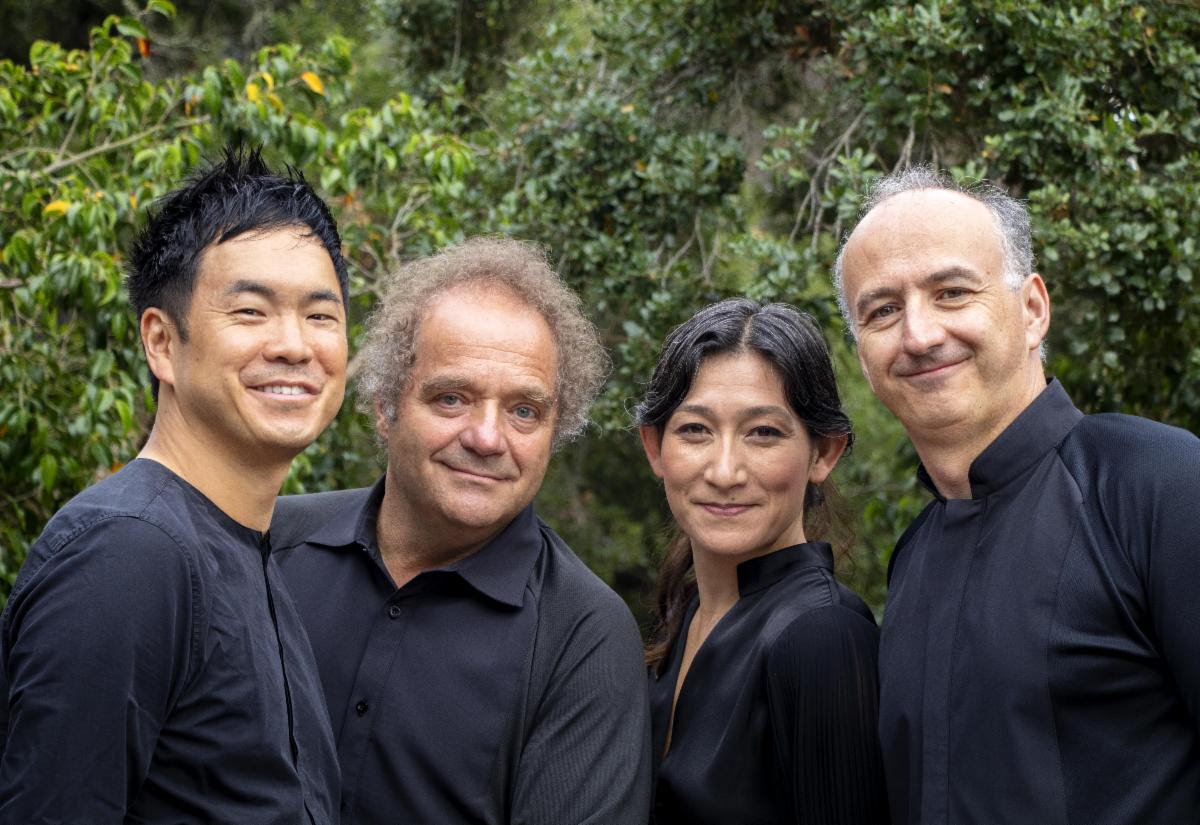
The Parker Quartet from Harvard will perform Sunday and Monday at CU

They will play in Grusin Hall as guests of CU’s Takacs Quartet

By Peter Alexander Nov. 17 at 5:20 p.m.

The Parker Quartet may be the only string quartet named for a hotel.

Formed when the original members were students at the New England Conservatory, they wanted a name that reflected their connection to Boston. “None of us is from Boston, but we call Boston home,” says Ken Hamao, the quartet’s second violinist. “To have a landmark from the city to name ourselves after was appropriate.”
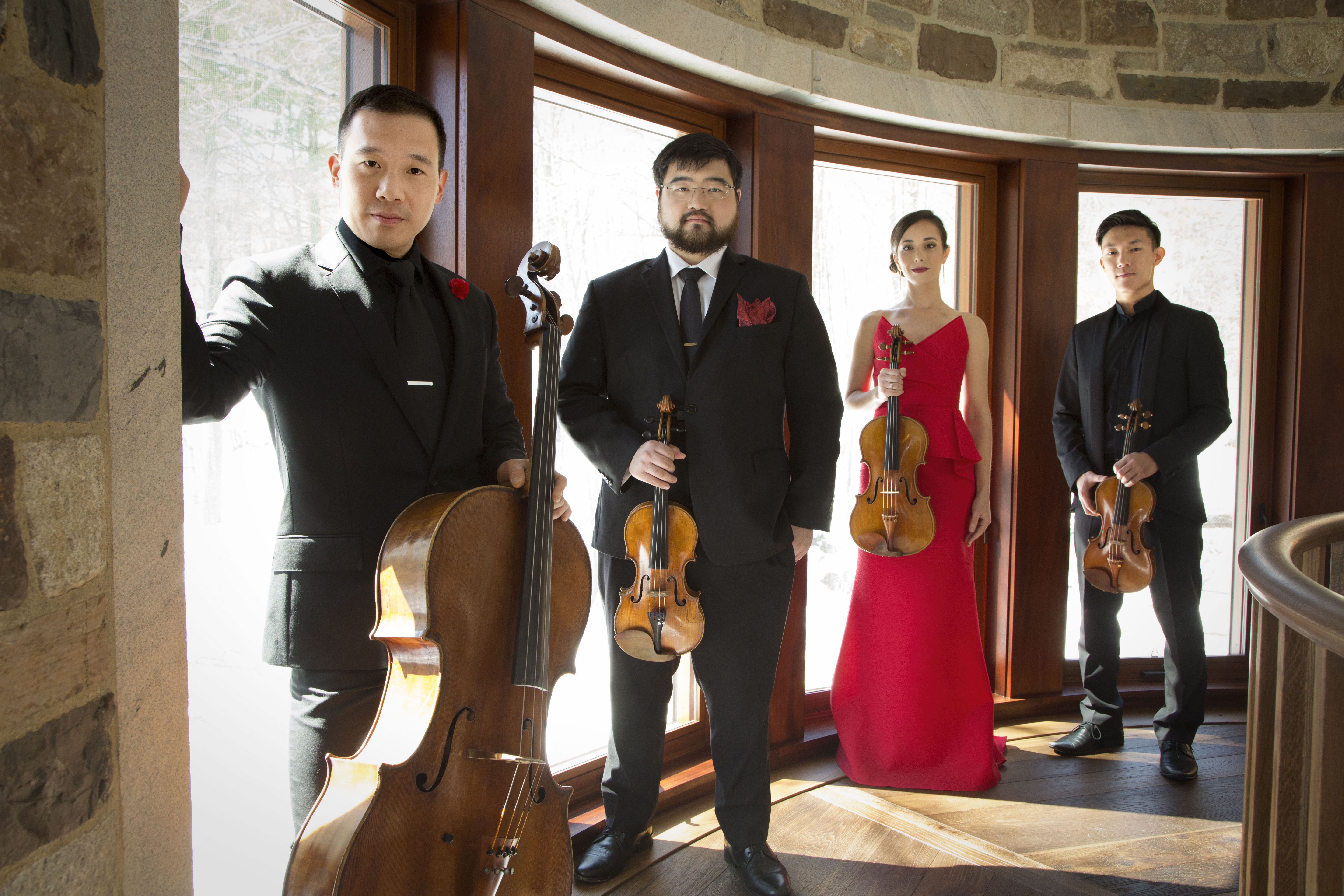
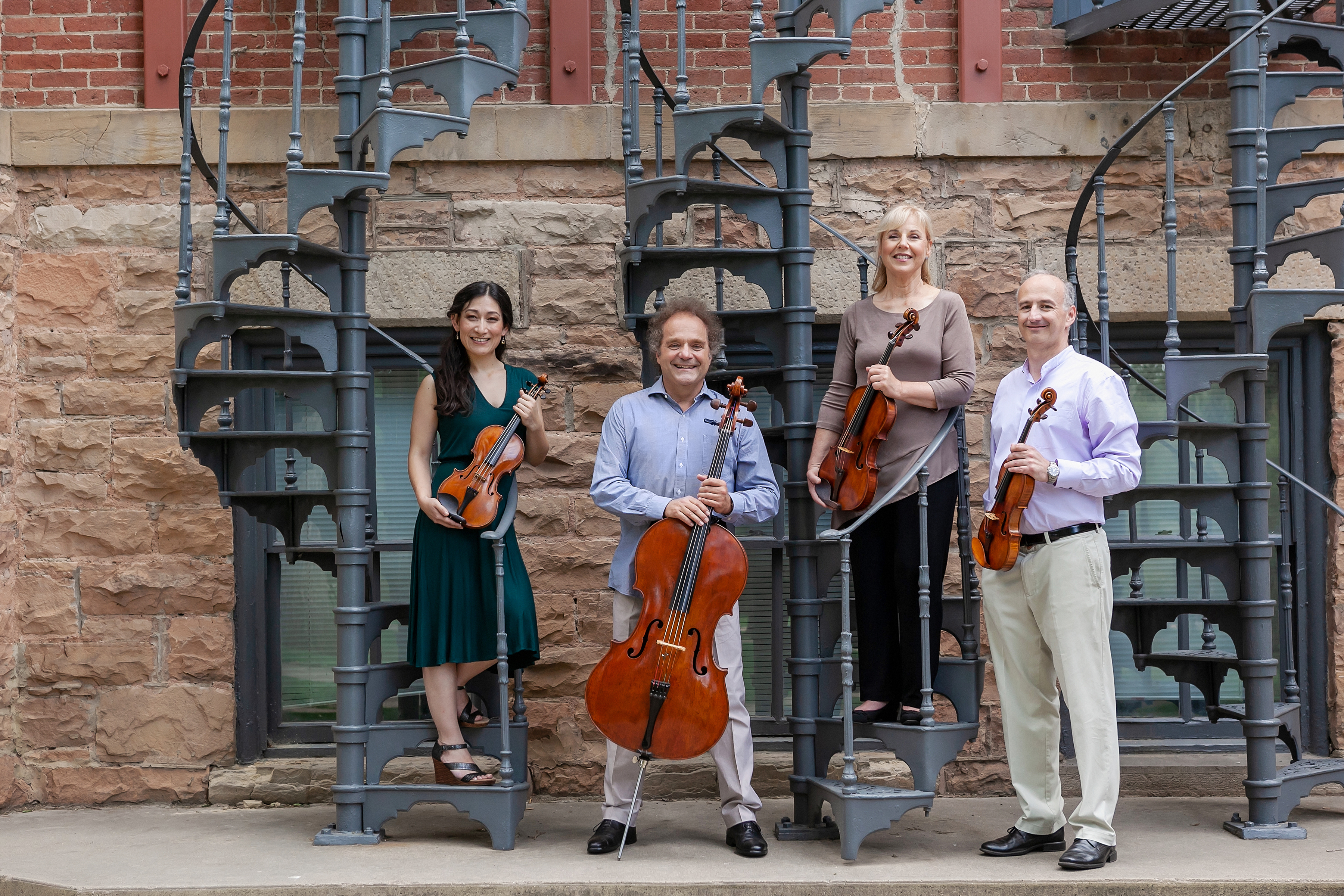
Parker Quartet. Photo by Luke Ratray

Today the Parker Quartet members maintain their ties to Boston, as Blodgett Artists-in-residence and faculty at Harvard University’s department of music. 

The landmark is the Parker House, which you may recognize from dinner rolls but which was an important gathering place for America’s literary figures in the 19th century, including Emerson, Hawthorne and Thoreau, and later for politicians including presidents U.S. Grant, Franklin D. Roosevelt, John F. Kennedy and Bill Clinton.

The Parker Quartet will perform at 4 p.m. Sunday, Nov. 21, and 7:30 p.m. Monday, Nov. 22, in Grusin Hall. They are appearing in the guest slot on the fall concert series of CU’s Takacs Quartet. Their eclectic program features the Lyric Suite by Alban Berg and the Third String Quartet of Robert Schumann, as well as shorter works by Adolphus Hailstork and György Kurtág.

Both in-person and digital tickets can be purchased from CU Presents. Masks are required in all indoor spaces in the CU campus, regardless of vaccination status.
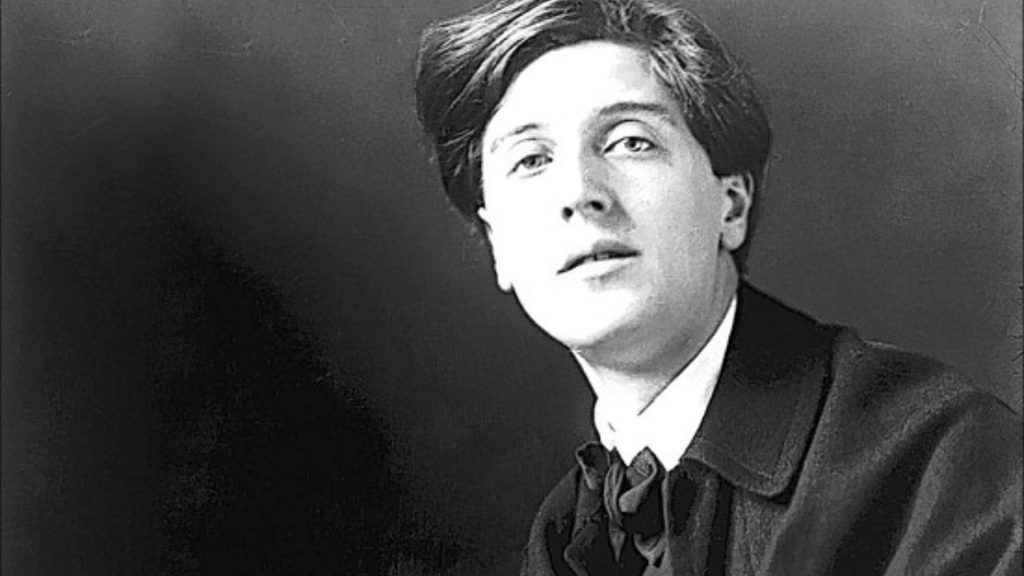
Alban Berg

The central work on the program is Berg’s Lyric Suite, an emotionally and musically challenging work in six intense movements. It has always been seen as a dramatic and passionate piece of music, but more than 50 years after it was written in 1926, a secret “program” was found embedded in the score that explained the intensity of the music.

A combination of musical initials standing for the composer and his lover, multiple other musical symbols, the inclusion of Wagner’s Tristan chord and other musical references, all reflect Berg’s passionate and illicit affair with a married woman, Hanna Fuchs-Robettin. Even the movement titles suggest the subject: amoroso (lovingly), appassionato (passionately) and estatico (ecstatic).

But you don’t need to know the story to appreciate the music, Hamao says. “For us as performers, it helps us to get into the composer’s mindset, but on its own it’s just a very dynamic work, hugely expressive,” he says.

“We’ve been talking about performing it for many years, and after so many years you want to tell each other, ‘Let’s just go for it’. It’s really exciting (because) it has that drama, the very, very highs and the very, very lows of the affair. It did make sense (with) the Schumann as a companion piece. The Lyric Suite is as passionate as it also is desolate, while the Schumann is more uplifting.”
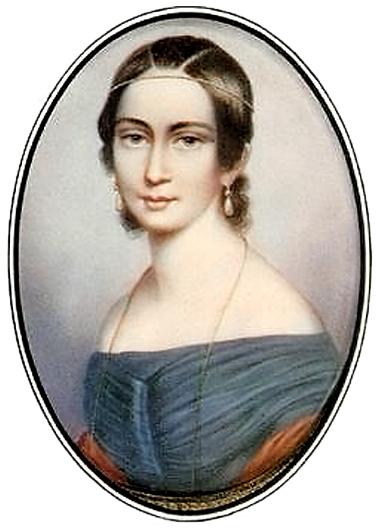
Calra Schumann. Portrait by Franz von Lenbach

Hamao describes the Schumann Third Quartet as representing a different kind of romantic love, that of the composer for his wife, Clara Schumann. “It’s just a love letter to his wife,” he says. “From the very first two notes that you hear, this Clara motive, he’s yearning for his wife. From the first page it’s a declaration of love.”

Hailstork’s Adagio is a piece that the quartet discovered more recently. “It was a piece that we fell in love with immediately and wanted to program it as soon as we can,” Hamao says. “In a program that can be as intense as the Lyric Suite can be, having this beautiful Adagio made a lot of sense to us.

“I think of it as an incredibly beautiful piece that kind of discovers itself throughout the whole piece. It’s definitely tonal but has what you might call notes that don’t quite belong to the scale. For a beautiful piece there’s a lot of surprises, but at the end of the day it’s a really gorgeous movement.”

Kurtág’s Aus der Ferne (From the distance) V is one of a group of pieces for different media. Two of are for string quartet—Aus der Ferne III and V. The Parker Quartet has worked directly with the composer in the past, and recently released a CD recording of his quartets, including those two miniatures. 

“Kurtág has an incredible ability to tap into the idea of drama,” Hamao says. “There is a sense of narrative. I don’t think there is an explicit one, but an abstract narrative. He’s able to pack a story into two minutes of music. [He has] this incredible ability to create a lot of expression through quite minimal means.”

Whatever narrative you discover will have to be “in each listener’s imagination,” Hamao says, but that is part of the reward for both performer and listener.

# # # # #

Parker Quartet

  • Adolphus Hailstork: Adagio from String Quartet No. 1
  • György Kurtág: Aus der Ferne V (From the distance)
  • Alban Berg: Lyric Suite
  • Schumann: String Quartet No. 3, Op. 41 No. 3

4 p.m. Sunday, Nov. 21
7:30 p.m. Monday, Nov. 22
Grusin Recital Hall, CU Imig Music Building

In-person and Sunday live stream tickets available from CU Presents
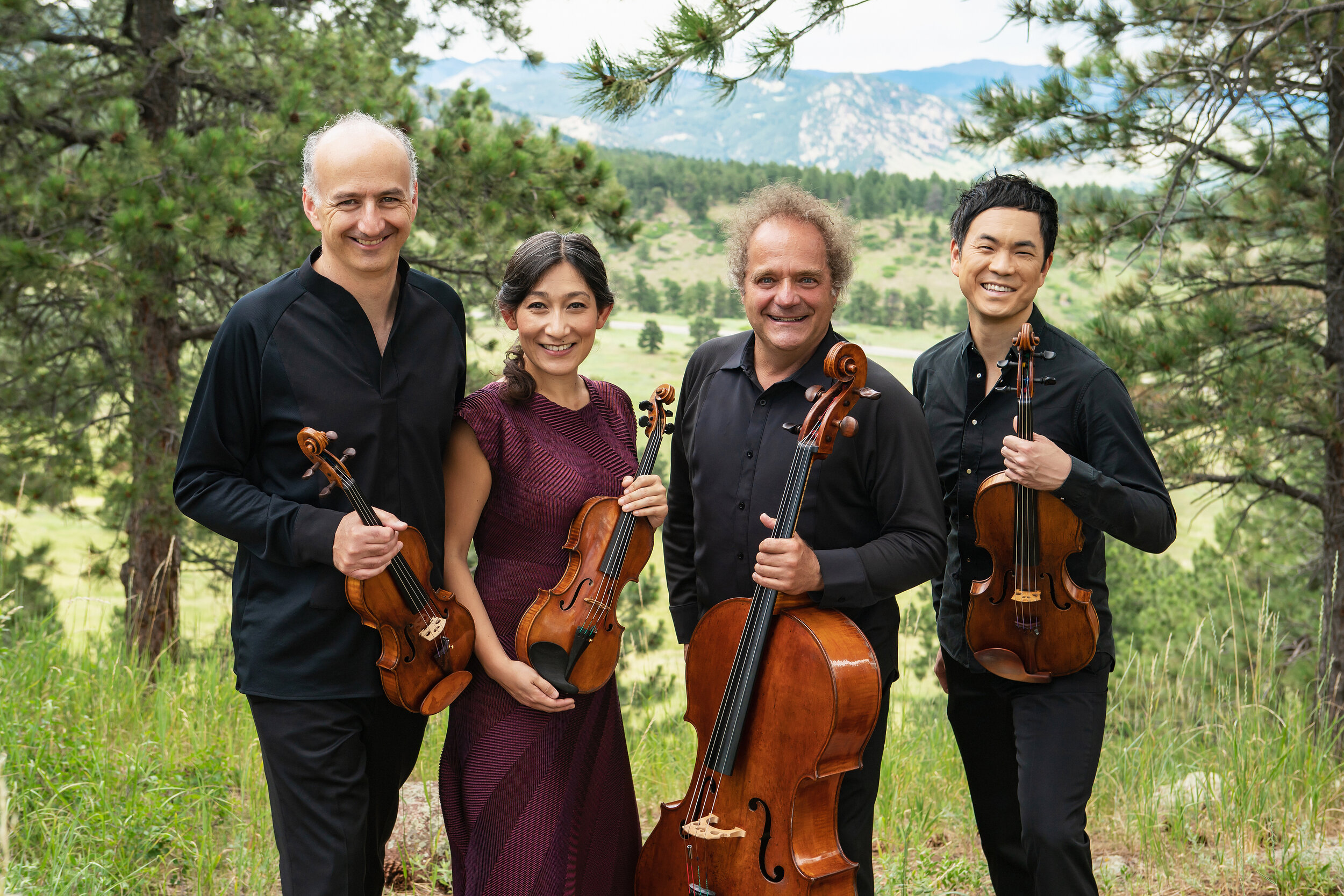
Takács Quartet opens 2021–22 campus concert series Sunday

Performances will be available for in-person attendance and streaming

By Peter Alexander Sept. 10 at 4:30 p.m.

The CU College of Music and the resident Takács Quartet go into the 2021–22 academic year with a full schedule of on-campus concerts.

Naturally, this marks a change from last year, when COVID-19 and construction in the Imig Music Building prevented the usual activities in the college from taking place in person. What effect the emergence of the Delta Variant of COVID-19 will have remains unknown, but for now the live series gets under way at 4 p.m. Sunday (Sept. 12) in Grusin Music Hall with a full concert program. The Takács series also includes guest performances by the Parker Quartet from Harvard University.

Takács Quartet— Amanda Tipton, Photographer

At this time, masks are required in public indoor spaces on the CU Boulder campus regardless of vaccination status. Furthermore, an order from Boulder County Public Health also mandates masks indoors in public spaces throughout Boulder County. This order applies, regardless of vaccination status, to all persons age two and up. Dates in the future remain subject to any changes in university policy. 

As in past years, all Sunday Takács programs are scheduled to be repeated on Monday evenings. Each concert will also be available through a ticketed live stream Sunday afternoon that will remain available up to one week after the Monday performances. Details and tickets to live performances and the streams are available through CU Presents.

In addition to familiar works from the standard repertoire—quartets by Haydn, Mozart and Schubert—the Takács Quartet will play two important works by Czech composers that are heard less often. These are the String Quartet No. 2 by Leoš Janáček, titled “Intimate Letters” by the composer (Sept. 12 & 13); and the String Quartet No. 1 by Smetana, titled ”From My Life” (Oct. 31 & Nov. 1).

Written in 1928, Janáček’s Quartet No. 2 was inspired by the composer’s unrequited love for a married woman nearly 40 years his junior. The title refers to the more than 700 letters between Janáček and the woman, Kamila Stösslová, who remained emotionally distant but was with the composer when he died. Janáček wrote to Stösslová, “You stand behind every note” of the quartet.

One of his last works, the quartet was premiered a month after Janáček’s death.

Smetana’s quartet was also written relatively late in the composer’s life and is also autobiographical. The name “From My Life” was provided by the composer, making the quartet, and along with Janáček’s Quartet No. 2, one of the few deliberately programmatic chamber works. 

The first three movements refer to different stages in Smetana’s life—his youthful romanticism, his love for dancing as a young man, and his love for his wife. The final movement dramatizes the persistent ringing that developed in the composer’s ears in his later years, represented by a sustained high E, and his subsequent loss of hearing.

The quartet was composed in 1876 and given its official public premiere in 1879. For an earlier private performance the viola part, which has a prominent solo at the beginning of the first movement, had been played by the young Dvořák.

Another lesser known work will be performed during the fall, Henri Dutilleux’s Aini la nuit (“Thus the night”) Oct. 31 and Nov. 1. Composed over period of years 1973–76, Dutilleux’s quartet was inspired in part by the quartets of Beethoven, Bartók and the 12-tone works of Anton Webern.

A meticulous composer who has a relatively small output, Dutilleux was not a strict adherent of serialism, although he does make use of pitch series. The quartet, aimed at evoking a sense of the night, is in seven strongly contrasting movements with four very short interludes he called “parentheses” serving as transitions between movements.

Though performed relatively infrequently, Ainsi la nuit is regarded as one of the most important works for string quartet from the late 20th century.

Parker Quartet. Photo by Luke Ratray.

The Parker Quartet, whose members are Blodget Artsists-in-Residence at Harvard University’s College of Music, will complete the fall series with guest performances Nov. 21–22. Their program has not yet been announced.

# # # # #

Takács Quartet
Fall 2021 concert series

Takács Quartet

  • Haydn: String Quartet in F minor, Op. 20 No. 5 
  • Leoš Janáček: String Quartet No. 2, “Intimate Letters” 
  • Schubert: String Quartet No. 14 in D minor, “Death and the Maiden”

4 p.m. Sunday, Sept. 12; 7:30 p.m. Monday, Sept. 13
Grusin Music Hall 

Takács Quartet

  • Mozart: String Quartet in D minor, K421
  • Henri Dutilleux: Ainsi la Nuit
  • Smetana: String Quartet No. 1 “From My Life”

4 p.m. Sunday, Oct. 31; 7:30 p.m. Monday, Nov. 1
Grusin Music Hall 

Parker Quartet

  • Program TBA

4 p.m. Sunday, Nov. 21; 7:30 p.m. Monday, Nov. 22
Grusin Music Hall 

In addition to live performances, each concert will be streamed live on  Sundays, and each stream will remain available until one week following the Monday performances. Details and tickets to both live performances and the streams are available through CU Presents.

Tickets available for Sunday’s concert by Takács Quartet

Music by Haydn, Schubert, Dutilleux: Stream available through May 10

By Peter Alexander April 7 at 12:30 p.m.

The CU-based Takács Quartet has played a series of concerts in Grusin Hall this year, but you can be forgiven if you missed them. They were played without an audience, and most of the live streams were available only to season ticket holders.

The final concert of ’20-21, at 4 p.m. Sunday, April 11, will again be in an empty hall, but tickets for the stream are available to the general public. The performance will be streamed live at 4 p.m., and the stream will remain available through Monday, May 10.

David Requiro

Cellist and CU faculty member David Requiro will join the Takács for Schubert’s much loved Quintet in C major for Strings, D956. Other works on the program will be two quartets by Joseph Haydn—Op. 42 and Op. 103, both in D minor—and the atmospheric Ainsi la nuit (Thus the night) by 20th-century French composer Henri Dutilleux.

András Fejér, the quartet’s cellist, has been with the Takács since it was founded in 1975. He has played everything on the program many times, but he never gets tired of his job. “The literature is so incredibly rich!” he says. “One can argue and counter argue on any page of any of the pieces for lifetime. It’s a joy to listen to (other players’) ideas.”

Take for example the two Haydn quartets that will open the program. “With Haydn, whenever we start learning and studying you are just swept away by his generosity of ideas—surprising key changes, character changes and trickery,” he says.

Fejér believes the “trickery,” for which Haydn is well known, was done for the composer to entertain his audience—and himself. “If you spend 40 years in a palace on the Austro-Hungarian border, however generous your patron is, you need to care about your own entertainment,” he says.

Some of the fun also comes from Haydn’s contact with the local peasants, Fejér believes. “They were full of joy, they were full of rowdiness, probably some dancing, and we can find most of it on those pages. Hopefully you will see the enjoyment in our body language, and you will be transported into the 18th-century. It’s got such spice and an earthy, primal energy. Wonderful!”

Both Haydn quartets are unusual among the composer’s works. For one thing, they are both in D minor, at a time when few works were written in minor keys. Further, both are short works that do not belong to a larger set, as most Haydn quartets do. Op. 42 is in four short movements—less than 20 minutes all together. 

One of the last pieces Haydn wrote, Op. 103 remains a fragment of two movements. Written in B-flat major and D minor, they are assumed to have been the second and third movements of a planned four-movement quartet, but even that is uncertain. Haydn was in poor health as he was writing, and was unable to finish a full quartet.

Like the Haydn Op. 103, Schubert’s Quintet in C major was the composer’s last piece of chamber music. It was completed about two months before Schubert’s death in Nov. 1828 but was not performed until 1850, and published three years after that.

Schubert added a second cello to the standard string quartet, which gives a great resonance and warmth of sound to the ensemble. This is especially true because the piece is in C major, and the two bottom string of the cello are C and G, tonic and dominant of the key. Fejér explains that “the open strings of the cello, C and G, resonate just by lightly touching the instrument. It just rolls out—wonderful!”

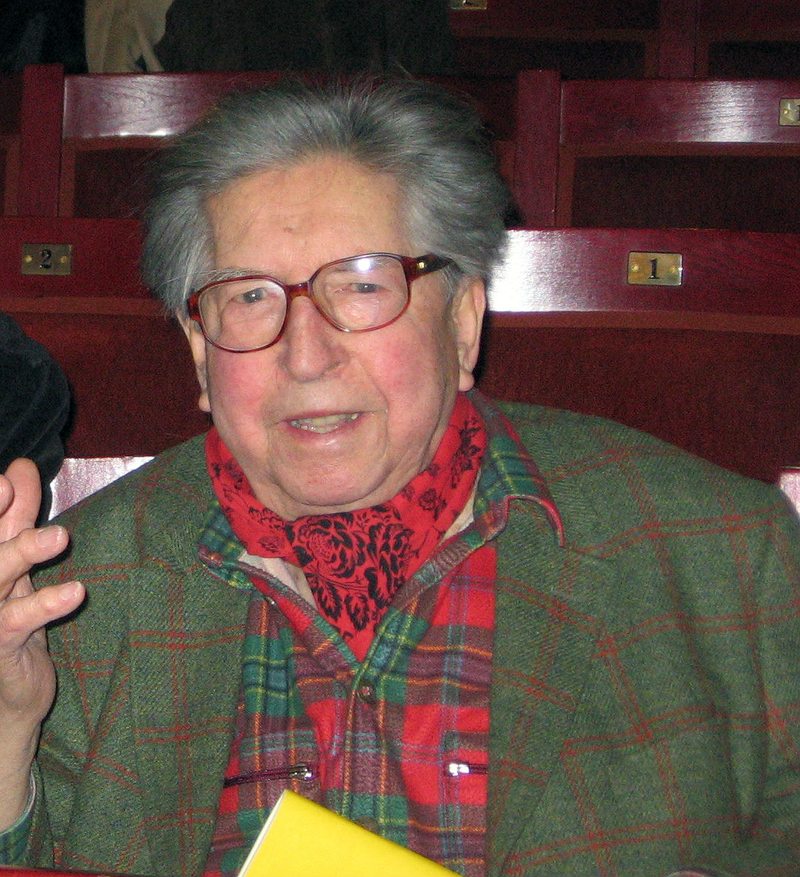
Henri Dutilleux

The Takács Quartet has performed the Schubert with Requiro in the past, including a performance at Lincoln Center. “We are just looking forward to (performing with) David Requiro,” Fejér says. “We already played the Quintet many times with him, and it was wonderful.”

Schubert’s String Quintet has become one of the most loved pieces of chamber music from the 19th century. Like many of Schubert’s last works, it has a warmth and benedictive quality that audiences have responded to. It is indicative of that quality, Fejér says, that “the most people I know ask for the Schubert Quintet slow movement for their own funeral.”

That is unlikely to be true for the final piece on the program, which comes from another world. Dutilleux’s Ainsi la nuit (Thus the night) is a highly atmospheric work from the late 20th century. The composer has been identified with the atonal 12-tone style of composition, although he notably rejected the more radical and intolerant aspects of musical modernism.

“The music is extremely atmospheric,” is how Fejér describes Ainsi la nuit. “Many composers were trying to give meaning for the noises of the night, and Dutilleux certainly tries it his own ways. As performers, we need to (bring out) the colors and character to give the audience some sense of within what cosmos are we moving about.

“There are clashes and supernovas and black matter and God knows what else, but the beauty and atmosphere keep recurring.”

# # # # #

Takács Quartet

Takács Quartet, with David Requiro, cello

Haydn: String Quartet in D minor, op. 42
Haydn: String Quartet in D minor, op. 103
Henri Dutilleux: Ainsi la nuit (Thus the night)
Schubert: String Quintet in C major, D956

Live stream at 4 p.m. Sunday, April 11; available through 11 p.m. Monday, May 10

Tickets

UPDATE: Cancellations of CU Performances; statement from Boulder Phil

Eklund Opera, Takács Quartet are included in the latest round of cancelations

By Peter Alexander March 11 at 3:57 p.m.

CU Presents and the University of Colorado, Boulder. have just announced the cancellation of all Spring 2020 College of Music events. Their statement specifies that:

This includes Eklund Opera, Artist Series, Takacs Quartet, ensemble performances and all other events. We will be in touch with ticketholders soon regarding next steps.

Please note that this includes the Eklund Opera production of  The Marriage of Figaro (scheduled for March 13–15) and the performance by the Kronos Quartet (March 19) previously covered in Boulder Weekly and on this blog.

The following is also posted on the CU Presents Web page:

We are currently working with the university to understand the impact this has on our events and will update patrons with more information as soon as possible. . . . CU Presents is committed to the health, safety and wellbeing of everyone at our events. We are actively monitoring the global coronavirus or COVID-19 situation and would like to point you to updates and resources from the University of Colorado Boulder and Boulder County Health.

The Boulder Philharmonic has sent a statement to its patrons and ticket buyers concerning the cancelation of its upcoming concerts March 21 and 22. This information will be shortly available on the Boulder Phil Web page.  Here is the message that has been sent to patrons:

We regret to report that the Boulder Phil will be unable to proceed with concerts scheduled for March 21 at Macky Auditorium and March 22 at Pinnacle Performing Arts Center. CU announced today the suspension of all campus classes and gatherings, and we are supporting public health and safety by suspending our concerts until the virus threat has passed. We hope these preventative measures will be effective as our community does its part to protect our citizens.
We view this change as a postponement, and we will reschedule the concert if at all possible. We will keep you informed of developments as we have information.
For all ticket holders, your tickets is valid for a rescheduled performance of this program, or for exchange to a future concert. If you prefer you may donate the value of your ticket to the Phil, or request a refund, by calling the box office, 303-449-1343 starting Monday.
___________________
NOTE: As much as possible, I will attempt to keep updates concerning cancellations due to the novel coronavirus/COVID-19 current on the Web page. Anyone with further information is encouraged to contact this site at alex.peterm@gmail.com.

CU Presents’ 2019–20 season features Grammy winners and nominees

Kronos Quartet returns, Eklund Opera presents It’s a Wonderful Life

By Peter Alexander April 4 at 4:15 p.m.

macky.jpg.w560h420

CU Macky Auditorium

The coming season of CU Presents at Macky Auditorium will feature the return of the Kronos Quartet, not heard in Boulder since 2014; the first appearance here by A Far Cry string orchestra; and the combination return/first local performance of Jake Heggie’s and Gene Scheer’s opera It’s a Wonderful Life, workshopped at CU in June 2018 and now scheduled for a full production by CU’s Eklund Opera Program.

These and other music, dance and theater events have been announced as part of the 2019-20 season of CU Presents. The full schedule for the season is listed here; see a schedule of the music events below .

In addition to CU’s own Takacs Quartet in their annual series on campus, the Grammy winners on the schedule are Kronos Quartet and the Chick Corea trio. A Far Cry was nominated for Grammys in 2014 and 2018.

150929afarcry0492-4K

A Far Cry sting orchestra. Photo by Yoon S. Byun.

Founded in Boston in 2007, A Far Cry is an adventurous string orchestra. They are a democratic, self-conducted ensemble in which decisions are made collectively and leadership rotates among the players—or “Criers,” as they like to call themselves. They were recently part of a commissioning project with pianist Simone Dinnerstein for Philp Glass’s Third Piano Concerto, which Dinnerstein played with the Boulder Philharmonic as part of the orchestra’s 2017–18 season.

A Far Cry will perform a new program for the tour that will bring them to Boulder on Feb. 8, 2020. Under the title “Memory,” the program will comprise works by Mozart, Tchaikovsky, Elgar and Arvo Pärt.

Kronos

Kronos Quartet. Photo by Jay Blakesberg.

Over 46 years, Kronos Quartet has been known for the innovative programming and presentation of music for string quartet, and especially new works. More than 900 works have been written for Kronos, by composers from all over the world. Their extensive discography, including more than 40 studio albums, has its own Wikipedia entry that also lists compilation albums, video albums, film soundtracks, and Kronos’ contributions with other artists ranging from Linda Ronstadt to Nine Inch Nails.

Kronos has been nominated for a Grammy 11 times, and won twice. In recognition of the 2014 centennial of World War I, in 2014 they presented the film Beyond Zero in Macky. A reconstruction by Bill Morrison of film from World War I, Beyond Zero featured a score by Aleksandra Vrebalov played live by Kronos. For their performance at Macky in March 19, 2020, they will present a new program, “Music for Change: The 60s,” including a celebration of Pete Seeger’s music and a work inspired by Martin Luther King, Jr.

Its-A-Wonderful-Life-Angels.Houston

Houston Grand Opera world premiere production of It’s a Wonderful Life

Heggie and Scheer’s It’s a Wonderful Life was commissioned by the Houston Grand Opera, with the San Francisco Opera and the Jacobs School of Music at Indiana University. The opera is based on the 1946 film of the same name, directed by Frank Capra and starring James Stewart, Donna Reed, Lionel Barrymore and Henry Travers.

The original production premiered in Houston Dec. 2, 2016, with subsequent performances in San Francisco and Bloomington, Ind. Prior to the premiere, the opera received workshop performances in Boulder in June 2016, through the Eklund Opera’s New Opera Workshop (CU NOW).

The Eklund Opera will present an all-new production of the opera Nov. 15–17, 2019, in Macky Auditorium.

Music events from CU Presents’ 2019–20 season are listed below:

# # # # #

Artist Series at Macky Auditorium

Music events

Chick Corea Trilogy
with Christian McBride and Brian Blade
7:30 p.m. Wednesday, Oct. 9, 2019,
Bassist Christian McBride and drummer Brian Blade join Chorea for an evening of Corea classics and jazz standards.

NU_KBM02829_KB-Mpofu-1-X4

Nobuntu

Nobuntu
7:30 p.m. Wednesday, Oct. 30
“Nobuntu”—an expression meaning feminine familial love, humility and kindness—is the name of a female a cappella quintet from Zimbabwe that performs traditional Zimbabwean songs, Afro jazz and gospel.

Pierre-Laurent Aimard, piano
7:30 p.m. Tuesday, Nov. 19

Celtic-Family-Christmas-3-300ppi-X4

Natalie McMaster and Donnell Leahy

Natalie MacMaster and Donnell Leahy
“A Celtic Family Christmas”
7:30 p.m. Tuesday, Dec. 17

A Far Cry string orchestra
“Memory”
Music by Mozart, Tchaikovsky, Arvo Pärt and Elgar
7:30 p.m. Saturday, Feb. 8, 2020

Kronos Quartet
“Music for Change: The 60s, The Years That Changed America”
7:30 p.m. Thursday, March 19, 2020

Holiday Festival

Dec. 6-8, 2019
CU Boulder’s Holiday tradition featuring student choirs, bands and orchestras—along with faculty performers—in a concert of holiday favorites

Takács Quartet at Grusin Music Hall

04-Takacs-Quartet-Amanda-Tipton-photography.jpg

Takács Quartet

Chamber Series:
4 p.m. Sundays Sept. 8, Oct. 27, Jan. 12, March 8, May 3
Encore Series:
7:30 p.m. Mondays Sept. 9, Oct. 28, Jan. 13, March 9, May 4

4 p.m. Sunday, Nov. 10, and 7:30 p.m. Monday, Nov. 11: The Takacs Quartet presents the Tesla Quartet

Eklund Opera Program

It’s a Wonderful Life
Music by Jake Heggie; Libretto by Gene Scheer
Nov. 15-17 at Macky Auditorium

The Marriage of Figaro
Music by Wolfgang Amadeus Mozart; Libretto by Lorenzo Da Ponte
March 13-15 at Macky Auditorium

Béatrice et Bénédict
Music and libretto by Hector Berlioz, based on Shakespeare’s Much Ado About Nothing
April 23-26 at the Music Theatre

# # # # #

Season tickets for these and other events presented by CU Presents are now on sale and my be purchased here. The complete listing of the CU Presents 2019–20 season, including dance performances and productions of the CU Department of Theater and Dance, may be found here.


Tafelmusik will turn Macky Auditorium into a musical coffee house

“Tales of Two Cities” explores the coffee houses of Damascus and Leipzig

By Peter Alexander March 1 at 6:15 p.m.

It takes a person with a very creative imagination to turn the history of coffee into a concert combining Baroque and middle-eastern music.

Screen Shot 2019-02-26 at 12.55.11 PM

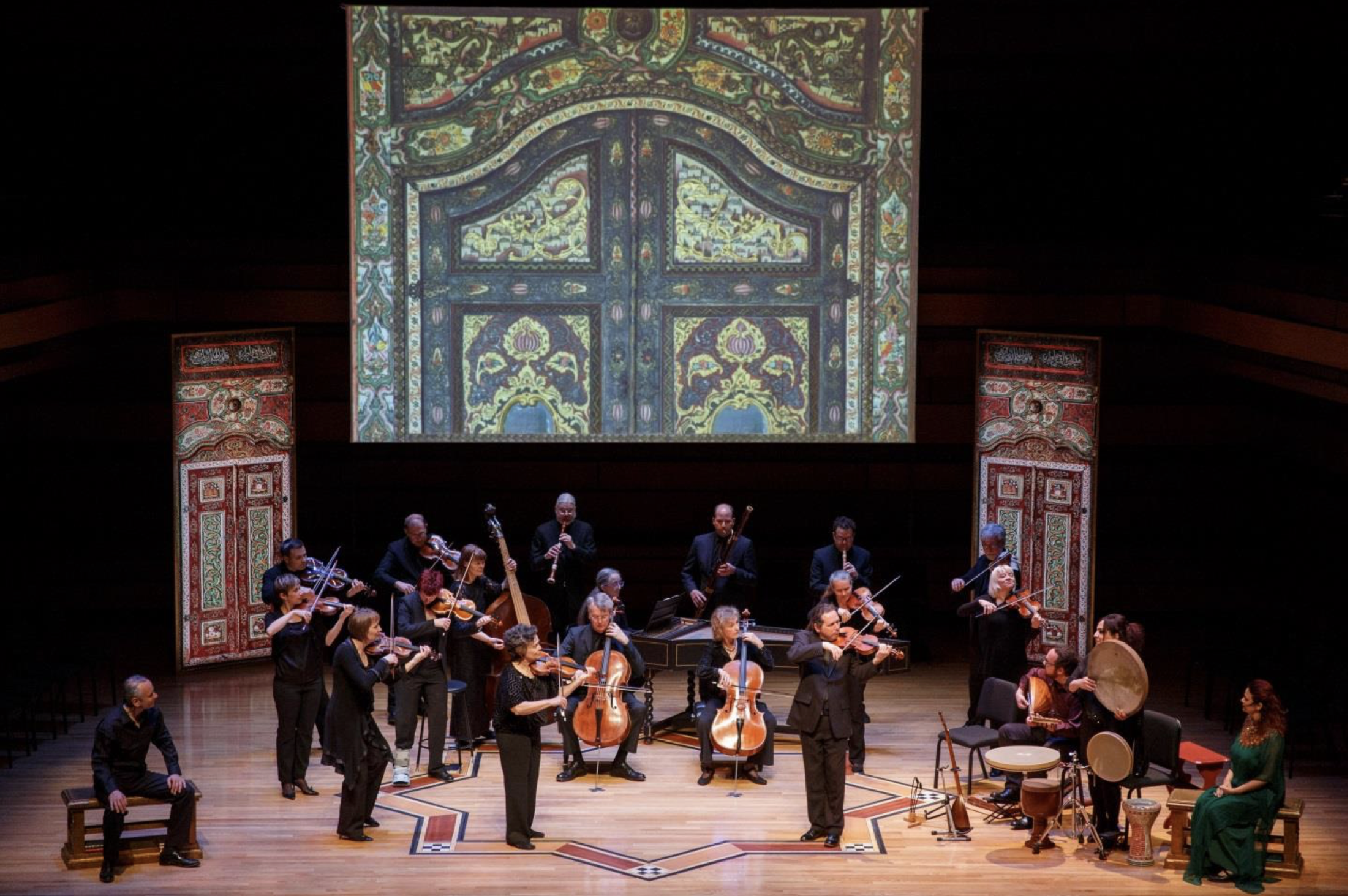
“Tales of Two Cities.” Photo by Bruce Zinger

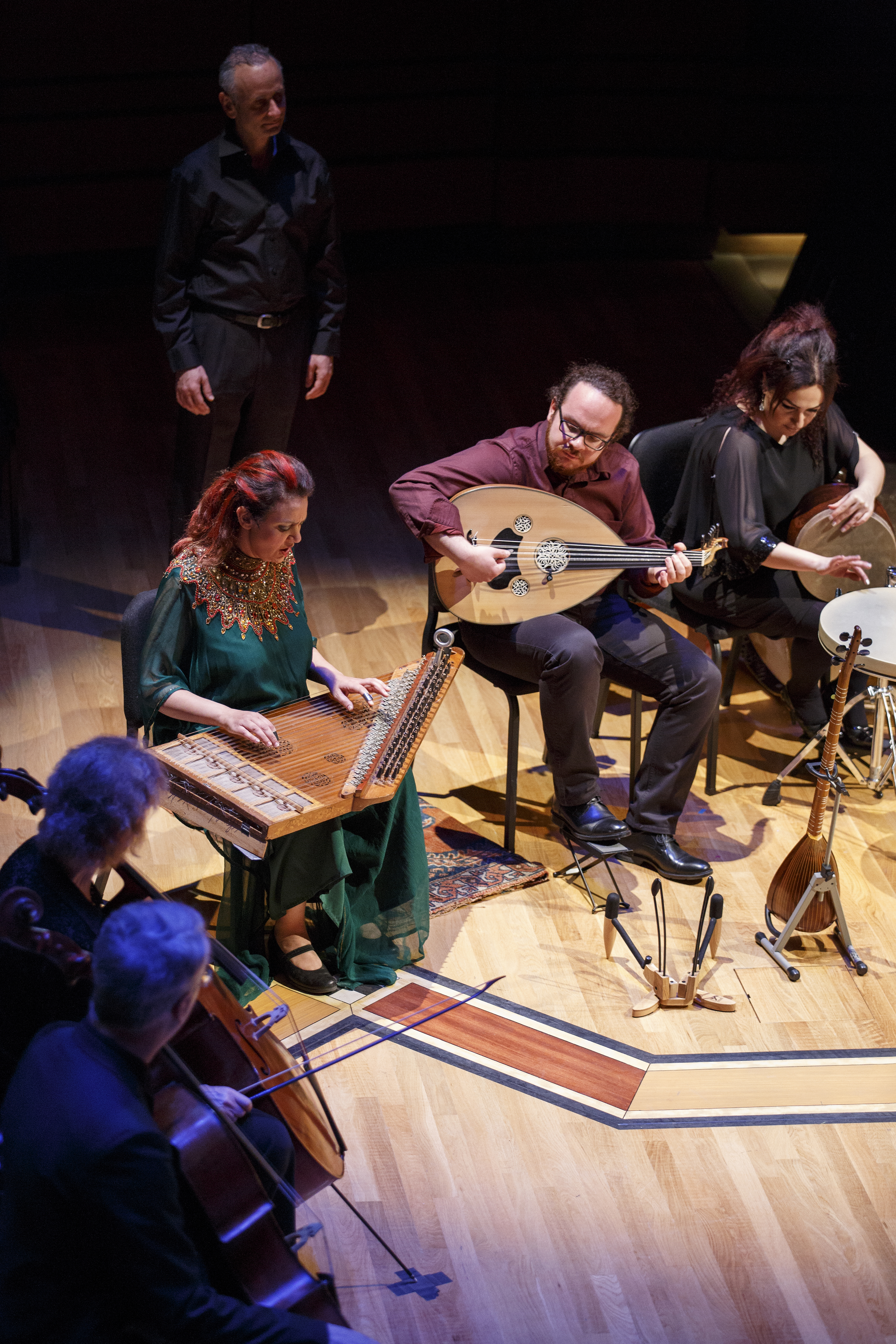
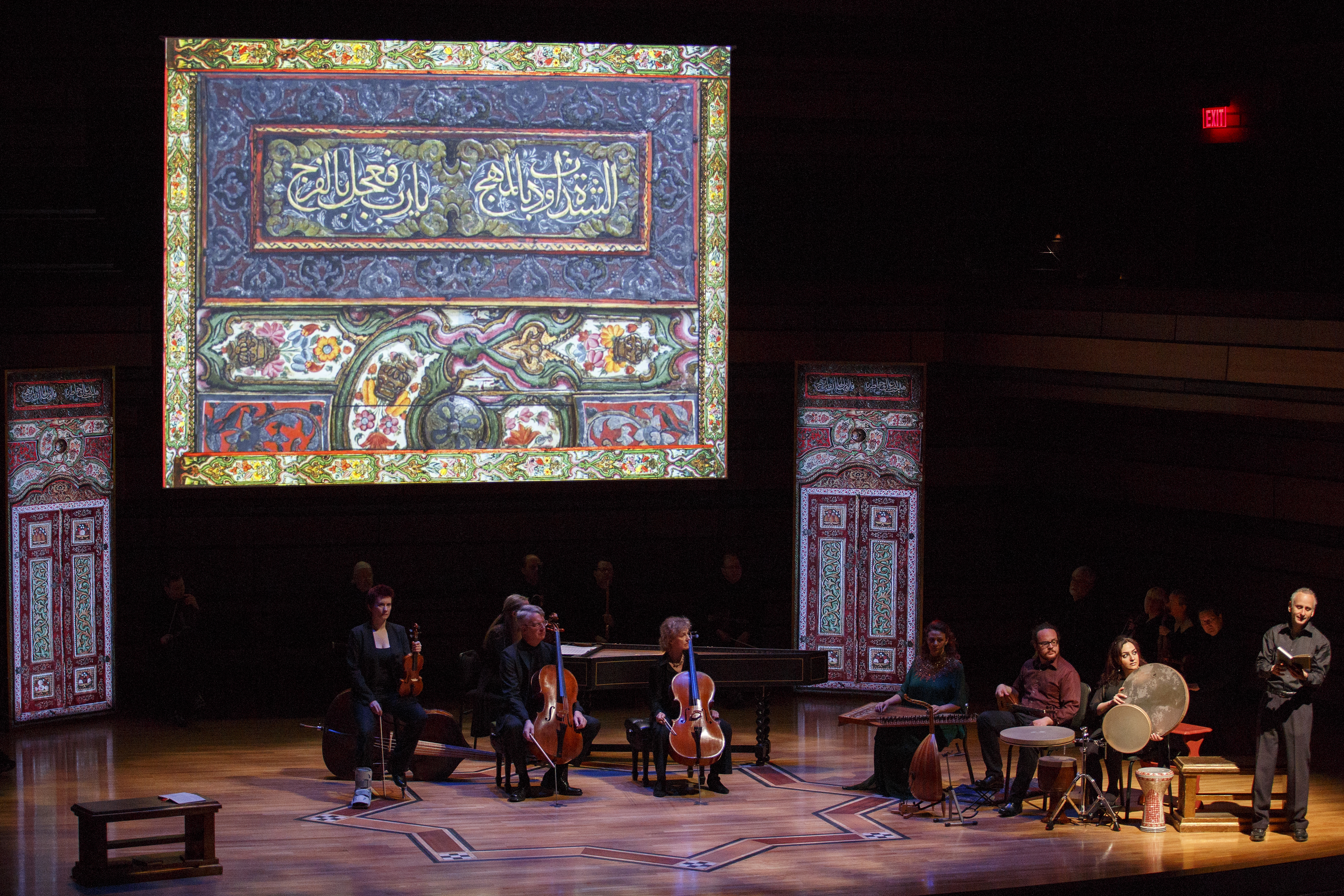
The Toronto-based Baroque orchestra Tafelmusik has such a person in bass player Alison Mackay, and the multi-media, cross-cultural program she created, “Tales of Two Cities: the Leipzig-Damascus Coffee House,” comes to Boulder Monday (7:30 p.m. March 4 in Macky Auditorium). The program includes music by Bach and Telemann, both of whom led coffee-house ensembles in Leipzig, as well as Handel, Torelli and a few other composers of the Baroque era; and performances by Trio Arabica, performing music from Syria.

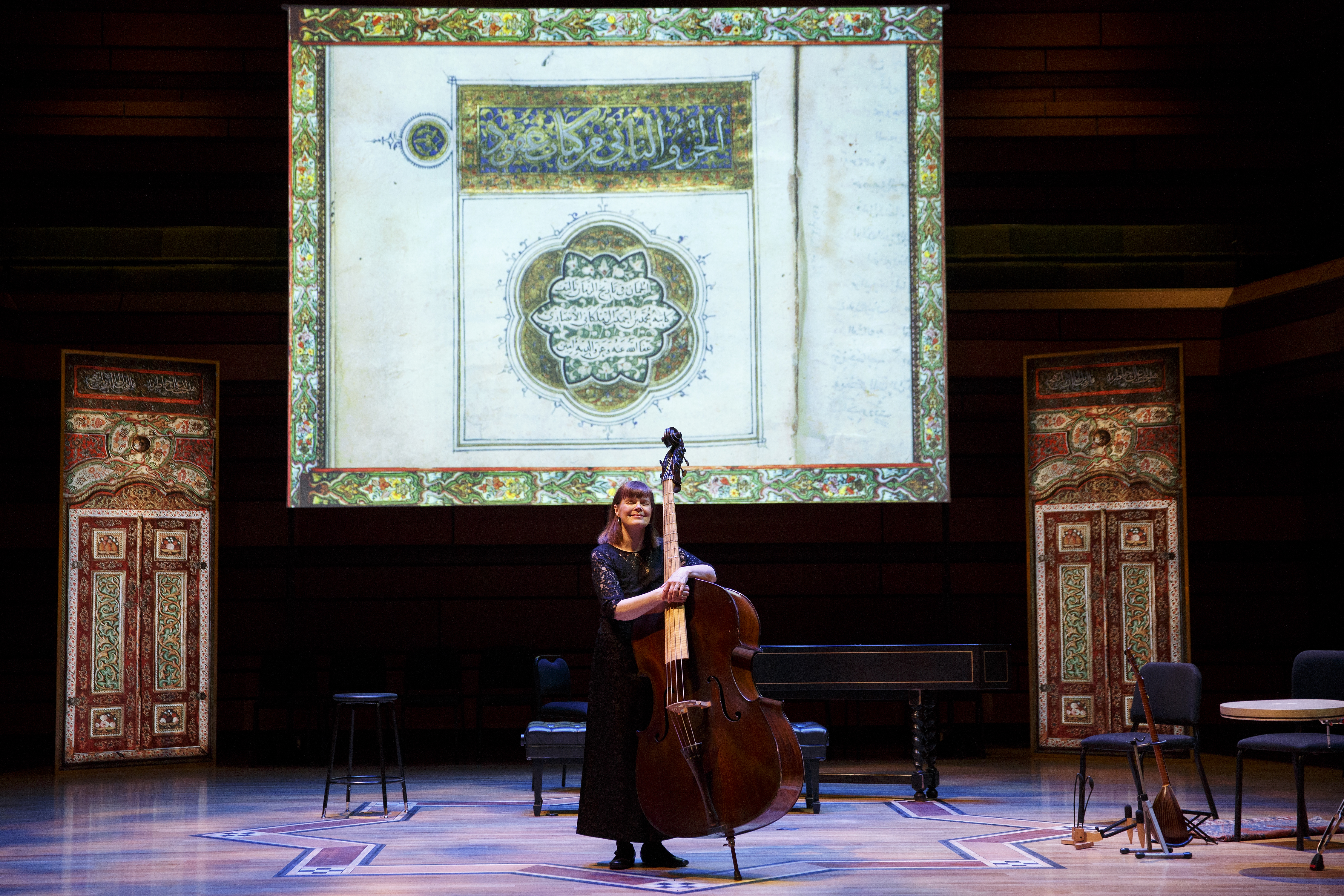
The concert is performed inside a set inspired by a room from 18th-century Damascus. The performance also features projections of images, maps and film, and a narrator who will present Mackay’s script To facilitate the movement of the players onstage, the entire program is performed from memory.

20160517TafelMusik_Tale-of-two-Cities

Alison Mackay on the set for “Tales of Two Cities.” Photo by Bruce Zinger

This is the fourth multi-media program that Mackay has created for Tafelmusik. Each of them has included projections and stage sets, and the music has all been memorized. “That’s a tall order,” Mackay says, in what may be a significant understatement.

“We all learn to memorize pieces when we’re young, but memorizing the inner part of a Handel concerto grosso is a very tall order. It’s an orchestra full of passionate people, so it was a large conversation [the first time], but in the end people decided to take it on and everyone has been thrilled at the way it’s worked out.”

While the multi-media productions get a lot of attention, most of what Tafelmusik does is traditional concerts. “It’s not as if we think that the audience needs the bells and whistles, but from time to time we do put our repertoire in a historical or a cultural context,” Mackay says. “It’s exciting for us to be able to explore the music in a different way.”

“Tales of Two Cities” grew from research Mackay was doing for another multi-media program featuring the music of J.S. Bach. In the course of doing research in Leipzig, she discovered that there was a large collection of manuscripts from Damascus at the University of Leipzig.

“I read an article about an amazing private collection of manuscripts, copied in the 17th and 18th centuries, that belonged to a family in Damascus,” Mackay says. ”There was a department of Arabic studies at the University of Leipzig. The university bought this collection, and within that collection [were] of dozens of leather-bound performer’s books that had belonged to a storyteller in the coffee houses in Syria.”

As Mackay looked into this fascinating bit of historical evidence, she started to discover how much Leipzig and Damascus had in common. Both were important cities at crossroads of commercial routes, and became centers for international trade fairs. Both were also centers of scholarship and learning.

And they had thriving coffee-house cultures at the same time.

Zimmermannsches_Caffeehaus

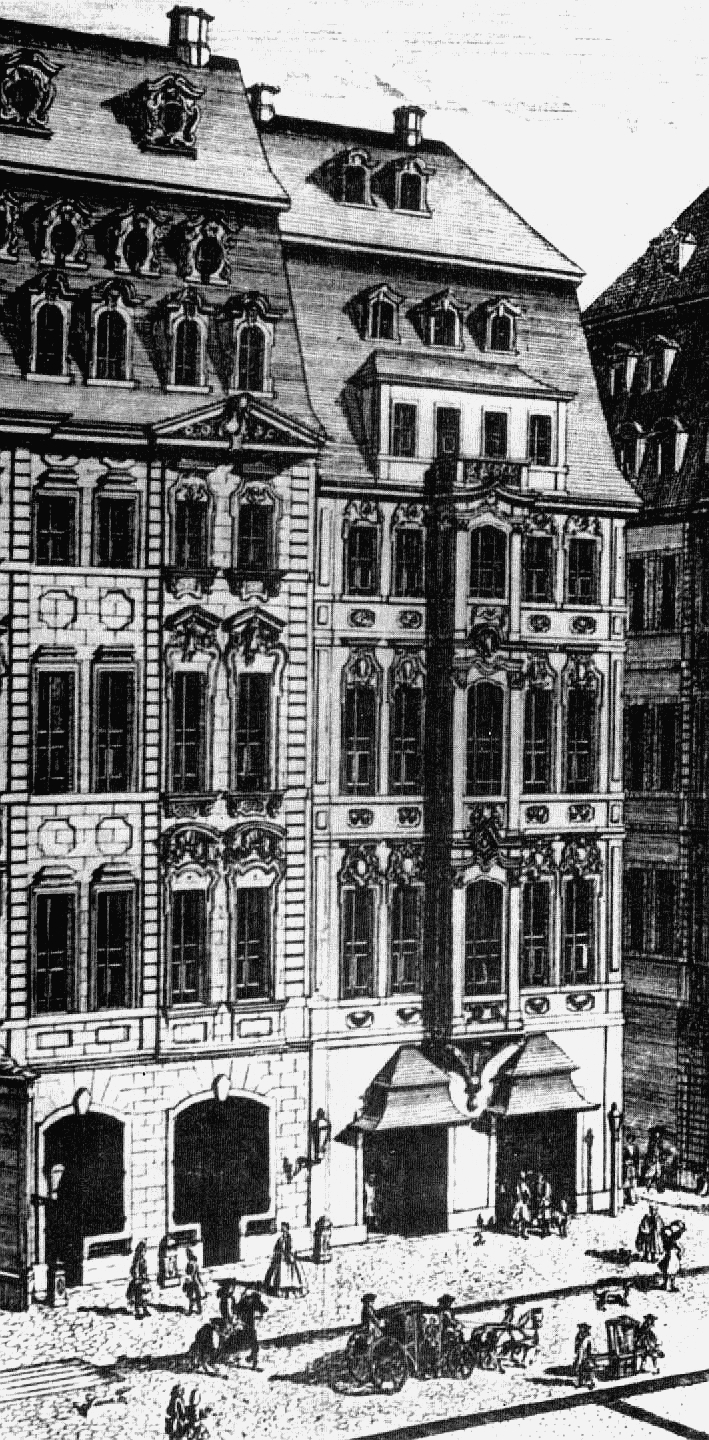
Zimmermann’s Coffee House. Detail from an engraving by Johann Georg Schreiber, 1732.

It was well known that both Telemann and J.S. Bach had conducted Leipzig’s Collegium Musicum, a club for students musicians that performed weekly concerts at Zimmermann’s Coffeehouse. This happened at exactly the time that coffee houses became centers of social and intellectual activity across Europe.

The first coffee houses opened around 1700, at the same time the development of public street lighting made it possible for respectable people to be out after dark. At that time “there starts to be this rise of places where you can go for entertainment,” Mackay explains. “It goes hand in hand with political conversation and performances of music.”

The unexpected parallels between the two cities inspired Mackay to put together the program for “Tales of Two Cities.” For the Leipzig end, she used music that could be tied to the city in some way. “Not that is much known about specific pieces that were played in Zimmerman’s Cafe, but I deliberately picked the kind of small orchestral and chamber music that would have been played by Bach’s Collegium Musicum,” Mackay says.

Telemann and J.S. Bach were shoe-ins for the program, and Mackay looked for other connections as well. “It’s known that Handel visited Telemann in Leipzig when they were both young law students interested in music, so I’ve included music by Handel,” she says.

“There’s an anecdote written by someone who was in a coffee-house ensemble in Leipzig, about the violinist (Johann Georg) Pisendel coming to play. It’s a very humorous account, and it says that he played a concerto by his teacher, Torelli. So I’ve included a movement from a concerto by Torelli.”

Other music—for example, a piece by the Venetian composer Monteverdi—illustrates the history of coffee as it moved from Syria and Turkey through Venice and then to Paris London, and Leipzig.

20160517TafelMusik_Tale-of-two-Cities

Trio Arabica with Tafelmusik. Photo by Bruce Zinger

For the music from Damascus, Mackay invited the Trio Arabica to join with Tafelmusik. In the concert program notes, she has written that “The public coffee houses of Syria were venues for musicians who performed settings of strophic poems called muwashshahs, instrumental doulabs and improvised taqsims—forms of classical Arabic music that are the specialty of Trio Arabica.”

After engaging the trio, she says, “we would meet together. I had a few ideas of places where the music could intersect, and so we spent a long time thinking about suitable pieces. There are several places where a piece of theirs is juxtaposed with pieces of ours, or a couple of places in the program where we play together.“

The one thing Mackay wants the audience to notice is that everyone is playing from memory. “It’s terrifying,” she admits. “Sometimes when you’ve done all that work, people don’t notice.

“Musicians always notice!”

# # # # #

Tales of Two Cities: The Leipzig-Damascus Coffee House
20160517TafelMusik_Tale-of-two-CitiesTafelmusik Baroque Orchestra, Elisa Citterio, music director
With Trio Arabica and Alon Nashman, narrator
Conceived, programmed and scripted by Alison Mackay

Music by Telemann, J.S. Bach, Handel, Monteverdi, Torelli, Lully, Omar Al-Batsh Mohamed Al-Qasabji, and Sheikh Abul Ela Mohamed

7:30 p.m. Monday, March 4
Macky Auditorium

Tickets

CU Theatre and Dance Department presents Sondheim’s ‘Into the Woods’

A modern perspective on what happens after ‘happily ever after’

By Peter Alexander Feb. 14 at 3:15 p.m.

“Anything can happen in the woods,” Stephen Sondheim wrote.

Into the Woods.png

That lyric tells one premise of Sondheim’s modern fairy-tale musical Into the Woods, which will be performed by the University of Colorado Department of Theatre and Dance over two weekends, Feb. 22–March 3. Theatre professor Bud Coleman directs the production, and CU alumnus Adam Ewing conducts the freelance orchestra.

In addition to all the magical things that can happen in the woods, another premise of the show is the question, just what happens after “happily ever after”? To answer that question, Sondheim and book author James Lapine imagine some very familiar fairy-tale characters all together in a single story. Each of the characters has a backstory before the fairy tale begins, and each one faces the unintended consequences of their wishes.

“You’re going to see Cinderella and her step-sisters, Jack [from] Jack and the Beanstalk, Little Red Riding Hood, but Sondheim and Lapine take their story past the traditional Grimm fairy tale,” Coleman says. “We’ll actually find out one version of what might have happened to them after they get their wish.”

Read more in Boulder Weekly.

# # # # #

Into the Woods
By Stephen Sondheim and James Lapine
CU Department of Theatre and Dance

7:30 p.m. Friday & Saturday, Feb. 22 & 23
2 p.m. Sunday, Feb. 24
7:30 p.m. Wednesday–Saturday, Feb. 27–March 2
2 p.m. Sunday, March 3
University Theatre

Tickets

Based on classic fairy tales, Into the Woods contains multiple acts of thievery, murder, accidental death, amputation, infidelity, kidnapping, family arguments, and child neglect.


Takács Quartet will play “Three Bs” plus one

Beethoven, Bartok, Beach and Barber part of the varied spring concert series

By Peter Alexander Jan. 10 at 11:30 a.m.

The Takács String Quartet is offering music by “Three Bs” for their spring concert series in Boulder — in fact, “Three Bs” plus one.

04-takacs-quartet-amanda-tipton-photography.jpg

Takács Quartet. Photo by Amanda Tipton.

These are not the traditional “Three Bs” of music history, Bach, Beethoven and Brahms. Beethoven is there, but alongside him will be the Hungarian Béla Bartók, the remarkable American composer Amy Beach, and another American, Samuel Barber.

These composers and others will be featured across three different concert programs, performed on Sunday afternoon and Monday evening pairs: Jan. 13–14, Feb. 10–11 and April 28–29. As they often do, the quartet has invited colleagues from the CU College of Music to join them on two of the programs; pianist Jennifer Hayghe in January and baritone Andrew Garland in February.

The guests bring with them pieces from outside the quartet repertoire. With Hayghe the quartet will play the Quintet for piano and strings by Beach in January. With Garland, the February program will feature songs with string quartet by Barber (Dover Beach) and Ned Rorem (Mourning Scene).

Beyond those pieces, the bulk of the music on the three programs will comprise six works from the quartet repertoire, two each by Haydn, Beethoven and Bartók, and the less known Edvard Grieg String Quartet.

Read more in Boulder Weekly.

# # # # #

Takács String Quartet
All performances in Grusin Music Hall, Imig Music Building

4 p.m. Sunday, Jan. 13 and 7:30 p.m. Monday, Jan. 14

Haydn: String Quartet in G major, op. 76 no. 1
Beethoven: String Quartet in F major, op. 135
Amy Beach: Piano Quintet in F-sharp minor, op. 67
With Jennifer Hayghe, piano

Sold out

4 p.m. Sunday, Feb. 10 and 7:30 p.m. Monday, Feb. 11

Samuel Barber: Dover Beach, op. 3
Ned Rorem: Mourning Scene
With Andrew Garland, baritone
Bartók: String Quartet No. 6
Grieg: String Quartet in G minor, op. 27

Limited seats available

4 p.m. Sunday, April 28 and 7:30 p.m. Monday, April 29

Haydn: String Quartet in C major, op. 33 no. 3
Bartók: String Quartet No. 5
Beethoven: String Quartet in C major, op. 59 no. 3

Limited seats available

Tickets 

Violinist Sarah Chang visits Boulder on a rare solo recital tour

Program includes music she loves, but she’d still like to talk about her dog

By Peter Alexander Nov. 14 at 10:40 p.m.

Violinist Sarah Chang, a celebrated concerto soloist, comes to Boulder on Friday, Nov. 16, for a rare solo recital, but she would rather talk about her dog.

i-7FBNcfQ-X5

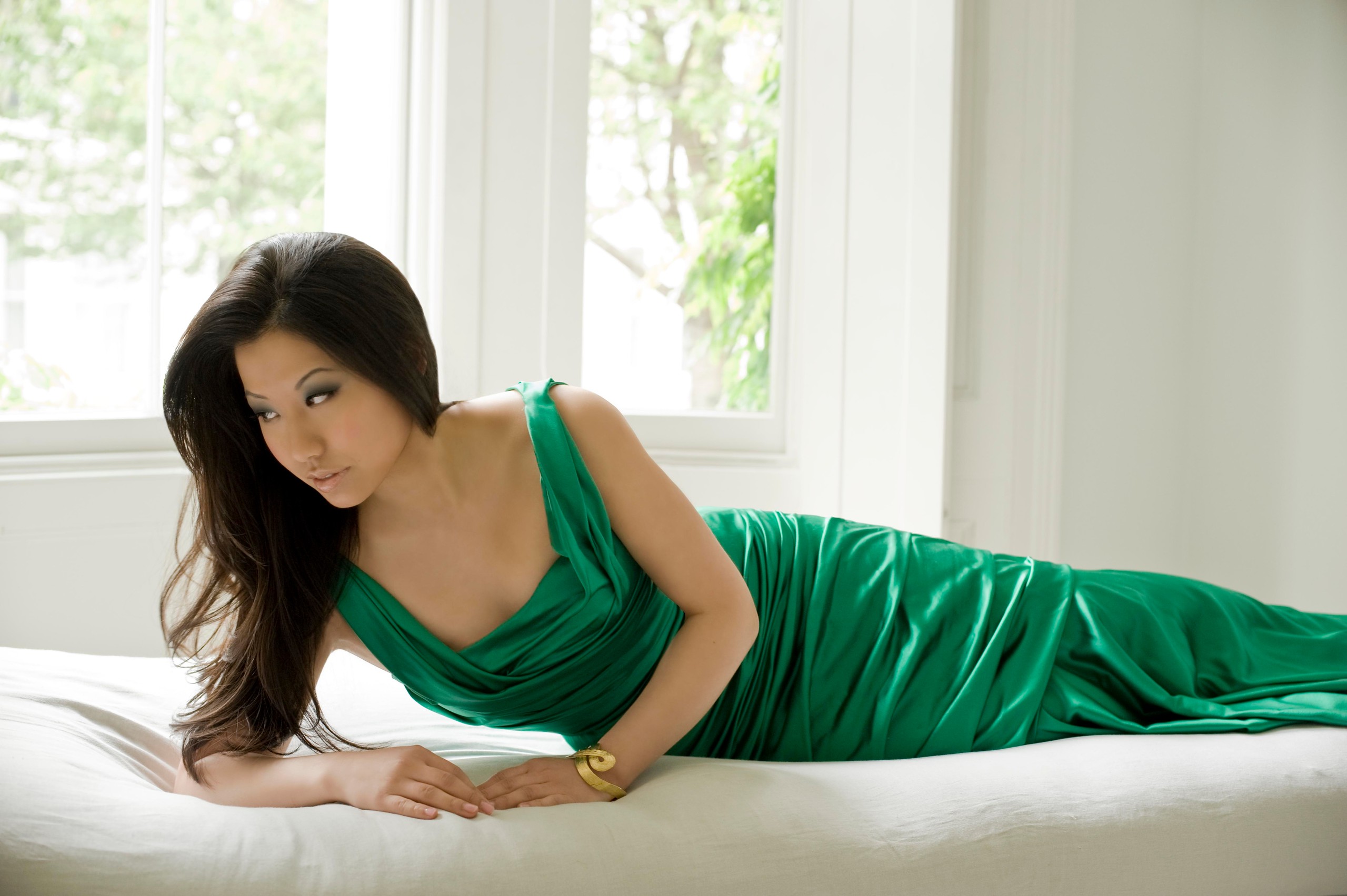
Sarah Chang. Photo by Colin Bell, under license to EI Classics

“I wish people would ask me more about my dog,” she says. “He’s the number one thing in my life, and everybody always asks me about music.”

Of course it is the music that brings her to Boulder, and she agrees to talk about that, too. Her program features three works from the late 19th-, early-20th-century era of great violin playing: Bartók’s Romanian Folk Dances, Brahms’ Sonata No. 3 in D minor and the imposing Franck Sonata in A Major.

“What I love about this program is that you have the exotic Bartók, which is so unique in its own way,” she says. “And then you have the Brahms which is so noble and so beautiful, and then you have the Franck which is just a masterpiece and probably one of the most well known sonatas for any instrument.”

Read more in Boulder Weekly.

# # # # #

Sarah Chang, violin, and Julio Elizalde, piano
7:30 p.m. Friday, Nov. 16, Macky Auditorium

Bartók: Romanian Folk Dances
Brahms: Sonata No. 3 in D minor
Franck: Sonata in A Major

Tickets

From Venice to Boulder: Music of “The Red Priest”

Vivaldi dominates program by Venice Baroque Orchestra

By Peter Alexander Oct. 31 at 10 p.m.

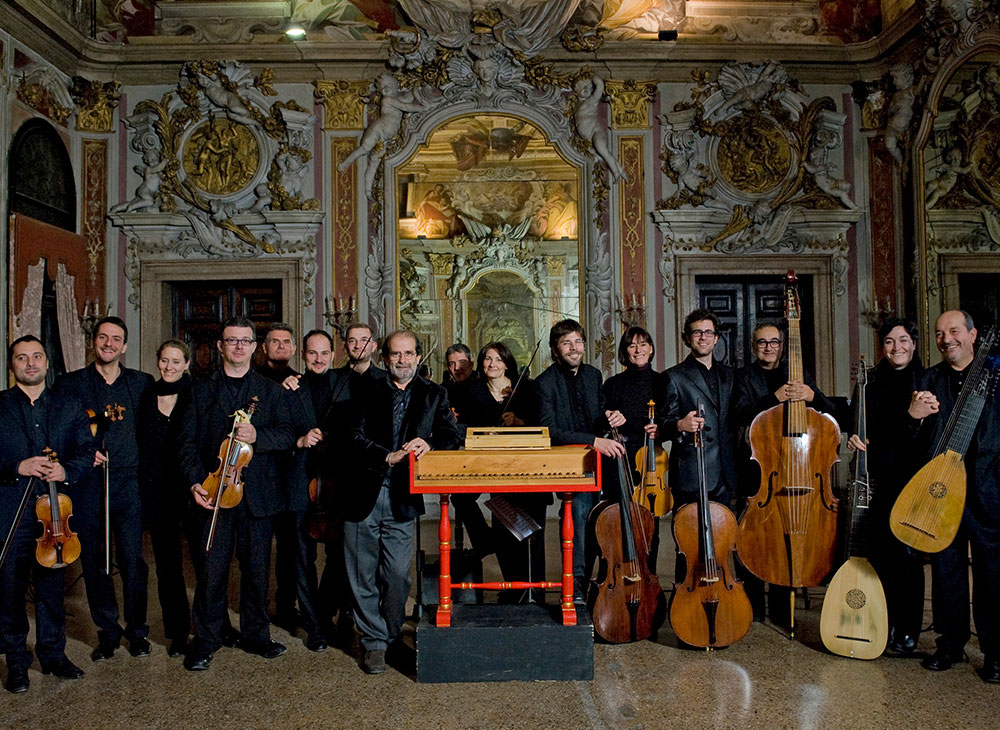
Venice.Press_Photo (1)-4K.jpg

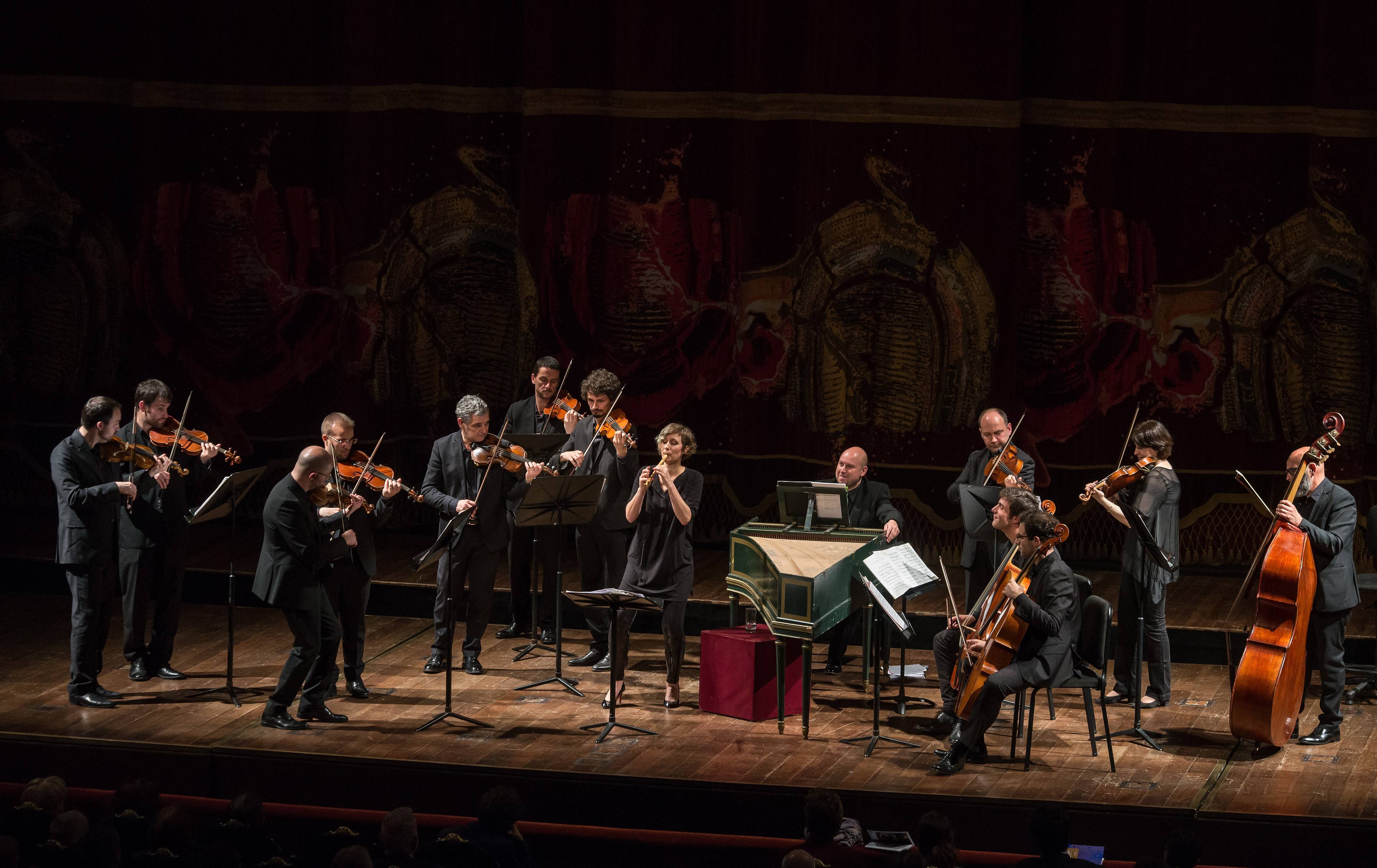
Venice Baroque Orchestra with recorder soloist Anna Fusek. Photo courtesy of CU Presents.

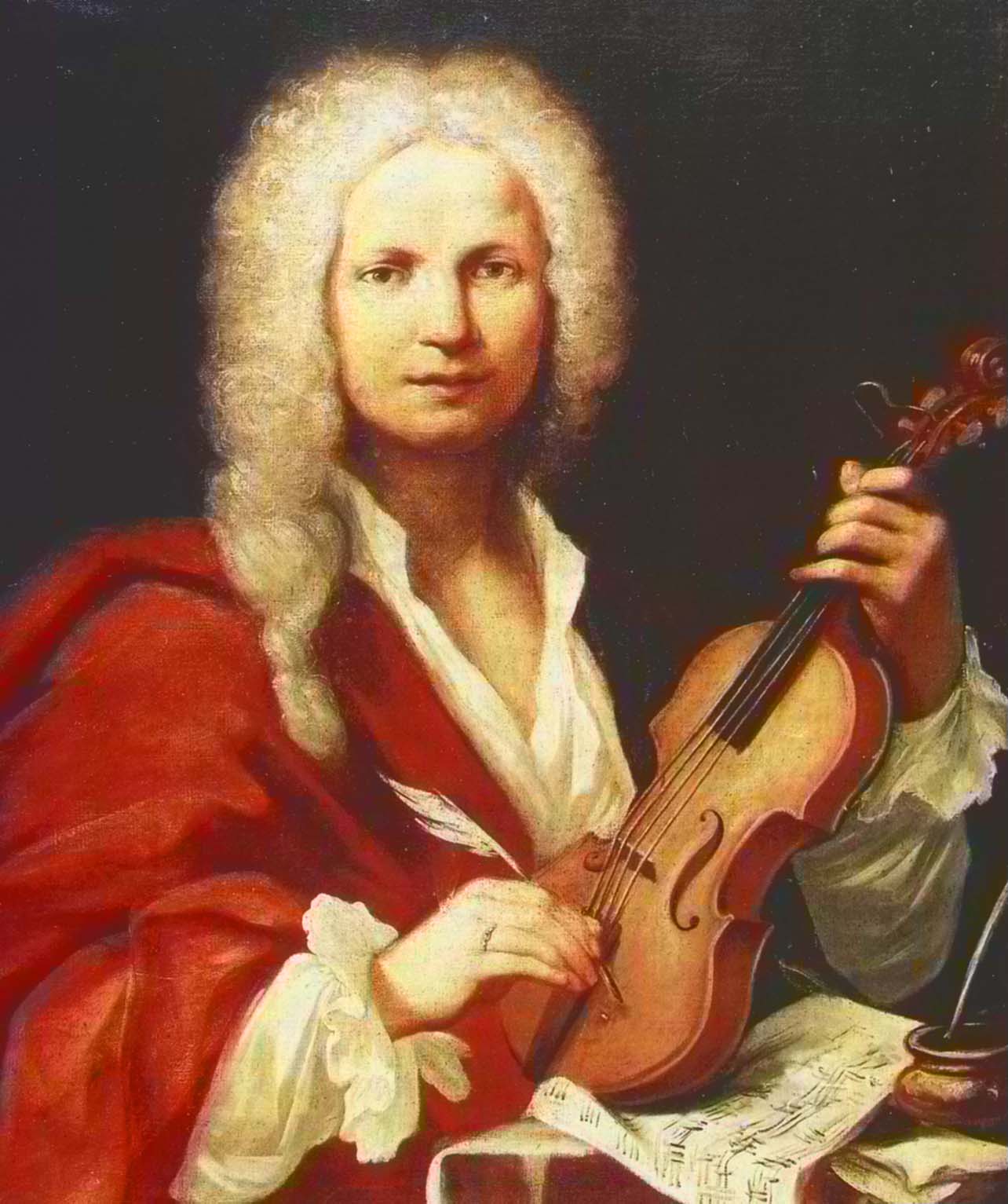
No composer represents the Baroque era in music better than “Il Prete Rosso” (The red priest), Antonio Vivaldi.

Known for his fiery red hair, he wrote almost countless concertos—more than 500—for just about every possible instrument of his day, including Le quattro stagioni (The four seasons) for violin, four of the most popular and famous of all Baroque concertos. Covering wide realms of genres, he wrote sacred music, still performed, and more than 40 operas, hugely successful in his lifetime but not often performed today.

Vivaldi

Antonio Vivaldi

His music was known and studied by Bach, who wrote pieces based on some of Vivaldi’s concertos, which still stand as examples of Baroque form, technique and style.

Vivaldi was born and lived most of his life in Venice, so it is no surprise that the Venice Baroque Orchestra (VBO), playing Friday evening (Nov. 2) in Macky Auditorium, brings a lot of Vivaldi’s music with them. In fact, their program is almost entirely music by Vivaldi—concertos and opera overtures, or “sinfonias”—except for a single concerto grosso by Francesco Geminiani, who was a native of Lucca, on the opposite side of Italy from Venice.

Alessandra DiVicenzo, a violist and member of the VBO since it was founded 21 years ago, wrote about the concert from Santa Fe, where the orchestra was on tour earlier this week. “For us Vivaldi has always a place in our programs, since the freshness of his style makes his music very natural and easy to play for us,” she writes.

“Living, or just spending most of the time in Venice could have helped us develop a sensibility about how Venetian and Vivaldi’s music could sound. When you are in Venice you realize that light and water are two elements that give Venice a special touch, so it is easy to think that Vivaldi is like water, light and clear, always changeable and never still.”

The Venice Baroque Orchestra is known for their energetic and brilliant style in playing Vivaldi’s music. This has distinguished them from some of their more staid predecessors in the Baroque performance world, and in particular providees an individual sense of personality to each work they perform.

“To us it seems natural to bring excitement to the playing of Vivaldi’s music,” DiVicenzo writes. “Everything of this can be found in his scores, which are spontaneous, rich of vitality, rhythmic, sometimes nervous, and offering sudden changes of mood—like he surely was!”

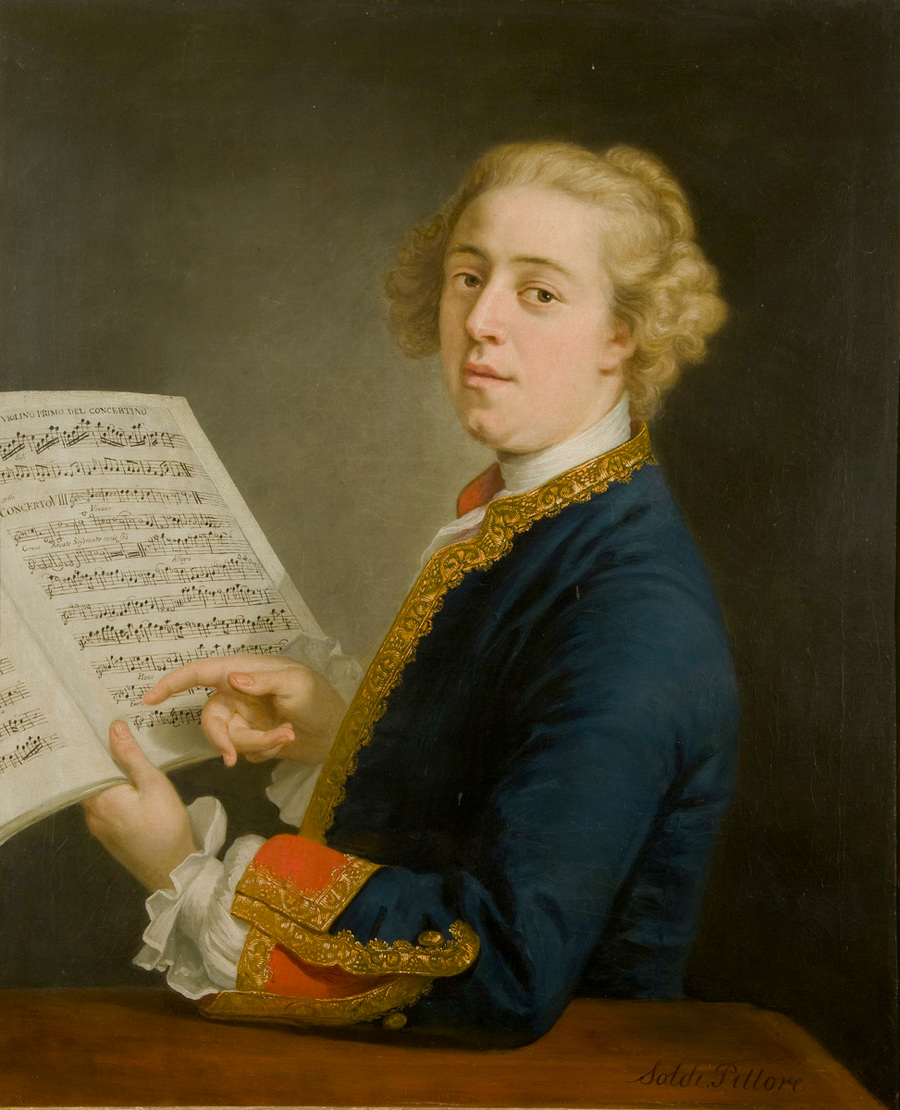
Geminiani

Francesco Geminiani

As for the non-Venetian on the program, DiVicenzo writes: “Geminiani is a very interesting composer. Maybe today his name is not so famous to a wide audience, but during the 18thcentury he was a VIP, one of the most acclaimed composers and violin virtuosos.

“He has an energy and vitality very similar to Vivaldi. All audiences appreciate it, so I’m sure Boulder’s audience will like it.”

DiVicenzo wants to call the audience’s attention to some specific aspects of the program, and of Vivaldi’s legacy. “One thing the audience could realize is that Vivaldi played a very important role in the development of the technique of many instruments, including violin, cello and flute. His solo concertos are very demanding for any performer.

“One example is the Violin Concerto in E minor, in which the soloist has very difficult passages for both right and left hand. Also the double concerto for violin and cello requires two soloists with outstanding technique. The breathtaking third movement lets the soloists show all their skill! And the program ends with the recorder concerto “Il Gardellino” (The goldfinch), one of many examples of Vivaldi’s skill in imitating nature by music.”

The concert is the second visit to Macky Auditorium by the VBO. Their previous performance here was in 2014, at which time DiVicenzo commented that the orchestra members travelled with some of the food from home. I asked her if Italians still balked at drinking American coffee.

“American espresso improved enough that Italians drink it,” she wrote. “At the San Francisco airport I heard some of us appreciating the one-shot espresso they were sipping. But nothing has changed in VBO’s equipment.

”The coffee machine continues to travel with us all over the world.”

# # # # #

Venice-1Venice Baroque Orchestra

Program of Baroque Concertos by Vivaldi and Geminiani
With Anna Fusek, recorder; Gianpiero Zanocco, violin;
Massimo Raccanelli and Federico Tiffany, cellos
7:30 p.m. Friday, Nov. 2
Macky Auditorium

Full Program

Tickets