Making music at a time of tragedy

A personal reflection in the form of a concert review.

By Peter Alexander

12239638_10153709043612365_7450372887197993418_nLast night, the Boulder Philharmonic played a concert.

They played music by Brahms and Charles Denler, the last accompanied by photographs by John Fielder. That was what was on the program, but before the announced program began, they also played the “Nimrod” variation from Edward Elgar’s Enigma Variations as a moment of solace for all of us who were feeling battered by the fierce winds blowing across our world, and as a moment of tribute to those suffering after the atrocities in Paris.

And presumably, since Paris was not even mentioned, for others around the world who are suffering in these terrible times—in Lebanon, in Syria, across Europe, in Africa, and in our own country.

One of the most beautiful four minutes of music I know, “Nimrod” is as fine an offering of solace as musicians could make. It was followed by a long period of silence, as conductor Michael Butterman and members of the orchestra held their positions from the final note. And after a smattering of applause—I will take it as an expression of gratitude for the gesture, rather than anything so routine as reward for the performance—Butterman spoke some touching and very appropriate words about how we all are feeling today.

As one of those affected by the events of the past 36 hours, the past week, the past year, I was both thankful for the opportunity to hear music lovingly played, and aware what a tiny thing a concert is in the world we now live in. Sometimes, just getting on with life is the best thing that we can do—literally the best of many choices. In that respect, the people of Paris may be an example for us all. But sometimes, too, it feels insufficient.

While “Nimrod” was sounding, the familiar words of Leonard Bernstein were projected above the orchestra: ““This will be our reply to violence: to make music more intensely, more beautifully, more devotedly than ever before.”

Sadly, these words are familiar because they seem to be quoted more and more often in these times. They are beautiful, but at some point, they are no longer enough. We will either find a way to get beyond the expression of our ideals and find a way to make a world that will accept difference, one that will make room for all of the world’s children—those of any God you prefer—or this grand experiment of human culture and civilization will come to an end.

It was a meaningful coincidence that the program opened with Brahms’s Schicksalslied (Song of destiny), performed by the orchestra with the Boulder Chorale in celebration of the group’s 50th anniversary. A setting of a poem by Friedrich Hölderlin, the work contrasts the peace of Elysium with human life, where we suffer the batterings of forces we cannot control. The central choral section, essentially a musical depiction of life in a world of chaos, is followed by music that seems to offer comfort and hope.

It turns out Boulder Phil could not have selected a better message for Nov. 14, 2015.

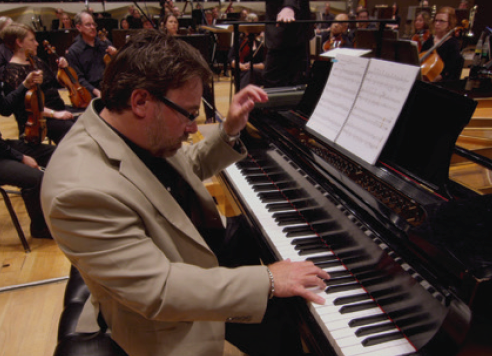
After a satisfying and meaningful performance of Brahms, Butterman and the orchestra turned their attention to music that strives for the same peace that Brahms suggests at the end of the Schicksalslied. The concert premiere of Denler’s Portraits in Season offered meditative music for piano supported and gently amplified by the orchestra. With the composer playing the solo piano part, the performance created a fitting mood of calm and contemplation.

Denler explained before the performance that the piece was not really about the seasons, but about the passages of life and the pleasure that one can find from growing older. This too seemed to fit the mood of the first half of the concert. The beautiful photography of John Fielder projected above the orchestra, and the quotes from Henry David Thoreau that appeared on some slides, added greatly to the pleasure of the occasion, and provided still more food for reflection.

The concert concluded with a mostly satisfying performance of Brahms’s Second Symphony. Here the key of D major casts a layer of light and serenity over the entire work. The audience responded with warmth.

France-Paris-Attacks_Horo-1

Candles and flowers outside La Belle Equipe restaurant in Paris, Nov. 14, 2015.

Leaving the concert hall, one re-enters a world that is not as safe or well ordered as a Brahms symphony. On a personal note, I was all the more thoughtful about humanity’s capacity for inflicting horror because just the day before—near the same time as the attacks in Paris—I happened to visit the site of one of the worst tragedies in our own country’s history: the Sand Creek Massacre by U.S. volunteers of Cheyenne and Arapahoe women, children, and men who were flying the stars and stripes and a white flag.

Suffering, it seems, is ageless. So as we enjoy the best fruits that human culture has to offer, whether it be in the music of Johannes Brahms and Charles Denler, or the photos of John Fielder, or whatever art, music and literature you may enjoy in the coming weeks, we should all take the time to reflect on how precious and fragile is the world we imagine that we live in. If we fail to do so, we may pay a terrible price.

_____

Lightly edited for clarity Nov. 15, 2015.
 

Brahms’ destiny, Denler’s melodies and Fielder’s photos at Boulder Phil.

Thoreau quotes compliment world concert premiere of Denler’s Portraits in Season.

By Peter Alexander

Charles Denler

Charles Denler

Composer Charles Denler has always felt close to nature, so it makes sense that the world concert premiere of his Portraits in Season for piano and orchestra would be supplemented by the work of two other nature-loving artists: the American essayist Henry David Thoreau and Colorado photographer John Fielder.

Saturday’s performance by the Boulder Philharmonic and conductor Michael Butterman will feature Denler as piano soloist (7:30 p.m. Nov. 14 in Macky Auditorium; tickets). During the performance, Fielder’s photographs will be projected on a screen above the orchestra, where quotes from Thoreau will appear before each of the score’s movements.

Denler’s Portraits will be bookended by two pieces by Brahms, a composer who also enjoyed the natural world on his solitary walks in the Vienna woods. The concert will open with the Schicksalslied (Song of Destiny), performed with the Boulder Chorale in celebration of their 50th anniversary, and end with the Symphony No. 2 in D major.

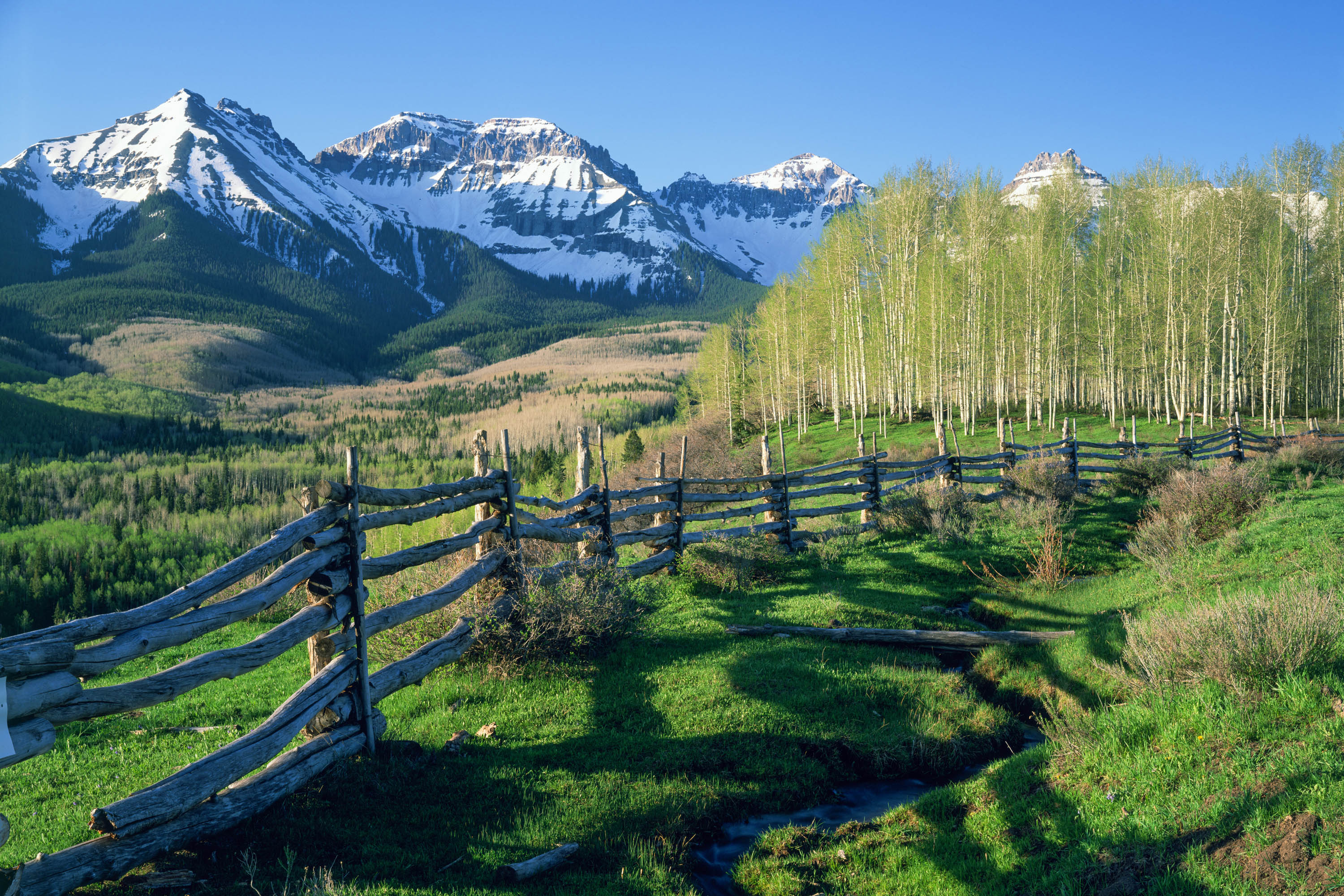
Sneffels Range Spring, San Juan Mountains. Colorado. Photo by John Fielder

Sneffels Range Spring, San Juan Mountains. Colorado. Photo by John Fielder

Butterman says that the idea of having images accompany Denler’s music occurred to him the very first time he heard it. Denler had compiled digital recordings of the music—now released on an album—as he was working on it.

“I thought it was very fun music,” Butterman says. “But as I was listening to it, I wanted to see something. I wrote back and said this fits with our focus on local composers, and also nature and music together, but what about adding some visuals? He said ‘fantastic!’”

Adding images to Denler’s music was more than logical, since he is best known as a film composer. And Fielder, known for his nature photography throughout Colorado, seemed an ideal choice, too. For one thing, his photos have often been featured with music: this will be the fourth performance by a Colorado orchestra this year to use his photos.

Boulder audiences will remember that Fielder’s work was featured by the Colorado Music Festival last summer in performances of music by Sibelius and Beethoven. His photos were also featured in performances in Breckenridge and Steamboat Springs.

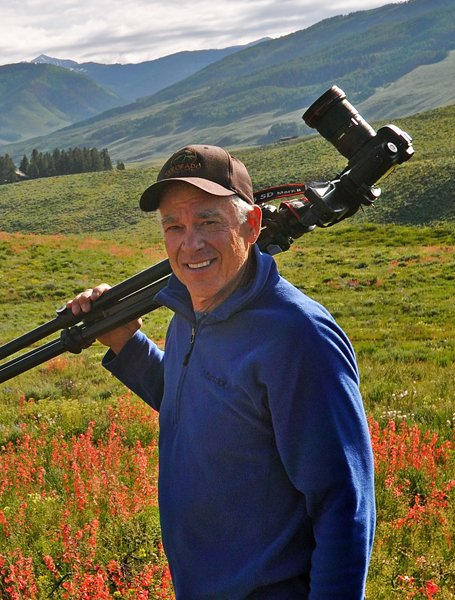
John Fielder. Photo by Cari Linden.

John Fielder. Photo by Cari Linden.

“I’ve been putting music to my slides for years,” Fielder says. “I love the experience—the whole is greater than the sum of the parts when you put music and imagery together.”

Fielder, who is recognized for his books and calendars of Colorado scenes, is deeply devoted to the outdoors. “I regard nature as not just views,” he says. “I enjoy being outdoors in the wilderness. The sound, the smell, the taste and the touch, as well as the views, are what make nature sublime for me.”

Portraits in Season has movements that pass through two complete years, and then suggest the start of another of life’s continuing cycles. And Denler intends this very much as a metaphor.

“The underlying meaning is walking through life,” he says. “I want people to think about that— to listen to this music and see that growing older is a gift. We should celebrate every single day and embrace the idea of aging.”

Denler’s music is often inspired by visual images, whether films that he is writing for, or personal experiences for his concert music. “This particular suite is based on visuals that I have from hiking the ponds and lakes (of) South Platte Park, walking along the Highline Canal, and even in my backyard,” he says.

Each movement is associated with a specific memory, even though the listeners will not know the locations they are associated with. And the Thoreau quotes are not directly associated with the locations, either.

“I’m a native New Englander, and I always gravitated toward (Thoreau’s) work,” Denler explains. “He wrote about nature from the context of living inside of it, and I wanted that reflected in the music. Sometimes, the quote just made sense for that season, (so) it may not reflect particular areas here in Colorado.”

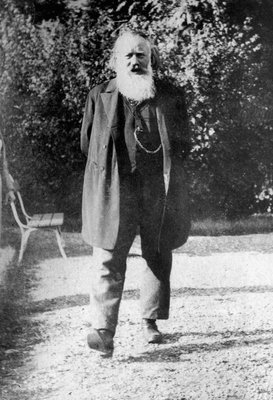
Johannes Brahms

Johannes Brahms

Butterman chose Brahms for Denler’s companion on the program, because he sees a connection between Denler, nature, and the Viennese composer. “Brahms never wrote anything that he called ‘Babbling Brook’ or something,” he says. “But yet, when I think about composers who drew nourishment from nature, he’s actually the first composer that comes to my mind.

“The energy and the centeredness that he drew from long walks in the Vienna Woods strikes me as a little bit like Thoreau—somebody who needed to be away from people and by himself in nature. They (both) found their batteries recharged by the experience.”

Of the two works by Brahms, the Second Symphony will be the most familiar. “It’s full of all of the hallmarks of Brahms’s music that I really love,” Butterman says. “The rhythmic ambiguity, his ability to mix the serenade-like quality of his woodwind writing with much more accented and aggressive writing in the strings. But there’s an overlaying of sort of a placid character to it.”

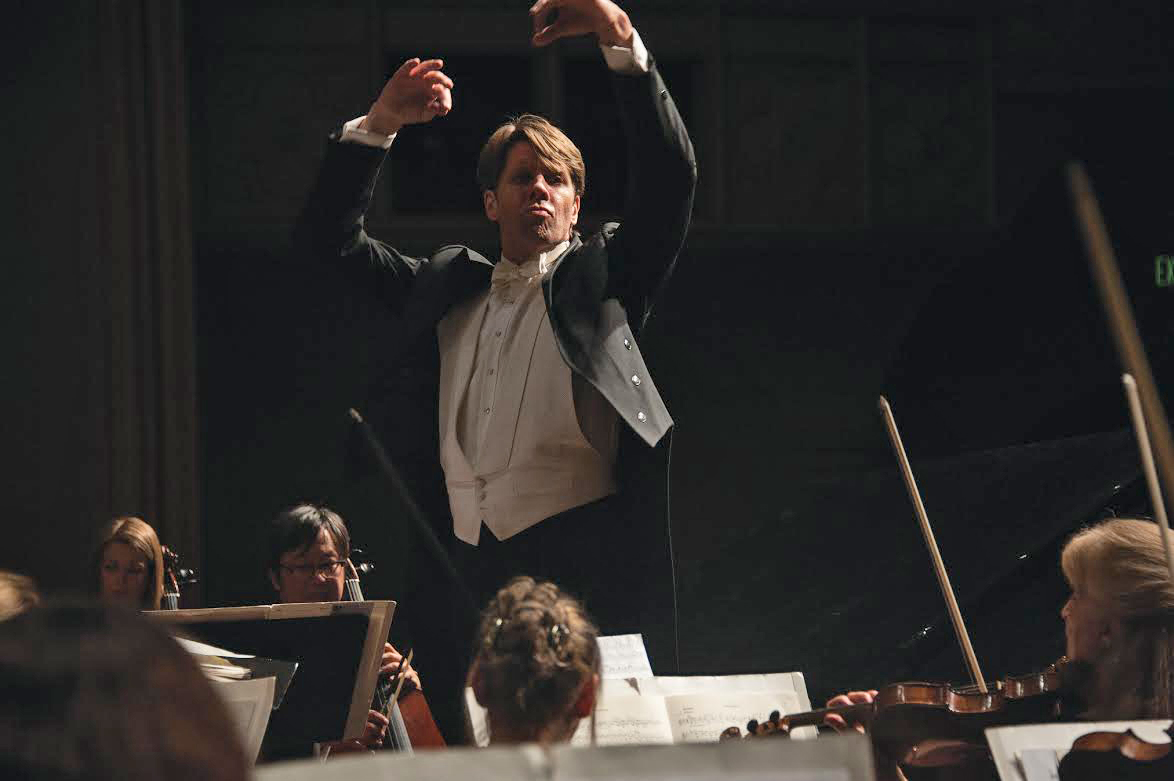
Michael Butterman

Michael Butterman

The Schicksalslied, on the other hand, has placid moments, but they are definitely not part of Brahms’s depiction of human destiny, which is one of turbulence and forces beyond human control. “I love the beauty of the outer segments,” Butterman says, “and then the turbulence of what the chorus sings in the middle is a dramatic contrast.”

The beginning seems to be a description of Elysium, but that peaceful realm is contrasted with our life on earth. In the central choral section, “we are buffeted by fate, thrown hither and yon by forces that we have no ability to influence or control,” Butterman says. “It basically says that things are really nice up above, wherever that may be, but down here it’s every man for himself.”

Henry David Thoreau

Thoreau

The text ends there, but Brahms has added a closing orchestral section that provides a ray of hope for a better existence at the end. Which brings us back to Denler’s contemplative and comforting Classical/New Age score, which seems to evoke the peace that Brahms only hinted.

Or in the words from Thoreau’s Walden that Denler has chosen for one of the movements, when “the day and night are such that you greet them with joy, and life emits a fragrance like flowers and sweet-scented herbs . . . all nature is your congratulation and you have cause momentarily to bless yourself.”

# # # # #

Portraits in Seasons

Boulder Philharmonic Orchestra, Michael Butterman, music director,
with Boulder Chorale, Charles Denler, piano, and photos by John Fielder

World concert premiere of Portraits in Season for piano and orchestra, by Charles Denler
Johannes Brahms: Schicksalslied and Symphony No. 2 in D major

7:30 p.m. Saturday, Nov. 14
Macky Auditorium

Tickets

Related events:
7:30 p.m. Wednesday, Nov. 11: Free Café Phil open rehearsal at the Dairy Center for the Arts
6:30 p.m. Saturday Nov. 14, before the concert: Pre-concert talk at Macky

Charles Denler’s CDs and John Fielder’s books will be on sale in the lobby before and after the performance.