Offerings from the Boulder Symphony and Boulder Chamber Orchestra
By Peter Alexander April 24 at 8:40 p.m.
The Boulder Symphony agrees to disagree for its upcoming Curiosity Concert (3 p.m. Saturday, April 26 at Grace Commons; details below).
Curiosity Concerts are aimed at children ages four to 12, but structured to appeal to the entire family. For April 26, the musical content revolves around a playful showdown between Mozart and “Snooty, Professor of Musical Snobbery.” Through their debates and the sharing of favorite pieces and styles, they will explore the diversity of musical preferences.
The program under the direction of Devin Patrick Hughes features selections from a wide variety of both classical and popular pieces, including portions of Vivaldi’s Four Seasons, Tchaikovsky’s Serenade for Strings, Khachaturian’s “Sabre Dance” from the Gayane ballet suite, “Fireworks” from Harry Potter and “Enter Sandman” by Metallica.
The music is selected to illustrate various styles, including sad contemplative music, musical madness, the description of weather in music, and how instruments can sing like a human voice. Pop and classical styles will be contrasted with the same tune played in both styles, and the characteristics of film music will be demonstrated.
The 45-minute program will be preceded and followed by an “instrument petting zoo” provided by Boulder’s HB Woodsongs, allowing children to see and try instruments.
# # # # #
Spring Curiosity Concert: “Agree to Disagree” Boulder Symphony, Devin Patrick Hughes, conductor
Program includes music from:
Vivaldi: The Four Seasons
J.S. Bach: Orchestral Suite No. 3 in D major
Nicholas Hooper: “Fireworks” from Harry Potter and the Order of the Phoenix
Samuel Barber: Adagio for Strings
Mozart: Presto from the Divertimento in D major, K136
Tchaikovsky: Serenade for Strings
Beethoven: Grosse Fuge
Khachaturian: “Sabre Dance” from Gayane
Richard Strauss: Also sprach Zarathustra (Thus spake Zarathustra)
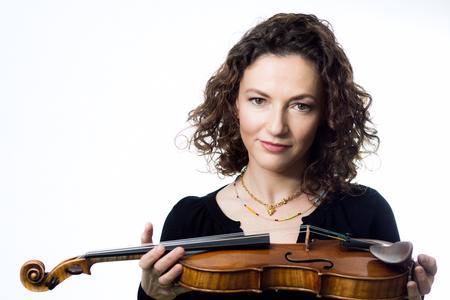
The Boulder Chamber Orchestra will wrap up its current season of Mini-Chamber Concerts featuring pianist Jennifer Hayghe as artist in residence Saturday (7:30 p.m. April 26; details below).
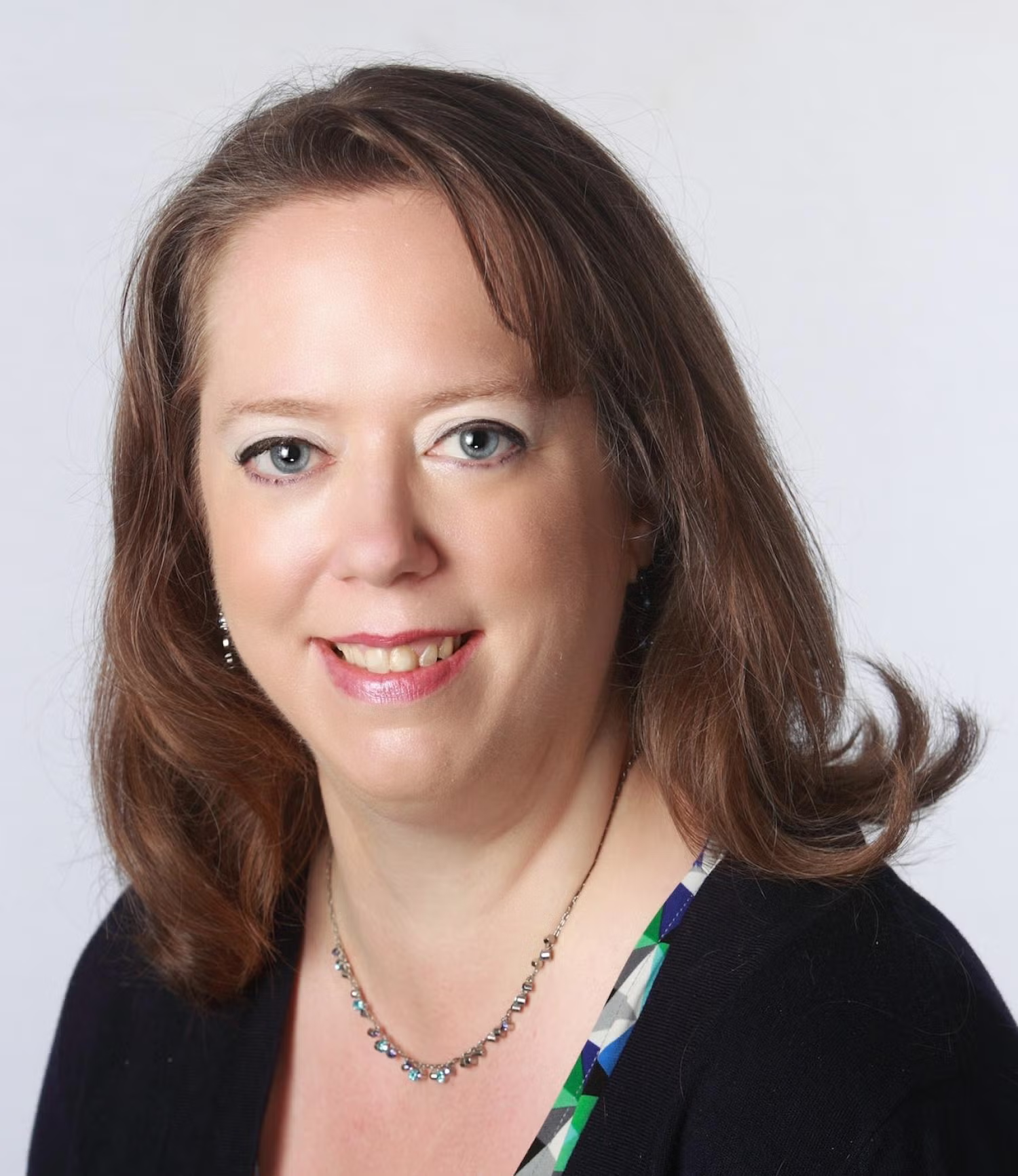
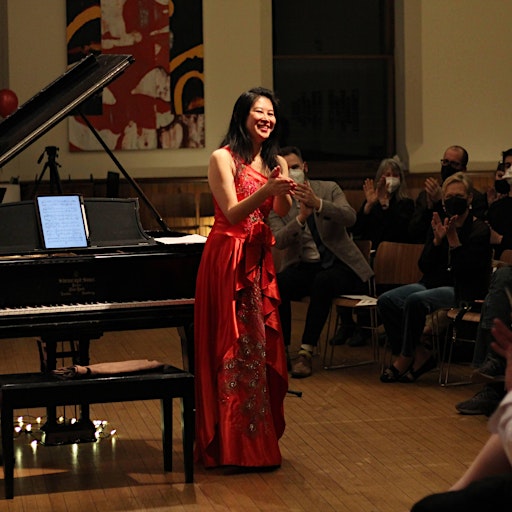
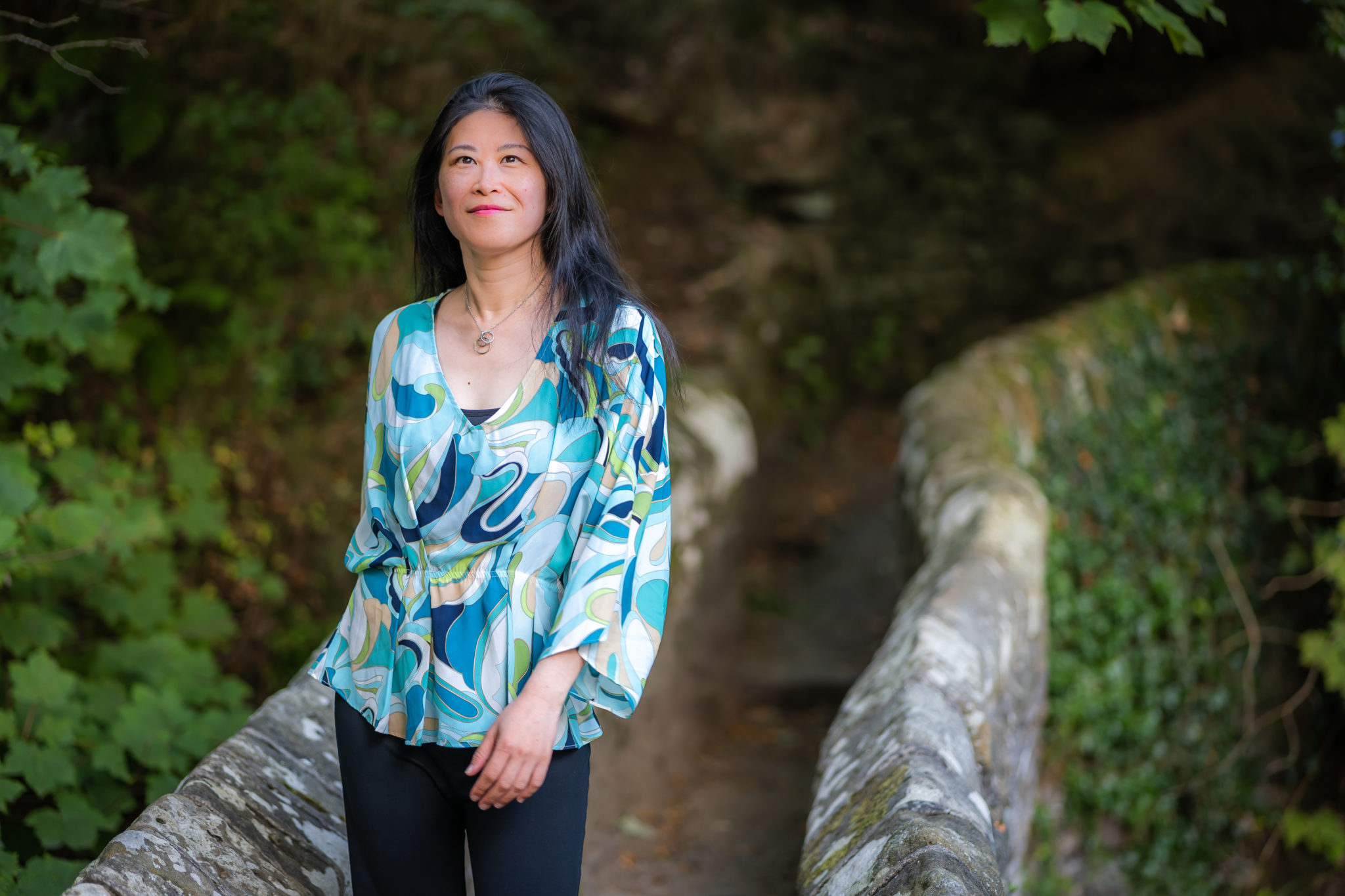
Jennifer Hayghe
The program, titled “Chamber Music Diamonds in the Rough,” features four works that are not often performed, in part because of their unusual instrumentation. Two of the composers—Aram Khachaturian and Max Bruch—are known for works that are featured on standard orchestral programs, but the other two—Mel Bonis and Nikolai Kapustin—are unfamiliar to American audiences.
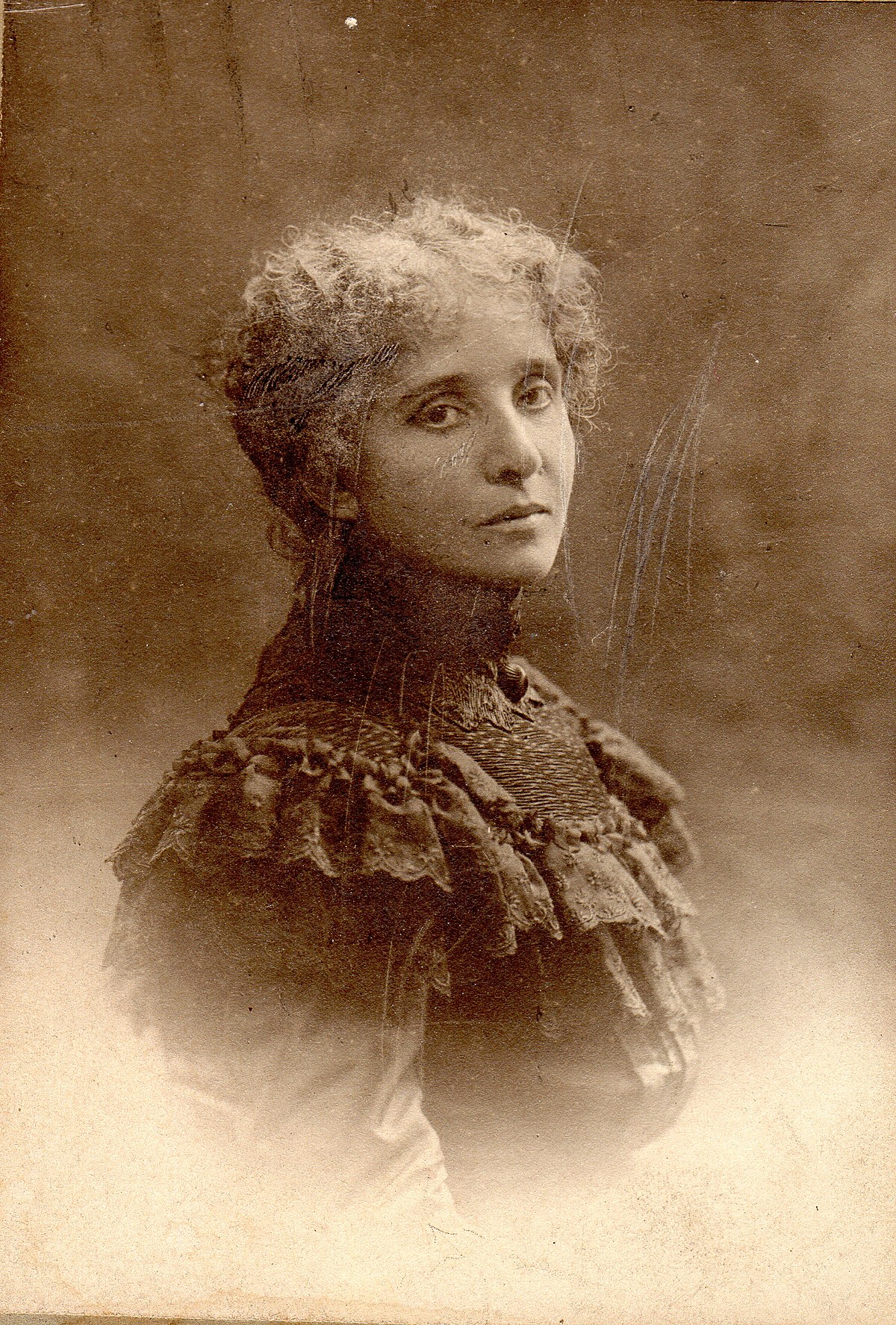
In fact, the music of Mélanie “Mel” Bonis is currently undergoing a period of rediscovery after many years of obscurity. Born in 1858, Bonis taught herself to play piano and entered the Paris Conservatory at 16. She was in the same class with Debussy, and studied composition with César Franck.
Mel Bonis
Bonis gave up music for a number of years when her parents arranged her marriage to an older businessman who disliked music, but returned to composition later in her life. Composed in 1903, her three-movement Suite en trio for flute, violin and piano is one of the works she wrote after her husband’s death..
Known for his “Sabre Dance” from the ballet Gayane, his Piano Concerto and other orchestral music, Khachaturian wrote only two pieces of chamber music, both of them during his student years at the Moscow Conservatory. The Trio for violin, clarinet and piano features folk tunes and styles throughout, including highly ornamented passages in the first movement and variations on a folk-like melody in the finale.
The German Romantic composer Max Bruch is best known for his Scottish Fantasy and two concertos for solo violin with orchestra. He wrote his Eight Pieces for clarinet, viola and piano in 1910, when he was 72, for his son who was a professional clarinetist. He used the same combination of clarinet and viola in another work he wrote for his son, the Concerto for clarinet, viola and orchestra in E minor, op. 88.
Kapustin was born in Ukraine in 1937 and studied composition at the Moscow Conservatory. He discovered jazz around 1954 and became known as a jazz pianist and played in a jazz quintet and big band. His music combines elements of classical, jazz and pop styles, but he always insisted that he was a composer, not a jazz musician. “I never tried to be a real jazz pianist,” he once wrote. Composed in 1998, the Trio for flute, cello and piano is one of his most popular chamber works.
# # # # #
“Chamber Music Diamonds in the Rough” Jennifer Hayghe, piano, with Rachelle Crowell, flute; Kellan Toohey, clarinet; Hilary Castle, violin; and Erin Patterson, cello
Mel Bonis: Suite en trio, op. 59
Khachaturian: Trio for violin clarinet and piano
Max Bruch: Eight Pieces for clarinet, viola and piano
Nikolai Kapustin: Trio for flute, cello and piano, op. 86
7:30 p.m. Saturday, April 26, Boulder Adventist Church
Music for winds from the BCO, quartets and quintet from the Takács Quartet
By Peter Alexander Jan. 10 at 1:45 p.m.
The Boulder Chamber Orchestra (BCO) will present a program of French music for piano and winds for its third Mini-Chamber program of the season Saturday (7:30 p.m. Jan. 11; details below).
The orchestra’s current artist-in-residence, pianist Jennifer Hayghe, will be joined by members of the BCO to perform works by Vincent d’Indy, Albert Roussel, Francis Poulenc, Florent Schmitt and Louise Farrenc.
BCO artist in residence Jennifer Hayghe
The program that was curated by Hayghe offers an opportunity to hear pieces and composers that are little known to American audiences. French music in particular is less often programmed here than German and Austrian works. The least familiar, and the earliest of the composers is Farrenc, who lived in the 19th century. A successful concert pianist, she became the first woman to hold a permanent position at the Paris Conservatory, which she maintained for 30 years, from 1842 to 1872.
All the other composers lived and worked in the 20th century. The most familiar is probably Poulenc, who died in 1963. Known for his opera Dialogues des Carmélites (Dialogue of the Carmelites), his Organ Concerto and his choral Gloria, he also wrote a large number of pieces for chamber ensembles.
The other three composers—d’Indy, Roussel and Schmitt—were active in the first half of the 20th century. Offering a rare taste of a time and place that rarely shows up in concert programs in the U.S., Mini-Chamber 3 is a welcome opportunity for the chamber music audience to expand their horizons beyond the routine.
# # # # #
Boulder Chamber Orchestra Mini-Chamber 3 Jennifer Hayghe, artist in residence, piano With Rachelle Crowell, flute; Brittany Bonner, one; Kellan Toohey, clarinet; Kaori Uno-Jack, bassoon; and Devon Park, horn
The Takács Quartet will be joined by pianist Margaret McDonald to present one of the preeminent chamber works of the 19th century, Brahms’s Quintet in F minor for piano and strings.
The program will also feature Beethoven’s early String Quartet No. 1 in F major, op. 18 no. 1—actually the second quartet of the set to be written—and the String Quartet no. 1 by Stephen Hough, which was written for the Takács.
Hough’s quartet was first written to be heard alongside the Ravel String Quartet and Ainsi la nuit (Thus the night), a string quartet by the French composer Henri Dutilleux. Hough subtitled the quartet “Les Six Rencontres” (The six re-encountered), a reference to a group of early 20th-century composers active in France that did not include either Ravel or Dutilleux. Hough wrote that the subtitle “has in it a pun and a puzzle: the six movements as an echo of ‘Les Six,’ although there are no quotes or direct references from those composers; and ‘encounters’ which are unspecified.”
Margaret McDonald, guest pianist with the Takács Quartet
The six movements of the quartet have titles that indicate places, presumably in the Montparnasse district of Paris, where an encounter with a composer from “The Six” might have occurred: On the boulevard, in the park, at the hotel, at the theater, in the church and at the market. The Takács Quartet premiered “Les Six Rencontres” in Costa Mesa, Calif., Dec. 8, 2021.
One of the best known major pieces of chamber music from the 19th century, Brahms F minor Piano Quintet evolved through several forms before being finished as a quintet. It was first written as string quintet, a version that the composer later destroyed, and then as a duet for two pianos, and finally as a quintet for string quartet with piano. All of this stretched over six years, prior to the Quintet’s premiere in 1868.
# # # # #
Takács Quartet With Margaret McDonald, piano
Beethoven: String Quartet in F Major, op. 18 no. 1
Stephen Hough: String Quartet No. 1, “Les Six Rencontres” (The six re-encountered)
Johannes Brahms: Piano Quintet in F Minor, op. 34
4 p.m. Sunday, Jan. 12 7:30 p.m. Monday, Jan. 13 Grusin Music Hall
Prize-winning quartet from Japan will play Haydn, Ligeti and Brahms
By Peter Alexander Oct. 30 at 4:55 p.m.
Quartet Integra, the 2024 guest ensemble on the Takács Quartet’s campus concert series at CU Boulder, will perform in Grusin Music Hall Sunday afternoon and Monday evening (4 p.m. Nov. 3 and 7:30 p.m. Nov. 4; details below).
Following a traditional program format of classical-contemporary-Romantic works, they will perform Haydn’s String Quartet in B minor, op. 33 no. 1, György Ligeti’s String Quartet No. 2 and Brahms’s String Quartet No. 3 in B-flat major. Tickets are available for both in-person and online attendance.
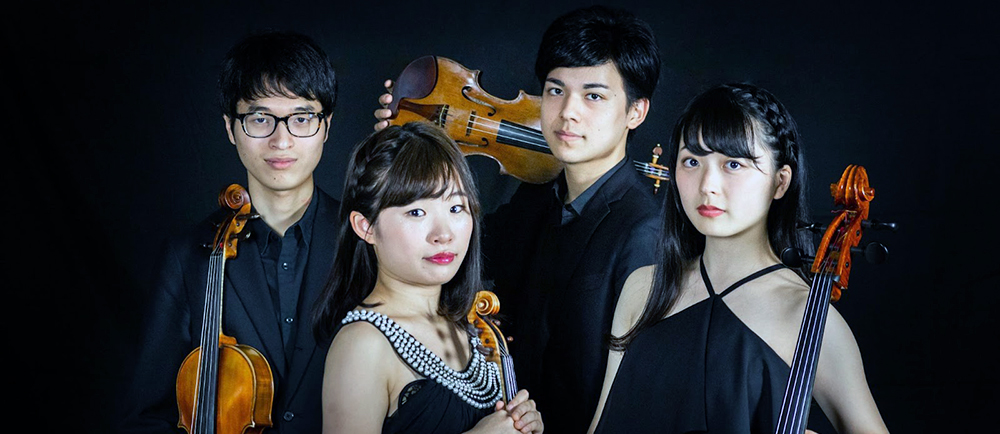
Quartet Integra
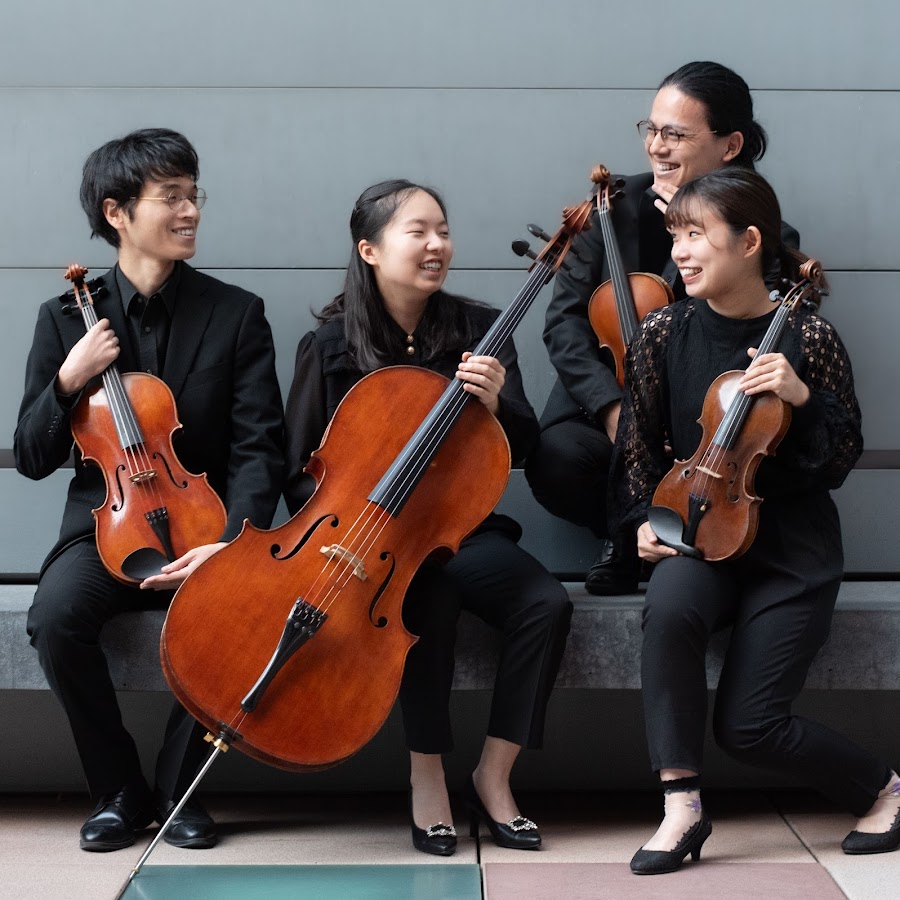
The Quartet Integra—violinists Kyoka Misawa and Rinato Kikuno, violist Itsuki Yamamoto and cellist Ye Un Park—formed in 2015 and began their studies at the Toho Gakuen School of Music in Tokyo. They continued their academic work as a quartet as Fellows at the Suntory Hall Chamber Music Academy. They are currently enrolled in the Chamber Ensemble-in-Residence Program at the Colburn School in Los Angeles.
The Quartet won Second Prize and the Audience Award at the 2022 ARD International Music Competition, First Prize at the 2021 Bartók World Competition, and First Prize, the Prize of Beethoven and Grand Prix Award at the 2019 Akiyoshidai Music Competition. Upcoming performances include a New York debut at the Schneider Concert series at the New School, a contemporary recital at Boston Court, a recital as part of the Discovery Series at the La Jolla Music Society and the ECHO Chamber Music Series in El Cajon, California, among others.
Past festival performances include the Suntory Chamber Music Garden Festival, the Kanazawa, Hukuyama and Takefu International Festivals. Quartet Integra has commissioned many new works from Japanese composers and given more than a dozen world premieres.
In 1779 Haydn’s employer, Prince Nicolaus Esterhazy, granted the composer the right to sell his works to publishers. One of the first sets of works where Haydn took advantage of that freedom was his set of six string quartets, composed in 1781 and known as Op. 33. Haydn wrote to a number of amateur musicians inviting them to subscribe to manuscript copies of the quartets, which he said were written “von einer Neu, gantz besonderer Art” (a new and entirely special way).
There is disagreement whether the six quartets truly represent a “new way” of composition, or the phrase was just salesmanship by Haydn. Either way, the set is regarded as one of Haydn’s major works defining the classical style. In addition to the manuscript parts Haydn offered, the quartets were published separately in Vienna, Berlin and London. Consequently, they were widely known, and may have been the inspiration for the six quartets Mozart wrote 1782–85 and dedicated to Haydn.
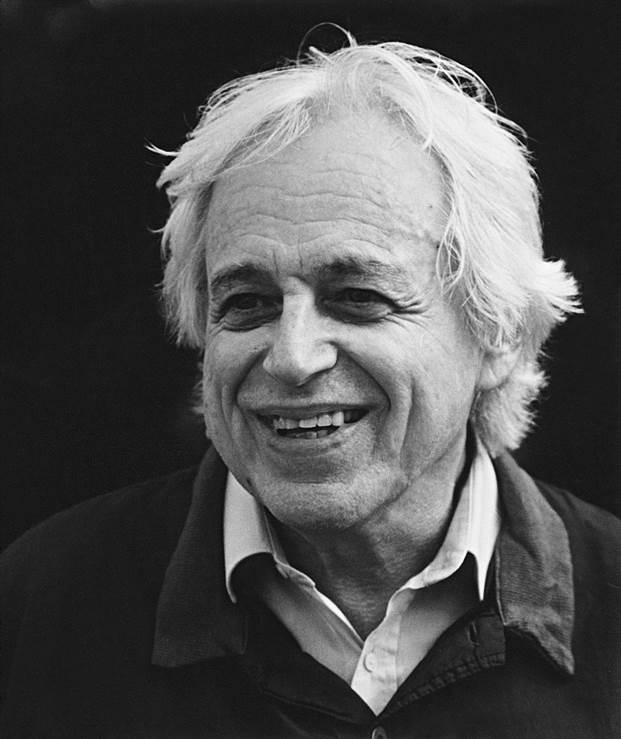
György Ligeti
The second of Hungarian composer György Ligeti’s four string quartets was written in 1968 and dedicated to the La Salle Quartet, who played in the premiere in 1969. The five movements share related material but represent five different styles of musical motion, from gentle lyricism to mechanical pizzicato to fast and aggressive, and other stops in between.
Brahms composed three string quartets that have survived, as well as a large number of early quartets that he destroyed. The one known as his Third Quartet, composed in 1875, was dedicated to Theodor Wilhelm Engelmann, an amateur cellist, in spite of which it contains no major themes or solos for the cello. Later Brahms wrote to Engelmann, “This quartet rather resembles your wife—very dainty but brilliant.”
It is one of Brahms’s most animated and cheerful works. The first and fourth movements are particularly playful, full of bouncing, propulsive rhythms. The central movements—a wistful slow movement and an agitated waltz movement—are move serious in mood.
# # # # #
Quartet Integra
Haydn: String Quartet in B minor, op. 33 no. 1
György Ligeti: String Quartet No. 2
Brahms: String Quartet No. 3, op. 67
4 p.m. Sunday, Nov. 3 and 7:30p.m. Monday, Nov. 4 Grusin Music Hall
Programs outside the norm, from the 18th to the 21st centuries
By Peter Alexander Sept. 18 at 10:05 p.m.
The Boulder Bach Festival (BBF) and guest artists will take audiences back to 18th-century Venice in a program entitled “Anonimo Veneziano” (Anonymous Venetian) 4 p.m. Saturday, Sept. 21, at the Dairy Arts Center in Boulder.
The program, with the BBF’s music director/violinist Zachary Carretin and the COmpass REsonance ensemble (CORE Ensemble), will feature violinist Nurit Pacht from NewYork, harpsichordist Chris Holman from Cincinnati, and theorbist Keith Barnhart, an historical plucked instruments specialist who is also the BBF’s educational coordinator.
Nurit Pacht
The program opens with the famous Adagio attributed to 18th-century Italian composer Tomaso Albinoni and featured in many film scores. In fact, the Adagio was composed by 20th-century Italian musicologist Remo Giazotto. A scholar of Albinoni’s music Giazotto claimed that the Adagio was based on a fragment of an Albononi trio sonata that he found on a manuscript that has since mysteriously disappeared.
The remainder of the program will be filled out with genuine Albinoni works, the complete Sinfonie e Concerti a cinque (Sinfonias and concertos for five instruments), op. 2, that were published in Venice in 1700. This important collection is rarely performed complete. The BBF performance, which will be played without intermission, is expected to take approximately 75 minutes.
Pacht holds a degree in historical performance from the Juilliard school and is known as a specialist in both music by living composers, including works written for her, and music of the Baroque. She was a top prize winner in the Irving Klein International Music Competition in California, the Tibor Varga International Violin Competition in Switzerland, and the Kingsville International Music Competition in Texas. She has toured widely in Europe and the United States. She teaches privately in New York City.
# # # # #
“Anonimo Veneziano” Boulder Bach Festival CORE Ensemble, Zachary Carrettin, conductor/violinist With Nurit Pracht, violin, Chris Holman, harpsichord, and Keith Barnhart, theorbo
Remo Giazotto: “Adagio in G minor by Tomaso Albononi”
Tomaso Albinoni: Sinfonie e Concerti, op. 2
4 p.m. Saturday, Sept. 21 Dairy Arts Center Gordon Gamm Theater
The Boulder Chamber Orchestra’s (BCO)chamber concert titled “Mixed Timbres,” postponed from last April due to the power outage caused by high winds, will be presented at 7:30 p.m. Saturday, Sept. 21, in the Boulder Seventh-Day Adventist Church.
The concert will feature the BCO’s 2023-24 artist-in-residence, pianist Hsing-ay Hsu, performing with two members of the orchestra—cellist Julian Bennett and clarinetist Kellan Toohey. All four works on the program use the ensemble of piano, clarinet and cello, a mix of timbres that has a limited but interesting repertoire.
Hsing-ay Hsu
Beethoven’s Op. 11 is one of the earliest works for the combination. It is sometimes known as the “Gassenhauer Trio,” taken from the popularity of the theme that Beethoven uses for variations in the final movement. In Vienna, a Gassenhauer (from Gasse, an alleyway) referred to a simple song that was so popular that it was heard all over town. The theme Beethoven used was taken from a popular music theater work, L’amor marinaro (Seafaring love) by Joseph Weigl.
Brahms’s Trio op. 114 is one of four chamber works the composer wrote for the clarinetist Richard Mühlfeld in the last years of his life. Brahms’s admiration for Mühlfeld’s playing was reflected in the comment of one of the composer’s friends who wrote that in the Trio, “it is as though the instruments were in love with each other.”
Like Brahms’s Trio, Fauré’s D minor Trio was one of his last compositions. Although Fauré originally planned the Trio for piano, clarinet and cello, it was published as a traditional piano trio, with violin in place of the clarinet. The BCO performance of the first movement restores the instrumentation that Fauré first imagined for the trio.
Emily Rutherford’s “Morning Dance” for piano, clarinet and cello was commissioned by Toohey in 2017. A native of Colorado, Rutherford is a graduate of Westmont College in Santa Barbara, Calif., and the Longy School of Music in Los Angeles.
# # # # #
“Mixed Timbres” Hsing-ay Hsu, BCO Artist in residence, piano With Boulder Chamber Orchestra members Kellan Toohey, clarinet, and Julian Bennett, cello
Gabriel Fauré: Piano Trio in D minor, I. Allegro ma non troppo
Beethoven: Trio in B-flat major for piano, clarinet and cello, op. 11
Brahms: Trio in B-flat for piano, clarinet and cello, op. 114
The Sphere Ensemble, a 14-member string ensemble, will celebrate the 100th anniversary of the premiere of Gershwin’s Rhapsody in Blue in 1924 with performances of their own all-strings arrangement of the Rhapsody.
The program, presented Saturday in Boulder and Sunday in Denver (Sept. 21 and 22; details below), will also include works by other jazz musicians including James P. Johnson, Hazel Scott and Winton Marsalis. Also on the program are arrangements of music from the Squirrel Nut Zippers, The Turtles and Andrew Bird; and pieces by Shostakovich, Stephen Foster and the classical-era composer Christoph Willibald Gluck, among others.
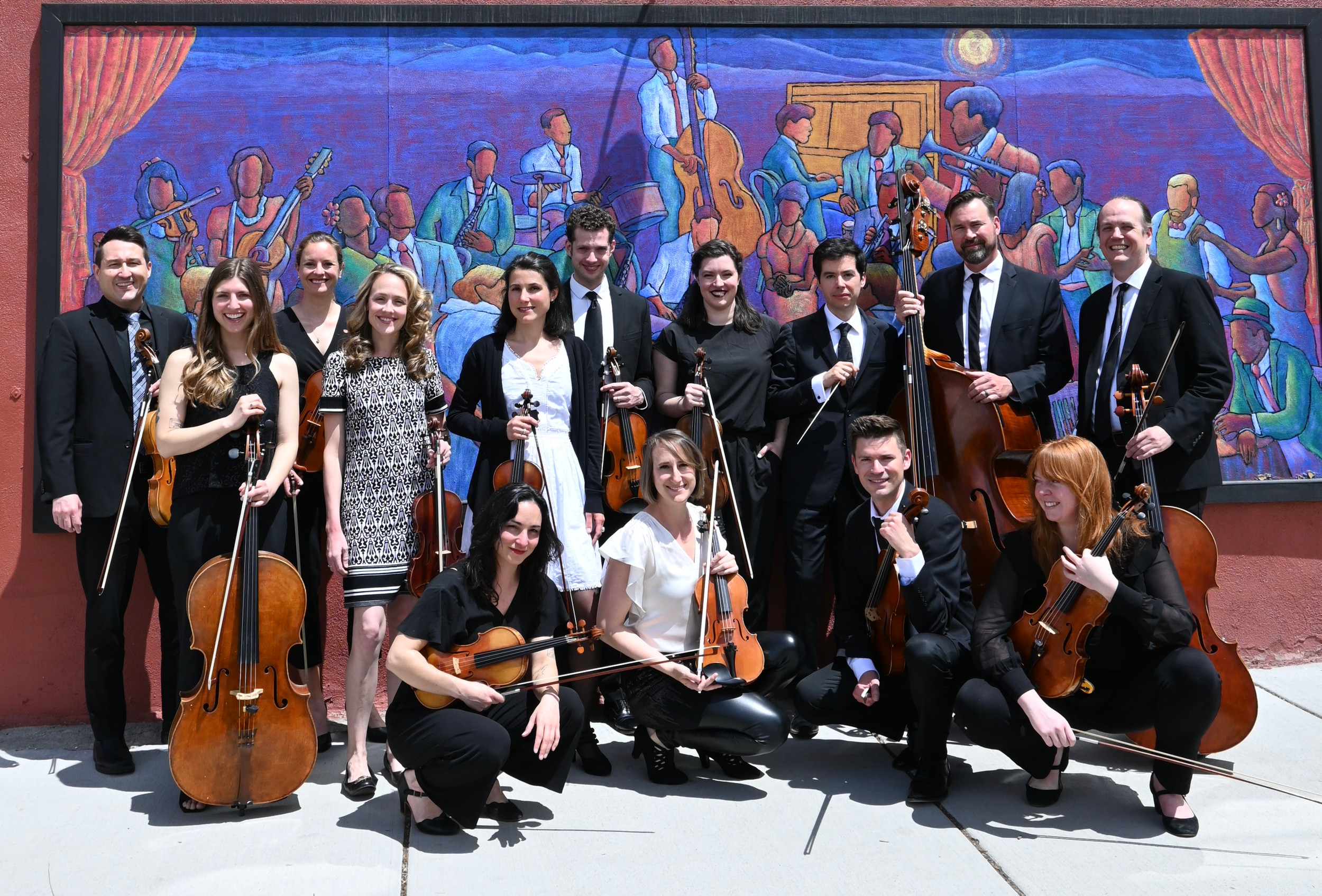
Sphere Ensemble
In addition to the live performances, a live stream will be available from 7:30 p.m. Saturday, Sept. 21 through 10 p.m. Sunday, Sept. 29.
This kind of eclectic programming, mixing sources and genres, is typical of the Sphere Ensemble, often in arrangements made by members of the ensemble. The “About” page on their Website explains, “We prioritize music by composers that are often overlooked in classical music programs. . . . From classical to classic rock, from baroque to hip hop, Sphere always chooses music that excites us.”
# # # # #
“Bridges” Sphere Ensemble
Aldemaro Romero: Fuga con Pajarillo
Dmitri Shostakovich: Prelude and Fugue in D-flat Major (arr. Chris Jusell)
Stephen Foster: “Jeanie with the Light Brown Hair” (arr. Alex Vittal)
Squirrel Nut Zippers: The Ghost of Stephen Foster (arr. Sarah Whitnah)
Andrew Bird: Orpheo Looks Back (arr. Sarah Whitnah)
C.W. Gluck: Orfée et Eurydice, Danses des Ombres Heureuses
Brenda Holloway: You’ve Made Me So Very Happy (arr. David Short)
The Turtles: Happy Together (arr. Dave Short)
James Price Johnson: Charleston (arr. Alex Vittal)
Hazel Scott: “Idyll” (arr. Sarah Whitnah)
Wynton Marsalis: “At the Octoroon Balls” —“Rampart St. Rowhouse Rag”
George Gershwin: Rhapsody in Blue (arr. Alex Vittal)
The Boulder Philharmonic Orchestra will have a new series of intimate performances during the 2024-25 season, designed to bring their musicians into more informal spaces and give audiences the opportunity to hear them in smaller groups.
The repertoire will be a little different from the Macky concerts, too, featuring music by pop sensations from Lizzo to Taylor Swift alongside pieces by living composers including Philip Glass and Jessie Montgomery. And just for fun, they might throw in some Vivaldi as well.
These concerts, collectively the “Shift” series, will feature several different programs, each presented first at Planet Bluegrass in Lyons and then taken to small venues in Longmont and Boulder. The first program, played by a string quartet of principal players from the orchestra, opens next Wednesday at Planet Bluegrass (7 p.m. Sept. 25; details below). Titled “Groove,” it will be repeated at the Dickens Opera House in Longmont at 6:30 p.m.Monday, Nov. 25.
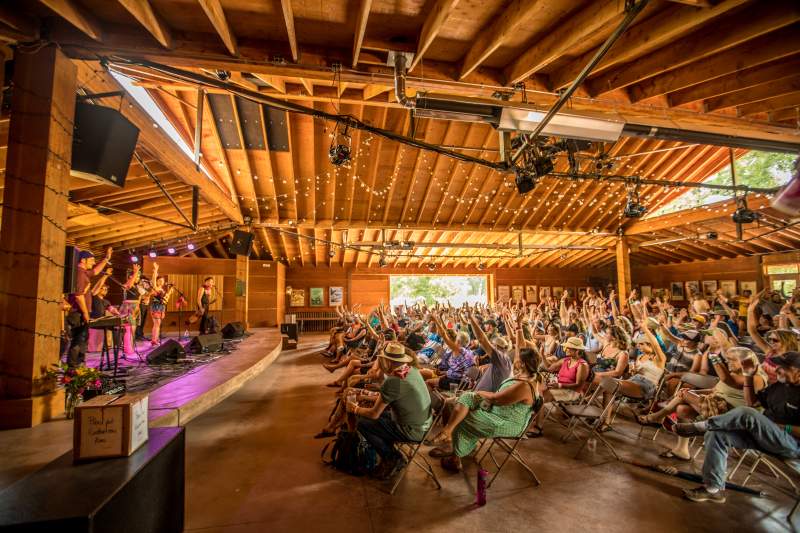
Wildflower Pavilion at Planet Bluegrass, Lyons
The second program, also for string quartet, is titled “Americana: Redefined” and will be presented in October and February. A third program featuring a brass quintet from the orchestra, “Brass & Brews,” will be presented in October and April; see the Boulder Phil Web page for details on all currently scheduled performances.
Mimi Kruger, the Boulder Phil’s executive director, said, “The idea is that people can get to know our musicians and these composers and connect in a different way. These are obviously smaller venues, but also a little bit more casual.”
She said that discussions about ways to showcase the individual musicians of the orchestra led them to look for new venues. “The idea came up to launch it through Planet Bluegrass (because) they have a series at the Wildflower Pavilion,” she said. “We’re doing all three there, but we also wanted to take them to other venues, so the first two will get repeated at Dickens Opera House in Longmont—that’s a great little place!”
The Phil’s Web page says pretty much the same thing, in more promotional language: “The Shift Series lifts the facade of the stereotypical orchestral concert . . . in unique venues along the Front Range.”
Kruger recommends watching for future announcements, as further performances are under consideration, featuring the orchestra’s woodwind players.
# # # # #
“GROOVE” Boulder Philharmonic string players: Ryan Jacobsen and Hilary Castle-Green, violin; Stephanie Mientka, viola; and Amanda Laborete, cello
Takashi Yoshimatsu: Atomic Hearts Club Quartet, Movement I
Justin Bieber: “Peaches” (arr. Alice Hong) 3’
Dinuk Wijeratne:Two Pop Songs on Antique Poems: “Letter from the afterlife”
Carlos Simon: “Loop”
Michael Begay: “Forest Fires”
Lizzo: “Good As Hell” (arr. Alice Hong)
Jessie Montgomery: “VooDoo Dolls”
Philip Glass: String Quartet No. 3: VI “Mishima/Closing”4’
Taylor Swift: “All Too Well” (arr. Alice Hong)
Wijeratne: Two Pop Songs on Antique Poems: “I will not let you go”
Ed Sheeran: “Shape of You” (arr. Alice Hong)
Due Lipa: “Dance the Night” (arr. Zack Reaves)
Jessica Meyer: “Get into the NOW”: III. “Go Big or Go Home”
Mutual respect, love of music and supportive audiences inspire the players
By Peter Alexander Sept. 12 at 9:14 p.m.
Fifty years is a long time in any job, but that is the landmark that András Fejér, cellist of the world renowned Takács Quartet, is approaching as the quartet enters its fiftieth season,
András Fejér
The Takács String Quartet was founded in Budapest in September 1975—49 years ago—and has been in residence at the CU College of Music since 1983. The only original member of the quartet still with the group, Fejér is now 70, but he shows no sign of seeking a quiet retirement.
“I’m loving it,” he says about playing in the quartet and continuing the group’s busy concert schedule around the world. “I feel passionate about it, and I cannot imagine doing anything else.”
Fejér and the other members of the quartet—first violinist Edward Dusinberre, second violinist Harumi Rhodes and violist Richard O’Neill—will take the stage at Grusin Music Hall Sunday and Monday (4 p.m. Sept. 15 and 7:30 p.m. Sept. 16) for a standard string quartet program—a 20th century quartet by Leoš Janáček, sandwiched between classical-era works by Joseph Haydn and Beethoven (see full program below). This is a standard Takács program, and Fejér says they have no special plans for the half-century celebration.
“We just do what we are trying to do—classics nicely mixed with contemporary pieces,” he says. “We try to play them as much as we can. It’s a heartwarming mission.”
Richard O’Neill
The newest member of the quartet, O’Neill feels the same way about the busy life in a world-traveling quartet. “The greatest luxury is getting to do what we do,” he says. “I really love travel, even in the worst scenarios. There are things that can go wrong nowadays, but I still get excited to pack my suitcase and go out the door.”
If he likes anything more than travel, it’s playing for the Boulder audience. “The community here is such a unique community and (Boulder is) such an incredibly beautiful place,” he says. “Every concert we’re backstage at Grusin I really like hearing all the people (in the audience) excited to be together.”
O’Neill noticed the musicians’ connection with their audience from his very first Boulder home concerts with the Takács in 2021, but the relationship has not changed over Fejér’s years in the quartet. “We found it extremely supportive here (in 1983), with a wonderfully enthusiastic audience, and that’s how we feel until this day,” he says. “We got the support and the love of the audience, and the way it makes you feel, it’s a wonderful reaction with the audience.”
With all the personnel changes over 50 years—two first violinists, two second violinists, now three violists with the one cellist—the Takács has maintained its place among the top quartets in the world. That’s not because they have one authoritative way of doing things. Fejér identifies their defining quality more in the integrity of their approach to the music.
“The quality is the combination of expressivity, character and technique,” he says. “There are many ways to interpret the same phrase, many ways to interpret any page of any piece. We are listening to new ideas, because we feel it keeps the process fresh. As our wonderful teacher in Budapest put it, nobody has a letter from Haydn or Beethoven.
Takács String Quartet. Photo by Ian Malkin.
“We are honest, and being honest gives you a major conviction. As long as the message rings true, the audience is happy and immersed in the performance.”
That does not mean that the players always agree. “We had our fair share of arguments, especially when we were young and unwise,” he says. “But the moment we realized that there are many ways, what we can do is (say) ‘OK, in New York we try your idea, and then at Berkeley we will try my idea,‘ and then we will settle down with something. Everybody‘s happy, and then we all have a good giggle afterwards. It‘s great fun.”
O’Neill learned from the outset that every member is included in those conversations, no matter how long they have been with the group. “András could probably pull the seniority card on me, (but) he never does that,” he says.
“What I really love about the Takács is that if any one of us have a reservation, musical or personal about something that we’re doing, the quartet won’t do it. I really respect that. We’re all very distinct individuals, and of course we have our differences, but we respect each other. I think that‘s the magic combination.
“There‘s nothing like being in a group where you really get to know everyone like family,” he says. So whenever the Takács “family” walks onstage, you know they are doing what they love doing together.
And they love the music. Of the first piece on the current program, Haydn’s Quartet in C Major, op. 54 no. 2, O’Neill says, “I have never played (the piece before), but it’s like vaudeville for music. The humor is so palpable and overt, and I love it. With Mozart, humor is either tinged with sadness or hidden in refinement, but with Haydn it’s unabashed. It’s just flat out funny. It‘s an amazing work.”
Janáček’s Quartet No. 1, however, is not humorous. Known as “The Kreutzer Sonata,” it is based on the Tolstoy novella of that name about a man who kills his wife for having an affair with a violinist with whom she plays Beethoven’s “Kreutzer” Sonata. Written by a composer of many great operas, the quartet is almost operatic in its drama and intensity.
“We adore both quartets (by Janáček),” Fejér says. “The language, the harmonies, the technical realization is so specific to Janáček. You can recognize his music right away. We are talking about murder and jealousy and seemingly idyllic music. We have everything in between idyllic and ‘I’ll kill you!’”
The final piece is one of the most loved works for string quartet, Beethoven’s Quartet in F Major, op. 59 no. 1, one of three quartets Beethoven wrote for the Russian ambassador in Vienna, Count Razumovsky. Originally regarded as audaciously long and difficult, all three are now accepted in the standard repertoire and loved by audiences.
The first of the set is in the key of F major, which in works like the Pastoral Symphony, the Symphony No. 8 and the Romance for violin, inspired some of Beethoven’s most lyrical and melodic music. That quality is evident from the very beginning of the quartet, with a long theme from the cello playing in its richest register.
“When you start with a cello solo, how can you go wrong?” O’Neill says. “I love the piece very much.”
But equal to the music on the program is the survival of the Takács Quartet over the past 49 years, which few chamber music ensembles have matched and for which the Boulder audience shows its appreciation every year and every concert. Fejér gives what may be the best explanation for that when he says “We are like kids on the playground, enjoying the toys.
“We are totally involved and just enjoying ourselves.”
Quintets by Nielsen and Schubert on chamber series
By Peter Alexander July 17 at 12:15 a.m.
Last night’s chamber music concert at the Colorado Music Festival (July 16) offered the kind of program that makes the festival such a valuable cultural asset.
The program comprised two quintets, both treasures of the chamber repertoire, one of them a rarity in concert, the other a deeply loved and profound gem. The first was the Quintet for Winds by the Danish composer Carl Nielsen, the other the Quintet in C major for strings by Schubert. The opportunity to hear both on the same program is most unusual. It is what CMF, with its deep roster of top professional players, can offer its audiences that few other venues can match.
Nielsen’s Wind Quintet is a quirky and delicious piece that is seldom heard in concert. Indeed, one of the joys of the concert was hearing a piece live that is rarely found outside recordings, and it is a testament to the quality of the players from the CMF Orchestra that a genuinely tricky piece seemed, not quite easy but comfortable to play. As an amateur clarinetist I was blown away by Louis DeMartino’s rich, warm clarinet sound, but the other players—Vivian Cumplido Wilson, flute; Zac Hammond, oboe and English horn; Wenmin Zhang, bassoon; and Roy Femenella, horn—were also consistently terrific.
The performance was marked by impeccable precision within the ensemble. The give and take between the parts, within a changeable texture marked by frequent imitation between instruments, was handled brilliantly. Such a level of ensemble is not easily reached with an informal group assembled for a single concert.
One of the challenges of the wind quintet genre is finding the right balance with five very different instruments. Matching a flute with a horn, or a clarinet with an oboe, requires careful listening, and it is a challenge that the CMF players consistently overcame. Not once did I hear a player covered, or obscured by a different tone quality.
String players face a different challenge, especially when they have a limited time to form an ensemble. While they can match each others’ sounds more easily than the winds, and thereby create a unified tone quality, much like an organ, within that harmonized sound small deviations of style become more perceptible. Indeed, there are elements of style that can only be polished when players have known each other over time. (Boulder audiences know this quality from the resident Takács Quartet, who will be featured on Sunday’s CMF Orchestra concert; see the CMF calendar for details and tickets.)
There were occasional smudged passages, and moments of interpretive uncertainty in last night’s Schubert, both signs of a temporary ensemble. Likewise, the dance-like third movement seemed briefly to be pulling ever so slightly apart, and the thick chords at the movement’s opening were not always ideally balanced.
But it is the positive side of the ledger that dominated. The long slow crescendo at the start of the slow movement built beautifully, and the Finale had great unity of ensemble and well executed group rubato, creating a deeply expressive musical flow and a strong ending. The individual players—Kevin Lin and Kate Arndt, violin; DJ Cheek, viola; Austin Huntington and Britton Riley, cello—all performed beautifully, and the audience showed appreciation with a standing ovation at concert’s end.
Finally, I have to note that the Chautauqua Auditorium was well under half full. The audience, while appreciative, was far less than the delightful and fulfilling program deserved. Do yourself a favor: look up the chamber concerts on the CMF calendar. You will find rare and rich rewards among them.
Jasper Quartet will play lyrical pieces by Dvorak, Schumann and Grażyna Bacewicz
By Peter Alexander Feb. 15 at 4:30 p.m.
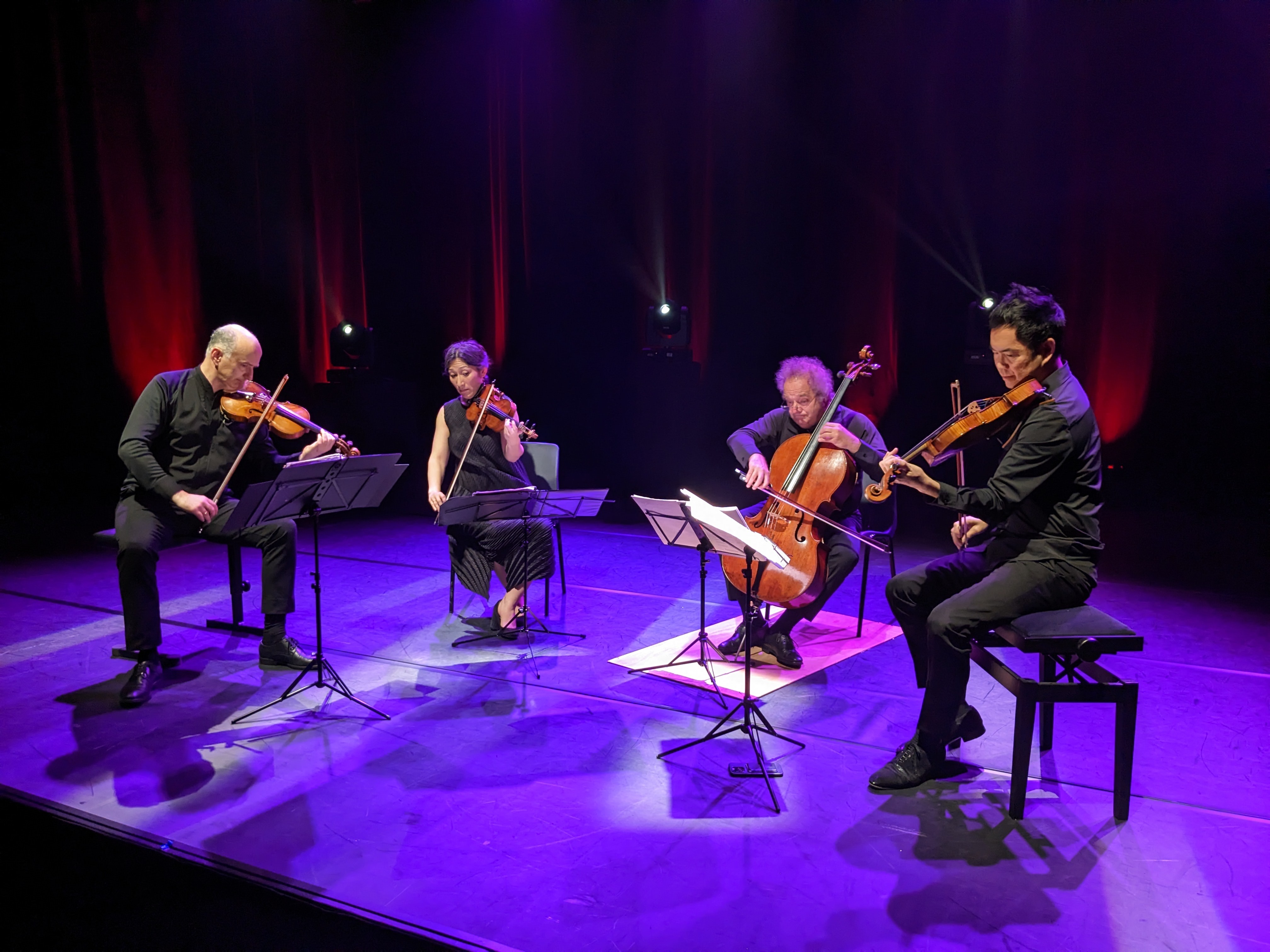
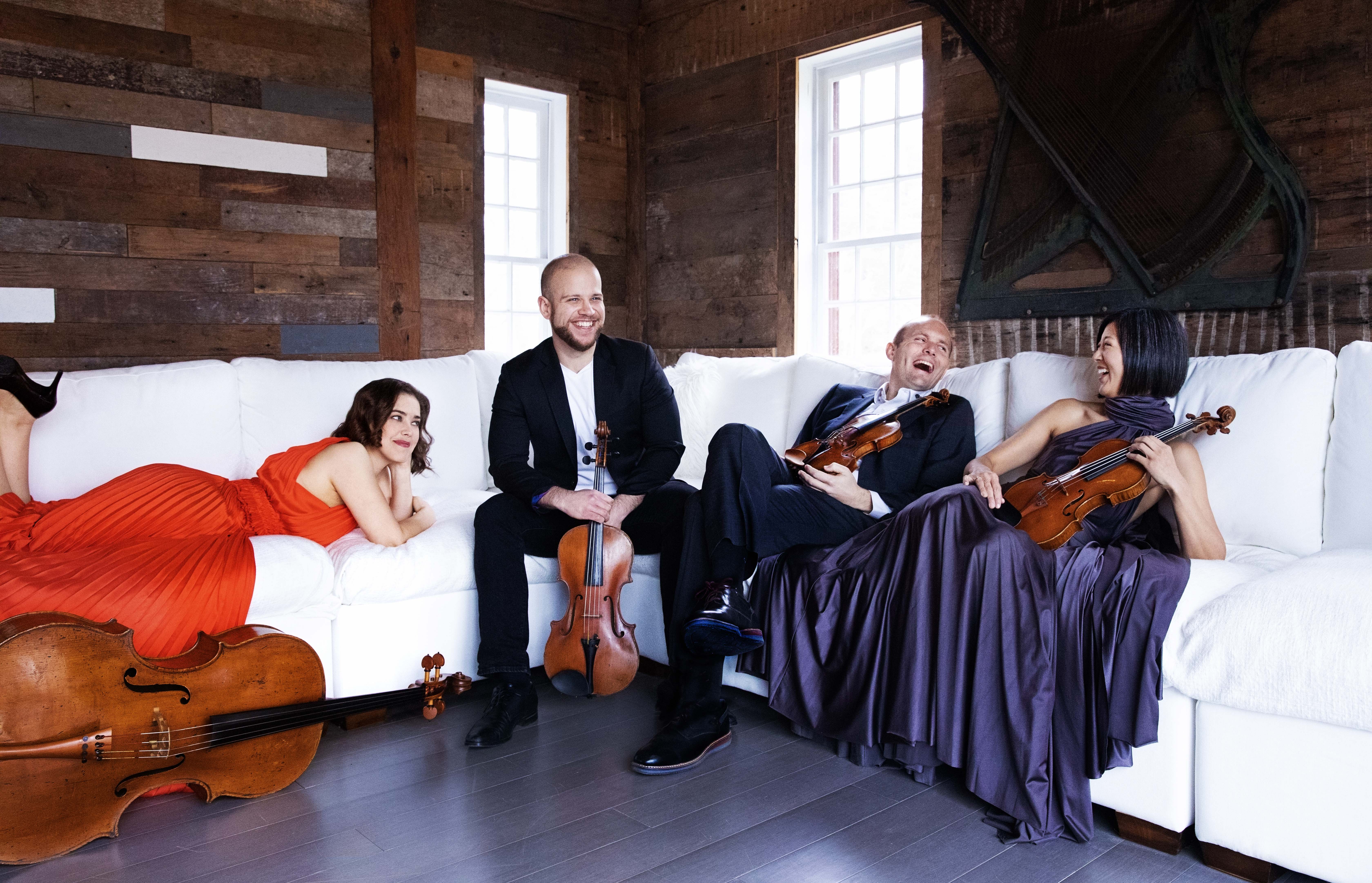
The Takács Quartet concert series will feature a guest ensemble Sunday and Monday (4 p.m. Feb. 18 and 7 :30 p.m. Feb. 19; details below) that is named for a place none of them have ever visited.
Jasper String Quartet
The Jasper String Quartet is named for the national park in Canada that they have only seen in photos—and a poster in at least one of their homes. “When we started the quartet it was quite difficult to think of a good name,” explains cellist Rachel Henderson Freivogel.
Spirit Island in Jasper National Park, Canada, the most celebrated view in the park. Photo by Peter Alexander
“We thought about things that we really liked to do, and one was being outside in a beautiful place. Our violist at the time said ‘What about Jasper? That’s a really beautiful place!’ And we loved the name, and we wanted to evoke natural beauty. It was easy to pronounce and just felt right to us. The closest we have been is Banff (about 180 miles south of Jasper)—although we do have a big poster of Jasper in my house.”
It is likely they haven’t had time to get to the Canadian park because they are too busy with their music. The professional quartet-in-residence at Temple University’s Center for Gifted Young Musicians, they have released eight albums. Earlier they were graduate quartet-in-residence at Rice University and Yale University with the Tokyo String Quartet, they have won top prizes and numerous chamber music competitions, and were the first ensemble chosen for Yale School of Music’s Horatio Parker Memorial Prize. They are currently in the eighth season of Jasper Chamber Concerts, a performance series founded by the quartet that is currently live-streamed from Philadelphia.
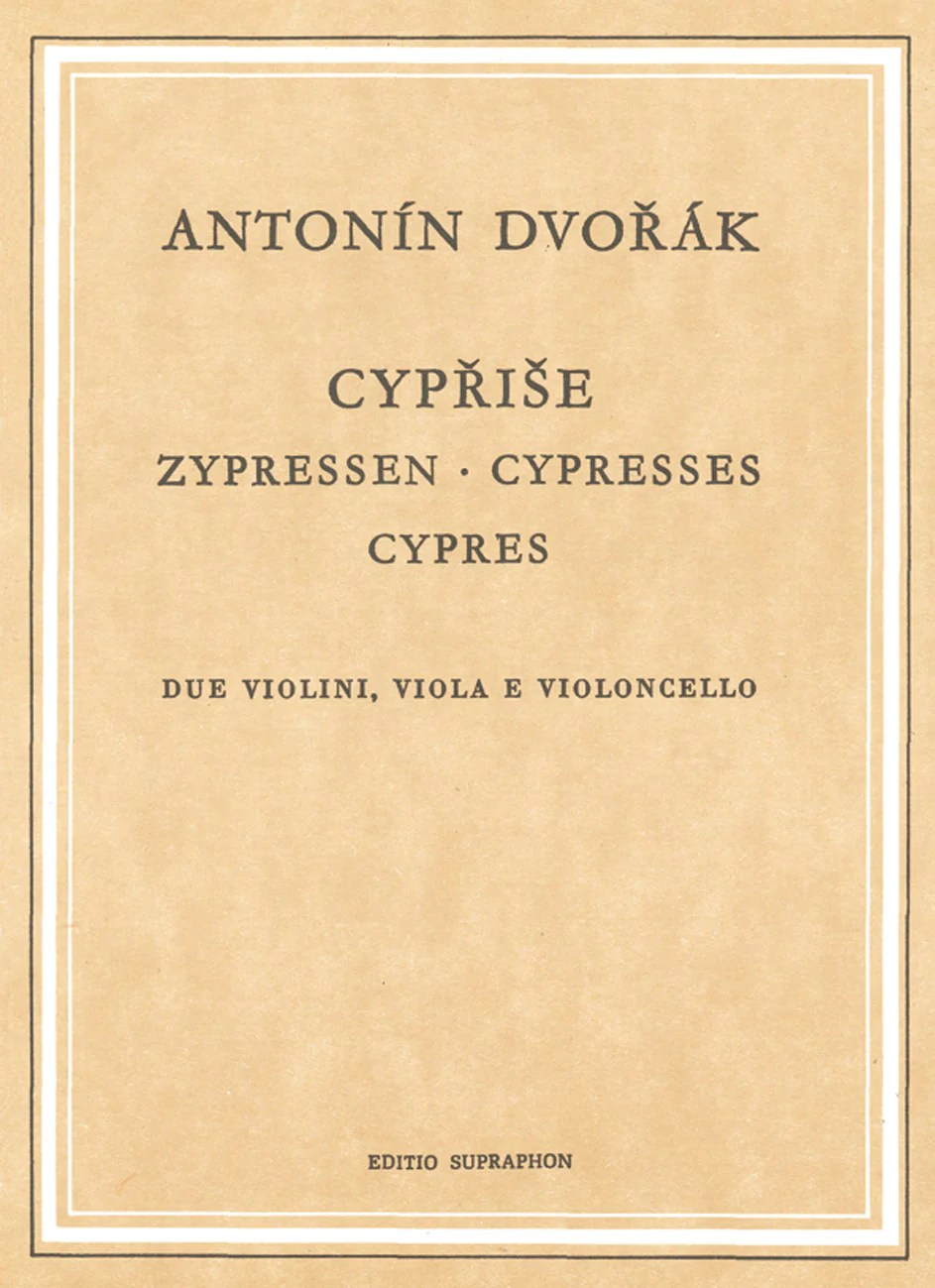
Their program in Boulder exemplifies the Jasper Quartet’s creative approach to programming. It opens with selections from Dvořák’s Cypresses, a set of love songs that the composer set for string quartet. That will be followed by the Quartet No. 4 by the Lithuanian/Polish composer Grażyna Bacewicz, and Schumann’s Quartet No. 1 in A minor.
This specific program evolved from the idea of a concert centered on lyricism, or an expression of love in music. “The Cypresses fit very well into that, since they’re settings of love songs,” Freivogel says. “The Bacewicz string quartet is based somewhat on folk tunes. The second movement is incredibly lyrical, and I think there’s love there, also. And the third movement [of Schumann’s quartet] is just a beautiful love song.
“We try to pick pieces that really speak to each other in an interesting way. And [these pieces] all work together really well.”
Dvořák arranged 12 out of 18 songs in the original Cypresses cycle for string quartet. Of those 12, the Jasper will play six movements. “It made sense for us to play six of them because of the length of the other pieces,” Freivogel says. “We wanted to create a set that went together and had some contrast in it, because all of them are very, very beautiful. The ones that we selected have a natural flow. Some are very smooth and slow, and others are more exciting.”
Grażyna Bacewicz
Bacewicz is likely the least known composer on the program. “We’ve been wanting to play her music for quite a long time,” Freivogel says. “This is the first program that we constructed with her music, but we would really like to play more of it.
“The first quartet is a piece that our quartet teaches a lot. We got to know this piece by working on it with some great students, and really loved the piece and wanted to play it. It’s very approachable, and there’s a lot of lyricism in the first and second movements. And then the third movement is a very exciting kind of neo-classic dance that goes and goes.”
Schumann wrote three string quartets in 1841–42, a time when he was devoting himself to writing chamber music. The Op. 41 set of three quartets was dedicated to Mendelssohn, but was given as a birthday present to Schumann’s wife, Clara.
“In addition to the slow movement—and I speak for the quartet—I just love Schumann’s style of writing and the beauty in it,” Freivogel says. “You can hear in the first movement how the conversation flows around the quartet. It’s done in such a beautiful way. And seeing it live in person, there’s an energy in the room. You see how we are communicating with each other and having this conversation, and the language is about human feelings.
“I think that that comes through in a joyful and wonderful way.”
# # # # #
Jasper String Quartet J Freivogel and Karen Kim, violins; Andrew Gonzalez, viola; and Rachel Henderson Freivogel, cello
Dvořák: Selections from Cypresses I. “I Know that on My Love to Thee” II. “Death Reigns in Many a Human Breast” III. “When Thy Sweet Glances Fall on Me” IX. “Thou Only, Dear One” XI. “Nature Lies Peaceful in Slumber and Dreaming” XII. “You Ask Why My Songs”
Grażyna Bacewicz: String Quartet No. 4 (1951)
Schumann: String Quartet No. 1 in A minor, op. 41 no. 1
4 p.m., Sunday, Feb. 18 and 7:30 p.m., Monday, Feb. 19 Grusin Music Hall
Piano trios, Tchaikovsky 5 and two Romantic piano concertos on programs
By Peter Alexander Feb. 13 at 2:38 p.m.
The Boulder Symphony will be the first of two area orchestras to perform Tchaikovsky’s Fifth Symphony this weekend, as part of a program Friday and Saturday (Feb. 16 and 17; details below) that also features Rachmaninoff’s Third Piano Concerto played by Chinese pianist Jialin Yao.
The program opens with Conga del Fuego Nuevo (“New fire” conga) by Mexican composer Arturo Marquez. The son of a Mexican mariachi musician, Marquez studied in Mexico and the United States, where he earned an MFA in composition at the California Institute of Fine Arts. A Cuban carnival dance, the conga was the source of the “conga line” made popular in the U.S. by Xavier Cougat and other bandleaders.
Jialin Yao
Currently a student at the Juilliard School of Music, Yao won the 2023 International Keyboard Odyssiad® and Festival Competition. Boulder Symphony’s conductor, Devin Patrick Hughes, was quoted in the concert press release: “Jialin is a rockstar! He plays the Rachmaninoff 3 . . . with ease, soulfulness, and a virtuosity that rivals any of the great pianists.”
Rachmaninoff wrote his Third Piano Concerto, considered one of the most virtuosic and challenging piano concertos, in 1909 and played the first performance in New York later that year. The initial reception was mixed at best, but Rachmaninoff gave a more successful second performance the following January conducted by Gustav Mahler. Today the concerto is widely accepted as one of the greatest and most demanding works in the piano repertoire.
The work that audiences can hear twice this weekend, Tchaikovsky’s Fifth Symphony, was composed over the summer of 1888. In spite of powerful emotional currents, the composer did not give the symphony any program or explicit personal meaning. After the first performances, he wrote in a letter “I have come to the conclusion that [the symphony] is a failure. There is something repellent in it . . . which the public instinctively recognizes.”
In spite of that conclusion, the Fifth Symphony has become on of Tchaikovsky’s most performed orchestra works. The coincidence of two performances, by two different orchestras on the front range in a single weekend, is an indication of how successful the symphony has been with both conductors and audiences.
The Boulder Symphony will also play the Symphony on Sunday as part of its GLOW Project, free concerts designed for people with dementia, neurological and developmental disabilities. That performance will consist of only the symphony, played with no intermission and lasting approximately 45 minutes.
* * * * *
Boulder Symphony, Devin Patrick Hughes, conductor With Jialin Yao, piano
Arturo Marquez: Conga del Fuego Nuevo (“New fire” conga)
Rachmaninoff: Piano Concerto No. 3 in D minor
Tchaikovsky: Symphony No. 5 in E minor
7:30 p.m. Friday and Saturday, Feb. 16 and 17 Gordon Gamm Auditorium, Dairy Arts Center
The weekend’s second performance of Tchaikovsky’s Fifth Symphony will be provided by the Longmont Symphony (LSO)and conductor Elliot Moore (7 p.m. Saturday, Feb. 17; details below).
The program, which includes Tchaikovsky’s Fantasy Overture Romeo and Juliet and the Piano Concerto No. 1 in B-flat minor played by Marika Bournaki, is billed as “Portrait of a Composer.” This is an annual series for the LSO and Moore, providing an opportunity to focus on the life and works of a single composer who is part of the orchestral tradition.
Marika Bournaki
Bournaki teaches piano as a faculty member of Shenandoah University in Winchester, Va. She was born in Montreal—leading to her being dubbed “the Celine Dion of classical”—and received bachelor’s and master’s degrees from the Juilliard School of Music. She was the subject of an award-winning documentary film, “I Am Not a Rockstar,” that covered her musical studies, staring when she was 12 and first took lessons at Juilliard, through the age of 20.
She has performed extensively with regional orchestras in the United States and Canada as well as in Switzerland, Russia and Romania. She is also an active chamber musician who has performed at Bargemusic in Brooklyn and the Cape Cod music festival, among other venues. Her educational activities have included programs that bring music to underserved populations in Canada.
Tchaikovsky’s First Piano Concerto had its premiere in 1875 in Boston played by Hans von Bülow. Nikolai Rubinstein, for whom it had been written, was first critical of the piece leading to the first performance being given outside of Russia. Rubinstein later changed his mind about the concerto, and performed it widely.
Today it is one of the most popular piano concertos. In addition to frequent appearances on orchestral programs, it was used as the sporting anthem for the Russian Olympic Committee at the Beijing Winter Olympics in 2022, during the time that Russian athletes were banned from appearing under the Russian national flag. American pianist Van Cliburn famously won the 1958 Tchaikovsky Competition in Moscow playing the concerto.
Almost as popular as the Piano Concerto, Tchaikovsky’s Romeo and Juliet is one of several works by the composer inspired by Shakespeare. After a stormy beginning, the music breaks into a soaring love theme that has been used in films and television, from The Three Musketeers to SpongeBob SquarePants.
The concert concludes with the Fifth Symphony, one of four by two different organizations over the weekend—yet another testament to Tchaikovsky’s place in the orchestral repertoire and in the hearts of audiences.
* * * * *
Tchaikovsky: A Portrait Longmont Symphony Orchestra, Elliot Moore, conductor With Marika Bournaki, piano
Tchaikovsky: Romeo and Juliet Fantasy-Overture —Piano Concerto No. 1 in B-flat minor —Symphony No. 5 in E minor
The Boulder Chamber Orchestra (BCO) will present their current artist-in-residence, pianist Hsing-Ay Hsu, in a program of piano trios, played with members of the orchestra.
The concert, Saturday at 7:30 p.m. (Feb. 17; details below), is the third in the BCO’s series of mini-chamber concerts of the 2023–24 concert season. The fourth mini-chamber concert, featuring works including trios for clarinet, cello and piano, will be at 7:30 pm. April 6. (See the BCO Web Page for details.)
Hsing-Ay Hsu
Born in China, Hsu has studied at Juilliard, the Yale School of Music, the Ravinia Steans Music Institute, and the Aspen and Tanglewood festivals. A Steinway artist, she won the silver medal of the William Kapell International Piano Competition and first prize of the Ima Hogg National Competition, as well as several artist grants and fellowships. She taught at the CU College of Music, where she was artistic director of the Pendulum New Music Series.
The piano trio emerged as a distinct genre out of domestic music-making in the early classical era, when it was known as an “accompanied piano sonata.” Originally, the piano part was written for women, who were thought to have time for practice, with men—who were not expected to master instruments—playing violin and cello parts to reinforce the melody and bass line of the piano part.
It was Mozart who first created piano trios with three equal parts, starting around 1780, followed by Beethoven. By the time that Brahms wrote his second and third piano trios, in the late 19th century, it had become a recognized chamber music genre.
* * * * *
Mini-Chamber Concert 3: Triptych of Trios Hsing-Ay Hsu, piano, and members of the BCO
J.S. Bach: Trio Sonata in G major, S1039 (arr. from trio sonata for two flutes and continuo)
Pianist Margaret McDonald collaborates in performances of Janáček and Elgar
By Peter Alexander
Tákacs Quartet. Photo by Keith Saunders.
The Takacs Quartet has such a long and distinguished history, has performed and recorded so much music, that it is surprising to learn that there is major repertoire that has not appeared on their programs.
In fact, their list of unplayed works will shrink by two at their performances Sunday and Monday (4 p.m. Jan. 10 and 7:30 p.m. Jan. 11) in Grusin Music Hall. And unsurprisingly, neither is for string quartet alone: The Takacs and pianist Margaret McDonald will perform Edward Elgar’s Quintet for piano and string quartet; and McDonald and first violinist Edward Dusinberre will present Leoš Janáček’s Sonata for violin and piano.
Completing the program will be Beethoven’s String Quartet in D major, op. 18 no. 3.
This will be the first concert by the Takacs following the announcement in December that their album with pianist Marc-Andre Hamelin of Shostakovich’s Piano Quintet and String Quartet No. 2 has been nominated for a Grammy Award. It is their fifth nomination and will be their second award if they win. The Grammy Awards will be presented Feb. 15.
“We’re always trying to combine music that’s very much our standard repertoire with newer things,” Dusinberre says. “It’s fun with (Elgar and Janáček), since they’re written at a similar time around the First World War, and the musical language couldn’t be more different.”
Concert will feature music commemorating the 1914 outbreak of World War I
By Peter Alexander
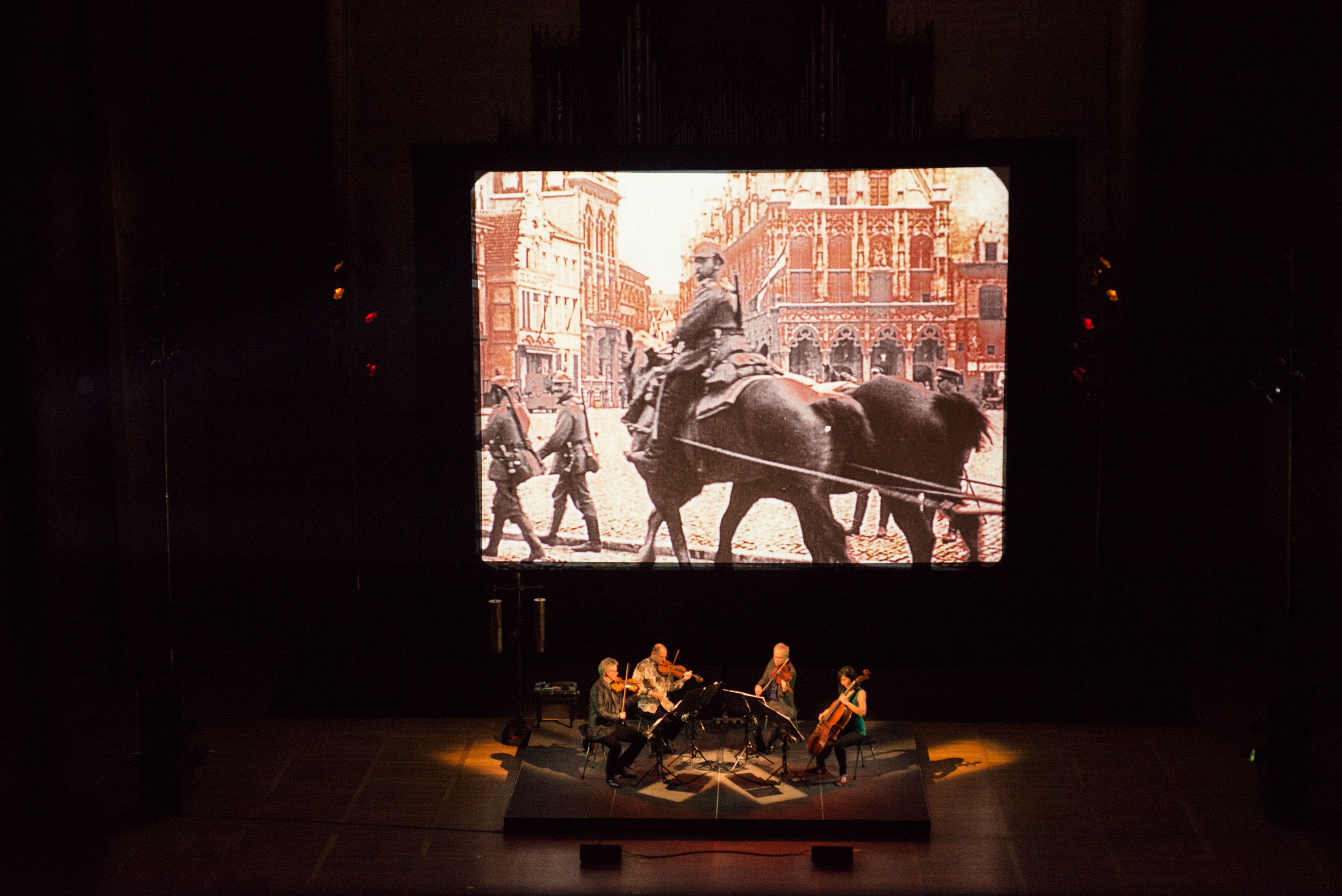
Kronos Quartet performing Beyond Zero. Photo courtesy of Kronos Quartet
The Kronos Quartet, always bold, brings Boulder artists to Boulder for their appearance at Macky Auditorium at 7:30 p.m. Wednesday, Oct. 8.
The concert will feature the world premiere of Speak, Time by Yuri Boguinia, who grew up in Boulder; and an appearance by broadcaster and writer David Barsamian, who founded Boulder’s Alternative Radio in 1986.
Barsamian will speak while Kronos performs songs from the early years of the 20th century. That performance will lead to the major work of the program, filling the second half of the concert:Beyond Zero: 1914–1918, a new multimedia work for string quartet and film that Kronos commissioned for the centennial of the outbreak of World War I.
Courtesy of Kronos Quartet
Beyond Zero was written by Serbian composer Aleksandra Vrebalov and will be performed with film restored by experimental filmmaker Bill Morrison from extremely rare and badly deteriorated original films of the war.
CU Presents: Kronos Quartet Death to Kosmische by Nicole Lizée
World premiere of Speak, Time by Yuri Boguinia
Four songs from the time of World War I with David Barsamian Beyond Zero: 1914–1918 by Aleksandra Vrebalov, with film by Bill Morrison
7:30 p.m. Wednesday, Oct. 8, Macky Auditorium Tickets



 Sharps & Flatirons