No fewer than five resident orchestras offer seasons for 2014–15
By Peter Alexander
Of this you can be certain: there is no shortage of orchestra concerts in Boulder.
With the end of the summer and the departure of the area’s best orchestra—that of the Colorado Music Festival—now’s a good time to look at Boulder’s resident orchestras that perform during the main season, between September and May. In fact, there are no fewer than five of them. This means there is a remarkable richness of orchestra concerts for a city the size of Boulder. It is one of the true blessings of living here, and with so many different orchestras and conductors contributing to the mix, it also creates a diversity of programming that would be the envy of many larger cities.
The Boulder orchestras vary widely in professionalism and experience, but each offers it own rewards. So before the season gets under way with the opening concert of the Boulder Philharmonic in Macky Auditorium on Sept. 14, here is a quick survey of area orchestras and their pending seasons. (More information on individual concerts will appear here throughout the year.)
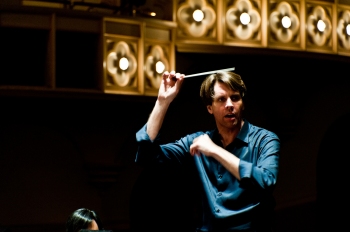
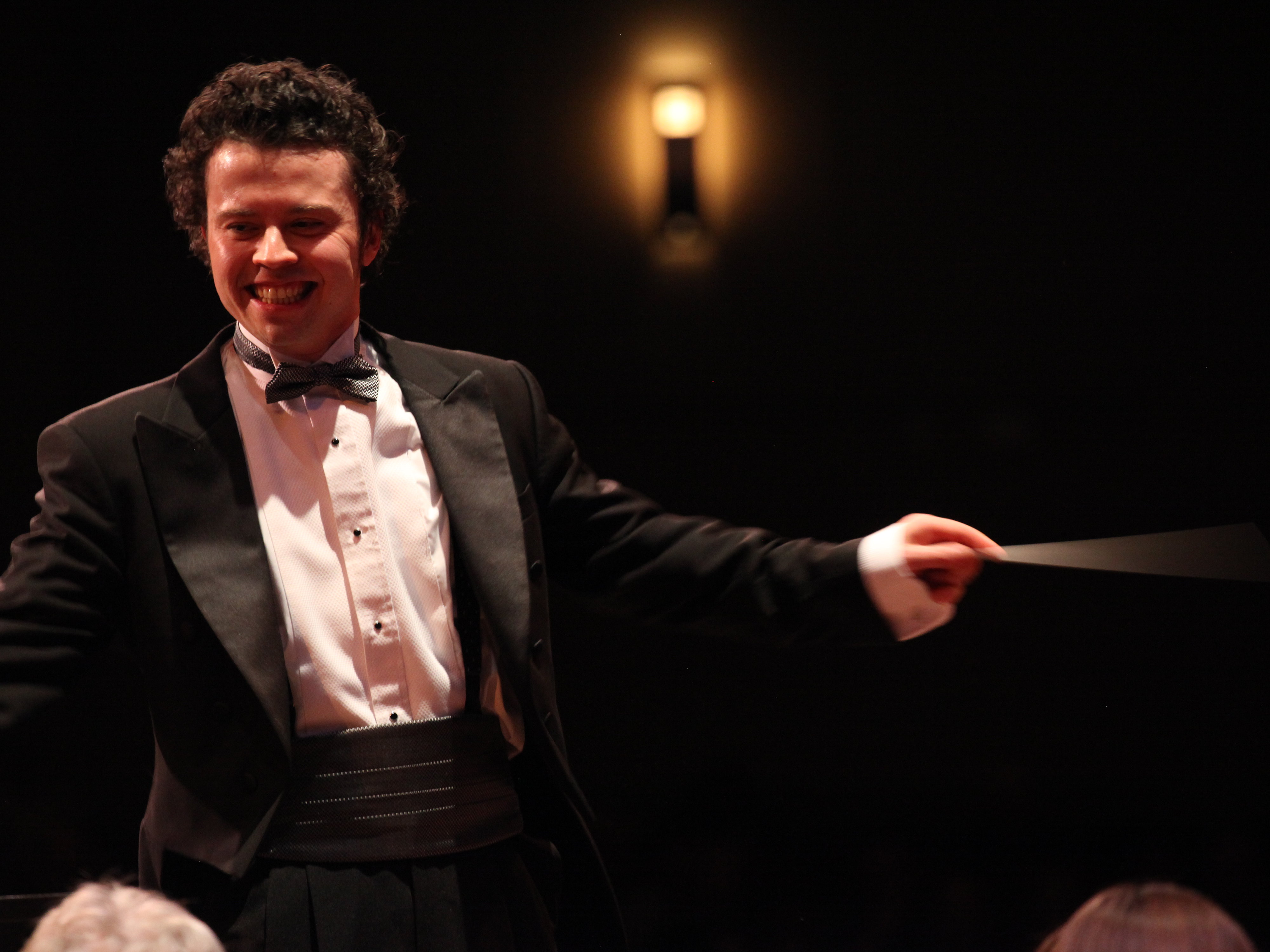
Michael Butterman
The Boulder Philharmonic (BPO) is Boulder’s fully-professional orchestra. Considered a regional symphony, the Boulder Phil has an annual budget just over $1 million. The orchestra has a negotiated contract with its players, who are paid union scale. In these respects, the BPO leads the orchestra pack in Boulder.
The conductor is Michael Butterman, who also conducts the Shreveport (La.) Symphony, and is now the inaugural music director of the Pennsylvania Philharmonic, leading its very first season in 2014-15. It should be noted that regional orchestras are not full-time and do not pay anyone from the director on down through the sections a full-time wage.
For example, BPO has six concerts on its 2014–15 season, plus performances of The Nutcracker with Boulder Ballet. This is not full-time work, and members of the orchestra generally have other income, either from teaching, from other orchestras, or from free-lance work—or a combination of all three.
The same is true of the music director: In addition to the three orchestras listed above, Butterman is resident conductor of the Jacksonville (Fl.) Symphony and principal conductor for education and community engagement for the Rochester (N.Y.) Philharmonic. This summer, he was guest conductor for the opening concert of the Colorado Music Festival.
Butterman is a skilled and thoughtful conductor. Under his direction, the Phil presents worthy, professional-quality performances of programs tailored to the Boulder audience. Often that means a careful combination of challenging new works and familiar favorites. Past explorations have included concerts accompanied by aerial artists, music by the original mother of invention Frank Zappa, and the premiere of CU faculty member Jeffrey Nytch’s First Symphony, inspired by Colorado’s geological formations.
Conforming to the pattern, the opening concert of the ‘14–15 season features the world premiere of Gates of the Arctic by Stephen Lias and the perennially popular Scheherazade by Rimsky-Korsakov. Other highlights of the season will include works inspired by birds; a pops concert featuring music by piano men Billy Joel and Elton John; concertos for timpani, violin and piano; and ending with Bartók’s virtuoso showpiece Concerto for Orchestra. (Season information and tickets available here.)
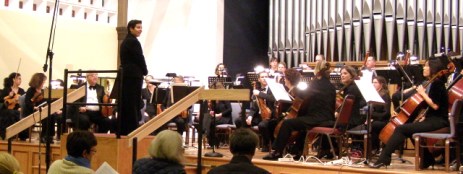
Cynthia Katsarelis and the Pro Music Colorado Chamber Orchestra
The Pro Musica Chamber Orchestra is fully professional orchestra, although operating at a more modest scale than the BPO. With only three concerts in a season and a much smaller number of musicians, their budget for the coming year is $63,000.
Still, the orchestra, under the direction of Cynthia Katsarelis, presents some terrific performances and offers intriguing repertoire for smaller orchestra. For example, one of last year’s program paired Vivaldi’s much loved Seasons with the fascinating, tango-inflected Four Seasons of Buenos Aires by Astor Piazzolla.
Players in the Pro Musica come from the CU faculty and professional orchestras on the front range. Katsarelis is a first-rate conductor who probably does not get enough recognition locally. She has conducted at the Colorado Music Festival, Rocky Ridge Music Festival and Loveland Opera Theatre. Every year since 2004 she has traveled to Haiti to conduct the Orchestre Philharmonique Sainte Trinité and to teach at the Holy Trinity School of Music in Port-au-Prince.
Katsarellis likes to explore themes in her concerts; building on the success of last year’s “Seasons,” the coming year will include a performance of Philip Glass’ Violin Concerto No. 2, “American Seasons.” There will also be a concert titled “American Voice” featuring Samuel Barber’s idyllic Knoxville: Summer of 1915 and a special performance with the silent film The Passion of Joan of Arc. (Season opens Oct. 17; information and tickets available here.)
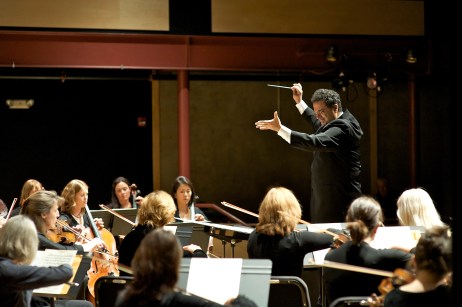
Bahman Saless with the Boulder Chamber Orcehstra. Photo by Keith Bobo.
There is another mostly professional chamber orchestra here, the Boulder Chamber Orchestra (BCO).
This group was established in 2004 by music director Bahman Saless when friends suggested he start an amateur orchestra. Since then, the orchestra has become almost entirely paid (except for a few members who decline payment), and operates a season of seven concerts, a New Year’s Eve performance, and a couple of “MiniChamber” concerts on a budget of about $147,000.
A physicist-turned-conductor with a Ph.D. from CU and experience working for NASA and Jet Propulsion Laboratories, Saless is a genial presence at the BCO’s performances. He often speaks to the audience and has built a devoted following in the community. He loves to find key words—often enigmatic—to describe the orchestra’s season and concerts. For example, 2014–15, the BCO’s 11th season, is titled “Mystique” and the opening concert, Sept. 19, featuring Michael Haydn’s Requiem in C minor performed with St. Martin’s Chamber Choir, is titled “Charisma.”
Saless often invites compelling but little known soloists to join the orchestra. The coming year will feature performances by Spanish pianist Victoria Aja playing De Falla’s Nights in the Gardens of Spain and presenting a solo “Night of Spanish Piano Masterpieces,” Israeli-American cellist Inbal Segev and American violinist Andrew Sords, among others. (Season information and tickets available here.)
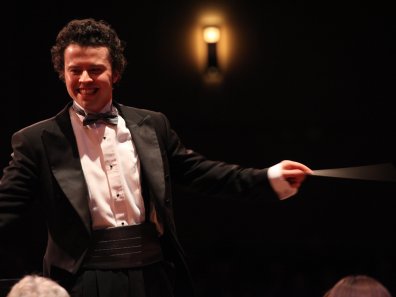
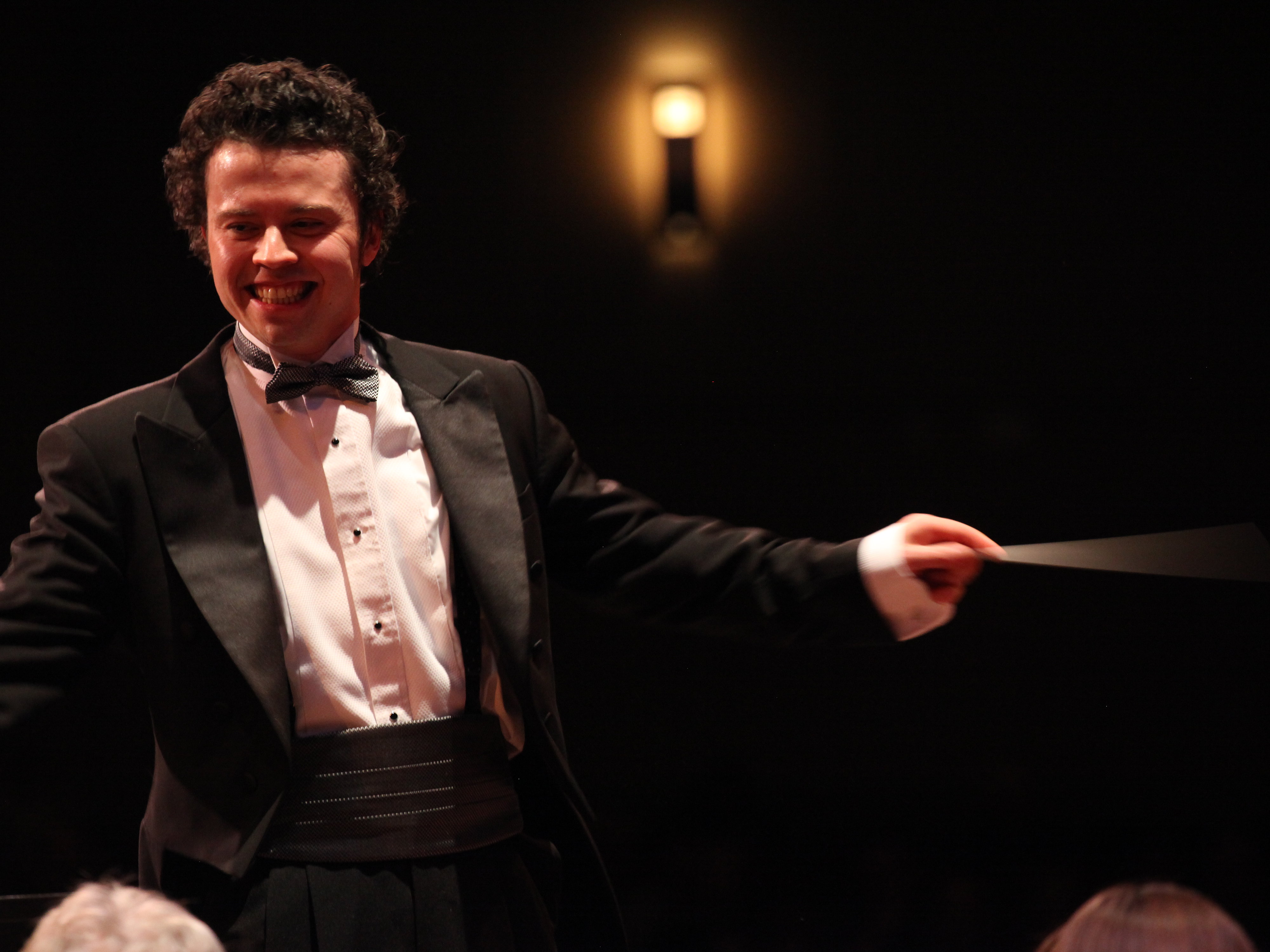
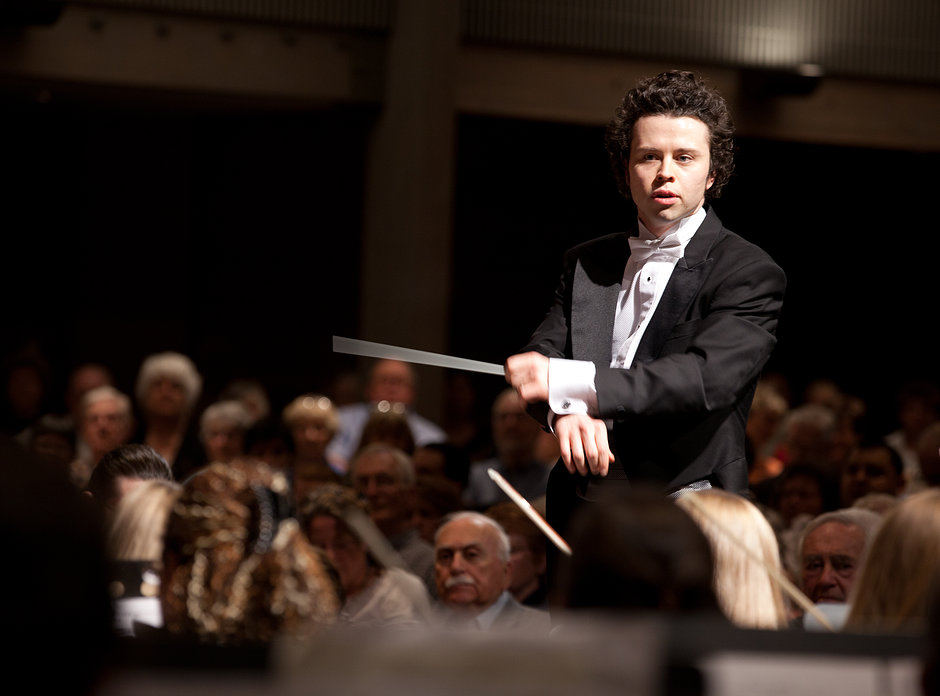
Devin Patrick Hughes
A community orchestra that has mostly remained so is the Boulder Symphony, formerly known as the Timberline Symphony.With an annual budget of $100,000, the orchestra has some paid members, including the string section principals, among volunteer musicians. They present six orchestra programs during the year, also offer four open rehearsals of pending concerts, and participate in educational activities.
Conductor of the Boulder Symphony is Devin Patrick Hughes, a young and dynamic personality who also leads the Arapahoe Philharmonic. He has also recently held conducting positions as Music Director of the Santa Fe Youth Symphony Association, Denver Contemporary Chamber Players, Resident Conductor of the Denver Philharmonic Orchestra, and Assistant Conductor for the Denver Young Artists Orchestra.
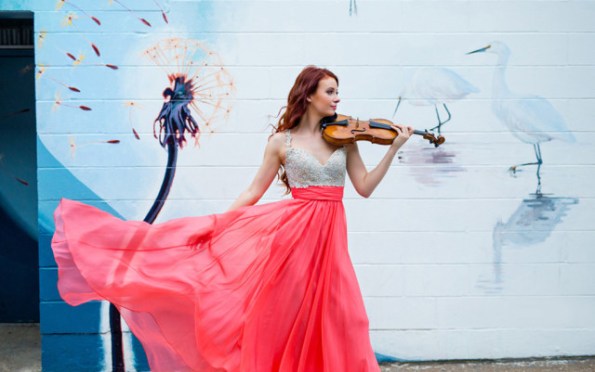
Hughes likes to collaborate with other local groups, such as Denver’s contemporary music Playground Ensemble, and has presented several world premieres—an unusual style of programming for a community orchestra. He has invited a number of young artists to appear as soloist with the orchestra. For example, the current season includes appearances by violinist Phoenix Avalon, a 13-year-old prodigy who has played with the Boulder Symphony in past seasons, and pianist Toku Kawata, a graduate student at CU. (Season opens Sept. 20; information and tickets available here.)
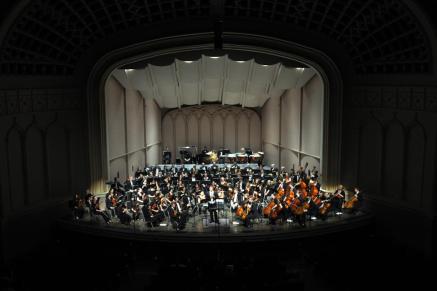
University Symphony in Macky Auditorium
The list of Boulder orchestras is rounded out by the CU University Symphony Orchestra, led by Prof. Gary Lewis, who is also director of Orchestral Studies in the College of Music as well as music director of the Midland-Odessa (Texas) Symphony.
Concerts by the University Symphony are held in Macky Auditorium on the CU campus and are free. Obviously a non-professional, student ensemble, the University Symphony—the top orchestral ensemble in the College of Music—presents fully satisfying performances of major orchestral repertoire.
Their first concert of the 2014–15 season, at 7:30 p.m. Thursday, Sept. 18, will feature Beethoven’s Seventh Symphony, and subsequent concerts this year will include Robert Schumann’s Symphony No. 3 (“Rhenish”), Rimsky-Korsakov’s Scheherazade and Respighi’s Pines of Rome.
If you look beyond the Boulder city limits, there are still more orchestras in the county. Particularly noteworthy is the Longmont Symphony Orchestra, a semi-professional orchestra with paid principal players throughout the orchestra and volunteer musicians selected by audition filling out the sections. The annual budget for six subscription concerts, two Nutcracker performances, a holiday concert and a community concert on the 4th of July is $240,000. Conductor of the Longmont Symphony is Robert Olson, known to Boulder audiences as the founding director of Boulder’s MahlerFest. Highlights of the coming season will include yet another performance of Scheherazade, a youth concert featuring music about spies led by Colorado Public Radio’s David Rutherford, an all-Sibelius evening and an all-American concert with Leonard Bernstein’s seldom heard “Jeremiah” Symphony. (Season begins Oct. 4; information and tickets available here.)
There is another community orchestra in the county, the Flatirons Community Orchestra in northeast Boulder County, and youth orchestras in Boulder and Longmont. All of these groups deserve support. I doubt that anyone will get to all of the concerts presented by these orchestras, but if you don’t find an orchestral program that appeals to you, you’re not looking. With so much to choose from, there’s a limit to what anyone can do, but I will try to preview all the major orchestras of Boulder throughout the year, either here or in the pages of Boulder Weekly.
In the meantime, let the music begin! I’ll see you in the audience.





 Erica Papillion-Posey, Carmen


 Sharps & Flatirons