Boulder Phil opens season with fairy tales and virtuosity

Two contrasting concertos contribute to a well balanced program

By Peter Alexander
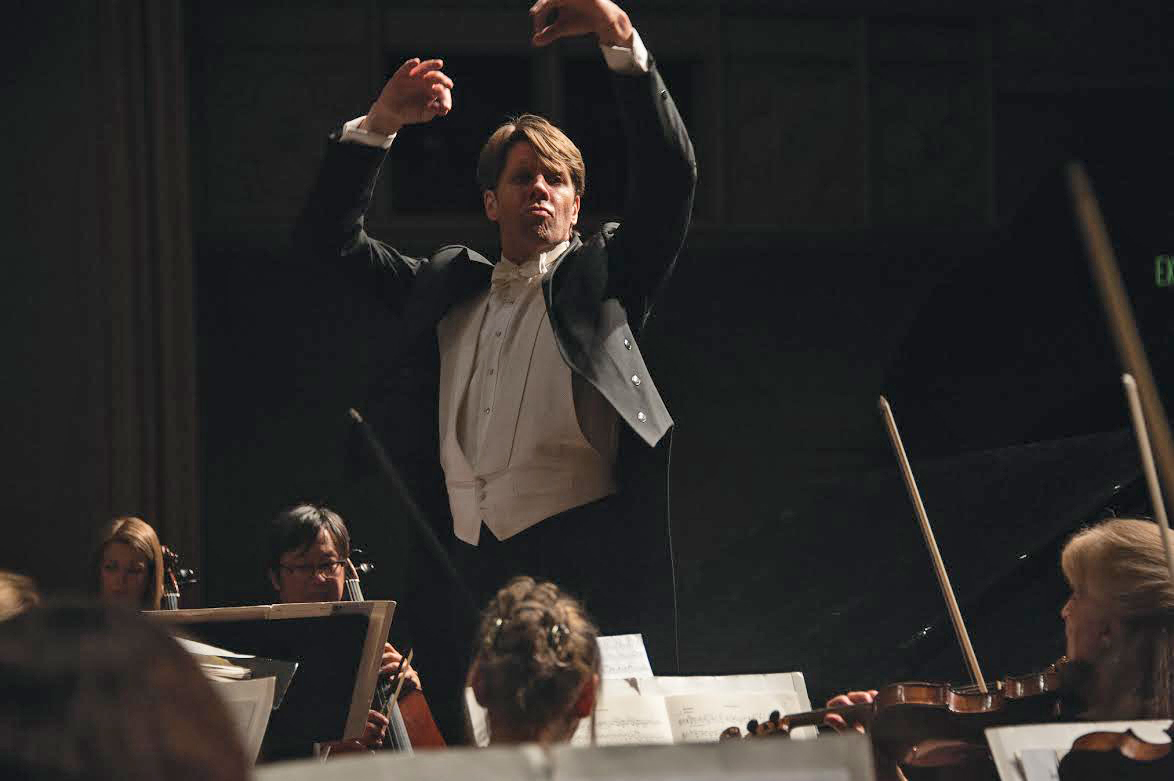
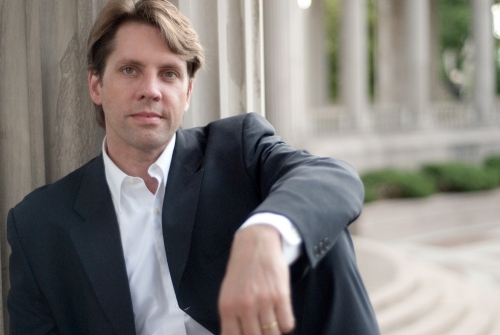
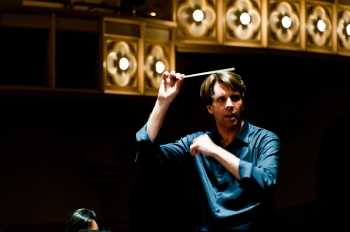
Boulder Phil Music Director Michael Butterman

Boulder Phil Music Director Michael Butterman

The Boulder Philharmonic opened its 2015–16 season last night (Sept. 13) in Macky Auditorium with an intriguing mix of ingredients that added up to a well balanced—and well received—program.

Music Director Michael Butterman, returning for his tenth season with the orchestra, opened the program with Ravel’s Mother Goose Suite. The unusual addition of two soloists filled out the program, with the orchestra’s concertmaster, Charles Wetherbee, performing The Storyteller by Korine Fujiwara, a concerto for violin and strings that was written for him; and Venezuelan pianist Gabriela Montero playing Rachmaninoff’s massive Second Piano Concerto.

The two concertos provided a nice contrast. Fujiwara’s Storyteller is a lovely, cheerful piece very much in the playful spirit of the Japanese fairy tales they portray, while Rachmaninoff’s Second Concerto is one of the great virtuoso challenges of the pianist’s repertoire. The two pieces balanced one another nicely, and the Ravel added an opening touch of color that was very engaging.

Butterman and the orchestra presented Ravel’s original suite of five movements—“The Pavane of Sleeping Beauty,” “Tom Thumb,” “Empress of the Pagodas,” “Beauty and the Beast” and “The Fairy Garden”—and not the seven-movement ballet suite that the program listed. The performance was marked by delicate playing from the winds and a sense of magic that is largely created by Ravel’s brilliant sense of orchestral color.
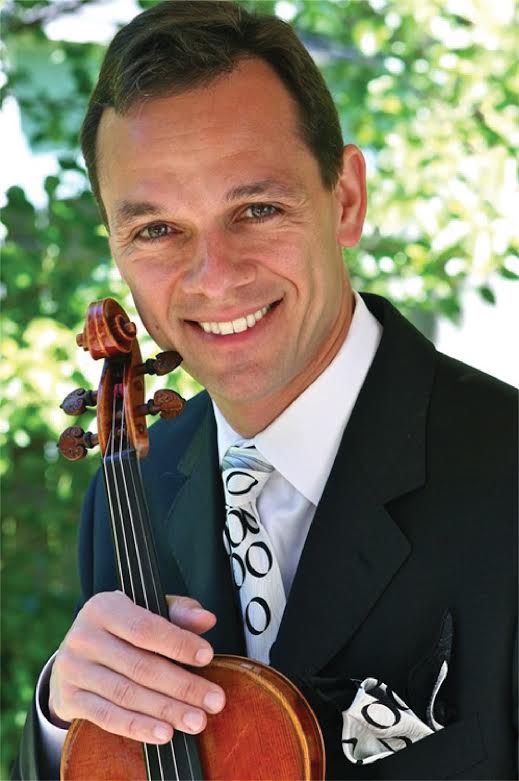
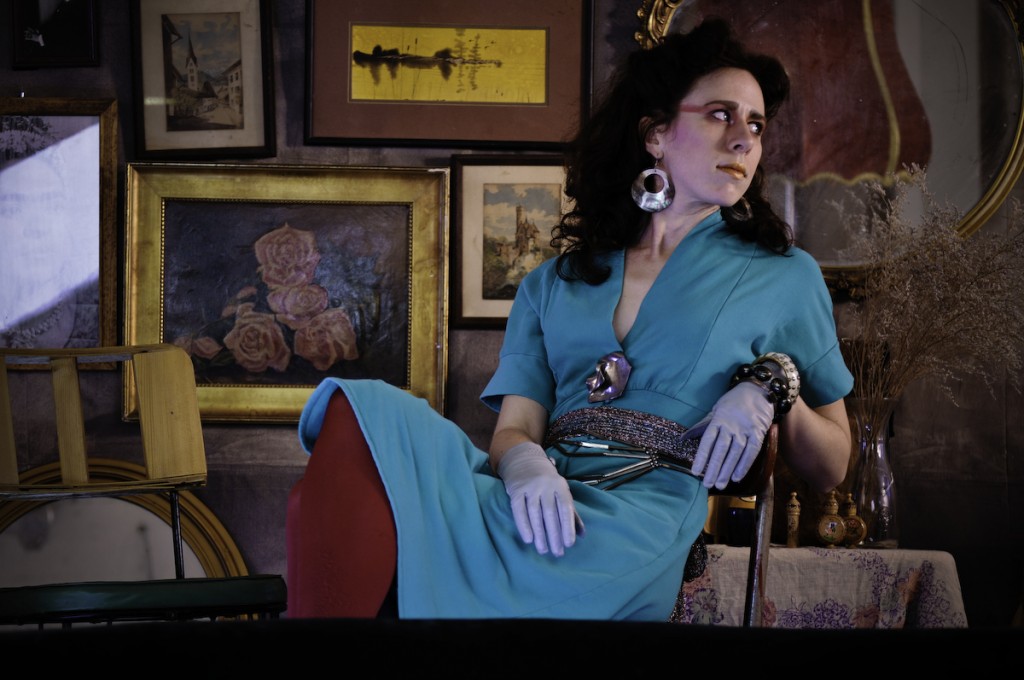
Charles Wetherbee

Charles Wetherbee

After fulfilling his concertmaster duties for the Ravel, Wetherbee left the stage and returned in a dark red jacket that somehow evoked the storyteller of the concerto’s title. The piece opens with a long, genial violin solo, as if Wetherbee were saying “Come, gather around, and I will tell you stories of magic and wonder.”

After this inviting opening, played warmly by Wetherbee, the concerto goes into a largely episodic series of scenes that sound descriptive—of what being largely left to the imagination of the audience, even though Fujiwara had mentioned earlier that there were slamming doors, cicadas and battle scenes within the score. The various moods and characters are colorfully evoked by the string orchestra.

A string player who knows well how to write for the violin, Fujiwara fills the solo part with graceful lines and ornamented passages that always seem purposeful. There is no great momentum developed; it is more as if there is some mysterious purpose unfolding, but one that lacks deep threat or tumult.

A special word should be said for the slow movement, where Fujiwara honors the many maltreated women of folk legends with music of gentle, compassionate beauty. Wetherbee played with great sweetness of sound and sure technique. Though lacking bravura display, The Storyteller is an accessible and charming concerto that would create a welcome moment of comfort next to more dramatic fare.

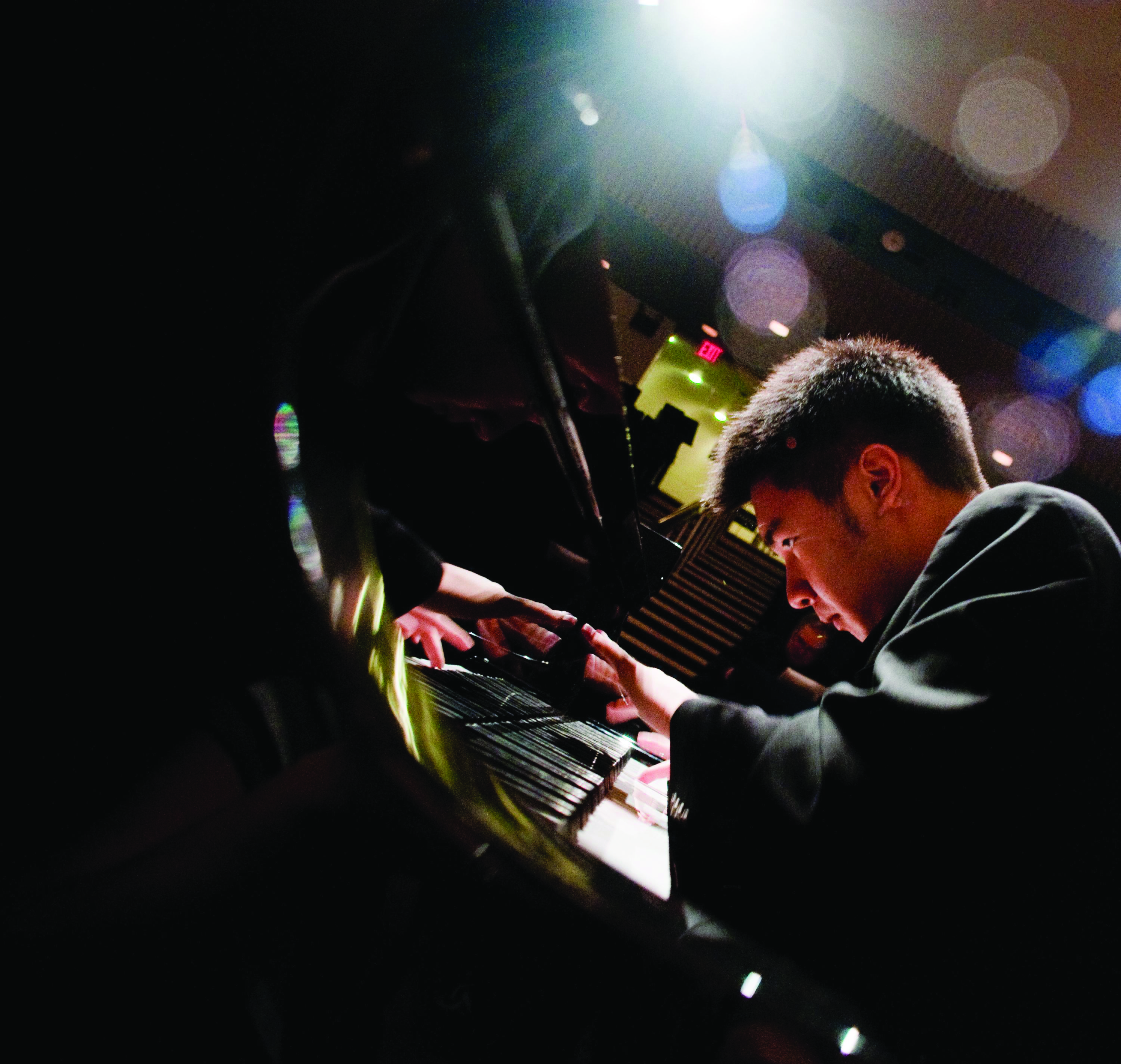
Pianist Gabriela Montero. Photo by Shelley Mosman

Pianist Gabriela Montero. Photo by Shelley Mosman

Montero gave a steely, powerful performance of Rachmaninoff’s concerto. Although I found her sound hard-edged in the louder passages, her dynamic control was impressive, ranging from thundering octaves to delicate, whispering filigree. She showed great technical control of Rachmaninoff’s most fearsome passages and created an exciting sense of momentum for the climaxes.

The orchestra under Butterman played with a fullness of sound, but without the plush cushion of strings that best suits Rachmaninoff’s Romantic score. In the loudest passages the brass dominated the sound, and elsewhere the string section is not quite large enough to pull off the rich sonic embrace that larger orchestras can create. There were a few moments of push and pull between pianist and orchestra, perhaps the result of short rehearsal times. Mostly it was not obvious, except when Montero ended the first movement just ahead of the orchestra.

All shortcomings aside, the performance built to a splendid finish, and Boulder’s delighted audience answered with loud cheers and a standing ovation. After several bows, Montero came on stage with a microphone and said that she would like to improvise her encore. She explained that she has improvised since childhood, telling stories in music, and that it seemed to happen without her knowing how. “I am very much a witness,” she said, “as are you.”

She asked for a tune from the audience, and one person offered “Row, Row, Row your Boat”—actually a brilliant suggestion, since the simplest melodies provide the greatest scope for creative variation. After playing the tune alone three times while possibly working out an idea or two in her mind—unconsciously?—Montero launched into a remarkable seven or eight minute expansion of the well known tune, filled with surprising key changes, unexpected textures, sudden appearances of the unadorned tune, and a dazzling variety of sounds. A sudden turn to a lilting, swingy style drew chuckles form the audience before she ended with a final brash flourish.

This was as stunning a display of improvisational brilliance as I have ever heard from a classical pianist—and then some. The encore alone was well worthy of the standing ovation; I would happily have stayed for many more.
Telling Stories in music

Boulder Philharmonic opens 2015–16 season with two soloists

By Peter Alexander

Pianist Gabriela Montero. Photo by Shelley Mosman

Pianist Gabriela Montero. Photo by Shelley Mosman

The Boulder Philharmonic’s 2015–16 season is titled “Reflections: The Spirit of Boulder,” but the orchestra will open the season by telling stories.

The season’s opening concert under music director Michael Butterman will be at 7 p.m. Sunday, Sept. 13, in Macky Auditorium — a departure from the orchestra’s standard 7:30 p.m. Saturday concert dates.

The program will feature music that tells stories, two soloists with their own stories, and one great concerto that is a story in itself. Butterman will conduct Ravel’s Mother Goose Suite; The Storyteller for violin and orchestra, inspired by Japanese folk tales and written by Korine Fujiwara for the orchestra’s concertmaster, Charles Wetherbee; and Rachmaninoff ’s Piano Concerto No. 2, the piece that salvaged the composer’s career, performed with pianist Gabriela Montero, who has been acclaimed both as “an exciting pianist” (The New York Times) and for her “spectacular improvisation” (Cincinnati Enquirer).

That’s a lot of stories for one concert.

Read more in Boulder Weekly.

# # # # #

Concertmaster Charles Wetherbee

Concertmaster Charles Wetherbee

Boulder Philharmonic Orchestra: Opening Night
Michael Butterman, director, with
Charles Wetherbee, violin, and Gabriela Montero, piano

Ravel: Mother Goose Suite
Korine Fujiwara: The Storyteller for violin and orchestra
Rachmaninoff: Piano Concerto No. 2

7 p.m. Sunday, Sept. 13 (Note the time and day)
CU Macky Auditorium

Tickets.

logo2

Central City Opera Announces 2016 summer season of performances in Central City

Two major operas in the historic opera house, two one-acts in alternative venues

By Peter Alexander

Opening Night at Central City Opera.  (From Central City Opera's 75th anniversary book,

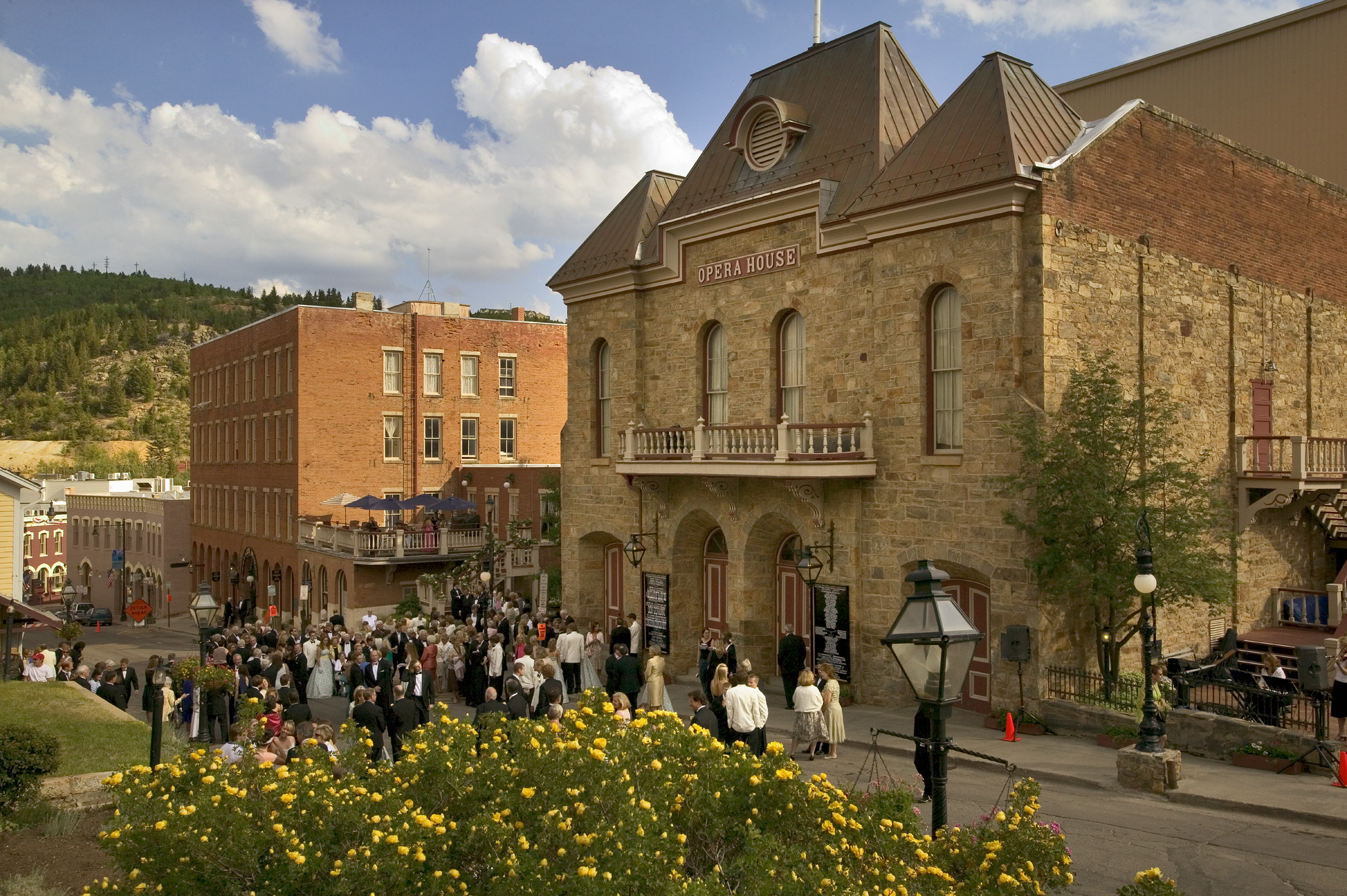
Opening Night at Central City Opera. (From Central City Opera’s 75th-anniversary book, “Theatre of Dreams, The Glorious Central City Opera—Celebrating 75 Years.”)

The Central City Opera, having impressively opened their 2015 summer season last Saturday (July 11) with a highly satisfying production of Verdi’s La Traviata, has now announced their 2016 summer season of performances in Central City. There will be two major productions in the historic Central City Opera House, and two one-act operas in alternative locations in Central City, during a season that runs from July 9 to Aug. 7.

The season will open July 9 with a 60th-anniversary production of The Ballad of Baby Doe by Douglas Moore, which had its world premiere at the Central City Opera in 1956. Based on the true story of two of Colorado’s colorful figures from the days of the silver boom, roughly 1879 to 1893, the English-language opera has enjoyed considerable success since its first performances in the Central City Opera House.

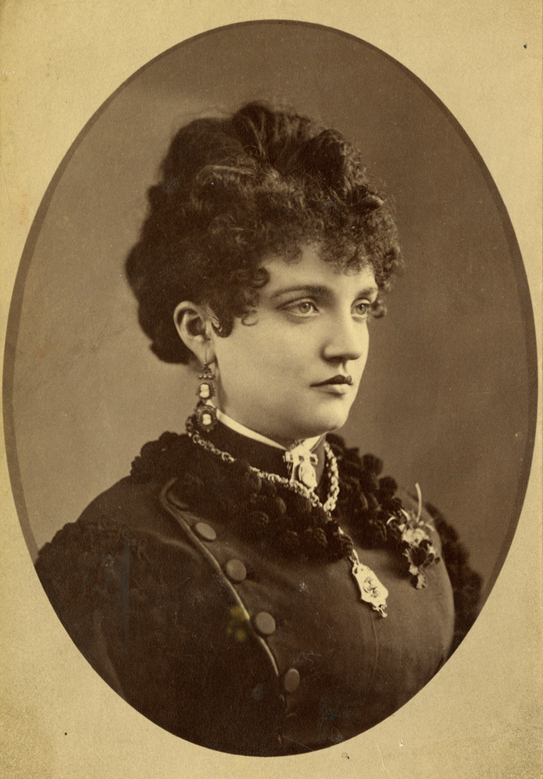
Baby Doe Tabor.

Baby Doe Tabor (by Webster, Oshkosh; licensed under public domain via Wikimedia Commons)

The opera is the tale of a classic love triangle: Horace Tabor, known as “The Bonanza King” of Leadville, Colo., was a respectably married businessman and politician. In the 1880s, at the height of the silver boom, he met and fell in love with Elizabeth “Baby Doe” McCourt. He divorced his wife, Augusta Tabor, and married Baby Doe in Washington, D.C, in 1883. Their society wedding was considered the scandal of the age. Not long after, the collapse of the silver market wiped out Tabor’s fortune. After he died in 1899, Baby Doe lived on in poverty at the Matchless Mine—now a tourist attraction in Leadville—until her death in 1935.

The Ballad of Baby Doe will run in repertory at the Central City Opera House through Aug. 6, 2016.

Tosca, Puccini’s tragic opera of passion and betrayal, will be Central City Opera’s second offering of the 2016 Festival. This production opens on July 16 and runs through Aug. 7, 2016, also in the Central City Opera House.

One of the most popular operas in the repertoire, Tosca is set in 1800 Rome. It follows the story of a fiery prima donna, Floria Tosca, who struggles to rescue her true love, the painter Mario Cavaradossi, from the clutches of Baron Scarpia, the evil chief of police. Tosca will be performed in Italian with English supertitles.

“It’s a lullaby to New York,” composer John Musto said on NPR’s Weekend Edition Sunday. He was talking about his opera Later the Same Evening, which will be the third offering of Central City Opera’s 2016 Festival. One of the two one-acts to be presented next summer, this contemporary opera with a libretto by Mark Campbell had its professional premiere at Glimmerglass Opera in 2011.

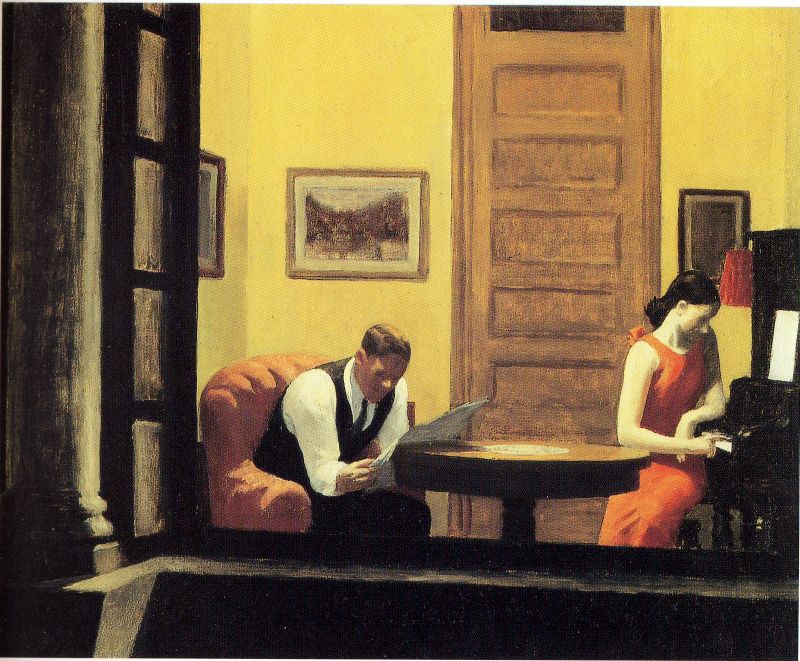
Edward Hopper,

Edward Hopper, “Room in New York,” one of the paintings that inspired composer John Musto.

The opera imagines the lives of the figures in five paintings by American painter Edward Hopper, weaving a narrative that connects them on a single night in New York City in 1932. Later the Same Evening will be performed in English at an alternative venue in Central City.

As its final production for 2016, Central City Opera presents Mozart’s comic one-act opera, The Impresario. The opera tells the whimsical story of an entrepreneur who is required to put together a company of actors and singers while dealing with their whims, rivalries and demands for exorbitant amounts of money. Through a number of twists and turns, the performers and the impresario find a way to reconcile all in the end. The Impresario will be performed in English at an alternative venue in Central City.

This season of four operas follows several years when Central City Opera has sought new audiences around Colorado, first by presenting musicals in Denver, and now this year by taking one-act chamber operas on tour to smaller venues in Colorado Springs and Ft. Collins. The 2016 season follows the general plan of the current season, with two major productions in the Central City Opera House and two smaller productions in other locations; touring performances for the one-act operas have not been announced for 2016.

“We have been experimenting over the past few seasons with the way we deliver our product,” Central City Opera general director Pelham (Pat) Pearce says. “While we met thousands of new friends through our offerings presented in Denver at the Buell and the Ellie, we determined that the most important thing Central City Opera can provide to our patrons—in addition to a great production—is the truly unique experience we provide in Central City.”

Additional performance dates, as well as artistic staff announcements and casting for the 2016 Summer Festival, will be announced at a later date. Subscription packages for the 2016 Festival will go on sale in the fall of 2015. Further information on the 2016 season will be available at the Central City Opera Web page.

# # # # #

Central City Opera
2016 Summer Season

CCOperaLogoPreferredThe Ballad of Baby Doe by Douglas Moore (60th-anniversary production)
July 9–Aug. 6, Central City Opera House

Tosca by Giacomo Puccini
July 16–Aug. 7, Central City Opera House

Later the Same Evening by John Musto
Dates and location in Central City tba

The Impresario by Wolfgang Amadeus Mozart
Dates and location in Central City tba

# # # # #

There will be a collaborative program with the Boulder Philharmonic during the spring of 2016:

St. Matthew Passion
 by J.S. Bach
Semi-staged production by the Boulder Philharmonic, Central City Opera, Boulder Bach Festival & CU Choruses
Michael Butterman, conductor
7 p.m. April 23, 2016, Macky Auditorium, Boulder

Boulder Philharmonic selected for a brand new festival at the Kennedy Center

One of only four orchestras nationwide chosen for the inaugural event

By Peter Alexander

11215713_10153195763195865_3630514800314949666_nThe Boulder Philharmonic is one of only four orchestras from across North America chosen to participate in a new festival at the Kennedy Center in Washington, D.C.

The new weeklong SHIFT Festival will take place at the Kennedy Center March 27–April 2, 2017. The other groups participating will be the Atlanta Symphony, the North Carolina Symphony, and the Brooklyn-based ensemble The Knights.

The selection was announced today (May 28) by the Kennedy Center and Washington Performing Arts. Michael Butterman, music director of the Boulder Phil, commented: “I am thrilled and honored that we’ve been selected to perform in our nation’s capital alongside some of the finest orchestras in the country.

Michael Butterman

Michael Butterman

“For several seasons, we’ve been fine-tuning our new mode for programming, called ‘The Spirit of Boulder,’ which reflects our community’s own values, creativity, and sense of place. By connecting people to orchestral music, the Boulder Phil strives to be an essential part of our community’s cultural fabric. We couldn’t be more delighted to share what’s working so well in Boulder with those involved in the first SHIFT Festival.”

The Boulder Phil’s performance at the Kennedy Center will be at 8 p.m. March 28, 2017. Butterman will conduct the program, “Nature and Music,” which was also the theme of the orchestra’s 2013–14 season. The concert will feature one world premiere and three pieces from the 2013–14 season:

Composer Stephen Lias

Composer Stephen Lias

A new work by Stephen Lias, commissioned to commemorate the 100th anniversary of the National Park Service, performed with photography by Colorado photographer John Fielder. Lias has won several National Park artist-in-residence grants, and the Boulder Phil presented the world premiere of his orchestral work Gates of the Arctic at the opening concert of the 2014–15 season. Other works by Lias celebrating national parks include Denali for string orchestra; Glacier Bay for orchestra; Ghosts of Mesa Verde for two flutes; Kings Canyon for trumpet ensemble; Sequoia for trombone choir; and The Timberline Sonata for trumpet and piano, written following Lias’ 2010 residency in Rocky Mountain National Park.
• Jeff Midkiff’s Mandolin Concerto: From the Blue Ridge, performed by the Boulder Phil in April, 2014. Midkiff will be the soloist for the Kennedy Center performance, as he was in 2014.
• Ghosts of the Grasslands by Steve Heitzeg, performed in Boulder in March, 2014.
• Aaron Copland’s Appalachian Spring, performed with Boulder’s aerial dance troupe Frequent Flyers. Boulder Phil and Frequent Flyers presented Appalachian Spring in Macky Auditorium in November, 2013.

Boulder Phil with Frequent Flyers. Photo by Glenn Ross.

Boulder Phil with Frequent Flyers. Photo by Glenn Ross.

As part of their involvement in the SHIFT Festival, each participating orchestra will engage in a mini-residency, interacting with the surrounding community through educational and outreach activities, symposia, and community events in venues throughout Washington, D.C. Proposed festival activities for the Boulder Phil include nature hikes in Washington, D.C.’s Rock Creek, led by naturalist Dave Sutherland from Boulder’s Open Space & Mountain Parks, and outdoor performances by Boulder Phil ensembles.

These events draw on the activities of the 2013–14 season, which capitalized on local residents’ love of the outdoors by exploring the many ways that composers have been inspired by nature. Among other activities, the orchestra offered guided musical hikes, with the aim of bringing concert audiences outside, and enticing nature lovers into the concert hall.

“The SHIFT Festival showcases how America’s orchestras have shifted their visions to reflect the music and programming that’s unique to their own communities,” Butterman said. “We couldn’t be more honored to share our vision of the Boulder Phil, The Spirit of Boulder, with other orchestras across the country, doing the same thing.”

SHIFT: A Festival of American Orchestras is the first significant collaboration between the Kennedy Center and Washington Performing Arts in their shared history. The Andrew W. Mellon Foundation has awarded a $900,000 grant for the collaboration, of which $700,000 will be leveraged as matching funds for new gifts to support the program. Kennedy Center President Deborah Rutter and Washington Performing Arts President & CEO Jenny Bilfield made the announcement May 28 in Cleveland at the League of American Orchestras’ annual conference before an audience of nearly 1,000 orchestra administrators, musicians, trustees, and volunteers.

Collectively, the participating orchestras will offer repertoire by nine living composers, two world premieres, and numerous D.C.-area premieres during the festival, inspired by themes of nature, Americana, creation and creativity, and choral influences.

# # # # #

You may read the Boulder Philharmonic’s press release here.

Information on the SHIFT Festival from the Kennedy Center can be seen here.

Legendary Concertos Wrap Up Boulder Phil Season

Orchestra presents popular works by Dvořák and Bartók

The entire orchestra will be in the solo spotlight when the Boulder Phil performs Bartók's Concerto for Orchestra

The entire orchestra will be in the solo spotlight when the Boulder Phil performs Bartók’s Concerto for Orchestra

By Peter Alexander

The Boulder Philharmonic will conclude its season Saturday (April 24) with “Legendary Virtuosity,” a concert featuring two of the most popular pieces in the orchestra repertoire—coincidentally, both written in the United States.

Both are concertos that call on the virtuosity of the performers, although only one is written for a soloist with orchestra. Dvořák wrote his Cello Concerto in New York in 1894, near the end of his tenure at the National Conservatory of Music. And almost 50 years later, Bartók, a refugee from a European war and working at a retreat in upstate New York, had the idea of featuring the entire orchestra in his Concerto for Orchestra, completed in 1943.

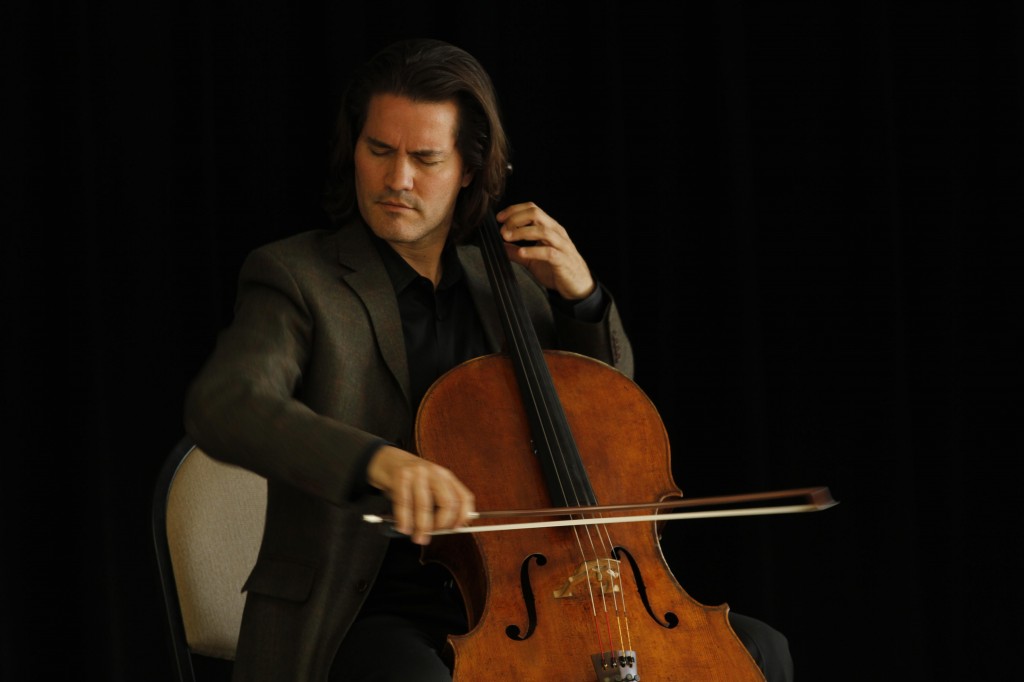
The concert, at 7:30 p.m. in Macky Auditorium, will open with the atmospheric Enchanted Lake of Russian composer Anatoly Liadov. The Boulder Phil’s music director Michael Butterman will conduct, and cellist Zuill Bailey will be the soloist for Dvořák. Tickets are available from the Boulder Phil.

Zuill Bailey

Zuill Bailey

Dvořák taught at the National Conservatory during parts of three years, 1892–94. In the spring of 1894 he heard a new cello concerto by one of his colleagues at the conservatory, the Irish-American cellist and composer, Victor Herbert. Best known for his operettas, including Naughty Marietta and Babes in Toyland, Herbert was an accomplished cellist who had led the cello section at the premiere of Dvořák’s New World Symphony at Carnegie Hall the year before.

Inspired by Herbert’s concerto, and later touched by the death of his sister-in-law—by legend the one true love of his life—Dvořák wrote a work of broad and deep emotional reach. It has remained one of the most beloved works in the repertoire.

“This is a piece that gets deeper as one gets older,” Bailey says. “It is never a piece that I tire of. In fact, I’m always amazed at the goosebumps that happen before my entrance. This has never failed me.

“This is why the orchestras, and audiences, so adore this concerto. Every single time it’s another journey.”

Butterman speaks of the score’s melodic richness as part of its appeal. “Like much of Dvorak’s music it has an abundance of melodic elements that just keep coming at you, one after another,” he says. “He never seemed to run dry.”

Michael Butterman

Michael Butterman

Bailey believes Dvořák not only wrote a great concerto for the cello, he changed the very nature of the concerto. “He changed the landscape of how things were done,” he says. “This is a symphony with a cello part—a very heroic cello part.”

Bailey is pleased to be making his first Boulder concerto appearance with Butterman and the Phil. “I am thrilled to be working with maestro Butterman,” he says. “I think he is one of the great collaborators out there. Every time I’ve worked with him it’s been an absolute pleasure, and it’s really terrific that we get to share the Dvořák (Concerto).”

Butterman reciprocates the compliment. “I’m delighted to have Bailey come into Boulder,” he says. “He’s a wonderful artist, a very intense and charismatic performer.”

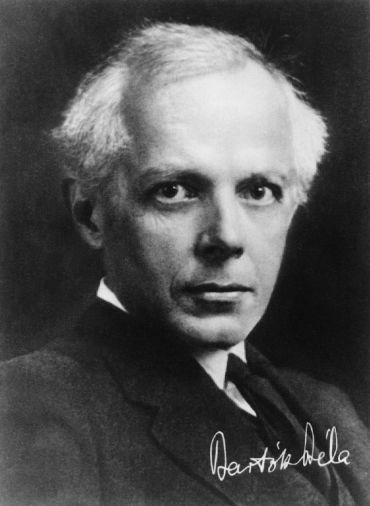
Composer Béla Bartók

Composer Béla Bartók

If the name Bartók suggests difficult modern music, you may not know The Concerto for Orchestra. Written in the last years of Bartók’s life, it is a deliberately accessible piece that at times is downright comical. At one point the orchestra breaks into musical laughter at an interruption by a borrowed melody, and the second movement makes great fun of presenting each of the woodwind instrument pairs matched at different intervals.

“A lot of people may see the name Bartók and think about music that is written in some language that they find foreign sounding,” Butterman says. “But this is a piece that continues to be one of the most popular 20th-century works in the orchestral canon—for good reason.

“It was chosen as kind of bookend to our season opener, Scheherazade, a piece that featured our new concertmaster. (The Concerto for Orchestra) doesn’t put the spotlight on any one person, but on the orchestra as a whole, and particularly the wind section. The solo passages allow you to hear the virtuosity of the orchestra, and the different timbres that make up its character. This is a piece that is incredibly engaging rhythmically and melodically.”

Orchestra players typically relish the chance to play The Concerto for Orchestra. “It’s fun to play, but you’ve got to concentrate like mad,” Butterman says. “There’s a lot of little things that can trip you up, rhythmically in particular, but it works out so well.”

Anatoly Liadov

Anatoly Liadov

The Enchanted Lake is one of the few works left by a very talented composer who was, Butterman says, “an underperforming worker. This is a composer who famously said, ‘Naw, I don’t think I want to do that Firebird piece—there’s this kid Stravinsky, I’m sure he’ll do it for you.’”

Whether or not he really passed on composing The Firebird, Liadov created a quiet masterpiece in The Enchanted Lake, which remains one of the most performed short orchestral tone poems in the repertoire. “It’s a piece that sets a mood and does it very effectively and very beautifully,” Butterman says. “It’s gorgeous.

“The story was that he went down to this lake and just stood there for half an hour or so, watching the whole expanse of things. Essentially nothing happened, so he went home and wrote a piece about it (where) he’s trying to create an atmosphere of absolute placidity and calm and stillness. I think that is its own profundity and depth, if you’re able to capture that sense of stasis and calm.

“This is a beautiful way to begin a concert, because you’ve just come in from parking and hoofing it up the hill, and maybe you just need a moment to settle in. I think this piece allows you to get those beta brain waves flowing.”

# # # # #

logo2Legendary Virtuosity: Season Finale
Boulder Philharmonic, Michael Butterman, music director
With Zuill Bailey, cello

The Enchanted Lake by Anatoly Liadov
Cello Concerto in B minor by Antonín Dvořák
Concerto for Orchestra by Béla Bartók

7:30 p.m. Saturday, April 25
Macky Auditorium

Related events:

Musical Hike. Enchanted Lakes: Music and Pond Ecology
With naturalist Dave Sutherland
5:30–8 p.m., Tuesday, April 21, Sawhill Ponds

Café Phil open rehearsal
7:30 p.m. Wednesday, April 22, The Diary Center

Michael Butterman presents 2015-2016 season.
6:30 p.m. Saturday, April 25, Macky Auditorium (free to concert ticket holders)

Boulder Philharmonic Announces season of collaborations for 2015–16

“Reflections: The Spirit of Boulder” will offer soloists, dance, visiting composers, photography, and a great choral work

Michael Butterman. Photo by Glenn Ross

Michael Butterman. Photo by Glenn Ross

By Peter Alexander

Next year will be a season of collaborations for the Boulder Philharmonic Orchestra and music director Michael Butterman.

The 2015–16 season, which has just been announced, will include a broad array of collaborative work, from the usual appearances of renowned visiting soloists to the season finale, a semi-staged performance of Bach’s St. Matthew Passion presented in conjunction with Central City Opera, the Boulder Bach Festival, and choruses from the CU College of Music.

In between, there will be two visiting composers, a performance enhanced by the photography of John Fielder, two joint performances with Boulder Ballet, and a return of the aerial and stage performers of Cirque de la Symphonie. (Unless otherwise noted, performances mentioned below are at 7:30 p.m. in Macky Auditorium.)

Charles Wetherbee

Charles Wetherbee

Billed as “Reflections: The Spirit of Boulder” (see full schedule below), the season gets underway at 7 p.m. Sept. 13—a Sunday evening performance—with a program featuring two soloists. Charles Wetherbee, the orchestra’s concertmaster will perform The Storyteller, a piece based on Japanese folk tales that was written for him by Korine Fujiwara; and Gabriela Montero will perform Rachmaninoff’s Piano Concerto No. 2.

Gabriela Montero. Photo by Uli Weber.

Gabriela Montero. Photo by Uli Weber.

Montero is sometimes remembered for her participation in President Obama’s first inaugural, when it was notoriously too cold to play live outside and a recorded performance was substituted, but she is also renowned as a virtuoso pianist who performs to acclaim around the globe. But Butterman is looking forward to her visit for another reason.

“The thing that’s so amazing about her, and quite unique, is her ability to improvise—it’s straight out of another era,” he says. “I‘ve heard her do this a number times and it’s just remarkable— everything from what seems like perfectly worked out Bachian counterpoint to ragtime, to impressionistic, Debussy-esque sort of things.

“What’s so amazing about it is that it seems so beautifully worked out, through all these different styles.”

Charles Den;er/ Photo courtesy of Grumpy Monkey Music.

Charles Denler. Photo courtesy of Grumpy Monkey Music.

The November subscription concert (Nov. 14) will offer the world premier of a new work for piano and orchestra by Denver composer/pianist Charles David Denler, who will also play the solo part. Inspired by the nature writing of American author Henry David Thoreau, Denler’s Portraits in Seasons will be presented with projections of images selected by Colorado photographer John Fielder.

“I would describe the music as certainly tuneful, pictorial, a little bit atmospheric,” Butterman says. “I thought this would be really nice with something to look at and to read. It occurred to everybody that Fielder is so well known and is such a fine artist that we approached him with this particular proposition.”

Fielder has said that to illustrate the seasons, he will choose photographs that are more intimate in scale than many of the large-scale mountain landscapes that he is well known for.

Following the traditional Nutcracker performances over Thanksgiving weekend—this year with new scenery—and the return of the popular “Christmas with the Phil” concerts in December, January will see the orchestra sharing the stage with the Boulder Ballet for a subscription concert. Titled “Dance, American Style,” the Jan. 16 performance will feature the full ballet of Rodeo by Aaron Copland.

Filling out the program will be orchestral performances of the New England Triptych by William Schuman, Leonard Bernstein’s Symphonic Dances from West Side Story, and three excerpts from Copland’s Billy the Kid.

Anne Akiko Meyers. Photo by Molina Visuals.

Anne Akiko Meyers. Photo by Molina Visuals.

February brings a Friday concert (Feb. 12), with another acclaimed guest soloist, Anne Akiko Meyers playing Mendelssohn’s much loved Violin Concerto in E minor, and the season’s second visiting composer, in the form of an artistic residence by Missy Mazzoli.

Dubbed “the coolest thing to happen to the violin since Stradivari” by the Denver Post, Meyers is one of the leading violin soloists of her generation. Her playing has been featured on practically everything from CBS “Sunday Morning” to “The Good Wife” on television, many CDs, and countless radio broadcasts.

Missy Mazzoli. Photo by Stephen S. Taylor.

Missy Mazzoli. Photo by Stephen S. Taylor.

Missy Mazzoli may not be well known in Colorado, but she is, Butterman says, “a pretty hot composer in the New York scene in particular.” Her week-long residency will include educational activities and chamber performances, as well as the Boulder Phil’s premiere of a new version of her Sinfonia (for Orbiting Spheres).

The title refers, Butterman explains, not to planets but “the idea of circularity and cycles.” The title takes the 18th-century term “Sinfonia,” in reference to ideas from Baroque music and ornamentation that the composer used.

“It’s not exactly a neo-Baroque piece, but it certainly has some connections to earlier periods,” Butterman says—which led him to the other pieces on the concert program: Shostakovich’s Haydn-esque Symphony No. 9, Tchaikovsky’s Mozartiana and the classically inspired Mendelssohn Violin Concerto.

Boulder Philharmonic with Cirque de la Symphonie. Photo by Glenn Ross.

Boulder Philharmonic with Cirque de la Symphonie. Photo by Glenn Ross.

Cirque de la Symphonie will make its third appearance with the Boulder Philharmonic with two performances, at 2 and 7:30 p.m. April 2. Building off the famed Cirque du Soleil and other cirque programs, the troop presents aerial flyers, acrobats, contortionists, dancers, jugglers, balancers and strongmen choreographed to classical music.

“What I like about them is their ability to appeal very, very broadly to an audience, but to do so while allowing us to present just great classical music,” Butterman says. Based on their previous appearances in Boulder, he says that the audience will “know the basic concept of what they’re going to see, but their repertoire will be different enough that it will be fresh and people will enjoy it.”

The success of the previous sold-out performances led the Boulder Phil to expand to two performances in 2016, adding the 2 p.m. matinee the same day as the evening concert.

Macky Auditorium

Macky Auditorium

The season-ending semi-staged performance of the St. Matthew Passion will also have two performances, 7 p.m. Saturday, April 23, in Macky Auditorium, and at a time and place to be determined on Sunday, April 24. Although it was written as a sacred oratorio, in modern times the St. Matthew Passion has sometimes been staged. One recent notable production, directed by Peter Sellars with conductor Simon Rattle and the Berlin Philharmonic, was imported into the U.S. for performances in New York City last year.

“This piece is positively operatic in its sweep and pacing,” Butterman says. “However, I don’t think its been done (in a staged performance) in Colorado.”

The idea originated with a proposal from Central City Opera for some kind of collaboration with Boulder Phil. After various ideas were discussed, the two groups, along with the Boulder Bach Festival and the CU College of Music, settled on the St. Matthew Passion.

“We’re going to do it at Macky, but we’re going to be able to use the space creatively,” Butterman says. “(Central City Opera General/Artistic Director) Pat Pearce said Central City was looking for was some kind of immersive experience, where the audience feels enveloped in the drama.

“The Bach repertoire is delicate for us, because we are not a chamber orchestra, and there is already an entity in town that has laid claim to that. So if we were ever going to tackle something like this, we had to have a reason that was unique enough and compelling enough, and this potential four-way collaboration would be just that.”

In addition to Butterman and players from the Boulder Philharmonic, the performance will feature choruses from the CU College of Music and the Bach Festival Chorus, specialized instrumentalists from the Bach Festival, and stage direction by Central City Opera. The Macky stage will be modified, similar to what the CU does every year for their Holiday Festival.

In addition to the subscription concerts, the Boulder Philharmonic will offer Discovery Concerts for local elementary students, free “Cafe Phil” open rehearsals at the Dairy Center, and “Nature & Music” guided hikes with the cooperation of Boulder Open Space & Mountain Parks.

Season subscriptions packages are available here. Check the Boulder Philharmonic Web page for more information.

# # # # #

Boulder Philharmonic Orchestra
2015-2016 Season—Reflections: The Spirit of Boulder

logo2September 13, 2015 (Sunday): Opening Night
Maurice Ravel: Mother Goose Suite
Korine Fujiwara: The Storyteller, with Charles Wetherbee, violin
Sergei Rachmaninoff: Piano Concerto No.2, with Gabriela Montero, piano

CANCELED: October 10, 2015: Gregory Alan Isakov with the Boulder Phil
Gregory Alan Isakov, singer-songwriter, guitar

November 14, 2015: Portraits in Season
Johannes Brahms: Schicksalslied (Song of Destiny), with Boulder Chorale
Charles Denler: Portraits in Season, with Charles Denler, piano; photography by John Fielder
Johannes Brahms: Symphony No. 2

November 27 through November 29, 2015: The Nutcracker with Boulder Ballet

December 20, 2015: Christmas with the Phil, Venue TBD, Boulder
December 21, 2015: Christmas with the Phil, Vilar Performing Arts Center, Beaver Creek
December 22, 2015: Christmas with the Phil, Lone Tree Arts Center, Lone Tree, with Boulder Bach Festival Chorus

January 16, 2016: Dance, American Style (with Boulder Ballet)
January 17, 2016: Dance, American Style, St. Luke’s, Highlands Ranch (without dancers)
William Schuman: New England Triptych
Leonard Bernstein: Symphonic Dances from West Side Story
Aaron Copland: “Prairie Night,” “Waltz” and “Celebration Dance” from Billy the Kid
Aaron Copland: Rodeo (complete ballet), with Boulder Ballet

February 12, 2016 (Friday): Spheres of Influence
Missy Mazzoli: Sinfonia (for Orbiting Spheres), a Music Alive Composer Residency
Dmitri Shostakovich: Symphony No. 9
Pyotr Tchaikovsky: Mozartiana
Felix Mendelssohn: Violin Concerto in E minor, with Anne Akiko Meyers, violin

April 2, 2016: Cirque de la Symphonie (2 p.m. & 7:30 p.m.)

April 23 & 24, 2016: Season Finale
Bach: St. Matthew Passion
Semi-staged production with Central City Opera, Boulder Bach Festival & CU Choruses

NOTE: Edited 22 April to reflect an unexpected change in the season schedule.

Boulder Phil marks Valentine’s with Legendary Lovers and Red Violin

heart-roses1By Peter Alexander

Valentine’s will be a day for heart-shaped candies; lacy greeting cards; special dinners with your sweetheart; and—thanks to the Boulder Philharmonic—music about a red violin.

Violinist Philippe Quint will join conductor Michael Butterman and the orchestra Saturday evening (7:30 p.m. Feb. 14 in Macky Auditorium) to perform John Corigliano’s Red Violin Concerto. The concert, titled “Legendary Love,” will also feature the Prelude and Liebestod (Love Death) from Wagner’s Tristan und Isolde and Tchaikovsky’s Fantasy-Overture Romeo and Juliet.

Michael Butterman. Photo by Glenn Ross.

Michael Butterman. Photo by Glenn Ross.

As part of a season of musical “Legends,” a concert on Valentine’s Day suggests obvious possibilities. “Fortunately for us, there is no shortage of good pieces that have dealt with this particular topic—literary couples and so on,” Butterman says. “We thought the date was a mixed blessing (but) we hope that people will choose to make it an evening out and make it part of their Valentine’s plans.”

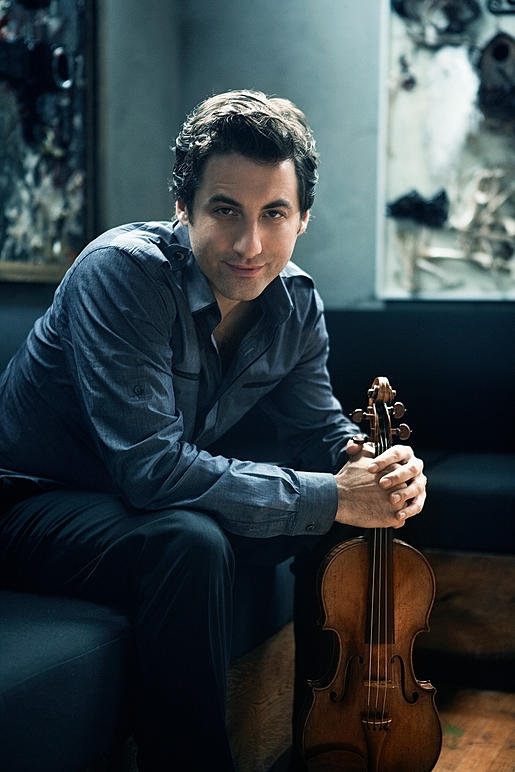
Philippe Quint. Photo by Lisa Marie Mazzucco.

Philippe Quint. Photo by Lisa Marie Mazzucco.

If you don’t know Corigliano’s Red Violin Concerto, Quint thinks you are in for a treat. “Expect the unexpected,” he says.

“Prepare for an emotional roller coaster. It will really take you from a space of meditation into an absolute emotional frenzy and back, and back again.”

The concerto had its origin in the Academy Award-winning score that Corigliano wrote for the 1998 film The Red Violin. The story of tumultuous and passionate events in the 300-year history of a violin that has literally been varnished with blood, the film featured music played by virtuoso violinist Joshua Bell.

While using music from the film score, the concerto is at least one step removed, since ideas from the film are reworked for a completely different genre. After finishing the film score, Corigliano, whose father was the concertmaster of the New York Philharmonic, created several concert pieces for violin from the film music. When he pulled the Red Violin music into the concerto, he was thinking of the performances he had heard his father give in Carnegie Hall.

“This is my first (concerto) for my first love, the violin,” he has written. “It is an ‘in the great tradition’ kind of concerto, because I wrote it in an attempt to write the piece my father would love to play.”

Quint concurs. “This work is mostly a throwback into the Romantic period of great violin writing,” he says. “It’s a very substantial work, where Corigliano takes it to the next level by adding these really unbelievable effects. There are going to be some sounds that you never heard.”

Philippe Quint. Photo by Philipp Jekker

Philippe Quint. Photo by Philipp Jekker

He particularly points to the concerto’s final movement, which the composer describes as “a rollicking race” between soloist and orchestra. Quint compares that movement to a famous scene from another film: “You remember those Indiana Jones movies, with the huge rock that’s running, and you’re running away. The last movement is really like that rock, it’s coming at you at this crazy speed and you’re trying to get away from it.”

By coincidence, Quint himself plays a violin that is known for the reddish tint of its varnish—although there is no blood involved. It is a Stradivarius violin from 1708—near the age of the red violin of the film—that is known as “The Ruby Strad.”

“I love to speculate that this is the violin that inspired the film,” Quint says. “But it’s a fictional story, so any such claim is false.” Noting that the violin belongs to the Stradivari Society of Chicago, Quint adds, “I feel very, very fortunate to have an opportunity to play on this violin.”

The two pieces that comprise the second half of the concert program are about legendary lovers—Tristan and Isolde, and Romeo and Juliet. Both works date from the second half of the 19th century, Wagner’s Tristan und Isolde from 1859, and Tchaikovsky’s Romeo and Juliet from 1870 (revised in 1880). But though they both celebrate famous love stories, they are in many ways very different.

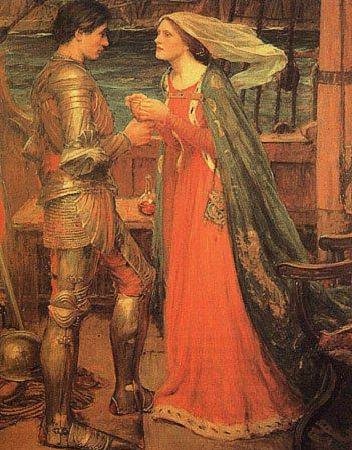
Tristan and Isolde. Painting by John William Waterhouse, 1911.

Tristan and Isolde. Painting by John William Waterhouse, 1911.

Often described as the beginning of modernism in music, Wagner’s Tristan und Isolde is famous for the use of chromatic harmonies to extend a feeling of musical tension across an entire 5-hour opera. Even before it had been premiered, Wagner himself made an arrangement pairing the Prelude—the opera’s opening section, today studied in detail by all music students—and the closing passage, Isolde’s Liebestod (Love death).

“What we have in this piece in particular is, not so much the soaring high moments that one feels in romance, but the longing, the anticipation, the tension, the bittersweet aspects,” Butterman says. “That is wholly the function of Wagner’s ability to create tension and almost never quite give it resolution.”

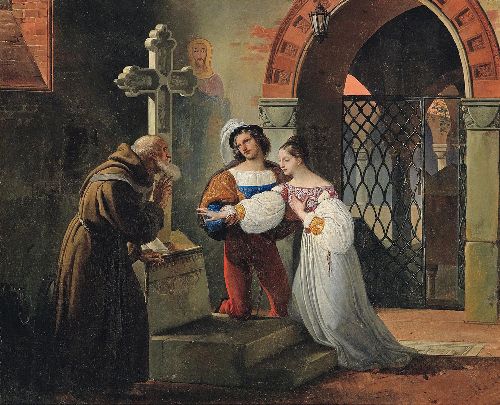
Romeo and Juliet. Painting by Francesco-Paolo-Hayez.

Romeo and Juliet. Painting by Francesco-Paolo-Hayez.

If Wagner’s score lacks the “soaring high moments that one feels in romance,” as Butterman says, that’s just what Tchaikovsky’s Romeo and Juliet offers in its “rhapsodic, passionate melody” representing the lovers.

“The tension that Tchaikovsky creates is not so much with this use of chromatic harmony,” Butterman says, “but with his ability to bring in elements of the conflict between the families with the introduction of brass and percussion.

“You have this soaring theme and all of a sudden (brass and percussion interruptions) and then it goes back to the soaring theme. It’s not a piece where you can follow the story in a linear fashion from beginning to end. I think it is more just ideas from the drama that have gotten mixed together in a 20-minute piece.”

In addition to the Valentine’s Day performance, there will be other events leading up to the concert. From 7:30 to 10 p.m. Wednesday evening (Feb. 11), the Dairy Center in Boulder will present Café Phil—a free open rehearsal of the orchestra with Butterman. This is very much a working rehearsal, and will be without the soloist, but will be a revealing glimpse into the inner workings of the orchestra. Wine, beer, coffee, juice, snacks and pastries are available for purchase until 9:30 p.m.

There is also the opportunity to see the film of The Red Violin, which will be screened at the Dairy Center’s Boedecker Theater. Showings will be at 4 p.m. Wednesday and Friday, Feb. 11 and 13, and at 7 p.m. Thursday, Feb. 12.

# # # # #

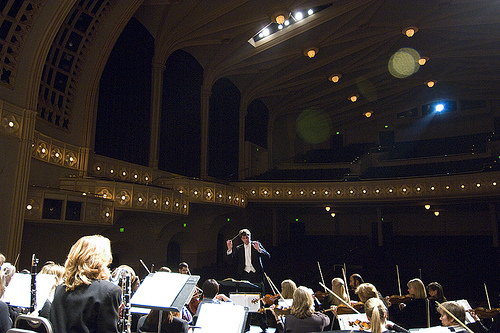
Michael Butterman and the Boulder Philharmonic in Macky Auditorium

Michael Butterman and the Boulder Philharmonic in Macky Auditorium

“Legendary Love”
Boulder Philharmonic, Michael Butterman, conductor Philippe Quint, violin
John Corigliano: Red Violin Concerto
Wagner: Prelude and Liebestod from Tristan und Isolde
Tchaikovsky: Romeo and Juliet

7:30 p.m. Saturday, Feb. 14
Macky Auditorium
Information and tickets

Café Phil open rehearsal
Boulder Philharmonic and Michael Butterman, conductor
7:30–10 p.m. Wednesday, Feb. 11
Dairy Center for the Arts Free

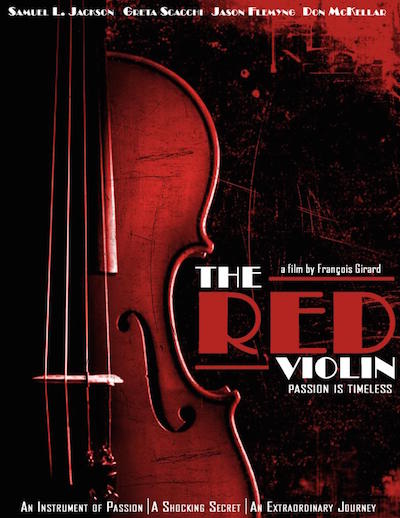
RedViolin400x518Screenings of The Red Violin
4 p.m. Wednesday, Feb. 11
7 p.m. Thursday, Feb. 12
4 p.m. Friday, Feb. 13
The Dairy Center for the Arts
Information and tickets

With the Boulder Phil, Conrad Tao conquers audience, Beethoven, and Elliott Carter

By Peter Alexander

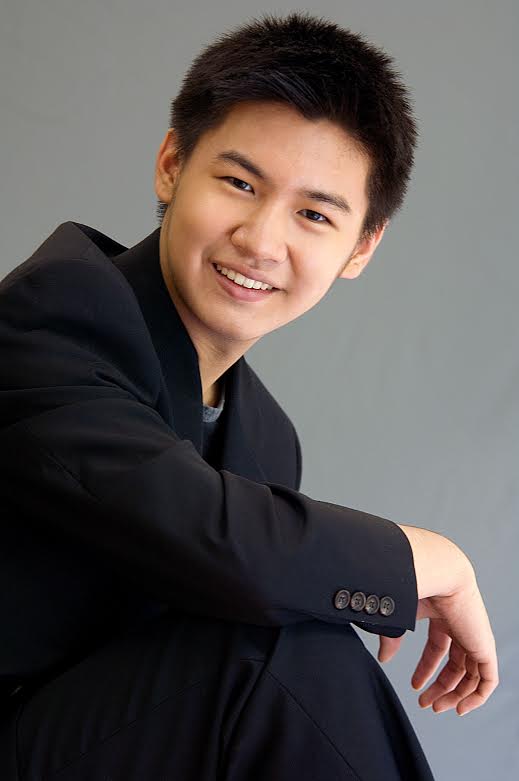
Conrad Tao. Photo: Ruimin Wang

Conrad Tao. Photo: Ruimin Wang

Conrad Tao conquered the audience last night, playing with the Boulder Philharmonic in Macky Auditorium.

The concert under music director Michael Butterman featured the highly talented young pianist as the soloist in Beethoven’s “Emperor” Concerto, which he seemed to navigate in comfort. Impressively, the multi-talented Tao also played piano in the orchestra for Darius Milhaud’s La création du monde and composed one of the pieces on the program.

The concert took its theme, “Creative Legends,” from Tao’s composition. Titled Pángu, it was inspired by a Chinese legend of creation, in which the god Pángu wakes up in an egg and creates the world we live in out of his own body.

Speaking before the performance, Tao said that he used a “cinematic palette” in composing the score. If so, it is cinematic in the best sense, using the orchestra to create a sense of color and motion. While not literally pictorial, the score suggests that something is happening throughout: the music is highly directive and leads to a powerful conclusion.

Tao also commented that when he finished, he realized that the style was “Bernstein adjacent.” This seems to imply an idiom that is symphonic yet inflected, as Bernstein’s music so often was, by American pop and jazz styles. It is a highly effective score that was realized with great energy by Butterman and the Boulder Phil.

Taking a cue from the subject of Pángu, Butterman filled out the first half of the concert with other works derived from stories about creation. Beethoven’s Overture to The Creatures of Prometheus was given an energetic, clean and transparent reading. It was followed by the music depicting “Chaos,” the very opening movement of Haydn’s oratorio The Creation. A rare visitor to the concert hall, this was a pleasure for any Haydn fans—such as myself— in the audience.

The least effective part of the program was Milhaud’s Création du monde. The performance was delicately balanced and carefully played, but lacked the raw energy that would better reveal the score’s origin in Milhaud’s visits to Harlem jazz clubs in the 1920s. It was nonetheless a welcome addition to the program, giving a glimpse into the impact of African-American music on France and French musicians in the early years of the 20th century. It is a colorful, original, and fun piece.

Michael Butterman

Michael Butterman

The real meat of the program came after intermission, with the Beethoven Concerto. Here the Philharmonic proved to be a good Beethoven orchestra, with a smooth, homogenous string sound and effective punch in the winds and the timpani. Butterman provided an attentive and supportive accompaniment to the solo part.

Tao played with a rambunctious energy appropriate to his 20 years, most notably in the spirited finale, but his interpretation was not without more modulated moments. He made good use of the modern piano’s wide range of dynamics, from the majestic chords and flourishes of the opening movement, to the delicate passages of the slow movement. His ability to project even the softest sounds into Macky’s large space was a valuable interpretive tool.

Conrad Tao. Photo: Vanessa Briceno.

Conrad Tao. Photo: Vanessa Briceno.

For an encore, Tao leaped centuries, styles, and all over the keyboard to play Elliott Carter’s Caténaires, a stunning and frenetic tour de force that ought to be impossible to memorize—and is nearly impossible to play. Once again Tao seemed to toss it off without breaking a sweat. I’m not sure everyone appreciated a non-tonal encore that was written in 2006, but I thought it was the perfect closer—a virtuosic “palette cleanser,” as Tao said, and also something completely unexpected. What more could you want from an encore?

Having conquered Beethoven, Elliott Carter, and the audience, Tao seemed completely unruffled as he stepped into the lobby to sign CDs and chat with his fans. Whether you were in Macky last night, heard the concert through Colorado Public Radio’s live broadcast, or are just reading this review, remember the name Conrad Tao: his impressive talent will take him far.

Boulder Phil extends Butterman’s contract

Five years added to music director’s contract with the orchestra

By Peter Alexander

Michael Butterman. Photo by Glenn Ross.

Michael Butterman. Photo by Glenn Ross.

The Boulder Philharmonic Board of Directors has announced that Michael Butterman, who began his tenure as music director with the orchestra in the 2006-07 season, has agreed to extend his contract for another five years, taking him through the 2018-19 season.

This is good news for Boulder music audiences, in part because stability is a good for an orchestra, and maestro tenure is a sure sign of stability within the organization. It is also good because Butterman has been a solid leader of the Philharmonic. Attendance has risen steadily during his tenure with the orchestra, making it one of Boulder’s most successful musical organizations. His programming has been adventurous, with intriguing new works offered every year, and the combination of new and old has been an ideal fit for Boulder’s eclectic audiences.

“I’ve so enjoyed getting to know the wonderful people in the Boulder community and working with the many talented musicians, artists and composers who make Boulder their home,” Butterman said. “Thanks to the community’s support and engagement, our programming reflects Boulder’s creative and entrepreneurial spirit. I look forward to the future, as the Phil builds on this foundation and continues to embrace the ‘spirit of Boulder.'”

Kyle Heckman, chair of the Boulder Phil Board of Directors, said “We are thrilled that (Butterman) has extended his contract with us. He has done an amazing job in raising the bar for musical excellence, and he has engaged in our community, while also developing a terrific educational program with the Boulder Valley School District.”

You may read the Boulder Philharmonic’s full news release announcing the contract extension here.

Grant Awarded to Boulder Philharmonic, and other news of interest in Boulder

Both Boulder Phil and conductor Michael Butterman are making news

By Peter Alexander

It’s kind of like a dating site, but with much better music.

Missy Mazzoli. Photo by Stephen S. Taylor

Missy Mazzoli. Photo by Stephen S. Taylor

The Boulder Philharmonic announced this week that they have been paired with composer Missy Mazzoli for a “Music Alive: New Partnerships” grant from the League of American Orchestras and New Music USA.

In a news release dated Oct. 22, the orchestra explained that the grant of $7,500 is for a one-week residency sometime during 2014 to 2016. The Boulder Philharmonic was one of 12 organizations in their category—orchestras with operating budgets of $7 million or less—to receive a grant and be paired with a composer through this program.

“Music Alive: New Partnerships” matches composers and orchestras who have not previously worked together. Each residency will take place some time during 2014 to 2016, and will culminate in the performance of an orchestral work from the composer’s catalog.

“We are thrilled to be able to welcome a composer of Missy’s caliber and creativity for a residency in our city,” Kevin Shuck, executive director of the Boulder Philharmonic, said.

Mazzoli commented, “I am so thrilled to be working with the Boulder Phil. There are so many possibilities and I have already enjoyed our conversations and sharing of ideas.  This will be my first time in Colorado and I’m very happy that it’s under these circumstances.”

You may read the entire news release here.

# # #

Michael Butterman

Michael Butterman

In the meantime, Boulder Phil Music Director Michael Butterman has gotten attention in Pennsylvania for his role in getting the newly founded Pennsylvania Philharmonic off the ground.

Operating with an educational mandate, the new orchestra will perform in schools and communities that can‘t support their own professional orchestra. Hired as the music director, Butterman noted how quickly the orchestra got from the planning stage, about 10 months ago, to its first performance, which is taking place Saturday (Oct. 25) in Pottstown, Penn.

In an article by Philadelphia Inquirer classical music critic David Patrick Stearns, Butterman was further quoted as saying “Building an orchestra from the ground up with community engagement being the driving force . . . is very appealing, but also a bit of a blank slate. We have to experiment and try things out.”

Simone DInnerstein. Photo by Lisa_Marie Mazzucco.

Simone Dinnerstein. Photo by Lisa-Marie Mazzucco.

Pianist Simone Dinnerstein, who has appeared with Butterman and the Boulder Phil, will be the soloist for the first concert, playing Gershwin’s Rhapsody in Blue. “I have such admiration for someone with the chutzpah to start an orchestra,” she said.

The rest of the program will include Dinnerstein playing Ravel’s Concerto in G, the Four Dances from Rodeo by Aaron Copland and the Fanfare Ritmico by Jennifer Higdon. That program, titled “Fascinatin’ Rhythms,” will be performed a total of four times over the next two weeks.

You may read Stearns’ article here.