Boulder Bach Festival comes to Longmont—inspired by Pink Floyd

Program “wanders through a labyrinth of pre-Bach Italian mysticism”

By Peter Alexander
compass-manuscript1J.S. Bach never heard Pink Floyd or visited St. Mark’s Cathedral in Venice, but both play a part in the Boulder Bach Festival’s opening program for their 35th season.

The concert, “Italian Roots,” will be performed at 7:30 p.m. Friday in the Stewart Auditorium at the Longmont Museum in Longmont, and at 7:30 p.m. Saturday in St. John’s Episcopal Church in Boulder (tickets). The program includes music by Heinrich Ignaz Franz Biber, Jacques Arcadelt, Dario Castello, Johann Jakob Froberger, Biagio Marini, Marco Uccelini and Johann Christoph Bach on the first half, and two works by festival namesake J.S. Bach after intermission.

The Longmont performance opens the Bach Festival’s 2015–16 season and “Bach in Longmont,” a series of three concerts in the new Stewart Auditorium. The series also includes educational events centered at the Longmont Museum.

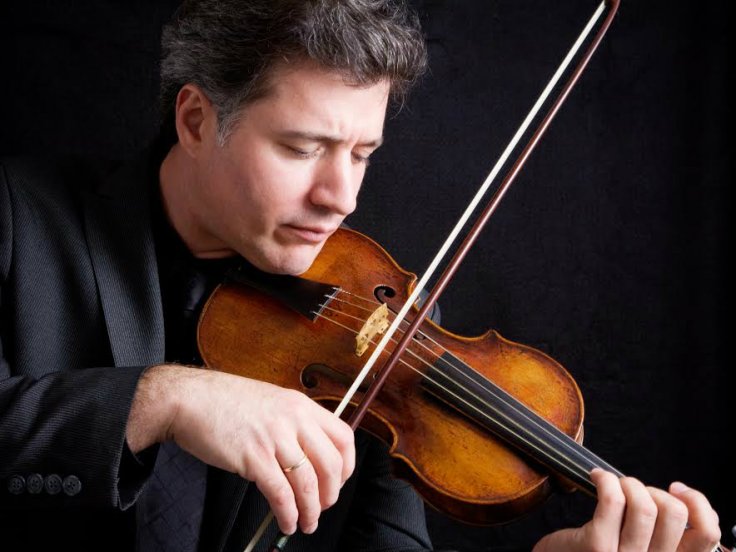
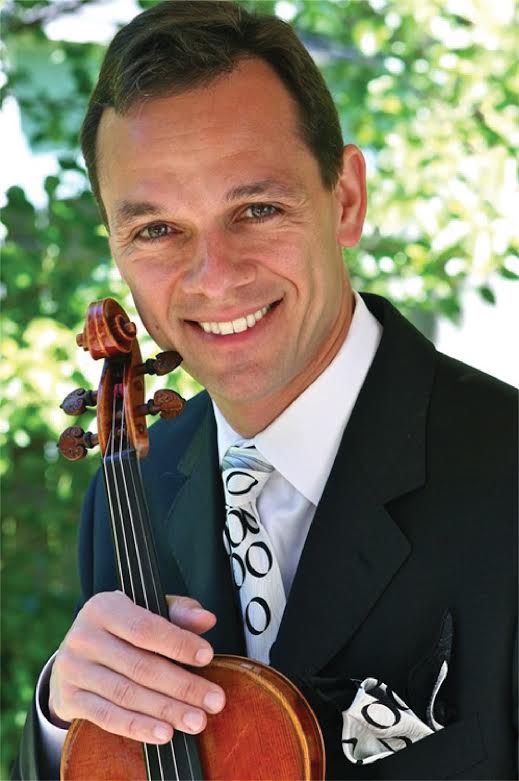
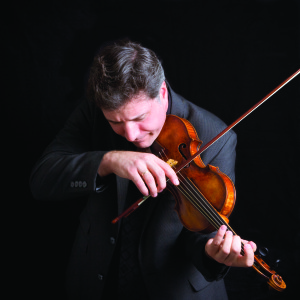
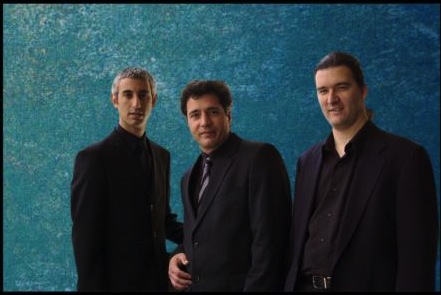
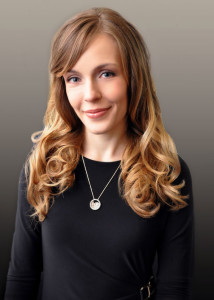
Performers will include violinist Zachary Carrettin, musical director of the Boulder Bach Festival (BBF) and the Bach Chamber Singers, a small ensemble of four singers. Featured guest artists will be soprano Josefien Stoppelenburg, who sang on the BBF performance of the Bach B-minor Mass in February of this year; Matthew Dirst, a Grammy-nominated harpsichordist and renowned scholar; and violinist Michiko Theurer, BBF artist-in-residence.
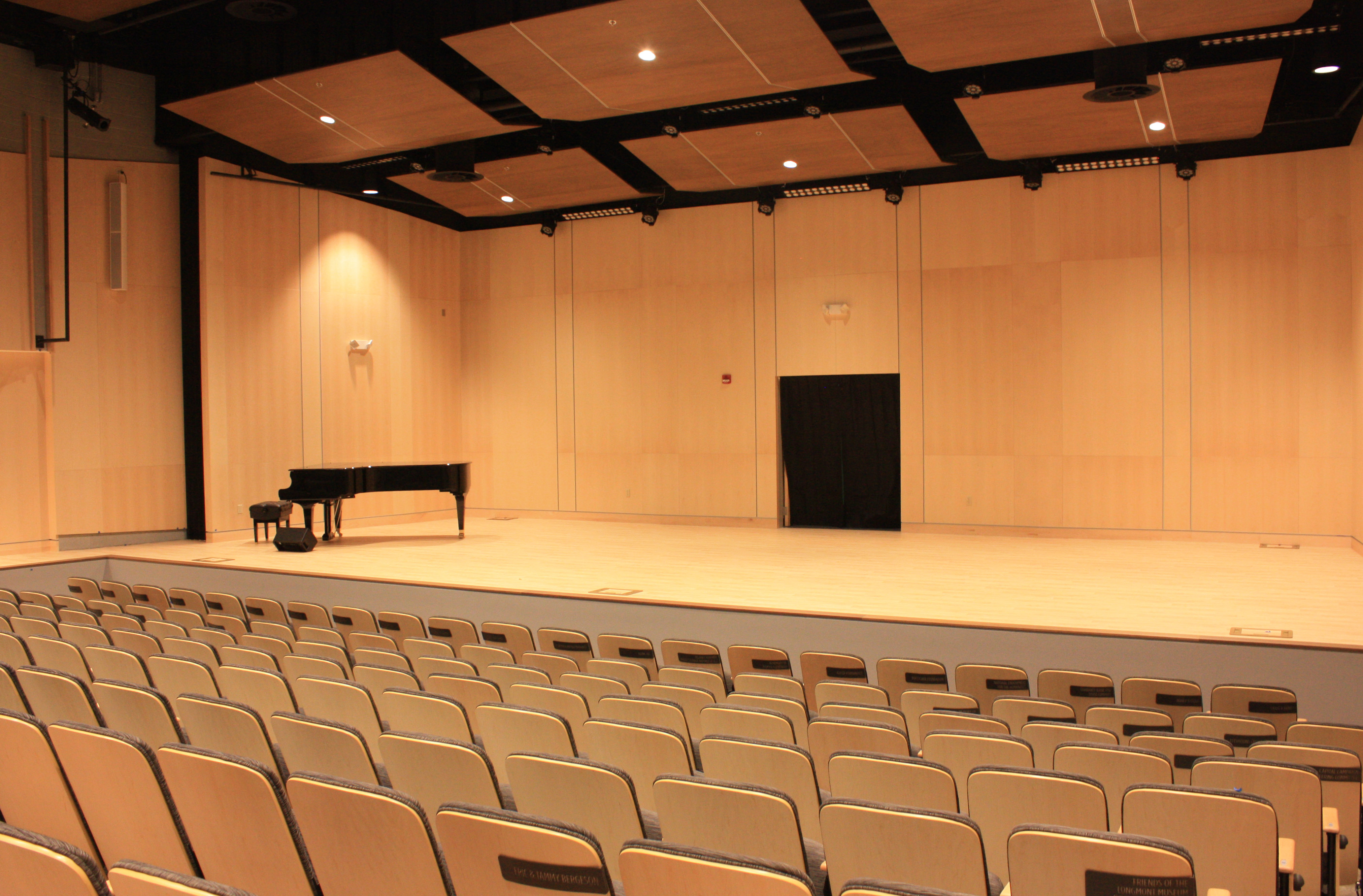
Interior of the new Stewart Auditorium at the Longmont Museum. Photo by Peter Alexander

Interior of the new Stewart Auditorium at the Longmont Museum. Photo by Peter Alexander

Carrettin praises the new auditorium in Longmont. “It’s a beautiful acoustic space, and the lobby is very inviting,” he says. “As (people) walk into the hall, they will realize that it’s an intimate hall, but world class nonetheless.” The connection to St. Mark’s Cathedral, which is famous for having multiple choir lofts so that sounds come from different directions, will be in the creative way Carrettin creates similar effects in the intimate auditorium.

“Whether you want to use the ancient term antiphonal, or the 20th-century term stereophonic, we will be placing artists in different parts of the hall,” he says. “That’s an element of the way we are presenting the entire first half of the program, without pauses between pieces. We’ll improvise transitions from one work to another, and sometimes traveling from left to right on stage.

“The idea is to create half of a concert that is sewn together as its own journey. I have to think of the Pink Floyd albums, or the Yes albums, and the way the artists would weave together pieces of music, sometimes bringing back ideas from previously played songs so that by the end of the album the listener feels that they’ve been told a story.”

According to the BBF Web page, that story will be one of “wandering through a labyrinth of pre-Bach Italian mysticism.” What makes it a labyrinth is perhaps the fact that the composers vary from text-book names unfamiliar to most audience members down to the utterly obscure, but Carrettin is happy to illuminate the various corners of the labyrinth.

“It’s not in the program, [but] I decided to open the program with the Passacaglia for solo violin by [17th-century German composer] Heinrich Biber,” Carrettin says. “The Passacaglia, with its repeated bass line and variations, immediately brings the audience into a space of timelessness.”
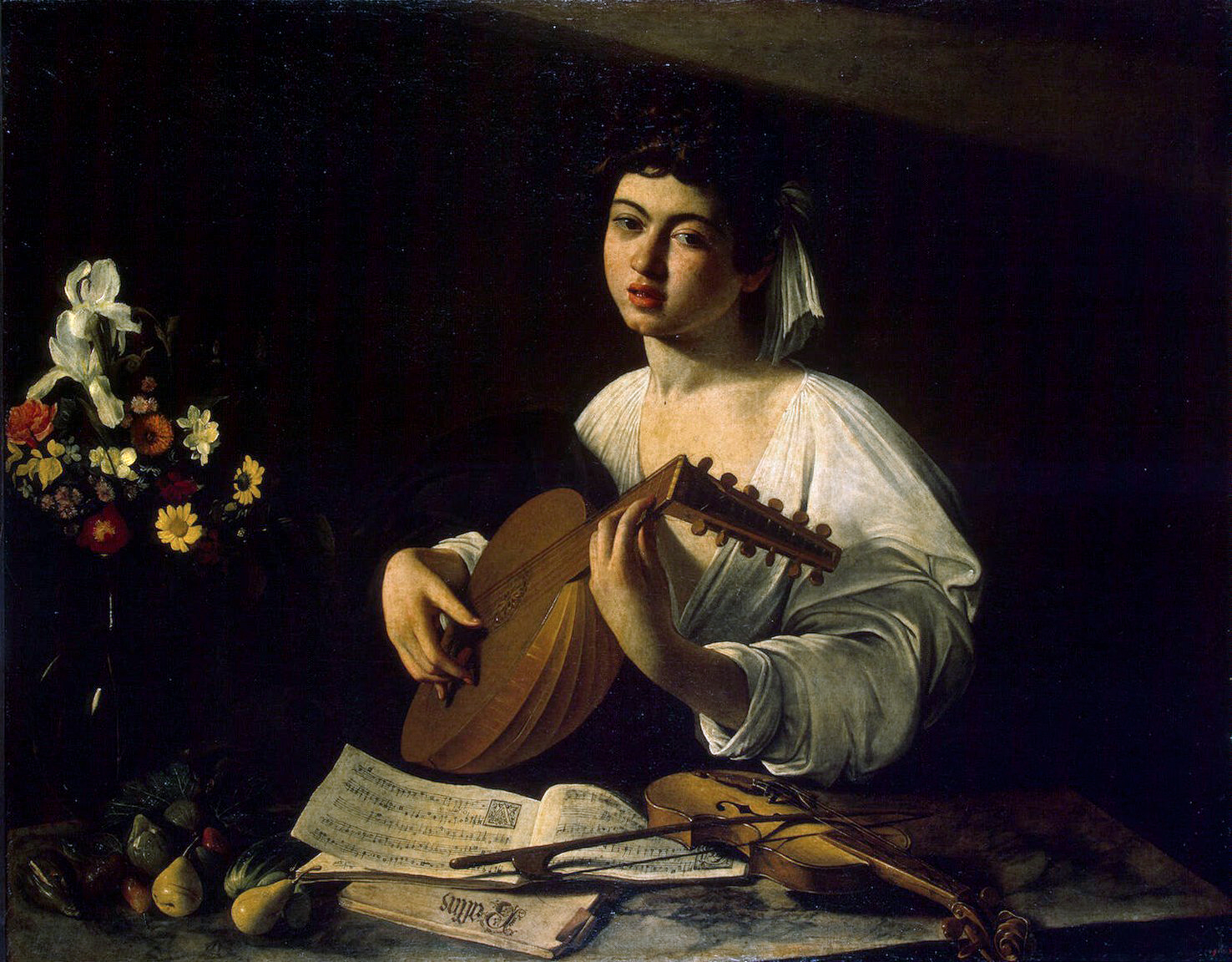
Michelangelo_Caravaggio_020

Caravaggio’s “The Lute Player”

That timelessness sets the stage for the earliest piece on the program, a madrigal by 16th-century Flemish composer Arcadelt. He was so well known in his lifetime that a 1596 painting by Caravaggio, featured on the BBF Web page, shows a lutenist playing one of his pieces. The text, about love and death—like many madrigals—in turn sets the stage for later works on the program.

The next piece returns to the 17th century with a Toccata by Froberger, who was known as a the composer of keyboard suites and descriptive pieces. “Bach was a virtuoso keyboardist and improviser,” Carrettin says, “so Froberger is an opportunity for us to look at other great keyboard composers.
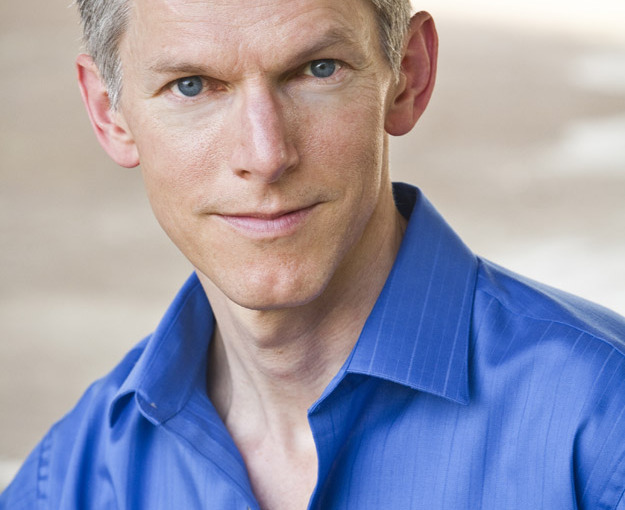
Harpsichordist and scholar Matthew Dirst

Harpsichordist and scholar Matthew Dirst

“Matthew Dirst ,who’s performing [Froberger’s Toccata] is really an incredible, dynamic scholar and author of a recent book called Engaging Bach. He is perfect for bridging the Italian style and Bach, starting with a piece that just plays with the facility of a keyboard instrument.

“As the program progresses, you’ll hear Matthew in various perspectives and lights.”

The rest of the first half plays out with Dirst playing first a sonata for violin and harpsichord by Castello with Theurer; then a set of variations for harpsichord and two violins by Marini, with Theurer and Carrettin; and another piece by Froberger. The first half ends with the Bach Chamber Singers performing music by one of J.S. Bach’s older relatives, Johann Christoph Bach.
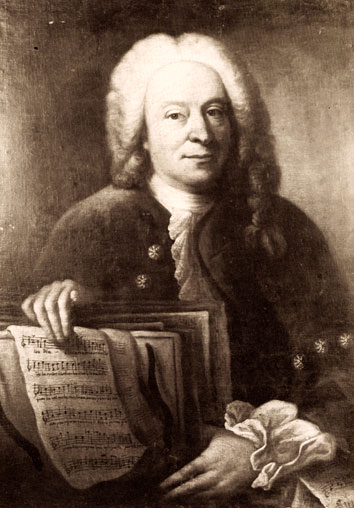
Johann Christoph Bach

Johann Christoph Bach

“He was actually the most known Bach composer before Johann Sebastian, but history doesn’t remember him,” Carrettin says. “This short motet, World, goodnight, is stunningly beautiful, so I think it’s a great way to end the first half.” Like the Arcadelt, this is another piece reflecting on death.

Carrettin describes the first half of the program as “fragments within a dream,” which contrasts with the two very familiar works by J.S. Bach that will be played in full on the second half: the much loved Harpsichord Concerto in D minor, BWV 1052, and a version of the cantata Ich habe genug, BWV82a for soprano—the concert’s final musical meditation on death.

“Dirst will perform the most famous Bach harpsichord concerto,” Carrettin says. “He’ll be just accompanied by string quartet, so you will really get the sound of the harpsichord ringing throughout the hall.”
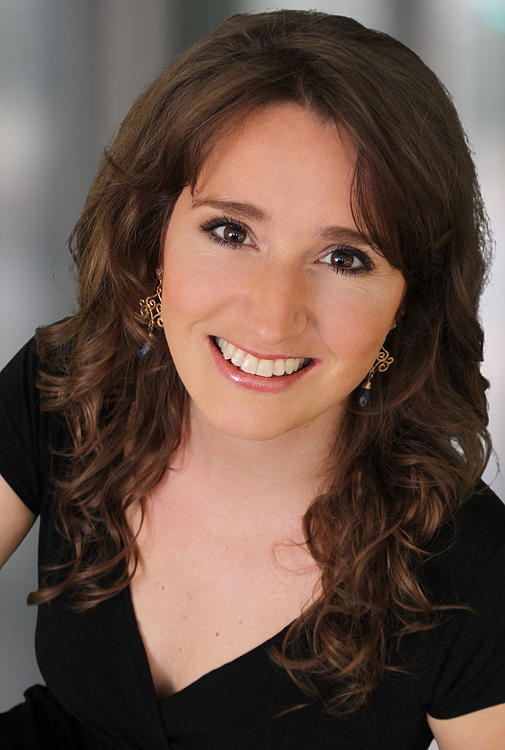
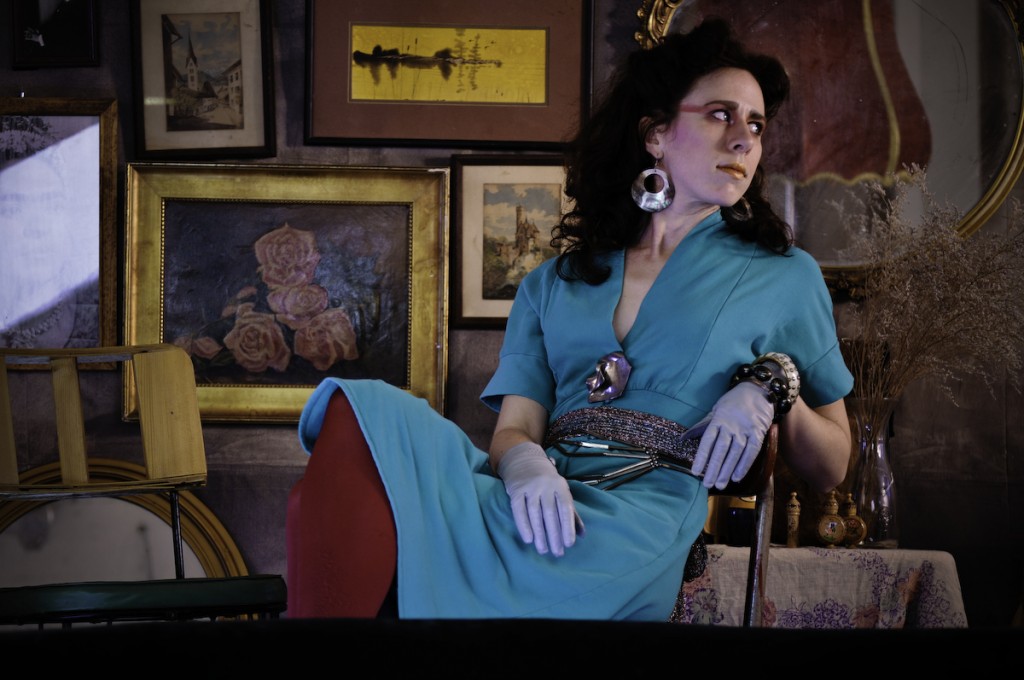
Soprano Josefien Stoppelenburg

Soprano Josefien Stoppelenburg

Turning to the cantata, Carrettin says “There are several special elements of our performance. One is that we are doing this one per part, featuring Ysmael Reyes on flute. We’ll have two violins one viola, one cello, and one double bass, and Dirst will play harpsichord.

“Soprano Josefien Stoppelenburg, who thrilled audiences in the B minor Mass, will return to sing this. And what’s so special about this performance is that we’re using the rarely performed version that Bach wrote for soprano.”

Bringing together guest artists with local musicians in something Carrettin especially enjoys. “What thrills me is having an internationally recognized harpsichordist, and an internationally recognized virtuoso soprano sharing the stage with expert front-range musicians and young professionals,” he says.

“What I like is bringing together different generations, different life experiences, and artists from different geographical locations. What ends up happening is these paths of discovery and relationships are created. To me that’s as thrilling as the music.”

# # # # #

Italian Roots
Music by Biber, Arcadelt, Castello, Froberger, Marini, Uccelini, Johann Christoph Bach and J.S. Bach
Boulder Bach Festival Chamber Singers with Zachary Carrettin, violin, and guest artists

7:30 p.m. Friday, Oct. 16
Stewart Auditorium at the Longmont Museum, Longmont

7:30 p.m. Saturday, Oct. 17
St. John’s Episcopal Church, Boulder

Tickets

Boulder Bach Festival moves six degrees from Bach

Program features Impressionist and 21st-century composers, plus one Bach sonata

By Peter Alexander

Pianist Mina Gajić

Pianist Mina Gajić

The ever-broadening Boulder Bach Festival will end its 2014–15 season with a concert of music for violin and piano by Debussy, Ravel, the great violinist Eugene Ysaÿe, and Ray Granlund, a living and very eclectic American composer.

Oh yes—there will be a Bach sonata, too.

The performance, titled “Six Degrees of Separation,” will be at 7:30 p.m. Saturday (June 6) in Grusin Hall of the CU Imig Music Building. Concert pianist Mina Gajić will perform with violinist Zachary Carrettin, the music director of the Bach Festival. Tickets can be purchased online.

The program covers five composers, four centuries (from the 18th to the 21st), and a glittering array of styles. None of which exactly explains the “Six Degrees,” which seems to refer to all the ways the other composers are related back to Bach. Indeed, it has been a theme of the festival this year to celebrate not only the music of Bach, but the music that he inspired through the centuries.

“Bach had an enormous influence on virtually every subsequent composer,” Carrettin says. “For example, composers studied Bach’s approaches to form and harmony, and especially counterpoint. And also there are commonalities in the priorities of the composers chosen for this concert.”

One of those commonalities, Carrettin explains, is the exploration of musical ideas from other cultures and nationalities.

Zachary Carrettin

Zachary Carrettin

“Bach was influenced by his German organ predecessors, but also wrote frequently in the popular Italian and French styles,” he says. Similarly, “Ray [Granlund] wrote a piece that is supposed to be a tango, and yet has the rhythmic influence of a waltz. And Debussy’s sense of color and cross-cultural explorations cover styles from different countries. Flamenco, blues, wooden flute sounds—all of these are heard in the Violin and Piano Sonata.”

Eugene Ysaÿe

Eugene Ysaÿe

Another obvious connection with Bach is provided by the Sonata for solo violin by Eugene Ysaÿe, a violinist who was both a contemporary and a friend of Debussy. “Ysaÿe wrote six sonatas for unaccompanied violin, and they’re modeled on the six sonatas and partitas that Bach wrote for unaccompanied violin,” Carrettin says. “This sonata begins with movement called ‘Obsession,’ which includes multiple quotations of Bach, from the E-major Partita for solo violin.”

While Debussy, Ravel and Ysaÿe were contemporaries, Carrettin included Granlund as a way of tying the diverse program together, from Bach forward. “I think the composer that bridges this program together is the living composer Raymond Granlund,” he says. “His work is harmonically influenced by impressionism, expressionism, jazz and various world musics, but also his contrapuntal writing is exquisite.”

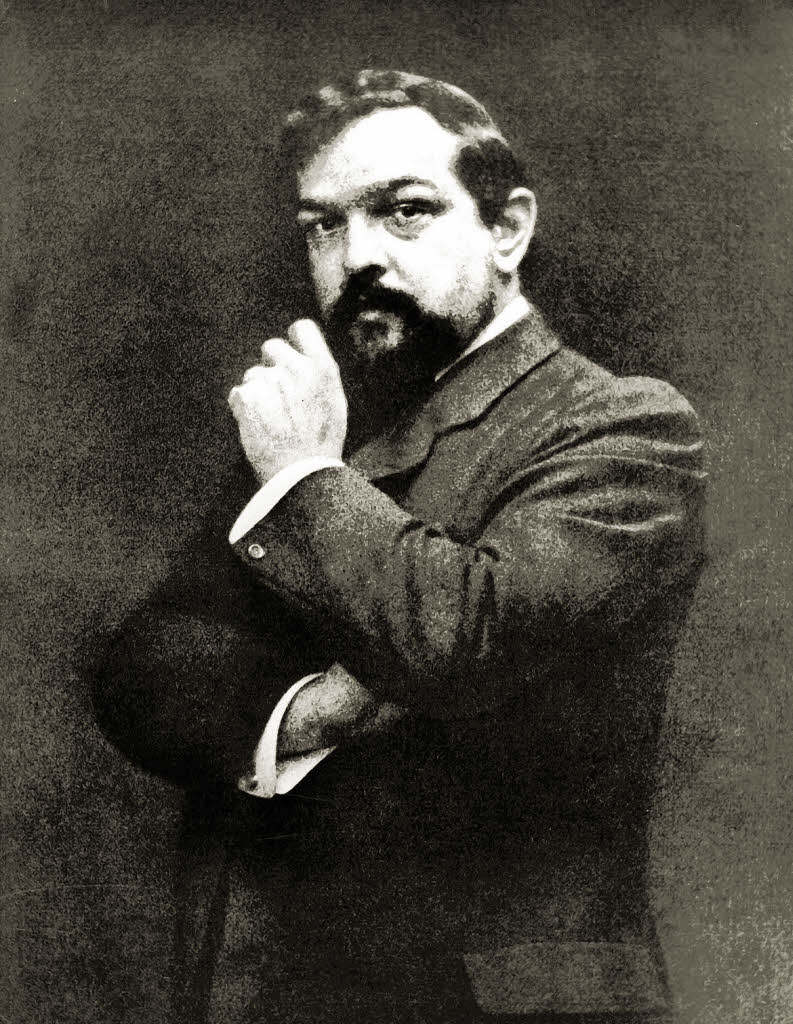
Claude Debussy

Claude Debussy

Beyond these musical and stylistic connections among the composers, Carrettin finds more subtle connections to Bach that he calls poetic: “Debussy once failed a piano exam at the [Paris] Conservatory, because his Bach was, and I quote, ‘too expressive.’ So the program brings up a conversation not only about the connections between the composers, but also the playing styles and how we play Debussy now, in the 21st century, and how we play Bach now.”

For Carrettin, the answer to “how we play Bach” is defiantly non-dogmatic. He has played it with historic instruments; he has also played Bach on electric violin, and interwoven Bach’s music with the music of John Cage. Going into Grussin Hall, he and Gajić will be playing instruments that post-date both Bach and Debussy.

“For this performance, Mina [Gajić ] will be playing one of the extraordinary nine-foot Steinway pianos owned by the university,” he explains. “I’ll be playing a violin made in Chicago in 1963 by a great maker, I and I’ll be playing what we call a modern bow.”

Without going into the intricacies of violin bow history, that means the style of bow developed around 1780—after Bach’s lifetime but well before Debussy—that provides greater tension on the bow hairs. This in turn allows more pressure on the strings, and therefore greater volume.

“The equipment is an interesting question,” Carrettin continues. “When Mina and I rehearse we encounter such fascinating moments of crossroads. She has years of experience playing harpsichords, fortepianos, and especially 19th-century historic pianos, but now she’s playing this recital on a modern Steinway. And I have years of playing Baroque and classical period instruments with sheep-gut strings and convex archaic bows and no chin rests.

“The techniques of playing are different, but also what’s possible on the [modern] instruments is quite different. The timbre of a modern piano will shed light on different aspects inherent in Bach’s compositions. The same with the violin. The fingerings one chooses, or whether to elongate a phrase or break it up into smaller rhetorical statements—sometimes we make these decisions based on what instrument we’re using, and what the strengths are of that instrument.”

As for those famous six degrees of separation, here are some additional thoughts to ponder: Carrettin traces his violin instruction back to Archangelo Corelli, an Italian older contemporary of Bach; almost every pianist in the world can trace their teachers back to Beethoven, who studied Bach’s Well Tempered Clavier; and even the modern Steinway grand can trace its lineage back to Bach’s time, and the invention of the fortepiano by Bartolomeo Cristofori around 1700.

But you’ll have to find your own connections to Kevin Bacon.

# # # # #

Johann_Sebastian_Bach

J.S. Bach

“Six Degrees of Separation”
Presented by the Boulder Bach Festival
Mina Gajić, piano, and Zachary Carrettin, violin
Music of Bach, Debussy, Ysaÿe, Ravel and Granlund
7:30 p.m. Saturday, June 6
Grusin Hall, Imig Music Building, CU Boulder
Tickets

PROGRAM:
J.S. Bach: Sonata in C Minor for violin and clavier obligato, BWV 1017
Eugene Ysaÿe: Sonata #2 in A Minor for violin solo, “Jacques Thibaud”
Raymond Granlund: TangoPeregrino and TangoNometría
Maurice Ravel: Jeux d’eau (for piano solo)
Claude Debussy: Sonata in G Minor for violin and piano

Music for movement, and movement to music

Boulder Bach Festival and 3rd Law Dance/Theater collaborate on “Bach UnCaged”

Zachary Carrettin with dancers from 3rd Law Dance/Theater

Zachary Carrettin with dancers from 3rd Law Dance/Theater

By Peter Alexander

The Boulder Bach Festival (BBF) will reprise its highly successful 2014 partnership with 3rd Law Dance/Theater with a new work that combines the music of J.S. Bach with iconoclastic 20th-century American composer John Cage.

The performance, “Bach UnCaged” (7 p.m. Friday and Saturday, March 27 and 28, at the Dairy Center in Boulder), is part of the festival’s “Compass Series,” which aims to present Bach’s music in new and unexpected contexts.

The performances will feature pieces for solo strings by Bach, played by BBF music director Zachary Carrettin on electric violin; interludes drawn from the sonatas for prepared piano by Cage, played by the festival’s executive director, Marcia Schirmer; and dance by 3rd Law Dance/Theater and choreographer Katie Elliott.

Carrettin will play a series of solo movements by Bach, from both the solo sonatas for violin and the solo suites for cello. Between the Bach movements, Schirmer will play individual sonatas for prepared piano by Cage. The separate pieces will be preceded and linked together by improvised passages by Carrettin—some using the notes C-A-G-E. Only at the end will the music of Bach and Cage sound together.

Read more at Boulder Weekly.

Boulder Philharmonic Announces season of collaborations for 2015–16

“Reflections: The Spirit of Boulder” will offer soloists, dance, visiting composers, photography, and a great choral work

Michael Butterman. Photo by Glenn Ross

Michael Butterman. Photo by Glenn Ross

By Peter Alexander

Next year will be a season of collaborations for the Boulder Philharmonic Orchestra and music director Michael Butterman.

The 2015–16 season, which has just been announced, will include a broad array of collaborative work, from the usual appearances of renowned visiting soloists to the season finale, a semi-staged performance of Bach’s St. Matthew Passion presented in conjunction with Central City Opera, the Boulder Bach Festival, and choruses from the CU College of Music.

In between, there will be two visiting composers, a performance enhanced by the photography of John Fielder, two joint performances with Boulder Ballet, and a return of the aerial and stage performers of Cirque de la Symphonie. (Unless otherwise noted, performances mentioned below are at 7:30 p.m. in Macky Auditorium.)

Charles Wetherbee

Charles Wetherbee

Billed as “Reflections: The Spirit of Boulder” (see full schedule below), the season gets underway at 7 p.m. Sept. 13—a Sunday evening performance—with a program featuring two soloists. Charles Wetherbee, the orchestra’s concertmaster will perform The Storyteller, a piece based on Japanese folk tales that was written for him by Korine Fujiwara; and Gabriela Montero will perform Rachmaninoff’s Piano Concerto No. 2.

Gabriela Montero. Photo by Uli Weber.

Gabriela Montero. Photo by Uli Weber.

Montero is sometimes remembered for her participation in President Obama’s first inaugural, when it was notoriously too cold to play live outside and a recorded performance was substituted, but she is also renowned as a virtuoso pianist who performs to acclaim around the globe. But Butterman is looking forward to her visit for another reason.

“The thing that’s so amazing about her, and quite unique, is her ability to improvise—it’s straight out of another era,” he says. “I‘ve heard her do this a number times and it’s just remarkable— everything from what seems like perfectly worked out Bachian counterpoint to ragtime, to impressionistic, Debussy-esque sort of things.

“What’s so amazing about it is that it seems so beautifully worked out, through all these different styles.”

Charles Den;er/ Photo courtesy of Grumpy Monkey Music.

Charles Denler. Photo courtesy of Grumpy Monkey Music.

The November subscription concert (Nov. 14) will offer the world premier of a new work for piano and orchestra by Denver composer/pianist Charles David Denler, who will also play the solo part. Inspired by the nature writing of American author Henry David Thoreau, Denler’s Portraits in Seasons will be presented with projections of images selected by Colorado photographer John Fielder.

“I would describe the music as certainly tuneful, pictorial, a little bit atmospheric,” Butterman says. “I thought this would be really nice with something to look at and to read. It occurred to everybody that Fielder is so well known and is such a fine artist that we approached him with this particular proposition.”

Fielder has said that to illustrate the seasons, he will choose photographs that are more intimate in scale than many of the large-scale mountain landscapes that he is well known for.

Following the traditional Nutcracker performances over Thanksgiving weekend—this year with new scenery—and the return of the popular “Christmas with the Phil” concerts in December, January will see the orchestra sharing the stage with the Boulder Ballet for a subscription concert. Titled “Dance, American Style,” the Jan. 16 performance will feature the full ballet of Rodeo by Aaron Copland.

Filling out the program will be orchestral performances of the New England Triptych by William Schuman, Leonard Bernstein’s Symphonic Dances from West Side Story, and three excerpts from Copland’s Billy the Kid.

Anne Akiko Meyers. Photo by Molina Visuals.

Anne Akiko Meyers. Photo by Molina Visuals.

February brings a Friday concert (Feb. 12), with another acclaimed guest soloist, Anne Akiko Meyers playing Mendelssohn’s much loved Violin Concerto in E minor, and the season’s second visiting composer, in the form of an artistic residence by Missy Mazzoli.

Dubbed “the coolest thing to happen to the violin since Stradivari” by the Denver Post, Meyers is one of the leading violin soloists of her generation. Her playing has been featured on practically everything from CBS “Sunday Morning” to “The Good Wife” on television, many CDs, and countless radio broadcasts.

Missy Mazzoli. Photo by Stephen S. Taylor.

Missy Mazzoli. Photo by Stephen S. Taylor.

Missy Mazzoli may not be well known in Colorado, but she is, Butterman says, “a pretty hot composer in the New York scene in particular.” Her week-long residency will include educational activities and chamber performances, as well as the Boulder Phil’s premiere of a new version of her Sinfonia (for Orbiting Spheres).

The title refers, Butterman explains, not to planets but “the idea of circularity and cycles.” The title takes the 18th-century term “Sinfonia,” in reference to ideas from Baroque music and ornamentation that the composer used.

“It’s not exactly a neo-Baroque piece, but it certainly has some connections to earlier periods,” Butterman says—which led him to the other pieces on the concert program: Shostakovich’s Haydn-esque Symphony No. 9, Tchaikovsky’s Mozartiana and the classically inspired Mendelssohn Violin Concerto.

Boulder Philharmonic with Cirque de la Symphonie. Photo by Glenn Ross.

Boulder Philharmonic with Cirque de la Symphonie. Photo by Glenn Ross.

Cirque de la Symphonie will make its third appearance with the Boulder Philharmonic with two performances, at 2 and 7:30 p.m. April 2. Building off the famed Cirque du Soleil and other cirque programs, the troop presents aerial flyers, acrobats, contortionists, dancers, jugglers, balancers and strongmen choreographed to classical music.

“What I like about them is their ability to appeal very, very broadly to an audience, but to do so while allowing us to present just great classical music,” Butterman says. Based on their previous appearances in Boulder, he says that the audience will “know the basic concept of what they’re going to see, but their repertoire will be different enough that it will be fresh and people will enjoy it.”

The success of the previous sold-out performances led the Boulder Phil to expand to two performances in 2016, adding the 2 p.m. matinee the same day as the evening concert.

Macky Auditorium

Macky Auditorium

The season-ending semi-staged performance of the St. Matthew Passion will also have two performances, 7 p.m. Saturday, April 23, in Macky Auditorium, and at a time and place to be determined on Sunday, April 24. Although it was written as a sacred oratorio, in modern times the St. Matthew Passion has sometimes been staged. One recent notable production, directed by Peter Sellars with conductor Simon Rattle and the Berlin Philharmonic, was imported into the U.S. for performances in New York City last year.

“This piece is positively operatic in its sweep and pacing,” Butterman says. “However, I don’t think its been done (in a staged performance) in Colorado.”

The idea originated with a proposal from Central City Opera for some kind of collaboration with Boulder Phil. After various ideas were discussed, the two groups, along with the Boulder Bach Festival and the CU College of Music, settled on the St. Matthew Passion.

“We’re going to do it at Macky, but we’re going to be able to use the space creatively,” Butterman says. “(Central City Opera General/Artistic Director) Pat Pearce said Central City was looking for was some kind of immersive experience, where the audience feels enveloped in the drama.

“The Bach repertoire is delicate for us, because we are not a chamber orchestra, and there is already an entity in town that has laid claim to that. So if we were ever going to tackle something like this, we had to have a reason that was unique enough and compelling enough, and this potential four-way collaboration would be just that.”

In addition to Butterman and players from the Boulder Philharmonic, the performance will feature choruses from the CU College of Music and the Bach Festival Chorus, specialized instrumentalists from the Bach Festival, and stage direction by Central City Opera. The Macky stage will be modified, similar to what the CU does every year for their Holiday Festival.

In addition to the subscription concerts, the Boulder Philharmonic will offer Discovery Concerts for local elementary students, free “Cafe Phil” open rehearsals at the Dairy Center, and “Nature & Music” guided hikes with the cooperation of Boulder Open Space & Mountain Parks.

Season subscriptions packages are available here. Check the Boulder Philharmonic Web page for more information.

# # # # #

Boulder Philharmonic Orchestra
2015-2016 Season—Reflections: The Spirit of Boulder

logo2September 13, 2015 (Sunday): Opening Night
Maurice Ravel: Mother Goose Suite
Korine Fujiwara: The Storyteller, with Charles Wetherbee, violin
Sergei Rachmaninoff: Piano Concerto No.2, with Gabriela Montero, piano

CANCELED: October 10, 2015: Gregory Alan Isakov with the Boulder Phil
Gregory Alan Isakov, singer-songwriter, guitar

November 14, 2015: Portraits in Season
Johannes Brahms: Schicksalslied (Song of Destiny), with Boulder Chorale
Charles Denler: Portraits in Season, with Charles Denler, piano; photography by John Fielder
Johannes Brahms: Symphony No. 2

November 27 through November 29, 2015: The Nutcracker with Boulder Ballet

December 20, 2015: Christmas with the Phil, Venue TBD, Boulder
December 21, 2015: Christmas with the Phil, Vilar Performing Arts Center, Beaver Creek
December 22, 2015: Christmas with the Phil, Lone Tree Arts Center, Lone Tree, with Boulder Bach Festival Chorus

January 16, 2016: Dance, American Style (with Boulder Ballet)
January 17, 2016: Dance, American Style, St. Luke’s, Highlands Ranch (without dancers)
William Schuman: New England Triptych
Leonard Bernstein: Symphonic Dances from West Side Story
Aaron Copland: “Prairie Night,” “Waltz” and “Celebration Dance” from Billy the Kid
Aaron Copland: Rodeo (complete ballet), with Boulder Ballet

February 12, 2016 (Friday): Spheres of Influence
Missy Mazzoli: Sinfonia (for Orbiting Spheres), a Music Alive Composer Residency
Dmitri Shostakovich: Symphony No. 9
Pyotr Tchaikovsky: Mozartiana
Felix Mendelssohn: Violin Concerto in E minor, with Anne Akiko Meyers, violin

April 2, 2016: Cirque de la Symphonie (2 p.m. & 7:30 p.m.)

April 23 & 24, 2016: Season Finale
Bach: St. Matthew Passion
Semi-staged production with Central City Opera, Boulder Bach Festival & CU Choruses

NOTE: Edited 22 April to reflect an unexpected change in the season schedule.

Boulder Bach Festival presents a complete realization of the B-minor Mass

J.S. Bach

J.S. Bach

By Peter Alexander

Zachary Carrettin and the Boulder Bach Festival last night (Feb. 28) delivered a performance of Bach’s monumental Mass in B minor that was creative, provocative, and sensational.

This was the first major work Carrettin has led since becoming musical director of the festival. If this is a harbinger of things to come, Boulder has much to look forward to.

The choral singing was immaculate, the orchestra superb, and the five soloists—sopranos Josefien Stoppelenburg and Melissa Givens, mezzo-soprano Julie Simson, tenor John Grau, and bass-baritone Michael Dean—were as well matched as any oratorio soloists you are likely to hear.

The B-minor Mass, nearly two hours of music, is a vast undertaking for any conductor or performing organization. It is so well known, and has been performed so often, that it is difficult to offer anything new. And yet Carrettin, who rethought the score from beginning to end, managed to make it fresh.

One departure from the norm was the choice to have some choral movements sung by the soloists rather than the full chorus. This is sanctioned by history, since the alternation between solo and group performance is one of the cornerstones of Baroque music, and Bach is known to have made similar decisions in performances he directed. There have even been modern Bach performances that reduced the entire chorus to soloists throughout, though few scholars endorse such an extreme.

Zachary Carrettin

Zachary Carrettin

For this performance, Carrettin used soloists to stress the personal as opposed to congregational expression of the text, as at the beginning of the Credo (“I believe in one God.”) This was extremely effective, both as a way to illuminate the meaning of the text, and as a source of variety in the texture and sound of the performance.

I was less convinced by another departure, when Carrettin gave the choral movement “Confiteor” (“I confess one baptism”) to a single soprano soloist and strings, converting a choral movement into an aria. On the one hand, this decision brings out the highly personal nature of the text at the moment that the soprano sings “I look for the resurrection of the dead.” But on the other, it suppresses the brilliant counterpoint among equal parts that Bach wrote.

There can be no complaint about the quality of the performance, however. Stoppelenburg has a soprano voice of remarkable purity and clarity, and her singing in the “Confiteor” was exquisite.

Another decision concerns the placement of the intermission. It usually occurs between the Gloria and the Credo movements, a location that corresponds to a break in the liturgical segments of the mass. But Carrettin understands that performances of the B-minor Mass are just that—performances—because the piece is not suited to use in a service. And so he decided move intermission to a moment of high drama within the Credo, immediately following the “Crucifixus” (“He was crucified’).

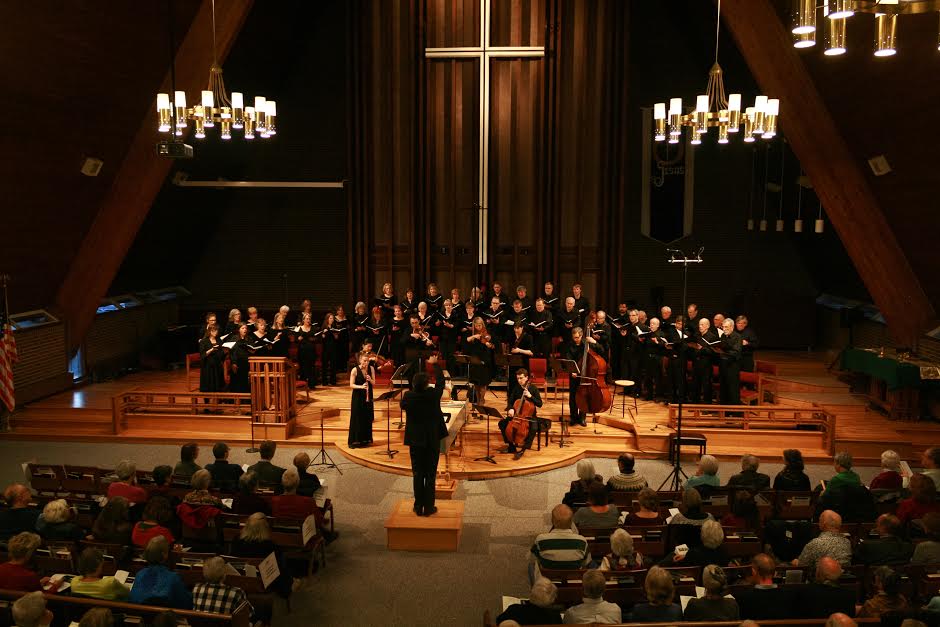
Boulder Bach Festival singers and players. Courtesy of the Boulder Bach Festival

Boulder Bach Festival singers and players. Courtesy of the Boulder Bach Festival

Carrettin had asked the audience not to applaud at that point, so Bach’s deeply moving music faded into silence, leaving the audience to contemplate the central event of Christian belief. That moment was made even more moving by the decision to have the “Crucifixus” sung only by the soloists, making it a musical expression of failing strength after the preceding full chorus.

After intermission, the audience returned for “Et resurrexit” (“And he rose again”), one of Bach’s most joyous and uplifting moments. Purists may object to having a break where there is usually continuity from sorrow to joy, but I found it highly effective as a moment of musical drama. It is this kind of creative rethinking that keeps the great masterpieces alive in our times.

On a purely musical level, the performance was extraordinary. The intonation among the singers and the orchestral players was exquisite, lending a clarity and transparency to Bach’s counterpoint that is only rarely achieved. This effect was aided by the meticulous phrasing, often based in the individual motives rather than long, Romantic lines that can obscure the exchanges among parts.

Earlier I praised Stoppelenburg’s performance of the “Confiteor,” but it would be unfair to single out only one soloist. They all sang with great precision of pitch and rhythm, rendering their complex lines, almost instrumental in quality, with remarkable clarity.

The balance among forces was carefully controlled throughout. In this respect particularly I would be remiss not to mention the brass players. The trumpets managed Bach’s high and difficult parts without ever overwhelming the singers, and the duet between horn and bassoon in the bass aria “Quoniam” becomes a new piece when the parts are so carefully balanced.

BBF-2014-15-season-brochure-pdfThe Boulder Bach Festival is likewise fortunate to have a flute player of the quality of Ysmael Reyes. His sound was gorgeous throughout, but especially in his duet with Grau in the “Benedictus.”

But above all else, I admired the pacing of the performance. It is hard to manage musical forces over such a long span of time, so that the chorus at the end of the Gloria can rise to a climax for the entire movement, and so that they can then achieve one more level of fullness of sound for the final “Dona nobis pacem,” before subsiding to a moment of rest and, indeed, peace.

In its accumulated impact, this may have been the most complete realization of the B-minor Mass I have heard. It was a remarkable achievement by the performers, and for everyone in attendance it was a night to remember.

Baroque Trio Aeris Opens Boulder Bach Festival with stunning, eccentric program

By Peter Alexander

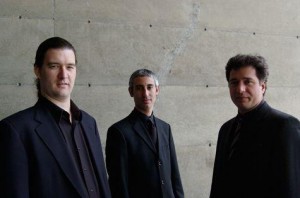
Aeris: William Skeen, Avi Stein, Zachary Carrettin

Aeris: William Skeen, Avi Stein, Zachary Carrettin

The Baroque-instrument trio Aeris opened the 2014–15 Boulder Bach Festival last night (Oct. 16) with a concert that more than lived up to the promise of its title, “Capriccio.”

In fact, the program was so capricious and idiosyncratic that it might well have taken its title from one of the works, Diverse bizzarie (diverse bizarrities). But that was exactly the goal of Zachary Carrettin, the musical director of the festival and the violinist of the trio. By focusing on a notably eccentric repertoire, Italian violin sonatas of the 17th and 18th centuries, Carrettin established from the very first notes of the new season that the Bach Festival will not hesitate to spread a wide net in order to illuminate the most familiar works of festival’s main subject, J.S. Bach.

Francesco Maria Veracini Italian violin virtuoso and composer (1690–1768)

Francesco Maria Veracini, Italian violin virtuoso and composer (1690–1768)

The trio, made up of Carrettin with Baroque cellist William Skeen and harpsichordist Avi Stein, gave stunning performances of violin sonatas by the Italian virtuosos and composers Veracini, Stradella, Valentini, Locatelli and Nicola Matteis, and a very Italianate and wildly virtuosic sonata by J.S. Bach; plus a cello sonata by Vivaldi.

J.S. Bach

J.S. Bach

There is an important message in the choice of program. The composers Carrettin picked were, he said, “phenomenal characters in music,” musicians who explored with gusto the outer limits of their instruments and their own virtuosity. This is very different from the image we have of Bach the sober Lutheran cantor, but it was very much part of Bach’s world. And the better we understand that whole musical world, the better we understand Bach.

And this kind of programming gets the festival beyond the mere rotation of great works and provides a welcome source of excitement and exploration for Boulder’s audiences.

To bring this ancient music to life, Aeris plays on historically accurate instruments, using gut strings and Baroque bows for the violin and cello. This creates a less brilliant and potentially less consistent sound than modern bows and metal strings, but it also gives the music a warmth and a clarity of texture that the composers would recognize.

This more delicate and intimate sound works best in a smaller venue. While it would be out of place in even a modest auditorium, it sounded completely at home in Boulder’s St. John’s Episcopal Church. Boulder’s churches see many performances, but unlike larger ensemble programs, in this case the church is in no way a compromise. In fact, it is the closest thing we have to the spaces where music was performed in the Baroque era.

Aeris also plays from reproductions of 18th-century manuscripts or first editions. This is an important decision. It’s easy to imagine that notes are notes, but in fact by bypassing all of the decisions that have to be made by modern publishers and seeing only what the original performers saw, the players are able to respond much more directly to the music as it was conceived and put onto paper—both its demands and its expressive possibilities.

Zachary Carrettin

Zachary Carrettin

While not immune to the occasional edgy sound and surging phrases that can result from the lower tension of Baroque bows, Carrettin and Skeen played with both technical polish and a lovely sound that complimented Stein’s harpsichord without overwhelming it. They are all virtuoso performers.

The most important qualities they brought to their performance were energy and passion. If played mechanically—as Baroque music was often played in the past—this music looses its life and becomes, as it was called, “sewing-machine music.” But played with freedom and a sense of drama, as newer generations of specialist performers have done, it becomes exciting, edgy, surprising.

In this regard, Aeris could not be faulted. The program was played with flair, drama and occasionally humor. The musical swings and turns of mood were well characterized throughout.

With so many cascading notes and the freedom of expression the repertoire demands, it is easy for the metrical framework and a sense of direction to get lost in performance. Here is where Aeris truly excelled: Nothing felt aimless or seemed to wander. The players’ unerring sense of phrasing made every line clear, every joint and juncture distinct.

Music historians teach that the word “Baroque” may have come from a Portuguese word for misshapen pearls, implying music that is bizarre, extravagant and asymmetrical. With its idiosyncratic and unpredictable violin sonatas, the program by Aeris was a perfect illustration of that characteristic of the Baroque era.

Hearing such pieces, it becomes easy to understand why the early classical composers of the generation between Bach and Mozart wrote music that oversupplied what Baroque music lacked: regularity, symmetry, and an often banal predictability. Charles Burney, an 18th-century English music historian who was quoted in the program notes, represented the view of that generation when he called the music of the Italian violinists “wild, aukward [sic] and unpleasant” and said it provided “more surprise than pleasure.”

Burney to the contrary, the music Aeris performed last night supplied both surprise and pleasure—and a promising start for the 2014–15 Boulder Bach Festival.

# # #

AERIS: “Capriccio”
Zachary Carrettin, violin; William Skeen, cello; and Avi Stein, harpsichord
Sonatas by Locatelli, Veracini, Matteis, Stradella, Vivaldi and Bach

Remaining performances:
7:30 p.m. Friday, Oct. 17, St. John’s Cathedral, Denver
7:30 p.m. Saturday, Oct. 18, First Lutheran Church, Longmont

Festival Looks Back to Bach while Rushing Confidently into the Future

By Peter Alexander

J.S. Bach

J.S. Bach

Johann Sebastian Bach died more than 250 year ago, but the Boulder Bach Festival is clearly not stuck in the past.

Zachary Carrettin

Zachary Carrettin

Under music director Zachary Carrettin, the festival, which launches its 34th season this week, will regard Bach from a multitude of perspectives, old and new. The festival will continue to feature the great sacred monuments of Bach’s career, but also his secular music, his many instrumental works, and even some wild virtuoso showpieces, as well as music by a diverse array of other composers. This year his music will be paired with contemporaries, and with 19th-century Impressionist and post-Impressionist composers; it will be performed on historical Baroque instruments, on electric violin, and on a 19th-century piano.

“These are all tools, they are all brushes that we use as we paint music,” Carrettin says. “I hope that the Bach festival will continue to present this music in a variety of guises and from a variety of perspectives.”

The opening concerts—Thursday at St. John’s Episcopal in Boulder, Friday at St. John’s Cathedral in Denver and Saturday in First Lutheran in Longmont, all at 7:30—will be performed by Aeris, a trio comprising Carrettin on violin with cellist William Skeen and harpsichordist Avi Stein.

AERIS.115

Aeris: Avi Stein, Zachary Carrettin, William Skeen

Using gut strings, Baroque bows and historically accurate instruments, Aeris focuses on the extensive and sometimes astonishing virtuoso violin repertoire of the 18th century. To launch the 2014-15 festival, they will perform a sonata by Bach, but also sonatas by Italian composers of the era, including Locatelli, Veracini, Stradella and Vivaldi.

“These are phenomenal characters in music,” Carrettin says. “Stradella was stabbed to death twice, the second time successfully, due to his marital infidelities. Veracini was such a virtuoso that the great Tartini went home to practice bowing technique after he heard Veracini, because he was so blown away. And Niccolo Matteis, was a great Italian who showed up with a backpack and no money in London around 1670.”

As outlandish as those Italians may sound, Carrettin believes that Bach belongs right in there with them, at least musically: “We pick music that explores the fantasia dreamscape, explores in a sense the out-of-body experience. And the Bach sonata that we chose for this program completely fits that description.

“It is stunning pyrotechnics of the violin, with an unrelenting sustained pedal, and finally when the whole thing just blows up, the aria movement is full of heart-wrenching suspensions and dissonances, and asymmetrical phrases. It’s really incredible, and it’s completely Italian in every sense of the word.”

A fascination with that kind of virtuoso music that pushes the limits is something that the members of Aeris have in common. “We came together some years ago and realized that when it comes to the 17th- and 18th-century Italian violin literature, we’re really on the same page,” Carrettin says.

“It’s as if we’ve known each other for several lifetimes at this point. Our improvisations are very intertwined and very exploratory, and I don’t think any one of us could do it without the other two members of the group. Without a doubt I play better and more imaginatively with them and because of them.”

# # #

Carrettin has recently moved from Texas, where he held a full-time university position, to live in Boulder. This gives him an opportunity to be more involved in the running of the festival and its educational efforts.

“It is such a spectacular place that I’m so thankful that I get to spend this time of my life in Boulder,” Carrettin says. “My being here allows me to observe what we’re already doing and to become more intimately familiar with this 34-year-old organization. And one of the great advantages for the organization is that now we can function more like chamber music.

“If you take a string quartet, they spend time together, they rehearse together, they have meals together. Well, now when I look at my relationship to the board and the executive director and artists from the front range, I get to out and have coffee and have conversations and dream and take notes about what other people are telling me. There’s so much more time for the chamber music of running an organization.”

One of Carrettin’s ventures will be an outreach to people who may not have taken an interest in the Bach Festival in previous years. “We now have a sub-series called Compass, which is away of presenting Bach in a non-traditional format, in different venues and maybe attracting some of the audiences that we don’t have yet.

Carrettin and electric violin.Photo by Michelle Maloy Dillon.

Carrettin and electric violin. Photo by Michelle Maloy Dillon.

“For example, I’m doing an all-electric violin performance of the Bach Cello Suites at the Diary Center for the Arts (7 p.m. Feb. 6, 2015), with amplified reverb. It’s an interesting way bringing archaic music into relevance for a younger generation in the 21st century that may not yet be familiar with Bach’s music language.”

In some ways, the second Compass concert will be even more radical. “Bach UnCaged” (7 p.m. March 17 and 28 at the Dairy) will feature music by Bach and by American 20th-century avant-garde composer John Cage performed on electric violin and keyboard, with 3rd Law Dance/Theater.

The most traditional program of the season, performances of Bach’s Mass in B minor (7:30 p.m. Feb. 27 at Montview Presbyterian Church in Denver and Feb. 28 at First United Methodist Church in Boulder), will bring back one of the mainstays of the festival’s history, and one of the great musical works of the European tradition, but they will also have a new twist of their own.

“The piece was never performed in its entirety in Bach’s lifetime, and aside from the structure of the Mass, there are some questions as far as the intention of how it was to be performed,” Carrettin explains. “I’ll surprise your audience by saying I’ve made some minor adjustments in the form and added in a couple of surprises that I hope will pull together a Mass into more of a concert experience.”

The last concert of the season (7:30 p.m. June 6, 2015, in Grusin Hall on the CU campus) will feature Carrettin with pianist Mina Gajić playing a program of Bach along with late 19th-century Impressionists and post-Impressionists. And this is the program that will bring in that 19th-century piano.

Mina Gajic

Pianist Mina Gajić

Gajić has a decade of experience with 19th-century pianos, and she fell in love with a 19th-century piano in Amsterdam,” Carrettin explains. “It would be the piano for playing Debussy or Ravel or even Bartók, but you know, it’s also the piano for playing Bach. It’s a spectacular instrument, and in the 21st century, I hope we’re starting to look at the notion of period instruments differently.”

As he settles into his residence in Boulder, meeting musicians from across Colorado and bringing in life-long friends from around the country, Carrettin is finding a sense of mission in his work for the Boulder Bach Festival.

“Combining front-range world-class artists with great musicians form other parts of the country is part of my own personal mission,” he says. “I think we all as musicians love meeting new people and seeing old friends, and that’s how we do it, that’s part of the reason we do this for a living, with all of its struggle.”

# # #

BOULDER BACH FESTIVAL
Zachary Carrettin, music director

AERIS: “Capriccio”
Season-opening chamber music concert
Zachary Carrettin, violin; William Skeen, cello; and Avi Stein, harpsichord
Sonatas by Locatelli, Veracini, Matteis, Stradella, Vivaldi and Bach
7:30 p.m. Thursday, Oct. 16, St. John’s Episcopal Church, Boulder
7:30 p.m. Friday, Oct. 17, St. John’s Cathedral, Denver
7:30 p.m. Saturday, Oct. 18, First Lutheran Church, Longmont

Electric Compass
7 p.m. Feb. 6, 2015
Dairy Center for the Arts, Boulder

J.S. Bach: Mass in B minor, “Dance of Life”
7:30 p.m. Feb. 27, 2015, Montview Presbyterian Church, Denver
7:30 p.m. Feb. 28, 2015, First United Methodist Church, Boulder
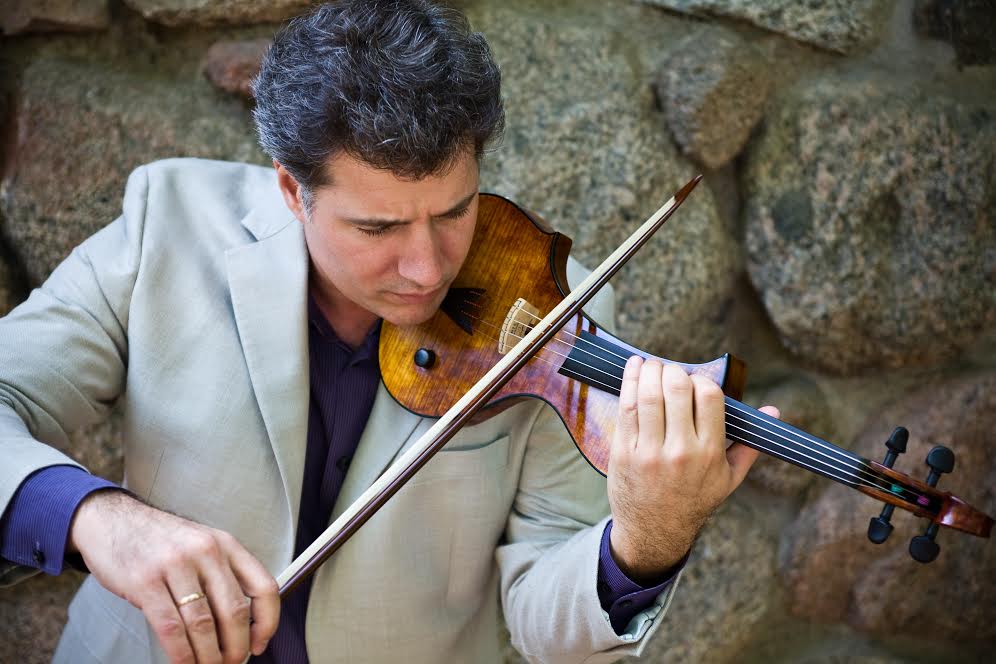
Bach UnCaged
With 3rd Law Dance/Theater
7 p.m. March 27 & 28, 2015
Dairy Center for the Arts, Boulder

Six Degrees of Separation
Zachary Carrettin, violin, and Mina Gajić, piano
7:30 p.m. June 6, 2015
Grusin Music Hall, Imig Music Building, CU Boulder

Tickets