A mix of operas large and small drives the season at Central City Opera

The method in artistic director Pelham Pearce’s madness

By Peter Alexander July 5 at 10:50 a.m.

Pelham Pearce, general/artistic director of Central City Opera (CCO), insists, “there is method to my madness!”

Central City Opera Opening Night 2006- Page 2 of Book

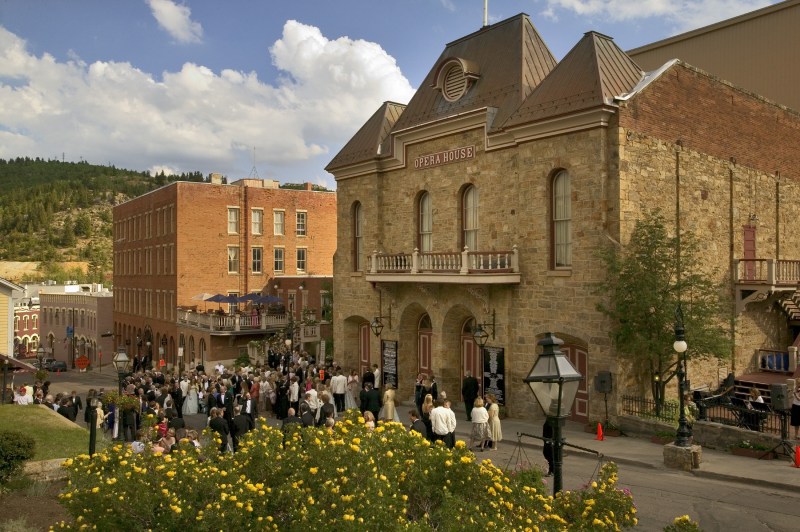
Central City Opera House (photo courtesy of Central City Opera)

The madness is expecting audiences to attend opera high in the Colorado mountains. And the method involves a mix of big pieces and small pieces, famed operas and unknown operas, with first-rate casts and imaginative productions. For the 2018 season, Pearce says, “you’ve got Handel, Mozart, Verdi and Mollicone. It represents a broad swath of styles.”

The formula devised through trial and error is to present two major productions in the historic Central City Opera House — this year, Mozart’s Magic Flute and Verdi’s Il Trovatore — and two shorter works in smaller venues — this year, Handel’s Acis and Galatea and The Face on the Barroom Floor by Henry Mollicone, a work that was written for CCO 40 years ago.

The season opens Saturday (July 7) with the Magic Flute; Il Trovatore opens a week later (July 14). These productions run in repertory until Aug. 5, with the shorter works being presented over a span of 10 days, July 25–Aug. 3.

Read more in Boulder Weekly.

# # # # #

Central City Opera Summer 2018

The Magic Flute by Mozart/Emanuel Schikaneder
André de Ridder, conductor; Alessandro Talevi, stage director

2:30 p.m. July 11, 13, 15, 17, 21, 25, 29; Aug. 2, 5
8 p.m. July 7, 19, 27, 31
Central City Opera House
Performed in German with English supertitles.

Il trovatore by Verdi/Salvadore Cammarano
John Baril, conductor; Joachim Schamberger, stage director

2:30 p.m. July 18, 22, 24, 28; Aug. 1, 3
8:00 p.m. July 14, 20, 26
Central City Opera House
Performed in Italian with English supertitles.

Acis and Galatea by Handel/John Gay, Alexander Pope, John Hughes
Christopher Zemliauskas, conductor; Ken Cazan, stage director

8 p.m. July 25, 28; Aug. 1
5 p.m. July 26
Martin Foundry, Central City
Performed in English

The Face on the Barroom Floor by Henry Mollicone/John S. Bowman
40thanniversary production
Michael Ehrman, director

1:15 p.m. July 25, 28, Aug. 1, 2 3
Williams Stables Theater, Central City
Performed in English

Tickets for all productions


Colorado Music Festival opens with fun, beauty, and excitement

Violinist Vadim Gluzman shines in Bernstein Serenade

By Peter Alexander June 29, 12:30 a.m.

The Colorado Music Festival opened its 2018 season last night (June 28) with a program that had generous supplies of fun, beauty and excitement.

marcelo_lehninger_-_gr_symphony_music_director_3

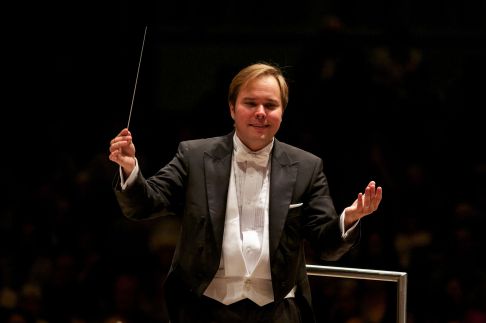
Marcelo Lehninger

Guest conductor Marcelo Lehninger faced the challenge of launching the festival, conducting an unfamiliar orchestra in a hall where he had never performed. It is a testament to him and to the players that he acquitted himself with great success. He is a conductor who exudes a calm confidence and who leads with clarity and restraint.

Lehninger began the concert with John Corigliano’s Promenade Overture, which starts with a near-empty stage. Players and sections enter gradually until the stage is full (or nearly: the tuba player, in a humorous nod to the instrument’s bulk, enters oompahing breathlessly at the very end). Lehninger selected this score the represent the reunion of the orchestra players, who reconvene every summer in Boulder from their main-season jobs all over the country.

Promenade is a great concert and season opener: the percussion riffs, the brass fanfares, the woodwind noodling all give the players a chance to show their virtuosity, and the culminating broad, lyrical theme gives the strings their due as well. It was done with great brilliance and precision, announcing “THIS is an orchestra!” For future seasons, opening with Promenade would make a great Chautauqua tradition.

That bit of fun was followed by the beauty of Leonard Bernstein’s Serenade after Plato’s Symposium, featuring violinist Vadim Gluzman. Effectively a five-movement concerto for violin with strings, percussion and harp, the Serenade was written in 1954, before West Side Story made Bernstein a popular sensation. The style is mostly conservative mid-century modernist, with hints of Shostakovich, Britten and others of the time, with the jazzy, hip “Lenny” that we expect only showing up in the final movement.

Plato’s Symposiumdepicts a series of discourses on the subject of love. Fittingly, the five contrasting movements of the Serenade are dominated by a lyrical spirit, with the particularly beautiful fourth movement suggesting Bernstein’s expansive love of humanity.

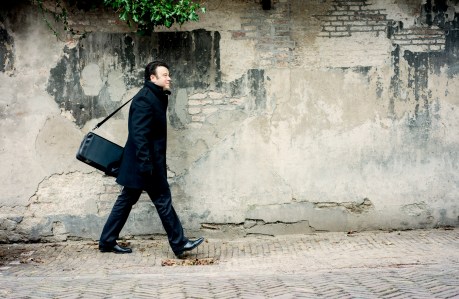
Vadim Gluzman Photo: Marco Borggreve

Violinist Vadim Gluzman

Gluzman was a sheer joy to hear. The lyrical solo that opens the Serenade filled the hall with beautiful sound, even at a piano volume, and the tricky pyrotechnics of the third movement were precise and flawless. The fourth movement was the expressive heart of the performance, and the finale had just the right amount of jazzy spirit.

I particularly enjoyed the way Gluzman interacted with the violin section behind him, frequently turning to face them rather than the audience, sharing the joy of performance with the players. Equally captivating was his interaction with the principal cellist during a joint cadenza. I have heard this piece live before, but never has it made a greater impression.

Lehninger closed the concert with Tchaikovsky’s Fourth Symphony, one of the most viscerally exciting pieces in the repertoire. This was the first real test for the full orchestra, and with a few reservations they passed handily. This is the CMF orchestra we have heard before, with great individual virtuosity, a full sound, (mostly) impeccable intonation, and a wide range of dynamics and expressive potential. From the very first notes, the brass was bold, full and thrilling. The movement displayed the flexibility of the ensemble, with extensive tempo modifications and well controlled phrasing.

A few entrances were slightly blurred, but only a few, and from where I sat the balance was not ideal. The powerful brass section sometimes overwhelmed other sections, the middle of the texture was a little too thick, and some details were lost in the wash of sound. It may have sounded differently elsewhere in the hall.

In a moment of surprise, Lehninger turned to the audience between the first two movements to apologize that he had not spoken earlier, and to say “Welcome.” What could have been an awkward moment was made charming by his relaxed, affable personality.

The remainder of the symphony was played with great expression, notable flexibility and well marked expressive contours. The finale was taken at a driven tempo, but one that the players managed well. The movement was irresistibly exciting and did what it is supposed to do: Drive the audience to their feet. And so the 2018 CMF is well launched.

CMF Orch.by Eric Berlin

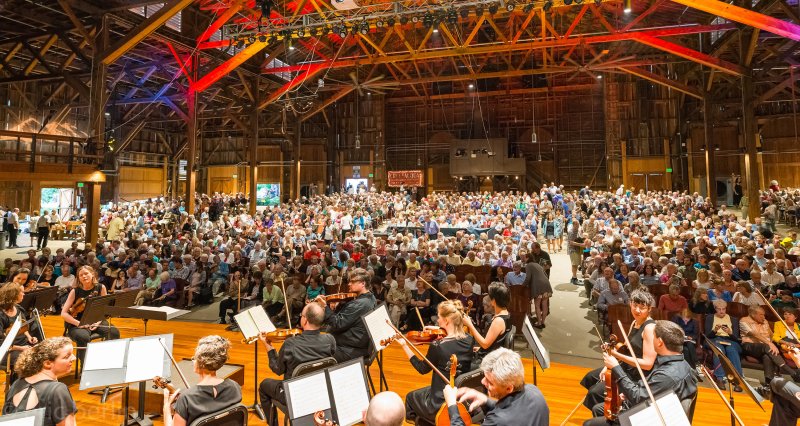
Chautauqua Auditorium from the CMF Orchestra. Photo by Eric Berlin.

Dates, programs and tickets for CMF performances here.

Guest conductors launch 2018 Colorado Music Festival

Violinists Gluzman and Quint, pianists Weiss and Martinez will be early soloists at CMF

By Peter Alexander June 28 at 12 noon

CMF Orch.by Eric Berlin

Chautauqua Auditorium during a CMF orchestra concert. Photo by Eric Berlin.

The Colorado Music Festival, facing another year without a permanent music director, opens with two weeks of concerts led by guest conductors Marcelo Lehninger and David Danzmayr. Current artistic advisor Peter Oundjian will lead several concerts mid-summer, and former music director Jean-Marie Zeitouni will return for one week.

The opening weeks set the festival pattern of full orchestra concerts on Thursdays and chamber orchestra on Sundays. Later, the season will also see the return of Fresh Friday mini-concerts and Saturday chamber music (full schedule at coloradomusicfestival.org).

Read more in Boulder Weekly.


A LOSS FOR BOULDER’S CLASSICAL MUSICIANS

Classical music journalist/critic Kelly Dean Hansen leaves the Daily Camera

By Peter Alexander June 26, 2018, at 12:05 a.m.

Kelly Dean Hansen, the classical music critic for the Boulder Daily Camera since 2011, recently resigned his post.

Kelly Dean Hansen Camera Classical Music Writer

Kelly Dean Hansen. Boulder Daily Camera photo.

Hansen resigned as of May 27, but only announced the decision yesterday, June 24. He had written music criticism for the Camera since 2003, first as an assistant to long-time local critic/journalist Wes Blomster, and then as the newspaper’s sole classical music writer after Blomster’s death in October, 2011.

Hansen’s departure had been rumored in classical music circles for some time, and the publication by the Camera of a preview of this summer’s Colorado Music Festival—long a favored topic for Hansen—by reporter Christy Fantz on June 22 seemed to confirm the rumors. Two days later, on June 24, the Boulder Free Press Web page published an article by Hansen announcing his resignation from the Camera and explaining his decision.

The main reason appears to have been the gradual reduction in the number of articles and the total space allotted by the paper for classical music. After 2017, Hansen wrote, “the cuts were unrelenting and ever increasing. . . . By the time I submitted my last piece around Memorial Day, my writing had become a shadow and shell of its peak around 2014.”

Asked to comment on Hansen’s departure, Quentin Young, the Camera’s features and entertainment editor, wrote: “The Camera, like newspapers across the country, has fewer resources than it did five or 10 years ago. But we remain committed to providing robust coverage of local news and events, including classical music.”

In a spoken conversation he added a personal note of appreciation. “Kelly had a rare mix of talents, which most importantly includes a breadth of knowledge of the subject he was writing about,” Young said. “I’m personally sad to see that go.”

Hansen expressed his own sadness in his article for Boulder Free Press, writing “the pain is real, the sense of loss is real.” Likewise, the loss to the Boulder classical music community—musicians, musical organizations and audiences—is real, for at least two reasons.

One is that Hansen had a unique and well informed perspective that cannot be completely replaced. And the second reason is that any community thrives best when multiple voices are heard.

I remember when my friends in the professional theater world used to complain about the power wielded by a single critic in New York, Frank Rich of the Times. I always maintained that the only problem with the highly opinionated and outspoken Rich was that there were not more of him. Likewise, the loss of critical voices and informed journalists in city after city across the country weakens the fabric of our artistic communities, and is always to be mourned.

“In today’s journalistic world I was an anachronism,” Hansen writes, noting the shrinkage of arts criticism in the country’s daily newspapers. “But,” he adds, “I genuinely believe that what I had to offer was both rare and treasured, which explains why I did what I did for as long as I did.”

Indeed.

Finally, my personal reaction is first of all my sadness not to see him at the concerts I attend, which has been a part of musical life since I arrived here, and also that I do not want to be the sole critical voice in Boulder’s incredibly vital classical music scene. Honestly, there is more than any one person can quite keep up with.

Besides, I love to read what others have to say, even when they have a very different perspective than mine—as Hansen often did. I learned from reading his reviews, and will happily welcome other writers to the scene, whenever they might appear.

Let us hope we do not have too long to wait.

NOTE: Edited to correct typos, 6.26.18

CU NOW presents selections from new opera by Jake Heggie and Gene Scheer

If I Were You’ addresses questions of identity, life and death

By Peter Alexander June 14 at 6:30 p.m.

Jake Heggie, composer of the opera Dead Man Walking, and Gene Scheer, who wrote librettos for Heggie’s Moby Dick and It’s a Wonderful Life, are hard at work again.

CU_Now_Rehearsal10GA-X5

CU NOW Rehearsal. L to R: Erin Hodgson, assistant to the composer and librettist; Gene Scheer, librettist; Jake Heggie, composer (photo by Glenn Asakawa)

Their latest project, an opera that addresses existential questions about identity, life and death, has brought them to Boulder and CU Eklund Opera’s New Operatic Workshop (CU NOW). Selected excerpts from the new work, If I Were You, will be presented to the public for free, performed by CU student singers.  The Composer Fellows’ Initiative (CFI), a separate project of CU NOW will present four short operas by CU composition students: three 8-minute works and one 30-minute work.

CU NOW invites a composer and librettist every year to come to Boulder for a couple of weeks in June as they develop a new opera and work with student singers. The composers have the opportunity to hear portions of their own work and make changes as necessary before it’s complete. As part of his association with CU NOW, Heggie has also been working with the students whose works will be presented by the Composer Fellows’ Initiative.

If I Were You, as Heggie describes it, is “a modern-day Faust story” with an overlay of Gothic romance. “It’s about a disillusioned young man who wishes he could be anyone else,” he says. Heggie and Scheer will decide which portions of the opera to perform during the workshop. They will introduce the musical excerpts to the audience and explain the plot as they go along.

Read more in Boulder Weekly.

# # # # #

CU New Opera Workshop festival (CU NOW)
Leigh Holman, director
Jeremy Reger, director of music


If I Were You (selected excerpts)
Libretto by Gene Scheer
Music by Jake Heggie
Adam Turner, guest conductor

7:30 p.m. Friday, June 15, and 2 p.m. Sunday, June 17
Music Theater, CU Imig Music Building

Composer Fellows’ Initiative (CU NOW—CFI)
Daniel Kellogg, managing director
Four short operas by student composers
Steven Aguillo, guest music director
Bud Coleman, stage director

7:30 p.m. Saturday, June 16
ATLAS Blackbox, Roser ATLAS Center

Performances free and open to the public


Boulder Bach Festival announces 38th concert season

B-minor Mass will be performed on Veterans’ Day/Remembrance Day Nov. 11

By Peter Alexander May 24 at 10:20 p.m.

The 38thconcert season of the Boulder Bach Festival, 2018–19, will include a performance of the B-minor mass, one of the great masterworks of European music, as well as a chamber concert, a guest appearance by conductor Nick Carthy from CU, a dance performance with electric instruments, and the unveiling of a new/old piano, manufactured in Paris in 1845.

ZC conducts chorus May 2017

Boulder Bach Festival Orchestra and Chorus, Zachary Carrettin, conductor

Also noteworthy will be the role of guest artists during the season, both as performers and as expert teachers of early musical performance styles, and the introduction of a Baroque orchestra and a Romantic orchestra as historically-informed performance ensembles.

The season was announced tonight (May 24) at the BBF’s final concert of the 2017–18 season. In a news release, the BBF’s director, Zachary Carrettin, commented: “The Boulder Bach Festival’s 38th season celebrates the influence of J.S. Bach across time and across cultures, and explores the musical dialogue with modern instruments, period instruments, electric instruments, and various vocal and choral forces. The guest artists contribute in performance, masterclasses, lectures, and more, adding to our rich cultural landscape.”

Hill-Robert-04

Robert Hill

The season opens Sept. 13 with a chamber concert featuring harpsichordist Robert Hill, who teaches historical keyboards and performance practice at the Hochschule für Musik in Freiburg, with Carrettin performing on Baroque violin and viola and the cello da spalla. The all-Bach program will include sonatas, a concerto, a suite, and the Chromatic Fantasy and Fugue in D Minor BWV 903. (See details of all concerts below.

The BBF returns to CU Macky Auditorium for a performance of the B-minor Mass on Nov. 11, Remembrance Day in the Commonwealth nations and Veterans’ Day in the U.S. The performance by the Bach Festival Orchestra, Chorus and soloists will be under Carrettin’s direction. Audience members will be given poppies, since World War I a symbol of soldiers lost in battle, and given the opportunity to place them on the front of the stage.

carthy.02

Nicholas Carthy

Nicholas Carthy, music director of the CU Eklund Opera Program, will be guest conductor for performances Feb 14 and 16 by the BBF Fellowship Artists Baroque Orchestra. Titled “From London with Love,” the concert will feature Baroque music from England.

The BBF moves to the Dairy Arts Center April 5, 6 and 7 when the Venice on Fire electric Baroque instrument trio collaborates with 3rdLaw Dance/Theater to recreate “Obstinate Pearly,” first performed in 2014. Composers will include Barbara Strozzi, J.S. Bach and their contemporaries.

IMG_2937

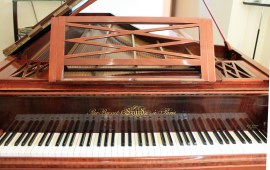
1845 Érard piano

For the season finale May 23, the BBF will present a Romantic-era period instrument chamber orchestra accompanying pianist Mina Gajićin Chopin’s Piano Concerto #2 in F Minor. Past performances have introduced Gajić’s 1895Érard piano, and in this concert she will play her earlier Érard grand from 1845, an instrument built during Chopin’s lifetime. The orchestra will also perform Haydn’s Symphony No. 49 in F minor, “La Passione,” and the Fellowship Artists Vocal Ensemble will perform a motet by Brahms.

# # # # #

Boulder Bach Festival
38thSeason, 2018–19

1468860154829

Zachary Carrettin with cello da spalla

Gala opening concert
Robert Hill, harpsichord, and Zachary Carrettin, Baroque violin, viola and cello da spalla
Solo and duo works by J.S. Bach

7:30 p.m. Thursday, Sep. 13
Stewart Auditorium, Longmont Museum

Dance of Life: J.S. Bach’s B Minor Mass
Festival Chorus and Orchestra, Zachary Carrettin, conductor
With Jennifer Bird-Arvidsson, soprano; Abigail Nims, alto; Peter Scott Drackley, tenor; and Ashraf Sewailam, bass

2 p.m. Sunday, Nov. 11
Macky Auditorium

From London With Love
Songs of love and passionate concertos
Boulder Bach Festival Fellowship Artists Baroque Orchestra, Nicholas Carthy, guest conductor
With Guy Fishman, cello; Szilvia Schranz, soprano; and Claire McCahan, mezzo-soprano

7:30 p.m. Thursday, Feb. 14, 2019, Broomfield Auditorium
7:30 p.m. Saturday, Feb. 16, 2019, Stewart Auditorium, Longmont Museum

AR-07-3rdlawdance-lr

3rd Law Dance/Theater

Obstinate Pearl
Venice On Fire electric instrument trio with 3rd Law Dance/Theater
Zachary Carrettin, violin; Gal Faganel, cello; and Keith Barnhart, guitar
Katie Elliot, choreographer
Music by Barbara Strozzi, Robert de Visée, J.S. Bach and others

7:30 p.m. Friday, April 5, 2019
2 and 7:30 p.m. Saturday, April 6, 2019
7 p.m. Sunday, April 7, 2019
Dairy Arts Center

moina.courtney.lee

Mina Gajic

The Romantic Period Orchestra and Piano
Boulder Bach Festival Fellowship Artists Chamber Orchestra and Vocal Ensemble
Zachary Carrettin violin/conductor, with Mina Gajic, piano
Colorado debut of 1845 Érard grand piano

Brahms: Es ist das Heil uns kommen her
Haydn: Symphony No. 49 in F minor, “La Passione”
Chopin: Piano Concerto No. 2 in F Minor

7:30 p.m. Thursday, May 23
Boulder Adventist Church, 345 Mapleton Ave., Boulder

Season subscription tickets available May 25

image


Boulder Bach Festival ends its season May 24 with a major piece by Bach

Venice, “purveyor of exotic goods,” provides a point of reference

By Peter Alexander May 22 at 7:40 p.m.

ZC conducts chorus May 2017

Bouder Bach Festival orchestra and singers, Zachary Carrettin, conductor

The Boulder Bach Festival closes its season Thursday (7:30 p.m. Boulder Adventist Church) with a program of stunning variety, but festival director Zachary Carrettin sums it up in one sentence:

zc-conducting

Zachary Carrettin

“We have this journey from lament to meditation to levity to blazing virtuosity, and finally to international dances at the hand of Johann Sebastian Bach.”

That’s as good a capsule description as one could make of a program that includes two settings of the Crucifixus from the Latin Mass by Antonio Lotti, a rousing street song by Tarquinio Merula, a tragic chorus by Giacomo Carissimi, a concerto by Vivaldi, and ending with an orchestral suite by J.S. Bach.

The program also sums up pretty nicely where the BBF stands today, because it introduces music by some of Bach’s predecessors that are not well known—one of the festival’s major goals. It features a number of guest artists from around the world, which is a priority. And those guests are serving as mentors to local musicians who are eager to learn more about early music performance, which fulfills an educational mission.

The concert is titled “La Venexiana,” meaning roughly ‘the one from Venice.’ (Note that in the Venetian dialect, the “x” is pronounced “tz”: “La Venetziana.”) Clearly, not all the composers are Venetian: Vivaldi and Lotti are, but the German Bach is not; Carissimi was from Rome and Merula from Cremona.

Antonio Lotti

Antonio Lotti

“For me, the theme doesn’t define the program,” Carrettin says.“One can choose a theme and adhere to it, or one can look at it as a point of reference. The final program should be an experience that I want us to present to the audience.”

The first half of he program mixes vocal and instrumental pieces, starting with two Crucifixus settings by Lotti, one for eight voices and one for six. Carrettin describes Lotti as one of Bach’s “contemporaries whose music is equally thrilling and ravishing. His use of suspension and resolution is exquisite. The successive chains of dissonances paint the idea of a crucifixion, and the resolutions are so poignant that one senses the promise of salvation.”

Josefien.S

Josefien Stoppelenburg

Balancing the serious works will be Su la certra amorosa by Tarquinio Merula, which Carrettin describes as “a fun piece, rhythmic and virtuosic.” Written for soprano and continuo, it will be performed by soprano Josefien Stoppelenburg, a guest artist who has become a favorite of BBF audiences, accompanied by cello and Baroque guitar.

Between the vocal works will be two instrumental pieces designed as moments of reflection, a Sonata for Three Violins by Giovanni Gabrieli and a Ricercar for solo cello by Domenico Gabrielli (not related to Giovanni). The program’s first half concludes with the final recitative and chorus from the oratorio Jephte by Carissimi, a lament for Jephte’s daughter who must be sacrificed to the gods to fulfill a tragic vow.

Two instrumental pieces will be heard after intermission, Vivaldi’s Concerto for two violins in D minor and J.S. Bach’s Orchestra Suite in B minor for solo flute and strings. Although they are both in minor keys, they are by no means gloomy in mood. “This Vivaldi Concerto really is aggressive and brilliant and in some ways over the top,” Carrettin says.

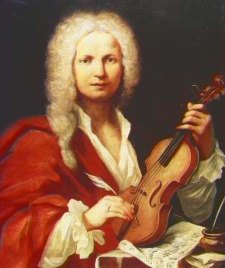
Vivaldi

Antonio Vivaldi

The quintessential Venetian composer of the Baroque era, Vivaldi was famous enough to attract visitors to the city for his concerts. This fits Venice’s character, Carrettin says. “Even in the 17th and 18th centuries the number of residents paled in comparison to the sea trade and those visiting the city as an exotic place and purveyor of exotic goods”—including its music.

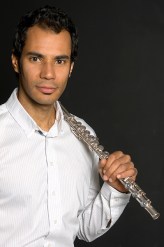
That international flavor ties Venice to the final piece by Bach, even though Bach never visited Venice. “In a way Bach’s Orchestral Suite No. 2 has that international quality,” Carrettin says. “But the suite is as much programmed for its international flavor as it is to present Ysmael Reyes on the Baroque flute.

Ysmael_Reyes399x601

Ismael Reyes

“Ismael has been a valued artist with the Boulder Bach Festival, and this is a great way to have him come back and share one of the great pieces for his instrument. He’s a wonderful person and a brilliant musician.”

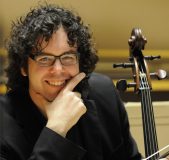
Finally, Stoppelenburg and the other guest artists—violinist Adam LaMotte, concertmaster of Portland Baroque, and cellist Guy Fishman, principal cellist of Boston’s Handel-Haydn Society—will be doing more than performing. They will also be working with local musicians to share their expertise with Baroque musical styles.

In other words, the BBF has become much more than an organization that presents concerts; it is actively building a community of musicians. As such, Carrettin sees the BBF resting on three pillars.

Fishman-1024x973

BBF artist/mentor Guy Fishman

“One pillar is the guest artist/mentors,” he says. “Another pillar is the experienced early-music interpreters who already live in Colorado. And the third pillar is recent graduates here, professional musicians who want to have access to musicians in Amsterdam, Vienna, New York.

“We bring them all together. So we’re building a core of players, and merging this idea of professional development into our season finale. And we’ll continue this tradition next year.”

# # # # #

La Venexiana
Boulder Bach Festival Baroque Orchestra and Chamber Singers
Zachary Carrettin, director and violin
With guest artists Josefien Stoppelenburg, soprano; Adam LaMotte, Baroque violin; Guy Fishman, Baroque cello.

Music by Antonio Lotti, Giovanni Gabrieli, Domenico Gabrielli, Tarquinio Merula, Giacomo Carissimi, Vivaldi and J.S. Bach

7:30 p.m. Thursday, May 24
Boulder Seventh-Day Adventist Church
345 Mapleton Ave., Boulder

Tickets


Longmont Symphony 2018–19: ‘Musical Journeys,’ Beethoven cycle

Season will include Colorado premieres and two chamber orchestra concerts

By Peter Alexander May 18 at 12:40 a.m.

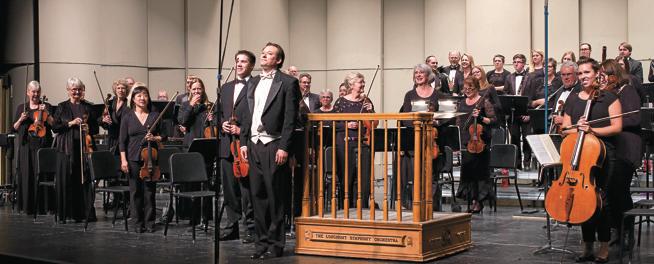
The Longmont Symphony Orchestra, going into its second season with new conductor Elliot Moore, is aiming high.
20170927__29AELSO~1

Elliot Moore and the Longmont Symphony Orchestra

Moore’s first season was both financially and artistically successful. Building on that, the LSO has added a second chamber orchestra concert featuring classical-era repertoire at the Stewart Auditorium, and has included ambitious repertoire through the season (see the full listing below).
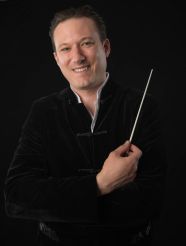
Elliott.Moore.2

Elliot Moore (Digital Lane photography)

“Our audience is telling us that they want more,” Moore says. “The players have proven that they are capable of playing some really fantastic pieces that are very challenging, and doing it at a very high level. We’ve certainly seen that this year.”

The theme of “musical journeys” can be interpreted in more than one way for the coming season. For example, there are a number of pieces that are inspired by or reflect specific places or scenes, including Debussy’s evocation of the sea in La Mer, Smetana’s depiction of a voyage down Bohemia’s Vltava river in The Moldau, and Samuel Barber’s nostalgic recollection of lazy summer nights in Knoxville: Summer of 1915.

But Moore is thinking in broader terms, too. The season’s second main series concert (Nov. 10) celebrates Longmont’s sister city Chino, Japan, by featuring pianist Taka Kigawa—a Juilliard-trained pianist from Chino—as soloist. The same program also celebrates the journey of musical influences across cultures: Kigawa will play Ravel’s Piano Concerto in G, which was influenced by American jazz; the orchestra will play the Colorado premiere of How to Relax with Origami by Boulder-based composer Conor Abbott Brown, a piece obviously reflecting on Japanese culture; and the concert will conclude with La Mer, which was partly inspired by a famous woodcut by Japanese artist Hokusai that Debussy owned.
Christie-Conover-cropped

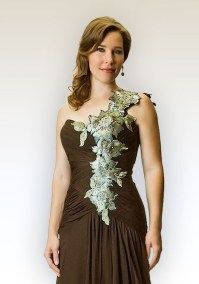
Christie Conover

There are journeys around America on the season as well. The third concert (Feb. 23, 2019) includes Copland’s familiar music from Rodeo and Libby Larsen’s Cowboy Songs, along with Knoxville: Summer of 1915 and the Colorado premiere of Robert Kurka’s Symphony No. 2. Soprano Christie Conover will be the soloist.

The first concert of the season will be a tribute to Leonard Bernstein—celebrating the 100thanniversary of his birth—including  a performance of his Chichester Psalms with the Longmont Chorale and boy soprano Wade Hetrick. Composers that Bernstein particularly championed will fill out the program with Shostakovich’s Festive Overture and Mahler’s Symphony No. 1.

It turns out that the LSO has already embarked on a musical journey. Their “Museum Concert” in the Stewart Auditorium this past April included Beethoven’s First Symphony. Moore has now announced that was the beginning of a cycle of all nine Beethoven symphonies, to be completed over a 4- or 5-year span. The second of the coming season’s Museum Concerts, April 14, 2019, will add the Second Symphony to the cycle.

Both the Beethoven cycle and the expansion of the chamber orchestra series at the Stewart Auditorium are important parts of Moore’s vision for the orchestra. For 2018–19 there will be two Museum Concerts—Oct. 21 with music of Haydn, Mozart and Richard Danielpour; and April 14, 2019, with music of Beethoven and Shostakovich—and for the following year, three.
IMG_0633

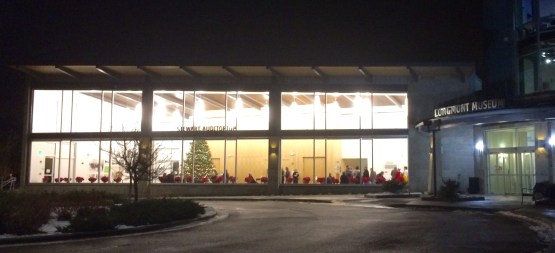
Stewart Auditorium. Photo by Peter Alexander.

“Making sure that we have time to delve into the performance of the classical style” with the chamber orchestra is a part of Moore’s vision, he says. “The orchestra really responded well to learning about that style [this past year], and that will serve us well as we go forward.”

Moore acknowledges that he has not shied away from programming difficult music. “There are certainly aspects that are challenging in this season, but I don’t think it’s that much more challenging,” he says. “They are all programs that the orchestra will sound really great on, that they are able to shine.”

Mahler’s First Symphony and La Mer are two works that give the orchestra the opportunity to shine, but the greatest challenge will come with the last of the main series concerts (April 6, 2019), when Moore has programmed The Moldau, Tchaikovsky’s Violin Concerto with soloist Sharon Roffman, and notably, Bartók’s Concerto for Orchestra.

“I’m excited that as our final masterwork we have a work that features all the wind soloists as well as different sections throughout the entire orchestra, and shows the strength of our Longmont Symphony musicians,” Moore says.

In addition to the four main series concerts of orchestra masterworks and the two Museum Concerts, the season will include a Pops Concert, a Family Concert, the usual Nutcracker performances with Boulder Ballet, and the Candelight Concert of holiday music (see all dates below).

Six‐concert subscription packages go on sale on Monday, May 21. Call 303‐772‐5796, 10 a.m.­ to 4 p.m. Mondays, Tuesdays and Thursdays, or 9 a.m.to 3 p.m. Fridays. The office is closed on Wednesdays.

Series package buyers receive 20% off single ticket prices. Single tickets for Main Series concerts are $25 for adults, $22 for seniors and active military, $5 for students age 12–18 ($10 for the pops concert), and free for age 11 and under. Single tickets go on sale on Monday, Aug. 27 via phone and here.

# # # # #

LONGMONT SYMPHONY ORCHESTRA
201819 SEASON
MUSICAL JOURNEYS

CONCERT IN THE PARK

Longmont Youth Symphony, Longmont chorale, Longmont Symphony
11:30 a.m. Wednesday, July 4, 2018
Thompson Park, 420 Bross Street, Longmont
Free and open to the public

MAIN SERIES CONCERTS
All concerts in Vance Brand Auditorium at Skyline High School,
600 East Mountain View Ave., Longmont
Elliot Moore, conductor

Opening Night: Happy Birthday, Lenny!
Longmont Chorale, with Wade Hartrick, boy soprano|
Shostakovich: Festive Overture
Bernstein: Chichester Psalms
Mahler: Symphony No. 1, “Titan”
7:30 p.m. Saturday, Oct. 6
taka-Ruby Washington:The New York Times

Taka Kigawa. Ruby Washington/The New York Times

A Cultural Affair
With Taka Kigawa, piano
Conor Abbott Brown: How to Relax with Origami (Colorado Premiere)
Ravel: Piano Concerto in G Major
Debussy: La Mer
7:30 p.m. Saturday, Nov. 10 

Sounds of America
With Christie Conover, soprano
Robert Kurka: Symphony No. 2 (Colorado Premiere)
Samuel Barber: Knoxville: Summer of 1915
Libby Larsen: Cowboy Songs
Copland: Rodeo
7:30 p.m. Saturday, Feb. 23
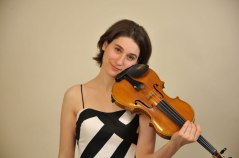
DSC_3356

Sharon Roffman

Tchaikovsky Violin Concerto
With Sharon Roffman, violin
Smetana: The Moldau
Tchaikovsky: Violin Concerto
Bartók: Concerto for Orchestra
7:30 p.m. Saturday, April 6

Pops Concert: The LSO in Space!
Celebrating 60+ years of spaceflight in the auditorium named after astronaut Vance Brand, including film music from Star Wars and E.T. as well as Holst’s The Planets and Strauss’ Also Sprach Zarathustra.
7:30 p.m. Saturday, May 11 

MUSEUM CONCERTS
Stewart Auditorium, Longmont Museum
Elliot Moore, conductor
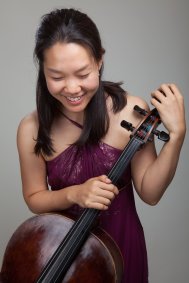
Alice+VIII_1

Alice Yoo

Haydn & Mozart
Longmont Symphony Chamber Orchestra
With Alice Yoo, cello
Richard Danielpour: Lacrimae Beati
Haydn: Cello Concerto No. 1
Mozart: Symphony No. 41 in C major, K551 (“Jupiter”)
4 p.m. Sunday, Oct. 21

Beethoven Cycle
Longmont Symphony Chamber Orchestra
Beethoven: Overture to Egmont
Shostakovich: Chamber Symphony, Op. 110a
Beethoven: Symphony No. 2 in D major, op. 36
4 p.m. Sunday, April 14 

HOLIDAY EVENTS

The Nutcracker with the Boulder Ballet
Elliot Moore, conductor
4 p.m. Saturday, Dec. 1 and 2 p.m. Sunday, Dec. 2
Vance Brand Civic Auditorium, Longmont 

Candlelight Concert
Longmont Symphony Chamber Orchestra with the Longmont Chorale Singers
Elliot Moore, conductor
Schubert: Mass in G Major
Carols from around the world
4 p.m. Sunday, Dec. 16
Westview Presbyterian Church, Longmont

FAMILY MATINEE CONCERT

Elliot Moore, conductor
With the Longmont Youth Symphony
Young Artist Competition Winner, TBA
Erik Kroncke, bass‐baritone
Tchaikovsky: Symphony No. 5 (Finale)
Michael Close: A Child’s Book of Animals (World Premiere)
4 p.m. Saturday, Jan. 19
Vance Brand Civic Auditorium

For more information and tickets, click here.

Jazz sextet, tap dancer, vocalist and choir? It must be Ellington!

Boulder Chorale will present Ellington’s ‘Sacred Concerts’ May 19–20

By Peter Alexander May 17 at 10:15 p.m.

Duke Ellington, jazz legend, pianist and band leader, spent the last decade of his life creating and presenting “sacred concerts.” Described by one critic as “bringing the Cotton Club to church,” Ellington considered them “the most important thing I have ever done.”

© Glenn Ross | www.glennrossphoto.com

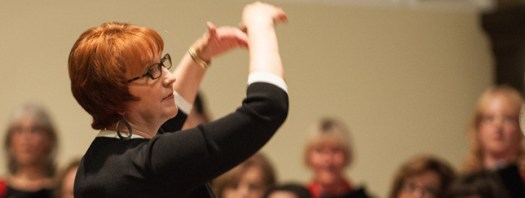
Vicki Burrichter, conductor of the Boulder Chorale

Now conductor Vicki Burrichter and the Boulder Chorale are bringing the Ellington Sacred Concerts to Boulder. Joining Burrichter and the Chorale will be vocalist Joslyn Ford-Keel and tap dancer — a performer specified in the score — David Sharp.

Burrichter lists several reasons to perform the Sacred Concerts. “First of all, I love Ellington,” she says. “I think he was the greatest genius of jazz, as a composer certainly. And I always look for jazz masterworks for chorus. There aren’t that many of them, so when I find something by a composer as elevated by Ellington. It needs to be shared in the community.”

Read more in Boulder Weekly.

# # # # #

Duke Ellington’s Sacred Concerts
Boulder Chorale, Vicki Burrichter, director
With Joslyn Ford-Keel, vocalist, and David Sharp, tap dancer

7:30 p.m. Saturday, May 19
4 p.m. Sunday, May 20
First United Methodist Church, 1421 Spruce St., Boulder

Tickets

Bahman Saless is in a party mood for season-ending concert

Boulder Chamber Orchestra plays music by Haydn and Mozart, May 19–20

By Peter Alexander May 16 at 10:15 a.m.

It’s the end of the concert season, and Bahman Saless, conductor of the Boulder Chamber Orchestra, has his mind on parties.

bconew_1

Boulder Chamber Orchestra and Bahman Saless are in a party mood.

The group’s final concert of the 2017–18 season, to be presented Saturday and Sunday (May 19–20) in Lone Tree and Boulder, features two symphonies where he hears party music: Haydn’s Symphony No. 95 in C minor and Mozart’s Symphony in C major K 425 (“Linz”). The program, titled “Papa Haydn and Wolfgang,” also includes Haydn’s Sinfonia Concertante in B-flat major for violin, cello, oboe, bassoon and orchestra.

It was the last of those, the Sinfonia Concertante, that inspired Saless for this program. He had conducted it 12 years ago, in one of the BCO’s early seasons, but had not thought about it since then. “I hadn’t listened to it for a while, and I heard it on the radio,” he says.

“I thought, ‘Oh my god, we’ve got to do this’! It’s such a great piece, one of his most refined pieces, and it’s a wonderful piece with an orchestra with good soloists.”

unojack_kaori

Kaori Uno-Jack

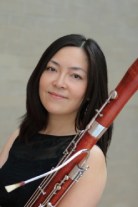
The four solo players are all section leaders in the BCO: violinist and concertmaster Annamaria Karacson, principal cellist Joseph Howe, principal oboist Max Soto, and co-principal bassoonist Kaori Uno-Jack. The first three have had several solos with the orchestra in the past, so Saless is particularly happy to feature Uno-Jack this time.

“One of the hidden gems in the orchestra is our bassoon section,” he says. “They are just ridiculously good bassoonists, and this gives a chance to Kaori to really shine.”

The Sinfonia Concertante was written in 1791, during the first of Haydn’s two visits to London. To gain audience support for his commercial concerts, he often featured soloists who were local favorites, which is probably the reason that he wrote a piece with four solo parts. It’s a hybrid piece, partly in the style of the classical symphony and partly a throwback to the Baroque-era Concerto Grosso style that matched a small group against a larger group.

Joseph_Haydn

Joseph Haydn

“It’s a symphony in the sense that the soloists also play the [orchestra] parts,” Saless explains. “So it’s a symphony, but every once in a while the principals play solos, so it’s a cross between a symphony and a concerto. But it’s not a virtuoso piece—it’s an ensemble concerto.”

Symphony No. 95 was written in 1792, during the same visit to London. It is the only one of the 12 London symphonies written in a minor key. Less popular than the others at the time, it has also been somewhat neglected since then. “It’s one of those gems that is not played very often,” Saless says.

“It’s more Beethoven-esque, especially the first movement. The next two movements are really fabulous. The second is a theme and variations, which introduces a solo cello, and the third movement is probably the most powerful movement of the symphony. The entire trio is solo cello, and it’s very cool.”

But it’s the finale where Saless hears a party breaking out. “It’s just a huge crazy orgy of different motives, all entering and leaving,” he says.

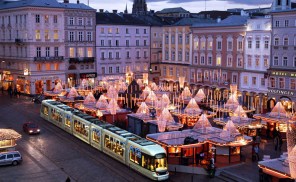
And after that, another party springs up in the Mozart Symphony, written in 1783 when Mozart was visiting friends in the Austrian city of Linz. “I’ve been to Linz, so I was trying to figure out, is there imagery that comes with it?” Saless says.

Linz in a party mood

Party time in downtown Linz

“The first movement is really cool, because it’s got this very regal introduction. It kind of starts slow and kind of curious, and then suddenly—it’s party time!

“Honestly, that’s how I saw Linz. First you cross a bridge and you enter the town. You’re kind of looking around, walking from block to block, and then suddenly when you get to the center, it really is a huge party town!”

Close study of the score doesn’t confirm that interpretation, but Saless is sticking with it. “That’s how I’m conducting it,” he says. But then he adds, with a laugh: “You should see the faces of my orchestra when I tell them crazy stuff like that.”

Crazy, but also an engaging way to think about a symphony and a town. “In fact,” Saless says, “a trip to Linz would be a great vacation after the season.”

If you want to find him next week, you know where to look.

# # # # #

“Papa Haydn and Wolfgang”
Boulder Chamber Orchestra, Bahman Saless, conductor

Haydn: Sinfonia Concertante in B-flat major
Haydn: Symphony No. 95 in C minor
Mozart: Symphony No. 36 in C major, K425 (“Linz”)

7:30 p.m. Saturday, May 19, Lone Tree Arts Center
3 p.m. Sunday, May 20, Boulder Adventist Church

Tickets