Grace Note: Boulder International Chamber Music Competition Announces Winners

gracenote4 blue

By Peter Alexander Oct. 14, 2018, at 3:20 p.m.

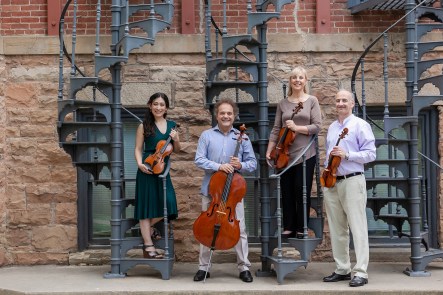
The Boulder International Chamber Music Competition: The Art of the Duo concluded its competitive rounds Saturday (Oct. 13).  The winners were announced that evening, and the winners concert was held Sunday afternoon, Oct. 14, in the Gordon Gamm Theater of the Dairy Arts Center.

The winners are:

First Prize: Iwo Jedynecki (Poland) & Aleksander Krzyżanowski (Poland), accordion and piano
Best Performance of Commissioned Piece, “True Green” by Tomasz Golka
Audience Favorite Award
Second prize winners (tie): YuEun Kim (South Korea) & Sung Chang (South Korea), violin and piano; and
Matthew Cohen (U.S.) & Zhenni Li (China), viola and piano
No third prize was awarded.

Infinite Space: Boulder Phil plays music about stars and astronomers and planets

New video by artist Gary Kelley will accompany The Planets by Gustav Holst

By Peter Alexander

The Boulder Philharmonic calls their 2018–19 season “Open Space,” and they will begin their classical programming Saturday (Oct. 13) focusing on the openest space of all. Under the title “Infinite Space,” they will perform music about stars and astronomers and planets.

the-planets-artwork-square-01

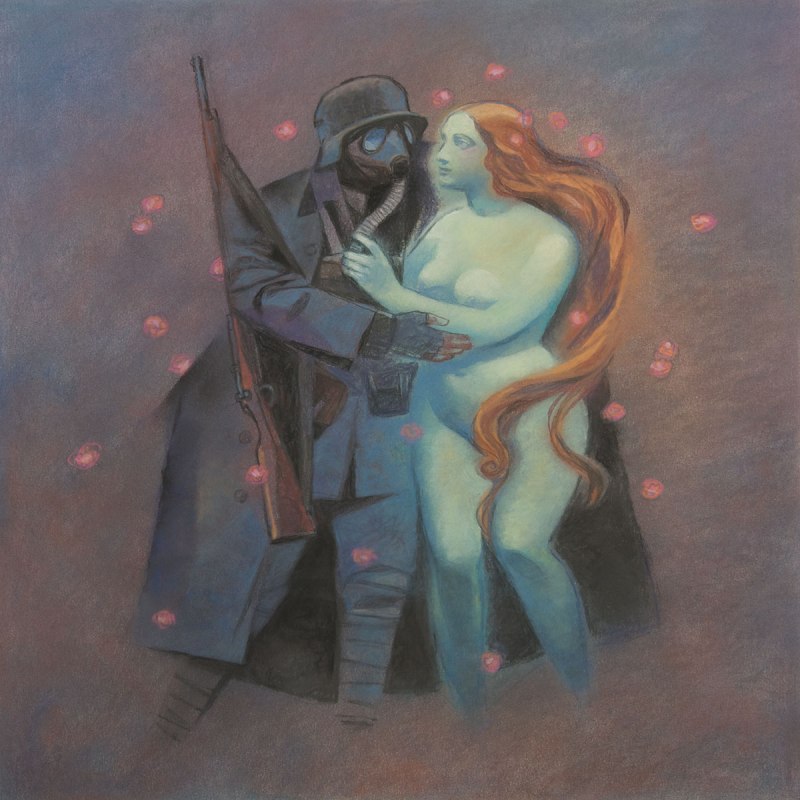
Artwork by Gary Kelley for The New Live, from “The Planets Re-imagined”

You might guess one of the pieces: The Planets by Gustav Holst, one of the best loved and most programmed pieces for orchestra. The other two are completely new to Boulder audiences, having both been written in this century: Jessie Montgomery’s Starburst and James Stephenson’s Celestial Suite.

“To take something well loved and surround it with music that is a discovery for people—that is the formula we have followed for a while,” Michael Butterman, the Boulder Phil’s music director says.

Holst’s Planets will be accompanied by a video, “The Planets Re-imagined,” created by artist Gary Kelley, who is known for his posters and illustrations, and The New Live, a company specializing in multimedia productions for the concert stage.

Kelley created more than 25 separate images, from large oil paintings to small illustrations, that are combined in video imagery. The subject of the images is World War I and the time after the war, rather than the physical planets themselves.

Read more in Boulder Weekly.

# # # # #

umZdmeWA


“Infinite Space”
Boulder Philharmonic Orchestra, Michael Butterman, conductor

Jessie Montgomery: Starburst
James Stephenson: Celestial Suite
Gustav Holst: The Planets

7:30 p.m. Saturday, Oct. 13
Macky Auditorium, Boulder

2 p.m. Sunday, Oct. 14
Pinnacle Performing Arts Center, Denver (without video projections for The Planets)

Tickets

Related events:

“Meet the Planets” Musical Hike
Dave Sutherland, leader
7:15 p.m. Oct. 11 CANCELED (weather)
7:15 p.m. Oct. 12 and Monday, Oct. 15 (weather permitting; clear skies are forecast))
Boulder Valley Ranch Trailhead
Free

Free Pre-Concert Talk
Hosted by CPR’s Marilyn Cooley with Michael Butterman, astronomer Kyle KremerandDavid Brainof CU’s Laboratory for Atmospheric and Space Physics
6:30 p.m. Saturday, Oct. 13
Macky Auditorium


Boulder International Chamber Music Competition presents duos from around the world

Live rounds and winners concert will be open to the public, Thursday–Sunday

By Peter Alexander Oct. 9 at 4:10 p.m.

Twenty classical music duos are arriving in Boulder this week from all over the world.

04-Dairy_Center_for_the_Arts

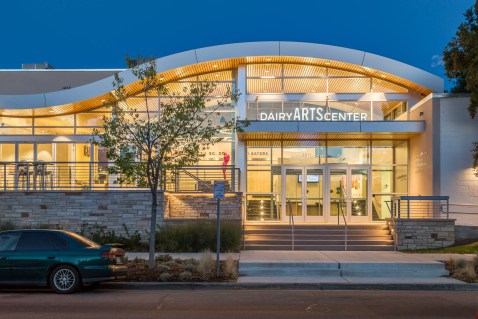
Dairy Arts Center, location of the Boulder International Chamber Music Competition, “The Art of the Duo”

They are coming for the second Boulder International Chamber Music Competition, “The Art of the Duo,” which will unfold in the Gordon Gamm Theater of the Dairy Arts Center Thursday through Sunday, Oct. 11–14. The duos (listed here) include standard duo pairings, including violin and piano, cello and piano; other common pairings, including flute and piano, clarinet and piano, trumpet and piano; and one surprising pair, accordion and piano.

They are arriving from many parts of the globe. There are contestants from South Korea, China, Taiwan, Malaysia, France, Spain, Italy, Bulgaria and Poland, as well as the U.S. and Canada.

All live portions of the competition are open to the public, with semi-final rounds Thursday and Friday, Oct. 11-12, the final round on Saturday, Oct. 13, and the winners’ concert Saturday, Oct. 14 (see schedule below). All performances will be in the Gordon Gamm Theater. Tickets for the four-day event, or for each individual day of the competition, are available through the Dairy Web page.

Mina+Gajić+vertical copy

Mina Gajić

The competition is the brainchild of its artistic director, pianist Mina Gajić, who put together the first competition in 2016. Like many music contests, it will be held every two years.

“With each new iteration of the competition we’ll be able to continue promoting this kind of competition [for duos], which is pretty rare in the classical music world,” Gajić says. “At the same time we’re promoting Boulder as an arts destination and bringing even more visibility to our cultural life that is already rich.”

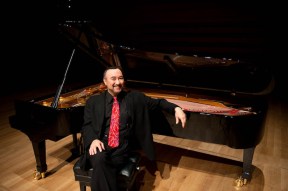
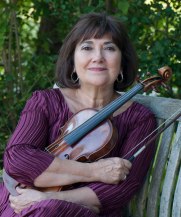
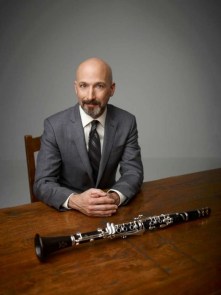
Gajić has assembled a jury of three accomplished musicians to judge the live rounds, representing three different instrument families represented in the competition:

  • lowres-jkp- Tara McMullen.125

    Jon Kimura Parker. Photo by Tara McMullen

    Pianist Jon Kimura Parker, an internationally recognized performer and director of the Honens International Piano Competition and Festival in Calgary;

  • Violinist Ani Kavafian, professor in the practice of violin at Yale University who has performed as soloist and chamber musician with leading ensembles around the world; and
  • Clarinetist Richie Hawley, who teaches at the Shepherd School of Music at Rice University and the Music Academy of the West in Santa Barbara, and appeared with the Boulder Bach Festival in Longmont in 2017.
Ani-Kavafian

Ani Kavafian

“Our judges are some of my favorite musicians,” Gajić says. “They are world-class performers and teachers, equally as soloists and chamber musicians.”

The application process for the competition began last summer. The deadline was in July, after which a four-person panel—Gajić, Zachary Carrettin of the Boulder Bach Festival, plus the 2016 winning duo of cellist Julian Schwarz and pianist Marika Bournaki—heard to and watched more than 100 online application videos. After an intensive two-week period, the semi-finalists who would come to Boulder were announced Aug. 1.

Hawley.57ae0f29e5750

Richie Hawley

“I listened several times to all the videos,” Gajić says.“It’s a really big responsibility to be the one who says this duo can enter can enter, and this duo cannot, but that’s just the nature of a competition.”

Even narrowed down to the 20 semifinalists, two full days is a lot of music by duos. “Those are long days, but our audience is really devoted to this event,” Gajić says. “I was amazed how many people stayed the whole time in 2016. Audience members develop a relationship with the performers and want them to advance to the finals, to win a prize!”

As in 2016, the competition has commissioned a work to be performed by all contestants in the semifinal round. This year’s piece, “True Green,” is by Tomasz Golka, director of the Riverside (Calif.) Philharmonic and an accomplished violinist. It is an interesting challenge for the composer to write a piece that can be played by duos with differing instruments and sonic capabilities.

The challenge for the performers is to come up with their own interpretation of a piece they have never heard or seen before, and make it fit the individual character of their instrument. “It’s really great to hear the same piece performed 20 different ways, in 20 different instrumentations, 20 different interpretations,” Gajić says.

Like most musical organizations in U.S., the Boulder International Chamber Music Competition is supported by a combination of grants and individual gifts. “I have great support from the Boulder Bach Festival, who serves as the fiscal agent, so that is extremely helpful,” Gajić says. “And we get really great support from the Boulder Convention and Visitors Bureau, who have supported us in many different ways, because we bring valuable arts tourism to Boulder.

“We’re promoting the classical music scene here, and we’re also attracting contestants ages 18–35 who are discovering Boulder. This is an event where (young artists) can gain experience, see a beautiful town in the United States, win some substantial cash prizes, and get other performance opportunities.

“I would encourage anybody to come and experience this live, because it’s something really special, and it’s happening right her in Boulder.”

# # # # #

The Art of Duo
Boulder International Chamber Music Competition

bicmc2018logo

Semifinal rounds:
2–5 and 6:30–9 p.m. Thursday, Oct. 11
3–5:30 and 6:30–9 p.m. Friday, Oc.t 12
See the full list of participating duos here.

Finalist rounds and announcement of winners
1–9 p.m. Saturday, Oct. 13

Final concert: Three prize-winning duos
2 p.m. Sunday, Oct. 14

All performances in the Gordon Gamm Theater, Dairy ArtsCenter
Tickets available through the Dairy Arts Center Web page


“Sacred Jazz” takes Ars Nova into new territory

Oct. 5 and 6 concert features composer Will Todd’s “Mass in Blue”

By Peter Alexander Oct. 4 at 12 noon

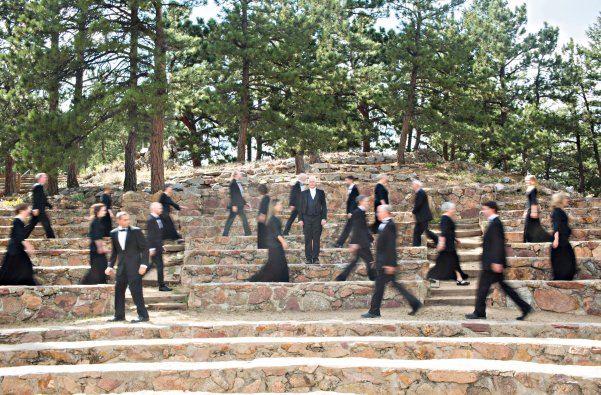
Ars Nova, Boulder’s a capella choir that specializes in Renaissance and contemporary concert music, is venturing into new territory.

“It is a bit of a departure for us,” says Thomas Edward Morgan, artistic director of Ars Nova, talking about a program of “Sacred Jazz.” That program, performed by Ars Nova and guest artists, will open their season Oct. 5 in Boulder and Oct. 6 in Cherry Hills Village.

arsnova_007

Thomas Edward Morgan (center) and the Ars Nova Singers

It was the main piece on the program, Will Todd’s Mass in Blue, that initially got Morgan’s attention “This piece has been on my radar screen for a while now, partly because the choral writing in it is really excellent,” he says. “You don’t find a lot of extended contemporary pieces that have this level of choral writing.”

The six-movement Mass will be performed with a jazz trio comprising Scott Martin, piano; Mark Diamond, bass; and Russ Meissner, drums. Soprano Kathryn Radakovich will appear as soloist for the Mass.

The Mass in Blue takes about 40 minutes, Morgan says. The concert will open with a separate 20-minute set of a capella pieces. The entire program, with about 60 minutes of music, will be performed without intermission.

Morgan.mtntop.cropped

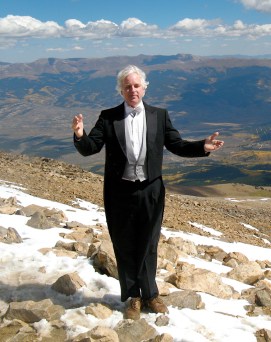
Thomas Edward Morgan

Opening the season with the Mass in Blue “was an opportunity for us to perform a piece with this level of choral writing, and also to reach a new crowd, with the jazz influence and the spectacular players that we have,” Morgan says. “We hope that we reach new people right at the beginning of the season who will then be interested in what we do and come back through the rest of the season.”

The composer, Will Todd, is a British jazz pianist who brings both his jazz experience and his knowledge of the English choral tradition to the composition of the Mass in Blue. The piece is an adventure for both the choir and for the jazz trio, in that it is deeply rooted in the Blues tradition, but also almost entirely written out.

Compared to most jazz combo work, Morgan says, “this has considerably more structure, which is interesting for the audience as well as for the choir, and I think interesting for the trio because it‘s certainly more composed than what they usually do. They pretty much have to play from a part because there’s a lot of time signature changes. It requires jazz musicians who can read and know where the changes happen.”

In fact, Morgan says, the piece is almost “over-composed,” in that the jazz trio has parts that could be played straight through as written, without improvisation. That way it can be performed by players who prefer to read it straight, but it can also be done with more freedom by proficient jazz artists.

“The way we approach it is we have the trio play in the style and not be note-specific to what the composer wrote,” Morgan explains. “The choir is really specifically notated, and they’ll do exactly what’s printed. It’s what’s underneath and around that, that gets a little bit freer, so it certainly has the jazz feel to it.”

Radakovich.1

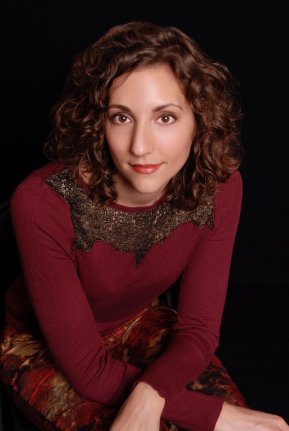
Kathryn Radakovich

A particular challenge, Morgan says, was finding a soprano soloist who can handle the demands of the part Todd has written. “The part for the soprano soloist is very virtuosic,” Morgan says. “We went through a couple of sopranos to find the right one to make it work, because it’s challenging. It’s high and very virtuosic. It takes the energy of the choir just one level further.”

The soloist Morgan found, Radakovich, is an extraordinarily versatile artist. She teaches vocal jazz at Metropolitan State University in Denver and has performed in Denver’s major jazz venues, but she also performs with early music groups including the Baroque Chamber Orchestra of Colorado and the Denver Early Music Consort. As an early music singer she has appeared at the Montana Early Music Festival, and the Victoria Bach Festival, among others.

The opening set will showcase the versatility of Ars Nova, Morgan says. It will include a Renaissance piece by English composer John Shepperd, a new piece by Eric Banks that includes text in Middle Persian, a spiritual arrangement, and Duke Ellington’s classic “Come Sunday.”

“We wanted to give the audience a little bit of a taste of what else we do,” Morgan says. “We mostly do a cappella things, so we’re going to do a 20-minute set a cappella.

“It’s a chance to introduce this audience to a wider selection of what Ars Nova does, so they may be more interested in coming back to hearing us again.”

# # # # #

arsnova_028

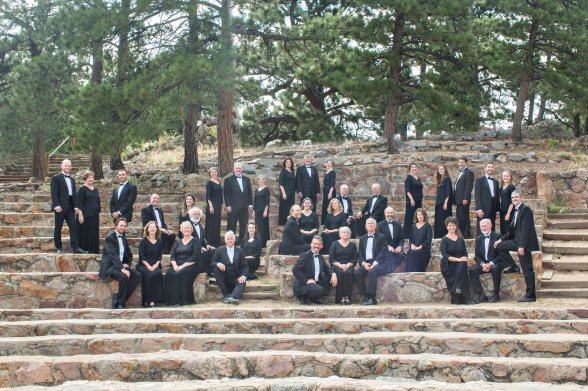
Ars Nova Singers

Sacred Jazz!
Ars Nova Singers, Thomas Morgan, conductor
With Kathryn Radakovich, soprano
Scott Martin,piano; Mark Diamond, bass; Russ Meissner, drums

A capella opening set including music by John Sheppard, Eric Banks, Duke Ellington
Will Todd: Mass In Blue

7:30 p.m. Friday, Oct. 5
St. John’s Episcopal Church, Boulder
Tickets

7:30 p.m. Sunday, Oct. 6
Bethany Lutheran Church, Cherry Hills
Tickets


An orchestra’s VIP

Sometimes a star on stage, the concertmaster is always a worker behind the scenes

By Peter Alexander Oct. 4 at 11:15 a.m.

Glenn_Dicterow_Playing_Violin

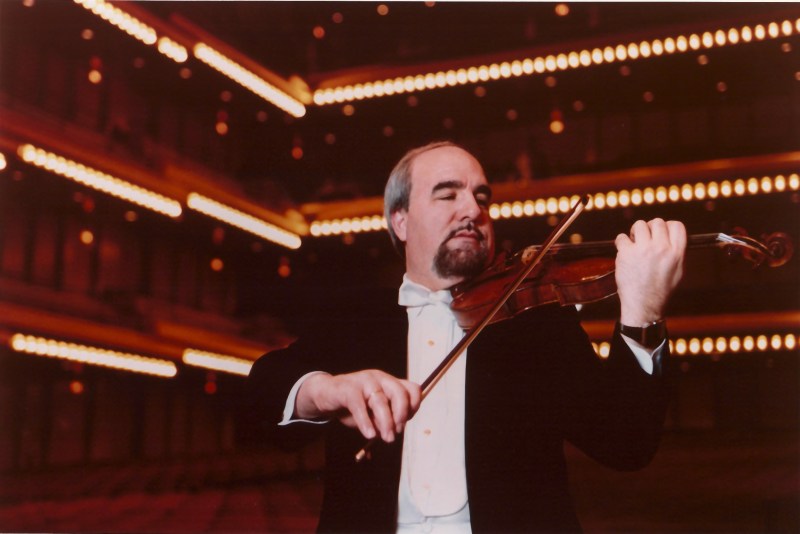
Glenn Dicterow was concertmaster of the New York Philharmonic for 34 years. Photo by Chris Lee in David Geffen Hall, Lincoln Center for the Performing Arts.

If you have attended a classical orchestra concert, you’ve seen the concertmaster.

He or she enters after the rest of the orchestra is onstage, to polite applause. They ask the oboe to play a note, and the orchestra tunes. Once the music starts, they play any solos that are written in the orchestra score.

But what else do they do?

Quite a bit, it turns out. They serve as leader of the violin section, and by extension all of the strings; they help the conductor achieve his or her interpretation; they facilitate communication between conductor and players; they audition new players; and sometimes they represent the orchestra to the public. All of this work is done behind the scenes, which makes the concertmaster a very important person. It’s also why the conductor shakes the concertmaster’s hand at the end of the concert.

But the devil’s in the details, and to get the details, I talked to four current and former concertmasters. One of them is Glenn Dicterow, retired concertmaster of the New York Philharmonic, who was in Boulder the last week of September for CU Bernstein at 100, the ongoing celebration of the Leonard Bernstein Centennial at the CU College of Music.

I also talked to Chas Wetherbee, concertmaster of the Boulder Philharmonic, who held the same role with the Columbus (Ohio) Symphony; Yumi Hwang-Williams, concertmaster of the Colorado Symphony and the Cabrillo Festival Orchestra in Santa Cruz, California; and Calin Lupanu, concertmaster of the Colorado Music Festival orchestra in the summer and of the Charlotte (North Carolina) Symphony.

Boulder Phil Stars 3.5.18-3

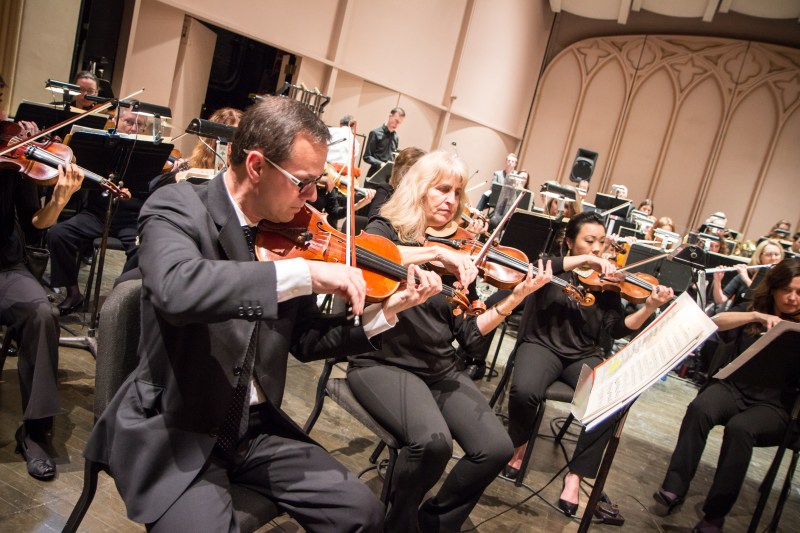
Chas Wetherbee in the concertmasters chair of the Boulder Philharmonic.

Read more in Boulder Weekly.


Elliot Moore finds the Longmont Symphony “fun to drive” going into a new season

Opening program features music by Bernstein, Shostakovich and Mahler

By Peter Alexander Oct. 1 at 10 p.m.

Elliot Moore is energized and inspired as he starts his second year as music director of the Longmont Symphony.

Elliot Moore with the Longmont Symphony 3.smiling_elk

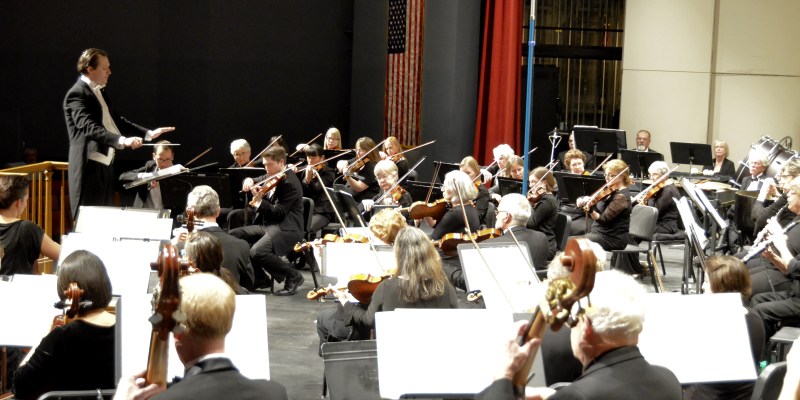
Elliot Moore with the Longmont Symphony

“I often think about conducting an orchestra as like driving a car,” he says, “and the orchestra is really fun to drive right now. How I’m able to do my job as music director has changed in a very positive way, because the level of musicianship continues to ascend.”

For evidence of the change, one need look no further than the recent auditions for places in the LSO, which kept the auditioning committee busy until 1 a.m. “It’s my understanding that we had about a 400% increase in people applying for the Longmont Symphony,” Moore says.

“I think that means that there is excitement about the Symphony, and that people want to take part in it. And it shows that the future of music in Longmont is very, very bright.”

The first concert of the 2018–19 season, a celebration of this year’s Bernstein Centennial, is Saturday (Oct. 6) in Vance Brand Civic Auditorium. Unlike other Bernstein concerts this year, the LSO is not playing any of the well known, popular works that we have heard recently. Instead, they will present one of the great under-appreciated works that Bernstein wrote, the Chichester Psalms.

Other works on the program are pieces by composers that Bernstein was associated with as conductor: Shostakovich’s aptly named Festive Overture, and Mahler’s Symphony No. 1.

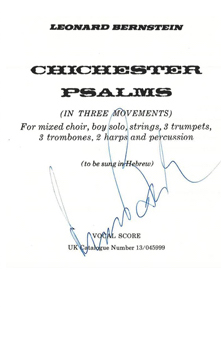
chichester-psalms-1447933896The Chichester Psalms were composed in 1965 for a choral festival at Chichester Cathedral in England. The Hebrew text comes from several of the Psalms, including Psalm 23 (“The Lord is my Shepherd”). The setting is for a small orchestra of brass, percussion, two harps and strings, with a boy soprano, chorus and soloists.

The boy soprano will be Wade Hartrick of the Boulder Children’s Chorale, Kate Klotz, artistic director. The choral voices will be from the Longmont Chorale, Scott Hamlin, conductor.

The Chichester Psalms were written during the Vietnam War, and their call for unity and peace had both religious and political meanings. “One of the things that I find compelling about (the Chichester Psalms) is the overarching message about unity, and how unity is needed in the world,” Moore says.

“It’s beautiful how Bernstein uses melody and harmony to underscore his message, and the need for peace in the world. I find that to be a compelling message on the one hand, and today in our current political climate.”

King David

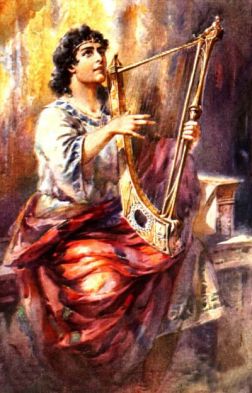
King David as a boy, with harp

The second of the three movements distills Bernstein’s message. It opens with a beautiful melody, the boy soprano singing the 23rd Psalm (“The Lord is my Shepherd”) with harp accompaniment. “The role of the harps is critical because the Psalms were written by King David,” Moore explains. “When David was a boy, he played the harp and sang to King Saul. That’s why there’s a boy soprano accompanied by harps at the beginning of the second movement.”

The melody sung by the boy is taken up by the women of the chorus, who are suddenly interrupted by a violent theme in the men’s voices, singing the 2nd Psalm (“Why do the nations rage”). In the end, the women return with the opening theme, and the two different musical ideas—representing peace and war—are juxtaposed until the end of the movement.

The third movement ends with a moment of hopefulness, as the full chorus sings the 133rd Psalm (“Behold how good and how pleasant it is, for brethren to dwell together in unity”). In a moment of exquisite tone painting, the voices of the choir gently resolve to a single note on the Hebrew word “Yaḥad,” meaning “unity.”

“There’s a lot of tone painting that’s in here,” Moore says. “Its’ a rich, rich score, an absolutely fabulous piece.”

Moore programmed the Shostakovich Festive Overture not only because it is a brilliant concert opener, but because Bernstein programmed and recorded so much of Shostakovich’s music. Shostakovich heard Bernstein performing his Fifth Symphony and other works when the New York Philharmonic toured the Soviet countries in 1959.

Bernstein was known for his flamboyant and exuberant performances, which were not always faithful to the pessimistic side of the Russian composer. “Lenny sometimes did some things in Shostakovich’s music that truly weren’t in the score,” Moore says, “but Shostakovich adored Bernstein.”

LSO Music Director Elliot Moore 2_preview

Elliot Moore

The programming of the Mahler symphony points to parallels between the two composer/conductors. “My intention was to draw the link between Bernstein and Mahler, both of whom were music directors of the New York Philharmonic,” Moore says. “At the same time I think there’s a subtler message, that conductors have a role in bringing great music to their audiences, and Bernstein did that with Mahler.”

Moore also sees a link to the theme of the entire season of the LSO. which is “Musical Journeys.” “Mahler’s First Symphony is absolutely a musical journey,” he says. Even before the First Symphony, Mahler had written his “Songs of a Wayfarer,” which described the loss of an unrequited love.

“He continues that narrative in the First Symphony, describing how he’s able to overcome (the loss),” Moore says. “He describes a whole journey that is a beautiful one to know about, a beautiful one to learn about, a beautiful one to listen to and experience in the concert hall, with this First Symphony.

“So this symphony goes along with what we are about this season, which is taking people on a journey.”

# # # # #

20170927__29AELSO~1

“Happy Birthday, Lenny!”
Longmont Symphony, Elliot Moore, conductor
With Wade Hartrick, boy soprano

7:30 p.m. Saturday, Oct. 6
Vance Brand Auditorium

Shostakovich: Festive Overture
Bernstein: Chichester Psalms
Mahler: Symphony No. 1

Tickets

NOTE: Corrected Oct. 8 to state that Wade Hartrick is a member of the Boulder Children’s Chorale, not the Colorado Children’s Chorale as was originally written.

Boulder Phil opens 2018–19 season with music of John Williams

Music from Star Wars, Jaws, Raiders of the Lost Ark, E.T., and more

By Peter Alexander Sept. 25 at 10:15 p.m.

BPO.Macky.2

Boulder Philharmonic Orchestra

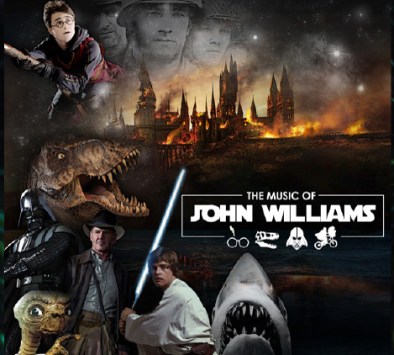
From Jaws to Harry Potter and Star Wars, John Williams has written some of the most familiar music of the past 45 years, across generations, social classes and all varieties of musical taste.

John_Williams_preview

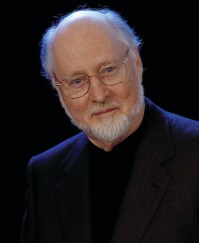
Composer John Williams

“I dare say that Williams is a well known entity” Michael Butterman, music director of the Boulder Philharmonic, says with a smile. And so he admits that the orchestra is not breaking new ground when they perform “A Tribute to John Williams” as their opening event of the 2018–19 season, Saturday (Sept. 29) in Macky Auditorium.

“This (concert) is more in the camp of wanting to create experiences that are broadly appealing to as wide a swath of the community as possible,” Butterman says. “Williams’s music has an appeal to people who love great orchestral sonorities, as well as people who love any of the great movies that he’s scored.”

To reach that broad audience, he and the orchestra are presenting music from some of Williams’s best known films, including Jaws—his first big hit, from 1975—Star Wars (1977), Raiders of the Lost Ark (1981), E.T. (1982), Jurassic Park (1993), and Harry Potter and the Sorcerer’s Stone (2004). He also selected music from some less familiar films, including The Cowboys (1972), The Terminal (2004) and Memoirs of a Geisha (2005).

MB-jiah 1

Michael Butterman

Butterman’s aim in choosing music for the concert was to showcase the wide variety of styles that Williams can adopt in his scores. “There’s really just no end to the variety that this guy is capable of,” he says. “If there is a discovery to be made here, or at least a reminder, it’s that he has an ability to write in a huge variety of styles, and do it really effectively in each one.”

If Williams is known for anything to students of film music, it’s not his originality, but his ability to assimilate many different styles, and to create a mood in just a few notes. For example, it is no secret that the “Imperial March” from Star Wars has a striking resemblance to “Mars the Bringer of War” from Holst’s Planets. Nor is it disputed that it perfectly creates the impression of grandeur and menace that the forces of The Empire require.

rs_1024x759-170222163528-1024.John-Williams-Oscar.kg.022217

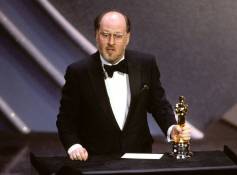
John Williams with one of his Oscars

That ability to capture exactly the right style to pull the movie audience into the scene is the essence of great film music. And John Williams has it to such a degree that he has been nominated for no fewer than 50 Academy Awards, and has won five of the golden statuettes.

“The music is there to nonverbally transport the listener to a time and place, and he can do that with just a few notes or a couple of chords,” Butterman says. “There are works where he channels a particular culture, like Memoirs of a Geisha where he’s writing in a style that is evocative of Asian music, or Angela’s Ashes where there’s an Irish or British Isles feel to the music, or “Viktor’s Tale”from The Terminal where he’s channeling a sort of folksy central European feel.”

The concert will open with the “Superman March”—in case you forgot, Williams wrote music that was used in all four of the Christopher Reeves films (1978–87). Early on you will hear what is likely the most famous and terrifying two-note theme ever written, and the program ends with one of the greatest opening fanfares of any film—but I don’t have to identify those, do I?

Hint: Both scores won an Academy Award.

# # # # #

BPO_Sept-2018-concert2

A Tribute to John Williams
Boulder Philharmonic Orchestra, Michael Butterman, conductor
7:30 pm. Saturday, Sept. 29
Macky Auditorium

Music from Star Wars, Jaws, Raiders of the Lost Ark, E.T., Jurassic Park, Harry Potter and the Sorcerer’s Stone, and other films

Tickets


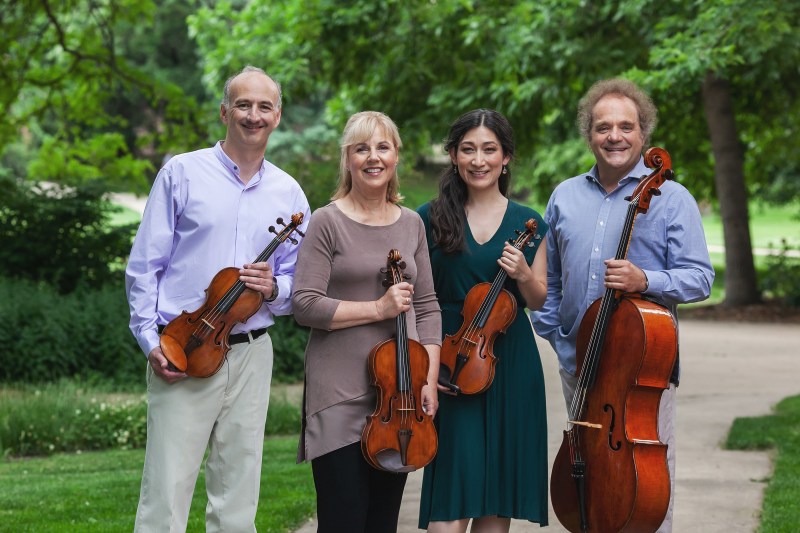
Takacs Quartet presents campus series with new second violinist Harumi Rhodes

Programs from the heart of the chamber music repertoire

By Peter Alexander Sept. 20 at 7:30 p.m.

09-Takacs-Quartet-Amanda-Tipton-photography.jpg

Takacs Quartet: Edward Dusinberre, Geraldine Walther, Harumi Rhodes, and András Fejér (L-R). Photo by Amanda Tipton

The Takacs Quartet launches their 2018–19 CU campus concert series, the first with new second violinist Harumi Rhodes, Sunday and Monday (Sept. 23–24).

Rhodes joined the quartet last spring, following the retirement of founding second violinist Károly Schranz. She has made one recording and toured with the quartet over the summer, but this will be her first year-long series as a member.

The program for the fall’s opening concerts features works by three great composers of chamber music for strings: Joseph Haydn, Schubert and Shostakovich. Two of the pieces are not well known, as they are not performed often—Haydn’s Quartet in D major, op. 20 no. 4, and Shostakovich’s String Quartet No. 4. In contrast, the third work on the program, Schubert’s String Quintet in C major, is one of the greatest and most beloved chamber works of the 19th century.

Cellist David Requiro, a member of the College of Music faculty, will join the members of Takacs for the Schubert’s Quintet.

The second concert of the fall semester is scheduled for Oct. 28 and 29. It will feature another piece by Haydn—the Quartet in D minor, op. 76—alongside works by Bartók and Brahms. Notably, both concerts feature composers considered to be the heart of the Classic-Romantic chamber music repertoire.

Takacs.Dusinberre.CUphoto-X2

Edward Dusinberre

You might think that changing members in a well tuned ensemble such as the Takacs Quartet would require difficult adjustments, but Edward Dusinberre, the quartet’s first violinist, says that has not been the case. “We feel very comfortable with her,” he says of Rhodes. “We’re having a great time. She’s got chamber music and string quartets in her blood.”

He also points out that playing in a string quartet is always a process of negotiation among the ensemble members, and Rhodes fits into the environment very well. “When you’re playing chamber music, every phrase is an adjustment,” he says. “She’s got a very strong artistic voice, and that’s one of the reasons we chose her.

“Within the group there are always three or four different opinions, so that doesn’t change. It’s not like she’s coming into a situation where three of us have a standardized view of how things should be played. It’s totally not like that, so (adding Rhodes) feels like continuing the good work.”

Rhodes1

Harumi Rhodes

The transition has been very positive for Rhodes, too. She was a unable to speak to me, but sent some written observations: “Everything about joining the Takacs has changed my life for the better,” she wrote. “As soon as I joined the Takacs, I assumed a new identity. Filling this role with pride and joy is what every bone in my body was made to do.”

She has played chamber music for many years, but she has found new pleasures in the Takacs. “The biggest surprise has been the luxury of performing the same piece many times. I’ve always enjoyed the process of rehearsing and performing. But the trajectory is completely different when you have a life-long relationship with this music in this way, a relationship that spans many concerts in one season. This is new to me.”

Her email to me concluded with great enthusiasm: “I look at the season ahead and can’t wait to dive in.”

Dusinberre says that whether the pieces are familiar or not, everything on the Sept. 23–24 concerts is music the quartet enjoys. “Haydn’s Op. 20 No. 4 is one of our favorite pieces,” he says. “It’s got a slow movement where the solos are very well distributed between the parts. The minuet is tremendously fun, sort of off-kilter—Haydn tricking his audience, tricking us sometimes!”

According to Dusinberre, the first movement is one of the places where quartet playing does require negotiation among the members. “It’s got a rather simple opening theme that comes back many times, in different ways. There’s different ways of bowing it, and it’s like opening a can of worms to find out what bowing we’re going to do. We’ve already had some entertaining rehearsals on that.”

David Requiro

Cellist David Requiro

The Shostakovich Fourth Quartet is actually one that the Takacs has not played before. “It’s quite fun because it’s new for all of us, and not just Harumi, and I think that’s quite nice, because it sort of levels the playing field,” he says. “It’s a wonderful piece (that has) a strong sense of folk melodies early in the piece, and then it turns into something a bit darker and more dramatic and more exciting.”

The Schubert Quintet in C major is part of larger plans by the quartet. “We’re playing (the quintet) on the road with David (Requiro), at the White Lights Festival at Lincoln Center in October,” Dusinberre says.

“He’s a wonderful player. We’re very excited to explore this piece with him.”

# # # # #

Takacs Quartet
CU Fall Concerts

04-Takacs-Quartet-Amanda-Tipton-photography.jpg

Takacs Quartet. Photo by Amanda Tipton.

4 p.m. Sunday, Sept. 23, and 7:30 p.m. Monday, Sept. 24
Grusin Music Hall

Haydn: String Quartet in D Major, op. 20 no. 4
Shostakovich: String Quartet No. 4 in D Major, op. 83
Schubert: String Quintet in C Major, D956
With David Requiro, cello

4 p.m. Sunday, Oct. 28, and 7:30 p.m. Monday, Oct. 29
Grusin Music Hall

Haydn: String Quartet No. 2 in D minor, op. 76
Bartók: String Quartet No. 1
Brahms: String Quartet No. 2 in A minor, op. 51

Tickets

“Women Among Men” featured by Pro Musica Colorado Sept. 22-23

Polish composer Grazyna Bacewicz is ”a great discovery”

By Peter Alexander Sept. 20 at 8 p.m.

“Women Among Men,” a concert by the Pro Musica Colorado Chamber Orchestra, will feature a woman conductor, two women soloists, and a woman composer—and some male composers as well.
Photography by Glenn Ross. http://on.fb.me/16KNsgK

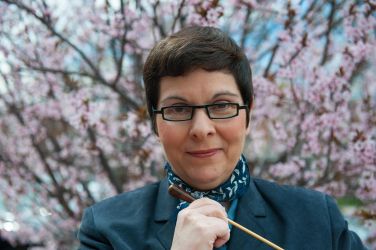
Cynthia Katsarelis. Photography by Glenn Ross.

The conductor is Cynthia Katsarelis, Pro Musica’s music director. The soloists are violinist Yumi Hwang-Williams, concertmaster of the Colorado Symphony, and soprano Amanda Balestrieri, artistic director of Seicento Baroque Ensemble. And the composer is Grazyna Bacewicz, who Katsarelis describes as “a great discovery.”

Other composers on the program are J.S. Bach, Joseph Haydn and Mozart. Performances will be Saturday in Denver and Sunday afternoon in Boulder (Sept.  22–23).

Katsarelis points out that the program is filled cheerful pieces. Recent seasons have seen Pro Musica playing some pretty dark, serious works—musical reflections on death, the martyrdom of Joan of Arc, and a tragic shipwreck, for example. “I decided we should do a happy concert for once,” she says.
Grazyna Bacewicz

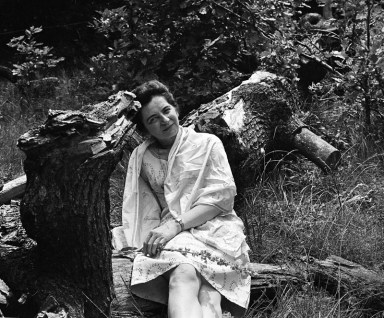
Grazyna Bacewicz

Bacewicz, Katsarelis’s “great discovery,” is likely better known to violinists than to the audience. She was a virtuoso violinist as well as composer, and she wrote a lot of music for the violin. “I’m going to get her violin sonatas and play those,” Katsarelis says. “I’m really enjoying her music!”

Born in Poland in 1909, Bacewicz lived and worked through the middle of the 20thcentury. The Concerto for String Orchestra was written in 1948, and reflects the clean and bracing neo-classical style of the era between the wars.

“Her aesthetic likes clarity and orchestration that has space,” Katsarelis says. “She didn’t like the giant, dense sound blocks, and in that respect she reminds me of Ravel.

“There are areas that have an impressionistic sound, there are areas that have a Stravinsky-like sound, and sometimes we get eastern European rhythms that are reminiscent of Shostakovich. She’s obviously aware of Bach, and the coloristic effects of Stravinsky, Debussy, Ravel, Bartok, and Shostakovich. Without anything sounding derivative, it just sounds like she’s got a really wonderful broad palette.”

A word that Katsarelis uses to describe Bacewicz’s music is “lively,” but she also points out that it is not music that is difficult or unfriendly to audiences. “She knows how to drive a line, but it’s nothing intimidating or scary,” she says. “You can really take it in and enjoy it deeply.”
yumi-hip

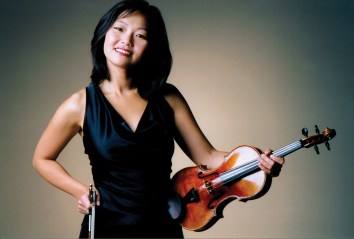
Yumi Hwang-Williams

Katsarelis knew Hwang Williams before either moved to Colorado, when Hwang-Williams was principal second violin in the Cincinnati Symphony and Katsarelis was an apprentice conductor with the orchestra. Since they both settled in Colorado, Hwang-Williams has been a soloist with Pro Musica several times.

On this occasion, she is playing one of her favorite pieces, Haydn’s Violin Concerto in C major. “It’s a wonderful, beautiful, ebullient, joyful work,” she says. “I have loved this concerto for a long time, and I’ve always wanted to play it.”

Although it is not a big Romantic showpiece, Hwang-Williams says that the concerto has its own challenges. “There’s a lot of virtuosity,” she says. “It’s just a different kind of virtuosity. The challenge of playing classical repertoire well is that you have to have a lot of refinement in your playing. You need crystal clear intonation and articulation, so what you hear is the purity of the violin, in the tone and phrasing.”

Katsarelis says “It’s just a really wonderful piece, written around the time of his early to middle symphonies. It’s a mature work, from the beginning of his peak—which then lasted for 50 more years!”

The concerto will be followed by a piece that Katsarelis calls “a bonbon”: Die Schätzbarkeit der weiten Erde (The riches of the world), an aria for soprano and violin with strings from Bach’s Cantata No. 204. “Yumi has been talking to me about the wonderful Bach arias that have violin solos,” she explains.
Amanda Balastrieri.2

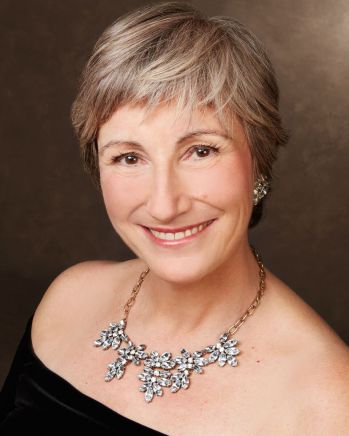
Amanda Balestrieri

“The concert was a little bit short, so there would be room to do a wonderful bon-bon. The music is charming—and of course, Amanda Balestrieri is the perfect person for this, both because of her voice quality and her musical intelligence.”

The fourth piece on the program is Mozart’s Serenade in D major, K239, known as the “Serenata Notturna” (Nocturnal serenade). “When I was putting together the program, I was shuffling through pieces for string orchestra,” Katsarelis says. “I’d forgotten about this, except that it has two orchestras, the quartet of principals and the string orchestra with also timpani. I looked into it, and I was delighted by the piece right away!”

As Mozart would have done, Pro Musica will separate the two performing groups—”so that we get that aural, spatial surround sound,” Katsarelis says.

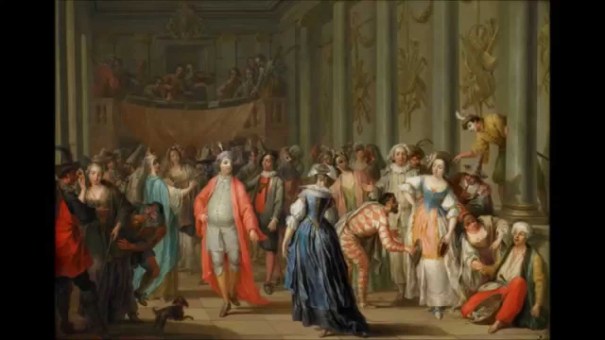
Mozart’s serenades, were usually written for celebrations of some kind. The occasion for the “Serenata Notturna” is not known, but was most likely a masked ball during Carnival season. Katsarelis happily suggests that “it’s not difficult to imagine intrigue going on while they were playing this at a masked ball—where you can get away with more than at a non-masked ball!”
maxresdefault

Viennese masked ball

To add to the enjoyment of his Viennese audiences, Mozart incorporated some melodies hat would have been recognized at the time. “That would have added to their delight,” Katsarelis says.  “But the music still carries that delight, even if we don’t know the songs.”

# # # # #

Women Among Men
with Violinist Yumi Hwang-Williams
Amanda Balestrieri, soprano
Cynthia Katsarelis, conductor

7:30 p.m. Saturday, September 22 
Central Presbyterian Church, 1660 Sherman St., Denver

2 p.m. Sunday, September 23
Mountain View United Methodist, 355 Ponca Pl., Boulder

Mozart: Serenade in D major K. 239, Serenata notturna
Grazyna Bacewicz: Concerto for String Orchestra
Haydn: Violin Concerto in C Major
J.S. Bach: Die Schätzbarkeit der weiten Erde

Tickets 


Prominent guests come to CU to join Bernstein celebration

Composer’s daughter, former NY Phil concertmaster, scholar visit College of Music

By Peter Alexander Sept. 20 at 12:25 p.m.

JB_HeadShot3_Steven J. Sherman

Jamie Bernstein. Photo by Steven J. Sherman.

The University of Colorado College of Music has joined the rest of the musical world to celebrate the centennial of the unique American composer, conductor, teacher, writer, lecturer and humanitarian Leonard Bernstein.

Just about the entire College of Music is represented in the months-long festival, from individual faculty members to the University Symphony, the Eklund Opera Program and even the Marching Band.

The celebration gains an extra dimension starting Monday, Sept. 24, with the arrival on campus of three prominent guests: Jamie Bernstein, the composer’s daughter and author of the recently released memoir Famous Father Girl; violinist Glenn Dicterow, concertmaster of the New York Philharmonic for 34 years who played many performances Bernstein conducted; and Carol Oja, William Powell Mason Professor of Music at Harvard University and one of the leading Bernstein scholars.

The three guests will open the week with a joint appearance Monday afternoon. Oja will present a keynote address for the celebration, followed by a public discussion moderated by Susan Thomas, director of the CU American Music Research Center. Each of the guests will then participate in individual events during the rest of the week.

Read more in Boulder Weekly.

# # # # #

CU Bernstein at 100
Events featuring guest artists
All events are free and open to the public

Public Talk with Jamie Bernstein, Glenn Dicterow and Carol Oja
Moderated by Susan Thomas, director of the CM American Research Center
4 p.m. Monday, Sept. 24
Grusin Music Hall

Faculty Tuesday
Chamber Music of Leonard Bernstein, narrated by Jamie Bernstein
CU Faculty and Student performers
7:30 p.m. Tuesday, Sept. 25
Grusin Music Hall

“Citizen, Conductor, Composer: The Continuing Legacy of Leonard Bernstein”
Conversation with Carol Oja, presented by The Entrepreneurship Center for Music
5 p.m. Wednesday, Sept.. 24
Chamber Hall (C199), Imig Music Building

CU Symphony Orchestra
Gary Lewis, conductor, with Glenn Dicterow, violin
Jamie Bernstein, narrator
7:30 p.m. Thursday, Sept. 27
Mackey Auditorium

Bernstein: Overture from Candide
Bernstein: Suite from On the Waterfront
Samuel Barber: Violin Concerto

Master Class with Glenn Dicterow, violin
3 p.m. Friday, Sept. 28
Grusin Music Hall