OPINION: Honoring the text in opera productions

Who wins—the director or the librettist?

By Peter Alexander June 18 at 11:18 a.m.

I was in New York recently. While there, I took the opportunity to meet a friend at the Metropolitan Opera, where we saw the new production of Salome by Richard Strauss.

The production, starring Elza van den Heever in the title role and Peter Mattei as Jochanaan (John the Baptist) has attracted considerable attention, particularly for van den Heever’s performance. The singing I heard on May 24 ranged from solid to outstanding. Colorado native Michelle de Young, who has appeared at the Colorado Music Festival (2017 and ’18), was especially strong as Herodias. Conductor Derrick Inouye did not always manage to keep the orchestra under the singers, especially when they were singing from the back of the Met’s deep stage.

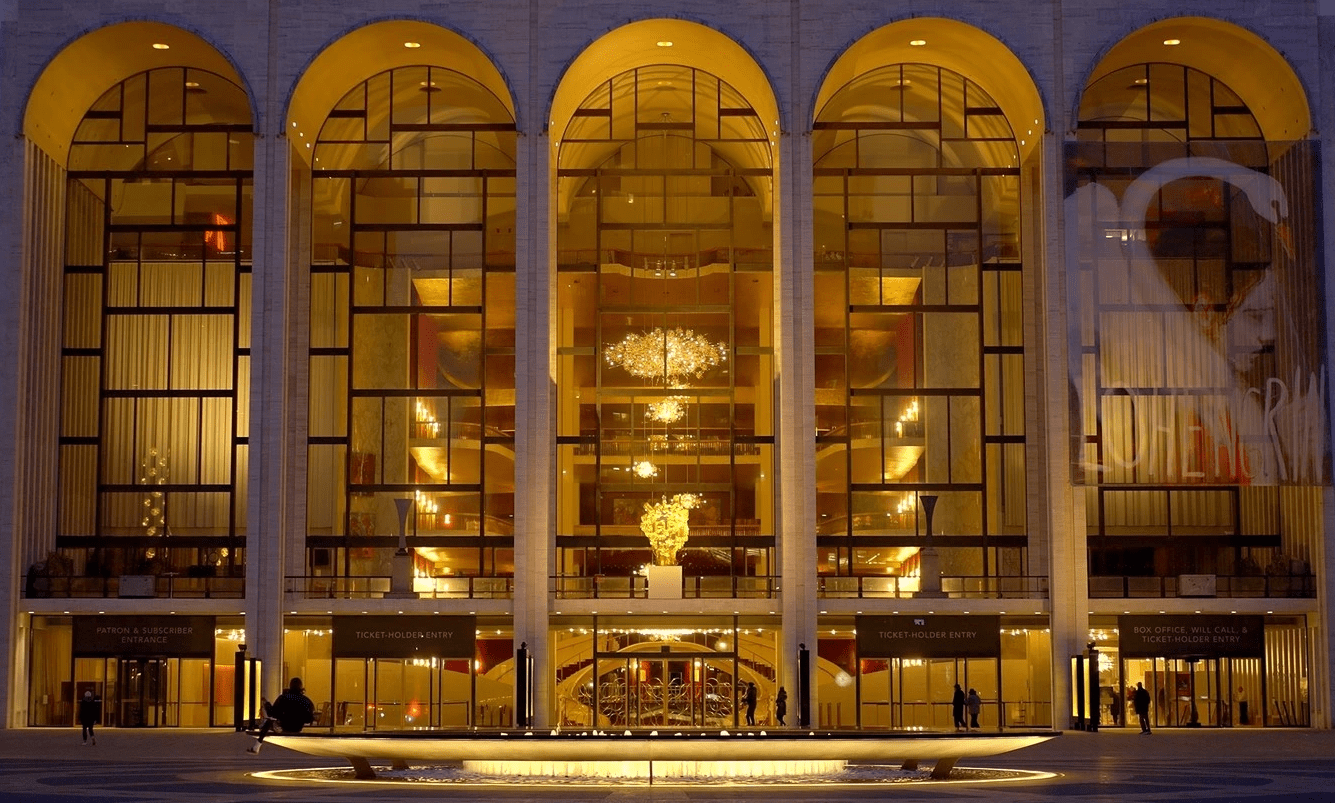
The Metropolitan Opera House at Lincoln Center, New York

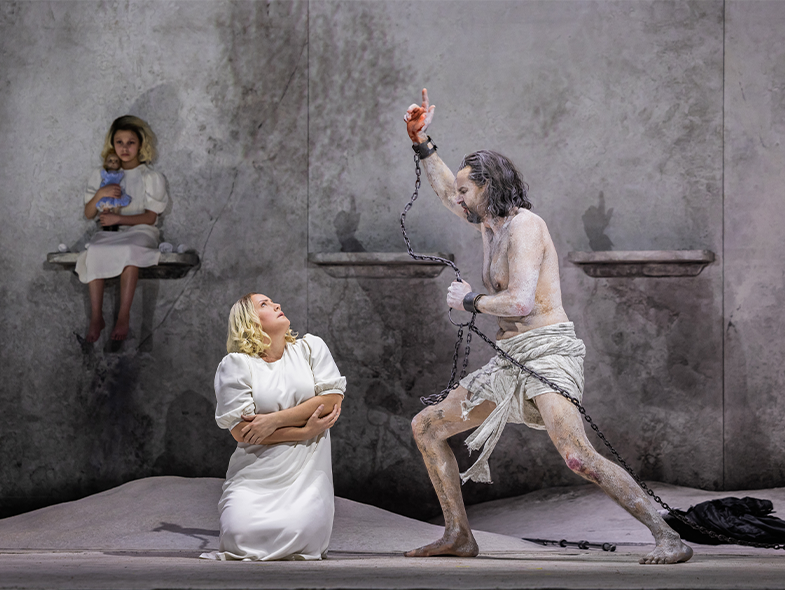
The production by director Claus Guth was in some ways a mess. Transferred to the Victorian era, it featured six young Salomes, all dressed like van den Heever in black velvet with a white collar, ranging in age from about 6 to early teens (the operatic character is supposed to be about 16). These young Salomes entered at various times during the opera, representing the abuse that Saolme has endured throughout her childhood, which explains her perverse sexual obsession with John the Baptist.

The child Salomes enter separately throughout the infamous “Dance of the Seven Veils,”  each in turn having a simple black veil removed from her head before exiting. There is no seductive dance before Herod, which subverts the powerful music of the dance. In other mystifying additions, there are ram’s heads worn by members of the court, and a distracting scene of a near-nude woman surrounded by fondling courtiers played out on a raised area at the rear of the stage. The entire opera is placed in a sterile Victorian mansion.

All of which shows us that Herod’s court was degenerate and Salome is a damaged adolescent, which is pretty clear without directorial signposts. These ideas are often needlessly demonstrated in productions I have seen, from Santa Fe to Berlin. (Unsolicited advice for stage directors: Both the text and the music tell us that far better than your ideas will. Trust the music.)

But my purpose here is not writing a review of this production, which offers much scope for commentary. It is rather with a single question: to what extent should a production (and presumably therefore a stage director) honor the written text of the opera?

This is not an idle question, and in one sense Salome provides a good case study. The text of both Oscar Wilde’s English-language play and Strauss’s libretto, which is mostly a straightforward German translation of the play, are clear about one thing: in the confrontation between Salome and John the Baptist, he avoids looking directly at her. “I will not look on you,” he sings. “You are accursed!” And later, as she holds his decapitated head in her hands, she sings “If you had seen me, you would have loved me!”

For some directors, this is apparently just a line that is sung, and they feel free to play the relationship between Salome and John the Baptist as they want you to see it. If they want Salome to be a depraved teen seductress when she confronts John, they may have her writhing all over and around him; I have seen it done that way. Or if they want John to be tormented by her, they will have him grasping her, looking directly into her face, perhaps even twisting in agony with close physical contact; I have seen it played that way, too.

Elsa van den Heever (Salome) and Peter Mattei (John the Baptist) at the Met

I would maintain that both of these stagings contradict the clear text that Strauss set. I believe that to respect the work, the director should honor the text’s clear indication that John turned away from Salome. Perhaps he saw her from the corner of his eye; perhaps she passed in front of him; perhaps he saw her figure when he first came into her presence. But he did not look directly into her face or deliberately interact with her.

That does not rule out interpretations in which he sees her but rejects her, or is in some way aware of her presence and her impact as a seductress. There are many ways to convey what is indicated in the text. But contradicting the text, in order to impose a single interpretation of the characters is unfaithful to the work.

Finally, “Depraved teen seductress” is certainly one way of understanding Salome, but there are others. Bored, spoiled adolescent living in a corrupt society; victim of abuse by a depraved stepfather; a tool in the hands of a scheming mother: any one or all of these are legitimate ways of understanding Salome. 

For myself, I prefer a production that allows you to see many possibilities, rather than insisting on only one. But we live in a time of regie-theater, director’s theater, where unique and original interpretations are highly valued. But I still believe that original productions can and should stay faithful to the text of the work being presented.

What do you think?

A notice to readers

A much needed two-week vacation

By Peter Alexander Aug. 19 at 11:20 a.m.

This has been a busy summer.

I don’t know how it was at your house, but for me, the combination of family events, summer performances to play and attend, and the unexpected home repairs to attend to has filled my days.

Filled to overflowing in fact.

So I am going to take a couple of weeks off to take care of all the unfinished business staring me in the face and maybe get some rest. And see some opera streams I’ve been wanting to see, some British mysteries, maybe even go to a movie! Such luxury.

I apologize for the early-season events I will miss—the Takács Quartet has already started their 2024–25 season—but I will be back in September. And isn’t that when fall events should start, anyway?

So enjoy your dog days, think of me lying on the couch (not the beach, sadly) happily sipping beverages, and I’ll see you again in September!

Note to Readers

By Peter Alexander Aug. 11 at 3:57 p.m.

I will be taking the next 2–3 weeks off from SharpsandFlatirons. During that period I will not be writing . . . anything! Around Sept. 1 I will be back with some long-planned CD reviews and the first previews of the coming season. Until then I wish you all a very pleasant August and I look forward to being back when the Fall performance season gets under way.

Best wishes to all readers! —The editor

Musical Adventures 1: Now’s the time to explore new musical territories

A Grammy nominee and a new disc from the Takacs Quartet

By Peter Alexander Jan. 19 at 11:15 p.m.

I am someone who enjoys adventures, in music as in other ways.

I’m not as interested in new Beethoven recordings, although I got notices about plenty of them last year. (In case you were completely isolated last year: 2020 was the 250th anniversary of his birth.) But give me a recording with composers I have never heard before, and I will go straight to the CD player.

Since we are likely to be isolated for a while longer, now is a good time for you to have your own musical adventures. Committed performances of music we don’t know, even music we don’t like, helps clean out the ears and open the mind to new experiences. If you don’t like it, don’t listen again; but at least you know what’s out there.

In that spirit, this is the first of several articles I plan to write about recordings that offer musical adventures, small steps into new territory. And if one of these is not new territory for you, congratulations. I will have other suggestions.

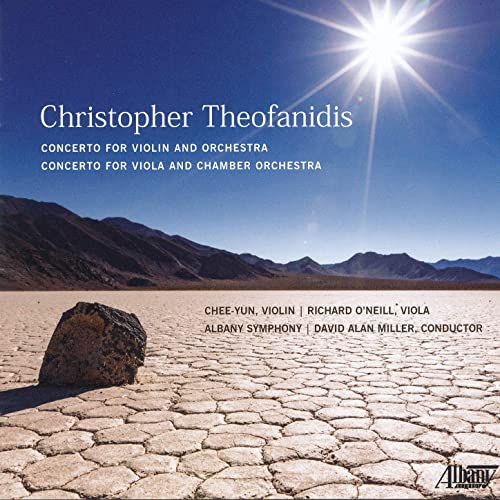
There is no better place to start than a stunning recent recording by violist Richard O’Neill, the newest member of the Takács quartet. His performance of the Concerto for viola and chamber orchestra by Christopher Theofanidis with the Albany Symphony Orchestra and conductor David Alan Miller (Albany Records TROY1816, released August 2020) has been nominated for a classical music Grammy. Since the Grammy awards have been postponed until March 14, you can hear the recording before the winners are announced.

Theofanidis teaches composition at Yale and is co-director of the composition program at the Aspen Music Festival. His orchestral work Rainbow Body has been performed by more than 150 orchestras worldwide. He is a composer of remarkably wide imagination and creativity, as his Viola Concerto shows.

The concerto was written for the violist Kim Kashkashian in 2002 and revised for O’Neill in preparation of his performances and recording. Partly inspired by Navajo texts, it is by design a work of great emotional intensity. “It is written as a response to [Kashkashian’s] incredible intensity and focus as a performing artist,” Theofanidis wrote.

O’Neill provides all the intensity Theofanidis calls for. As soloist he creates a wide palette of sounds that match the kaleidoscopic moods and sounds of the score. The are passages of dark, brooding gloom and fleet passages of sheer virtuosity, with O’Neill flying through these changes without a hitch or a stumble.

Each movement has its own individual rewards. The first is dominated by pulsing sounds in the orchestra, an extension of drum patterns that open the movement, interrupted by fleet passages for the soloist. The second enters a totally different sound world, with a static orchestral haze overlaid with barely-musical fragments for the soloist that gradually coalesce to reach a moment of passionate intensity.

The emotional high point is the third movement, written in the aftermath of the 9/11 attacks and using a Sikh melody that was sung at a memorial held at Yankee Stadium. Here O’Neill’s expressive playing creates a deep sense of mourning. This is eloquent music of loss, a barren emotional landscape that accepts the light of consolation only at the end. After this catharsis, the scurrying finale closes the concerto with an explosion of energy.

So varied are the movements and their internal sections that it is easy to see why this recording stood out to the Grammy committee. O’Neill’s interpretation and integration of the disparate elements seems flawless as he flies confidently through this emotionally virtuosic work. “No matter what happens with this nomination,” O’Neill says, “ I think this piece deserves to be in the repertoire.”

The Viola Concerto is paired on Albany’s disc with Theofanidis’s Violin Concerto, played by Miller and the Albany Symphony with violinist Chee-Yun. Another dramatic and varied work, it is dominated by a movement based on a theme the composer wrote for his new-born daughter. That moment of lyrical blossoming is framed by a dramatic movement where the soloist seems pitted in a struggle with forces of nature, and another whirlwind finale.

# # # # #

Takacs

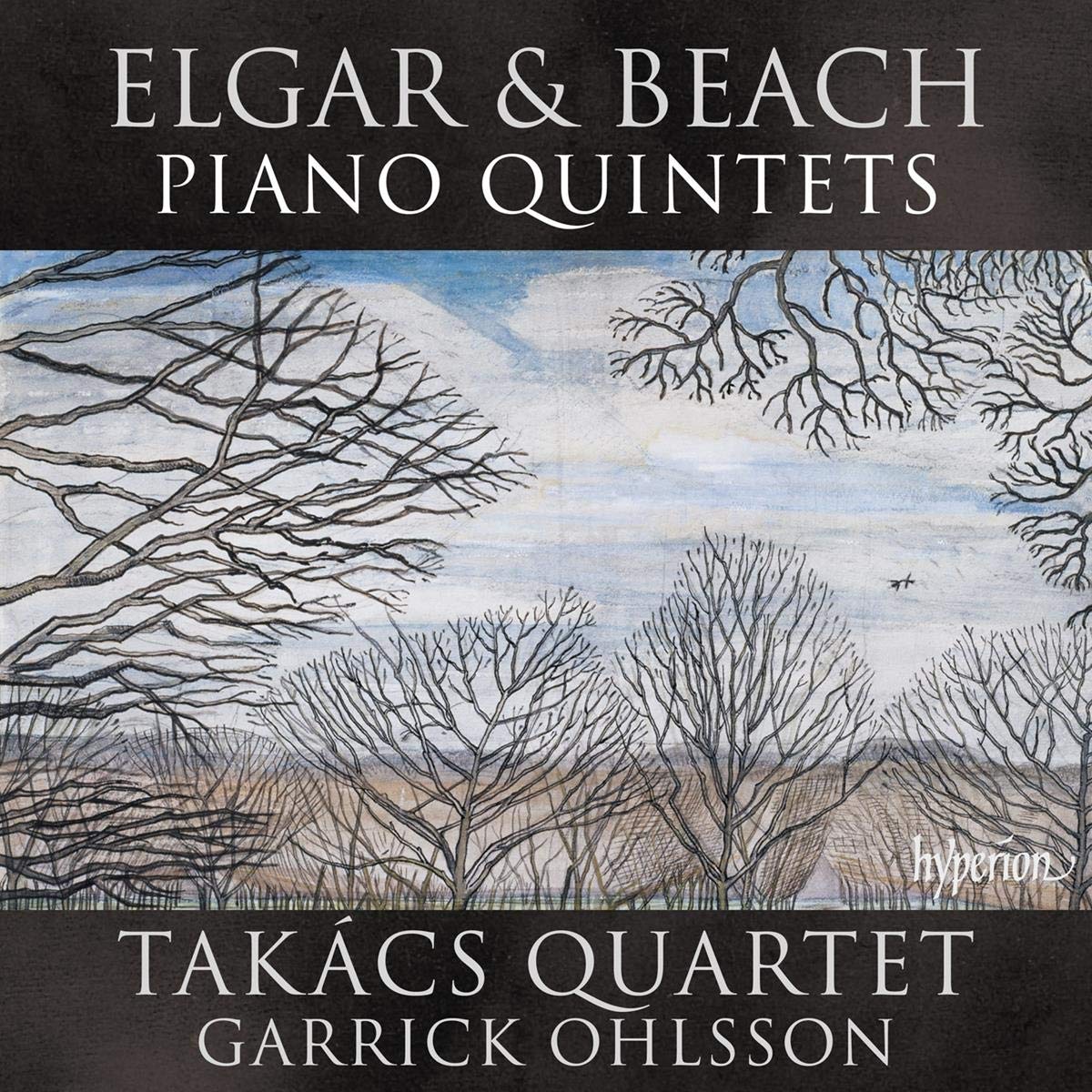
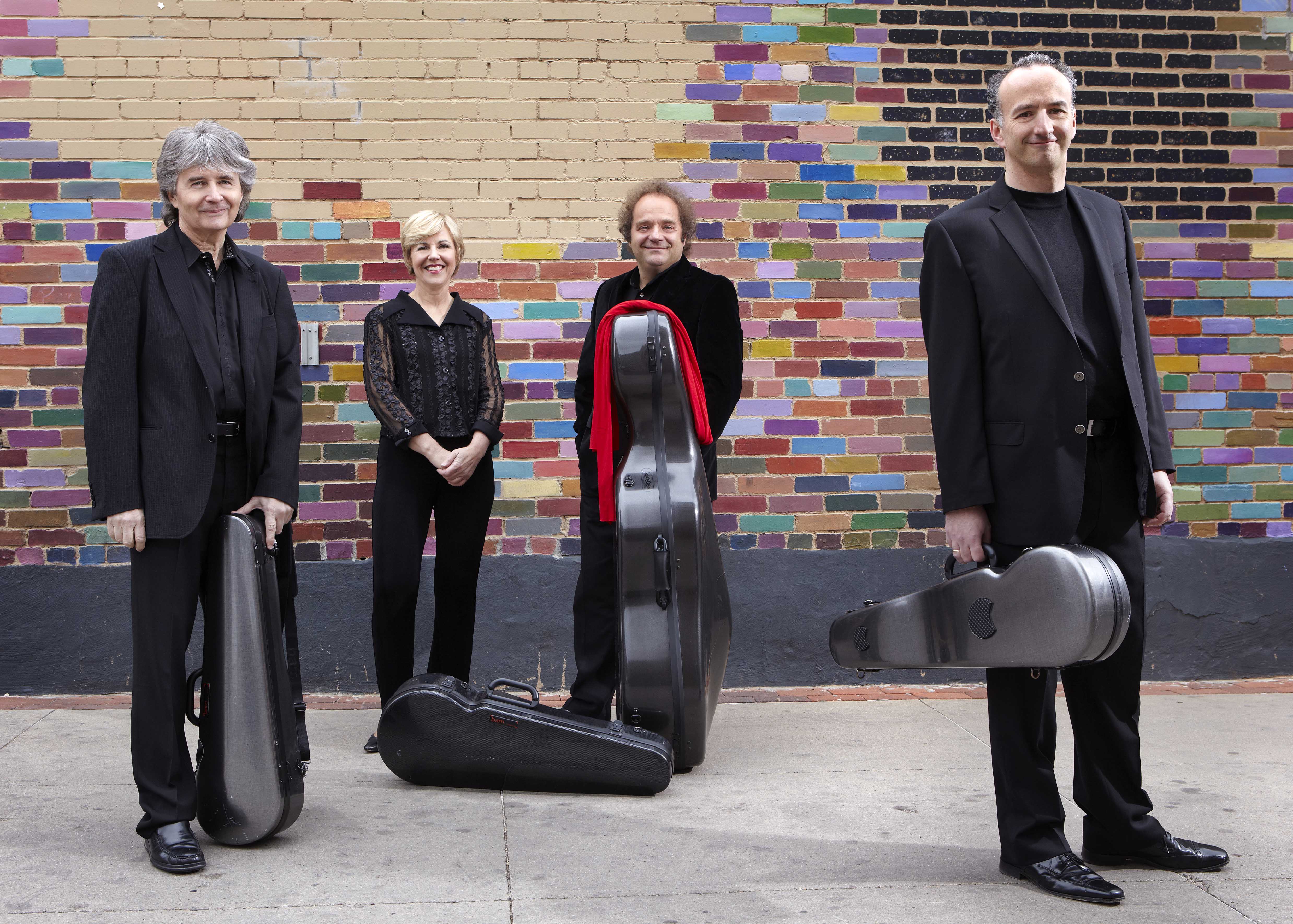
The full Takacs Quartet, recorded before O’Neill replaced Geraldine Walther in the viola chair, offers a comfortable adventure with their recording of the piano quintets of Amy Beach and Edward Elgar. Released in June, the recording was made with pianist Garrick Ohlsson (Hyperion CDA68295).

The first American woman to achieve success as a composer, Beach was a teenaged piano prodigy in the 1880s but had to give up her public career when she married. She published first under the name Mrs. H.H.A. Beach until her husband’s death in 1910, and then as Amy Beach. Her Quintet in F-sharp minor for piano and strings of 1905 was widely performed in her lifteime, often with the composer playing the piano part.

The Quintet was heavily influenced by Brahms’s popular Quintet in F minor, which she had played. An echo of Brahms is heard in the first movement, but Beach announcers her own imagination at the very opening, sustained notes that overlay dramatic flourishes in the piano. Here the atmospheric performance by Ohlsson and the Takacs pulls the listener in from the first notes. They follow Beach’s expressive turns, through sudden changes of mood from warmth to spookiness and a gentle sigh at the ending.

The sigh is followed by a realm of sweetness and gentle repose through a second movement marked by long, lyrical lines that build to a strong climax, subsiding to a quiet close. The finale seems less integrated, as passage follows passage. This is no fault of the performers, who follow Beach in her rambling walk. Every section is well crafted, creating just the sound that the composer wants, but it fails to hang together as an organic whole. It is none the less pleasant for that, especially as played by Ohlsson and the Takacs.

Elgar is closer to the beaten path than Beach, although the Quintet is less familiar than his “Pomp and Circumstance” or “Enigma” Variations. Like his other works, the Quintet is marked by a cheerful mixture of drama and playfulness that seems thoroughly Victorian in style. It is a musically challenging work that lacks conspicuous flamboyance; even the most energetic passages remain genial in mood.

The first movement is a moderate allegro that anecdotally may be based on supernatural tales about a wooded copse near Elgar’s home. The exact source of inspiration remains mysterious, and any sense of menace the woods may have suggested is lessened by sudden bursts of song. 

The second movement begins in a state of serenity, in Elgar’s best warm if slightly fuzzy Romantic manner. One is easily carried along by the flow of the Takacs Quartet’s performance, which conveys a feeling of enveloping comfort, with no danger in sight.

One idea succeeds another succeeds another in the long, fantasy-like Finale. In the hands of Ohlsson and the Takacs Quartet, the changing tempos seem organic across a wide and shifting range. Each idea and section emerges seamlessly from the material before, even as Elgar extends and extends his material toward a final firm ending. The performance is well balanced among the instruments, with the performers achieving a notable clarity of texture in spite of Elgar’s luxuriant harmonic language.

Both performances are exemplary. There is no better place to begin your musical adventures than with these congenial and thoroughly enjoyable works. And if these works are not new to you, stand by for further suggestions.

Reflections of a female, Japanese-American classical guitarist.

A search for musical identity, community and representation

Editor’s note: Izzy Fincher has just completed an internship through the CU, Boulder, College of Media, Communication and Information, writing for Sharps & Flatirons. You may have read her articles. A conscientious and skilled writer, she has been an important part of our coverage of classical music events in and near Boulder during the fall. It is hoped that she will continue to make occasional contributions to this page. In the meantime, here are her reflections on the other part of her double major, as a female classical guitarist in a world where she is part of a distinct minority. You may learn more about her performing life and hear recordings on her personal Web page.

By Izzy Fincher Dec. 13 1:45 p.m.

As a young classical guitarist, I am still searching for a distinctive musical identity—a nebulous and daunting task.

Izzy Fincher. Photo by Anna Haynes.

I often ask myself, “How is my interpretation unique? Whose story am I telling? How can I embody the composer’s experiences when we are separated by lifetimes, thousands of miles, race, nationality and gender?”

As a mixed-race, Japanese-American woman in classical guitar, I struggle to see myself reflected in the community and repertoire. Like most of the classical music world, I find myself within the white-male frame, telling musical stories by white men.

I began playing guitar at age six. Since then, 83% of my primary teachers have been white men. One hundred percent of my studio at CU-Boulder is white men. Before college, 100% of the guitar repertoire I had played or heard during concerts was written by white men.

These statistics are not offered to criticize my mentors and colleagues, who did their best to support me as a female guitarist. Their advice and guidance has become an integral, guiding force in my musical development, and for that I am grateful.

However, I cannot ignore the impact of existing in less diverse spaces, of seeing the musical world as beautiful and profound, yet also incomplete.

Growing up, I never saw myself as a feminist or an activist. Like many women, I am naturally conflict-averse and a people pleaser. Being an advocate for diversity in my musical community felt too risky. 

But now, as I continue to struggle with defining my own musical identity, I feel I can no longer ignore or deny the lack of representation, and I see how choosing silence can be another way of reinforcing the white-male frame.

So, I raise my pen and share the beginning of my journey of telling women’s stories on the classical guitar.

My first experience telling women’s stories came in March of 2020, when I performed Sofia Gubaidulina’s “Serenade” at “Persevering Legacy,” a concert featuring only female composers hosted by the Diverse Musicians Alliance at CU-Boulder. For four minutes, under the hot stage lights of Grusin Hall, I felt the thrill of telling one woman’s story, a moment filled with empowerment and excitement.

While researching repertoire for the concert in 2019, I stumbled across a Spotify playlist entitled “Women classical guitar composers” by Heike Matthiesen, featuring over 600 works for solo guitar by female composers, nearly 30 hours of music. For Matthiesen, this playlist is a form of musical activism, a way to increase awareness and accessibility of female composers’ works for solo guitar. 

The playlist stems from her work as a touring classical guitarist and director of “The Archive of Women in Music” in the Center for Art and Media Karlsruhe (Germany). The archive includes 25,000 media by more than 1800 women from 52 countries, from the 9th century to the present day. The classical guitar part of the archive includes over 800 female composers who have written for solo guitar, 600 of which were discovered by Matthiesen. The scores are available for research and personal use only, so Matthiesen’s main focus is connecting classical guitarists with information and then directly with composers, a process she believes could be key to “opening up the canon,” she says. 

“I want to be the connection between the archives and the players and audience,” Matthiesen says. “The music is there. Discover it. From the 19th century on to the present, if you are looking for a certain type of repertoire, you can always find a solution with a woman’s name on it. This is something the world needs to know.”

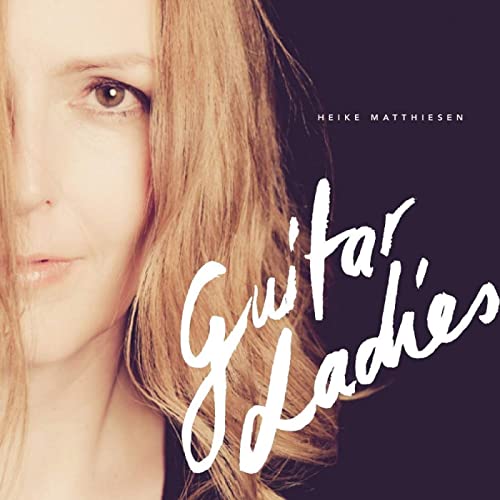
Her work as a musical activist began to garner attention only in the last few years, after the release of her album “Guitar Ladies,” which features works by notable female composers, including Madame Sidney Pratten, María Luisa Anido, Ida Presti, Sofia Gubaidulina, Carmen Guzman, Sylvie Bodorova, Annette Kruisbrink, Tatiana Stachak and Maria Linnemann.

“In 2015, no one was playing (repertoire by) women composers,” Matthiesen says. “I did it for karma points. I was being idealistic. I thought, ‘Nobody will be interested or buy the CD.’ But I had no idea that I was at the right moment in the right place with it. Now suddenly I am the expert for the repertoire.”

Another powerful voice in this movement is Candice Mowbray, a classical guitarist and educator, who leads the guitar program at Shepherd University in West Virginia. Her doctoral thesis from Shenandoah University, which was published in 2012, focused on “Ida Presti as a Solo Performer and Composer of Works for Solo Guitar.”

Ida Presti

Presti (1924-1967), a French classical guitarist and part of the Presti-Lagoya duo with her husband, was one of the most influential female guitarists and composers of the 20th century. Before Mowbray, no one had researched her solo and compositional career in-depth. Besides Presti, Mowbray has collected information about many other female guitarist-composers, which she shares on Facebook and her personal blog.

Presenting lectures at universities and music events is also an important part of Mowbray’s musical activism. In 2020, she gave a lecture “Women in the History of the Classical Guitar” at the Guitar Foundation of America (GFA) festival, the largest and most prestigious competition in the United States, where I first learned about her work.

Candice Mowbray

With her musical activism, Mowbray’s main goal is to share knowledge, which she hopes will inspire classical guitarists to integrate female composers into their teaching and performance careers. She believes raising awareness is the key to creating a more inclusive space in the classical guitar community.

“Women existed this whole time,” Mowbray says. “But when you open a book with 1000 years of music history, there are no women. The history we are studying is a great one, but it is really incomplete.

“My goal was to put these women in the same conversation. When I teach, I say the great guitarists of the 20th century, Andrès Segovia, John Williams, Ida Presti and David Russell. Let’s just change the conversation to include (women).”

Though Mowbray, Matthiesen and other activists have been working for years, the classical guitar community, like the rest of the classical music world, has been particularly receptive to messages about women in 2020.

In 2020, the GFA created a mentorship program “to support and develop talent among classical guitarists of color through instruction, engagement, and career development.” Exaequo, a non-profit run by successful younger classical guitarists, has created a new initiative called “Changing the Canon,” to commission new classical guitar works by nine Black American composers, including several women. Ben Verdery, the head of Yale University’s classical guitar program, updated the graduate student audition requirements to recommend several female composers, including Francesca Caccini, Élisabeth-Claude Jacquet de La Guerre, Emilia Giuliani-Guglielmi, Joan Tower and Hannah Lash.

And this is just the beginning. According to Matthiesen, the heightened awareness around diversity and equity in 2020 is the “perfect time” to advocate for change, a chance for “a golden era for female composers” in the classical guitar community.

“Before, the canon was played by men, dictated by men, and composed by men,” Matthiesen says. “There was no chance to change that. It took more women in the (classical guitar world) to open up the repertoire.”

Though these new opportunities are unprecedented and exciting, the importance of activism has not diminished at all. Our community must actively ride this tidal wave of equality, rather than let it crash suddenly over us and leave us stranded in the sea of under-representation.

Information is power. However, information has to be accessible and spread widely for the power to be transformative. Female composers can’t be relegated to dusty reference books, out-of-print scores or forgotten CDs. They have to exist in our daily conversations, on our music stands and in our concert halls, if we want profound, long-lasting change.

Representation matters. Representation gives diverse musicians the chance to hear and play reflections of themselves and their lives. Representation gives us the space to dream beyond the boundaries of the canon and to imagine with fewer limits.

Though the search for a distinctive musical identity still remains far from easy, an inclusive, representative musical world makes my journey less daunting and more universal. As I walk the path, I know many diverse women have been, are and will be in my shoes, and that we are all united by our love of the classical guitar.

OPINION: CLASSICAL MUSIC NEEDS TO CONFRONT THE WHITE-MALE FRAME

For diversity initiatives to last, classical music needs radical institutional change. 

By Izzy Fincher Nov. 11 at 1:10 p.m.

Beethoven, Bach and Brahms, the white male trinity of classical music, have finally been joined by Black composers in 2020.

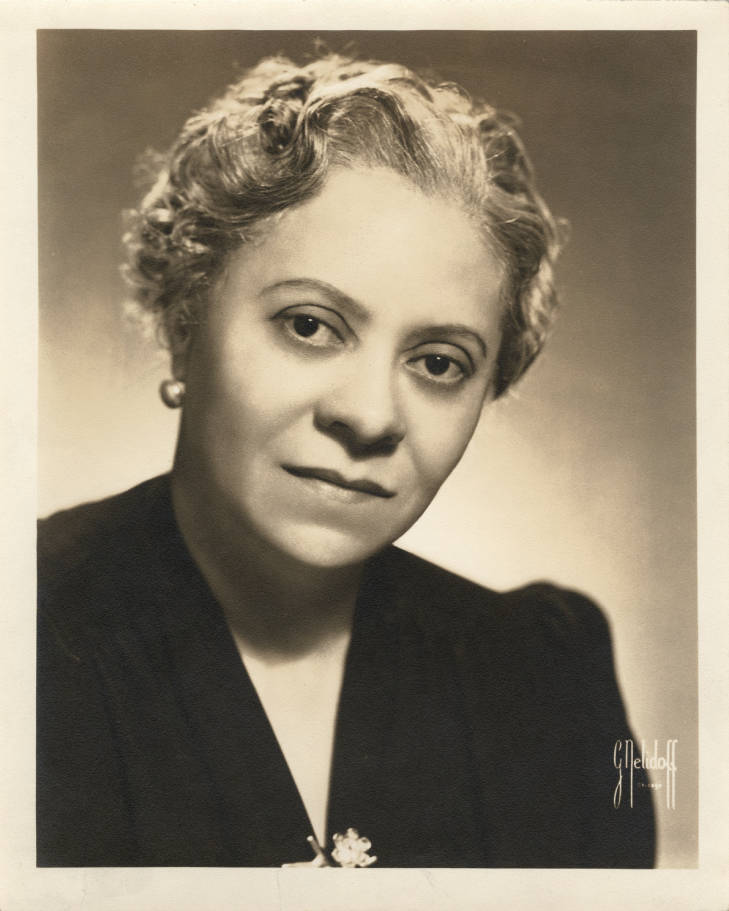
Florence Price

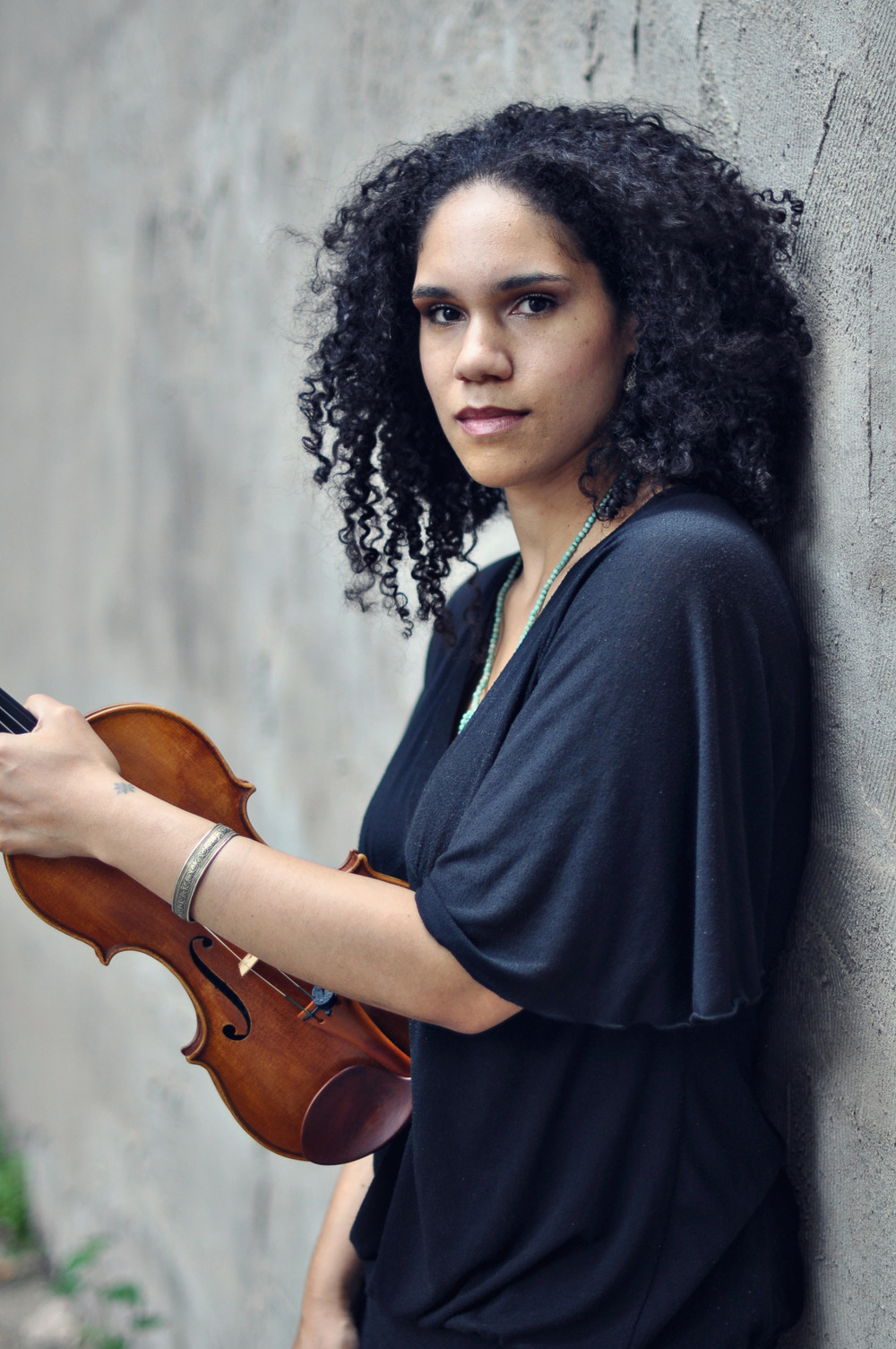
Four in particular, both male and female—Florence Price (1881–1953), George Walker (1922–2018), Samuel Coleridge-Taylor (1875–1912) and Jessie Montgomery (b. 1981)—are popping up frequently in programs, as orchestras scramble to address classical music’s pervasive lack of diversity, in response to the Black Lives Matter movement and widespread calls for racial equality.

Jessie Montgomery

As welcome as they are, will these sudden attempts and inclusiveness last? Are classical musicians and organizations really confronting European male supremacy for the long-haul?

In fact, such diversity initiatives will only last if classical institutions are willing to radically reimagine and revamp an outdated framework, built by and for the white elites.

# # # # #

The lack of diversity in classical music is obvious.

James Bailey

“What I think is needed in the orchestral world is music that is diverse in terms of country, gender, race and modern(ity),” James Bailey, former music director of Boulder’s Dairy Arts Center, says. “In those four areas alone, anyone can look at the data of most orchestras and realize there is a significant lack of diversity.”

In an analysis of 120 orchestral seasons, the Institute for Composer Diversity found that 35 orchestras, including the Colorado Symphony, played no music by women or minorities for the entire 2019–2020 season. The rest mostly hover at or below 15% of the season, though the Chicago Sinfonietta notably stands out at 58%.

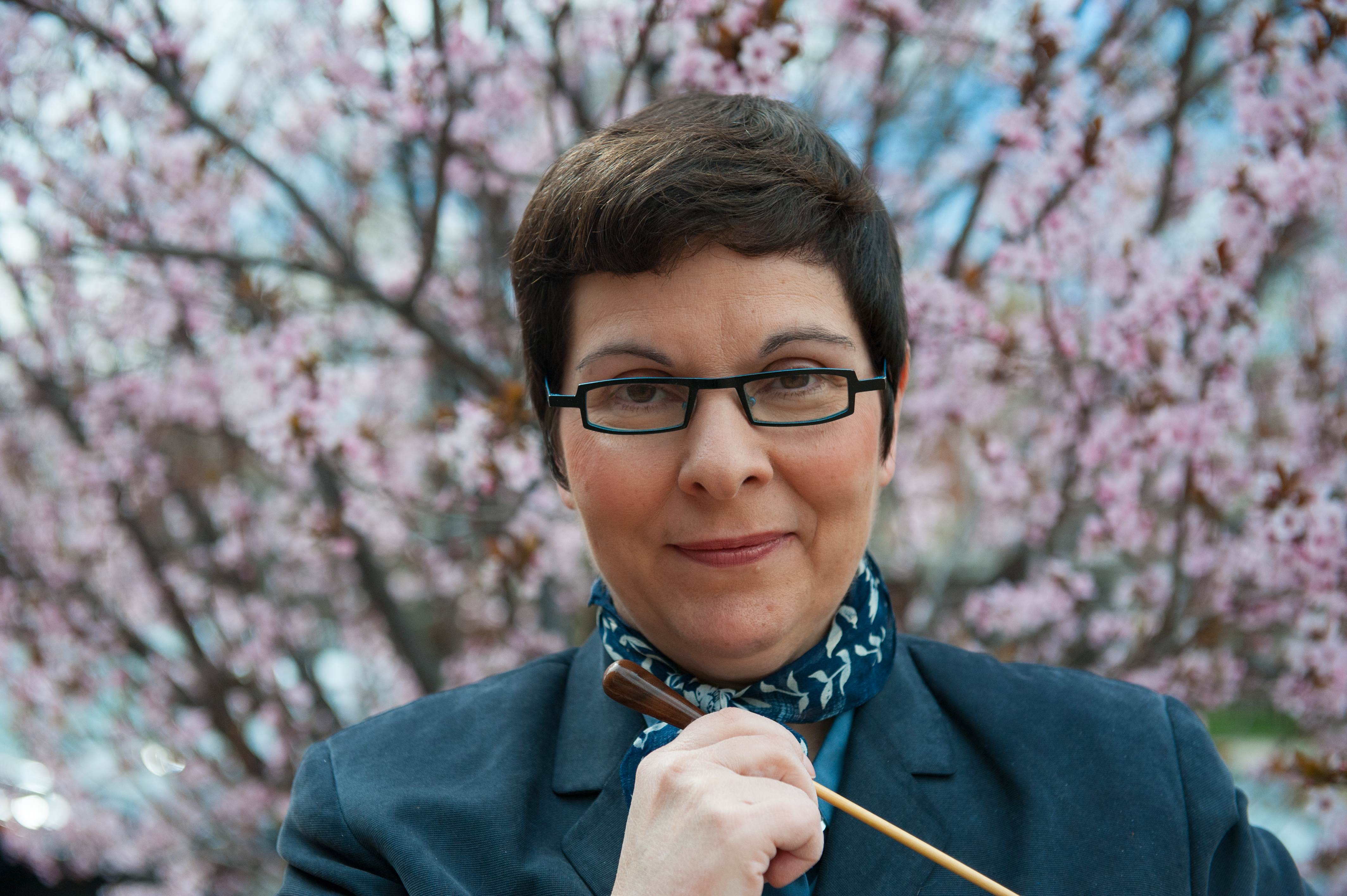
Cynthia Katsarelis, conductor of Pro Musica Colorado. Photography by Glenn Ross.

Locally, 22 percent of the Boulder Philharmonic’s 2019-2020 season featured diverse composers (two pop concerts not included). Pro Musica Colorado Chamber Orchestra stood out. Seventy-five percent of their scheduled 2019-2020 season featured diverse composers, most notably their pre-COVID February concert, “Diverse Voices,” which featured four Black composers, two of them women.

On the whole, though, orchestral programs are filled with white, male composers. According to the League of American Orchestras, the top three composers in the 2010-2011 season were Beethoven, Mozart and Tchaikovsky—all male, all long-dead and all western European. Sound familiar?

So how do classical musicians and institutions tackle this pervasive lack of diversity?

To start, they must adopt a broader understanding of diversity as including anyone of underrepresented racial, cultural and ethnic heritages. It is not enough to chuck in a Black or female composer and declare victory for diversity. True diversity begins when institutions move beyond adding minorities for political correctness to achieve overall inclusivity, in repertoire, in personnel and in audience.

This doesn’t mean throwing out the canon entirely or “canceling” Beethoven; rather it means making programs more equal and representative of both canonical and diverse works. These changes will help to create safe, welcoming musical spaces, where non-white, non-traditional audiences feel acknowledged, represented and understood.

Then, classical musicians need to acknowledge the white racial frame governing their academic institutions and build an updated, diverse curriculum.

CU Prof. Austin Okigbo

“You can’t change it out there,” Austin Okigbo, professor of ethnomusicology at CU-Boulder, says. “People in charge are trained in the white patriarchal system. So you have to change the curricular diversity in the academy.”

This is no small undertaking. Since the 19th century, American music education has thrived on a Eurocentric, German-dominated system of training.

“America always looked to Europe as a source of their cultural inspiration,” Okigbo says. “Black composers didn’t earn the respect they deserved. There was an attitude that this is not artistic enough.”

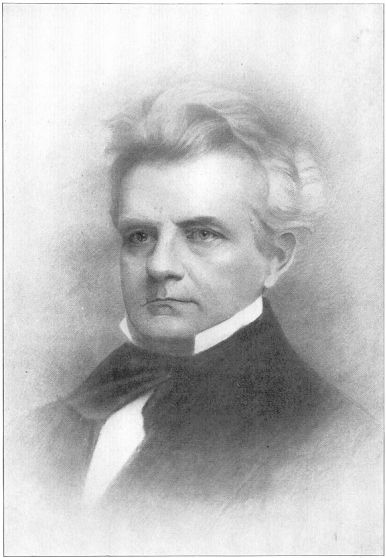
Lowell Mason

Lowell Mason, known as the “father of American music education,” started the trend with his elitist “Better Music Movement” in the 19th century. This movement dismissed American composers, including William Billings, Daniel Reed and Justin Morgan, in favor of European composers, especially Germans.

Music theory in academic institutions also followed Mason’s Eurocentric ideology. Influential music theorists, particularly the German Heinrich Schenker and the Belgian François-Joseph Fétis, viewed music by white, male composers as inherently superior to music by female and Black composers. Schenker wrote that “the man ranks above the woman.” In his Histoire générale de la musique from 1869, Fétis wrote, “Contrary to the other races . . . the white race . . . possesses a sentiment of beauty, of grandeur, and it is to it that we owe the creation of pure art and the progress of science.”

In his presentation “Fétis’s Racial Frame of Tonality,” Thomas Christensen argues that Fétis’s racist philosophies to a large extent shaped his definition of musical greatness. Because only Europeans could make great art, only traditional European tonality could underlay great music. Given this “historical and cultural positioning,” Christensen comments, “Maybe the whole regime of our taxonomic-centered discipline might be due a rethinking.”

# # # # #

Now is a time to dismantle the racism and sexism in music theory and pedagogy and to rethink the curriculum. This begins with raising awareness of the white-male frame.

Music schools need to teach students to confront the concept of genius, masterpieces and greatness as synonymous with white European men, particularly Beethoven and Bach. They need to create a culture of inclusivity in their classrooms and concert halls through diversity in audition requirements, ensemble and solo repertoire, pedagogy, textbooks, faculty and administrators. Ethnomusicology, the study of non-Western music, needs to be cohesively integrated into mainstream music teaching.

If an updated, diverse curriculum were implemented, a new generation of musicians would become more empowered to become active crusaders for diversity in their musical communities. Once these musicians were in positions of power, as educators, conductors, directors and leaders, they would be more likely to program diverse repertoire. Diversity would become a learned habit, rather than an uphill battle against ingrained ideologies.

Yet, even if classical music can overhaul its institutions, will this idealized diverse and inclusive musical world be appealing to audiences? Will audiences pay to hear music by unknown diverse composers rather than their favorites?

“Music is hard to sell if no one’s heard it before,” Bailey says. “Music that we really love is music we have heard hundreds of times.”

The economics of the classical music industry are already tenuous at best. Large classical music organizations often operate at a financial deficit, as ticket sales from a rapidly shrinking and aging audience prove insufficient.

“Lack of diversity has to do with lack of money,” Bailey says. “Orchestras need a large donor and attendance base. If they are programming music that the audience is not familiar or comfortable with, they will lose audience and donors. They don’t want to do that.”

The barrier of conservative audience taste is difficult to overcome. Musical institutions cannot force their audience to choose novelty over comfort, especially given hundreds of years of tradition and precedence.

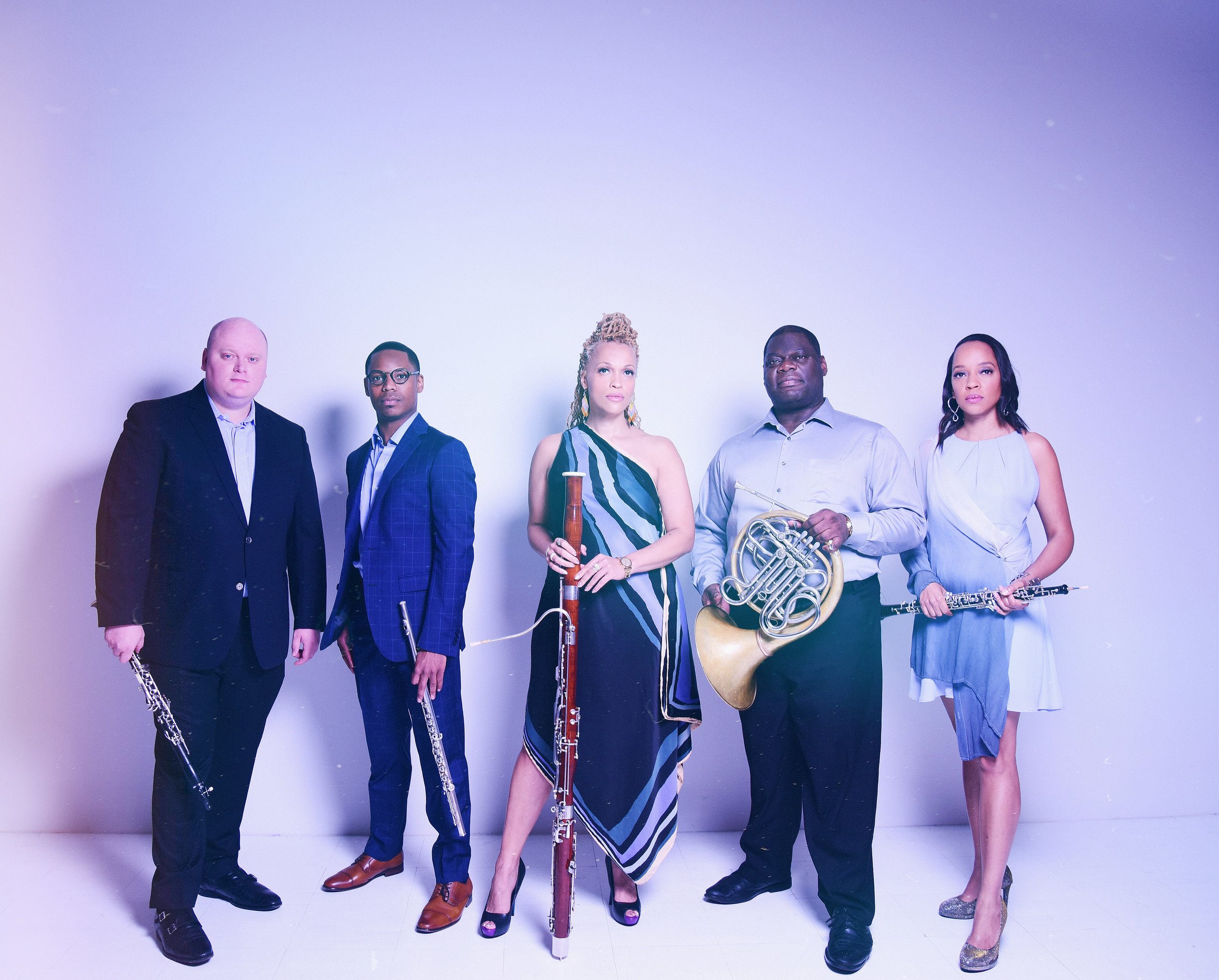
Imani Winds: Diverse in membership and programming

Rather than force-feeding too much diversity to their current audience, classical musicians should refocus their efforts on younger and quickly diversifying future audiences, by playing diverse repertoire in non-traditional, smaller concert venues on a lower budget. Chamber music, which is cheaper and more flexible, is already leading a shift in this direction with groups like Kronos, Imani Winds and the Turtle Island String Quartet.

One simple solution is to slip in diversity with canonical repertoire, in an effort to build familiarity over time, until diverse composers can enter the mainstream consciousness. Orchestras are trying this in 2020, but influencing the audience’s preferences could take decades.

The rapidly growing Asian and Latinx communities will be an important part of this new, younger audience. According to the Pew Research Center, Asian-Americans are the fastest growing ethnic or racial group in the US, growing 72% between 2000 and 2015, to 20.4 million from 11.9 million.

Latinos are the second-fastest growing ethnic or racial group. Their population has increased significantly to 60.6 million in 2020 from 50.7 million in 2010. In 2019, the median age for Latinos was 30, far younger than 44 for whites. And the white population is predicted to experience a gradual decline between 2018 and 2060.

This cultural, demographic shift away from whiteness will require an equivalent shift in the classical music repertoire. A younger generation of Americans are fed up with the canonical status quo and stuffy, elitist classical music. They want to shake up the white-male frame of classical music on Spotify and in the concert halls.

To attract and retain this potential audience, classical music needs to radically diversify its institutions and programming before it’s too late. “Change has been coming,” Okigbo says. “But people are scared. They don’t like change.

“We have come a long way from 100 years ago, but we have to keep evolving. We have to be patient for however long it takes.”

Lessons from virtual conferences

League of American Orchestras, OPERA America go online

By Peter Alexander June 24 at 3 p.m.

I recently “attended” two national conferences of classical music service organizations, the League of American Orchestras (LAO) and Opera America (OA). They were both informative about their fields in these difficult times, but also about the very nature of the conferences themselves. 

Here are a few of the things I learned.

First, we have the technology we need now to be holding meetings online rather than requiring everyone to get together in person. In the 1990s I held a minor post with a scholarly society and from my post of no significance I tried to nudge the powers that were toward making their conferences available online. 

It was (and is) expensive for students to travel across the country to make the contacts necessary to advance their careers. And I foresaw a future when air travel would become more expensive and more damaging to the environment, or when some largely unexpected event would render travel impractical. I thought then, and still do, that everyone would benefit from greater accessibility of the national meetings.

You will not be surprised that I had no influence at all.

But now, both the LAO and OA handled the details of online presentations and panel discussions smoothly. The only glitches came from individual users with compromised internet connections or unfamiliarity with Zoom. There is simply no reason going forward not to make most sessions of future conferences available online.

I understand the value of professional peers getting together for networking and sharing of ideas outside of formal sessions, and the building of relationships through social events. But both organizations reported the highest attendance in their history, with the LAO attendance growing from 2,000 in the first week to 3,700 for the closing session. This shows that there are many members and interested supporters who are unable to attend the national meeting, for financial reasons or conflicting obligations, who would benefit from being able to “attend” the sessions online. Now that LAO and OA have gotten their feet wet with the technology, there is no reason a national meeting cannot be offered in both formats—and in fact, as I understand it, OA has already been doing so. 

Professional and scholarly associations, are you paying attention?

Another lesson from both groups is that while they are attempting to be prepared for the fall, and an eventual re-opening of performances, nobody knows when or how that can be. Plans B, C and D are common, showing the multitude of unfamiliar challenges performers face.

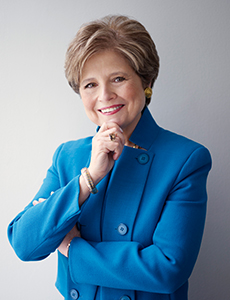
Deborah Borda. Photo by NY Phil.

Deborah Borda, CEO of the New York Philharmonic, estimated that to put an audience in 2,700-seat David Geffen Hall with social distancing, they could admit 387 people. Obviously, no orchestra could pay the bills with such reduced ticket sales. And that doesn’t even get to the issue of how people get in and out of the hall or use the restrooms.

Mark Pemberton, director of the Association of British Orchestras, sounded a similar note, observing that no more than 30 people could be onstage at one time, and most halls have very limited space backstage. There are suggestions of having “bubbles” of musicians, he said, groups that would be tested and associate together but stay removed from other “bubbles.” That’s a creative approach, but it will not solve the problem of 20% capacity in the hall—a number greater than what Borda estimated for Geffen Hall.

The LAO meetings featured discussion about the lack of scientific research into the diffusion of droplets, and therefore of the virus, by wind instruments. Mark Spede, director of bands at Clemson University and president of the College Band Directors National Association, described research sponsored by the CBDNA that is being conducted by CU prof. Shelley Miller. Results of her work will be helpful by the fall, when performing organizations face decisions on resuming rehearsals and performances.

A separate session addressed issues of musician-generated content—either individual performances, or the compilation performances that we all have seen with multiple musicians, each playing from their own space. The challenge of generating professional-level content is extreme. Someone who engineered one performance compared it to being dragged by a train and stuck by lightening at the same time, and another person—a composer—begged “Don’t do it, please! Your life will be much happier.”

Opera America panel discussion on diversity and inclusion (screen shot)

Both LAO and OA offered valuable sessions on the subjects of diversity and inclusion. The LAO session “Out of the Box,” featured minority musicians from around the country. One salient point from this discussion was who gets to define success. To a large extent, it is musicians’ training that determines what “success” will look like, and it is very difficult for individuals to redefine it for themselves. Nevertheless, the panelists agreed that reclaiming control of one’s own narrative is crucial for minority and other musicians working outside the orchestral mainstream.

The most impressive presentation was by Nina Simon of the non-profit organization OF/BY/FOR ALL. Her message is that it is not enough to provide arts FOR under-represented segments of the community; they must be BY and OF that community.

Nina Simon

Simon spoke to both LAO and OA; I saw the OA presentation, which was well crafted, professional, and very powerful. One of her most important messages was that for change to happen, power must be shared. This will make some supporters uncomfortable, she said, but in the end, “comfort is a byproduct of privilege.”

Aaron Flagg

It is no secret that minorities are under-represented in the performing arts. Aaron Flagg, a jazz studies faculty member at Juilliard, speaking on a panel on “Anti-Black Racism and American Orchestras,” pointed to one of the most crucial issues when he said that tokenism is not enough. In hiring or recruiting musicians of color, he said, you must “show your respect for their artistry, not just your need for their color.”

# # # # #

You may access some of the League of America Orchestras sessions at their Youtube Channel.

You may also access the OPERA America sessions at their YouTube channel.

NOTE: The session at which Aaron Flag spoke was corrected at 6 p.m. 6/24. It was “Anti-Black Racism and American Orchestras,” not “Outside the Box,” as originally stated. Other minor editing errors were corrected at the same time.

Macky concert by violinist Josh Bell and pianist Sam Haywood is sold out

Program featuring Mozart, Schubert and Richard Strauss provides food for thought

By Peter Alexander Feb. 4, 12:05 a.m.

Superstars—and there are some in the classical music world—sell out concerts on the basis their names alone.

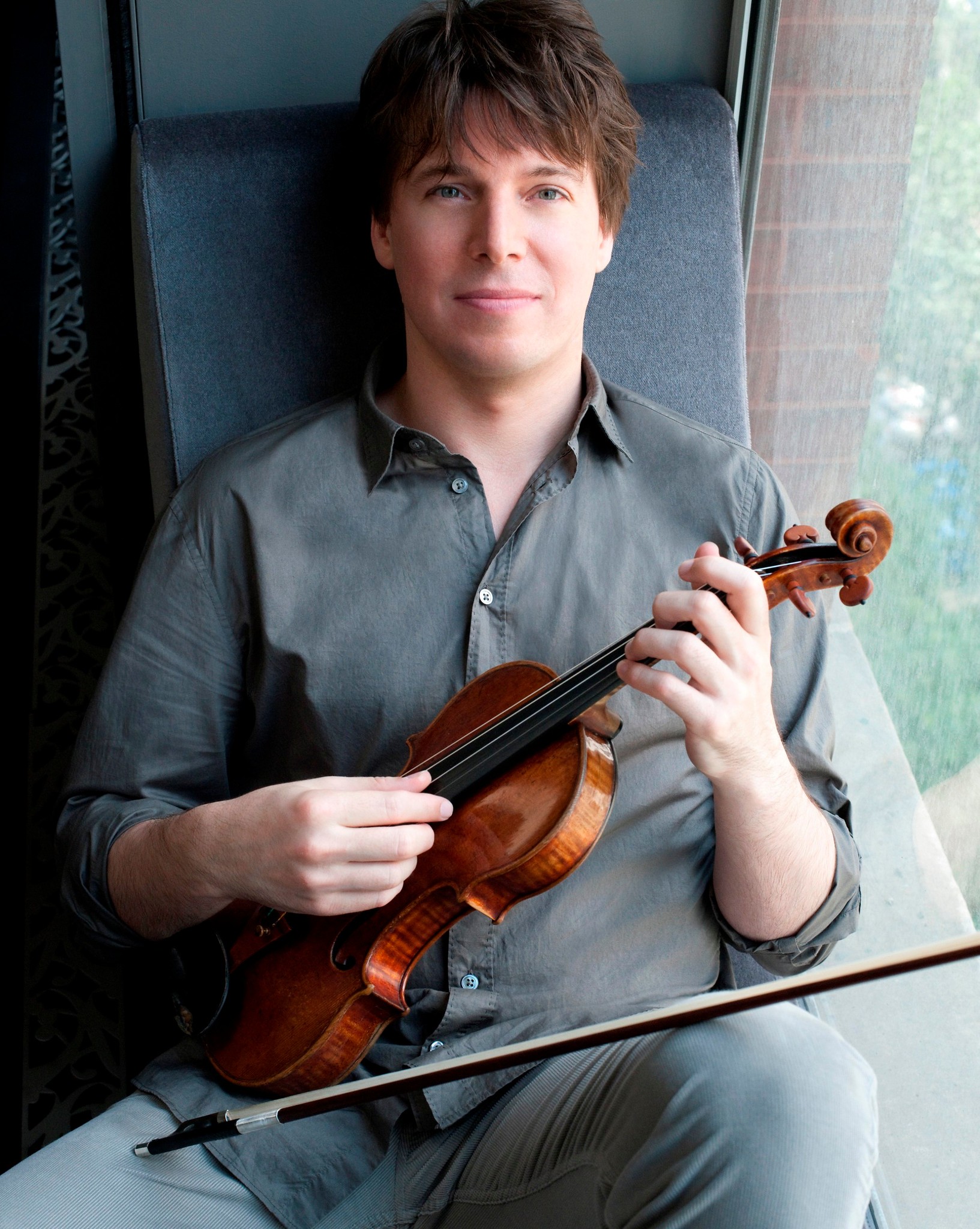
Josh Bell byRichard Ascroft

Josh Bell. Photo by Richard Ascroft.

A year ago, it was Yo-Yo Ma, who sold out a recital in 2000-seat-plus Macky Auditorium long before the performance. This year, Josh Bell has done the same for his upcoming performance with pianist Sam Haywood (7:30 p.m. Friday, Feb. 9). Even though you can no longer get tickets, the program and the event itself are still worth thinking about. I recently spoke with Haywood for his perspective on various aspects of the performance.

Although Bell came to fame as a teen prodigy, Haywood didn’t know him then. Of course he’s aware of Bell’s history, and he see vestiges of that experience in Bell’s playing still. “He manages to keep the freshness and the vitality of that early period (of his life),” he says. “The energy is very much there, and it’s certainly a great pleasure to work with him.”

Sam-Haywood-4

Sam Haywood

Bell and Haywood work together not as star and accompanist but as chamber music collaborators. For example. they often discuss potential concert programs together. “Because he’s so super busy, it has fit in practically, it has to be something that he has time to work on,” Haywood says.

On the other hand, the Strauss Sonata on the Boulder concert was originally something Haywood wanted to play. “We played the Strauss before, and I think the first time was at my suggestion,” he explains. “I always wanted to play the Strauss (because) there’s not a great deal of solo piano music by him.”

Of course Haywood understands that the audience is likely to think of Josh Bell as the star, especially since the concert is billed that way: “Joshua Bell” in large type (no instrument listing necessary), followed by “with Sam Haywood, piano” in small type. But he resists being stereotyped in a subsidiary role.

For the audience “to approach it as if they’re coming to hear a great star with background piano—they will only get 50% of the music,” he says. “I think that’s a shame, because how you prepare yourself to listen is always important. When we play at Carnegie Hall they have us in equal billing. I think when people see that, they think, ‘Aha! We’re going to see a duo performing!’”

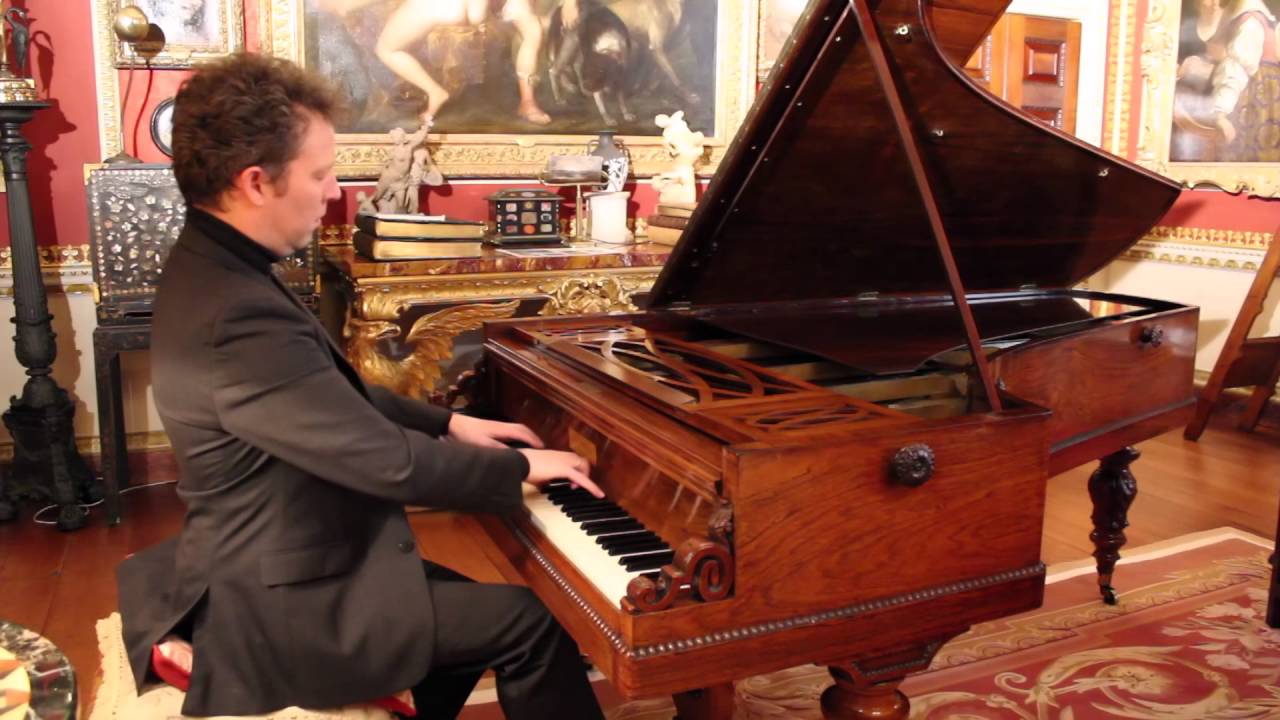
It is useful to know that Haywood does far more than tour with Josh Bell and other solo artists. His career includes solo recitals as well as chamber music, he has founded a music festival in England and composed a children’s opera, among other works. He is fascinated with historical keyboard instruments, and has recorded a CD of music by Chopin on the composer’s Pleyel piano (available through Amazon UK).

Sam Haywood.Pleyel

Sam Haywood playing Chopin’s Pleyel piano.

YouTube videos of Haywood playing historical instruments can be seen here and here.

“I’m very conscious of not wanting to be pigeon-holed,” he says. “I’m just a musician, a music lover, and I love to play all kinds of different repertoire. I was just playing some Wolf lieder with a wonderful soprano, and it’s all just wonderful music to be able to immerse ourselves in.”

One fascinating aspect of the program that Bell and Haywood are playing in Boulder is the way it illustrates the changing character of music for violin and piano over about a century, including a shift in the relationship between the two players.

When Mozart wrote his Sonata in B-flat major in 1784, music for that pairing of instruments was often described as an “accompanied piano sonata,” with the violin in the secondary role. This reflected the fact that Mozart and other composers of the time were first and foremost keyboard players who might perform with students and amateurs who played violin.

Schubert’s Fantasie in C major was written to be performed privately among friends—in a salon, for something like a house concert. Although the piece definitely has some strong, expressive moments, it was largely intended for intimate music-making between friends who would have been on equal footing as players.

The Strauss Sonata, on the other hand, is much more of a concert piece. By the time it was written in 1888, touring virtuosos were common, and Strauss would have expected it to be performed for a public audience, in a concert hall. This music comes closer to being for soloist with accompaniment, although Haywood points out that the sonata is “a lot to get your teeth into” for the pianist. “It’s very orchestral. The textures, the colors, they’re all very vivid. It works very well in a large hall.”

Joshua_Bell_-_Photo_Credit_Marc_Hom-X4

Josh Bell. Photo by Marc Hom.

Which is the final issue we talked about. With the Mozart and the Schubert, music written for small spaces has been taken into a very large hall. That significantly changes the relationship between the performers and the audience.

“It’s very, very difficult,” Haywood says. “ I think you approach the piece in a slightly different way, because you’ve got to think of the poor people right in the back. They’ve got to hear it as well. You’ve got to really be conscious of projecting and painting in quite bright colors.”

He also noted that he has “learned a lot about playing in large halls through playing with Joshua. When we first started to play (together) I hadn’t played in the 2,000-seater (halls) before, and he has this wonderful way of projecting his sound and his personality, with such intensity that he can hold a large number of people.

“That’s something I’ve learned from him.”

# # # # #

Joshua Bell, violin, and Sam Haywood, piano

Mozart: Violin Sonata No. 32 in B-flat Major, K.454
R. Strauss: Violin Sonata in E-flat Major, Op. 18
Schubert: Fantasie in C Major, D.934
Additional works to be announced from the stage

7:30 p.m. Friday, Feb. 9
Macky Auditorium
SOLD OUT

2017: The Year in Classical Music

Some outstanding concerts, and some changes of leadership in Boulder

By Peter Alexander

With the year drawing to a close, it is time to look back at 2017. It has been a tumultuous year in many realms, including some aspects of Classical music. But before that, it is good to remember the outstanding musical experiences of 2017 here in the Boulder area.

Pro Musica

The year began on an expressive high point when Pro Musical Colorado Chamber Orchestra, conductor Cynthia Katsarelis and soloists Jennifer Bird-Arvidsson, soprano, and Ashraf Sewailam, bass, presented Shostakovich’s rarely-heard Symphony No. 14.

I wrote at the time: “This somewhat gloomy meditation on death is not often given live, partly because of the difficult assignments facing the soprano and bass soloists, but mostly because of the difficult subject matter. But it is a major statement from a great composer—what Katsarelis calls ‘a piece that needs to be heard’—and so the rare performances are to be treasured.”

The February visit of Deborah (Call Me Debbie) Voigt to Macky Auditorium will be a cherished memory for fans of the classical voice. Voigt Lessons, the superstar soprano’s candid retelling of her struggles with relationships, substances, and weight that clouded her career not only showed some realities of life at the top of the opera world, it also revealed the very human person beneath the superstar image. For both reasons, this was a meaningful event.

Takasce SQ

Takacs Quartet

The Takacs Quartet always provides some of the year’s best performances. It’s hard to chose just one, but for 2017 I would single out their February concert including Beethoven’s Quartet in G major, op. 18 no. 2—performed while the Takacs was in the midst of a full Beethoven cycle at several venues—and CU music faculty Daniel Silver, clarinet, playing the Brahms Quintet in B minor, op. 115. An especially beautiful rendering of this beautiful work had at least one audience member in tears by the end.

March saw the arrival of another superstar in Boulder when Sir James Galway played at Macky Auditorium, and the departure of an important member of Boulder’s classical music community when Evanne Browne gave her farewell concert with Seicento Baroque Ensemble, the organization she founded in 2011.

BPhil.onstage

Boulder Phil at Kennedy Center

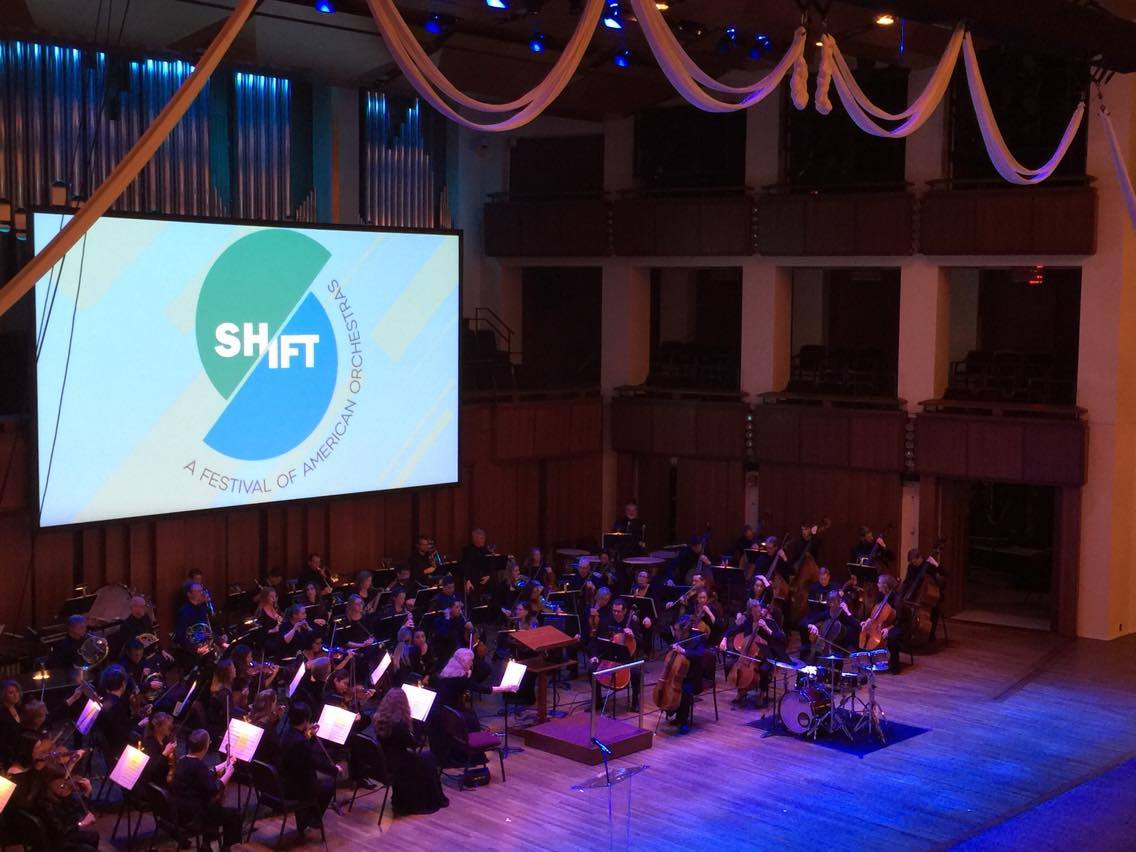
One of the biggest events of the year for Boulder performing arts was the visit in March of the Boulder Philharmonic Orchestra, conductor Michael Butterman and Frequent Flyers Aerial Dance Company to the Kennedy Center in Washington, D.C., for the first annual Shift Festival of American Orchestras. The Phil repeated a concert they had given in Boulder a few days earlier, including the world premiere of All the Songs that Nature Sings by Stephen Lias and Copland’s Appalachian Spring, performed with Frequent Flyers.

An audience favorite of the festival, the Boulder Phil played to a sold out house. Butterman wrote the next day, “It was a peak experience for me, and, I think, for all of us at the Phil. . . . To be there with our orchestra, with that crowd and with that repertoire—it was something I shall never forget. We had a great sense of pride in representing our hometown.”

Several important changes of personnel were announced for Boulder classical scene in the spring. In April, Jean-Marie Zeitouni announced that he was stepping down as music director of the Colorado Music Festival. He will remain with CMF as principal guest conductor, and conductor/violinist Peter Oundjian will serve as artistic advisor for the 2018 season. Later the same month, James Bailey left his position as music curator of the Dairy Arts Center, to be replaced by Sharon Park.

Elliot Moore at Lake McIntosh - credit - Photography Maestro (1)

Elliott Moore

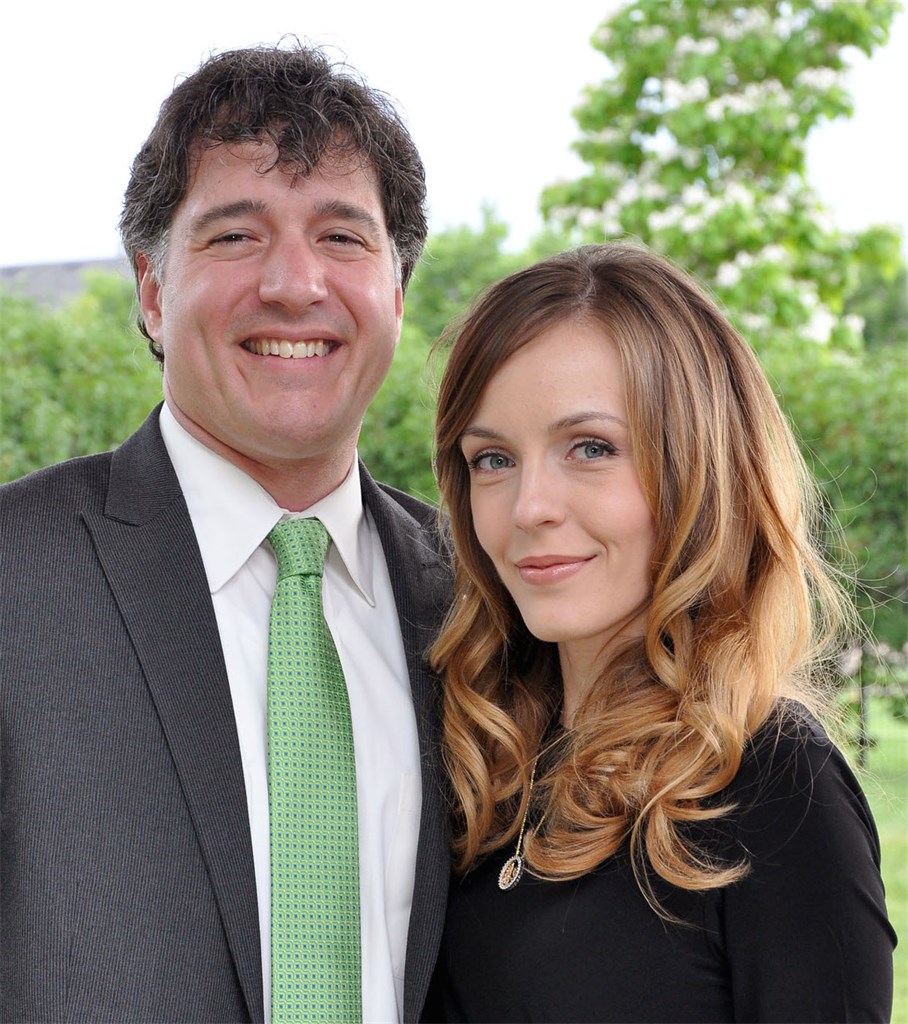
In May, Seicento Baroque Ensemble announced the appointment of Kevin T. Padworksi as artistic director, succeeding Browne, and the Longmont Symphony announced the appointment of Elliot Moore to succeed long-time music director Robert Olson.

The same month, the Boulder Chamber Orchestra wrapped up its 2016–17 season with its largest performance to date, Beethoven’s Ninth Symphony presented in Macky Auditorium. The performance under conductor Bahman Saless was unfortunately the occasion of a protest by the anti-fracking group East Boulder County United. Seven members of EBCU blew whistles, shouted slogans and left flyers before the concert to voice their opposition to the orchestra having accepted a contribution from Extraction Oil & Gas.

Olga Kern

Olga Kern, photographed by Chris Lee at Steinway Hall.

Zeitouni proved to be anything but a lame duck conductor at the Colorado Music Festival. The 2017 season started at the end of June with an all-Russian program featuring exciting performances of Shostakovich’s Festive Overture and Rachmaninoff’s Second Symphony. On the same concert, one of Boulder’s favorite guest artists, pianist Olga Kern, gave scintillating performances of Prokofiev’s First Piano Concerto and Rachmaninoff’s Rhapsody on a Theme of Paganini.

Other high points over the summer included the return of CMF’s founding director Giora Bernstein to lead a concert of Mozart, Zeitouni conducting Beethoven’s Ninth as the CMF centerpiece, and the visit of violinist Gil Shaham at the end of the summer season. Up in the mountains, Central City Opera’s Downton-Abbey-inspired Victorian-era production of Mozart’s Così fan tutte was one of the year’s highlights for opera lovers.

Another delight for the opera crowd came in the fall, with the CU Eklund Opera Program’s serio-comic production of Lehar’s Merry Widow. In November, Saless and the Boulder Chamber Orchestra returned to its core repertoire with a lively concert featuring two youthful works for smaller ensemble: the Concerto for piano, violin and strings by the 14-year-old Mendelssohn, with violinist Zachary Carrettin and pianist Mina Gajić, and Janáček’s Idyll for Strings.

Zachary & Mina

Carrettin and Gajic

Carrettin and Gajić were featured performers in December when the Boulder Bach Festival gave one of its most intriguing and adventurous concerts in its increasingly adventurous schedule. With guest artist Richie Hawley, the program offered insight into the instruments and performance practices of the early 20th century, performed on Hawley’s 1919 Buffet clarinet, Gajić’s 1895 Érard piano, and Carrettin’s violin set up with strings typical of the period.


# # # # #

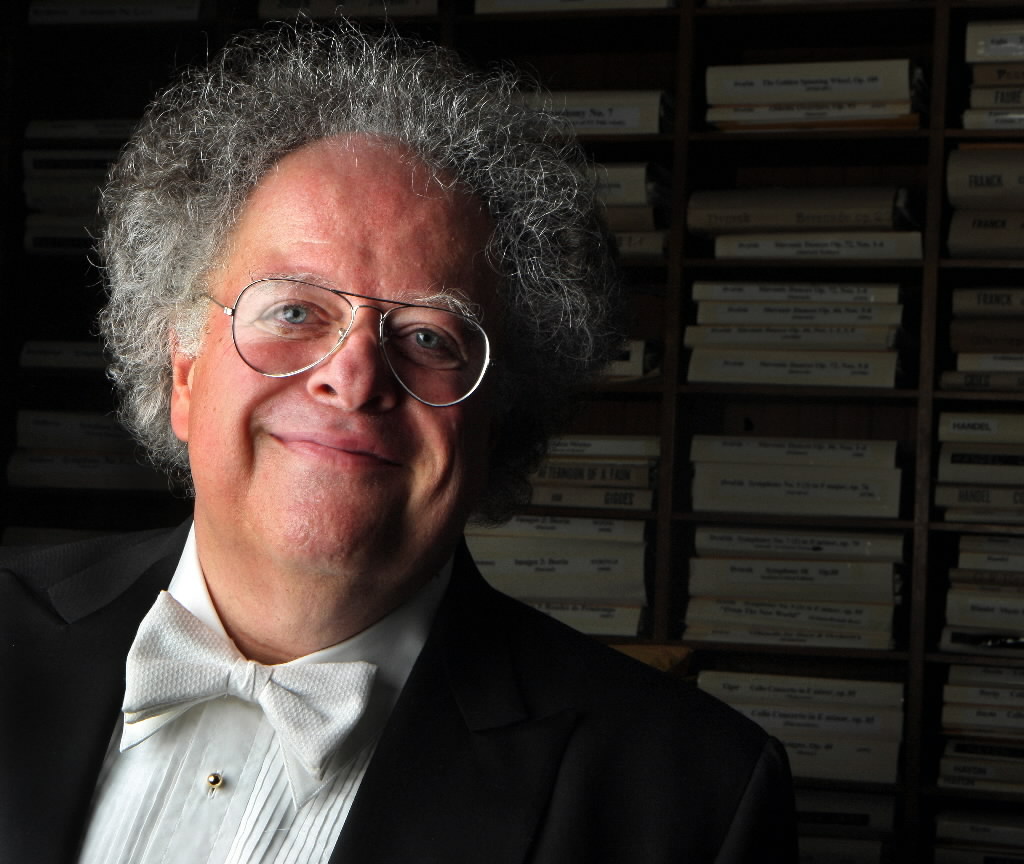
For the classical music world outside of Boulder, the biggest news was certainly the intrusion of a long-overdue reckoning for sexual misconduct that is going on in our society generally. The first bombshell, not unexpected by people in the business but a bombshell nonetheless, landed Dec. 3 with the suspension of conductor James Levine from the Metropolitan Opera and other organizations, including the Boston Symphony and the Ravinia Festival. Accusations against Charles Dutoit, artistic director and principal conductor of the Royal Philharmonic Orchestra in London, surfaced later in the month.

levine

James Levine

Both conductors are in the twilight of long careers. Rumors about Levine have been widely known in the classical music world; indeed I first heard them in the 1980s. Every music journalist I know has heard the same stories, but so far as I am aware, no one who experienced Levine’s assaults was previously willing to speak publicly. In the case of Dutoit, I had not heard the rumors, but I do know one of the women who spoke publicly about what happened to her, and I believe her unquestioningly.

As the controversy has swirled about the subject of sexual abuse, harassment and assault in classical music, several critics have written powerfully about the subject: Anne Midgette of the Washington Post, Jennifer Johnson of the Guardian, Andrew Riddles of Classical Ottawa to name three. Singer Susanne Mentzer has written about her personal experiences in the opera world for the Huffington Post, as has Dan Kempson for Medium.

There are certain to be more revelations. One major journalist has more first-hand information, with names including some of the of the most famous classical artists, and is preparing an article. I have no doubt that several men are nervously awaiting that story, or some other revelation that reveals past misdeeds.

Will this tidal wave reach Boulder?

It’s hard to say with certainty. I have spoken with many on the classical scene here, and the only rumor I have heard, from several sources, has been of inappropriate comments and behavior by one person, none of which reached the level of abuse or assault. “He might not have been hired today,” one person speculated, but as so often happens, the people who heard the comments preferred not to make an issue of it.

Another person told me he had never heard any rumor from the College of Music, so Boulder may escape the worst of this necessary but unhappy process. In the meantime, it is my wish for 2018 that society in general and the music world specifically create a safe environment, where powerful men do not feel free to behave like adolescent boys.

___________

Edited for clarity 12.31.17

Finding Lessons in a Fiasco

What can we learn from the collapse of the Colorado Masterworks Chorus?

By Peter Alexander

The collapse of the Colorado Masterworks Chorus (CMC) last month, and the story of the unpaid musicians the organization left behind, were reported in several media at the time (see the Boulder Daily Camera and Denver CBS 4).

The CMC was formed in 2016 and gave its first performance during the summer, presenting the Brahms Requiem under conductor Evanne Browne. In October 2016, the CMC appeared with the Pro Musica Colorado Chamber Orchestra and conductor Cynthia Katsarelis in two performances of Haydn’s Creation.

Their next performances were March 3, 2017, in Denver and March 4 in Boulder, when they presented Handel’s large-scale oratorio Israel in Egypt. For those performances, the CMC engaged a chorus, some of whose members had written contracts and were paid for their performances, as well as soloists and an orchestra. The performances were led by conductor Vicki Burrichter, who also had a written contract as artistic director and was paid.

However, the orchestral musicians, including Katsarelis as concertmaster, and others who were involved in the preparation and performance of the oratorio did not have written contracts, and were not paid.

Michael Madsen, the organizer and board chairman of the CMC had expected ticket sales and a silent auction to cover most of the costs of the performance, but they fell far short of expectations. With somewhere between $12,000 and $16,500 in unpaid bills, Madsen filed dissolution papers with the Colorado Secretary of State’s office to abolish the organization, and ambitious plans for several future performances were cancelled.

That was the situation at the end of March, when the news stories appeared about CMC’s collapse. Today little has changed, and many of the musicians remain unpaid. Musician Relief, a campaign through Colorado Gives that aims to solicit private gifts to pay the musicians, has so far raised about half of its $16,500 goal.

From the money that has been raised, some of the musicians who performed with the CMC have received funds to make up for their loss. As freelance musicians, many of them depend on income from performances to pay their basic expenses, and some of the players had incurred expenses for travel and/or babysitting.

People involved in the performances have expressed differing opinions on how the CMC handled its business and why it broke down. I do not wish to throw fuel on dying embers by going over those disagreements. Nor do I wish to give a forum for accusations against any individuals. More important is a larger question: What does this mean for musicians and musical organizations in the Boulder area? What can we learn from what happened?

From talking with people directly involved in the CMC and its collapse, I found five major lessons for other arts organizations, for their board members, and above all for musicians.

It is very difficult, and takes time, to establish a new arts organization. Anyone who wants to do so needs to have a solid financial plan extending for two or more years, until the organization can qualify for grants. Most arts organizations make no more than 1/3 of their costs from tickets and other sales, with the other two thirds coming from supporters’ contributions and grants. Without one of those three legs, organizers need to be prepared for initial deficits.
mike-tuba

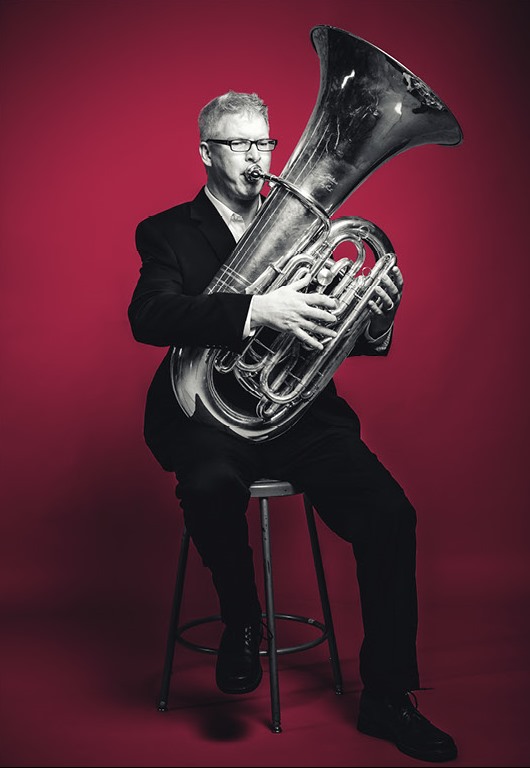
Michael Allen, president of Local 2623, Denver Musicians’ Association

Few new arts organizations survive. Michael Allen, the president of Local 2623 of the Denver Musicians Association, has seen this firsthand. “Any time I see a new group, I’m thinking, ‘Why?’” he says. “It really doesn’t make any sense, unless there is a unique point of view. There are a couple of groups that have cropped up in the last decade that have that unique point of view, but they’re in the minority.”

Among the issues making survival difficult is the fact that Boulder is already saturated with musical organizations. There is a great deal of competition for dates, and many weekends see multiple events competing for the same audience. For just one example, early in April there were events in Boulder and Longmont by Pro Musica Colorado Chamber Orchestra, the Boulder Chamber Orchestra chamber series, the Boulder Symphony, the Boulder Opera and the Longmont Symphony, all on the same Saturday evening.

Madsen seems to have underestimated the competition for the group. He complains about the Boulder Film Festival that was the same night as the Handel performance in Boulder, although those may not have been the same people that would have attended a Handel oratorio. But even more challenging than direct conflicts with performance dates is the competition for audience interest and financial support. There are many organizations to support in Boulder, and established patterns of support are very hard to change.

Madsen expected that the quality of the group would be enough to capture support. “I thought we could get by [the competition] by getting the best singers in the front range,” he says. “The chorus was superb, but I was wrong about that, because very good, extremely prepared doesn’t bring the (audience) in here.”
vicki mhc picture

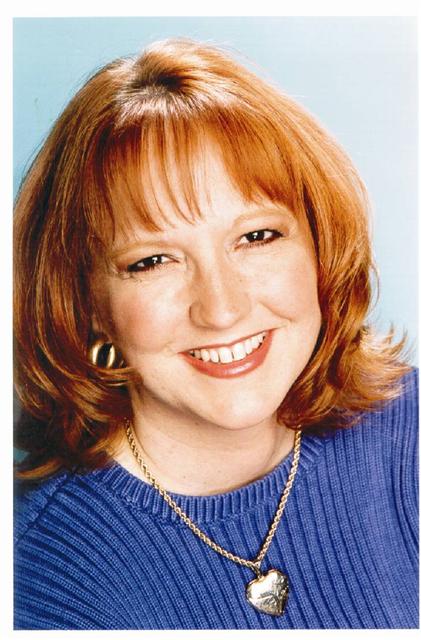
Vicki Burrichter conducted performances of handle’s Israel in Egypt in March

Most people seem to agree with Madsen that the chorus was superb. “It was an excellent chorus, “ Burrichter says. “When you get professional level voices, it automatically raises the level of the chorus. We had a great time and the Handel was spectacular.”

That level of quality may attract attention, but one spectacular performance is not enough to change people’s patterns of support overnight, which is what Madsen was counting on. When that failed to materialize, the organization was left with bills it could not pay. Or as Burrichter says, “It was very, very beautiful and moving, but unfortunately it was on the backs of the instrumental musicians.”

Consult with people who know the business. Several of Madsen’s expectations were unrealistic, as he himself now admits. “Always before when we had done this, we were doing it for larger organizations,” he says. That experience led him to overestimate how much money the CMC would bring in during its first years. For example, Madsen hoped the silent auction would bring in a significant amount of money toward the cost of the performances.

“We were hoping for a $15,000 auction,” he says. That estimate was based on his experience with a refugee ministry, but that is very different than raising money for an arts organization. For her part, Burrichter recognized the problem. “As somebody who’s been artistic director with boards that have done silent auctions, I could tell pretty early on that the silent auction was not going to be successful,” she says. “There were just a lot of errors.”

The $10,000 that Madsen budgeted for ticket sales was also unrealistic. By reports, the Handel performance in Denver had an especially small audience. “I could have told him, having been a musician in Denver for 10 years, that you’re not going to build an audience in Denver overnight,” Burrichter says.

Once again, more caution and better advice would have prevented unrealistic budgeting. “No musical event is paid for by ticket sales and one very humble fundraising attempt,” Katsarelis says. “A little bit of research and planning would have exposed the flawed nature of the plan. They just didn’t know what to expect because they hadn’t asked people who know.”

Everyone involved must understand and follow non-profit laws and best practices. This may be the most contentious area of disagreement among the people involved in the CMC: whether it was run with appropriate board oversight, or Madsen made decisions on his own. For his part, he says only “my wife and I were simply on the board.”

KathyKucsan

Kathy Kucsan spoke with people affected by the CMC’s collapse

Kathy Kucsan, a consultant who works with arts organizations in Colorado, has spoken with some of the people affected by the CMC’s dissolution. “It sounds like the board of directors wasn’t really a functioning board,” she says. “The board has legal and fiduciary responsibility for the organization.

“From my point of view I would say set up your organization properly” is the most important lesson to be learned.

An attorney would have to clarify the legality of actions that were taken, and no one has claimed that laws were broken. However, several issues have cropped up in background conversations about the CMC that, if true, would be violations of good nonprofit governance. Three are particularly troubling.

The first is that board members were not given enough information on the finances and business practices of the organization. Burrichter says that Madsen “didn’t tell the board what was going on in terms of finances beyond certain very basic things. I’m sure the board didn’t know that (the instrumental musicians) didn’t have contracts.” That information is well within the board’s area of responsibility and if they were not kept informed, they should have been.

Second, Burrichter says that she was excluded from most board meetings, where she could have offered advice that would have prevented some of the miscalculations leading to the CMC’s failure. “I requested to go to a board meeting at one point, but (Madsen) said no, I just want to you to come once a year to talk about the artistic vision.”

It is extremely unusual that an artistic director, who is asked to carry out the objectives of the organization, would not be present and offer advice at meetings where the decisions are made. In hindsight, Burrichter says, “I should have insisted that if I were not going to be on the board, I would not take the job.”

The final question that has been raised is whether the dissolution of the CMC was done properly. This requires action by the board and should not be done by any one individual. Madsen says that he carefully followed a “20-point checklist” from the Secretary of State’s office for dissolving the organization, but has offered no more details.

None of the board members was willing to speak on the record, but I have heard from numerous people close to the organization and the board that, as one person who asked not to be named wrote to me, “The board was just as shocked as everyone else that the Madsens dissolved the chorus.”

These questions show how important it is for anyone who is thinking of starting a nonprofit group, or for anyone who is asked to serve on a nonprofit board, to do their homework. “There are so many resources for brand new nonprofits,” Kucsan points out.

For example, the Colorado Nonprofit Statutes are easily available online. There are simplified guides to the statutes here and here, and the Colorado Nonprofit Association has posted Principles and Practices for Nonprofit Excellence.  Other resources are easy to find through online searches.

Too often, supporters are asked to serve on a board without adequate understanding of the responsibilities of board members. In the case of the CMC, it is possible that better preparation and understanding by all the board members, including Madsen, would have prevented some of the problems that occurred.

Freelance musicians need to protect themselves from being exploited. This may mean that they may no longer be willing to play without a written contract. One way to accomplish this of course is to go through the musicians’ union for all engagements.

That is clearly the preference of Allen and the union local in Denver. “We sent a fairly strong message to the union musicians that participated in that production that if they want their union to step in for them, they need to do things under union rules,” he says. “That includes both playing for scale and only working under a contract.

“If a contract had been filed, the union would have paid the musicians and then we would have used our resources to go after the Colorado Masterworks Chorus to seek reimbursement. That was sort of an expensive lesson for (the musicians) to learn.”

In the past, union musicians who took jobs below union scale would have been punished by the local, but Allen says that is not the approach today. “What we try to do is treat this as a teachable moment,” he says. “This is an opportunity to inform a larger group of people about not only what the union could have done, but also why we have the rules that we have.”

With or without the union, it is likely that musicians in Boulder will be more reluctant to take jobs without written contracts. “This is where I think things in Boulder are going to change,” Katsarelis says.

“We’ve always gone on trust, and it’s been reasonable to do that. But (after this) I think that organizations and musicians are going to tighten up and require contracts, instead of the trust method. I don’t think I’m going to play a gig like this again, that isn’t contracted through the union.

“That means they’ll have to pay union scale, which is higher than the kind of prevailing rate, and this is going to stretch the budgets of organizations that hire professional musicians.”
cynthia

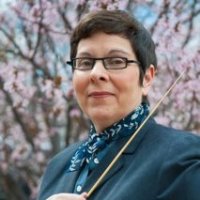
Cynthia Katsarelis, artistic director Pro Musica Colorado and concertmaster of the Handel performances.

Katsarelis says that one final lesson is for everyone who is interested in, attends, or supports musical performances to understanding the real cost of musical performances. “Professional music making in our region is underfunded,” she says. “I wish we could make a stronger case for what high quality professional music making brings to a community.

“This awful debacle that robbed some of the region’s most compelling musicians asks the community to respond in several ways. We have a fundraiser to right that injustice, but there also has to be a response to what high quality professional music making really costs and the value it brings.”

At the end of the day, Kucsan says, “It’s just unfortunate, and it’s a learning experience for everybody involved. You actually have to try, and ask, and sweat the first couple of years, and if you’re still here, there’s a place for you. But to pack it up and leave people in the lurch is not the way to do it.”

You may make a contribution to help the musicians who were not paid by Colorado Masterworks Chorus at the Colorado Gives Musician Relief page, sponsored by the Pro Musica Colorado Chamber Orchestra.

NOTE: Edited for clarity and correction of typos 4/26.

NOTE: Upon reflection, I have now blocked further comments on this article and removed all comments naming or blaming others in the dispute between the musicians and the organizers of the Colorado Masterworks Chorus. No purpose is being served by finger pointing on this site.

I believe there are two important issues for readers, and I will remain focused on those:

  1. Lessons can be learned from this fiasco. That was the focus of my article, and I believe it remains the main subject of interest for anyone who was not directly involved.
  2. Musicians who gave their time and talent, and whose livelihoods depend on their professional activities, remain unpaid. I urge anyone who is concerned with the health of Boulder’s musical scene to make a contribution through the page listed above.