2015 in review

The WordPress.com stats helper monkeys prepared a 2015 annual report for this blog.

Here’s an excerpt:

The concert hall at the Sydney Opera House holds 2,700 people. This blog was viewed about 14,000 times in 2015. If it were a concert at Sydney Opera House, it would take about 5 sold-out performances for that many people to see it.

Click here to see the complete report.

Remembering those who are no longer with us

A year-end list of musicians we lost in 2015, but who left much behind to be grateful for

By Peter Alexander

Here is my annual list of musicians who passed in the last year. This is a personal list; it includes people who were recognized worldwide as great artists, as well as people whose work I admire and respect, and people I was fortunate enough to know personally.

But they all deserve to be remembered as we turn the corner into 2016. Each affected a great many people, whether other musicians or members of audiences around the world. And we should not forget that each was a person who left friends, family, students and others who were touched deeply by their lives.

May you all rest in peace. And may we all try to be worthy of your various legacies in the coming year.

January 19: Ward Swingle, founder and arranger for the Swingle Singers, 87
February 1: Aldo Ciccolini, Italian-born French pianist, 89
February 16: Lesley Gore, popular singer best known for the proto-feminist anthem “You Don’t Own Me“ and “It’s My Party,” 68
March 24: Soprano Maria Radner, 34, and baritone Oleg Bryjak, 54, who died on the Germanwings flight that was crashed in the Alps days after singing in Wagner’s Siegfried in Barcelona
April 3: Andrew Porter, longtime influential music critic for The New Yorker as well as The Financial Times and other publications in England; also known as a librettist, scholar and editor, 86
May 14: Blues legend B.B. King, 89
May 31: Nico Castel, comprimario tenor at the Metropolitan Opera who was best known to many opera singers as one of the foremost diction coaches of the 20th century, 83
June 2: Günther Schneider-Siemssen, German opera stage designer, 88
June 13: Ronald Wilford, American artist agency manager and executive, 87
June 21: Gunther Schuller, American composer, conductor, teacher and author, known for coining the term “third-stream” for music that was between classical and jazz, 89
July 10: Jon Vickers, Canadian tenor known for singing Siegfried and other Wagnerian heldentenor roles, as well as many other leading tenor roles, 88
June 11: Great jazz saxophonist and innovator Ornette Coleman, 85
July 15: Alan Curtis, American harpsichordist, conductor and scholar, 80
July 26: Vic Firth, percussionist and timpanist with the Boston Symphony 1952–2002, familiar to anyone who attended Boston Symphony Orchestra performances, and the many who watched BSO television broadcasts, during those years, 85
September 17: Sir David Willcocks, British choirmaster, director of the Choir of King’s College, Cambridge, 95
November 10: Robert Craft, American classical music writer, conductor, and amanuensis to Igor Stravinsky, 92
November 21: violinist Joseph Silverstein, concertmaster of the Boston Symphony for 22 years, and conductor with several orchestras, 83
December 2: John Eaton, a composer known for working with quarter-tones—the pitches midway between the chromatic halfsteps of our more familiar scales—and composition professor at Indiana University and the University of Chicago, 80
December 19: Kurt Masur, conductor of the Leipzig Gewandhaus Orchestra who in 1989 played an important role in the peaceful resolution of demonstrations in the former East Germany; also led the New York Philharmonic 1991–2002, 88


‘Tis The Seasons, north and south

Zachary Carrettin joins the BCO for Vivaldi and Piazzolla

By Peter Alexander

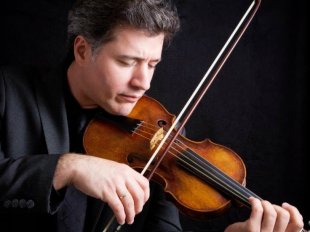
zacharycarrettin

Zachary Carrettin

The next performance of the Boulder Chamber Orchestra will transport listeners to 18th-century Venice and 20th-century Buenos Aires, and several points in between.

The program, “The Seasons,” will feature two of Vivaldi’s Baroque-era Four Seasons and equivalent works from Astor Piazzolla’s tango-inflected Four Seasons of Buenos Aires, as well as music depicting a late-night stroll in Madrid and the hustle and bustle of a Metro stop in Mexico City.

Also on the concert, to be presented at 7:30 p.m. Friday in Boulder and Saturday in Broomfield, will be Introduction, Aria and Presto by the late Baroque Italian composer Benedetto Marcello. The violin soloist for Vivaldi and Piazzolla will be Zachary Carrettin, director of the Boulder Bach Festival.

“We wanted to have some variety,” says Bahman Saless, director of the BCO. “This one will be fun!”

Read more at Boulder Weekly.

# # # # #

The Seasons

1449254846569Boulder Chamber Orchestra, Bahman Saless, conductor, with
Zachary Carrettin, violin

Javier Alvarez: Metro Chabacano
Luigi Boccherini: Night Music from the Streets of Madrid
Antonio Vivaldi: Autumn and Winter from The Seasons
Benedetto Marcello: Introduction, Aria and Presto
Astor Piazzolla: Spring and Summer from The Four Seasons of Buenos Aires

7:30 p.m. Friday, Dec. 4, First United Methodist Church, 1421 Spruce St., Boulder
Tickets

7:30 p.m. Saturday, Dec. 5, Broomfield Auditorium, Broomfield
Tickets


Ars Nova Singers celebrate the holidays with “Happiness and Cheer”

Music from Gregorian chant to ‘A Charlie Brown Christmas’

By Peter Alexander

“Happiness and Cheer,” the 2015 edition of Ars Nova Singers’ annual holiday concert, will offer music from Gregorian chant to A Charlie Brown Christmas.

And at least five centuries of music in between.

Ars Nova — the name means “New Art” and is taken from a style of music that was new in the 14th century — has been performing music from both ends of the historical spectrum for 30 years.

“We’ve prided ourselves on the fact that we do early music as well as contemporary music,” says Thomas Edward Morgan, the group’s founding director. “Our Christmas concert, when we reach our widest audiences, is meant to give them a range of what we do.”

Chronologically, that range runs from the 13th-century “Song of the Nuns of Chester,” through music of the Middle Ages and Renaissance, to 20th-century Christmas pieces by Rachmaninoff, Poulenc and Holst, and ending with music and arrangements by Morgan. Almost all will be new to the audience.

There will be four performances of the program, in Englewood (Dec. 12), Denver (Dec. 13) and Boulder (Dec. 17–18). Ars Nova will sing unaccompanied under Morgan’s direction, with oboist James Brody appearing as a guest artist for a portion of the program. (Note: Other Holiday concerts are listed here.)

Read more at Boulder Weekly.

# # # # #

Happiness and Cheer: Christmas with Ars Nova
Ars Nova Singers, Tom Morgan, director, with James Brody, oboe

 pondreflect•2 p.m. Saturday, Dec. 12, Bethany Lutheran Church, 4500 E. Hampden Blvd., Englewood
•3 p.m. Sunday, Dec. 13, St. Paul’s Lutheran Church, 1600 Grant St., Denver
•7:30 p.m. Thursday & Friday, Dec. 17 & 18, St. John’s Episcopal Church, 1419 Pine St., Boulder

Tickets

# # # # #

A selected listing of classical-music Holiday events in the Boulder area can be found here.

NOTE: Edited on 3 Dec. to correct typos and errors introduced by copying from one format to another.


Takács-Nagy: home again, after 20 years

As a conductor, leading the Irish Chamber Orchestra in Bartók, Haydn, and cello concertos

By Peter Alexander

Gábor Takács-Nagy. Photo courtesy of CU, Boulder.

Gábor Takács-Nagy. Photo courtesy of CU, Boulder.

Gábor Takács-Nagy is coming home.

The founding first violinist of CU’s resident Takács Quartet lived in Boulder for six years, 1986–92, until a hand problem forced him to withdraw from playing. He returns to Boulder Friday as a conductor, leading the Irish Chamber Orchestra (ICO) in a concert of music by Haydn, C.P.E. Bach and Bartók (7:30 p.m. Friday, Nov. 6, in Mackey Auditorium).

Takács-Nagy’s place in the Takács Quartet was taken in 1993 by English violinist Edward Dusinberre, who remains the quartet’s first violinist. Of the original quartet, violinist Károly Schranz and cellist András Fejér remain.

The Nov. 6 concert will also feature cellist István Várdai playing Haydn’s Cello Concerto in C major and C.P.E. Bach’s Cello Concerto in A major, Wq. 172. Also on the program are the Symphony No. 49 in F minor by Haydn (“La Passione”) and the Divertimento for String Orchestra by Bartók.

“The Irish Chamber Orchestra are really good, close friends, all of them in the orchestra,” Takács-Nagy says. “The orchestra is fantastic with this (program). I’m really very happy to go back to Boulder after so many years. It will be a homecoming. We will have a dinner after, and I’m so happy I’m counting the days.

“I’m really so happy and grateful to [members of the quartet] that they continue what we started together, on such an unbelievably high level.”

Read more in Boulder Weekly

# # # # #

Irish Chamber Orchestra. Photo courtesy of CU, Boulder.

Irish Chamber Orchestra. Photo courtesy of CU, Boulder.

CU Presents: Irish Chamber Orchestra
Gábor Takács-Nagy, conductor, with István Várdai, cello

Haydn: Symphony No. 49 in F minor
C.P.E. Bach: Cello Concerto in A major, Wq. 172
Haydn Cello Concerto in C major
Bartók: Divertimento for String Orchestra

7:30 p.m. Friday, Nov. 6
Macky Auditorium

Tickets

Music at the Dairy and Naropa University team up for “Contemplation”

Music for Buddhist ceremonies, jazz clubs and concert halls

By Peter Alexander

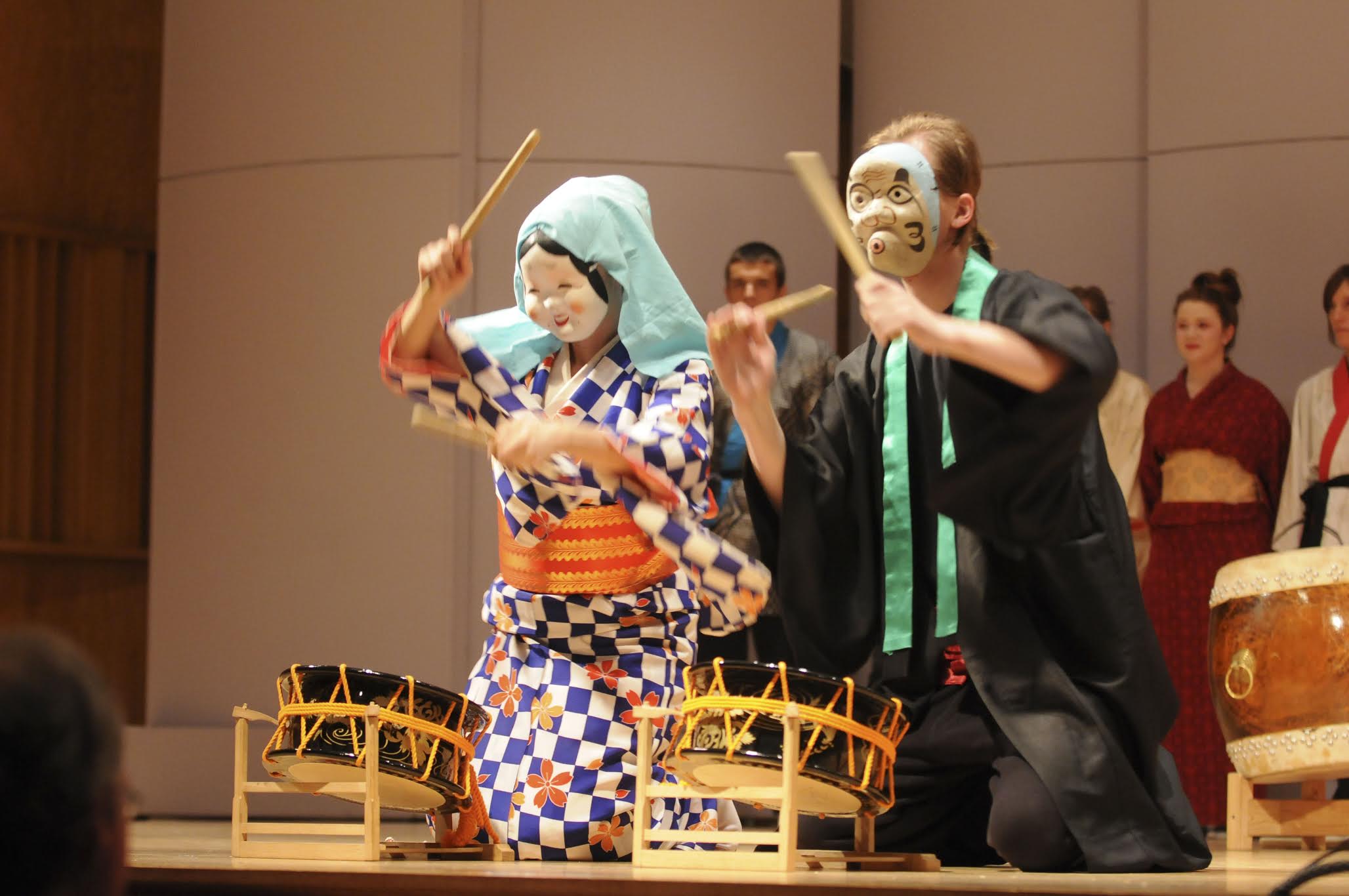
Japanese dancers/drummers  (Photo by Glenn Asakawa/University of Colorado)

Japanese dancers/drummers (Photo by Glenn Asakawa/University of Colorado)

There will be ancient chants. There will be jazz and contemporary compositions. There will be Taiko drumming and masked dancers.

“All of this and more!” as the ads might say, are on the program for “Contemplation,” an evening of music inspired by, or related to, Buddhism, presented by Music at the Dairy and Naropa University at 7:30 p.m. Monday, Oct. 19, in the Dairy Center for the Arts (tickets).

The program is intentionally something of a potpourri. James Bailey, music producer for the Dairy, says the event was planned to be “a broad look at music and how it has been influenced by Buddhism, as opposed to a particular style of music, or a particular country, or a particular sect of Buddhism.”

If the program is bewilderingly eclectic, that’s OK. “It’s designed to be music that keeps the audience off balance, which is one of my favorite things to do,” Bailey says. “Like a lot of productions I do, you’ll never hear anything like this again.”

Very likely not. The program that has been announced features:
—“Bombai,” an ancient chant performed by ordained Buddhist priests Mason Brown and Martin Mosko;
—music by famed jazz musician and Buddhist Wayne Shorter, performed by pianist Annie Booth;
—music for saxophone and shakuhachi flute performed by Mark Miller, director of the music program at Naropa University, and adjunct Naropa faculty member David Wheeler;
—a piece for voice and viola by Naropa interim music chair, Paul Fowler;
—Japanese music and dance performed by the Jay and Mami Keister Ensemble;
—songs on Buddhist texts by Bill Douglas, performed by Douglas and Fowler;
—music by Japanese composer Toru Takemitsu for viola and piano performed by Lisa Harrington and Matt Dane; and
—drumming by Boulder Taiko Hibiki.

“I think it will be interesting for people to hear how different styles of music have been influenced by Buddhists, from the most profound to something that’s maybe more superficial,” Bailey says. “There’s music for Buddhist services, there’s music for jazz clubs, there’s music for concert halls.

“There’s not a button you can push anywhere to hear this music, especially in it’s entirely as a concert.”

Read more in Boulder Weekly.

Boulder Symphony’s family affair

Orchestra opens season with Beethoven and Dvorák

By Peter Alexander

From left: Doris Pridonof Lehnert, Oswald Lehnert, Oswald Lehnert III. Photo by Peter Alexander

From left: Doris Pridonof Lehnert, Oswald Lehnert, Oswald Lehnert III. Photo by Peter Alexander

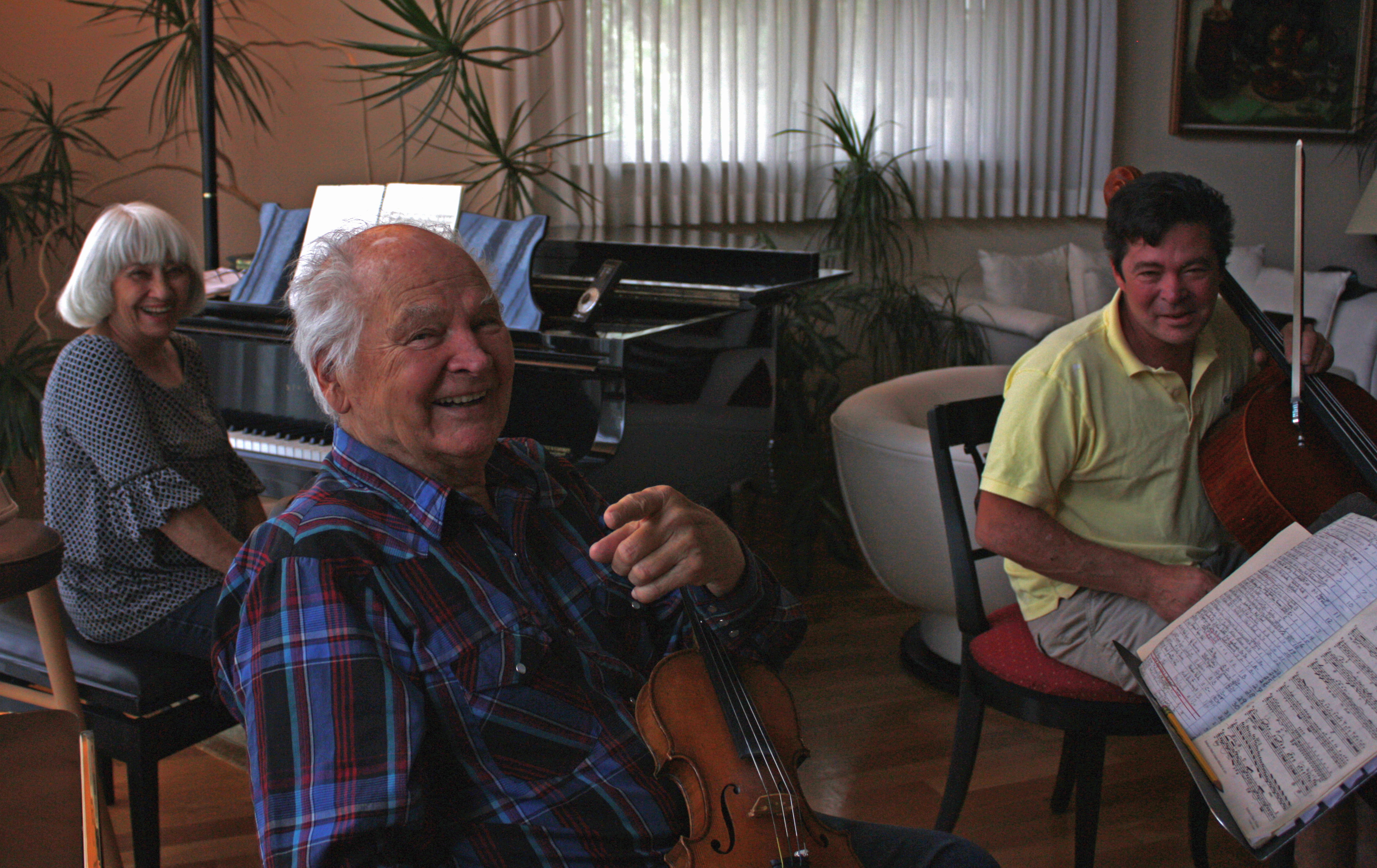
The opening concert of the Boulder Symphony’s 2015–16 season features three members of Boulder’s legendary musical family, the Lehnerts, playing Beethoven’s Triple Concerto. And it all got started at the farmers’ market.

“Nothing is more like local Boulder than that,” says the orchestra’s music director, Devin Patrick Hughes.

The concert, at 7 p.m. on Saturday, Oct. 3 in Boulder’s First Presbyterian Church, will feature Oswald Lehnert on violin, his son Oswald Lehnert III playing cello, and his wife Doris Pridonoff Lehnert as pianist in a performance of Beethoven’s Triple Concerto. Also on the program is the Symphony No. 7 in D minor by Antonín Dvorák.

“The idea of a family doing the Triple Concerto is unique,” Oswald says.

He says the concerto is rarely programmed because it’s difficult to get a trio together with an orchestra. But Doris Lehnert has no doubts that it’s a great piece.

“I love it,” she says. “I can’t imagine a much better triple concerto.”

Read more in Boulder Weekly.

# # #

“Boulder Dynasties”
Boulder Symphony, Devin Patrick Hughes conductor, with
Oswald Lehnert, violin; Oswald Lehnert III, cello; and Doris Pridonoff Lehnert, piano

Beethoven: Triple Concerto
Antonín Dvorák: Symphony No. 7 in D minor

7 p.m. Sunday, Oct. 3, First Presbyterian Church, 15th and Canyon in Boulder
Tickets

Travel Woes Update: Violinist Rachel Barton Pine stranded in Phoenix

U.S. Airways Strikes Again

By Peter Alexander

Violinist Rachel Barton Pine with her violin

Violinist Rachel Barton Pine with her violin

Violinist Rachel Barton Pine—who appeared with the Boulder Philharmonic in 2014—was stranded overnight in Phoenix when U.S. Airways declined to make room for her 1742 Guarneri del Gesú violin in the cabin of her flight.

This comes after two recent incidents reported here of string basses that were seriously damaged in transit (see below). U.S. Airways is the same airline that last year refused to take the bass of Ranaan Meyer of Time for Three as checked baggage, as is normal for traveling bassists.

Barton Pine's husband and daughter sleeping in the Phoenix Airport. Photo via Violinist.com

Barton Pine’s husband and daughter sleeping in the airport. Photo posted by Rachel Barton Pine, via Violinist.com

As reported on Laurie Niles’ blog Violinist.com, Barton Pine was traveling with her husband and four-year-old daughter, who ended up sleeping on the floor of the Phoenix Airport overnight. (Barton Pine did not try to sleep, since someone had to watch her priceless instrument overnight. She reports spending the time doing paperwork.)

Barton Pine and her family did get a flight out of Phoenix the next morning. The story at Violinist.com has full details.

Is it a hex? Another bass smashed on a flight from Atlanta

U of GA professor forced to cancel recital in Little Rock

By Peter Alexander

Now is not a good time to be flying from Atlanta with your double bass.

Milton Masciadri

Milton Masciadri

On Saturday, just days after Colorado Symphony member Karl Fenner’s bass was smashed on a flight form Atlanta to Denver, University of Georgia faculty member Milton Masciadri was scheduled to play a recital in Little Rock, Ark. But when he arrived in Little Rock from Atlanta, he discovered that he had to cancel the recital.

As first reported on the Website Slipped Disc, his bass has been smashed and the neck broken, just like Fenner’s instrument, during the flight.

Masciadri’s bass sadly is a particularly rare one, made in 1690 by a member of the Testore family of Milan, Italy—esteemed as one of the most important early builders of double basses. Their instruments are among the most sought after, and most expensive, double basses in the world.

Masciadri posted this photo of his damaged bass on Facebook

Masciadri posted this photo of his damaged bass on Facebook

In his case, the airline appears not to have been at fault. Masciadri has reported that “after I checked the instrument it went to TSA [Transportation Security Administration] for inspection but when it arrived in Arkansas they had failed to put back on the security belts that the trunk has inside. The airline had no reason to open the trunk so its obvious that TSA was the one [responsible].”

In Fenner’s case, the bassist had himself opened and re-closed the case after his instrument had been cleared by TSA. This seems a reasonable procedure, so that a valuable and delicate musical instrument can be handled safely and replaced in the case securely. It is possible that Fenner’s case fell out of a cart and was run over sometime after it was checked through by the airline.

Masciadri reported that he has contacted the TSA, and they have sent him “a long report to be filed.” He added that the airline has been assisting him, and that the instrument is insured.

The University of Georgia professor had planned to use the bass in two prominent upcoming performances: at the Ushuaia International Music Festival in Argentina, and a solo appearance with the Korean Chamber Orchestra in Carnegie Hall on Oct. 27. The Carnegie Hall concert is part of the orchestra’s 50th anniversary world tour, and also part of UNESCO’s 70th anniversary celebration.

# # # # #

Edited to add photo of Masciadri’s bass Sept. 22.

Edited for clarity Sept. 23.

Colorado Symphony bass player’s instrument smashed after successful audition

Elation and despair marked Karl Fenner’s day

By Peter Alexander
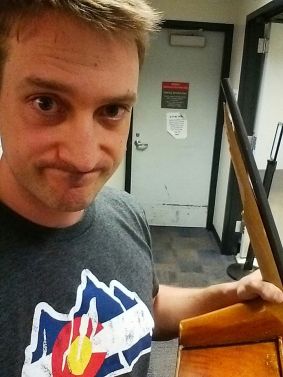
Bassist Karl Fenner and his damaged string bass

Bassist Karl Fenner and his damaged string bass at Denver International Airport

The nightmares for double bass players just got a lot worse.

There has been another incident involving a double bass and travel, but this one is more troubling than most. You may recall that about a year ago, bassist Ranaan Meyer of Time for Three had his instrument refused by U.S. Airways and had to fly another airline to get home from a performance on “Dancing with the Stars” in Los Angeles.

This time it’s much worse, and closer to home for Colorado musicians: Bassist Karl Fenner of the Colorado Symphony was returning home to Denver by Southwest Airlines from a successful audition with the Atlanta Symphony. As reported in Strad Magazine today (Sept. 17), he had checked his bass into the hold, as is required for double basses. He has a heavy-duty fiberglass case that he has used safely for 11 years of travel, but this time when he arrived, he found that the top of the case had been smashed open and the neck of the bass had been sheared off below the scroll.

Fenner posted photos of the damage on his facebook page, with the comment “Thanks Southwest Airlines and or TSA Atlanta. I’ve trusted you with my baby for 9 years and then this. The heavy duty case was heavily damaged too. Very disappointed. How?”

DB_Broken3The accident happened on Wednesday (Sept. 16). Fenner had been through three rounds of auditions in Atlanta, and was the top choice for the two open stringed bass positions with the orchestra. (Two other players will vie for the second position.) He was offered a contract on the spot, and so he left Atlanta in great spirits.

When he returned to Denver, the bass did not show up in the oversize luggage carousel. After waiting a few minutes, he walked into the airline’s baggage claim office, where he saw the case immediately.

“It was there for me, because obviously they noticed that the case itself was incredibly damaged,” he said. “My heavy-duty protective travel case was damaged, and they wanted me to open it up. When I opened it up and took [the bass] out of the case, I could feel it before I even took it out of the inner case. The neck was completely snapped in two.

“It was certainly not a good feeling. It was made slightly better by the fact they were quite helpful. They took a lot of pictures of all of the evidence themselves to put into my files.”
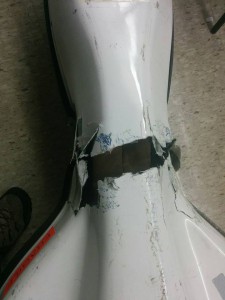
Kenner's smashed fiberglass travel case

Kenner’s smashed fiberglass travel case

Normally, a fiberglass travel case is almost indestructible. One possibility that the airline suggested was that the case had fallen out of a baggage cart or fork lift and had been run over.

Fenner continues to be in contact with Southwest Airlines. “I received a private message on facebook saying ‘please call me, we really want to make this right with you,’“ he says. “I talked with [an airline representative] for about 10 minutes today. We haven’t gotten very far in the process yet, but she did admit that it is obvious that it is the airline’s fault, and nobody on their end is going to dispute that.”

Fenner estimates that a good quality travel case for a double bass costs about $3,000, and the instrument, which he has had for nine years, cost more than his car. The instrument itself is insured through the Colorado Symphony. It can be repaired, to the extent that a new neck and fingerboard can be grafted onto the body. There is always a risk, though, because there is no guarantee that with such extensive repairs, the instrument will feel the same to the player.

“I know musicians who’ve had damage done to their instrument and they’ve been able to get it repaired, but it was just never the same,” Fenner says.

Repairs will probably take several months. In the meantime Fenner has the possibility of using other instruments, both in Denver and in Atlanta. He will continue to play with the Colorado Symphony during the fall, and plans to join the Atlanta Symphony after the first of the year.

Further updates to Fenner’s story will be posted here as appropriate.

# # # # #

While the damage Fenner’s instrument sustained is an exception, it is not without precedent. One bass player I spoke with reported seeing a $200,000 bass in a repair shop with damage similar to Fenner’s: “The neck had been sheered off because the case had been left hanging out of the truck and passed through a door.”

Beyond such extreme situations, bass players always face challenges when traveling with their instruments. Recent regulations mandate conditions under which airlines must take smaller instruments, including violins and violas, into the cabin. Cellists usually purchase an additional seat for their instruments to travel with them. But string basses are too large to go into the cabin and must travel in the luggage compartment. Here the regulations seem not to be applied consistently, as Meyer’s adventure last year showed.

Several bass players told me stories of frustrations and setbacks when traveling. They did not want their names used, for fear of future difficulties with airline employees, but agreed to have their stories reported.

“It’s always been dodgy traveling with a bass,” one of them said. “It seems as though it is arbitrary depending on the day and the whim of the pilot or manager behind the desk. If the player has a history of traveling with the airline already, there have never been issues, and more travel is planned, there is no excuse for inconsistently applying a policy arbitrarily.”

A professional bass teacher and soloist reported to me that he no longer takes his instrument on airplanes at all. He once went to Europe with his bass, but was not allowed to bring it back on the same airline that had taken it on the outbound flight. The gate agent suggested he call FedEx.

“When you travel with a bass, you have nothing you can do against the will of the person behind the desk,” he said. “I’ve stopped traveling with my bass internationally and always choose to drive if the distance allows domestically. I just performed a concerto with an orchestra (overseas) on a completely foreign bass. I only had two days to get used to the instrument. Is that really my preference? No. Do I have a choice? Once again, no.”

Ironically, the airline that bass players all agreed was the easiest to work with is Southwest Airlines.