Adventures in the sound spectrum from Starkland

Three new CDs from Boulders adventurous recording label

By Peter Alexander

Boulder’s Starkland recording label has issued thee CDs over the past eight months that are very, very different. Yet, all three have one thing in common: an intensive exploration of pure sound.

That exploration takes the various composers far from the familiar paths of most concert music. If your musical tastes lean more to bracing adventure than the comfort of the familiar, all three are recommended for your consideration.

Boreal CoverElliott Sharp: The Boreal. Music of Elliott Sharp: The Boreal, performed by the JACK Quartet; Oligosono, performed by Jenny Lin, piano; Proof of Erdös, performed by Orchestra Carbon, David Bloom, conductor; On Corlear’s Hook, performed by the Janáček Philharmonic Orchestra, Peter Rundel, conductor. Starkland ST-222.

The name may not be familiar in Colorado, but Elliott Sharp is well known on the experimental music scene in New York. According to his Web bio, his 85 recordings include work in “blues, jazz, noise, no-wave rock and techno music.” As an instrumentalist, he has worked with many experimental performers in New York and has had work performed by Kronos, the FLUX Quartet, Ensemble Modern, and other stars of the new-music world.

In the four works compiled on this album, Sharp’s music is atomized and the separate elements—particularly sonority and rhythm—are examined in isolation and in collisions with one another.

The first piece on the album is the title track, The Boreal. Performed by the ever adventurous JACK Quartet, the score calls for what are described as “bows made from ball chains and metal springs,” making sounds utterly unlike the warm and cushiony sounds of conventional bows on stringed instruments.

With startling control of these unconventional bows, the JACK Quartet produces vibrating, shattered and edgy sonorities. The four movements of The Boreal feature rhythmic patterns on often static pitches. Musical interest resides largely in the utterly unexpected and unique sounds being produced by the instruments.

Oligosono was composed for the Taiwanese-born American virtuoso pianist Jenny Lin, who is heard on this recording. The title, derived from Greek, means “few sounds,” and the score is again an intense exploration of a limited, specific set of sonorities. Steady, motoric, repeated-note rhythms predominate; long passages on a single pitch and its octaves suddenly break into little explosions that extend across the range of the keyboard. Lin gives a virtuoso performance, apparently undaunted by Sharp’s extensive demands

Proof of Erdös, an homage to the late mathematician Paul Erdös, is ably played by the Orchestra Carbon, directed by David Bloom. With a larger variety of instruments, Sharp wields a correspondingly greater variety of sounds. Here, one whole sound world succeeds another, suggesting distant planets, or perhaps the abstract world of mathematics.

You do not feel that these worlds are pretty places. But that is the point: the conventional laws of beauty do not apply in these distant worlds, just as the conventional laws of physics seem to be suspended in the far reaches of the universe.

On Corlear’s Hook, performed by the Janáček Philharmonic Orchestra of Ostrava, Czech Republic, and conductor Peter Rundel, is the most conventionally approachable work on the disc. It is named for a district on the lower east side of Manhattan where Sharp once lived, a place of old tenement buildings and a sordid history. But the music is not really of that mundane place, “neither programmatic nor pictorial,” Sharp writes.

Instead, Sharp takes the listener deep into his own fantastic imagination. The sounds he creates through the orchestra seem to collide in some vast, cosmic drama. The score is by turns delicate, mysterious, evocative: an aural expression of Sharp’s adventurous spirit. The score is performed with great precision and élan.

Nature of thingnessOn The Nature of Thingness. Music by Phyllis Chen and Nathan Davis, performed by the International Contemporary Ensemble. Starkland ST-223

The Music of Phyllis Chen and Nathan Davis inhabits a very different soundworld than that of Elliott Sharp. Rather than a realm of aggressive experimentation, theirs is a world just beyond the familiar, filled with bright and tinkly sounds. Prepared pianos, toy pianos, music boxes, tuning forks, jaw harps and electronic effects are combined with conventional classical instruments, including piano, clarinet, flute, bassoon and violin.

These works were created through ICElab, a commissioning program of the International Contemporary Ensemble (ICE) notable for the close collaboration between composers and performers. Invoking the idea of “divine play,” ICE’s co-artistic director Claire Chase refers to ICElab as the ensemble’s “in-house playground,” and indeed the spirit of play pervades the CD.

Of the CD’s 10 tracks, one of the most striking is the very first, Davis’s Ghostlight for prepared piano. There is a delightful, teasing variety of sounds from the prepared piano that keep the listener slightly off balance. These sounds are evocative of the idea of a “mischievous spirit” possessing the instrument, or, as the composer suggests, a performance when a mechanical breakdown affects the piano so that notes fail to sound correctly.

The title refers to the bare light bulb left on in otherwise dark theaters to frighten away the ghosts that every theater possesses (or more prosaically, to keep workers coming into theater at night from falling into the pit). Ghostlight was written for pianist Jacob Greenberg, who here delivers an enchanting performance.

Phyllis Chen’s Hush is dedicated to her first child, who inspired the sounds that seem to come from a slightly off-kilter nursery. As performed by the composer, the cheerful, jaunty sounds of the prepared piano, toy pianos and music boxes have only the slightest hint of a haunting spirit.

Chen’s Chimers inhabits a similar world of shimmery, twittering sounds. Inspired by the magic chimes played by Papageno in Mozart’s Magic Flute, the sore combines clarinet and violin with toy piano, toy glockenspiel and tuning forks.

Mobius for music box and electronics, credited to Chen and Robert Dietz, evokes rustling insects, delicate chiming and distant fairy bells, suggesting scenes of tiny creatures who come out at night on the forest floor. It is an utterly engaging piece, and utterly unlike anything I have heard before.

The title work, which concludes the disc, goes in a slightly different direction, into what the liner notes describe as the “hysterical fury of the ‘Dada’ movement.” Written for soprano and small ensemble, with each player also doubling on jaw harp, Davis’s On the Nature of Thingness combines a consonant-heavy Polish text best appreciated for its sound with a word-centric “Dada manifesto.”

The most haunting of the four remarkable movements is the third, titled “Vowels.” Delicate, chiming chords create an aura of harmony and reflection against which the vowel sounds, vocalized on a single pitch, seem to float, like clouds over a distant, misty landscape. Like the rest of the CD, it’s an intriguing and enchanting aural experience.

IoH coverInstruments of Happiness. Music by Tim Brady, Rainer Wiens and Antoine Berthiaume, performed by the electric guitar quartet Instruments of Happiness. Starkland ST-224.

Once in a great while, I come across music that is so unexpected, so strikingly original that I cannot quite find the words to describe it. Hearing this album was one of those occasions.

Instruments of Happiness calls itself an “electric guitar collective” and offers performances by their basic quartet—Tim Brady, Gary Schwartz, Antoine Berthiuame, Michel Héroux—as well as a 20-piece orchestra and a 100-piece ensemble. This album represents the CD debut of the quartet.

There are a handful of electric guitar quartets in the world today, several based on the east coast. This is not a scene that I am familiar with, but I was happy to be introduced to this thriving sub-genre of music.

In this recording, Instruments of Happiness (IoH) draws heavily on art-rock influences reaching back several years. I can’t identify all of those sources, but fortunately, you don’t have to know the influences to enjoy the music. Otherwise, most older music would be beyond our appreciation, since so much of it draws on sources now forgotten.

The largest portion of the recording is given over to two works—or if you prefer, two versions of the same work—by IoH member Tim Brady. Titled The Same River Twice: Symphony #5.0 and The Same River Twice: Symphony #5.Solo, they can easily be appreciated as two separate pieces, one for the quartet and one for solo guitar with much use of pedals and electronic enhancements.

But as the title suggests, the two versions sprang from a shared well of inspiration. As Brady explains in his liner notes, the solo version “takes many of the same ideas but explores them with solo guitar.” On the surface, they seem to be separate pieces: the movement structure is different, and the common ideas go in different directions. But deep listening for the shared elements returns rewards, too.

Brady says he started with the question, “What kind of music can a composer actually make with four electric guitars?” He clearly came up with lots of answers. The very first track, a movement of Symphony 5.0 titled “Riff,” starts with ponderous chords that seem to say “Pay attention now!” It quickly moves into an ear-capturing riff that grows and spreads through the ensemble, into a mesmerizing blur of sound that is part minimalist trance, part rock solo explosion, and all original.

Other movements sure to capture the attention are “Solo 2,” a whirlwind blend of bits and pieces that keep coming together in unexpected ways, and “A somewhat eccentric waltz,” which ends with an ironic voiceover challenging, “Is this the best you can do?” And who can resist the final movement of Symphony #5.0, “Count,” with the irregularities—and some regularities, too—literally counted out by the players.

Since I can’t quite describe this CD, I will just say: Find it. Buy it. Listen to it. I can promise that you will find it full of surprises. And if you don’t like it, you certainly know someone who will.

____________

All Starkland recordings may be purchased through the label’s Webpage.
Colorado Music Festival offers a ‘Fantastique’ opening

Jean-Marie Zeitouni is looking forward to his return to Boulder and the CMF orchestra

By Peter Alexander

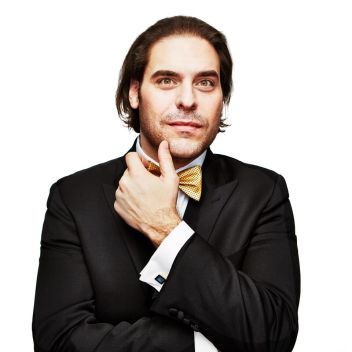
JMZBowtie

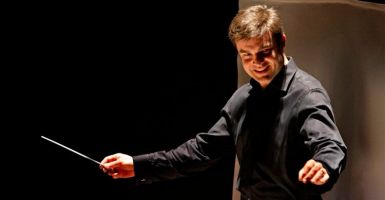
Jean-Marie Zeitouni. Photo by David Curleigh.

Boulder’s Colorado Music Festival (CMF) opens its 2016 season Thursday (7:30 p.m. June 30, Chautauqua Auditorium), and no one is more excited than music director Jean-Marie Zeitouni.

“I’ve been looking forward to this for more than 10 months,” he says. “It’s the occasion for me to connect again with the orchestra.”

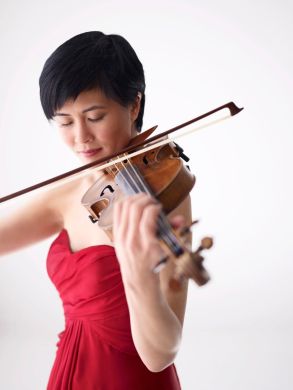
Titled “Narratives of Heroism,” the concert will open with Beethoven’s Overture to Egmont and close with Berlioz’s Symphonie Fantastique. In between, violinist Jennifer Koh will perform a heroic feat of her own, playing the wildly virtuosic Violin Concerto of Finnish composer/conductor Esa-Pekka Salonen.

Koh was scheduled to appear at CMF in 2014, when Zeitouni first appeared at Chautauqua as a candidate for music director. An accident forced her to cancel, so she is happy to finally get to Boulder.

“I love (the Salonen Concerto),” she says. “I think it’s a great piece. I’m so excited about playing it in Boulder!”

7-Jennifer-Koh-by-Juergen-Frank

Jennifer Koh. Photo by Jürgen Frank.

Koh is known as an adventurous violinist who commissions and plays a lot of new music—32 premieres in seven days earlier this year!—but also gives stunning performances of the standard repertoire. “I get to experience different worlds through different composers,” she says.

“It could be Tchaikovsky, it could be Bach, it could be Brahms. Or it could be Salonen! I love that about my life as a musician.”

Salonen wrote the concerto in 2009 as a farewell gift to the Los Angeles Philharmonic, where he had been conductor for 17 years. A piece that borrows from diverse traditions, the concerto opens with a propulsive movement that reconfigures Bach’s solo violin music in a contemporary idiom. Another movement features rock drumming, and the final movement, “Adieux,” is a tender farewell.

“If you love classical music, you’re going to love this piece,” Koh says. “If you love music in general, you’re going to love this piece! It’s a great ride. It’s familiar and contemporary at the same time.”

Orchestra3

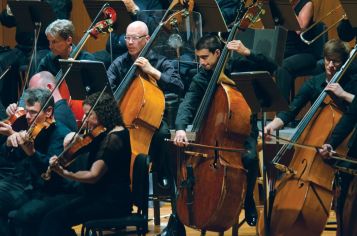
Members of the CMF Festival Orchestra

The same might be said of the Berlioz Symphonie Fantastique: it is a familiar part of the orchestral repertoire, and yet it was a very daring, contemporary piece when it premiered in 1830—only three years after Beethoven’s death.

The story behind the work is part of its appeal. It was written for an Irish actress Berlioz had seen on stage but never met. The music describes his fantasies, ending with a fevered “Dream of a Witches’ Sabbath” after the anti-hero’s execution for murder.

389px-Portrait_of_Harriet_Smithson_by_Dubufe,_Claude-Marie

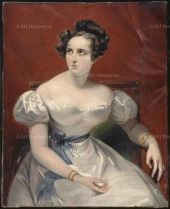
Harriet Smithson. Portrait by Claude-Marie Debufe

Understandably, the actress, Harriet Smithson, was somewhat alarmed by the composer’s obsession with her. Eventually they met, and she and Berlioz married in 1833, but they were never truly happy together.

That story is “very well known, but there’s much more than that,” Zeitouni says. “For the time it was written, the technique of composition and orchestration and form and poetic content—it’s an immense piece. I am looking forward to seeing what the CMF orchestra and I are able to draw out of this piece.

“I feel personally very close to it because of the French tradition.”

Other than Berlioz, there is very little of the French tradition on the summer’s orchestra programs—only the Debussy Nocturnes on one concert. There are works from the standard Viennese tradition: a Brahms symphony cycle and works by Mozart and Beethoven. There will be newer pieces and an all-Russian program. (See the whole season schedule here.)

MichaelChristie

Music Director Laureate Michael Christie

CMF Music Director Laureate Michael Christie returns for a concert July 14 (7:30 p.m., Chautauqua) with pianist Orion Weiss. Zeitouni offers his first Mahler at CMF, Das Lied von der Erde (7:30 p.m. Aug. 4 at Chautauqua) with soloists Kelly O’Connor, mezzo, and Richard Cox, tenor.

Adventurous listeners will relish The Tragedy of Carmen, a reconfiguration of Bizet’s opera for chamber orchestra and a small cast that was created by theater director Peter Brook (7:30 p.m. July 10, Chautauqua).  Brook’s version “is the pure essence of Carmen,” Zeitouni says

In addition to the events listed here, there’s a wide range of chamber programs and a contemporary music series at the Dairy Center. That’s a lot of variety, but don’t ask Zeitouni to pick his favorites. “That’s like choosing one of my children!” he laughs.

“I’m excited about everything!”

NOTE: A slightly longer version of this article will be published in Boulder Weekly July 30.

# # # # #

Colorado Music Festival

chautauqua-boulder-colorado

Chautauqua Auditorium home of the Colorado Music Festival

Opening Night: Narratives of Heroism
Jean-Marie Zeitouni, conductor
Jenifer Koh, violin

7:30 p.m. Thursday, June 30
Chautauqua Auditorium

Tickets

2016 season schedule

Woods aims for the summit in first year as MahlerFest director

Seventh Symphony is ‘Mahler at the top of the mountain’

By Peter Alexander

Mahler, it is well known, loved to hike in the alps. So it is fitting that Kenneth Woods, the brand new artistic director of the Colorado MahlerFest, compares Mahler’s Seventh Symphony to the summit of a fourteener.

Kenneth Woods

Kenneth Woods. Photo by Benjamin Ealovega.

Woods succeeds Robert Olson, who retired last year after 28 years as founding director of the festival. The Seventh will be the major work performed at this year’s MahlerFest XXIX, with performances by Woods and the MahlerFest Orchestra at 7:30 p.m. Saturday and 3:30 p.m. Sunday in Macky Auditorium.

Also on the orchestral program will be the U.S. premiere of Nachtmusiken by Austrian composer Kurt Schwertsik, which was commissioned for a Mahler festival in Manchester, England. Other events this weekend include a symposium by leading Mahler scholars, from 9 a.m. to 3:30 p.m. Saturday in Room C199 of the CU Imig Music Building.

Read more in Boulder Weekly.

# # # # #

Colorado MahlerFest XXIX
Kenneth Woods, artistic director and conductor

Mahler: Symphony No. 7
Kurt Schwertsik: Nachtmusiken, op. 104 (U.S. premiere)
7:30 p.m. Saturday, May 21
3:30 p.m. Sunday, May 22
Macky Auditorium
(Pre-concert lecture one hour before each concert)

mahler-hiking

Mahler hiking in the Austrian alps.

Other events:

7 p.m. Thursday, May 19
Free open rehearsal, Macky Auditorium

2 p.m. Friday, May 20
Film: 7, Boedecker Theater, Dairy Arts Center

7 p.m., Friday, May 20
Free open rehearsal, Macky Auditorium

9 a.m.–3:30 p.m. Saturday, May 21
Free Symposium, Room C199, Imig Music Building

Information and tickets


Boulder Symphony Announces 2016–17 Concerts

Program is complete, even though the inspiration is interrupted

By Peter Alexander

Hughes.DP.4

Devin Patrick Hughes

“Inspiration, Interrupted,” the 2016–17 season of the Boulder Symphony, will feature two world premieres, several local artists as soloists, a competition winner, and the orchestra’s annual concert performance of a familiar opera to cap it all off. The season will presented under music director Devin Patrick Hughes,

The programming for 2016–17 represents a continuation of a pattern the Boulder Symphony has established, based on their goal of “making symphonic music more accessible and relevant to people of all ages.” Ways to achieve that goal have included featuring young soloists, presenting music by emerging young composers, and scheduling family events such the Annual Halloween Kids’ Extravaganza, scheduled for 1 p.m., Saturday, Oct. 29.

Another expression of that goal will continue, with all performances free to students from kindergarten through high school (K–12).

The season title, “Inspiration, Interrupted,” only seems to apply literally to one work on the season, Schubert’s “Unfinished” Symphony, scheduled for the Oct. 27 concert. The program is titled “Beethoven’s Shadow,” referring to the way that Beethoven’s legacy dominated the musical world for generations after his death.

But the thrust of the season is broader than just pieces that were interrupted and never finished. The orchestra’s news release states that each concert will explore “the incredible and challenging process composers encounter when creating magnificent works.”

BoulderSymphony-0671-RT

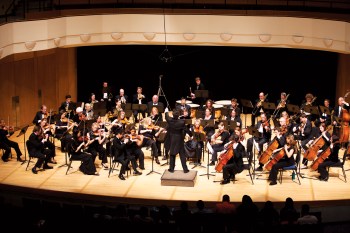
Hughes and the Boulder Symphony

Each concert has a symphony that is likely the representative of the season topic. In addition to Schubert in October, those will be Beethoven’s Fifth Symphony on the program titled “Fate Knocks, Symphony Rocks” (Sept. 17); Mozart’s “Prague” Symphony for “Prague, I Love You” (Nov. 19); Mendelssohn’s “Scottish” Symphony for “Clash of Titans” (Feb. 24, 2017); and Berlioz’s Symphonie Fantastique for “Day of Reckoning” (April 8).

The young violinist Phoenix Avalon returns for his fourth consecutive year, to play the Bach Double Violin Concerto with the Boulder Symphony’s concertmaster, Keynes Chen. Other soloists during the year will include several members of the orchestra; CU faculty member Paul Erhard, double bass; and the winner of the International Keyboard Odyssiad & Festival, to be held in Fort Collins in July.

The 2016–17 season will be the third in which the Boulder Symphony will present a concert performance of an opera. Following performances of Carmen and La Bohème in the past two years, they will present Mozart’s Marriage of Figaro May 13, 2017.

Season tickets for 2016–17 are now on sale here. The full season is listed below.

BSO.logo

Boulder Symphony
Devin Patrick Hughes, Music Director
2016–17 Season: “Inspiration, Interrupted”

“Fate Knocks, Symphony Rocks”
7 p.m. Saturday, Sept. 17
Beethoven: Symphony No. 5 in C minor
Piano Competition Winner

“Beethoven’s Shadow”
7 p.m. Saturday, Oct. 22
Schubert: Symphony No 8 in B minor (“Unfinished”)
Brahms: Double Concerto in A minor for violin and cello
Sarah Off, violin, and Matthew D’Ordine, cello

Annual Halloween Kids’ Extravaganza: “Steal This Concert”
1 p.m. Saturday, Oct. 29
Musical Borrowing and Imitation

“Prague, I Love You”
7 p.m. Saturday, Nov. 19
Mozart: Symphony No. 38 in D major, K 504 (“Prague”)
Douglas: Songs and Dances
Ingrid Anderson, oboe
J.S. Bach: Double Violin Concerto in D minor, S 1043
Phoenix Avalon and Keynes Chen, violin

“Clash of Titans”
7 p.m. Saturday, Feb . 24
Mendelssohn: Symphony No. 3 in A minor (“Scottish)
Nino Rota: Divertimento
Paul Erhard, double bass
Sebastian Laskowski: World Premiere

“Day of Reckoning”
7 p.m. Saturday, April 7
Berlioz: Symphonie Fantastique
Franz Liszt: Totentanz (Dance of death)
Cody Garrison, piano
Elizabeth Anne Comninellis: World Premiere

7 p.m. Saturday, May 13
Mozart: The Marriage of Figaro

All concerts at First Presbyterian Church, 1820 15th St., Boulder

2016–17 season tickets now available HERE.


Olson heading toward the door after 33 years in Longmont

Saturday will be his last concert as music director, but he’ll be back

By Peter Alexander

Robert Olson has changed the Longmont Symphony, and the Longmont Symphony has changed him.

Olson photo

Enter a captionRobert Olson. Photo courtesy of Longmont Symphony.

“I’m very, very proud of what we’ve done over three decades,” says the director who brought the LSO from a group of raw amateurs who had to be led measure by measure through Stravinsky’s Firebird to a first-rate community orchestra that tackles major repertoire unafraid. And along the way, he says he learned something, too.

With a concert on Saturday (7:30 p.m. April 9, Vance Brand Civic Auditorium, Longmont), Olson will step down after 33 years as the orchestra’s music director—more than half the LSO’s 50 years of existence. He will return in the fall to conduct the opening concert of the 2016–17 50th-anniversary season, but most of the concerts during the year will be conducted by candidates to take his position.

Saturday’s concert brings to an end a season-long exploration of Russian music. The major work will be Tchaikovsky’s über-popular Piano Concerto, performed with pianist Chih-Long Hu, whom Olson has known for many years. Other works on the program will be the March and Scherzo from Prokofiev’s Love for Three Oranges, familiar from its use in TV shows and commercials; Shostakovich’s youthful Symphony No. 1, written when he was just 19; and one non-Russian work, the Intermezzo from Leoncavallo’s I pagliacci.

If this doesn’t sound like a valedictory program for an outgoing maestro, that’s because Olson doesn’t like to think about making a grand exit. “That’s not in my personality,” he says. “It would be fine with me just to quietly go away.”

Read more in Boulder Weekly.

# # # # #

Tchaikovsky’s Piano Concerto
Longmont Symphony Orchestra, Robert Olson, music director
With Chih-Long Hu, piano

Prokofiev: March and Scherzo from Love for three Oranges
Leoncavallo: Intermezzo from I pagliacci
Shostakovich: Symphony No. 1
Tchaikovsky: Piano Concerto No. 1

7:30 p.m. Saturday, April 9
Vance Brand Civic Auditorium, Skyline High School, Longmont
Tickets

Boulder Bach’s Baroque Rock ‘n’ Roll will celebrate “Venice on Fire”

Acoustic and electric groups represent a different kind of authenticity

By Peter Alexander

Zachary Carrettin talks rock ‘n’ roll, but you won’t recognize most of the composers.

ZC 2 Violins (1).Michelle Maloy Dillon

Zachary Carrettin with electric (left) and acoustic (right) violins. Photo by Michelle Maloy Dillon

The artistic director of the Boulder Bach Festival, Carrettin has put together a program he calls “Venice on Fire,” featuring both acoustic and electronic string instruments playing music of the 17th and 18th centuries. Performances will be at 7:30 Friday in Boulder (March 18, Dairy Center) and Saturday in Longmont (March 19, Longmont Museum Stewart Auditorium).

“There’s some great music on the program,” he says, describing pieces by Tarquinio Merula, Marco Uccellini, Giovanni Legrenzi, Barbara Strozzi, Tomasso Albinoni and—the one very familiar name—Antonio Vivaldi.

Carrettin says the program will contrast pieces with “vast, spacious, meditative and vocal melodic lines, with pieces that are rhythmically driven, full of imitation, and wild embellishment.”

But more noticeably, the performances will contrast an electric trio—Carrettin on electric violin, Gal Faganel on electric cello, and Keith Barnhart on a Fender electric guitar—alternating with an acoustic chamber orchestra of traditional stringed instruments.

Read more in Boulder Weekly.

# # # # #

Venice on Fire
Boulder Bach Festival

Zachary Carrettin, artistic director, electric and acoustic violin
Gal Faganel, electric and acoustic cello
Keith Barnhart, electric and acoustic guitars
With other guest artists
Music of Merula, Uccellini, Legrenzi, Barbara Strozzi, Vivaldi and Albinoni

7:30 p.m. Friday, March 18, the Dairy Center, Boulder
Tickets

7:30 p.m. Saturday, March 19, Stewart Auditorium, Longmont
Tickets


Busy, busy, busy: Many events for Boulder Phil, composer, violinist

Friday concert culminates residency week for composer Missy Mazzoli

By Peter Alexander

Missy.skyline

Missy Mazzoli

The Boulder Philharmonic and composer Missy Mazzoli will have a busy week Feb. 6–12.

Mazzoli, who visits Boulder courtesy of a Music Alive Composer Residency, will participate in a workshop with CU composition students, a Café Phil open rehearsal, a “Meet the Artists” luncheon and a musical stargazing hike (see the list of public events, below).

That’s in addition to the concerts: “Who is Missy Mazzoli” at 2 p.m. Wednesday, Feb. 10, on the Dairy Center Soundscape series; and “Spheres of Influence,” a concert by the Boulder Phil and music director Michael Butterman at 7:30 p.m. Friday, Feb. 12, featuring the premiere of the orchestral version of Mazzoli’s Sinfonia (for Orbiting Spheres).

A.A.Meyers1

Anne Akikoi Meyers

Mazzoli isn’t the only one who will be busy. Anne Akiko Meyers—who as soloist for the Mendelssohn Violin Concerto will share the Friday concert—is teaching a public masterclass at the CU on Thursday, Feb. 11, and attending the “Meet the Artists” lunch.

The full program of the Boulder Phil concert Friday will be Mazzoli’s Sinfonia, the Symphony No. 9 of Shostakovich, Tchaikovsky’s Mozartiana and the Mendelssohn Concerto. The Tuesday afternoon Soundscape concert will feature several of Mazzoli’s pieces, performed by Mazzoli, the Altius String Quartet and other local musicians, interspersed with movements of the Bach Partita in D minor for solo violin, performed by Boulder Phil concertmaster and CU music professor Charles Wetherbee.

Read more at Boulder Weekly.

# # # # #

Spheres of Influence

Boulder Philharmonic Orchestra
Michael Butterman, music director, with Anne Akiko Meyers, violin

Missy Mazzoli: Sinfonia (for Orbiting Spheres) World premiere of the orchestral version
Shostakovich: Symphony No. 9
Tchaikovsky: Mozartiana
Mendelssohn: Violin Concerto

7:30 p.m. Friday, Feb. 12 (note the day)
Macky Auditorium
Tickets

Other public events

6:30 p.m. Saturday, Feb. 6, Monday, Feb. 8, and Wednesday, Feb. 10, at the Boulder Valley Ranch Trailhead (Free; dates dependent on weather)
“Stars, Spirals and Orbiting Spheres” musical hike

Tuesday, Feb. 9 at the Dairy Center: Café Phil (Free)
7:10 p.m. Composer Chat in the lobby
7:30 p.m. Open Rehearsal

2 p.m. Wednesday, Feb. 10 at the Dairy Arts Center
Soundscape Concert: “Who is Missy Mazzoli?”
Tickets

9:30 a.m. Thursday, Feb. 11, Grusin Music Hall (Free)
Masterclass with Anne Akiko Meyers

1 p.m. Thursday, Feb. 11, Chautauqua Dining Hall
Meet the Artists, Progressive Luncheon with Anne Akiko Meyers, Missy Mazzoli and Michael Butterman
Tickets

Takacs Quartet and McDonald shine in 2016 opener

Engrossing performances of Beethoven, Janáček and Elgar

By Peter Alexander

Yesterday afternoon (Jan. 10) the Takacs Quartet and pianist Margaret McDonald gave an engrossing performance of an unusual and fascinating program.

Takasce SQ

Tákacs Quartet. Photo by Keith Saunders.

For their first concert of 2016, the Takacs presented three works: Beethoven’s genial first string quartet, the Quartet in D major, op. 18 no. 3; Leoš Janáček’s spiky Sonata for violin and piano, played by first violinist Edward Dusinberre with McDonald; and everyone together for Edward Elgar’s brooding, late-Romantic Piano Quintet in A minor.

The program will be repeated tonight at 7:30 p.m. in Grusin Music Hall of the Imig Music Building. Call 303-492-8008 for ticket availability.

I found this a particularly engaging concert in part because of it’s remarkable and wide-ranging variety. Think about it: every piece had a different combination of players; every piece represented a starkly different style (in spite of the fact that the Janáček and Elgar pieces were written within four years of one another); and every piece was played with the full interpretive commitment and musical integrity of a world-class chamber ensemble.

The Beethoven quartet, which opened the program, was an opportunity for the Takacs to show why they are considered one of the world’s leading quartets. They play with great precision and near-perfect intonation, but many quartets do that. But listen to the balance of the chords that close the exposition of the first movement, where you hear the entire chord, not a punctuating “thump.” Listen to the clarity of the interchange among the parts in the development section, where you can hear cleanly through the texture, with no important part covered. It is as if the music were produced by a single artistic mind, a feat not easily accomplished.

The third movement, with its unexpected transitions and slightly off-balance feel, never went awry, and the virtuosic finale rushed along with great exhilaration right to the surprising and humorous ending—Beethoven was a student of Haydn!—without ever feeling strained. It’s a genial and charming piece, with just a bit of Beethoven’s rough-hewn character, and the performance was utterly convincing in every detail.

Janáček’s Sonata for violin and piano of 1914 was written in the middle of Eastern Europe in the tense months before the outbreak of the First World War. The music seems to reflect the tension of the times, but Janáček’s highly individual music is written in such fragmentary bursts of feeling and mood that it often sounds as though some dangerous drama is about to unfold.

McDonald-X2

Pianist Margaret McDonald. Photo by Casey A. Cass/University of Colorado

The Sonata is so infrequently a part of concert programs—I don’t think I’ve heard it live before—that it was a delight to hear. The performance by Dusinberre and McDonald was highly accomplished, although it struck me as slightly restrained. Particularly in the last movement, where the violin keeps interrupting the lyricism of the piano with menacing outbursts, I could imagine a more ferocious, more intense interpretation.

If the Janáček sits poised at the outbreak of World War I, the Elgar Quintet sits poised at war’s end, a melancholy Victorian ornament in a world that has been shattered. The first movement seems uneasy from the very first halting notes, a mood that is occasionally interrupted by swellings of nervous lyricism. The second movement is one of melancholy comfort, a sort of musical brown study, yearning for the Victorian confidence that was swept away by the war. And the finale tries to add a note of bravado to the mood, without quite being convincing.

This remarkable piece, one of Elgar’s last, was the triumph of the concert. String quartets are notorious for being closed musical families, but McDonald seemed completely integrated into the group. She and the quartet players matched styles and achieved a balance that was admirable, especially for such a long and emotionally complex work. Everyone was fully committed to the surging emotions of Elgar’s score.

I don’t often get to hear Takacs Quartet concerts, but this is one I am delighted not to have missed. If you can beg, borrow or steal a ticket for tonight’s performance, go. It is a program and a musical experience unlikely to be duplicated.

Grammy-nominated Takacs Quartet explores new repertoire

Pianist Margaret McDonald collaborates in performances of Janáček and Elgar

By Peter Alexander

Takasce SQ

Tákacs Quartet. Photo by Keith Saunders.

The Takacs Quartet has such a long and distinguished history, has performed and recorded so much music, that it is surprising to learn that there is major repertoire that has not appeared on their programs.

In fact, their list of unplayed works will shrink by two at their performances Sunday and Monday (4 p.m. Jan. 10 and 7:30 p.m. Jan. 11) in Grusin Music Hall. And unsurprisingly, neither is for string quartet alone: The Takacs and pianist Margaret McDonald will perform Edward Elgar’s Quintet for piano and string quartet; and McDonald and first violinist Edward Dusinberre will present Leoš Janáček’s Sonata for violin and piano.

Completing the program will be Beethoven’s String Quartet in D major, op. 18 no. 3.

This will be the first concert by the Takacs following the announcement in December that their album with pianist Marc-Andre Hamelin of Shostakovich’s Piano Quintet and String Quartet No. 2 has been nominated for a Grammy Award. It is their fifth nomination and will be their second award if they win. The Grammy Awards will be presented Feb. 15.

“We’re always trying to combine music that’s very much our standard repertoire with newer things,” Dusinberre says. “It’s fun with (Elgar and Janáček), since they’re written at a similar time around the First World War, and the musical language couldn’t be more different.”

Read more in Boulder Weekly.

2015: The year in music

A belated look back at classical music in Boulder during the past year

By Peter Alexander

Here’s wishing all of my readers a Happy New Year!

I hope your Holiday Season was filled with good cheer as mine was, with family coming to Colorado from north and south and three other time zones. And if it was, I hope you recovered faster than I have, since this story was on my schedule for a week ago!

Better late than never, here is my wrap-up of the events and the concerts that made 2015 memorable for classical music audiences in Boulder.

Zeitouni_2

CMF music director Jean-Marie Zeitouni

Near the top of the list would have to be the arrival of Jean-Marie Zeitouni as the new music director of the Colorado Music Festival. An accomplished orchestra leader, he put his stamp on the summer season from start to finish, programming more French music than we have heard here for some time, and also featuring vocal music—a special love—on several occasions. These interests gave us some of the memorable concerts of the year, noted below.

The other big news on the Boulder orchestra scene was the selection of the Boulder Philharmonic as one of only four orchestras from across North America that will participate in the inaugural SHIFT Festival at the Kennedy Center in Washington, D.C, in March 2017. The selection was announced May 28, but the story did not end there. In December, the orchestra received its first-ever grant from the National Endowment for the Arts, making it possible to commission a brand new work from adventurer/composer Stephen Lias. The work, which is to be inspired by Rocky Mountain National Park, will be premiered by the Boulder Phil in Boulder and at the SHIFT Festival.

Among the many memorable performances of the past year were a number of intriguing discoveries—a new venue, and old instrument, and great masterpieces that are broadly underappreciated. (Of course, I am unable get to all the first-rate classical concerts in Boulder, so if you had any favorite performances that you think should have been included, I would love to have your comments at the end of the article.)

Feb. 28: The Boulder Bach Festival returned to its original pattern of offering one of Bach’s monumental works as its centerpiece, in this case an imaginative and provocative interpretation of the Mass in B minor. Leading his first performance of a major work since becoming musical director of the festival, Zachary Carrettin delivered a performance that was musically solid, with immaculate choral singing, superb orchestral playing, and five well matched soloists. But what made it especially memorable was that Carrettin carefully rethought the work from beginning to end, from the placement of the “intermission” break to the allocation of choral and solo parts.


art14125nar

Renée Jeanne Falconetti as Joan in The Passion of Joan of Arc. Photo courtesy of Alliance Artist Management.

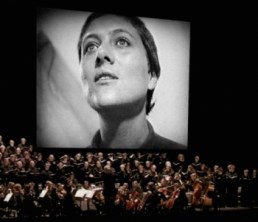
March 14: Conductor Cynthia Katsarelis and Pro Musica Colorado Chamber Orchestra, chorus and soloists lovingly performed Richard Einhorn’s oratorio Voices of Light as it was intended to be heard, accompanying a screening of Carl Theodore Dreyer’s 1928 silent film The Passion of Joan of Arc. Noted particularly for the acting of Renée Jeanne Falconetti as Joan, the film is regarded as one of the greatest silent films ever made, and it is greatly enhanced by Einhorn’s evocative score.

April 23–26: The CU Eklund Opera Program presented one of the first masterpieces of the operatic repertoire, Claudio Monteverdi’s Coronation of Poppea from 1643, in a musical realization by the conductor, Nicholas Carthy. A great work of dramatic imagination and musical genius that is not often performed today, Coronation of Poppea is always welcome. But it was the production concept from stage director Leigh Holman that made the performances especially memorable. I don’t often enjoy “updated” productions of operas and plays, but in this case the transposition into modern times worked very well. “Coronation of Poppea is all about sex and politics and power, and if you’ve seen House of Cards, it’s the exact same thing,” Holman said, explaining her decision to place the opera in modern Washington, D.C.. “It’s about a power hungry, vicious man and his power-hungry, vicious girlfriend.”

MahlerFest_DSC_8552

Robert Olson with the MahlerFest orchestra. Photo by Keith Bobo.

May 16–17: Founding director Robert Olson appropriately ended his 28-year tenure at the helm of Boulder’s Mahlerfest with a moving performance of the Ninth Symphony, the last of the composer’s symphonies to be completed. It was, he said, “not only the most perfect piece to end on, but may be one of the most perfect pieces, period.”

At the same time it was announced that Kenneth Woods, artistic director and principal conductor of the English Symphony Orchestra located in Worcestershire, UK, would succeed Olson as music director and conductor. Woods will direct the 29th MahlerFest later this year, with performances of the Symphony No. 7 scheduled for May 21 and 22.

July 1: The Colorado Music Festival opened the Jean-Marie Zeitouni era with a concert reflecting two of the conductor’s passions: the music of France, represented by Debussy’s orchestral showpiece La Mer; and music for the voice, represented by Ravel’s ravishing Shéhérazade
 and a grouping of Rossini arias, brilliantly sung by the Canadian contralto Marie-Nicole Lemieux. Zeitouni delivered sensitively crafted performances, Lemieux delivered the requisite vocal fireworks, and it all ended with a loud, brassy Pines of Rome by Respighi that sent everyone home happy.

July 23–24: A second highlight from the CMF was the evening that featured Stravinsky’s Firebird Suite and a concert performance of Bartók’s one-act opera Bluebeard’s Castle. The latter featured the distinguished American baritone Samuel Ramey as a last-minute stand-in for Bluebeard. Bluebeard’s Castle was a work that Zeitouni was especially eager to share with CMF audiences, and he saw it as a centerpiece of the festival from the time the schedule was announced in February. Here is another operatic work that deserves to be better known: It is a brilliant and disturbing psychological work, and it was given a stunning performance by Zeitouni, the CMF orchestra, and singers Ramey and soprano Krisztina Szabó.

IMG_0988

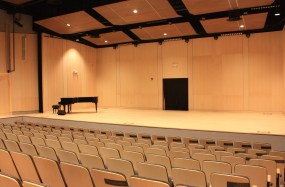
Interior of the new Stewart Auditorium at the Longmont Museum. Photo by Peter Alexander

Oct. 16–17: The Boulder Bach Festival made another memorable contribution to musical life by bringing attention to something that Boulder doesn’t have: a first-rate concert hall for chamber music. The BBF opened the 2015–16 season with the kind of eclectic concert that Carrettin often puts together—music not only by J.S. Bach but also Heinrich Ignaz Franz Biber, Jacques Arcadelt, Dario Castello, Johann Jakob Froberger, Biagio Marini, Marco Uccelini and Johann Christoph Bach. But the concert was not in Boulder; it was in the Longmont Museum’s splendid new Stewart Auditorium, a lovely facility that offers excellent sound, clean modernist lines and a welcoming feel.

Oct. 24: Like the Boulder Bach Festival, the composer Claudio Monteverdi makes a second appearance on this list, with another work of great scope and ambition that really should be more widely known for the masterpiece that it is: the Vespers of 1610. Conductor Evanne Browne, the Seicento Baroque Ensemble, and artists gathered from the world of historical performance gave us a splendid realization of Monteverdi’s score, which is virtually an anthology of early-Baroque virtuoso styles and techniques.

Erard piano.1

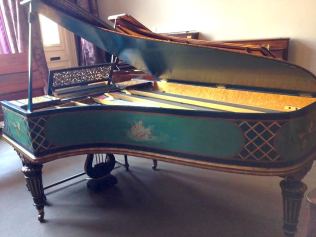
The 120-year-old debutante: an 1895 piano by Érard.

Oct. 30: A 120-year-old debutante made a strong impression on a concert by the Boulder Chamber Orchestra and conductor Bahman Saless. In this case, the debutante wasn’t a person; it was a piano, made in Paris in 1895 by the firm of Sébastien Érard. It was played by the evening’s outstanding soloist, Mina Gajić, who purchased the piano in Amsterdam in 2014 and brought it to Boulder. The concert was the first performance on the instrument in the U.S. Because the strings all run parallel to one another, instead of the bass strings beings crossed over the higher strings as in most modern pianos, the instrument has an unusually clear and transparent sound. Under Gajić‘s hands, it was a revelation to hear a piano that combined clarity and power in a way we are not accustomed to hearing.

Gábor Takács-Nagy_1-X2

Back again after 20 years: Gábor Takács-Nagy. Photo courtesy of CU, Boulder.

 Nov. 6: Boulder welcomed an old friend back to town when Gábor Takács-Nagy, a founding member of the Takacs Quartet, came through town on tour with the Irish Chamber Orchestra. It was his first visit to Boulder in nearly 20 years. Takács-Nagy no longer performs in public as a violinist, but maintains a thriving career as conductor. As conductor of the Irish Chamber Orchestra, he led a thoroughly enjoyable program of Haydn, C.P.E. Bach, and some idiomatically performed music from his homeland in Hungary, Bartók’s Divertimento for String Orchestra. “I talked with the orchestra about the Hungarian language, and even sang them Hungarian folk songs,” Takács-Nagy said. “Somehow they feel it very, very well!”