Boulder Bach Festival presents a complete realization of the B-minor Mass

J.S. Bach

J.S. Bach

By Peter Alexander

Zachary Carrettin and the Boulder Bach Festival last night (Feb. 28) delivered a performance of Bach’s monumental Mass in B minor that was creative, provocative, and sensational.

This was the first major work Carrettin has led since becoming musical director of the festival. If this is a harbinger of things to come, Boulder has much to look forward to.

The choral singing was immaculate, the orchestra superb, and the five soloists—sopranos Josefien Stoppelenburg and Melissa Givens, mezzo-soprano Julie Simson, tenor John Grau, and bass-baritone Michael Dean—were as well matched as any oratorio soloists you are likely to hear.

The B-minor Mass, nearly two hours of music, is a vast undertaking for any conductor or performing organization. It is so well known, and has been performed so often, that it is difficult to offer anything new. And yet Carrettin, who rethought the score from beginning to end, managed to make it fresh.

One departure from the norm was the choice to have some choral movements sung by the soloists rather than the full chorus. This is sanctioned by history, since the alternation between solo and group performance is one of the cornerstones of Baroque music, and Bach is known to have made similar decisions in performances he directed. There have even been modern Bach performances that reduced the entire chorus to soloists throughout, though few scholars endorse such an extreme.

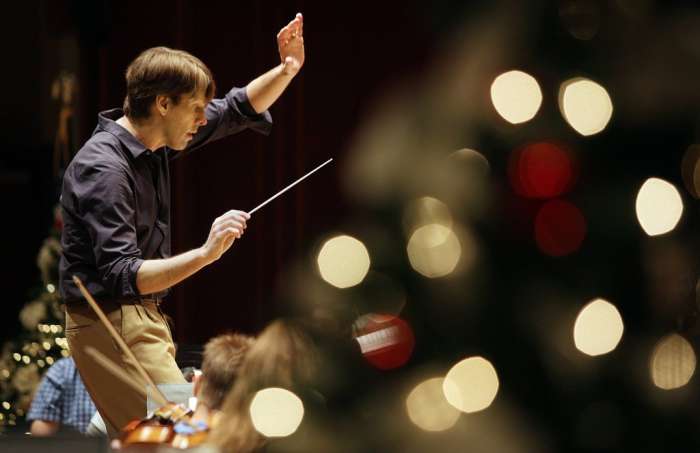
Zachary Carrettin

Zachary Carrettin

For this performance, Carrettin used soloists to stress the personal as opposed to congregational expression of the text, as at the beginning of the Credo (“I believe in one God.”) This was extremely effective, both as a way to illuminate the meaning of the text, and as a source of variety in the texture and sound of the performance.

I was less convinced by another departure, when Carrettin gave the choral movement “Confiteor” (“I confess one baptism”) to a single soprano soloist and strings, converting a choral movement into an aria. On the one hand, this decision brings out the highly personal nature of the text at the moment that the soprano sings “I look for the resurrection of the dead.” But on the other, it suppresses the brilliant counterpoint among equal parts that Bach wrote.

There can be no complaint about the quality of the performance, however. Stoppelenburg has a soprano voice of remarkable purity and clarity, and her singing in the “Confiteor” was exquisite.

Another decision concerns the placement of the intermission. It usually occurs between the Gloria and the Credo movements, a location that corresponds to a break in the liturgical segments of the mass. But Carrettin understands that performances of the B-minor Mass are just that—performances—because the piece is not suited to use in a service. And so he decided move intermission to a moment of high drama within the Credo, immediately following the “Crucifixus” (“He was crucified’).
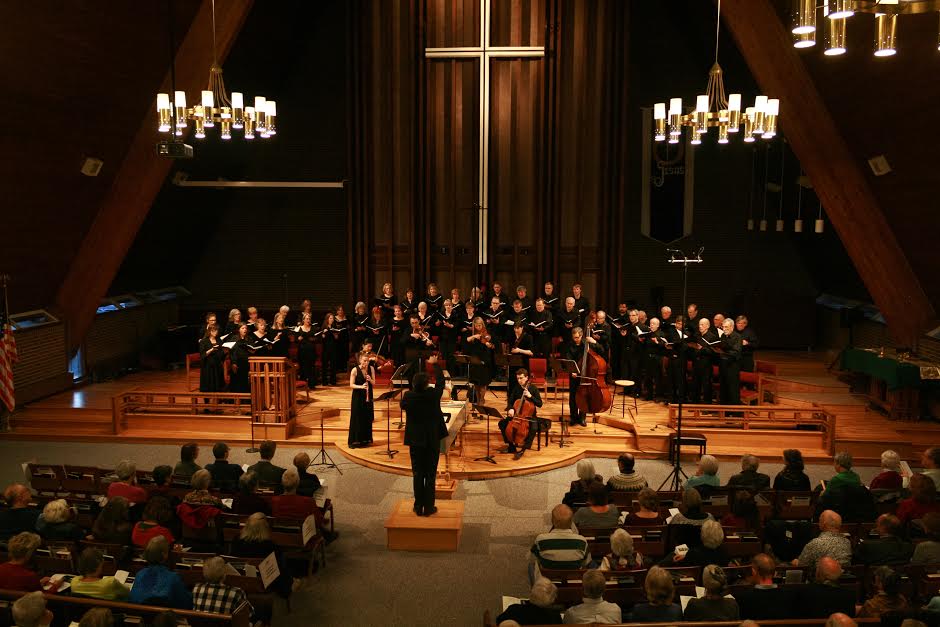
Boulder Bach Festival singers and players. Courtesy of the Boulder Bach Festival

Boulder Bach Festival singers and players. Courtesy of the Boulder Bach Festival

Carrettin had asked the audience not to applaud at that point, so Bach’s deeply moving music faded into silence, leaving the audience to contemplate the central event of Christian belief. That moment was made even more moving by the decision to have the “Crucifixus” sung only by the soloists, making it a musical expression of failing strength after the preceding full chorus.

After intermission, the audience returned for “Et resurrexit” (“And he rose again”), one of Bach’s most joyous and uplifting moments. Purists may object to having a break where there is usually continuity from sorrow to joy, but I found it highly effective as a moment of musical drama. It is this kind of creative rethinking that keeps the great masterpieces alive in our times.

On a purely musical level, the performance was extraordinary. The intonation among the singers and the orchestral players was exquisite, lending a clarity and transparency to Bach’s counterpoint that is only rarely achieved. This effect was aided by the meticulous phrasing, often based in the individual motives rather than long, Romantic lines that can obscure the exchanges among parts.

Earlier I praised Stoppelenburg’s performance of the “Confiteor,” but it would be unfair to single out only one soloist. They all sang with great precision of pitch and rhythm, rendering their complex lines, almost instrumental in quality, with remarkable clarity.

The balance among forces was carefully controlled throughout. In this respect particularly I would be remiss not to mention the brass players. The trumpets managed Bach’s high and difficult parts without ever overwhelming the singers, and the duet between horn and bassoon in the bass aria “Quoniam” becomes a new piece when the parts are so carefully balanced.
BBF-2014-15-season-brochure-pdfThe Boulder Bach Festival is likewise fortunate to have a flute player of the quality of Ysmael Reyes. His sound was gorgeous throughout, but especially in his duet with Grau in the “Benedictus.”

But above all else, I admired the pacing of the performance. It is hard to manage musical forces over such a long span of time, so that the chorus at the end of the Gloria can rise to a climax for the entire movement, and so that they can then achieve one more level of fullness of sound for the final “Dona nobis pacem,” before subsiding to a moment of rest and, indeed, peace.

In its accumulated impact, this may have been the most complete realization of the B-minor Mass I have heard. It was a remarkable achievement by the performers, and for everyone in attendance it was a night to remember.
Pro Musica Colorado presents a rich exploration of sound and expression

By Peter Alexander

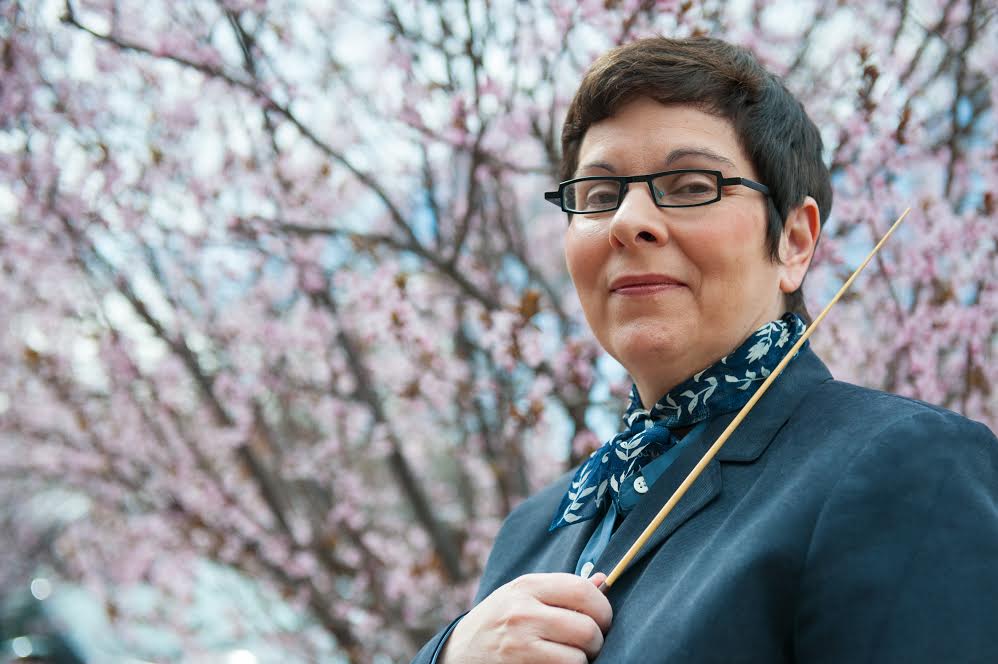
Cynthia Katsarelis, conductor of Pro Musica Colorado

Cynthia Katsarelis, conductor of Pro Musica Colorado

The Pro Music Colorado Chamber Orchestra performed a concert of music for strings last night (Feb. 7) with pieces that were inspired by poetry, by earlier music, and by nature.

Cynthia Katsarelis conducted Pro Musica’s string sections with both intensity and control. The performance proved to be a beautiful and rich exploration of sound and expression.

All three pieces on the program—Ralph Vaughan Williams’s Fantasia on a Theme of Thomas Tallis, Philip Glass’s Violin Concerto No. 2, “The American Four Seasons,” and the world premiere of . . . I give you my sprig of lilac by CU composition student Daniel Cox—originated in roughly the past 100 years, and all three impressed with the depth and breadth of sound that a string ensemble can produce.

The program opened with Cox’s brief, elegiac score. The winner of a composition competition, Cox turned to Walt Whitman’s memorial poem for Abraham Lincoln, “When Lilacs Last in the Dooryard Bloom’d,” for inspiration. The title comes from lines in the poem, describing the passage of Lincoln’s coffin through the streets: “With the tolling, tolling bells’ perpetual clang,/Here coffin that slowly passes,/I give you my sprig of lilac.”

The sound is warm and comforting as the music gradually emerges, swells, then trails into silence. The obvious comparison is of the funeral cortege slowly passing, but it would undervalue the music to hear it only in pictorial terms. Cox has written a polished and assured work that reaches deeper levels of emotion and honors Whitman’s poem.

The earliest piece on the program was Vaughan Williams’s Fantasia, finalized 1919 and inspired by the music of the 16th-century English composer Thomas Tallis. The score harkens back to the idyllic days before the First World War, expressing the very apotheosis of the English pastoral style that emerged from the composer’s study of folk song.

The performance by Katsarelis and the Pro Musica players was impressive for both the fullness of sound—the sheer volume—that can be achieved by a small group of string players, and by the careful control of the music’s contour. Katsarelis loves to talk about the “journey” of each piece; here that journey was clearly delineated in her interpretation.

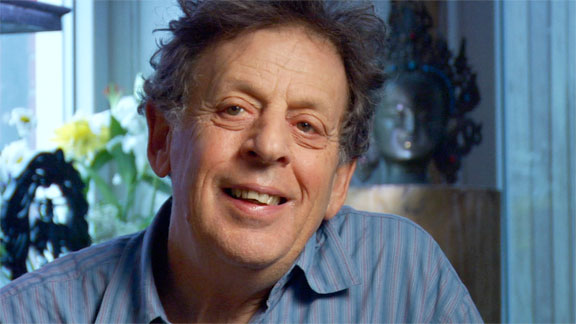
Philip Glass

Philip Glass

The second half of the concert was filled by Glass’s Concerto, written as a companion for the much loved Four Seasons concertos of Antonio Vivaldi. Although Glass has declined to indentify which seasons the individual movements represent, there is a sense of a journey—that word again!—through time and the stages of the year. And while Glass sticks mostly to the stylistic paths that he has long followed in his career, the music is varied in its expressive content and always rewarding.

Yumi Hwang-Williams. Photo by r r jones

Yumi Hwang-Williams. Photo by r r jones

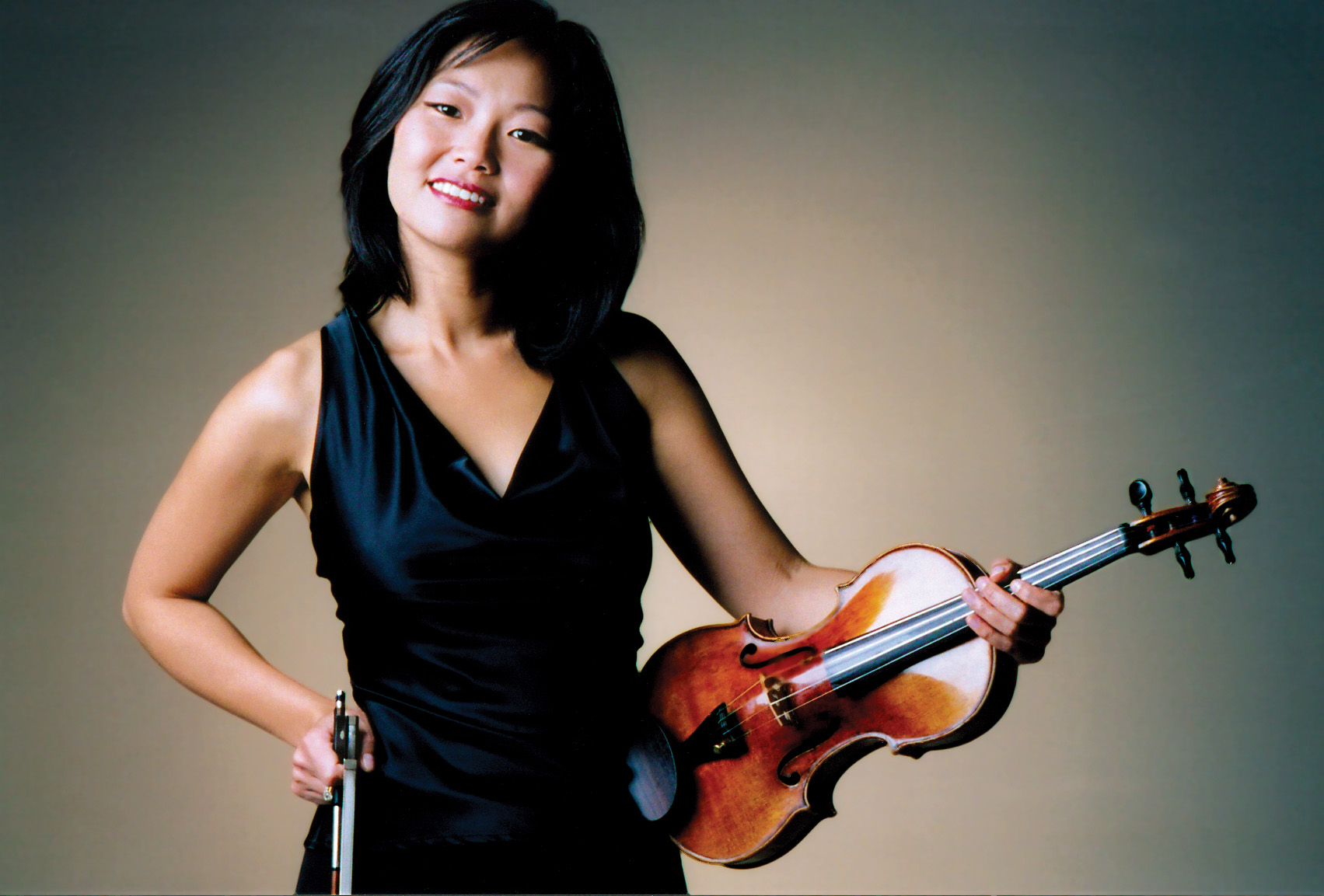
The concerto’s eloquent soloist was Yumi Hwang-Williams, concertmaster of the Colorado Symphony and an accomplished solo artist and chamber musician. She was equally impressive in the solo part’s seamless long lines, the breathless pianissimos, and the cascading arpeggios for which Glass is so well known.

Katsarelis and Pro Music provided full-bodied support, with great rhythmic propulsion when needed, the requisite chugging that never flagged in the lower parts, and delicately balanced chords in the gentler moments. This is a style that we do not hear often in Boulder, and it was delightful to hear Glass’s music so enthusiastically championed.

But which season is which? I have my ideas, but you won’t find an answer here. As a Buddhist, Glass likely honors the journey over the destination. So you will have to find your own answers; I would not deny my readers that personal journey of discovery.

With the Boulder Phil, Conrad Tao conquers audience, Beethoven, and Elliott Carter

By Peter Alexander

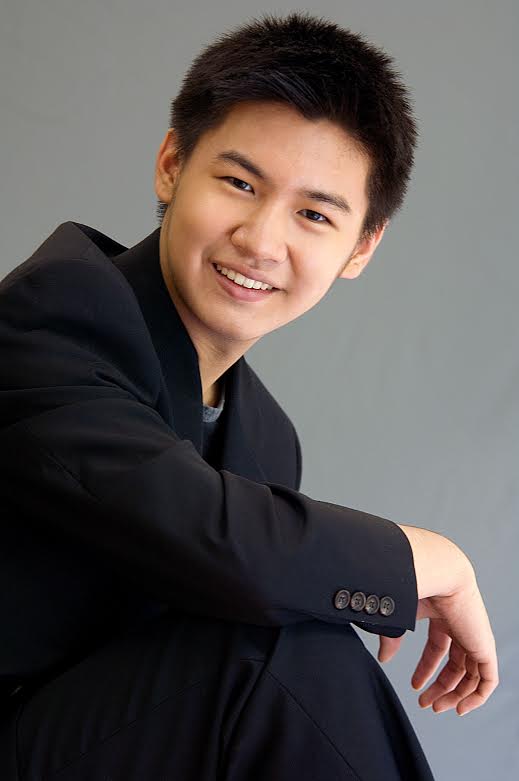
Conrad Tao. Photo: Ruimin Wang

Conrad Tao. Photo: Ruimin Wang

Conrad Tao conquered the audience last night, playing with the Boulder Philharmonic in Macky Auditorium.

The concert under music director Michael Butterman featured the highly talented young pianist as the soloist in Beethoven’s “Emperor” Concerto, which he seemed to navigate in comfort. Impressively, the multi-talented Tao also played piano in the orchestra for Darius Milhaud’s La création du monde and composed one of the pieces on the program.

The concert took its theme, “Creative Legends,” from Tao’s composition. Titled Pángu, it was inspired by a Chinese legend of creation, in which the god Pángu wakes up in an egg and creates the world we live in out of his own body.

Speaking before the performance, Tao said that he used a “cinematic palette” in composing the score. If so, it is cinematic in the best sense, using the orchestra to create a sense of color and motion. While not literally pictorial, the score suggests that something is happening throughout: the music is highly directive and leads to a powerful conclusion.

Tao also commented that when he finished, he realized that the style was “Bernstein adjacent.” This seems to imply an idiom that is symphonic yet inflected, as Bernstein’s music so often was, by American pop and jazz styles. It is a highly effective score that was realized with great energy by Butterman and the Boulder Phil.

Taking a cue from the subject of Pángu, Butterman filled out the first half of the concert with other works derived from stories about creation. Beethoven’s Overture to The Creatures of Prometheus was given an energetic, clean and transparent reading. It was followed by the music depicting “Chaos,” the very opening movement of Haydn’s oratorio The Creation. A rare visitor to the concert hall, this was a pleasure for any Haydn fans—such as myself— in the audience.

The least effective part of the program was Milhaud’s Création du monde. The performance was delicately balanced and carefully played, but lacked the raw energy that would better reveal the score’s origin in Milhaud’s visits to Harlem jazz clubs in the 1920s. It was nonetheless a welcome addition to the program, giving a glimpse into the impact of African-American music on France and French musicians in the early years of the 20th century. It is a colorful, original, and fun piece.

Michael Butterman

Michael Butterman

The real meat of the program came after intermission, with the Beethoven Concerto. Here the Philharmonic proved to be a good Beethoven orchestra, with a smooth, homogenous string sound and effective punch in the winds and the timpani. Butterman provided an attentive and supportive accompaniment to the solo part.

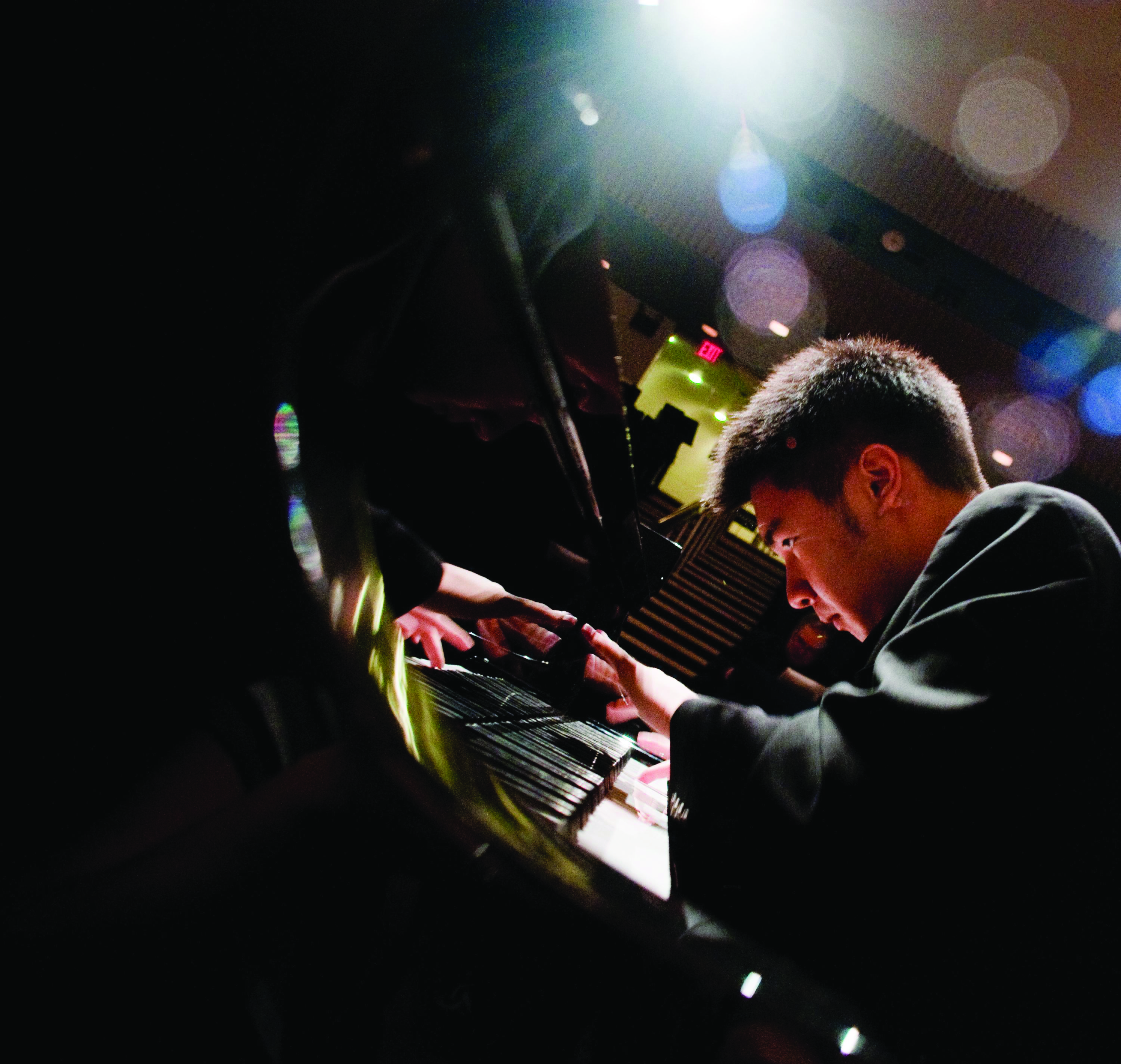
Tao played with a rambunctious energy appropriate to his 20 years, most notably in the spirited finale, but his interpretation was not without more modulated moments. He made good use of the modern piano’s wide range of dynamics, from the majestic chords and flourishes of the opening movement, to the delicate passages of the slow movement. His ability to project even the softest sounds into Macky’s large space was a valuable interpretive tool.

Conrad Tao. Photo: Vanessa Briceno.

Conrad Tao. Photo: Vanessa Briceno.

For an encore, Tao leaped centuries, styles, and all over the keyboard to play Elliott Carter’s Caténaires, a stunning and frenetic tour de force that ought to be impossible to memorize—and is nearly impossible to play. Once again Tao seemed to toss it off without breaking a sweat. I’m not sure everyone appreciated a non-tonal encore that was written in 2006, but I thought it was the perfect closer—a virtuosic “palette cleanser,” as Tao said, and also something completely unexpected. What more could you want from an encore?

Having conquered Beethoven, Elliott Carter, and the audience, Tao seemed completely unruffled as he stepped into the lobby to sign CDs and chat with his fans. Whether you were in Macky last night, heard the concert through Colorado Public Radio’s live broadcast, or are just reading this review, remember the name Conrad Tao: his impressive talent will take him far.

Time for Three raise the roof at Boulder Theater

Bach, Beatles, Bluegrass and more make a concert to be savored

Time for Three.

Time for Three.

By Peter Alexander

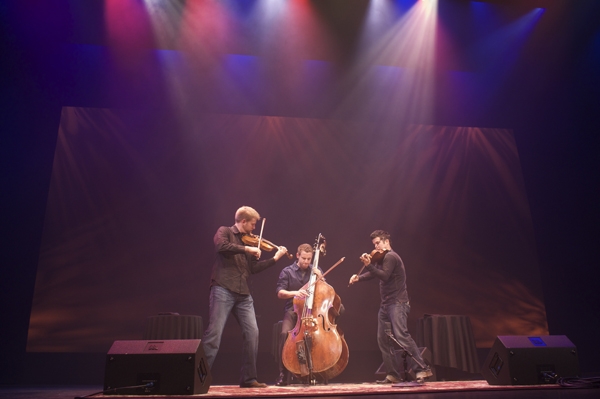
Time for Three, the classically trained, pop/jazz/gypsy/bluegrass inflected virtuoso trio of two violins and a bass got the rock star treatment last night (Jan. 8) from a cheering audience at Boulder Theater.

The occasion was a fundraiser for the Colorado Music Festival, where Time for Three, or Tf3 as their fans know them, gave their first performances in Boulder. Since those first appearances, the group and Boulder have developed an vibrant mutual admiration. Not only was the audience cheering before Tf3 played their first note, Nick Kendall—one of the violinists and the buoyant, boyish sparkplug of the group—couldn’t say enough about Boulder

“This is an amazing music town,” he said more than once. “You guys are fun!

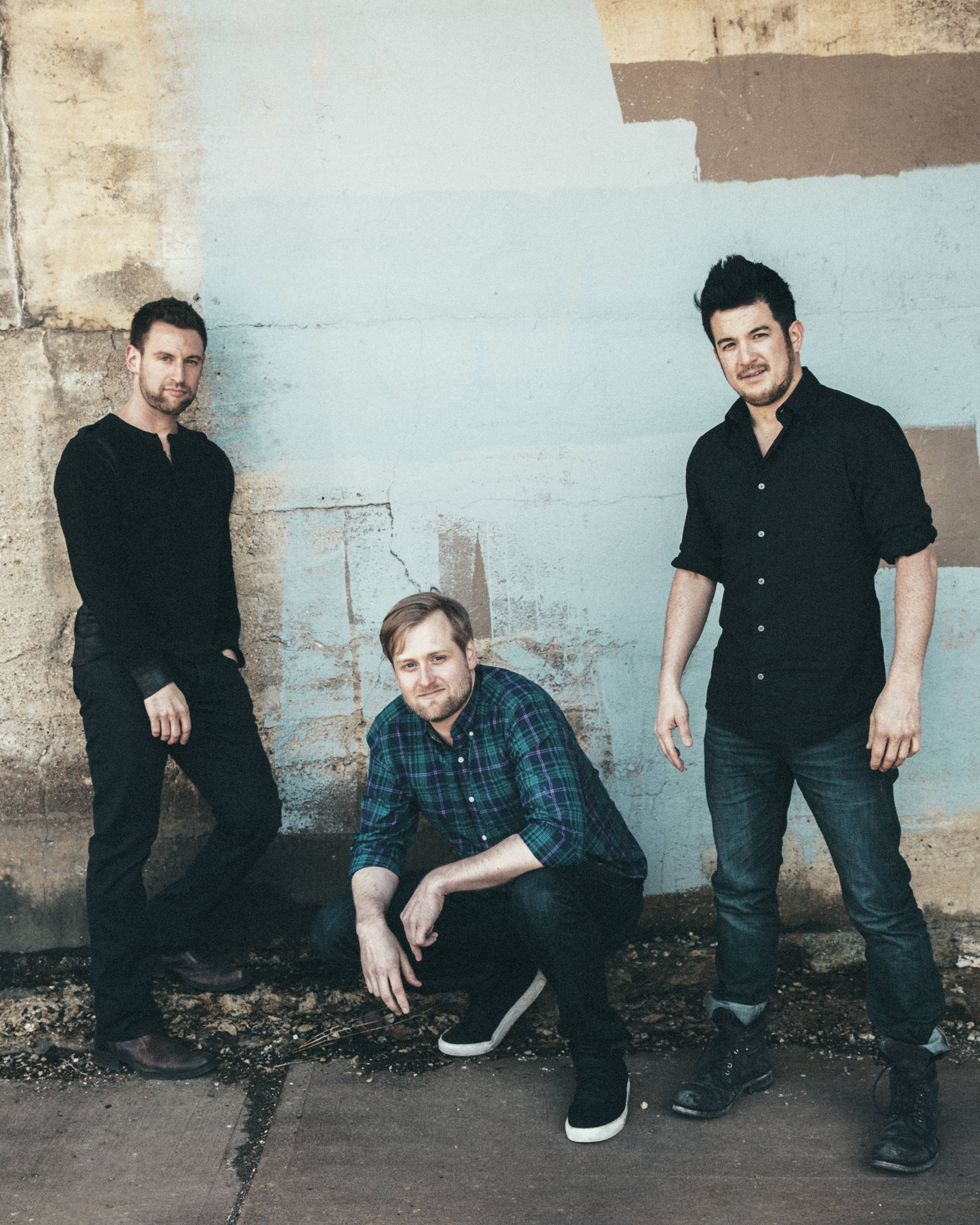
Time for Three: Ranaan Meyer, Zach De Pue, Nick Kendall. Photo by LeAnn Mueller

Time for Three: Ranaan Meyer, Zach De Pue, Nick Kendall. Photo by LeAnn Mueller

In fact, the performance had some elements of a rock show. The three players—Kendall and Zach De Pue, violins, and Ranaan Meyer, bass—made their entrance through stage smoke, and there were some discreet suggestions of a light show. But it’s really the energy and style of performance that got the audience pumped.

Their sheer virtuosity—the ability to play all of those notes, together—wows everyone who hears them. And the mixing of styles and genres, which they have mastered, draws in both the classical audiences who recognize the Bach and Chopin and Stravinsky, and the younger audiences who recognize the Katy Perry and the Mumford and Sons and the Cold Play.

And I’m sure both audiences love the Beatles.

But on top of the ability to merge seamlessly from one style to another, and the awesome technical chops, they are great musicians. The intonation is impeccable, even among all the fireworks, and the balance (except for the odd amplification glitch) and ensemble precision are at the highest level.

In short, Tf3 is the real thing. Those boys can play!

The show opened with three pieces written by members of the group, all from the group’s CDs: Kendall’s “Roundabouts” combined dreamy chords and a funky, jazzy outburst; Meyer’s “Banjo Love” reflected his wish to make his bass into “the world’s largest banjo”; and “Thunderstomp,” also by Meyer, was a Celtic-styled piece written with Béla Fleck in mind. Later they played Meyer’s “Philly Phunk” and their cheeky mashup of Stravinsky’s “Firebird” with Katie Perry’s “Fireworks.”

Their partnership with Steve Hackman, known to Boulder audiences for the Mashup Concerts at the Colorado Music Festival, was represented with “Winter Chaconne,” freely and funkily based on the famous Bach D-minor “Chaconne” for solo violin. And it is likely that Hackman, a longtime partner of the trio, was behind other classical/pop mashups they played.

Signature tunes from Tf3’s live shows were the “Czardas” that closed the first half, and their blazing hot version of “Orange Blossom Special” that seems to grow longer and wilder and faster every time I hear it. After that roof-raising display, encores were a gentle mashup of the Beatles “Norwegian Wood” with a Chopin Ballade (Steve Hackman, is that you?), and an even gentler arrangement of Leonard Cohen’s “Hallelujah” that sent the fans out satisfied, into the freezing rain.

I hope everyone made it home safely. That was a concert to be savored.

Pro Musica Colorado Opens Season with ‘fine performance’ of Sibelius, Barber and Mozart

By Peter Alexander

Pro Musica Colorado Chamber Orchestra, the third of Boulder’s professional orchestras to get underway this fall, launched their season last night (Oct. 17) with a fine performance of three disparate works.

Very likely few from Boulder heard the concert, as it was held in the Montview Presbyterian Church in Denver—a discouragingly long trek into traffic on US 36 or I-25. The orchestra deserved a larger audience, but I cannot blame those who chose to wait for tonight’s performance (7:30 p.m. Oct. 18) in Boulder’s First United Methodist Church.

Cynthia Katsarelis. Photo by Glenn Ross.

Cynthia Katsarelis. Photo by Glenn Ross.

If you are among those, you will want to hear this intriguingly selected and well played concert. Conductor Cynthia Katsarelis acknowledged that the three pieces on the program—Rakastava for strings and percussion by Jean Sibelius, Samuel Barber’s poignant Knoxville: Summer of 1915 for soprano and chamber orchestra, and Mozart’s Symphony No. 39—have little in common except that they compliment one another very well.

Rakastava, originally written for male chorus and later arranged for strings by the composer, is one of Sibelius’ less known tone poems, and virtually the only one suitable for chamber orchestra. It is a tender portrayal of the meeting and parting of doomed lovers from Finnish legend.

The score was beautifully played by Pro Musica, with a transparency and warmth of sound. Here the chamber orchestra truly performed chamber music, with a careful balance and responsiveness of one part to another and lovely solos in violin and cello. The effect was aided by the highly resonant acoustic of Montview Presbyterian, which enriched the string sound.

The acoustic was more of an issue in the Barber. Soprano Amanda Balastrieri gave an eloquent and emotionally committed performance, but the lengthy reverberation sometimes covered consonants, rendering the text less than ideally clear.

Knoxville: Summer of 1915 is a setting of a prose poem by James Agee, describing an idyllic summer evening from his childhood, when he was wrapped in the warmth and love of his family. A wonderful piece of nostalgia, the text and music seem to yearn for a lost innocence, but it is more than that. The following year, Agee lost his father in a car accident. Perhaps coincidentally, Barber’s father was dying when he was writing the music.

This knowledge shifts the emotional focus away from the description of the warm night to the foreshadowing of the imminent tragedy, and to the words “May God bless my people . . . remember them kindly in their time of trouble; and in the hour of their taking away.”

Amanda Balastrieri, soprano soloist in "Knoxville: Summer of 1915"

Amanda Balastrieri, soprano soloist in “Knoxville: Summer of 1915”

Without stifling the nostalgic aspects of the score, both conductor and soloist brought out those shadows. Balastrieri stressed that darker aspect in talking about the piece, saying that recent losses in her family have deepened her understanding of the music.

In performance Katsarelis created a warm sonic cocoon for the opening lines of text, but then sharply attacked the harsh chords that follow the words “my father who is good to me,” making them a portent of things unsaid. Similarly Balastrieri made the words “my good father” and “their taking away” the emotional climax of the piece, rendering the subsequent  return to the nostalgic tone all the more poignant. The tender mood, so comfortable at the beginning, now feels fragile.

Often presented by larger orchestras, Barber’s score takes on an especially intimate cast when played by a chamber group. Balastrieri’s clear voice is ideal for Barber’s music, and in Katasrelis she had a congenial and like-minded partner. In spite of the acoustic disadvantages of the high-ceilinged, narrow, deep space, Knoxville: Summer of 1915 left a deep impression.

It was Mozart’s symphony that suffered most from the cathedral acoustics of Montview Church. With a reverberation time of 2 seconds or more, loud chords were still sounding into succeeding softer passages, and in fast tempos one measure overlay the next. The beginning of the Minuet, where the metronomic wind chords should pulse cleanly beneath transparent strings, was especially muddied.

Acoustics aside, Katsarelis and Pro Musica offered a stylish and energetic reading of Mozart’s symphony. The last movement got off to a sparkling start and continued to sparkle in the softer passages. And it would be remiss not to note the delightful wind playing throughout this movement, and the admirable restraint from the trumpets who could easily have overwhelmed the ensemble. Only at the end, encouraged by Katsarelis’ emphatic cues, did they open up to build a climax.

Looking at the symphony as a whole, Katsarelis provided firm control of the structure. Before the performance she spoke briefly of the symphony’s musical journey, away from and back to the home key, as a metaphor for our life’s journey. This is a theme she clearly feels deeply, and it was well reflected in her interpretation, which offered a fully satisfying homecoming at the end.

# # #

Pro Music Colorado Chamber Orchestra will repeat this program tonight (Oct. 18) at 7:30 p.m. in First United Methodist Church in Boulder. Click here for tickets.

For information on the remainder of the season, see the Pro Musica Colorado Web page.

Baroque Trio Aeris Opens Boulder Bach Festival with stunning, eccentric program

By Peter Alexander

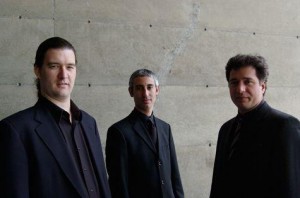
Aeris: William Skeen, Avi Stein, Zachary Carrettin

Aeris: William Skeen, Avi Stein, Zachary Carrettin

The Baroque-instrument trio Aeris opened the 2014–15 Boulder Bach Festival last night (Oct. 16) with a concert that more than lived up to the promise of its title, “Capriccio.”

In fact, the program was so capricious and idiosyncratic that it might well have taken its title from one of the works, Diverse bizzarie (diverse bizarrities). But that was exactly the goal of Zachary Carrettin, the musical director of the festival and the violinist of the trio. By focusing on a notably eccentric repertoire, Italian violin sonatas of the 17th and 18th centuries, Carrettin established from the very first notes of the new season that the Bach Festival will not hesitate to spread a wide net in order to illuminate the most familiar works of festival’s main subject, J.S. Bach.

Francesco Maria Veracini Italian violin virtuoso and composer (1690–1768)

Francesco Maria Veracini, Italian violin virtuoso and composer (1690–1768)

The trio, made up of Carrettin with Baroque cellist William Skeen and harpsichordist Avi Stein, gave stunning performances of violin sonatas by the Italian virtuosos and composers Veracini, Stradella, Valentini, Locatelli and Nicola Matteis, and a very Italianate and wildly virtuosic sonata by J.S. Bach; plus a cello sonata by Vivaldi.

J.S. Bach

J.S. Bach

There is an important message in the choice of program. The composers Carrettin picked were, he said, “phenomenal characters in music,” musicians who explored with gusto the outer limits of their instruments and their own virtuosity. This is very different from the image we have of Bach the sober Lutheran cantor, but it was very much part of Bach’s world. And the better we understand that whole musical world, the better we understand Bach.

And this kind of programming gets the festival beyond the mere rotation of great works and provides a welcome source of excitement and exploration for Boulder’s audiences.

To bring this ancient music to life, Aeris plays on historically accurate instruments, using gut strings and Baroque bows for the violin and cello. This creates a less brilliant and potentially less consistent sound than modern bows and metal strings, but it also gives the music a warmth and a clarity of texture that the composers would recognize.

This more delicate and intimate sound works best in a smaller venue. While it would be out of place in even a modest auditorium, it sounded completely at home in Boulder’s St. John’s Episcopal Church. Boulder’s churches see many performances, but unlike larger ensemble programs, in this case the church is in no way a compromise. In fact, it is the closest thing we have to the spaces where music was performed in the Baroque era.

Aeris also plays from reproductions of 18th-century manuscripts or first editions. This is an important decision. It’s easy to imagine that notes are notes, but in fact by bypassing all of the decisions that have to be made by modern publishers and seeing only what the original performers saw, the players are able to respond much more directly to the music as it was conceived and put onto paper—both its demands and its expressive possibilities.

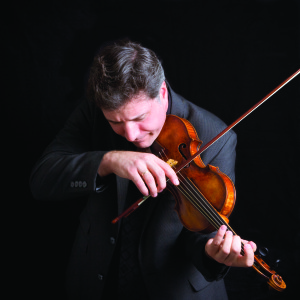
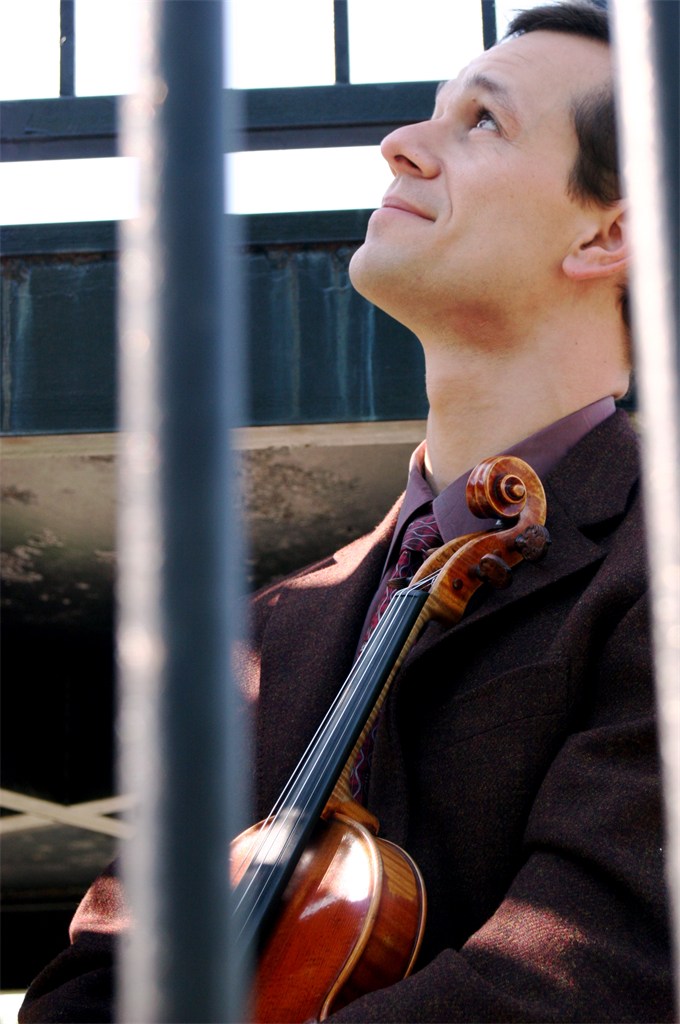
Zachary Carrettin

Zachary Carrettin

While not immune to the occasional edgy sound and surging phrases that can result from the lower tension of Baroque bows, Carrettin and Skeen played with both technical polish and a lovely sound that complimented Stein’s harpsichord without overwhelming it. They are all virtuoso performers.

The most important qualities they brought to their performance were energy and passion. If played mechanically—as Baroque music was often played in the past—this music looses its life and becomes, as it was called, “sewing-machine music.” But played with freedom and a sense of drama, as newer generations of specialist performers have done, it becomes exciting, edgy, surprising.

In this regard, Aeris could not be faulted. The program was played with flair, drama and occasionally humor. The musical swings and turns of mood were well characterized throughout.

With so many cascading notes and the freedom of expression the repertoire demands, it is easy for the metrical framework and a sense of direction to get lost in performance. Here is where Aeris truly excelled: Nothing felt aimless or seemed to wander. The players’ unerring sense of phrasing made every line clear, every joint and juncture distinct.

Music historians teach that the word “Baroque” may have come from a Portuguese word for misshapen pearls, implying music that is bizarre, extravagant and asymmetrical. With its idiosyncratic and unpredictable violin sonatas, the program by Aeris was a perfect illustration of that characteristic of the Baroque era.

Hearing such pieces, it becomes easy to understand why the early classical composers of the generation between Bach and Mozart wrote music that oversupplied what Baroque music lacked: regularity, symmetry, and an often banal predictability. Charles Burney, an 18th-century English music historian who was quoted in the program notes, represented the view of that generation when he called the music of the Italian violinists “wild, aukward [sic] and unpleasant” and said it provided “more surprise than pleasure.”

Burney to the contrary, the music Aeris performed last night supplied both surprise and pleasure—and a promising start for the 2014–15 Boulder Bach Festival.

# # #

AERIS: “Capriccio”
Zachary Carrettin, violin; William Skeen, cello; and Avi Stein, harpsichord
Sonatas by Locatelli, Veracini, Matteis, Stradella, Vivaldi and Bach

Remaining performances:
7:30 p.m. Friday, Oct. 17, St. John’s Cathedral, Denver
7:30 p.m. Saturday, Oct. 18, First Lutheran Church, Longmont

Kronos Quartet delivers powerful, disturbing, and inspired performance

By Peter Alexander

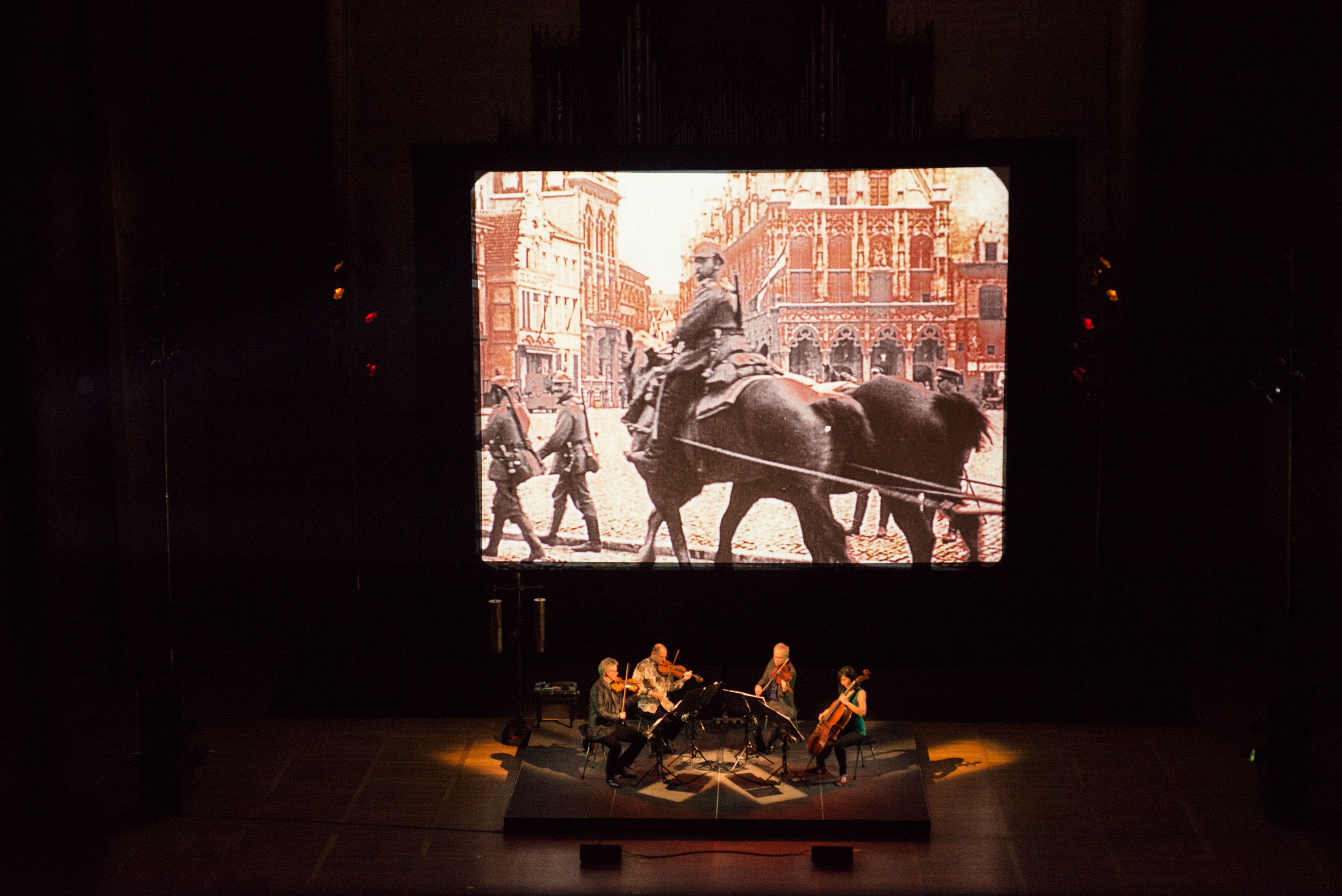
Kronos Quartet performing Beyond Zero. Photo courtesy of Kronos Quartet

Kronos Quartet performing Beyond Zero. Photo courtesy of Kronos Quartet

Kronos’ Quartet performance of Aleksandra Vrebalov’s Beyond Zero: 1914–1918, Wednesday night (Oct. 8) at Macky Auditorium, was the one of the most powerful concert experiences I can recall.

Commissioned by Kronos to mark the centennial of the beginning of World War I, Beyond Zero is by turns beautiful, disturbing, haunting and almost unbearably intense—as befits the subject, one of the most brutal and tragic events of human history. Kronos’ performance was an inspired feat of musicianship and athletic endurance: once begun, the music scarcely lets up until the very end, with harsh, rhythmic chords propelling the piece from climax to climax.

There are times that the music becomes almost unendurable in its intensity, but that again is an expression of a war that was literally unendurable for millions. How else can you put into music the suffering of a continent and the agony of the soldiers in the trenches, year after year? Like a visit to the battlefields, it is sometimes disturbing, but it is a vital and deeply moving experience that enlarges the soul.

Included in the performance are recordings that Vrebalov collected from the time of the war, including military commands, air raid sirens, inflammatory speech, the composer Bartók playing his own music, and ending with the chanting of Byzantine monks fading into deep silence. These imported sounds heighten the music’s impact.

BZ 1058

Still image from Bill Morisson’s film accompanying ‘Beyond Zero’

Beyond Zero is performed in front of a screen on which are projected archival films from the time of the war, restored by experimental film maker Bill Morrison. The film, most of it badly deteriorated, was scanned in high definition and includes both the original filmed images and the marks of deterioration—oxidation, discoloration and other forms of physical degradation. The sometimes ghostly images are evocative of a world long past, and in their imperfections are eloquent commentary on the war itself.

There are many images that will long remain with me, but I will mention just two: the opening sequence, in which a flickering blue fog of discolored film gradually reveals an approaching line of early tanks, which seems to symbolize the world’s gradual but inexorable descent into mechanized war; and a large group of uniformed men whose image is consumed by the loss of the crumbling film, much as an entire generation of young European men was consumed by the war.

The whole multi-media experience is far too much to grasp in a single performance. I didn’t know whether to watch the film, listen to the music, attend to the combination of music and captured sound, or simply admire the sheer hard work and technical accomplishment of the players. I for one will eagerly await the release of a DVD of Beyond Zero, so I can come to grips with all that it expresses.

Beyond Zero was the second half of a concert that also included a world premiere and an appearance by David Barsamian of Boulder’s Alternative Radio. The first half opened with Death to Kosmische by Nicole Lizée. Kronos’ first violinist, David Harrington, says that Death to Kosmische is “sonic fun,” but you would not get the whole joke if you didn’t know that “Kosmische” is a form of East German electro-pop music from the 1960s and ‘70s.

Knowing that, you hear the humor as the music sonically eats its own tail and ends in a burst of electronic distortion. Clearly, the composer was no fan of “Kosmische” music, and she revels in its death. Equally, Kronos relishes playing the piece, including a variety of electronic devices; their fun is infectious even if you don’t know what or whom is being threatened with death.

Kronos next played the world premiere of Speak, Time, an accomplished score by Yuri Boguinia, a young composer who grew up in Boulder and now lives in New York. The score is an episodic exploration of sounds from the quartet, all skillfully knitted together by Boguinia into a mostly-balanced whole. I say mostly, because some sections seemed overly long in relation to the rest, but the music, which seems to trace an unspecified narrative arc, is intriguing throughout.

David Barsamian of Boulder's Alternative Radio

David Barsamian of Boulder’s Alternative Radio

David Barsamian was introduced to the audience as one of Harrington’s “favorite persons.” He has worked with Kronos several times in the past, providing spoken texts over their playing. On this occasion Kronos played four songs from Turkey, Greece, Poland and Armenia—cultures deeply impacted by World War I—as an informal prelude to the second half of the concert. Barsamian gave thoughts relevant to the first three countries, and played a recording of his mother, a survivor of the First World War’s Armenian genocide, for the last.

Everything Barsamian had to say was articulate and appropriate for the occasion—although even in Boulder I don’t suppose everyone agrees with his left-wing point of view. Nonetheless, Harrington’s decision to bring him in for the performance strikes me as both meaningful and confounding. His words would have more impact if they were heard apart, without music that divided the attention and occasionally covered Barsamian’s voice. I for one would rather have heard the music—beautiful and touching folk songs that represent the kind of cross-cultural performance that Kronos does so well—and had time later to reflect on Barsamian’s literary contribution.

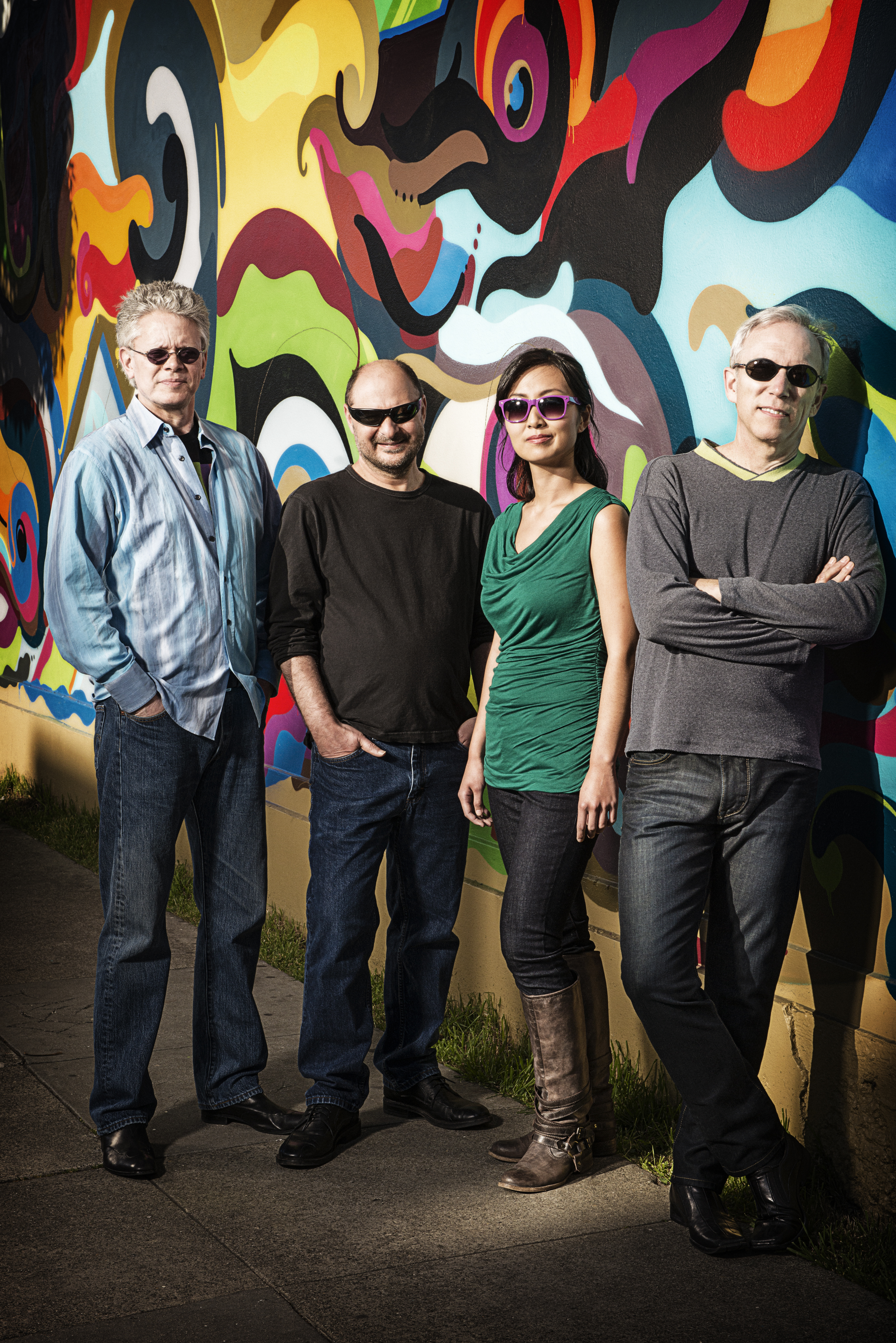
Kronos Quartet: David Harington, John Sherba, Sunny Yang and Hank Dutt. Photo courtesy of Kronos Quartet.

Kronos Quartet: David Harrington, John Sherba, Sunny Yang and Hank Dutt. Photo courtesy of Kronos Quartet.

One reason for Kronos’ commissioning of Beyond Zero is the fact that as a country, we have largely forgotten World War I. In comparison to World War II, the “good war” of the celebrated “greatest generation,” it hardly registers in our consciousness. And yet we still live in the world that was created by the barbarity of the war and blunders of the post-war peace process. Harrington wanted to remind us all of that, and in that context Barsamian has much to say. But I am not convinced that making an artistic performance into a didactic exercise serves either the music or the message being conveyed.

In the end, it is the music that matters. And because Kronos plays such exceptional and striking music, music that itself monopolizes our attention, it is easy to forget how good they are at what they do, and how their adventurous, passionate explorations have changed the musical landscape. Whether or not you like the music they play—and I admittedly don’t like everything they have done over the years—it is always worth hearing. From the most tender and gentle pieces to the most fierce and aggressive, Kronos crosses borders, explores limits, and takes us all along for the journey.

They have been doing this for 40 years now, and remarkably all but the cellist are founding members. Such longevity is remarkable, especially when you see how physically demanding some of their playing can be. Whatever they do, they do it with commitment and technical polish. Long may their adventure continue!

BCO and pianist Victoria Aja in a delightfully designed program

By Peter Alexander

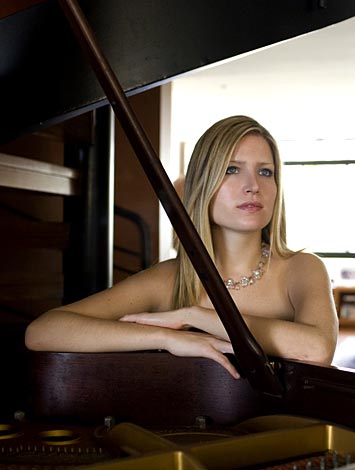
Pianist Victoria Aja

Pianist Victoria Aja

Conductor Bahman Saless and the Boulder Chamber Orchestra were joined by Spanish pianist Victoria Aja for a program of French and Spanish music Friday and Saturday, Oct. 3 and 4. The program was wonderfully planned, if somewhat uneven in execution on Saturday.

The first drawback of that performance was the venue, Broomfield Auditorium. Part of a larger complex that includes a public library, the auditorium looks like a barely completed warehouse, with an open ceiling that reveals pipes, light instruments, ducts and conduits. Spare stands and chairs are stacked on the edge of the stage, and a ladder can be seen backstage as the artists enter and exit.

More troubling than the inelegant appearance, however, is the sound. The stage is shallow and flat, and the hard concrete walls bounce the sound directly into the small seating area (fewer than 300 seats on the main floor), rather than blending it or in any way cushioning the sound waves, as more suitable acoustic materials would do.

Because the sound is so present, it was hard to achieve the needed balance and contrasts in the opening work, Manuel de Falla’s popular “Ritual Fire Dance” from El Amor Brujo. This exciting orchestral work was well played, but the winds—almost hidden on the flat stage—were often unbalanced, while the bright sound made it especially difficult to achieve the kind of dynamic contrasts that would give impact to the fiery climaxes.

The second work on the program introduced the soloist in de Falla’s impressionistic Nights in the Gardens of Spain. Normally a work for large orchestra, Saless used a chamber-orchestra version that suited his smaller ensemble. This version lost none of the score’s exotic color, but the reduced strings gave up some of the mysterious atmosphere of the original.

Clearly having a full grasp of de Falla’s style, Aja played with great flair and expression. Saless’s accompaniment was sympathetic, but the soloist sometimes struggled to be heard, even over the reduced orchestra, in the hall’s vivid acoustic environment.

The second, French half of the program fared better. César Franck’s Symphonic Variations treats the piano and orchestra not as contestants in a heroic concerto or as soloist with accompaniment, but as two equal partners that share the material. This disposition eliminates many of the balance problems the hall imposes.

Consequently, Aja could be heard as a thoroughly worthy partner to the orchestra. She certainly has the technique and the interpretive gifts to bring Franck’s somewhat academic work to life. I especially enjoyed the spirited final variations.

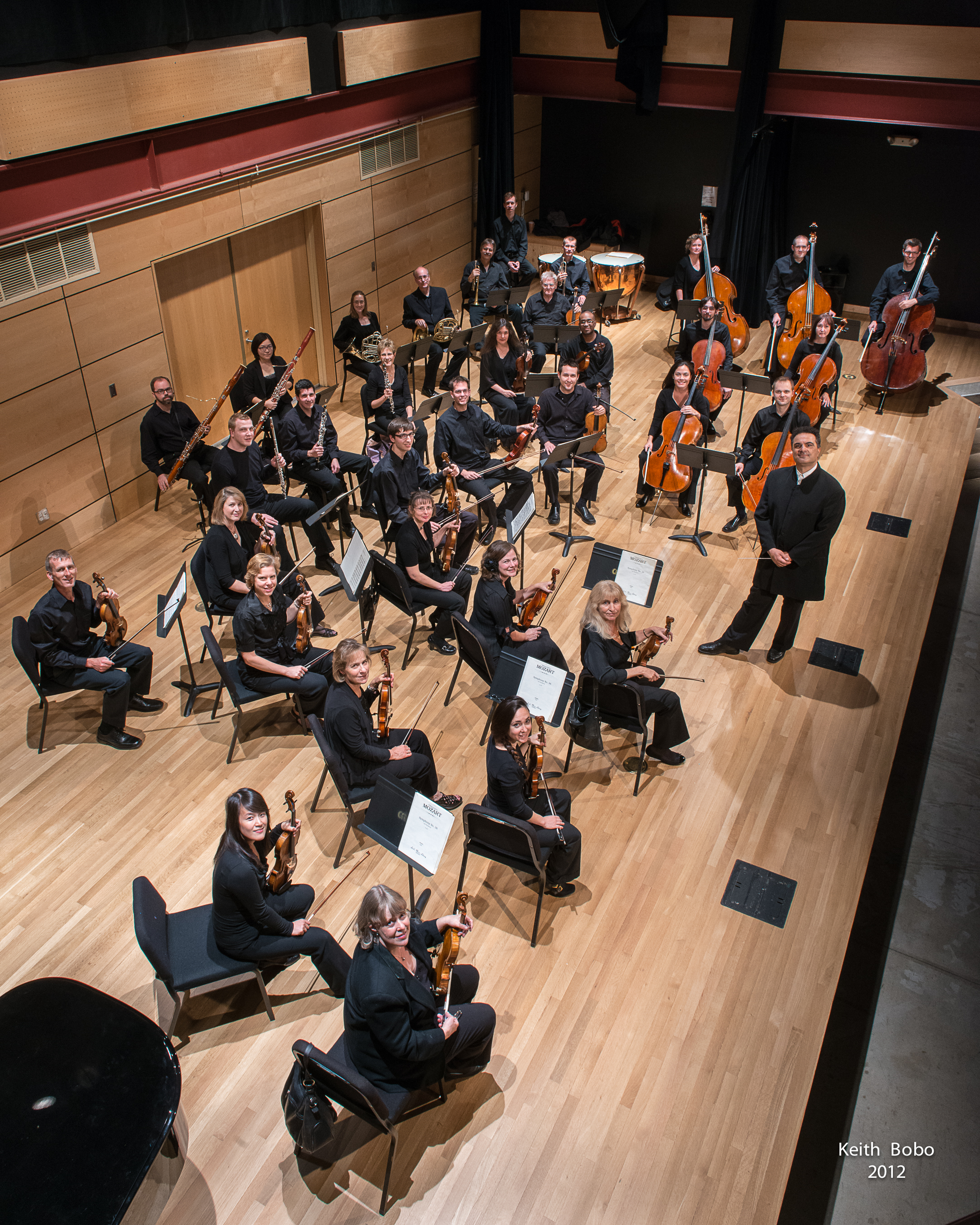
Boulder Chamber Orchestra. Photo by Keith Bobo.

Boulder Chamber Orchestra. Photo by Keith Bobo.

In this case, the greatest drawback was the size of the BCO. Saless said that the Symphonic Variations was written for a “Beethoven orchestra,” which might be true of the wind section. But when it was completed in 1885 (not 1955 as the program anachronistically stated), string sections of 50 or more had been commonplace for more than 20 years, whereas BCO only mustered about 30 for Saturday’s concert. (The program lists 34, but there did not appear to be that many on the Broomfield stage.) While the performance on the whole was satisfactory, the string section sound was audibly underweight in some full-bodied passages.

To close the program, Saless chose Bizet’s early Symphony in C major, written when the composer was a 17-year-old student in the Paris Conservatory. Both the size and the personnel of the BCO are ideally suited to this delightful work, which was pure pleasure from beginning to end. The spirited wind solos were notable throughout, and oboist Max Soto deserves special recognition for his lovely solos throughout the tender second movement.

In spite of any shortcomings, Saless’s thoughtful programming and Aja’s pianism afforded an enjoyable evening of music, topped off with Bizet’s refreshing little symphony. In a more hospitable performance space, such as the Methodist Church where the BCO performed on Friday, it may well have been even more satisfying.

# # # # #

NOTE: After intermission, Saless characterized the first half of the concert as “tapas” that preceded a main course of French cuisine. If you would like more than an appetizer of Iberian music—paella or a Spanish omelet, perhaps?—Aja is playing an entire solo piano recital of “Spanish Piano Masterpieces” at 7:30 p.m. Friday, Oct. 10, in Grace Lutheran Church, Boulder. The program, about an hour to be played without intermission, will include music by Albéniz, de Falla, Joaquin Larregla and Padre Jose Antonio Donostia.

“A Night of Spanish Piano Masterpieces”

Victoria Aja, piano
Presented by the Boulder Chamber Orchestra
7:30 p.m. Friday, Oct. 10
Grace Lutheran Church, Boulder

Tickets

Boulder Phil’s Season of ‘Legends’ Opens Strongly

By Peter Alexander

From the Arctic tundra to the Arabian sea, the Boulder Philharmonic opened their 2014-15 season in Macky Auditorium with a strong performance of a strong program.

Butterman.2

Michael Butterman, Music Director of the Boulder Philharmonic

Music Director Michael Butterman led the orchestra in the world premiere of Gates of the Arctic by Stephen Lias; the Second Piano Concerto of Camille Saint-Saëns with soloist Gabriela Martinez; and Scheherazade by Nicolai Rimsky-Korsakov, which gave the orchestra the opportunity to introduce new concertmaster Charles Wetherbee.

Speaking before the performance, Butterman explained that this is the orchestra’s season of “Legends,” featuring pieces that tell stories drawn from a variety of myths and legends. I have frequently enjoyed Butterman’s programming, and this concert, combining a provocative and intriguing new piece, a highly interesting soloist playing repertoire beyond the usual warhorses, and a virtuoso orchestra showpiece, hit all the right notes for a season opener.

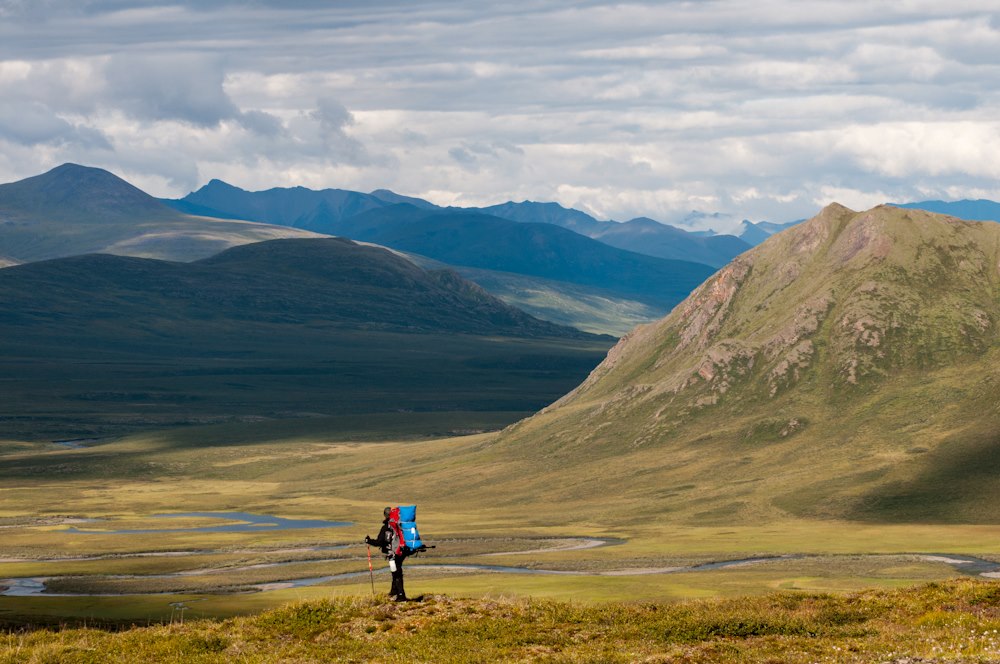
Gates of the Arctic is an unabashedly programmatic piece that describes Lias’ 2012 residency in Gates of the Arctic National Park. He backpacked with a ranger within the park—which is entirely wilderness, without a visitor’s center or even a single road within its boundaries—for 10 days, following a caribou migration. In performance, the music was closely coordinated with photos of the park, some taken by Lias.

Stephen Lias in Gates of the Arctic National Park

Stephen Lias backpacking in Gates of the Arctic National Park

In addition to being visually spectacular, the photos left no doubt what was being portrayed in the music, from the long hours of trekking with a heavy backpack, to sightings of caribou, bears and wolves, and finally a placid lake that mirrored the spectacular mountains in the park. Gates of the Arctic is thoroughly entertaining, especially with the photographic accompaniment. But it is also a well crafted and skillfully designed piece that features strong contrasts and great musical drama, woven into an effective orchestral score.

Some of my more curmudgeonly composer friends might ask, “but is it great music?” In answer I would say, Bach, Mozart and Verdi didn’t sit down to write “great music.” They sat down to write music for their audiences, much of it purely for entertainment. Time will tell us if Lias’ music survives our generation, but it is music that clearly reached the Boulder audience, who gave it a standing ovation.

Gabriela Martinez

Gabriela Martinez

The Saint-Saëns concerto is a piece that comes much more alive in performance than in any recording. Martinez, a Venezuelan who has performed with the famed Simon Bolivar Youth Orchestra and is now being championed by superstar conductor Gustavo Dudamel, was especially convincing in the free, fantasy-like opening movement. I especially liked her dynamic control, and the sense of spontaneity and freedom that she conveyed. Her sparkling runs and bounding arpeggios showed full technical command in the remaining movements, but the piano sound seemed underpowered at times—perhaps a victim of Macky’s inhospitable acoustics?

Charles Wetherbee

Charles Wetherbee

Another piece of program music, Scheherazade is always an audience pleaser—as it was for Butterman and the Boulder Phil. Wetherbee played the extensive violin solos with a sweetness and purity of tone that was exemplary. The solos in the cello and the wind sections were all well played, although coordination between players in the back of Macky’s deep stage and those in front was at times a little rocky.

Tricky acoustics aside, Butterman led a carefully modulated performance. The Boulder Phil strings cannot provide the sound that we hear on recordings by the Philadelphia and other orchestras with 60-plus players in the string sections and more hospitable acoustics, but the orchestra made effective work of all the big moments in the score, once again compelling the audience to their feet. It was, in the end, a satisfying performance of a much-loved piece.

Like Sinbad’s ship, the Boulder Philharmonic is well launched on a season that will feature many “Legends” and other stories in music. Let’s hope that the storm at sea where “The Ship Goes to Pieces on a Rock” remains confined to Rimsky-Korsakov’s evocative score.

# # # # #

Author’s Note: I do not plan on reviewing every concert that I preview here, or every one that is worthy of such coverage. But as the beginning of a new season by one of Boulder’s older musical institutions, and with a world premiere, this concert perhaps earned a little more attention—especially since I and the audience enjoyed it so much.

# # # # #

This post has been edited to correct grammar and typos.

CMF’s “Music Mash-up” series earns mixed review

Beethoven/Coldplay and other blurred lines at Colorado Music Festival

By Peter Alexander

Let’s get one thing out of the way: mashups are nothing new.

Today the term usually means the blending together of music by different pop artists, by overlaying tracks from separate recordings into a new piece. This concept is the basis of the “Music Mash-up” series at the Colorado Music Festival, which just finished its second year.

Steve Hackman, music director of CMF's "Music Mash=up" series

Steve Hackman, music director of CMF’s “Music Mash-up” series

But it is also just about as old as written music. Remixes and what were called “break-in” songs go back just about as far as recordings. The history of recorded mashups is complex and fascinating, from “Stairway to Gilligan’s Island” (a mashup of Led Zeppelin’s “Stairway to Heaven” and the theme from the “Gilligan’s Island” TV show) to the world of hip-hop DJs and “turntablism.”

But composers were borrowing from each other long before recordings. In the 16th century the “parody mass” was music written for performance in the Catholic mass using music from secular songs and other sources, with new music interposed into the original song. This became so popular that in 1562 the church’s Council of Trent banned the use of secular music in services.

At the CMF the mashups have taken two forms. One is the creation of a new score by combining a classical piece with music by a contemporary popular group or artist. In 2013, it was Brahms’s First Symphony and Radiohead’s album “OK Computer” that were blended together in a score written and conducted by Steve Hackman. That performance featured the CMF orchestra performing Brahms and material written or arranged by Hackman, and three vocalists singing music and lyrics by Radiohead.

This year, it was Beethoven’s Third Symphony and music by the British rock band Coldplay that were blended, again in a score created and conducted by Hackman. The performance again featured the orchestra and the same three singers. (Hackman, a conservatory-trained musician with an equal love for popular and classical music, was named Music Director for the 2014 Mash-up series.)

These are genuine mashups, putting together music from two different sources. I will have more to say about them, but first I want to turn to the second form of event in CMF’s “Music Mash-up” series. Two performances on this year’s festival fall into this second category, and they are in fact little more than traditional pops concerts, featuring an orchestra and a guest artist from the popular music world—something Arthur Fielder was doing with the Boston Pops in the 1940s and ‘50s.

San Fermin

San Fermin

One of the two pops/mashups (as I will call these concerts to distinguish them from the Music Mash-up series as a whole) this year featured three female vocalists, singing their own material in arrangements for orchestra. The second featured the Brooklyn-based San Fermin—sometime called a Baroque-pop band—performing material from their self-titled first album and some newer pieces.

I only heard the second of these, with San Fermin, and on that concert the orchestra contributed very little. It was essentially a San Fermin concert with backup—something that makes sense for a popular concert series, but seems out of place in the Colorado Music Festival.

San Fermin itself is an interesting band with a unique sound. The songs from their original album were a little too much alike, but the new material was inventive and intriguing. I remain unconvinced by the claim that the band is focused on “life’s top-shelf issues,” which are enumerated in the program notes as “youth, nostalgia, anxiety, unrequited love.” These are not really life’s top-shelf issues—but maybe that’s just the over-30 (admittedly way over 30) curmudgeon in me.

It’s clear to anyone who attended this summer’s Music Mash-up concerts that while Beethoven/Coldplay had a sold-out and enthusiastic audience, the house was much smaller for the two pops/mashup events. There were some fans in the audience—San Fermin got some loud cheers from the back of the house—but not enough of them to meet what I assume were the expectations. Perhaps San Fermin is not well known in Boulder; perhaps other, better known artists would have attracted an equally enthusiastic and larger audience.

In any case, I question whether pops concerts of this type are the best use of the CMF’s resources. This year the three Music Mash-up concerts took all three Tuesday nights that previously had been devoted to the World Music series. That series featured some of the most creative and intriguing performances of the festival, and had the potential to energize new audiences. (Need I mention that the inclusion of various ethnicities in the World Music categories could reach portions of Colorado’s population that are conspicuously absent most nights at Chautauqua?)

Brahms/Radiohead at the 2013 Colorado Music Festival

Brahms/Radiohead at the 2013 Colorado Music Festival

Turning to the concerts that I consider to be genuine mashups, the perspective is more positive. The 2013 Brahms/Radiohead combo was very successful. Hackman said specifically that he chose those two sources because of stylistic compatibility, and the score flows seamlessly in and out of the Brahms symphony. It is not entirely to my taste—I prefer Brahms neat, thank you—but I still consider it a worthy and successful mashup of two creative and interesting artists. With the increasingly eclectic tastes of younger listeners (and not so young, for that matter), this is a project worthy of the festival.

That said, I found this year’s mashup to be less successful. Hackman says he chose Coldplay to go with Beethoven not for its musical or stylistic similarity, but because of “a feeling and a universality that they have in common, because of the simplicity of their music and yet the beauty of it, and the themes that are prevalent in the music.”

He is talking about the way that Beethoven tackles, even without words, major humanistic issues through his music. That is part of the profundity we feel in Beethoven’s music, which Hackman aligns with Coldplay lyrics such as “nobody said it was easy” and “when you try so hard but you don’t succeed.”

“How Beethoven are those lines?” Hackman asks.

To answer him honestly, not very. Simplicity and universality are not the same as profundity.

Comparing those quotes to what Beethoven is expressing is like comparing greeting card sentiments to Shakespeare. And as Hackman suggested, the stylistic combination was awkward at best, so the mashup of Beethoven with Coldplay was not nearly as seamless or successful as Brahms/Radiohead. In short, while I admire Hackman’s ambition and his work as an arranger, the two mashup scores are not equally successful.

Another point is worth mentioning. In fascination over the pop-music part of his arrangements, it is easy to overlook the fact that Hackman is conducting a symphony orchestra in major portions of symphonies by Brahms and Beethoven. His conducting is clear and efficient, and the performances of Brahms and Beethoven that he elicited from CMF’s excellent orchestra were eloquent.

On the basis of two years of Music Mash-up concerts at the Colorado Music Festival, I think the genuine mashups are worth pursuing. Hackman’s arrangements are never less than skillful and intriguing. He should search out new and more far-ranging sources and combinations. I look forward to his next mashup score.

On the other hand, something better than pops concerts are needed to fill out a series. And none of this is worth giving up the World Music concerts from past years. CMF has to go forward, and it needs to do so with insight into both audience building and first-rate musical values.