Boulder Phil announces 2016–17 Season

Concert for the Kennedy Center, duo concertos mark a year with few blockbusters

By Peter Alexander
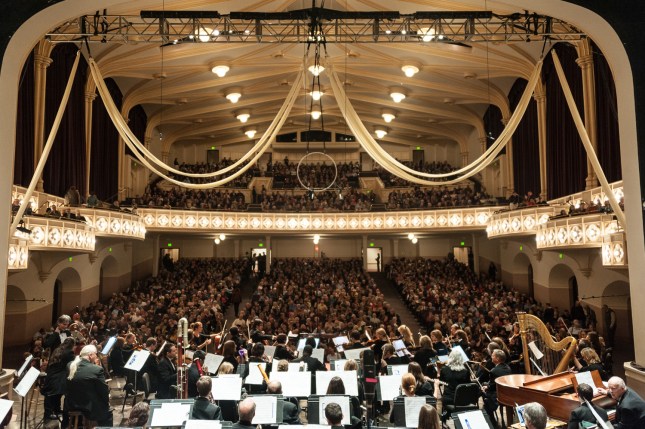
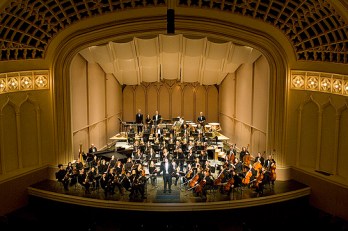
The crowd at Macky Auditorium from the stage - Glenn Ross Photo

Boulder Phil in Macky Auditorium. Photo by Glenn Ross.

Forging its own path, the Boulder Philharmonic has announced a season for 2016–17 that is unlike most orchestra seasons around the country.

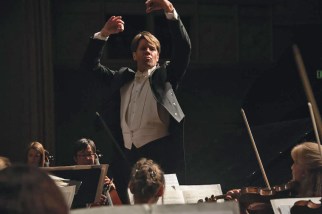
Music Director Michael Butterman_2_Credit Rene Palmer.small

Michael Butterman. Photo by Rene Palmer

For one thing, the season marks the Boulder Phil’s tenth year with music director Michael Butterman. Most orchestras would celebrate that with splashy programming, but the Phil is not taking that route. The one semi-splashy event—a concert March 25 that will be taken to the Kennedy Center in Washington D.C. on March 28—offers an eclectic program that, characteristically for the Phil, reflects Boulder’s close relationship to nature.

Otherwise, the season avoids the blockbuster mentality. There will be world premieres, there will be concertos for pairs of soloists, there will be great local musicians from CU Boulder, there will be lighter symphonies from heavyweight composers, and there will be music from less familiar composers. What there will not be will be are the big-name soloists and spectacular works that most orchestras use to fill the hall.

There is no doubt Butterman’s style of programming has drawn audiences over the past ten years. According to figures provided by the Boulder Phil, they have had 10 successive seasons of increasing sales of subscriptions. The current year is up 25% over the previous season, already setting an attendance record for the orchestra even before the last two concerts of the 2015–16 season.

“Whatever we present, we want to make sure it makes some kind of statement that we’re not just another orchestra but something a little bit different and special,” Butterman says. “For the most part we want to be presenting things that are a little more unique, and not exactly replicating (programming) in other places.”

In that they have certainly succeeded. The season is filled with intriguing offerings, music that adventurous listeners will be excited about, and programs that do indeed reflect Boulder’s personality as a community.

The March 25 concert that will travel to the Kennedy Center follows that pattern. “The capstone to this anniversary season is taking this program that is about who we are and the relationship we have with the community and presenting it on a national stage,” Butterman says.

“This is saying to the (classical music) industry ‘Look, here’s how one orchestra has found a way to be successful, to reflect its community, to do all the things that we need to do to continue to matter in the 21st century.”

Lias in GoANP.2

Stephen Lias in Gates or the Arctic National Park. Photo courtesy of the composer.

The concert will open with the world premiere of a new work by adventurer-composer Stephen Lias, whose Gates of the Arctic opened the 2014–15 season. Commissioned in celebration of the 100th anniversary of the National Park Service and inspired by Rocky Mountain National Park, the new score will be accompanied by “choreographed visuals”—projected photos—of the park. Lias will be working on the score while in residence in the park later this year.

Writing from Tongyeong, South Korea, where he is attending the 2016 International Society for Contemporary Music World Music Days, Lias comments, “My plan is to create a dramatic line for the piece based on my many experiences in the park (including an upcoming one this June), and the extensive photographic collection the park has given me access to.

“I hope to write a piece that will capture the dramatic scope of the place, but also the intimate ‘moments’ that we each take home with us. Through the music and the synchronized images, audiences will have a vicarious wilderness experience that will deepen their relationship with this remarkable national park.”

Frequent Flyers A.S.

Frequent Flyers with the Boulder Phil in Macky Auditorium

Other works on the same program will be pieces that reflect the Boulder personality and the city’s relationship with nature. They are also pieces that form part of the orchestra’s history, having been performed in previous seasons: Jeff Midkiff’s Mandolin concerto From the Blue Ridge, with the composer as soloist, previously performed in April 2014; Ghosts of the Grasslands by Steve Heitzeg, performed in March 2014; and Copland’s Appalachian Spring with Boulder’s Frequent Flyers Aerial Dance company, a repeat of a performance from 2013.

As with many orchestras, Boulder Phil announces that “each concert will feature a major symphonic work,” but with the exception of Respighi’s Pines of Rome on the season’s final concert (April 22), they are not orchestral showpieces: Tchaikovsky’s Symphony No 2 (“Little Russian,” Oct. 8); Beethoven’s Symphony No. 8 (Nov. 6); and Schumann’s Symphony No. 4 (Jan. 14). All are first performances by Butterman with the Phil, and all are welcome, but they are not works that most orchestras build seasons around.

Walther & Dusinberre

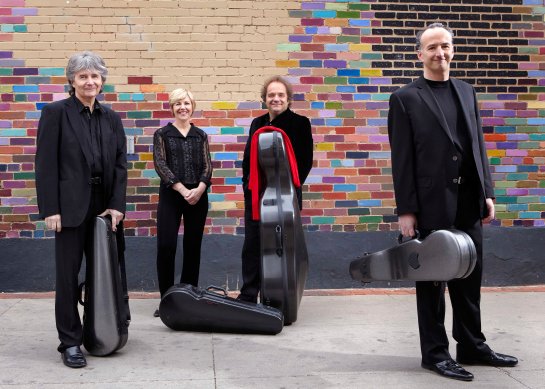
Takács Quartet members Geraldine Walther and Edward Dusinberre

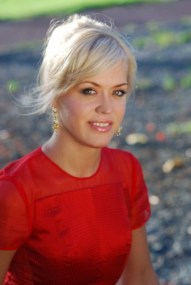
There are other familiar works that have broad appeal, including Appalachian Spring (March 25). Rachmaninoff’s lyrical and virtuosic Rhapsody on a Theme by Paganini played by pianist Elizabeth Joy Roe will be a draw for the opening concert (Oct. 8). Takács Quartet and CU faculty members Edward Dusinberre and Geraldine Walther will join the orchestra for Mozart’s Sinfonia Concertante for violin and viola (Nov. 6).

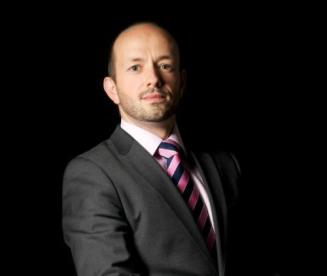
Those familiar works will share the season with more adventurous programming, including the Concerto for Two Pianos by Francis Poulenc, performed by the young piano duo Anderson & Roe (Oct. 8); the Concerto for Violin and Horn by Ethel Smyth, performed by Jennifer Frautschi and Eric Ruske (Jan. 14); Luciano Berio’s classically-inflected Four Original Versions of Boccherini’s Return of the Nightwatch from Madrid and the world premiere of the Double Concerto for violin and guitar by Stephen Goss, performed by orchestra concertmaster Charles Wetherbee and CU professor Nicolò Spera (both April 22).

Butterman believes that the Boulder audience will continue to embrace the orchestra’s offbeat programming. “People have come to place a certain amount of faith in the choices we make,” he says. “They seem to be willing to trust that we’ll make choices (that) will be interesting and enjoyable and provocative.”

21jake.jump_

Jake Shimabukuro

As usual, there will be performances outside the main series of classical concerts. The annual performances of Nutcracker with Boulder Ballet will be Nov. 25–27. There will be a concert Feb. 4 with ukulele virtuoso Jake Shimabukuro, performing his own original music as well as unusual arrangements for ukulele and orchestra of classical, popular and contemporary music, from Puccini’s “Nessun Dorma” to Queen’s “Bohemian Rhapsody.”

Alli Mauzey

Alli Mauzey

December 10 the orchestra will welcome Broadway singing star Alli Mauzey, who rose to fame as Glinda in Wicked, singing songs from that show and other Broadway shows. The program, titled “A Wicked Good Christmas,” will also feature music for the holidays.

“It’s a concert that I think will tread the line between being a holiday concert and a Broadway pops concert,” Butterman says. “It’s one that we hope will offer things for the community that are a little beyond what a typical classical audience might expect, and by virtue of that reach more of a family audience.”


# # # # #

Boulder Philharmonic Orchestra
Michael Butterman, Music Director
2016-2017 Season

Saturday, Oct. 8: Opening Night
Poulenc: Concerto for Two Pianos, Anderson & Roe, piano duo
Rachmaninoff: Rhapsody on a Theme by Paganini, Elizabeth Joy Roe, piano
Tchaikovsky: Symphony No. 2 (“Little Russian”)

AndersonRoe+by+Woodrow+Leung

Anderson & Roe. Photo by Woodrow Leung

Sunday, Nov. 6, 7 p.m.: Mozart & Beethoven
Thomas Adès: Three Studies from Couperin
Mozart: Sinfonia Concertante for Violin and Viola, with Edward Dusinberre, violin, and Geraldine Walther, viola
Beethoven: Symphony No. 8

Nov. 25–27: The Nutcracker with Boulder Ballet
Performance times tba

Saturday, Dec. 10: A Wicked Good Christmas, with Alli Mauzey
Songs from Wicked and other Broadway shows, plus Christmas classics

Saturday, Jan. 14, 2017: Brahms & His World
Brahms: Tragic Overture
Ethel Smyth: Concerto for Violin and Horn, with Jennifer Frautschi, violin, and Eric Ruske, horn
Schumann: Symphony No. 4

Saturday, Feb. 4: Jake Shimabukuro, ukulele, with the Boulder Phil
Gary Lewis, conductor

Saturday, March 25: Nature & Music—Kennedy Center Kick-Off Concert
Program to be repeated at the inaugural SHIFT Festival in Washington, D.C., on Tuesday, March 28, 2017
Stephen Lias: World premiere commemorating the 100th anniversary of the National Park Service, with choreographed visuals
Jeff Midkiff: Mandolin Concerto, From the Blue Ridge, with Jeff Midkiff, mandolin
Steve Heitzeg: Ghosts of the Grasslands
Copland: Appalachian Spring, with Frequent Flyers® Aerial Dance

Saturday, April 22: Season Finale: The Pines of Rome
Stravinsky: Monumentum pro Gesualdo
Luciano Berio: Four Original Versions of Boccherini’s Return of the Nightwatch from Madrid
Stephen Goss: Double Concerto for Violin and Guitar (world premiere), with Charles Wetherbee, violin, and Nicolò Spera, guitar
Verdi: Overture to Nabucco
Puccini: The Chrysanthemums
Respighi: The Pines of Rome

All Concerts in Macky Auditorium
All concerts begin at 7:30 p.m. unless otherwise indicated.

Tickets and More Information: Five- and six-concert subscription packages are now available. New subscribers save 50% off single ticket prices. Call 303-449-1343 or click here

This is Jennifer Koh’s Brain on Music

Between a 2014 CMF cancellation and a scheduled 2016 performance, an fMRI

By Peter Alexander

“The musician’s brain is exquisitely sensitive to all aspects of music, be it listening, reading or imagining playing music”—Tobias Overath,
Duke Institute for Brain Sciences

Koh.leather.chair

Jennifer Koh. Photo by Duke University

Jennifer Koh, who will be the soloist for the opening concert of the 2016 Colorado Music Festival, developed an interest in brain science after suffering a concussion in 2014.

The concussion forced Koh to cancel a scheduled appearance at CMF in August of 2014. It affected her speech and memory and temporarily made it impossible for her to practice. Fortunately, she recovered and is back on the performance circuit, but her curiosity about the brain and how it works was stimulated by the experience.

When Koh performed recently at Duke University, Tobias Overath of the Duke Institute for Brain Sciences arranged for her to to have a functional magnetic resonance imaging scan—known as an functional MRI, or fMRI—during which she listened to music, read a score of music, and imagined playing music. The results offer insight into how musicians’ brains work, and also play into a Duke course on “Music and the Brain.”

You can read the full story and see a brief video about the experience at Duke Today.


Olga Kern and Renée Fleming in New York

By Peter Alexander

Fans of Olga Kern—of which there are many in Boulder—will be interested to read the New York Times review of her performance with superstar soprano Renée Fleming Wednesday (Mar. 9) at Carnegie Hall in New York.

Olga Kern

Olga Kern

Kern has become known in Boulder through her performances at the Colorado Music Festival. Particularly memorable were her performances of all of the Rachmaninoff piano concertos and the Rhapsody on a Theme of Paganini in two back-to-back Festival Orchestra concerts—a remarkable feat of pianistic athleticism that was also an outstanding musical accomplishment—July 19 and 21, 2013.

Kern will return to CMF this summer to perform Brahms’s Quintet for piano and strings in F minor on a chamber music concert Saturday, Aug. 6, and the Beethoven “Emperor” Piano Concerto Sunday, Aug 7. Both concerts will be at 7:30 p.m. in the Chautauqua Auditorium.

In a positive review of the Fleming-Kern song recital, James R. Oestreich wrote in the New York Times that Kern, “an established solo artist in her own right, was a strong collaborator throughout, and she had additional moments to shine.” Oestreich called attention to Kern’s solo turns on the program, noting that she “opened the second half, setting the stage brilliantly for the Debussy (song) set with Feu d’Artifices (‘Fireworks’) from the composer’s second book of ‘Préludes.’”

You may read the entire review here.

Colorado Music Festival announces diverse 39th summer season

Second season under music director Jean-Marie Zeitouni offers many highlights

Former music director Michael Christie returns to Boulder for a Festival Orchestra concert July 14

By Peter Alexander

chautauqua-boulder-colorado

Chautauqua Auditorium, home of the Colorado Music Festival

The program will look both new and familiar at the 2016 Colorado Music Festival.

The CMF announced its 39th festival season last night (March 2) at an event for their friends and supporters. Running from June 30 through August 7, this will be the festival’s second summer series under music director Jean-Marie Zeitouni.

Many of the familiar features of recent festivals will continue—Festival Orchestra and Chamber Orchestra concerts, the Music Mash-Up series, family and young people’s concerts, and chamber music performances. But within that general framework, there will be some new developments as well: chamber music will be presented in the Chautauqua Auditorium; and an imaginative new series of three concerts under the direction of CMF creative partner Joshua Roman, “ArC (Artistic Currents) at the Dairy,” will be presented at the Dairy Center. In a change from previous years, most Festival Orchestra programs will only be presented one night instead of two.

Zeitouni_2

CMF music director Jean-Marie Zeitouni

Innovations for the 2016 season will include the Fêtes Galantes Series of intimate house concerts of chamber music, July 11, 20 and Aug. 5; a partnership with the Boulder Valley Velodrome, “CMF Goes to the Velodrome,” July 29; and a “Festival of Dinners” prepared by chefs from Boulder restaurants to be announced on the CMF Web page.

Ukrainian-Israeli violinist Vadim Gluzman will be one of several artists to have a residency at CMF, a notable expansion of festival activities. There will be several new and contemporary works during the summer, and Peter Brook’s controversial Tragedy of Carmen, a distillation of Bizet’s opera, will be presented July 10.

There will also be notable returns to the festival. Music director laureate Michael Christie will come back to Boulder to conduct a Festival Orchestra concert on July 14, with returning piano soloist Orion Weiss.

Other popular soloists from previous seasons will be back, including violinist Jennifer Koh with the Festival Orchestra on opening night, June 30. At the opposite end of the season, pianist Olga Kern will perform with the CMF Chamber Orchestra on the final concert, Aug. 7.

Lash

Click! Commission winner Hannah Lash

The “Click” Commission program that offers new works by composers selected and financed by festival-goers is back, with the premiere of the Second Harp Concerto by Hannah Lash, who will also be the soloist July 31. Lash will take part in a residency at CMF, extending her participation in the festival beyond the premiere of her new concerto.

There will a number of other notable guest artists during the summer: Guzman, pianist Stephen Hough, the vocal ensemble Roomful of Teeth, conductor Christopher Rountree, pianist David Korevaar from CU, and mezzo-soprano Kelley O’Connor, among others.

# # # # #

The season will be packed with so many highlights that it is difficult to list them all. Here is at least an overview of concert events. (All performances begin at 7:30 p.m. in the Chautauqua Auditorium unless otherwise noted.)

SFP-JenniferKoh-03@2x

Jennifer Koh

The festival opens June 30 with “Narratives of Heroism,” a concert Zeitouni describes as “one of the highlights for me.” The program features Koh playing Finnish composer Esa-Pekka Salonen’s Violin Concerto, on a program with Beethoven’s Overture to Egmont and Berlioz’s Symphonie Fantastique. The concert will be preceded by a Pre-Concert Dinner at 5:30 p.m. on the great lawn at Chautauqua.

Also part of the opening weekend will be the residency of Sō Percussion from Brooklyn, currently Ensemble in Residence at Princeton University. They will give a recital July 1 on the Presenting Series of chamber music concerts, and will play Young People’s Concerts with the CMF orchestra at 10 and 11:30 a.m. July 2.

SO Percussion

So Percussion

The holiday weekend will wrap up with “Red, White and Brass,” a patriotic pops concert by the CMF Brass Ensemble at 4 p.m. July 3. Other Family Fun Concerts will be at 3 p.m. July 10 and 31.

The second week will feature “Boulder Brahms,” with the Festival Orchestra playing the four Brahms symphonies in two concerts: Nos. 1 and 2 on July 7; and 3 and 4 on July 8. “We’re not doing a mini-festival proper, like we did last season,” Zeitouni explains. “Instead, there are different themes throughout the summer.

“It’s interesting to hear all (the Brahms symphonies) two by two, but the idea goes beyond this. One of the more long-term ideas for the festival is to do multi-year symphonic cycles, like Michael Christie did with Mahler. The Brahms cycle is, I would say, a pretty conservative first step.”

Zeitouni sees this as a way to open up the repertoire beyond the symphonies that are programmed most often, but without overwhelming the schedule and the audience by trying to fit all of a composer’s symphonies into a single summer. Possible future composers for a multi-year cycle might include Bruckner, Shostakovich, Prokofiev and Dvořák, he said.

July 10 will see the presentation of a work that has become notorious in opera circles: Peter Brook’s abridged version of Bizet’s Carmen. The Tragedy of Carmen boils the opera down to about 80 minutes by paring away everything that does not have directly to do with the central drama of conflicting loves.

This distilled version, which only requires four voices and a chamber orchestra, “makes it a little bit more intense, if that’s even possible,” Zeitouni says. “It just tightens the tension—you have a higher alcohol content, because it’s a more concentrated formula.”

*temp*

DJ Spooky

The Music Mash-Up series will feature three groups: Jazz trio The Bad Plus will present a deconstruction of Stravinsky’s Rite of Spring, enhanced with projections and passages of jazz improvisation, July 12. On July 26, CU faculty Paul Miller, who performs as DJ Spooky, will mix classical pieces using turntables and performing with the Festival Orchestra.

The final Mash-Up brings the Colorado band Paper Bird to Chautauqua Aug. 2 to perform with the orchestra. Christopher Rountree, founder and director of wild Up, a Los-Angeles based chamber orchestra, will conduct the CMF orchestra on the July 26 and Aug. 2 Mash-Up performances.

# # # # #

Michael Christie is very happy to be coming back to Boulder for the July 14 Festival Orchestra concert with pianist Orion Weiss. “We’ve got a great program,” Christie says. “I think its going to be a fun night.”

Christie

Michael Christie

The concert will open with Leonard Bernstein’s Shivaree, a fanfare for brass, followed by Charles Ives’s Unanswered Question for strings and a single trumpet. “The Bernstein is very boisterous and the Ives is extremely quiet,” he says. “I think in Chautauqua it will be quite magical.”

Next will be the suite from Bernstein’s score for the film On the Waterfront, which Christie chose because it is not heard often and it has a lot of solos for his friends in the orchestra. “It’s a beautiful, cinematic work,” he says. The second half of the concert will be a single work, Brahms’s First Piano Concerto with Weiss as the soloist.

“When I think about Chautauqua, there are just so many faces that I can see, because I saw them for so many summers,” Christie says. “I can remember a lot of folks, and I’ll be curious to see if they will still be there.

“The other thing I’m really looking forward to is getting out to do some hikes. When the summer was going and I was music director there were always a billion things to take care of. I’d get to the end of summer and realize that I hadn’t done a single hike. I’m going to try to make up for that, so maybe you’ll see me on the trail!”

# # # # #

JoshuaRoman_JeremySawatzky04

Joshua Roman. Photo by Jeremy Sawatzky

The ArC at the Dairy series, presented at Boulder’s Dairy Center, has some of the most intriguing programs of the summer. On July 16 series director and cellist Joshua Roman will perform with soprano Jessica Rivera and CMF musicians to present his own song cycle we do it to one another, based on Tracy K. Smith’s Pulitzer Prize-winning poetry collection “Life on Mars”; and one of the iconic works of the 20th century, Olivier Messiaen’s Quartet for the End of Time, written in a World War II prisoner-of-war camp.

On July 23, composer/violinist Daniel Bernard Roumain and spoken word artist Marc Bamuthi Joseph will join together to present “Blackbird, Fly,” a hip-hop influenced program that will address issues of tolerance and inclusion. And July 30 the Grammy-winning contemporary vocal group Roomful of Teeth will bring their unique style to the festival.

10-24-07-Vadim-Gluzman-CD-Cover

Vadim Gluzman

Chamber Orchestra concerts will include “Inspired by Bach” July 17, with violinist Gluzman playing and leading the orchestra in works of Mozart, Shostakovich, and Alfred Schnittke; Mozart’s three final symphonies together on a single concert directed by Zeitouni July 24; and the July 31 premiere of Lash’s Harp Concerto No. 2, the Click! Commission winner, programmed with music by Bach, Beethoven and Richard Strauss.

The Presenting Series will offer chamber music performances at Chautauqua Auditorium. After Sō Percussion opens the series on July 1, Weiss, Roman, Korevaar, Gluzman, Kern, and CMF musicians will perform in various combinations July 15 and 19 and Aug. 6. As part of his week-long residency, Gluzman will also appear with the Festival Orchestra in “Russian Passions,” the one orchestra program to be repeated, July 21 and 22.

In addition to Gluzman’s performance of the Tchaikovsky Violin Concerto, the concerts will feature Liadov’s Enchanted Lake and a special presentation of Mussorgsky’s familiar Pictures at an Exhibition with animation that was created for the first performance in architect Frank Gehry’s New World Center in Miami Beach, Fla.

Stephen Hough

Stephen Hough

British pianist Stephen Hough returns to Boulder for the sixth Festival Orchestra program, “From Prague to Warsaw to Bucharest,” on July 28. Hough will play Liszt’s First Piano Concerto and Polish composer Witold Lutosławski’s Paganini Variations. “In a folkish-inspired program, we will open with the Enescu First Romanian Rhapsody and (close with) Dvořák’s Symphony No. 8,” Zeitouni says of the program.

Zeitouni identifies the Aug. 4 Festival Orchestra concert as one of his favorite programs of the summer. It will feature two major works, the Trois Nocturnes for orchestra of Claude Debussy, and Gustav Mahler’s deeply moving Lied von der Erde (Song of the Earth) with mezzo-soprano Kelley O’Connor and tenor Richard Cox as vocal soloists.

“This music is some of my favorites,” Zeitouni says. “I have a very personal relationship with Das Lied von der Erde, because it was one of the first recordings that I got as a teenager.” He also observes that the piece was requested by orchestra musicians, because they rarely have the chance to play it in their home orchestras, and it is a continuation of the Mahler cycle that Christie had begun.

OK-Red-Dress

Olga Kern. Photo by Fernando Baez.

The final night of the festival will be a Chamber Orchestra concert on Aug. 7. This program will feature Zeitouni and CMF favorite Olga Kern playing Beethoven’s “Emperor” Concerto on a program with Stravinsky’s “Dumbarton Oaks” Concerto and Schubert’s delightful Symphony No. 5.

Outgoing CMF executive director Andrew Bradford has written that “the offerings of the 2016 Colorado Music Festival are incredibly wide-ranging and diverse,” a claim that is hard to disagree with. “The season includes something that every music lover will enjoy,” he wrote.

# # # # #

UPDATE (3/4/16): The full summer calendar is now available on the CMF Website.

TICKETS: Subscription tickets will go on sale Monday, March 7, and single tickets will be available Monday, April 4. For tickets to most events, click HERE. Tickets to the ArC series at the Dairy Center are available HERE.

Colorado Music Festival faces another transition

Executive director Andrew Bradford resigns after 18 months on the job

By Peter Alexander

The Colorado Music Festival (CMF), which underwent a full change of leadership and administration 18 months ago, faces another transition.

Bardford

Andrew Bradford

Andrew Bradford, the executive director who was hired in the summer of 2014 and started work Aug. 11 of that year, announced last Thursday (Feb. 11) that he had resigned, effective Friday, March 25, 2016. Bradford is leaving to take another position, which will be announced soon.

When Bradford was hired, the position had been open for a full year, during which time there had been one failed search for executive director (ED), and the position of musical director (MD) was also open.

The larger organization that Bradford heads includes the CMF, headquartered at Chautauqua in Boulder, and its affiliated educational arm, the Center for Musical Arts (CMA), located in Louisville.

Bradford and others say his departure will not affect the upcoming 2016 summer season. Bradford has worked with Zeitouni and the CMF staff to plan the 2016 festival, and will be in place through the public announcement of the season on March 2.

“I’m staying through the end of March, and I’ll be working full steam ahead 100% until my very last day,” he says. “We’re going to all work together to make sure that the transition is as seamless and as smooth as possible.”

Lupberger.2

Edward Lupberger

The CMF/CMA Board of Directors will oversee the transition to the next ED. Edward (Ted) Lupberger, who became the board president last month, says the directors will appoint an interim director, probably from inside the organization, and then begin a search for a permanent director.

“Right now we’re addressing what’s the best mode for moving forward,” he says. “We’re definitely starting a search, but we’re also going to the people that did the search (before). Some of the people at that time were close candidates, so we’ll start pursuing those as an option, but also in the short term before that, what we’re doing is going to the staff.

“We have a really strong staff that know how to produce a festival, they know the CMA, they know the donors and what we need to be planning for. We probably will give an interim title to someone (from the staff), because it seems that’s the prudent thing to do, and it conveys to the community that we have a person in that leadership role.”

Because he is new to the president’s job, Lupberger said he would continue to work with a team that forms “kind of an executive committee” within the board. That group, comprising Lupberger with board secretary Jane Houssiere, treasurer Dave Brunel, and director Caryl F. Kassoy, worked to facilitate Lupberger taking on the role of board president, and they will continue to work together during the search.

At this time, Lupberger says, there is not yet a specific timeline for the search and hiring process. “I’d rather take more time and get the right person than go quick and get the wrong person,” he says.

# # # # #

Over the past year, the CMF/CMA has been developing a strategic plan for the organization’s future, guided by a consultant who specializes in the arts and non-profit sectors. According to Lupberger, the consultant’s recommendations, which have only recently been given to the board, include directions on how to be ready for administrative changes. “It just happened sooner than we expected,” he says.

“There’s directives for the board in what we should be doing to better support the organization, there’s directives for staff on how to do operations and what things we need to be focusing on.”

While the 100-page consultant’s report has not been made public, Lupberger does not plan on keeping the board’s plans secret. “We are working on more of an executive summary, and then I think we all want to get the world to know what we’re planning,” he says. “It’s not going to be shocking.”

Both Lupberger and music director Jean-Marie Zeitouni praised the condition of the organization after Bradford’s 18 months in charge. “We’re a very healthy, strong organization,” Lupberger says.

Zeitouni_2

CMF music director Jean-Marie Zeitouni

Bradford “was a very strong asset (to CMF),” Zeitouni wrote in an email from Montreal, Canada, where he lives during most of the year. “To his credit, we are in a really good place right now: The staff is strong and enthusiastic, the board is really committed and involved, our budget is approved, the festival season is all planned and we are moving along nicely towards long-term artistic planning.”

Bradford and others have mentioned an 18% increase in ticket sales in 2015 from the previous year’s summer festival as a basis for the CMF’s current strength. While that is an important figure, the full context shows that it is a one-year increase from the 2014 season, which was the year of the music director search. Without a highly popular music director on the scene, with no central theme to the summer, and several different conductors coming in and out of Chautauqua, audiences were visibly smaller in 2014 than in the previous two or three years. Consequently, it is difficult to put the 2015 increase into the long-term context of ticket sales and revenues for the festival without consulting detailed financial records over the past five to ten years.

# # # # #

The recent history of the CMF/CMA administration provides insight into the issues faced by the board. In 2013 the organization lost both its executive director, Catherine Underhill, and the popular musical director of the summer festival, Michael Christie, in a single year. A search was undertaken immediately for a new ED to be in place before the summer of 2014, when finalists for the MD position would each lead the orchestra in a pair of concerts.

The board of CMF/CMA announced in Dec. 2013 that David Pratt of the Savannah (Georgia) Philharmonic had been selected as ED and would be in place early in 2014. Instead, he backed out in January 2014, and the board had to begin another search. Bradford was announced as the new ED in June, nearly a year after the position was first vacated, and he was present for the audition concerts by the three official MD candidates.

He and the board chose Jean-Marie Zeitouni as the new music director, announcing the appointment Sept. 8, 2014. Zeitouni conducted his first festival season last summer, July–August 2015. In the meantime, many of the top administrative positions at the CMF/CMA turned over in the first months of Bradford’s tenure, including one person who was hired early in the fall of 2014 and then left May 1, 2015. That position was covered by other staff members during the 2015 summer festival.

While no specific reasons have been given for most of the departures, Bradford is unstinting in his praise of the current staff. “I am absolutely delighted with the folks that I’ve hired,” he says. “These are fantastic, really capable people.”

Through all of this change, Lupberger believes that the CMF and CMA have remained strong. “At the end of the day, the board and the two organizations that make up the one, the Center for Musical Arts and the Colorado Music Festival, have maintained their identities—what they are, who they are—through this whole period. We have a strong orchestra, and we have a strong faculty at the Center (for Musical Arts), and that’s remained true through this whole process.”

For that reason, Lupberger remains upbeat about the future of the CMF/CMA organization. “At the end of the day, we’re talking about an organization that produces amazing music in the summer, and then educates others throughout the year,” he says.

“The core of what we do is what we should be excited about. The rest of it is less important, because what we do is a great thing and we should be proud of it and focus on that and move forward.”

_________________
Edited for clarity 2/16

CU’s Takács Quartet and Edward Dusinberre in the news

The Economist praises Dusinberre’s “fascinating book”

By Peter Alexander

Takacs.Dusinberre.CUphoto-X2

Edward Dusinberre

The Economist, the weekly newsmagazine published in London, has published an article—it is more a description of the book and its subject than a review—about Takács Quartet first violinist Edward Dusinberre’s new book on the Beethoven string quartets.

The Tákacs is the quartet-in-residence at the University of Colorado, Boulder College of Music; Dusinberre and the other members are Ralph E. and Barbara L. Christoffersen Faculty Fellows.

Beethoven for a Later Age: The Journey of a String Quartet was published in England by Faber & Faber and will be published in the U.S. by the University of Chicago Press in May. “Mr Dusinberre is the lead violinist of the Takács Quartet, one of the world’s most highly regarded string ensembles, and he has written a fascinating book about the musical life of this group of players,” the publication states in the unsigned article.

“Interwoven with that is the story of Beethoven’s 16 string quartets, works of extraordinary power written over a quarter-century that moved the genre on from the earlier masters and are now regarded as the apogee of the chamber-music repertoire.” (Read the full article in The Economist.)

Takasce SQ

Tákacs Quartet. Photo by Keith Saunders.

Like most books today, Beethoven for a Later Age has already attracted a number of celebrity blurbs and reviews. For example, pianist Garrick Ohlsson comments, “Dusinberre brilliantly spans Beethoven’s life, works, and the real issues of music making for his contemporaries into our time—via the working process of a great modern quartet living with Beethoven’s creations in the twenty-first century.”

Writing in the The Telegraph, Rupert Christiansen points out that Dusinberre intends to do more than elucidate the music. “Dusinberre’s second, and perhaps more daring, aim is to reveal something of the personal dynamics of the Takács Quartet itself, generally ranked as one of the two or three finest quartets active in the world today,” he writes.

“The glimpse Dusinberre gives us of their working is fascinating, but the alchemy that makes the Takács perform as sublimely as it does remains a mystery.”

# # # # #

25329.books.origjpgBeethoven for a Later Age: The Journey of a String Quartet. By Edward Dusinberre. 232 pages, 14 line drawings. Faber & Faber; £18.99. To be published in America by University of Chicago Press in May; $30. ISBN: 9780226374369; an e-book edition will also be published.


Takacs Quartet’s Dusinberre on music and health

An article in The Guardian explores a most unusual topic: Life insurance for string quartet players

By Peter Alexander

Takacs.Dusinberre.CUphoto-X2

Edward Dusinberre

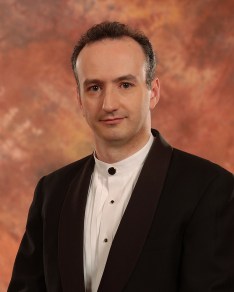
Edward Dusinberre, the first violinist of the Takacs Quartet, CU artist-in-residence and Ralph E. and Barbara L. Christoffersen Faculty Fellow at the CU College of Music, writes in The Guardian:

The foundation of a string quartet is formed over a long period of time from the musical and personal bonds that evolve between four individuals. Nonetheless, the decision we took several years ago to purchase life insurance polices for each other felt awkward. Until we became accustomed to our peculiar status as each other’s beneficiaries, minor illnesses were observed with wry attentiveness.

The article gives a peek into the inner workings of one of the world’s most celebrated string quartets, and also serves as teaser for Dusinberre’s book, Beethoven for a Later Age: The Journey of a String Quartet published in England by Faber and Faber and coming later this spring from Chicago University Press in the United States.

Read the entire article in The Guardian.

Boulder Philharmonic receives its first NEA grant

Funds will commission a new work by Stephen Lias celebrating Rocky Mountain National Park

By Peter Alexander

BPO.Macky.2

The Boulder Phil onstage at Mackey Auditorium

The Boulder Philharmonic Orchestra has received its first-ever grant from the country’s premiere arts granting agency, the National Endowment for the Arts (NEA).

The $15,000 award was announced by the NEA and the National Park Service as part of the “Imagine Your Parks” initiative. The grant will fund a commission from adventurer-composer Stephen Lias of a new 20-minute orchestral work inspired by Rocky Mountain National Park and celebrating the centennial of the National Park Service.

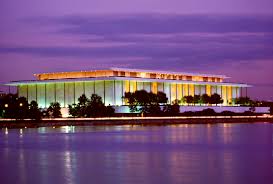
Kennedy Ctr

Kennedy Center for the Performing Arts, Washington, D.C.

The Boulder Philharmonic and conductor Michael Butterman will premiere the new work at Macky Auditorium as part of their 2016–17 subscription concert series, and subsequently at the Kennedy Center in Washington, D.C., as part of the inaugural SHIFT Festival of American Orchestras in March, 2017. The Boulder Phil is one of only four orchestras selected to participate in the festival.

“This recognition that we’re honored to receive feels like an affirmation of the work we have been doing for the past decade or more,” Butterman says. “We’ve been trying to reflect our community and find entry points for people to engage with classical music who had not regularly encountered it before.

Buttermn.new

Boulder Phil Music Director Michael Butterman

“The focus in particular on the natural world and the relationship that people in Boulder have to it is something that is very special for the orchestra, and we’re just delighted to be able to bring a brand new piece like this to life, both in Boulder and then of course on the national stage at the Kennedy Center.”

Of course, there are many classical pieces inspired by nature, dating back to Bach’s “Peasant” Cantata, Seasons by Vivaldi and Haydn, Beethoven’s “Pastoral” Symphony No. 6 and Smetana’s musical description of the river The Moldau. “The idea of being inspired by your natural surroundings is as old as humanity,” Butterman says. “But there’s something different when we do it in Boulder, just because hiking and being outside is so much a part of the daily life of most Boulderites.”

Lias expressed excitement at receiving the grant-supported commission from the Boulder Phil. “It’s just a dream come true,” he says.

Lias has a long association with the national parks. He has received several artistic residency grants in national parks, and has written several pieces inspired by these residencies. The first was his “Timberline Sonata” for trumpet and piano, written following a 2010 residency in Rocky Mountain National Park and premiered in Estes Park. Other pieces have been inspired by Big Bend, Kings Canyon, Sequoia, Denali, Wrangell-St. Elias, Carlsbad Cavern and Mesa Verde national parks, among others. Several of these works have been compiled onto a CD recording, “Encounters.”

Lias in GoANP

Stephen Lias in Gates of the Arctic National Park

In Sept. 2014, the Boulder Philharmonic presented the premiere of Lias’s orchestral work Gates of the Arctic, inspired by a residency and backpacking journey in America’s northernmost and second-largest national park. “(Lias) had both a great experience in Boulder and a very positive reception from our audience,” Butterman says of the premiere. “So for us he’s someone whose aesthetic will produce something special.”

Lias said that the new work will build on the success of Gates of the Arctic. “(Butterman and the orchestra) were so pleased with how Gates of the Arctic was received that our plan is to use that framework again,” Lias says. “Probably it will be grouped into thematic ideas where certain musical sections will be related to some event or experience that people have in the park, or perhaps a location or time of day or season.

Lias-5

Composer Stephen Lias

“The stature of the situation in which this will be premiered demands a piece of greater heft from me, so I suspect that I will lace this piece with broader contrasts, and I may dig a little deeper compositionally.”

Lias admits to being a little nervous every time he starts a new piece, and this commission will be no different. “I approach each major new project with a certain amount of trepidation about how I’m going to come up with new music ideas,” he says.

“The order of events will be not to worry about what kind of piece I’ll write, but instead start thinking about what makes Rocky Mountain National Park such an inspiring subject. And as I answer that question, suddenly I’ll discover that I have a list of things that will inform the shape of the piece. And at that moment, the piece is already begun.”

Michael Butterman debuts with Philadelphia Orchestra, in costume

Boulder Phil music director is guest conductor for a family concert

By Peter Alexander

Verizon Hall, home of the Philadelphia Orchestra

Verizon Hall, home of the Philadelphia Orchestra

“When you image your debut with a great orchestra,” Michael Butterman, music director of the Boulder Philharmonic says, “you don’t usually imagine yourself wearing a Jack Skellington costume.”

I certainly don’t. But Butterman recently did just that with the renowned Philadelphia Orchestra—with a concertmaster dressed as the Pope, and other costumes among the players. You will be relieved to know that it was a Halloween family concert.

The event was part of a series of outreach concerts that Butterman conducted throughout the northeastern states over about a 30-day period, including a week of young people’s concert’s with the National Symphony in Washington, D.C.; a week of education concerts with the Pennsylvania Philharmonic, a regional orchestra of which he is music director; a family concert in Rochester, N.Y.; and the Oct. 31 “Halloween Costume Party” with the Philadelphia Orchestra in Verizon Hall.

Michael Butterman, not in costume as Jack Skellington

Michael Butterman, not in costume as Jack Skellington

“It’s kind of invigorating to see that you can still make a difference to people when you present things in a fun and attractive way,” Butterman says about the concerts. “I think people are interested in what orchestras are doing. And that makes me feel a little bit optimistic anyway about the future.”

But the culmination was the opportunity to lead one of the nation’s “Big Five” orchestras in their home concert hall in Philadelphia. “It was a nice compliment,” he says. “The audience was great, it was a nice full house and a lot of enthusiastic young people there.”

In addition to Danny Elfman’s Suite from Nightmare before Christmas, Butterman’s program with the Philadelphia Orchestra included music by Khachaturian, Prokofiev and Rimsky-Korsakov; Adam Glaser’s March of the Little Goblins; and Liadov’s Baba-Yaga, from a Russian folk tale about a witch who lives in a hut on chicken’s legs.

Big-name orchestras sometimes have the reputation of being hostile to guest conductors, but Butterman says there was nothing like that in Philadelphia. “Quite the opposite,” he says. “They were very collegial and I really felt great afterwards. I felt appreciated. Being able to work very efficiently and quickly, I think they valued that.

“Obviously there are still things you can work on even with a great orchestra, but whatever it is you’re asking for they just do it immediately and it’s a real pleasure. What was really nice was they had a great attitude, and you wouldn’t necessarily be expecting that, coming in on a Saturday morning and putting something together really quickly, but they really did.”

Butterman was especially pleased and honored that the Pope—that is, the orchestra’s concertmaster—volunteered to play the concert, even though he could have taken the afternoon off. “That just set a really beautiful tone for the whole event,” Butterman says.

As for the Jack Skellington costume: Boulder should ask the maestro to wear it here. It’s something our audience deserves to see.

Michael Christie will conduct world premiere at the Santa Fe Opera in 2017

Santa Fe’s 2016 season has also been announced

By Peter Alexander

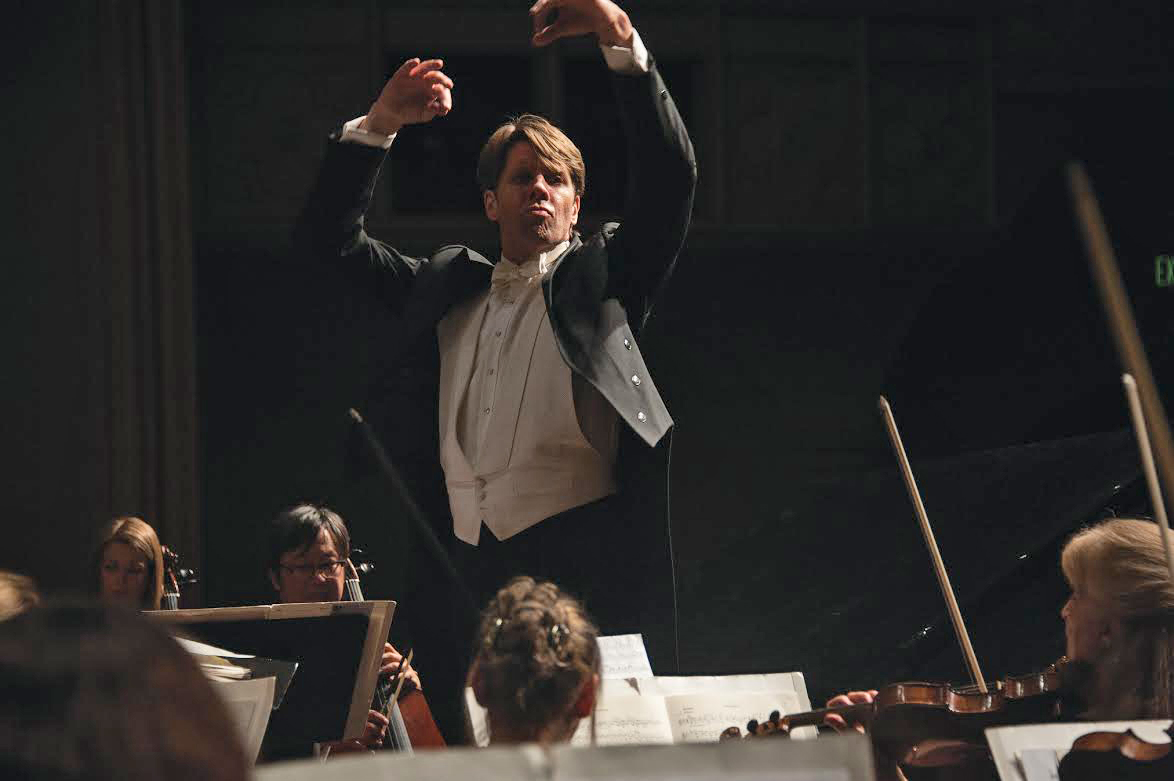
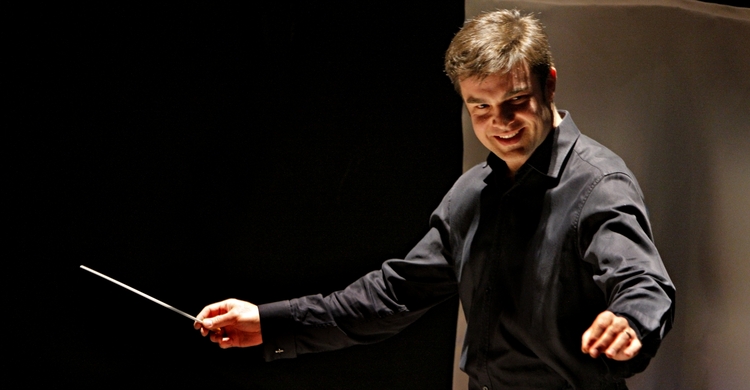
Michael Christie conducts the Minnesota Opera

Michael Christie conducts the Minnesota Opera

Santa Fe Opera (SFO) general director Charles McKay has announced that The (R)evolution of Steve Jobs, a new opera by Mason Bates, will have its world premiere as part of the company’s 2017 season.

The announcement was made Aug. 5 at a press conference in Santa Fe. The opera’s libretto will be by Mark Campbell, who is well known as the librettist of the Pulitzer Prize-winning opera Silent Night. The stage director will be Kevin Newberry, and the conductor will be Michael Christie, music director of the Minnesota Opera and former music director of Boulder’s Colorado Music Festival. This will be Christie’s Santa Fe Opera debut.

The (R)evolution of Steve Jobs has been commissioned by the SFO, where it will be the company’s 15th world premiere.

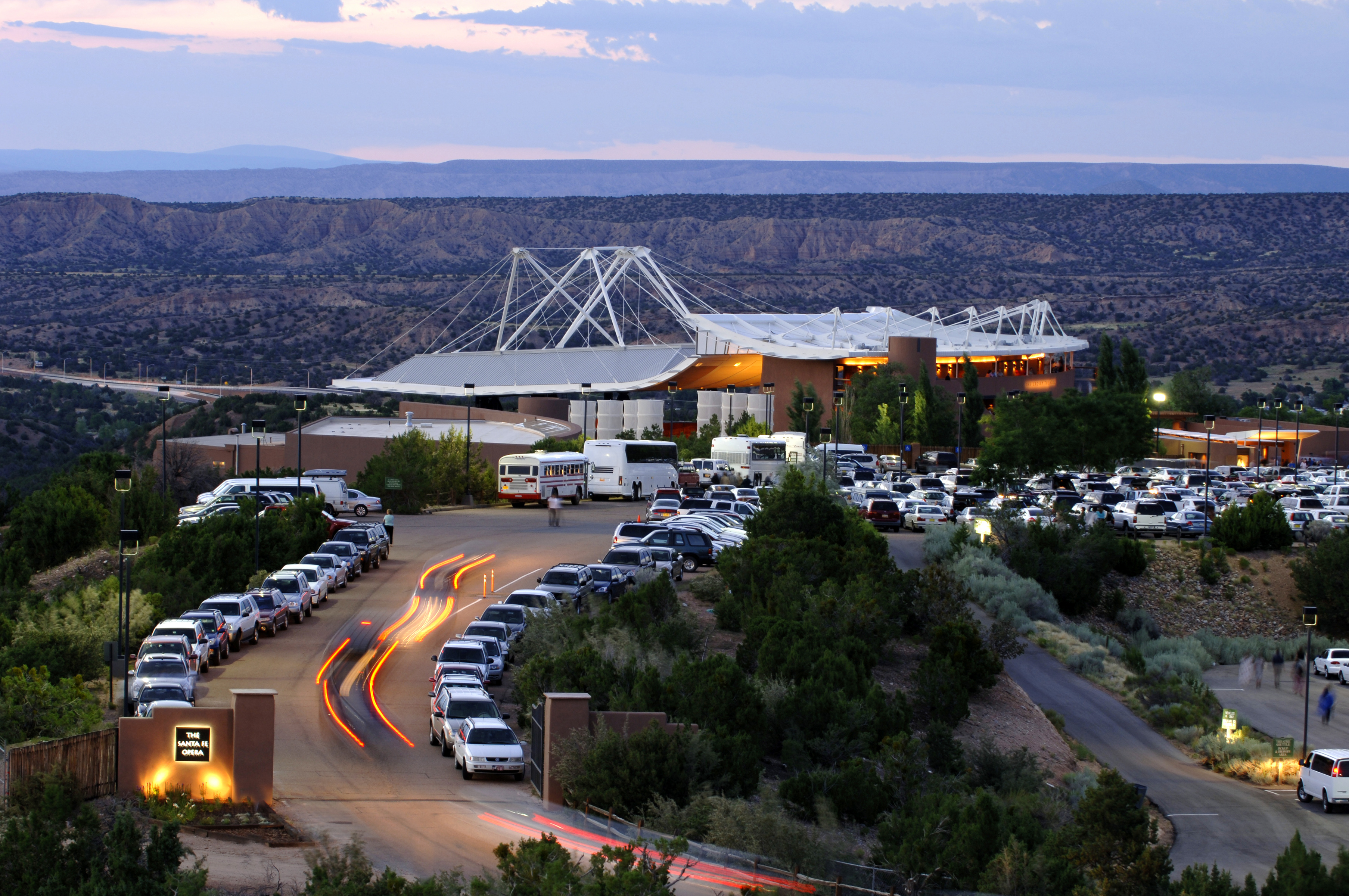
Santa Fe's unique opera house

Santa Fe’s unique opera house

Known as an adventurous company, the Santa Fe Opera has attracted both audiences and press from around the world for their world premieres, including this year’s production of Jennifer Higdon’s Cold Mountain, co-commissioned with Opera Philadelphia and the Minnesota Opera, in collaboration with North Carolina Opera. (Limited seats are still available for Cold Mountain performances Aug. 17, 22 and 14.)

The company has also recently announced their 2015–16 season, which will not include premieres, but will feature several operas that are not often heard. The operas scheduled for July and August 2016 are Romeo et Juliette by Charles Gounod; Capriccio by Richard Strauss; Vanessa by Samuel Barber; La Fanciulla del West (The girl of the golden West) by Giacomo Puccini; and Don Giovanni by Mozart. Tickets will be on sale on the SFO Web page in the fall.

# # # # #

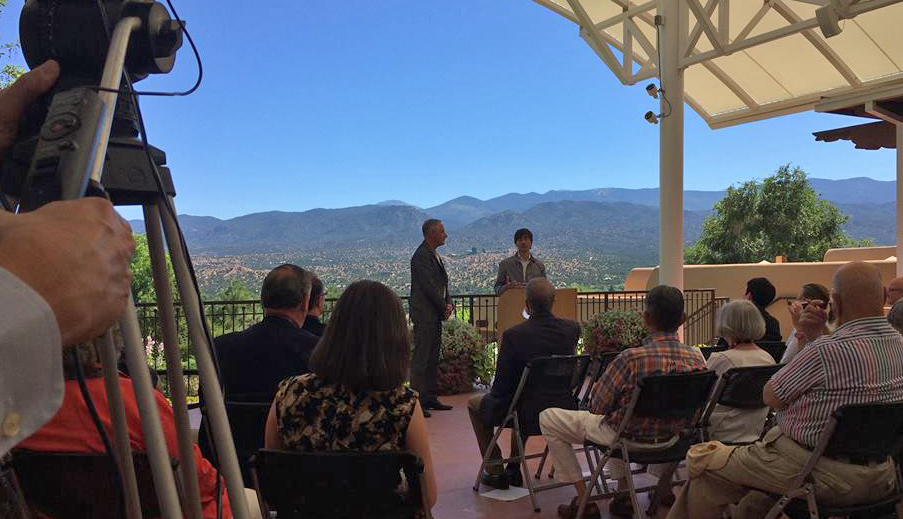
Librettist ark Campbell (left) and composer Mason Bates (right) at the Santa Fe Opera press conference announcing the premiere of Bates's

Librettist Mark Campbell (left) and composer Mason Bates (right) at the Santa Fe Opera press conference announcing the premiere of Bates’s “(R)evolution of Steve Jobs.”

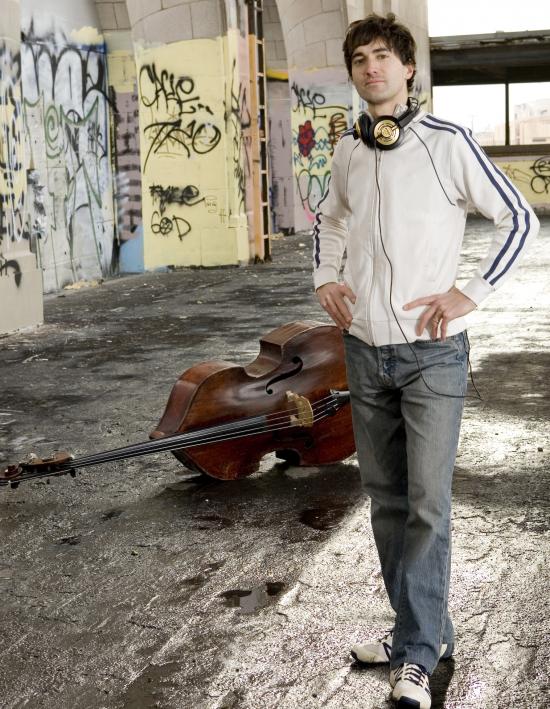
Mason Bates is known both as a composer and as a DJ in the San Francisco Bay Area. His compositions are characterized by the inclusion of electronic effects into orchestral works and other music. His “Observer in the Magellanic Cloud” for chorus with electronic sounds was performed last year by Boulder’s Ars Nova Singers and director Thomas Edward Morgan.

For The (R)evolution of Steve Jobs, Bates said that he will include electronic elements, some based on samples of early computing gear, and acoustic guitar, an instrument that Jobs especially loved. “You will not have heard these sounds before in an opera house,” he said at the press conference.

In a statement on his Web page, Bates wrote “What fascinates me about the story of Steve Jobs is that it exists at the intersection of creativity, technology, and human communication—and I think that can make for thrilling opera.

Mason Bates. Photo by Lydia Danmiller.

Mason Bates. Photo by Lydia Danmiller.

“Imagine, for example, the possibilities for bringing to life Kobun, the spiritual advisor to Steve Jobs—an important and overlooked figure who receives stunning treatment by librettist Mark Campbell. A panoply of Tibetan prayer bowls and Chinese gongs drift across the electronics, sometimes sounding purely ‘acoustic,’ sometimes imaginatively processed as if in a nirvana-esque limbo. Think of how eerily beautiful those sounds can sound when supporting the mystical textures of a low bass voice.

“In fact, Jobs’ search for inner peace is the story of the opera—which, in a sentence, is about a man who learns to be human again. The key role in this journey is his wife Laurene, who acted as the electrical ‘ground’ to the positive and negative charges of Jobs. . . .

“Because the subject is so well known, we’ve taken a poetic and non-linear approach. Anchoring this imaginative, non-chronological telling are numbers—real musical numbers—and a clear-as-crystal through-line: how can you can simplify human communication onto sleek beautiful devices, when people are so messy? We’ll travel with Jobs on his journey from hippie idealist to techno mogul and, ultimately, to a deeper understanding of true human connection.”

NOTE: Edited Aug. 16 to include that fact that The (R)evolution of Steve Jobs will be Michael Christie’s debut with the SFO.