Colorado Music Festival opens 2024 summer season Friday

Commissioned premiere and birthday celebrations are early highlights

By Peter Alexander July 1 at 6:27 p.m.

Peter Oundjian at Chautauqua.

Peter Oundjian, artistic director of the Colorado Music Festival (CMF), is brimming with excitement for the coming summer concert season.

“I love every program because I programmed them all!” he says. Nevertheless, when pressed he points to two concerts in the first weeks of the CMF season as especially interesting for audiences.

“One is the world premier of the Gabriela Lena Frank string quartet concerto with the Takács Quartet (6:30 p.m. Sunday, July 21; see full programs July 5–12 below). On that program we’re also playing what I consider to be one of the great American masterpieces of the past five years, the Concerto for Orchestra by Joan Tower.

“The other one is the week before, where I am celebrating the birthdays of Schoenberg and Bruckner with arguably the most beautiful piece that either of them ever wrote (Schoenberg’s Verklärte Nacht and Bruckner’s Fourth Symphony; 6:30 pm. Sunday, July 14). On a Sunday evening, to listen to these two glorious pieces will be beautiful and also a healing experience.”

The festival opens Friday and Sunday (July 5 and  7) with three pieces selected for variety and compatibility. The opening piece, Anna Clyne’s Masquerade was written for the BBC Symphony and premiered at the Last Night of the Proms in London in 2013. That will be followed by Dvořák’s Cello Concerto, one of the pieces the Czech composer wrote while living in the United States.
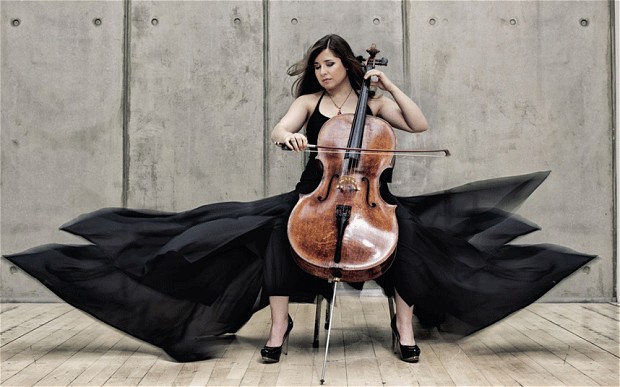
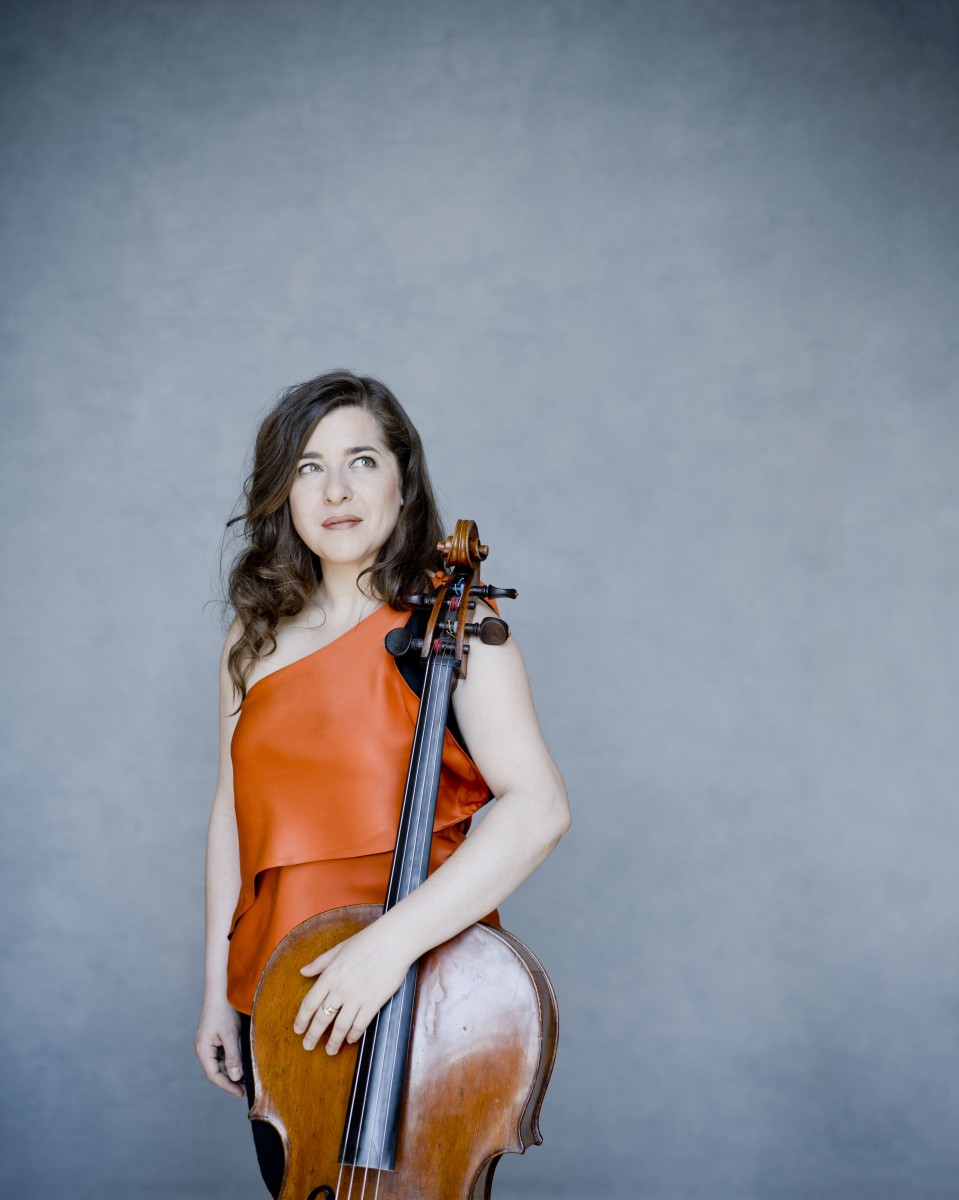
Alisa Weilserstein

Featured soloist for the concerto will be cellist Alisa Weilerstein, whom Oundjian calls “one of the great cellists in the history of the instrument, and an amazing musician. . . . Her Dvořák is spectacular,” he says. “It’s maybe (Dvořák’s) most profound work, because it’s so moving.”

To close the program Oundjian wanted something that would not compete with the intensity of the concerto. “I wanted to have a celebration in the second half,” he says. “I wanted everyone to feel great,” and for that he chose Mendelssohn’s “Italian” Symphony, certainly one of the most cheerful and ebullient pieces in the orchestral repertoire.

The opening week also features the CMF’s annual Family Concert Sunday morning at 10:30 a.m. (July 7), with some light orchestral pieces mixed with some fun, including a piece based on Dr. Seuss’s Green Eggs and Ham. Tuesday sees the first of the summer’s Robert Mann Chamber Music Series concerts, named for the late violinist and founding member of the Juilliard String Quartet. The series will continue the following three Tuesdays at 7:30 p.m.

Festival Orchestra Thursday and Friday pairs, at 7:30 and 6:30 p.m. respectively, start the first week with violinist Vadim Gluzman playing Prokofiev’s Second Violin Concerto, and the iconic 20th-century masterpiece, The Rite of Spring by Stravinsky (July 11 and 12). The program will open with the exhilarating Short Ride in a Fast Machine by the American composer John Adams, who was CMF composer-in-residence in 2022.
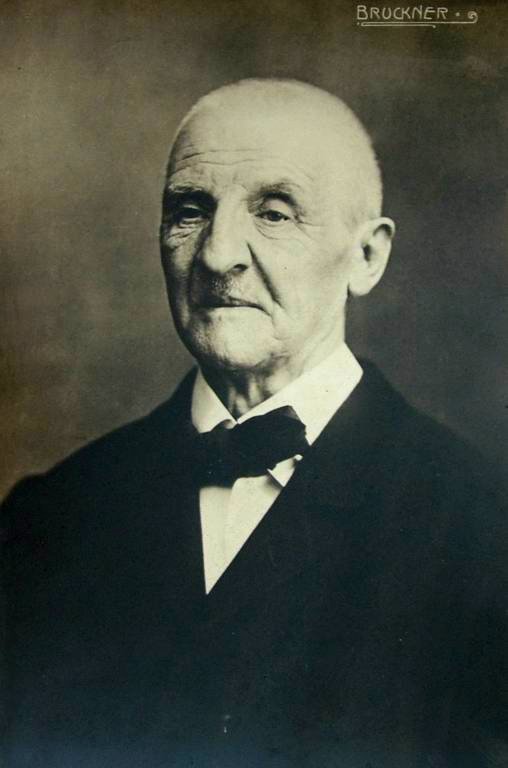
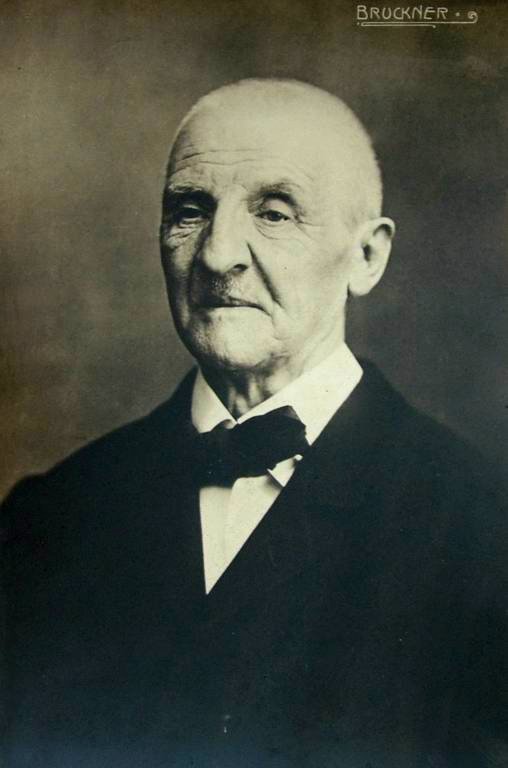
Anton Bruckner

“I did the (July 14) program because it’s the 150th birthday of Schoenberg and the 200th of Bruckner, and I wanted to acknowledge that,” Oundjian says. “I decided, let’s do it in one evening and make it a beautiful experience for everybody! The music is very spiritual (and) both pieces are fantastic to play, in that gorgeous acoustic at Chautauqua.”

The two composers took Wagner’s music and turned in different directions—Bruckner more conservatively by putting Wagner’s sound into the traditional form of the symphony, Schoenberg, born 50 years later, by pushing beyond Wagner’s harmonic freedom and the limits of tonality. 
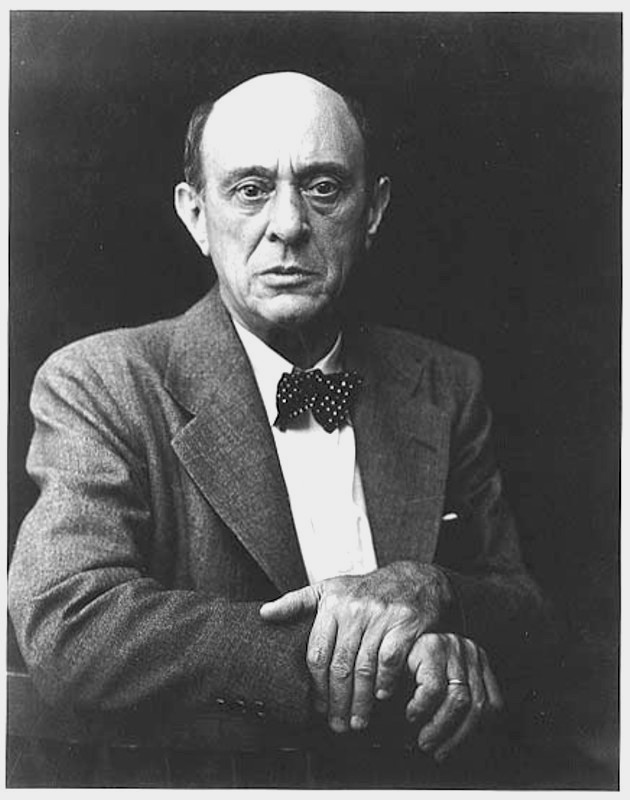
Arnold Schoenberg

“Bruckner’s Fourth Symphony is probably the most accessible (of his nine symphonies), because it’s fairly compact,” Oundjian says. “It has stunning themes and glorious horn solos, and you really hear the power of the orchestra. I find the music exquisitely beautiful and contemplative. It’s almost surreal in its staggering beauty, to me.”

If you think of Schoenberg only as a thorny modernist, you are missing the earlier works that followed much closer to Wagner than his later works. “Verklärte Nacht is basically like late Wagner, with its glorious string sound,” Oundjian says. “It’s a beautiful string orchestra piece.”

Pianist Olga Kern returns to CMF for concerts July 18 and 19. She will play Rachmaninoff’s Piano Concerto No. 2, which she played at CMF in 2013. The concert, under the direction of Norwegian guest conductor Rune Bergmann, will also feature Prayer by Canadian composer Vivian Fung—a work that had its premiere with a “virtual orchestra” of Canadian musicians during the COVID-19 pandemic—and Edvard Grieg’s Suites from music for the play Peer Gynt, narrated by Kabin Thomas.
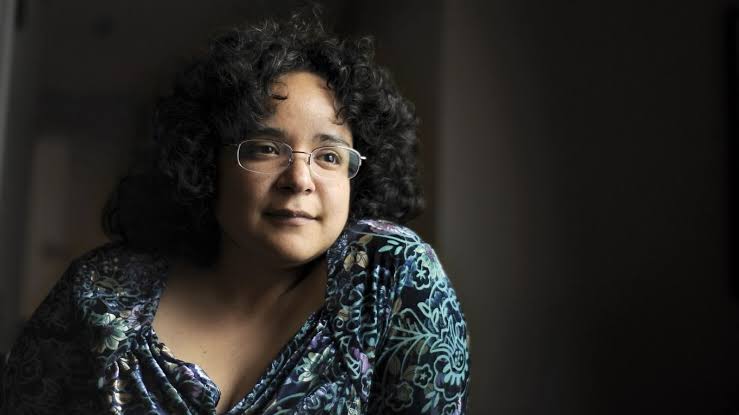
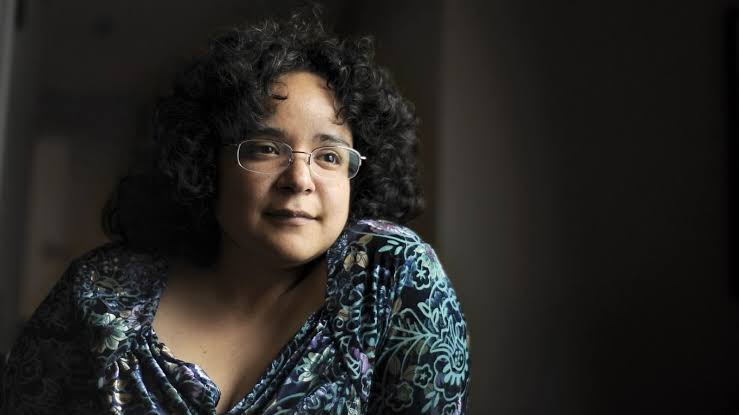
Gabriela Lena Frank

When he was looking for a new work to commission for the 2024 festival, Oundjian thought of a concerto for the Takács Quartet. “I said to (the quartet members), if we were to have a quartet concerto, who would you be interested in approaching, and without hesitation Gabriela’s name came up,” he says. “She  is a wonderful composer, Peruvian-American, and a very particular voice.”

Frank will be present for the July 21 premiere, as will Joan Tower, whose Concerto for Orchestra is on the same program.

Frank has written in her program notes, “Kachkanaraqmi, or ‘I still exist’ in the indigenous Quechua language of my Peruvian forbearers, speaks to the resilience, even insistence, of a racial soul through the generations. In this four-movement work, a brief pastoral Andean prelude, a moody mountain soliloquy, a romp of thieving winds, and a lyrical child’s wake utilize the sonorous possibilities of a concerto grosso for string quartet and string orchestra . . . Throughout, re-imaginings of age-old indigenous motifs and rhythms proliferate.”
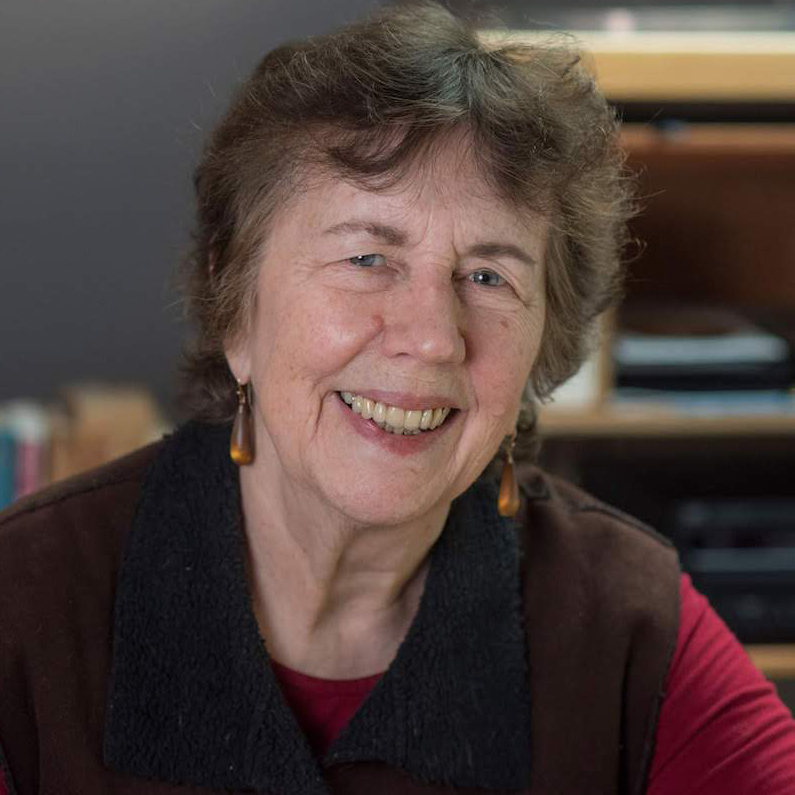
Joan Tower

The premiere will be part of a concert of all-women composers, opening with Adoration by Florence Price, an early-20th-century African American composer whose works were forgotten for many years but recently have been rediscovered. Written in 1951, Adoration was originally for organ solo but has been arranged posthumously for various ensembles..

Joan Tower’s Concerto for Orchestra was commissioned jointly by the Chicago, St. Louis and New York orchestras, all of whom gave premieres but never played it again. “They always say this about compositions: Getting a commission is hard enough, but try to get second performances,” Oundjian says. “It’s one of those things that has really intrigued me, over my entire career: Let’s find out what’s just premiered in the last few years but has been undeservedly ignored.”

He discovered Tower’s Concerto for Orchestra when he was asked to conduct it in Iceland. “I said, ‘I don’t know that piece!’ I just loved it. It is so dramatic and so beautiful. There are two passages that are some of the most stunning contrapuntal harmony that I know in contemporary music. 

“It has tremendous drive and brilliance, and it demands everything from the orchestra.”

# # # # #

Colorado Music Festival, Peter Oundjian, music director
July 5–21, 2024
All performances in Chautauqua Auditorium

Opening Night
Festival Orchestra, Peter Oundjian, conductor
With Alisa Weilerstein, cello

  • Anna Clyne: Masquerade (2013)
  • Dvořák: Cello Concerto in B minor
  • Mendelssohn: Symphony No. 4 in A major (“Italian”)

6:30 p.m. Friday and Sunday, July 5 and 7

Family Concert: Green Eggs and Ham
Festival Orchestra, Jacob Joyce, conductor 
With Really Inventive Stuff and Jennifer DeDominici, mezzo-soprano

  • Glinka: Overture to Ruslan and Ludmilla
  • Daniel Dorff: Three Fun Fables
  • Mendelssohn: Overture to A Midsummer Night’s Dream
  • Rob Kapilow: Green Eggs and Ham

10:30 a.m. Sunday, July 7

Robert Mann Chamber Music Series
Colorado Music Festival musicians 

  • Ernst von Dohnányi: Sextet in C Major
  • Beethoven: “Duet with two Obligato Eyeglasses” in E-flat major for viola and cello, WoO 32
  • Schumann: Piano Quartet in E-flat Major, op. 47

7:30 p.m. Tuesday, July 9

Festival Orchestra Concert
Festival Orchestra, Peter Oundjian, conductor
With Vadim Gluzman, violin

  • John Adams: Short Ride in a Fast Machine
  • Prokofiev: Violin Concerto No. 2 
  • Stravinsky: Rite of Spring

7:30 p.m. Thursday July 11
6:30 p.m. Friday, July 12 

Bruckner Bicentennial Concert
Festival Orchestra, Peter Oundjian, conductor

  • Arnold Schoenberg: Verklärte Nacht (“Transfigured night”), op. 4
  • Anton Bruckner: Symphony No. 4 (“Romantic”)

6:30 p.m. Sunday, July 14

Robert Mann Chamber Music Series
Colorado Music Festival musicians

  • Carl Nielsen: Wind Quintet, op. 43
  • Schubert: String Quintet in C Major, D956

7:30 p.m. Tuesday, July 16

Festival Orchestra Concert
Festival Orchestra, Rune Bergmann, conductor
With Olga Kern, piano, and Kabin Thomas, narrator

  • Vivian Fung: Prayer
  • Rachmaninoff: Piano Concerto No. 2, op. 18
  • Edvard Grieg: Suites from Peer Gynt

7:30 p.m. Thursday, July 18
6:30 p.m. Friday, July 19

Festival Chamber Orchestra Concert
Festival Orchestra, Peter Oundjian, conductor
With the Takács Quartet and Gabriela Lena Frank, composer 

  • Florence Price: Adoration
  • Gabriela Lena Frank: Kachkanaraqmi (“I still exist”; world premiere)
  • Joan Tower: Concerto for Orchestra

6:30 p.m. Sunday, July 21

Tickets for individual concerts are available through the Chautauqua Box Office Web page.

GRACE NOTES: Prominent violinists and a sold-out Ugly Duckling

Vadim Gluzman, Ray Chen and the Colorado Symphony in Boulder and Longmont 

By Peter Alexander March 19 at 4:06 p.m.

The Boulder Bach Festival (BBF) will present the Ukrainian-Israeli violinist Vadim Guzman in a program that spans centuries, from J.S. Bach to Arvo Pärt.

The final concert of BBF’s 2023–24 season, Gluzman’s performance occurs on Bach’s birthday, at  4 p.m. Thursday, March 21 (Dairy Arts Center; details below). He will perform with the BBF CORE (COmpass Resonance Ensemble) and be joined by BBF music director Zachary Carrettin for Bach’s Double Violin Concerto.

Known for his wide repertoire, Gluzman has premiered works by Sofia Gubaidulina, Michael Daugherty and Pēteris Vasks, among others. His recordings have won numerous awards, including Gramophone magazine’s Editor’s Choice, and Disc of the Month from The Strad, BBC Music Magazine and other publications. He is currently distinguished artist-in-residence at the Peabody Conservatory. He performs on the 1690 ‘ex-Leopold Auer’ Stradivari, on extended loan through the Stradivari Society of Chicago.

# # # # #

“Old and New Dreams”
Boulder Bach Festival CORE with Vadim Gluzman and Zachary Carretttin, violin

Program includes:

  • J.S. Bach: Violin Concerto in A minor, S1040
  • Arvo Pärt: Passacaglia
  • J.S. Bach: Concerto in D minor for two violins, S1043

4 p.m. Thursday, March 21
Gordon Gamm Theater, Dairy Arts Center

TICKETS

# # # # #

The CU Presents Artist Series will feature violinist Ray Chen, who is billed as “redefining what it means to be a classical musician in the 21st century,” together with Hispanic-American pianist Julio Elizalde in a concert program combining serious and lighter works Thursday ( 7:30 p.m. March 21 in Macky Auditorium; details below).

The major works on the program are Beethoven’s Violin Sonata No. 7 in C minor, op. 30 no. 2, and J.S. Bach’s Partita No. 3 in E major for solo violin, S1006. Filling out the program are encore material pieces, starting with Tartini’s showpiece the “Devil’s Trill” Sonata. After the two heavier works, Chen and Elizalde will wrap up the program with Antonio Bazzini’s brilliant “Dance of the Goblins,”  Fritz Kreisler’s arrangement of Dvořák’s Slavonic Dance No. 2, and their own arrangement of “Spain” by Chick Corea.

Beethoven’s Violin Sonata No. 7 is part of a set published in 1803 as “Sonatas for the pianoforte with the accompaniment of violin.” This label reflects an earlier time, when domestic music-making often featured female pianists, who were expected to have more time to practice than their male partners on violin, and who therefore could master more difficult parts. In the case of this Sonata, each movement opens with the piano and the violin part, while it is not insignificant, often follows the lead of the piano. Unusually for a piece named “sonata,” the Sonata No. 7 is in four movements, and the key of C minor marks it as an often dramatic and stormy work.

Bach’s Third Partita is a suite of dances, preceded by a Preludio. It is the last of his set of Six Sonatas and Partitas for solo violin, one of the pinnacles of the solo violin repertoire. In the bright key of E major, it is one of the most cheerful of the set. That is particularly true of the Preludio, a perpetual-motion movement that is one of Bach’s most familiar pieces. Apparently Bach was himself fond of this movement, which he re-used in a version for organ and orchestra in his Cantata No. 29.

Violinist Ray Chen

Chen came to wide attention in the music world when he won first prize in both the Yehudi Menuhin and Queen Elizabeth violin competitions, in 2008 and ’09 respectively. He is known for his use of social media to reach a wider audience, including as a co-founder of the Tonic Website that allows young musicians to practice and learn together.

Born in Taiwan and raised in Australia, he was accepted at Philadelphia’s Curtis Institute at the age of 15. He plays the 1714 “Dolphin” Stradivarius violin on loan from the Nippon Music Foundation and once owned by Jascha Heifetz. 

Pianist Julio Elizalde has been performing as a recital partner with Chen and violinist Sarah Chang for nearly ten years. A native of the San Francisco Bay area, he is a graduate of the San Francisco Conservatory of Music, where he is currently on the faculty, and the Juilliard School. He has collaborated with several living composers including Osvaldo Golijov, Stephen Hough and Adolphus Hailstork.

# # # # #

Ray Chen, violin, and Julio Elizalde, piano

  • Giuseppe Tartini: Sonata in G minor (“Devil’s Trill”; arr. Fritz Kreisler)
  • Ludwig van Beethoven: Violin Sonata No. 7 in C minor, op. 30 no. 2
  • J.S. Bach: Partita No. 3 in E major for solo violin, S1006
  • Antonio Bazzini: La Ronde des Lutins (“Dance of the Goblins”), op. 25
  • Dvořák: Slavonic Dance No. 2 in E minor, op. 72 (arr. Fritz Kreisler)
  • Chick Corea: “Spain” (arr. Elizalde and Chen)

TICKETS

# # # # #

Members of the Colorado Symphony will visit the Longmont Museum’s Stewart Auditorium Saturday (March 23) of present a bilingual concert that tells the story of “The Ugly Duckling.”

The interactive performance in English and Spanish, dubbed a “Mini Música,” will incorporate storytelling, singing and dance. It will be accompanied by a 16-piece orchestra made up of members of the Colorado Symphony.

The performances at 10 and 11:30 a.m. are free, but both are already full with advance reservations.

# # # # #

“The Ugly Duckling” Mini Música
Members of the Colorado Symphony

10 and 11:30 a.m. Saturday, March 23
Stewart Auditorium, Longmont Museum

SOLD OUT

CORRECTION on March 19: the word ”Música,” which had inadvertently dropped out, was restored in the penultimate paragraph of the story about Colorado Symphony’s performance of “The Ugly Duckling.”

Colorado Music Festival announces summer festival schedule

Subscriptions now available; single tickets on sale March 5

By Peter Alexander Feb. 4 at 4 p.m.

The Colorado Music Festival (CMF) has announced its 2024 festival season, July 5 through Aug. 4 at Chautauqua Auditorium in Boulder.

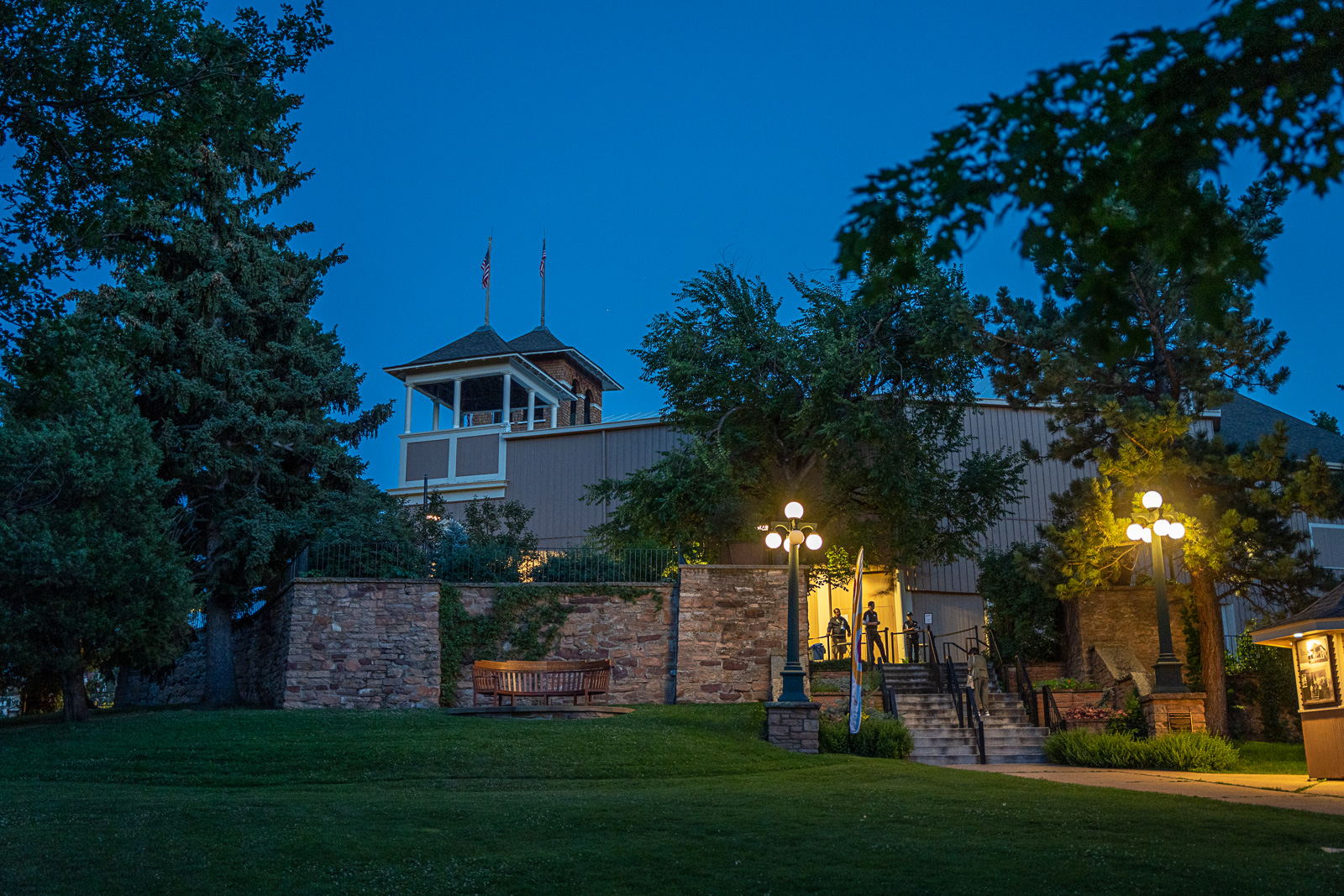
Chautauqua Auditorium. Photo by Jeremy Kornreich

This year’s festival will present 19 performances in 31 days—between four and five weeks and slightly shorter than recent previous festival seasons. In addition to the Festival Orchestra made up of musicians from around the country, it will feature the world premiere of a new piece by Gabriela Lena Frank; four Tuesday evening concerts on the Robert Mann Chamber Music Series, performed by members of the Festival Orchestra and the visiting Danish String Quartet; and guest artists including the CU-based Takács Quartet, cellist Alisa Weilerstien, and returning CMF favorites pianist Olga Kern and violinist Augustin Hadelich.

Performances by the full Festival Orchestra will be most Thursday and Friday evenings at 7:30 and 6:30 p.m. respectively. Orchestral concerts at 6:30 p.m. on Sunday will generally feature a smaller ensemble. The full festival schedule is listed below.

Gabriela Lena Frank

A highlight of the season will be the premiere of a new orchestral work with string quartet by Franks on July 21 (see details below). The summer’s only world premiere, the performance will feature the Takács Quartet. Other works by living composers will be featured throughout the summer, including Masquerade by Anna Clyne; Short Ride in a Fast Machine by John Adams, who was CMF composer-in-residence in 2022; Two Mountain Scenes by Kevin Puts, a work that was commissioned by the Bravo! Vail Valley Music Festival and the New York Philharmonic in 2007; and Joan Tower’s Concerto for Orchestra.

Anton Bruckner

On July 14 conductor Peter Oundjian and the CMF Orchestra will celebrate the 200th anniversary of the birth of Austrian composer Anton Bruckner with a performance of his Symphony No. 4 (“Romantic”). On the same program CMF will celebrate the 150th anniversary of Arnold Schoenberg’s birth with a performance of his late Romantic work for strings Verklärte Nacht (Transfigured Night). 

The annual CMF family concert at 10:30 a.m. Sunday, July 7, will feature some shorter standard classical overtures by Mikhail Glinka and Mendelssohn, as well as a performance of composer Rob Kapilow’s setting of Dr. Seuss’s Green Eggs and Ham. Also on the program is Three Fun Fables, a setting for narrator and orchestra of three of Aesop’s fables by Daniel Dorff, who is known for numerous works that introduce music and musical instruments to young audiences.

Alisa Weilerstein. Photo by Marco Borggreve

Outstanding guest artists have always been a feature of the CMF. This summer’s guest soloists will be:
—Cellist Alisa Weilerstein, a member of a renowned musical family, playing the Dvořák Cello Concerto on the opening night program, July 5 and 7;
—the playful ensemble Really Inventive Stuff, a favorite on past CMF summer schedules, and the mezzo-soprano Jennifer DeDominici for the family concert July 7;
—violinist Vadim Gluzman playing the Prokofiev Second Violin Concerto July 9;
—pianist Olga Kern playing the Rachmaninoff Second Piano Concerto July 18 and 19;
—Colorado Public Radio personality Kabin Thomas narrating Greig’s music for for Henrik Ibsen’s verse play Peer Gynt, alsoJuly 18 and 19;
—the Takács Quartet playing the world premiere of Gabriel Lena Frank’s new work July 21;
—pianist Awadagin Pratt, playing J.S. Bach’s Keyboard Concerto in A major and Jessie Montgomery’s Rounds for piano and string orchestra July 25 and 26;
—the Danish String Quartet, who last appeared at CMF in 2022, playing a varied program that ranges from Haydn to Stravinsky to the 18th-century blind Celtic harpist Turlough O’Carolan July 30;
—violinist Augustin Hadelich, returning to CMF to play Tchaikovsky’s Violin Concerto Aug. 1 and 2; and
—soprano Karina Gauvin to sing Ravel’s song cycle Shéhérazade and the final movement of Mahler’s Symphony No. 4 on the Festival Finale concert, Aug. 4.

Subscription tickets are currently available for the Colorado Music Festival. Tickets to individual concerts will go on sale through the Chautauqua Box Office March 5. More information on CMF tickets, including discounted youth and student tickets, is available HERE.

# # # # #

Colorado Music Festival, Peter Oundjian, music director
Summer 2024
All performances in Chautauqua Auditorium

Opening Night
Festival Orchestra, Peter Oundjian, conductor
With Alisa Weilerstein, cello

  • Anna Clyne: Masquerade (2013)
  • Dvořák: Cello Concerto in B minor
  • Mendelssohn: Symphony No. 4 in A major (“Italian”)

6:30 p.m. Friday and Sunday, July 5 and 7

Family Concert: Green Eggs and Ham
Festival Orchestra, Jacob Joyce, conductor 
With Really Inventive Stuff and Jennifer DeDominici, mezzo-soprano 

  • Glinka: Overture to Ruslan and Ludmilla
  • Daniel Dorff: Three Fun Fables
  • Mendelssohn: Overture to A Midsummer Night’s Dream
  • Rob Kapilow: Green Eggs and Ham

10:30 a.m. Sunday, July 7

Robert Mann Chamber Music Series
Colorado Music Festival musicians 

  • Ernst von Dohnányi: Sextet in C Major
  • Beethoven: “Duet with two Obligato Eyeglasses” in E-flat major for viola and cello, WoO 32
  • Schumann: Piano Quartet in E-flat Major, op. 47

7:30 p.m. Tuesday, July 9

Festival Orchestra Concert
Festival Orchestra, Peter Oundjian, conductor
With Vadim Gluzman, violin

  • John Adams: Short Ride in a Fast Machine
  • Prokofiev: Violin Concerto No. 2 
  • Stravinsky: Rite of Spring

7:30 p.m. Thursday July 11
6:30 p.m. Friday, July 12  

Bruckner Bicentennial Concert
Festival Orchestra, Peter Oundjian, conductor

  • Arnold Schoenberg: Verklärte Nacht (“Transfigured night”), op. 4
  • Anton Bruckner: Symphony No. 4 (“Romantic”)

6:30 p.m. Sunday, July 14

Robert Mann Chamber Music Series
Colorado Music Festival musicians 

  • Carl Nielsen: Wind Quintet, op. 43
  • Schubert: String Quintet in C Major, D956

7:30 p.m. Tuesday, July 16

Festival Orchestra Concert
Festival Orchestra, Rune Bergmann, conductor
With Olga Kern, piano, and Kabin Thomas, narrator

  • Vivian Fung: Prayer
  • Rachmaninoff: Piano Concerto No. 2, op. 18
  • Edvard Grieg: Suites from Peer Gynt

7:30 p.m. Thursday, July 18
6:30 p.m. Friday, July 19

Festival Chamber Orchestra Concert
Festival Orchestra, Peter Oundjian, conductor
With the Takács Quartet and Gabriela Lena Frank, composer 

  • Florence Price: Adoration
  • Gabriela Lena Frank: World Premiere
  • Joan Tower: Concerto for Orchestra

6:30 p.m. Sunday, July 21

Robert Mann Chamber Music Series
Colorado Music Festival musicians

  • Joseph Haydn, String Quartet in C Major, op. 20 no. 2
  • Claude Debussy, Sonata for flute, viola and harp
  • Felix Mendelssohn, String Octet in E-flat Major, op. 20

7:30p.m. Tuesday, July 23

Festival Orchestra Concert
Festival Orchestra, Peter Oundjian, conductor
With Awadagin Pratt, piano

  • J.S. Bach: Keyboard Concerto in A major, S1055 
  • Jessie Montgomery: Rounds for piano and string orchestra (2022)
  • Rimsky-Korsakov: Scheherazade

7:30 p.m. Thursday, July 25
6:30 p.m. Friday, July 26

Festival Chamber Orchestra Concert
Chamber Orchestra, Gemma New, conductor
With Christina and Michelle Naughton, piano duo

  • Mozart: Eine kleine Nachtmusik, K525
    —Concerto in E-flat Major for Two Pianos, K365
    —Symphony No. 35 in D major, K385 (“Haffner”)

6:30 p.m. Sunday, July 28

Robert Mann Chamber Music Series
Danish String Quartet 

  • Joseph Haydn: String Quartet, op. 77 no. 2: III, Andante
  • Stravinsky: Three Pieces for String Quartet
  • Turlough O’Carolan: Three Melodies
  • Mozart: Divertimento in F major, K138
  • Shostakovich: String Quartet No. 3 in F major, op. 73

7:30 p.m. Tuesday, July 30

Festival Orchestra Concert
Festival Orchestra, Peter Oundjian, conductor
With Augustin Hadelich, violin

  • Kevin Puts: Two Mountain Scenes (2007)
  • Tchaikovsky: Violin Concerto in D Major, op. 35
  • Dvořák: Symphony No. 7 in D minor, op. 70 

7:30 p.m. Thursday, Aug. 1
6:30 p.m. Friday, Aug. 2

Festival FInale Concert
Festival Orchestra, Peter Oundjian, conductor
With Karina Gauvin, soprano

  • Johann Strauss: Overture to Die Fledermaus
  • Ravel: Shéhérazade
  • Mahler: Symphony No. 4 in G major

6:30 p.m. Sunday, Aug. 4

Information on Subscription tickets is available HERE.
Single concert tickets will go on sale March 5.

NOTE: A correction was made Feb. 10. An earlier version of the story said that the 2024 festival would last four weeks. The correct length is 31 days—between four and five weeks.

Grace Notes: Guest artists for Ars Nova and Boulder Bach

“Stardust” for Black History Month, and a renowned guest artist

By Peter Alexander Feb. 7 at 10:04 p.m.

The Denver-based string group Sphere Ensemble will be a guest of Boulder’s Ars Nova Singers for a concert recognizing Black History Month. Titled “Stardust,” the program will be presented at 7:30 pm. Friday in Boulder and Saturday in Denver (Feb. 10 and 11; details below).

Joel Thompson

Under the direction of Ars Nova’s artistic director Tom Morgan, the program opens with the world premiere performances of Love Songs from Lonely Letters by Joel Thompson. Ars Nova is one of five American choirs that jointly commissioned the Love Letters, which are based on the writings of Ashon Crawley, who teaches at the University of Virginia. 

An Atlanta resident and Emory College grad, Thompson is the composer of a widely acclaimed opera based on “The Snowy Day” by Ezra Jack Keats, the most checked-out book in the history of the New York Public Library. Thompson’s opera was premiered in August 2021 by Houston Grand Opera, where he currently holds a residency. Thompson will speak at the Ars Nova performances about his Love Songs, a work that explores individual agency and transformative joy.

The Sphere Ensemble will play their own arrangements of works by the Black English composer Samuel Coleridge-Taylor and the remarkable Brazilian woman composer Francisca Edwiges Neves Gonzaga, known as Chiquinha Gonzaga.

The program concludes with music by the Estonian composer Arvo Pärt. Ars Nova will repeat his Berlin Mass, a 1990 composition that they performed with the Boulder Philharmonic in 1997. Originally written for voices and organ, the score was arranged by the composer for voices and strings and incorporates the composer’s tintinnabula technique (from the Latin word for “bell”)—a way of creating deep resonance in slow-moving passages by combining notes of the tonic chord with simple scale patterns.

# # # # #

“Stardust”
Ars Nova Singers, Thomas Edward Morgan, conductor
With Sphere Ensemble

  • Joel Thompson: Love Songs from Lonely Letters
  • Samuel Coleridge-Taylor: Three-fours, II: Andante (arr. Alex Vittal)
  • Chiquinha Gonzaga: “Corta-Jaca” (arr. Alex Vittal)
  • Arvo Pärt: “Es sang vor langen Jahren” (Long years ago the nightingale sang)
    —Virgencita (Little Virgin)
    —Solfeggio
    Berlin Mass

7:30 p.m. Friday, Feb. 10
First United Methodist Church, 14521 Spruce St., Boulder

7:30 p.m. Saturday, Feb. 11
Central Presbyterian Church, 1660 Sherman St., Denver

TICKETS, including livestream Feb. 10–28

# # # # #

The Ukrainian-born Israeli violinist Vadim Gluzman and the Indonesian pianist Janice Carissa will present a joint recital as guests of the Boulder Bach Festival, at 4 p.m. Saturday, Feb. 11, in the Stewart Auditorium of the Longmont Museum.

Vadim Gluzman. Photo by Marco Borggreve

The children of musicians, Gluzman was born in the former Soviet Union and grew up in Riga, Latvia. He began studying violin at seven and moved to Israel with his family at 17. Today he teaches at the Peabody Conservatory in Baltimore as distinguished artist in residence and plays a Stradivari violin that once belonged to the virtuoso Leopold Auer.

Carissa first studied piano with her mother in her native Indonesia. She came to the United States to study at the Curtis Institute in 2013 and made her debut with the Philadelphia Orchestra at the age of 16. She is currently a master’s student of Robert McDonald at the Juilliard School. She has appeared at Caramoor, Marlboro and Ravinia festivals, among others.

Their program features J.S. Bach’s Sonata in C minor for violin and keyboard, as well as the Chaconne from Bach’s Partita in D minor for solo violin, with a piano accompaniment by Robert Schumann. Continuing a tour through music history, Gluzman will play the A minor sonata for violin solo by the late Romantic violinist/composer Eugène Ysaÿe and par.ti.ta for solo violin written for the Bachwoche (Bach week) in Ansbach, Germany, by Lera Auerbach.

Gluzman wrote, “par.ti.ta is an incredible work, projecting Lera’s lifelong fascination with Bach. . . . We hear traces and echoes of Brandenburg Concerti, Concerto for two violins, sonatas and partitas for violin solo. No particular work is being quoted, yet I can’t help the feeling of being drawn to an incredible world of shades, echoes—are these shades of ourselves?”

# # # # #

Boulder Bach Festival
Vadim Gluzman, violin, and Janice Carissa, piano

  • J.S. Bach: Sonata in C minor, S1017, for violin and clavier obbligato
  • Eugène Ysaÿe: Sonata in A minor, op. 27 no. 2, for violin solo
  • Lera Auerbach: par.ti.ta
  • J.S. Bach: Partita in D minor, Chaconne, with piano accompaniment by Robert Schumann

4 p.m. Saturday, Feb. 11
Stewart Auditorium, Longmont Museum

TICKETS

Colorado Music Festival opens with fun, beauty, and excitement

Violinist Vadim Gluzman shines in Bernstein Serenade

By Peter Alexander June 29, 12:30 a.m.

The Colorado Music Festival opened its 2018 season last night (June 28) with a program that had generous supplies of fun, beauty and excitement.

marcelo_lehninger_-_gr_symphony_music_director_3

Marcelo Lehninger

Guest conductor Marcelo Lehninger faced the challenge of launching the festival, conducting an unfamiliar orchestra in a hall where he had never performed. It is a testament to him and to the players that he acquitted himself with great success. He is a conductor who exudes a calm confidence and who leads with clarity and restraint.

Lehninger began the concert with John Corigliano’s Promenade Overture, which starts with a near-empty stage. Players and sections enter gradually until the stage is full (or nearly: the tuba player, in a humorous nod to the instrument’s bulk, enters oompahing breathlessly at the very end). Lehninger selected this score the represent the reunion of the orchestra players, who reconvene every summer in Boulder from their main-season jobs all over the country.

Promenade is a great concert and season opener: the percussion riffs, the brass fanfares, the woodwind noodling all give the players a chance to show their virtuosity, and the culminating broad, lyrical theme gives the strings their due as well. It was done with great brilliance and precision, announcing “THIS is an orchestra!” For future seasons, opening with Promenade would make a great Chautauqua tradition.

That bit of fun was followed by the beauty of Leonard Bernstein’s Serenade after Plato’s Symposium, featuring violinist Vadim Gluzman. Effectively a five-movement concerto for violin with strings, percussion and harp, the Serenade was written in 1954, before West Side Story made Bernstein a popular sensation. The style is mostly conservative mid-century modernist, with hints of Shostakovich, Britten and others of the time, with the jazzy, hip “Lenny” that we expect only showing up in the final movement.

Plato’s Symposiumdepicts a series of discourses on the subject of love. Fittingly, the five contrasting movements of the Serenade are dominated by a lyrical spirit, with the particularly beautiful fourth movement suggesting Bernstein’s expansive love of humanity.

Vadim Gluzman Photo: Marco Borggreve

Violinist Vadim Gluzman

Gluzman was a sheer joy to hear. The lyrical solo that opens the Serenade filled the hall with beautiful sound, even at a piano volume, and the tricky pyrotechnics of the third movement were precise and flawless. The fourth movement was the expressive heart of the performance, and the finale had just the right amount of jazzy spirit.

I particularly enjoyed the way Gluzman interacted with the violin section behind him, frequently turning to face them rather than the audience, sharing the joy of performance with the players. Equally captivating was his interaction with the principal cellist during a joint cadenza. I have heard this piece live before, but never has it made a greater impression.

Lehninger closed the concert with Tchaikovsky’s Fourth Symphony, one of the most viscerally exciting pieces in the repertoire. This was the first real test for the full orchestra, and with a few reservations they passed handily. This is the CMF orchestra we have heard before, with great individual virtuosity, a full sound, (mostly) impeccable intonation, and a wide range of dynamics and expressive potential. From the very first notes, the brass was bold, full and thrilling. The movement displayed the flexibility of the ensemble, with extensive tempo modifications and well controlled phrasing.

A few entrances were slightly blurred, but only a few, and from where I sat the balance was not ideal. The powerful brass section sometimes overwhelmed other sections, the middle of the texture was a little too thick, and some details were lost in the wash of sound. It may have sounded differently elsewhere in the hall.

In a moment of surprise, Lehninger turned to the audience between the first two movements to apologize that he had not spoken earlier, and to say “Welcome.” What could have been an awkward moment was made charming by his relaxed, affable personality.

The remainder of the symphony was played with great expression, notable flexibility and well marked expressive contours. The finale was taken at a driven tempo, but one that the players managed well. The movement was irresistibly exciting and did what it is supposed to do: Drive the audience to their feet. And so the 2018 CMF is well launched.

CMF Orch.by Eric Berlin

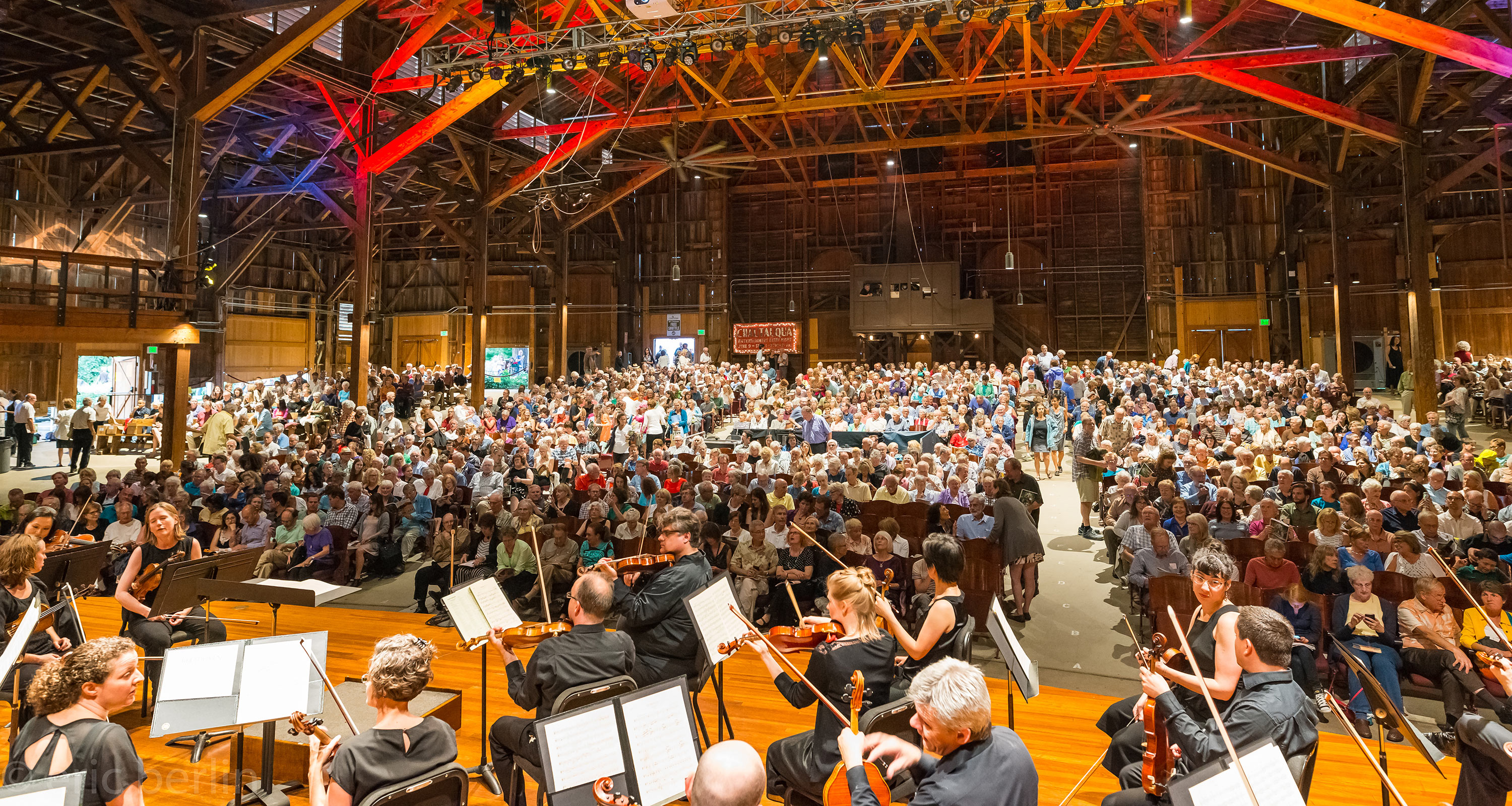
Chautauqua Auditorium from the CMF Orchestra. Photo by Eric Berlin.

Dates, programs and tickets for CMF performances here.

Guest conductors launch 2018 Colorado Music Festival

Violinists Gluzman and Quint, pianists Weiss and Martinez will be early soloists at CMF

By Peter Alexander June 28 at 12 noon

CMF Orch.by Eric Berlin

Chautauqua Auditorium during a CMF orchestra concert. Photo by Eric Berlin.

The Colorado Music Festival, facing another year without a permanent music director, opens with two weeks of concerts led by guest conductors Marcelo Lehninger and David Danzmayr. Current artistic advisor Peter Oundjian will lead several concerts mid-summer, and former music director Jean-Marie Zeitouni will return for one week.

The opening weeks set the festival pattern of full orchestra concerts on Thursdays and chamber orchestra on Sundays. Later, the season will also see the return of Fresh Friday mini-concerts and Saturday chamber music (full schedule at coloradomusicfestival.org).

Read more in Boulder Weekly.