Ars Nova Singers meet Steampunk

“Science/Fantasy” program in Lafayette, Denver and Longmont

By Peter Alexander 11:45 p.m. April 2

It all started at a wedding.

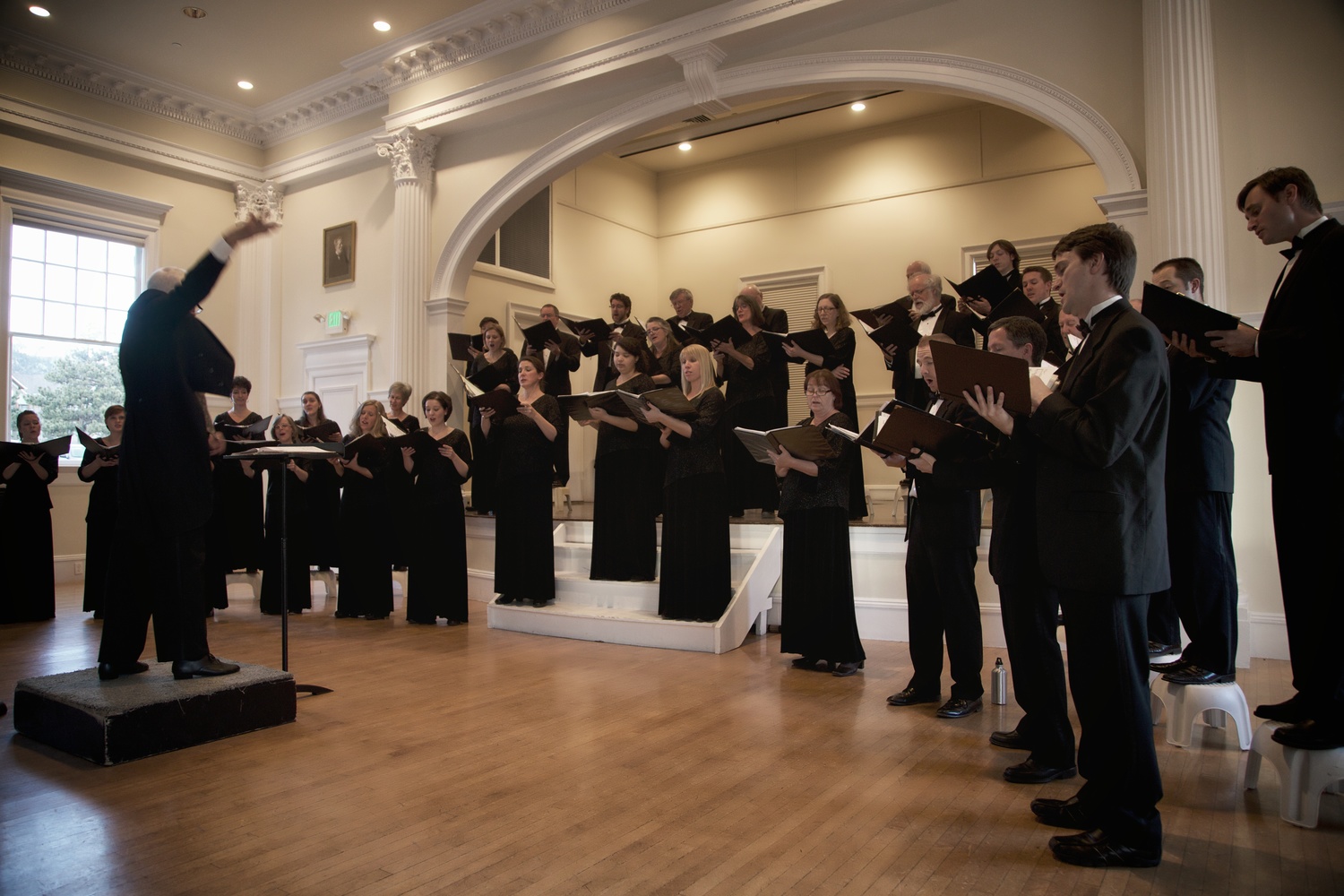
The next concert by Boulder’s adventurous Ars Nova Singers and conductor Thomas Morgan is a departure from the usual. Normally devoted to music of the Renaissance and contemporary times, they will perform music from the Victorian era and some contemporary works that refer to advances in technology from different eras. 

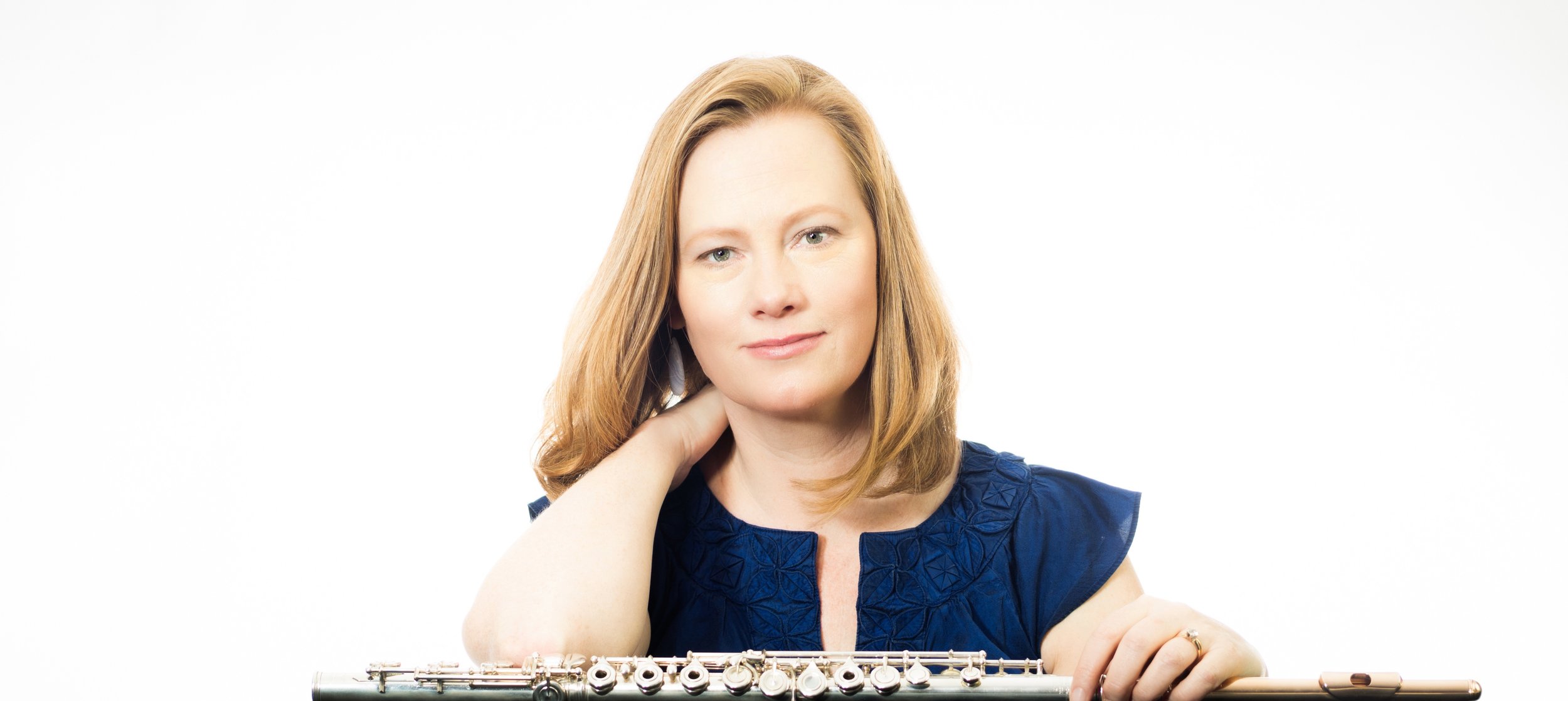
Steampunk fashion. Renee Roush, photo by Austin Welch Photography

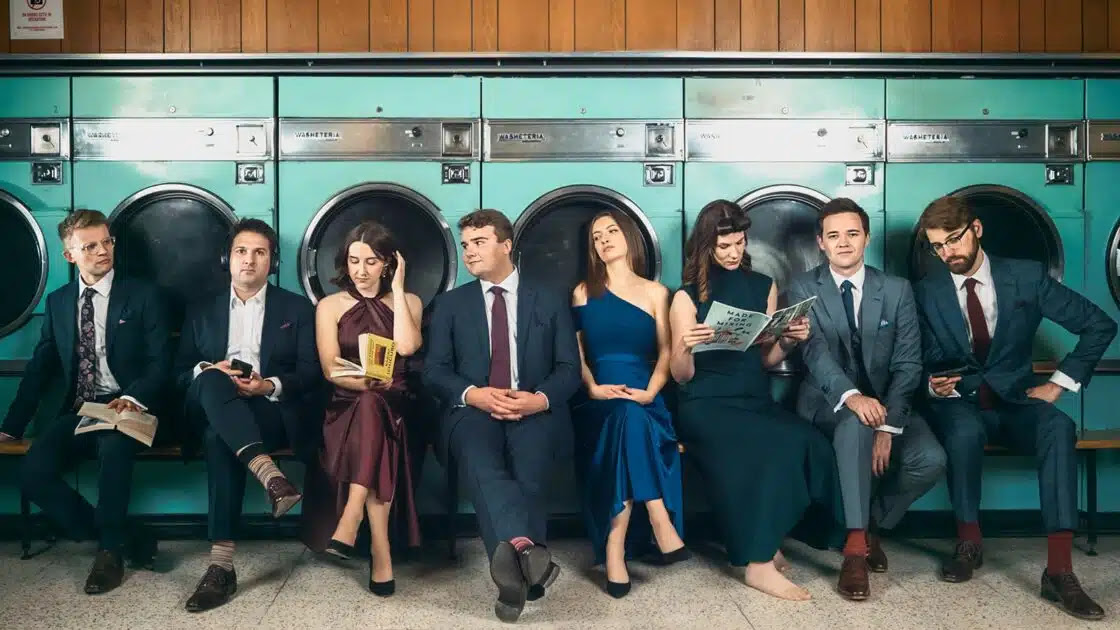
That curious and interesting program, titled “Science/Fantasy,” will be presented three times, in Lafayette, Denver and Longmont over the coming weekend (April 4–6; details below). The performers will not be the full Arts Nova ensemble, but a smaller group of 11 singers. To bring out the unique nature of the program, they will wear “Steampunk” costumes borrowed from various sources, including the CU Costume Shop.

Steampunk, if you don’t know, is defined as “a sub-genre of science fiction that incorporates retro-futuristic technology and aesthetics inspired by, but not limited to, 19th-century industrial steam-powered machinery.” As such it is often connected to Victorian times and styles. (You can learn more about Steampunk HERE.)

The hallmarks of Steampunk style are gears, goggles, pocket watches and Victorian-style clothing: tailcoats with vests, high collars, top hats, cuffs and corsets—modified by individual taste and creativity. For the Ars Nova concerts, if you and a friend put together your own Steampunk outfits, there is a bonus: one ticket will admit two people in Steampunk costume.

But back to that wedding.

“I was invited a couple of years ago to a Steampunk wedding,” Morgan explains. “The entire bridal party and guests were encouraged to come (in costume), and it was so much fun. The environment suggested to me both Victorian music and music that has a rhythmic and industrial feel to it—anything related to flying machines, exploration—the whole era.”

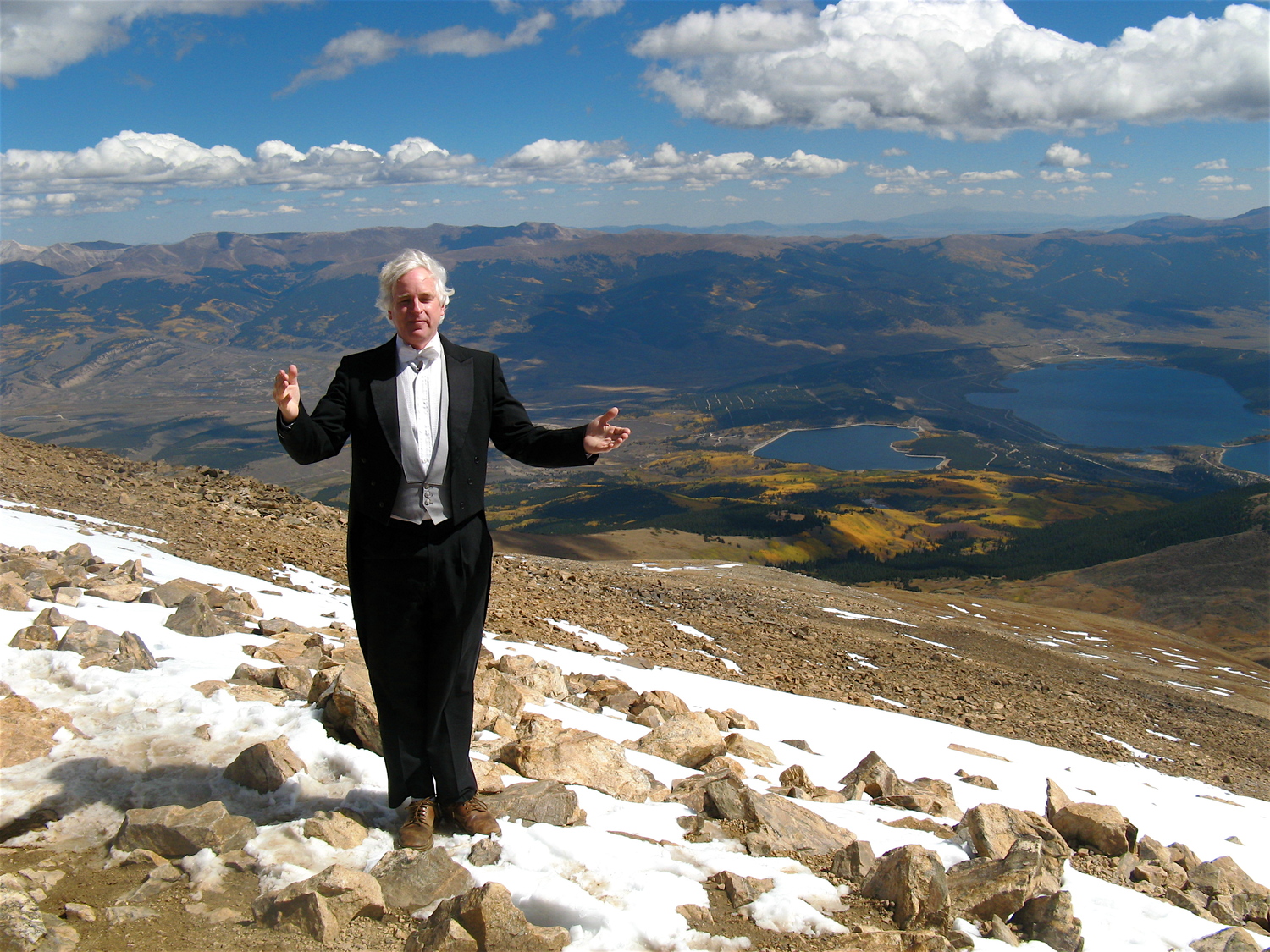
Thomas Morgan sporting Steampunk fashion

The appeal of Steampunk style is not lost on Morgan, who will appear in his own costume. But he wants to clarify that the celebration of Victorian culture does not overlook the drawbacks of the era. “Clearly it was an age of exploitation by colonialists, the subjugation of races by other races and women by men,” he says. 

“But one of the interesting things about (Steampunk) is, it seeks to redeem the past rather than glorify it. Built into the ‘punk’ part of the word, which is more rebellious and anti-establishment, is looking at what would have happened in that era if things had been more egalitarian.”

The program includes works that are genuinely Victorian, specifically music by Hubert Parry, an English composer who lived during the Victorian era. “He certainly represents the height” of that era musically, Morgan says. His “There is an Old Belief” from Songs of Farewell forms “an encapsulation of the musical ethos of the time. The musical language is really beautiful. It gets close to Mahler in many ways, but for voices.”

From a little earlier in the 19th century are two madrigal-like works by Robert Lucas Pearsall, an English composer of choral music who lived much of his life on the European continent. Ars Nova has previously performed and recorded Pearsall’s “Lay a Garland,” which Morgan describes as “one of the really great eight-part choral pieces.”

The program also includes contemporary music that connects with Steampunk ideas. Morgan says that the opening piece, Jennifer Lucy Cook’s “Time,” “is a fast piece on the concept of time, (selected) because clockworks and gear-driven machines are very much a part of the Steampunk aesthetic.”

“Vessels” by Philip Glass comes from his music for the film Koyaanisqatsi, which visually as well as musically portrays the destruction of the natural world through industrialization, something that blighted many Victorian cities polluted by coal-burning factories. The program also includes music by Ralph Vaughan Williams and Francis Poulenc, among others.

The Victorian fascination with flying machines is represented by two pieces, “Leonardo Dreams of His Flying Machine” by Eric Whitacre and “The Campers at Kitty Hawk” by Michael Dellaira. Whitacre’s piece was written 25 years ago, at the start of the composer’s career, and has become one of his best known works for choir. 

Leonardo DaVinci’s sketches for a flying machine

“It’s a wonderful piece that we haven’t done in a long time,” Morgan says. “A lot of the Victorian writers were interested in Leonardo’s designs and some of those were recreated as people were learning how to fly.”

Morgan reached out to Whitacre about performing his piece in the context of the Steampunk program, and the composer recorded comments that will be played before the performance.

The Steampunk theme “gives us a whole opportunity to play with some of these things,” Morgan says. “We have a couple of staged things that the singers do during the performance.

“It’s an opportunity for us to have a little more fun, as well as mix in some repertoire that we don’t always get a chance to do.”

# # # # #

“Science/Fantasy”
Ars Nova Singers, Thomas Morgan, conductor

  • Jennifer Lucy Cook: “Time”
  • Philip Glass: “Vessels” from Koyaanisqatsi
  • Ralph Vaughan Williams: “The Vagabond”
  • Robert Lucas Pearsall: “Sir Patrick Spens”
    —“Lay a Garland”
  • Charles Hubert Hastings Parry: “There is an old belief” from Songs of Farewell
  • Francis Poulenc: “Sanglots,” from Banalités
  • Bob Chilcott: “Sun, Moon, Sea, and Stars”
  • Eric Whitacre: “Leonardo Dreams of His Flying Machine”
  • Michael Dellaira: “The Campers at Kitty Hawk” from USA Stories
  • Leslie Bricusse and Anthony Newley: “Pure Imagination” (arr. Yumiko Matsouka)

7:30 p.m. Friday, April 4, Center for Musical Arts, 200 E. Baseline, Lafayette
5 p.m. Saturday, April 5, St. Thomas Episcopal Church, 2201 Dexter St., Denver
3 p.m. Sunday, April 6, Stewart Auditorium, Longmont
TICKETS

GRACE NOTES: Opening nights, orchestral and choral

Longmont Symphony, Ars Nova Singers launch 2024-25 seasons

By Peter Alexander Oct. 1 at 4:55 p.m.

The Longmont Symphony Orchestra (LSO)and conductor Elliot Moore open “Sound in Motion,” their 2024–25 concert season, Saturday evening (7 p.m. Oct. 5; details below) with two American works and a orchestral showpiece.

Breaking from the pattern of previous seasons, the opening night concert will be held at the Longmont High School Auditorium. An abbreviated version of the same program will be presented Sunday afternoon at 4 p.m. at Frederick High School. 

All remaining LSO concerts during the season, including the Christmas-season Nutcrackers, will be held in the usual venue of Vance Brand Civic Auditorium.

Pianist Spencer Myer

Soloist for the Longmont HS performance will be pianist Spencer Myer, a faculty member at the Indiana University Jacobs School of Music, who will play George Gershwin’s Concerto in F for piano. The program begins with the Overture to another American masterpiece, Bernstein’s musical stage work Candide. Ending the program is Ravel’s familiar orchestration of Mussorgsky’s Pictures at an Exhibition.

Bernstein’s Candide was originally composed in 1956 for Broadway, although today it is considered an operetta rather than a musical. The original show was not a success on dramatic grounds, in spite of the brilliant music Bernstein wrote, including the popular coloratura soprano aria “Glitter and Be Gay.” Various revisions of the original show have included textual contributions by lyricist Richard Wilbur plus Lillian Hellman, Stephen Sondheim, Dorothy Parker, John LaTouche and Bernstein himself. 

Today the operetta is gaining ground among opera companies, but regardless of its fluctuating fate, the Overture has been a popular program number from the beginning. Full of brilliant flourishes, delightful tunes and heady syncopations, it is the ideal concert opener.

Gershwin’s Piano Concerto was commissioned by the conductor Walter Damrosch, who attended the Feb. 12, 1924 premiere of Rhapsody in Blue. The very next day Damrosch contacted Gershwin to ask him for a piano concerto, which he was able to complete over a period of three months in the summer of 1925.

Audiences have always liked the concerto, which is today considered one of the essentials of the American music repertoire. The score incorporates jazz elements, but is much closer to the traditional format of a concerto with orchestra than is the Rhapsody. It appears on concert programs, has been featured in films, has been recorded by numerous pianists, and has even been featured in ice skating routines.

The program closes with the Mussorgsky/Ravel Pictures at at Exhibition, one of the best known and most loved showpieces for orchestra. 

The program for the performance in Frederick will include the Overture to Candide and Pictures at an Exhibition only. 

# # # # #

Opening Night
Longmont Symphony Orchestra, Elliot Moore, conductor
With Spencer Myer, piano

  • Leonard Bernstein: Overture to Candide
  • George Gershwin: Piano Concerto in F
  • Mussorgsky: Pictures at at Exhibition (arr. Ravel)

7 p.m. Saturday, Oct. 5
Longmont High School Auditorium

Encore performance: 4 p.m. Sunday, Oct. 6
Frederick High School Auditorium
(same program minus the Gershwin Concerto)

TICKETS

# # # # #

Boulder’s Ars Nova Singers embark on a season of “Contrasts” this weekend with a concert titled “Here/There.”

The opening concert, “Here/There,” will be presented Sunday at the Diary Arts Center in Boulder (4 p.m. Oct. 6; details below). The program features music from here and there not only geographically—that is, from different parts of the world—but also chronologically, from both the present (here) and the past (there). Featured composers include Henry Purcell, Anton Bruckner, Benjamin Britten, and György Ligeti, as well as contemporary women composers Sheena Phillips and Dale Trumbore. 

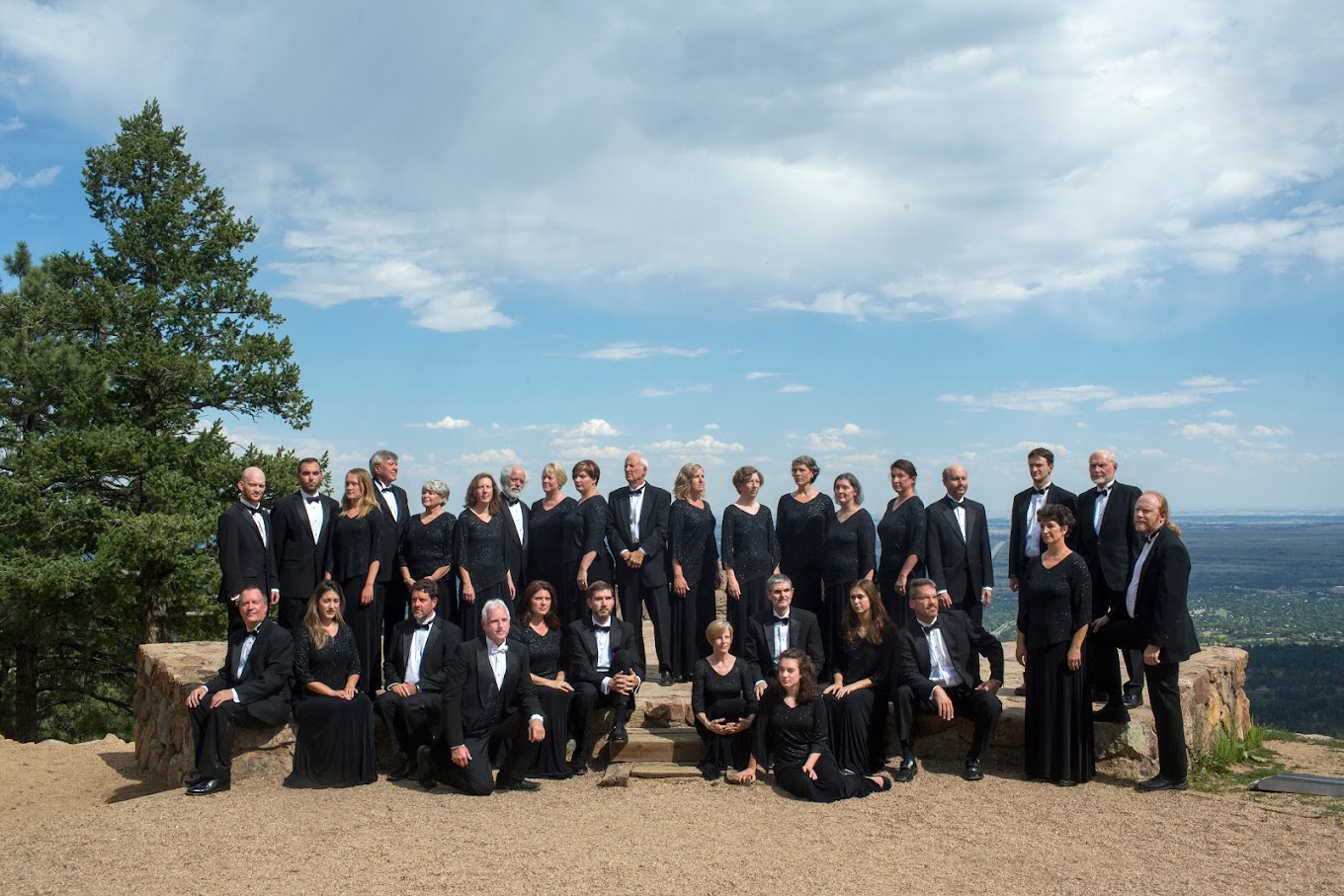
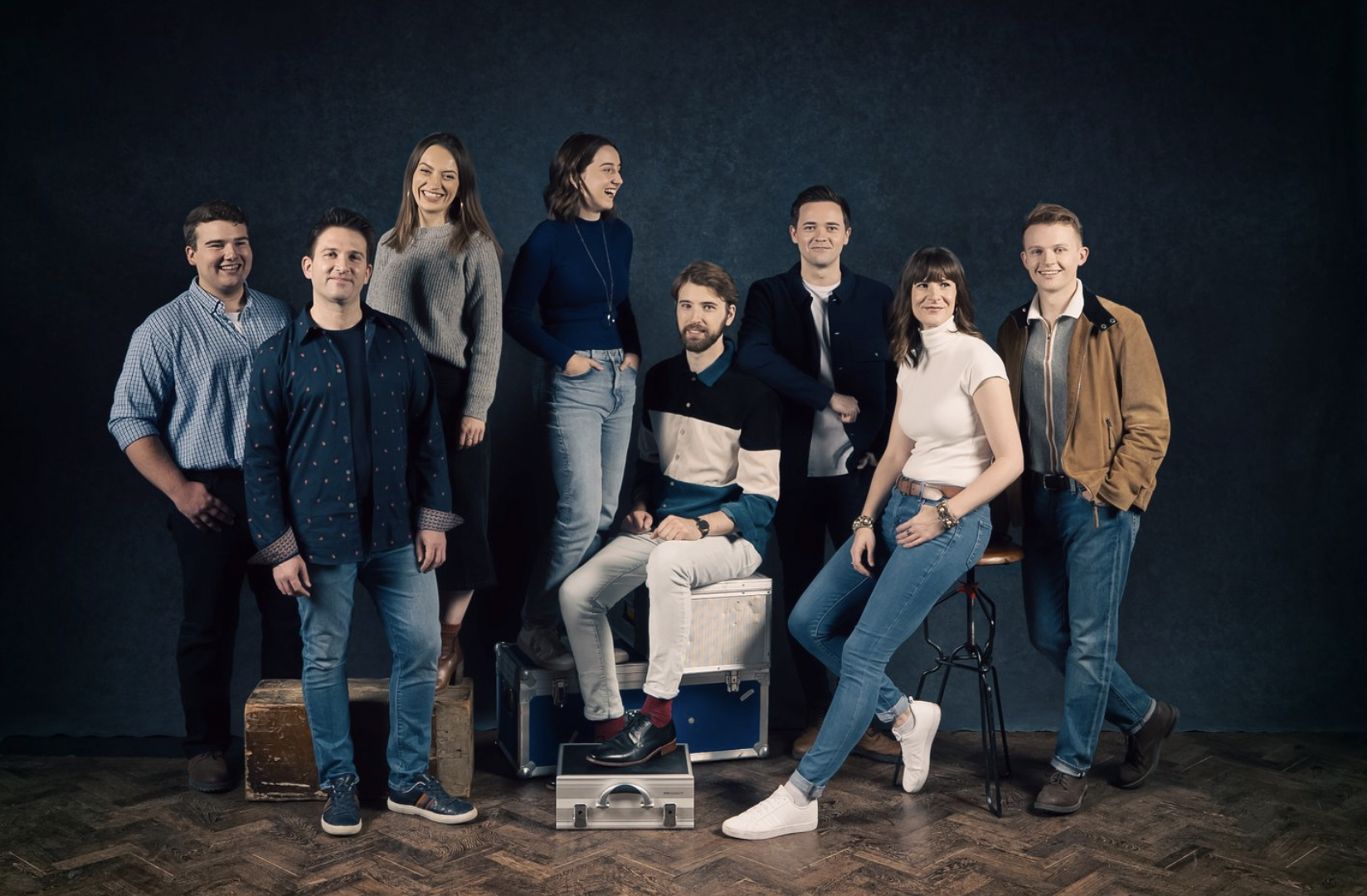
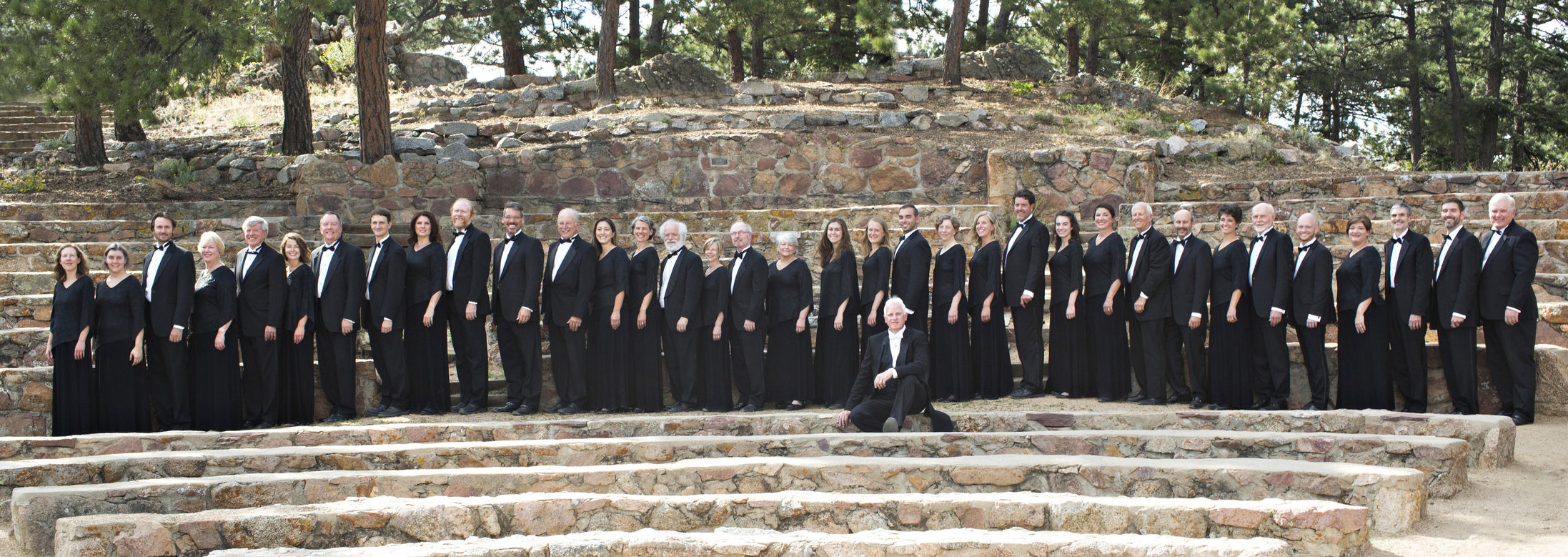
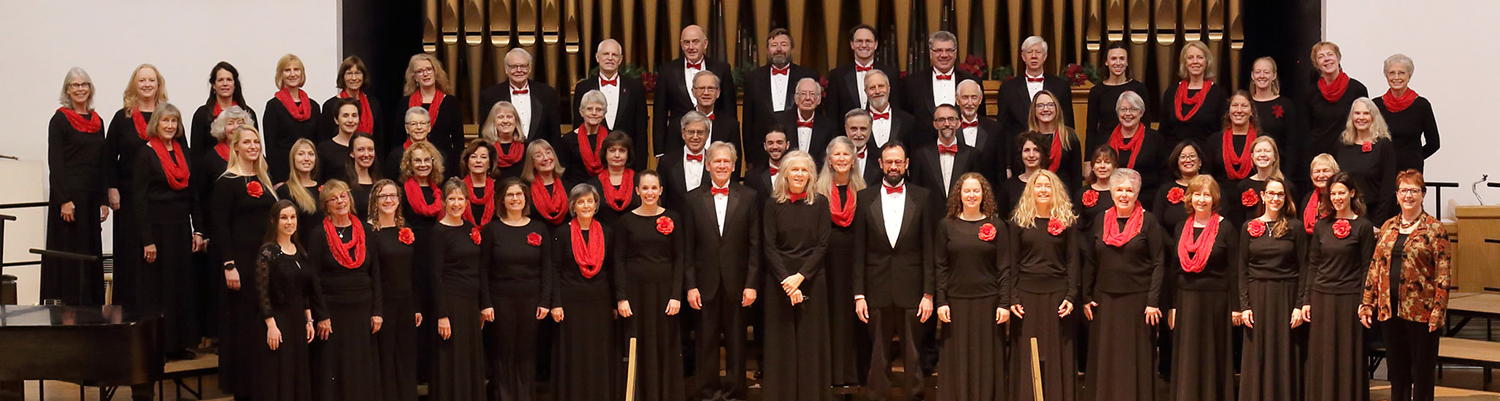
Ars Nova Singers. Conductor Thomas Morgan kneeling front left.

Conductor Tom Morgan wrote in a news release, “Dark and light, motion and stasis, intimate and universal, deeply familiar and refreshingly new—our season searches for the balance point in all of these.” In addition to “Here/There,” the season includes concerts titled “Light/Shadow,” “Lost/Found,” “Science/Fantasy” and “Time/Eternity” (see the full season HERE).

Although the choir’s name—Ars Nova, or “new art”—refers in history to a musical style from the 14th century, the group has specialized in a broader range of music, specifically the Renaissance and the 20th and 21st centuries. For this program there is no music from the Renaissance, but the old is represented by “Music for a While” by the English Baroque composer Henry Purcell (1659–1695).

There is a rare—for Ars Nova Singers—piece from the late Romantic period, Anton Bruckner’s Os justii (The mouth of the righteous) composed in 1879. A sacred motet setting of a text from Gregorian chant, it was written for the choirmaster at St. Florian Abbey, one of the largest monasteries in Austria.  

Other works on the program range from the early 20th century—Ravel’s Trois beaux oiseaux (Three beautiful birds)— right up to today with works by the living American composers Frank Ticheli, Jake Runestad and Dale Trumbore, among others (full program listed below).

The performance, a benefit celebrating the past and future of Ars Nova Singers, will be preceded by a 3 p.m. reception in the Dairy Arts Center lobby.

Ars Nova Singers bill themselves as “an auditioned vocal group specializing in a cappella music of the Renaissance and the 20th/21st centuries” that aims “to delight, inspire, and enlighten our audiences.”

# # # # #

Here/There
Ars Nova Singers, Thomas Morgan, conductor

  • Henry Purcell: “Music for a While”
  • Dale Trumbore: “Love is a sickness”
  • Bruckner: Os justi (The mouth of the righteous)
  • Ravel: Trois beaux oiseaux (Three beautiful birds)
  • Luigi Denza: “Call Me Back” (arr. Morgan)
  • György Ligeti: Lux aeterna (Eternal light)
  • Sam Henderson: “Moonswept”
  • Sheena Philips: “Circle of Life”
  • Sarah Quartel: “Sing, My Child”
  • Frank Ticheli: “Earth Song”
  • Jake Runestad: “Let My Love Be Heard”
  • Britten: “Advance Democracy”

4 p.m. Sunday, Oct. 6
Gordon Gamm Theater, Dairy Arts Center

TICKETS 

Ars Nova Singers present ‘Rebirth: Beyond the Renaissance’ Feb. 9 and 11

Rare performance of Thomas Tallis’s 40-voice motet Spem in alium

By Peter Alexander Feb. 6 at 11:30 p.m.

Sometime around the year 1570, the English composer Thomas Tallis wrote what some have called his “crowning achievement.”

The work in question is more often discussed than heard: Spem in alium, a motet in 40 voices, arranged in eight choirs of five voices each. Anyone who studies the music of Elizabethan England knows of this impressive work, but it is difficult to assemble the voices for a performance, and many have never heard it live.

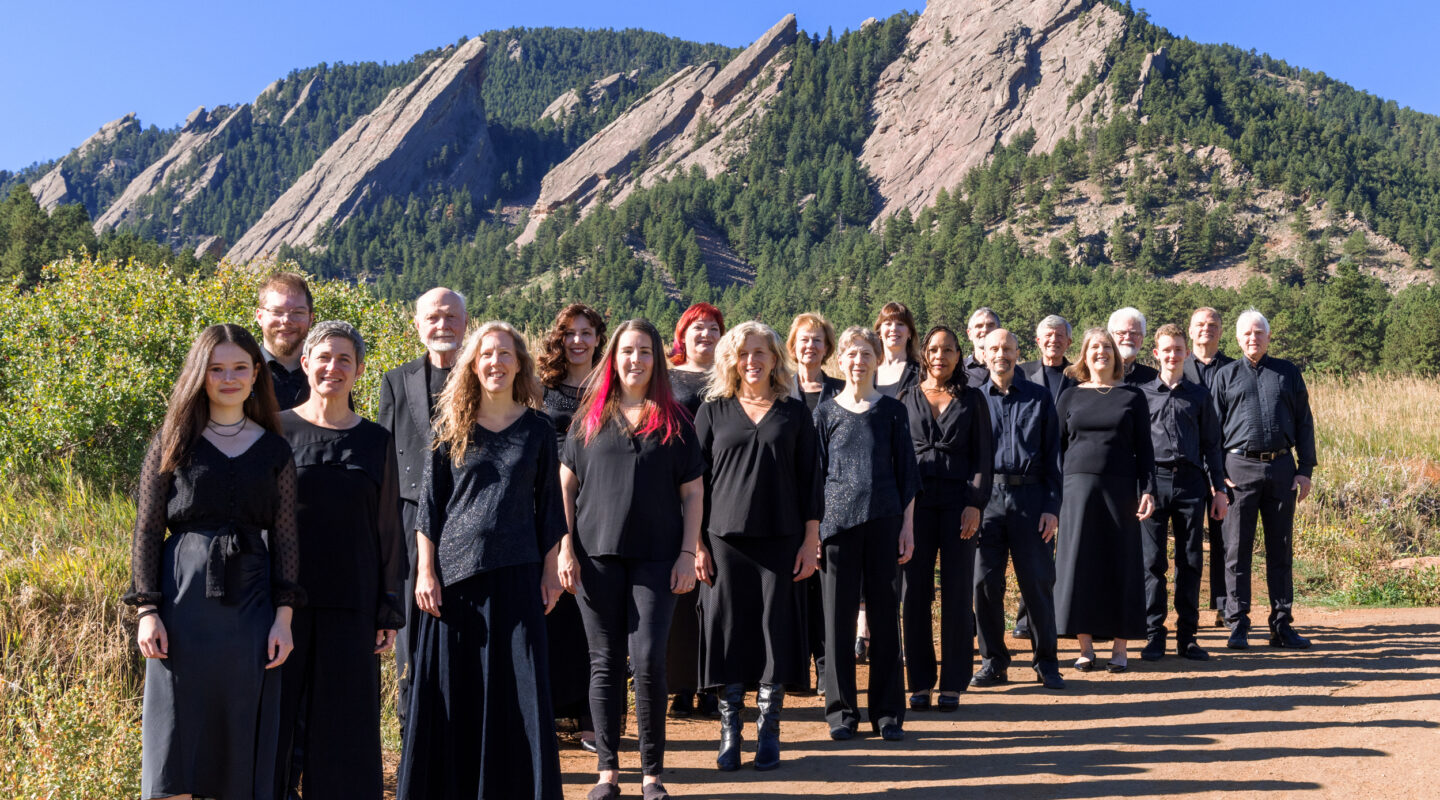
Ars Nova Singers

But now everyone in Boulder has the opportunity to experience this rare work in performance. Tom Morgan and the Ars Nova singers will perform Spem in alium Friday and Sunday in Boulder and Denver, respectively (Feb. 9 and 11; details and ticket information below). The full program, titled “Rebirth: Beyond the Renaissance,” also includes works by English composers William Byrd and Henry Purcell, music by Emilio de Cavalieri from a famously elaborate Medici family wedding in 1589, and the Mass in E-flat by the 19th-century German composer Josef Rheinberger.

This will actually be the seventh time that Morgan and Ars Nova have performed Tallis’s motet. The first time was in 1988, and they recorded the motet in 2001 on a CD titled Luminescence. Most recently they performed it in Boulder eight years ago. Only a few singers are still in the group from that performance, and a few have performed it elsewhere; performing it will be a new experience for the rest.

Manuscript of Thomas Tallis’s 40-part motet ’Spem in alium’

“I think that a group that can do it, should do every eight or 10 years at least, just because it’s a good stretch for the choir and it makes such a unique sound for the audience,” Morgan says. Because the 40 parts will each be taken by a single performer, “it does require a lot of independence on the part of the singers,” he says.

The 40 voices are divided into eight separate choirs of five voices each. “There’s a fair amount of historical context that this was originally done in an octagonal banqueting hall, so there was a choir in each of the eight bays,” Morgan says. “I think that was how Tallis conceived of it.

“Clearly he thought about it spatially. It moves from one side of the choir all the way across in a direct line to the other side. When the fortieth voice comes in and imitates that melody at the completion of the phrase, we reach the fortieth measure of the piece, and everybody comes in. It’s a very dramatic moment.”

The program moves chronologically from the late Renaissance forward. “The first half of this concert is all within about 20 years between about 1570 and 1590,” Morgan says. “Then (after intermission) we have Purcell, who is 100 years later.”

Two other pieces on the first half are worthy of attention. They were the final two pieces in the first book of choral music printed in England. Queen Elizabeth I had granted an exclusive right for music publishing to Tallis and his contemporary, William Byrd, and they ended the publication with what we might call puzzle pieces, one by each.

“They’re fascinating works,” Morgan says. “The first one (by Tallis, Miserere nostri) is a seven-voice canon. He derived it from one voice part, and then he does it two times slower, four times slower and eight times slower in three other parts.”  Three other parts combine in complex ways with those four, to make up the total of seven parts.

Byrd’s Diliges Dominum is complicated and interesting in an entirely different way. It is made up of four canons, in which pairs of singers hold a single copy of the music between them, looking at it from opposite sides. Each one reads it from the top to the bottom, as they are seeing the page, with their partner reading it in the opposite direction.

Josef Rheinberger

This sounds like some kind of compositional exercise, but, Morgan says, “what I like about both of these pieces is they don’t sound at all academic. They make lovely sounds—it’s really just sonically beautiful. That they are able to do that, given those strictures, is pretty amazing.”

Moving forward in time, the program ends firmly in the Romantic era with Rheinberger’s Mass in E-flat for double chorus, written in 1878. This is well outside of Ars Nova’s usual repertoire of either Renaissance or contemporary music. That might seem surprising, but “I’ve ways wanted to do this Mass because it’s a multi-voice piece, with two four-part choirs,” Morgan explains. 

“It has a lot of antiphonal chorus and a fair amount of imitation, so it does have a Renaissance feel, and yet it inhabits this 19th-century harmonic world which is so lush and wonderful!”

# # # # #

“Rebirth: Beyond the Renaissance”
Ars Nova Singers, Thomas Morgan, conductor
With Szilvia Schranz, soprano, Brian du Fresne, harpsichord, and soloists from the chorus

  • I. Thomas Tallis: Loquebantur
    —Lamentations of Jeremiah, Set I
  • II. Two Musical Puzzles from Cantiones Sacrae, (1575)
    Tallis: Miserere nostri
    William Byrd: Diliges Dominum
  • III. Music from a Royal Wedding (Florence 1589)
    Emilio de Cavalieri: O che nuovo miracolo
  • IV.Tallis: Spem in alium
  • V. Henry Purcell: “If music be the food of love”
    —“Hear my prayer O Lord”
  • VI. Josef Rheiberger: Mass in E-flat for double chorus

7:30 p.m. Friday, Feb. 9
Mountain View United Methodist Church, 355 Ponca Place, Boulder

2:30 p.m. Sunday, Feb. 11
Central Presbyterian Church, 1660 No. Sherman St.,Denver

TICKETS

NOTE 2/7: The date of Ars Nova’s last previous performance of Spem in alium has been corrected to eight years ago. The original version of this story incorrectly stated that it was six year ago.

English a capella group Voces8 at Macky March 1

“Choral Dances” concert sponsored by Boulder’s Ars Nova Singers

By Peter Alexander Feb. 27 at 3:30 p.m.

In 2005 brothers Paul and Barnaby Smith, who had both been choristers at Westminster Abbey, formed their own a capella vocal group. With eight members, they drew on their classical Latin learning and called the group Voces8 (Voices8).

Today the group tours internationally, commissions new works, has released more than a dozen recorded albums, has their own educational foundation, a composer-in-residence, and now has a Grammy nomination to their name. Comprising two sopranos, one alto, one countertenor, two tenors, a baritone and a bass, they perform a variety of styles from folk to pop, from music of the Renaissance to classic jazz, often in their own arrangements.

A promotional photo of the English a cappella group Voces8

Thanks to sponsorship by Boulder’s Ars Nova Singers, Voces8 will appear in Colorado this week: at 7:30 p.m. Wednesday at Macky Auditorium in Boulder and Thursday at St. John/s Cathedral in Denver (March 1 and 2). The Denver performance is sold out, but tickets for Wednesday’s Macky Auditorium performance are still available HERE.

Under the title “Choral Dances,” the Macky program offers what the group calls “a rare mix of ethereal and angelic,” and will include performances by Ars Nova, under the direction of Tom Morgan. Both groups will present music that reflects their individual traditions of performing music from the Renaissance to the current day.

Voces8 will open with a celebratory sacred piece from the Renaissance, “Buccinate in Neomenia Tuba” (Blow the trumpet when the moon is new) by Giovanni Croce. Characteristic of their eclectic programming, that will be followed by an eight-part motet by Mendelssohn (“Denn er hat seinen Engeln befohlen”—For He shall give his angels charge), music by group co-founder Paul Smith (“Nunc Dimittis”—Now depart) and the great cellist Pablo Casals (“O vos omnes”—O all ye).

“Drop, drop, slow tears,” one of the best known songs of the English Renaissance composer Orland Gibbons, is paired with a setting of “The deer’s cry,” a sacred poem also known as “St. Patrick’s Breastplate,” by Estonian composer Arvo Pärt. Ars Nova closes the first half of the concert with three pieces from their repertoire, by English Renaissance composer John Shepherd, late Renaissance Italian composer Carlo Gesualdo, and contemporary American composer Caroline Shaw.

In the second half of the concert Voces8 will sing one of their most popular numbers, a setting of Elgar’s famous “Nimrod” variation from The Enigma Variations to the text “Lux Aeterna” (Eternal light). Other composers on their program are Arthur Sullivan of Gilbert and Sullivan fame, and the great early Baroque composer Claudio Monteverdi. The program closes with another piece by Orlando Gibbons, the joyful “O Clap Your Hands.”

The group’s Voces8 Foundation is a registered charity in the United Kingdom. It was set up by Paul and Barnaby Smith in 2006 to develop the ensemble’s music education and outreach programs. Located in London, the foundation works with choral and small vocal groups in both performance and education. It presents workshops and masterclasses, and awards choral scholarships to young singers. There is a separate Voces8 USA Foundation.

# # # # #

Ars Nova Singers presents Voces8

“Choral Dances”

7:30 p.m. Wednesday, March 1
Macky Auditorium

TICKETS

“Lux Aeterna”

7:30 p.m. Thursday, March 2
St. John’s Cathedral, Denver—SOLD OUT

Grace Notes: Guest artists for Ars Nova and Boulder Bach

“Stardust” for Black History Month, and a renowned guest artist

By Peter Alexander Feb. 7 at 10:04 p.m.

The Denver-based string group Sphere Ensemble will be a guest of Boulder’s Ars Nova Singers for a concert recognizing Black History Month. Titled “Stardust,” the program will be presented at 7:30 pm. Friday in Boulder and Saturday in Denver (Feb. 10 and 11; details below).

Joel Thompson

Under the direction of Ars Nova’s artistic director Tom Morgan, the program opens with the world premiere performances of Love Songs from Lonely Letters by Joel Thompson. Ars Nova is one of five American choirs that jointly commissioned the Love Letters, which are based on the writings of Ashon Crawley, who teaches at the University of Virginia. 

An Atlanta resident and Emory College grad, Thompson is the composer of a widely acclaimed opera based on “The Snowy Day” by Ezra Jack Keats, the most checked-out book in the history of the New York Public Library. Thompson’s opera was premiered in August 2021 by Houston Grand Opera, where he currently holds a residency. Thompson will speak at the Ars Nova performances about his Love Songs, a work that explores individual agency and transformative joy.

The Sphere Ensemble will play their own arrangements of works by the Black English composer Samuel Coleridge-Taylor and the remarkable Brazilian woman composer Francisca Edwiges Neves Gonzaga, known as Chiquinha Gonzaga.

The program concludes with music by the Estonian composer Arvo Pärt. Ars Nova will repeat his Berlin Mass, a 1990 composition that they performed with the Boulder Philharmonic in 1997. Originally written for voices and organ, the score was arranged by the composer for voices and strings and incorporates the composer’s tintinnabula technique (from the Latin word for “bell”)—a way of creating deep resonance in slow-moving passages by combining notes of the tonic chord with simple scale patterns.

# # # # #

“Stardust”
Ars Nova Singers, Thomas Edward Morgan, conductor
With Sphere Ensemble

  • Joel Thompson: Love Songs from Lonely Letters
  • Samuel Coleridge-Taylor: Three-fours, II: Andante (arr. Alex Vittal)
  • Chiquinha Gonzaga: “Corta-Jaca” (arr. Alex Vittal)
  • Arvo Pärt: “Es sang vor langen Jahren” (Long years ago the nightingale sang)
    —Virgencita (Little Virgin)
    —Solfeggio
    Berlin Mass

7:30 p.m. Friday, Feb. 10
First United Methodist Church, 14521 Spruce St., Boulder

7:30 p.m. Saturday, Feb. 11
Central Presbyterian Church, 1660 Sherman St., Denver

TICKETS, including livestream Feb. 10–28

# # # # #

The Ukrainian-born Israeli violinist Vadim Gluzman and the Indonesian pianist Janice Carissa will present a joint recital as guests of the Boulder Bach Festival, at 4 p.m. Saturday, Feb. 11, in the Stewart Auditorium of the Longmont Museum.

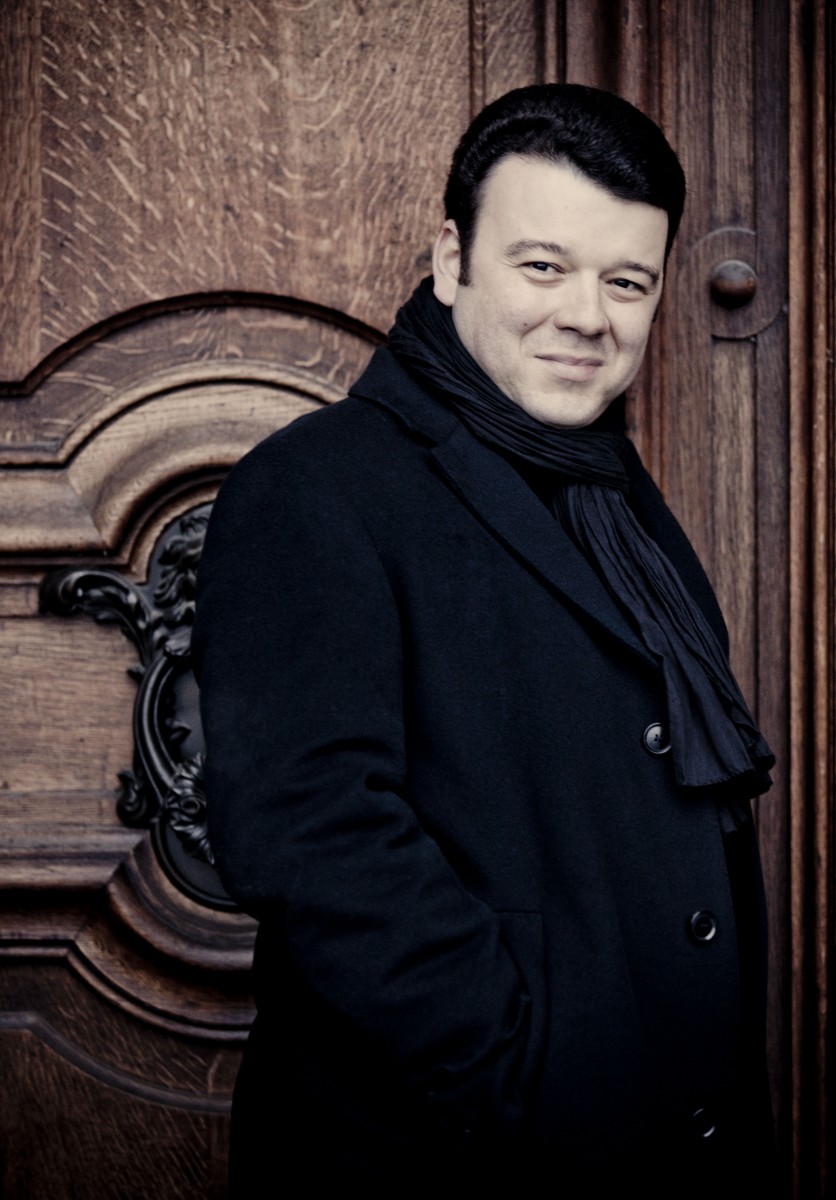
Vadim Gluzman. Photo by Marco Borggreve

The children of musicians, Gluzman was born in the former Soviet Union and grew up in Riga, Latvia. He began studying violin at seven and moved to Israel with his family at 17. Today he teaches at the Peabody Conservatory in Baltimore as distinguished artist in residence and plays a Stradivari violin that once belonged to the virtuoso Leopold Auer.

Carissa first studied piano with her mother in her native Indonesia. She came to the United States to study at the Curtis Institute in 2013 and made her debut with the Philadelphia Orchestra at the age of 16. She is currently a master’s student of Robert McDonald at the Juilliard School. She has appeared at Caramoor, Marlboro and Ravinia festivals, among others.

Their program features J.S. Bach’s Sonata in C minor for violin and keyboard, as well as the Chaconne from Bach’s Partita in D minor for solo violin, with a piano accompaniment by Robert Schumann. Continuing a tour through music history, Gluzman will play the A minor sonata for violin solo by the late Romantic violinist/composer Eugène Ysaÿe and par.ti.ta for solo violin written for the Bachwoche (Bach week) in Ansbach, Germany, by Lera Auerbach.

Gluzman wrote, “par.ti.ta is an incredible work, projecting Lera’s lifelong fascination with Bach. . . . We hear traces and echoes of Brandenburg Concerti, Concerto for two violins, sonatas and partitas for violin solo. No particular work is being quoted, yet I can’t help the feeling of being drawn to an incredible world of shades, echoes—are these shades of ourselves?”

# # # # #

Boulder Bach Festival
Vadim Gluzman, violin, and Janice Carissa, piano

  • J.S. Bach: Sonata in C minor, S1017, for violin and clavier obbligato
  • Eugène Ysaÿe: Sonata in A minor, op. 27 no. 2, for violin solo
  • Lera Auerbach: par.ti.ta
  • J.S. Bach: Partita in D minor, Chaconne, with piano accompaniment by Robert Schumann

4 p.m. Saturday, Feb. 11
Stewart Auditorium, Longmont Museum
TICKETS

Two choral groups open their season over the weekend

Ars Nova and Boulder Chorale start 2022–23 with unusual programming

By Peter Alexander Nov. 3 at 10:20 p.m.

Two of Boulder’s choral organizations open their 2022–23 seasons this weekend. The programs by the Ars Nova Singers and the Boulder Chorale could hardly be more different—bizarrely chromatic music from the late Renaissance and music from Middle Eastern cultures, respectively—but they are similar in being well outside the mainstream of choral repertoire. 

If you search for stimulating and unusual musical experiences, as I do, you could have a busy weekend. Both programs look promising for the adventurous listener.

Ars Nova Singers and conductor Tom Morgan

In a program titled “Wonder,” the Ars Nova Singers and conductor Tom Morgan will explore the music of Carlo Gesualdo de Venosa, Prince of Venosa and Count of Conza. Gesualdo has a secure place in music history because of the extraordinary chromaticism of the harmonic language in his madrigals, which is unlke any other music written at the time. Performances will be Friday, Saturday and Sunday in Boulder, Longmont and Denver (details below).

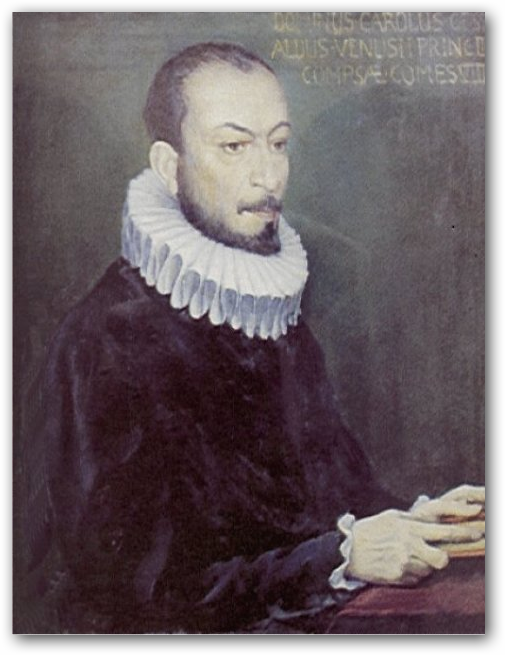
Carlo Gesualdo

Gesualdo’s notoriety in music history also derives from the fact that he killed his fist wife and her lover when her found them together. Although he was not charged with a crime, due to the circumstances, he felt a burden of guilt for the rest of his life, which may have contributed to the intensity of expression in the music he wrote. 

Ars Nova will perform seven of the madrigals from the last two collections Gesualdo wrote, Books 5 and 6, which were published in 1611. This was right at the transition from the Renaissance style of counterpoint to the more chord-based style of the early Baroque period.

“You just don’t hear some of these chords and changes [Gesualdo wrote] until the 20th century,” Morgan says. “It’s such fascinating music to me, and I think the singers enjoy it because you don’t have anything like it in the repertoire. And it’s a lot of fun to do.”

The chromaticism is most extreme in the slower sections of the madrigals, giving the singers the time to make the unexpected note and chord changes. The most extreme chord changes are associated with the most extreme emotions, whereas other parts of the madrigals are more straightforward, and may even move in a fairly brisk tempo.

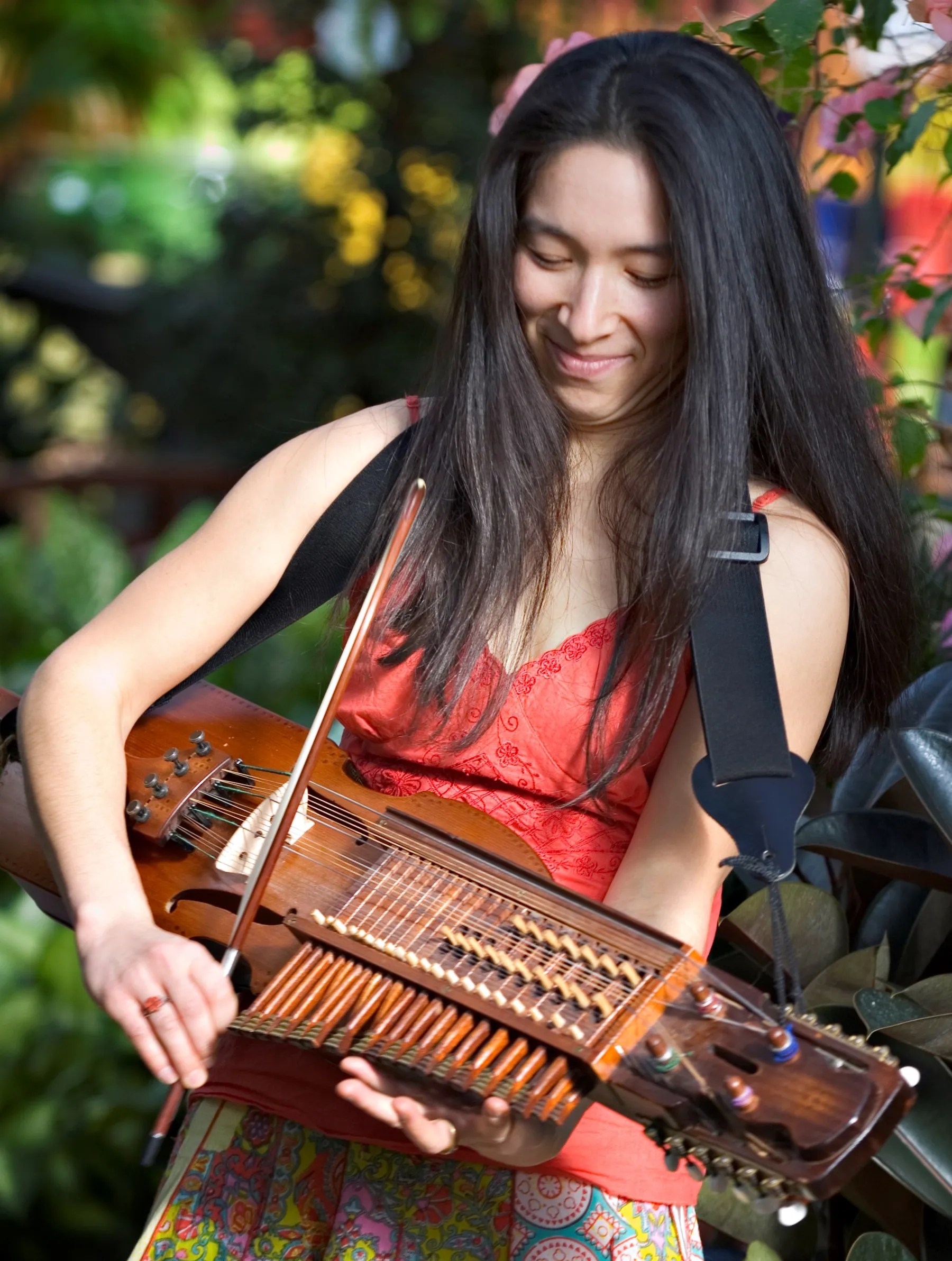
Sandra Wong and nyckelharpa

“It’s challenging for the singers,” Morgan says, “because the character of the music changes word to word. It’s fascinating how quickly the affect changes in the pieces.”

In spite of the extreme use of chromatic notes and chords, Morgan points out that in some ways, Gesualdo was not really a revolutionary composer. “He’s really clinging to the old imitative counterpoint [of the Renaissance era], but stretches the harmonic language as far as it would go.”

The constant shifting of chords gives the music an uneasy, ungrounded quality that can be tiring to listen to. “How to present Gesualdo is always a bit of a challenge,” Morgan says. “A straight-through listening of Book V or Book VI would be really hard for a modern audience. Too many in a row, the singer gets tired, [and] the listeners get overwhelmed.”

In order to give listeners a break, Morgan invited two instrumentalists—Ann Marie Morgan on viola da gamba and Sandra Wong on violin and the Swedish folk instrument the nyckelharpa—to play interludes in between the madrigals. “We’re doing little pairs of madrigals, and interspersing them with completely instrumental things,” Morgan explains. “Some are from [Gesualdo’s] era, some from slightly later.”

“That allows the ear to refresh and allows the mind to process things differently, and then you come back to Gesualdo. Ann Marie (Morgan) and Sondra (Wong) are both wonderful to work with, and by breaking (the madrigals) up into smaller chunks it’s better for both the singers and the audience.”

Boulder Chorale and conductor Vicki Burrichter

While Morgan is exploring challenging music of the past, conductor Vicki Burrichter and the Boulder Chorale continue their explorations of world music. In a program titled “Origins: The Fertile Crescent,” they will present music from across the Middle East, from Sephardic Jewish folk songs from Spain to Israel to Egypt, Tunisia and Afghanistan.

Performances will be Saturday and Sunday in Boulder, and will also be available by live stream on Sunday (details below).

An oud

Burrichter came to the subject for this concert by listening to the Trio Joubran, three Palestinian brothers from Nazareth who all perform on the oud—a stringed instrument from the Middle East that is the predecessor of the lute.

“The sound of the oud is magnificent—mysterious and deep,” Burrichter says. “The three of them playing together was beautiful. I listened to them a lot, and then I thought I should listen to more Arabic music. I’m very excited about it, but it’s the most nerve-racking concert I’ve ever done, because it’s so outside what I know about.”

Aside from her lack of background in the style, Burrichter had to adapt the music to an American choir. For one thing, the music does not have much harmony, and for another, it uses languages that hardly anyone in the choir knew. She tackled these issues first by hiring a guest band assembled and  led by David Hinojosa that includes percussion, violin, bass and an oud player, plus a singer, Catrene Payan, who is an Arabic-speaking Israeli. They will perform with the chorale and separately.

Catrene Payan

She also turned to Adam Waite, who has made arrangements for the Chorale in the past, to make versions of the songs for the chorale’s singers. And she asked Raouf Zaidan, who has sung with the group, to help coach the language. “He lives in two worlds,” Burrichter says. “He’s an Egyptian but also a Western opera singer. He was able to help the choir with the language.”

Many of the pieces on the program are well known in the Middle East, including some that have been sung by the most popular singers in their home countries. “When I showed Raouf what is in the concert, he said ‘These are songs everybody knows,’” she says. 

For example, she mentioned Oum Kulthum, an Egyptian singer who was called the Star of the East. “She is like a goddess figure there” Burrichter says. “She’s done ‘Lammaa Badda,’ and [Lebanese singer] Fairouz has done it. In the Middle East, everybody knows that song. And ‘El-Heelwa Dii’ is also extremely popular.”

Burrichter says that the melodies are not hard to sing, but there are nuances that are not easy for an American chorus. “We were trying to make it so that they could sing it, because they don’t speak the language, they don’t have experience with this music which is so very different from American music.

“We hope Arabic people or people from Israel who come to the concert will say, this is a group that tried their very best to represent and respect our culture. What I’m trying to do is for people to enter a cultural experience—the audience, the singers, everyone. 

“The most important thing in the end is not the language, it is the joy of it.”

# # # # #

“Wonder”
Ars Nova Singers, Tom Morgan, artistic director
With Sandra Wong, violin and nyckelharpa, and Ann Marie Morgan, viola da gamba

  • Carlo Gesualdo: Selections from Madrigals, Books 5 and 6
  • Instrumental music of the late Renaissance and early Baroque

7:30 p.m. Friday, Nov. 4
St. John’s Episcopal Church, 1419 Pine St., Boulder

7:30 p.m. Saturday, Nov. 5
Stewart Auditorium of the Longmont Museum

4 p.m. Sunday, Nov. 6
St. Paul Lutheran Church, 1600 Grant St., Denver

TICKETS

# # # # #

“Origins: The Fertile Crescent”
Boulder Concert and Chamber Chorales 
Vicki Burrichter, artistic director
With Catrene Payan, singer, and instruments led by David Hinojosa

  • Music of Arabic lands in the Middle East

4 p.m. Saturday, Nov. 5, and Sunday, Nov. 6
First United Methodist Church, 1421 Spruce St., Boulder

TICKETS for live performances and for live stream Sunday only

Grace Notes: Boulder’s Choral Groups’ 2022–23 Seasons

Ars Nova Singers, Boulder Chorale and Seicento lay out plans for 2022-23

By Peter Alexander Oct. 12 at 2:52 p.m.

The Ars Nova Singers, the Boulder Chorale and Seicento Baroque Ensemble—three of Boulder’s leading choral groups—have distinct qualities, in terms of repertoire and performance style. All three groups have now announced their concert schedules for the 2022–23 season:

# # # # #

Under director Tom Morgan, Ars Nova generally avoids the historical middle of standard repertoire, preferring music either side of the 18th and 19th centuries—the Renaissance or the 20th and 21st centuries. Their concerts are challenging to the singers, and can be equally so to audiences, but they are always interesting as well.

On Nov. 4 they will be the first of the three to present a concert this season (see time and place below). Their opening program is devoted to one of the most fascinating figures of the late Renaissance. Carlo Gesualdo, the Prince of Venosa and Count of Conza, was the composer of harmonically advanced, highly chromatic madrigals unlike anything else of their time. He was also known for having murdered his first wife and her lover when he found them together in bed, a fact that has not gone unnoticed in appreciation of his extreme music.

Performances of Gesualdo’s music are rare, as is often the case with Ars Nova programming, so this performance is worth noting.

One major event of the Ars Nova season will be the presentation in March of the world-touring British a cappella group Voces 8. Their two performances under Ars Nova’s auspices will be Wednesday March 1, 2023 in Macky Auditorium (7:30 p.m., details below) and Thursday, March 2, at St. John’s Cathedral in Denver (7:30 p.m.; tickets on sale Oct. 15). Please note that these are two separate programs. (details below).

Here is a full listing of the Ars Nova 2022–23 season:

“Wonder”
Ars Nova Singers, Tom Morgan, director
With Sandra Wong, violin and nyckelharpa, and Ann Marie Morgan, viola da gamba
Carlo Gesualdo: Madrigals from Books 5 and 6

  • 7:30 p.m. Friday, Nov. 4
    St. John Episcopal Church, 1419 Pine St., Boulder
  • 7:30 p.m. Saturday, Nov5
    Stewart Auditorium of the Longmont Museum
  • 4 p.m. Sunday, Nov. 6
    St. Paul’s Lutheran Church, 1600 Grant St., Denver 

“Solstice”
Ars Nova Singers, Tom Morgan, director
With John Gunther, woodwinds
Music for the Winter Solstice and Christmas

  • 7:30 p.m. Friday, Dec. 9
    First Congregational Church, 1500 9th Ave., Longmont
  • 4 p.m. Sunday, Dec. 11
    St. Paul’s Lutheran Church, 1600 Grant St., Denver

“Stardust”
Ars Nova Singers, Tom Morgan, director

  • 7:30 p.m. Friday, Feb 10, 2023
    First United Methodist Church, 1421 Spruce St, Boulder
  • 7:30 p.m. Saturday, Feb. 11, 2023
    Central Presbyterian Church, 1660 Sherman St., Denver

“Choral Dances”
Voces 8
Music by Byrd, Bach, Britten and Berlin

  • 7:30 pm. Wednesday, March 1
    Macky Auditorium

TICKETS 

“Lux Aeterna”
Voces 8
Music by Mendelssohn, Rachmaninoff and Monteverdi

  • 7:30 p.m. Thursday, March 2
    St. John’s Cathedral, 1350 n. Washington St., Denver

TICKETS available Oct. 15

“Reflections”
Ars Nova Singers, Tom Morgan, director
Music by Mahler, Thomas Jennefelt and Caroline Shaw

  • 7:30 p.m. Friday, April 21
    First United Methodist Church, 1421 Spruce St., Boulder
  • 7:30 p.m. Saturday, April 22
    Bethany Lutheran Church, 400 E. Hampden Ave. Cherry Hills Village
  • 7:30 p.m. Saturday, June 3
    TANK Center for Sonic Arts, 233 County Rd. 46, Rangely, Colo

(This program will also be performed on tour in Colorado and New Mexico.)

See more information on the Ars Nova Web page

CORRECTION: The two programs by Voices 8 March 1 and March 2 were originally listed incorrectly. The correct information is “Choral Dances” on March 1 and “Lux Aeterna” on March 2, as now shown above.

# # # # #

The Boulder Chorale is actually three different groups, and serves a role in music education as well as performance—in the words of the Web page, “for singers aged 5 to 85.” The Concert Chorale, the Chamber Chorale and the Children’s Chorale—the last divided by age into four different ensembles—perform separately as well as together. Under director Vicki Burrichter, the repertoire of the adult groups is eclectic, notably including world music, traditional styles from both European and non-European sources, and new works. As in the current season, their repertoire has often included work for chorus and orchestra.

Boulder Chorale opens their season Nov. 5, one day later than Ars Nova. Their opening weekends overlap, but you can easily plan to attend both. The chorale’s program is an example of their pursuit of world music. Titled “Origins: The Fertile Crescent,” the program highlights music from the Middle East and North Africa, including the Chorale’s own arrangements by Adam Waite of music from Israel, Afghanistan, Spain, Morocco and Syria.

Later in the year, the Chorale partners with the Longmont Symphony for performances of Handel’s Messiah (Dec. 17) and a Messiah  singalong (Dec. 18; details below); and with the Boulder Chamber Orchestra for performances of Beethoven’s Mass in C.

Here is the full listing of the Boulder Chorale 2022–23 season through April 2023:

“Origins: The Fertile Crescent”
Boulder Chorale, Vicki Burrichter, conductor, with Catrene Payan, vocalist, and Middle Eastern instrumental ensemble, David Hinojosa,leader

  • 4 pm. Saturday, Nov. 5, and Sunday, Nov. 6
    First United Methodist Church, 1421 Spruce Street, Boulder, CO

“A Celtic Winter”
Boulder Chamber Chorale and Concert Chorale, Vicki Burrichter, director, and Boulder Children’s Chorale, Nathan Wubbena, director

  • 4 p.m. Saturday, Dec. 10, and Sunday, Dec. 11
    First United Methodist Church, Boulder 1421 Spruce Street, Boulder, CO

Handel’s Messiah
Longmont Symphony, Elliot Moore, conductor
With the Boulder Chamber Chorale, Vicki Burrichter, director

  • 4 p.m. Dec. 17
    Westview Presbyterian Church, 1500 Hover St., Longmont

“Hallelujah! A Messiah singalong”
Longmont Symphony, Elliot Moore, conductor
With the Boulder Chamber Chorale, Vicki Burrichter, director

  • 4 p.m. Dec. 18
    Westview Presbyterian Church, 1500 Hover St., Longmont

“A Nation of Immigrants
Boulder Chorale, Vicki Burrichter, conductor

  • 4 p.m. Saturday, March 18, and Sunday, March 19
    First United Methodist Church, 1421 Spruce Street, Boulder, CO

Beethoven Mass in C
Boulder Chamber Orchestra, Bahman Saless, conductor
With the Boulder Chamber Chorale, Vicki Burrichter, director

  • 7:30 p.m. Saturday, April 1
    Boulder Adventist Church, 345 Mapleton Ave., Boulder

For more information on these and other concerts, visit the Boulder Chorale Web page.  

CORRECTION: The concert “Story of My life,“ previously listed here, was included by error. That is a performance by the Boulder Children’s Chorales, and has been removed from this listing. Also, clarification has been added as to which of the three chorales is performing in each of the concerts.

# # # # #

Seicento specializes in Baroque music of the 17th (“Seicento” in Italian) and 18th centuries performed with, to use the currently accepted language, “historically informed” performance practice, including period instruments. Today they are directed by the group’s founder, Evanne Browne.

Founded in 2011, Seicento launches its second decade in December with “Nöel: Christmas in the late Renaissance and Early Baroque” (December 2–4), a program that includes carols still familiar today as well as little known choral works. The major event of the season will take place in May, when Seicento will be joined by an orchestra of historical instrument performers to present Colorado’s first historically informed performance of J.S. Bach’s St. John Passion.

Here is the full listing of Seicento’s season:

“Nöel: Christmas in the late Renaissance and Early Baroque”
Seicento Baroque Ensemble, Evanne Browne, conductor

  • 7:30 p.m. Friday Dec. 2
    St. Paul Lutheran Church, 1600 Grant St., Denver
  • 7:30 p.m. Saturday, Dec. 3
    First United Methodist Church, 1421 Spruce St., Boulder
  • 3 p.m. Sunday, Dec. 4
    First Congregational United Church of Christ, 1500 9th Ave., Longmont

J.S. Bach’s St. John Passion (BWV 245)
Seicento Baroque Ensemble and historical instrument orchestra, Evanne Browne, conductor

  • 7 p.m. Friday, May 5
    Arvada United Methodist Church, 6750 Carr St., Arvada
  • 7 p.m. Saturday, May 6
    St. Paul Lutheran Church, 1600 Grant St., Denver
  • 3 p.m. Sunday, May 7
    Mountain View United Methodist Church, 355 Ponca Place, Boulder 

For more information, see Seicento’s Web page.  

Ars Nova Singers, guitarist Spera will present ‘postcards to the future’

Concerts June 3–5 feature new work by Theofanidis and Pizzetti’s 1922 Requiem

By Peter Alexander May 23 at 9:12 p.m.

Nicolò Spera

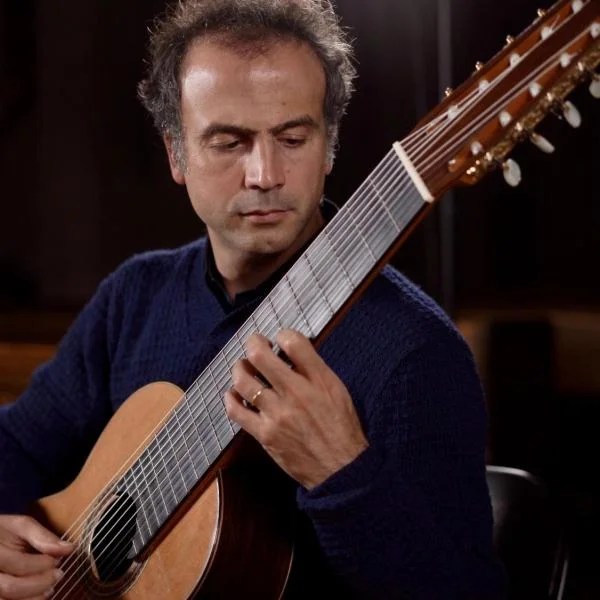
Guitarist and CU music professor Nicolò Spera was shocked by things going on the U.S. after the death of Supreme Court Justice Ruth Bader Ginsburg. He wanted to respond in the best way he knew—with music.

The musical work that came from that desire, Door Out of the Fire by Pulitzer Prize-winning American composer Christopher Theofanidis, will be the centerpiece of a concert by Boulder’s Ars Nova Singers, under the direction of Thomas Edward Morgan. The Ars Nova performance will be the Colorado premiere, following a performance by Spera in Michigan in October, 2021.

Also on the program is the Requiem of Italian composer Ildebrando Pizzetti. Performances will be June 3, 4 and 5, in Denver, Boulder and Longmont, respectively (see details below). In addition to the live performances, the concert will also be available by livestream. Information and tickets for the concerts, which close out Ars Nova’s 2021–22 season, are available here.

Christopher Theofanidis

After Ginsburg’s death, “I wanted a composer to write some ‘postcards to the future,’ in music,” Spera wrote in a recent email. He turned to Theofanidis, who had recently written an orchestral work, On the Bridge of the Eternal, for the 2020 centennial of the CU Boulder College of Music.

Writing for and with Spera, Theofanidis composed four choral “messages in a bottle” based on poems by Melissa Studdard. Each of the four choral settings is preceded by a prelude for guitar.

The texts reflect some of the major issues of our time, including the threat posed by climate change. They are titled “Burning Cathedral,” “The Book of Rahul,” “Ruth’s Aria”—to be sung by CU music faculty member Abigail Nims, mezzo soprano—and “Migration Patterns.” The work is dedicated to “le nostre speranze”—our hopes—Spera’s children, Julia and Giacomo.

Pizzetti’s Requiem will be presented in observance of the 100th anniversary of its composition. The Requiem, Pizzetti’s only liturgical music, is written for a-capella choir. The musical setting includes Gregorian chant as well as movements that recall Renaissance madrigals. The texture varies from single-line chant to eight voices to multiple choirs in the manner of 17th-century Venetian polychoral music.

# # # # #

Thomas Edward Morgan and Ars Nova Singers

Made Real
Ars Nova Singers, Thomas Edward Morgan, director
With Nicolò Spera, guitar, and Abigail Nims, mezzo-soprano

  • Christopher Theofanidis: Door Out of the Fire
  • Ildebrando Pizzetti: Requiem

7:30 p.m. Friday, June 3
St. Paul Community of Faith, Denver

7:30 p.m. Saturday, June 4
First United Methodist Church, Boulder

7 p.m. Sunday, June 5
Stewart Auditorium, Longmont Museum
Information and tickets, including livestream

Familiar Fauré Requiem anchors Ars Nova Singers program April 1–2

“Made Fragile” welcomes a fragile spring season with consoling music

By Peter Alexander March 29 at 10:20 p.m.

It’s a common theme: Boulder conductors look to program music that recognizes the stress and trauma their audiences have been through in the past two years.

Reena Esmail

For Thomas Morgan and the Ars Nova Singers, that means turning to music that is more comfortably familiar than much of the Renaissance and contemporary music that they usually perform: the gentle, consoling Requiem by French composer Gabriel Fauré. On the same program will be Fauré’s popular Pavane, in a version for orchestra and chorus; Brahms’s choral song “Abendständchen” (Evening serenade); and four works by Indian/American composer Reena Esmail.

The program, titled “Made Fragile,” will be performed at 7:30 p.m. Friday in Denver (April 1) and Saturday in Boulder (May 2; details below).

Featured performers with Ars Nova will be flutist Christina Jennings; violist Matt Dane, who will be concertmaster of the orchestra; Ars Nova assistant conductor Brian Dukeshier, who will lead the Brahms; and soprano Magdalena Kadula, a senior at Tara Performing Arts High School in Boulder who won a competition to sing a solo with Ars Nova.

The Fauré Requiem is probably the most familiar work Morgan and the Ars Nova Singers have performed. “We did it in our second season, 1987, and haven’t done it since,” Morgan says. “It is outside where our usual repertoire is. But one of the things we realized coming out of the pandemic is that there’s so much community grief that’s left unprocessed.

“We wanted to do something that would really appeal both to the audiences and to our singers. And Fauré’s really gentle that way.”

Ars Nova likes to include educational activities in their schedule, but during the pandemic they have been unable to go into schools. Instead, Morgan decided to reach out to students by offering the opportunity to sing “Pie Jesu,” the soprano solo movement of the Requiem. It is relatively short and not difficult, which made it ideal for young singers.

Magdalena Kadula

“We had a competition,” Morgan explains. “We sent it out to public music teachers and private voice teachers and offered a little scholarship (and) we had 13 entrants. It’s just a two-page piece and we had the first round where the kids recorded it on their phones. We evaluated those 13 entries and selected five to do in-person auditions.

“From that we selected Magdalena Kadula, who will be our soprano. She’s a senior at the Tara High School of the Arts here in Boulder. It was a good way for us to outreach to young people at a time that’s very challenging.”

The other major element of the program is a selection of four pieces by Reena Esmail. An Indian-American composer, she has studied at Juilliard and Yale in this country, and with Hindustani music teachers in India. She often incorporates elements of Hindustani music into her compositions, along with Western classical music.

Matt Dane

Esmail’s music was added to the program through a suggestion by violist Matt Dane. The orchestra for Fauré’s Requiem only calls for violas and cellos, with no violins, so Dane serves as concertmaster. He suggested Esmail’s “When the Violin” for chorus and viola as a good companion piece to the Requiem.

That led to adding another piece by Esmail for viola and flute, which Dane will play with his wife, flutist Christina Jennings from the CU faculty. That in turn led to adding two other pieces by Esmail, “She Will Transform You” for flute and chorus, and “Tarekita” for a capella chorus, which will open the concert.

Esmail wrote “TaReKiTa” for a choir of homeless people in Los Angeles that she was working with. “It’s taken off in the choral world,” Morgan says. “A number of people have recorded it. It’s very accessible, kind of like Indian scat singing. It’s a short piece that sets the stage well for the rest of her music, (which is) infused with who she is as an Indian-American.”

Christina Jennings

With Jennings included on the program, Morgan then decided to add Fauré’s Pavane, which is popular in a version for small orchestra and featuring a prominent flute solo. Originally written for piano, it was adapted by Fauré for orchestra and chorus, including a text that Morgan says “is not high art in terms of poetry,” about men’s and women’s romantic helplessness. “The beautiful melody carries the whole thing,” he says.

Morgan chose the Brahms “Abendständchen” to complete the program, both for its musical qualities and the opening line, “‘Hark the flute laments again, and the cool springs murmur,” which fits the occasion perfectly. The performance is a farewell for Dukeshier, who has been Ars Nova’s assistant conductor for several years, and recently completed a doctorate at the University of Northern Colorado.

Morgan says that the COVID protocols for the two performances are always subject to change. “We’re watching week to week as to how we implement our COVID strategies,” he says. “At the moment we’re planning to go with the singers masks-optional, but we’re also watching what’s happening. It makes for an interesting time right now.”

In other words, be sure to check the Ars Nova Health and Safety page on the Web before attending the concert. Or as Morgan puts it, “As the name of the program says, everything’s very fragile.”

# # # # #

“Made Fragile“
Ars Nova Singers, Thomas Morgan, director
With Christina Jennings, flute, and Matt Dane, viola
Magdalena Kadula, soprano
Brian Dukeshier, asst. conductor

  • Reena Esmail: TaReKiTa for chorus
    —“When the Violin” for chorus and solo viola
    —“She Will Transform You” for chorus and solo flute
    —“Nadiya” for flute and viola
  • Brahms: “Abendständchen” (Evening serenade)
  • Gabriel Fauré: Pavane (arr. Thomas Morgan)
    —Requiem

7:30 p.m. Friday, April 1
Central Presbyterian Church, 1660 Sherman St., Denver

7:30 pm. Saturday, April 2, 
First United Methodist, 1421 Spruce St., Boulder
Also available by livestream

TICKETS

CORRECTION, March 30: The spelling of TaKeKiTa, with alternating upper case letters was corrected, as well as the spelling of Christina Jennings’s first name.

Ars Nova Singers offers free online performance Friday

By Peter Alexander Feb. 17 at 9:40 p.m.

“We wanted to bring the music from one of our finer performances,” Tom Morgan says.

The conductor of Boulder’s Ars Nova Singers wanted to offer a free online gift to the disaster-wearied local community at the start of 2022, before the choir starts having in-person rehearsals and performances later in the spring. But he faced one problem: the group has made a lot of sound recordings of their concerts, but not any videos. 

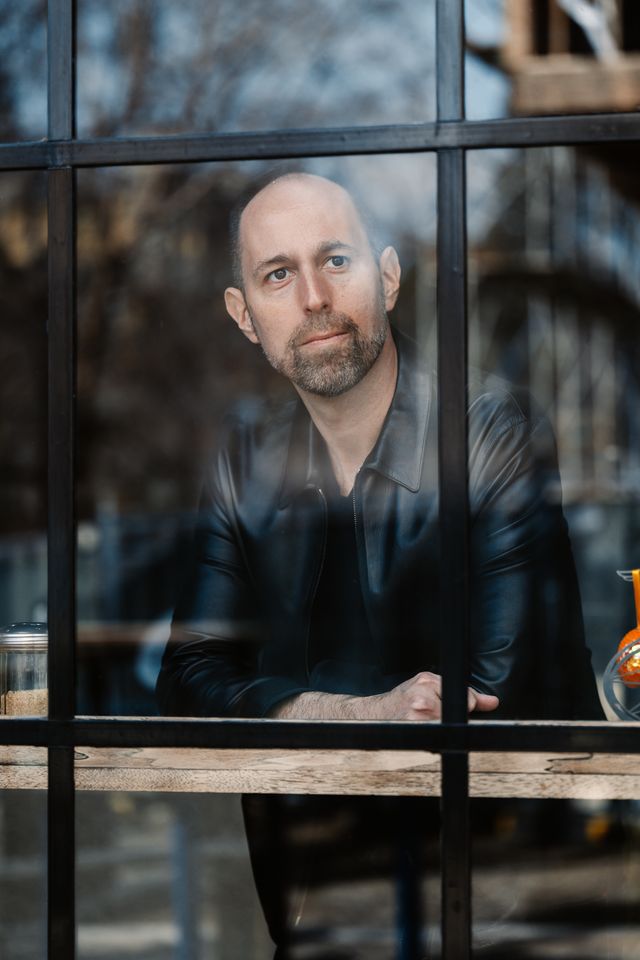
Tom Morgan wanted to give a gift to the Boulder community

What he wanted to share was a pre-COVID performance from October 2018, of Will Todd’s Mass in Blue, a jazz-inflected, modern setting of movements from the Latin Mass. Morgan decided that rather than showing a static image or series of still images, which he says are “not particularly interesting to look at,” he would create his own video with abstract and natural imagery to accompany the music.

Under the title “Made Cool,” the resulting video will be offered free to the public at 7:30 p.m. Friday, Feb. 18, through the Ars Nova Web page.

Soprano Kathryn Radakovich performs the virtuosic solos in the Mass in Blues

With imagery that responds to the music rather than any specifics of the liturgical texts, the video transcends specific religious or doctrinal interpretations. Morgan feels that style of video fits well with the score, which brings together a jazz trio of piano, bass and drums with a virtuosic soprano solo and the choir.

“Todd in his conception and setting is making a pretty clear attempt to universalize the mass,” Morgan says. “He’s trying to make it more both modern and universal by taking it into this musical language.

“I thought we should go even a step further with the visuals. It adds another layer of meaning to the music. To establish the intent of universalizing the mass and bringing it to a wider audience, I thought a video overlay that also universalizes the mass opened it up to more interpretation, (by) not being overly literal with the mass.”

The video is very much a COVID-era product. To build his skills in video editing, Morgan took online video-editing classes during the early months of pandemic. He first used his newly-developed abilities in his former job as music director at St. John’s Episcopal Church in Boulder. With that experience, he then transferred those skills to his work with Ars Nova.

Morgan plans to make more use of his video editing experience in future work with Ars Nova. Now that he has retired from his church job, he has “more opportunities to think about how we do the art that we do, in ways that is not the usual concert,” he says. Since the pandemic, “we’re having to think in new ways and broaden what we do. It’s a good challenge, but a necessary one right now.”

In creating the “Made Cool” video, Morgan selected a different visual theme for each of the six movements of Todd’s Mass. These range from photos he himself took in a church in England to visuals of nature and natural phenomena. Other than the photos Morgan took in the Sanctus movement, they mostly came from online sources.

“There’s online libraries of all kind of video possibilities, used for advertising,” Morgan explains. “There’s also wonderful public libraries like from NASA, and those have been valuable and interesting to work with, too.”

In some cases Morgan was able to connect with specific photographers whose online material he responded to, and get more material from them. He could use the visuals in that way to create continuity within a movement, for example—“so that it’s not completely a mishmash,” he says.

“I thought about how a narrative might come through each particular movement, and also something that would connect across the piece. I tried to find little arcs within the movements and then find an overall one that would allow the music to expand into that space. That also ties into what an actual Mass is, in terms of a sequence that has a relationship to redemptive history.”

Many of the videos were available for a small fee, although Morgan and Ars Nova drew the line at paying one videographer in England £45 per second for his video. “That’s way out of our price range,” Morgan says. “We said, ‘Let’s find something else!’” Other material however they paid for the rights to use, the same as they did for the music and the performances of the musicians  involved.

With the video, Morgan is taking part in the development of new forms of art—a kind of classical choral-music video. “It’s a different take on the traditional choral concert,” he says. 

“I hope it will get out to a wider audience than our usual concert supporters.”

# # # # #

“Made Cool”
Ars Nova Singers, Tom Morgan, director
With Kathryn Radakovich, soprano; Scott Martin, piano; Mark Diamond, bass; and Russ Meissner, drums
Video editing by Tom Morgan

Will Todd: Mass in Blue

  • Kyrie
  • Gloria
  • Credo
  • Sanctus
  • Benedictus
  • Agnus Dei

7:30 p.m. Friday, Feb. 18

Free virtual performance HERE