Takacs Quartet presents campus series with new second violinist Harumi Rhodes

Programs from the heart of the chamber music repertoire

By Peter Alexander Sept. 20 at 7:30 p.m.
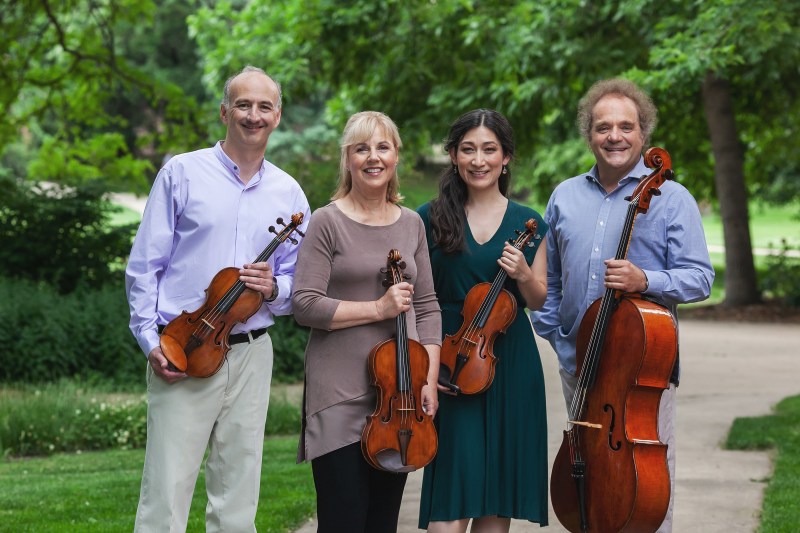
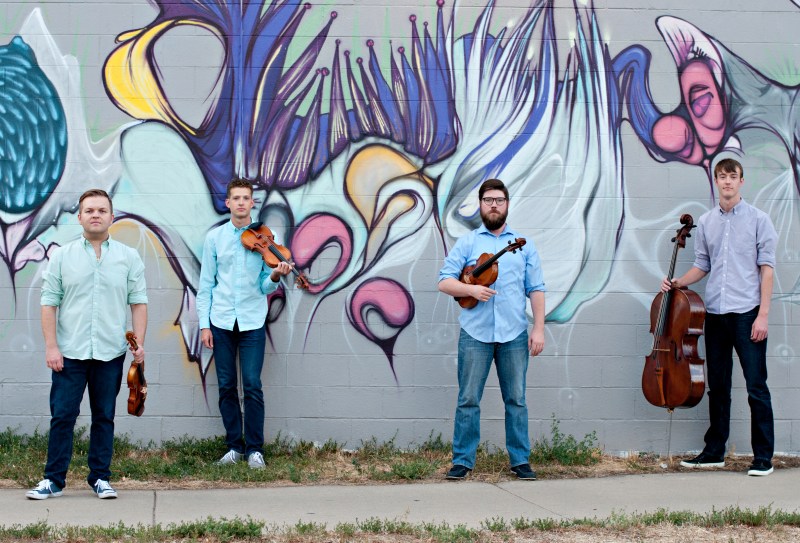
09-Takacs-Quartet-Amanda-Tipton-photography.jpg

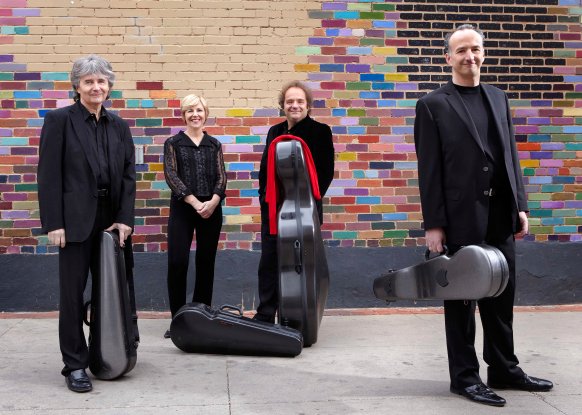
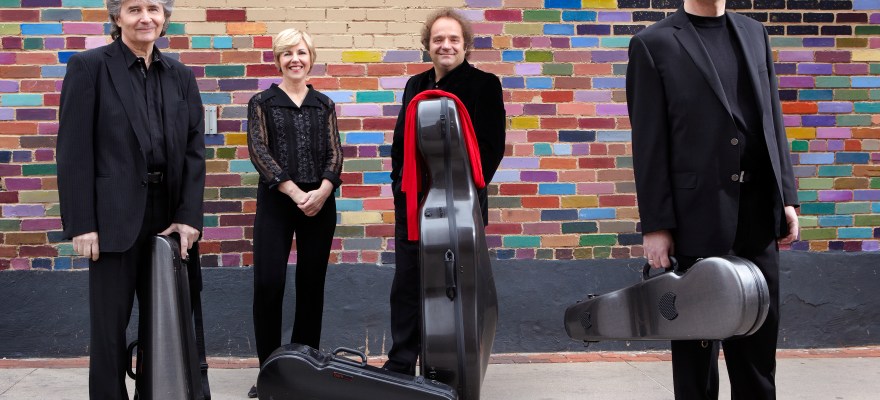
Takacs Quartet: Edward Dusinberre, Geraldine Walther, Harumi Rhodes, and András Fejér (L-R). Photo by Amanda Tipton

The Takacs Quartet launches their 2018–19 CU campus concert series, the first with new second violinist Harumi Rhodes, Sunday and Monday (Sept. 23–24).

Rhodes joined the quartet last spring, following the retirement of founding second violinist Károly Schranz. She has made one recording and toured with the quartet over the summer, but this will be her first year-long series as a member.

The program for the fall’s opening concerts features works by three great composers of chamber music for strings: Joseph Haydn, Schubert and Shostakovich. Two of the pieces are not well known, as they are not performed often—Haydn’s Quartet in D major, op. 20 no. 4, and Shostakovich’s String Quartet No. 4. In contrast, the third work on the program, Schubert’s String Quintet in C major, is one of the greatest and most beloved chamber works of the 19th century.

Cellist David Requiro, a member of the College of Music faculty, will join the members of Takacs for the Schubert’s Quintet.

The second concert of the fall semester is scheduled for Oct. 28 and 29. It will feature another piece by Haydn—the Quartet in D minor, op. 76—alongside works by Bartók and Brahms. Notably, both concerts feature composers considered to be the heart of the Classic-Romantic chamber music repertoire.
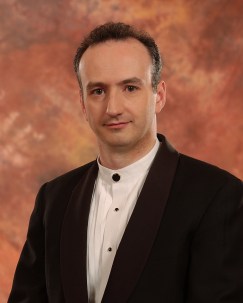
Takacs.Dusinberre.CUphoto-X2

Edward Dusinberre

You might think that changing members in a well tuned ensemble such as the Takacs Quartet would require difficult adjustments, but Edward Dusinberre, the quartet’s first violinist, says that has not been the case. “We feel very comfortable with her,” he says of Rhodes. “We’re having a great time. She’s got chamber music and string quartets in her blood.”

He also points out that playing in a string quartet is always a process of negotiation among the ensemble members, and Rhodes fits into the environment very well. “When you’re playing chamber music, every phrase is an adjustment,” he says. “She’s got a very strong artistic voice, and that’s one of the reasons we chose her.

“Within the group there are always three or four different opinions, so that doesn’t change. It’s not like she’s coming into a situation where three of us have a standardized view of how things should be played. It’s totally not like that, so (adding Rhodes) feels like continuing the good work.”
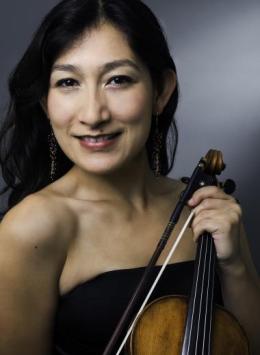
Rhodes1

Harumi Rhodes

The transition has been very positive for Rhodes, too. She was a unable to speak to me, but sent some written observations: “Everything about joining the Takacs has changed my life for the better,” she wrote. “As soon as I joined the Takacs, I assumed a new identity. Filling this role with pride and joy is what every bone in my body was made to do.”

She has played chamber music for many years, but she has found new pleasures in the Takacs. “The biggest surprise has been the luxury of performing the same piece many times. I’ve always enjoyed the process of rehearsing and performing. But the trajectory is completely different when you have a life-long relationship with this music in this way, a relationship that spans many concerts in one season. This is new to me.”

Her email to me concluded with great enthusiasm: “I look at the season ahead and can’t wait to dive in.”

Dusinberre says that whether the pieces are familiar or not, everything on the Sept. 23–24 concerts is music the quartet enjoys. “Haydn’s Op. 20 No. 4 is one of our favorite pieces,” he says. “It’s got a slow movement where the solos are very well distributed between the parts. The minuet is tremendously fun, sort of off-kilter—Haydn tricking his audience, tricking us sometimes!”

According to Dusinberre, the first movement is one of the places where quartet playing does require negotiation among the members. “It’s got a rather simple opening theme that comes back many times, in different ways. There’s different ways of bowing it, and it’s like opening a can of worms to find out what bowing we’re going to do. We’ve already had some entertaining rehearsals on that.”
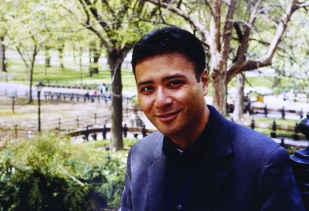
David Requiro

Cellist David Requiro

The Shostakovich Fourth Quartet is actually one that the Takacs has not played before. “It’s quite fun because it’s new for all of us, and not just Harumi, and I think that’s quite nice, because it sort of levels the playing field,” he says. “It’s a wonderful piece (that has) a strong sense of folk melodies early in the piece, and then it turns into something a bit darker and more dramatic and more exciting.”

The Schubert Quintet in C major is part of larger plans by the quartet. “We’re playing (the quintet) on the road with David (Requiro), at the White Lights Festival at Lincoln Center in October,” Dusinberre says.

“He’s a wonderful player. We’re very excited to explore this piece with him.”

# # # # #

Takacs Quartet
CU Fall Concerts
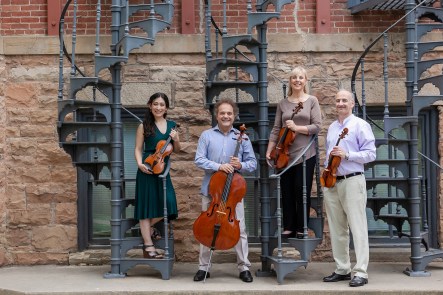
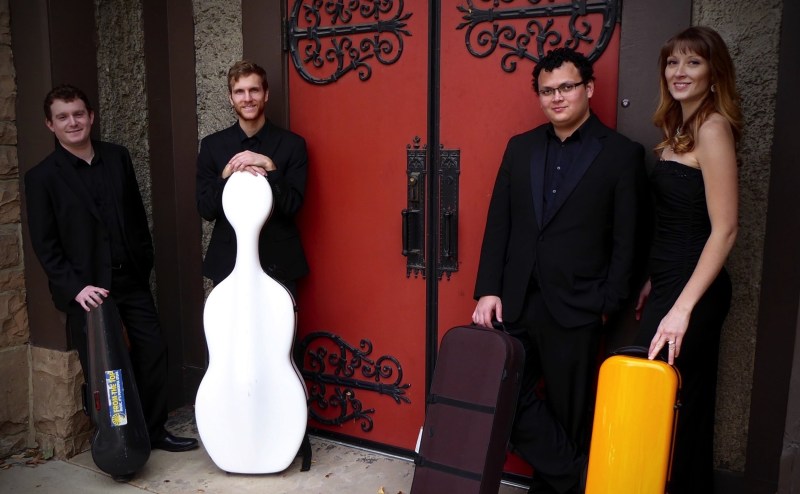
04-Takacs-Quartet-Amanda-Tipton-photography.jpg

Takacs Quartet. Photo by Amanda Tipton.

4 p.m. Sunday, Sept. 23, and 7:30 p.m. Monday, Sept. 24
Grusin Music Hall

Haydn: String Quartet in D Major, op. 20 no. 4
Shostakovich: String Quartet No. 4 in D Major, op. 83
Schubert: String Quintet in C Major, D956
With David Requiro, cello

4 p.m. Sunday, Oct. 28, and 7:30 p.m. Monday, Oct. 29
Grusin Music Hall

Haydn: String Quartet No. 2 in D minor, op. 76
Bartók: String Quartet No. 1
Brahms: String Quartet No. 2 in A minor, op. 51
Tickets

CU Presents Artists Series 2018–19 features Venice Baroque, Sarah Chang, Tafelmusik

Dates announced for Takács Quartet, Eklund Opera performances, other events

By Peter Alexander April 1 at 11:40 p.m.

CU Presents has announced its 2018–19 season of music, dance and theater, including significant classical music performances by guest artists and CU organizations.

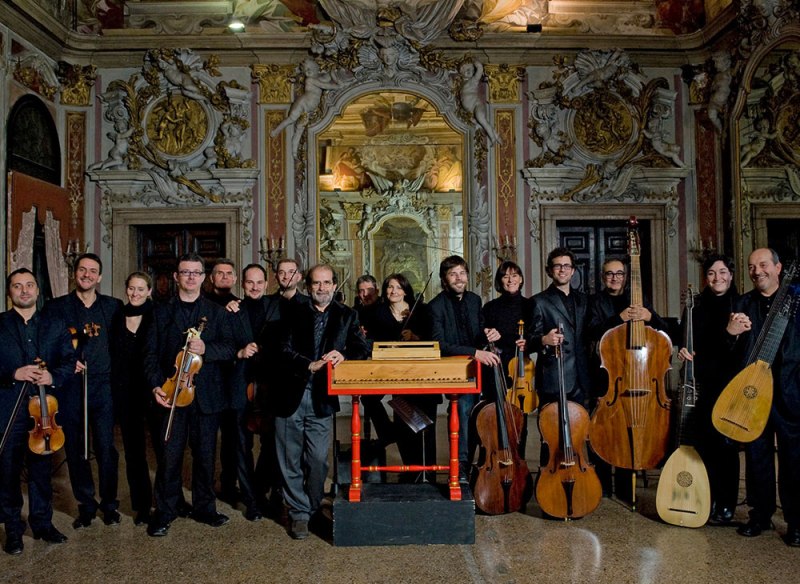
Venice-1

Venice Baroque Orchestra

The return of the Venice Baroque Orchestra to Macky Auditorium  will lead off the schedule of classical guest artists Nov. 2. Violinist Sarah Chang will present a solo recital Nov. 16, and Tafelmusik Baroque Orchestra, the Toronto-based historical-performance group, will present “The Leipzig-Damascus Coffee House” March 4.

i-vGLjwxH-X4

Sarah Chang. Photo by Colin Bell for EMI

There is also good news for those interested in world music. The Silkroad Ensemble, founded 20 years ago by cellist Yo-Yo Ma, will perform in Macky Jan. 31, and the remarkable Japanese drumming ensemble Kodo is scheduled for Feb. 16.

Boulder audiences have long relished the world-renowned Takács Quartet. With new second violinist Harumi Rhodes, they will present two performances each of five programs September through April. The Carpe Diem Quartet, featuring CU assistant prof. and Boulder Philharmonic concertmaster Charles Wetherbee as first violinist, will appear on another pair of concerts on the Takács series in November.

Finally, the Eklund opera program will feature two Macky Auditorium productions—a work celebrating the Leonard Bernstein centennial Oct. 26–28, and Tchaikovsky’s Eugene Onegin March 15–17—and Benjamin Britten’s setting of Henry James’s creepy ghost story Turn of the Screw in the Imig Music Building Music Theatre April 25–28.

The full listing of classical music events is below. Season ticket sales begin at 10 a.m. Monday, April 2, and single tickets will be available beginning Aug. 20. A listing of all CU Presents events, including theater and dance, popular attractions, and Holiday performances, can be found at the CU Presents Web page.

Tickets are available here,  or by phone at 303-942-8008.

# # # # #

CU Presents Classical Guest Artists 2018–19
Performances in Macky Auditorium

Venice Baroque Orchestra
With Anna Fusek, recorder
7:30 p.m. Friday, Nov. 2

Sarah Chang, violin
7:30 p.m. Friday, Nov. 16

Tafelmusik
“The Leipzig-Damascus Coffee House”
7:30 p.m. Monday, March 4

Tafelmusik.i-zTMS7Cz-X5

Tafelmusik. Photo by Sian Richards.

Takács Quartet
Sundays sold out by subscription; Mondays have limited availability
All performances in Grusin Music Hall

4 p.m. Sunday, Sept. 23
7:30 p.m. Monday, Sept 24

4 p.m. Sunday, Oct. 28
7:30 p.m. Monday, Oct. 29

Sunday, Nov. 25, 4 p.m. (featuring the Carpe Diem String Quartet)
7:30 p.m. Monday, Nov. 26 (featuring the Carpe Diem String Quartet)

4 p.m. Sunday, Jan. 13
7:30 p.m. Monday, Jan. 14

4 p.m. Sunday, Feb. 10,
7:30 p.m. Monday, Feb. 11

4 p.m. Sunday, April 28
7:30 p.m. Monday, April 29

Eklund Opera Program

Title TBA*
Music by Leonard Bernstein
7:30 p.m. Friday, Oct. 26, and Saturday, Oct. 27
2 p.m. Sunday, Oct. 28
Macky Auditorium
*Due to contractual obligations, the title of this production will not be announced until May 1, 2018

Eugene Onegin
By Pyotr Ilyich Tchaikovsky
7:30 p.m. Friday, March 15, and Saturday, March 16
2 p.m. Sunday, March 17
Macky Auditorium

The Turn of the Screw
By Benjamin Britten
7:30 p.m. Thursday, April 25; Friday, April 26; and Saturday, April 27
2 p.m. Sunday, April 28
Music Theatre, Imig Music Building

World Music Events

Silkroad Ensemble
7:30 p.m.. Thursday, Jan. 31
Macky Auditorium

Kodo
7:30 p.m. Saturday, Feb. 16, 7:30 p.m.
Macky Auditorium

Takacs Quartet and guest Nicolò Spera will perform music for strings and guitar

‘I cannot wait,’ the guitarist says

By Peter Alexander March 10 at 1:30 p.m.

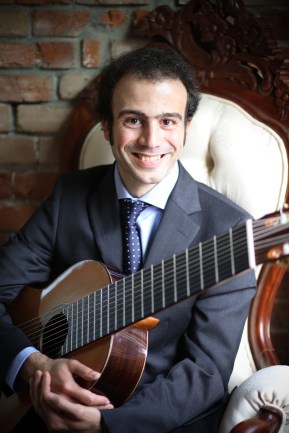
spera

Guitarist Nicolò Spera. Photo courtesy of CU College of Music

Nicolò Spera is excited.

The guitarist and CU College of  Music faculty member will perform Sunday and Monday with the Takacs Quartet, and he’s really pumped for the occasion. “I’m not sleeping at night, because I know it’s going to be one of the most exciting, incredible musical experiences of my life,” he says. “I cannot wait!”

The Takacs has long made it a point to include CU music colleagues on their concerts. In the words of second violinist Karoly Schranz, “it feels like a family, the College of Music. We have such a close connection with the faculty, it’s always a great feeling to play with them.”

In addition to Spera, the Takacs has already appeared this year with tenor Matthew Chellis and pianist Andrew Cooperstock from the CU faculty, and later in the spring they will also host violist Erika Eckert and cellist David Requiro as guest artists.

The program for the March 10–11 concert includes two works for the quartet alone, Mozart’s String Quartet No. 21 in D major, K575, and Beethoven’s String Quartet No. 14 in C-sharp minor, op. 131. Both are late works of the respective composers, and are among the great treasures of the repertoire.

With Spera, they will play portions of two different works: two movements from Boccherini’s Guitar Quintet in D major, known as the “Fandango” Quintet, and a movement from Mario Castelnuovo-Tedesco’s Quintet for Guitar and Strings.

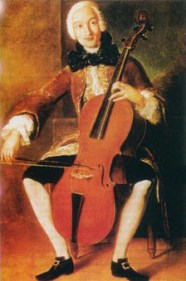
luigi-boccherini-1-sized

Luigi Boccherini

Spera didn’t want to play only the Boccherini on the concert because he has played it so often. But the entire Castelnuovo-Tedesco Quintet was too long to fit with the rest of the Takacs program, so he and first violinist Ed Dusinberre came up with the idea of playing individual movements from the two pieces.

“As crazy as it may seem, it sort of makes sense, because they have a lot of things in common,” Spera says of the two quintets. “Boccherini and Castelnuovo-Tedesco both loved the guitar, even though they didn’t play it. They both wrote guitar quintets, and Castelnuovo-Tedesco was inspired by Boccherini to write his own.

“The pairing of Fandango Quintet and the second movement of Castelnuovo-Tedesco Quintet works very well, for two reasons. The most important one is that they’re both very Spanish sounding. Boccherini was in Spain when he wrote the Fandango Quintet, and Castelnuovo-Tedesco was from a Sephardic Jewish family from Spain. And the keys (of the movements) work too.”

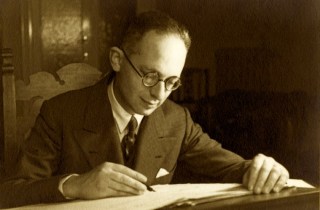
MCT

Mario Castelnuovo-Tedesco

The movement by Castelnuovo-Tedesco is specifically about his family’s relationship with Spain. Titled Souvenir de España, it expresses the composer’s nostalgia for Spain when he was living in America, exiled from Europe by World War II. “It has the most beautiful theme which is introduced by the viola, and then one by one by all the members of the quartet, and then last you hear the voice of the guitar,” Spera says.

Returning to the subject of performing with the Takacs, Spera has one more thing he wants to say. “They are humble people, but for me they’re superstars. It’s a very humbling and very beautiful opportunity for me.”

Incidentally, the concert will be the final full performance by the Takacs with Schranz playing second violin. He announced his retirement earlier this year, effective May 1. He will be replaced by Harumi Rhodes, a member of the CU College of Music faculty.

For the Takacs Quartet’s final concert of the 2017–18 season, April 29–30, Schranz will play with the quartet for half of the concert, with Rhodes taking over second violin for a performance of Tchaikovsky’s String Sextet, “Souvenir de Florence.” Eckert and Requiro will complete the ensemble for that work.

Both performances of the coming concert are listed as “sold out,” but there may be tickets available at the last minute from the box office in the lobby of the Imig Music Building.

# # # # #

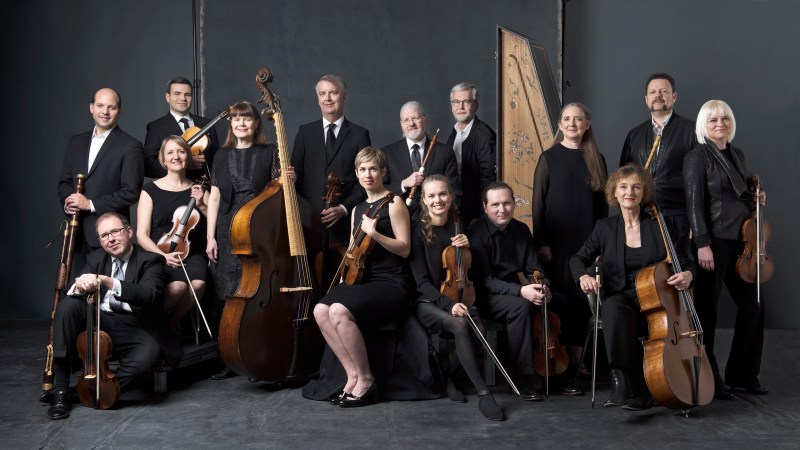
Takasce SQ

Takacs Quartet. Photo by Keith Saunders

Takacs Quartet with Nicolò Spera, guitar

Mozart: String Quartet No. 21 in D Major, K.575
Excerpts from Boccherini: Guitar Quintet in D Major, G.448; and
Mario Castelnuovo-Tedesco: Quintet for Guitar and Strings, Op. 143
Beethoven: String Quartet No. 14 in C-sharp minor, Op. 131

4 p.m. Sunday, March 11
7:30 p.m. Monday, March 12
Grusin Hall, Imig Music Building

SOLD OUT; last minute seats may be available

EDITED March 11 to add the full name of cellist David Requiro, whose given name was inadvertently omitted in the original article.

Violinist Harumi Rhodes will join Takács Quartet; founding second violinist retires

Karoly Schranz, one of the original Takacs members, will retire May 1

By Peter Alexander Feb. 22 at 9:20 pm.

The Takács Quartet and the CU College of Music today announced the retirement of Karoly Schranz, the founding second violinist of the group. His position will be taken by current CU faculty member Harumi Rhodes, effective May 1.

quartet_with_harumi

As of May 1, Takács Quartet members will be (l to r) Geraldin Walther, András Fejér, Edward Dusinberre, and Harumi Rhodes.

The other members of the quartet are Edward Dusinberre, first violin; Geraldine Walther, viola; and András Fejér, the sole remaining original member of the quartet, cello.

Takacs Quartet Publicity Photo

Karoly Schranz

The original Takács Quartet, comprising Gábor Takács Nagy, Gábor Ormai, Schranz and Fejér, first came to Boulder in 1986 as artists-in-residence at the CU College of Music. In addition to maintaining a high profile international career, the quartet presents an annual concert series on the CU campus that sells out two performances of each program, and frequently collaborate with their faculty colleagues.

In an e-mail message, Dusinberre commented, “[Schranz] has sustained his career so wonderfully over 43 years, and we’re very happy to welcome Harumi in a couple of months.” He also was quoted in at CU news release: “Individually, I have learned a huge amount from Károly and will always be profoundly grateful for the support he gave me after I joined the quartet.”

Rhodes1

Harumi Rhodes

Members of the quartet declined further interviews, saying they prefer to let the CU news release stand on its own. In the release, the quartet was quoted collectively saying “We are thrilled that Harumi has accepted our invitation to join the quartet. She is a wonderfully versatile violinist and chamber musician, and we greatly look forward to working with her.”

The Takács Quartet’s remaining programs for the 2017–18 season will be March 11–12 with guitarist Nicolò Spera; and April 29–30 with violist Erika Eckert and cellist David Requiro. (Follow the links for more information and tickets.)

The April concerts will feature both the final campus performances by Schranz as a member of the quartet, and Rhodes’ first performances. Schranz will play the second violin part for the first half of the program, featuring string quartets by Ernö Dohnányi and Shostakovich. Rhodes will then join with the other members of the Takács as second violin, along with guest artists Eckert and Requiro, to perform Tchaikovsky’s String Sextet, “Souvenir de Florence.”

Schranz plans to continue his career playing chamber music and teaching. You may read the full news release announcing the change in personnel here.
_____
Edited Feb. 22 to clarify the personnel of the April concerts.


Takacs Quartet welcomes pianist Cooperstock and tenor Chellis Feb. 4-5

Pieces by Mozart, Vaughan Williams and Dohnányi are on the program

By Peter Alexander Feb. 1 at 8:00 a.m.

One of the attractions that brought pianist Andrew Cooperstock to the University of Colorado faculty 18 years ago was, he says, “the idea of chamber music and collaboration among the faculty.”

Cooperstock1-X4

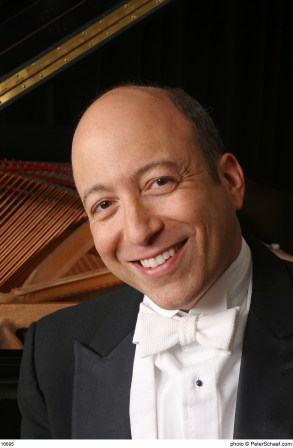
Pianist Andrew Cooperstock. Photo by Peter Schaaf.

Nothing embodies the collaborative environment in the College of Music better than the Takacs Quartet, with whom Cooperstock will be performing in Grusin Hall Sunday and Monday (4 p.m. Feb. 4 and 7:30 p.m. Feb. 5). “I love that they want to collaborate with faculty,” he says. “It’s been wonderful over the years.”

Members of the quartet feel the same way. “We have such a close connection with the faculty,” second violinist Károly Schranz says. “It’s always a great feeling to play with them.”

For the upcoming concert, Cooperstock and the Takacs will repeat a piece they first played together in 2002, the Second Quintet for piano and strings by the Hungarian composer Ernö Dohnányi. Another faculty guest will also appear on the program when tenor Matthew Chellis joins Cooperstock and Takacs violist Geraldine Walther to perform Four Hymns for tenor, viola and piano by Ralph Vaughan Williams.

The Takacs will open the concert with Mozart’s String Quartet in G major, K387. The first of the quartets Mozart dedicated to Joseph Haydn, it is sometimes known as the “Spring” Quartet in spite of having been finished on Dec. 31, 1782.

More than just an homage to the older composer, K387 and the other quartets dedicated to Haydn show Mozart’s full understanding of the new quartet style Haydn had developed. Compared to Mozart’s earlier divertimento-like quartets, the movements are more expansive and serious, the voices are more independent, and there is much more use of counterpoint. Indeed, Mozart’s “Haydn Quartets” are considered among the greatest works of the Classical period.

While Mozart’s quartets are familiar to chamber music audiences, the same cannot be said of anything by Dohnányi. Active in the early 20th century, he wrote in an attractive late-Romantic style. “The Quintet is just a gorgeous piece,” Cooperstock says. “It’s very tightly composed, with themes that come back in the last movement to tie everything together. Everybody gets solos, and the interaction of the piano and strings is great!”

Takasce SQ

Takacs Quartet: Károly Schranz, Geraldine Walther,  András Fejér, Edward Dusinberre. Photo by Keith Saunders

He is delighted to have the chance to play the quintet again so many years after his first performance with the Takacs. “It’s one of my favorite quintets,” he says. “In 16 years, you have a chance to forget and remember, so we’re learning it all over again.”

The original members of the Takas Quartet, who came from Hungary in the 1980s, have their own link to the composer. Denes Koromzay, the CU faculty member who brought the Takacs to Boulder as CU quartet-in-residence and served as a mentor, had studied with Dohnányi in Budapest.

“We heard many stories about Dohnányi from Koromzay,” Schranz says.  “He was student at the Franz Liszt Academy when Dohnányi was teaching there. He told us Dohnányi was not only a great composer, but also an amazing artist and piano player.”

chellis

Matthew Chellis

Vaughan Williams’s Four Hymns is one of very few pieces written for the combination of tenor, viola and piano. “I’ve played a fair amount with viola, and I’ve played a fair amount with singers, but to get to play with both at the same time is very special,” Cooperstock says. “It’s a privilege to play with Matthew Chellis. He’s a terrific tenor.”

The hymns are based on religious poetry by four different English writers, from the 17th to the 19th centuries. “The pieces are very powerful,” Cooperstock says. “They’re very tuneful, but with a lot of contrast of character and sound and tempo. And there’s a certain soulfulness that the viola adds into the mixture.”

As much as he likes the music on the program, Cooperstock is particularly outspoken about the experience of performing with the Takacs Quartet. “It’s amazing to play with a group that’s been together for so long, because the ensemble is so tight, and their sense of timing and sound is so unified,” he says. “There’s a depth that they have that other quartets don’t have. To get to come into that picture is amazing.

“I’m very honored to participate with them, and I’m glad that they asked me to play with them again.”

# # # # #

Takacs Quartet with Matthew Chellis, tenor, and Andrew Cooperstock, piano

Mozart: String Quartet No. 14 in G Major, K.387
Vaughan Williams: Four Hymns for Tenor, Viola and Piano
Matthew Chellis, tenor; Geraldine Walther, viola; and Andrew Cooperstock, piano
Dohnányi: Quintet No. 2 in E-flat minor for Piano and Strings, Op. 26
With Andrew Cooperstock, piano

4 p.m. Sunday, Feb. 4
7:30 p.m. Monday, Feb. 5

Tickets


Busy Altius Quartet returns to CU Jan. 21–22

Three concerts by the Takacs Quartet will feature appearances by CU faculty artists

By Peter Alexander

The Altius Quartet is on the move.

Overtones-Casual.Courtney-Hudffman

altos Quartet. Photo by Courtney Huffmann.

Formerly quartet-in-residence with CU’s esteemed Takacs Quartet, Altius has found themselves very busy, building their already-blossoming career. Since completing the residency, the group—comprising Andrew Giordano and Joshua Ulrich, violin, Andrew Krimm, viola, and Zachary Reaves, cello—has kept Colorado as their home base while recording two CDs, taking a trip to Beijing to collaborate with composer Bright Sheng, completing a tour of California, and giving other performances in Boulder and elsewhere.

Next they will appear on the Takacs concert series, with performances in CU’s Grusin Music Hall Sunday and Monday, Jan. 21 and 22. The series continues through the spring, with performances by the Takacs Quartet Feb. 4-5, March 11-12 and April 29-30.

A major work on the Jan. 21-22 program is taken from Altius’s recent CD of music by Shostakovich, the personal and darkly expressive String Quartet No. 8. Written in a time of despair for the composer, it is dedicated “to the victims of fascism and war,” but it is above all a reflection of Shostakovich’s own bleak thoughts at the time.

Other works on the program are Haydn’s well known “Emperor” String Quartet in C major, which includes a set of variations on “God Save Emperor Francis,” the anthem the composer wrote for Austrian Emperor Francis III; Through Fog, written for the Altius Quartet by JP Merz; and Mendelssohn’s String Quartet in E minor, op. 44 no. 2.

Read more in Boulder Weekly.

# # # # #

Altius Quartet
Music of Haydn, Shostakovich, JP Merz and Mendelssohn

4 p.m. Sunday, Jan. 21
7:30 p.m. Monday, Jan. 22
Grusin Music Hall

Takacs Quartet
Music of Mozart, Vaughan-William and Dohnányi
With Matthew Chellis and Andrew Cooperstock, piano

4 p.m. Sunday, Feb. 4
7:30 p.m. Monday, Feb. 5
Grusin Music Hall

Music of Mozart, Boccherini, Castelnuovo-Tedesco and Beethoven
With Nicolò Spera, guitar

4 p.m. Sunday, March 11
7:30 p.m. Monday, March 12
Grusin Music Hall

Music of Dohnányi, Shostakovich and Tchaikovsky
With Erika Eckert, viola, and David Requiro, cello

4 p.m. Sunday, April 29
7:30 p.m. Monday, April 30
Grusin Music Hall

All tickets through CU Presents

2017: The Year in Classical Music

Some outstanding concerts, and some changes of leadership in Boulder

By Peter Alexander

With the year drawing to a close, it is time to look back at 2017. It has been a tumultuous year in many realms, including some aspects of Classical music. But before that, it is good to remember the outstanding musical experiences of 2017 here in the Boulder area.

Pro Musica

The year began on an expressive high point when Pro Musical Colorado Chamber Orchestra, conductor Cynthia Katsarelis and soloists Jennifer Bird-Arvidsson, soprano, and Ashraf Sewailam, bass, presented Shostakovich’s rarely-heard Symphony No. 14.

I wrote at the time: “This somewhat gloomy meditation on death is not often given live, partly because of the difficult assignments facing the soprano and bass soloists, but mostly because of the difficult subject matter. But it is a major statement from a great composer—what Katsarelis calls ‘a piece that needs to be heard’—and so the rare performances are to be treasured.”

The February visit of Deborah (Call Me Debbie) Voigt to Macky Auditorium will be a cherished memory for fans of the classical voice. Voigt Lessons, the superstar soprano’s candid retelling of her struggles with relationships, substances, and weight that clouded her career not only showed some realities of life at the top of the opera world, it also revealed the very human person beneath the superstar image. For both reasons, this was a meaningful event.

Takasce SQ

Takacs Quartet

The Takacs Quartet always provides some of the year’s best performances. It’s hard to chose just one, but for 2017 I would single out their February concert including Beethoven’s Quartet in G major, op. 18 no. 2—performed while the Takacs was in the midst of a full Beethoven cycle at several venues—and CU music faculty Daniel Silver, clarinet, playing the Brahms Quintet in B minor, op. 115. An especially beautiful rendering of this beautiful work had at least one audience member in tears by the end.

March saw the arrival of another superstar in Boulder when Sir James Galway played at Macky Auditorium, and the departure of an important member of Boulder’s classical music community when Evanne Browne gave her farewell concert with Seicento Baroque Ensemble, the organization she founded in 2011.

BPhil.onstage

Boulder Phil at Kennedy Center

One of the biggest events of the year for Boulder performing arts was the visit in March of the Boulder Philharmonic Orchestra, conductor Michael Butterman and Frequent Flyers Aerial Dance Company to the Kennedy Center in Washington, D.C., for the first annual Shift Festival of American Orchestras. The Phil repeated a concert they had given in Boulder a few days earlier, including the world premiere of All the Songs that Nature Sings by Stephen Lias and Copland’s Appalachian Spring, performed with Frequent Flyers.

An audience favorite of the festival, the Boulder Phil played to a sold out house. Butterman wrote the next day, “It was a peak experience for me, and, I think, for all of us at the Phil. . . . To be there with our orchestra, with that crowd and with that repertoire—it was something I shall never forget. We had a great sense of pride in representing our hometown.”

Several important changes of personnel were announced for Boulder classical scene in the spring. In April, Jean-Marie Zeitouni announced that he was stepping down as music director of the Colorado Music Festival. He will remain with CMF as principal guest conductor, and conductor/violinist Peter Oundjian will serve as artistic advisor for the 2018 season. Later the same month, James Bailey left his position as music curator of the Dairy Arts Center, to be replaced by Sharon Park.

Elliot Moore at Lake McIntosh - credit - Photography Maestro (1)

Elliott Moore

In May, Seicento Baroque Ensemble announced the appointment of Kevin T. Padworksi as artistic director, succeeding Browne, and the Longmont Symphony announced the appointment of Elliot Moore to succeed long-time music director Robert Olson.

The same month, the Boulder Chamber Orchestra wrapped up its 2016–17 season with its largest performance to date, Beethoven’s Ninth Symphony presented in Macky Auditorium. The performance under conductor Bahman Saless was unfortunately the occasion of a protest by the anti-fracking group East Boulder County United. Seven members of EBCU blew whistles, shouted slogans and left flyers before the concert to voice their opposition to the orchestra having accepted a contribution from Extraction Oil & Gas.

Olga Kern

Olga Kern, photographed by Chris Lee at Steinway Hall.

Zeitouni proved to be anything but a lame duck conductor at the Colorado Music Festival. The 2017 season started at the end of June with an all-Russian program featuring exciting performances of Shostakovich’s Festive Overture and Rachmaninoff’s Second Symphony. On the same concert, one of Boulder’s favorite guest artists, pianist Olga Kern, gave scintillating performances of Prokofiev’s First Piano Concerto and Rachmaninoff’s Rhapsody on a Theme of Paganini.

Other high points over the summer included the return of CMF’s founding director Giora Bernstein to lead a concert of Mozart, Zeitouni conducting Beethoven’s Ninth as the CMF centerpiece, and the visit of violinist Gil Shaham at the end of the summer season. Up in the mountains, Central City Opera’s Downton-Abbey-inspired Victorian-era production of Mozart’s Così fan tutte was one of the year’s highlights for opera lovers.

Another delight for the opera crowd came in the fall, with the CU Eklund Opera Program’s serio-comic production of Lehar’s Merry Widow. In November, Saless and the Boulder Chamber Orchestra returned to its core repertoire with a lively concert featuring two youthful works for smaller ensemble: the Concerto for piano, violin and strings by the 14-year-old Mendelssohn, with violinist Zachary Carrettin and pianist Mina Gajić, and Janáček’s Idyll for Strings.

Zachary & Mina

Carrettin and Gajic

Carrettin and Gajić were featured performers in December when the Boulder Bach Festival gave one of its most intriguing and adventurous concerts in its increasingly adventurous schedule. With guest artist Richie Hawley, the program offered insight into the instruments and performance practices of the early 20th century, performed on Hawley’s 1919 Buffet clarinet, Gajić’s 1895 Érard piano, and Carrettin’s violin set up with strings typical of the period.


# # # # #

For the classical music world outside of Boulder, the biggest news was certainly the intrusion of a long-overdue reckoning for sexual misconduct that is going on in our society generally. The first bombshell, not unexpected by people in the business but a bombshell nonetheless, landed Dec. 3 with the suspension of conductor James Levine from the Metropolitan Opera and other organizations, including the Boston Symphony and the Ravinia Festival. Accusations against Charles Dutoit, artistic director and principal conductor of the Royal Philharmonic Orchestra in London, surfaced later in the month.

levine

James Levine

Both conductors are in the twilight of long careers. Rumors about Levine have been widely known in the classical music world; indeed I first heard them in the 1980s. Every music journalist I know has heard the same stories, but so far as I am aware, no one who experienced Levine’s assaults was previously willing to speak publicly. In the case of Dutoit, I had not heard the rumors, but I do know one of the women who spoke publicly about what happened to her, and I believe her unquestioningly.

As the controversy has swirled about the subject of sexual abuse, harassment and assault in classical music, several critics have written powerfully about the subject: Anne Midgette of the Washington Post, Jennifer Johnson of the Guardian, Andrew Riddles of Classical Ottawa to name three. Singer Susanne Mentzer has written about her personal experiences in the opera world for the Huffington Post, as has Dan Kempson for Medium.

There are certain to be more revelations. One major journalist has more first-hand information, with names including some of the of the most famous classical artists, and is preparing an article. I have no doubt that several men are nervously awaiting that story, or some other revelation that reveals past misdeeds.

Will this tidal wave reach Boulder?

It’s hard to say with certainty. I have spoken with many on the classical scene here, and the only rumor I have heard, from several sources, has been of inappropriate comments and behavior by one person, none of which reached the level of abuse or assault. “He might not have been hired today,” one person speculated, but as so often happens, the people who heard the comments preferred not to make an issue of it.

Another person told me he had never heard any rumor from the College of Music, so Boulder may escape the worst of this necessary but unhappy process. In the meantime, it is my wish for 2018 that society in general and the music world specifically create a safe environment, where powerful men do not feel free to behave like adolescent boys.

___________

Edited for clarity 12.31.17

Takács Quartet and Boulder Phil deliver a classical double-header

The missing composer in both concerts? Beethoven.

By Peter Alexander

Takasc String Quartet

Takacs Quartet. Photo by Keith Saunders.

Boulder will see a classical-music double-header Sunday, Sept. 24 as the Takács Quartet and the Boulder Philharmonic both open their seasons the same day.

The Takács goes first, at 4 p.m. in Grusin Music Hall on the CU campus with a program of Haydn, Mendelssohn and Brahms. And at 7 p.m. in Macky Auditorium, the Boulder Phil will open their 60th anniversary season with the music of Dvorák, Schumann and Christopher Theofanidis. The Takács will repeat their concert on Monday at 7:30 p.m.

That Takács program, and later programs during the year, are noticeably missing one composer. There are classical works during the fall (Haydn, Mozart), Romantic works (Mendelssohn, Brahms), and one new piece (Carl Vine). But there is no Beethoven.

That’s because the Takács played the full cycle of Beethoven quartets several times last year, and they decided enough was enough. “We’re definitely taking a breather from Beethoven this year,” the quartet’s first violinist, Edward Dusinberre, says.

# # # # #

JonNakamatsu

Jon Nakamatsu

Music director Michael Butterman and the Boulder Philharmonic will open their 60th season with a work co-commissioned with orchestras in all 50 states, Dreamtime Ancestors by Christopher Theofanidis. Other works on the program are Schumann’s Piano Concerto in A minor with pianist Jon Nakamatsu, and Dvorák’s Symphony No 7. in D minor.

Nakamatsu is looking forward to playing the Schumann Concerto, even though he has played it many times before. “People say if it’s really familiar to the audience, it’s more difficult to play because everyone has an opinion,” he says. “But I find if you don’t have to win people over with the piece, you just have to play. Playing something everyone loves already, you have happy people in the hall. That’s a good place to start.”

Read more in Boulder Weekly.

# # # # #

Takacs Quartet
Haydn, Mendelssohn and Brahms
4 p.m. Sunday, Sept. 24 (sold out)
7:30 p.m. Monday, Sept. 25
Grusin Music Hall

Tickets

Boulder Philharmonic, Michael Butterman, conductor
Jon Nakamatsu, piano
“Boulder Phil at 60”
7 p.m. Sunday, Sept. 24
Macky Auditorium

Tickets


Ajax Quartet chosen for Takacs Quartet residency

New graduate ensemble wins audition for two-year appointment at CU

By Peter Alexander

The Ajax Quartet, a string ensemble that is less than a year old, has won the audition to study with the Takacs String Quartet at the CU College of Music, starting in September. They will succeed the Altius Quartet in the highly coveted position as the designated graduate string quartet-in-residence at the college.

IMG_0177watermark

Ajax Quartet

The four members of the quartet—violinists Tom Yaron, Renée Hemsing-Patten, violist Mario Rivera and cellist Eric Haugen—came to the CU from different parts of the country. “There’s not any way we could have met up before CU,” Hemsing-Patten says.

“The faculty members, having auditioned all of us and knowing our playing, seemed to think we would play well together. So they introduced us to each other, and they were completely right! We hit it off right away.”

Only three weeks after they had starting working together, the Takacs asked the Ajax Quartet to play one piece for an event at The Academy. Members of the Takacs Quartet offered to coach the new group prior to that performance.

“We hadn’t even thought about auditioning for the Takacs program at that time,” Hemsing-Patten says. “But as things progressed over the fall semester, we just began to feel like everything was working out really well, and decided to go ahead and shoot for that. There was an official audition in early February.”

Having won the CU residency is the realization of a dream for the members of the quartet, she says. “I listened to recordings of them because my grandma was a violinist in quartets since I was a kid, so I’ve known who they are through my entire life. And I know the other guys have as well. It’s a dream to be able to work with them.

“We have all wanted to play in a quartet in different points in our lives, and have just never found the right group, so for us it’s something we’re really serious about pursuing.”

There will be opportunities to hear the Ajax Quartet in Boulder in the coming weeks, before their official performances as graduate quartet-in-residence next fall. At 4 p.m. Saturday, April 29, they will play a full concert at the Carillon, and at 7:30 p.m. Tuesday, May 9, they will share a concert at the Academy with the Altius String Quartet. For the second program, the Ajax Quartet will play Dvořák’s American String Quartet, and both groups together will play Mendelssohn’s popular Octet for Strings.

Both performances will be free and open to the public.

# # # # #

Ajax Quartet
4 p.m. Saturday, April 29
The Carillon, 2525 Taft Dr., Boulder

Ajax Quartet and Altius String Quartet|
7:30 p.m. Tuesday, May 9
The Academy, 970 Aurora Ave., Boulder
Dvořák: String Quartet in F major, Op. .96, “American” (Ajax Quartet)
Work TBD (Altius String Quartet)
Mendelssohn: Octet in E-flat major for strings

Both concerts are free.

Josh Bell, Quicksilver Baroque on the 2017–18 CU Presents Series

By Peter Alexander

Quicksilver

Quicksilver Baroque Ensemble

CU Presents, the performing arts series on the University of Colorado, Boulder campus, has announced several noteworthy classical music events as part of the 2017–18 season.

Josh Bell by Lisa Marie Mazzucco

Josh Bell. Photo by Lisa Marie Mazzocco.

Among these are a solo recital by award-winning violinist Joshua Bell Feb. 9, 2018, and a concert by the historically informed Quicksilver Baroque Ensemble April 20, 2018. The yet-to-be-selected winner of the 2017 Van Cliburn International Piano Competition will perform a solo recital Nov. 3, 2017. This year’s competition will be held in Ft. Worth, Tex., May 25–June 10.

Other Artist Series events in Macky Auditorium will include the Martha Graham Dance Company, Oct. 5, 2017; jazz and R&B vocalist Dianne Reeves Dec. 16, 2017; and Béla Fleck and Brooklyn Rider Jan. 20, 2018.

This season also features five concert pairs by the Takács Quartet and a performance by CU Boulder’s current graduate quartet-in-residence, the Altius Quartet. The Eklund Opera Program’s season features productions of Franz Lehár’s Merry Widow Oct. 27–29, the Stephen Sondheim musical Sweeney Todd March 16–18, and Handel’s Ariodante April 26–29.

The full CU Presents season is listed below. More information is available on the CU Presents Web page. Season ticket sales begin Monday, April 3 at 10 a.m., and single tickets will be available beginning Monday, Aug. 14. Tickets will be available here, or over the phone at 303-492-8008.

# # # # #

CU PRESENTS 2017–18 SEASON

Artist Series at Macky Auditorium

Martha Graham Dance Company
Thursday, Oct. 5, 2017

The Triplets of Belleville
Sunday, Oct. 15, 2017

Dianne Reeves

Dianne Reeves

Van Cliburn Gold Medal Winner
Friday, Nov. 3, 2017

Dianne Reeves 
Saturday, Dec. 16, 2017
Holiday Concert

Béla Fleck and Brooklyn Rider
Saturday, Jan. 20, 2018

Joshua Bell
Friday, Feb. 9, 2018

Ailey II
Saturday, Feb. 17, 2018

Lila Downs
Saturday, March 3, 2018

RUBBERBANDance
Saturday, March 24, 2018

Holiday_Concert.CC310

Holiday Festival in Macky Auditorium

Quicksilver Baroque Ensemble
Friday, April 20, 2018
Stile Moderno: 17th Century Italy

Holiday Festival
Friday, Dec. 8, 2017, 7:30 p.m.
Saturday, Dec. 9, 2017, 1 p.m.
Saturday, Dec. 9, 2017, 4 p.m.
Sunday, Dec. 10, 2017, 4 p.m.
Macky Auditorium

Eklund Opera Program

The Merry Widow
By Franz Lehár
(Sung in German with English surtitles)
Friday, Oct. 27, 2017, 7:30 p.m.
Saturday, Oct. 28, 2017, 7:30 p.m.
Sunday, Oct. 29, 2017, 2 p.m.
Macky Auditorium

Sweeney Todd
By Stephen Sondheim
Friday, March 16, 2018, 7:30 p.m.
Saturday, March 17, 2018, 7:30 p.m.
Sunday, March 18, 2018, 2 p.m.
Macky Auditorium

Ariodante
By George Frideric Handel
Thursday, April 26, 2018, 7:30 p.m.
Friday, April 27, 2018, 7:30 p.m.
Saturday, April 28, 2018, 7:30 p.m.
Sunday, April 29, 2018, 2 p.m.
Music Theatre, Imig Music Building

Takács Quartet

Takasce SQ

Takacs Quartet

Chamber Series (sold out by subscription)
Sunday, Sept. 24, 2017, 4 p.m.
Sunday, Oct. 29, 2017, 4 p.m.
Sunday, Jan. 21, 2018, 4 p.m. (Altius Quartet)
Sunday, Feb. 4, 2018, 4 p.m.
Sunday, March 11, 2018, 4 p.m.
Sunday, April 29, 2018, 4 p.m.
Grusin Music Hall

Encore Series (limited availability)
Monday, Sept. 25, 2017, 7:30 p.m.
Monday, Oct. 30, 2017, 7:30 p.m.
Monday, Jan. 22, 2018, 7:30 p.m. (Altius Quartet)
Sunday, Feb. 5, 2018, 7:30 p.m.
Monday, March 12, 2018, 7:30 p.m.
Monday, April 30, 2018, 7:30 p.m.
Grusin Music Hal