Takács Quartet, Faculty Tuesday concerts have begun for 2023–24
By Peter Alexander Sept. 14 at 10:30 p.m.
You may still be stuck in a Summer mood—I know I am—but on the CU campus and around the Imig music building, Fall is well under way.
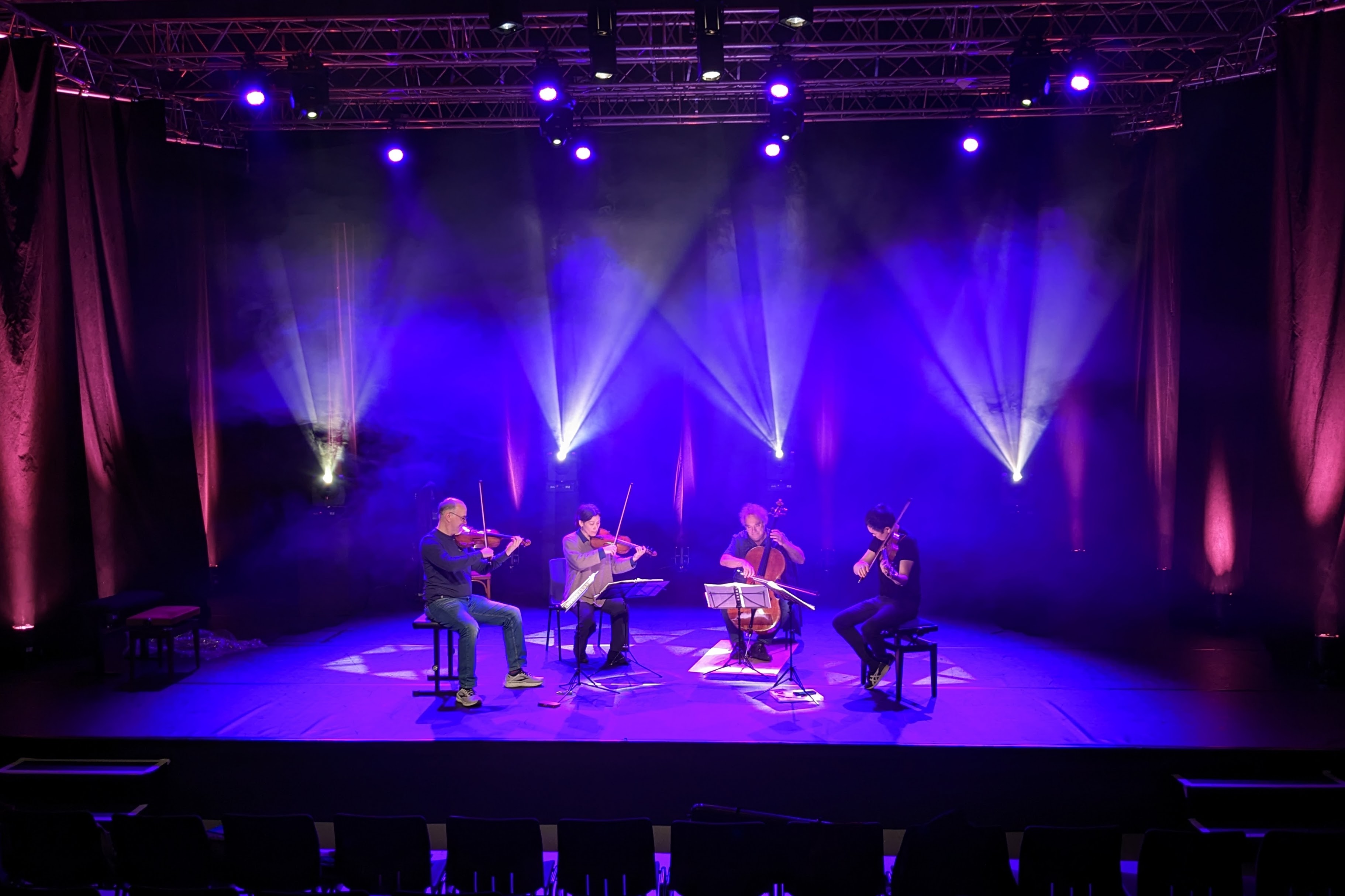
Even more reliable signs of the season than the turning of the leaves, the College of Music’s Faculty Tuesday series and the Takács Quartet’s campus concert series are already ongoing for the 2023-24 year. The Takács will play music of Haydn, Bartók and Beethoven Sunday afternoon and Monday evening (4 p.m. Sept. 17 and 7:30 pm. Sept. 18 in Grusin Hall), in their customary two-performance pairing. They have one more program during the fall (Nov. 5 and 6; program below) and more performances after the first of the year.
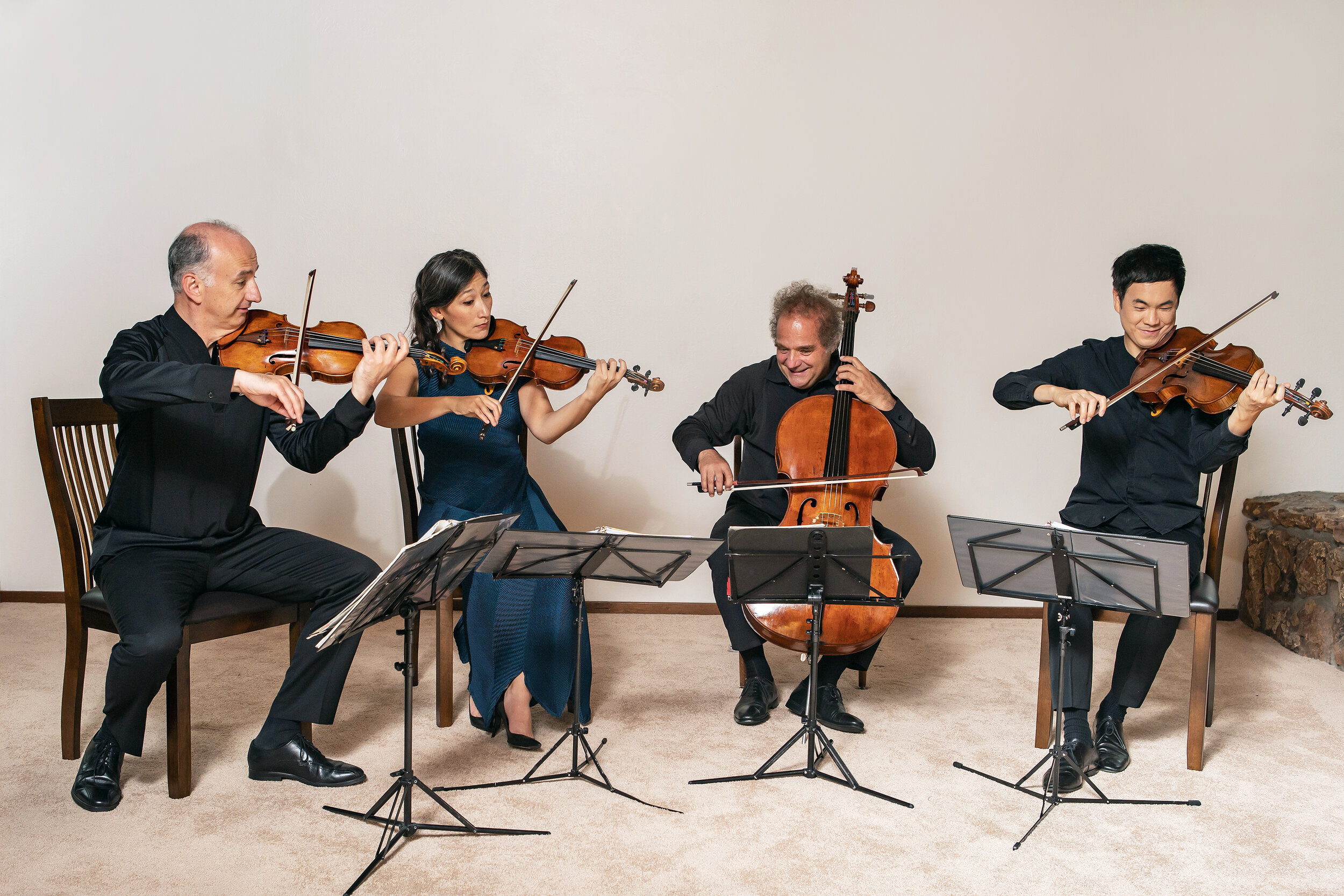
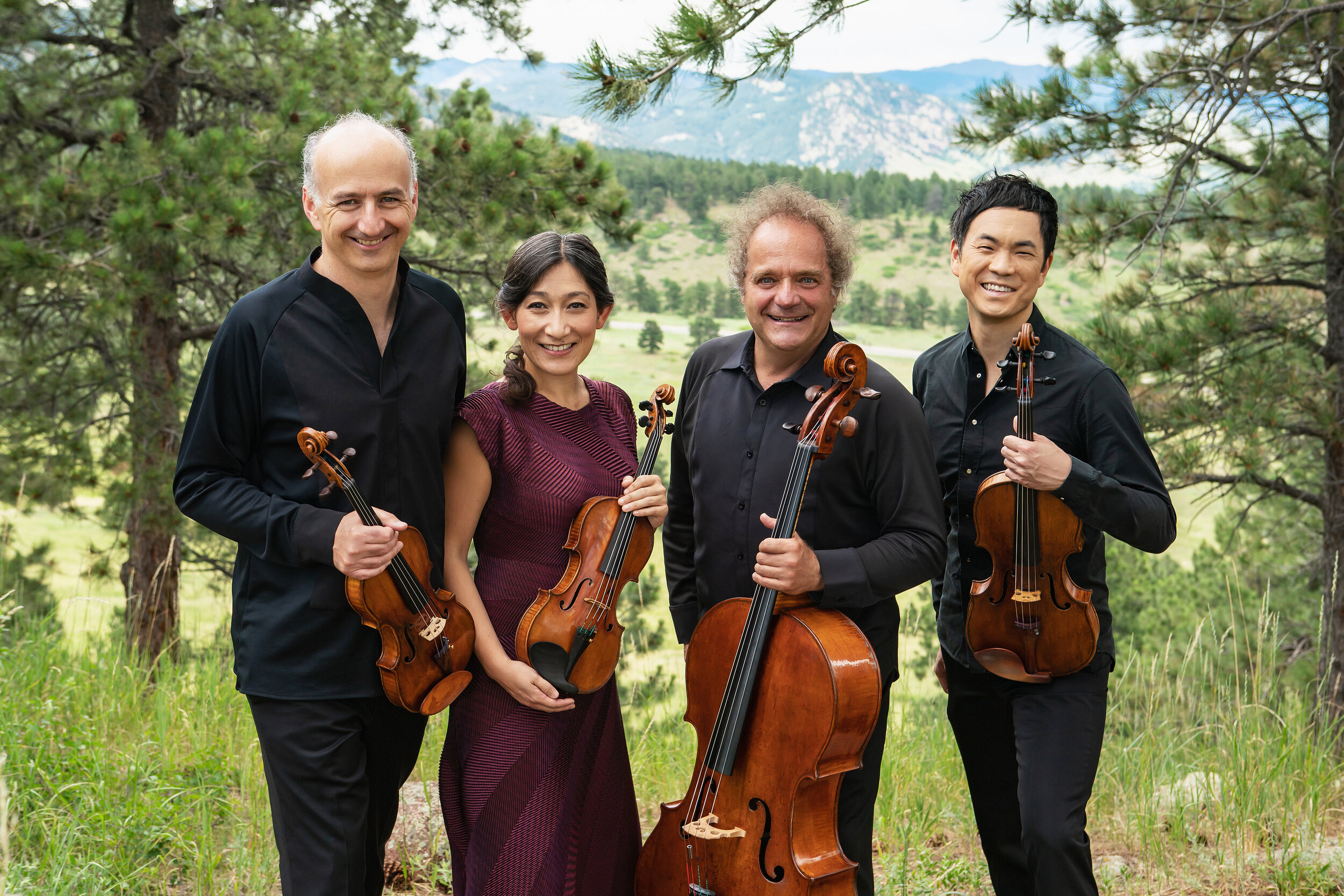
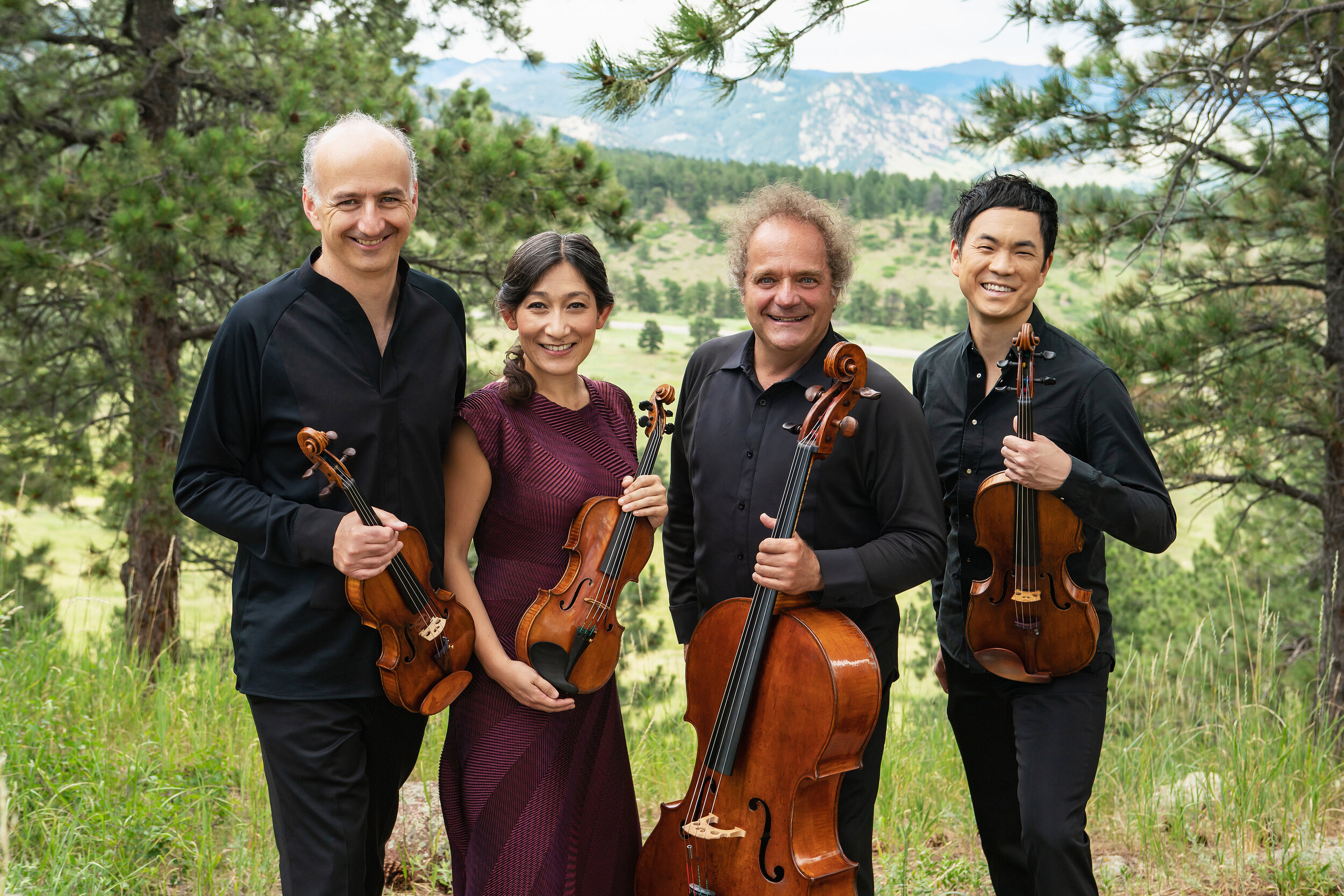
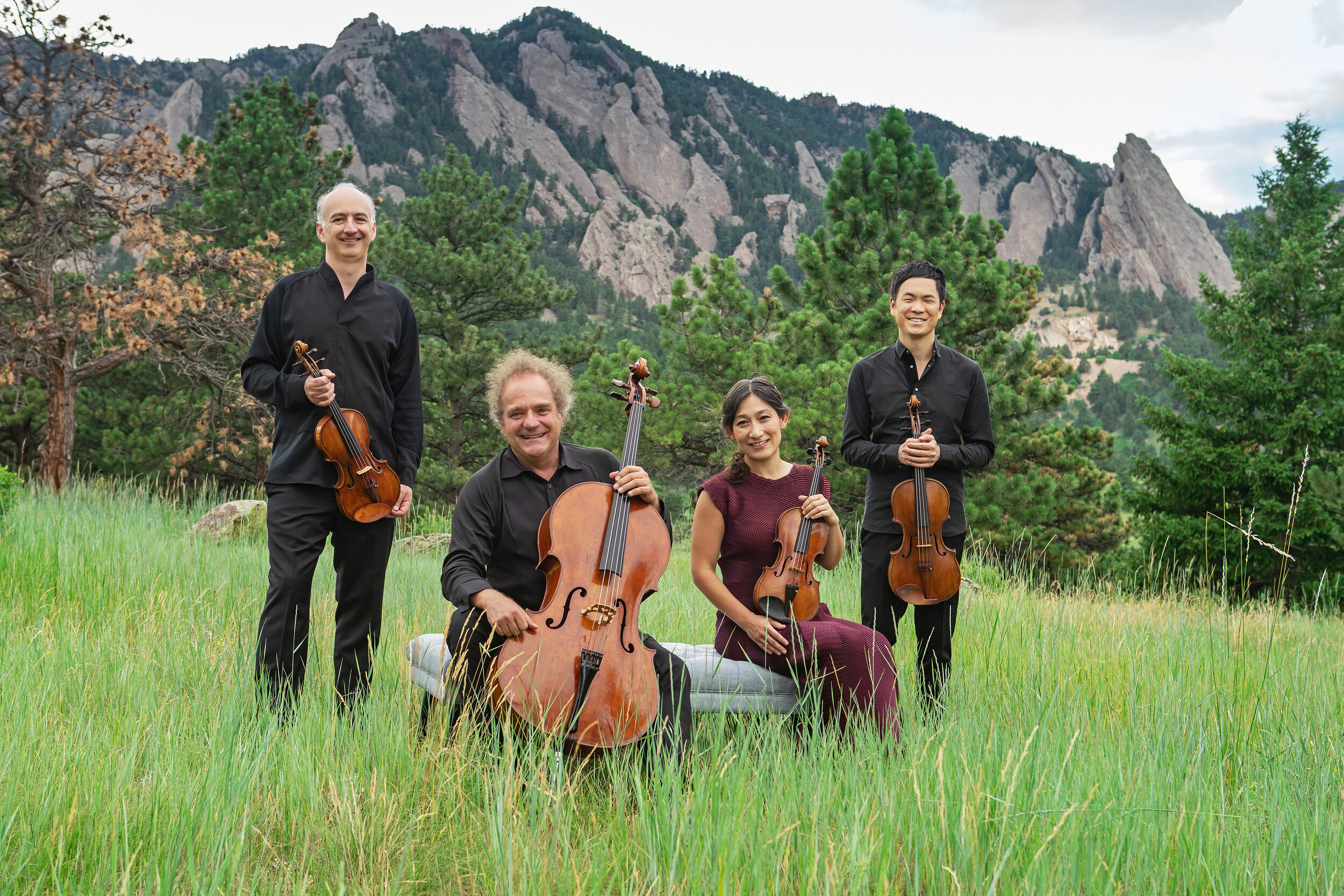
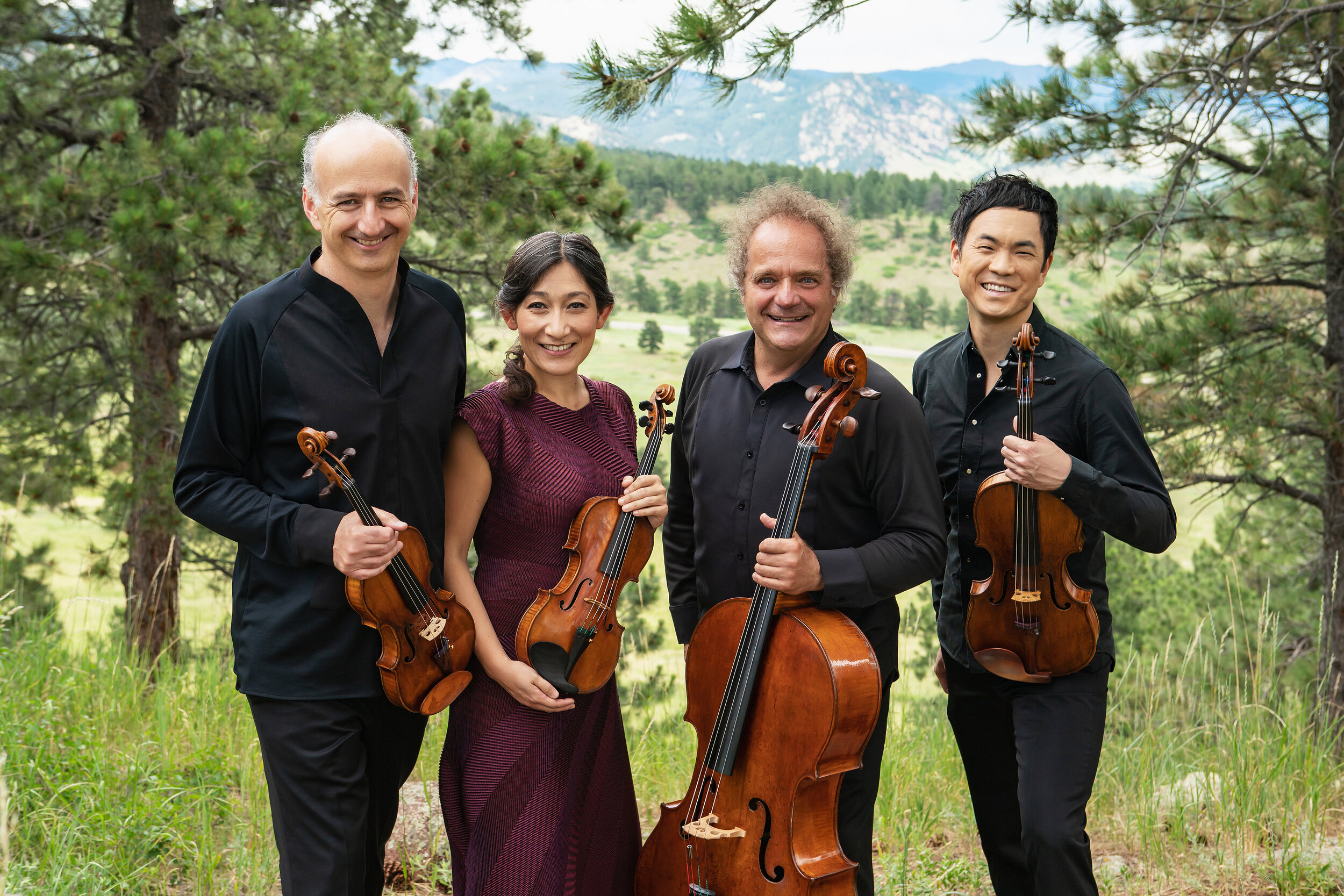
Takács Quartet. Photo by Ian Malkin.
Then next Tuesday (7:30 p.m. Sept. 19, also in Grusin), the quartet’s second violinist Harumi Rhodes and pianist Hsiao-Ling Lin will present the music of Robert Schumann and Beethoven on a faculty Tuesday recital titled “MEMORIA.” The centerpiece of the program features visual art by Michiko Theurer with three short pieces by Kaija Saariaho, performed with cellist Meta Weiss.
The Faculty Tuesday series continues nearly weekly for the remainder of the academic year; listings of all College of Music concerts can be found on the school’s Web page. All Faculty Tuesday performances are free and open to the public.
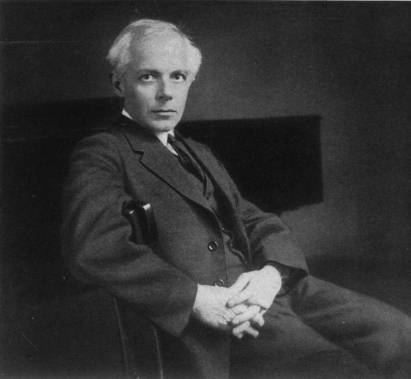
Béla Bartók
Both fall performances by the Takács will feature works by Hungarian composer Béla Bartók. The original membership of the Takács Quartet was entirely Hungarian: the quartet was founded in Budapest by students at the Franz Liszt Academy, and the music of their fellow-Hungarian Bartók was home territory for them. Cellist András Fejér, the one original member and one Hungarian in the Takács today says that is still the case, and has been through all changes in personnel in the group’s history.
“Absolutely,” Fejér says. “Ed (Dusinberre) was the first (new member) with us, and we learned and re-learned them together. And what we found with him, and also with all the new partners, was an immense hunger to enjoy and to interpret in a meaningful way.”
That does not mean that the Takács’s interpretation of Bartók’s quartets doesn’t change. “When we put them to rest for a while and then start practicing again, the questions we ask are completely different,” Fejér says. “Any given problem gets a different light, and we’ve been changing in the interim period. That’s what makes this whole process so fresh and alive and fascinating all of these decades.”
But one thing that remains consistent, he says, is their view of Bartók not as an aggressive modernist but as a Romantic composer. “In spite all the dissonance, we still feel he is a wonderfully Romantic composer,” he says. “Even when it sounds harsh, you realize it should’t sound harsh, it should sound like a village piece, or lonesome mourning. If we attack from that angle, one can discover millions of wonderful things!”
The other composer present in both concerts during the fall semester is Joseph Haydn. For two reasons, Haydn is also central to the Takács’s work. First, Haydn has his own Hungarian connections, having been born on the border between Austria and Hungary and spent long periods of his life in Hungary at the castle of Prince Esterhazy. And he is considered the creator of the string quartet, having written nearly 70 quartets starting before it was a recognized concert genre.
András Fejér
Fejér wants the audience to realize what a creative composer Haydn was. “Just because Haydn is often the first piece we are playing at our concerts, doesn’t mean that it’s a warm-up piece,” he says. “It’s extremely inventive, full of the most wonderful characters. I cannot emphasize (enough) the originality of the pieces, and we are just happy enjoying it. Sometimes even today I cannot quite believe how wonderfully dense—or densely wonderful—they are!”
The other composer represented in the fall programs is Beethoven, whose Quartet in E minor, op. 59 no. 2 is on the opening program Sunday and Monday. That is the second of the three “Rasumovsky” Quartets, written for the Russian Ambassador in Vienna around 1808. In his honor, it includes a Russian folk tune that also appears in Mussorgsky’s opera Boris Gudonov.
Information on the full Takács season and box office information can be found on the Takács Quartet listing through CU Presents. Tickets are available for both in-person attendance in Grusin Hall and for streaming access to the performances.
# # # # #
Takács Quartet Fall concert series, 2023 (All concerts in Grusin Hall)
Julien Labro will play with the Takács and perform solo, Sunday and Monday in Grusin Hall
By Peter Alexander April 13 at 9:30 p.m.
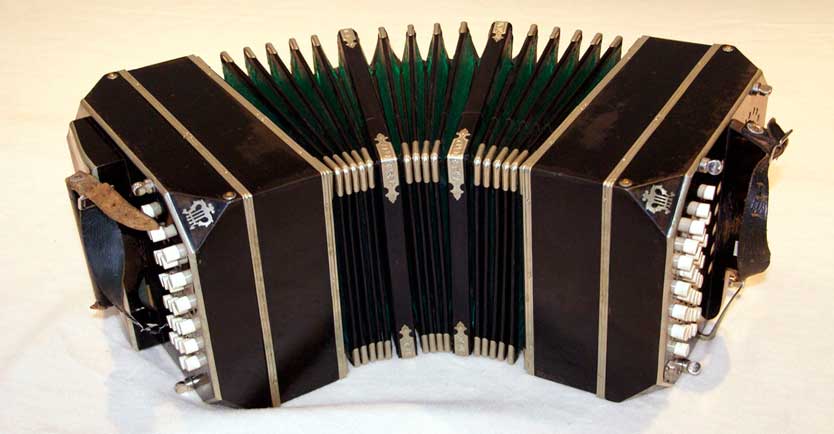
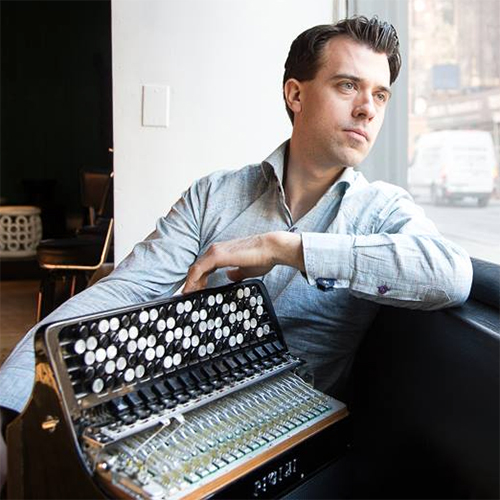
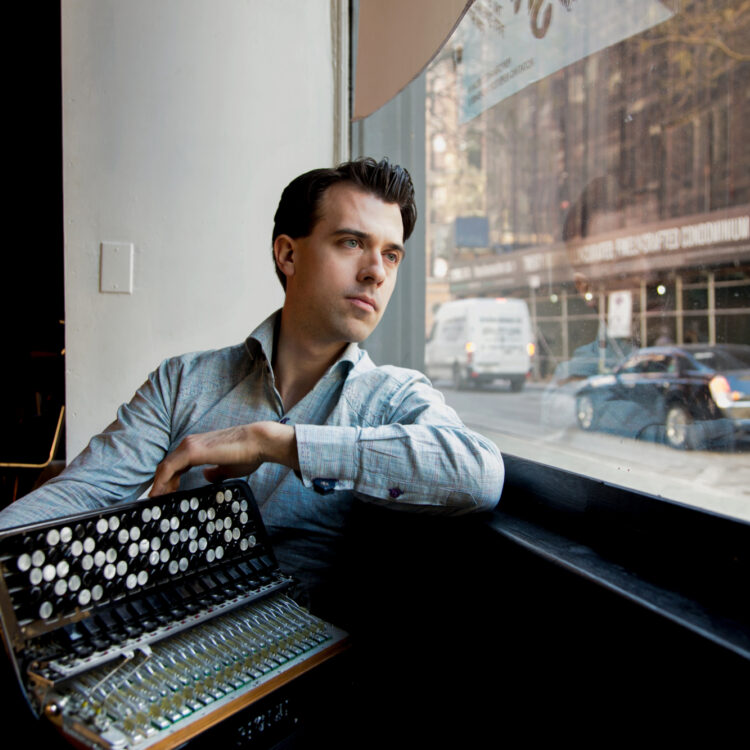
Bandoneon
Their next concert program takes the Takács Quartet outside the standard string quartet repertoire.
The performances Sunday and Monday (4 p.m. April 16, and 7:30 p.m. April 17; details below) will feature bandoneon virtuoso Julien Labro, who will play three works with the quartet and perform a solo set. The quartet will also play Ravel’s String Quartet in F major without Labro.
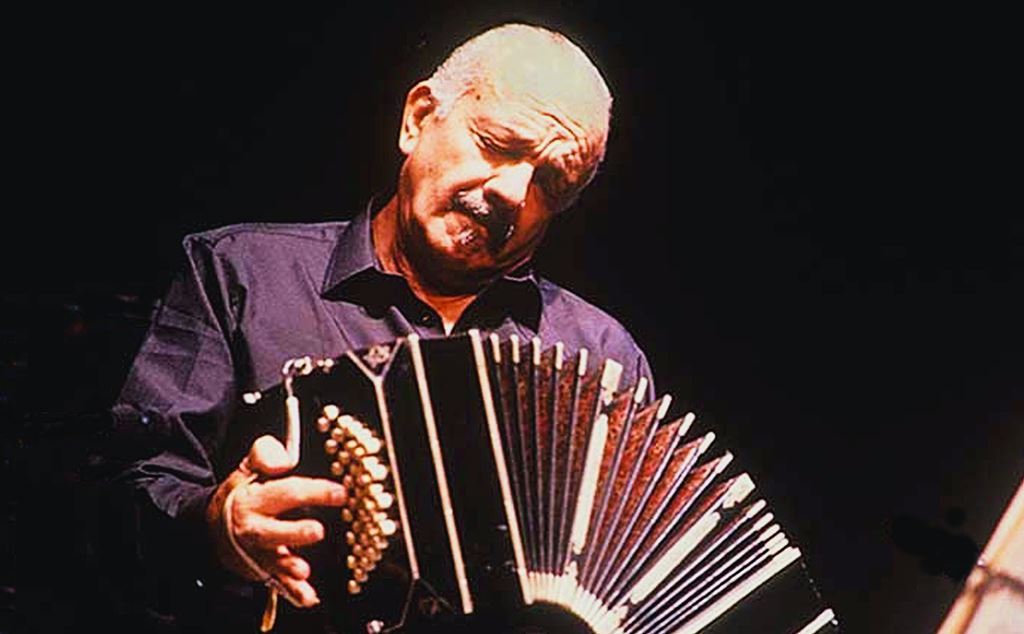
Astor Piazzolla with bandoneon
The bandoneon is a type of concertina, somewhat similar to the accordion. Like those more familiar instruments, sound is creating by opening and closing a bellows to force air across reeds. Pitch is controlled by buttons, similar to those of the button accordion. While it was invented in Germany in the 19th century, bandoneon is primarily associated today with the tango music of Argentina and Uruguay, and particularly the works of Astor Piazzolla.
Labro and the Takács were brought together by the musical consortium Music Accord, an American organization devoted to the commissioning and promotion of new chamber music. They have been playing together on tour for about a year. This is their first joint performance in Boulder.
The current program opens with Circles, a piece written for them by Bryce Dresner. A versatile and prolific composer of film music and a guitarist with the Rock Band the National, Dresner has collaborated with a wide variety of artists, from Kronos Quartet to Philip Glass to Taylor Swift.
Julien Labro
Circles will be followed by Labro’s own Meditation #1, and then a set of pieces for bandoneon alone: a chorale tune by J.S. Bach, to illustrate the instrument’s background as a substitute for organ in small parishes in Germany; Minguito by Argentinian bandoneon player Dino Saluzzi; and Labro’s Astoración, a tribute to Piazzolla.
Astoración “involves myself playing with a tape that I made, with Piazzolla speaking about the tango and the bandoneon,” Labro explains. ”There is little bit of him playing, so we have this virtual duet between the tape and myself.”
After Labro’s solo set, the Takács returns for Ravel’s quartet, and the program ends with Clash by Brazilian-American composer Clarice Assad. A native of Brazil, Assad has been performing professionally since the age of seven. As a composer, she has been influenced by popular Brazilian culture and jazz, and studied composition with Michael Daugherty at the University of Michigan.
In her program notes, Assad describes Clash as an argument between two antagonists. “On one side we have a person who argues, throws violent insults, interrupts, and yells—and on the other side; another who either retaliates or retreats, appeals to guilt, pleads and indulges in oversentimentalism. These are constant themes in this work.”
The pieces for bandoneon and quartet—by Dresner, Labro and Assad—will be on a CD recording to be released by the Takács in the future. The recording is planned to include other works and piano improvisations by Assad as well as the collaborations with Labro.
Composer Clarice Assad
“Being paired up with the Takács is a dream,” Labro says. “I pinch myself every time, because of the legacy that they carry. I’m grateful and I’m enjoying every concert. And now the fact that I get to play on their home turf is also cool. I’m really pleased that I get to see them where they hang out and play and teach.”
In fact, he enjoys not only the pieces they play together. Labro has been listening with attention to the Takács’s performances of the Ravel Quartet as well. “The work is incredible, but hearing them play is fantastic,” he says. “Ravel’s writing is outstanding—the colors, the timing—and players of that caliber and the musicianship they bring to it—always when I hear that piece, I wish Ravel had written more than one string quartet!
“Just be ready,” he advises.
Labro grew up in Paris. He first learned to play the accordion when he was nine, after hearing it on the television. When he was around 13, he says, “I discovered the music of Astor Piazzolla, and that experience led me to learn the bandoneon. Today I do play a fair amount of both instruments.”
He will use his solo set to introduce the bandoneon to the audience. “It’s not every day that you get to see an instrument like mine presented in a chamber music setting,” he explains.
Labro ends his conversation where he started, talking about how much he enjoys working with the Takács Quartet. “We’ve been having a lot of fun,” he says. “It’s been a joy, really, being able to make music with them. It’s been a lot of fun getting to know them outside of the music making, just spending time together. They obviously are amazing players, but they’re equally amazing people.
“Every time we step onstage I just cherish the event, because I know we’re going to have fun no matter what happens.”
# # # # #
Takács Quartet by Amanda Tipton Photography
Takács Quartet with Julien Labro
Bryce Dessner: Circles
Julien Labro: Meditation #1 (Julien Labro, bandoneon, with Takács Quartet)
Johann Sebastian Bach: Wachet auf, ruft uns die Stimme, S64
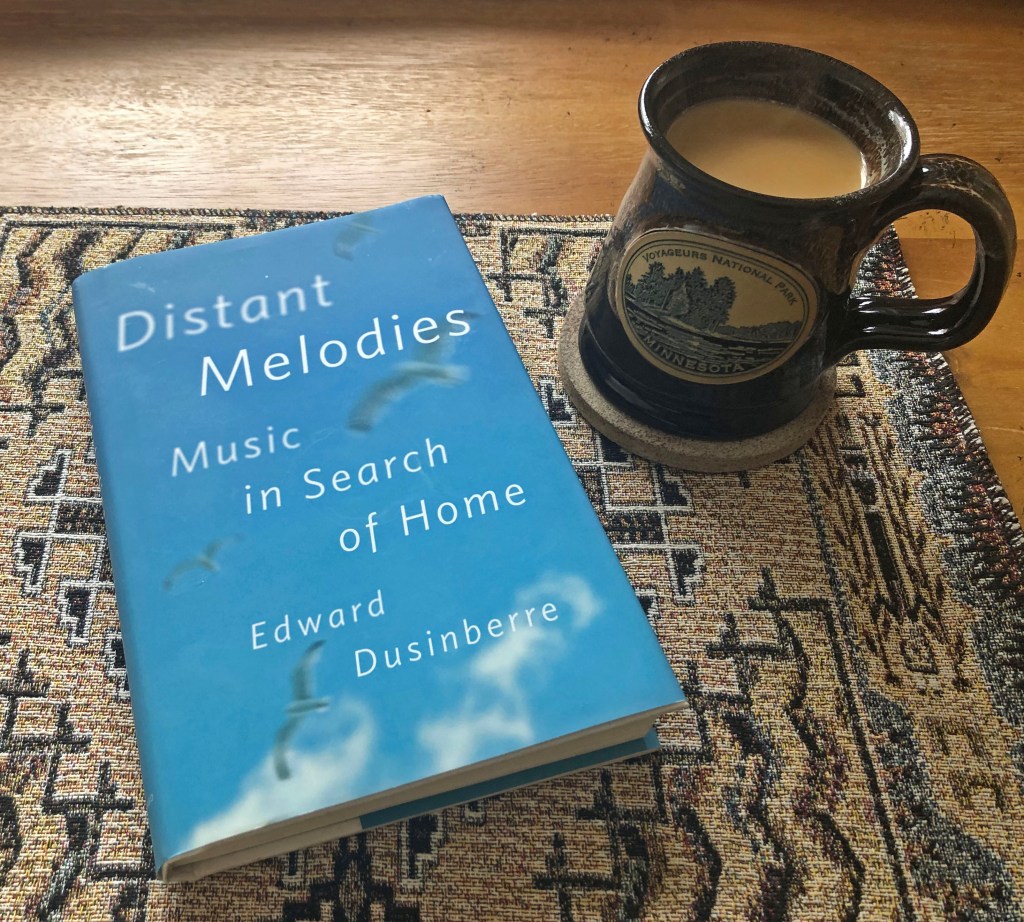
Distant Melodies: Music in Search of Home. By Edward Dusinberre. Chicago: University of Chicago Press, 2022. 233pp.
A lovely companion for your morning coffee, it is also unlike any other book on music I have read. But it is certainly one that lovers of chamber music and fans of the Takács Quartet will want to read.
Dusinberre focuses on just four composers—Edward Elgar, Antonín Dvořák, Béla Bartók and Benjamin Britten—and music by them that he has played and recorded as first violinist of the Takács. In each case, he discusses the composer’s life and what “home” might mean to them, and to him.
This interest on Dusinberre’s part grows out of his experience as a dual national who grew up in England but has lived many years in the United States. Like Dusinberre, three of the composers left their homes for the U.S. at some point in their careers: Dvořák, who lived in New York and Iowa 1892–95 before returning permanently to his homeland in Bohemia; Bartók, who was forced to flee Europe in 1940 and died in the United States in 1945; and Britten, who voluntarily moved to the US at the outbreak of war in 1939 but whose longing for home led him to return in 1942.
In contrast, Elgar lived his entire life in Britain, apart from tours in the U.S. and continental Europe, and he provided some of the most identifiably “British” music in the form of his “Pomp and Circumstance” marches and other works.
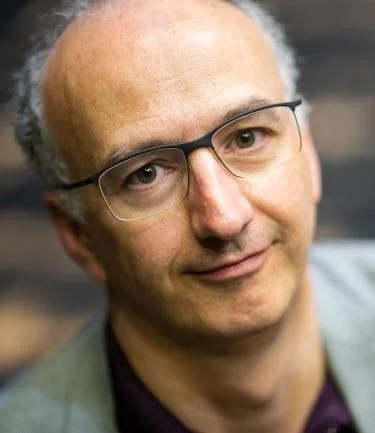
Edward Dusinberre
But the book is far more than an introduction to these composer’s biographies, because Dusinberre describes his own relationship with each work, both individually and as a member of a leading quartet. He begins in fact with his own childhood in Leamington Spa and his move to New York, followed by his rediscovery of Elgar, as it were, as acknowledgment of his own Englishness. That sets the theme of the connection between home and music.
The section on Elgar is best understood to those who are familiar with British geography, such as the Malvern Hills, which I had to look up. The rest is easily accessible to American readers, and it is great fun to read about life in a top string quartet—both in and out of rehearsals, which are both mundane work and distilled artistry. If you follow the Takács, these will be your favorite parts of the book. For others, it will be the insight into the specific works around which the book revolves—Elgar’s Piano Quintet, Dvořák’s “American” String Quartet, Bartók’s Sixth String Quartet and Britten’s Third String Quartet—and the related works that Dusinberre mentions.
Throughout the book, he connects the works he has played to other works of the same composer, to literary works, and to the times in which they were written. As I said at the outset, I know of no other book that manages this balancing act, combining personal experience with digressions without ever losing the thread.
In its scant 210 pages of text, I came to enjoy Dusinberre’s pleasurable company, I learned from his many insights into music, and ultimately I was sorry to put it down at the end.
Programs in January, March and April cover repertoire from 18th to 21st centuries
By Peter Alexander January 4 at 3:05 p.m.
The Takács Quartet has announced their spring series of concerts on the University of Colorado campus in Boulder. As usual, each of the three concerts will be played twice, on a Sunday afternoon at 4 p.m. and the following Monday at 7:30 p.m.: Jan. 8 and 9, March 12 and 13; and April 16 and 17 (see full programs below). All performances will be in Grusin Hall of the Imig Music Building.
Takács Quartet. Image by Amanda Tipton Photography
Each concert includes at least one piece that is outside what is regarded as the core repertoire for string quartet. The first concert of the series, scheduled for the coming weekend (Jan. 8 and 9) includes the String Quartet in E-flat major by Fanny Mendelssohn, programmed together with quartets by Haydn and Beethoven.
Fanny Mendelssohn was the sister of the better known composer and an accomplished musician in her own right. The Quartet in E-flat was performed only once during Mendelssohn’s life, largely because her brother disapproved of it.
The second program features two quartets by Schubert—the early Quartet in B-flat major, written when the composer was 17, and his last quartet, composed 12 years later. Completing the program is Summa by Estonian composer Arvo Pärt. Originally written as a choral work, Summa has been subsequently arranged by the composer for strings, and has been performed alike by quartets and string orchestras.
The final program of the spring series will feature the Takács with guest artist Julien Labro performing on bandoneon, the Argentinian cousin of the accordion, and accordina, a mouth-blown harmonicon with a keyboard of a button accordion. The program will feature music by Labron, Bryce Desner, Dino Saluzzi and Clarice Assad, as well as the String Quartet in F major by Ravel.
# # # # #
Takács Quartet
Haydn: String Quartet in F major, op.77 no. 2
Fanny Mendelssohn: String Quartet in E-flat major
Beethoven: String Quartet in A minor, op.132
4 p.m. Sunday, Jan. 8 7:30 p.m. Monday, Jan. 9 Grusin Hall, Imig Music Building
Performances will be on the Takács Quartet concert series, Sunday and Monday
By Peter Alexander Nov. 2 at 4:46 p.m.
The Ivalas Quartet spent the years 2019-22 in residence at CU-Boulder, under the mentorship of the Takács Quartet. Now serving as the Graduate Resident String Quartet at the Juilliard School in New York, they have returned to the CU campus to perform as guests on the Takács’s concert series.
Their program, featuring the music of Beethoven, Eleanor Alberga and Osvaldo Golijov, will be performed at 4 p.m. Sunday, Nov. 6, and 7:30 p.m. Monday, Nov. 7, in Grusin Music Hall of the Imig Music Building. Tickets to both live performances, and to a live stream that will be available from 4 p.m. Sunday, Nov. 6, though 11 p.m. Monday, Nov. 14, are available from CU Presents.
Composer Eleanor Alberga
The Ivalas Quartet has always been creative in the their programming. The group has stated a goal to “disrupt the classical music world by . . . spotlighting BIPOC composers.” Among the composers whose works they have presented is Eleanor Alberga, a Jamaican composer who currently lives and works in the United Kingdom.
Although not well known in the U.S, Alberga’s music has been performed throughout the United Kingdom as well as in Australia, China, South American and Canada. She was appointed an Officer of the Order of the British Empire (OBE) in 2021. She has said that her First String Quartet was inspired by a lecture on physics, particularly the notion that our bodies are made of stardust.
Argentinian composer Osvaldo Golijov draw on both his Jewish heritage and his Latin American roots in works such as The Dream and Prayers of Isaac the Blind for klezmer clarinet and string quartet, and his opera Ainadamar. Golijov described Tenebrae as “the slow, quiet reading of an illuminated medieval manuscript” that offers “a ‘beautiful’ surface” but with pain beneath that surface.
Compared to works by Alberga and Golijov, Beethoven’s String Quartet op. 130, is familiar to most classical music audiences. One of the composer’s late quartets, it was completed in 1826. The slow movement, titled “cavatina,” is considered the high point of the score and was included on the “Golden Record” sent on the Voyager spacecraft in 1977.
# # # #
Ivalas Quartet
Ivalas Quartet
Eleanor Alberga: String Quartet No. 1
Osvaldo Golijov: Tenebrae
Beethoven: String Quartet No. 13 in B-flat Major, op.130
4 p.m. Sunday, Nov. 6 7:30 p.m. Monday, Nov. 7 Grusin Hall, Imig Music Building
Tickets to both live performances and a live stream of the concert are available HERE.
Guest conductor Giancarlo De Lorenzo and violinist Loreto Gismundi, both from Italy, will launch the 2022–23 season of the Boulder Chamber Orchestra (BCO) Saturday, Oct. 29, in a program titled, unoriginally, “Mostly Mozart” (see concert details below).
In this case, however, the name definitely fits: the program features a violin concerto (No. 4 in D major, K218) and a symphony (No. 29 in A major, K201) by a youthful Mozart, and just one short intro to the concert, Handel’s “Arrival of the Queen of Sheba” from the oratorio Solomon.
This concert is part of an exchange between De Lorenzo and BCO director Bahman Saless, who previously conducted the Italian orchestra with which De Lorenzo is affiliated.
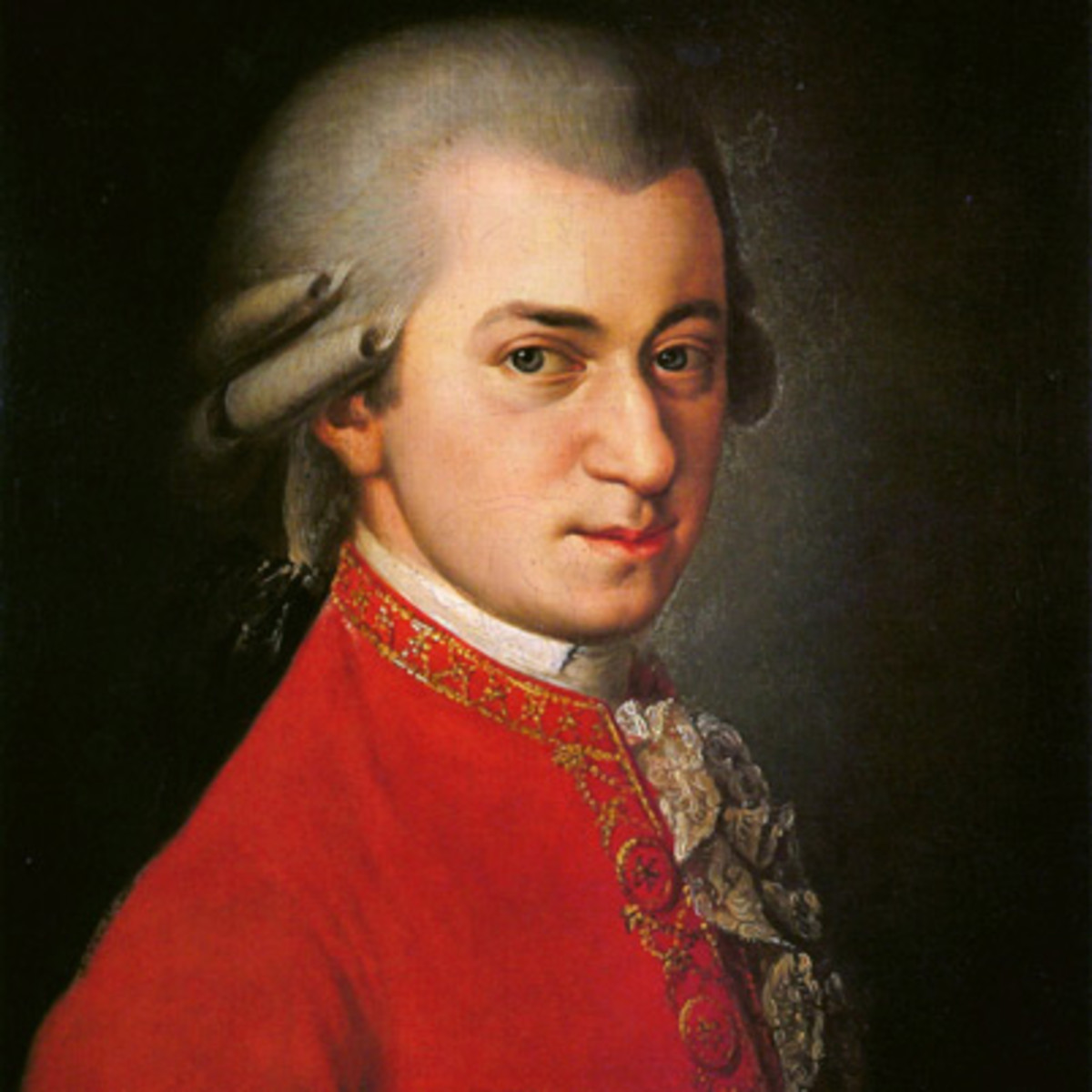
Mozart
The two Mozart works were both written in Salzburg, between the young Mozart’s three trips to Italy as a teenaged opera composer (1769–71, 1771–72 and 1772–73) and his disastrous trip to Paris (1777–79) during which he failed to find a permanent job and lost his mother. He was not particularly happy in Salzburg, but this was a fairly stable period of his life, and these are some his first important, mature compositions.
# # # # #
“Mostly Mozart” Boulder Chamber Orchestra with guest conductor Giancarlo De Lorenzo and Loreto Gismundi, violin
The English composer Benjamin Britten (1913–1976) comes from a later generation then the Hungarian Bélá Bartók (1881–1945), but in their next CU campus concert the Takács Quartet scrambles the chronology just a little bit by playing the very first quartet by Britten, followed by the last quartet by Bartók, written four year later (1941 and 1945).
That program, which also features Mozart’s String Quartet in D major, K499, will be presented at 4 p.m. Saturday, Oct. 30, and 7:30 p.m. Monday, Oct. 31, in Grusin Hall on the CU campus. The performance is also available by live stream (see ticket information here).
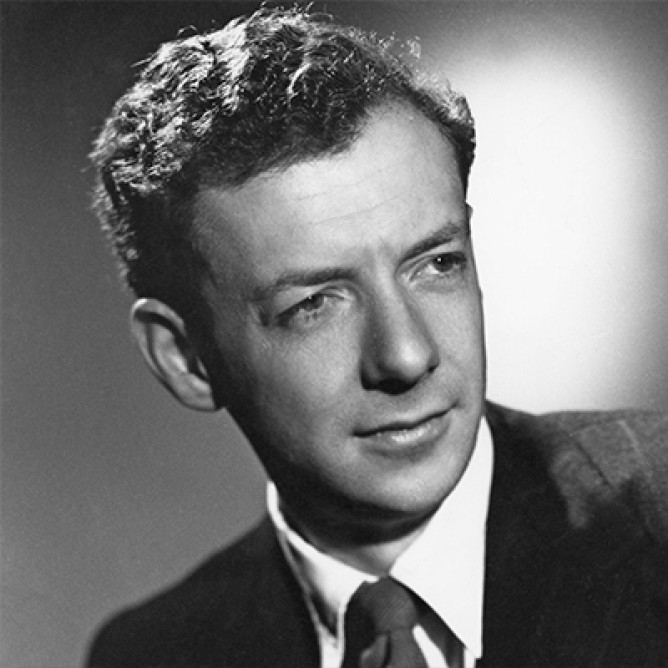
Benjamin Britten
Due to World War II, both the Britten and Bartók quartets were written in the United States. A pacifist and conscientious objector, Britten left England in 1939, although he returned to his native country before the war was out. He wrote several works in the US, including the String Quartet No. 1 and his first opera, Paul Bunyan. He wrote his popular Ceremony of Carols on a dangerous and stressful return voyage across the U-boat infested North Atlantic in 1942.
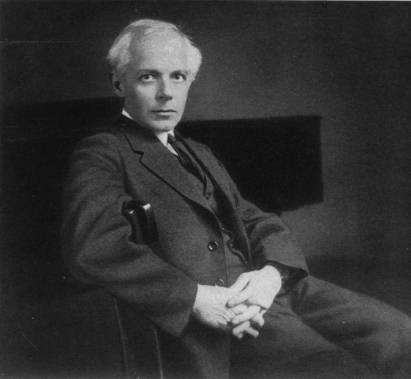
Bérla Batók
Bartók came to the US a year later out of his opposition to nazism, and eventually became a US citizen shortly before his death from leukemia in 1945. In addition to the Sixth String Quartet, other works written in the US include his Third Piano Concerto, his unfinished Viola Concerto, and the Concerto for Orchestra.
The Takács, which started in 1975 as quartet of four music students in Budapest, has long been associated with the music of fellow-Hungarian Bartók. Only one of the original four—cellist András Fejér—remains, but from long history and tradition, the quartet retains its reputation as performers of music by the Hungarian composer, alongside an unparalleled recognition for excellence across the quartet repertoire.
Although the exact CU program is not duplicated elsewhere, all three works do appear on upcoming concerts by the Takács Quartet while on tour in England.
# # # # #
Takács Quartet
Benjamin Britten: String Quartet No. 1 (1941)
Bartók: String Quartet No. 6 (1945)
Mozart: String Quartet in D major, K499
4 p.m. Sunday, Oct. 30 7:30 p.m. Monday, Oct. 31 Grusin Hall, Imig Music Building In person and live-stream tickets HERE
CU Quartet in residence will play Grusin Hall Sept. 18–19 and October 30–31
By Peter Alexander Sept. 14 at 11:18 p.m.
It’s hard to keep up with the Takács Quartet.
Takács Quartet. Image by Amanda Tipton Photography
The CU quartet-in-residence is celebrated worldwide, giving them access to the top classical festivals. Over the past summer, they played the Colorado Music Festival in Boulder, the Tanglewood Festival in Lennox, Mass., the Edinburgh Festival in Scotland, at the Snape Maltings in Aldeburgh, England—a venue made prominent by composer Benjamin Britten and tenor Peter Pears—and the Luberon Festival in France.
But now they are back in Boulder, and their local fans can look forward to their annual series of campus concerts, starting this weekend with an all-Beethoven program (4 p.m. Sunday, Sept. 18 and 7:30 p.m. Monday, Sept. 19 in Grusin Concert Hall). Other events during the fall semester will be concerts Oct. 30 and 31, featuring music by Britten, Bartók and Mozart; and concerts Nov. 6 and 7 by the Ivalas Quartet, who concluded a two-year residency with the Takács in May (program tba; other details and ticket information below).
Between the September and October concerts, the Takács will be touring in Japan and Korea. “We’re looking forward to that,” Takács cellist András Fejér says. “They always bring a special joy because they regard culture and classical music very highly, and they are treating us as such wonderful friends.”
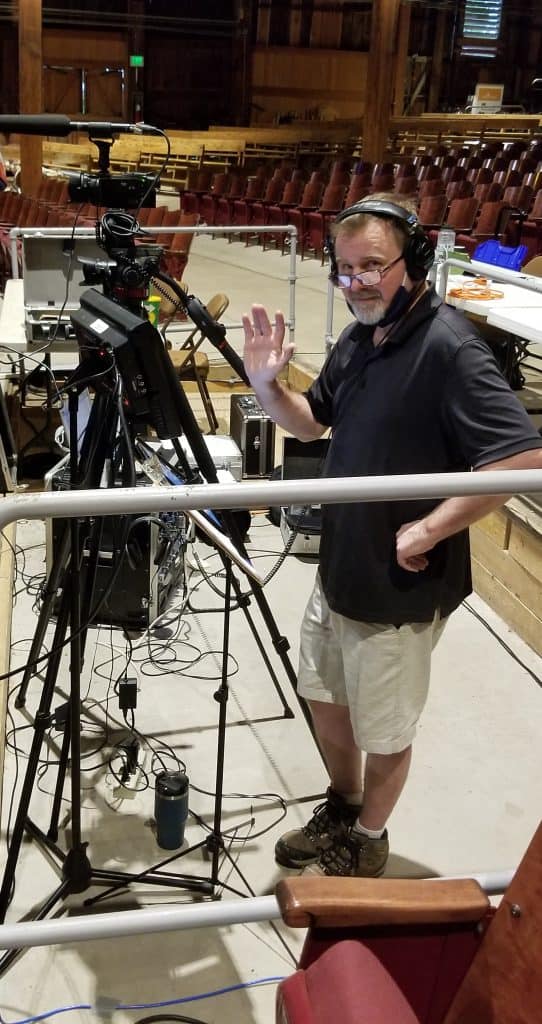
Sound engineer Michael Quam at the Colorado Music Festival
Just this month the quartet released its latest recording, featuring works of Joseph Haydn. The CD, of quartets opp. 42, 77 nos. 1 and 2, and 103, was recorded in the Lone Tree, (Colo.) Arts Center. “We had probably the top American producer, Judy Sherman, and a wonderful, wonderful sound engineer, Mike Quam, whom we got to know at the Colorado Music Festival,” Fejér says.
In addition to working for the Colorado Music Festival, Quam lives and has a recording studio in Boulder. “He’s the most wonderful all-around sound man anywhere,” Fejér says. “We never met anyone like him, so we were very happy.”
In case you are wondering, in addition to the touring and recording and campus concerts, Fejér says “we always make time for (our students)! We have a wonderful new ensemble-in-residence and they are eager and hungry. That’s always a great encouragement for us, because teaching is wonderful!”
The Takács has of course played all of the Beethoven quartets, many times. In the case of the upcoming concert, the choice of an all-Beethoven program is partly from the exploration of familiar repertoire with the ensemble’s newest member, violist Richard O’Neill. “We need to re-learn the Beethoven with our new member,” Fejér says.
“He’s full of great ideas and he’s got an encyclopedic memory. He’s a great, great all-around artist, so we are very happy to be listening to new ideas, new solutions. It’s all a new dynamic, which I am enjoying tremendously.”
The three quartets chosen for the September concerts span the major periods of Beethoven’s life: Op. 18 no. 5 from Beethoven’s very first set of six quartets published in 1801, in the sparkling key of A major; Op. 95 in the gloomier key of F minor, known as the “Serioso” Quartet, from 1810; and Op. 127 in E-flat major, from 1825.
“We love these pieces,” Fejér says. “They are wonderful pieces. Maybe the audience is not jumping on its feet because of the final effect, but it doesn’t take away from the overall greatness.”
The Quartet op. 127 provides unique challenges, Fejér explains. “Some ensembles might not program it because it’s not so spectacular. It’s so deep, and herein lies the difficulty. Its first and last movement are extremely soft, piano, pianissimo, very ethereal, up in the clouds. It takes work and rehearsing and it’s not easy to make it flow and make it light, ethereal and transparent.”
Fejér explains that the Takács usually has three main areas of work when they rehearse. First is “what we play on tour, which might be pieces we already played many times. And then there’s practicing and getting familiar with new or newish pieces, (and finally) the ones we are planning to record.”
What that means is that rehearsing the program for the October concert will mostly come a little later. About that program—Britten’s String Quartet No. 1, Bartók’s String Quartet No. 6 and Mozart’s String Quartet in D major, K499—Fejér declines to comment right now.
“I might refrain trying to be smart about Britten at this point,” he says. “We recorded (his quartets) eight or nine years ago, but we haven’t played them again. So basically now we’re relearning and discussing what’s new and what’s changed, and what we wish to be changed.
“What matters is how we feel about it today or the next week, so we can be even more convincing and find even more joy in bringing it together.”
# # # # #
Takács Quartet
Beethoven: String Quartet in A Major, Op. 18 no. 5 —String Quartet in F Minor, Op. 95 —String Quartet in E-flat Major, Op. 127
4 p.m. Sunday, Sept. 18 7:30 p.m. Monday, Sept. 19 Grusin Hall, Imig Music Building In person and live-stream tickets HERE
Takács Quartet
Benjamin Britten: String Quartet No.1
Bartók: String Quartet No. 6
Mozart: String Quartet in D major, K499
4 p.m. Sunday, Oct. 30 7:30 p.m. Monday, Oct. 31 Grusin Hall, Imig Music Building In person and live-stream tickets HERE
Ivalas Quartet
Program TBA
4 p.m. Sunday, Nov. 6 7:30 p.m. Monday, Nov. 7 Grusin Hall, Imig Music Building In person and live-stream tickets HERE
______________
NOTE: Due to spell checker error “encyclopedic” first appeared as “encyclopedia.” Corrected on 9/15.
Programs include Haydn, Shostakovich, Dvořák, Schumann, Mendelssohn
By Peter Alexander March 4 at 1:25 p.m.
COVID-19 is, momentarily, receding, and the Takács Quartet is back to a full performing schedule.
They had to cancel several concert tours over the past two years, but not in 2022. “We just came home from Princeton, Berkeley and Los Angeles,” the group’s cellist, András Fejér, explains. “And now we will go to New York, Sarasota, Los Angeles and San Francisco.”
Around and between those trips, they have their usual concerts on the CU campus: music by Haydn, Shostakovich and Dvořák March 6 and 7; and music by Schumann performed with pianist David Korevaar, and Mendelssohn with the CU graduate quartet in residence, the Ivalas Quartet, April 10 and 11 (see performance details below).
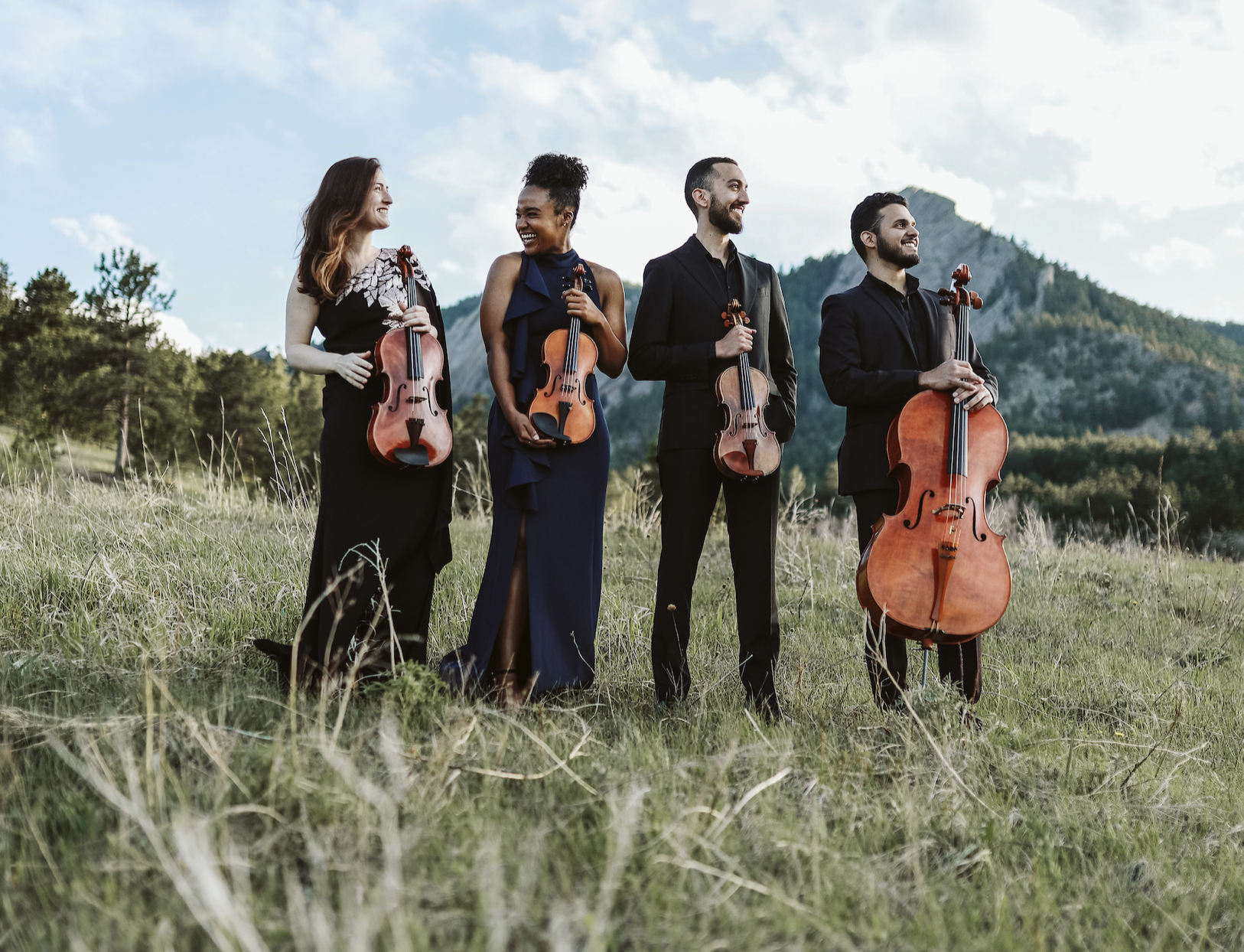
Takács Quartet. L-R: Edward Dusinberre, András Fejér, Harumi Rhodes, Richard O’Neill. Image by Amanda Tipton Photography
Except for the interruption caused by the pandemic, touring is a normal part of life for the Takács Quartet. “It’s a nice chugging-along routine,” Fejér says. “We just say we would love to tour, say, 10 days each month in the States, and that gives us enough time to rehearse and teach and rest a little.” They also make longer tours every year to Europe and Asia, all arranged through their agents.
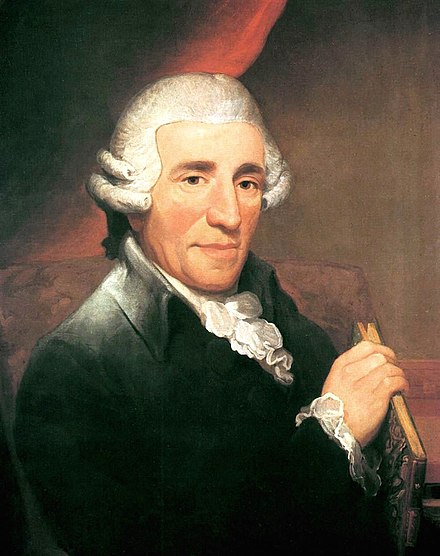
Joseph Haydn. Painting by Thomas Hardy.
Like the Takács now, Haydn had just returned from touring in 1796, in his case home to Vienna from two trips to London. Upon his return, an aristocratic patron commissioned a set of six quartets, published a few years later as Op. 76. These works are considered the pinnacle of Haydn’s quartet composition.
The Fourth Quartet of the set, known as the “Sunrise Quartet,” opens the Takacs’s March concerts—but Fejér wants you to know that Haydn is not “just a warmup piece” for the rest of the program. “I mean, the guy invented the (string quartet)!” he says. “We are just in awe—(playing his music) is a constant wonderment. Even familiar pieces, we try to dig deeper. We always try to give his music justice.”
Likewise, Dvořák wrote his G major String Quartet, the final piece on the program, soon after returning home from his years in America. It is considered one of the composer’s most profoundly expressive quartets, particularly the meditative slow movement.
The quartet has enjoyed exploring Dvořák ‘s score. “It’s fascinating for us,” Fejér says. “Its scope is unprecedented, in length and orchestration. Most of the time it sounds totally symphonic. He goes left and right and returns—just totally unpredictable and delightful. We love it.”
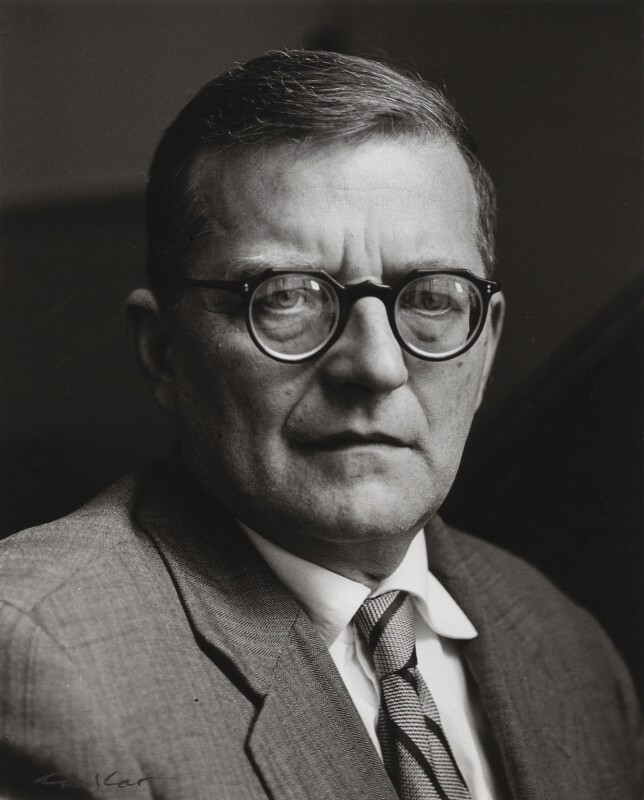
Dmitri Shostakovich
Between Haydn and Dvořák, the Takács will play Shostakovich’s Eleventh Quartet. Written in memory of a violinist with the Beethoven Quartet, which was long associated with Shostakovich’s music, the Eleventh Quartet is an austere work that uses the instruments sparingly. It’s seven movements are anything but cheerful, but as Fejér says, with Shostakovich “cheerful is not the first description which would come to mind.
“I’m always amazed about the simplicity of his motifs. How such simple notes can work in mysterious ways on the audience is unbelievable. You cannot put together a more simple music and somehow the effect on audiences is mesmerizing. I notice it every time.”
For the April concerts the quartet has programmed two pieces, each of which includes invited guests. First they will be joined by pianist David Korevaar to perform Robert Schumann’s Piano Quintet. Written in 1842 and dedicated by the composer to his wife, Clara, it is the first major quintet written for piano and string quartet.
Schumann alternates between intimate passages that feature conversational exchanges among the five instruments, and nearly symphonic passages that feature the four strings together against the piano. At a time when chamber performances were first moving into the concert hall, Schumann helped create the model for the quintets that followed by Brahms, Dvořák and Franck, all destined for the concert hall.
The April program concludes with another piece that had no precedent, the Octet for Strings, which the Takács will play with the members of the Ivalas Quartet. Like the Schumann Quintet, the combination of instruments was unprecedented when Mendelssohn wrote the Octet at the age of 17, and it’s one of the most magical pieces to come out of the Romantic era. “It’s such an adrenalin rush (to play it),” Fejér says.
“It’s wonderful and makes you humble all over again. Comparing what most of us had been doing at 17, it’s even more impressive.”
Fejér gives two reasons that he is looking forward to playing the Octet. First, he says, “we love playing with additional people because the function of our individual instruments is different from a string quartet. I’m not playing as much bass line as I usually do, (and) I enjoy the different role very much.”
The second reason is the opportunity to share the stage with the their students in the Ivalas Quartet. “It is their final month in April at CU of their three years, and we loved working with them,” Fejér says.
“We look forward very much to have fun with capital letters with this Mendelssohn Octet!”
# # # # #
Takács Quartet
Haydn: String Quartet in B-flat Major. op.76 no. 4 (“Sunrise”)
Shostakovich: String Quartet Nr.11, op.122
Dvořák: String Quartet No. 13 in G-major, op.106
4 p.m. Sunday, March 6 7:30 p.m. Monday, March 7 Grusin Music Hall
Takács Quartet, composer John Adams will be among the featured artists
By Peter Alexander Jan. 19 at 3 p.m.
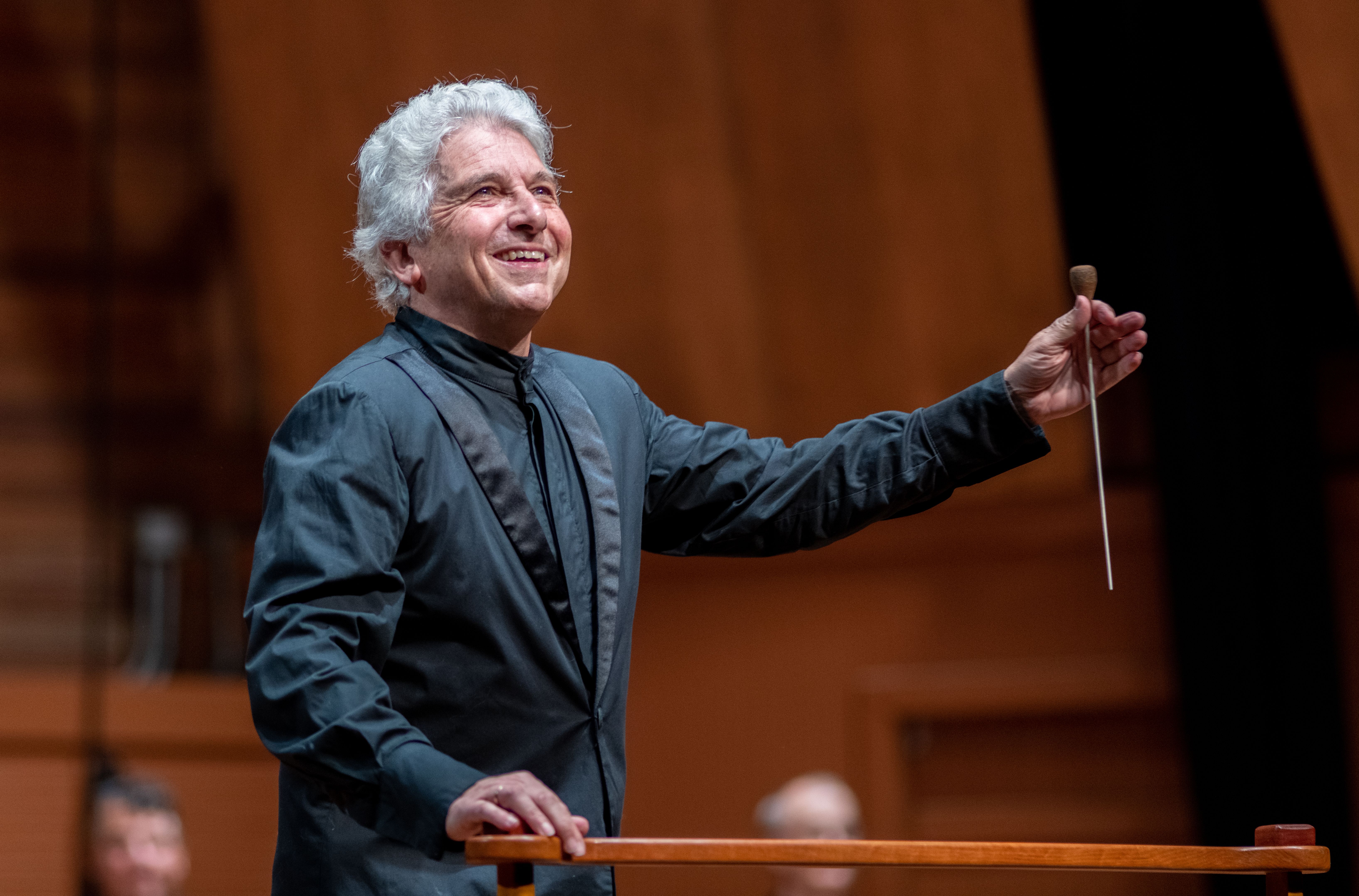
CMF Music Director Peter Oundjian
The Colorado Music Festival (CMF) announced its 2022 festival season last night (Jan. 18) in an event live-streamed from the Boulder Museum of Contemporary Art.
During the hour-long event, music director Peter Oundjian introduced the concerts that are scheduled during the festival, planned for June 30–Aug. 7. “Every festival should be a celebration,” he said by way of introduction. “This is no exception. It’s a very eclectic series of programs.”
John Adams. Photo by Riccardo Musacchio
Also speaking remotely from his home in California was composer John Adams, who will be composer in residence during the festival. He will conduct parts of two concerts that feature his music, and he also helped Oundjian curate the “Music of Today” week, July 11–17, which will feature works by contemporary composers most of whom are still living.
The announced programs for the summer make good on Oundjian’s intention to make the festival a lively event that both honors the great works of the past and recognizes the music and composers of today. There have been times in the past when the CMF seemed unfocused and unadventurous, but under Oundjian’s leadership that has changed. Through thoughtful programming, the participation of figures like Adams and some remarkable young performers, the CMF is becoming an event worthy of broad attention.
Wang Jie
As part of the emphasis on music of today, this year’s festival will include three premieres: the world premiere of a commissioned work by Timo Andres (July 14); the world premiere of Wang Jie’s Flying on the Scaly Backs of Our Mountains (Aug. 4); and the Colorado premiere of a work co-commissioned from Wynton Marsalis (Aug. 7).
Introducing these works, Oundjian noted that “We always love to have premieres at the festival. It’s so important for us to hear new ideas and to give opportunities to composers.”
In addition to Adams, other composers featured during the “Music of Today” series include Steven Ellison (known as Flying Lotus), Anne Müller, Philip Glass, Caroline Shaw, Stacy Garrop, Valerie Coleman, Osvaldo Golijov, John Corigliano and Christopher Rouse, among others (see the full summer program below).
In addition to the Music of Today, interest in the 2022 festival will be generated by the inclusion of composers who are outside the standard repertoire. African-British composer Samuel Coleridge-Taylor will be represented by his Fantasiestücke for String Quartet (July 5) and Solemn Prelude for orchestra (July 21–22); and African-American composer Florence Price will be represented by her Violin Concerto No. 2 (also July 21–22). Starburst by the young American composer Jessie Montgomery will be played on July 31, outside of the Music of Today programs.
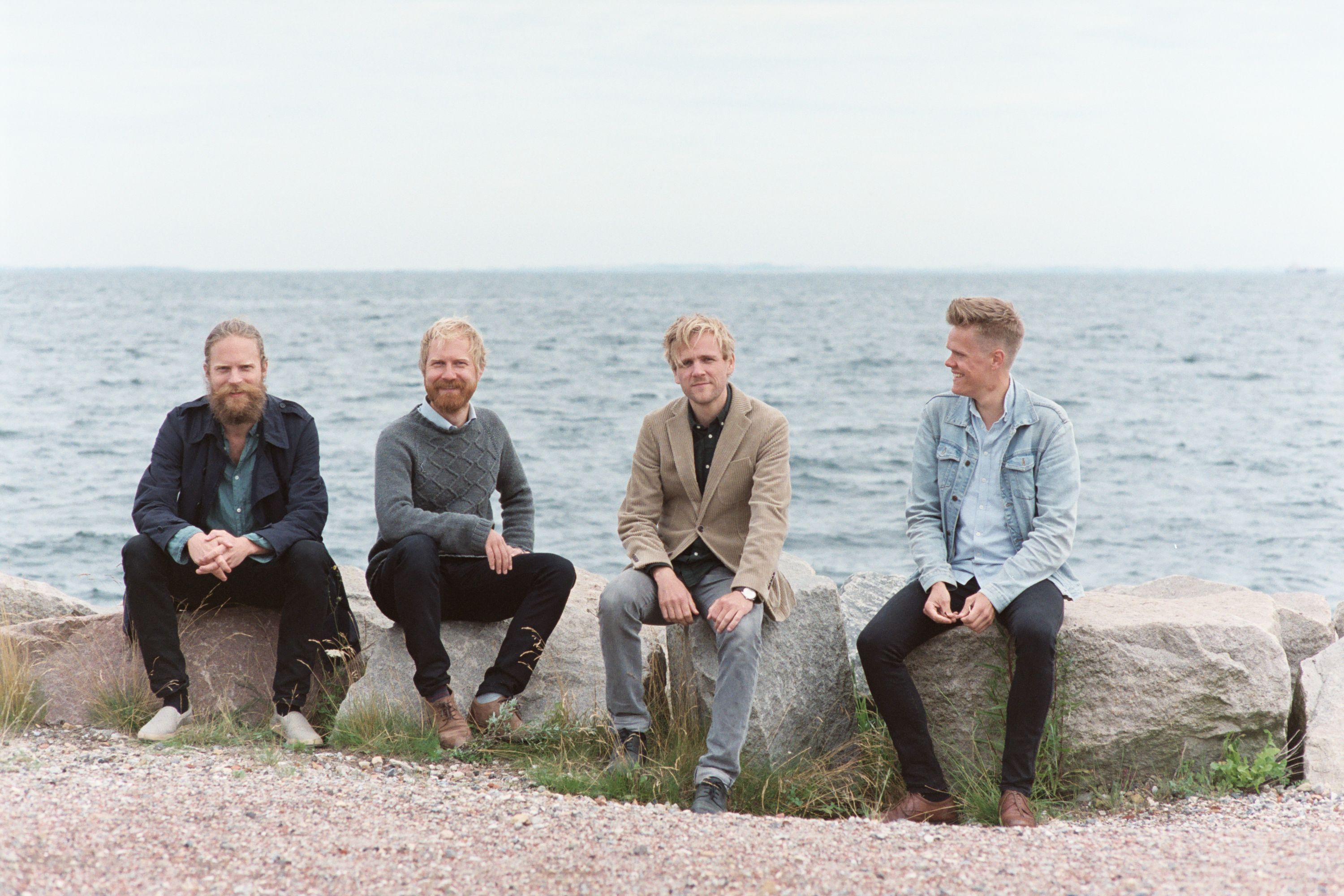
Danish String Quartet
Concerts of chamber music on Tuesday nights will form the second Robert Mann Chamber Music Series, named for the founding first violinist of the Juilliard Quartet. The series will feature the Takács Quartet playing music by Haydn, Dvořák and Samuel Coleridge-Taylor (July 5); the Attacca Quartet in a wide-ranging program of contemporary pieces during Music of Today (July 12); and the Danish String Quartet in a creative program that includes a collection of folk music from Britain. Other chamber concerts will feature members of the CMF Orchestra.
The Takács Quartet will also be featured on opening night, marking their return to the Chautauqua stage for their first live performances at CMF since 2004. They will be soloists with the CMF Orchestra in a performance of Adams’s Absolute Jest. Other works on the opening night program are Fate Now Conquers by Carlos Simon and Dvořák’s Symphony “From the New World.”
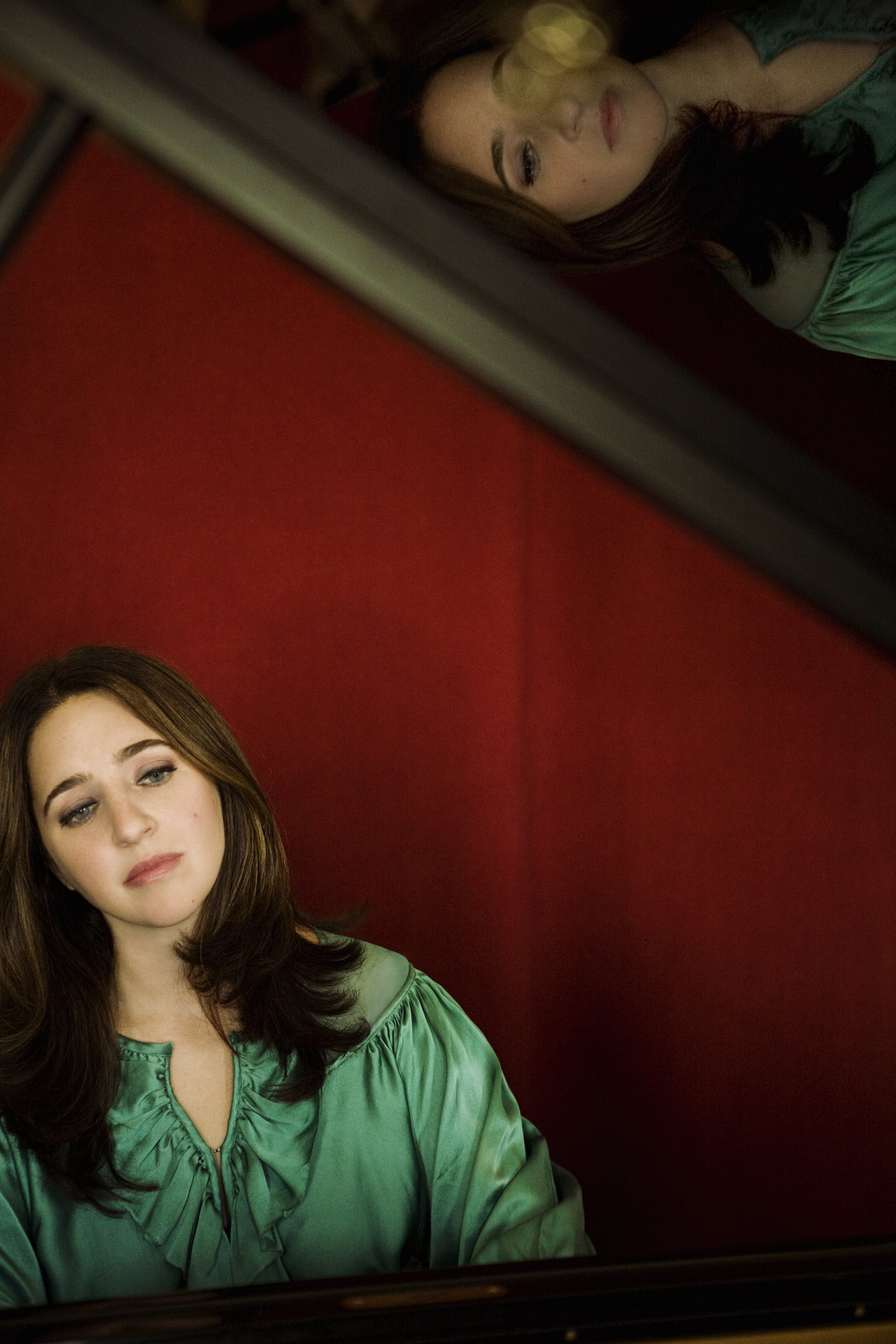
Simone Dinnerstein. Photo by Lisa Marie Mazzucco
Other featured soloists during the summer will include pianist Jan Lisiecki performing all of Beethoven’s piano concertos in programs that also honor the 150th birthday of English composer Ralph Vaughan Williams (July 7, 8 and 10); pianist Jeremy Denk playing Adams’s Must the Devil have all the Good Tunes? (July 17); violinist Randall Goosby playing Price’s Violin Concerto No. 2 (July 21–22); pianist Simone Dinnerstein on an all-Mozart program (July 24); pianist Gabriela Montero playing Tchaikovsky’s Piano Concerto No. 1 in B-flat minor (July 28–29); and clarinetist Anthony McGill (Aug. 4).
Conductor Jean-Marie Zeitouni, former music director of CMF, returns to lead two programs (July 28–29 and 31). The award-winning young American conductor Ryan Bancroft will also lead the orchestra in two programs (July 21–22 and 24).
Reverting to past patterns, there will be three pairs of Festival Orchestra concerts with the same program on Thursday and Friday nights, with the Thursday performance at 7:30 p.m. and the Friday performance at 6:30 p.m. (June 30–July 1; July 21–22; July 28–29). The annual Family Concert will be Sunday, July 3, with Tubby the Tuba and Benjamin Britten’s Young Person’s Guide to the Orchestra.
The 2022 Festival ends on Sunday, Aug. 7, with the Colorado premiere of a fanfare by Wynton Marsalis and Mahler’s massive Fifth Symphony, which Oundjian described last night as “virtuosic for the orchestra, incredibly entertaining for all of us.
“The final moments of Mahler 5 are as exuberant as music can possibly get. There is no greater way to witness a symphony orchestra than to come and listen to a Mahler symphony!”
Single tickets to the 2022 Festival will be available for purchase on the CMF website beginning March 1. You may also email tickets@comusic.org, or call 303-440-7666. At this time, CMF states that they will follow recommended and required COVID guidelines during the 2022 festival. Any specific rules have not yet been announced.
# # # # #
Colorado Music Festival 2022 All performances at Chautauqua Auditorium
7:30 pm. Thursday, June 30: Opening Night 6:30 p.m. Friday, July 1 Peter Oundjian, conductor, with the Takács Quartet
Carlos Simon: Fate Now Conquers (2020)
John Adams: Absolute Jest (2012)
Dvořák: Symphony No. 9 in E minor (“From the New World”)
11 a.m. Sunday, July 3: Family Concert Maurice Cohn, conductor, with Really Inventive Stuff
George Kleinsinger: Tubby the Tuba
Benjamin Britten: Young Person’s Guide to the Orchestra
7:30 p.m. Tuesday, July 5 Takács Quartet
Joseph Haydn: String Quartet in F Major, op. 77 no. 2
Samuel Coleridge-Taylor: Fantasiestücke for String Quartet
Dvořák: String Quartet No. 13 in G Major
7:30 pm. Thursday, July 7 Peter Oundjian, conductor, with Jan Lisiecki, piano
Ralph Vaughan Williams: Fantasia on a Theme by Thomas Tallis
Beethoven: Piano Concerto No. 1 in C major —Piano Concerto No. 3 in C minor
6:30 p.m. Friday, July 8 Peter Oundjian, conductor, with Jan Lisiecki, piano
Ralph Vaughan Williams: Overture to The Wasps
Beethoven: Piano Concerto No. 2 in B-flat major —Piano Concerto No. 4 in G major
6:30 p.m. Sunday, July 10 Peter Oundjian, conductor, with Jan Lisiecki, piano
Ralph Vaughan Williams: Symphony No. 5 in D major
Beethoven: Piano Concerto No. 5 in E-flat major (“Emperor”)
——-Music of Today——-
7:30 p.m. Tuesday, July 12 Attacca Quartet
John Adams: selections from John’s Book of Alleged Dances
Flying Lotus: Clock Catcher —Remind U —Pilgrim Side Eye
Anne Müller: Drifting Circles
Louis Cole: Real Life
Philip Glass: String Quartet No. 3, “Mishima”
Caroline Shaw: The Evergreen
Gabriella Smith: Carrot Revolution
7:30 p.m. Thursday, July 14 Peter Oundjian and John Adams, conductors With Samuel Adams, composer; Tessa Lark, violin; and Timothy McAllister, saxophone
Timo Andre: world premiere commission
Samuel Adams: Chamber Concerto
John Adams: City Noir
7:30 p.m. Friday, July 15: Kaleidoscope Timo Andres, piano; Tessa Lark, violin; Timothy McAllister, saxophone; and members of the Colorado Music Festival Orchestra
David Skidmore: Ritual Music
Stacy Garrop: Reborn in flames (from Phoenix Rising)
Osvaldo Golijov: Last Round
Valerie Coleman: Red Clay & Mississippi Delta for Wind Quintet
Timo Andres: Honest Labor
Roshanne Etezady: Recurring Dreams
John Corigliano: STOMP
Philip Glass: Etude No. 6
John Adams: Road Movie
6:30 p.m. Sunday, July 17 Peter Oundjian and John Adams, conductors, Jeremy Denk, piano
Gabriella Smith: Tumblebird Contrails
John Adams: Must the Devil Have All the Good Tunes?
Christopher Rouse: Symphony No. 6
—————————
7:30 Tuesday, July 19: Flavors of Russia Members of the Colorado Music Festival Orchestra
Borodin: String Sextet in D minor
Mikhail Glinka: Trio Pathétique in D minor
Tchaikovsky: Souvenir de Florence Sextet in D Minor, op. 70
7:30 p.m. Thursday, July 21 6:30 p.m. Friday, July 22 Ryan Bancroft, conductor, with Randall Goosby violin
Samuel Coleridge-Taylor: Solemn Prelude
Florence Price: Violin Concerto No. 2
Saint-Saëns: Introduction and Rondo Capriccioso, op. 28
Sibelius: Symphony No. 2 in D major
6:30 p.m. Sunday, July 24 Ryan Bancroft, conductor, with Simone Dinnerstein, piano
Mozart: Serenade in C minor for winds, K388 —Piano Concerto B-flat major, K595 —Symphony No. 39 in E-flat major, K543
7:30 p.m. Tuesday, July 26 Members of the Colorado Music Festival Orchestra
Mozart: Flute Quartet in D Major, K285
Coleridge-Taylor Perkinson: Movement for String Trio
Dvořák: Terzetto in C Major, op. 74
Brahms: Clarinet Quintet in B minor, op. 115
7:30 p.m. Thursday, July 28 6:30 p.m. Friday, July 29 Jean-Marie Zeitouni, conductor, with Gabriela Montero, piano
Mussorgsky, arr. Rimsky-Korsakov: Night on Bald Mountain
Tchaikovsky: Piano Concerto No. 1 in B-flat minor
Prokofiev: Symphony No. 5 in B-flat major
6:30 p.m. Sunday, July 31 Jean-Marie Zeitouni, conductor with Jennifer Bird-Arvidsson and Abigail Nims, sopranos; John de Lancie and Marnie Mosiman, actors
Jessie Montgomery: Starburst
Georges Bizet: Symphony No. 1 in C major
Felix Mendelssohn: Incidental Music to A Midsummer Night’s Dream
7:30 p.m. Tuesday, Aug. 2 Danish String Quartet
Henry Purcell, arr. Benjamin Britten: Chacony in G minor
Folk Music from the British Isles, arr. Danish String Quartet
Schubert: String Quartet No. 15 in G major, D. 887
7:30 p.m. Thursday, Aug. 4 Peter Oundjian, conductor, with Anthony McGill, clarinet
Wang Jie: Flying On the Scaly Backs of Our Mountains (world premiere)
Carl Maria von Weber: Clarinet Concerto No. 1 in F minor
Debussy: Première Rhapsodie for clarinet and orchestra
Stravinsky: Suite from TheFirebird (1919)
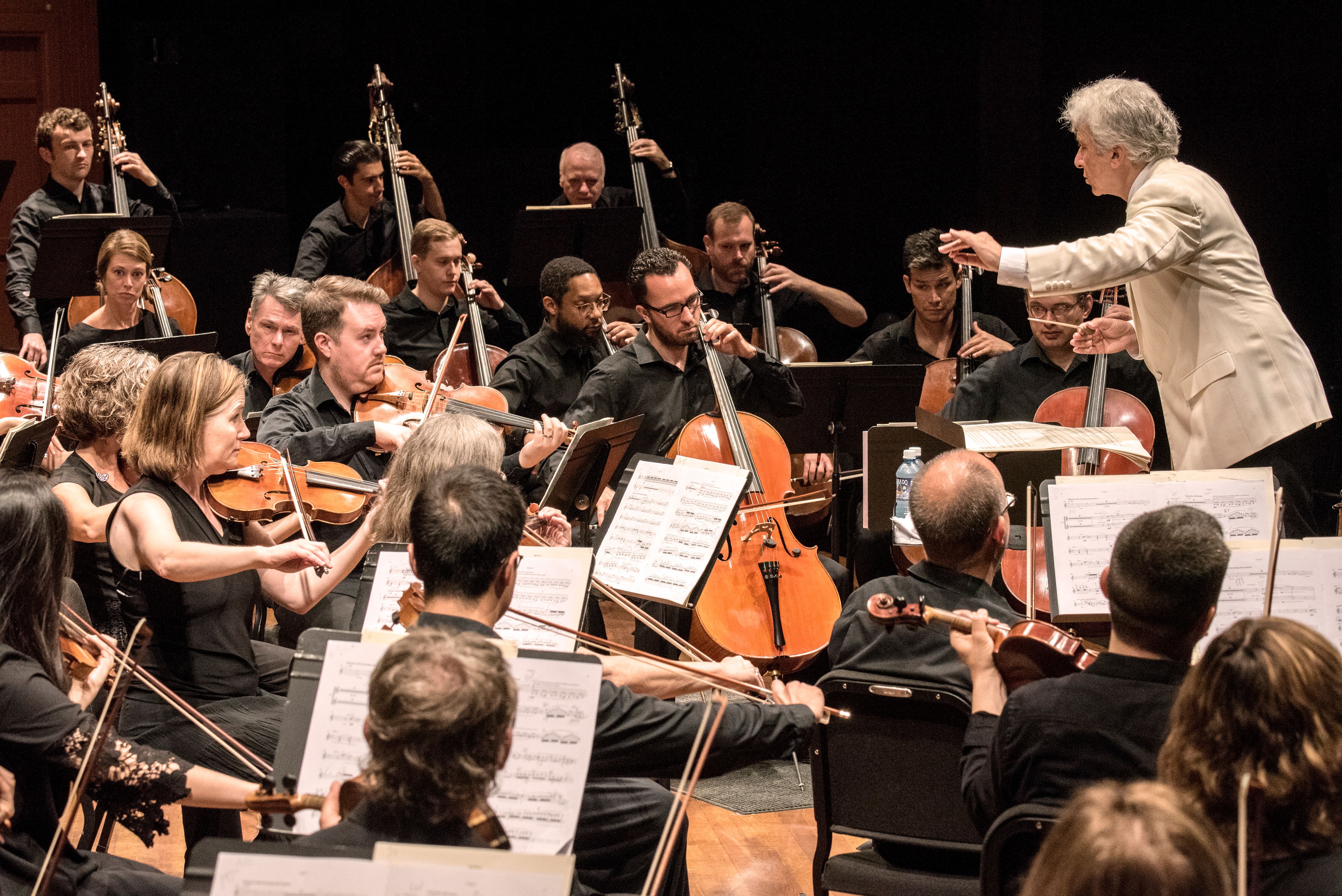
Peter Oundjian with the CMF Orchestra. Photo by Michael Emsinger
6:30 p.m. Sunday, Aug. 7: Festival Finale Concerto Peter Oundjian, conductor
Live performances Jan. 9 and 10 in Grusin Hall also available online
By Peter Alexander Jan. 6 at 11:25 a.m.
So far this year, COVID has not stopped the music. The Takács Quartet will begin their spring 2022 series of concerts on the CU campus as planned, with performances Sunday and Monday (Jan. 9 and 10) in Grusin Hall.
Takács quartet. Image by Amanda Tipton Photography.
They will not, however, play the program that was originally announced. Pianist David Korevaar was scheduled to perform the Schumann Quintet in E-flat major, op. 44, but he is unavailable due to possible exposure to COVID. Korevaar reports that he feels fine, and he will perform the Schumann Quintet with the Takács Quartet later in the semester.
To fill his place on the January program, the quartet turned to members Harumi Rhodes and Richard O’Neill, violin and viola, who will play the Mozart Duo in G major, K423. The full ensemble will finish out the concert with the new String Quartet No. 1 by Stephen Hough, subtitled “Les Six rencontres” (The six encountered), and the String Quartet in F major by Maurice Ravel.
Both the Sunday and Monday performances will be open to an in-person audience, and will also be available for streaming from 4 p.m. Sunday afternoon until 11 p.m. Monday, Jan. 17. In-person and online tickets can be purchased from CU Presents.
At this time, face masks are required in all buildings on the CU campus.
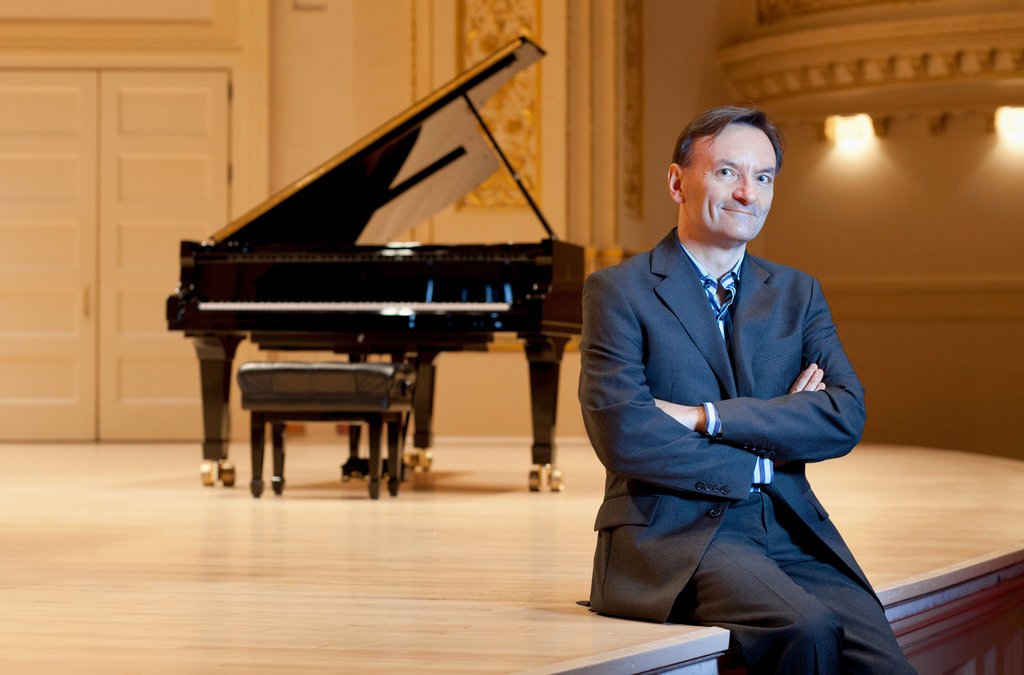
Stephen Hough
Widely celebrated as a pianist, Hough is also active as a composer of works for a variety of media including chamber music, piano solo and choral works, among others. The Takács Quartet asked him to write a piece for string quartet to fill out a recording of Ravel’s String Quartet and Ainsi le Nuit (Thus the night) for string quartet by Henri Dutilleux, which the Takács played in Grusin last fall.
The title of Hough’s quartet—“Les Six rencontres”—refers to a group of composers known as “Les Six” (The six) who were a prominent part of French musical life between Ravel in the early years of the 20th century, and Dutilleux in the second half of the century. The six composers—Georges Auric, Louis Durey, Arthur Honegger, Darius Milhaud, Francis Poulenc and Germaine Tailleferre—are not quoted directly in the score but occur “as an echo,” Hough wrote.
The title is also a pun, as the quartet is in six movements. Hough wrote in his program notes that the work “evokes a flavor more than a style. . . . seeing life through a burlesque lens is one recurring ingredient.” The titles of the six movements evoke places in Paris where one might have encountered the composers of “Les Six”—the boulevard, the park, the theater and so forth.
Ravel composed his one string quartet in 1902–03, when he was 28. Largely classical in form, it was inspired by, and in some ways modeled on, the String Quartet of Debussy that had been written a decade before. It remains one of Ravel’s most popular works.
Mozart wrote two duos for violin and viola in 1783 during a visit with his family in Salzburg. They were written as a favor for Michael Haydn, the brother of Joseph Haydn, who was court composer to the Archbishop of Salzburg and a friend of the Mozart family. Haydn was supposed to write six duos for the Archbishop but had fallen ill, and Mozart agreed to finish the set for him.
# # # # #
Takács Quartet Edward Dusinberre and Harumi Rhodes, violin; Richard O’Neill, viola; András Fejér, cello
Mozart: Duo for Violin and Viola, K423 Harumi Rhodes and Richard O’Neill
Hough: String Quartet No. 1, “Les Six rencontres” (The six encountered)
Ravel: String Quartet in F Major
In-person performances: 4 p.m. Saturday, Jan. 9 7:30 p.m. Monday. Jan. 10 Grusin Hall, CU Imig Music Building



 Sharps & Flatirons