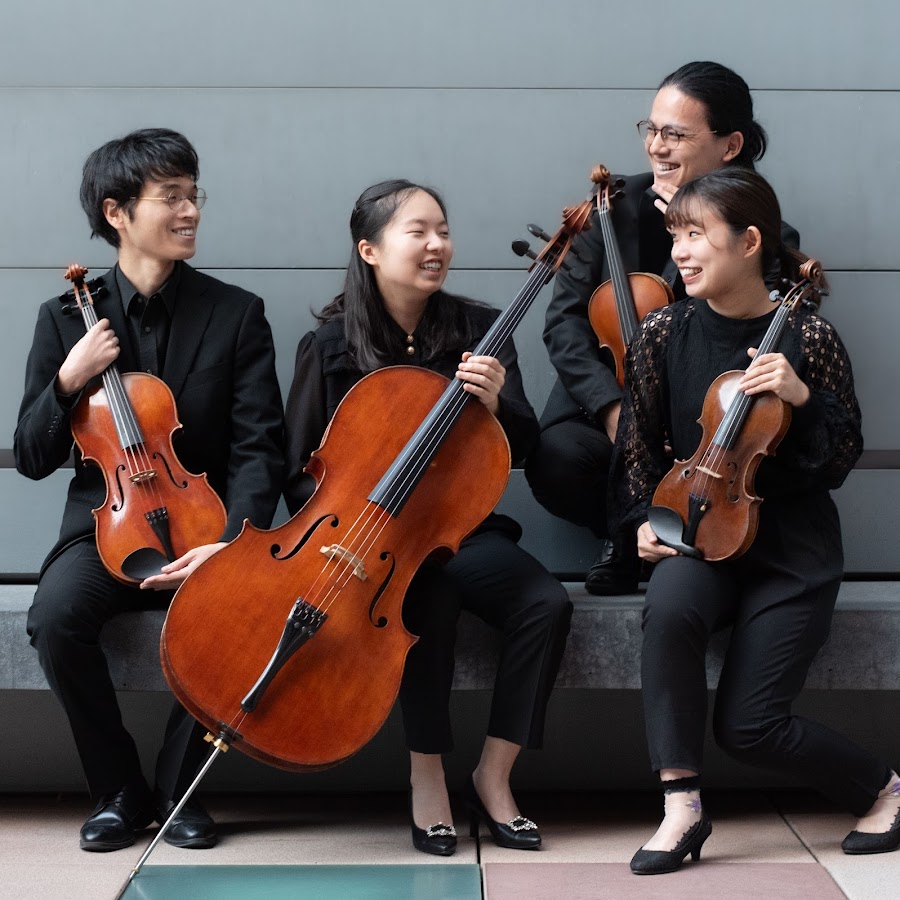
GRACE NOTES: B-minor Mass and string quartet with guitar 

LSO presents Bach’s “Magnum Opus,” Takács Quartet partners with Nicoló Spera

By Peter Alexander April 9 at 5:20 p.m.
The Longmont Symphony Orchestra (LSO) and conductor Elliot Moore end their season with one of the most significant pieces by J.S. Bach, his monumental Mass in B minor.

The performance of this large-scale work will be Saturday evening at Vance Brand Civic Auditorium in Longmont (7 p.m. April 12; details below). Moore and the LSO will team up with the Boulder Chamber Chorale, a select group from the Boulder Chorale directed by Vicki Burrichter. Soloists will be soprano Dawna Rae Warren, countertenor Elijah English, tenor Joseph Gaines and baritone Andy Konopak.

Choral settings of the Mass ordinary—the five texts sung every week in Catholic church services, as opposed to texts that vary with the liturgical calendar—had a long history in Europe. However, Bach’s setting is too long to be easily incorporated into a normal service, which is why it is generally performed as a concert piece rather than a liturgical mass.
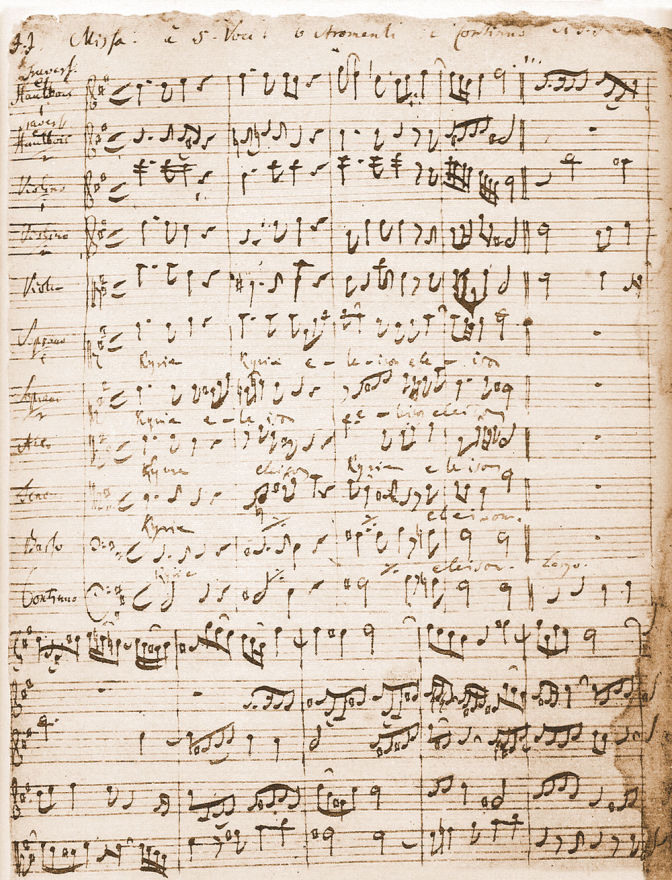
Bach’s manuscript of the B-minor Mass

The structure and composition history of the Mass are complicated. The final work as we know it today comprises the main sections of the Catholic Mass ordinary—Kyrie, Gloria, Credo, Sanctus and Agnus Dei—in 27 separate movements for orchestra, choir and soloists. Bach composed the first two portions of the Mass, Kyrie and Gloria, in 1733. These are the portions that are common to both Catholic and Lutheran services and were theoretically usable at the Lutheran Thomaskirche in Leipzig where Bach was employed. 

Bach presented those two movements to the incoming Elector of Saxony, a Catholic ruler, in 1733. He did not compose the remaining portions of the Mass, which were exclusive to the Catholic services, until  the final years of his life. Some of the music was newly composed, but other movements were reworkings of music from earlier cantatas and other works. 

It is remarkable that a piece written over so many years with many different sources would emerge as a unified work universally revered as one of Bach’s crowning achievements. But the entire B-minor Mass was probably never performed in Bach’s lifetime, and clearly would not have been suitable for a service in Bach’s church. It includes music written over 35 years of the composer’s lifetime, assembled and re-appropriated into a final form dictated by the structure of the Catholic Mass, by a resolutely Lutheran composer.

# # # # #

“A Magnum Opus”
Longmont Symphony Orchestra, Elliot Moore, conductor
With the Boulder Chamber Chorale, Vicki Burrichter, direcotr; Dawna Rae Warren, soprano; Elijah English, countertenor; Joseph Gaines, tenor; and Andy Konopak, baritone

  • J.S. Bach: Mass in B minor

7 p.m. Saturday, April 12
Vance Brand Civic Auditorium

TICKETS

# # # # #

The Takács Quartet and guitarist Nicoló Spera will come together over the weekend for concerts in Grusin Hall on the CU Campus (Sunday, April 13, and Monday, April 14; details below).

Their joint performance of the Quintet for guitar and string quartet by Giacomo Susani will be framed by two works from the standard string quartet repertoire, Haydn’s late Quartet in G major, op. 77 no. 1, written in 1799; and Dvořák’s Quartet in F major, op. 96, composed during the composer’s visit to the Czech immigrant community of Spillville, Iowa, in the summer of 1893.
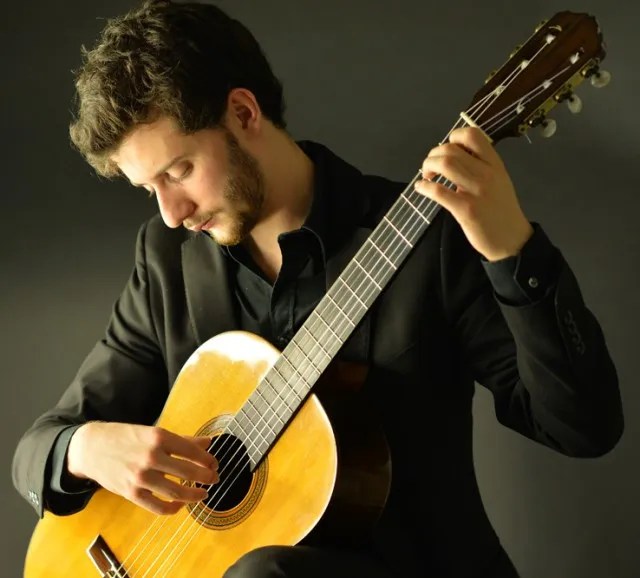
Giacomo Susani

Susani keeps very busy, with a performing career on guitar in Europe and the United States, a compositional career, and as artistic director of the Homenaje International Guitar Festival in Padova, Italy. As a performer he has released four recordings on the Naxos label. He conducted the world premier of his Concerto for 10-string guitar and orchestra in Boulder this past December, with Spera and the Boulder Chamber Orchestra. The Guitar Quintet was written in 2016.

Listeners may be familiar with the string and guitar quintets of Luiggi Boccherini, the best known but not the only works for that combination of instruments. There were several written in the 20th century, including one by Italian composer Mario Castelnuovo-Tedesco. That work is recognized in the last of Susani’s three movements, “Omaggio a Castelnuovo-Tedesco” (Homage to Castelnuovo-Tedesco). The first two movements are titled respectively “La Tempesta” (The storm) and “Liberamente, non trope lento” (Freely, not too slow).

At the age of 67 Haydn began a set of string quartets commissioned by the wealthy aristocratic patron and music lover Prince Lobkowitz. He completed two quartets of a likely set of six, but other projects intervened before he could complete a larger set. The two quartets were published as Op. 77 nos. 1 and 2, and were his final completed string quartets. He only completed two movements of another planned quartet, published in 1806 as Op. 103.
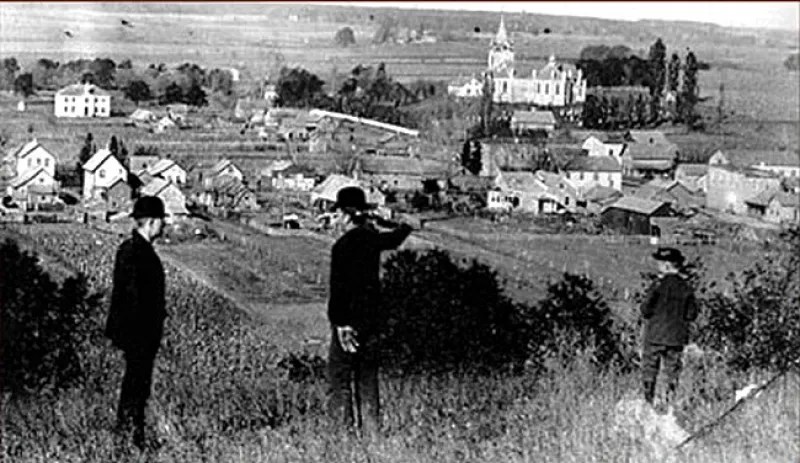
Spillville, Iowa, in 1895, shortly after Dvořák’s visit

Dvořák wrote many of  his best known pieces in the United States. He spent the years 1892–95 as director of the National Conservatory of Music in New York. Intrigued by the idea of a village of Czech immigrants on the Western plains, he spent an idyllic summer in the tiny village of Spillville, Iowa, in 1893. While in the United States he wrote his Symphony No. 9, “From the New World” and his Cello Concerto in New York, and a string quartet and string quintet, now known as the “American” Quartet and Quintet, in Spillville.

Spillville was very much a Czech community, with the people speaking Czech and observing Czech customs that Dvořák found congenial. He frequently played the organ at the local church, which is still standing, and made many friends in the community. 

Dvořák was deeply moved in Spillville, especially by the emptiness of the prairie, perhaps reflected in the Quartet’s melancholy slow movement, and the singing of birds, quoted in the scherzo. Attempts to connect the Quartet’s uncomplicated musical style to American influences have met skepticism. The composer himself once wrote, “I wanted to write something for once that was very melodious and straightforward . . . and that is why it all turned out so simply.

“And it’s good that it did.”

# # # # #

Takács Quartet with Nicoló Spera, guitar

  • Haydn: String Quartet in G Major, op. 77 no. 1
  • Giacomo Susani: Quintet for Guitar and String Quartet
  • Dvořák: String Quartet in F Major, op. 96 (“American”)

4 p.m. Sunday, April 13, and 7:30 p.m. Monday, April 14
Grusin Hall

In-person and streaming tickets HERE.
GRACE NOTES: “The Feminine Divine” and string quartets

Boulder Bach’s CORE and the Takács Quartet fill the weekend

By Peter Alexander March 5 at 5:20 p.m.

COmpass REsonance (CORE), a string ensemble that began as the resident Baroque orchestra of the Boulder Bach Festival, will present a program of music by four women composers of the Baroque era on Saturday (4 p.m. March 8; details below).

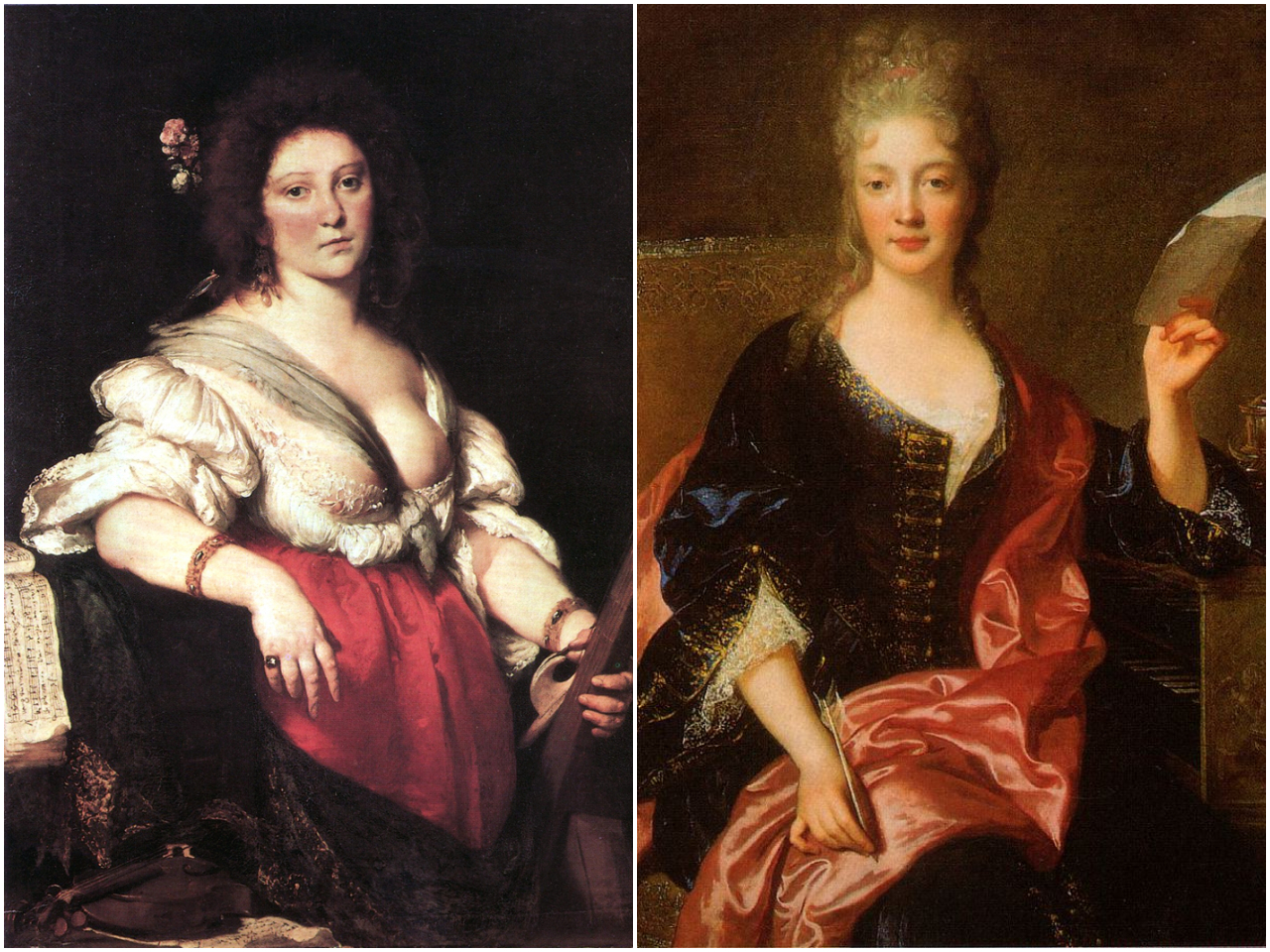
Titled “The Feminine Divine,” the program features works by Barbara Strozzi (1619–1677), Elisabeth Jacquet de la Guerre (1665–1729), Francesca Caccini (1587–1641?), and Isabella Leonarda (1620–1704). The performance will be directed by Zachary Carrettin and feature soprano Sarah Moyer and mezzo-soprano Claire McCahan. 

Other guest artists will be Minneapolis-based harpsichordist Tami Morse and cellist Joseph Howe, performing with members of CORE. Carrettin will perform as violinist.

Composers Barbara Strozzi and Elisabeth Jacquet de la Guerre

The most renowned composer on the program, Strozzi published eight volumes of music during her lifetime, and at one point had more secular music in print than anyone else in Europe. She accomplished this as an independent artist, without the usual aristocratic support that most musicians of her era depended upon.

Strozzi first came to prominence as a singer, having been recognized for her virtuosity in her teens. Her first volumes of published music, titled Bizzarrie poetiche (poetic oddities), appeared before she turned 20. Although she dedicated her volumes of published music—all but one using secular texts—to prominent members of the nobility, she never received regular patronage from any of them.

Jacquet de la Guerre came from a family of musicians and instrument makers. An accomplished harpsichordist who performed at the French court of Louis XIV, she composed vocal music, including dramatic cantatas and songs, as well suites for harpsichord and sonatas for violin and harpsichord.  

Francesca Caccini was the daughter of the important composer of early operas, Giulio Caccini. She spent most of her life in service to the Medici Court in Florence. Most of her music has disappeared, including several staged works written for the court. Today she is remembered as the first woman to write an opera, and for a collection of solo songs and duets with basso continuo.

The least known of the four women composers, Leonarda spent most of her life in an Ursuline convent in Novara, Italy. While living in the convent she wrote about 200 compositions, including vocal motets, and instrumental sonatas that are notable for their unusual structure of as many as 13 separate movements. 

# # # # #

“The Feminine Divine”
Compass Resonance Ensemble (“CORE”)
Zachary Carrettinn, director and violin; Tami Morse, harpsichord; and Joseph Howe, cello
With Sarah Moyer, soprano, and Claire McCahan, mezzo-soprano

Music by Barbara Strozzi, Elisabeth Jacquet de la Guerre, Francesca Caccini, and Isabella Leonarda

4 p.m. Saturday, March Dairy Arts Center

TICKETS

# # # # #

The world renowned Takács Quartet, comprising artists in residence and Christoffersen Fellows at CU-Boulder, is currently celebrating its 50th anniversary year.

Between teaching duties and an international touring schedule, they will present one of their campus concerts Sunday and Monday in Grusin Music Hall (March 9 and 10; details below). After 50 years, one of the original members of the Takács still plays with the quartet, cellist András Fejér. Currently performing with him are violinists Edward Dusinberre and Harumi Rhodes, and violist Richard O’Neill.

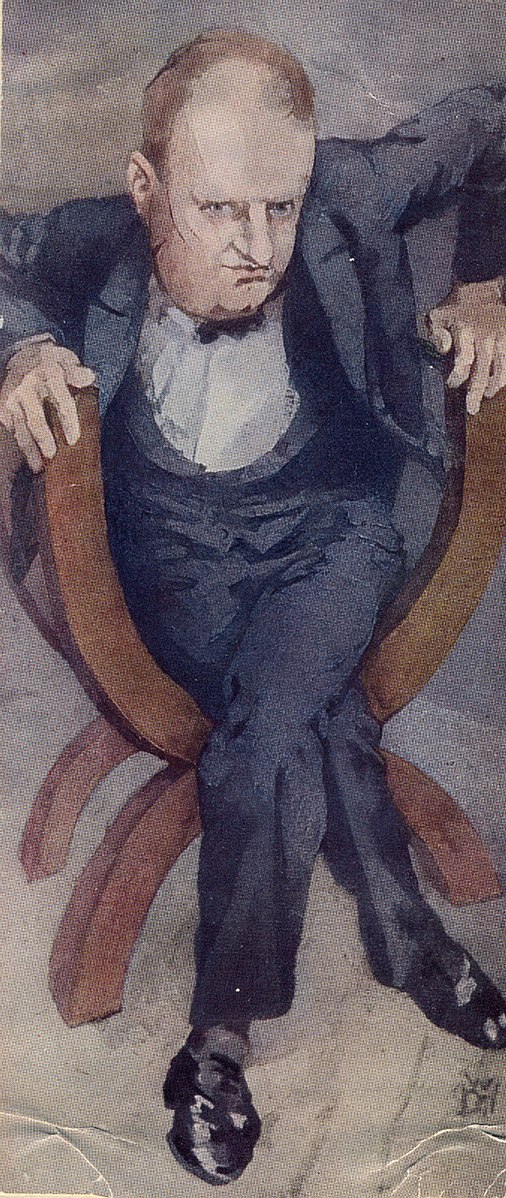
Paul Hindemith. Portrait by Rudolf Heinisch

Joining them for the March program, soprano and CU music faculty member Jennifer Bird-Arvidsson will perform Hindemith’s Four Songs, Melancholie, with the quartet. Bartók’s String Quartet No. 3 and Beethoven’s String Quartet in F major, op. 135, complete the program.

Hindemith served as a German soldier in the trenches near the end of Word War I. After the war he set four poems from a book by Christian Morgenstern titled Melancholie. The poems and the music reflect Hindemith’s feelings in the years after war, when he wrote to a friend “Everything is dreary and empty. I am deathly sad.” Hindemith dedicated Melancholie, one of his earliest and least known works, to a friend who died in the war.

As the last of his string quartets, Beethoven’s op. 135 comes from the opposite end of the composer’s life from Hindemith’s songs, and stands opposite to them in mood. Surprisingly one of Beethoven’s most cheerful and straightforward works—coming after other late quartets that explore unusual musical forms complex musical styles—Op. 135 shows the standard four movement layout for quartets, symphonies and other works.

Beethoven wrote to his publisher that this would be his last quartet, and headed the last movement “Der schwer gefasste Entschluss” (the difficult decision), suggesting that it was hard to give up a genre that he had explored throughout his life. Below that written title, the movement begins with three three-note motives that form its major themes. Under the musical notes, Beethoven wrote “Muss es seen? Es muss sein! Es muss sein!” (Must it be? It must be! It must be!)

The central piece on the program is Bartók, whose music has also played a central role in the 50-year history of the Takács Quartet, founded by four Hungarian string students. They have recorded the full set of six quartets twice and performed them frequently on tour. The shortest of Bartok’s quartets, the Third has a single movement divided into four parts that do, and don’t, recall the standard four-movement structure. 

# # # # #

Takács Quartet
With Jennifer Bird-Arvidsson, soprano

  • Paul Hindemith: “Melancholie,” Four Songs, op. 13
  • Bartók: String Quartet No. 3
  • Beethoven: String Quartet in F Major, op. 135

4 p.m. Sunday, March 9
7:30 p.m. Monday, March 10

Grusin Music Hall

In-person and streaming tickets available HERE.

GRACE NOTES: Chamber music on the weekend

Music for winds from the BCO, quartets and quintet from the Takács Quartet

By Peter Alexander Jan. 10 at 1:45 p.m.

The Boulder Chamber Orchestra (BCO) will present a program of French music for piano and winds for its third Mini-Chamber program of the season Saturday (7:30 p.m. Jan. 11; details below).

The orchestra’s current artist-in-residence, pianist Jennifer Hayghe, will be joined by members of the BCO to perform works by Vincent d’Indy, Albert Roussel, Francis Poulenc, Florent Schmitt and Louise Farrenc.

BCO artist in residence Jennifer Hayghe

The program that was curated by Hayghe offers an opportunity to hear pieces and composers that are little known to American audiences. French music in particular is less often programmed here than German and Austrian works. The least familiar, and the earliest of the composers is Farrenc, who lived in the 19th century. A successful concert pianist, she became the first woman to hold a permanent position at the Paris Conservatory, which she maintained for 30 years, from 1842 to 1872.

All the other composers lived and worked in the 20th century. The most familiar is probably Poulenc, who died in 1963. Known for his opera Dialogues des Carmélites (Dialogue of the Carmelites), his Organ Concerto and his choral Gloria, he also wrote a large number of pieces for chamber ensembles.

The other three composers—d’Indy, Roussel and Schmitt—were active in the first half of the 20th century. Offering a rare taste of a time and place that rarely shows up in concert programs in the U.S., Mini-Chamber 3 is a welcome opportunity for the chamber music audience to expand their horizons beyond the routine.

# # # # #

Boulder Chamber Orchestra Mini-Chamber 3
Jennifer Hayghe, artist in residence, piano
With Rachelle Crowell, flute; Brittany Bonner, one; Kellan Toohey, clarinet; Kaori Uno-Jack, bassoon; and Devon Park, horn

  • Vincent d’Indy: Sarabande et menuet, op. 72
  • Albert Roussel: Divertissement, op. 6
  • Francis Poulenc: Trio for oboe, bassoon and piano
  • Florent Schmitt: Sonatine en trio, op. 85
  • Louise Farrenc: Sextet in C minor, op. 40

7:30 p.m. Saturday, Jan. 11
Boulder Adventist Church, 345 Mapleton Ave., Boulder

TICKETS

# # # # #

The Takács Quartet will be joined by pianist Margaret McDonald to present one of the preeminent chamber works of the 19th century, Brahms’s Quintet in F minor for piano and strings.

The program will also feature Beethoven’s early String Quartet No. 1 in F major, op. 18 no. 1—actually the second quartet of the set to be written—and the String Quartet no. 1 by Stephen Hough, which was written for the Takács.

Hough’s quartet was first written to be heard alongside the Ravel String Quartet and Ainsi la nuit (Thus the night), a string quartet by the French composer Henri Dutilleux. Hough subtitled the quartet “Les Six Rencontres” (The six re-encountered), a reference to a group of early 20th-century composers active in France that did not include either Ravel or Dutilleux. Hough wrote that the subtitle “has in it a pun and a puzzle: the six movements as an echo of ‘Les Six,’ although there are no quotes or direct references from those composers; and ‘encounters’ which are unspecified.”

Margaret McDonald, guest pianist with the Takács Quartet

The six movements of the quartet have titles that indicate places, presumably in the Montparnasse district of Paris, where an encounter with a composer from “The Six” might have occurred: On the boulevard, in the park, at the hotel, at the theater, in the church and at the market. The Takács Quartet premiered “Les Six Rencontres” in Costa Mesa, Calif., Dec. 8, 2021.

One of the best known major pieces of chamber music from the 19th century, Brahms F minor Piano Quintet evolved through several forms before being finished as a quintet. It was first written as string quintet, a version that the composer later destroyed, and then as a duet for two pianos, and finally as a quintet for string quartet with piano. All of this stretched over six years, prior to the Quintet’s premiere in 1868.

# # # # #

Takács Quartet
With Margaret McDonald, piano

  • Beethoven: String Quartet in F Major, op. 18 no. 1
  • Stephen Hough: String Quartet No. 1, “Les Six Rencontres” (The six re-encountered)
  • Johannes Brahms: Piano Quintet in F Minor, op. 34

4 p.m. Sunday, Jan. 12
7:30 p.m. Monday, Jan. 13
Grusin Music Hall

In-person and streaming TICKETS

Quartet Integra will perform on Takács series at CU

Prize-winning quartet from Japan will play Haydn, Ligeti and Brahms

By Peter Alexander Oct. 30 at 4:55 p.m.

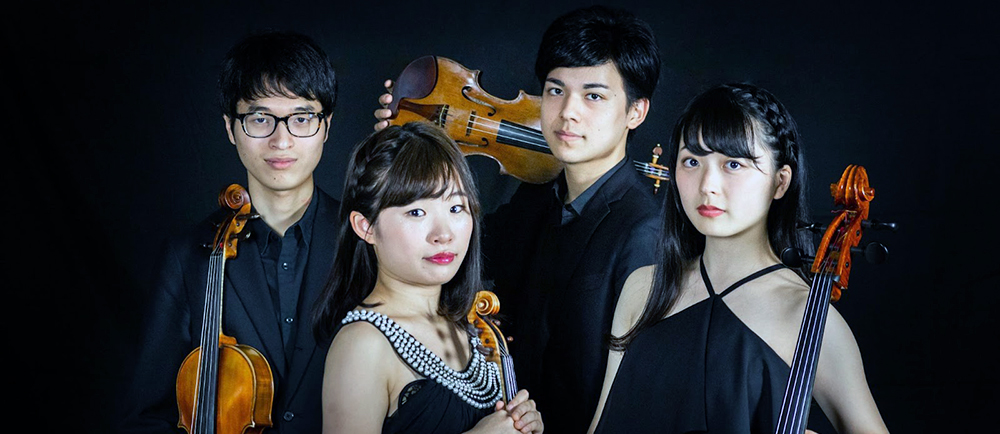
Quartet Integra, the 2024 guest ensemble on the Takács Quartet’s campus concert series at CU Boulder, will perform in Grusin Music Hall Sunday afternoon and Monday evening (4 p.m. Nov. 3 and 7:30 p.m. Nov. 4; details below).

Following a traditional program format of classical-contemporary-Romantic works, they will perform Haydn’s String Quartet in B minor, op. 33 no. 1, György Ligeti’s String Quartet No. 2 and Brahms’s String Quartet No. 3 in B-flat major. Tickets are available for both in-person and online attendance.

Quartet Integra

The Quartet Integra—violinists Kyoka Misawa and Rinato Kikuno, violist Itsuki Yamamoto and cellist Ye Un Park—formed in 2015 and began their studies at the Toho Gakuen School of Music in Tokyo. They continued their academic work as a quartet as Fellows at the Suntory Hall Chamber Music Academy. They are currently enrolled in the Chamber Ensemble-in-Residence Program at the Colburn School in Los Angeles.

The Quartet won Second Prize and the Audience Award at the 2022 ARD International Music Competition, First Prize at the 2021 Bartók World Competition, and First Prize, the Prize of Beethoven and Grand Prix Award at the 2019 Akiyoshidai Music Competition. Upcoming performances include a New York debut at the Schneider Concert series at the New School, a contemporary recital at Boston Court, a recital as part of the Discovery Series at the La Jolla Music Society and the ECHO Chamber Music Series in El Cajon, California, among others. 

Past festival performances include the Suntory Chamber Music Garden Festival, the Kanazawa, Hukuyama and Takefu International Festivals. Quartet Integra has commissioned many new works from Japanese composers and given more than a dozen world premieres.

In 1779 Haydn’s employer, Prince Nicolaus Esterhazy, granted the composer the right to sell his works to publishers. One of the first sets of works where Haydn took advantage of that freedom was his set of six string quartets, composed in 1781 and known as Op. 33. Haydn wrote to a number of amateur musicians inviting them to subscribe to manuscript copies of the quartets, which he said were written “von einer Neu, gantz besonderer Art” (a new and entirely special way).

There is disagreement whether the six quartets truly represent a “new way” of composition, or the phrase was just salesmanship by Haydn. Either way, the set is regarded as one of Haydn’s major works defining the classical style. In addition to the manuscript parts Haydn offered, the quartets were published separately in Vienna, Berlin and London. Consequently, they were widely known, and may have been the inspiration for the six quartets Mozart wrote 1782–85 and dedicated to Haydn.

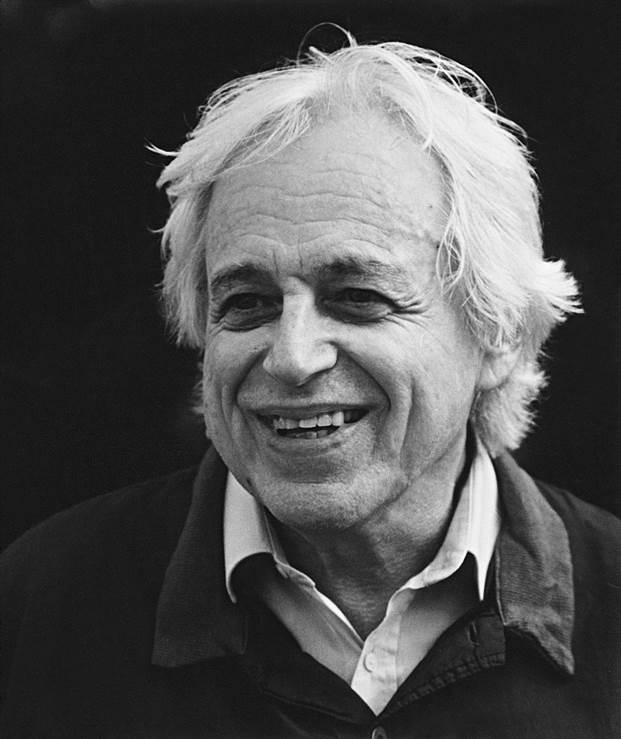
György Ligeti

The second of Hungarian composer György Ligeti’s four string quartets was written in 1968 and dedicated to the La Salle Quartet, who played in the premiere in 1969. The five movements share related material but represent five different styles of musical motion, from gentle lyricism to mechanical pizzicato to fast and aggressive, and other stops in between.

Brahms composed three string quartets that have survived, as well as a large number of early quartets that he destroyed. The one known as his Third Quartet, composed in 1875, was dedicated to Theodor Wilhelm Engelmann, an amateur cellist, in spite of which it contains no major themes or solos for the cello. Later Brahms wrote to Engelmann, “This quartet rather resembles your wife—very dainty but brilliant.”

It is one of Brahms’s most animated and cheerful works. The first and fourth movements are particularly playful, full of bouncing, propulsive rhythms. The central movements—a wistful slow movement and an agitated waltz movement—are move serious in mood.

# # # # #

Quartet Integra

  • Haydn: String Quartet in B minor, op. 33 no. 1
  • György Ligeti: String Quartet No. 2
  • Brahms: String Quartet No. 3, op. 67

4 p.m. Sunday, Nov. 3 and 7:30p.m. Monday, Nov. 4
Grusin Music Hall

In-person and streaming tickets HERE