
Music for winds from the BCO, quartets and quintet from the Takács Quartet
By Peter Alexander Jan. 10 at 1:45 p.m.

The Boulder Chamber Orchestra (BCO) will present a program of French music for piano and winds for its third Mini-Chamber program of the season Saturday (7:30 p.m. Jan. 11; details below).
The orchestra’s current artist-in-residence, pianist Jennifer Hayghe, will be joined by members of the BCO to perform works by Vincent d’Indy, Albert Roussel, Francis Poulenc, Florent Schmitt and Louise Farrenc.

The program that was curated by Hayghe offers an opportunity to hear pieces and composers that are little known to American audiences. French music in particular is less often programmed here than German and Austrian works. The least familiar, and the earliest of the composers is Farrenc, who lived in the 19th century. A successful concert pianist, she became the first woman to hold a permanent position at the Paris Conservatory, which she maintained for 30 years, from 1842 to 1872.
All the other composers lived and worked in the 20th century. The most familiar is probably Poulenc, who died in 1963. Known for his opera Dialogues des Carmélites (Dialogue of the Carmelites), his Organ Concerto and his choral Gloria, he also wrote a large number of pieces for chamber ensembles.
The other three composers—d’Indy, Roussel and Schmitt—were active in the first half of the 20th century. Offering a rare taste of a time and place that rarely shows up in concert programs in the U.S., Mini-Chamber 3 is a welcome opportunity for the chamber music audience to expand their horizons beyond the routine.
# # # # #
Boulder Chamber Orchestra Mini-Chamber 3
Jennifer Hayghe, artist in residence, piano
With Rachelle Crowell, flute; Brittany Bonner, one; Kellan Toohey, clarinet; Kaori Uno-Jack, bassoon; and Devon Park, horn
- Vincent d’Indy: Sarabande et menuet, op. 72
- Albert Roussel: Divertissement, op. 6
- Francis Poulenc: Trio for oboe, bassoon and piano
- Florent Schmitt: Sonatine en trio, op. 85
- Louise Farrenc: Sextet in C minor, op. 40
7:30 p.m. Saturday, Jan. 11
Boulder Adventist Church, 345 Mapleton Ave., Boulder
# # # # #

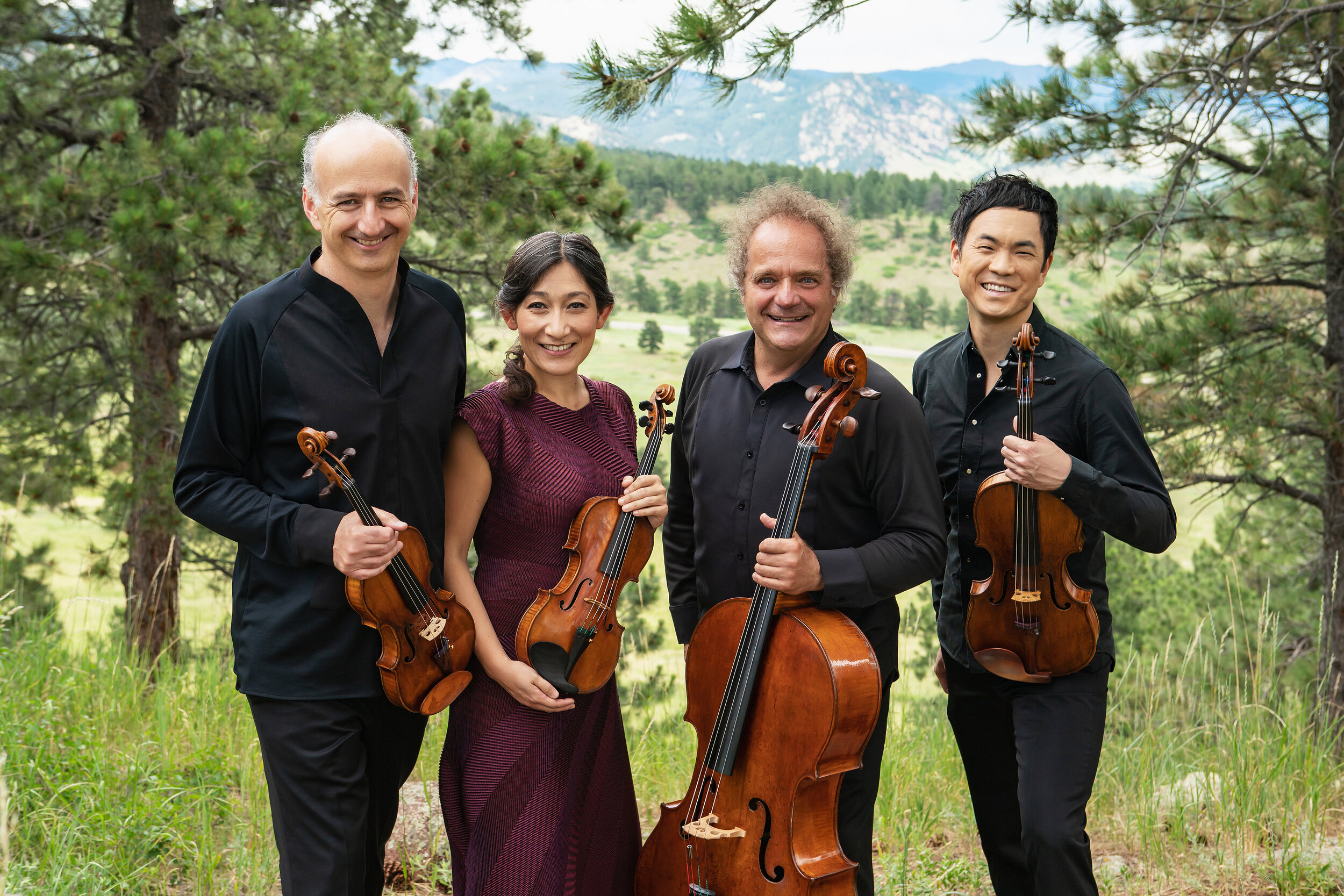
The Takács Quartet will be joined by pianist Margaret McDonald to present one of the preeminent chamber works of the 19th century, Brahms’s Quintet in F minor for piano and strings.
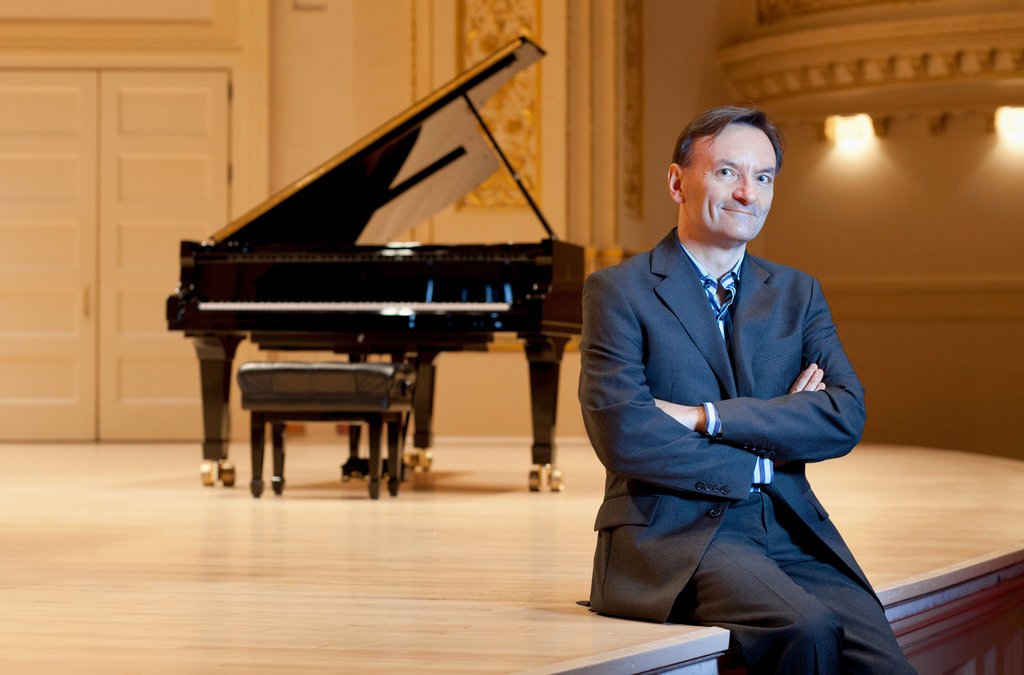
The program will also feature Beethoven’s early String Quartet No. 1 in F major, op. 18 no. 1—actually the second quartet of the set to be written—and the String Quartet no. 1 by Stephen Hough, which was written for the Takács.
Hough’s quartet was first written to be heard alongside the Ravel String Quartet and Ainsi la nuit (Thus the night), a string quartet by the French composer Henri Dutilleux. Hough subtitled the quartet “Les Six Rencontres” (The six re-encountered), a reference to a group of early 20th-century composers active in France that did not include either Ravel or Dutilleux. Hough wrote that the subtitle “has in it a pun and a puzzle: the six movements as an echo of ‘Les Six,’ although there are no quotes or direct references from those composers; and ‘encounters’ which are unspecified.”

The six movements of the quartet have titles that indicate places, presumably in the Montparnasse district of Paris, where an encounter with a composer from “The Six” might have occurred: On the boulevard, in the park, at the hotel, at the theater, in the church and at the market. The Takács Quartet premiered “Les Six Rencontres” in Costa Mesa, Calif., Dec. 8, 2021.
One of the best known major pieces of chamber music from the 19th century, Brahms F minor Piano Quintet evolved through several forms before being finished as a quintet. It was first written as string quintet, a version that the composer later destroyed, and then as a duet for two pianos, and finally as a quintet for string quartet with piano. All of this stretched over six years, prior to the Quintet’s premiere in 1868.
# # # # #
Takács Quartet
With Margaret McDonald, piano
- Beethoven: String Quartet in F Major, op. 18 no. 1
- Stephen Hough: String Quartet No. 1, “Les Six Rencontres” (The six re-encountered)
- Johannes Brahms: Piano Quintet in F Minor, op. 34
4 p.m. Sunday, Jan. 12
7:30 p.m. Monday, Jan. 13
Grusin Music Hall
In-person and streaming TICKETS
 Sharps & Flatirons