Grace Notes: Bach, Timbres, Sphere and a Groove

Programs outside the norm, from the 18th to the 21st centuries

By Peter Alexander Sept. 18 at 10:05 p.m.
The Boulder Bach Festival (BBF) and guest artists will take audiences back to 18th-century Venice in a program entitled “Anonimo Veneziano” (Anonymous Venetian) 4 p.m. Saturday, Sept. 21, at the Dairy Arts Center in Boulder.

The program, with the BBF’s music director/violinist Zachary Carretin and the COmpass REsonance ensemble (CORE Ensemble), will feature violinist Nurit Pacht from NewYork, harpsichordist Chris Holman from Cincinnati, and theorbist Keith Barnhart, an historical plucked instruments specialist who is also the BBF’s educational coordinator.
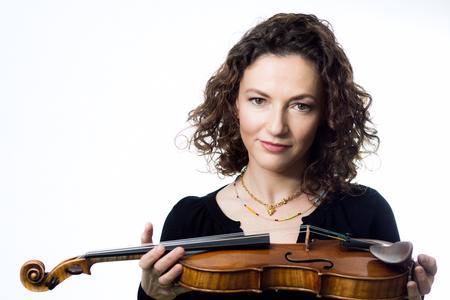
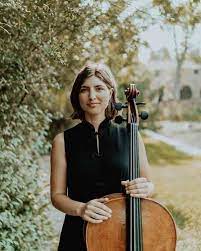
Nurit Pacht

The program opens with the famous Adagio attributed to 18th-century Italian composer Tomaso Albinoni and featured in many film scores. In fact, the Adagio was composed by 20th-century Italian musicologist Remo Giazotto. A scholar of Albinoni’s music Giazotto claimed that the Adagio was based on a fragment of an Albononi trio sonata that he found on a manuscript that has since mysteriously disappeared. 

The remainder of the program will be filled out with genuine Albinoni works, the complete Sinfonie e Concerti a cinque (Sinfonias and concertos for five instruments), op. 2, that were published in Venice in 1700. This important collection is rarely performed complete. The BBF performance, which will  be played without intermission, is expected to take approximately 75 minutes.

 Pacht holds a degree in historical performance from the Juilliard school and is known as a specialist in both music by living composers, including works written for her, and music of the Baroque. She was a top prize winner in the Irving Klein International Music Competition in California, the Tibor Varga International Violin Competition in Switzerland, and the Kingsville International Music Competition in Texas. She has toured widely in Europe and the United States. She teaches privately in New York City.

# # # # #

Anonimo Veneziano
Boulder Bach Festival CORE Ensemble, Zachary Carrettin, conductor/violinist
With Nurit Pracht, violin, Chris Holman, harpsichord, and Keith Barnhart, theorbo

  • Remo Giazotto: “Adagio in G minor by Tomaso Albononi”
  • Tomaso Albinoni: Sinfonie e Concerti, op. 2

4 p.m. Saturday, Sept. 21
Dairy Arts Center Gordon Gamm Theater

TICKETS

# # # # #

The Boulder Chamber Orchestra’s (BCO)chamber concert titled “Mixed Timbres,” postponed from last April due to the power outage caused by high winds, will be presented at 7:30 p.m. Saturday, Sept. 21, in the Boulder Seventh-Day Adventist Church.

The concert will feature the BCO’s 2023-24 artist-in-residence, pianist Hsing-ay Hsu, performing with two members of the orchestra—cellist Julian Bennett and clarinetist Kellan Toohey. All four works on the program use the ensemble of piano, clarinet and cello, a mix of timbres that has a limited but interesting repertoire.
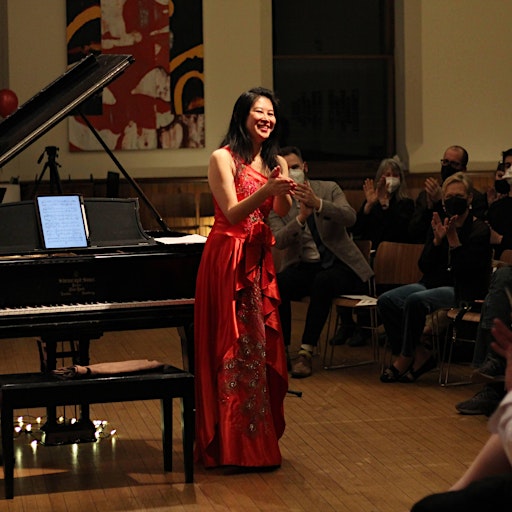
Hsing-ay Hsu

Beethoven’s Op. 11 is one of the earliest works for the combination. It is sometimes known as the “Gassenhauer Trio,” taken from the popularity of the theme that Beethoven uses for variations in the final movement. In Vienna, a Gassenhauer (from Gasse, an alleyway) referred to a simple song that was so popular that it was heard all over town. The theme Beethoven used was taken from a popular music theater work, L’amor marinaro (Seafaring love) by Joseph Weigl.

Brahms’s Trio op. 114 is one of four chamber works the composer wrote for the clarinetist Richard Mühlfeld in the last years of his life. Brahms’s admiration for Mühlfeld’s playing was reflected in the comment of one of the composer’s friends who wrote that in the Trio, “it is as though the instruments were in love with each other.”

Like Brahms’s Trio, Fauré’s D minor Trio was one of his last compositions. Although Fauré originally planned the Trio for piano, clarinet and cello, it was published as a traditional piano trio, with violin in place of the clarinet. The BCO performance of the first movement restores the instrumentation that Fauré first imagined for the trio.

Emily Rutherford’s “Morning Dance” for piano, clarinet and cello was commissioned by Toohey in 2017. A native of Colorado, Rutherford is a graduate of Westmont College in Santa Barbara, Calif., and the Longy School of Music in Los Angeles.

# # # # #

“Mixed Timbres”
Hsing-ay Hsu, BCO Artist in residence, piano
With Boulder Chamber Orchestra members Kellan Toohey, clarinet, and Julian Bennett, cello

  • Gabriel Fauré: Piano Trio in D minor, I. Allegro ma non troppo
  • Beethoven: Trio in B-flat major for piano, clarinet and cello, op. 11
  • Brahms: Trio in B-flat for piano, clarinet and cello, op. 114
  • Emily Rutherford: Morning Dances

7:30 p.m. Saturday, Sept. 21
Boulder Seventh-Day Adventist Church, 345 Mapleton Ave.

TICKETS

# # # # #

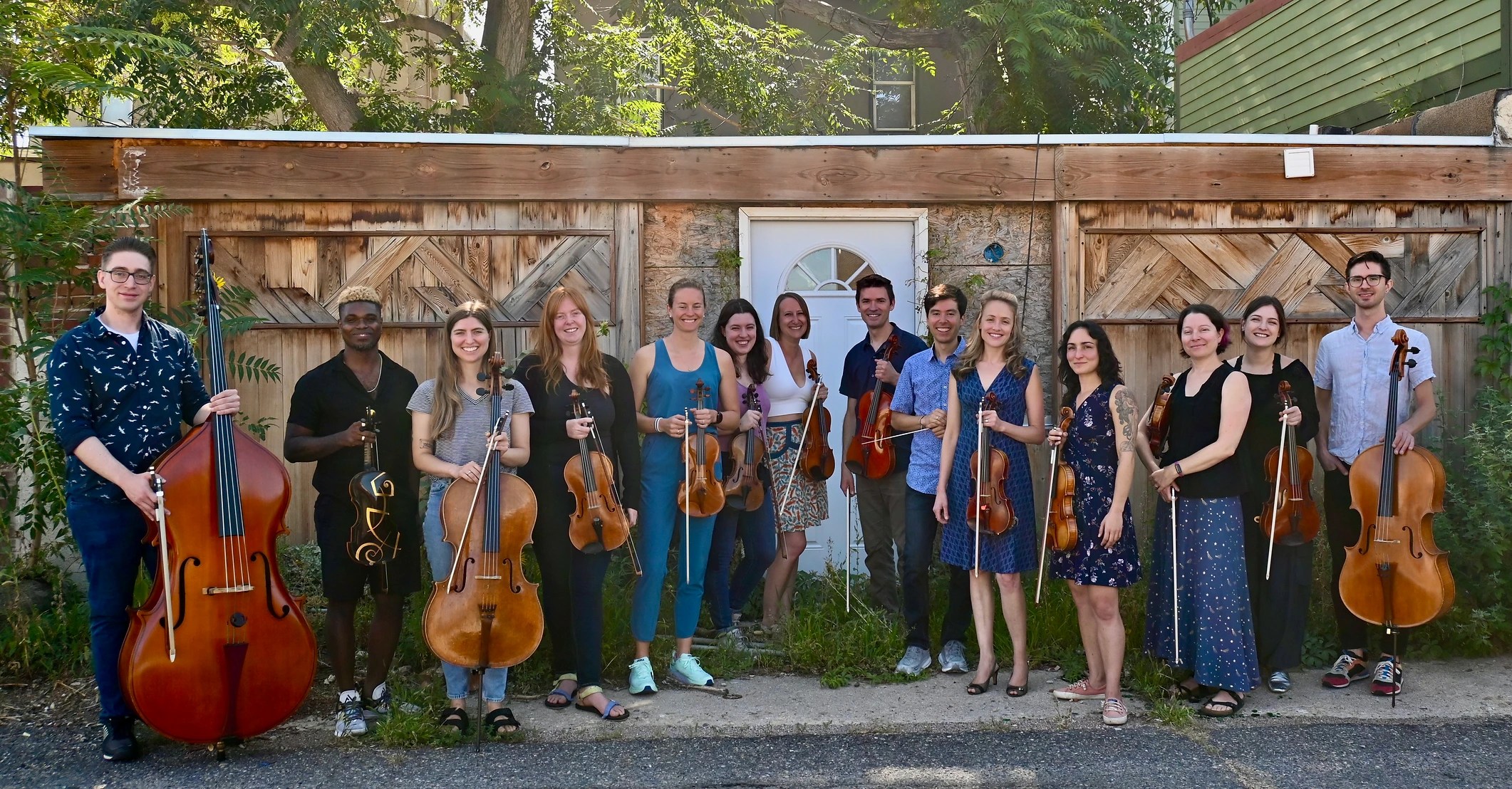
The Sphere Ensemble, a 14-member string ensemble, will celebrate the 100th anniversary of the premiere of Gershwin’s Rhapsody in Blue in 1924 with performances of their own all-strings arrangement of the Rhapsody.

The program, presented Saturday in Boulder and Sunday in Denver (Sept. 21 and 22; details below), will also include works by other jazz musicians including James P. Johnson, Hazel Scott and Winton Marsalis. Also on the program are arrangements of music from the Squirrel Nut Zippers, The Turtles and Andrew Bird; and pieces by Shostakovich, Stephen Foster and the classical-era composer Christoph Willibald Gluck, among others. 
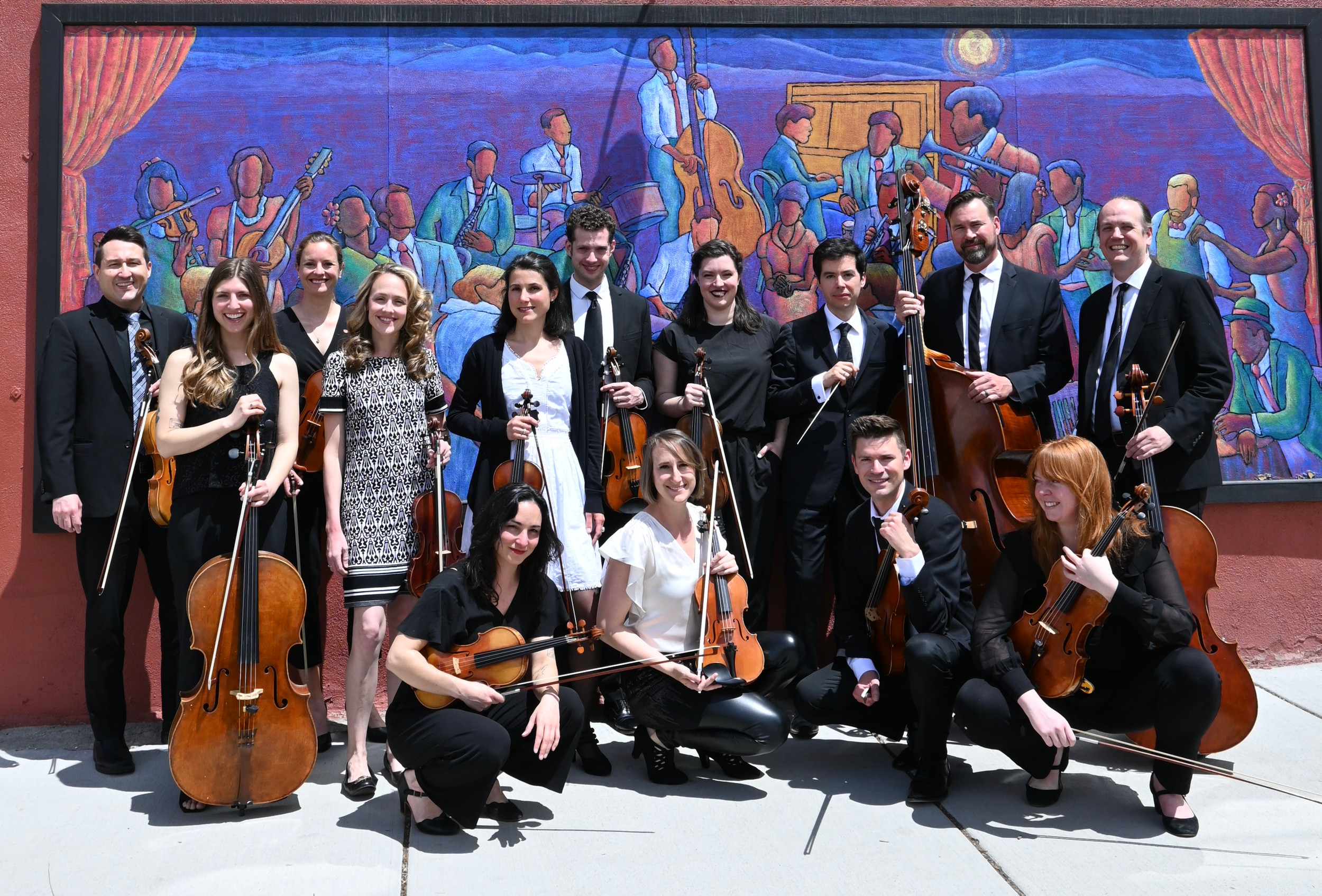
Sphere Ensemble

In addition to the live performances, a live stream will be available from 7:30 p.m. Saturday, Sept. 21 through 10 p.m. Sunday, Sept. 29. 

This kind of eclectic programming, mixing sources and genres, is typical of the Sphere Ensemble, often in arrangements made by members of the ensemble. The “About” page on their Website explains, “We prioritize music by composers that are often overlooked in classical music programs. . . . From classical to classic rock, from baroque to hip hop, Sphere always chooses music that excites us.”

# # # # #

“Bridges”
Sphere Ensemble

  • Aldemaro Romero: Fuga con Pajarillo
  • Dmitri Shostakovich: Prelude and Fugue in D-flat Major (arr. Chris Jusell)
  • Stephen Foster: “Jeanie with the Light Brown Hair” (arr. Alex Vittal)
  • Squirrel Nut Zippers: The Ghost of Stephen Foster (arr. Sarah Whitnah)
  • Andrew Bird: Orpheo Looks Back (arr. Sarah Whitnah)
  • C.W. Gluck: Orfée et Eurydice, Danses des Ombres Heureuses
  • Brenda Holloway: You’ve Made Me So Very Happy (arr. David Short)
  • The Turtles: Happy Together (arr. Dave Short)
  • James Price Johnson: Charleston (arr. Alex Vittal)
  • Hazel Scott: “Idyll” (arr. Sarah Whitnah)
  • Wynton Marsalis: “At the Octoroon Balls”
    —“Rampart St. Rowhouse Rag”
  • George Gershwin: Rhapsody in Blue (arr. Alex Vittal)

7:30 p.m. Saturday, Sept. 21
Nomad Playhouse, 1410 Quince Ave., Boulder

3 p.m. Sunday, Nov. 22
Truss House, 3400 Atkins Ct., Denver

Livestream: 7:30 p.m. Saturday, Sept. 21–10 p.m. Sunday, Sept. 29

In-person and livestream TICKETS

# # # # #
The Boulder Philharmonic Orchestra will have a new series of intimate performances during the 2024-25 season, designed to bring their musicians into more informal spaces and give audiences the opportunity to hear them in smaller groups.

The repertoire will be a little different from the Macky concerts, too, featuring music by pop sensations from Lizzo to Taylor Swift alongside pieces by living composers including Philip Glass and Jessie Montgomery. And just for fun, they might throw in some Vivaldi as well.

These concerts, collectively the “Shift” series, will feature several different programs, each presented first at Planet Bluegrass in Lyons and then taken to small venues in Longmont and Boulder. The first program, played by a string quartet of principal players from the orchestra, opens next Wednesday at Planet Bluegrass (7 p.m. Sept. 25; details below). Titled “Groove,” it will be repeated at the Dickens Opera House in Longmont at 6:30 p.m.Monday, Nov. 25.
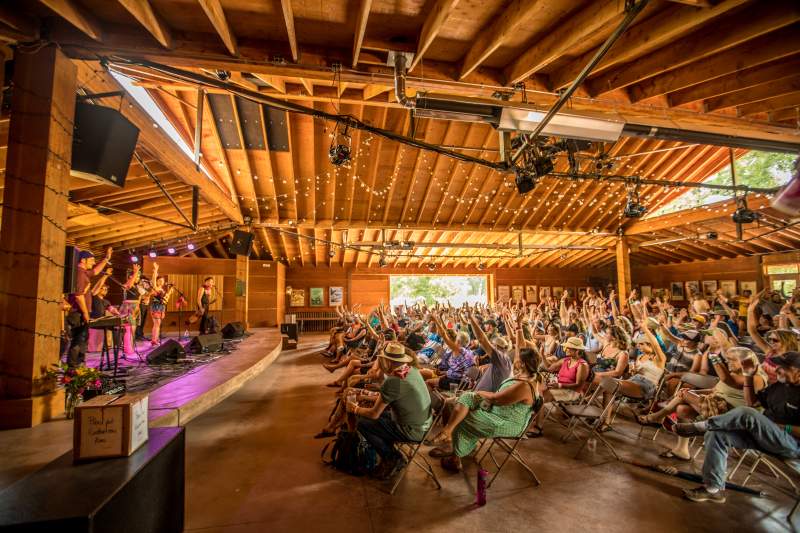
Wildflower Pavilion at Planet Bluegrass, Lyons

The second program, also for string quartet, is titled “Americana: Redefined” and will be presented in October and February. A third program featuring a brass quintet from the orchestra, “Brass & Brews,” will be presented in October and April;  see the Boulder Phil Web page for details on all currently scheduled performances.

Mimi Kruger, the Boulder Phil’s executive director, said, “The idea is that people can get to know our musicians and these composers and connect in a different way. These are obviously smaller venues, but also a little bit more casual.”

She said that discussions about ways to showcase the individual musicians of the orchestra led them to look for new venues. “The idea came up to launch it through Planet Bluegrass (because) they have a series at the Wildflower Pavilion,” she said. “We’re doing all three there, but we also wanted to take them to other venues, so the first two will get repeated at Dickens Opera House in Longmont—that’s a great little place!”

The Phil’s Web page says pretty much the same thing, in more promotional language: “The Shift Series lifts the facade of the stereotypical orchestral concert . . . in unique venues along the Front Range.”

Kruger recommends watching for future announcements, as further performances are under consideration, featuring the orchestra’s woodwind players. 

# # # # #

“GROOVE”
Boulder Philharmonic string players: Ryan Jacobsen and Hilary Castle-Green, violin; Stephanie Mientka, viola; and Amanda Laborete, cello

  • Takashi Yoshimatsu: Atomic Hearts Club Quartet, Movement I
  • Justin Bieber: “Peaches” (arr. Alice Hong) 3’
  • Dinuk Wijeratne:Two Pop Songs on Antique Poems: “Letter from the afterlife”
  • Carlos Simon: Loop
  • Michael Begay: “Forest Fires”
  • Lizzo: “ Good As Hell” (arr. Alice Hong)
  • Jessie Montgomery: “VooDoo Dolls
  • Philip Glass: String Quartet No. 3: VI “Mishima/Closing” 4’
  • Taylor Swift: All Too Well” (arr. Alice Hong)
  • Wijeratne: Two Pop Songs on Antique Poems: “I will not let you go
  • Ed Sheeran: “Shape of You” (arr. Alice Hong)
  • Due Lipa: “Dance the Night” (arr. Zack Reaves)
  • Jessica Meyer: “Get into the NOW”: III. “Go Big or Go Home”
  • Vivaldi: Summer: Moment III (arr. Naughtin)

7 p.m. Monday, Sept. 25
Planet Bluegrass, Lyons, Colo.

TICKETS

6:30 Monday, Nov. 25
Dickens Opera House, Longmont Como.
TICKETS

GRACE NOTES: Orchestras in Boulder and Longmont, Sphere Ensemble at BPL

Guest cellists thrive, while Sphere does “90s Retro”

By Peter Alexander November 16 at 10:25 p.m.

Erin Patterson, principal cellist of the Boulder Symphony will step forward as soloist with the orchestra Friday evening for a concert under director Devin Patrick Hughes.

Patterson will play Dance for cello and orchestra by English composer Anna Clyne. Other works on the program will be Sibelius’s Finlandia and the Symphony No. 2 in E minor by Rachmaninoff.

Erin Patterson

Currently serving as composer-in-residence with the Helsinki Philharmonic in Finland, Clyne has written a long list of orchestra, chamber, vocal and choral works. She currently lives and works in New York City. Her Dance, essentially a concerto for cello and orchestra, is a five-movement work, based on a five-line poem by Rumi:
Dance when you’re broken open.
Dance, if you’ve torn the bandage off.
Dance in the middle of the fighting.
Dance in your blood.
Dance when you’re perfectly free.

Both other works on the program and staples of the orchestral repertoire. Written in 1899, Finlandia remains the best known of Sibelius’s works for orchestra. As musical protest against Russian control of Finland, for many years the score had to be performed under other names to bypass Russian censorship.

Composed in 1906–07, Rachmaninoff’s Second Symphony was an important milestone for the composer. The 1897 premiere of his First Symphony had been a failure. Rachmaninoff became depressed after the performance, and doubted his abilities as a composer. For his Second Symphony, he moved to Dresden, Germany, to have time for composing away from Russia, which was in turmoil during the pre-Revolutionary era. After completing and extensive revision of the score, he was able to present the symphony in St. Petersburg in January, 1908.

The performance was a great success, and the symphony won an award for the composer. This event restored Rachmaninoff’s confidence, and the Second Symphony, while subject to considerable later revisions, has remained one of his most popular compositions.

# # # # #

Boulder Symphony, Devin Patrick Hughes, conductor
With Erin Patterson, cello

  • Sibelius: Finlandia
  • Anna Clyne: Dance for cello and orchestra (Colorado premiere)
  • Rachmaninoff: Symphony No. 2 in E minor, op. 27

7:30 p.m. Friday, Nov. 17
Grace Commons Church

TICKETS 

# # # # #

The Longmont Symphony also features a cello soloist for their concert Saturday evening. Clancy Newman, who is a composer as well as cellist, will perform Schelomo, Hebrew Rhapsody for cello and orchestra with the LSO and conductor Elliot Moore at
7 p.m. in Vance Brand Civic Auditorium.

Clancy Newman

Other works on the program will be Beethoven’s Overture to Coriolan and Shostakovich’s Symphony No. 5.

Born to Australian parents in Albany, New York, Newman won the International Naumburg Competition in 2001 and an Avery Fisher Career Grant in 2004. In addition to his solo performances around the world, he has performed with the Chamber Music Society of Lincoln Center and Musicians form Marlboro. His most original compositional project is “Pop-Unpopped,” in which he has written solo cello caprices based on the top pop song every  month for a year. 

Composed in 1915–16, Schelomo (Solomon) was the final work of Bloch’s Jewish Cycle of works that drew on Jewish folk and synagogue melodies and rhythms of the Hebrew language. Written for solo cello and orchestra, Schelomo is the best known of these works, and is today considered a standard piece in the cello repertoire. It is written in a single movement that encompasses three interrelated sections.

When he wrote his Fifth Symphony in 1937, Shostakovich was under a cloud of suspicion caused by the brutal criticism of his opera Lady Macbeth of the Mtsensk District. A review of the opera putatively dictated by Stalin himself was titled “Muddle Instead of Music” and suggested that “things could end very badly” for the composer if he did not change aesthetic directions.

Shostakovich clearly considered the symphony a reply, deferentially subtitling it “A Soviet Artist’s Responses to Just Criticism.” The symphony’s premiere received 30-minute ovation, no doubt responding to the bold, brassy and triumphalist final movement. Whether the finale was a serious artistic statement, or a parody of the vulgar taste of Stalin and his retinue of followers, has been widely debated. In any case, the symphony has remained popular with concert audiences world wide.

# # # # #

Longmont Symphony Orchestra
Elliot Moore, conductor
With Clancy Newman, cello

  • Beethoven: Overture to Coriolan
  • Ernest Bloch: Shelomo, Hebrew Rhapsody for cello and orchestra
  • Shostakovich: Symphony No. 5, op. 47

7 p.m. Saturday, Nov. 18
Vance Brand Civic Auditorium

TICKETS

# # # # #

Colorado’s Sphere Ensemble, a Denver-based ensemble of 14 string players, will give a musical tour of the ‘90s from five different centuries, with performances at the Boulder Public Library Canyon Theater (7:30 p.m. Saturday, Nov. 18) and the Savoy in Denver (2700 Arapahoe St. 5 p.m. Sunday, Nov. 19; details and tickets below).

The creative program, titled “90s Retro” without specifying a century, has arrangements for the Sphere instrumentation of music form the Renaissance, Baroque, Classical, Romantic and contemporary eras. This is keeping with Sphere’s approach to programming, which typically includes arrangements made by members of the group.

Sphere Ensemble

As part of the presentation of the music from the ‘90s of different centuries, Sphere ties the music to prominent events form the same years. For example, the opera Alcide, for which Marina Marais wrote the Overture that Sphere will perform, was written in the same year as the Benedictine monk Dom Pérignon invented Champagne, 1793. This was one year after the Salem with trials and the year Mt. Etna in Sicily erupted.

Just over a century later, in 1796 the British pianist/singer/composer Maria Hester Park wrote a Sonata in C that Sphere has arranged for the concert. Around the same time, Napoleon Bonaparte was appointed commander of the French army in Italy and John Adams was elected the second president of the United States. With such details, Sphere gives context to the music they will perform.

# # # # #

“90s Retro”
Sphere Ensemble

  • Josquin des Prez: “Nymphes des bois” (Nymphs of the woods; 1497)
  • John Dowland: “Can She Excuse my Wrongs” (1597)
  • Marin Marais: Overture to Alcide (1693)
  • Maria Hester Park: Sonata in C (1796)
  • Teresa Carreño: Serenade for Strings (1895)
  • Chen Yi: Romance and Dance for strings (1995)
  • “90s Pop Radio,” arr. Sphere

7:30 p.m Saturday, Nov. 18
Boulder Public Library Canyon Theater

5 p.m. Sunday, Nov. 19
The Savoy, 2700 Arapahoe St., Denver

TICKETS for in-person attendance and Livestream.

Grace Notes: Guest artists for Ars Nova and Boulder Bach

“Stardust” for Black History Month, and a renowned guest artist

By Peter Alexander Feb. 7 at 10:04 p.m.

The Denver-based string group Sphere Ensemble will be a guest of Boulder’s Ars Nova Singers for a concert recognizing Black History Month. Titled “Stardust,” the program will be presented at 7:30 pm. Friday in Boulder and Saturday in Denver (Feb. 10 and 11; details below).

Joel Thompson

Under the direction of Ars Nova’s artistic director Tom Morgan, the program opens with the world premiere performances of Love Songs from Lonely Letters by Joel Thompson. Ars Nova is one of five American choirs that jointly commissioned the Love Letters, which are based on the writings of Ashon Crawley, who teaches at the University of Virginia. 

An Atlanta resident and Emory College grad, Thompson is the composer of a widely acclaimed opera based on “The Snowy Day” by Ezra Jack Keats, the most checked-out book in the history of the New York Public Library. Thompson’s opera was premiered in August 2021 by Houston Grand Opera, where he currently holds a residency. Thompson will speak at the Ars Nova performances about his Love Songs, a work that explores individual agency and transformative joy.

The Sphere Ensemble will play their own arrangements of works by the Black English composer Samuel Coleridge-Taylor and the remarkable Brazilian woman composer Francisca Edwiges Neves Gonzaga, known as Chiquinha Gonzaga.

The program concludes with music by the Estonian composer Arvo Pärt. Ars Nova will repeat his Berlin Mass, a 1990 composition that they performed with the Boulder Philharmonic in 1997. Originally written for voices and organ, the score was arranged by the composer for voices and strings and incorporates the composer’s tintinnabula technique (from the Latin word for “bell”)—a way of creating deep resonance in slow-moving passages by combining notes of the tonic chord with simple scale patterns.

# # # # #

“Stardust”
Ars Nova Singers, Thomas Edward Morgan, conductor
With Sphere Ensemble

  • Joel Thompson: Love Songs from Lonely Letters
  • Samuel Coleridge-Taylor: Three-fours, II: Andante (arr. Alex Vittal)
  • Chiquinha Gonzaga: “Corta-Jaca” (arr. Alex Vittal)
  • Arvo Pärt: “Es sang vor langen Jahren” (Long years ago the nightingale sang)
    —Virgencita (Little Virgin)
    —Solfeggio
    Berlin Mass

7:30 p.m. Friday, Feb. 10
First United Methodist Church, 14521 Spruce St., Boulder

7:30 p.m. Saturday, Feb. 11
Central Presbyterian Church, 1660 Sherman St., Denver

TICKETS, including livestream Feb. 10–28

# # # # #

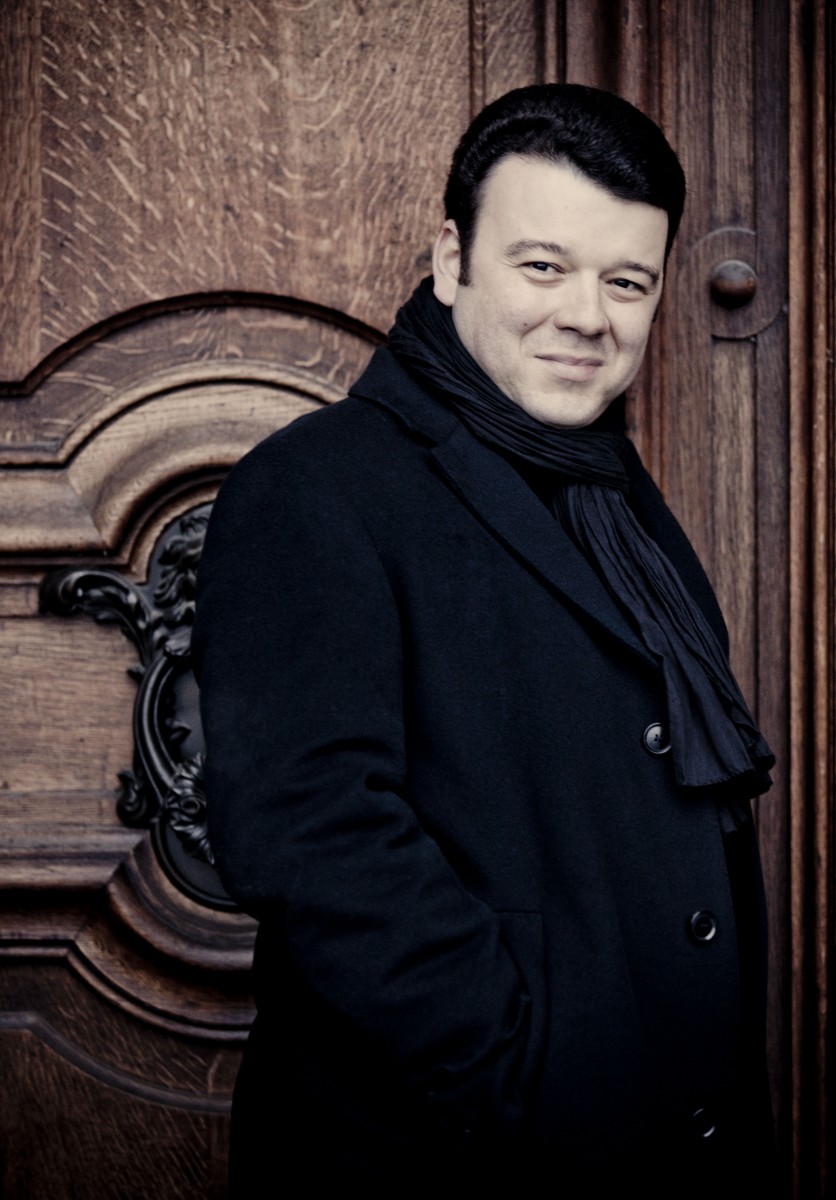
The Ukrainian-born Israeli violinist Vadim Gluzman and the Indonesian pianist Janice Carissa will present a joint recital as guests of the Boulder Bach Festival, at 4 p.m. Saturday, Feb. 11, in the Stewart Auditorium of the Longmont Museum.

Vadim Gluzman. Photo by Marco Borggreve

The children of musicians, Gluzman was born in the former Soviet Union and grew up in Riga, Latvia. He began studying violin at seven and moved to Israel with his family at 17. Today he teaches at the Peabody Conservatory in Baltimore as distinguished artist in residence and plays a Stradivari violin that once belonged to the virtuoso Leopold Auer.

Carissa first studied piano with her mother in her native Indonesia. She came to the United States to study at the Curtis Institute in 2013 and made her debut with the Philadelphia Orchestra at the age of 16. She is currently a master’s student of Robert McDonald at the Juilliard School. She has appeared at Caramoor, Marlboro and Ravinia festivals, among others.

Their program features J.S. Bach’s Sonata in C minor for violin and keyboard, as well as the Chaconne from Bach’s Partita in D minor for solo violin, with a piano accompaniment by Robert Schumann. Continuing a tour through music history, Gluzman will play the A minor sonata for violin solo by the late Romantic violinist/composer Eugène Ysaÿe and par.ti.ta for solo violin written for the Bachwoche (Bach week) in Ansbach, Germany, by Lera Auerbach.

Gluzman wrote, “par.ti.ta is an incredible work, projecting Lera’s lifelong fascination with Bach. . . . We hear traces and echoes of Brandenburg Concerti, Concerto for two violins, sonatas and partitas for violin solo. No particular work is being quoted, yet I can’t help the feeling of being drawn to an incredible world of shades, echoes—are these shades of ourselves?”

# # # # #

Boulder Bach Festival
Vadim Gluzman, violin, and Janice Carissa, piano

  • J.S. Bach: Sonata in C minor, S1017, for violin and clavier obbligato
  • Eugène Ysaÿe: Sonata in A minor, op. 27 no. 2, for violin solo
  • Lera Auerbach: par.ti.ta
  • J.S. Bach: Partita in D minor, Chaconne, with piano accompaniment by Robert Schumann

4 p.m. Saturday, Feb. 11
Stewart Auditorium, Longmont Museum

TICKETS

Grace Notes: Music from America

Concerts by Sphere Ensemble and the Longmont Symphony

By Peter Alexander Nov. 16 at 2:50 p.m.

The Sphere Ensemble, a string ensemble formed by professional string players in the Denver area, will present a kaleidoscope of many American musics at the Mercury Café in Denver Friday (7:30 p.m. Nov. 18) and the Canyon Theater of the Boulder Public Library Saturday (7:30 p.m. Nov. 19; details below).

Under executive director Alex Vittal, a longtime violist and arranger with the group, Sphere has brought educational programming to marginalized audiences, including people in homeless shelters, juvenile detention centers, women’s shelters, children’s hospitals and assisted living facilities.

Sphere characteristically includes both concert music written for string orchestra and arrangements of works drawn from popular and other vernacular genres in their programs. In the case of the “Kaleidoscope” concert, that ranges from music by 20th-century African-American composer Florence Price, to the contemporary Chickasaw composer Jerod Impichchaachaaha’ Tate, to the Pulitzer Prize-winner Carolyn Shaw, to a medley of music by Prince.

Tate’s Pisach has been arranged for Sphere through a special agreement with the composer, and several of the pop pieces were arranged specifically for the ensemble. Vittal’s arrangement of the Prince Medley has been particularly popular in past performances. The concert announcement from Sphere states, “This concert program focuses on the wide range of what ‘American’ music is: with composers from diverse backgrounds, genres from classical to pop, and arrangements written by Sphere musicians.”

# # # # #

“Kaleidoscope”
Sphere ensemble

  • Jerod Impichchaachaaha’ Tate: Pisach. (adapted with permission of the composer by Alex Vittal and Alejandro G. Gullien)
  • Caroline Shaw: Entr’acte
  • Florence Price: “Juba” from Second String Quartet
  • Tan Dun: Symphony for Strings
  • Gordon/Warren: “At Last,” arr. Chris Jusell
  • Prince: Prince Medley, arr. Alex Vittal
  • Randy Newman: “You’ve Got a Friend in Me,” arr. Sarah Whitnah
  • Scott Joplin: “Wall Street Rag,” arr. Alex Vittal
  • Louis Moreau Gottschalk: Souvenir de Porto Rico, arr. David Short

7:30 pm. Friday, Nov. 18
Mercury Café, 2199 California St., Denver

7:30 p.m. Saturday, Nov. 19
Canyon Theater, Boulder Public Library

TICKETS 

# # # # #

The Longmont Symphony Orchestra and conductor Elliot Moore will focus on America in two of their subscriptions concerts this year. The first of these, “Trail of Tears: America—Part 1” will be presented Saturday at the Vance Brand Auditorium (7:30 p.m. Nov. 19; details below).

The concert takes it title from composer Michael Daugherty’s “Trail of Tears” Flute Concerto, which will be performed by soloist Brice Smith and the orchestra. Smith teaches flute at Adams State University in Alamosa, Colo.

The concerto is named for the route that Cherokees and other Native Americans were forced to travel from their ancestral homes in Southeastern states to reservations in present-day Oklahoma. In his program notes, the composer has described the piece as “a musical journey into how the human spirit discovers ways to deal with upheaval, adversity and adapting to a new environment.”

Other works on the program are the Overture to The Song of Hiawatha by Samuel Coleridge-Taylor and the Symphony No. 8 in G major by Dvořák. Coleridge-Taylor was a mixed-race British composer and conductor who had a significant career in both England and the United States, where he was known as “the African Mahler.” 

His trilogy of cantatas The Song of Hiawatha was written 1898–1900. The first part to be performed, Hiawatha’s Wedding Feast, became popular world-wide and earned praise from leading English musicians including Sir Arthur Sullivan.

Dvořák’s Eighth Symphony is one of the composer’s most popular and joyful pieces. It was composed in 1889, soon before the composer’s famous and fateful trip to the United States in 1892. More than any of the Dvořák’s symphonies, it draws on the music of the composer’s homeland, giving it a uniquely relaxed and folkish quality.

# # # # #

“Trail of Tears”
Longmont Symphony Orchestra, Elliot Moore conductor
With Brice Smith, flute

  • Samuel Coleridge Taylor: Overture to Song of Hiawatha
  • Michael Daugherty: Trail of Tears
  • Dvořák: Symphony No 8 in G major

7:30 p.m. Saturday, Nov. 19
Vance Brand Civic Auditorium, Longmont

TICKETS