Seicento introduces new director with Handel oratorio

Coreen Duffy will conduct ‘Judas Maccabeus’ Friday-Sunday

By Peter Alexander Nov. 13 at 5:55 p.m.

Seicento Baroque Ensemble is starting the concert season with a new conductor and a Handel oratorio that is likely new for many in the audience.

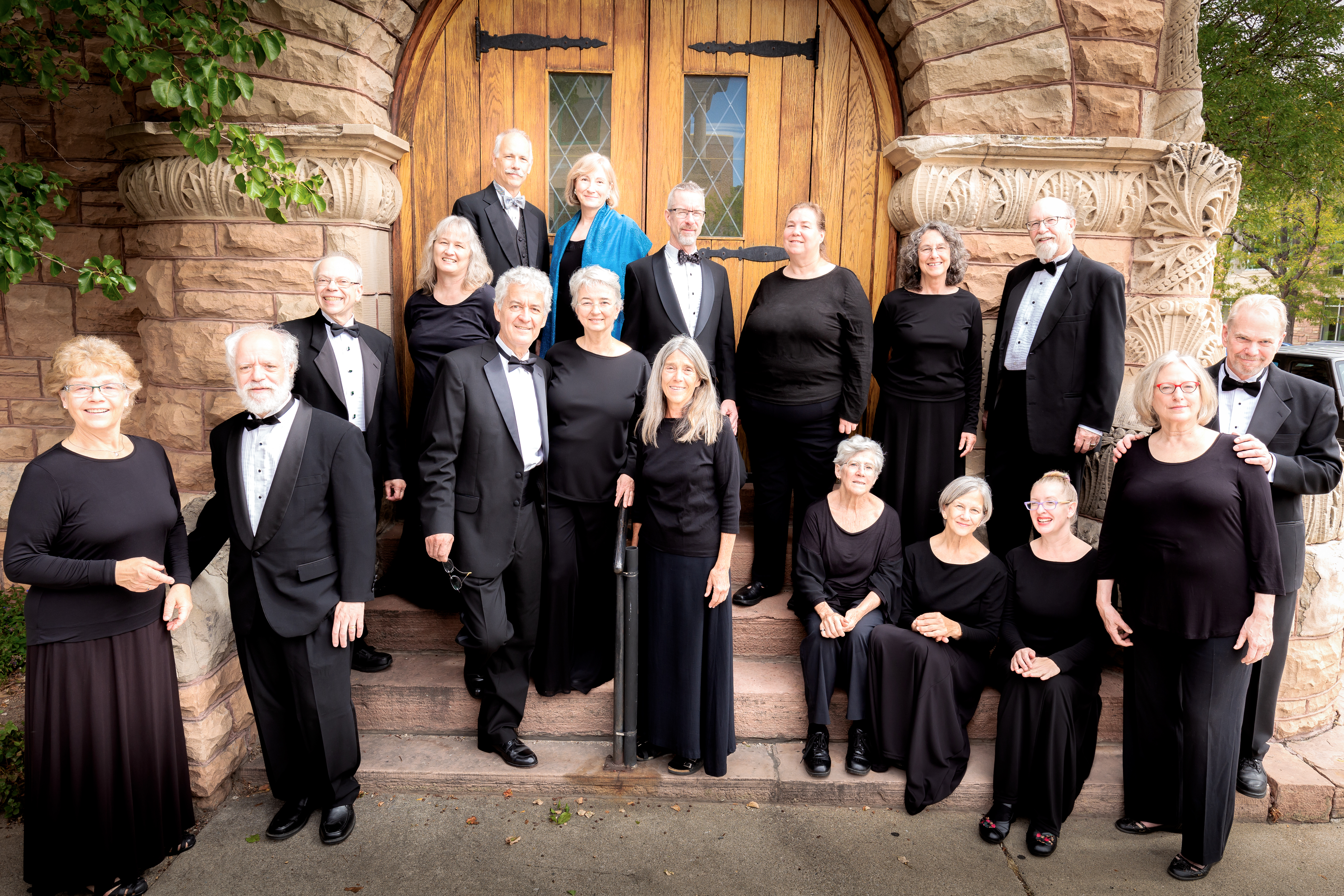
Coreen Duffy, newly hired as Seicento’s artistic director and as director of choral activities at the CU College of Music, is a specialist in Jewish choral music. She will conduct the singers of Seicento and an orchestra of Baroque period instruments in a performance of Handel’s oratorio Judas Maccabeus. Performances will be Friday through Sunday in Longmont, Boulder and Denver (Nov. 15–17; details below).
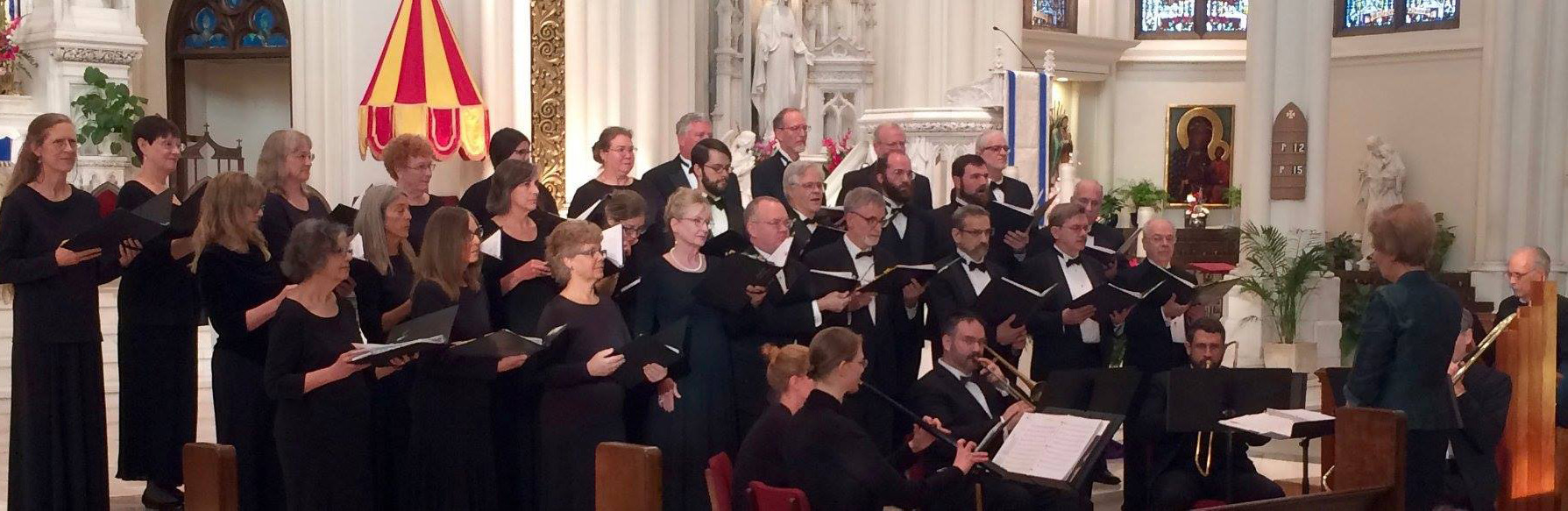
Seicento in 2022 with founding director Evanne Browne

Handel’s Judas Maccabeus was composed in 1746, the 18th of the composer’s remarkable output of 18 or 19 oratorios, depending on how you count them. Based on the historical event of the rebellion of the Jewish people against the Greek Seleucid Empire in the years 170–160 BCE, the libretto was written by Thomas Morell who wrote several oratorio texts for Handel.

The story of Judas Maccabeus is tied to the Jewish holiday of Hanukkah, which celebrates the return of Jewish worship to the Second Temple in Jerusalem during the revolt. Eventually the revolt led to victory over the Greeks and their expulsion from Judea.
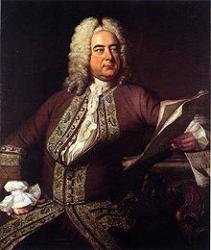
George Frideric Handel

Handel wrote Judas Maccabeus at a time that his oratorios were losing their popularity. To revive his success, he wrote Judas Maccabeus to celebrate the 1746 victory of the English over the Scots at Culloden. To appeal to the British audience, the libretto stresses the military victory of the Jewish people, rather than the “The Festival of Lights” and the Hanukkah story of lamps that miraculously burned for eight days. The premieretook place at in London on April 1, 1747, nearly a year after the battle of Culloden.

The oratorio comprises 68 separate musical numbers organized in three acts, much like Messiah. It includes 17 choruses, as well as arias for the soloists who portray Judas Maccabeus, his brother Simon, a messenger and other characters in the story.

Because it never achieved the broad popularity of Handel’s Messiah, Judas Maccabeus is often regarded as secondary to the more famous work. However, it does contain one of Handel’s most popular choruses, “See, the Conqu’ring Hero Comes!” This chorus has been adapted several times, including a set of variations for cello and piano by Beethoven, a hymn tune, and a movement of Henry Wood’s Fantasia on British Sea Songs.

A performance of Judas Maccabeus is a major undertaking. Seicento will feature its full choir, four soloists—Alice Del Simone, soprano; Alexandra Colaizzi, mezzo-soprano; Javier Abreu, tenor; and James Robinson, bass—and an orchestra with local Baroque-instrument string players and a number of period wind-instrument specialists, most brought in from outside Boulder. 

Duffy links the oratorio firmly to the celebration of Hannukah. She has written of the upcoming performance, “The Jewish High Holy Day season (is) a time of intense contemplation, when we consider the past year in retrospect, make amends with each other and set goals for the coming year.

“This year, the Seicento Baroque Ensemble has set an exciting performance goal . . . one of Handel’s greatest—yet under-performed—oratorios, Judas Maccabaeus. This Chanukah oratorio tells the story of the Maccabees’ fight for religious tolerance and freedom from persecution. Handel’s music soars over the conflict, desolation, and joy, lifting the Chanukah story up for new generations.”
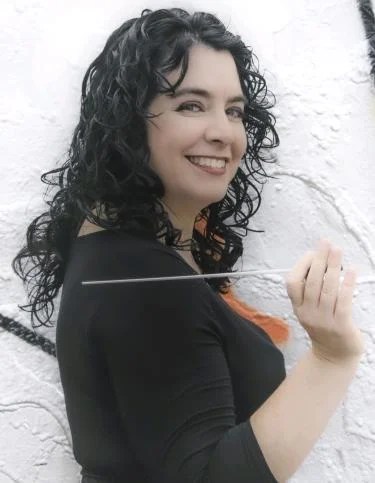
Coreen Duffy

Duffy replaces the founding director of Seicento, Evanne Browne. Her duties at the College of Music include leading the graduate program in choral conducting at both the master’s and doctoral levels. She earned degrees from the University of Michigan (bachelors degree with honors in English), the University of Michigan Law School (Juris Doctor), the University of Miami Frost School of Music (masters in conducting) and the USC Thornton School of Music (doctorate in choral music).

Before coming to CU-Boulder, Duffy was on the faculty of the University of Montana and the University of Miami Frost School of Music, and practiced law in California. She is excited to join the faculty at CU, saying “it’s a legacy program . . . the envy of the country in terms of the gold standard for choral literature studies.”

At Seciento, she says, “it’s a wonderful opportunity to continue the amazing work that Evanne Browne had done. We’re taking on the enormous project from the get-go this fall, with Judas Maccabeus. Next spring the title of the concert is “Renaissance women.” It will be all women composers of the Renaissance and Baroque.

“That will be really fun to do—music that doesn’t get done very often.”

# # # # #

Seicento Baroque Ensemble, Coreen Duffy, director
With Alice Del Simone, soprano; Alexandra Colaizzi, mezzo-soprano; Javier Abreu, tenor; and James Robinson, bass
Orchestra of Baroque-era period instrumentalists

  • Handel: Judas Maccabeus

7 p.m. Friday, Nov. 15, Stewart Auditorium, Longmont
7 p.m. Saturday, Nov. 116, Congregational Nevei Kodesh, Boulder
3 p.m. Sunday, Nov. 17, St. Thomas Episcopal Church, Denver

TICKETS (Students under 18 free)

CORRECTION: The name of bass soloist is James Robinson. It was originally incorrectly listed as James Robins.
Seicento Baroque Ensemble explores music from the birth of the Baroque

Artistic Director Evanne Browne conducts her last program with Seicento

By Peter Alexander April 24 at 6:20 p.m.

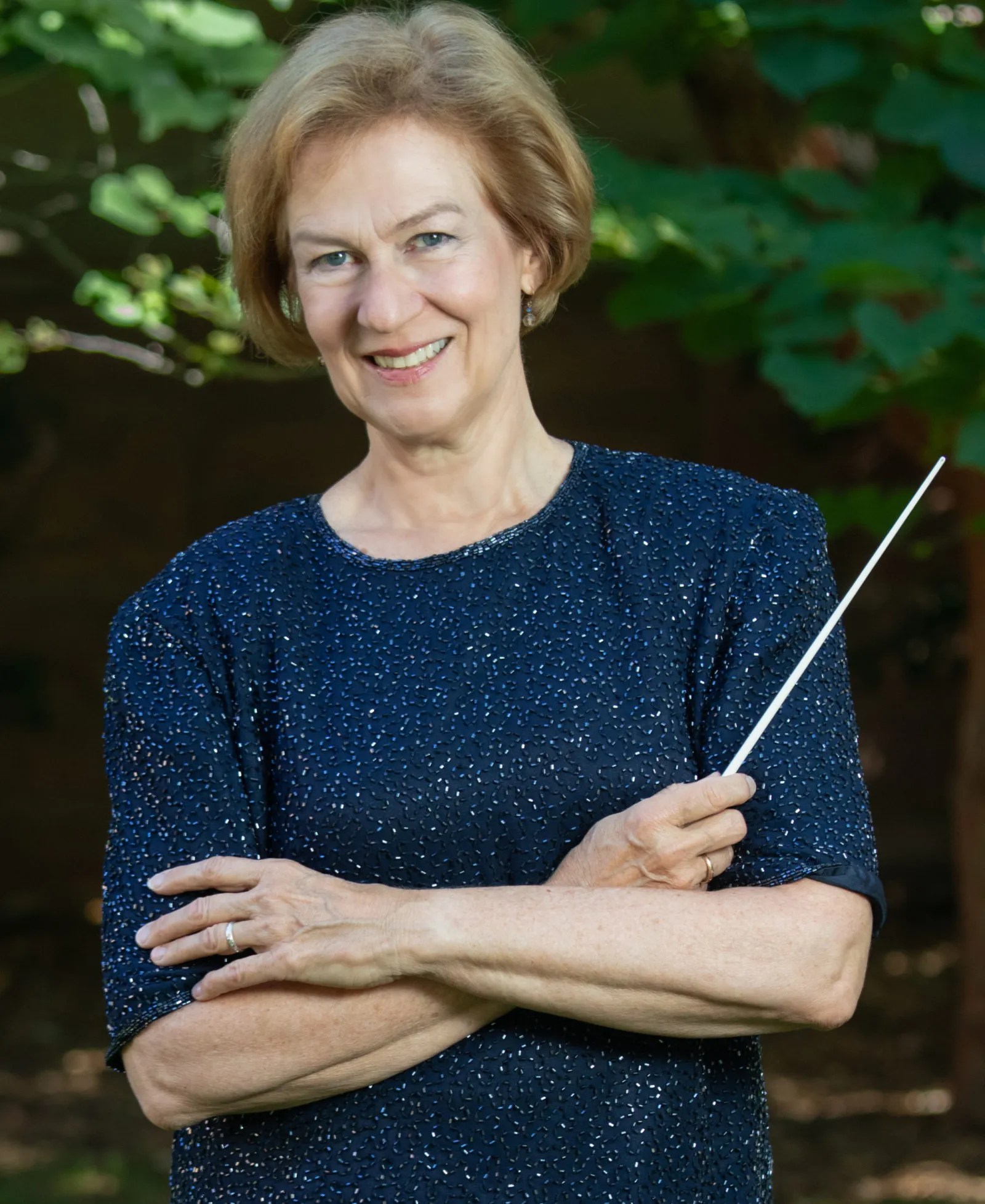
Evanne Browne

Evanne Browne, the first and the fourth director of Boulder’s Seicento Baroque Ensemble, will perform some of her favorite music for her last performances with the group, Friday through Sunday in Denver, Boulder and Longmont (April 26–28; details below).

Browne has announced that she will retire as Seicento’s artistic director following the concerts, which mark the end of the ensemble’s current season. A search is under way for her successor.

Browne founded Seicento in 2011 then left the group when she moved to the east coast in 2017. Two conductors later, she returned to Colorado, and has led the group for the past two years. She says the program was planned in advance and not specifically chosen for her last concert with Seicento. It might well have been, though, as the early years of the Baroque are Browne’s specialty. 

“This is the era that I truly love—the early Italian Baroque,” she says. “This program is a passion of mine (and) was my specialty in my performing years.”

The music she is referring to comes from the period around 1600. The music of the Renaissance had mostly been written for choirs, but starting around 1600 music was written for solo singers with accompaniment of a bass line and simple chords played by keyboard or other stringed instruments. The emphasis in the solo singing was on expression of the text, with vocal lines that required extensive ornamentation.

“It is very virtuosic,” Browne explains. “It really is an approach that where, you have to fill in the blanks.”

To help promote understanding of the style, Browne has been working with four apprentice artists who will be featured on the program, sopranos Ann Jeffers and Andrea Weidemann, and mezzo-sopranos Emily Anderson and Gabrielle Razafinjatovo. 

“I’ve done a lot of that kind of music as a soloist,” Browne says. “It is very virtuosic, and my goal in having the apprentice artists program (was) to pass that knowledge on.”

Because much of the expression in the early Baroque was supplied by ornaments that were not written out, that was where Browne started with the apprentice artists. She started by teaching the most common ornaments, and suggested recordings they should listen to. “They learned the cadential ornaments [for endings of phrases],” she explains. “Then we started filling in thirds, and filling in fourths, and it was so much fun to see them go, ‘Oh!’”

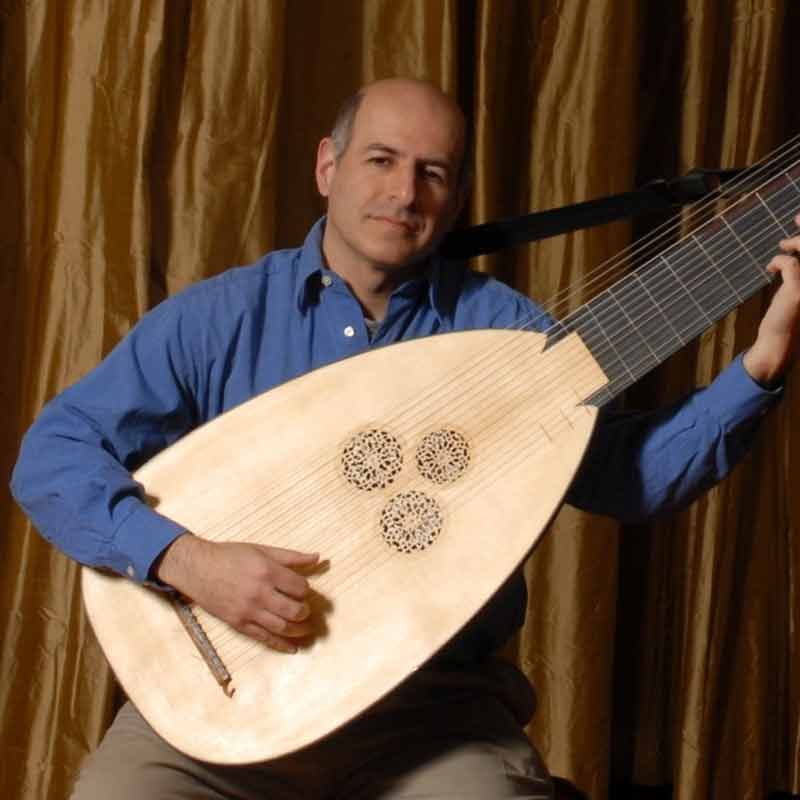
William Simms with theorbo
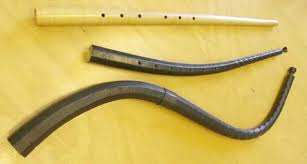
cornettos

To make an interesting program for both solo artists and the Seciento chorus, Browne selected both solo pieces in a style called “monody”—ornamented solo voice with continuo accompaniment that will be sung by the apprentice artists—and music from the period for the full chorus, including madrigals and a mass setting by Frescobaldi. There are also instrumental pieces played by local performers on Baroque instruments and three guest artists—William Simms on theorbo (a large stringed lute that can play chordal accompaniments), Chuck Colburn on cornetto (a fingered wind instrument with a trumpet-like mouthpiece), and Webb Wiggins on harpsichord.

Browne singles out two portions of the program that bring together the Seicento chorus and the other performers. “Things that I think are spectacular are our set of variations on a tune, sometimes called ‘La Monica’,” she says. “This tune is anonymous, (and) appears in the early 1500s. It appears in France, it appears in Italy, it appears in England, and different composers take that same tune and set it for different instruments.”

Frescobaldi

The set is based around music by Frescobaldi that incorporates the tune within a choral mass. Seicento’s set begins with a unison performance of the tune, followed by the mass with different instrumental versions of the tune interspersed between the movements. “The Mass is gorgeous, it’s a double choir mass,“ Browne says. 

Between movements, she explains, “William Simms is going to play variations on theorbo that were written by Piccini, our cornet player is going to do ornamentation on his own that shows what a performer would have done at the time, and then the violins have a Sonata by Marini that’s also a set of variations. I love this set!”

The final piece on the program, Venga dal ciel migliore (Come from the best heaven) by Giovanni Rovetta, also brings performers together. “That’s a highlight for me because it brings the violins and the soloists and the choir and all the continuo instruments (together), and the cornetto player’s going to be playing. 

“It’s from that transitional time when a piece of music has choral sections that are punctuated by solo sections. The solo sections have all of the ornamentation, a lot of written out runs, and very challenging technical parts, and then the choir comes in and kind of repeats what they said.”

Browne emphasizes how the musical changes at the beginning of the Italian Baroque are still familiar to us today. “We’ve been calling this kind of a revolution in music,” she says. “This is when we change to the melody accompanied by harmonies, which is a big change from Renaissance music.”

Browne and Seicento at a performance earlier this season. Photo by Emily Bowman.

Ultimately, the importance of the “revolution” was in creating a texture and style of music that continues to this day. In fact, any time you turn on the radio you will hear a melody accompanied by harmonies, in popular songs, in jazz, in show tunes—almost anything you hear today, 

As Browne wrote in her press release, “A lead melody supported by harmony and a prominent bass line is still the primary format of today’s music, from classical to jazz to rock and roll.”

And it all started around 1600.

# # # # #

“Prima Melodia: Birth of Baroque”
Seicento Baroque Ensemble, Evanne Browne, conductor
With sopranos Ann Jeffers and Andrea Weidemann, and mezzo-sopranos Emily Anderson and Gabrielle Razafinjatovo, Seicento apprentice artists.
William Simms, theorbo, Chuck Colburn, cornetto, and Webb Wiggins, harpsichord, guest artists

  • Monteverdi: Movete al mio bel suon
  • Sigismondo d’India: Cruda Amarilli
  • Cipriano de Rore: Ancor che col partire
  • Riccardo Rognoni: Ancor che col partire
  • Alessandro Grandi: Laetamini vos o caeli
  • Monteverdi: Quel sguardo sdegnosetto
  • Francesca Caccini: Maria, dolce Maria
  • Monteverdi: O come sei gentile
  • Girolamo Frescobaldi: Toccata Settima in D minor, Book 2

Variations on a Melody: “Aria della Monica”:

  • Anonymous: Madre, non mi far monaca (unison)
  • Frescobaldi: “Kyrie” from Missa sopra l’aria della Monica (chorus)
  • Alessandro Piccinini: Corrente sopra l’Alemana (theorbo)
  • Frescobaldi: “Gloria” from Missa sopra l’aria della Monica 
  • Une jeune fillette (embellishments improvised on cornetto)
  • Frescobaldi: “Sanctus” and “Agnus Dei” from Missa sopra l’aria della Monica
  • Biagio Marini: “Sonata sopra la Monaca” (two violins and continuo)
  • Luzzasco Luzzaschi: Toccata in e minor
  • O dolcezz’ amarissime d’amore
  • Giulio Caccini: Amor, io parto
  • Nicolò Corradini: Spargite flores
  • Giovanni Rovetta: Venga dal ciel migliore

7:30 p.m. Friday, April 26, St. Paul’s Lutheran Church, Denver
7:30 p.m. Saturday, April 27, Mountain View Methodist Church, Boulder
3 p.m. Sunday, April 28, United Church of Christ, Longmont

TICKETS, including live stream of Friday’s performance

Seicento Baroque Ensemble presents “Inspire Baroque”

Series of educational sessions are open to the public

By Peter Alexander April 7 at 6:50 p.m.

Imagine that you are leading a chorus. What do you do when a pandemic prevents you from presenting concerts, or even gathering for rehearsals?

If the chorus is the Seicento Baroque Ensemble, Boulder’s chamber choir devoted to the music of the early Baroque period, you might see this as an opportunity to expand knowledge and understanding of the Baroque style of music. You could, for examle, provide educational sessions designed to “demystify ‘Baroque Performance Practice’ in classical music and dance.” 

Seicento Baroque Ensemble with their director, Amanda Balestrieri (in blue)

In fact, that is exactly what Amanda Balestrieri, Seicento’s artistic director, decided to do this spring.

This intriguing appraoch allows safe distancing, since each session only requires a single presenter, and perhaps one or two other participants. It provides insight into the often arcane matters of early Baroque performance—knowledge that will benefit both the choir’s audience and their members. It allows Seicento to stay in contact with their supporters, and might attract the attention of potential new listeners.

The first of the “Inspire Baroque” series, as it is called—a class on Baroque dance—was held in March, but four sessions remain. The first of those remaining sessions, “Cellos & Viols and Students, Oh My!” will premiere on YouTube at 6 p.m. Friday, April 9.

Sarah Biber

For that session, Baroque and viola da gamba specialist Sarah Biber will explore and explain the viol family of instruments—bowed stringed instruments of the Renaissance and Baroque periods that are similar to, but distinct to the more familiar violin and its larger relations. Assisted by colleagues and students, Biber will use the “La Folia” theme, employed by many Baroque composers and familiar to Baroque music enthusiasts.

Other sessions of the “Inspire Baroque” series and their premieres will be:

—“Historic Organs Meet 21st-Century Tech,” 6–7 p.m. Friday, April 23. Using a Virtual Pipe Organ (VPO) setup, historical keyboard specialist Wesley Leffingwell will discuss organ history and music that showcases the versatility of a virtual instrument.

—“What’s Your Temperament (and why does it matter)?” 6–7 p.m. Friday, May 7. Organist and harpsichord performer Eric Wicks will venture into the complex and deeply mystifying subject of Baroque-era intonation and systems of tuning, and explain the ways that different temperaments affect the sound and expression of early music performances.

—“The Flute’s Pleasure Garden,” 6–8:15 p.m. Friday, May 21. Flutist and recorder specialist Rob Turner will present Baroque music written or arranged for unaccompanied recorder and transverse flute, using his extensive personal collection of instruments. The YouTube premiere of the “Inspire Baroque” session will be followed by a Q&A session by Zoom. 

Each session is free, with a requested donation to Seicento. You may sign up for the individual sessions here.