Valkyrie’s ride high in the Santa Fe air

Santa Fe Opera continues its exploration of Wagner’s music dramas

By Peter Alexander Aug. 11 at 5:35 p.m.

Editor’s Note: This is one of several posts covering four of the five operas presented this year at the Santa Fe Opera.

Die Walküre, the last of the Santa Fe Opera productions I saw this summer (Aug. 8), continues the company’s exploration of Wagner’s music dramas, following the 2022 production of Tristan und Isolde previously reviewed here

Ryan Speedo Green (Wotan); Back: Tamara Wilson (Brüunhilde); photo by Curtis Brown
for the Santa Fe Opera

The performance was marked by excellent singing, flexible but ultimately meaningless settings, and costumes that ranged from impressive to silly. The stage direction was busy, filled with ideas but no overriding concept.
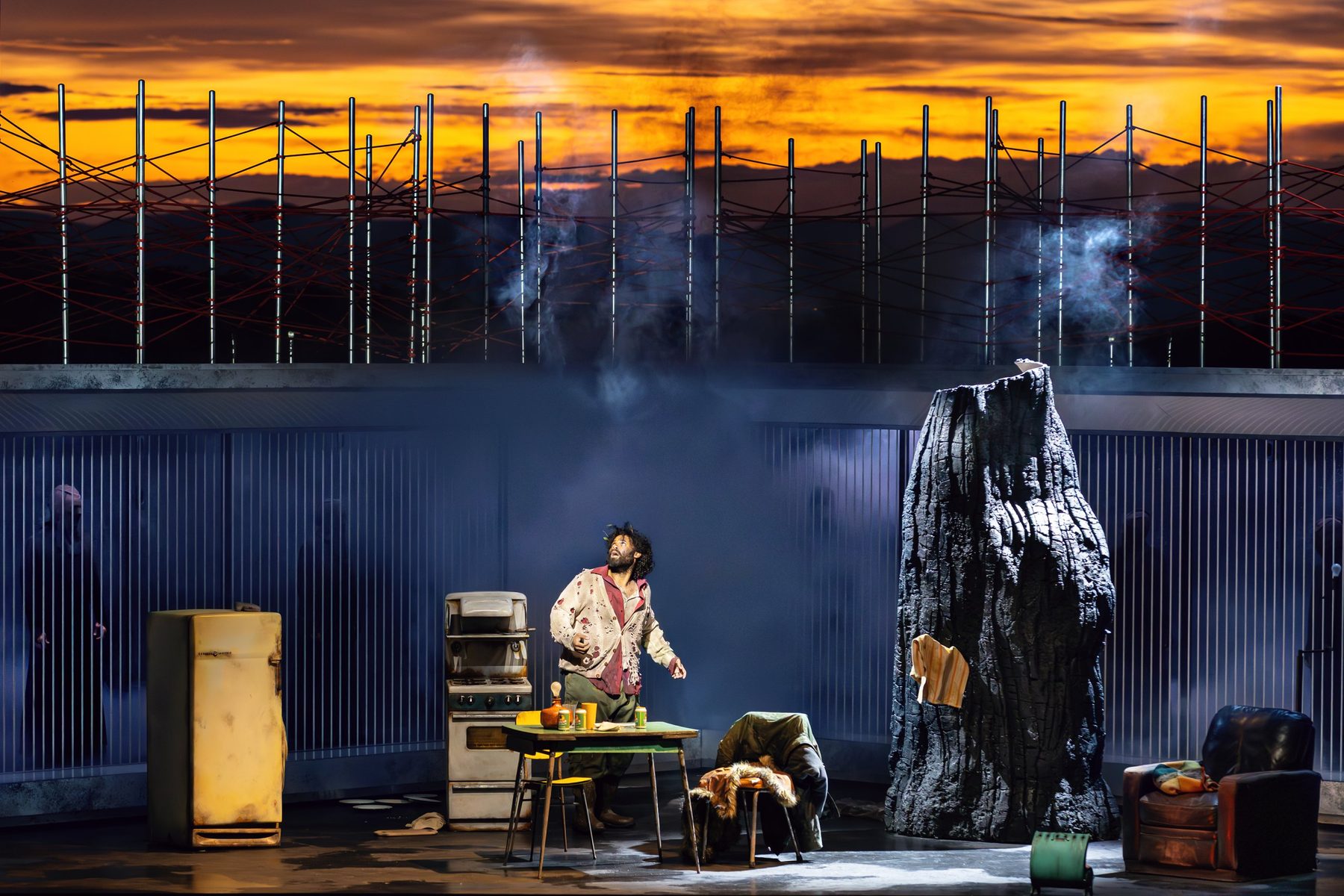
Jamez McCorkle (Siegmund); photo by Curtis Brown for the Santa Fe Opera

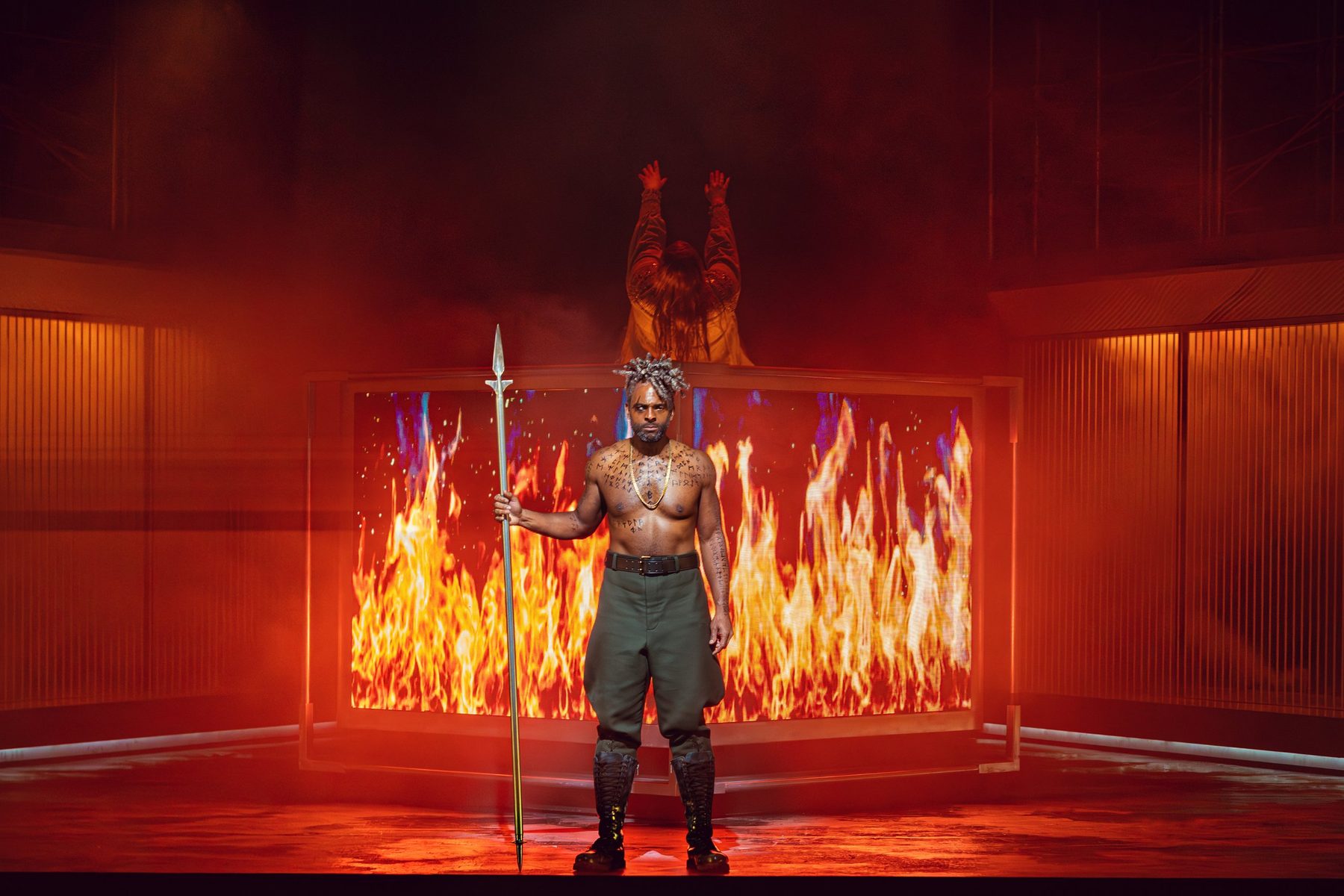
Many operas today are time shifted; I have reviewed several of these at Santa Fe in the past (La Traviata and Don Giovanni, Rosenkavalier and L’elisir d’amore, Tosca). Die Walküre, based in legend, has no set era, but Santa Fe’s current production proposes many different historical time slots for the story. The opening act took place in an abstract space filled with 1950s appliances, Sieglinde wore a contemporary dress, Brünnhilde was clad in generic old-norse gear, and the Valkyries wore different military uniforms from across the globe and representing the middle ages to the 20th century.
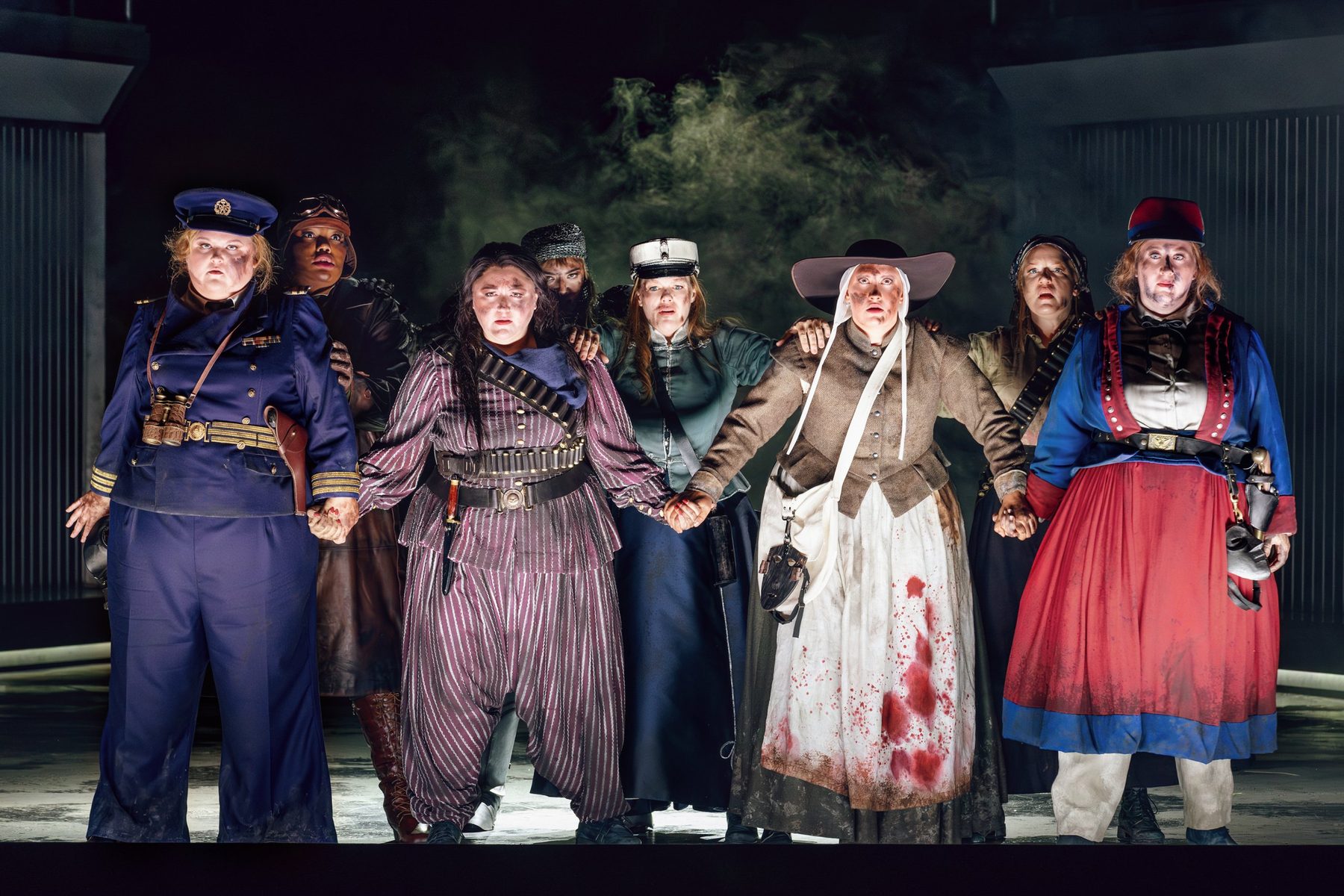
L-R: Valkyries Gretchen Krupp, Jasmin Ward, Jessica Faselt, Lauren Randolph, Wendy Bryn Harmer, Deanna Ray Eberhart, Jennifer Johnson Cano, Aubrey Odle; photo by Curtis Brown for the Santa Fe Opera

The set remained abstract throughout—two horizontal panels filled with vertical, elastic cables that characters reach and enter through, that meet mid-stage to open or close as the staging requires. These panels are topped by a walkway with a railing of entangled red ropes, a symbol used throughout to represent marriage—literal ”ties that bind”—as enforced by Fricka. The upper walkway is used by Wotan, Fricka and others, as a viewpoint on the stage action below. As a setting, this is suggestive of nothing at all.

Various non-singing characters appear throughout. There are mysterious figures in black body suits who enter and leave the stage, handle Siegmund’s sword, Brünnhilde’s shield, and move set pieces around. There are actors representing Alberich, who is referred to but not present in the plot; Grimhilde, the Gibichung who will be mother to Alberich’s son Hagen later in the story; Erda, Siegmund’s, Sieglinde’s and the Valkyries’ earth-spirit mother; and other shadowy figures from Ring mythology.
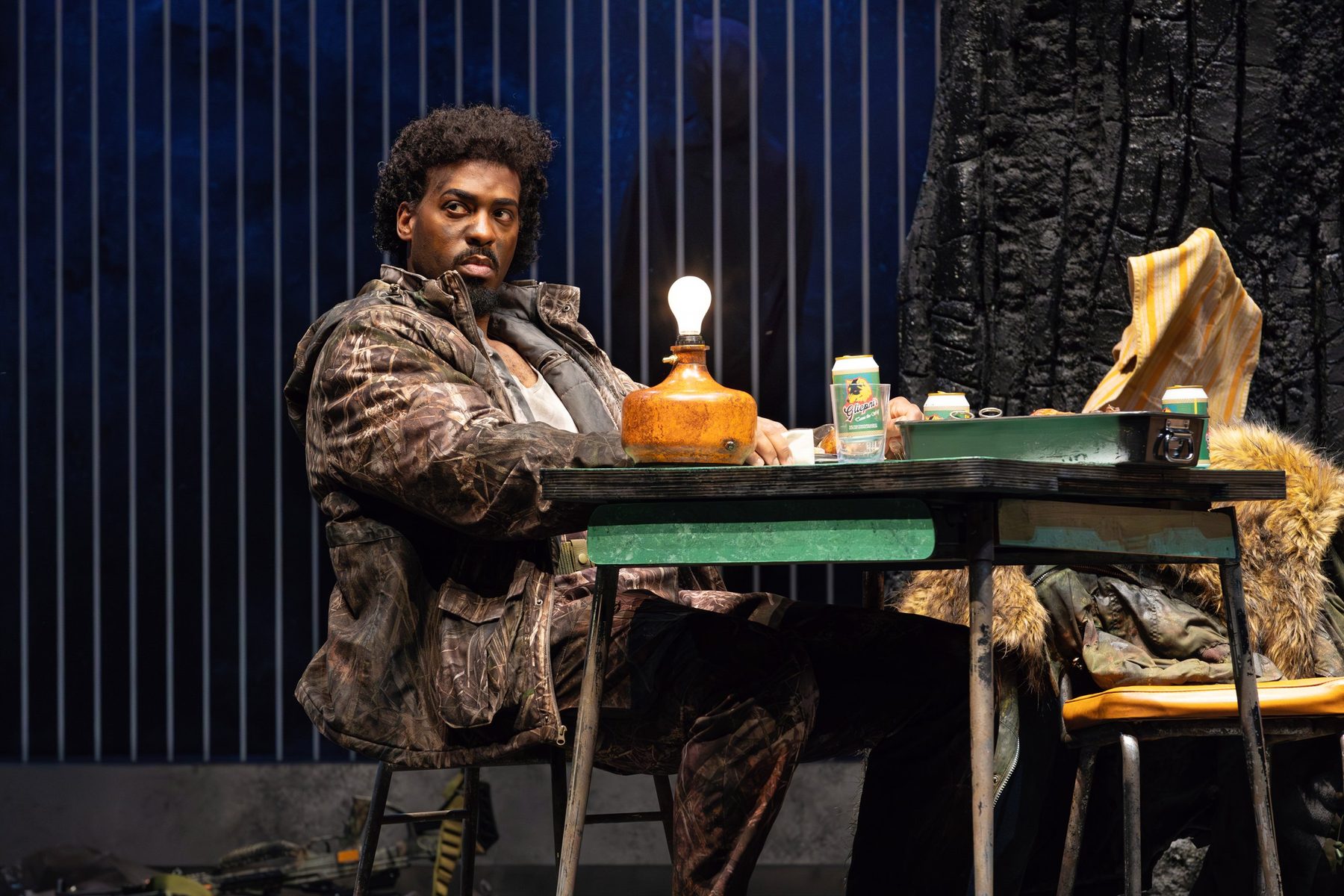
Solomon Howard (Hunding); photo by Curtis Brown for the Santa Fe Opera

None of this clarifies the plot. Clearly, director Melly Still has many ideas about how to present Die Walküre within the Ring Cycle, but her disparate ideas do not add up. At it’s core Die Walküre tells a simple story—Siegmund runs off with his sister Sieglinde and they conceive a child; Sieglinde’s betrayed husband Hunding tracks them down and kills Siegmund. 

But there is no story so simple that Wagner and stage directors cannot make it more complicated, which is what happens in Santa Fe. Wagner’s role, having written the libretto based on the Nordic myths, lies with meddling gods and magical weapons. 

The stage director takes credit for the rest, starting with the black-clad figures, who only obfuscate the plot. While the basic action is clear, one is distracted by dark figures posing mysteriously behind the elastic bands, reaching through them, entering and leaving the stage, handling props. There is broader symbolism at work, but none of this helps to tell the story of Die Walküre. Another intrusion that seemed gratuitous was Wotan’s cadre of “enforcers,” military police characters dressed like Star Wars extras or World War I impersonators.

One moment in particular stands out as a missed opportunity. The first act ends with the walls of Hunding’s hut flying open and spring bursting over the twins/lovers Sieglinde and Siegmund, blessing—as Wotan later argues to Fricka—their incestuous love. Wagner’s music is powerful, soaring and blooming. It is expressing something that needs to be shown. But in Santa Fe, the panels open up and the lovers occupy a bare space on the stage. Of spring there is not the slightest visual sign.
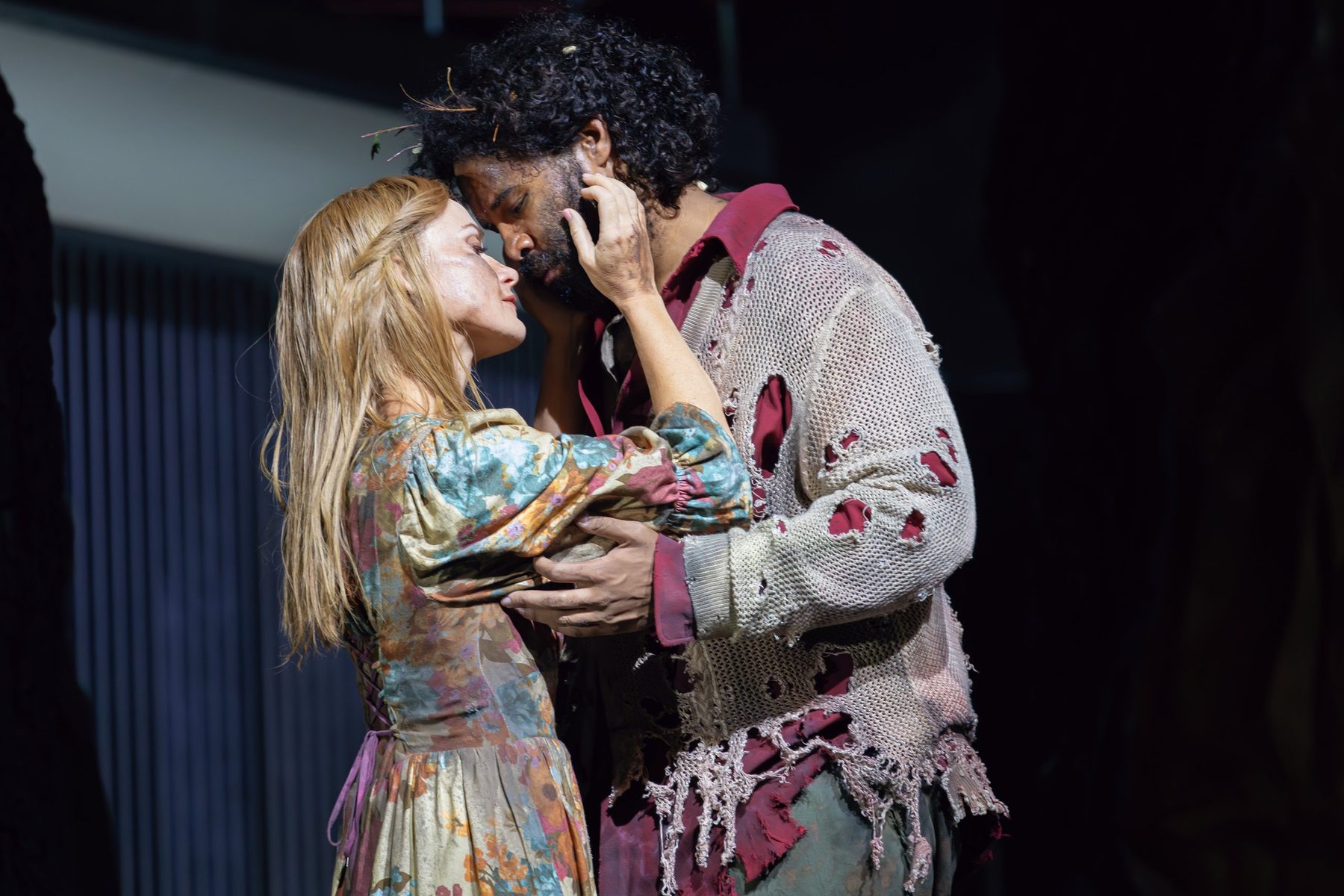
Vida Miknevičiūtė (Sieglinde), Jamez McCorkle (Siegmund); photo by Curtis Brown for the Santa Fe Opera

In the role of Siegmund, Jamez McCorkle reached all of his notes, sang with strong feeling, but allowed a slight bleat enter his voice at crucial moments. This rough edge pushed his voice out, but as often with strained Wagner singers, it did not add beauty to the sound.

Vida Miknevičiūtė portrayed a slight Sieglinde, vulnerable and frightened by her rising feelings. Although light for Wagner, her voice was precise, employed carefully, only occasionally a little wobbly. She sang forcefully through the love duet with Siegmund, rising to steely heights, and melting into her gentler moments.

As Wotan, Ryan Speedo Green was struggling with altitude, or the dry mountain air, or both. While onstage he was handed water through the elastic bands in both acts II and III, and his voice sounded worn by the end of each act. At his best, he was a gruff, confrontational Wotan, consumed by his growing anger at being caught in his own trap. He easily commanded the stage in every appearance. Whatever his struggle, it did not diminish his presence.
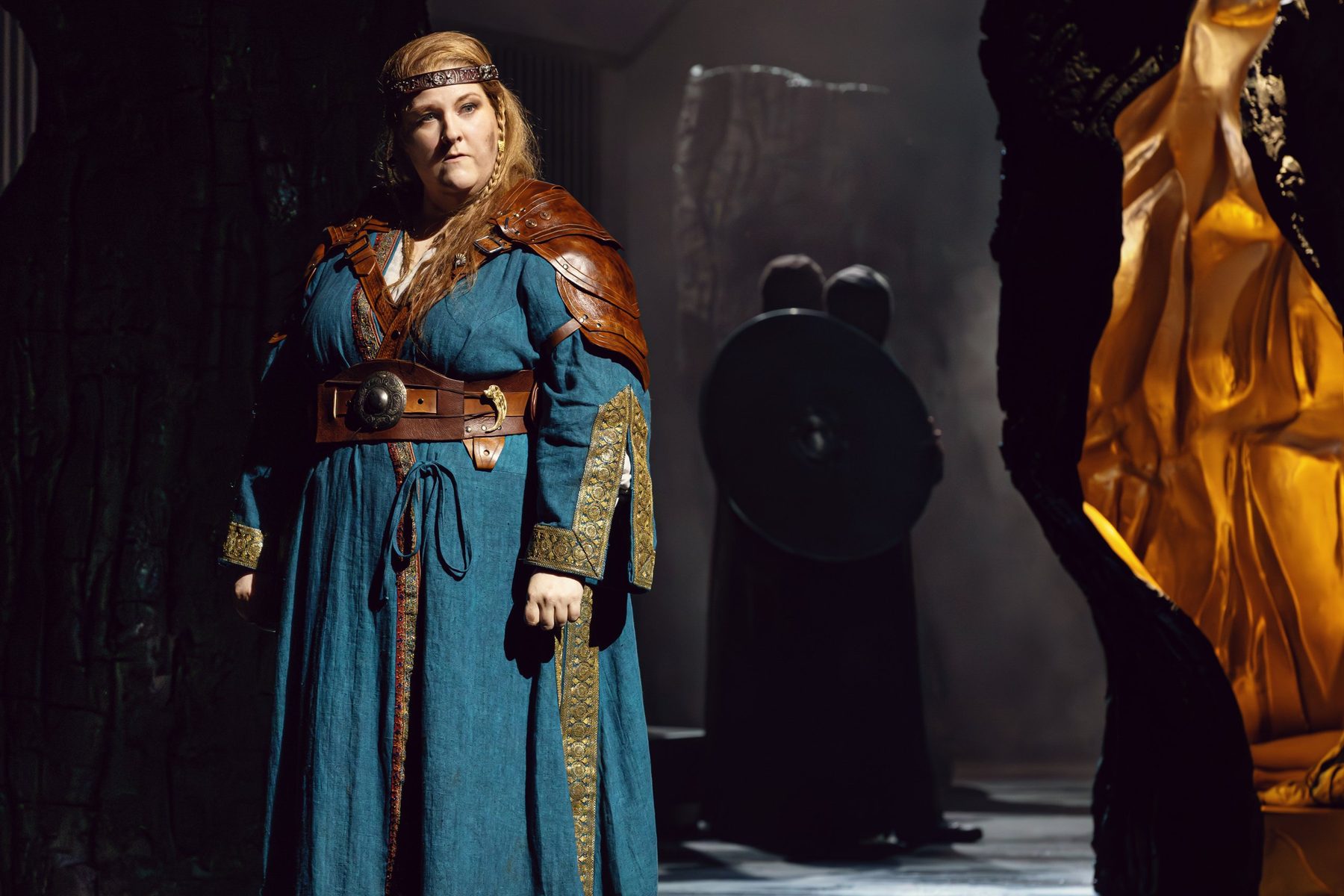
Tamara Wilson (Brüunhilde), photo by Curtis Brown for the Santa Fe Opera

Tamara Wilson’s entrance as Brünnhilde was greeted with cheers. She was a solid member of the cast, singing with force and power, if not quite dominance. Her interactions with Green’s Wotan near the end was a forceful turning point, in both the opera and for the cycle beyond Walküre

Sarah Saturnino provided a secure vocal element as Fricka. Her long Act II argument with Wotan—for me one of the most interesting portions of a long evening—was deeply engaging. Saturnino sang with genuine depth and expression.

Solomon Howard brought his big, resonant bass voice to the role of Hunding, filling the house with strong tones. His military-fatigue costuming lent an appropriately menacing air, although I hard a hard time getting past his resemblance to Jimi Hendrix. Contemporary costuming has its perils. 
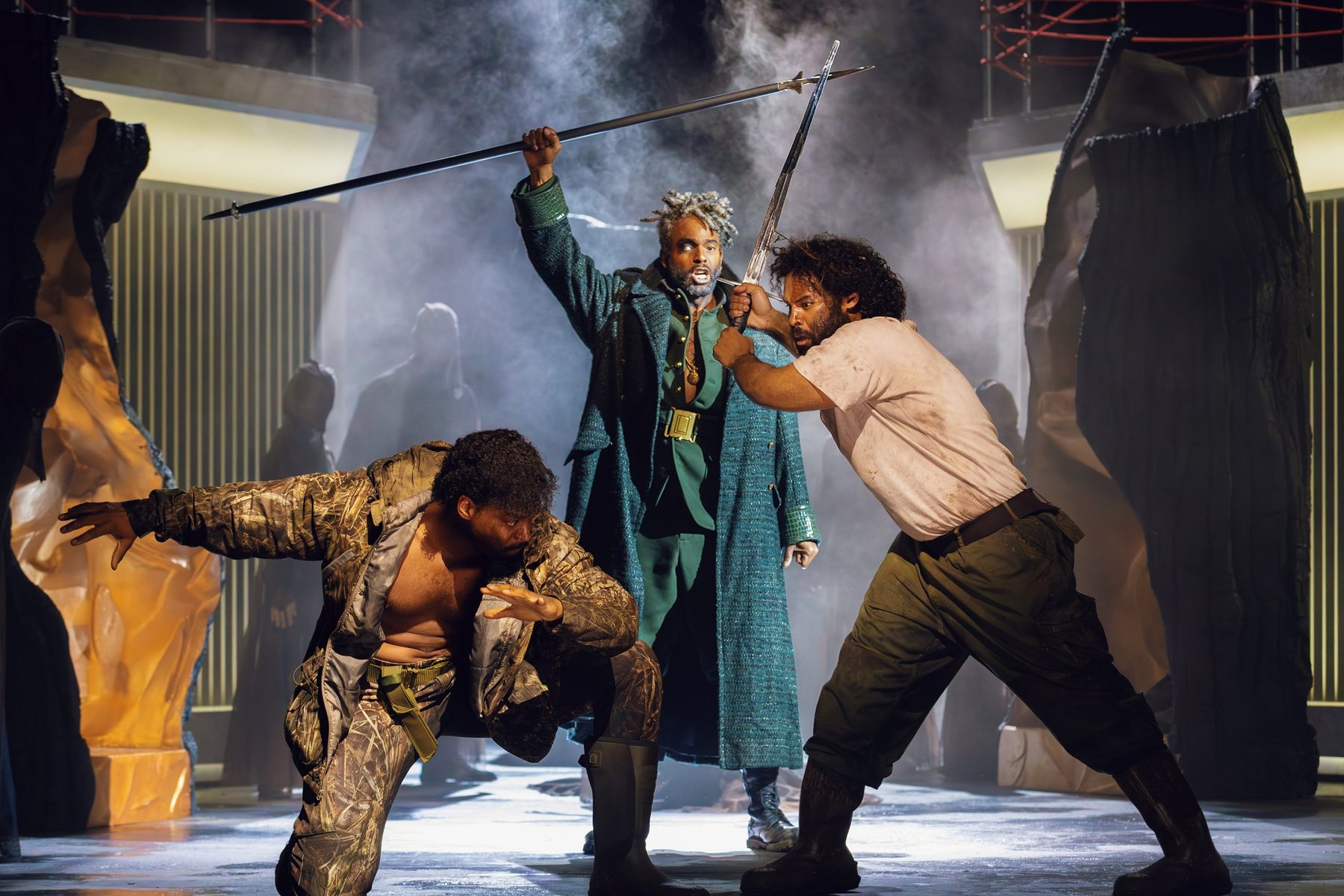
Soloman Howard (Hunding), Ryan Speedo Green (Wotan), Jamez McCorkle (Siegmund); photo by Curtis Brown for the Santa Fe Opera

The Valkyrie’s calls rang resoundingly over the orchestra, calling their warrior band together. All were potent contributors to the performance. With Brünnhilde, they displayed an infectious joy of companionship. James Gaffigan conducted with a sure hand, leading a performance steeped in experience and understanding of the score. The orchestra, and especially the expanded brass section so crucial to Wagner, played tirelessly over the music drama’s long duration, providing powerful heights as well as more intimate moments of sensitivity.

The Aug. 8 audience I take to have been about 75% Wagnerphiles—two gentlemen in front of me wore horned helmets of felt—who loved every minute of Wagner’s music. They know the story backwards and forwards, and so could recognize all the references and the crucial turns of the plot. They deservedly cheered the singers. 

For those less familiar with the story, it must at times have been a mystery.

Die Walküre will be repeated at the Santa Fe Opera twice more, Aug. 13 and 21. Remaining tickets, if any, are available HERE.
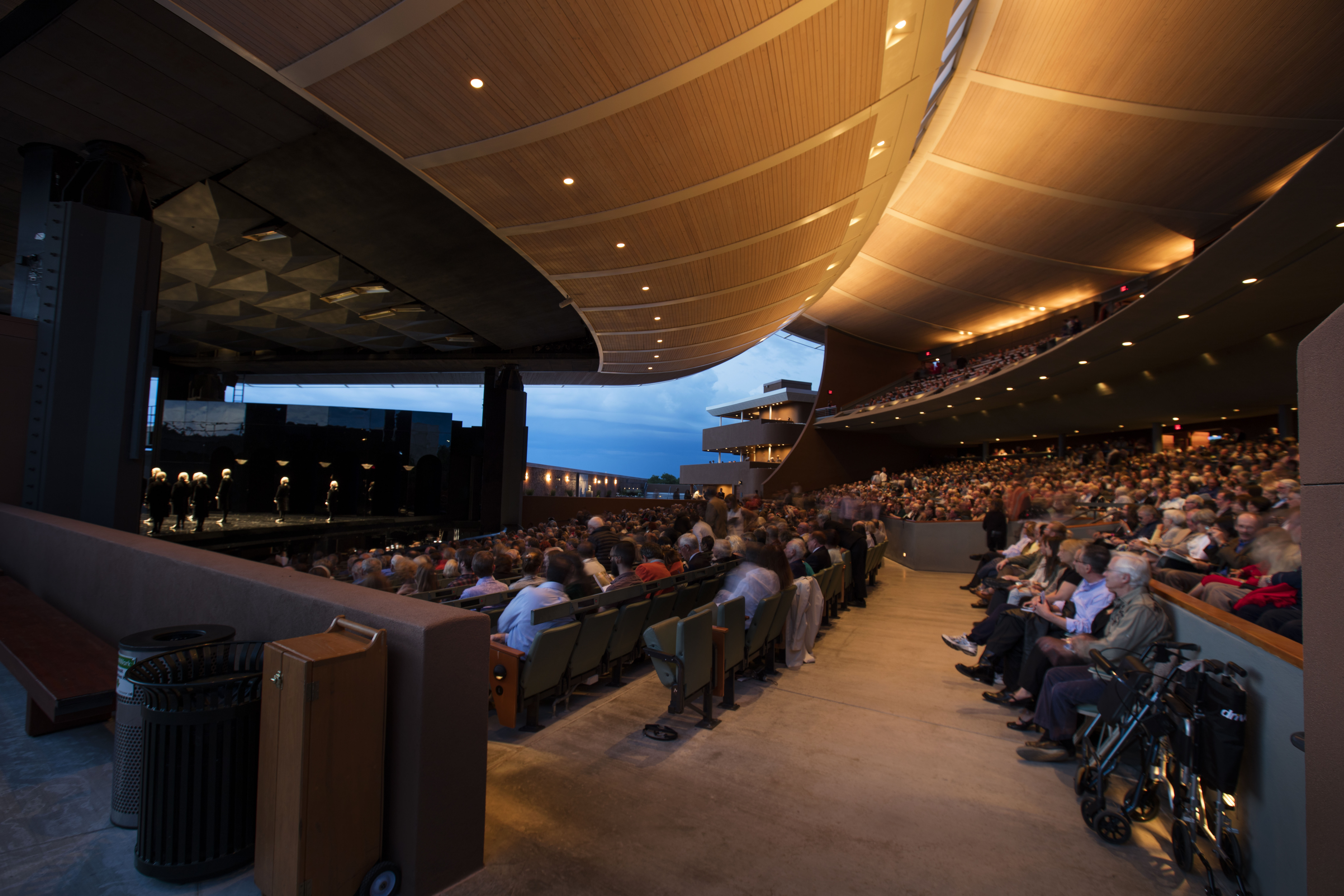
Time shifting at the Santa Fe Opera

Reviews of La Traviata and Don Giovanni

By Peter Alexander Aug. 12 at 11:10 p.m.

Opera productions seem to go through trends. That was certainly the case at the Santa Fe Opera this summer: of the five productions, only one—the world premiere of The Righteous by Gregory Spears, set in the 1980s—remained in the time period for which it was conceived. The other four—La Traviata, Don Giovani, Der Rosenkavalier and L’elisir d’amore—were shifted forward to more recent times. Proving that time shifts can work in the right circumstances, some of the productions worked very well in their updated periods. Others were less successful.

Opera night at Santa Fe. Photo by Kate Russell.

Verdi’s La Traviata, updated to 1930s Paris, is a glittering success in almost every way. Armenian soprano Mané Galoyan is as good a Violetta as I have seen. As Alfredo, Uzbekistan tenor Bekhzod Davronov matches her vocally very well. Stand-in Alfredo Daza, the Mexican baritone rounding out the international cast, is a powerful, if blustery, Giorgio Germont. 

Conductor Corrado Rovaris brought out the Italianate nuances of the score without ever overpowering the singers. The performance I heard (Aug. 5) was filled with glorious, touching pianissimo singing, especially from Galoyan, and every word, every note was clearly voiced no matter how softly. Luisa Muller’s direction created a human drama where many productions are satisfied with conventional routine.

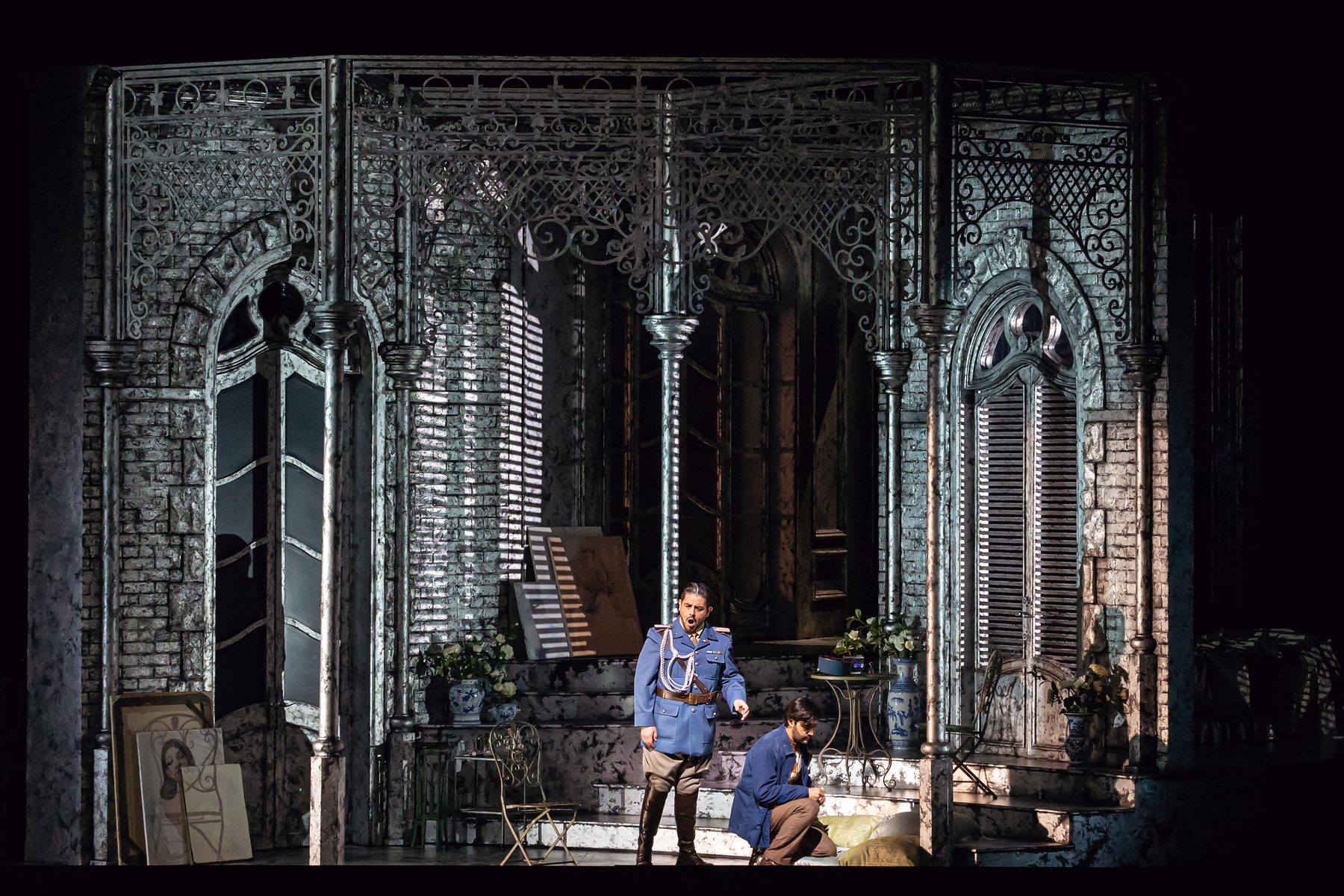
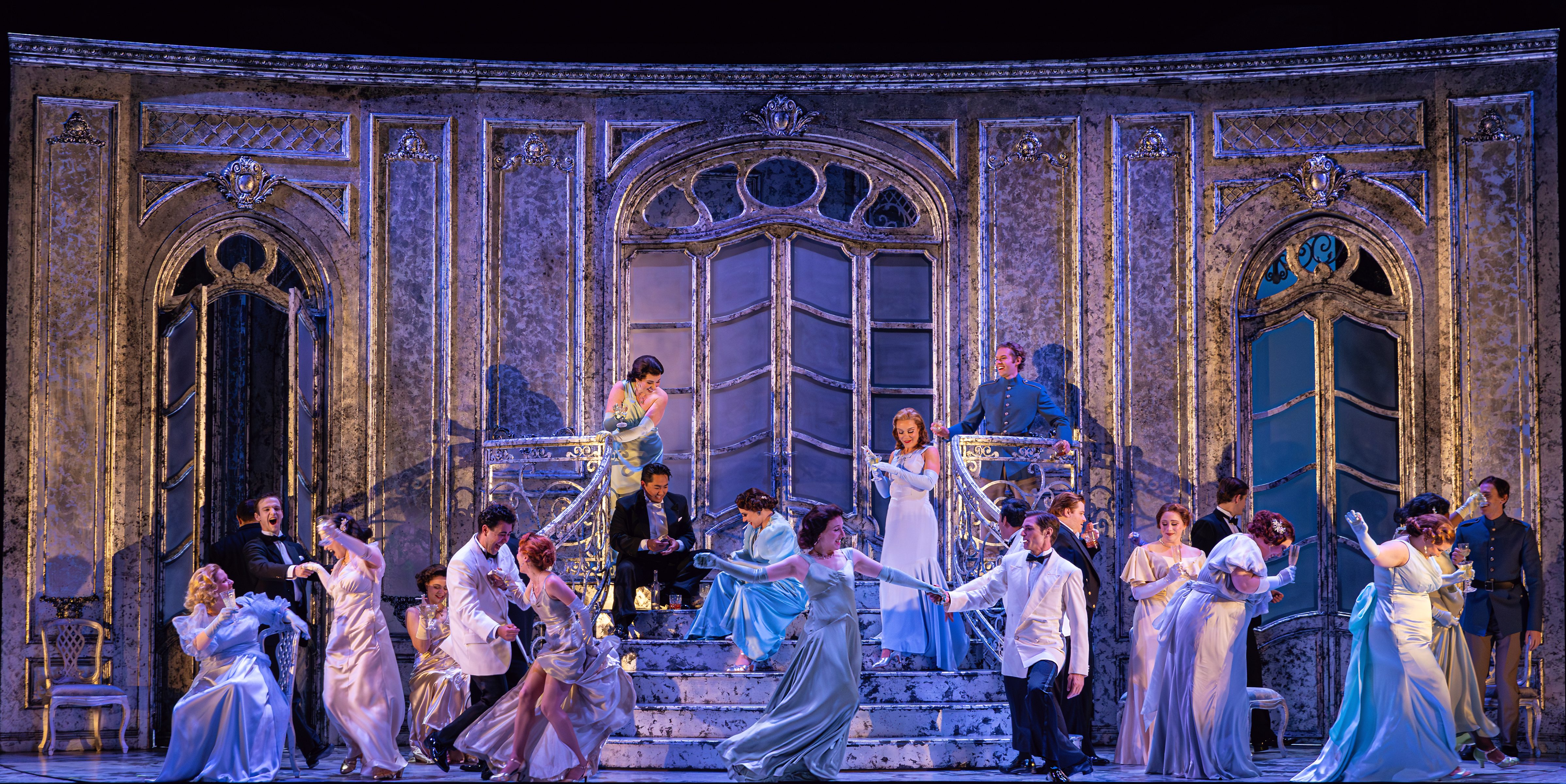
La Traviata set by Christopher Oram. Photo by Curtis Brown.

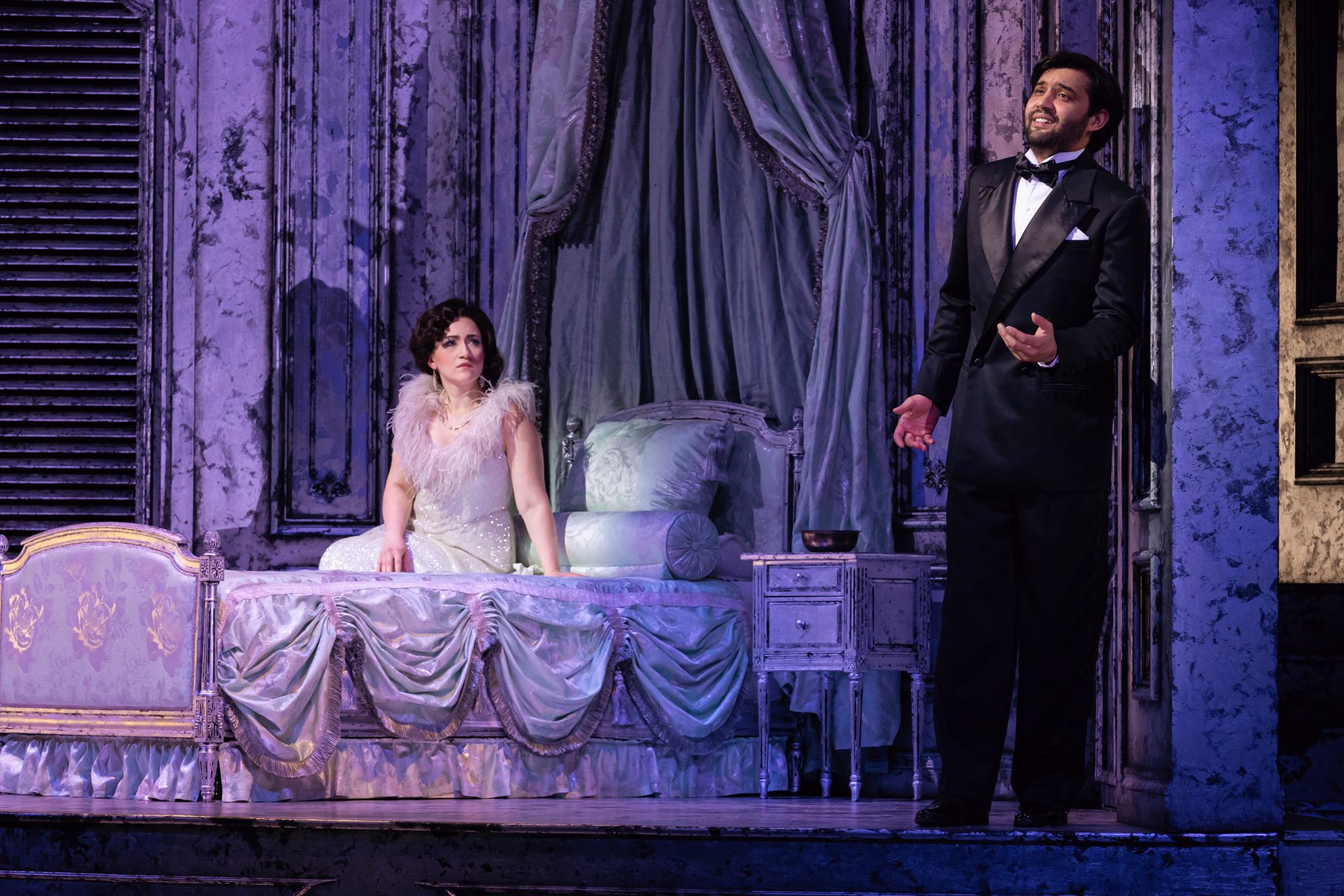
The set by Christopher Oram places evocative spaces on a turntable. The Parisian interiors are elaborately decorated in silver, with discrete lighting adding a touch of color. The rotating set is used strategically: in the first act, Violetta’s public scenes at the party are placed in an ornate salon, while her private moments and scenes with Alfredo move smoothly to an interior bedroom, a contrast that sets up the following scenes with the public alternating with the private. The lovers’ country retreat is appropriately rustic, neither too grand nor too shabby. The sets and costumes adhere carefully to the 1930s aesthetic.

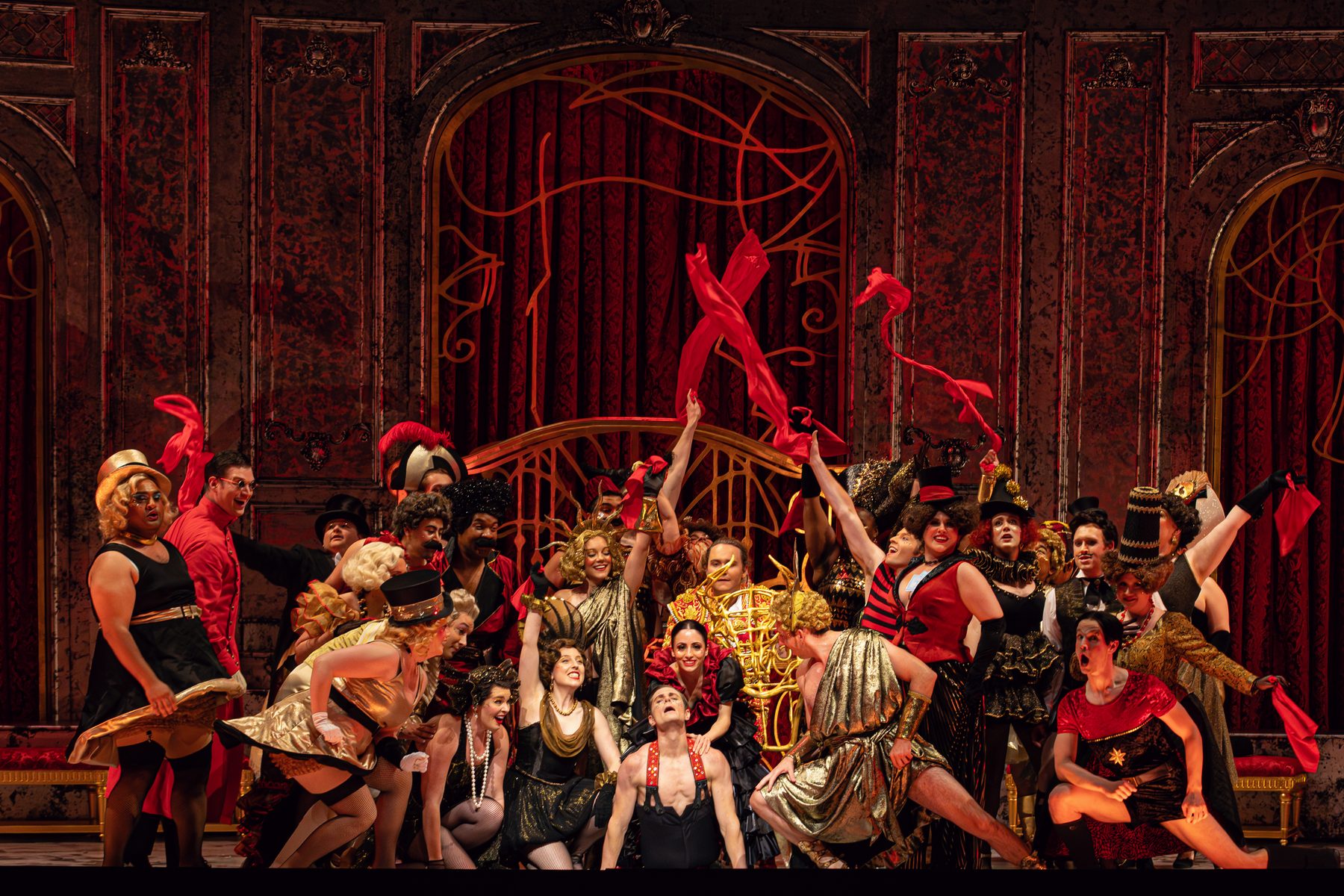
Santa Fe Opera chorus, Act II Scene 2 at Flora Bervoix’s costume party. Photo by Curtis Brown.

A special word for Act II Scene 2, at Flora’s party: Decorated in bright reds, it is a satanic costume party, with characters in various outrageous costumes. Intentionally over the top, the scene evokes every American conception of the Paris of Hemingway, Pound and les années folles (the crazy years) when the arts flourished in spite of a worldwide depression. After the restrained colors of the previous scenes, this hits like a blow to the face, creating exactly the shock that Violetta’s return to her life of decadence implies.

For all the strengths of the production, it is Galoyan’s Violetta that makes the greatest impact. Her bright, focused voice suits the role ideally. Her acting was on a par with her emotive singing, ranging from piercing moments of fury to heartrending fragility. Her delicate pianissimos carried easily and never lost nuance, or flattened out to expressionless undertones. Her most effecting moments were in the second and third acts, when she is overcome by the tragic fate that she can see coming. At the end, her frailty was made tragically real in her singing.

Mané Galoyan (Violetta) and Bakhzod Davronov (Alfredo). Photo by Curtis Brown.

In her director’s notes, Muller describes Traviata as a memory play, with the coming (or remembered) events suggested in tableaux during the Prelude. Violetta, she writes, is “a woman in command of her life choices” who “knows that the end of her life is approaching.” Both the staging and Galoyan’s performance reinforce that conception, making Violetta the emotional center of the opera. The life of a 19th-century courtesan seems remote today, but this is a Violetta current audiences can connect with.

Davronov sang strongly, with a ringing tone that matched well with Galoyan in their duets. If his acting was stiff in the country house scene, that is partly due to the limited space in the set. He sang with great expression and his tragedy was palpable by opera’s end. 

Alfredo Daza (Giorgio Germont) and Bakhzod Davronov (Alfredo Germont). Photo by Curtis Brown.

Costumed as a military officer, Daza was an imposing figure, and his large baritone voice commanded the stage from his entrance. He was never a sympathetic figure in his long scene with Violetta, but he is not meant to be. Booked for Dulcamara in l’Elisir d’amore, he has sung Germont before and so was an obvious person to take over the role, which he filled admirably.

Sejin Park was appropriately arrogant as Baron Douphol. Elisa Sunshine sang well and understands her limited role as Violetta’s faithful maid Annina. Kaylee Nichols has a strong voice but didn’t seem dissolute enough for the scandalous Flora Bervoix. 

The orchestra played admirably, following Rovaris’s expressive rubatos and supporting the singers well through the softest moments. The party-scene choruses were full voiced and strong, contrasting powerfully with the delicate and reflective moments of the lead singers—another level of contrast between the public and private lives of the characters.

This production, and the performance I saw, would stand out in anyone’s season. In a long history of memorable operas at Santa Fe, it is a production worth seeing and remembering. 

* * * * *

The production of Mozart’s Don Giovanni (seen Aug. 6) has been transported to Victorian-era London. In some ways this works well, but in other ways, not.

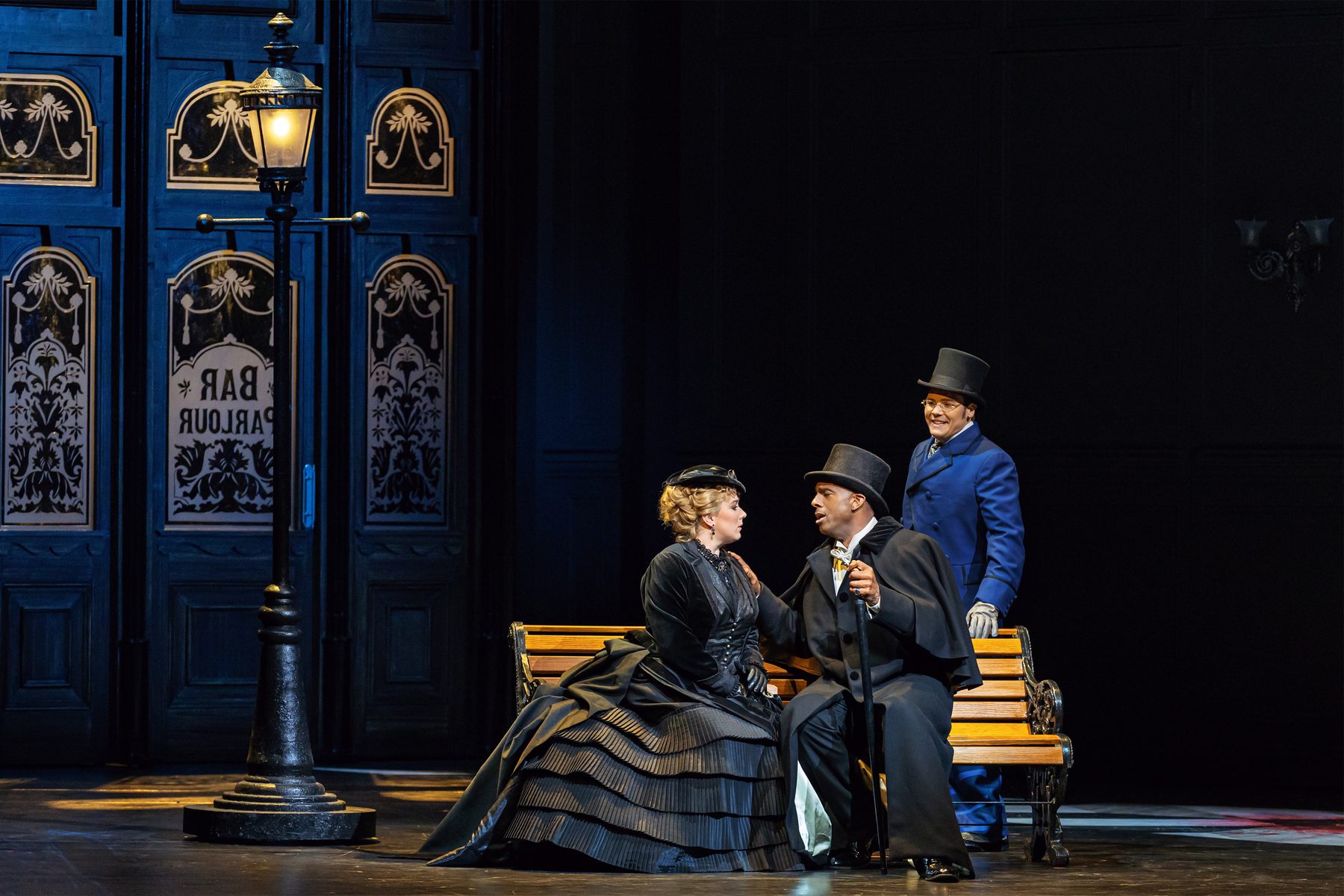
The updating was inspired largely by the coincidence that Don Giovanni and Dorian Gray of Oscar’s Wilde’s novel The Picture of Dorian Gray share the initials DG, and that both pursue a life of hedonism. Beyond those superficial similarities, it is certainly true, as director Stephen Barlow points out in his notes, that both the world of Don Giovanni and Victorian England were class-bound societies. In the opera, each member of the cast is defined by their standing as nobility or peasantry, impenetrable social levels identified in the music. These musical distinctions put class, which would have been immediately clear to Mozart’s audience, at the heart of the opera, as it was to lives in Victorian England. 

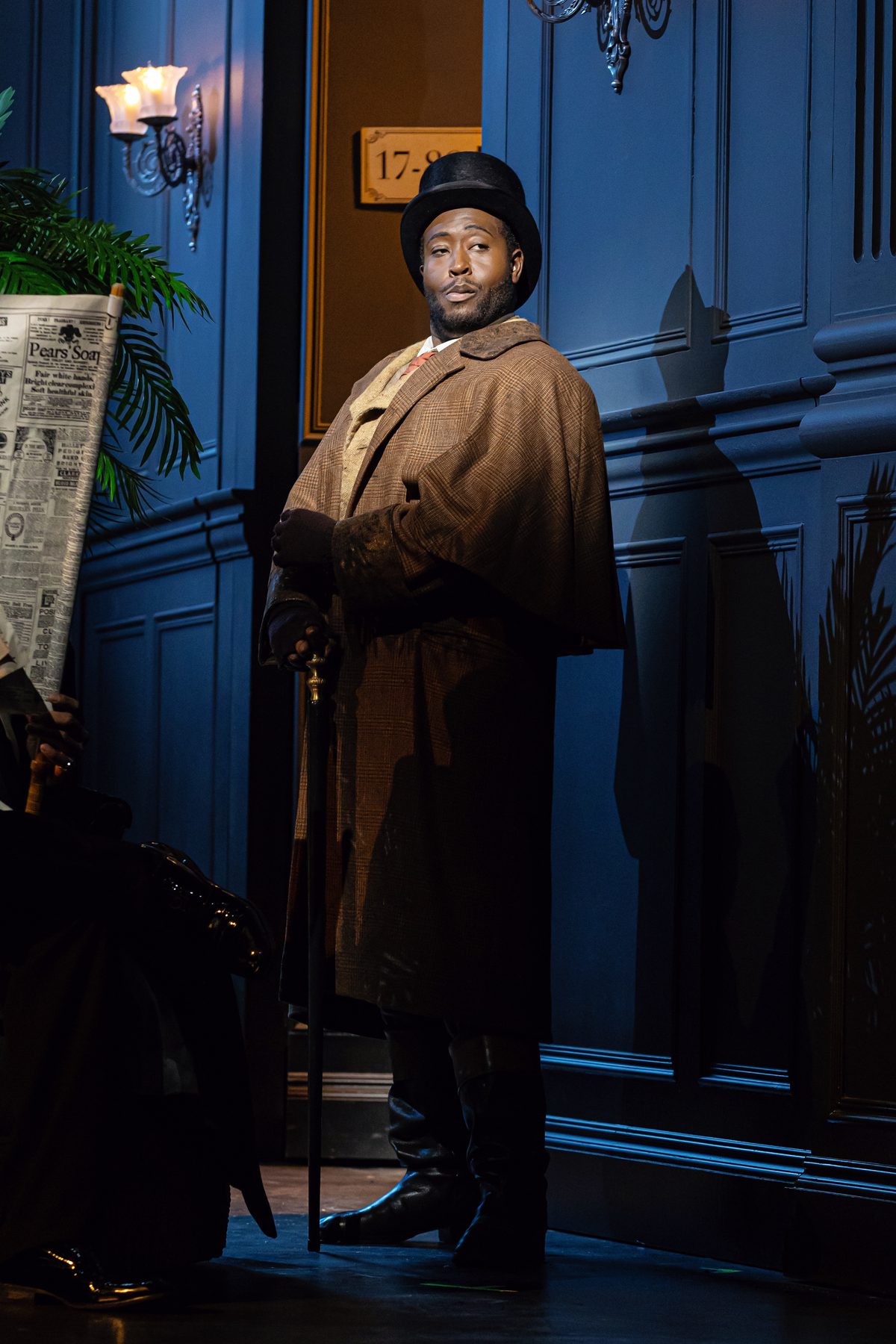
Leporello (Nicholas Newton) in Victorian London. Photo by Curtis Brown.

But in other ways, the updating is less successful. To maintain the transformed setting, Don Giovanni sings “Come to your window, my treasure” sitting in the lobby of a posh hotel. Instead of a graveyard, Giovanni “leap(s) over the wall” into an enclosed funeral parlor. And in a particularly baffling decision, there is no statue, only a casket sitting on a pedestal. Leporello sings of the immobile casket, “He looked at us.” There is no statue at all—a consistent feature of Don Juan mythology for centuries—in the final scene. The Commendatore enters through a picture frame as a ghost, again making nonsense of the sung text.

Some of the seat-back English titles strayed from the literal to contribute to the Victorian ambience. “Listen, guv,” Leporello sings to Giovanni, and the “Champagne Aria”—literally “As long as the wine warms the head”—has no mention of wine.

One other quibble: If Giovanni is an English Lord ravishing the women of London, why is England not mentioned in Leporello’s “Catalogue Aria”? And what’s the big deal with Spain? Or do we not expect the stage action to correspond to the text in concept productions?

But the musical performance was strong throughout. Conductor Harry Bicket led a stylish if unhurried performance, sometimes bordering on sluggish. To its credit, the orchestra followed his expressive direction faithfully. Once under way, the strings played with clean ensemble, and the horns sounded particularly bright.

Rachel Fitzgerald (Opening night Donna Anna), Ryan Speedo Green (Don Giovani) and David Portillo (Octavio). Photo by Curtis Brown.

Ryan Speedo Green, one of the leading baritones worldwide, was an ingratiating, seductive Giovanni. His voice, while used expressively, is almost too strong for the part. At times he struggled to keep it under control, and balance with Zerlina and other light-voiced characters was occasionally askew. He delivered all the hedonistic enthusiasm needed for the “Champagne Aria,” and made Giovanni a totally assured libertine.

Rachel Willis-Sørensen, engaged for the the Marschallin in Der Rosenkavalier and standing in as Donna Anna, was another singer who seemed at times out of her fach. Her strong, steely voice tended to get away from her at phrase climaxes, but she effectively conveyed the opera’s most tragic character. She was equally capable of expressively weighty tones and pure, bright high notes.

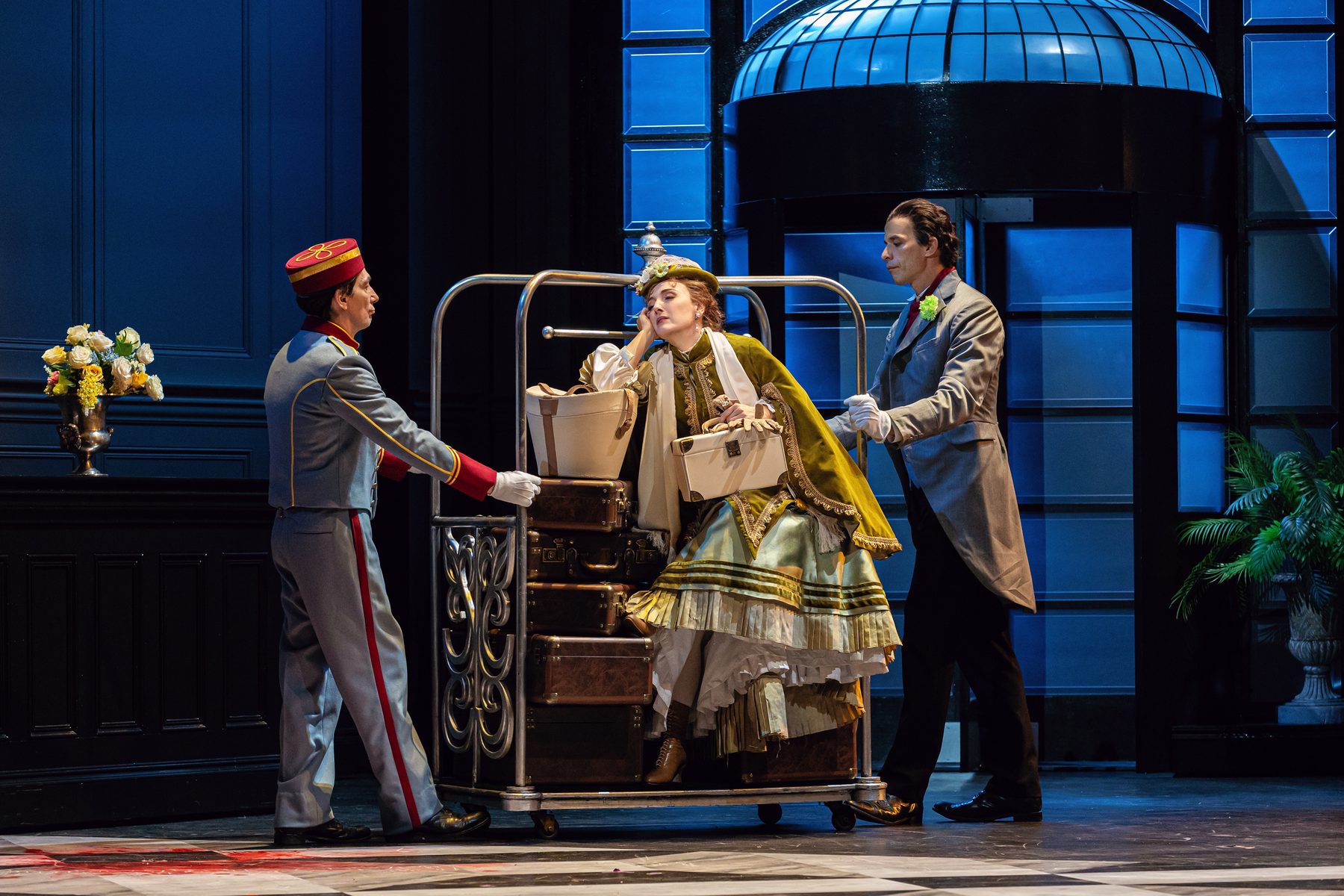
Donna Elvira (Rachael Wilson) and her luggage. Photo by Curtis Brown.

Rachael Wilson’s Donna Elvira was the very essence of the scorned woman. Her dramatic performance and assured singing made Elvira the central character of the unfolding drama, both strong in her confrontations with Giovanni and tragic in her repeated humiliations. She handled the seria aspects of her role with aplomb, with a few stumbles across registers.

Nicholas Newton provided a good comic performance as Leporello. His “Catalogue Aria” was thoroughly entertaining, as he embraced the comic emphasis of the production. David Portillo’s pleasant, light tenor is well suited to the role of Don Ottavio, even though he showed signs of fatigue by the end of a very long opera. 

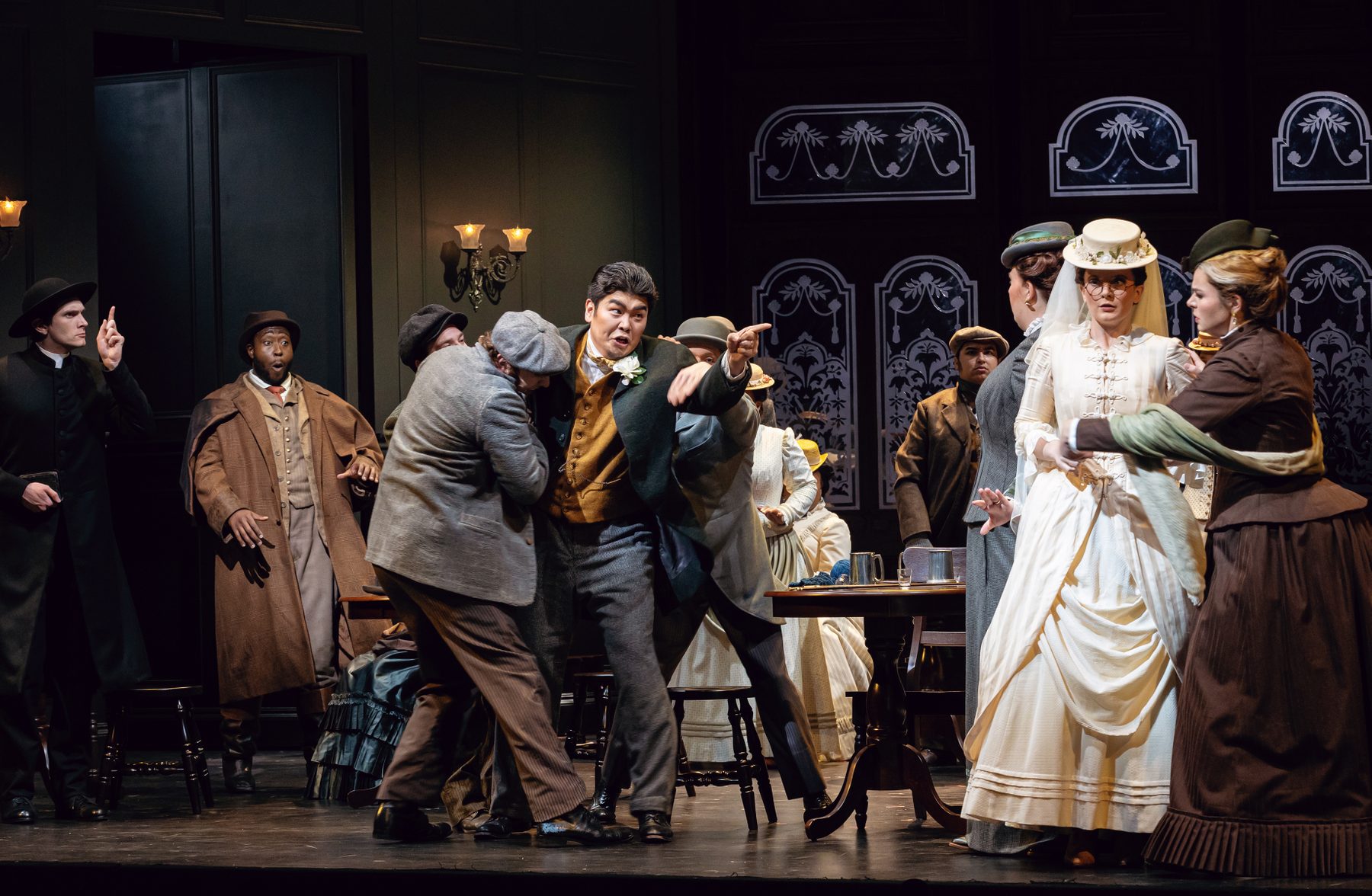
The peasant’s wedding party: William Guanbo Su (Masetto, center), and Liv Redpath (Zerlina, right). Photo by Curtis Brown.

Liv Repdpath was a sweet voiced Zerlina, capturing the character’s innocence well. William Guanbo Su portrayed an angry Masetto whose reconciliation with Zerlina seemed out of reach until the very end. Solomon Howard’s rotund bass suited the Commendatore perfectly.

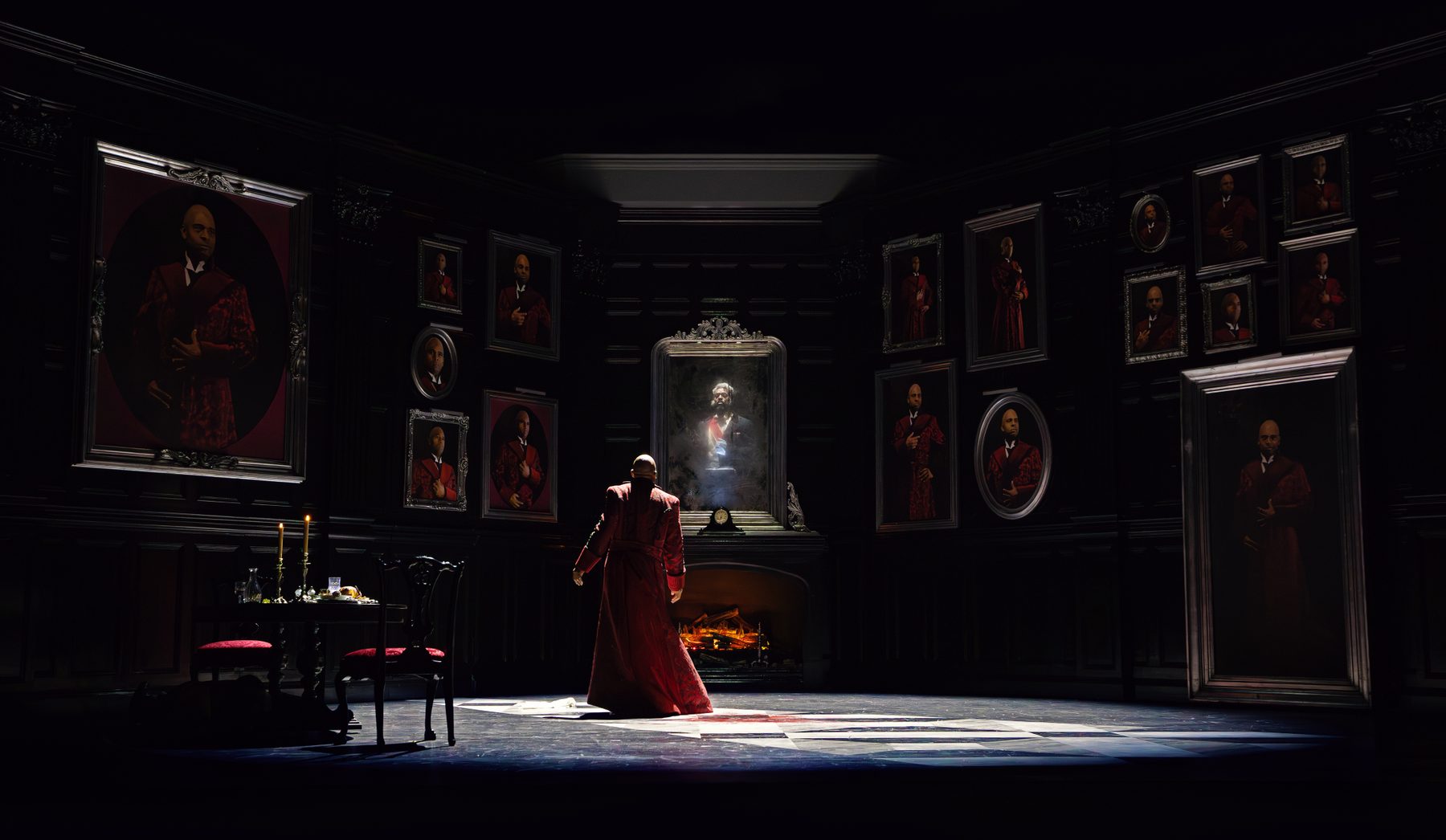
Other notes on the production: a creative set with rotating panels created seamless scene transitions. Don Giovanni’s salon, with walls covered in portraits of the Don recalled the production’s inspiration in The Portrait of Dorian Gray at the same time that it confirmed Giovanni’s narcissism.

A red spot on the floor, marking where the Commendatore dies in the first scene, became a meaningful symbol. From one scene to the next, efforts to scrub it out always failed. 

Don Giovanni (Ryan Speedo Green) is confronted by the ghost of the Commendatore (Salomon Howard) in his picture gallery. Photo by Curtis Brown.

Barlow’s production stressed the comic elements of the plot—the opera is labeled a drama giocoso, “comic drama”—but sometimes the resort to burlesque distracted from the singing. The most egregious example was the beginning of Act II, where some clumsy humor with luggage in the background distracted from Elvira’s mournful “Ah taci, ingiusto core.”

I’m not sure what the British Bobby contributes to the last scene, except that it recalls Ottavio’s promise to bring Giovanni to justice. Which raises the question: is the Victorian setting, evoked by Bobbies and street lamps as well as costumes, too familiar to audiences from television? This is not Downton Abbey. I wonder what expectations are raised with such clear signposts in the production. 

The Santa Fe Opera Season continues through Aug. 24. A few tickets are still available for some performances. For information and tickets, visit the Santa Fe Opera box office HERE.