4th Colorado Music Festival starts with fireworks

Festival-opening concert ends with a crashing wave of sound

By Peter Alexander July 4 at 12:30 a.m.

It was July 3, and the fireworks started early at Chautauqua.

They were musical fireworks, as the 49th Colorado Music Festival (CMF) got underway last night with music by Russian composer Igor Stravinsky, literally titled “Fireworks” (Feu d’artifice). CMF music director Peter Oundjian conducted the Festival Orchestra in a fleet, bright performance of Stravinsky’s sparkling showpiece for orchestra.
Music director Peter Oundjian with the Festival Orchestra. Photo by Geremy Kornreich

The brief opener was followed by soloist Hélène Grimaud performing Brahms’s First Piano Concerto. Before the performance, Oundjian said that the performance would represent the young Brahms—he was 21 when he started it—rather than the older, bearded Brahms we often see in photographs. I suppose he meant that the more muscular passages were imbued with youthful energy and strongly contrasted with the more tender passages.

The acoustics in the Chautauqua Auditorium flatter the orchestra more than the soloist, whose detailed, expressive playing was not always clearly heard. Here the pianist’s case is not helped by the fact that the piece went through several iterations, including a symphony. Consequently, the solo part does not always stand apart from the orchestra. 

No live performance can match the balance of a carefully engineered recording, but it’s too bad Grimaud could not always overcome the orchestral sound. What I heard of her playing was forceful and arresting. The contrasts within the music were well delineated, providing a firm sense of form and movement to the performance. 

The first movement was marked by the bright clarity of the woodwinds and the rich warmth of strings. Grimaud provided a well controlled profile of the lines and passages of the expressive slow movement, and took hold of the finale’s boisterous rondo theme from the very first. Even when the balance was less than ideal, you had the sense that she was in control of the music’s momentum. The audience, as CMF audiences do, responded with effusive enthusiasm.

The second half of the concert was devoted to music by Ravel, who this year celebrates the 150th anniversary of his birth. A great orchestrator, Ravel understood the orchestra so well that his music almost plays itself. That is, if you can play it—which Festival Orchestra can.

The two pieces presented last night, Suite No. 2 from Daphnis and Chloé and Bolero, are essentially about sound. The orchestra created magic from the very first gentle, rippling sounds in the woodwinds at the start of the Suite. The music surged to a strong climax in the full orchestra, followed by several evocative scenes of a more placid nature.The solo flute, Viviano Cuplido Wilson played her extensive solos with a warm, controlled sound and received individual recognition by Oundjian during the ovation.

Bolero is a piece that is heard not enough and too much. We don’t hear it often enough as written, but we hear it too often in cheesy arrangements that don’t honor the carefully calculated shape composed by Ravel.

Ravel’s score is about two things: an unchanging tempo as the theme is repeated, and a crescendo that reaches its climax at the very end. The CMF performance started as softly as any I have heard, to the point that I wasn’t actually sure when the first notes were played.

Once the piece starts, it is entirely in the hands of the players to control both the tempo—mainly the responsibility of the snare drummer—and the crescendo. With Oundjian’s careful attention, the Festival Orchestra created a steady, growing wave that crashed over the audience with the very final note.

NOTE: The opening concert will be repeated at 6:30 p.m. Sunday (July 6). The full schedule and tickets are available on the CMF Web page.
Rare and well done in Central City

Kurt Weill’s seldom seen Street Scene has it all—music, dance, drama

By Peter Alexander July 23 at 3:20 p.m.

Anyone who loves Broadway theater, drama, bluesy musical numbers and zippy dance routines needs to go into the mountains.

Central City Opera’s production of Street Scene by the German-American composer Kurt Weill has all that and more. A thoroughly strong cast brings the drama to life, and the direction and choreography by Daniel Pelzig hits all the right notes. A realistic setting with no revisionist points to make captures the essence of the 1946 original, a gritty portrait of life in a Manhattan tenement building, with gossipy neighbors, a bullying husband and cheating wife, idealistic young lovers yearning to escape, and a potpourri of ethnicities.

Weill had one of the most remarkable and diverse careers of any 20th-century composer. Following his sensational success in Berlin working with playwright Bertolt Brecht on the jazzy Dreigroschenoper (Threepenny opera) and other works he fled Nazi Germany in 1933 and came to New York in 1935. From that point on, he wrote musicals for Broadway and aimed to create an American opera that combined popular styles with grand opera.

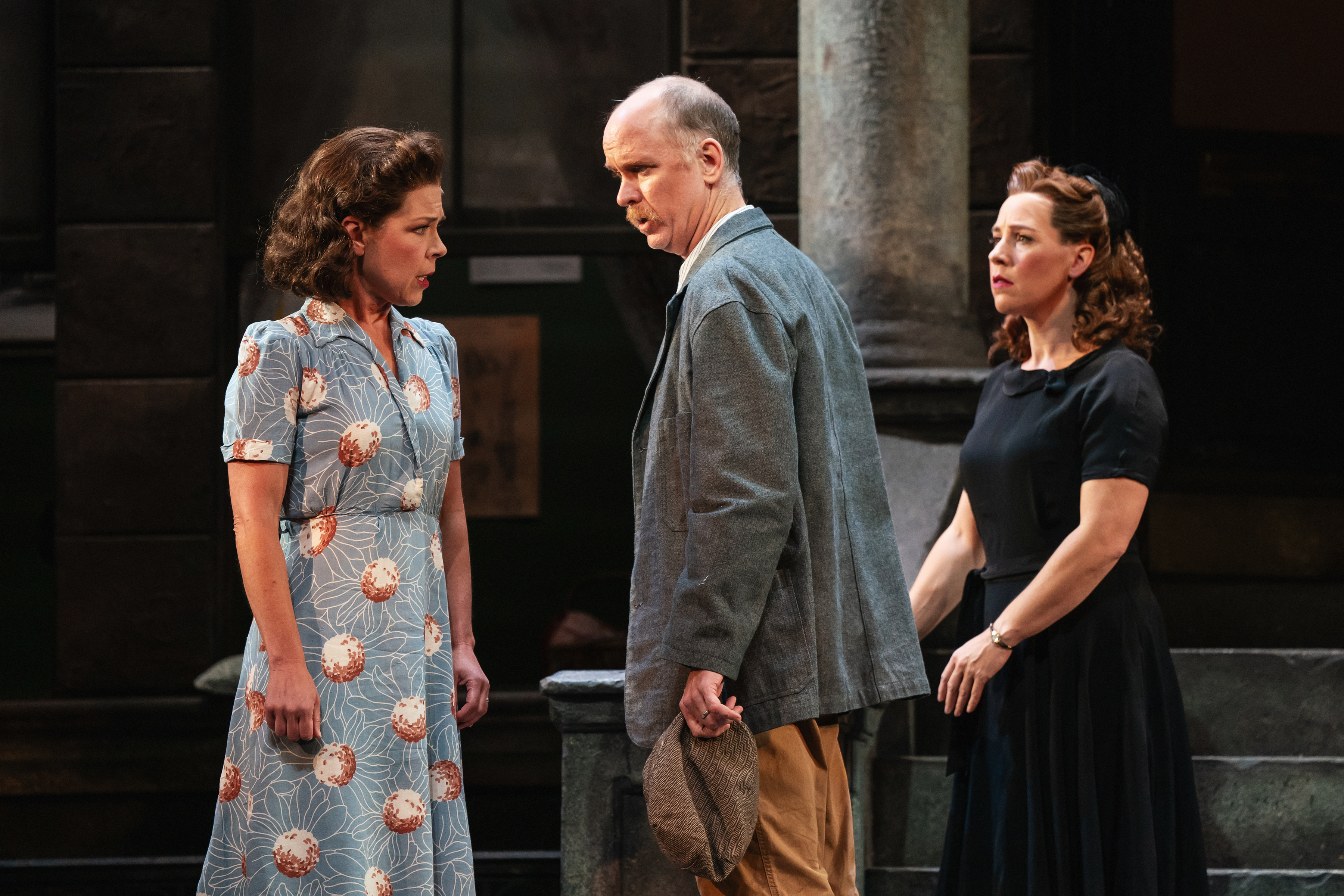
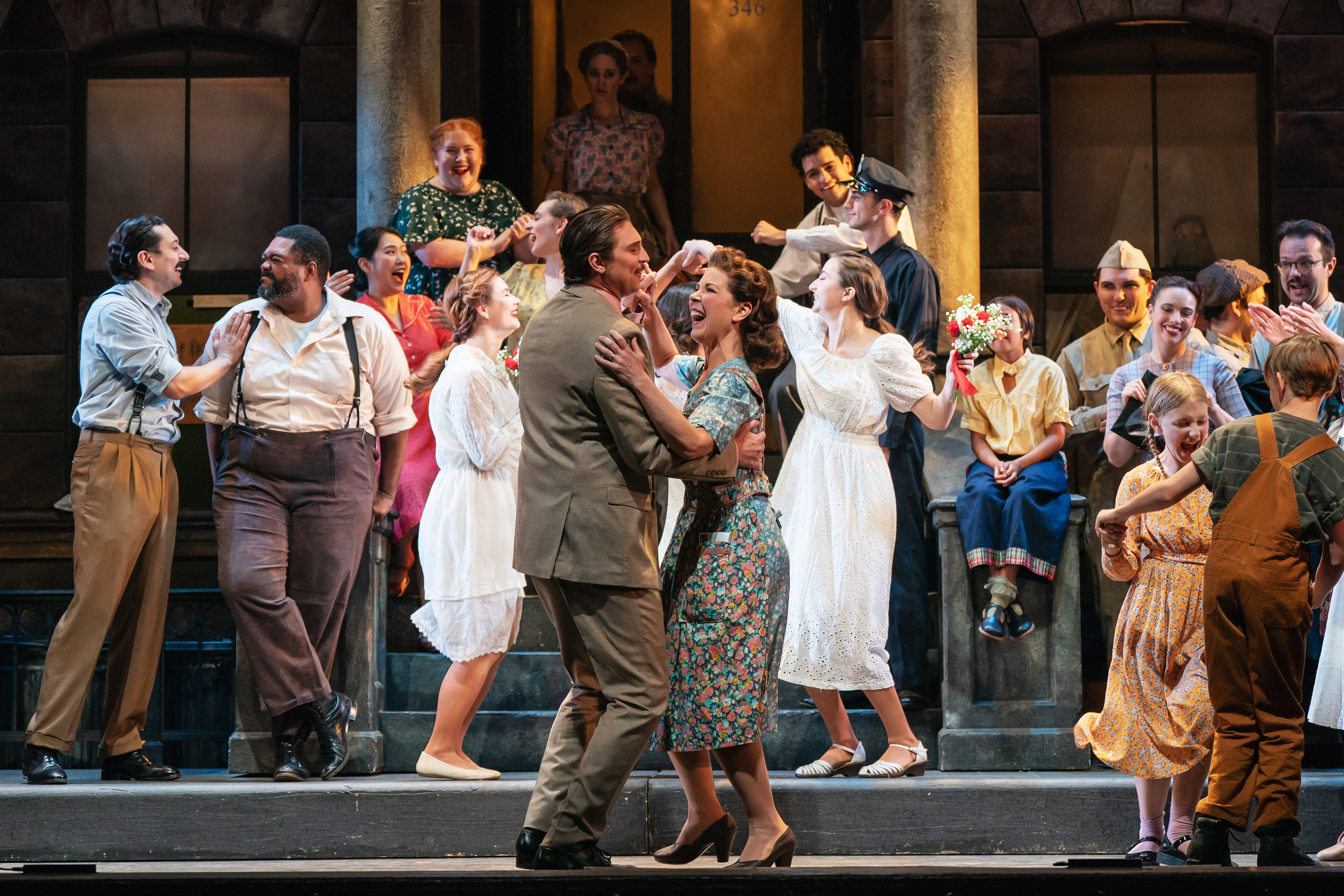
Tenement house neighbors in Street Scene. Image by Amanda Tipton Photography

Street Scene, which opened on Broadway in 1946, may be the closest he came to that goal, and it is certainly one of this finest works. It has an ideal American pedigree, with lyrics by Langston Hughes and a story based on the Pulitzer-prize winning play of the same title by Elmer Rice, who also wrote the book for the opera.

The music is appealing, combining Broadway set pieces like the ensemble for graduating students “Wrapped in a  Ribbon and Tied in a Bow” and the dance number “Moon-faced, Starry-eyed,” with blues-tinged arias, like “Lonely House” sung by the young hero Sam Kaplan, and Puccini-esque arias like “Somehow I could Never Believe” sung by Anna Maurrant.

As great as it is, Street Scene is not often performed—another reason to travel to Central City this summer. Among reasons for its rarity are the challenges it presents, including a cast with more than 30 named roles, each with their own story to tell. Without care, a performance can become loosely episodic. A similar danger is that the most appealing Broadway-style numbers are extraneous to the plot, and can easily seem tacked on.

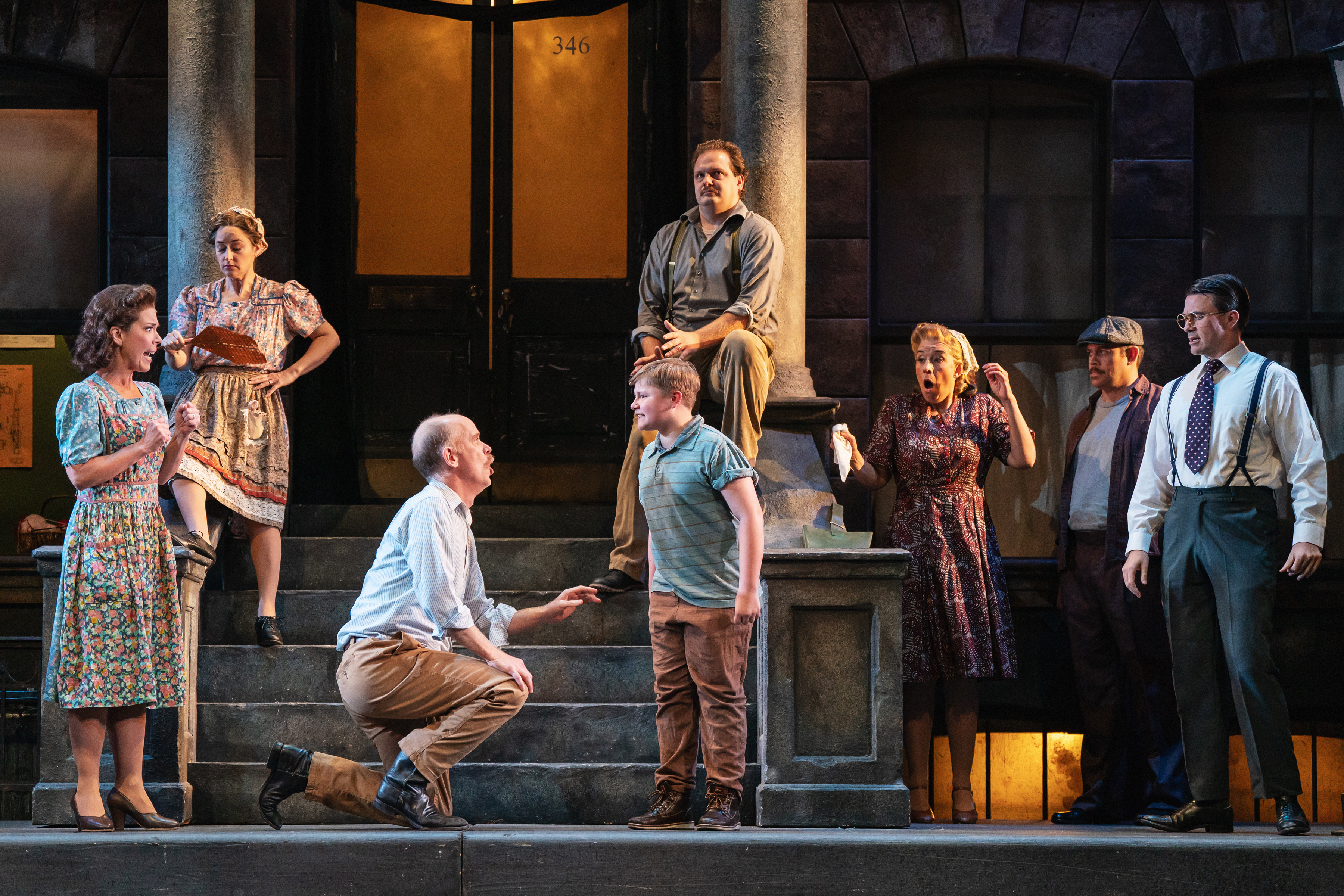
Front steps of the tenement building. Design by David Harwell. Kevin Burdette (Frank Maurant) and Brian Erickson (Willie Maurant). Image by Amanda Tipton Photography

Fortunately, Pelzig’s direction met these difficulties head on. He created a fast-moving show, where the diversity of the tenement community is part of the story, and the numbers were pulled into the musical flow. David Harwell’s set was traditional, with realistic tenement steps and apartment windows on two floors looking out to the street, but it suits the show perfectly. Once again, the gritty realism is part of the plot.

With so many singers, it is not possible to recognize all of the many cast members who made a strong contribution to the show. Of the leading roles, Katherine Pracht in the role of Anna Maurant, the wayward but kindly wife of the building bully, gave a good portrayal of a fragile woman with romantic dreams while living on the brink of disaster. She sang with great expression, but with a strong vibrato that occasionally threatened to obscure the text.

Katherine Pracht (Anna Maurant), Kevin Burdette (Frank Maurant) and Christie Conniver (Rose Maurant) in Street Scene. Image by Amanda Tipton Photography

As her abusive husband, Frank Maurant, Kevin Burdette used a rough edge to his voice to convey the character’s menace. A veteran of bad guy roles, including Claggert in Billy Budd in Central City and Sweeney Todd in Dallas, he softened his portrayal in the final scenes, creating a whole character. If his sudden tenderness seems less than convincing, that is the script and not the performance, which was heartfelt.

Christie Conover was endearing as Rose, the Maurants’ daughter who is pursed by a number of undesirable suitors as well as by Sam, the shy young male romantic lead who cannot quite express his love. She sang with a poised and polished sound that stood out from the more rough-hewn characters. As Sam, Christian Sanders had to reach for some of the high notes, but sang an appealing and well shaped aria in “Lonely House.” Their gradually blooming romantic duet, “Remember that I Care,” offered the opera’s tenderest moments.

I enjoyed the gossiping neighbor ensembles, which become a latter-day Greek chorus commenting on the action. The cast embraced the ethnic types written into the score, rarely overdoing it. Apprentice singer James Mancuso produced a definitively Italian sound as Lippo Fiorentino, the most strongly stereotyped of the neighbors. 

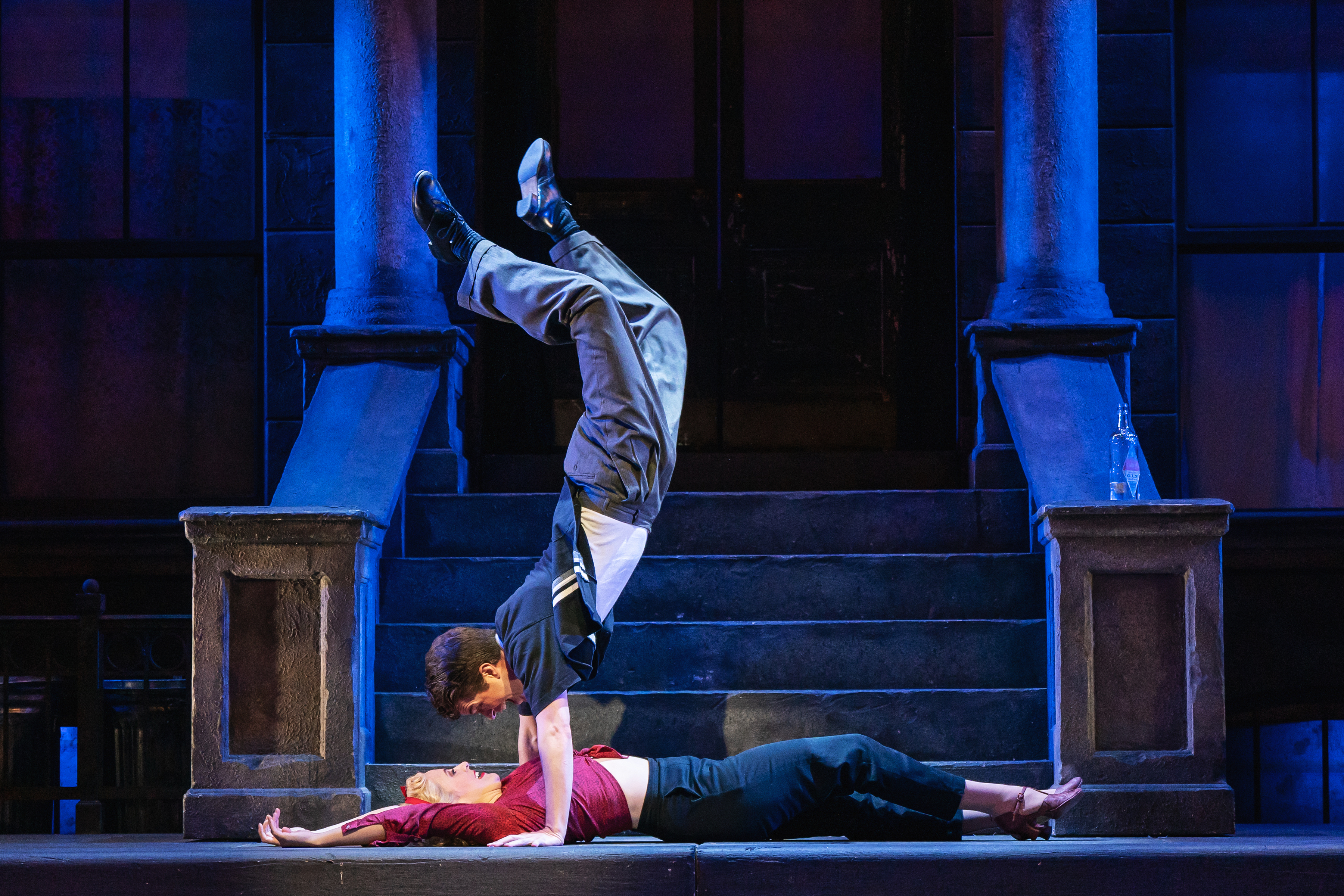
Lauren Gemelli and Jeffrey Scott Parsons in the dance routine “Moon-faced, Starry-eyed.” Image by Amanda Tipton Photography

Bernard Holcomb brought a big, robust voice and a friendly demeanor to the role of Henry Davis, the building janitor. As the overheated lovers in the big dance number, “Moon-faced, Starry-eyed,” Lauren Gemelli and Jeffrey Scott Parsons nearly stole the show with their saucy dialog and athletic dancing.

Members of the Colorado Children’s Chorale sang strongly and conveyed a rowdy sense of fun in their teasing game at the beginning of the second act. Brian Erickson acted strongly in the role of Willie Maurant, Rose’s rowdy little brother.

Conductor Adam Turner led the Central City orchestra in a stylish performance, getting the Broadway idioms right and supporting the singers well. A few times they covered the spoken dialog, but the big musical numbers were all outstanding. In short: this production of Street Scene is a rare opportunity to see an important work of American musical theater done well.

Brilliant concert of all-women composers at CMF 

Premiere by Gabriela Lena Frank, Concerto by Joan Tower showcase the Festival Orchestra

By Peter Alexander July 22 at 12:15 a.m.

The Colorado Music Festival Orchestra and conductor Peter Oundjian hit the jackpot last night (July 21) with a program of three pieces by women composers. 

All three works, by Florence Price, Gabriela Lena Franck and Joan Tower, were performed memorably. Both living composers—Frank and Tower—were present and spoke to the audience.

The concert opened with Price’s Adoration, a piece that she originally wrote for organ in 1951 and that here was performed in a setting for string orchestra. Played tenderly by the Festival Orchestra strings, it is almost too soothing and gentle to serve as an opener. Oundjian and the players thoroughly embraced the mood, creating a comforting start to a program that soon turned adventurous.

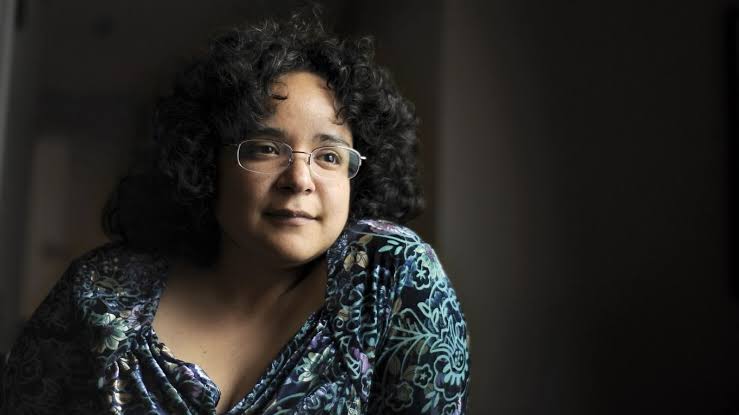
Frank’s Kachkaniraqmi (“I still exist” in the Quechua language of her Peruvian forebears) was commissioned by CMF as a concerto for string quartet and string orchestra, written for Boulder’s Takács Quartet and the CMF Orchestra. As an introduction by Oundjian, Frank and Takács violinist Harumi Rhodes spelled out, the commission emerged from a suggestion by CMF contributor and long-time patron Chris Christoffersen for a concerto for the Takács, and then from a friendship between Frank and Rhodes.

Gabriela Lena Frank

Kachkaniraqmi is a piece of great imagination and creativity. Frank refuses to cozy up to the listener with easy tunes and catchy ideas. In fact, Kachkaniraqmi sounds like no other piece I have heard, but it makes great use of string timbres and textures. It opens with highly individual, sometimes quirky gestures for the solo violist and orchestral violas before moving into a fuller texture. At places, the strings sound like a single instrument, leaping across a large range from top to bottom, and at other times like a large organ moving in full orchestral chords.

The middle section, or second movement, presents a rushing, incessant forward drive. All texture and motion, this portion of the concerto is not hummable, but identifiable musical ideas can be followed as they are passed from section to section over an unrelenting rhythmic foundation. This driven middle section settles into a more contemplative final portion that explores different techniques of string playing to create a startling range of sounds and gentling moods as the music moves toward silence.

Kachkaniraqmi is a remarkable creation, an intriguing piece that I expect will reveal more and more as one listens to it again and again. I hope that the Takács will take the score well beyond Boulder and introduce it to the wider musical world.

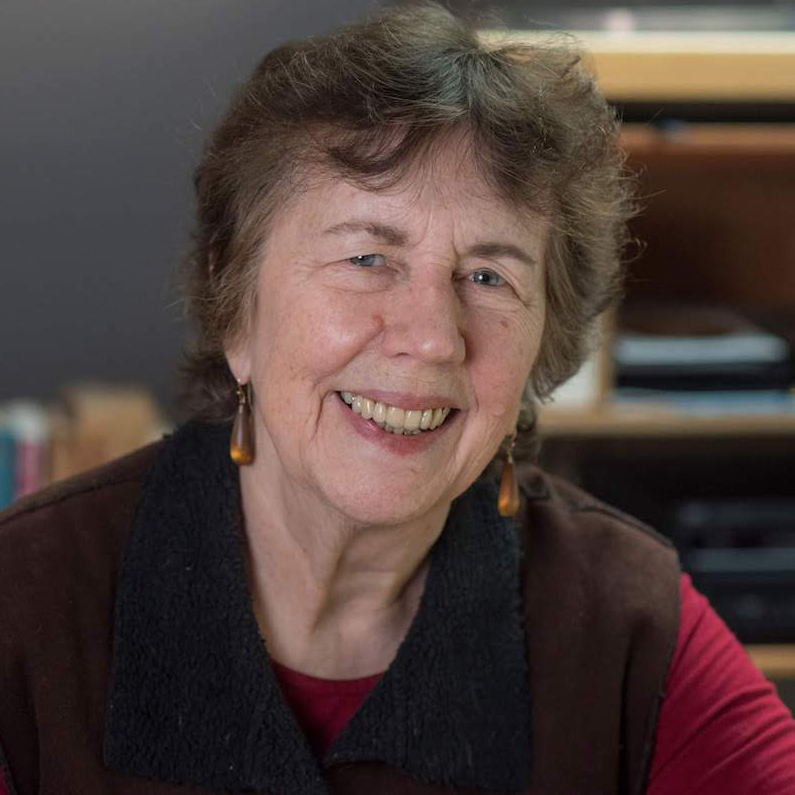
The concert concluded with a stunningly complex and difficult piece, Joan Tower’s Concerto for Orchestra. Composed in 1991 for the New York Philharmonic, Chicago Symphony and St. Louis Symphony, it has had modest success in the intervening 33 years. “This piece should be played everywhere!” Oundjian said in his introductory comments, standing onstage with the composer. 

Joan Tower

Tower noted that it is a difficult piece to conduct—on top of being very difficult to play—which may be one barrier, but the CMF Orchestra’s performance showed what musical fireworks it sets off when played at the highest level. Clearly, Oundjian had mastered all the shifting meters and tricky rhythms, and the CMF players responded with a virtuoso display.

As expected, there are many solos in the course of the score’s 25+ minutes, for horn, for English horn, for tuba, but more stunning are the intricate passages for whole sections—trumpets, woodwinds, a tricky motive passed up and down from trumpets to horns and back. Often played at a breakneck pace, these are the most virtuosic passages of the concerto, and they were played with precision and confidence by the CMF orchestra.

Other noteworthy moments included a cello section solo that gives a lyrical contrast to the more driving and excitable portions of the score, with the cellos at times divided into parts to create full chords, and at other times reduced to two eloquent solo players. A later softening and lowering of temperature allows two violinists to come forward, before the rhythmic frenzy starts again. 

As Tower promised, the percussion players are kept busy, running from instrument to instrument, culminating with a viciously fast running beat by several drums that requires extreme concentration to keep together. This exciting moment, played with perfect precision, leads to a final crashing chord—and inevitably, wild enthusiasm from the audience.

They were still cheering as I gathered my things and snuck out the side door.

Under Oundjan’s leadership, the CMF has established itself as a forward-looking summer festival that all Boulder should support. His thoughtful programming, his embrace of living composers, and the commissioning of new pieces are admirable and exciting. A concert of works by three women, two of them present for the performance, is a perfect illustration of his vision of the festival. On this occasion, it was brilliantly realized.

Correction: Misspellings of string as “sting“ in paragraph six and viciously as “viscously” in paragraph 12 corrected 7/22.

Alison Moritz appointed artistic director of Central City Opera

An experienced stage director, Moritz will direct one production per season

By Peter Alexander Feb. 20 at 6:10 p.m.

The Central City Opera has announced the appointment of the accomplished stage director Alison Moritz as their new artistic director.

Alison Moritz

Moritz was selected after a national search led by Jonathan West, on behalf of Management Consultants for the Arts and CCO’s volunteer search committee, chaired by Joshua Navarro from the CCO board of directors. The position had been open since the summer of 2023.

In a written announcement, Moritz commented “I am deeply honored to join Central City Opera as the new artistic director. My previous experiences with the company have been incredibly rewarding, and I am excited to build upon that foundation as we embark on this new chapter together.”

CCO president and CEO Scott Finlay stated, “I’m thrilled to welcome Alison Moritz to Central City Opera as our new Artistic Director! Her talent and vision align perfectly with our goals, and I couldn’t be more excited to have her on board.”

Moritz has previously appeared as stage director at CCO, including the 2019 production of Puccini’s Madama Butterfly. As AD she will oversee the company’s artistic and production staff for the upcoming 2024 Festival (June 29–Aug. 4; see the CCO Web page for more information), and will direct one production per season starting with the 2025 Festival. 

Moritz’s recent productions have been described as “enchantingly cheeky” (Washington Post), “elegantly sexy” and “raw, funny, surreal, and disarmingly human” (Opera News). She has recently directed productions for Washington National Opera, Lyric Opera of Kansas City, the Glimmerglass Festival, Opera Omaha, Ravinia, Tanglewood, Bard Music Festival, and Portland Opera. Previous engagements have been on the directing staffs at Santa Fe Opera, Seattle Opera, Opera Theatre of St. Louis, Minnesota Opera, Atlanta Opera, and Wolf Trap Opera.

Moritz succeeds former AD Pamela Pantos, who was released from the position in July 2023, and Pelham (Pat) Pearce, who had been AD for 26 years when he left the post in 2022.