Teachers Association Concerto competition winners will perform with BCO Saturday
By Peter Alexander May 8 at 3:30 p.m.
The Boulder Chamber Orchestra (BCO) will present winners of the 2024 Colorado Music Teachers Association (CMSTA) Concerto Competition on a concert program Saturday (May 11; details below).
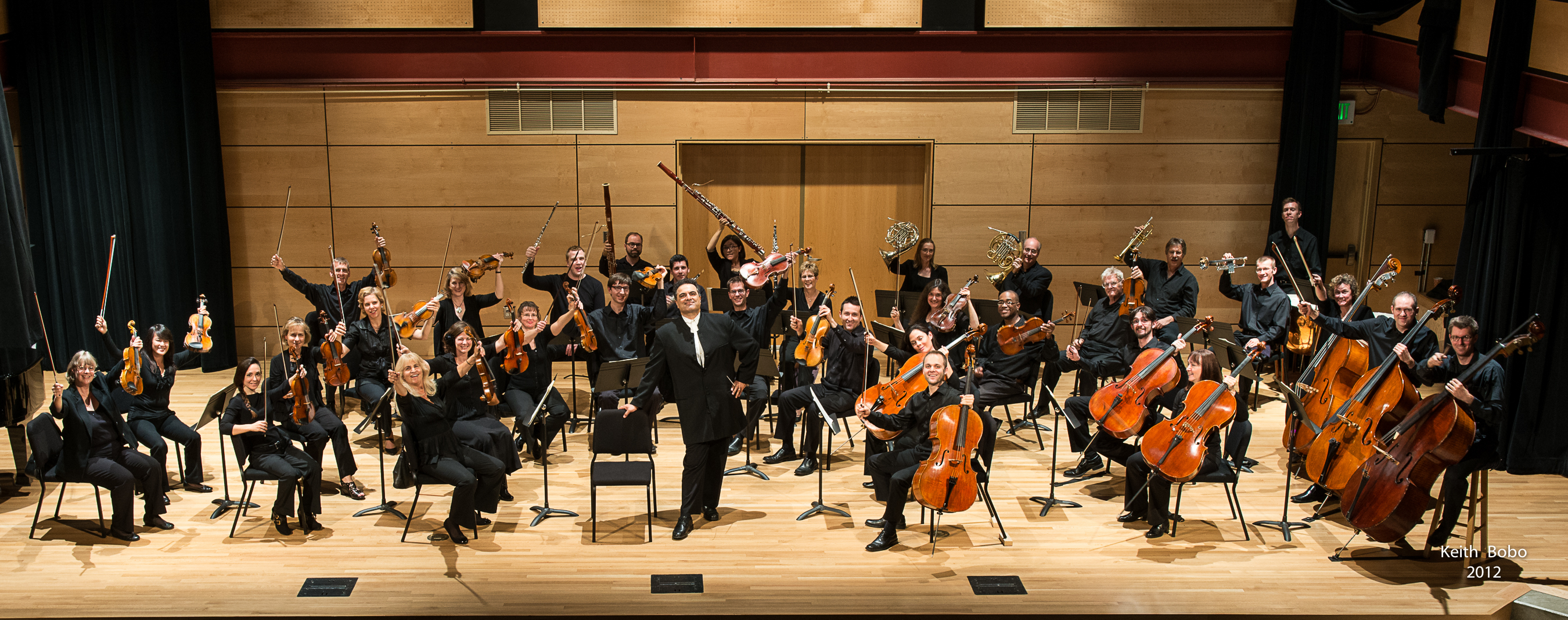
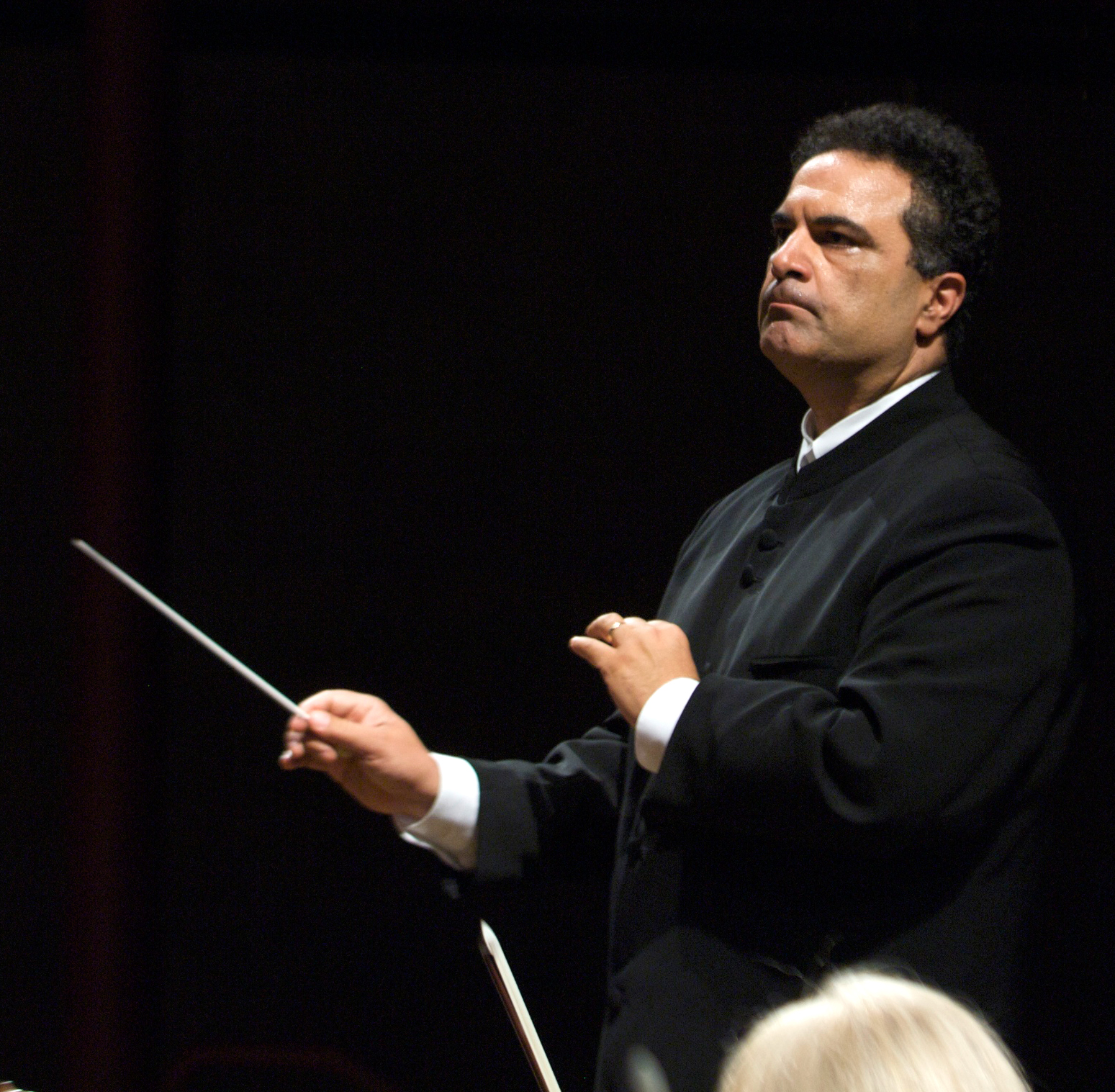
Conductor Bahman Saless with the Boulder Chamber Orchestra
The winners in four categories—Piano Elementary, Piano Junior, Piano Senior, and Percussion and Winds—will each play the concerto movement that was required for the competition, with the orchestra (see the concert program below). The BCO music director, Bahman Saless, will conduct.
An annual event, the CMSTA Concerto Competition has three piano categories that are held every year. There are vocal and instrumental categories in alternating years: strings and voice in odd-numbered years, and winds/percussion (one category) in even-numbered years. The competition is for pre-college students up to age 19.
The 2024 competition was held in March, with videos submitted online. A panel of three judges—Saless; Hye-Jung Hong, piano faculty from Missouri State University; and Jason Shafer, principal clarinet of the Colorado Symphony—selected the winners.
The four categories and winners are: —Piano, elementary: Aiden Chan —Piano, junior: Bobby Yuan —Piano, senior: Mercedes Maeda —Percussion and winds: Alexander Zhao, bassoon
The BCO has set up an online auction to raise funds for the concert. The “Colorado Young Stars Award Fund” auction will run through Friday (May 10).
This year marks the first time that the BCO worked with the CSMTA to support the competition and present the winners. In a written communication, Saless commented, “We are looking forward to many years of continued collaboration and hopefully building community support and excitement in the Boulder area.”
Programs feature piano quartet, acrobatics and film music
By Peter Alexander May 1 at 4:38 p.m.
The Boulder Piano Quartet presents it’s final concert of the 2023-24 season Friday featuring music by Dvořák and the 19th-century French musical prodigy Mélanie Hélène Bonis Domange, known as Mel Bonis (7 p.m. May 3 at the Academy University Hill; further details below).
This will be the fourth and final performance this concert season to feature a guest violinist with the Quartet, appearing in place of their former violinist Chas Wetherbee, who died in 2023. The guest violinist for this performance will be Hilary Castle Green.
Mel Bonis
This program is the second time that the Boulder Quartet has played music by Bonis, who is virtually unknown in the United States. About a year ago in May 2023, they played her Second Piano Quartet. This year they are playing her First Quartet in B-flat major.
Born in 1858, Bonis taught herself to play piano and entered the Paris Conservatory at 16. She was in the same class with Debussy, and studied composition with Cesar Franck. At the time women were not expected to be composers, and Bonis was urged by her parents to marry an older businessman. Because he didn’t like music, she gave up composing for a number of years.
Later she met a former classmate who encouraged her and connected her with publishers, which led her to begin writing music again. She wrote the First Piano Quartet soon after, in 1901. When the composer Camille Saint-Saëns heard the Quartet, he is supposed to have said “I never thought a woman could write such music.” After her husband died in 1918, Bonis devoted herself to music.
Dvořák won the Australian State Prize for composition—in effect a grant to allow artists the time for creative work—in 1875. At 34 years of age he was still relatively unknown to the larger musical world, even though he had written four symphonies, seven string quartets, three operas, and other works. During that year he wrote a number of larger pieces, including his Symphony No. 5, his Serenade for Strings and the Piano Quartet No. 1 in D major.
The Quartet is in the standard classical chamber-music structure of three movements, arranged fast, slow, fast. Unlike other quartets of the time, the piano is not placed separate from, or against the strings, as if it were a chamber concerto. Instead the four parts are more fully integrated. Though only three movements, the Quartet is an expansive work. It was not performed for nearly five years, however, having its premiere in Prague in 1880.
# # # # #
Boulder Piano Quartet: Matthew Dane, viola, Thomas Heinrich, cello, and David Korevaar, piano, with guest violin Hilary Castle Green
Mel Bonis: Piano Quartet No. 1 in B-flat major
Dvořák: Piano Quartet No. 1 in D major, op. 23
7 p.m. Friday, May 3, Academy Chapel Hall, Academy University Hill Admission free with advance reservations
# # # # #
The Boulder Philharmonic will continue its relationship with the performing group Cirque de la Symphonie with two performances Saturday in Macky Auditorium (2 and 7:30 p.m. May 4; details below).
Classical music’s answer to Cirque du Soleil, Cirque de la Symphonie presents aerialists, jugglers, ribbon dancers, acrobats, contortionists and other acts to the accompaniment of classical music performed live on stage. Macky Auditorium will be especially rigged for the aerial acts, and the front of the stage reserved for other performers. The performance of selected short classics will be conducted by Renee Gilliland, associate director of orchestras at CU Boulder.
Renee Gilliland
This will be the fifth time that the Boulder Phil has hosted Cirque de la Symphonie at Macky. Their last previous appearance was in 2018. While limited tickets are still available for both scheduled performances Saturday, previous Cirque performances have sold out.
Gilliland earned a Doctor of Musical Arts in orchestral conducting and literature from CU Boulder, a Master of Music in viola performance with an outside area in conducting from the Indiana University Jacobs School of Music, and a Bachelor of Music in music education and certificate of violin performance from the University of Texas at Austin Butler School of Music. She was also awarded an Artist Diploma in orchestral conducting from the University of Denver where she was assistant conductor of the Lamont School of Music Symphony and Opera Theater orchestras.
She was formerly music director of the CU Anschutz Medical Orchestra and associate conductor of the Denver Philharmonic.
# # # # #
“Cirque Returns” Boulder Philharmonic Orchestra, Renee Gilliland, conductor With Cirque de la Symphonie
NOTE: Indications of which pieces are played by the orchestra alone without Cirque performance added 5/2.
# # # # #
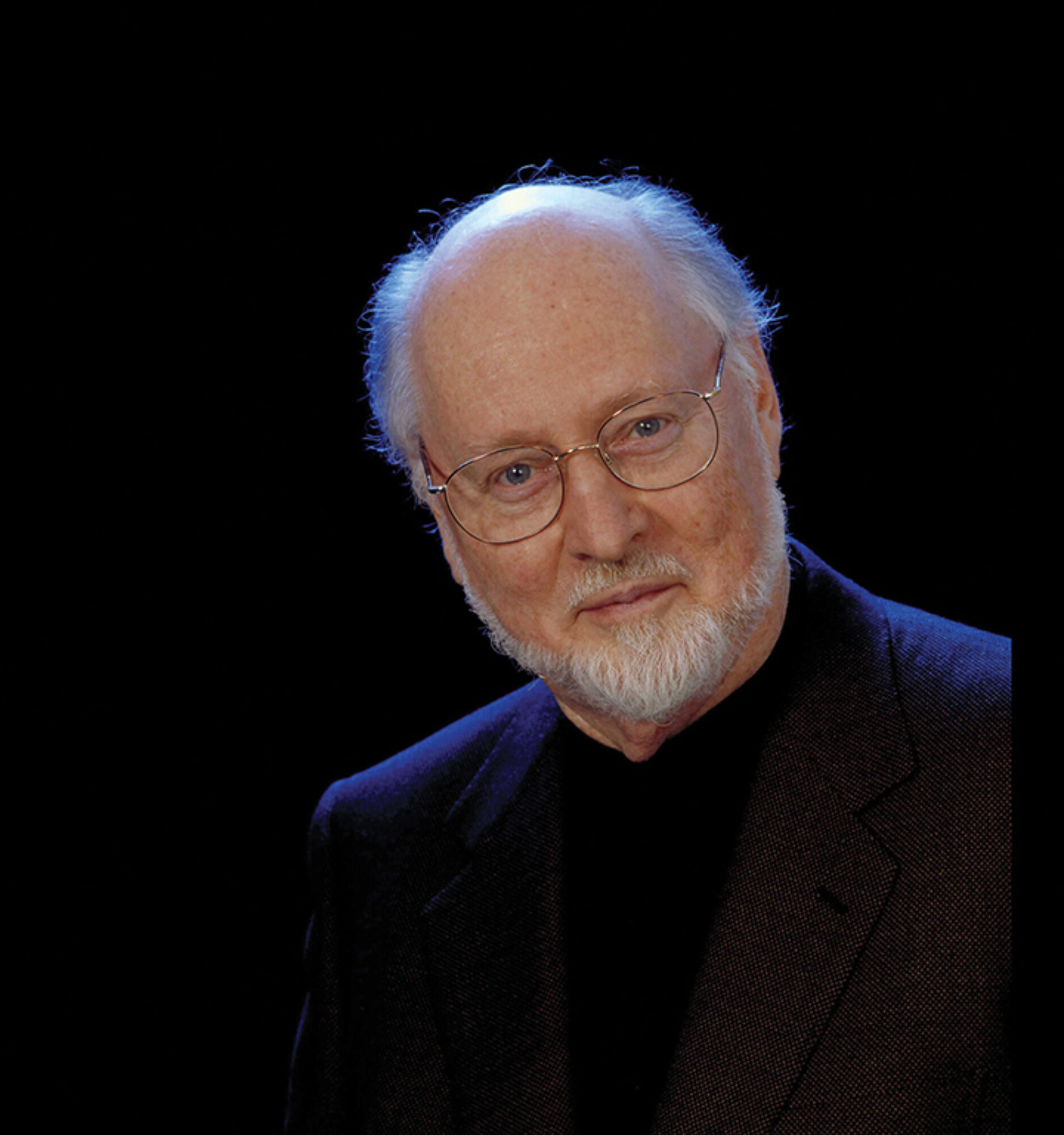
The Longmont Symphony Orchestra (LSO) concludes its 2023-24 concert season Saturday (May 4) with “A Tribute to John Williams,” featuring the music of one of Hollywood’s greatest film composers.
John Williams
The Pops Concert, at 7 p.m. in Longmont’s Vance Brand Civic Auditorium, will be under the direction of the LSO’s music director, Elliot Moore. The program will include music from the soundtracks for Star Wars, Jurassic Park, E.T. and Harry Potter, among other popular films.
With more than 1100 tickets already sold, there are only a few seats left at time of posting. Because of the size of crowd expected, the LSO advises attendees to arrive early. Overflow parking from the Skyline High School lot will be available at the Timberline School lot, on Mountain View Avenue.
# # # # #
Tribute to John Williams Longmont Symphony Orchestra, Elliot Moore, conductor
Music of John Williams
7 p.m. Saturday, May 4 Vance Brand Civic Auditorium, Longmont
Piano trios, Tchaikovsky 5 and two Romantic piano concertos on programs
By Peter Alexander Feb. 13 at 2:38 p.m.
The Boulder Symphony will be the first of two area orchestras to perform Tchaikovsky’s Fifth Symphony this weekend, as part of a program Friday and Saturday (Feb. 16 and 17; details below) that also features Rachmaninoff’s Third Piano Concerto played by Chinese pianist Jialin Yao.
The program opens with Conga del Fuego Nuevo (“New fire” conga) by Mexican composer Arturo Marquez. The son of a Mexican mariachi musician, Marquez studied in Mexico and the United States, where he earned an MFA in composition at the California Institute of Fine Arts. A Cuban carnival dance, the conga was the source of the “conga line” made popular in the U.S. by Xavier Cougat and other bandleaders.
Jialin Yao
Currently a student at the Juilliard School of Music, Yao won the 2023 International Keyboard Odyssiad® and Festival Competition. Boulder Symphony’s conductor, Devin Patrick Hughes, was quoted in the concert press release: “Jialin is a rockstar! He plays the Rachmaninoff 3 . . . with ease, soulfulness, and a virtuosity that rivals any of the great pianists.”
Rachmaninoff wrote his Third Piano Concerto, considered one of the most virtuosic and challenging piano concertos, in 1909 and played the first performance in New York later that year. The initial reception was mixed at best, but Rachmaninoff gave a more successful second performance the following January conducted by Gustav Mahler. Today the concerto is widely accepted as one of the greatest and most demanding works in the piano repertoire.
The work that audiences can hear twice this weekend, Tchaikovsky’s Fifth Symphony, was composed over the summer of 1888. In spite of powerful emotional currents, the composer did not give the symphony any program or explicit personal meaning. After the first performances, he wrote in a letter “I have come to the conclusion that [the symphony] is a failure. There is something repellent in it . . . which the public instinctively recognizes.”
In spite of that conclusion, the Fifth Symphony has become on of Tchaikovsky’s most performed orchestra works. The coincidence of two performances, by two different orchestras on the front range in a single weekend, is an indication of how successful the symphony has been with both conductors and audiences.
The Boulder Symphony will also play the Symphony on Sunday as part of its GLOW Project, free concerts designed for people with dementia, neurological and developmental disabilities. That performance will consist of only the symphony, played with no intermission and lasting approximately 45 minutes.
* * * * *
Boulder Symphony, Devin Patrick Hughes, conductor With Jialin Yao, piano
Arturo Marquez: Conga del Fuego Nuevo (“New fire” conga)
Rachmaninoff: Piano Concerto No. 3 in D minor
Tchaikovsky: Symphony No. 5 in E minor
7:30 p.m. Friday and Saturday, Feb. 16 and 17 Gordon Gamm Auditorium, Dairy Arts Center
The weekend’s second performance of Tchaikovsky’s Fifth Symphony will be provided by the Longmont Symphony (LSO)and conductor Elliot Moore (7 p.m. Saturday, Feb. 17; details below).
The program, which includes Tchaikovsky’s Fantasy Overture Romeo and Juliet and the Piano Concerto No. 1 in B-flat minor played by Marika Bournaki, is billed as “Portrait of a Composer.” This is an annual series for the LSO and Moore, providing an opportunity to focus on the life and works of a single composer who is part of the orchestral tradition.
Marika Bournaki
Bournaki teaches piano as a faculty member of Shenandoah University in Winchester, Va. She was born in Montreal—leading to her being dubbed “the Celine Dion of classical”—and received bachelor’s and master’s degrees from the Juilliard School of Music. She was the subject of an award-winning documentary film, “I Am Not a Rockstar,” that covered her musical studies, staring when she was 12 and first took lessons at Juilliard, through the age of 20.
She has performed extensively with regional orchestras in the United States and Canada as well as in Switzerland, Russia and Romania. She is also an active chamber musician who has performed at Bargemusic in Brooklyn and the Cape Cod music festival, among other venues. Her educational activities have included programs that bring music to underserved populations in Canada.
Tchaikovsky’s First Piano Concerto had its premiere in 1875 in Boston played by Hans von Bülow. Nikolai Rubinstein, for whom it had been written, was first critical of the piece leading to the first performance being given outside of Russia. Rubinstein later changed his mind about the concerto, and performed it widely.
Today it is one of the most popular piano concertos. In addition to frequent appearances on orchestral programs, it was used as the sporting anthem for the Russian Olympic Committee at the Beijing Winter Olympics in 2022, during the time that Russian athletes were banned from appearing under the Russian national flag. American pianist Van Cliburn famously won the 1958 Tchaikovsky Competition in Moscow playing the concerto.
Almost as popular as the Piano Concerto, Tchaikovsky’s Romeo and Juliet is one of several works by the composer inspired by Shakespeare. After a stormy beginning, the music breaks into a soaring love theme that has been used in films and television, from The Three Musketeers to SpongeBob SquarePants.
The concert concludes with the Fifth Symphony, one of four by two different organizations over the weekend—yet another testament to Tchaikovsky’s place in the orchestral repertoire and in the hearts of audiences.
* * * * *
Tchaikovsky: A Portrait Longmont Symphony Orchestra, Elliot Moore, conductor With Marika Bournaki, piano
Tchaikovsky: Romeo and Juliet Fantasy-Overture —Piano Concerto No. 1 in B-flat minor —Symphony No. 5 in E minor
The Boulder Chamber Orchestra (BCO) will present their current artist-in-residence, pianist Hsing-Ay Hsu, in a program of piano trios, played with members of the orchestra.
The concert, Saturday at 7:30 p.m. (Feb. 17; details below), is the third in the BCO’s series of mini-chamber concerts of the 2023–24 concert season. The fourth mini-chamber concert, featuring works including trios for clarinet, cello and piano, will be at 7:30 pm. April 6. (See the BCO Web Page for details.)
Hsing-Ay Hsu
Born in China, Hsu has studied at Juilliard, the Yale School of Music, the Ravinia Steans Music Institute, and the Aspen and Tanglewood festivals. A Steinway artist, she won the silver medal of the William Kapell International Piano Competition and first prize of the Ima Hogg National Competition, as well as several artist grants and fellowships. She taught at the CU College of Music, where she was artistic director of the Pendulum New Music Series.
The piano trio emerged as a distinct genre out of domestic music-making in the early classical era, when it was known as an “accompanied piano sonata.” Originally, the piano part was written for women, who were thought to have time for practice, with men—who were not expected to master instruments—playing violin and cello parts to reinforce the melody and bass line of the piano part.
It was Mozart who first created piano trios with three equal parts, starting around 1780, followed by Beethoven. By the time that Brahms wrote his second and third piano trios, in the late 19th century, it had become a recognized chamber music genre.
* * * * *
Mini-Chamber Concert 3: Triptych of Trios Hsing-Ay Hsu, piano, and members of the BCO
J.S. Bach: Trio Sonata in G major, S1039 (arr. from trio sonata for two flutes and continuo)
Mystery Sonata, the duo of Mina Gajić, piano, and Zachary Carrettin, violin, will perform
By Peter Alexander Feb. 5 at 6 p.m.
The duo Mystery Sonata, comprising pianist Mina Gajić and violinist Zachary Carrettin, will present a program of new music from Iceland at the Gordon Game Theater Saturday (4 p.m. Feb. 10, Dairy Arts Center).
Mystery Sonata: Mina Gajić and Zachary Carrettin
The program carries the title “Aequora,” a Latin word meaning the calm, even surface of the sea. As executive director and music director respectively of the Boulder Bach Festival, Gajić and Carrettin often perform together on the festival’s concert series. In this case they are playing works from a niche of the contemporary repertoire that is little known in the United States, including works that were specifically written for them.
Composers on the program are Anna Thorvaldsdóttir, Páll Ragnar Pálsson, Daníel Bjarnason and María Huld Markan Sigfúsdóttir. All are living composers in their 40s who began their music studies in their native Iceland but have gone on to carve out international careers in music. Thorvaldsdóttir had graduate studies in the United States at the University of California, San Diego, and won the 2012 Nordic Council Music Prize.
Bjarnason has a relationship with the Los Angeles Philharmonic, who have commissioned and premiered several of his works. Conductors who have performed his orchestral works include Gustavo Dudamel, John Adams and James Conlon.
The youngest of the four composers, Sigfúsdóttir has worked as a violinist in a string quartet, as a member of the Icelandic band Amiina, with pop artists including Sigur Rós and Lee Hazelwood, and on film soundtracks. The title of the program derives from her work for orchestra, Aequora.
# # # # #
“Aequora” Mystery Sonata: Mina Gajić, piano, and Zachary Carrettin, violin
Music by Anna Thorvaldsdóttir, Páll Ragnar Pálsson, Daníel Bjarnason and María Huld Markan Sigfúsdóttir
4 p.m. Saturday, Feb. 10 Gordon Gamm Theater, Dairy Arts Center
Subscriptions now available; single tickets on sale March 5
By Peter Alexander Feb. 4 at 4 p.m.
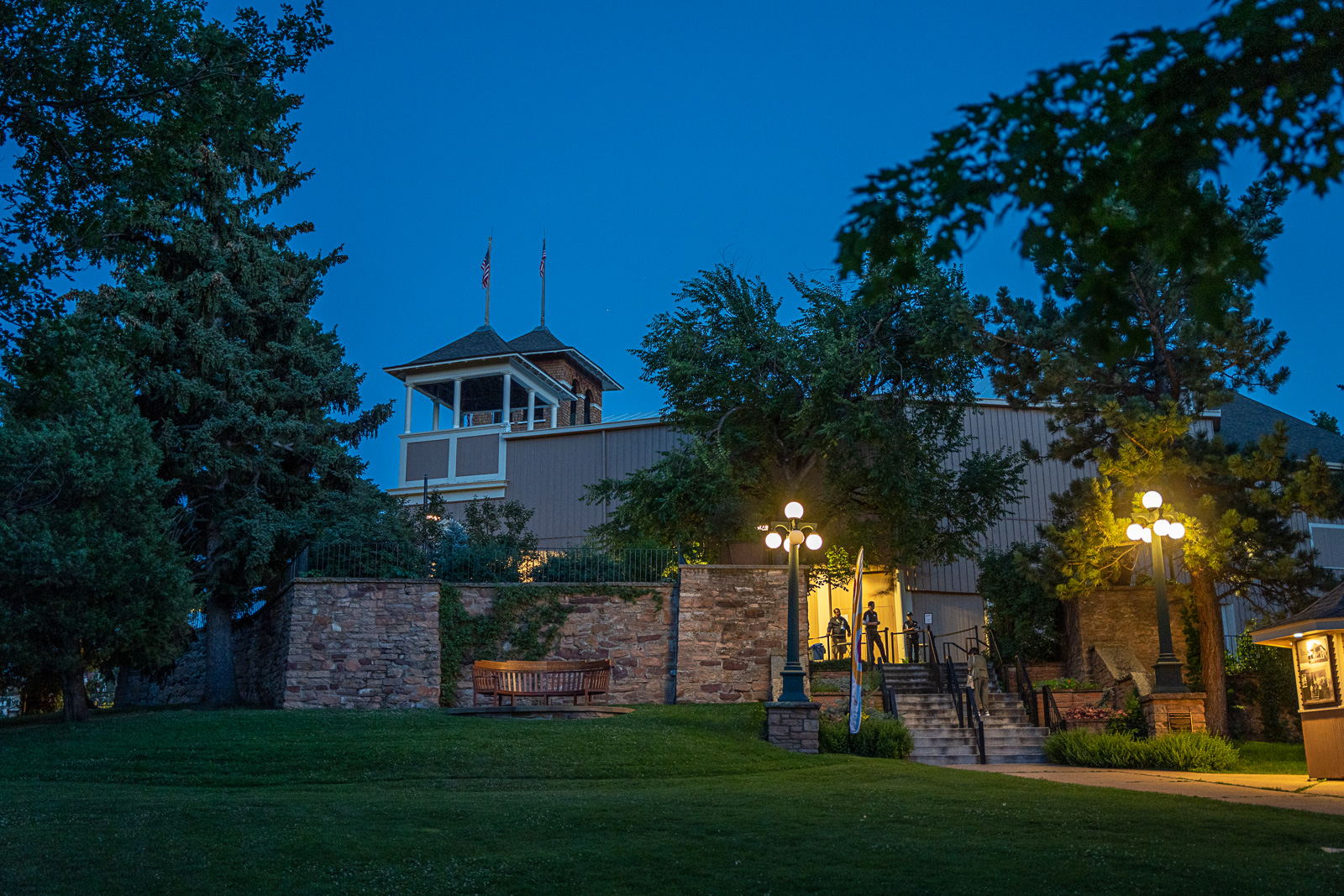
The Colorado Music Festival (CMF) has announced its 2024 festival season, July 5 through Aug. 4 at Chautauqua Auditorium in Boulder.
Chautauqua Auditorium. Photo by Jeremy Kornreich
This year’s festival will present 19 performances in 31 days—between four and five weeks and slightly shorter than recent previous festival seasons. In addition to the Festival Orchestra made up of musicians from around the country, it will feature the world premiere of a new piece by Gabriela Lena Frank; four Tuesday evening concerts on the Robert Mann Chamber Music Series, performed by members of the Festival Orchestra and the visiting Danish String Quartet; and guest artists including the CU-based Takács Quartet, cellist Alisa Weilerstien, and returning CMF favorites pianist Olga Kern and violinist Augustin Hadelich.
Performances by the full Festival Orchestra will be most Thursday and Friday evenings at 7:30 and 6:30 p.m. respectively. Orchestral concerts at 6:30 p.m. on Sunday will generally feature a smaller ensemble. The full festival schedule is listed below.
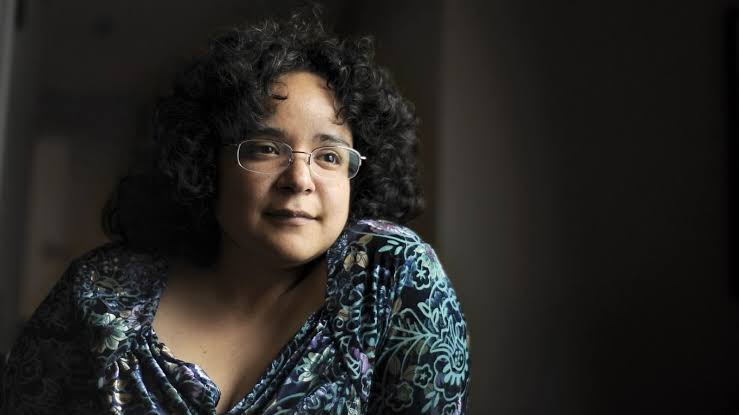
Gabriela Lena Frank
A highlight of the season will be the premiere of a new orchestral work with string quartet by Franks on July 21 (see details below). The summer’s only world premiere, the performance will feature the Takács Quartet. Other works by living composers will be featured throughout the summer, including Masquerade by Anna Clyne; Short Ride in a Fast Machine by John Adams, who was CMF composer-in-residence in 2022; Two Mountain Scenes by Kevin Puts, a work that was commissioned by the Bravo! Vail Valley Music Festival and the New York Philharmonic in 2007; and Joan Tower’s Concerto for Orchestra.
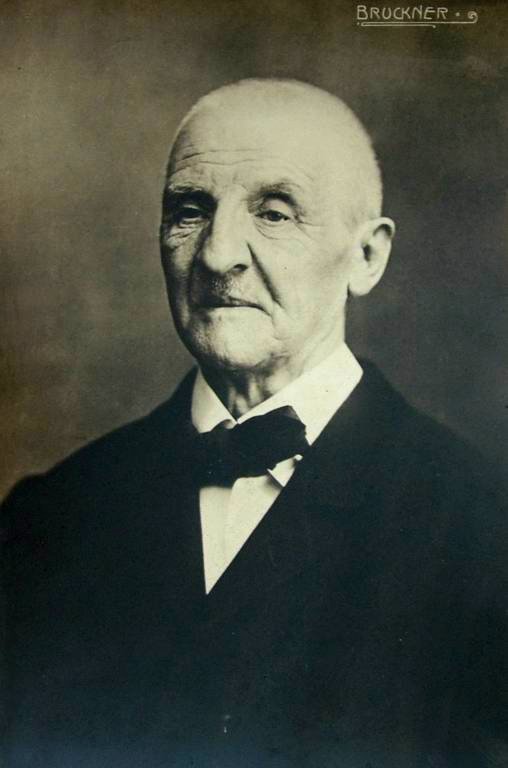
Anton Bruckner
On July 14 conductor Peter Oundjian and the CMF Orchestra will celebrate the 200th anniversary of the birth of Austrian composer Anton Bruckner with a performance of his Symphony No. 4 (“Romantic”). On the same program CMF will celebrate the 150th anniversary of Arnold Schoenberg’s birth with a performance of his late Romantic work for strings Verklärte Nacht (Transfigured Night).
The annual CMF family concert at 10:30 a.m. Sunday, July 7, will feature some shorter standard classical overtures by Mikhail Glinka and Mendelssohn, as well as a performance of composer Rob Kapilow’s setting of Dr. Seuss’s Green Eggs and Ham. Also on the program is Three Fun Fables, a setting for narrator and orchestra of three of Aesop’s fables by Daniel Dorff, who is known for numerous works that introduce music and musical instruments to young audiences.
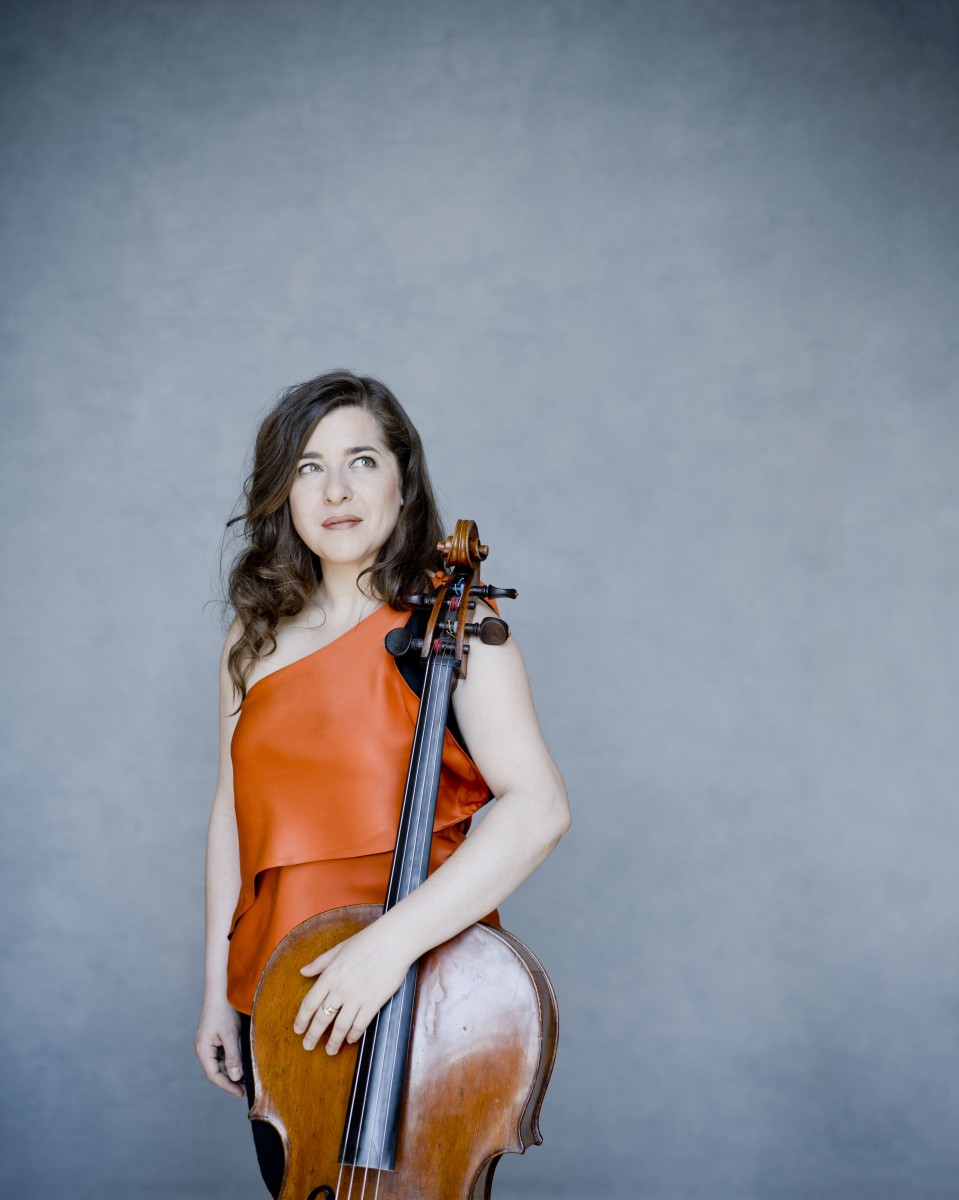
Alisa Weilerstein. Photo by Marco Borggreve
Outstanding guest artists have always been a feature of the CMF. This summer’s guest soloists will be: —Cellist Alisa Weilerstein, a member of a renowned musical family, playing the Dvořák Cello Concerto on the opening night program, July 5 and 7; —the playful ensemble Really Inventive Stuff, a favorite on past CMF summer schedules, and the mezzo-soprano Jennifer DeDominici for the family concert July 7; —violinist Vadim Gluzman playing the Prokofiev Second Violin Concerto July 9; —pianist Olga Kern playing the Rachmaninoff Second Piano Concerto July 18 and 19; —Colorado Public Radio personality Kabin Thomas narrating Greig’s music for for Henrik Ibsen’s verse play Peer Gynt, alsoJuly 18 and 19; —the Takács Quartet playing the world premiere of Gabriel Lena Frank’s new work July 21; —pianist Awadagin Pratt, playing J.S. Bach’s Keyboard Concerto in A major and Jessie Montgomery’s Rounds for piano and string orchestra July 25 and 26; —the Danish String Quartet, who last appeared at CMF in 2022, playing a varied program that ranges from Haydn to Stravinsky to the 18th-century blind Celtic harpist Turlough O’Carolan July 30; —violinist Augustin Hadelich, returning to CMF to play Tchaikovsky’s Violin Concerto Aug. 1 and 2; and —soprano Karina Gauvin to sing Ravel’s song cycle Shéhérazade and the final movement of Mahler’s Symphony No. 4 on the Festival Finale concert, Aug. 4.
Subscription tickets are currently available for the Colorado Music Festival. Tickets to individual concerts will go on sale through the Chautauqua Box Office March 5. More information on CMF tickets, including discounted youth and student tickets, is available HERE.
# # # # #
Colorado Music Festival, Peter Oundjian, music director Summer 2024 All performances in Chautauqua Auditorium
Opening Night Festival Orchestra, Peter Oundjian, conductor With Alisa Weilerstein, cello
Anna Clyne: Masquerade (2013)
Dvořák: Cello Concerto in B minor
Mendelssohn: Symphony No. 4 in A major (“Italian”)
6:30 p.m. Friday and Sunday, July 5 and 7
Family Concert: Green Eggs and Ham Festival Orchestra, Jacob Joyce, conductor With Really Inventive Stuff and Jennifer DeDominici, mezzo-soprano
Glinka: Overture to Ruslan and Ludmilla
Daniel Dorff: Three Fun Fables
Mendelssohn: Overture to A Midsummer Night’s Dream
Rob Kapilow: Green Eggs and Ham
10:30 a.m. Sunday, July 7
Robert Mann Chamber Music Series Colorado Music Festival musicians
Ernst von Dohnányi: Sextet in C Major
Beethoven: “Duet with two Obligato Eyeglasses” in E-flat major for viola and cello, WoO 32
Schumann: Piano Quartet in E-flat Major, op. 47
7:30 p.m. Tuesday, July 9
Festival Orchestra Concert Festival Orchestra, Peter Oundjian, conductor With Vadim Gluzman, violin
John Adams: Short Ride in a Fast Machine
Prokofiev: Violin Concerto No. 2
Stravinsky: Rite of Spring
7:30 p.m. Thursday July 11 6:30 p.m. Friday, July 12
Bruckner Bicentennial Concert Festival Orchestra, Peter Oundjian, conductor
Arnold Schoenberg: Verklärte Nacht (“Transfigured night”), op. 4
Anton Bruckner: Symphony No. 4 (“Romantic”)
6:30 p.m. Sunday, July 14
Robert Mann Chamber Music Series Colorado Music Festival musicians
Carl Nielsen: Wind Quintet, op. 43
Schubert: String Quintet in C Major, D956
7:30 p.m. Tuesday, July 16
Festival Orchestra Concert Festival Orchestra, Rune Bergmann, conductor With Olga Kern, piano, and Kabin Thomas, narrator
Vivian Fung: Prayer
Rachmaninoff: Piano Concerto No. 2, op. 18
Edvard Grieg: Suites from Peer Gynt
7:30 p.m. Thursday, July 18 6:30 p.m. Friday, July 19
Festival Chamber Orchestra Concert Festival Orchestra, Peter Oundjian, conductor With the Takács Quartet and Gabriela Lena Frank, composer
Florence Price: Adoration
Gabriela Lena Frank: World Premiere
Joan Tower: Concerto for Orchestra
6:30 p.m. Sunday, July 21
Robert Mann Chamber Music Series Colorado Music Festival musicians
Joseph Haydn, String Quartet in C Major, op. 20 no. 2
Claude Debussy, Sonata for flute, viola and harp
Felix Mendelssohn, String Octet in E-flat Major, op. 20
7:30p.m. Tuesday, July 23
Festival Orchestra Concert Festival Orchestra, Peter Oundjian, conductor With Awadagin Pratt, piano
J.S. Bach: Keyboard Concerto in A major, S1055
Jessie Montgomery: Rounds for piano and string orchestra (2022)
Rimsky-Korsakov: Scheherazade
7:30 p.m. Thursday, July 25 6:30 p.m. Friday, July 26
Festival Chamber Orchestra Concert Chamber Orchestra, Gemma New, conductor With Christina and Michelle Naughton, piano duo
Mozart: Eine kleine Nachtmusik, K525 —Concerto in E-flat Major for Two Pianos, K365 —Symphony No. 35 in D major, K385 (“Haffner”)
6:30 p.m. Sunday, July 28
Robert Mann Chamber Music Series Danish String Quartet
Joseph Haydn: String Quartet, op. 77 no. 2: III, Andante
Stravinsky: Three Pieces for String Quartet
Turlough O’Carolan: Three Melodies
Mozart: Divertimento in F major, K138
Shostakovich: String Quartet No. 3 in F major, op. 73
7:30 p.m. Tuesday, July 30
Festival Orchestra Concert Festival Orchestra, Peter Oundjian, conductor With Augustin Hadelich, violin
Kevin Puts: Two Mountain Scenes (2007)
Tchaikovsky: Violin Concerto in D Major, op. 35
Dvořák: Symphony No. 7 in D minor, op. 70
7:30 p.m. Thursday, Aug. 1 6:30 p.m. Friday, Aug. 2
Festival FInale Concert Festival Orchestra, Peter Oundjian, conductor With Karina Gauvin, soprano
Johann Strauss: Overture to Die Fledermaus
Ravel: Shéhérazade
Mahler: Symphony No. 4 in G major
6:30 p.m. Sunday, Aug. 4
Information on Subscription tickets is available HERE. Single concert tickets will go on sale March 5.
NOTE: A correction was made Feb. 10. An earlier version of the story said that the 2024 festival would last four weeks. The correct length is 31 days—between four and five weeks.
Pianist Jennifer Hayghe performs the first piece she ever heard
By Peter Alexander Jan. 30 at 9:45 p.m.
Pianist Jennifer Hayghe returns to one of the first pieces of music she ever heard when she performs Beethoven’ “Emperor” Concerto with the Boulder Chamber Orchestra and conductor Bahman Saless Saturday (7:30 p.m. Feb. 3; details below).
Jennifer Hayghe
“My mother was an artist and she would stay home and paint, and listen to records,” she says. “The record that she listened to the most was Arthur Rubinstein playing the ‘Emperor’ Concerto. I have know it since I was in utero!”
In addition to the “Emperor”—Beethoven’s Piano Concerto No. 5 in E-flat major—the program features the Valse triste (Sad waltz) by Jean Sibelius, a melancholy piece that has often been used to create a mood for films and TV; and the only piece that Wagner wrote for small orchestra, his Siegfried Idyll.
While Hayghe admits that she doesn’t remember her earliest exposure to the concerto, she did study it in graduate school. “I think I’ve been playing this for over 30 years,” she says. “It’s very familiar to me, and it’s such a majestic piece. I’ve performed it both with chamber orchestra and with larger orchestras. I much prefer playing it with the smaller orchestra. It has a very different feel and a very different sound.
“As a pianist there are things that we have to do to project with full orchestra that you don’t have to do with chamber orchestra. So much of the piano part is really texture, as part of what the orchestra is doing. If you’re trying to create that texture with a larger orchestra, you’re playing very differently than you are if it’s a smaller orchestra and you’re able to blend in. I really enjoy playing it with the chamber orchestra.”
Bahman Saless. Photo by Keith Bobo
She particularly enjoys playing the concerto in Boulder, where she has so many friends. “I enjoy working with Bahman (Saless),” she says. “And the orchestra has lots of friends in it, so it will be a nice experience.”
One of Beethoven’s most popular pieces, the Fifth Piano Concerto has several unusual or unique aspects. “The remarkable thing in the first movement is that the piano starts, with fantastic virtuoso cadenzas, but never really gets to [play a cadenza] again,” Hayghe says. In most concertos, she explains, “the piano gets to do their big cadenza at the end of the first movement. But after [the opening cadenzas in the ‘Emperor’], the piano is reigned in, and much of the movement the piano is providing texture—all of that figuration up at the top of the piano.”
Continuing a description of the concerto, she points out that the second movement is a set of variations with some moments that sound improvised. It’s “very sublime,” she says, and “completely different from the first movement. Again, the piano is blending with the orchestra in this very textural way. The second movement then never really ends, it transitions with a half-step move into this joyful, joyous, energetic last movement.”
Finally, she says, “everybody has to watch out, and listen for that very unusual timpani and piano duet at the end of the last movement.
“I think one of the fantastic things about this piece is the way Beethoven deals with the dual nature of concerto, the fighting of the forces that concertos often are, and also the the ‘in concert’ part of it as well. You do hear a lot of moments of the piano and the orchestra playing against each other, and then those fantastic moments where they come together and the soloist is playing inside the orchestra, in a sense. I don’t think people are always aware of that.”
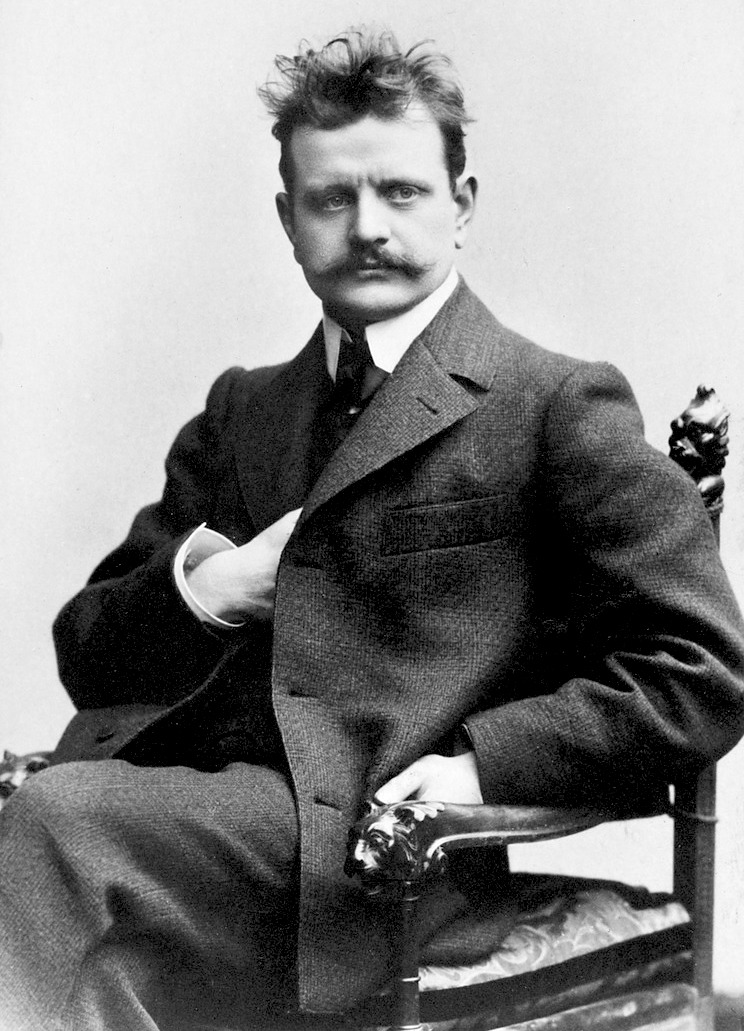
Jean Sibelius
Sibelius wrote Valse triste as part of music he wrote to accompany the play Kuolema (Death) by his brother-in-law, Arvid Järnefelt. In the play, it accompanies the last dance among spectral figures by a dying woman that ends when a door flies open and death stands on the threshold. This one piece proved more popular than the other movements written for the play, and has been performed alone in concert and used in film and TV, from Charlie Chaplin’s Great Dictator in 1940 to an episode of Twin Peaks in 1992.
Wagner wrote Siegfried Idyll as a birthday gift for his wife Cosima. It was first performed on the steps of their villa in Switzerland on Christmas morning, 1870. It was written as a celebration also of the birth of their son, named Siegfried, and the music was later used in part of Wagner’s 1876 music drama Siegfried. The score includes pieces of personal meaning to Wagner and Cosima, including the German lullaby “Schlaf, Kinder, schlaf” (Sleep little child, sleep) that was associated with their daughter. Originally scored for 13 players, Wagner later arranged it for a small orchestra of 35 players for publication.
# # # # #
Boulder Chamber Orchestra, Bahman Saless, conductor With Jennifer Hayghe, piano
Sibelius: Valse triste
Wagner: Siegfried Idyll
Beethoven: Piano Concerto No. 5 in E-flat major (“Emperor”)
LSO family concert, BCO mini-chamber concert Saturday
By Peter Alexander Jan. 16 at 9:35 p.m.
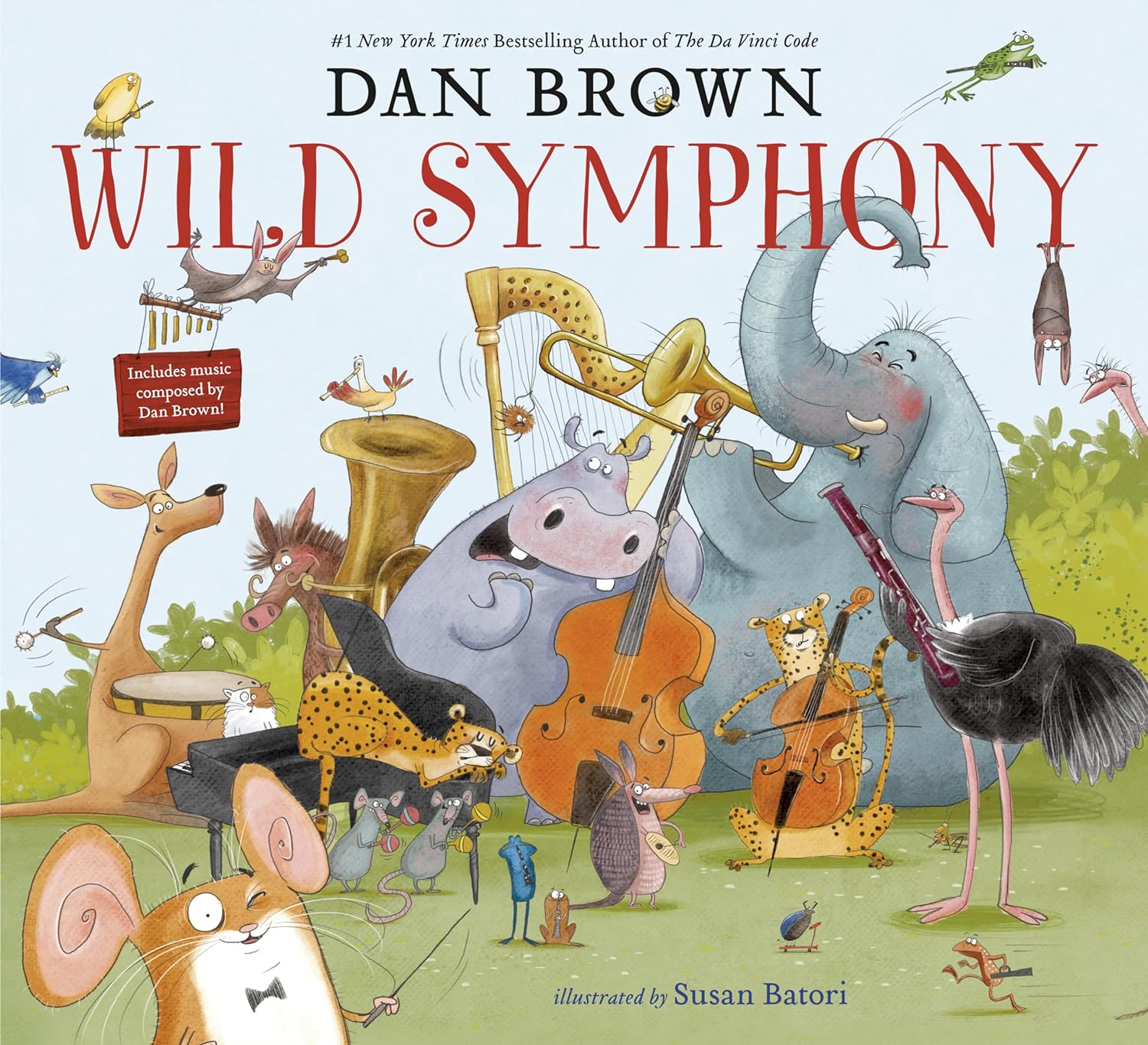
The Longmont Symphony Orchestra will introduce local families to musical animals including a bouncing kangaroo and a brilliant bat Saturday (4 p.m. Jan. 20) when they present the Wild Symphony by Dan Brown.
Yes, that’s the Dan Brown who wrote The da Vinci Code and other New York Times best-selling thrillers. The performance, under the direction of Elliot Moore, will feature Longmont native vocalist and attorney Cameron Grant as narrator. Wild Symphony has an accompanying children’s book, with colorful illustrations by Susan Batori.
The son of a math teacher and a church organist, Brown learned piano as a child and composed music before he wrote books. He says that he wrote the book to share his love of music with children. Each of the animals in the orchestra conducted by “Maestro Mouse” is associated with an instrument, and together they tell a story that includes portraits of the different animals and anagram puzzles on each page of the book. Among the 20 animals in the score are clumsy kittens, an anxious ostrich, dancing boars and busy beetles.
A graduate of Niwot High School, Grant studied singing at Colorado College and sang with the Aspen Opera Theater, Colorado Symphony and Colorado Music Festival. After getting a law degree, he returned to Longmont where he practices in the field of real estate law.
# # # # #
Longmont Symphony Orchestra, Elliot Moore conductor, with Cameron Grant, narrator
Dan Brown: Wild Symphony
4 p.m. Saturday, Jan 20 Vance Brand Civic Auditorium
The Boulder Chamber Orchestra (BCO) will present pianist Adam Żukiewicz, associate professor of piano at the University of Northern Colorado, in the second of their Mini-Chamber concerts of the 2023–24 season.
# # # # #
Titled “Adam Żukiewicz and Friends,” the concert will feature Żukiewicz playing quartets for piano and strings by Mozart and Brahms with members of the BCO, as well as Bartók’s popular Romanian Dances in their arrangement for piano and violin. The performance will be at 7:30 p.m. Saturday (Jan. 20) at the Boulder Seventh-Day Adventist Church. (See below for tickets.)
Adam Żukiewicz
A native of Poland, Żukiewicz has studied at the Royal Academy of Music in London and the Jacobs School of Music at Indiana University, and holds a doctorate from the University of Toronto, where he also served on the faculty. He won first prize both the 2011 Canada Trust Music Competition and the 2012 Shean Piano Competition in Canada, and was a medalist at several other contests. Since 2018 he has been a judge for the Steinway Piano Competition.
Mozart’s Piano Quartet in the turbulent key of G minor, one of the earliest works for that ensemble, was commissioned by the Viennese publisher Hoffmeister for sale to amateurs. Believing the work Mozart wrote was too difficult for amateur players, Hoffmeister canceled the rest of the order. Nevertheless, Mozart wrote another piano quartet several months later.
When Brahms wrote his Piano Quartet in G minor nearly 100 years after Mozart’s Quartet in the same key, the quartet for piano and strings was a more established genre, even if not as common as string quartets and piano trios. The quartet is best known for its rousing “Rondo alla Zingarese” (Gypsy rondo) finale.
# # # # #
Boulder Chamber Orchestra Mini-chamber 2: Adam Żukiewicz and Friends Members of the Boulder Chamber Orchestra with Adam Żukiewicz, piano
Mozart: Quartet in G minor for piano and strings, K478
Brahms: Quartet in G minor for piano and strings, op. 25
Bartók: Romanian Dances for piano and violin
7:30 p.m. Saturday, Jan. 20 Boulder Adventist Church
Joyce Yang in Macky Friday, David Korevaar in Grusin Sunday and Monday
By Peter Alexander Jan. 10 at 3:10 p.m.
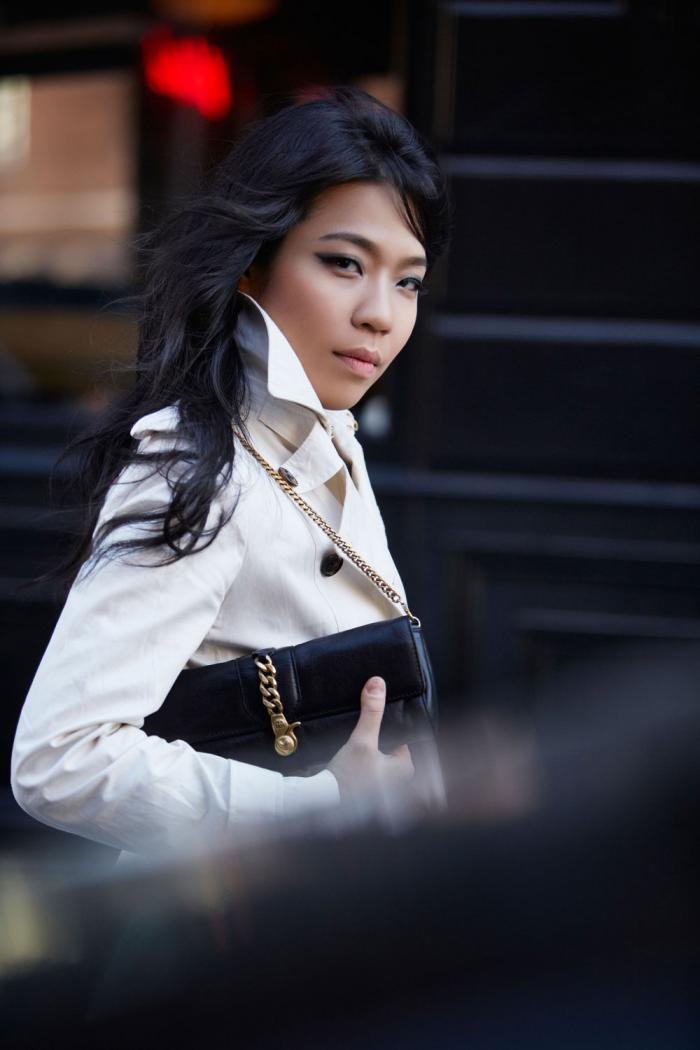
Pianist Joyce Yang, silver medalist at the Van Cliburn International Piano Competition at the age of 19, will be joined by the Takács Quartet for a concert at Macky Auditorium Friday (7:30 p.m. Jan. 12; details below).
Joyce Yang. Photo by K.T. Kim
The pairing of her solo performances and chamber music with the Takács recalls her appearance at the Cliburn Competition in 2005, when she won Best Performance of Chamber Music. In fact, she will play the same piece with the Takács they played together in Ft. Worth for her prize-winning performance: Dvořák’s Piano Quintet in A major—a work they also have played for the Lincoln Center Great Performers series.
Chamber music has been a large art of Yang’s career ever since the Cliburn competition. In addition to performances with the Takács, she has played with the Emerson Quartet on the Mostly Mozart Festival and has a standing partnership with the Alexander String Quartet, with whom she has recorded Mozart’s Piano Quartets.
Other works on Friday’s program include selections from Tchaikovsky’s Seasons and Rachmaninoff’s Preludes, op. 32. The first half of the program concludes with one of the great virtuoso showpieces of the piano repertoire, Guido Agosti’s arrangements of the “Infernal Dance,” “Berceuse” and “Finale” from The Firebird by Stravinsky.
The least familiar of the solo piano pieces will be the selections from Tchaikovsky’s Seasons. A set of 12 pieces sketching each of the 12 months, the pieces were published monthly throughout 1876 in a St. Petersburg music journal. Each of the pieces has a subtitle that was provided by the publisher.
Dvořák’s Quintet forms the second half of the program. One of the composer’s most performed chamber works, the Quintet was actually the second such work Dvořák wrote. It began as an attempt at a revision of the earlier quintet, also in A major, written when the composer was 31. Unsatisfied with that work—which he had since discarded— Dvořák decided instead to write a completely new work. In the usual four-movement structure, the Quintet No. 2 features many hallmarks of the composer’s mature style including a Dumka—a movement alternating mournful and rapid, happy sections—and a Bohemian folk dance for the third movement.
The Takács Quartet will kick off their spring concert series with another performance featuring a pianist joining them in a quintet.
This program—to be performed Sunday and Monday, Jan. 14 and 15 (details below)—will feature CU distinguished professor of piano and Helen and Peter Weil Faculty Fellow David Korevaar for the Piano Quintet in A minor of Florence Price. Other works to be performed by the Takács will be the Italian Serenade for string quartet by Hugo Wolf and Bartók’s String Quartet No. 1.
Takács Quartet. Image by Amanda Tipton Photography.
The early 20th-century African-American composer Florence Price has recently been rediscovered by orchestras and chamber music organizations across the U.S. The 2009 find of a trove of manuscripts in what had been her summer home in the village of St. Anne, Ill.,including previously unknown violin concertos and a symphony, has led to increased interest in her music.
A native of Little Rock, Ark., Price studied at the New England Conservatory of Music and spent most of her life in Chicago, where she continued her education and worked as an organist for silent films. In 1933 her First Symphony was premiered to critical acclaim by the Chicago Symphony.
The Quintet in A minor was written in 1935, shortly after the premiere of the symphony. Price’s heritage is reflected in the third movement, titled “Juba”—a dance characterized by rhythmic hand-clapping that was associated with celebrations by enslaved Black people on Southern plantations.
Wolf’s Italian Serenade is often heard in its version for string orchestra but was originally written for quartet. Planned as part of a large, multi-movement work, the brief Serenade survives as a stand-alone work that is one of the most cheerful pieces by a composer whose largely unhappy life ended in an asylum. This is undoubtedly his best known chamber work, as most of his compositions were song collections by German poets from Goethe to Heine and Eichendorff.
The inspiration for Bartók’s first String Quartet, written in 1908, is often said to have been his rejection by the violinist Stefi Geyer, as suggested by the mournful tone of the first movement. On the other hand, he got over the rejection well enough to marry someone else within a year.
The quartet is in three large, interconnected movements. Bartók had just stared collecting Hungarian folk songs by 1908, and other than the last movement, they had little influence on the First Quartet. In general the quartet is more Romantic in nature and less adventurous than his later quartets. The premiere of the First Quartet was given in 1910 by the Waldbauer-Kerpely Quartet, to whom Bartók dedicated his Second Quartet.
# # # # #
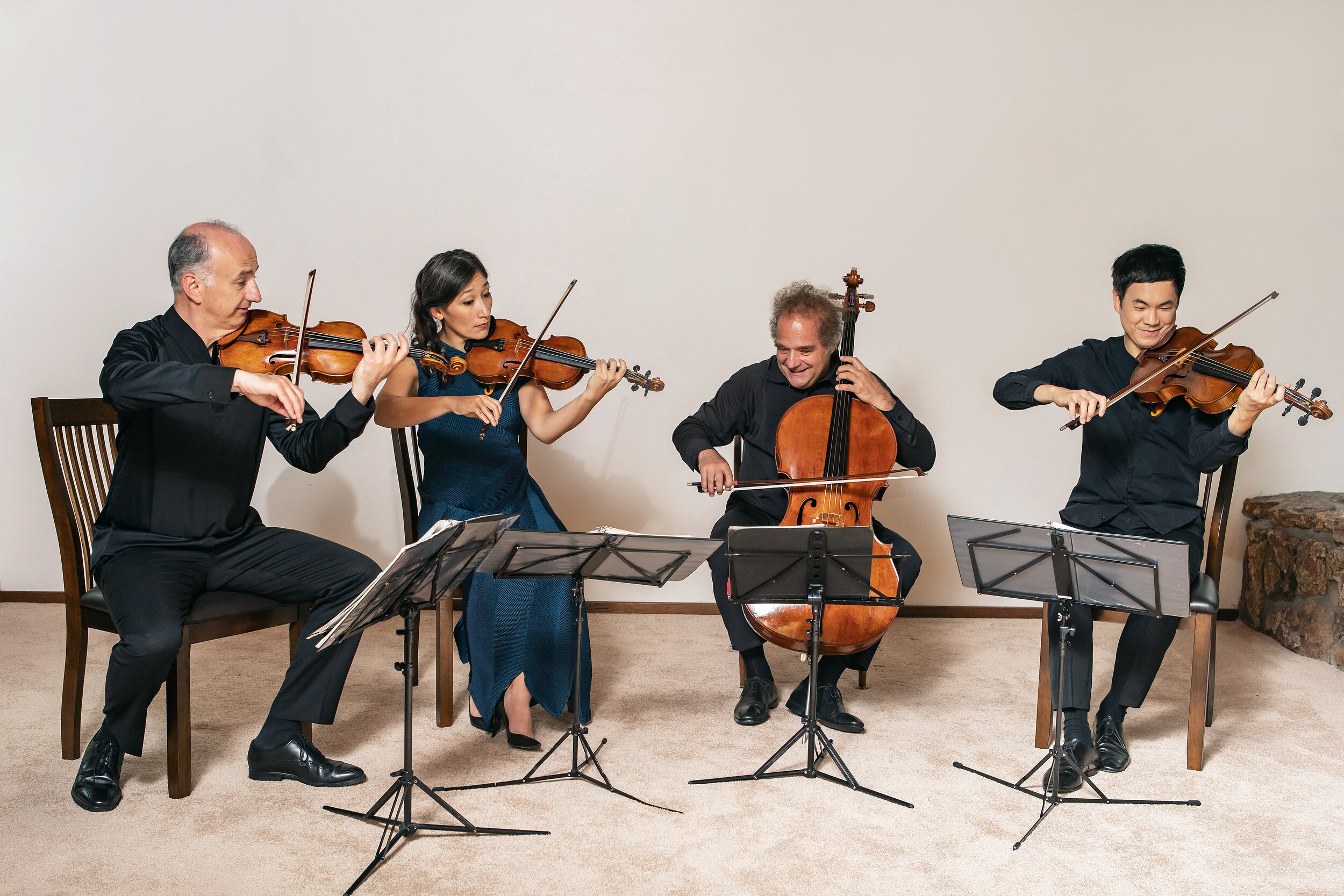
Takács Quartet with David Korevaar, piano
Hugo Wolf: Italian Serenade for string quartet Bartók: String Quartet No. 1 Florence Price: Piano Quintet in A minor



 Sharps & Flatirons