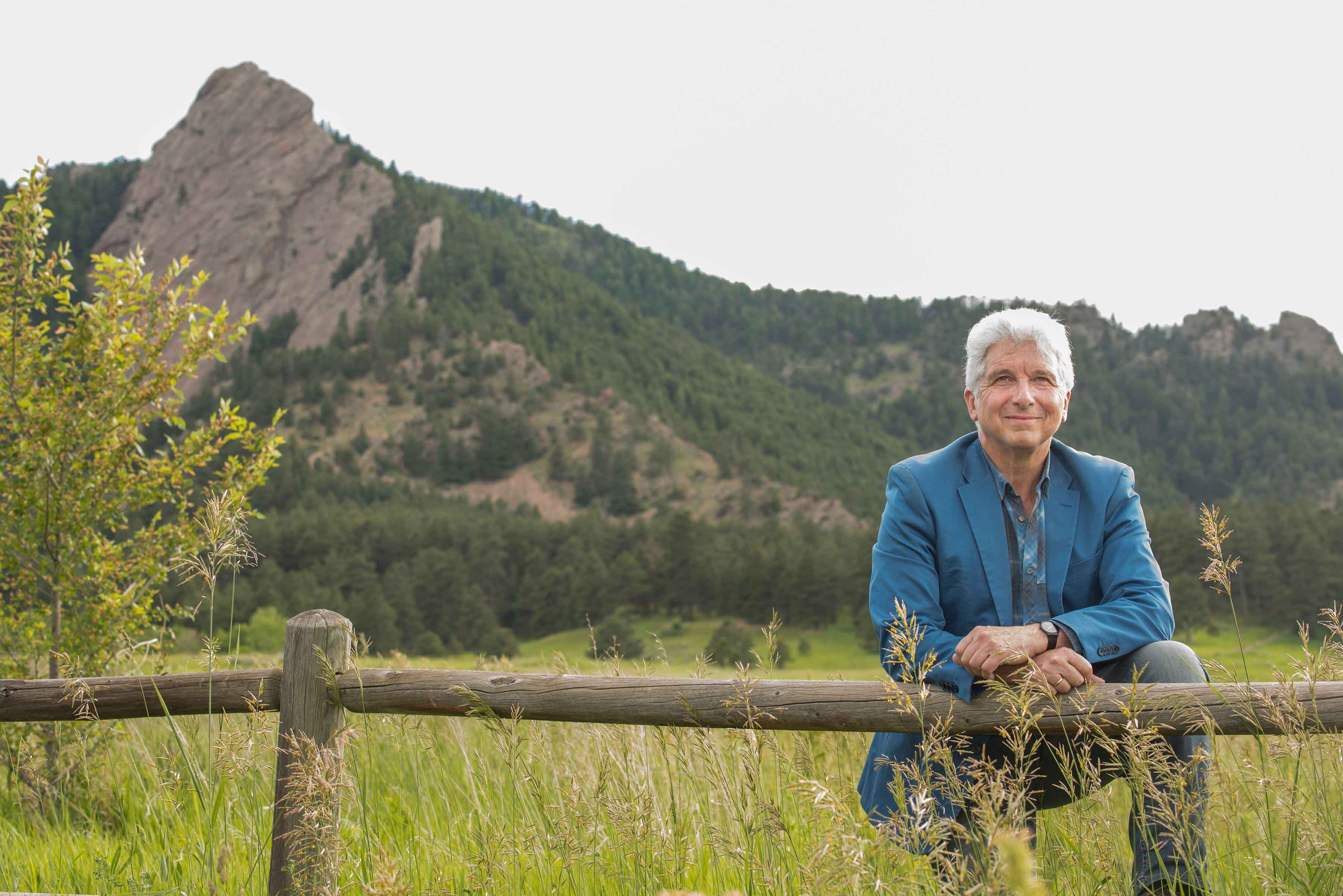
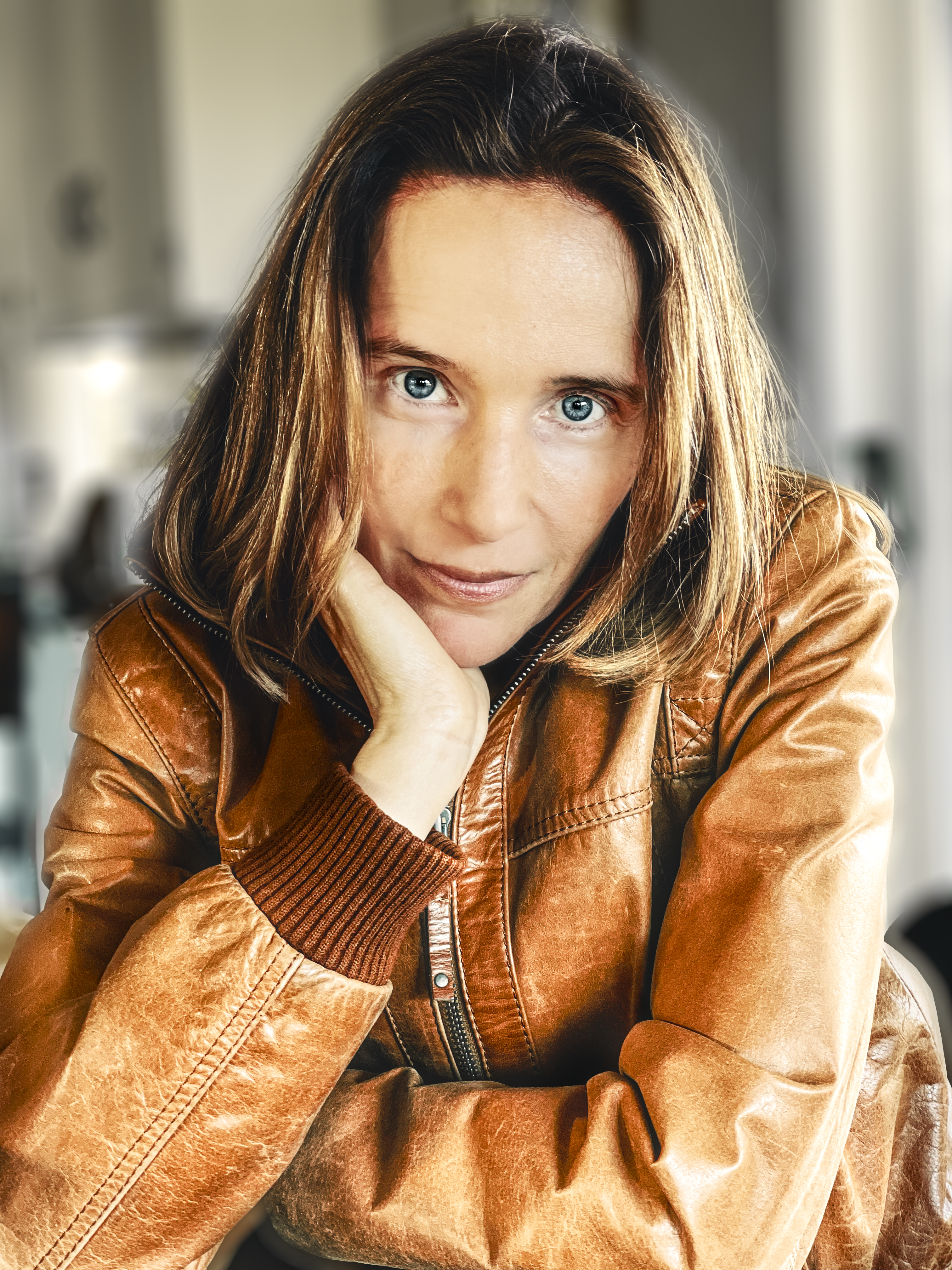
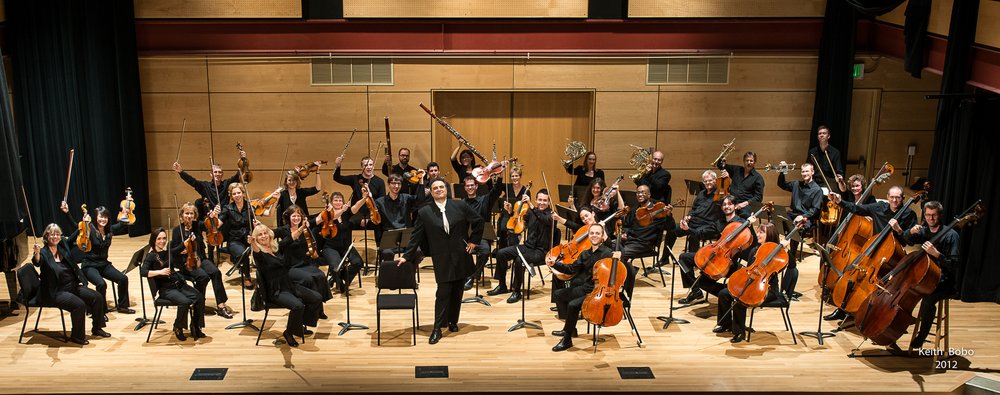
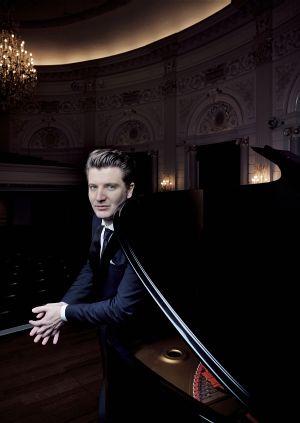
CMF Co-Commission, guests at the festival

Eric Whitacre’s Murmur features violinist Anne Akiko Myers

By Peter Alexander July 13 at 9 a.m.

Peter Oundjian often speaks in superlatives.
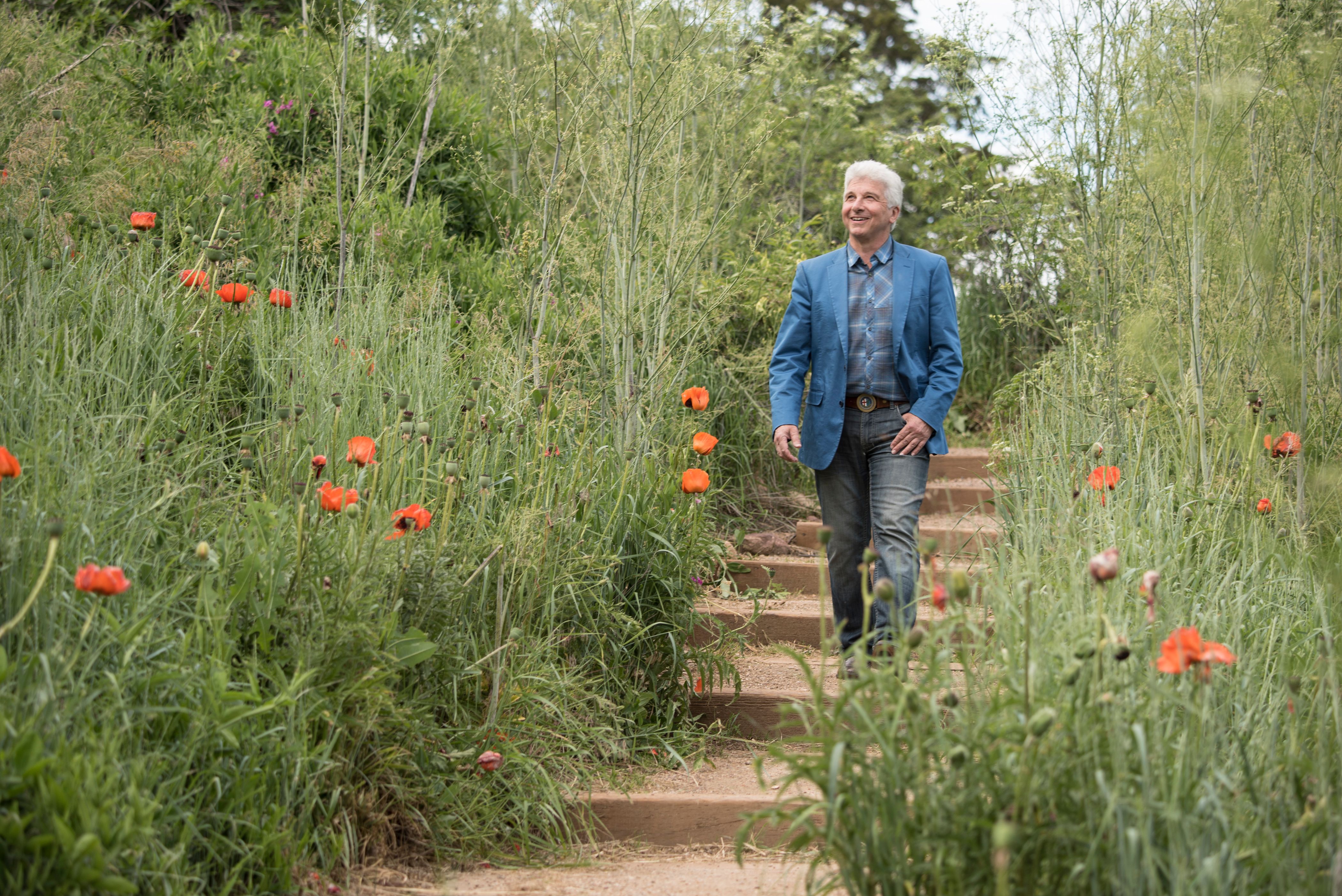
CMF Music Director Peter Oundjian

The music director of the Colorado Music Festival (CMF) says that the next two weeks of the festival (July 15–July 25) includes one of the composer’s “greatest pieces,” an overture that is “absolutely exquisite,” maybe “the most beautiful melody ever written,” and “an exquisite symphony” that is “as close to perfection as you can imagine!” 

You might think he loved the music he will conduct.  

Such enthusiasm tends to be contagious, and usually extends to both musicians and audiences. To find out for yourself, go to the festival’s Web page for tickets. (The full program of concerts for those dates is listed below.)
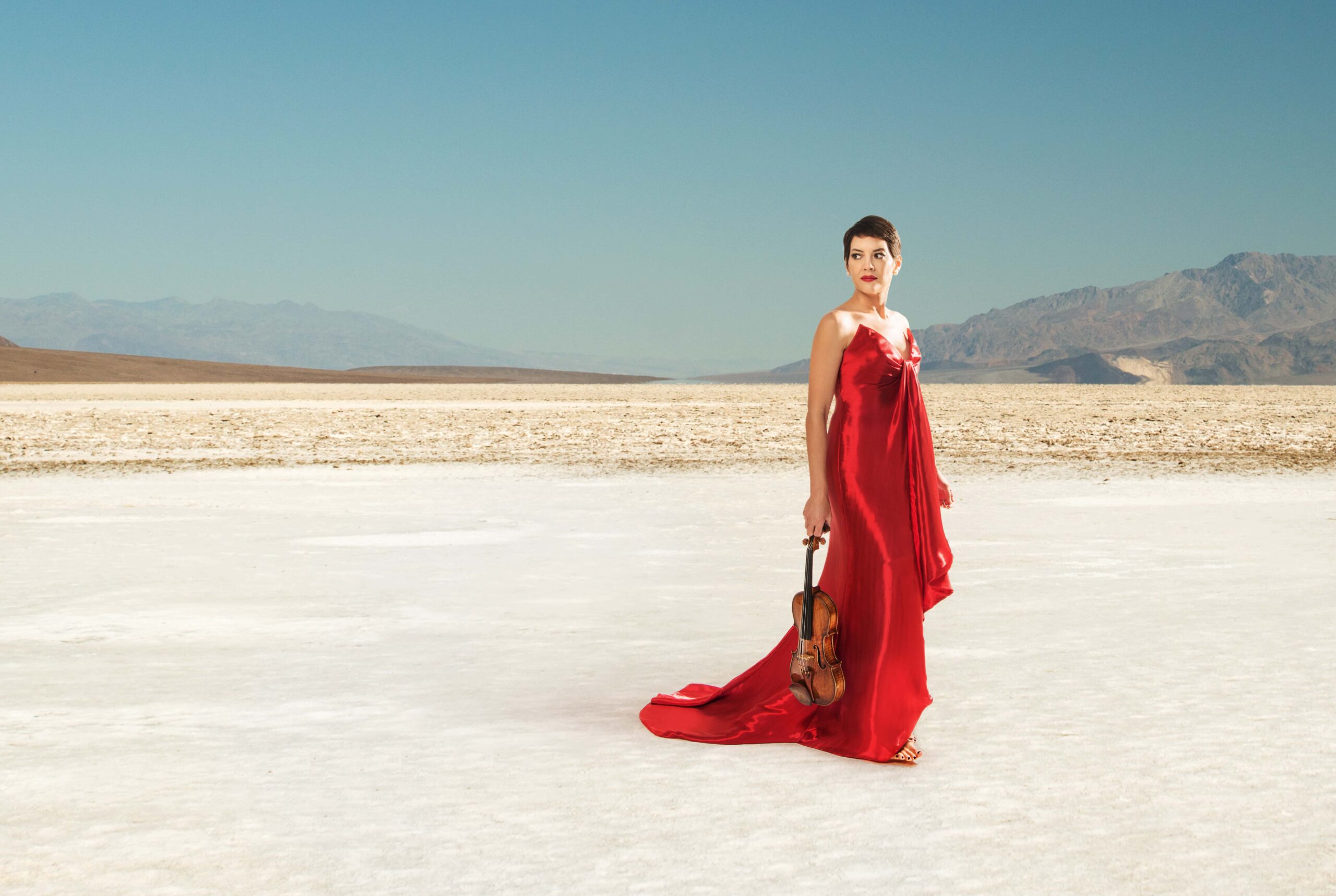
Violinist Anne Akiko Myers. Photo by David Zentz.

The next Festival Orchestra concert on Thursday and Friday evenings (7:30 p.m. July 17 and 6:30 p.m. July 18) features a work co-commissioned by the CMF from composer Eric Whitacre, who is best known for his choral music. Oundjian explained that he met with Whitacre in Los Angeles, “and we had a wonderful chat. I asked him what he was up to, and he already had this plan to write something for (violinist) Anne Akiko Meyers. At that point we said, ‘Let’s do it at the festival!’
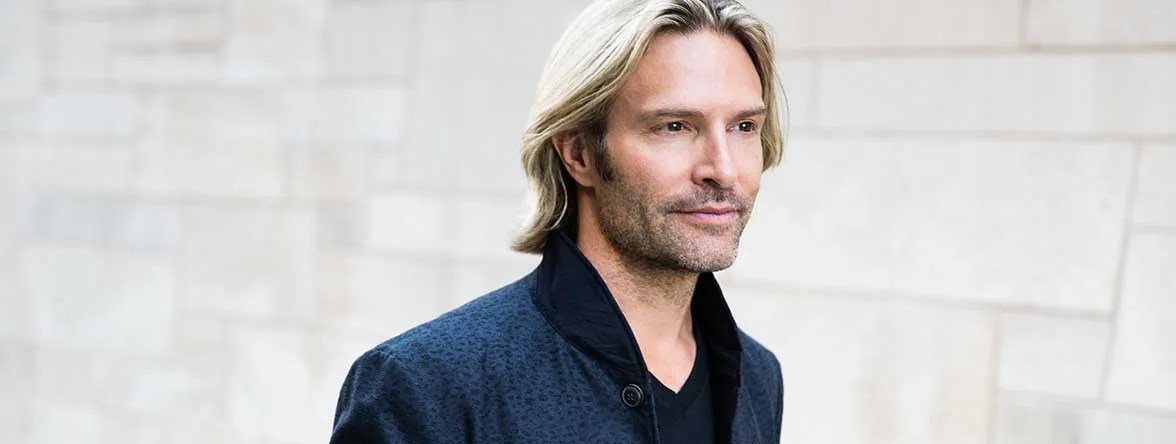
Composer Eric Whitacre

“It’s a short, very tender piece, only for strings. It ended up being a memorial to everyone who lost so much in the fires (in Los Angeles the past January). So it’s a very touching piece.”

The program opens with Aaron Copland’s Appalachian Spring, one of the most loved pieces of American concert music. “That’s still one of (Copland’s) great pieces,” Oundjian says. “It epitomizes what we think of as the great middle-20th-century American music.”

After intermission, the program features two works inspired by Shakespeare, and two very different pairs of lovers. First is Berlioz’s Overture to the opera Béatrice et Bénédict, based on the taunting, bickering “merry war” between the two characters in the comedy Much Ado about Nothing. That will be followed by Tchaikovsky’s Fantasy Overture inspired by the tragic teenaged lovers of Romeo and Juliet.

“The second half is one of my favorite little moments (of the summer), because it’s two completely contrasting couples,” Oundjian says. “The Berlioz is absolutely exquisite. And you might think you’ve heard (Tchaikovsky’s Romeo and Juliet) too many times, and then you hear it again, and Oh My God! Is it the most beautiful melody every written?”
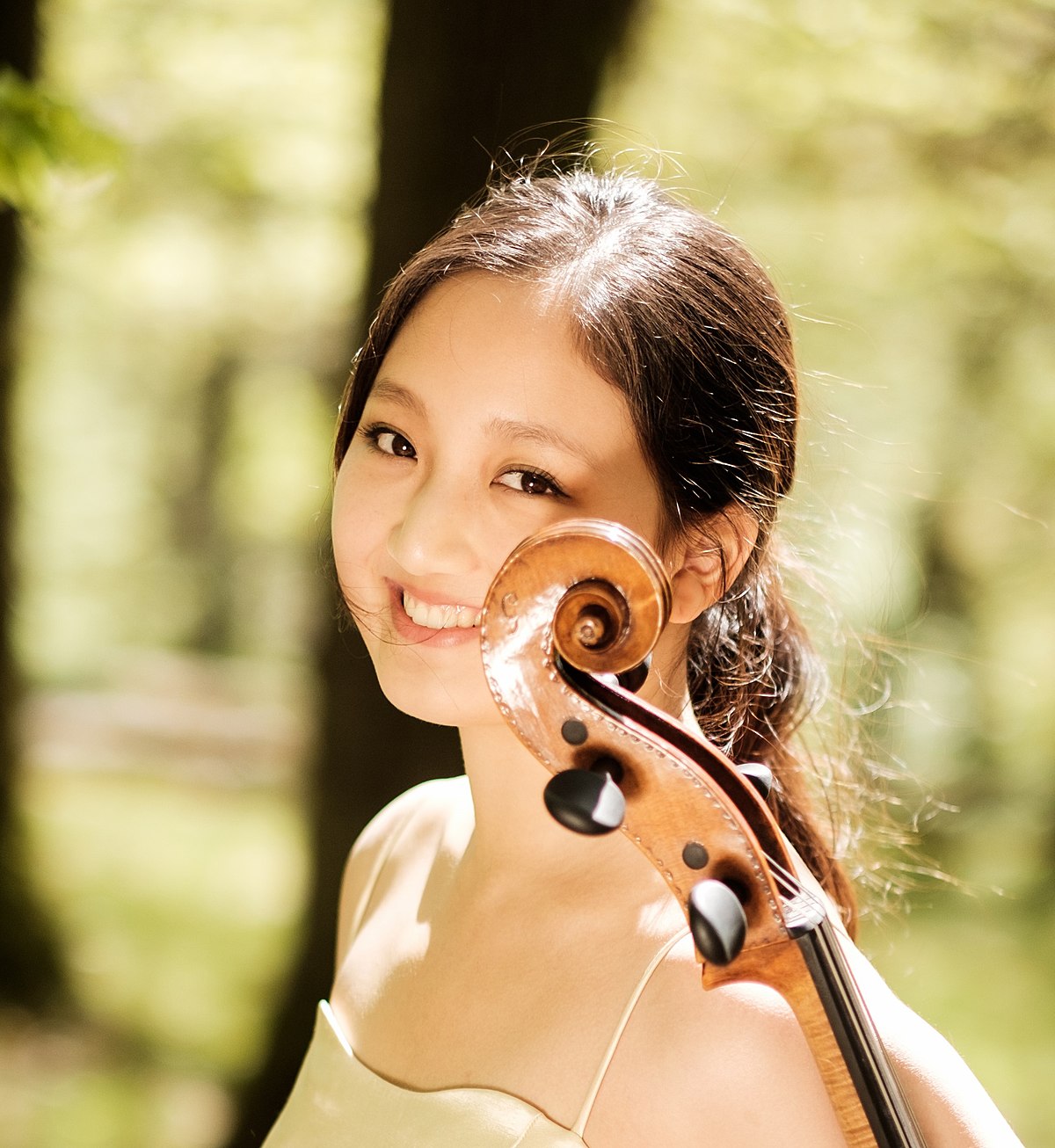
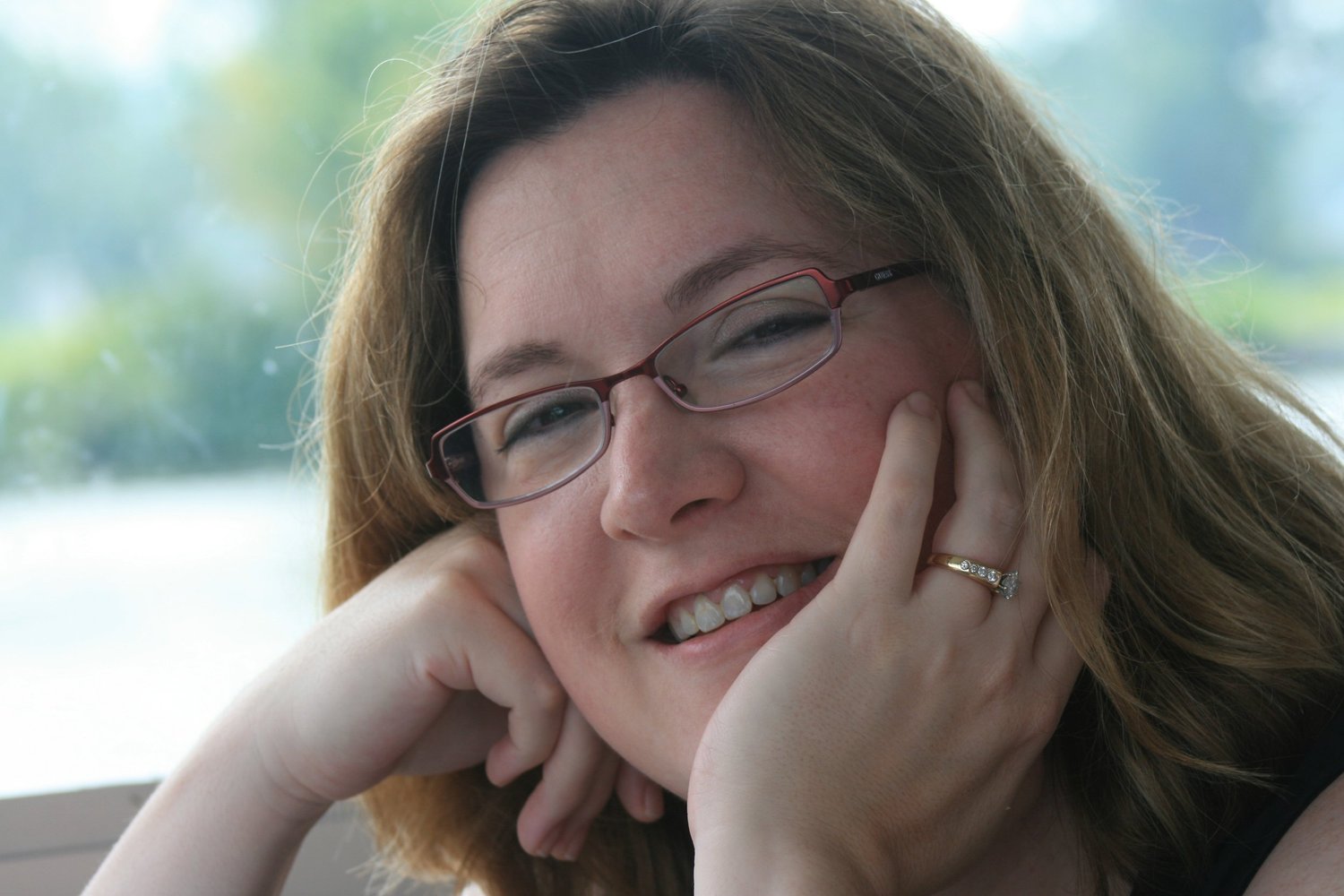
Cellist Hayoung Choi

On the following Sunday, guest conductor Maurice Cohn will lead the orchestra with South Korean/German cellist Hayoung Choi playing Tchaikovsky’s Variations on a Rococo Theme. One of Tchaikovsky’s most popular orchestral works, the Variations were inspired by the style of Mozart. Also on the program is Gli uccelli (The Birds), a suite for small orchestra that, like the Tchaikovsky, was inspired by music of an earlier age—in this case pieces evoking the sounds of birds from the 17th and 18th centuries.

Another guest conductor, Ryan Bancroft of the BBC National Orchestra of Wales and the Royal Stockholm Philharmonic, will lead the CMF orchestra at the end of the following week (7:30 p.m. Thursday, July 24, and 6:30 p.m. Friday, July 25). South Korean pianist Yeol Eum Son will play Beethoven’s Piano Concerto No. 3 in C minor on a program that also includes the Fairy Tale Poem by Russian composer Sofia Gubaidulina, a musical fantasy based on a children’s story.
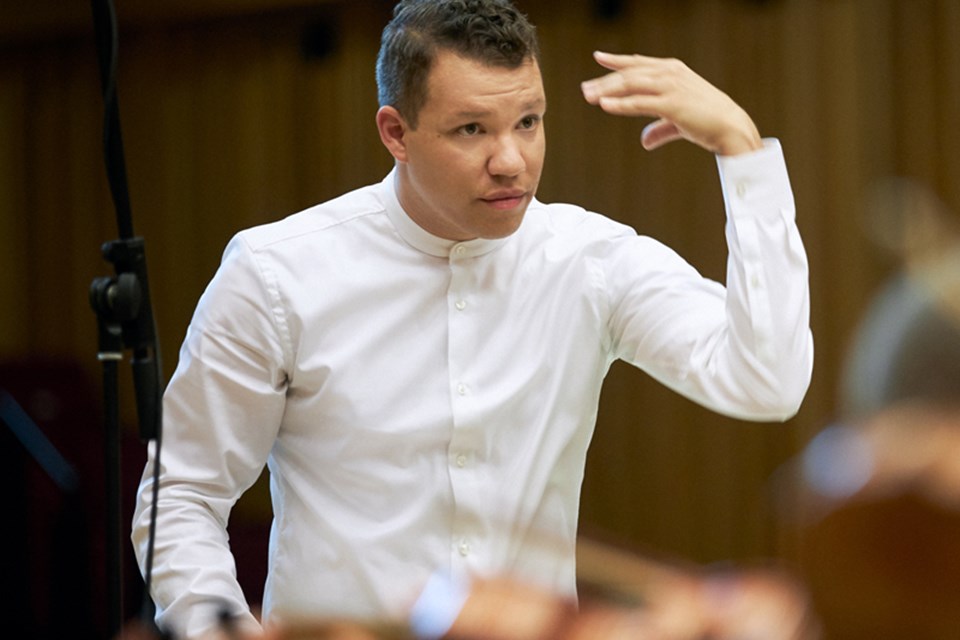
Ryan Bancroft. Photo by Benjamin Ealovega

Gubaidulina’s score portrays the tale of a piece of chalk that dreams of drawing castles and gardens, in spite of being confined to writing words and numbers in a school classroom. At the end, the dream comes true when a boy carries the last little piece of chalk home in his pants pocket.

The program concludes with a more deeply serious Russian work, Shostakovich’s Symphony No. 10. Like many of the composer’s works, the symphony contains esoteric musical symbols, including a musical anagram on letters of the composer’s name, and another musical anagram spelling ELMIRA, which the composer himself noted is similar to a theme from Mahler’s bleak Lied von der Erde (Song of the earth).

Oundjian returns to conduct the Festival Orchestra on Sunday, July 27. Chinese classical guitarist Xuefei Yang will play Joaquin Rodrigo’s Concerto de Aranjuez. Oundjian and the orchestra will play the Dances of Galánta, based on folk dances by the Hungarian composer Zoltán Kodály, and Schubert’s early Symphony No. 5.

“Schubert 5 is an exquisite symphony,” Oundjian says. “Nobody plays Schubert symphonies except maybe the ‘Unfinished,’ but Schubert 5—ah! It’s as close to perfection as you can imagine. If you think about how often pianists play the piano sonatas, or string quartets play the quartets, or the Trout Quintet, the symphonies kind of get ignored.”

Guitarist Xuefei Yang

Not ignored is the Concerto de Aranjuez, arguably the most popular concerto for classical guitar. “I love Concerto de Aranjuez” is Oundjian’s judgment. We haven’t done it in years, so it’s time. And an amazing guitarist, Xuefei Yang. Oh my god what a musician!”

Between the Festival Orchestra concerts there will be Tuesday chamber music concerts by the Brentano String Quartet with music by Schubert and Brahms (7:30 p.m. July 15), and CMF musicians with music by Mozart and Dvořák (7:30p.m. July 22). The full programs and ticket information are listed below.

# # # # #

Colorado Music Festival, Peter Oundjian, music director
Tuesday, July 15–Sunday, July 25
All performances in Chautauqua Auditorium

Chamber Music Concert
Brentano String Quartet

  • Schubert: Quartet in A minor, D804 (“Rosamunde”)
  • Anton Webern: Five Movements for String Quartet, op. 5
  • Brahms: String Quartet No. 3 in B-flat major, op. 67

7:30 p.m. Tuesday, July 15

Festival Orchestra Concert
Peter Oundjian, conductor
With Anne Akiko Meyers, violin

  • Copland: Appalachian Spring
  • Eric Whitacre: Murmur (CMF co-commission)
  • Ravel: Tzigane
  • Berlioz: Overture to Béatrice et Bénédict
  • Tchaikovsky: Romeo and Juliet Fantasy Overture

7:30 p.m. Thursday, July 17
6:30 p.m. Friday, July 18

Festival Orchestra Concert
Maurice Cohn, conductor
With Hayoung Choi, cello

  • Respighi: Gli uccelli (The birds)
  • Tchaikovsky: Variations on a Rococo Theme, op. 33
  • Beethoven: Symphony No. 1 in C major, op. 21

6:30 p.m. Sunday, July 20

Chamber Music Concert
Colorado Music Festival musicians

  • Nico Muhly: Doublespeak (2012)
  • Mozart: Quintet for piano and winds in E-flat major, K452
  • Dvořák: String Quintet No. 3 in E-flat major, op. 97

7:30 p.m. Tuesday, July 22

Festival Orchestra Concert
Ryan Bancroft, conductor
With Yeol Eum Son, piano

  • Sofia Gubaidulina: Fairytale Poem (Märchenpoem, 1971)
  • Beethoven: Piano Concerto No. 3 in C minor, op. 37
  • Shostakovich: Symphony No. 10

7:30 p.m. Thursday, July 24
6:30 P.M. Friday, July 25

Festival Orchestra Concert
Peter Oundjian, conductor
With Xuefei Yang, guitar

  • Zoltán Kodály: Dances of Galánta
  • Joaquin Rodrigo: Concerto de Aranjuez
  • Schubert: Symphony No. 5 in B-flat major, D485

6:30 p.m. Sunday, July 27

Tickets to all concerts available through the CMF Web page

4th Colorado Music Festival starts with fireworks

Festival-opening concert ends with a crashing wave of sound

By Peter Alexander July 4 at 12:30 a.m.

It was July 3, and the fireworks started early at Chautauqua.

They were musical fireworks, as the 49th Colorado Music Festival (CMF) got underway last night with music by Russian composer Igor Stravinsky, literally titled “Fireworks” (Feu d’artifice). CMF music director Peter Oundjian conducted the Festival Orchestra in a fleet, bright performance of Stravinsky’s sparkling showpiece for orchestra.

Music director Peter Oundjian with the Festival Orchestra. Photo by Geremy Kornreich

The brief opener was followed by soloist Hélène Grimaud performing Brahms’s First Piano Concerto. Before the performance, Oundjian said that the performance would represent the young Brahms—he was 21 when he started it—rather than the older, bearded Brahms we often see in photographs. I suppose he meant that the more muscular passages were imbued with youthful energy and strongly contrasted with the more tender passages.

The acoustics in the Chautauqua Auditorium flatter the orchestra more than the soloist, whose detailed, expressive playing was not always clearly heard. Here the pianist’s case is not helped by the fact that the piece went through several iterations, including a symphony. Consequently, the solo part does not always stand apart from the orchestra. 

No live performance can match the balance of a carefully engineered recording, but it’s too bad Grimaud could not always overcome the orchestral sound. What I heard of her playing was forceful and arresting. The contrasts within the music were well delineated, providing a firm sense of form and movement to the performance. 

The first movement was marked by the bright clarity of the woodwinds and the rich warmth of strings. Grimaud provided a well controlled profile of the lines and passages of the expressive slow movement, and took hold of the finale’s boisterous rondo theme from the very first. Even when the balance was less than ideal, you had the sense that she was in control of the music’s momentum. The audience, as CMF audiences do, responded with effusive enthusiasm.

The second half of the concert was devoted to music by Ravel, who this year celebrates the 150th anniversary of his birth. A great orchestrator, Ravel understood the orchestra so well that his music almost plays itself. That is, if you can play it—which Festival Orchestra can.

The two pieces presented last night, Suite No. 2 from Daphnis and Chloé and Bolero, are essentially about sound. The orchestra created magic from the very first gentle, rippling sounds in the woodwinds at the start of the Suite. The music surged to a strong climax in the full orchestra, followed by several evocative scenes of a more placid nature.The solo flute, Viviano Cuplido Wilson played her extensive solos with a warm, controlled sound and received individual recognition by Oundjian during the ovation.

Bolero is a piece that is heard not enough and too much. We don’t hear it often enough as written, but we hear it too often in cheesy arrangements that don’t honor the carefully calculated shape composed by Ravel.

Ravel’s score is about two things: an unchanging tempo as the theme is repeated, and a crescendo that reaches its climax at the very end. The CMF performance started as softly as any I have heard, to the point that I wasn’t actually sure when the first notes were played.

Once the piece starts, it is entirely in the hands of the players to control both the tempo—mainly the responsibility of the snare drummer—and the crescendo. With Oundjian’s careful attention, the Festival Orchestra created a steady, growing wave that crashed over the audience with the very final note.

NOTE: The opening concert will be repeated at 6:30 p.m. Sunday (July 6). The full schedule and tickets are available on the CMF Web page.
2025 CMF gets underway with “Rimsky-Korsakov on uppers”

Hélène Grimaud plays Brahms, Steven Banks premieres sax concerto by Joan Tower

By Peter Alexander July 1 at 11:34 a.m.

The 2025 Colorado Music Festival (CMF) does NOT open with Scheherazade or the Russian Easter Overture, but fans of composer Rimsky-Korsakov should be pleased anyway.

Music director Peter Oundjian says that the first piece on Thursday’s Opening Night concert (7:30 p.m. July 3), Stravinsky’s Feu d’artifice (Fireworks), “sounds like Rimsky-Korsakov on slight uppers.” 

CMF music director Peter Oundjian at Chautauqua

That’s intriguing but not surprising: Stravinsky studied with Rimsky-Korsakov, and wrote Feu d’artifice in 1908 as a wedding present for his teacher’s daughter. Calling it “a short orchestral fantasy,” Stravinsky piled on all the brilliant orchestral colors he could muster.

“It’s a fun, wonderful, four-and-a half-minute opening to a season,” Oundjian says. The “Opening Night” Concert will be repeated Sunday at 6:30 (July 6). 

Pianist Hélène Grimaud

After all the musical rockets have been fired, the program continues in a more serious vein with Brahms’s First Piano Concerto in D minor, performed by French virtuoso Hélène Grimaud. The second half of the program is given over to Ravel, honoring the 150th anniversary of his birth, with the Suite No. 2 from Daphnis et Chloé and Bolero.

Like all of the CMF concerts this summer, both performances will be in the Chautauqua Auditorium. The full schedule for the first two weeks is listed below.

Grimaud was originally scheduled to play Gershwin’s Piano Concerto, but Oundjian was happy when she said she would rather play Brahms. “I’ve conducted her with that piece several times, and it’s absolutely extraordinary,” he says. “When she said she’d prefer to play the Brahms, I thought OK, it adds real weight, and it’s not a long program anyway. 

“(Grimaud) is a very strong musical personality (who plays) with unbelievable color and the most excellent sense of rubato and expressive freedom. I have always thought her playing deeply moving, so I’m thrilled.”

It’s a stretch from the somber weight of the Brahms to the orchestral brilliance of Ravel, but to Oundjian that is part of the plan. “We always want to create wider contrasts,” he says.

“Ravel’s Second Suite (from Daphnis and Chloe) is lush and beautiful and unique to Ravel. And then to do Bolero—it’s a lesson in orchestration, which is just phenomenal. The use of the saxophone and the trombone—it’s an amazing piece!”

Joan Tower

The second Festival Orchestra concert, Thursday and Friday, July 10 and 11, features the world premiere of Love Returns for saxophone and orchestra by Joan Tower. A long-time personal friend of Oundjian, Tower has been featured at CMF before, including the premiere of A New Day for cello and orchestra in 2021 and a performance of her Concerto for Orchestra last summer.

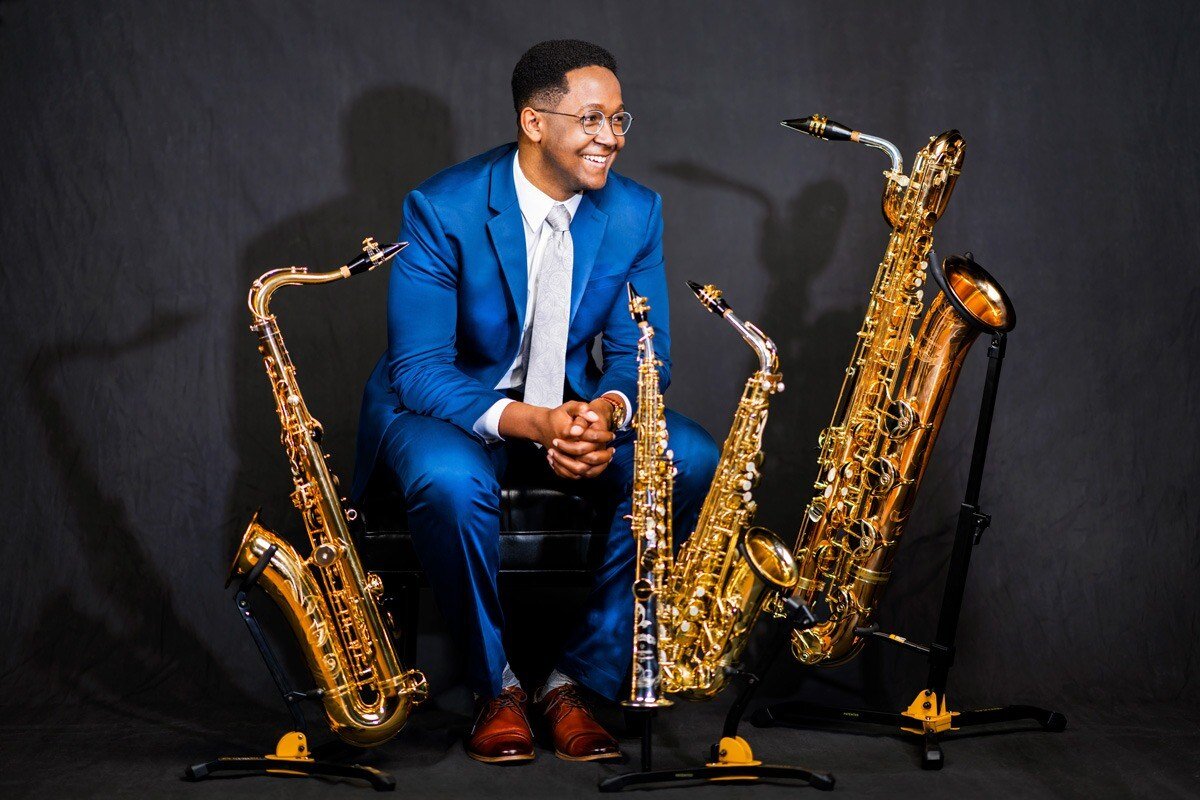
Steven Banks

Love Returns was written for saxophonist Steven Banks, whom Oundjian describes as “one of the most exquisite musicians I’ve ever met. He’s got so many colors—he makes the saxophone sounds like a flute, like a trombone. And he has impeccable musical taste and limitless technique.”

The score was inspired by a piano piece that Tower wrote in memory of her late husband. “It’s a very important piece for her,” Oundjian says. “It’s very exciting, but also very tender. She and (Banks) have become fast friends.”

The program opens with Copland’s Outdoor Overture, written as part of a campaign called “American Music for American Youth,” which aimed to generate new music for use in schools. Copland’s music is included this summer in honor of the 125th anniversary of his birth.

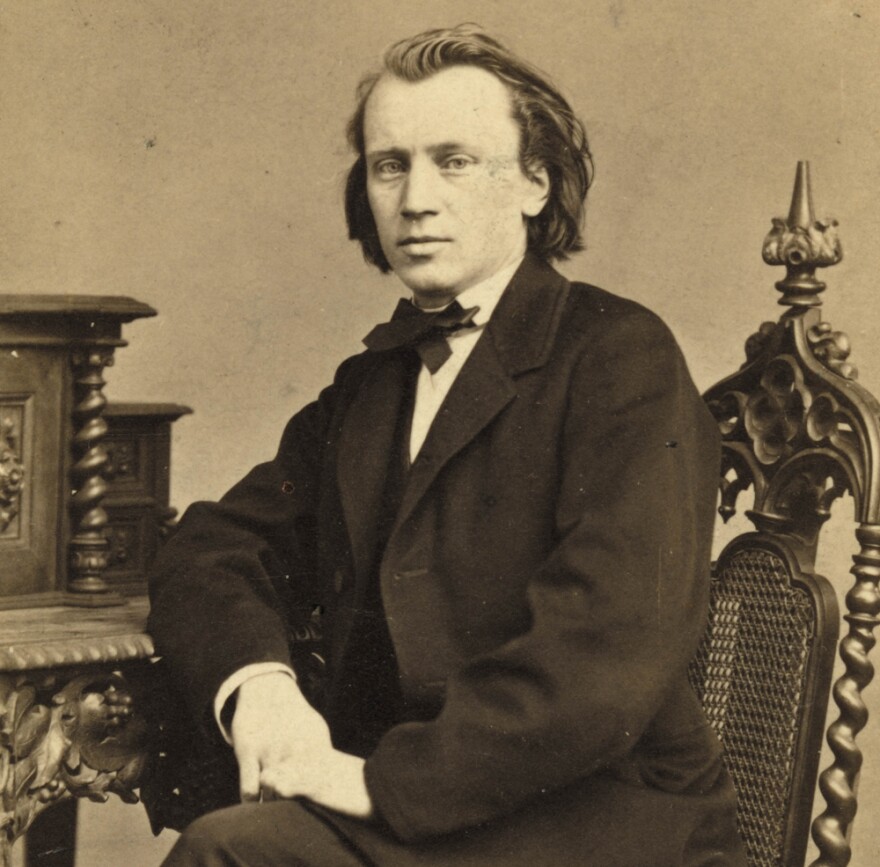
Brahms at the time of his First Symphony

The final piece on the program will be Brahms again, in this case his First Symphony. “The Symphony is exquisite, so powerful—probably the greatest First Symphony ever written,” Oundjian says. He also observes that it was written by a composer who was “young, very handsome, blue-eyed, blond-ish—not the Brahms we imagine as this bearded, sedate individual.”

The symphony has a special place in Oundjian’s life. When he was a student, the imposing German conductor Herbert van Karajan “came to give a masterclass at Juilliard,” he explains. “I was concertmaster of the orchestra and he made me conduct. He was two feet from me!

“I knew that he had asked me to conduct because he wanted to demonstrate that less is more. Conducting students were really trying to show what they had, and he knew that I would not over conduct. He was very complimentary about my conducting. Karajan encouraging me at a very young age was important to me when I was 39 and I couldn’t play the violin any more”—the point in his career when Oundjian turned to conducting

There are tickets available for two other concerts in the first weeks of CMF: a chamber music concert at 7:30 Tuesday, July 8, featuring CMF musicians, and an all-Mozart program under guest conductor Chloé van Soeterstède with violinist Benjamin Beilman at 6:30 the following Sunday, July 13 (full programs below). The annual Family Concert, part of the opening weekend, is sold out.

# # # # #

Colorado Music Festival, Peter Oundjian, music director
Thursday, July 3–Sunday, July 13
All performances in Chautauqua Auditorium

Opening Night
Festival Orchestra, Peter Oundjian, conductor
With Hélène Grimaud, piano

  • Stravinsky: Feu d’artifice (Fireworks)
  • Brahms: Piano Concerto No. 1 in D minor
  • Ravel: Daphnis et Chloé, Suite No. 2
    Bolero

7:30 p.m. Thursday, July 3
6:30 p.m. Sunday, July 6

Family Concert—SOLD OUT
Festival Orchestra, Shira Samuels-Shragg, conductor

Sherlock Holmes and the Case of the Missing Maestro

10:30 a.m. Sunday, July 6

Chamber Music Concert
Colorado Music Festival musicians

  • Schubert: String Trio in B-flat major, D471
  • Prokofiev: Quintet in G minor, op. 39
  • Brahms: Piano Quartet No. 3 in C minor, op. 60

7:30 p.m. Tuesday, July 8

Festival Orchestra Concert
Peter Oundjian, conductor
With Steven Banks saxophone

  • Copland: An Outdoor Overture
  • Joan Tower: Love Returns for saxophone and orchestra (world premiere)
  • Brahms: Symphony No. 1 in C minor, op. 68

7:30 p.m. Thursday, July 10
6:30 p.m. Friday, July 11

An Evening of Mozart
Festival Orchestra, Chloé van Soeterstède, conductor
With Benjamin Beilman, violin

  • Mozart: Overture to Don Giovanni
    —Violin Concerto No. 5 in A major, K219 (“Turkish”)
    —Overture to Le Nozze di Figaro (The Marriage of Figaro)
    —Symphony no. 34 in C major, K338

6:30 p.m. Sunday, July 13

Tickets to all concerts except the Family Concert available through the CMF Web page

GRACE NOTES: Chamber piano with strings, bassoons and student soloists

Piano Quartet at the Academy, Bassoon Quartet with Cantabile, BCO with competition winners

By Peter Alexander May 7 at 4:40 p.m.

The Boulder Piano Quartet—pianist David Korevaar with violinist Igor Pikayzen, violist Matthew Dane and cellist Thomas Heinrich—will present a free concert in Chapel Hall at the Academy University Hill Friday (7 p.m. May 9; details below).

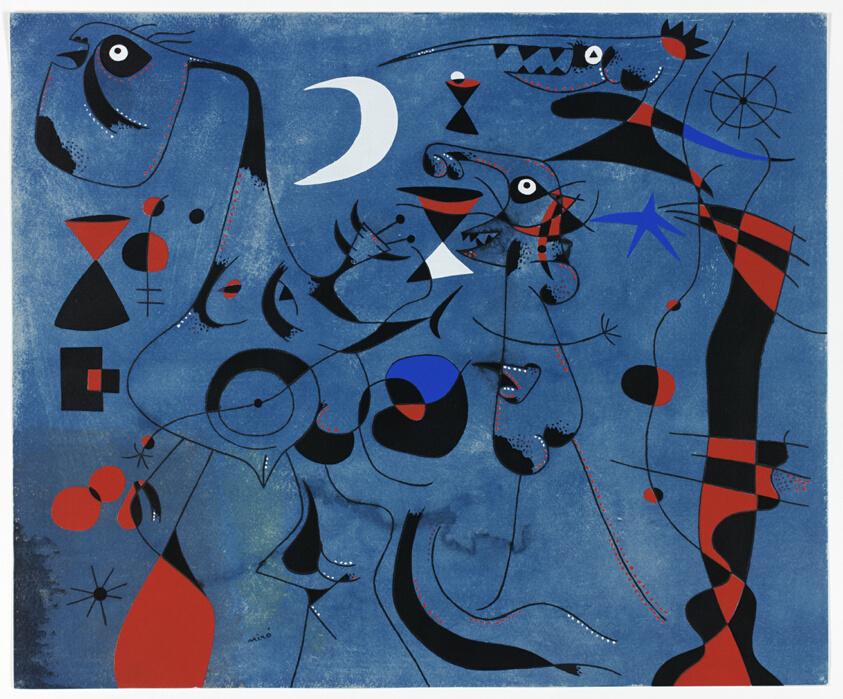
The central work on the program is the five-movement King of the Sun by Stephen Hartke, who is chair of composition at the Oberlin Conservatory. Written for the Los Angeles Piano Quartet, The King of the Sun was inspired by a series of five paintings by the Spanish painter Joan Miró. 

Miró: Characters in the night guided by the phosphorescent tracks of snails, Art Institute of Chicago

The five major movements of Hartke’s score are titled after the titles of the paintings: “Personages in the night guided by the phosphorescent tracks of snails,” “Dutch interior,” “Dancer listening to the organ in a gothic cathedral,” “The flames of the sun make the desert flower hysterical,” and “Personages and birds rejoicing at the arrival of night.” The third and fourth movements are  separated by a brief “Interlude,” leading Hartke to describe the piece as comprising “five and a half” movements. 

The title of the work, The King of the Sun, is a mistranslation of a 14th-century canon that is quoted in the second and fourth movements of Hartke’s score. The actual title of the canon is Le ray au soleil, which means the sun’s ray. The change of one letter—Le rey instead of Le ray—changes “The sun’s ray” into “The king of the sun.”

The program opens with Phantasy for Piano Quartet, written in 1910 by English composer Frank Bridge. It was commissioned by Walter Wilson Cobbett, who worked to promote the composition of British chamber pieces in the style of Fantasy, or Phantasy, a type of work that had flourished in Elizabethan times. Bridge was one of 11 British composers Cobbett commissioned to write a phantasy in 1910.

The final piece on the program is the Piano Quartet in E-flat major of Robert Schumann. It was composed in the summer of 1842, which became known as Schumann’s “year of chamber music.” He had mostly written piano music until 1840, a year in which he wrote 120 songs. The following year he wrote two symphonies, and then in 1842 he completed three string quartets, a piano trio, a piano quintet, and the Piano Quartet.

# # # # #

Boulder Piano Quartet
Igor Pikayzen, violin; Matthew Dane, viola; Thomas Heinrich, cello; and David Korevaar, piano

  • Frank Bridge: Phantasy for Piano Quartet
  • Stephen Hartke: The King of the Sun
  • Schumann: Piano Quartet in E-flat major, op. 47

7 p.m. Friday, May 9
Chapel Hall, The Academy University Hill, Boulder

Free

# # # # #

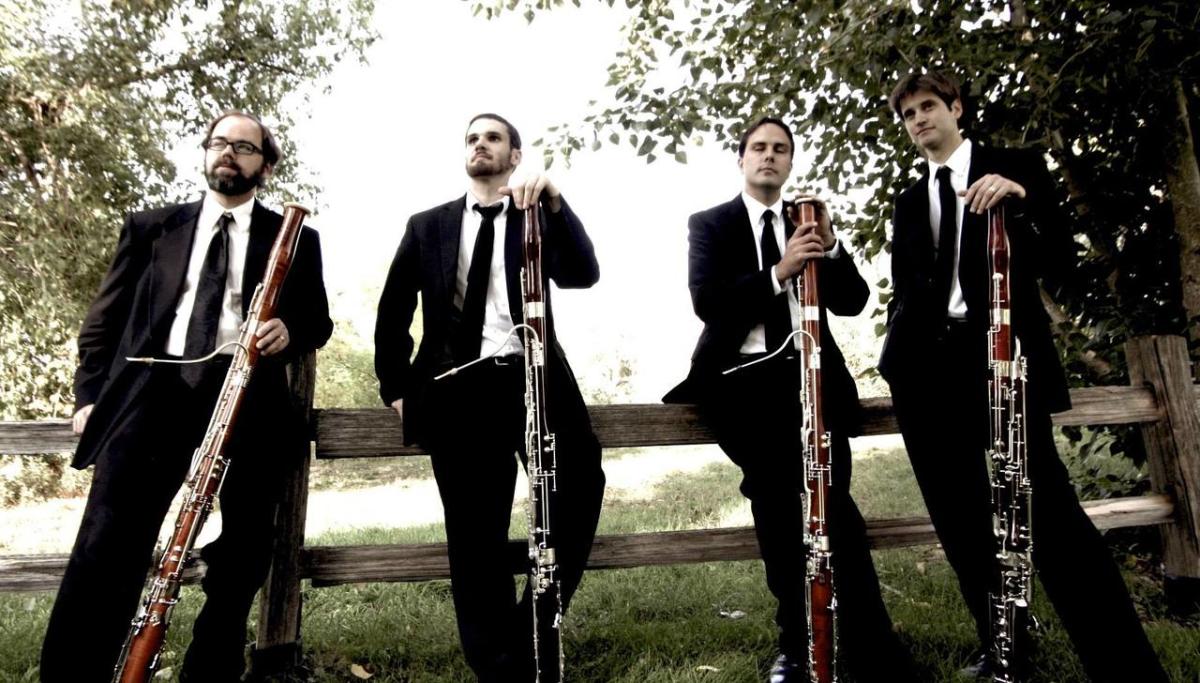
Quartets of all bassoons are a musical rarity—except in Boulder.

The Boulder Bassoon Quartet will present an unusual program of music for bassoon and chorus on a concert shared with Boulder’s Cantabile Singers, directed by Brian Stone, Friday and Sunday at the First Congregational Church (May 9 and 11; details below).

Boulder Bassoon Quartet

The program will be repeated at 3 p.m. Sunday, June 1, at the Boulder Bandshell

A centerpiece of the program will be the newly commissioned “I Shall Raise My Lantern” by Greg Simon. That work for chorus and bassoon quartet will be paired with “Three Earth Songs” by Bill Douglas. Other works on the program are a capella works for chorus by Ralph Vaughan Williams, Benjamin Britten, Craig Hella Johnson and Shawn Kirchner. 

The Sunday performance will be available online by a free live stream.

# # # # #

“The Beauty Around Us”
Cantabile Singers, Brian Stone, director, with the Boulder Bassoon Quartet

  • Greg Simon: “I Shall Raise My Lantern”
  • Bill Douglas: “Three Earth Songs”
  • Works by Ralph Vaughan Williams, Benjamin Britten, Craig Hella Johnson and Shawn Kirchner

7:30 p.m. Friday, May 9
3 p.m. Sunday, May 11
First Congregational Church, Boulder

3 p.m. Sunday, June 1, Boulder Band Shell

Tickets HERE

# # # # #

The Boulder Chamber Orchestra (BCO) will present the winners of the 2025 Colorado State Music Teachers Association (CSMTA) Concerto Competition as soloists on a concert program Saturday (8 p.m. May 10; details below).

The winners in four categories—Piano Elementary, Piano Junior, Piano Senior, and Strings/Harp—will each play the concerto movement that was required for the competition, with the orchestra (see the concert program below). BCO music director Bahman Saless will conduct.

Boulder Chamber Orchestra with conductor Bahman Saless

An annual event, the CSMTA Concerto Competition has three piano categories that are held every year: elementary, junior and senior. There are vocal and instrumental categories in alternating years: strings/harp and voice in odd-numbered years, and winds/percussion in even-numbered years. The competition is for pre-college students up to age 19.

This year’s competition was held in March, and had violin, cello and harp contests in the strings/harp category. Every instrument has one concerto movement specified as its competition repertoire. The judges for the 2025 competition were Saless; Mary Beth Rhodes-Woodruff, artistic director of the Santa Barbara (Calif.) Strings; and Kate Boyd, professor of piano at Butler University.

The winners who will appear with the BCO are:
—Piano elementary: Natalie Ouyang
—Piano, junior: Lucy (Yuze) Chen
—Piano, senior: Bobby Yuan
—Strings/Harp: Sadie Rhodes Han (violin)

This is the second year that the BCO has presented the CSMTA Concerto Competition winners as concert soloists.

# # # # #

CSMTA Concerto Competition Winners’ Concert
Boulder Chamber Orchestra, Bahman Saless, conductor

  • Haydn: Keyboard Concerto in C major, Hob. XVIII/5, I. Allegro moderato
    -Natalie Ouyang, piano
  • Mozart: Piano Concerto No. 21 in C major; K467, I. Allegro maestoso
    -Lucy (Yuze) Chen, piano
  • Schumann: Piano Concerto in A minor, op 54, I. Allegro affettuoso
    -Bobby Yuan, piano
  • Saint-Saëns: Introduction et Rondo Capriccioso
    -Sadie Rhodes Han, violin

8 p.m. Saturday, May 10, Boulder Adventist Church

TICKETS

GRACE NOTES: Curiosity and chamber music

Offerings from the Boulder Symphony and Boulder Chamber Orchestra

By Peter Alexander April 24 at 8:40 p.m.

The Boulder Symphony agrees to disagree for its upcoming Curiosity Concert (3 p.m. Saturday, April 26 at Grace Commons; details below).

Curiosity Concerts are aimed at children ages four to 12, but structured to appeal to the entire family. For April 26, the musical content revolves around a playful showdown between Mozart and “Snooty, Professor of Musical Snobbery.” Through their debates and the sharing of favorite pieces and styles, they will explore the diversity of musical preferences. 

The program under the direction of Devin Patrick Hughes features selections from a wide variety of both classical and popular pieces, including portions of Vivaldi’s Four Seasons, Tchaikovsky’s Serenade for Strings, Khachaturian’s “Sabre Dance” from the Gayane ballet suite, “Fireworks” from Harry Potter and “Enter Sandman” by Metallica.

The music is selected to illustrate various styles, including sad contemplative music, musical madness, the description of weather in music, and how instruments can sing like a human voice. Pop and classical styles will be contrasted with the same tune played in both styles, and the characteristics of film music will be demonstrated. 

The 45-minute program will be preceded and followed by an “instrument petting zoo” provided by Boulder’s HB Woodsongs, allowing children to see and try instruments. 

# # # # #

Spring Curiosity Concert: “Agree to Disagree”
Boulder Symphony, Devin Patrick Hughes, conductor

Program includes music from:

  • Vivaldi: The Four Seasons
  • J.S. Bach: Orchestral Suite No. 3 in D major
  • Nicholas Hooper: “Fireworks” from Harry Potter and the Order of the Phoenix
  • Samuel Barber: Adagio for Strings
  • Mozart: Presto from the Divertimento in D major, K136
  • Tchaikovsky: Serenade for Strings
  • Beethoven: Grosse Fuge
  • Khachaturian: “Sabre Dance” from Gayane
  • Richard Strauss: Also sprach Zarathustra (Thus spake Zarathustra)
  • Mozart and Metallica

3 p.m. Saturday, April 26
Grace Commons, 1820 15th St., Boulder

TICKETS

# # # # #

The Boulder Chamber Orchestra will wrap up its current season of Mini-Chamber Concerts featuring pianist Jennifer Hayghe as artist in residence Saturday (7:30 p.m. April 26; details below).

Jennifer Hayghe

The program, titled “Chamber Music Diamonds in the Rough,” features four works that are not often performed, in part because of their unusual instrumentation. Two of the composers—Aram Khachaturian and Max Bruch—are known for works that are featured on standard orchestral programs, but the other two—Mel Bonis and Nikolai Kapustin—are unfamiliar to American audiences.

In fact, the music of Mélanie “Mel” Bonis is currently undergoing a period of rediscovery after many years of obscurity. Born in 1858, Bonis taught herself to play piano and entered the Paris Conservatory at 16. She was in the same class with Debussy, and studied composition with César Franck. 

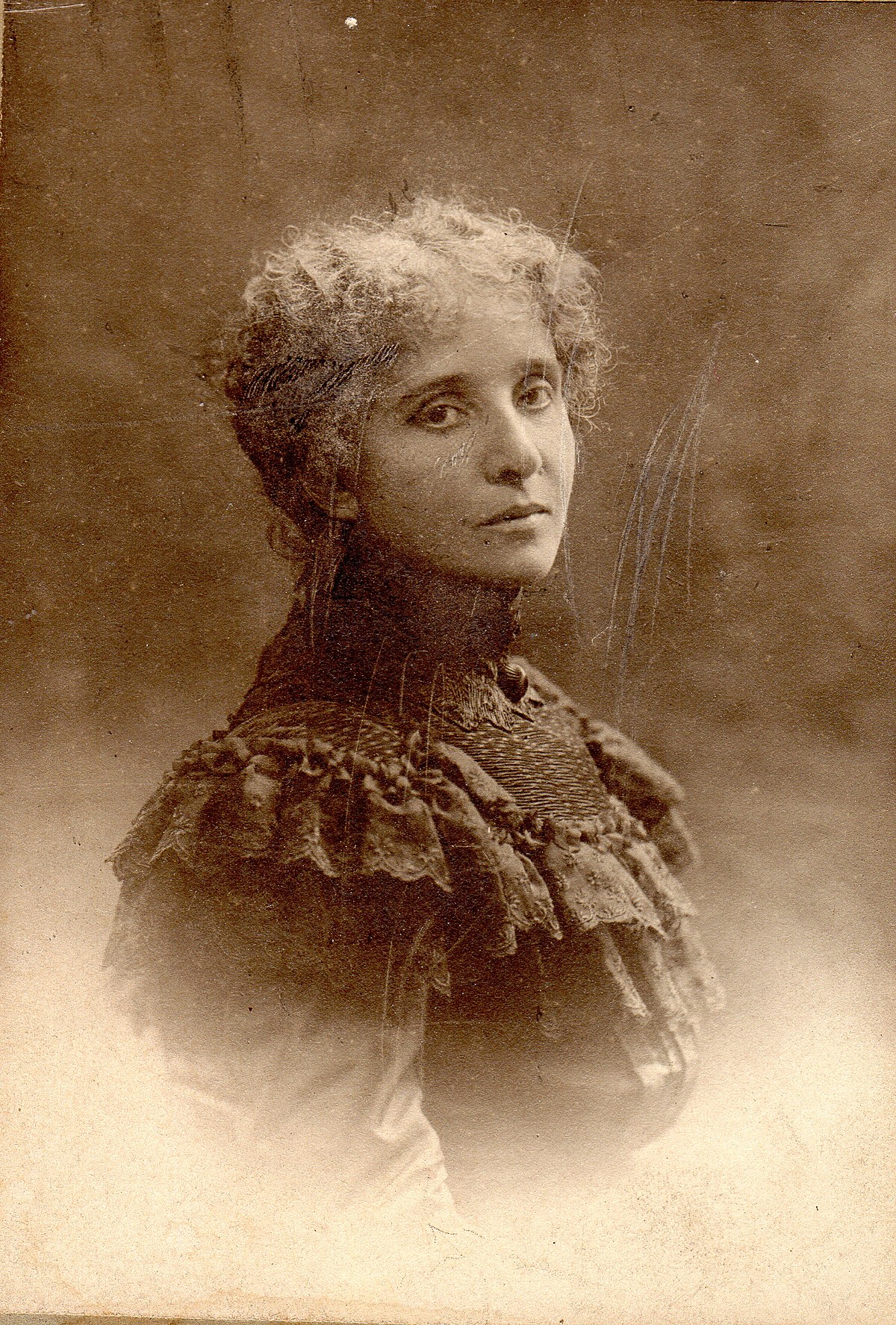
Mel Bonis

Bonis gave up music for a number of years when her parents arranged her marriage to an older businessman who disliked music, but returned to composition later in her life. Composed in 1903, her three-movement Suite en trio for flute, violin and piano is one of the works she wrote after her husband’s death..

Known for his “Sabre Dance” from the ballet Gayane, his Piano Concerto and other orchestral music, Khachaturian wrote only two pieces of chamber music, both of them during his student years at the Moscow Conservatory. The Trio for violin, clarinet and piano features folk tunes and styles throughout, including highly ornamented passages in the first movement and variations on a folk-like melody in the finale.

The German Romantic composer Max Bruch is best known for his Scottish Fantasy and two concertos for solo violin with orchestra. He wrote his Eight Pieces for clarinet, viola and piano in 1910, when he was 72, for his son who was a professional clarinetist. He used the same combination of clarinet and viola in another work he wrote for his son, the Concerto for clarinet, viola and orchestra in E minor, op. 88.

Kapustin was born in Ukraine in 1937 and studied composition at the Moscow Conservatory. He discovered jazz around 1954 and became known as a jazz pianist and played in a jazz quintet and big band. His music combines elements of classical, jazz and pop styles, but he always insisted that he was a composer, not a jazz musician. “I never tried to be a real jazz pianist,” he once wrote. Composed in 1998, the Trio for flute, cello and piano is one of his most popular chamber works.

# # # # #

“Chamber Music Diamonds in the Rough”
Jennifer Hayghe, piano, with Rachelle Crowell, flute; Kellan Toohey, clarinet; Hilary Castle, violin; and Erin Patterson, cello

  • Mel Bonis: Suite en trio, op. 59
  • Khachaturian: Trio for violin clarinet and piano
  • Max Bruch: Eight Pieces for clarinet, viola and piano
  • Nikolai Kapustin: Trio for flute, cello and piano, op. 86

7:30 p.m. Saturday, April 26, Boulder Adventist Church

TICKETS

Boulder Phil presents Rachmaninoff and music of two festivals

Guest pianist Alessio Bax and soloists from orchestra in the spotlight

By Peter Alexander March 27 at 5:50 p.m.

Two works inspired by festivals will form bookends for the next Boulder Philharmonic concert, at 4 p.m. Sunday (March 30; details below), with a big, popular Romantic piano concerto in the center.

The Piano Concerto No. 2 by Rachmaninoff fills the central position. Guest artist Alessio Bax is the soloist and Michael Butterman will conduct.

The frame for the concerto will be provided by PIVOT by Anna Clyne, inspired by experiences at the Edinburgh Festival; and Stravinsky’s Petrushka, the brilliant score to a ballet that takes place during the Shrovetide festival in St. Petersburg, Russia.

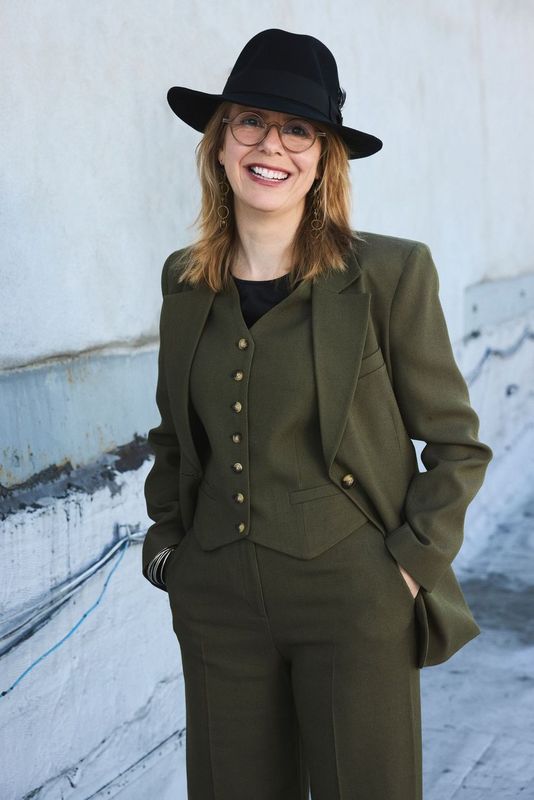
Anna Clyne

The common inspiration of a festival is what suggested to Butterman that Clyne and Stravinsky would make an effective framework for the program. “When we were thinking about programming Petrushka, it struck me that some of the swirling, calliope-like music in the opening section is kind of echoed in Anna Clyne’s PIVOT.

“It’s a piece that I’ve done once before, in Shreveport. You feel that you are walking through a space in which there are different happenings going on. You pass one, (with) a particular tempo and mood, and you turn around and you are facing something else entirely.”

The composer’s description of PIVOT closely matches Butterman’s. “It’s the idea of opening up doors as if you were going down a musical corridor,” she says. “You open one door and there’s a trapeze artist, and another there’s a lady singing an aria. PIVOT really takes you on lots of twists and turns in what’s actually a very short piece.”

It also reflects Clyne’s experience as an undergraduate student in Edinburgh in the 1990s, with a bit of history and folk music thrown in. “I really wanted to evoke a sense of celebration drawing on my experiences living in Edinburgh and being there during the festival,” she says. “Every nook and cranny becomes a venue, be it music, theater, comedy, dance—it’s every art form you can imagine.

“There’s a tune that I borrow called ‘The Flowers of Edinburgh,’ which is a traditional folk tune of Scottish lineage and also a tune that shows up in American folk music. PIVOT was co-commissioned between the Edinburgh International Festival and St. Louis Symphony, so I wanted to find music that brought those two countries together.”

The historical aspect comes from a pub where local musicians meet to share folk music. The pub is called The Royal Oak today, but 200 years ago it was called The Pivot. Thus the title both reflects the nature of the music and recalls the history of a musical venue in Edinburgh.

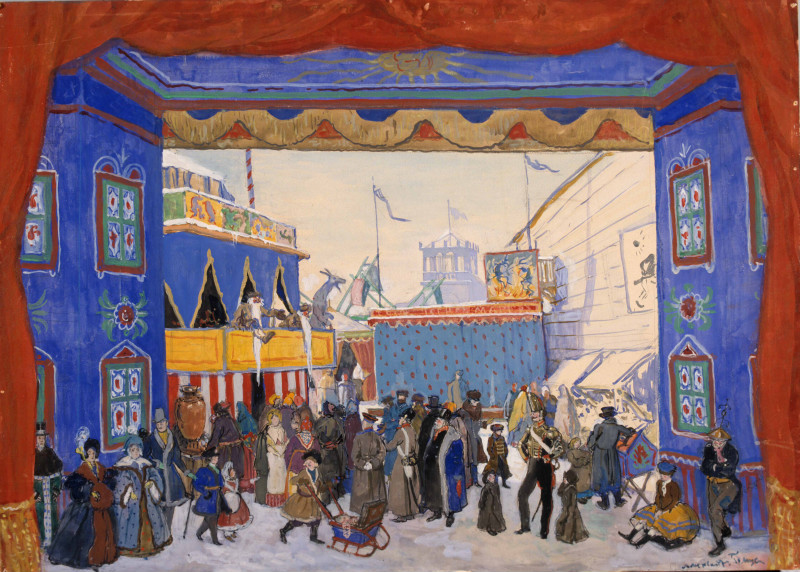
Original design by A. Benois for Stravinsky’s ballet Petrushka

At the opposite end of the program, Stravinsky’s Petrushka is a brilliant, colorful description of the crowds at a Russian Shrovetide (Mardi Gras) festival with various dances—some using Russian folk tunes—as well as drunken revelers, organ grinders, a dancing bear, and most central to the story, a puppet theater with three puppets that dance at the command of a magician.

One of the puppets is Petrushka, who is killed by another puppet as the fair is closing for the night. As the ballet ends, night descends over the empty square. Petrushka’s ghost appears above the theater as the magician runs off in fear.

“This is really a piece in which you need to have a sense of what is happening and what Stravinsky is evoking,” Butterman says. “It works very well as concert music, but it really is a full ballet score. Understanding the dramatic context is critical.”

The score notably includes a major piano part in the orchestra. “It is the most virtuosic orchestral piano part that I can think of, in the whole repertoire,” Butterman says. “It’s absolutely critical to much of the piece.” 

The Phil’s piano and keyboard position is currently vacant, and the solos in this case will be performed by Cody Garrison. A practicing dentist in Denver, Garrison works at Metropolitan State University as accompanist in the brass and woodwind departments. He also serves as pianist for Opera Colorado and staff accompanist for the Boulder Symphony, where he played Liszt’s Todtentanz (Dance of death) with the orchestra last season.

There are important solo parts for other members of the orchestra. Two in particular stand out in scenes for the three puppets: flute, which will be performed by visiting principal Hannah Tassler, and trumpet, which will be performed by principal player Leslie Scarpino.

Alessio Bax. Photo by Marco Borggreve.

The Rachmaninoff concerto is the most familiar piece on the program. It had a large impact on the composer’s career, since its success helped him overcome the failure of his First Symphony a few years before. Technically demanding of the pianist, the Concerto is also very tuneful and has become one of the most popular piano concertos in the standard repertoire.

“There’s no question why it’s so winning,” Butterman says. “It has lots and lots of virtuosity, and (Rachmaninoff) had the incredible gift for writing melodies that go straight to the heart, that have both a soaring, noble quality and more than a tinge of melancholy.”

The soloist, Alessio Bax, began his career in Italy, but is distantly related to the English composer Arnold Bax. Butterman relishes working with him. “I did this very same piece with him last season in Shreveport, and I find him an elegant player, yet full of the kind of passion that you want in this piece. I feel like I know where he’s going with a phrase, so from my perspective, it was a dream to lock in with him.

“I thought it was a very effective and memorable performance, so I’m expecting we’ll have a similar experience in Boulder.”

# # # # #

Masterworks Concert
Boulder Philharmonic, Michael Butterman, conductor
With Alessio Bax, piano
Orchestra soloists Cody Garrison, piano; Hannah Tassler, flute; and Leslie Scarpino, trumpet

  • Anna Clyne: PIVOT
  • Rachmaninoff: Piano Concerto No. 2 in C minor
  • Stravinsky: Petrushka (1947)

4 p.m. Sunday, March 30
Macky Auditorium

TICKETS

Correction: Typo corrected the headline, 3/28. The soloist’s name is Alessio Bax, not Max as spell corrector incorrectly changed it.

Boulder’s Starkland has three new albums

Electric guitar, accordion, and piano at the frontier of musical creativity

By Peter Alexander Feb. 20 at 10:30 p.m.

In the about the past two years—specifically since April, 2023—Starkland, a record label located in Boulder, has released three diverse new albums.

In keeping with the label’s stated goal of promoting “alternative classical, experimental, and avant-garde music through the production of high-quality recordings,” these albums feature new music that will appeal to the adventurerous listener. If you want to explore the current frontier of musical creativity, all three albums are worth your time.

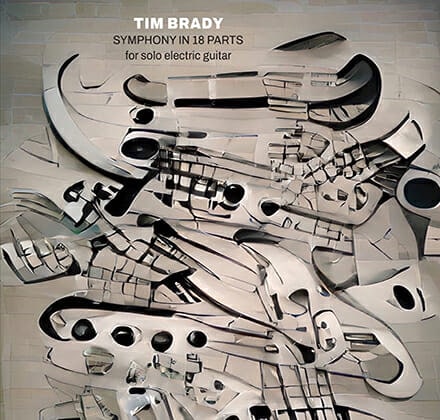
Symphony in 18 Parts for solo electric guitar
Tim Brady, composer, electric guitar
Starkland ST237
Released April 28, 2023

Symphony in 18 parts presents 18 short pieces composed and played by Tim Brady. Ranging from 1’34” to 4’47”, they loosely comprise a single composite work, or “symphony.” With so many short pieces, it offers variety rather than the kind of unity that past composers sought in their symphonies, and that is its strength as well as its weakness.

Brady acknowledged the diversity of his music when he wrote that “each movement (of the Symphony in 18 Parts) has its own world, its own unique way of proceeding, but together they are kaleidoscopic. This is a piece that is designed to feel that it can hold everything within it. That sounds symphonically ambitious to me.”

Indeed it does, and it echoes a well known remark of the Romantic symphonist Gustav Mahler, who wrote that a symphony “must be like the world. It must contain everything.”

One of the most intriguing aspects of Brady’s Symphony is the titles given to the individual movements. The relationship between title and musical content is not always clear, spurring thought and imaginings as one listens to the album, track by track. 

A few examples: The first track is titled “minor revolutions.” The music sounds like a post-modern/Baroque prelude, exploring sounds and chords up and down the fingerboard. The Prelude-ish style fits an opening movement, but what is revolutionary? You will have to listen and decide.

Track 6, “only the necessary equipment,” sound like background music for a teen slasher/horror film that could have been titled “entering the basement.” This might lead you to wonder, what IS the necessary equipment?

Particularly provocative is the title of Track 15, “lies beneath the surface.” Here the music suggests an opaque surface that might conceal something beneath. But is “lies” a noun or a verb? Again, that is for you to decide.

My favorite is Track 16, “noise: or who decides what and why.” The aggressive sounds here remind us that the line between noise and music has moved over the centuries. The movement opens with separated masses of sound, gradually developing musical rhythms, and then notes rushing up and down. This is a perfect musical demonstration of a truth I find all encompassing: every dispute can be reduced to two questions: Where do you draw the line, and, as Brady asks, who decides? 

The entire album demonstrates a very sensuous approach to musical sound. You won’t find tunes to recall, but you will find lots of evocative soundscapes, each different from the others. And much to think about as you ponder the relationship of titles to music.

Available from Bandcamp.

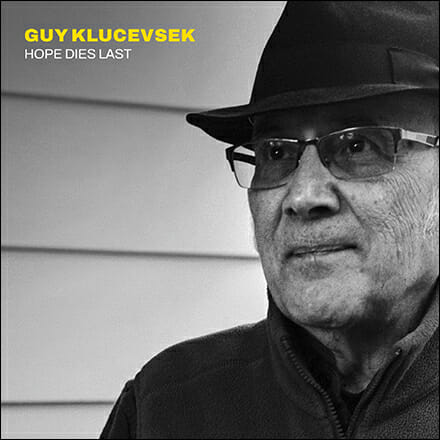
Guy Klucevsek: Hope Dies Last
Starkland ST238
Guy Klucevsek, Alan Bern, Nathan Koci, Will Holshouser, accordions
Bachtopus acccordion quartet: Robert Duncan, Peter Flint, Mayumi Miyaoka and Jeanne Velonis
Jenny Lin, piano, toy piano and celeste
Todd Reynolds and Jeff Gauthier, violins
Margaret Perkins, cello and whistling
Released Dec. 1, 2023

Hope Dies Last is a new collection of music by accordionist Guy Klucevsek, who has been accused by the Village Voice of writing “the world’s most abnormal ‘normal’ music.” I would describe the album as neither “normal” nor “abnormal,” but it is unusual, highly diverse and always intriguing. It joins my collection of favorite Starkland offerings.

Many of the tracks are creative versions of divergent dance types, including the opening “Slango,” a delightfully unbalanced 7/8 version of the tango. That is followed by “Feel the Bern,” a spirited hora written for and performed by Klucevsek’s long-time duo partner Alan Bern.

Several of the tracks are some version of a slow waltz, including the melancholy and stormy title track “Hope Dies Last” and the gently swaying “Seesaw Song.” The “Hornpipe” is exactly that, a carnivalesque dance that if not quite graceful, successfully evokes robust merrymaking. 

The final six tracks comprise a suite of pieces that Klucevsek wrote for Industrious Angels, a “hand-crafted-story-spinning-shadow-puppet-memory-play-with-music” created by actor/director Laurie McCants. Her script and Klucevsek’s music were in part inspired by Emily Dickinson’s poetry.

My favorite track—and not just for its unforgettable title—might be the jig-ish “Flying Vegetables of the Apocalypse.” Arranged for the violinist Todd Reynolds from music Klucevsek recorded in 1991, this version calls for both pre-recorded and live violin. 

“Flying Vegetables” offers what the liner notes calls three “gnarly bits:” a fast 3/4 section over a 3/4 ostinato, a canon for two violins three beats apart over an ostinato in 5/4, and a canon for three violins one beat apart over an ostinato in 7/4. These delightfully weird sections are followed by a more lyrical section in a  relaxed 6/8 meter, all adding up to one of those pieces where you never know what will come at you next.

If you are not familiar with Klucevsek’s “abnormal ‘normal’ music,” I suggest you unpack your curiosity and explore this album. With its remarkable variety of moods and styles, it can keep you engaged from beginning to end. 

Download available from Bandcamp.

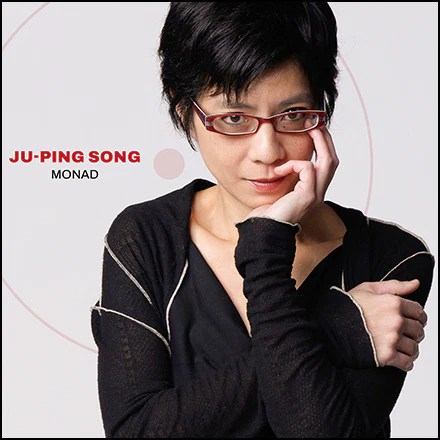
Monad
Ju-Ping Song, prerecorded and live piano
Starkland ST239
Released Dec. 6, 2024

Starkland’s most recent release, Monad, is not quite like the previous albums. Rather than numerous varied, evocative pieces that invite exploration, it is an immersive plunge into four very different sonic worlds. 

The album’s four tracks, all performed by pianist Ju-Ping Song, feature pieces by four different composers: Lois V Vierk, Molly Joyce, Kate Moore and Rahilia Hasanova. In different ways, they share a penchant for extreme pianism. As musically and technically challenging as they are, Song rises to meet the demands of all four. 

Vierk’s “Spin 2” takes its name from subatomic particles that have the same orientation 180 degrees apart—an image that suggested two grand pianos facing each other with a pianist at each keyboard. Composed for Ursula Oppens and Frederic Rzewski, it was revised by the composer in 2018. For this album, Song recorded both parts.

The score is an exploration of rhythm and sonority that begins with thudding rhythms articulated on the very lowest notes of the piano, contrasted with wispy inside-the-piano strumming of strings. Irregularly accented chords will remind some listeners of Stravinsky’s Rite of Spring. The pounding rhythms gradually fade into chords leaping across the full breadth of the keyboard, and finally into rippling scales and shimmering glissandi. 

Divided into sections defined by sonority, “Spin 2” creates a clear shape and sense of momentum as it shifts from one sonority to the next. In no sense “pretty” or melodic, it is a well crafted and intriguing sonic adventure.

Joyce’s “Rave” features a combination of live piano with prerecorded electronic sounds. It begins with long electronic tones overlaying widely separated notes in the piano that are almost indistinguishable from the electronics. Moving almost imperceptibly at the beginning, the music gradually speeds up over the course of the piece. As the piano fragments come faster, the two parts switch roles from foreground to background in ever inventive ways. 

The piece ends with strong chords in the piano, now definitively the foreground. This then was the goal all along: full, concluding chords in the piano, a resolution vaguely hinted by the piano part throughout. 

Moore describes her “Bestiary” for live piano and recorded soundtrack as a “sonic compilation of grotesque imaginary beasts,” but it is not the kind of literally descriptive music that occurs in Saint-Saëns’s Carnival of the Animals. I could not separate one beast from another in the unchanging musical texture that Song describes accurately as “endlessly repeating and changing chords.”

This is like much of the new music I have heard recently: exploration of an original and creative idea that goes on just too long. I prefer more spice and stronger sonic shapes, but that is personal taste. If you are a listener who can use “endlessly and repeating chords”—Song’s words—to enter a space of contemplation and reverie, you will be rewarded. Taste aside, it should said that this is an attentive performance that brings out the shifting rhythms and tempi of Moore’s detailed score.

Hasanova was born in Baku, Azerbaijan, where she witnessed the brutal “Black January” military attacks on hundreds of civilians by the Russian army in 1990. In her program notes, she writes of the “monad” as a basic unit underlying everything. “All diversity of the Universe and Beyond,” she writes, “is the multiplication of the monad.”

The music tells a more complicated and ominous tale. Written for a single pianist, “Monad” is a piece of powerful intensity nearly 20 minutes long that grows from a single rapid line of detached notes through ever faster and more complex patterns, reaching a point of wild passion and fury, before fading into deep, barely audible tones. Here one senses an expression of the horror Hasanova experienced during Black January.

Song gives a performance of great virtuosity, taking the listener on a compelling journey into bleak places. Here there is musical spice aplenty and a clear profile, but it is a journey without comfort or balm. I admire both the piece and the performance, even while finding the journey daunting.

CD and download available from Bandcamp.

NOTE: Minor typos and grammatical erros corrected 2/21/24.

Ars Nova welcomes pianist David Korevaar

“Lost/Found” features forgotten work by Enrique Granados

By Peter Alexander Feb. 4 at 6:15 p.m.

David Korevaar is an adventurer, in the mountains and on the piano.

Cases in point: A photo of Korevaar on the summit of 13,088-ft. Paiute Peak in the Indian Peaks Wilderness (below); and his performances with the Ars Nova Singers and conductor Tom Morgan this weekend. Friday and Saturday (Feb. 7 and 8, in Boulder and Cherry Hills Village; details below) he will play three pieces that are new for him and that you likely have not heard before.

David Korevaar on the summit of Paiute Peak. Photo courtesy of the pianist.

One piece on the program is virtually unknown: Cant de les estrelles (Song of the stars) by the  Spanish composer Enrique Granados, written for the unusual combination of piano with organ and choir. In fact, it is unusual enough that Ars Nova was only able to find two venues with a suitable piano and organ that were in tune with one another: Mountain View Methodist Church in Boulder (7:30 p.m. Friday) and Bethany Lutheran Church in Cherry Hills Village (7:30p.m. Saturday).

Cant de les estrelles had its premiere in Barcelona in 1911 on a concert Granados presented of his own music, and then disappeared for nearly a century. The manuscript suffered damage from fire, water and mold, but the music was re-discovered and performed in New York in 2007. When Morgan saw a score, he programmed the Cant de les estrelles on a program titled “Lost/Found,” along with other pieces that were never totally lost but that are obscure today.

One of those is by American composer Dominick Argento, a setting of the Wallace Stevens poem “Peter Quince at the Clavier,” a complex meditation on the power of music and the meaning of beauty. Once one of the leading modernist composers, Argento has fallen from fashion, and “Peter Quince at the Clavier” is not often performed today.

The third choral piece is Renouveau (Renewal) by Lili Boulanger, a celebration of spring that opens with the joyful words “Ladies and gentlemen, it is me—me, Springtime!”—a thought that is always welcome in February. Korevaar will play the piano parts on all three choral works, and add two of Granados’ solo piano pieces from Goyescas, a suite of pieces inspired by Goya’s paintings. The inclusion of the solo piano works is a bow to the 1911 concert that included the premieres of both the Cant de les estrelles and the Goyescas.

Enrique Granados

“The music is really gorgeous,” Korevaar says of Cant de les estrelles. “One of the reasons to come hear it live, is (that) it’s written for three separate mini choirs, essentially. You get antiphonal stuff happening between the piano in one place, the organ sound coming from somewhere else, and then singers in various places. You get sound from everywhere. It’s pretty spectacular.”

While Korevaar plays and records a highly varied repertoire, he claims no credit for discovering the Granados. “Tom Morgan gets full credit for this one,” he says.

Of the other works on the program, Korevaar calls particular attention to Argento’s piece. “There are not that many real concert works (composed specifically) for piano and choir,” he says. “Peter Quince at the Clavier is a real masterpiece. It’s a really marvelous piece.

“The poem itself is fascinating and complex. It has at its center a kind of gloss on the story of Susana and the elders, but it’s also a reflection on the power and meaning of music. Elissa Guralnick is going to be providing some commentary on the poem before we perform the piece.”

Argento called the piece a “sonatina for mixed chorus and piano concertante,” which describes the role of the piano part but also refers to the fact that the music is structured in four movements. The separate movements correspond to four separate sections in the poem, and also fit the outline of a small sonata, with an opening movement in a medium tempo, followed by a slow movement, a faster scherzo and a closing slow movement.

Lili Boulanger

Lili Boulanger was the younger sister of the famed French music teacher Nadia Boulanger and member of a musical family. The first woman to win the Prix de Rome composition award, she died tragically at only 24 and left relatively few finished compositions.

 “It’s  lovely little piece,” Korevaar says of Renouveau, composed when Boulanger was 17. “It’s a very charming poem about spring, and it’s kind of nice to have it in the middle of winter, because we get to have this moment of celebration of all the wonderful things about spring.” 

As a musical adventurer, Korevaar is excited about playing with Ars Nova. “The whole program is fascinating,” he says. “I want to call out Tom (Morgan), because he dreamed this up. I came into it with great enthusiasm and excitement because the music is so wonderful.

“It’s going to be a treat.”

# # # # #

“Lost/Found”
Ars Nova Singers, Tom Morgan, conductor
With David Korevaar, piano

  • Dominick Argento: Peter Quince at the Clavier
  • Lili Boulanger: Renouveau
  • Enrique Granados: Goyescas: Fandango de candil (Fandango by candlelight)
    —Goyescas: La Maja y el ruisenor (The maiden and the nightingale)
    Cant de les estrelles (Song of the stars)

7:30 p.m. Friday, Feb. 7
Mountain View United Methodist Church, 355 Ponca Place, Boulder

7:30 p.m. Saturday, Feb. 8
Bethany Lutheran Church, 4000 E.Hampden Blvd., Cherry Hills Village

In-person and Livestream tickets HERE.

Renée Fleming presents a musical tribute to the natural world

“Voice of Nature” will feature songs and a film from National Geographic

By Peter Alexander Jan. 22 at 5:50 p.m.

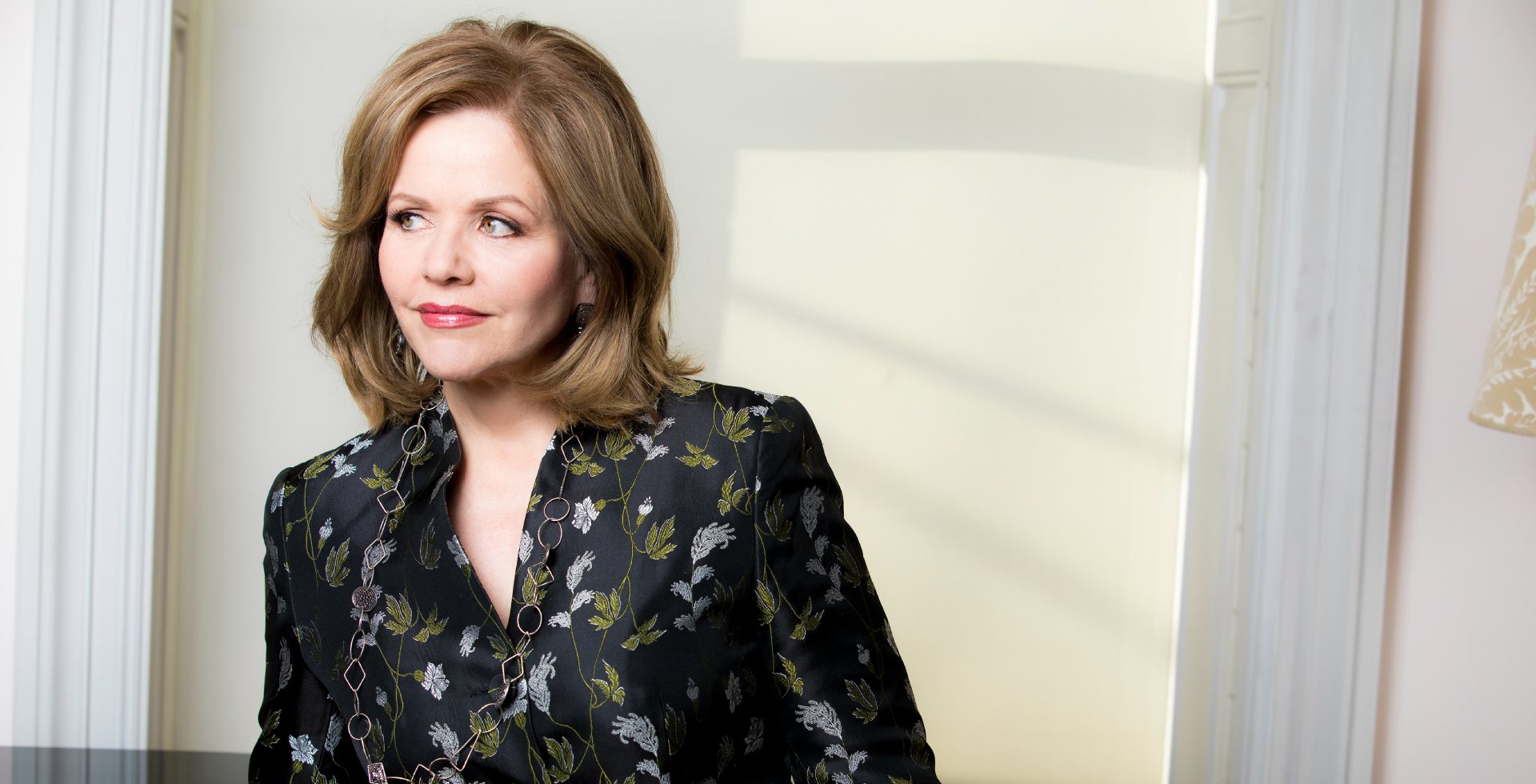
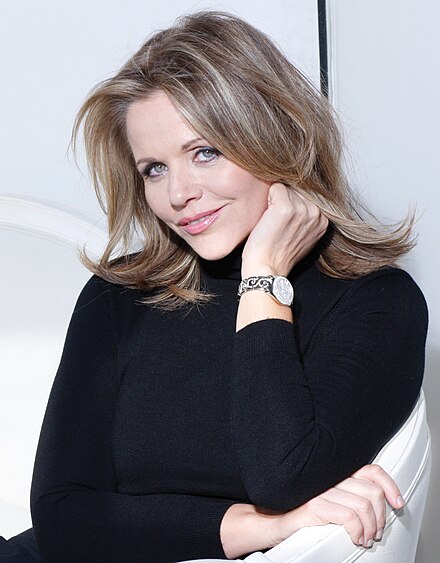
Soprano Renée Fleming

Soprano Renée Fleming will come to Macky Auditorium next week (7:30 p.m. Friday, Jan. 31) to present a program that she developed while cut off from her professional life during the COVID pandemic of 2020–21.

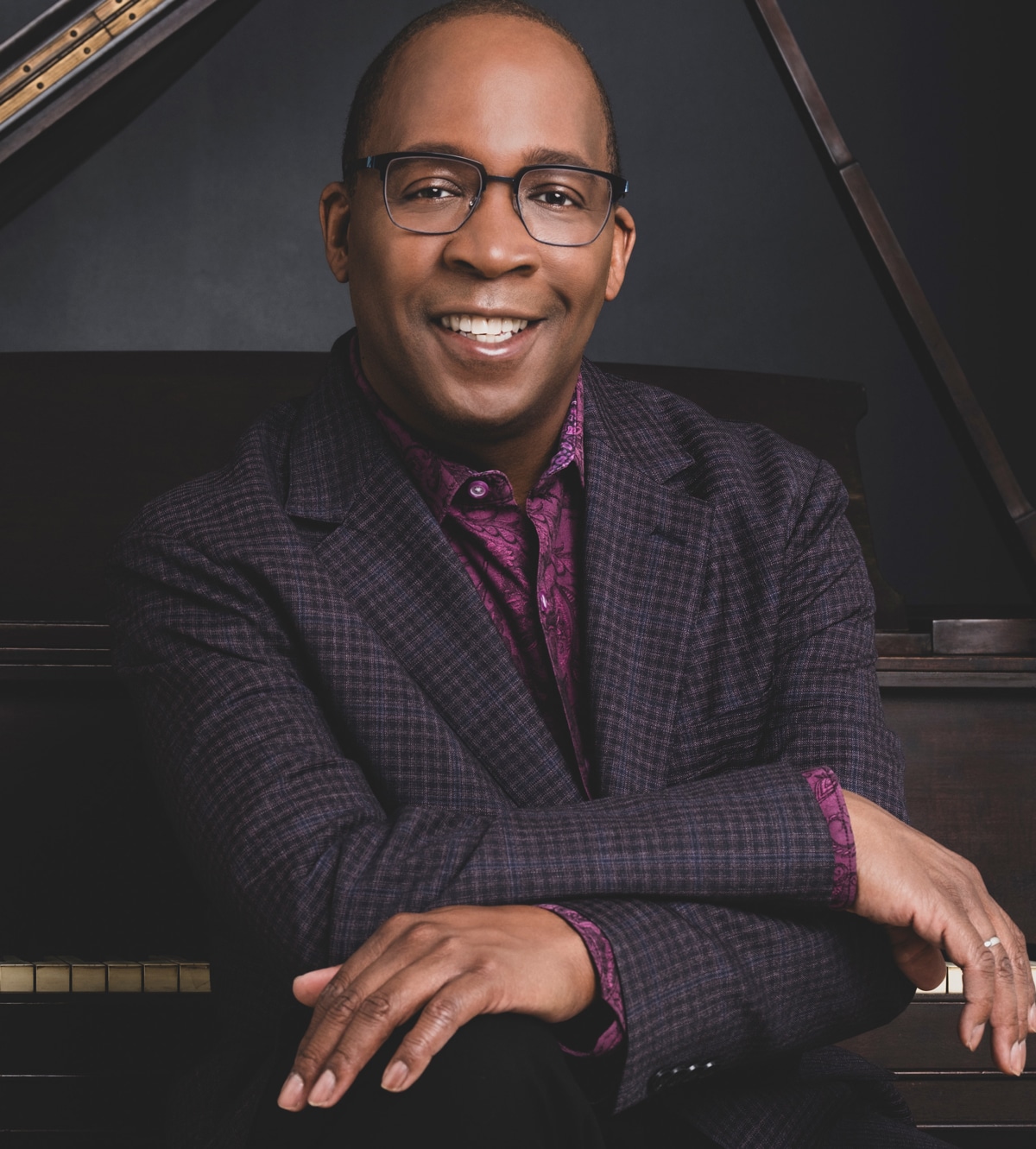
Collaborative pianist Howard Watkins

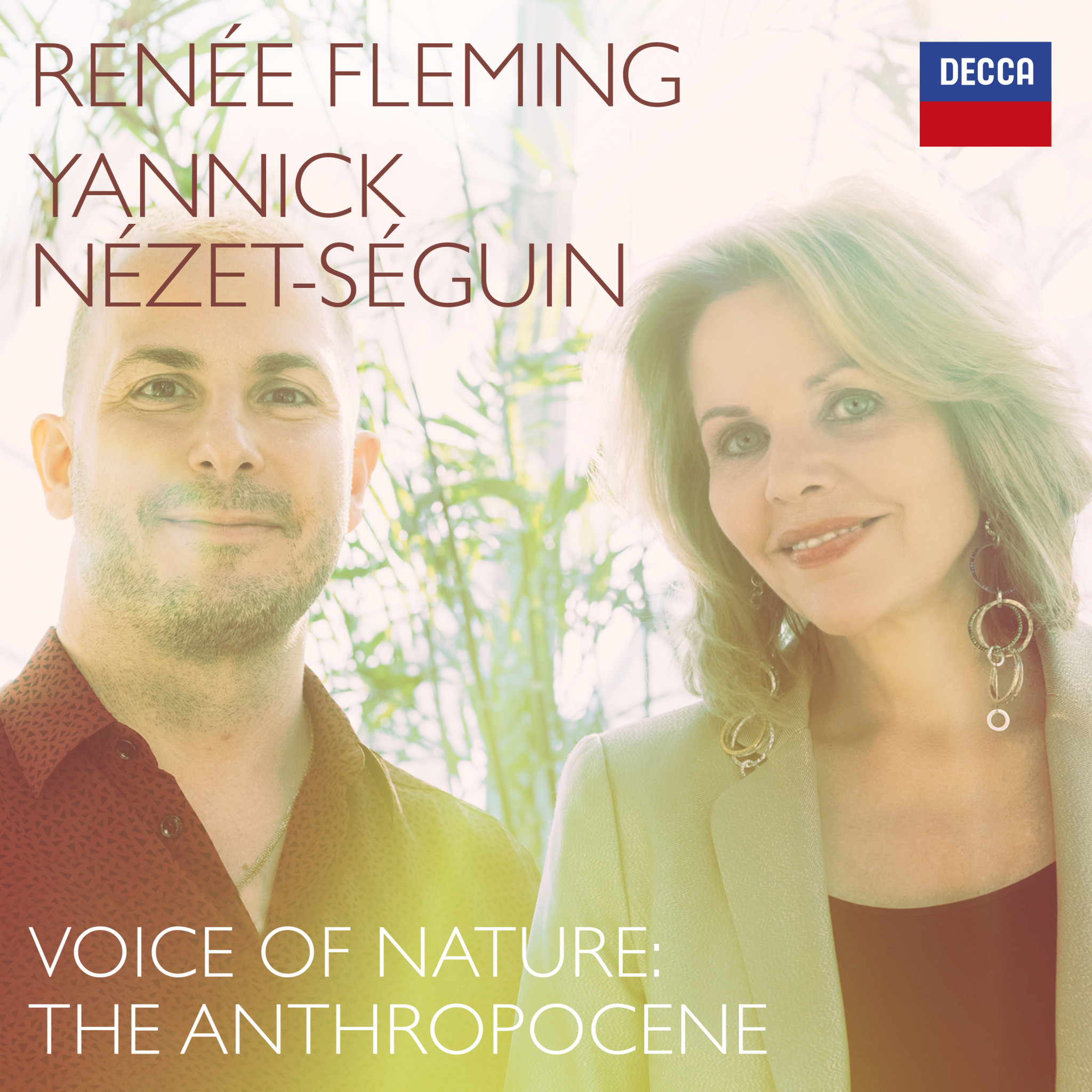
Titled “Voice of Nature: The Anthropocene,” the concert features Fleming and pianist Howard Watkins. The repertoire draws on a Grammy-winning album of the same title that Fleming recorded in 2023 with Yannick Nézet-Séguin, music director of the Metropolitan Opera, as pianist, and features songs that mention or reflect on the natural world. Part of the program will be accompanied by a film produced by the National Geographic Society.

“During the pandemic, the most comforting and healing activity for me was just being outside,” Fleming says. “Walking every day, gardening—to the point that I didn’t even want to come in. I always found it interesting that art song, especially the 19th century, also the 18th century and early 20th century, uses poetry that brought nature into the conversation about any aspect of the human condition. I found that interesting, in comparison with new works, which very often never mention nature.”

In that context, she worked with Nézet-Séguin to put together an album of songs that celebrate the consoling and healing power of nature. She decided to commission new songs from three living composers—Kevin Puts, Nico Muhly and Caroline Shaw—to bring the program up to today, and combine them with selected pieces from the extant song literature.

Yannick Nézet-Séguin and Renée Fleming on their album cover

“It was really fun to put the program together,” Fleming says. For the 19th-century art songs, “obviously I had to find things I thought would suit Yannick (Nézet-Séguin), give him enough of an interesting program that he would want to play it. And also because Yannick is French-Canadian, (the French) language works beautifully for him.”

The result is an album that features some very lovely but unfamiliar songs by Gabriel Fauré and Reynaldo Hahn, both French composers of the early 20th century, and also songs by Liszt and the Norwegian composer Edvard Grieg. “I just chose beautiful music that has powerful poetry and stuff I hadn’t performed before,” Fleming says. “I had performed Grieg, I had not performed Hahn at all, and I was thrilled to put Fauré” on the program.

The next step occurred when the album won a Grammy. Fleming decided to take a version of the program on tour, but with some additions. “Rather than just doing ‘Voice of Nature,’ the album, I added some more popular things that I’ve recorded and never perform, like a Björk song and a selection from Lord of the Rings,” Fleming explains. She also added songs by Burt Bacharach and Jerome Kern, and one of the most popular operatic arias in her repertoire, “O mio babbino caro” from Puccini’s Gianni Schicchi.

The final musical addition is a recording Fleming made of Jackson Browne’s “Before the Deluge” together with the Grammy winning folk singer/fiddler and opera composer Rhiannon GIddens, multi-Grammy winning bluegrass singer/fiddler Alison Krauss, and Nézet-Séguin, in an arrangement by composer Caroline Shaw. The recording will be played about halfway through the concert intermission.

Once she committed to the tour, Fleming had another idea: “I thought, let’s take this on the road but I’d like to have film with it,” she says. “I said, I’d really like to do something that shows the planet and encourages us to protect it.

“I happened to meet someone who worked with National Geographic at a dinner party. I was telling him about it and he said ‘I can introduce you to the head of National Geographic.’ So I had a two minute Zoom call with the CEO (Michael Ulica), and he said, ‘We’re looking for influencers and we’ll make your film.’ They did it in about three weeks and I’ve been touring it ever since, because it’s a beautiful piece.”

Fleming says that her devotion to nature and the planet dates back a long way. “When I was a teenager I saw a film that had a huge impact on me,” she says. “The film came out in the ‘70s, Soylent Green. 

“The scene that really had a powerful effect on me was the one in which Edward G. Robinson, who was dying of cancer, (played a scientist who) had signed up for end of life care, and was looking at beautiful pictures of earth, and none of that existed anymore. I thought, ‘How could that possibly ever happen?’ And here we are, later in my life—if we don’t get a handle on this, I think we’re ultimately talking about the destruction of us on the planet.”

In an artist’s statement on the “Voice of Nature” program, Fleming writes: “Thankfully, the stunning natural world depicted in (the National Geographic) film still exists, unlike that movie scene so upsetting to my younger self. In blending these beautiful images with music, my hope is, in some small way, to rekindle your appreciation of nature, and encourage any efforts you can make to protect the planet we share.”

# # # # #

“Voice of Nature: The Anthropocene”
Renée Fleming, soprano, and Howard Watkins, piano

  • Hazel Dickens: “Pretty bird” 
  • Handel: “Care Selve” from Atalanta 
  • Nico Muhly: “Endless Space” 
  • Joseph Canteloube: “Bailero” from Songs of the Auvergne 
  • Maria Schneider: “Our Finch Feeder” from Winter Morning Walks 
  • Björk: “All is Full of Love”
  • Heitor Villa-Lobos: “Epílogo” from Floresta do Amazonas (piano solo) 
  • Howard Shore: “Twilight and Shadow” from Lord of the Rings 
  • Kevin Puts: “Evening” 
  • Curtis Green: “Red Mountains Sometimes Cry” 
  • Burt Bacharach: “What the World Needs Now” 
    To be played halfway through the intermission—:
  • Recording of Jackson Browne: “Before the Deluge” (arr. by Caroline Shaw) by Rhiannon Giddens, Alison Krauss, Renée Fleming; with Yannick Nézet-Séguin, piano 
  • Gabriel Fauré: “Au Bord De L’eau” 
    —“Les Berceaux” 
  • Edvard Grieg: “Lauf Der Welt” 
    —“Zur Rosenzeit” 
  • Puccini: “O mio babbino caro” from Gianni Schicchi 
  • Jerome Kern: “All the Things You Are” 
  • Andrew Lippa: “The Diva” 

7:30 p.m. Friday, Jan. 31
Macky Auditorium

NOTE: Very few tickets are left for this performance. You can check availability HERE.

Colorado Music Festival announces summer 2025 season

Two ninth symphonies among highlights

By Peter Alexander Jan 22 at 11:25 a.m.

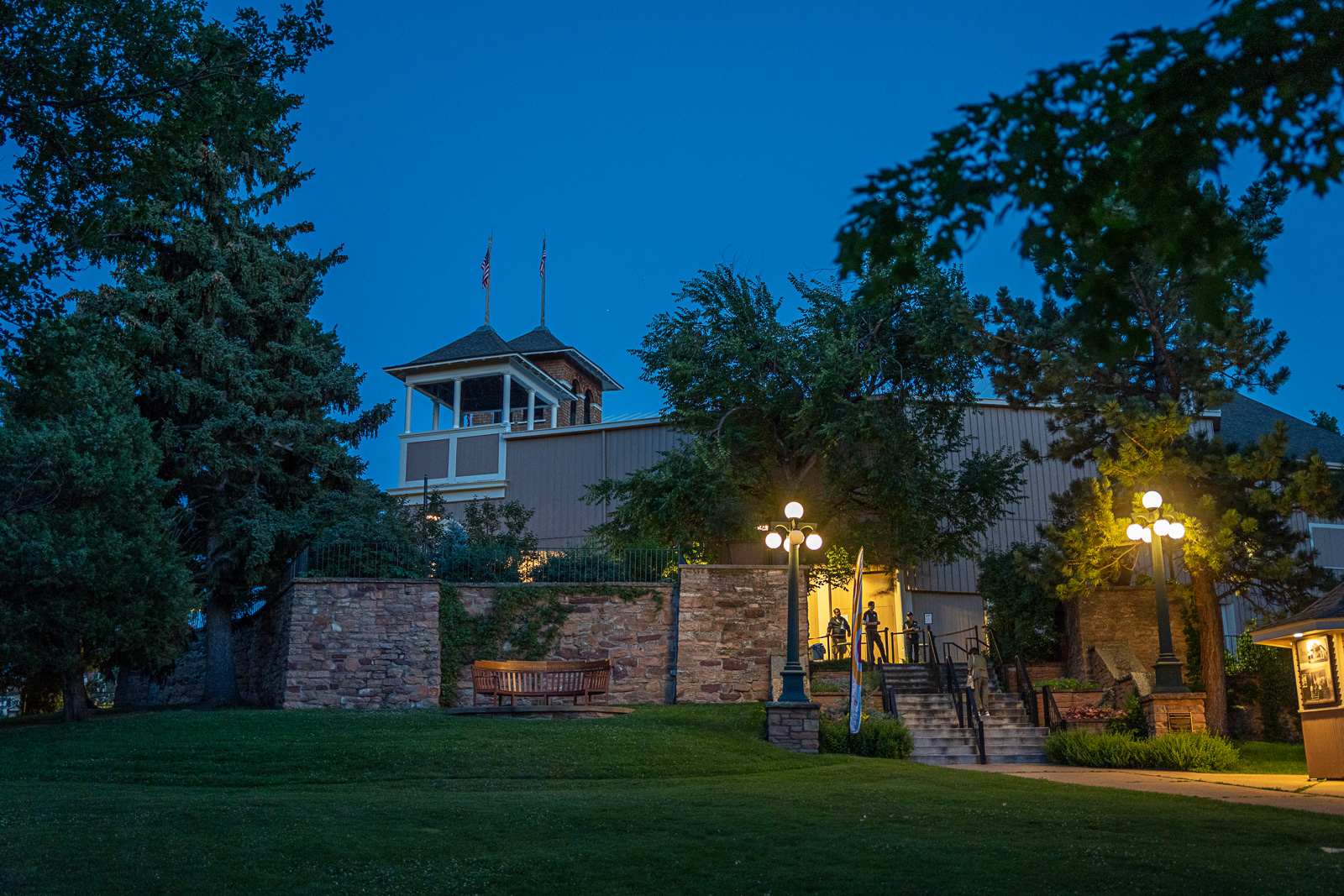
The Colorado Music Festival (CMF) has announced its summer schedule of concerts at the Chautauqua Auditorium in Boulder. 

Chautauqua Auditorium. Photo by Geremy Kornreich

The season of 19 concerts will culminate with performances of two different ninth symphonies: Beethoven’s masterpiece, featuring the “Ode to Joy” finale, July 31 and August 1; and Mahler’s Ninth Aug. 3. Both are their composer’s last completed symphony, which has given a special mystique to the number of the “Ninth Symphony.”

Other highlights during the summer include appearances by outstanding solo artists, including pianist Hélène Grimaud playing the Gershwin Concerto in F on the opening night concert July 3 and 6; saxophonist Steven Banks playing the world premiere of Joan Tower’s Love Returns for saxophone and orchestra; and violinist Anne Akiko Meyers playing Eric Whitacre’s Murmur, a CMF co-commission written for her. 

Two birth anniversaries will be celebrated during the summer: Ravel’s 150th, with performances of  Daphinis et Chloé, Suite No. 2 and Bolero on the opening concert program, and Aaron Copland’s 125th with a performance of Appalachian Spring on July 17 and 18 and An Outdoor Overture on July 11.

Some younger, rising artists will be featured this summer. Classical guitarist Xuefei Yang will perform Rodrigo’s popular Concierto de Aranjuez July 27. Violinist Benjamin Beilman and conductor Chloé van Soeterstède will appear on an all-Mozart program July 13. Cellist Hayoung Choi and conductor Maurice Cohn will perform July 20, and pianist Yeol Eum Son will appear with conductor Ryan Bancroft July 24 and 25.

This year’s Family Concert, presented at 10:30 a.m. July 6, will be an orchestral mystery, “Sherlock Holmes and the Case of the Missing Maestro.” Shira Samuels-Shragg will conduct the program, in which all of the musicians are suspects and Sherlock Holmes must investigate each of the instrument families.

All of the CMF’s summer concerts and programs are listed below. Tickets to the 2025 Festival will be available for purchase beginning March 4. For information or to purchase tickets for the 2025 festival, visit the CMF Web page, or call the Chautauqua box office at 303-440-7666.

# # # # #

Colorado Music Festival, Peter Oundjian, music director
2025 Summer Season
All performances in Chautauqua Auditorium

Peter Oundjian and the CMF Orchestra. Photo by Geremy Kornreich, 2023

Opening Night
Festival Orchestra, Peter Oundjian, conductor
With Hélène Grimaud, piano

  • Stravinsky: Feu d’artifice (Fireworks)
  • Gershwin: Piano Concerto in F
  • Ravel: Daphnis et Chloé, Suite No. 2
    Bolero

7:30 p.m. Thursday, July 3
6:30 p.m. Sunday, July 6

Family Concert
Festival Orchestra, Shira Samuels-Shragg, conductor

  • Sherlock Holmes and the Case of the Missing Maestro

10:30 a.m. Sunday, July 6

Chamber Music Concert
Colorado Music Festival musicians

  • Schubert: String Trio in B-flat major, D471
  • Prokofiev: Quintet in G minor, op. 39
  • Brahms: Piano Quartet No. 3 in C minor, op. 60

7:30 p.m. Tuesday, July 8

Festival Orchestra Concert
Peter Oundjian, conductor
With Steven Banks saxophone

  • Copland: An Outdoor Overture
  • Joan Tower: Love Returns for saxophone and orchestra (world premiere)
  • Brahms: Symphony No. 1 in C minor, op. 68

7:30 p.m. Thursday, July 10
6:30 p.m. Friday, July 11

An Evening of Mozart
Festival Orchestra, Chloé van Soeterstède, conductor
With Benjamin Beilman, violin

  • Mozart: Overture to Don Giovanni
    —Violin Concerto No. 5 in A major, K219 (“Turkish”)
    —Overture to Le Nozze di Figaro (The Marriage of Figaro)
    —Symphony no. 34 in C major, K338

6:30 p.m. Sunday, July 13

Chamber Music Concert
Brentano String Quartet

  • Schubert: Quartet in A minor, D804 (“Rosamunde”)
  • Anton Webern: Five Movements for String Quartet, op. 5
  • Brahms: String Quartet No. 3 in B-flat major, op. 67

7:30 p.m. Tuesday, July 15

Festival Orchestra Concert
Peter Oundjian, conductor
With Anne Akiko Meyers, violin

  • Copland: Appalachian Spring
  • Eric Whitacre: Murmur (CMF co-commission)
  • Ravel: Tzigane
  • Berlioz: Overture to Béatrice et Bénédict
  • Tchaikovsky: Romeo and Juliet Fantasy Overture

7:30 p.m. Thursday, July 17
6:30 p.m. Friday, July 18

Festival Orchestra Concert
Maurice Cohn, conductor
With Hayoung Choi, cello

  • Respighi: Gli uccelli (The birds)
  • Tchaikovsky: Variations on a Rococo Theme, op. 33
  • Beethoven: Symphony No. 1 in C major, op. 21

6:30 p.m. Sunday, July 20

Chamber Music Concert
Colorado Music Festival musicians

  • Nico Muhly: Doublespeak (2012)
  • Mozart: Quintet for piano and winds in E-flat major, K452
  • Dvořák: String Quintet No. 3 in E-flat major, op. 97

7:30 p.m. Tuesday, July 22

Festival Orchestra Concert
Ryan Bancroft, conductor
With Yeol Eum Son, piano

  • Sofia Gubaidulina: Fairytale Poem (Märchenpoem, 1971)
  • Beethoven: Piano Concerto No. 3 in C minor, op. 37
  • Shostakovich: Symphony No. 10

7:30 p.m. Thursday, July 24

6:30 P.M. Friday, July 25

Festival Orchestra Concert
Peter Oundjian, conductor
With Xuefei Yang, guitar

  • Zoltán Kodály: Dances of Galánta
  • Joaquin Rodrigo: Concerto de Aranjuez
  • Schubert: Symphony No. 5 in B-flat major, D485

6:30 p.m. Sunday, July 27

Chamber Music Concert
Dover Quartet

  • Leoš Janáček: String Quartet No. 1 (“Kreutzer Sonata”)
  • Schumann: String Quartet No. 1 in A minor, op. 41
  • Tchaikovsky: String Quartet No. 1 in D major, op. 11

7:30 p.m. Tuesday, July 29

Festival Orchestra Concert
Colorado Music Festival orchestra and the St. Martin’s Festival Singers
Peter Oundjian, conductor
With Lauren Snouffer, soprano; Abigail Nims, mezzo-soprano; Issachah Savage, tenor; and Benjamin Taylor, baritone

  • Michael Abels: Amplify (CMF co-commission)
  • Beethoven: Elegischer Gesang (Elegiac song), op. 118
    —Symphony No. 9 in D minor, op. 125

7:30 p.m. Thursday, July 31
6:30 p.m. Friday, Aug. 1

Festival Finale
Colorado Music Festival Orchestra, Peter Oundjian, conductor

Mahler: Symphony No. 9

6:30 p.m. Sunday, Aug. 3