GRACE NOTES: Curiosity entertains while the Baroque blooms

Boulder Symphony celebrates Día de los Muertos; BCO presents Vivaldi and Pergolesi

By Peter Alexander Oct. 29 at 9:40 p.m.
“The Creative Spirit,” the Fall Curiosity Concert of the Boulder Symphony, will be presented Saturday (3 p.m. Nov. 2) at Grace Commons.

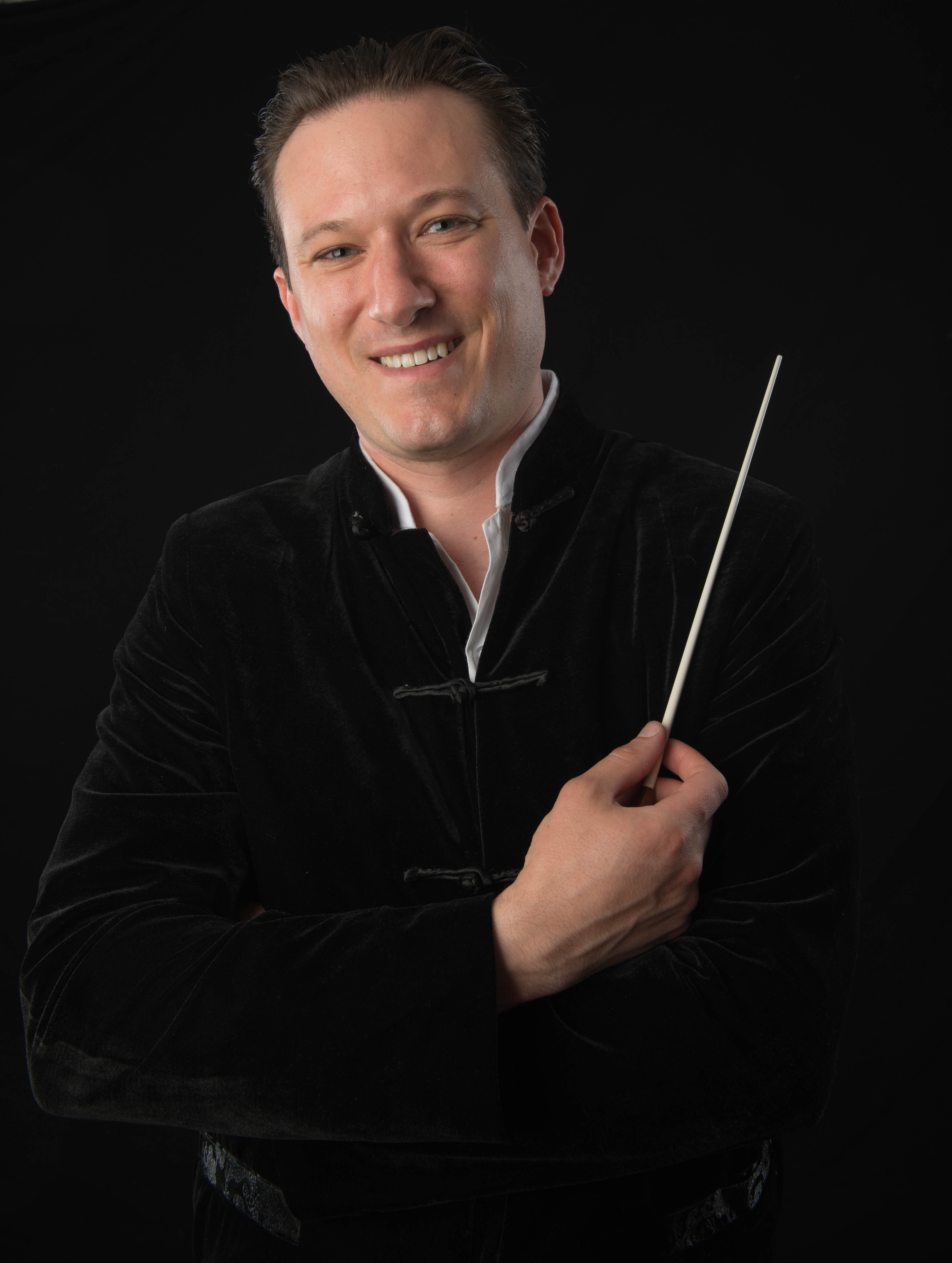
The Boulder Symphony and director Devin Patrick Hughes will present two Curiosity Concerts as part of their 2024–25 season, one each in the fall and the spring. Curiosity Concerts are designed as interactive, educational experiences for family audiences. They typically use humorous characters, trivia and original stories to entertain as well as educate the audiences.
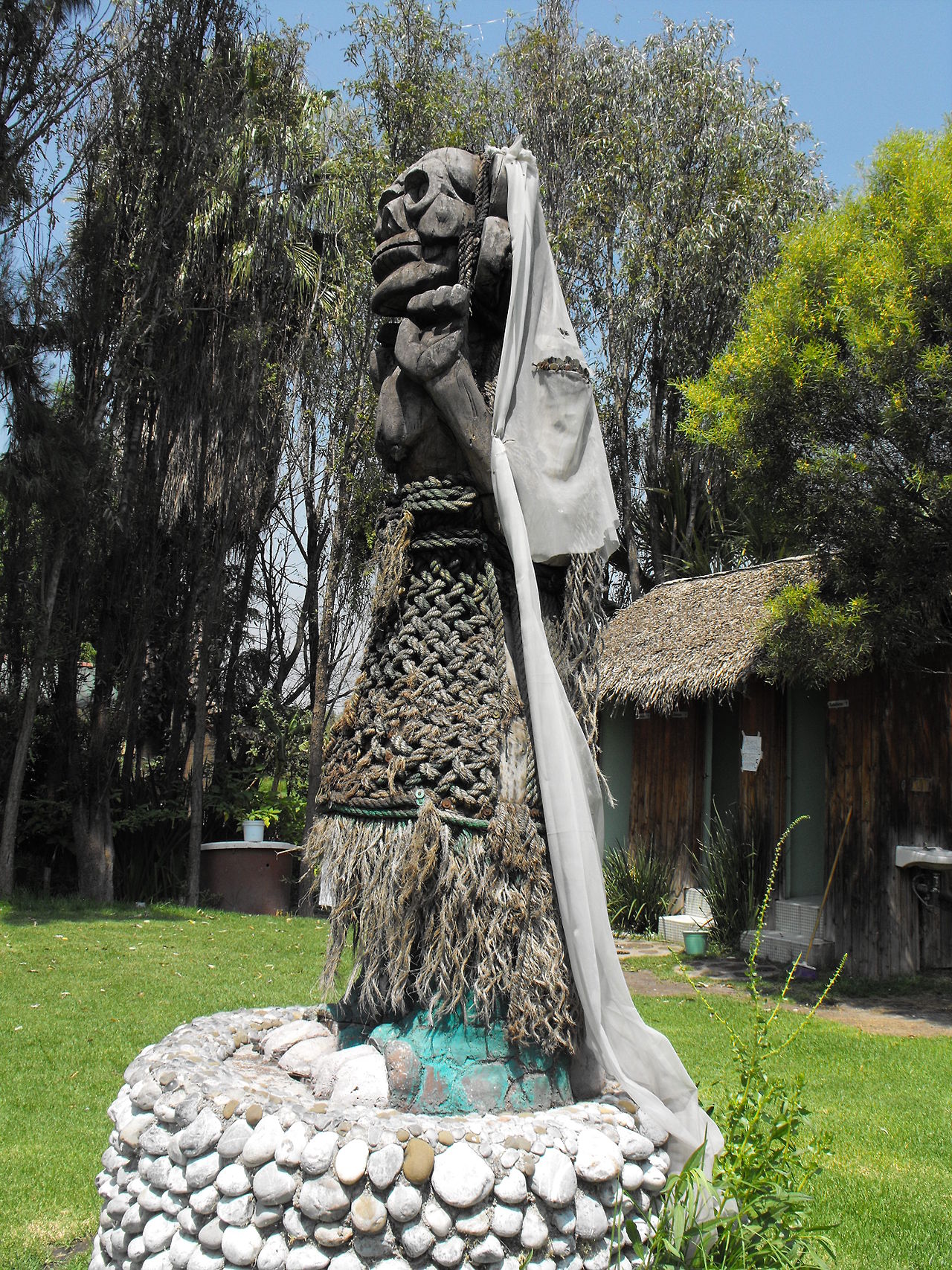
Statue of La Llorana at Xochimilco, Mexico. Photo by KatyaMSL.

The Fall Curiosity Concert, lasting 45 minutes, will celebrate La Día de los Muertos (Day of the Dead). Joining the Symphony for portions of the concert will be the Niwot High School Mariachi Ensemble and the Longmont Youth Symphony. 

The performance will tell the tale of a ghostly composer who reunites with a musical partner for the premiere of their final composition, only to discover that the piece was never finished. They turn to the audience for help completing the song before the ghostly composer vanishes again. 

The program will feature not only the imaginary composer’s new work but also familiar tunes including Radiohead’s “Creep,” Kate Bush’s “Running up the Hill” and “La Llorana” (The weeping woman), a Mexican folk song based on the legend of a woman weeping over the loss of her children, or her lover. The song has often been used for Día de los Muertos festivities.

The performance will also include music from the standard classical orchestra repertoire, including Beethoven’s Seventh Symphony and Arturo Márquez’s Dánzon No. 2.

# # # # #

Fall Curiosity Concert: The Creative Spirit
Boulder Symphony, Devin Patrick Hughes, conductor
With the Niwot High School Mariachi Ensemble and Longmont Youth Symphony

3 p.m. Saturday, Nov. 2, Grace Commons

TICKETS

# # # # #

The Boulder Chamber Orchestra (BCO) will present an all-Baroque program Saturday featuring violinist Zachary Carrettin, director of the Boulder Bach Festival playing concertos by Vivaldi, for violin solo and with other strings (7:30 p.m. Nov. 2 at the Boulder Adventist Church; details below). Other soloists for two of the concertos will be members of the BCO.

Also featured on the program are soprano Jennifer Ellis Kampani and mezzo-soprano Gabrielle Razafinjatovo performing the Stabat Mater of Giovanni Battista Pergolesi. The concert will be conducted by Bahman Saless, music director of the BCO.

Published as Op. 3, L’estro armonico is a set of 12 concertos by Vivaldi for stringed instruments. The set was published in Amsterdam in 1711, making it the first set of Vivaldi’s concertos to be printed. The concertos are organized in four sets of three concertos each, with each set containing first a concerto for four violins with strings; second for two violins, cello and strings; and third for solo violin and strings. 
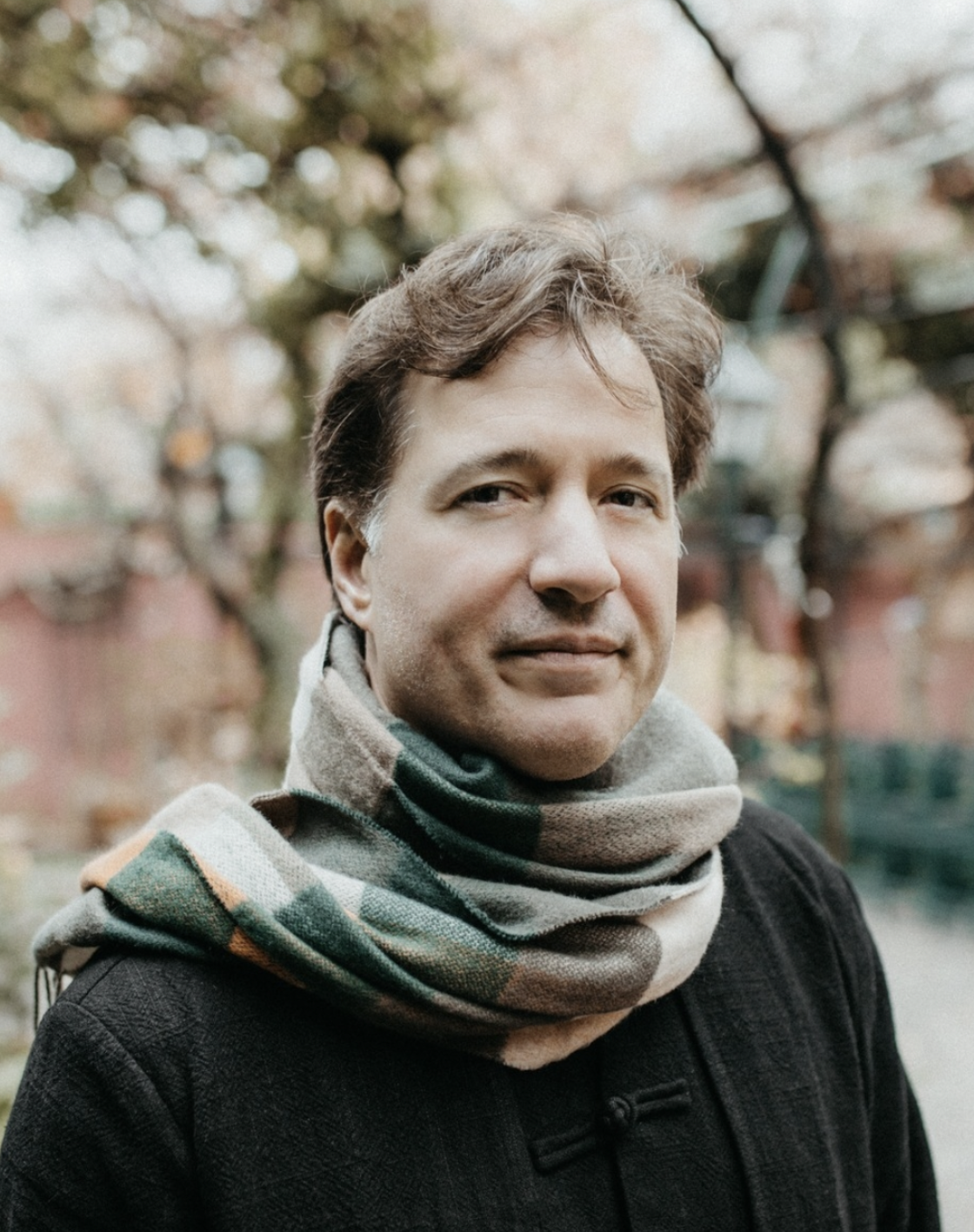
Zachary Carrettin

The concertos were probably written for performance by students at the Ospedale della Pietà, the orphanage/music school where Vivaldi was employed as music teacher. Later the published edition was widely circulated in Europe and the concertos were performed as both church music and secular chamber pieces. At least six of the concertos were arranged in various settings by J.S. Bach.

The BCO performance will present two of the solo violin concertos with Carrettin as soloist, as well as one each for two violins and cello, and for four violins, with Carrettin joined by members of the orchestra as additional soloists. 

Pergolesi wrote his Stabat Mater in 1736, weeks before his untimely death at the age of only 26. The manuscript was preserved at the Benedictine Abbey of Monte Cassino in Italy, which was the site of brutal battles in World War II. After being nearly destroyed, the abbey was rebuilt after the war.

While many works attributed to Pergolesi were in fact written by others, due to the survival of the original manuscript the Stabat Mater is known to be his. The title literally means “The mother was standing.” The text is a 13th-century hymn to the Virgin Mary, describing her suffering during the crucifixion of Jesus. The hymn has been set by many European composers from the 15th century to the current day.

# # # # #

L’estro armonico
Boulder Chamber Orchestra, Bahman Saless, conductor
With Zachary Carrettin, violin; Brune Macary, Annamaria Karacson, Kina Ono, and Ava Pacheco, violins; Joey Howe, cello; Jennifer Ellis Kampani, soprano; and Gabrielle Razafinjatovo, mezzo-soprano

  • Vivaldi: Four concertos from L’estro armonico (The harmonic inspiration)
    Concerto No. 9 in D major for violin, RV230
    —Concerto No. 11 in D minor two violins and cello, RV565
    —Concerto  No. 6 in A minor for violin, RV 356
    —Concerto No. 10 in B minor for 4 violins, RV580
  • Pergolesi: Stabat Mater

7:30 p.m. Saturday, Nov. 2, Boulder Adventist Church
TICKETS

GRACE NOTES: Opening nights, orchestral and choral

Longmont Symphony, Ars Nova Singers launch 2024-25 seasons

By Peter Alexander Oct. 1 at 4:55 p.m.

The Longmont Symphony Orchestra (LSO)and conductor Elliot Moore open “Sound in Motion,” their 2024–25 concert season, Saturday evening (7 p.m. Oct. 5; details below) with two American works and a orchestral showpiece.

Breaking from the pattern of previous seasons, the opening night concert will be held at the Longmont High School Auditorium. An abbreviated version of the same program will be presented Sunday afternoon at 4 p.m. at Frederick High School. 

All remaining LSO concerts during the season, including the Christmas-season Nutcrackers, will be held in the usual venue of Vance Brand Civic Auditorium.

Pianist Spencer Myer

Soloist for the Longmont HS performance will be pianist Spencer Myer, a faculty member at the Indiana University Jacobs School of Music, who will play George Gershwin’s Concerto in F for piano. The program begins with the Overture to another American masterpiece, Bernstein’s musical stage work Candide. Ending the program is Ravel’s familiar orchestration of Mussorgsky’s Pictures at an Exhibition.

Bernstein’s Candide was originally composed in 1956 for Broadway, although today it is considered an operetta rather than a musical. The original show was not a success on dramatic grounds, in spite of the brilliant music Bernstein wrote, including the popular coloratura soprano aria “Glitter and Be Gay.” Various revisions of the original show have included textual contributions by lyricist Richard Wilbur plus Lillian Hellman, Stephen Sondheim, Dorothy Parker, John LaTouche and Bernstein himself. 

Today the operetta is gaining ground among opera companies, but regardless of its fluctuating fate, the Overture has been a popular program number from the beginning. Full of brilliant flourishes, delightful tunes and heady syncopations, it is the ideal concert opener.

Gershwin’s Piano Concerto was commissioned by the conductor Walter Damrosch, who attended the Feb. 12, 1924 premiere of Rhapsody in Blue. The very next day Damrosch contacted Gershwin to ask him for a piano concerto, which he was able to complete over a period of three months in the summer of 1925.

Audiences have always liked the concerto, which is today considered one of the essentials of the American music repertoire. The score incorporates jazz elements, but is much closer to the traditional format of a concerto with orchestra than is the Rhapsody. It appears on concert programs, has been featured in films, has been recorded by numerous pianists, and has even been featured in ice skating routines.

The program closes with the Mussorgsky/Ravel Pictures at at Exhibition, one of the best known and most loved showpieces for orchestra. 

The program for the performance in Frederick will include the Overture to Candide and Pictures at an Exhibition only. 

# # # # #

Opening Night
Longmont Symphony Orchestra, Elliot Moore, conductor
With Spencer Myer, piano

  • Leonard Bernstein: Overture to Candide
  • George Gershwin: Piano Concerto in F
  • Mussorgsky: Pictures at at Exhibition (arr. Ravel)

7 p.m. Saturday, Oct. 5
Longmont High School Auditorium

Encore performance: 4 p.m. Sunday, Oct. 6
Frederick High School Auditorium
(same program minus the Gershwin Concerto)

TICKETS

# # # # #

Boulder’s Ars Nova Singers embark on a season of “Contrasts” this weekend with a concert titled “Here/There.”

The opening concert, “Here/There,” will be presented Sunday at the Diary Arts Center in Boulder (4 p.m. Oct. 6; details below). The program features music from here and there not only geographically—that is, from different parts of the world—but also chronologically, from both the present (here) and the past (there). Featured composers include Henry Purcell, Anton Bruckner, Benjamin Britten, and György Ligeti, as well as contemporary women composers Sheena Phillips and Dale Trumbore. 

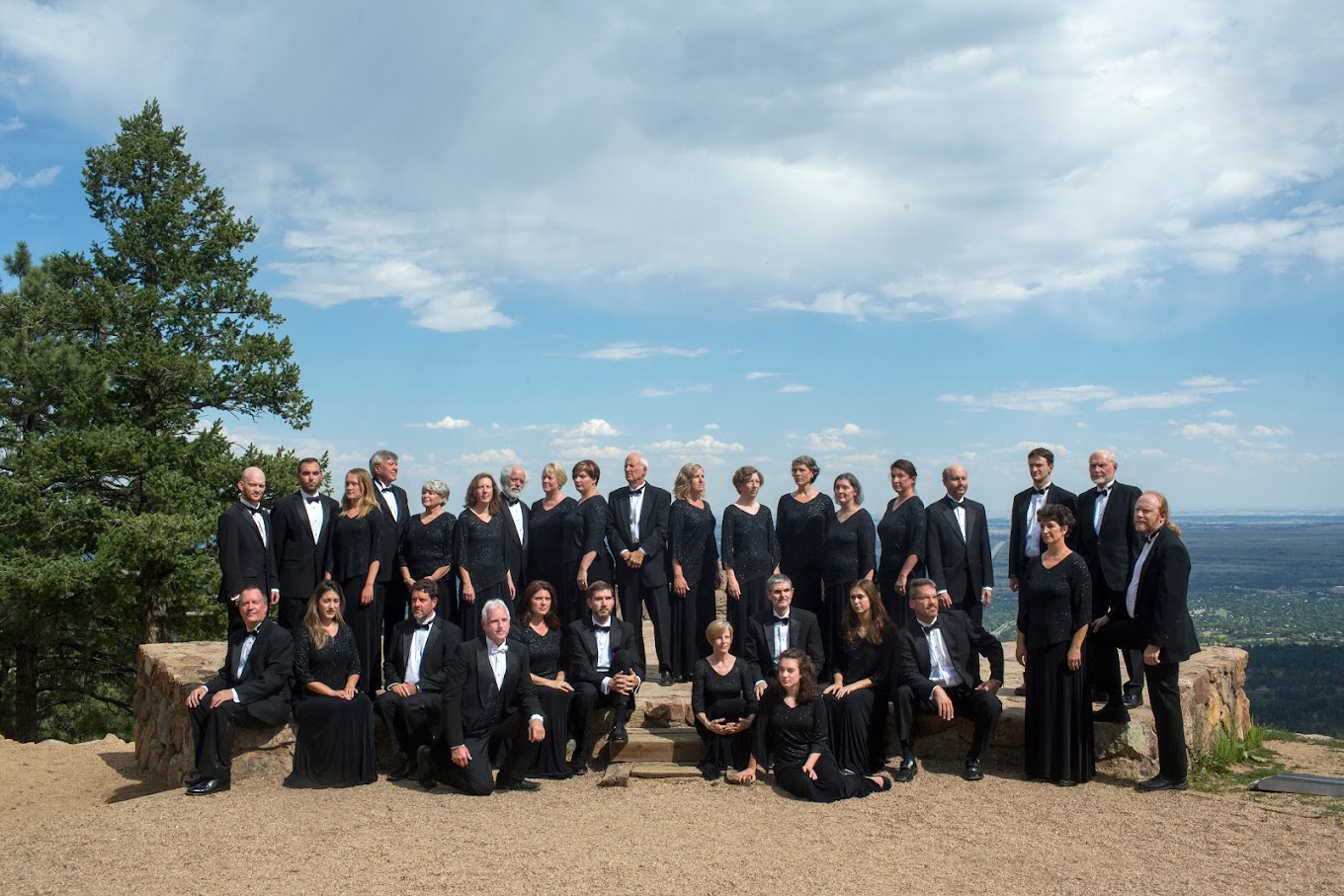
Ars Nova Singers. Conductor Thomas Morgan kneeling front left.

Conductor Tom Morgan wrote in a news release, “Dark and light, motion and stasis, intimate and universal, deeply familiar and refreshingly new—our season searches for the balance point in all of these.” In addition to “Here/There,” the season includes concerts titled “Light/Shadow,” “Lost/Found,” “Science/Fantasy” and “Time/Eternity” (see the full season HERE).

Although the choir’s name—Ars Nova, or “new art”—refers in history to a musical style from the 14th century, the group has specialized in a broader range of music, specifically the Renaissance and the 20th and 21st centuries. For this program there is no music from the Renaissance, but the old is represented by “Music for a While” by the English Baroque composer Henry Purcell (1659–1695).

There is a rare—for Ars Nova Singers—piece from the late Romantic period, Anton Bruckner’s Os justii (The mouth of the righteous) composed in 1879. A sacred motet setting of a text from Gregorian chant, it was written for the choirmaster at St. Florian Abbey, one of the largest monasteries in Austria.  

Other works on the program range from the early 20th century—Ravel’s Trois beaux oiseaux (Three beautiful birds)— right up to today with works by the living American composers Frank Ticheli, Jake Runestad and Dale Trumbore, among others (full program listed below).

The performance, a benefit celebrating the past and future of Ars Nova Singers, will be preceded by a 3 p.m. reception in the Dairy Arts Center lobby.

Ars Nova Singers bill themselves as “an auditioned vocal group specializing in a cappella music of the Renaissance and the 20th/21st centuries” that aims “to delight, inspire, and enlighten our audiences.”

# # # # #

Here/There
Ars Nova Singers, Thomas Morgan, conductor

  • Henry Purcell: “Music for a While”
  • Dale Trumbore: “Love is a sickness”
  • Bruckner: Os justi (The mouth of the righteous)
  • Ravel: Trois beaux oiseaux (Three beautiful birds)
  • Luigi Denza: “Call Me Back” (arr. Morgan)
  • György Ligeti: Lux aeterna (Eternal light)
  • Sam Henderson: “Moonswept”
  • Sheena Philips: “Circle of Life”
  • Sarah Quartel: “Sing, My Child”
  • Frank Ticheli: “Earth Song”
  • Jake Runestad: “Let My Love Be Heard”
  • Britten: “Advance Democracy”

4 p.m. Sunday, Oct. 6
Gordon Gamm Theater, Dairy Arts Center

TICKETS 

Boulder Symphony presents “America-Centric” concerts

Symphony by Florence Price is the “American anchor” of programs Saturday and Sunday

By Peter Alexander Sept. 25 at 11:25 a.m.

The Boulder Symphony opens a new season this weekend with what conductor Devin Patrick Hughes calls “a very America-centric concert.” Performances at the Gordon Gamm Theater of the Dairy Arts Center will be at 2 and 7:30 p.m. Saturday and 2 p.m. Sunday (full program and details below).

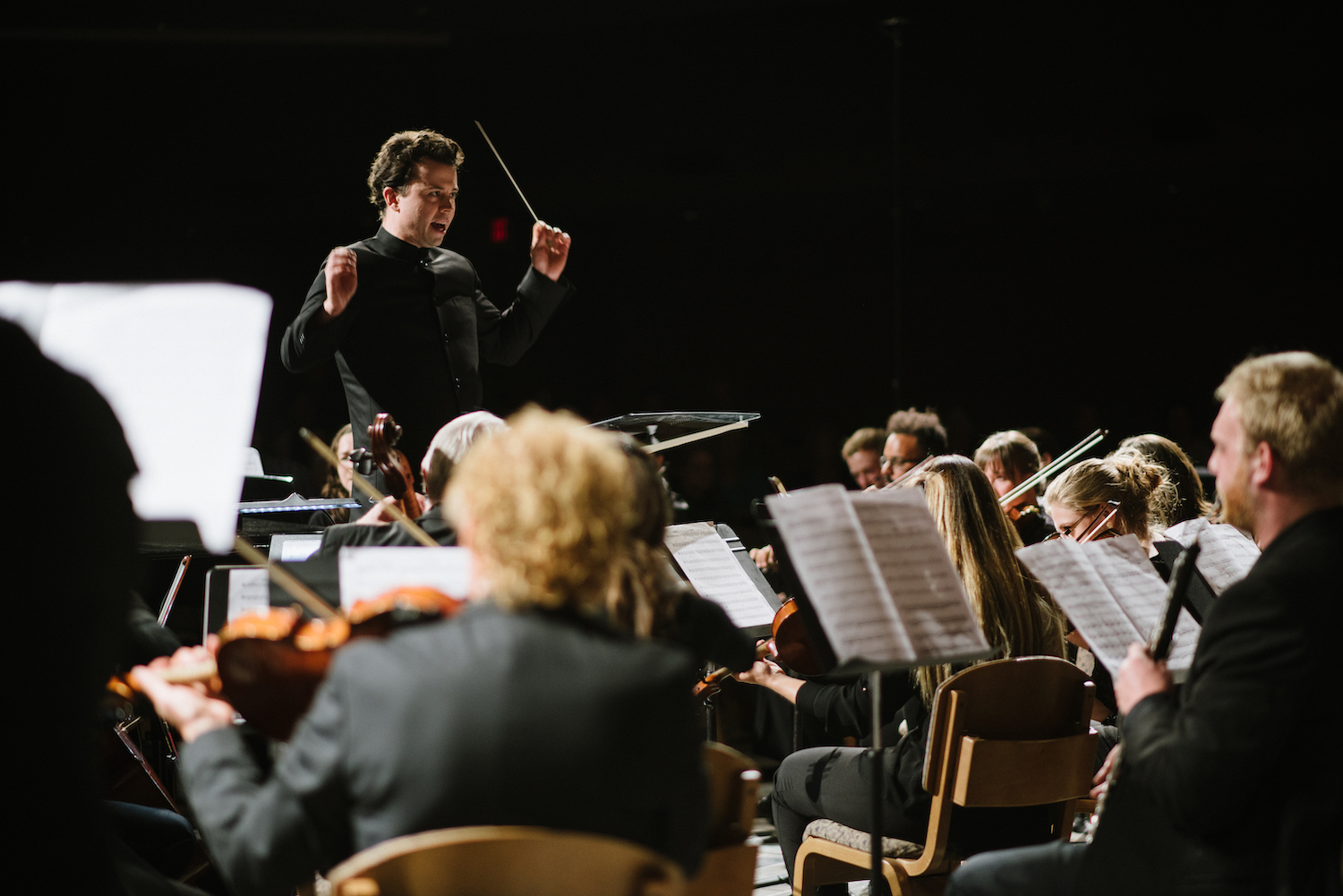
Boulder Symphony and conductor Devin Patrick Hughes

The most obviously American work on the program—in effect the American anchor to the concert—is the Symphony No. 1 by Florence Price. A prodigy who gave her first piano performance at the age of four and later attended the New England Conservatory, Price was the first African American woman to have music played by a major symphony.

Completing the program are two works by European composers with American connections: The Slavonic Dance No. 1 by Dvořák, who lived in the United States in the 1890s and whose “New World” Symphony inspired Price and other African American composers at the turn of the 20th century; and Tchaikovsky’s Piano Concerto No. 1, which was premiered in the U.S.

Soloist for the concerto will be Artem Kuznetsov, 2024 winner of the the International Keyboard Odyssiad & Festival in Ft. Collins. The Boulder Symphony has maintained a close relationship with the competition for a number of years by annually presenting the winner on one of their concerts.

Born in Arkansas, Price moved north during the “great migration” of the 1920s and settled in Chicago. She studied composition and organ and worked as an organist for silent films. In 1933 her First Symphony was premiered by the Chicago Symphony at the Century of Progress World’s Fair. 

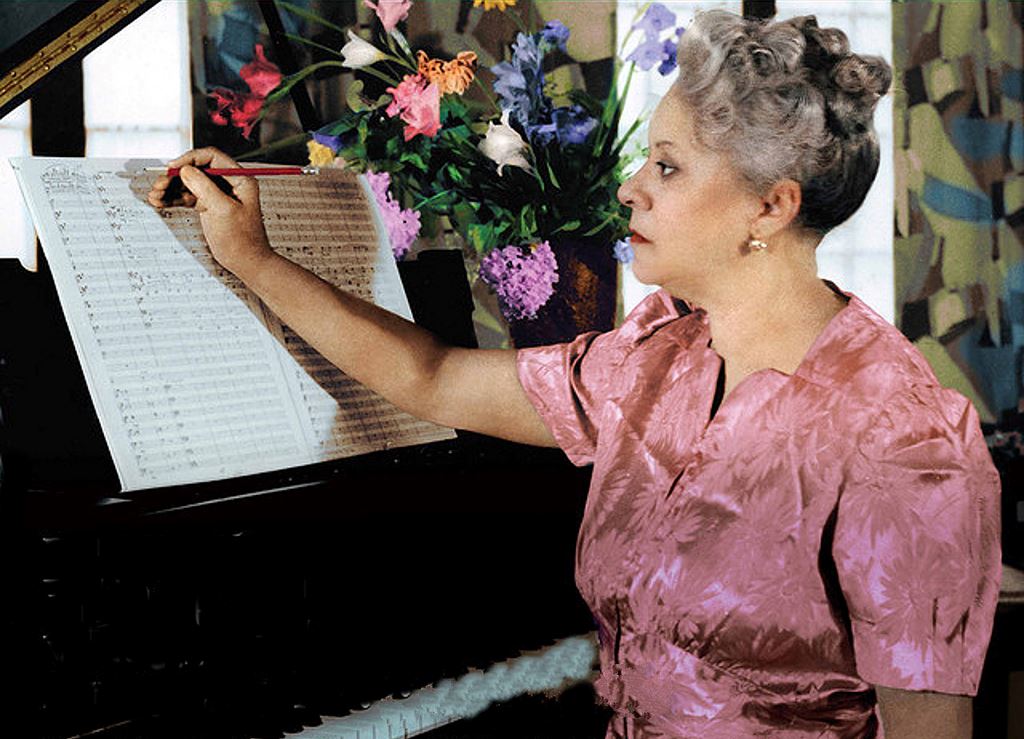
Florence Price (photo colorized)

“Florence Price is the quintessential American composer,” Hughes wrote in an email. “Her music takes from the melting pot of our culture, from spirituals and gospel, and blends them with the great European masters to create a unique American voice.”

Her total output includes four symphonies, a piano concerto, two violin concertos, and other works for orchestra, in addition to choral, vocal and piano pieces. In 2009 dozens of works by Price were discovered at her summer home, which had been abandoned for many years. Among this collection were the two violin concerto and the Fourth Symphony—works that would have been lost had the manuscripts not been found.

The First Symphony is in the traditional four movements. Price drew on her African-American heritage with pentatonic, spiritual-like melodies and a lively, syncopated third movement. Titled “Juba Dance,” it evokes a dance and rhythmic accompaniment performed by African slaves throughout the New World.

Another important influence is Dvořák’s Ninth Symphony, “From the New World.” Not only are both works in E minor, Price scholar Rae Linda Brown wrote that “an examination of Price’s symphony reveals that she had thoroughly studied Dvorak’s score.”

Among the most popular of Dvořák’s works, the two sets of Slavonic Dances were originally composed for piano four hands and later set for orchestra by the composer. It was the publication of the first set for piano four hands in 1878, facilitated by Brahms, that established Dvořák as an important and recognized composer. The first dance is a Furiant, an energetic Bohemian dance marked by shifting accents and alternating duple and triple time.

Dvořák’s connection to the American theme of the concert is through his years living in New York and his 1893 visit to the Czech village of Spillville in Iowa. His interest in African American and other American musical styles was very influential at the time.

As Hughes wrote, “Dvořák is at the crossroads of European and American voices. His symphonic work and educational initiatives in America in the 1890s paved the way for a new American school that recognized the importance of African American folk music as the future of an American school.”

Pianist Artem Kuznetsov

Tchaikovsky wrote his First Piano Concerto in 1874-75. He hoped that the great Russian virtuoso Anton Rubinstein would play the premiere, but Rubinstein criticized the score when he saw it. As a result the premiere was played by the German pianist Hans von Bülow in Boston. Rubinstein later took back his criticism of the concerto and promoted it through performances. Today it is one of the best known piano concertos.

Continuing the American connection among the composers, Tchaikovsky came to the United States and conducted on four concerts in Carnegie Hall, including the hall’s opening night May 5, 1891—shortly before Dvořák arrived in the U.S.

A native of Balashov, Russia, Kuznetsov has won several international competitions in addition the International Keyboard Odyssiad. He holds Master of Music degree and Artist Diploma from the Shepherd School of Music at Rice University. He has performed across the United States, in Russia, Germany and the Netherlands.

The weekend’s concerts are the first in a series of three orchestral programs to be performed by the Boulder Symphony at the Dairy Arts Center, each including a work by an American composer. The season culminates in May with performances of Beethoven’s Ninth Symphony, presented in collaboration with Kim Robards Dance; you may see details on the orchestra’s Web page, along with information on their Curiosity Concerts for young people.

The Boulder Symphony also offers a music academy that is open to all talented students regardless of ability to pay. “Boulder Symphony created our Music Academy so every child could have access to musical instruments and instruction,” Hughes wrote. “Those who contribute to our scholarship program give the dream and promise of a lifetime of music-making to all kids in Boulder County.”

# # # # #

Boulder Symphony, Devin Patrick Hughes, conductor
With Artem Kuznetsov, piano

  • Dvořák: Slavonic Dance No. 1 in C major, op. 46 no. 1, “Furiant”
  • Tchaikovsky: Piano Concerto No. 1 in B-flat minor
  • Florence Price: Symphony No. 1 in E minor

2 and 7:30 p.m. Saturday, Sept. 28
2 p.m. Sunday, Sept. 29
Gordon Gamm Theater, Dairy Arts Center

TICKETS

CORRECTION: The first concert on Saturday, Sept. 28, is at 2 p.m., not 4 p.m. as originally posted.

Grace Notes: Bach, Timbres, Sphere and a Groove

Programs outside the norm, from the 18th to the 21st centuries

By Peter Alexander Sept. 18 at 10:05 p.m.

The Boulder Bach Festival (BBF) and guest artists will take audiences back to 18th-century Venice in a program entitled “Anonimo Veneziano” (Anonymous Venetian) 4 p.m. Saturday, Sept. 21, at the Dairy Arts Center in Boulder.

The program, with the BBF’s music director/violinist Zachary Carretin and the COmpass REsonance ensemble (CORE Ensemble), will feature violinist Nurit Pacht from NewYork, harpsichordist Chris Holman from Cincinnati, and theorbist Keith Barnhart, an historical plucked instruments specialist who is also the BBF’s educational coordinator.

Nurit Pacht

The program opens with the famous Adagio attributed to 18th-century Italian composer Tomaso Albinoni and featured in many film scores. In fact, the Adagio was composed by 20th-century Italian musicologist Remo Giazotto. A scholar of Albinoni’s music Giazotto claimed that the Adagio was based on a fragment of an Albononi trio sonata that he found on a manuscript that has since mysteriously disappeared. 

The remainder of the program will be filled out with genuine Albinoni works, the complete Sinfonie e Concerti a cinque (Sinfonias and concertos for five instruments), op. 2, that were published in Venice in 1700. This important collection is rarely performed complete. The BBF performance, which will  be played without intermission, is expected to take approximately 75 minutes.

 Pacht holds a degree in historical performance from the Juilliard school and is known as a specialist in both music by living composers, including works written for her, and music of the Baroque. She was a top prize winner in the Irving Klein International Music Competition in California, the Tibor Varga International Violin Competition in Switzerland, and the Kingsville International Music Competition in Texas. She has toured widely in Europe and the United States. She teaches privately in New York City.

# # # # #

Anonimo Veneziano
Boulder Bach Festival CORE Ensemble, Zachary Carrettin, conductor/violinist
With Nurit Pracht, violin, Chris Holman, harpsichord, and Keith Barnhart, theorbo

  • Remo Giazotto: “Adagio in G minor by Tomaso Albononi”
  • Tomaso Albinoni: Sinfonie e Concerti, op. 2

4 p.m. Saturday, Sept. 21
Dairy Arts Center Gordon Gamm Theater

TICKETS

# # # # #

The Boulder Chamber Orchestra’s (BCO)chamber concert titled “Mixed Timbres,” postponed from last April due to the power outage caused by high winds, will be presented at 7:30 p.m. Saturday, Sept. 21, in the Boulder Seventh-Day Adventist Church.

The concert will feature the BCO’s 2023-24 artist-in-residence, pianist Hsing-ay Hsu, performing with two members of the orchestra—cellist Julian Bennett and clarinetist Kellan Toohey. All four works on the program use the ensemble of piano, clarinet and cello, a mix of timbres that has a limited but interesting repertoire.

Hsing-ay Hsu

Beethoven’s Op. 11 is one of the earliest works for the combination. It is sometimes known as the “Gassenhauer Trio,” taken from the popularity of the theme that Beethoven uses for variations in the final movement. In Vienna, a Gassenhauer (from Gasse, an alleyway) referred to a simple song that was so popular that it was heard all over town. The theme Beethoven used was taken from a popular music theater work, L’amor marinaro (Seafaring love) by Joseph Weigl.

Brahms’s Trio op. 114 is one of four chamber works the composer wrote for the clarinetist Richard Mühlfeld in the last years of his life. Brahms’s admiration for Mühlfeld’s playing was reflected in the comment of one of the composer’s friends who wrote that in the Trio, “it is as though the instruments were in love with each other.”

Like Brahms’s Trio, Fauré’s D minor Trio was one of his last compositions. Although Fauré originally planned the Trio for piano, clarinet and cello, it was published as a traditional piano trio, with violin in place of the clarinet. The BCO performance of the first movement restores the instrumentation that Fauré first imagined for the trio.

Emily Rutherford’s “Morning Dance” for piano, clarinet and cello was commissioned by Toohey in 2017. A native of Colorado, Rutherford is a graduate of Westmont College in Santa Barbara, Calif., and the Longy School of Music in Los Angeles.

# # # # #

“Mixed Timbres”
Hsing-ay Hsu, BCO Artist in residence, piano
With Boulder Chamber Orchestra members Kellan Toohey, clarinet, and Julian Bennett, cello

  • Gabriel Fauré: Piano Trio in D minor, I. Allegro ma non troppo
  • Beethoven: Trio in B-flat major for piano, clarinet and cello, op. 11
  • Brahms: Trio in B-flat for piano, clarinet and cello, op. 114
  • Emily Rutherford: Morning Dances

7:30 p.m. Saturday, Sept. 21
Boulder Seventh-Day Adventist Church, 345 Mapleton Ave.

TICKETS

# # # # #

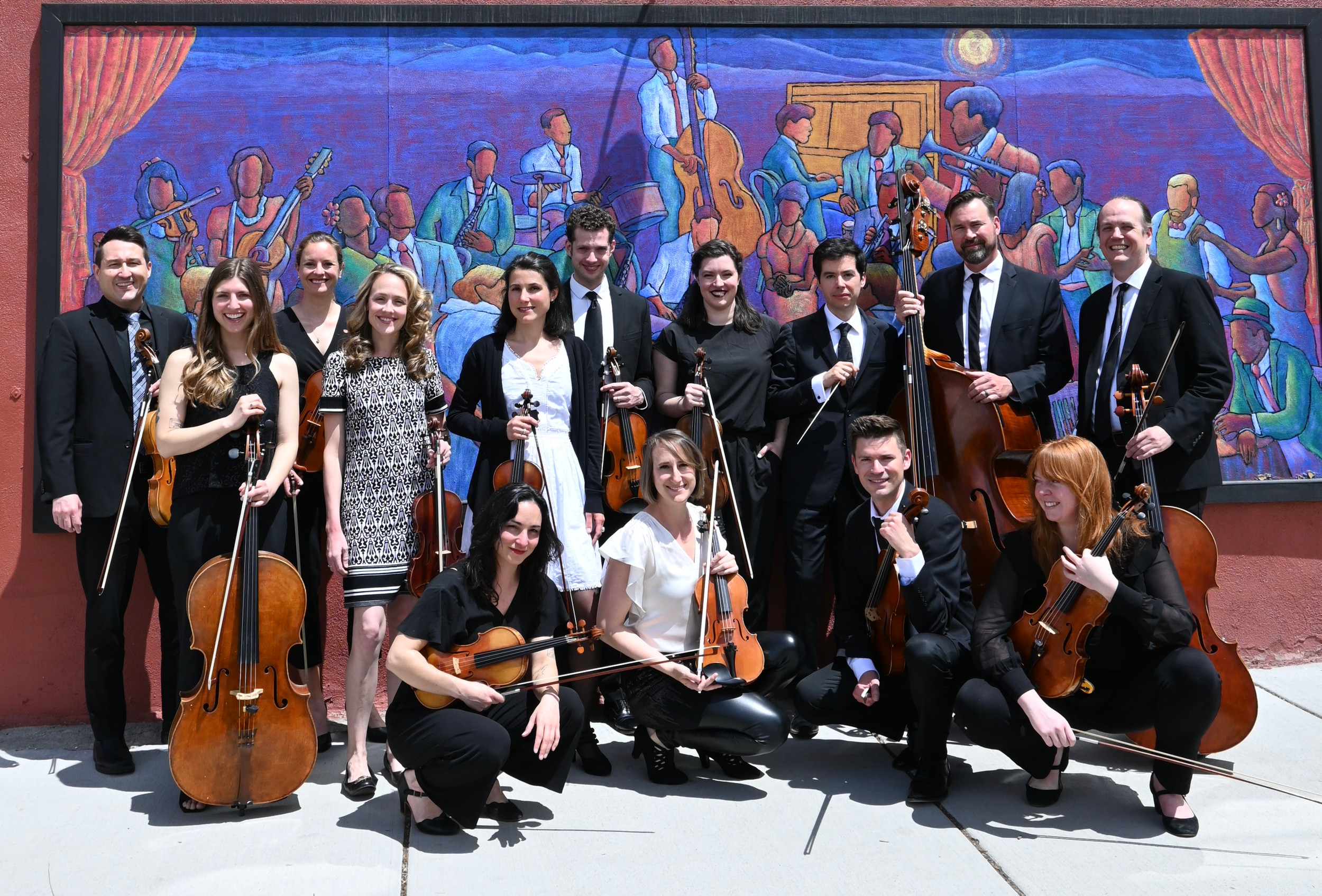
The Sphere Ensemble, a 14-member string ensemble, will celebrate the 100th anniversary of the premiere of Gershwin’s Rhapsody in Blue in 1924 with performances of their own all-strings arrangement of the Rhapsody.

The program, presented Saturday in Boulder and Sunday in Denver (Sept. 21 and 22; details below), will also include works by other jazz musicians including James P. Johnson, Hazel Scott and Winton Marsalis. Also on the program are arrangements of music from the Squirrel Nut Zippers, The Turtles and Andrew Bird; and pieces by Shostakovich, Stephen Foster and the classical-era composer Christoph Willibald Gluck, among others. 

Sphere Ensemble

In addition to the live performances, a live stream will be available from 7:30 p.m. Saturday, Sept. 21 through 10 p.m. Sunday, Sept. 29. 

This kind of eclectic programming, mixing sources and genres, is typical of the Sphere Ensemble, often in arrangements made by members of the ensemble. The “About” page on their Website explains, “We prioritize music by composers that are often overlooked in classical music programs. . . . From classical to classic rock, from baroque to hip hop, Sphere always chooses music that excites us.”

# # # # #

“Bridges”
Sphere Ensemble

  • Aldemaro Romero: Fuga con Pajarillo
  • Dmitri Shostakovich: Prelude and Fugue in D-flat Major (arr. Chris Jusell)
  • Stephen Foster: “Jeanie with the Light Brown Hair” (arr. Alex Vittal)
  • Squirrel Nut Zippers: The Ghost of Stephen Foster (arr. Sarah Whitnah)
  • Andrew Bird: Orpheo Looks Back (arr. Sarah Whitnah)
  • C.W. Gluck: Orfée et Eurydice, Danses des Ombres Heureuses
  • Brenda Holloway: You’ve Made Me So Very Happy (arr. David Short)
  • The Turtles: Happy Together (arr. Dave Short)
  • James Price Johnson: Charleston (arr. Alex Vittal)
  • Hazel Scott: “Idyll” (arr. Sarah Whitnah)
  • Wynton Marsalis: “At the Octoroon Balls”
    —“Rampart St. Rowhouse Rag”
  • George Gershwin: Rhapsody in Blue (arr. Alex Vittal)

7:30 p.m. Saturday, Sept. 21
Nomad Playhouse, 1410 Quince Ave., Boulder

3 p.m. Sunday, Nov. 22
Truss House, 3400 Atkins Ct., Denver

Livestream: 7:30 p.m. Saturday, Sept. 21–10 p.m. Sunday, Sept. 29

In-person and livestream TICKETS

# # # # #

The Boulder Philharmonic Orchestra will have a new series of intimate performances during the 2024-25 season, designed to bring their musicians into more informal spaces and give audiences the opportunity to hear them in smaller groups.

The repertoire will be a little different from the Macky concerts, too, featuring music by pop sensations from Lizzo to Taylor Swift alongside pieces by living composers including Philip Glass and Jessie Montgomery. And just for fun, they might throw in some Vivaldi as well.

These concerts, collectively the “Shift” series, will feature several different programs, each presented first at Planet Bluegrass in Lyons and then taken to small venues in Longmont and Boulder. The first program, played by a string quartet of principal players from the orchestra, opens next Wednesday at Planet Bluegrass (7 p.m. Sept. 25; details below). Titled “Groove,” it will be repeated at the Dickens Opera House in Longmont at 6:30 p.m.Monday, Nov. 25.

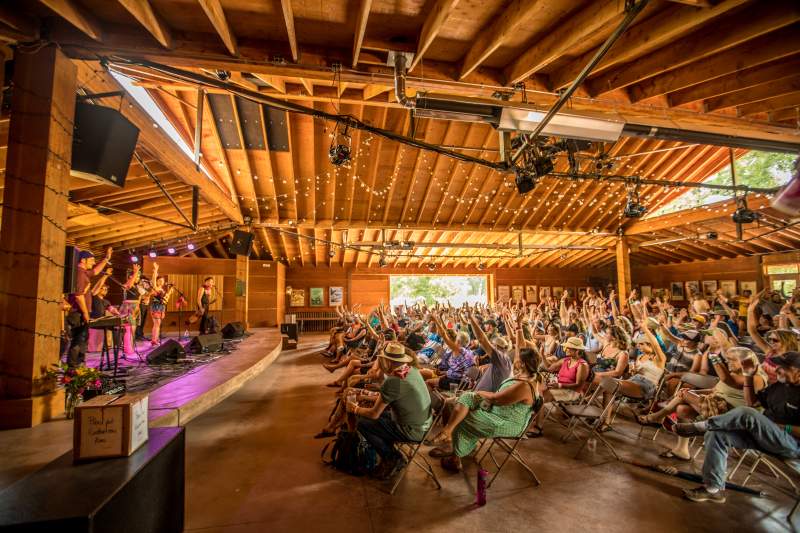
Wildflower Pavilion at Planet Bluegrass, Lyons

The second program, also for string quartet, is titled “Americana: Redefined” and will be presented in October and February. A third program featuring a brass quintet from the orchestra, “Brass & Brews,” will be presented in October and April;  see the Boulder Phil Web page for details on all currently scheduled performances.

Mimi Kruger, the Boulder Phil’s executive director, said, “The idea is that people can get to know our musicians and these composers and connect in a different way. These are obviously smaller venues, but also a little bit more casual.”

She said that discussions about ways to showcase the individual musicians of the orchestra led them to look for new venues. “The idea came up to launch it through Planet Bluegrass (because) they have a series at the Wildflower Pavilion,” she said. “We’re doing all three there, but we also wanted to take them to other venues, so the first two will get repeated at Dickens Opera House in Longmont—that’s a great little place!”

The Phil’s Web page says pretty much the same thing, in more promotional language: “The Shift Series lifts the facade of the stereotypical orchestral concert . . . in unique venues along the Front Range.”

Kruger recommends watching for future announcements, as further performances are under consideration, featuring the orchestra’s woodwind players. 

# # # # #

“GROOVE”
Boulder Philharmonic string players: Ryan Jacobsen and Hilary Castle-Green, violin; Stephanie Mientka, viola; and Amanda Laborete, cello

  • Takashi Yoshimatsu: Atomic Hearts Club Quartet, Movement I
  • Justin Bieber: “Peaches” (arr. Alice Hong) 3’
  • Dinuk Wijeratne:Two Pop Songs on Antique Poems: “Letter from the afterlife”
  • Carlos Simon: Loop
  • Michael Begay: “Forest Fires”
  • Lizzo: “ Good As Hell” (arr. Alice Hong)
  • Jessie Montgomery: “VooDoo Dolls
  • Philip Glass: String Quartet No. 3: VI “Mishima/Closing” 4’
  • Taylor Swift: All Too Well” (arr. Alice Hong)
  • Wijeratne: Two Pop Songs on Antique Poems: “I will not let you go
  • Ed Sheeran: “Shape of You” (arr. Alice Hong)
  • Due Lipa: “Dance the Night” (arr. Zack Reaves)
  • Jessica Meyer: “Get into the NOW”: III. “Go Big or Go Home”
  • Vivaldi: Summer: Moment III (arr. Naughtin)

7 p.m. Monday, Sept. 25
Planet Bluegrass, Lyons, Colo.

TICKETS

6:30 Monday, Nov. 25
Dickens Opera House, Longmont Como.

TICKETS

Brilliant concert of all-women composers at CMF 

Premiere by Gabriela Lena Frank, Concerto by Joan Tower showcase the Festival Orchestra

By Peter Alexander July 22 at 12:15 a.m.

The Colorado Music Festival Orchestra and conductor Peter Oundjian hit the jackpot last night (July 21) with a program of three pieces by women composers. 

All three works, by Florence Price, Gabriela Lena Franck and Joan Tower, were performed memorably. Both living composers—Frank and Tower—were present and spoke to the audience.

The concert opened with Price’s Adoration, a piece that she originally wrote for organ in 1951 and that here was performed in a setting for string orchestra. Played tenderly by the Festival Orchestra strings, it is almost too soothing and gentle to serve as an opener. Oundjian and the players thoroughly embraced the mood, creating a comforting start to a program that soon turned adventurous.

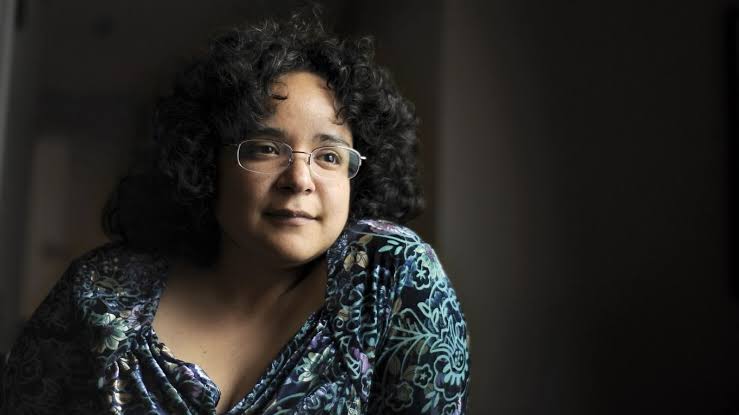
Frank’s Kachkaniraqmi (“I still exist” in the Quechua language of her Peruvian forebears) was commissioned by CMF as a concerto for string quartet and string orchestra, written for Boulder’s Takács Quartet and the CMF Orchestra. As an introduction by Oundjian, Frank and Takács violinist Harumi Rhodes spelled out, the commission emerged from a suggestion by CMF contributor and long-time patron Chris Christoffersen for a concerto for the Takács, and then from a friendship between Frank and Rhodes.

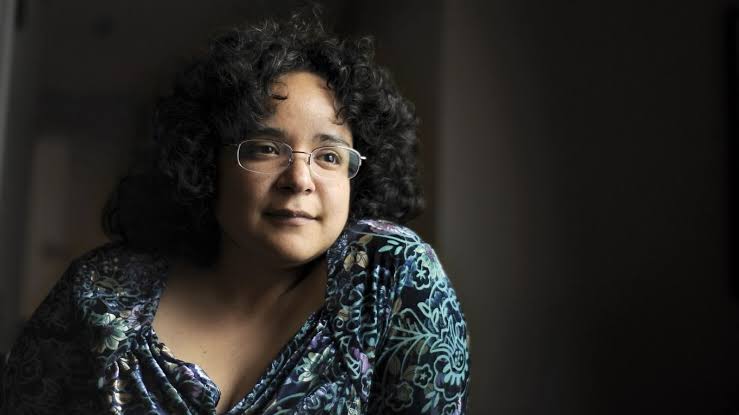
Gabriela Lena Frank

Kachkaniraqmi is a piece of great imagination and creativity. Frank refuses to cozy up to the listener with easy tunes and catchy ideas. In fact, Kachkaniraqmi sounds like no other piece I have heard, but it makes great use of string timbres and textures. It opens with highly individual, sometimes quirky gestures for the solo violist and orchestral violas before moving into a fuller texture. At places, the strings sound like a single instrument, leaping across a large range from top to bottom, and at other times like a large organ moving in full orchestral chords.

The middle section, or second movement, presents a rushing, incessant forward drive. All texture and motion, this portion of the concerto is not hummable, but identifiable musical ideas can be followed as they are passed from section to section over an unrelenting rhythmic foundation. This driven middle section settles into a more contemplative final portion that explores different techniques of string playing to create a startling range of sounds and gentling moods as the music moves toward silence.

Kachkaniraqmi is a remarkable creation, an intriguing piece that I expect will reveal more and more as one listens to it again and again. I hope that the Takács will take the score well beyond Boulder and introduce it to the wider musical world.

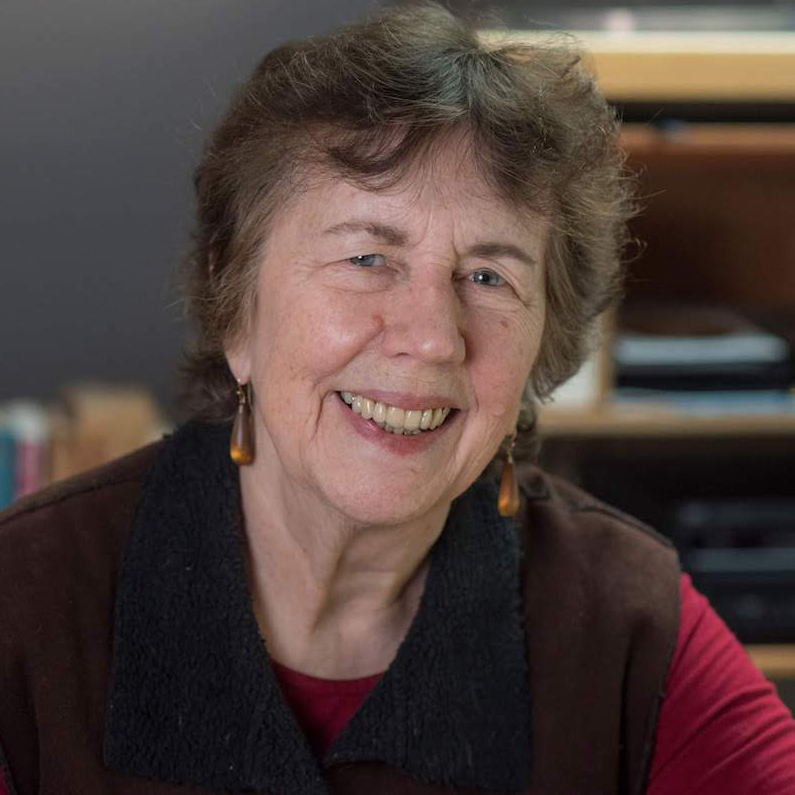
The concert concluded with a stunningly complex and difficult piece, Joan Tower’s Concerto for Orchestra. Composed in 1991 for the New York Philharmonic, Chicago Symphony and St. Louis Symphony, it has had modest success in the intervening 33 years. “This piece should be played everywhere!” Oundjian said in his introductory comments, standing onstage with the composer. 

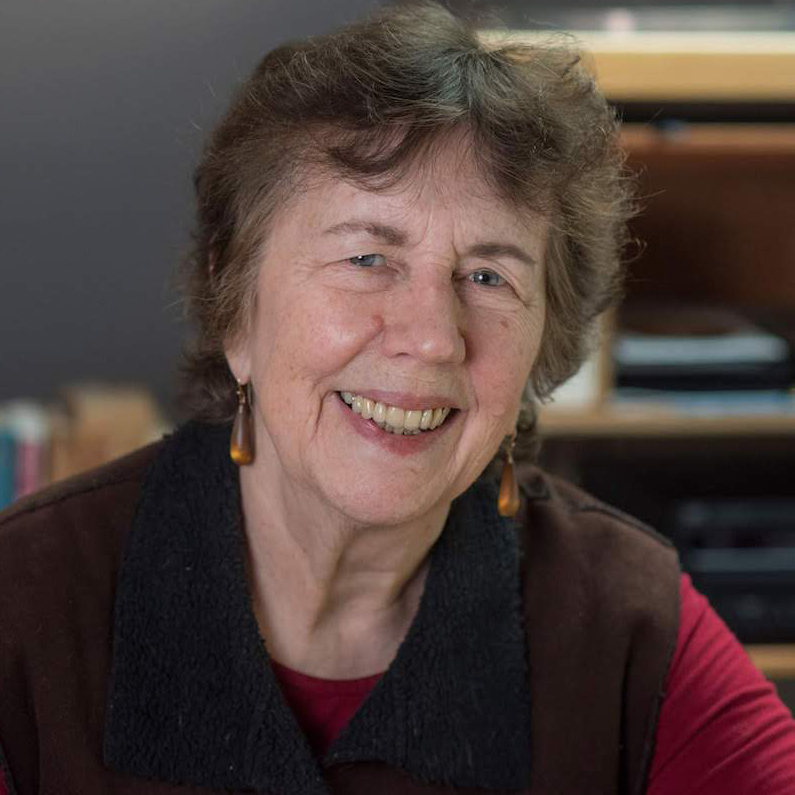
Joan Tower

Tower noted that it is a difficult piece to conduct—on top of being very difficult to play—which may be one barrier, but the CMF Orchestra’s performance showed what musical fireworks it sets off when played at the highest level. Clearly, Oundjian had mastered all the shifting meters and tricky rhythms, and the CMF players responded with a virtuoso display.

As expected, there are many solos in the course of the score’s 25+ minutes, for horn, for English horn, for tuba, but more stunning are the intricate passages for whole sections—trumpets, woodwinds, a tricky motive passed up and down from trumpets to horns and back. Often played at a breakneck pace, these are the most virtuosic passages of the concerto, and they were played with precision and confidence by the CMF orchestra.

Other noteworthy moments included a cello section solo that gives a lyrical contrast to the more driving and excitable portions of the score, with the cellos at times divided into parts to create full chords, and at other times reduced to two eloquent solo players. A later softening and lowering of temperature allows two violinists to come forward, before the rhythmic frenzy starts again. 

As Tower promised, the percussion players are kept busy, running from instrument to instrument, culminating with a viciously fast running beat by several drums that requires extreme concentration to keep together. This exciting moment, played with perfect precision, leads to a final crashing chord—and inevitably, wild enthusiasm from the audience.

They were still cheering as I gathered my things and snuck out the side door.

Under Oundjan’s leadership, the CMF has established itself as a forward-looking summer festival that all Boulder should support. His thoughtful programming, his embrace of living composers, and the commissioning of new pieces are admirable and exciting. A concert of works by three women, two of them present for the performance, is a perfect illustration of his vision of the festival. On this occasion, it was brilliantly realized.

Correction: Misspellings of string as “sting“ in paragraph six and viciously as “viscously” in paragraph 12 corrected 7/22.

Colorado Music Festival opens 2024 summer season Friday

Commissioned premiere and birthday celebrations are early highlights

By Peter Alexander July 1 at 6:27 p.m.

Peter Oundjian at Chautauqua.

Peter Oundjian, artistic director of the Colorado Music Festival (CMF), is brimming with excitement for the coming summer concert season.

“I love every program because I programmed them all!” he says. Nevertheless, when pressed he points to two concerts in the first weeks of the CMF season as especially interesting for audiences.

“One is the world premier of the Gabriela Lena Frank string quartet concerto with the Takács Quartet (6:30 p.m. Sunday, July 21; see full programs July 5–12 below). On that program we’re also playing what I consider to be one of the great American masterpieces of the past five years, the Concerto for Orchestra by Joan Tower.

“The other one is the week before, where I am celebrating the birthdays of Schoenberg and Bruckner with arguably the most beautiful piece that either of them ever wrote (Schoenberg’s Verklärte Nacht and Bruckner’s Fourth Symphony; 6:30 pm. Sunday, July 14). On a Sunday evening, to listen to these two glorious pieces will be beautiful and also a healing experience.”

The festival opens Friday and Sunday (July 5 and  7) with three pieces selected for variety and compatibility. The opening piece, Anna Clyne’s Masquerade was written for the BBC Symphony and premiered at the Last Night of the Proms in London in 2013. That will be followed by Dvořák’s Cello Concerto, one of the pieces the Czech composer wrote while living in the United States.

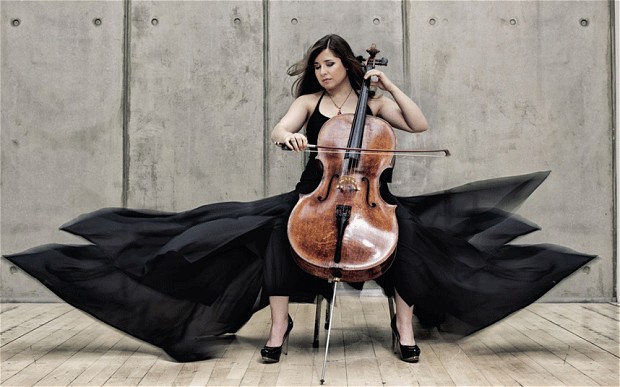
Alisa Weilserstein

Featured soloist for the concerto will be cellist Alisa Weilerstein, whom Oundjian calls “one of the great cellists in the history of the instrument, and an amazing musician. . . . Her Dvořák is spectacular,” he says. “It’s maybe (Dvořák’s) most profound work, because it’s so moving.”

To close the program Oundjian wanted something that would not compete with the intensity of the concerto. “I wanted to have a celebration in the second half,” he says. “I wanted everyone to feel great,” and for that he chose Mendelssohn’s “Italian” Symphony, certainly one of the most cheerful and ebullient pieces in the orchestral repertoire.

The opening week also features the CMF’s annual Family Concert Sunday morning at 10:30 a.m. (July 7), with some light orchestral pieces mixed with some fun, including a piece based on Dr. Seuss’s Green Eggs and Ham. Tuesday sees the first of the summer’s Robert Mann Chamber Music Series concerts, named for the late violinist and founding member of the Juilliard String Quartet. The series will continue the following three Tuesdays at 7:30 p.m.

Festival Orchestra Thursday and Friday pairs, at 7:30 and 6:30 p.m. respectively, start the first week with violinist Vadim Gluzman playing Prokofiev’s Second Violin Concerto, and the iconic 20th-century masterpiece, The Rite of Spring by Stravinsky (July 11 and 12). The program will open with the exhilarating Short Ride in a Fast Machine by the American composer John Adams, who was CMF composer-in-residence in 2022.

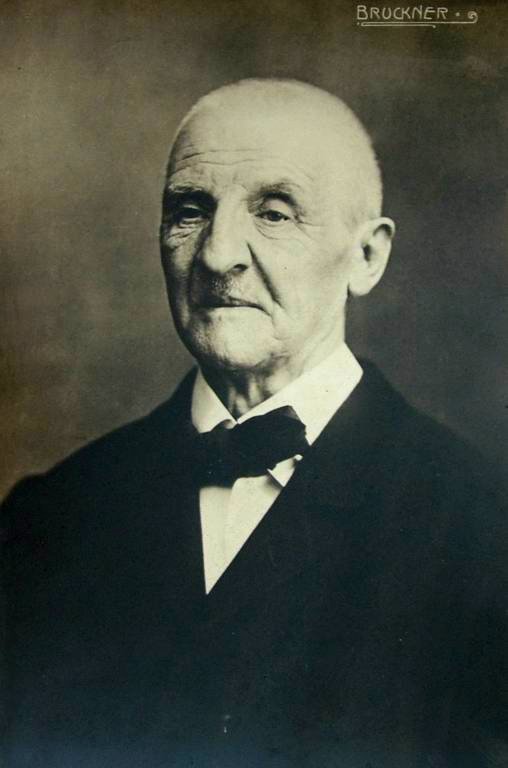
Anton Bruckner

“I did the (July 14) program because it’s the 150th birthday of Schoenberg and the 200th of Bruckner, and I wanted to acknowledge that,” Oundjian says. “I decided, let’s do it in one evening and make it a beautiful experience for everybody! The music is very spiritual (and) both pieces are fantastic to play, in that gorgeous acoustic at Chautauqua.”

The two composers took Wagner’s music and turned in different directions—Bruckner more conservatively by putting Wagner’s sound into the traditional form of the symphony, Schoenberg, born 50 years later, by pushing beyond Wagner’s harmonic freedom and the limits of tonality. 

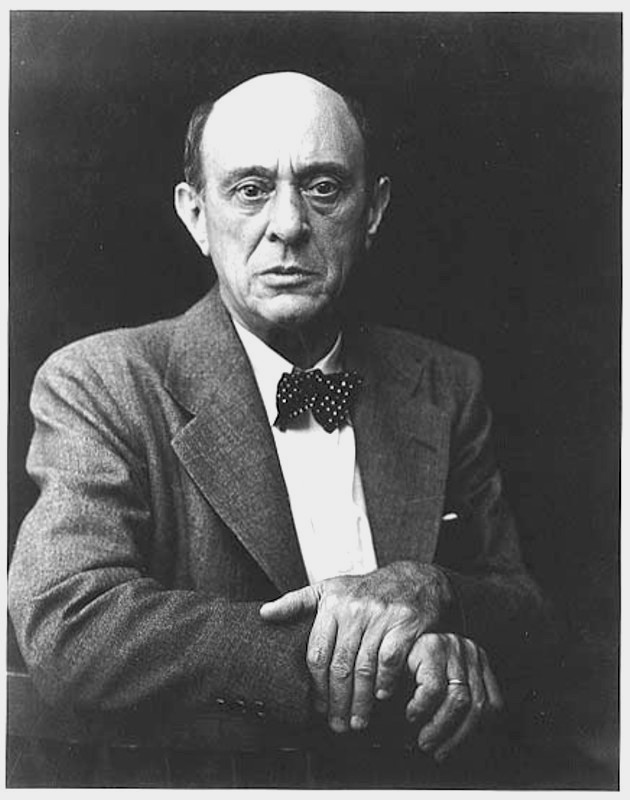
Arnold Schoenberg

“Bruckner’s Fourth Symphony is probably the most accessible (of his nine symphonies), because it’s fairly compact,” Oundjian says. “It has stunning themes and glorious horn solos, and you really hear the power of the orchestra. I find the music exquisitely beautiful and contemplative. It’s almost surreal in its staggering beauty, to me.”

If you think of Schoenberg only as a thorny modernist, you are missing the earlier works that followed much closer to Wagner than his later works. “Verklärte Nacht is basically like late Wagner, with its glorious string sound,” Oundjian says. “It’s a beautiful string orchestra piece.”

Pianist Olga Kern returns to CMF for concerts July 18 and 19. She will play Rachmaninoff’s Piano Concerto No. 2, which she played at CMF in 2013. The concert, under the direction of Norwegian guest conductor Rune Bergmann, will also feature Prayer by Canadian composer Vivian Fung—a work that had its premiere with a “virtual orchestra” of Canadian musicians during the COVID-19 pandemic—and Edvard Grieg’s Suites from music for the play Peer Gynt, narrated by Kabin Thomas.

Gabriela Lena Frank

When he was looking for a new work to commission for the 2024 festival, Oundjian thought of a concerto for the Takács Quartet. “I said to (the quartet members), if we were to have a quartet concerto, who would you be interested in approaching, and without hesitation Gabriela’s name came up,” he says. “She  is a wonderful composer, Peruvian-American, and a very particular voice.”

Frank will be present for the July 21 premiere, as will Joan Tower, whose Concerto for Orchestra is on the same program.

Frank has written in her program notes, “Kachkanaraqmi, or ‘I still exist’ in the indigenous Quechua language of my Peruvian forbearers, speaks to the resilience, even insistence, of a racial soul through the generations. In this four-movement work, a brief pastoral Andean prelude, a moody mountain soliloquy, a romp of thieving winds, and a lyrical child’s wake utilize the sonorous possibilities of a concerto grosso for string quartet and string orchestra . . . Throughout, re-imaginings of age-old indigenous motifs and rhythms proliferate.”

Joan Tower

The premiere will be part of a concert of all-women composers, opening with Adoration by Florence Price, an early-20th-century African American composer whose works were forgotten for many years but recently have been rediscovered. Written in 1951, Adoration was originally for organ solo but has been arranged posthumously for various ensembles..

Joan Tower’s Concerto for Orchestra was commissioned jointly by the Chicago, St. Louis and New York orchestras, all of whom gave premieres but never played it again. “They always say this about compositions: Getting a commission is hard enough, but try to get second performances,” Oundjian says. “It’s one of those things that has really intrigued me, over my entire career: Let’s find out what’s just premiered in the last few years but has been undeservedly ignored.”

He discovered Tower’s Concerto for Orchestra when he was asked to conduct it in Iceland. “I said, ‘I don’t know that piece!’ I just loved it. It is so dramatic and so beautiful. There are two passages that are some of the most stunning contrapuntal harmony that I know in contemporary music. 

“It has tremendous drive and brilliance, and it demands everything from the orchestra.”

# # # # #

Colorado Music Festival, Peter Oundjian, music director
July 5–21, 2024
All performances in Chautauqua Auditorium

Opening Night
Festival Orchestra, Peter Oundjian, conductor
With Alisa Weilerstein, cello

  • Anna Clyne: Masquerade (2013)
  • Dvořák: Cello Concerto in B minor
  • Mendelssohn: Symphony No. 4 in A major (“Italian”)

6:30 p.m. Friday and Sunday, July 5 and 7

Family Concert: Green Eggs and Ham
Festival Orchestra, Jacob Joyce, conductor 
With Really Inventive Stuff and Jennifer DeDominici, mezzo-soprano

  • Glinka: Overture to Ruslan and Ludmilla
  • Daniel Dorff: Three Fun Fables
  • Mendelssohn: Overture to A Midsummer Night’s Dream
  • Rob Kapilow: Green Eggs and Ham

10:30 a.m. Sunday, July 7

Robert Mann Chamber Music Series
Colorado Music Festival musicians 

  • Ernst von Dohnányi: Sextet in C Major
  • Beethoven: “Duet with two Obligato Eyeglasses” in E-flat major for viola and cello, WoO 32
  • Schumann: Piano Quartet in E-flat Major, op. 47

7:30 p.m. Tuesday, July 9

Festival Orchestra Concert
Festival Orchestra, Peter Oundjian, conductor
With Vadim Gluzman, violin

  • John Adams: Short Ride in a Fast Machine
  • Prokofiev: Violin Concerto No. 2 
  • Stravinsky: Rite of Spring

7:30 p.m. Thursday July 11
6:30 p.m. Friday, July 12 

Bruckner Bicentennial Concert
Festival Orchestra, Peter Oundjian, conductor

  • Arnold Schoenberg: Verklärte Nacht (“Transfigured night”), op. 4
  • Anton Bruckner: Symphony No. 4 (“Romantic”)

6:30 p.m. Sunday, July 14

Robert Mann Chamber Music Series
Colorado Music Festival musicians

  • Carl Nielsen: Wind Quintet, op. 43
  • Schubert: String Quintet in C Major, D956

7:30 p.m. Tuesday, July 16

Festival Orchestra Concert
Festival Orchestra, Rune Bergmann, conductor
With Olga Kern, piano, and Kabin Thomas, narrator

  • Vivian Fung: Prayer
  • Rachmaninoff: Piano Concerto No. 2, op. 18
  • Edvard Grieg: Suites from Peer Gynt

7:30 p.m. Thursday, July 18
6:30 p.m. Friday, July 19

Festival Chamber Orchestra Concert
Festival Orchestra, Peter Oundjian, conductor
With the Takács Quartet and Gabriela Lena Frank, composer 

  • Florence Price: Adoration
  • Gabriela Lena Frank: Kachkanaraqmi (“I still exist”; world premiere)
  • Joan Tower: Concerto for Orchestra

6:30 p.m. Sunday, July 21

Tickets for individual concerts are available through the Chautauqua Box Office Web page.

Season closing events in Boulder and Longmont

Programs feature piano quartet, acrobatics and film music

By Peter Alexander May 1 at 4:38 p.m.

The Boulder Piano Quartet presents it’s final concert of the 2023-24 season Friday featuring music by Dvořák and the 19th-century French musical prodigy Mélanie Hélène Bonis Domange, known as Mel Bonis (7 p.m. May 3 at the Academy University Hill; further details below).

This will be the fourth and final performance this concert season to feature a guest violinist with the Quartet, appearing in place of their former violinist Chas Wetherbee, who died in 2023. The guest violinist for this performance will be Hilary Castle Green. 

Mel Bonis

This program is the second time that the Boulder Quartet has played music by Bonis, who is virtually unknown in the United States. About a year ago in May 2023, they played her Second Piano Quartet. This year they are playing her First Quartet in B-flat major.

Born in 1858, Bonis taught herself to play piano and entered the Paris Conservatory at 16. She was in the same class with Debussy, and studied composition with Cesar Franck. At the time women were not expected to be composers, and Bonis was urged by her parents to marry an older businessman. Because he didn’t like music, she gave up composing for a number of years. 

Later she met a former classmate who encouraged her and connected her with publishers, which led her to begin writing music again. She wrote the First Piano Quartet soon after, in 1901. When the composer Camille Saint-Saëns heard the Quartet, he is supposed to have said “I never thought a woman could write such music.” After her husband died in 1918, Bonis devoted herself to music.

Dvořák won the Australian State Prize for composition—in effect a grant to allow artists the time for creative work—in 1875. At 34 years of age he was still relatively unknown to the larger musical world, even though he had written four symphonies, seven string quartets, three operas, and other works. During that year he wrote a number of larger pieces, including his Symphony No. 5, his Serenade for Strings and the Piano Quartet No. 1 in D major. 

The Quartet is in the standard classical chamber-music structure of three movements, arranged fast, slow, fast. Unlike other quartets of the time, the piano is not placed separate from, or against the strings, as if it were a chamber concerto. Instead the four parts are more fully integrated. Though only three movements, the Quartet is an expansive work. It was not performed for nearly five years, however, having its premiere in Prague in 1880. 

# # # # #

Boulder Piano Quartet: Matthew Dane, viola, Thomas Heinrich, cello, and David Korevaar, piano, with guest violin Hilary Castle Green

  • Mel Bonis: Piano Quartet No. 1 in B-flat major
  • Dvořák: Piano Quartet No. 1 in D major, op. 23

7 p.m. Friday, May 3, Academy Chapel Hall, Academy University Hill
Admission free with advance reservations

# # # # #

The Boulder Philharmonic will continue its relationship with the performing group Cirque de la Symphonie with two performances Saturday in Macky Auditorium (2 and 7:30 p.m. May 4; details below).

Classical music’s answer to Cirque du Soleil, Cirque de la Symphonie presents aerialists, jugglers, ribbon dancers, acrobats, contortionists and other acts to the accompaniment of classical music performed live on stage. Macky Auditorium will be especially rigged for the aerial acts, and the front of the stage reserved for other performers. The performance of selected short classics will be conducted by Renee Gilliland, associate director of orchestras at CU Boulder.

Renee Gilliland

This will be the fifth time that the Boulder Phil has hosted Cirque de la Symphonie at Macky. Their last previous appearance was in 2018. While limited tickets are still available for both scheduled performances Saturday, previous Cirque performances have sold out.

Gilliland earned a Doctor of Musical Arts in orchestral conducting and literature from CU Boulder, a Master of Music in viola performance with an outside area in conducting from the Indiana University Jacobs School of Music, and a Bachelor of Music in music education and certificate of violin performance from the University of Texas at Austin Butler School of Music. She was also awarded an Artist Diploma in orchestral conducting from the University of Denver where she was assistant conductor of the Lamont School of Music Symphony and Opera Theater orchestras.

She was formerly music director of the CU Anschutz Medical Orchestra and associate conductor of the Denver Philharmonic.

# # # # #

“Cirque Returns”
Boulder Philharmonic Orchestra, Renee Gilliland, conductor
With Cirque de la Symphonie

  • Dvořák: Carnival Overture, op. 92 (orchestra only)
  • Ary Barroso: Aquarela do Brasil
  • Brahms: Symphony No. 3 in F Major, III. Poco Allegretto
  • Bizet: Carmen Suite No. 1, Les Toreadores
    Carmen Suite No. 2, Danse Bohème
  • Mendelssohn: Symphony No. 4 in A major (“Italian”), IV. Saltarello (orchestra only)
  • Rimsky-Korsakov: Capriccio Espagnol, Scena e canto gitano
    —Fandango asturiano
  • Tchaikovsky: Swan Lake Suite, Danse des petits cygnes
  • Mikhail Glinka: Overture to Ruslan and Lyudmila (orchestra only)
  • Rimsky-Korsakov: The Snow Maiden Suite, Danse des Bouffons
  • Leroy Anderson: Bugler’s Holiday
  • Smetana: The Bartered Bride, “Dance of the Comedians” (orchestra only)
  • Johann Strauss, Jr.: Thunder and Lightning” Polka
  • Tchaikovsky: Swan Lake Suite, Valse
  • Bizet: Carmen Suite No. 1, Les Toreadores

2 p.m. and 7:30 p.m. Saturday, May 4
Macky Auditorium

TICKETS

NOTE: Indications of which pieces are played by the orchestra alone without Cirque performance added 5/2.

# # # # #

The Longmont Symphony Orchestra (LSO) concludes its 2023-24 concert season Saturday (May 4) with “A Tribute to John Williams,” featuring the music of one of Hollywood’s greatest film composers.

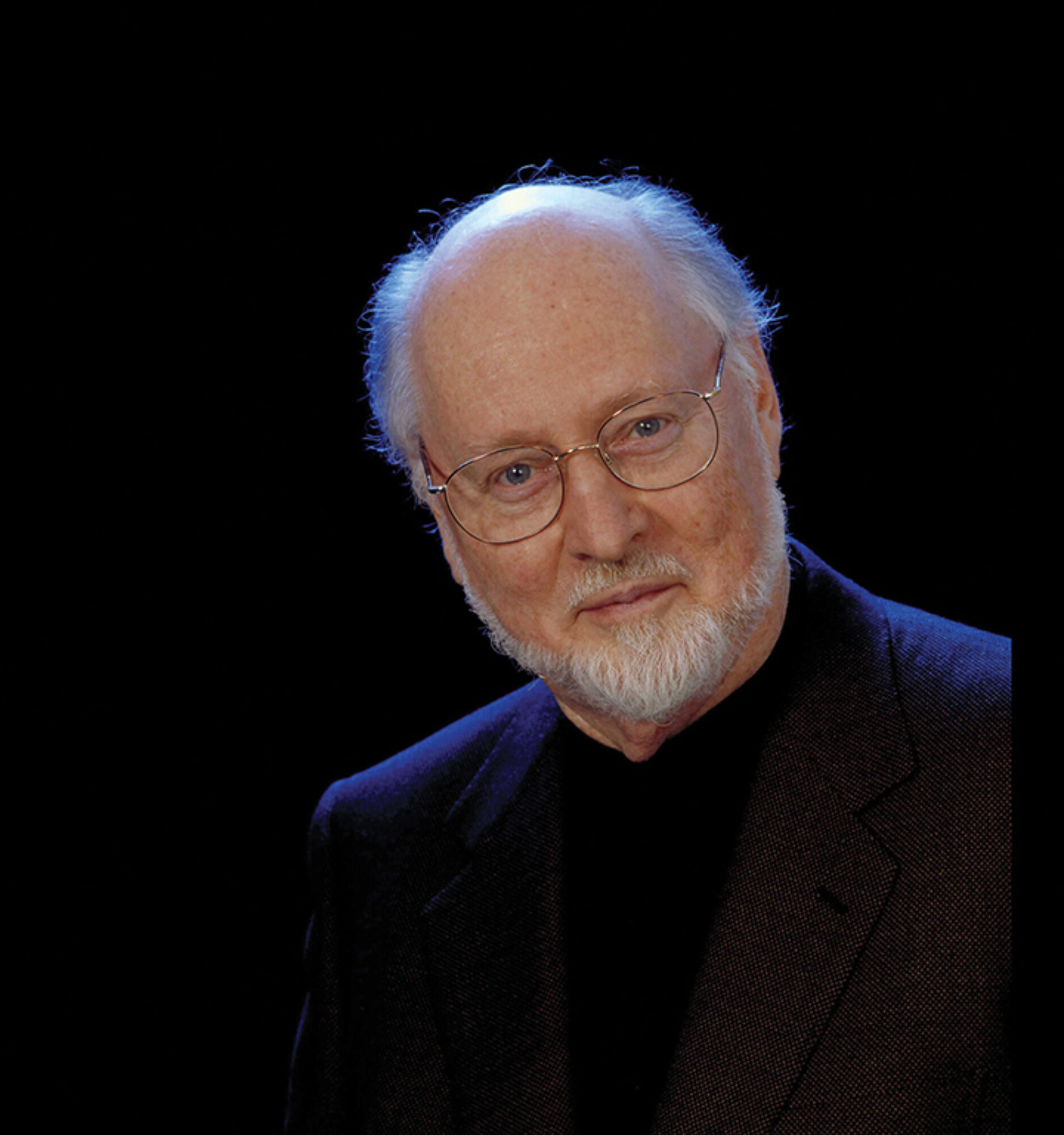
John Williams

The Pops Concert, at 7 p.m. in Longmont’s Vance Brand Civic Auditorium, will be under the direction of the LSO’s music director, Elliot Moore. The program will include music from the soundtracks for Star Wars, Jurassic Park, E.T. and Harry Potter, among other popular films.

With more than 1100 tickets already sold, there are only a few seats left at time of posting. Because of the size of crowd expected, the LSO advises attendees to arrive early. Overflow parking from the Skyline High School lot will be available at the Timberline School lot,  on Mountain View Avenue.

# # # # #

Tribute to John Williams
Longmont Symphony Orchestra, Elliot Moore, conductor

  • Music of John Williams

7 p.m. Saturday, May 4
Vance Brand Civic Auditorium, Longmont

Limited seats available HERE

Music from Haydn to Mariachi on a busy weekend

Boulder Phil, Boulder Chorale and Takács Quartet 

By Peter Alexander April 25 at 10:05 p.m.

It’s spring and thoughts at the Boulder Philharmonic turn to romance.

Their next concert under music director Michael Butterman, titled in fact “Spring Romance,” features a fleet and evocative musical meditation on the season, D’un matin de printemps (Of a spring morning) by Lili Boulanger. 

Also on the program to be performed Saturday (April 27; details below) at Macky Auditorium, Spanish/Mallorcan violinist Francisco Fullana will perform Saint-Saëns’s Violin Concerto No. 3 with the orchestra. The program concludes with Tchaikovsky’s Symphony No. 5.

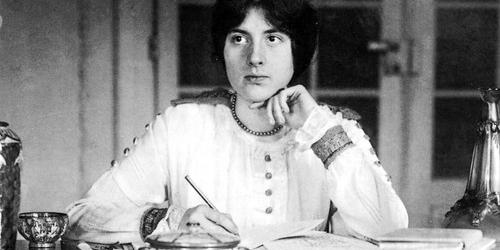
Lili Boulanger

The younger sister of the famous music teacher Nadia Boulanger, Lili died at the tragically young age of 24. The first female winner of the Prix de Rome composition prize, Lili showed precocious musical talent as young as four, when she accompanied her older sister to classes at the Paris Conservatoire. Long overshadowed by Nadia’s success, Lili and her music have become more prominent in recent years. 

Written in 1918, D’un matin de printemps was one of the last works she completed. It was written in versions for solo violin, flute, and piano, for piano trio, and for orchestra. The score’s origin as a solo piece is reflected in passages traded among first chair string players. 

A native of Mallorca, a Spanish island in the Mediterranean, Fullana won an Avery Fisher Career Grant in 2018. A versatile performer, he performs both 19th-century Romantic repertoire with major orchestras world wide, and early music that he has played as artist-in-residence with the ensemble Apollo’s Fire.

Dedicated to and premiered by the Spanish virtuoso Pablo de Sarasate, Saint-Saëns’s Third Concerto is one of his most frequently performed pieces for violin and orchestra. Characterized by colorful themes and virtuoso flourishes, it has often been chosen by young violinists as a debut concerto. The most striking moment comes at the beginning of the finale, when the violinist plays a recitative-like passage before proceeding to an energetic main theme.

One of the composer’s most popular works, Tchaikovsky’s Fifth Symphony is also one of his most emotionally wrought symphonies. Often gripped with insecurity, Tchaikovsky initially thought the Fifth Symphony was a failure. “There is something repellant about it,” he wrote. After Brahms heard it and praised the symphony, however, Tchaikovsky wrote “I have started to love it again.”

The symphony’s dramatic progression has suggested to many listeners that there is an underlying story, or program. The composer, however, insisted that the Fifth—unlike the Fourth and Sixth symphonies—was not programmatic. Regardless of what any listener hears within the score’s drama, however, its emotional force has made it one of the most popular pieces in the orchestral repertoire.

# # # # #

“Spring Romance”
Boulder Philharmonic Orchestra, Michael Butterman, conductor
With Francisco Fullana, violin

  • Lili Boulanger: D’un matin de printemps (Of a spring morning)
  • Saint-Saëns: Violin Concerto No. 3
  • Tchaikovsky: Symphony No. 5

7 p.m. Saturday, April 27
Macky Auditorium

TICKETS

# # # # #

While the Boulder Philharmonic is thinking about Spring, the Boulder Chorale and conductor Vicki Burrichter are musically off to Mexico for a Fiesta de las Luces (Festival of lights).

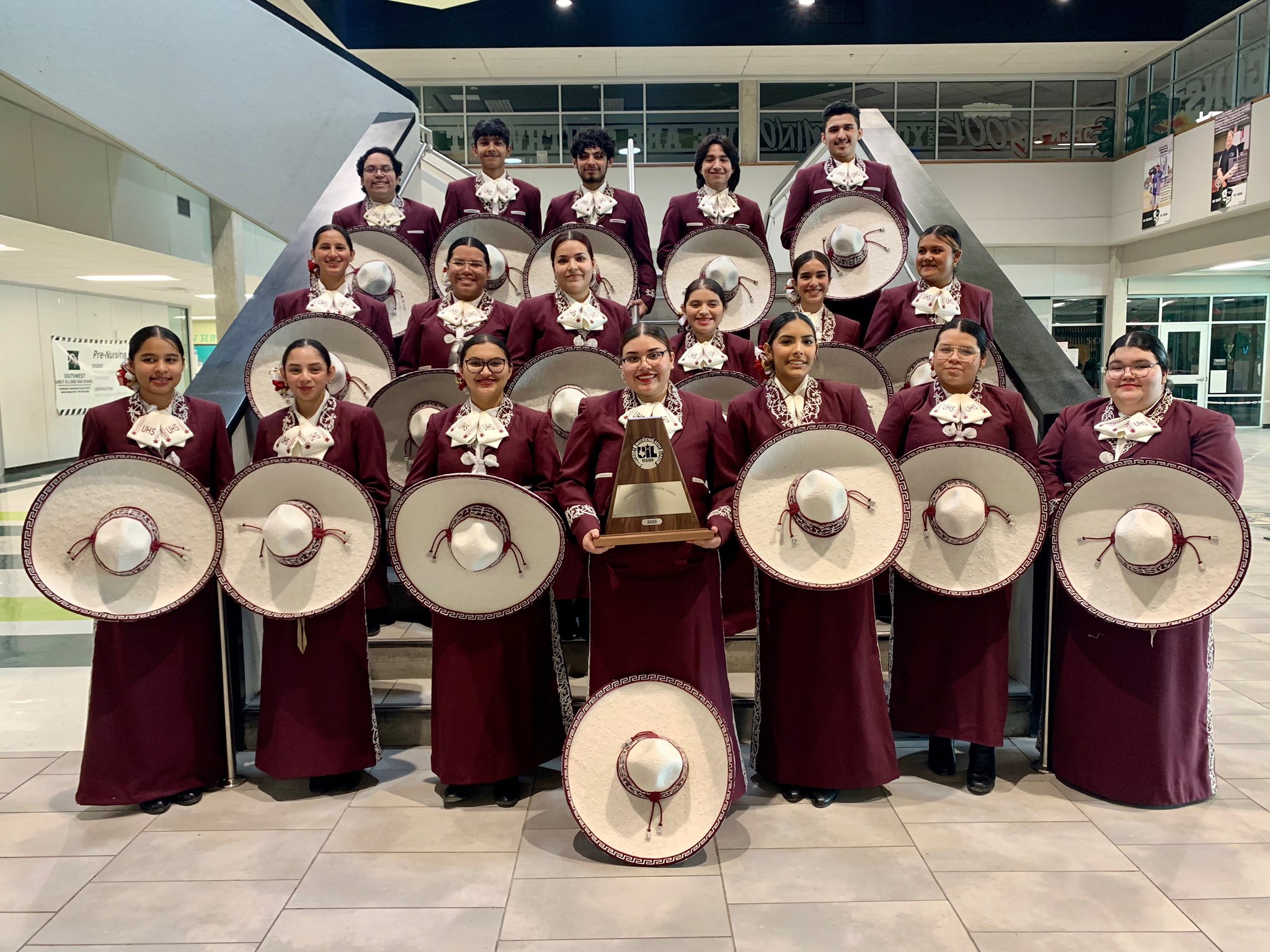
Their next program, to be presented Saturday and Sunday in Boulder and Longmont (April 27 and 28; see below) features Los Coyotes, an award-winning Mariachi Band from Uvalde, Texas, High School, as well as the Boulder Chorale’s children’s choir Bel Canto. The program is a celebration of Mexican culture in music, including both Mariachi music and other Mexican songs.

Los Coyotes, Uvalde High School, Texas

Founded in 1999, Los Coyotes won the Texas University Interscholastic League (UIL) Mariachi Championship in 2023. The outcome of the championship included a powerful feature article in Rolling Stone Magazine one year ago. The article brought out, among other things, the consoling impact of Mariachi music in Uvalde after the school shooting of 2022, and how a small program had grown into state champions under their current director, Albert Martinez.

As part of their visit to Colorado to perform with the Boulder Chorale, Los Coyotes have presented a workshop for local Mariachi students at Longmont’s Skyline High School, and have other appearances planned in addition to their concerts with the Boulder Chorale. Their full schedule is available HERE.

Each performance listed below will be preceded at 3:30 p.m. by a presentation by Burrichter and Martinez.

# # # # #

Fiesta de las Luces: Songs of Mexico
Boulder Chorale, Vicki Burrichter, conductor
With Los Coyotes, Mariachi band from Uvalde, Texas, High School, Albert Martinez, director;  and the Boulder Children’s Choir Bel Canto

Program of Mariachi music and Mexican songs arranged for chorus

4 p.m. Saturday, April 27 at First United Methodist Church, Boulder
4 p.m. Sunday, April 28, at Vance Brand Civic Auditorium, Longmont

TICKETS

# # # # #

The Takács Quartet wraps up their 2023–24 season of campus concerts Sunday and Monday (April 28 and 29; see details below). This was the quartet’s 49th season. 

The Sunday performance is sold out, but a few tickets are still available at the time of posting for Monday’s performance, and tickets are also available for the livestream of Sunday’s concert, which will be available online through Monday, May 6.

The program comes from the heart of the Classical/Romantic repertoire, opening with string quartets by Haydn and Schubert. To close out the concert, two additional CU music faculty members—violist Erika Eckert and cellist Meta Weiss—join the quartet to perform Brahms’s String Sextet in G major.

Most of Haydn’s string quartets were published in sets of six, which was the standard for most printed music at the time. Each published set generally has an opus number for the full set, with works numbered 1–6 within the set. The Quartet in D minor, op. 42, is an exception, however, as it stands alone as a single work issued as op. 42. 

It has been speculated that because it is a relatively simple quartet, Op. 42 might have been part of a planned set of three shorter works that were commissioned by two Spanish nobles, but never completed. It is in the standard four movements, in the order Andante ed innocentemente (walking speed and innocently), Minuet—Trio, Adagio and Presto.

Schubert’s String Quartet in B-flat was written in 1814, when the composer was only 17. It was never published during Schubert’s lifetime, so when it finally came out in 1863, it was given the late opus number of 168, even though it was an early work. Schubert wrote the quartet very quickly, completing the first movement in only four and a half hours, and the entire quartet in nine days. With such speed, it is not surprising that it is one of seven quartets Schubert completed in little more than a year.

Takács Quartet. Image by Amanda Tipton Photography.

All his life Brahms was wary of being compared to Beethoven. That likely why it took him 14 years to complete his first symphony, published when he was in his 40s, and why he destroyed his first 20 attempts at writing a string quartet. It is also sometimes speculated that he completed his two string sextets before his three quartets because they were not easily compared Beethoven’s masterful string quartets.

In any case, the Sextet in G major was written when Brahms was living comfortably near the resort town of Baden-Baden. The first movement contains a musical reference to the first name of the singer Agathe von Siebold, to whom Brahms had been briefly engaged some years before. Her significance to the composer is indicated by the fact that when he finished that movement, her wrote in a letter, “Here I have freed myself from my last love.”

Surprisingly, the Sextet was first performed in Boston in October 1866, a month before the European premiere in Zurich.

# # # # #

Takács Quartet
With Erika Eckert, viola, and Meta Weiss, cello

  • Haydn: String Quartet in D minor, Op. 42
  • Schubert: String Quartet in B-flat Major, D112
  • Brahms: String Sextet No. 2 in G Major, Op. 36

4 p.m. Sunday, April 28 SOLD OUT
7:30 p.m. Monday, April 29

Grusin Music Hall, CU Imig Music Building

TICKETS for live performances and for online stream of Sunday’s performance

Grace Notes: Short Operas and Beethoven Symphonies

Boulder Opera’s “Operatizers,” Boulder and Longmont symphonies’ Beethoven 3 and 9

By Peter Alexander April 17 at 4:30 p.m.

The Boulder Symphony will present Beethoven’s Symphony No. 3—known as the “Eroica”—along with Grieg’s Piano Concerto and the “Lullaby” for string orchestra by George Gershwin Friday evening (7:30 p.m. April 19; details below).

Devin Patrick Hughes will conduct. Soloist for the Grieg Concerto will be Canadian pianist Lorraine Min, who has toured and performed extensively in North and South America, Europe and Asia. 

Originally written as a composition exercise on the piano, Gershwin’s “Lullaby” was arranged by the composer for string quartet. He later incorporated the tune into his 1922 musical, Blue Monday. The show was not a success, and it was not until 1967 that it became better known in performances by the Juilliard String Quartet. Today, performances by full orchestral string sections are common.

Grieg composed his Piano Concerto over the summer of 1868, during a vacation in the village of Søllerød, now part of København, Denmark. Although Grieg was never fully satisfied with the score, the concerto has remained one of his most popular pieces. A review of the premiere praised the concerto as “all Norway in its infinite variety and unity,” and fancifully described the  second movement as “a lonely mountain-girt tarn that lies dreaming of infinity.”

Beethoven’s Third Symphony is one of those musical works that are often described as a turning point in music history. It is nearly twice as long as any previous symphony, and indeed heroic in scope and feeling.

Beethoven’s title page to his Third Symphony, with “Bonaparte” forcefully scratched out

When he wrote it, Beethoven famously titled the symphony “Bonaparte” in honor of Napoleon, but scratched out the dedication in his manuscript when the French general crowned himself emperor. It was published in 1806 with the title “Heroic Symphony . . . composed to celebrate the memory of a great man.”

In place of a traditional slow introduction, Beethoven starts the symphony with two brash chords and spins out a lengthy movement starting with only the notes of the tonic E-flat chord. The second movement is an intense funeral march, a much more dramatic and powerful movement than his audience would have expected. In place of the normal minuet, Beethoven composed a rambunctious scherzo. 

In these first three movement, the realm of the symphony has been expanded. The finale is more typical of the times, a set of variations on a theme from Beethoven’s ballet The Creatures of Prometheus. But even here, the number of variations, a fugue on the theme and a section of development represent an extension beyond the normal variation finale of the time. Again, Beethoven expanded the scope of the symphony.

# # # # #

Boulder Symphony, Devin Patrick Hughes, conductor
With Lorraine Min, piano

  • Gershwin: “Lullaby” for string orchestra
  • Grieg: Piano Concerto in A minor
  • Beethoven: Symphony No. 3 in E-flat major, op. 55 (“Eroica”)

7:30 p.m. Friday, April 19
Grace Commons Church
TICKETS

# # # # #

Boulder Opera opens the door on “North American storytelling” with “Operatizers,” a program of five short operas by composers from American master Samuel Barber to contemporary operatic star composer Jake Heggie to Ft. Collins-based composer/songwriter Ilan Blanck.

Subjects of the opera include a parody of television soap operas to various meditations on modern love. Performances Saturday and Sunday (7 p.m. April 20 and 3 p.m. April 21 at the Diary Arts Center) will feature a “Maestro’s Reception” at intermission where audience members can meet cast members and directors and ask questions about the productions. 

Composer Ilan Blanck

The five operas and their plots are described on the Boulder Opera Web page:

  • Avow by Mark Adamo imagines a conflicted bride, her avid mother, the haunted groom, the ghost of his father, and a celebrant who really should make better efforts to remember which ceremony he’s performing.
  • At the Statue of Venus by Jake Heggie tells the story of an attractive woman waiting in a museum by the statue of the goddess of love to meet a man she has never seen before. Will he like her? Will she like him? We all know Mr. Right doesn’t exist – or does he?
  • A Hand of Bridge by Samuel Barber consists of two unhappily married couples playing a hand of bridge, during which each character has a brief aria expressing his or her inner desires.
  • Gallantry by Douglas Moore is parody of hospital soap operas with commercial interruptions.
  • Spare Room with a Shag Rug by lan Blanck is written in English and Spanish, plus a touch of Yiddish, paying homage to the composer’s own Mexican-Jewish heritage.

# # # # #

“Operatizers”
Boulder Opera Company

  • Mark Adamo: Avow
  • Jake Heggie: At the Statue of Venus
  • Samuel Barber: A Hand of Bridge
  • Douglas Moore: Gallantry
  • Ilan Blanck: Spare Room with a Shag Rug

7 p.m. Saturday, April 20
3 p.m. Sunday, April 21
Dairy Arts Center

TICKETS, including add-on tickets for the Maestro’s Reception at intermission

# # # # #

The Longmont Symphony Orchestra (LSO) and conductor Elliot Moore conclude their cycle of all nine Beethoven symphonies Saturday (7 p.m. Vance Brand Civic Auditorium; details below) with the massive Ninth Symphony, one of the symphonic icons of the 19th century.

The Longmont Chorale joins the LSO for this performance. Soloists will be soprano Dawna Rae Warren, mezzo-soprano Gloria Palermo, tenor Javier Abreu and bass-baritone Michael Leyte-Vidal. The LSO has performed the full Beethoven cycle over the past five seasons, starting in April, 2018.

Vaughan Williams wrote his Serenade to Music, based on a text by Shakespeare, as a tribute to conductor Henry Wood. Scored for orchestra and 16 vocal soloists, it was later arranged for orchestra with four soloists and chorus. Since the first performance in 1938, it has been loved by singers and audiences both for the sheer beauty of the vocal writing and the harmonies.

Elliot Moore

Beethoven’s Ninth Symphony, the first by a major composer with chorus in addition to orchestra, is one of the most performed and most loved works in the classical repertoire. It was composed in 1822-24, and first performed in Vienna May 7, 1824. 

The orchestra was led by Austrian composer and violinist Michael Umlauf with Beethoven, stone deaf by that time, standing at his side. In one famous anecdote, the composer was unable to hear the cheers of the audience at the end of the performance and the alto soloist, Caroline Ungar, had to take him by the hand and turn him around to see the enthusiasm of the listeners.

The choral last movement uses a text by German poet Friedrich Schiller that celebrates the brotherhood of men: “All men shall become brothers, wherever the gentle wings [of joy] hover. . . . Every creature drinks in joy at nature’s breast.” Because of this message of universal love, the symphony has been performed for many special occasions in history, including the original opening Wagner’s Bayreuth Festspielhaus (festival hall) and for its reopening after World War II, in 1989 to celebrate the fall of the Berlin Wall, and for the opening of the 1988 Winter Olympics in Japan, and other ceremonial occasions.

Performances of the Ninth Symphony are almost always considered special occasions, and almost always sell out. In addition to its popularity, the symphony has influenced composers from Dvořák to Bartók, and especially the symphonies by the Austrian composer Anton Bruckner.

# # # # #

Beethoven Cycle: Symphony No. 9
Longmont Symphony, Elliot Moore, conductor
With the Longmont Chorale, Nathan Wubbena, conductor 
Soprano Dawna Rae Warren, mezzo-soprano Gloria Palermo, tenor Javier Abreu and bass-baritone Michael Leyte-Vidal

  • Vaughan Williams: Serenade to Music
  • Beethoven: Symphony No. 9 in D minor (“Choral”)

7 p.m. Saturday, April 20
Vance Brand Civic Auditorium

TICKETS (Note: This concert is close to selling out. Availability of tickets cannot be guaranteed.)

Boulder Phil presents “The Best of Boulder”

Cellist David Requiro, oboists Sarah Bierhaus and Max Soto featured Sunday

By Peter Alexander Feb. 8 at 8:10 p.m.

The Boulder Philharmonic Orchestra often brings renowned soloists to Macky Auditorium.

In recent years, their guests have included pianists Angela Cheng, Simone Dinnerstein and Garrick Ohlsson; violinists Rachel Barton Pine, Anne Akiko Meyers and Hilary Hahn; cellists Astrid Schween and Zuill Bailey; and the Marcus Roberts Trio. Local artists have not been ignored—the late concertmaster Charles Wetherbee was a repeat soloist, and Grammy-winning violist, CU faculty and Takács Quartet member Richard O’Neill played with the orchestra in 2022.

Cellist David Requiro

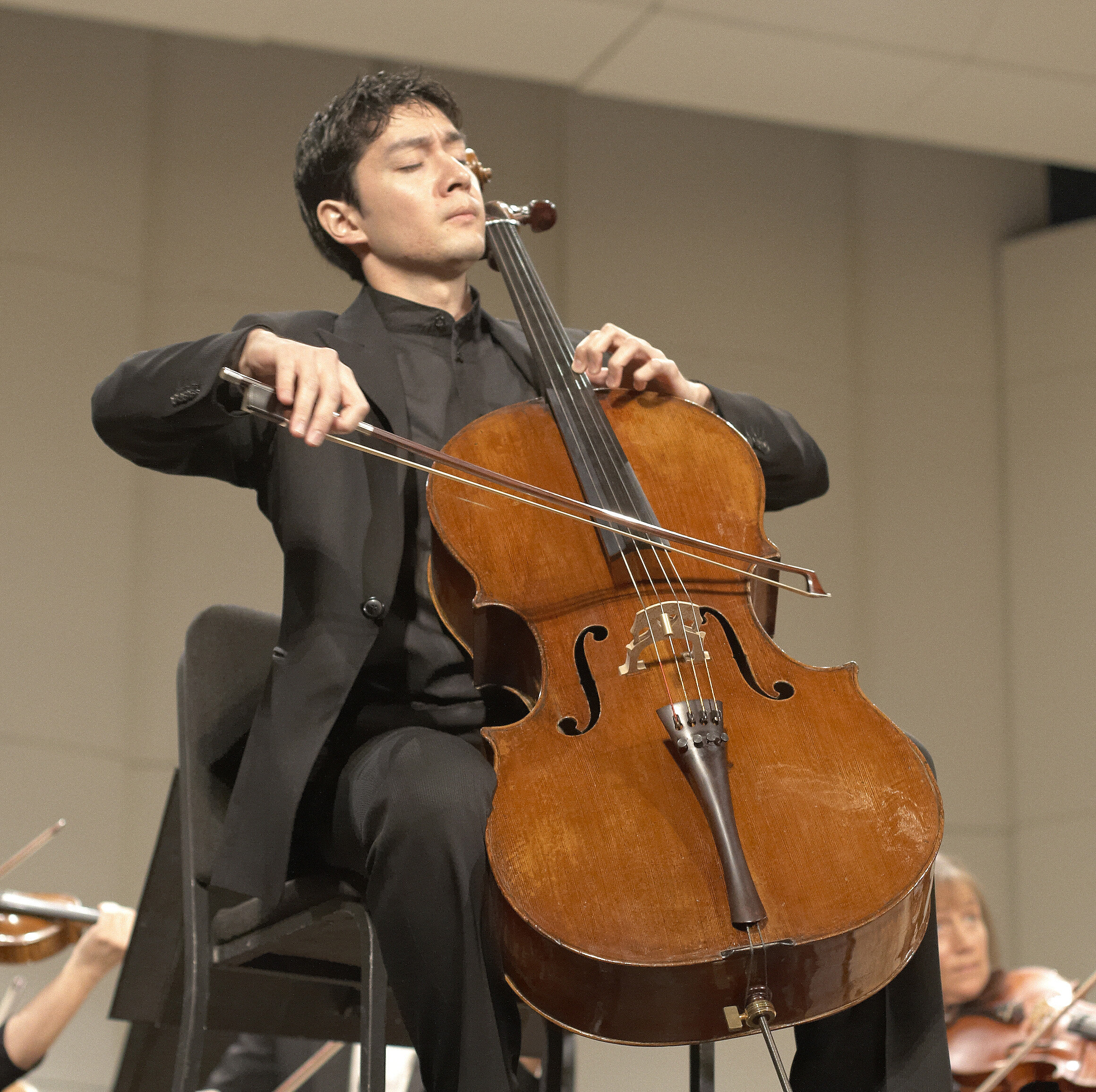
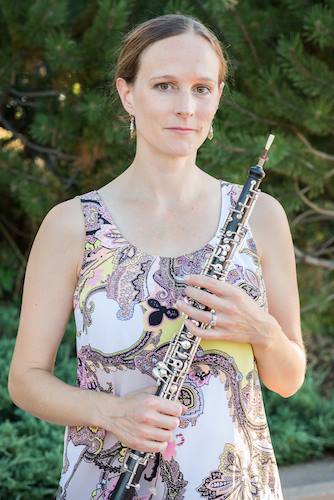
But now conductor Michael Butterman and the orchestra have devoted their next concert to presenting local artists as soloists. Under the title “The Best of Boulder,” the performance at 7 p.m. Sunday (Feb. 11 in Macky Auditorium; details below) will feature cellist David Requiro from the CU College of Music playing Tchaikovsky’s Variations on a Rococo Theme; and oboists Sarah Bierhaus—the Phil’s principle oboist—and Max Soto in composer Viet Cuong’s Extra(ordinarily) Fancy. 

Other works on the program are Caroline Shaw’s Entr’acte as the opener, and Mozart’s “Jupiter” Symphony—his last and one of his most celebrated works—as the concert’s finale.

Sarah Bierhaus

Cuong was born in California and grew up in Georgia. He has written in program notes that Extra(ordinarily) Fancy, a concerto for two oboes and orchestra, was partly inspired by Baroque-era oboe concertos by Vivaldi and Albinoni.

Max Soto

“After a short Vivaldi-esque introduction that establishes the main melodic ideas of the piece, the oboists go at it,” he wrote. “They mock each other, squawk at each other, and even talk over each other. The orchestra observes and joins in as the oboists continually bicker back and forth, all culminating in a reconciliation where the once-hesitant oboist learns (and even enthusiastically performs) a few multiphonics [a distorted sound that produces more than one pitch] alongside the other oboist.”

Tchaikovsky drew both inspiration and comfort from Mozart. He once wrote in a letter, “I not only love Mozart, I worship him . . . It is to Mozart that I am obliged for the fact that I have dedicated my life to music.” His orchestral Suite No. 4 was written as a tribute to Mozart, and came to be known as “Mozartiana.”

Another work that shows his reverence for Mozart and the classical style is his Variations on a Rococo Theme, composed in 1876 with the assistance of cellist Wilhelm Fitzenhagen. In fact, Fitzenhagen made numerous changes in the piece, including changing the order of variations and adding details in the solo part. It was Fitzenhagen’s version that was ultimately published.

The theme is not from the Rococo period, but is one that Tchaikovsky wrote in the style of that period, roughy 1740–70 between the Baroque and Classical eras. After the theme there are seven variations (excluding one that Fitzenhagen cut out) in varying moods, but all in a graceful and loosely classical style. More genial than some of Tchaikovsky’s music, this has proven one of his most popular pieces. 

Caroline Shaw

One of the most successful composers today, Caroline Shaw became the youngest winner of the Pulitzer Prize in music in 2013, and she is a member of the Grammy-winning vocal ensemble Roomful of Teeth. Also a violinist, she has written a number of works for string quartet, including Entr’acte. Although the inspiration may not be obvious to the listener, she wrote Entr’acte after hearing one of Haydn’s quartets, and later arranged it for string orchestra. She wrote of Haydn’s quartet, “I love the way some music suddenly takes you to the other side of Alice’s looking glass, in a kind of absurd, subtle, Technicolor transition.”

Mozart wrote his last three symphonies—Nos. 39, 40 and 41—potentially for a concert series during the summer of 1788, although there is no definite evidence that the Symphony No. 41 was played at that time. By the early 19th century, it was known as the “Jupiter Symphony”—perhaps so named by the English impresario Johann Peter Salomon but definitely not by Mozart.

The four movements follow the standard classical structure of Haydn, Mozart and Beethoven. The most striking movement is the finale, a quintuple fugue that is both a vivid demonstration of the composer’s mastery of counterpoint and a brilliant ending to the symphony—and any concert.

# # # # #

“The Best of Boulder”
Boulder Philharmonic Orchestra, Michael Butterman, conductor
With David Requiro, cello; Sarah Bierhaus, oboe; and Max Soto, oboe

  • Caroline Shaw: Entr’acte
  • Viet Cuong: Extra(ordinarily) Fancy
  • Tchaikovsky: Variations on a Rococo Theme
  • Mozart: Symphony No. 41 in C major, K551 (“Jupiter)

7 p.m. Sunday, Feb. 11
Macky Auditorium

TICKETS

NOTE: A correction was made on Feb. 9. An earlier version of this story misspelled two names. It is Caroline Shaw, not Carolyn, and Wilhelm Fitzenhagen, not William Fitzhagen.