Free Sunday performance at the Boulder Public Library is full
By Peter Alexander Jan. 24 at 3:10 p.m.
Chris Pratorius Gómez
Boulder Opera’s upcoming performance of the children’s opera Xochitl and The Flowers by Chris Pratorius Gómez is sold out.
That is, all of the tickets for this free performance have been claimed. One of three children’s operas Pratorius Gómez wrote for the Hands-On-Opera project of Opera Parallèle in San Francisco, Xochitl and The Flowers is a bilingual opera sung in both Spanish and English. The plot is based on true events that took place in San Francisco’s Mission neighborhood, about an immigrant family’s determination to put down roots while preserving their native heritage.
The performance will include an explanation of opera and the plot and an art activity for children making cutout flowers.
While this performance is already full, Boulder Opera has plans to tour Xochitl and The Flowers next season.
# # # # #
Boulder Opera—SOLD OUT
Chris Pratorius Gómez: Xochitl and The Flowers
3 p.m. Sunday, Jan. 28 Boulder Public Library Canyon Theater
LSO family concert, BCO mini-chamber concert Saturday
By Peter Alexander Jan. 16 at 9:35 p.m.
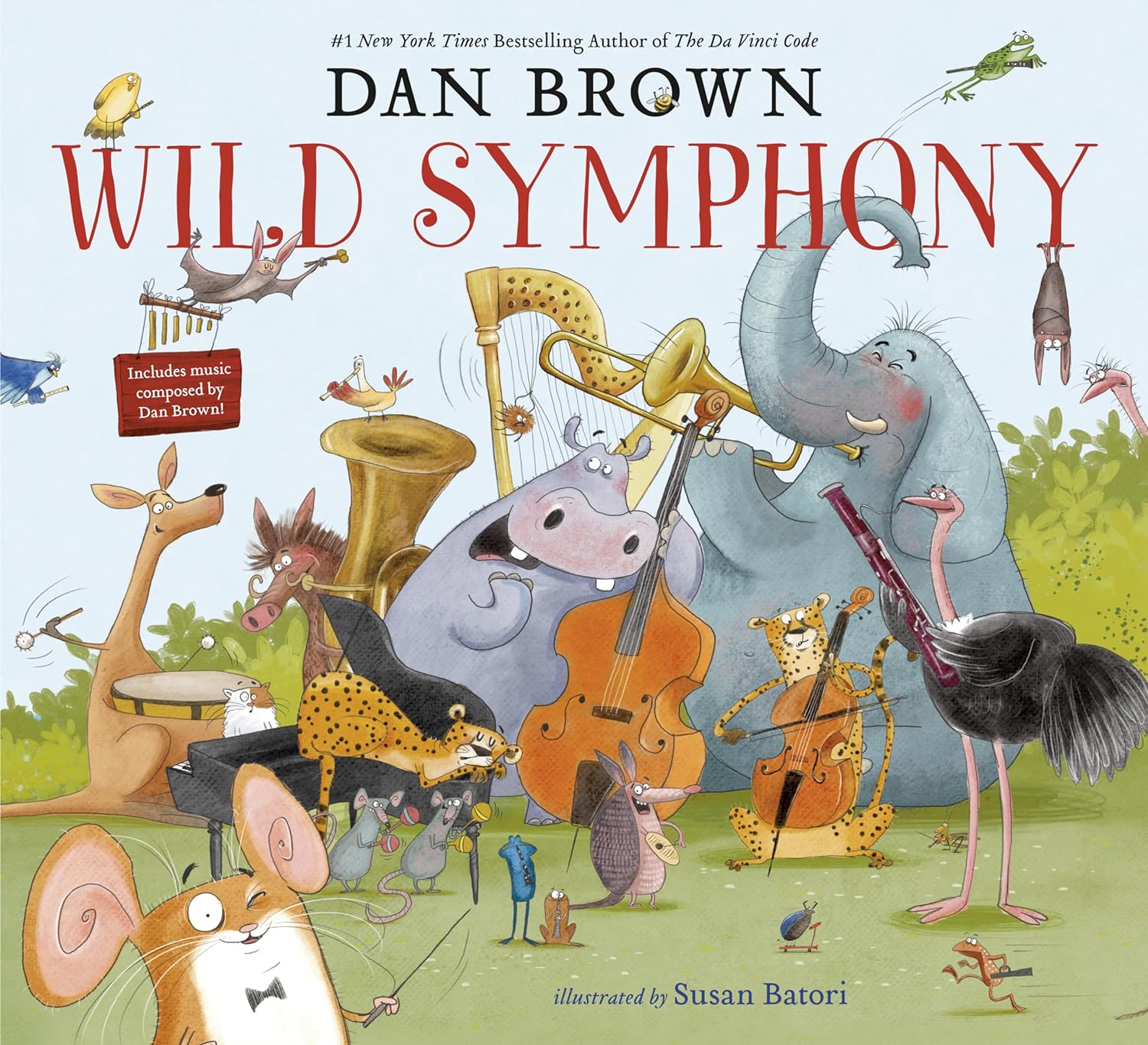
The Longmont Symphony Orchestra will introduce local families to musical animals including a bouncing kangaroo and a brilliant bat Saturday (4 p.m. Jan. 20) when they present the Wild Symphony by Dan Brown.
Yes, that’s the Dan Brown who wrote The da Vinci Code and other New York Times best-selling thrillers. The performance, under the direction of Elliot Moore, will feature Longmont native vocalist and attorney Cameron Grant as narrator. Wild Symphony has an accompanying children’s book, with colorful illustrations by Susan Batori.
The son of a math teacher and a church organist, Brown learned piano as a child and composed music before he wrote books. He says that he wrote the book to share his love of music with children. Each of the animals in the orchestra conducted by “Maestro Mouse” is associated with an instrument, and together they tell a story that includes portraits of the different animals and anagram puzzles on each page of the book. Among the 20 animals in the score are clumsy kittens, an anxious ostrich, dancing boars and busy beetles.
A graduate of Niwot High School, Grant studied singing at Colorado College and sang with the Aspen Opera Theater, Colorado Symphony and Colorado Music Festival. After getting a law degree, he returned to Longmont where he practices in the field of real estate law.
# # # # #
Longmont Symphony Orchestra, Elliot Moore conductor, with Cameron Grant, narrator
Dan Brown: Wild Symphony
4 p.m. Saturday, Jan 20 Vance Brand Civic Auditorium
The Boulder Chamber Orchestra (BCO) will present pianist Adam Żukiewicz, associate professor of piano at the University of Northern Colorado, in the second of their Mini-Chamber concerts of the 2023–24 season.
# # # # #
Titled “Adam Żukiewicz and Friends,” the concert will feature Żukiewicz playing quartets for piano and strings by Mozart and Brahms with members of the BCO, as well as Bartók’s popular Romanian Dances in their arrangement for piano and violin. The performance will be at 7:30 p.m. Saturday (Jan. 20) at the Boulder Seventh-Day Adventist Church. (See below for tickets.)
Adam Żukiewicz
A native of Poland, Żukiewicz has studied at the Royal Academy of Music in London and the Jacobs School of Music at Indiana University, and holds a doctorate from the University of Toronto, where he also served on the faculty. He won first prize both the 2011 Canada Trust Music Competition and the 2012 Shean Piano Competition in Canada, and was a medalist at several other contests. Since 2018 he has been a judge for the Steinway Piano Competition.
Mozart’s Piano Quartet in the turbulent key of G minor, one of the earliest works for that ensemble, was commissioned by the Viennese publisher Hoffmeister for sale to amateurs. Believing the work Mozart wrote was too difficult for amateur players, Hoffmeister canceled the rest of the order. Nevertheless, Mozart wrote another piano quartet several months later.
When Brahms wrote his Piano Quartet in G minor nearly 100 years after Mozart’s Quartet in the same key, the quartet for piano and strings was a more established genre, even if not as common as string quartets and piano trios. The quartet is best known for its rousing “Rondo alla Zingarese” (Gypsy rondo) finale.
# # # # #
Boulder Chamber Orchestra Mini-chamber 2: Adam Żukiewicz and Friends Members of the Boulder Chamber Orchestra with Adam Żukiewicz, piano
Mozart: Quartet in G minor for piano and strings, K478
Brahms: Quartet in G minor for piano and strings, op. 25
Bartók: Romanian Dances for piano and violin
7:30 p.m. Saturday, Jan. 20 Boulder Adventist Church
Joyce Yang in Macky Friday, David Korevaar in Grusin Sunday and Monday
By Peter Alexander Jan. 10 at 3:10 p.m.
Pianist Joyce Yang, silver medalist at the Van Cliburn International Piano Competition at the age of 19, will be joined by the Takács Quartet for a concert at Macky Auditorium Friday (7:30 p.m. Jan. 12; details below).
Joyce Yang. Photo by K.T. Kim
The pairing of her solo performances and chamber music with the Takács recalls her appearance at the Cliburn Competition in 2005, when she won Best Performance of Chamber Music. In fact, she will play the same piece with the Takács they played together in Ft. Worth for her prize-winning performance: Dvořák’s Piano Quintet in A major—a work they also have played for the Lincoln Center Great Performers series.
Chamber music has been a large art of Yang’s career ever since the Cliburn competition. In addition to performances with the Takács, she has played with the Emerson Quartet on the Mostly Mozart Festival and has a standing partnership with the Alexander String Quartet, with whom she has recorded Mozart’s Piano Quartets.
Other works on Friday’s program include selections from Tchaikovsky’s Seasons and Rachmaninoff’s Preludes, op. 32. The first half of the program concludes with one of the great virtuoso showpieces of the piano repertoire, Guido Agosti’s arrangements of the “Infernal Dance,” “Berceuse” and “Finale” from The Firebird by Stravinsky.
The least familiar of the solo piano pieces will be the selections from Tchaikovsky’s Seasons. A set of 12 pieces sketching each of the 12 months, the pieces were published monthly throughout 1876 in a St. Petersburg music journal. Each of the pieces has a subtitle that was provided by the publisher.
Dvořák’s Quintet forms the second half of the program. One of the composer’s most performed chamber works, the Quintet was actually the second such work Dvořák wrote. It began as an attempt at a revision of the earlier quintet, also in A major, written when the composer was 31. Unsatisfied with that work—which he had since discarded— Dvořák decided instead to write a completely new work. In the usual four-movement structure, the Quintet No. 2 features many hallmarks of the composer’s mature style including a Dumka—a movement alternating mournful and rapid, happy sections—and a Bohemian folk dance for the third movement.
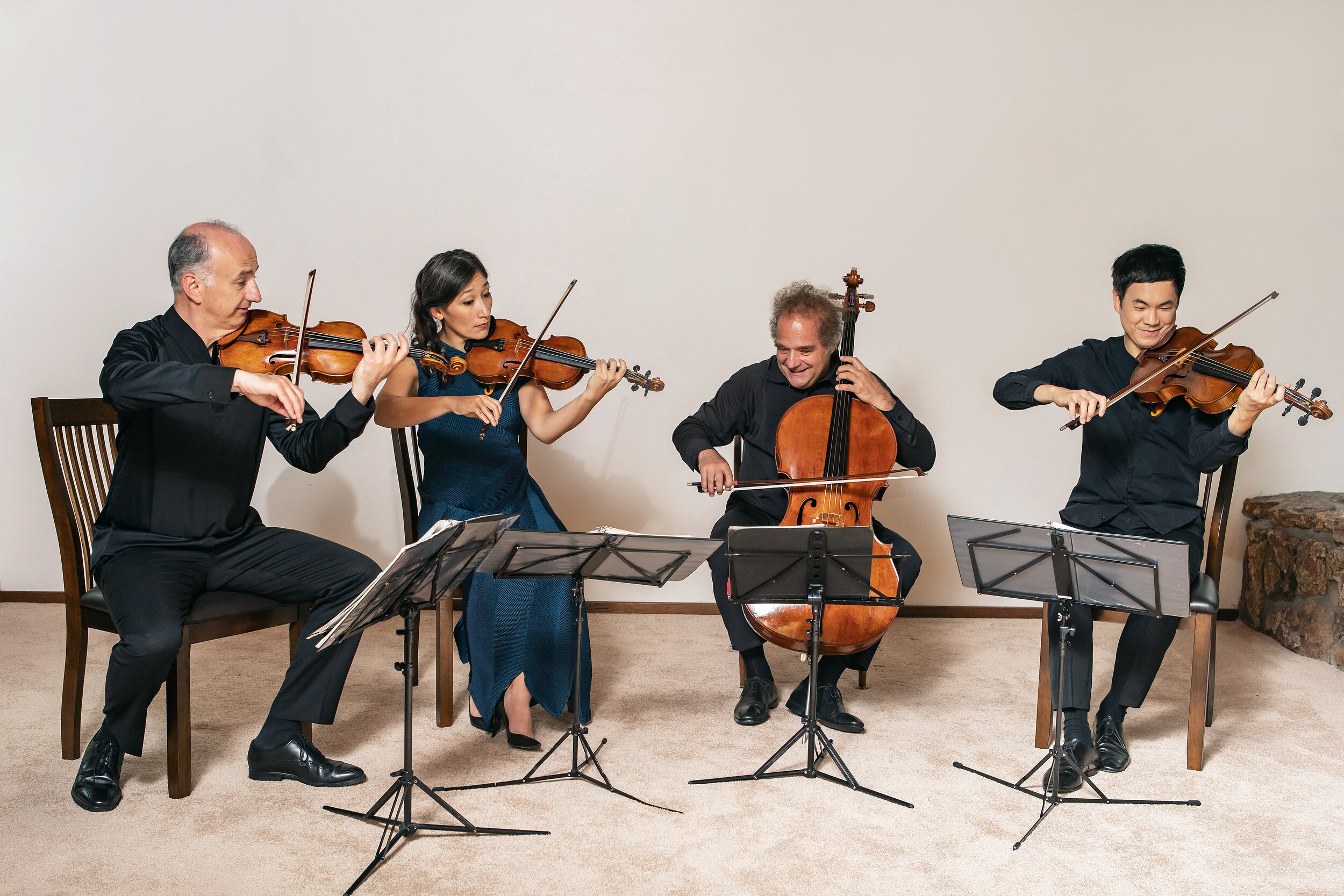
The Takács Quartet will kick off their spring concert series with another performance featuring a pianist joining them in a quintet.
This program—to be performed Sunday and Monday, Jan. 14 and 15 (details below)—will feature CU distinguished professor of piano and Helen and Peter Weil Faculty Fellow David Korevaar for the Piano Quintet in A minor of Florence Price. Other works to be performed by the Takács will be the Italian Serenade for string quartet by Hugo Wolf and Bartók’s String Quartet No. 1.
Takács Quartet. Image by Amanda Tipton Photography.
The early 20th-century African-American composer Florence Price has recently been rediscovered by orchestras and chamber music organizations across the U.S. The 2009 find of a trove of manuscripts in what had been her summer home in the village of St. Anne, Ill.,including previously unknown violin concertos and a symphony, has led to increased interest in her music.
A native of Little Rock, Ark., Price studied at the New England Conservatory of Music and spent most of her life in Chicago, where she continued her education and worked as an organist for silent films. In 1933 her First Symphony was premiered to critical acclaim by the Chicago Symphony.
The Quintet in A minor was written in 1935, shortly after the premiere of the symphony. Price’s heritage is reflected in the third movement, titled “Juba”—a dance characterized by rhythmic hand-clapping that was associated with celebrations by enslaved Black people on Southern plantations.
Wolf’s Italian Serenade is often heard in its version for string orchestra but was originally written for quartet. Planned as part of a large, multi-movement work, the brief Serenade survives as a stand-alone work that is one of the most cheerful pieces by a composer whose largely unhappy life ended in an asylum. This is undoubtedly his best known chamber work, as most of his compositions were song collections by German poets from Goethe to Heine and Eichendorff.
The inspiration for Bartók’s first String Quartet, written in 1908, is often said to have been his rejection by the violinist Stefi Geyer, as suggested by the mournful tone of the first movement. On the other hand, he got over the rejection well enough to marry someone else within a year.
The quartet is in three large, interconnected movements. Bartók had just stared collecting Hungarian folk songs by 1908, and other than the last movement, they had little influence on the First Quartet. In general the quartet is more Romantic in nature and less adventurous than his later quartets. The premiere of the First Quartet was given in 1910 by the Waldbauer-Kerpely Quartet, to whom Bartók dedicated his Second Quartet.
# # # # #
Takács Quartet with David Korevaar, piano
Hugo Wolf: Italian Serenade for string quartet Bartók: String Quartet No. 1 Florence Price: Piano Quintet in A minor


 Sharps & Flatirons