Ars Nova welcomes pianist David Korevaar

“Lost/Found” features forgotten work by Enrique Granados

By Peter Alexander Feb. 4 at 6:15 p.m.

David Korevaar is an adventurer, in the mountains and on the piano.

Cases in point: A photo of Korevaar on the summit of 13,088-ft. Paiute Peak in the Indian Peaks Wilderness (below); and his performances with the Ars Nova Singers and conductor Tom Morgan this weekend. Friday and Saturday (Feb. 7 and 8, in Boulder and Cherry Hills Village; details below) he will play three pieces that are new for him and that you likely have not heard before.

David Korevaar on the summit of Paiute Peak. Photo courtesy of the pianist.

One piece on the program is virtually unknown: Cant de les estrelles (Song of the stars) by the  Spanish composer Enrique Granados, written for the unusual combination of piano with organ and choir. In fact, it is unusual enough that Ars Nova was only able to find two venues with a suitable piano and organ that were in tune with one another: Mountain View Methodist Church in Boulder (7:30 p.m. Friday) and Bethany Lutheran Church in Cherry Hills Village (7:30p.m. Saturday).

Cant de les estrelles had its premiere in Barcelona in 1911 on a concert Granados presented of his own music, and then disappeared for nearly a century. The manuscript suffered damage from fire, water and mold, but the music was re-discovered and performed in New York in 2007. When Morgan saw a score, he programmed the Cant de les estrelles on a program titled “Lost/Found,” along with other pieces that were never totally lost but that are obscure today.

One of those is by American composer Dominick Argento, a setting of the Wallace Stevens poem “Peter Quince at the Clavier,” a complex meditation on the power of music and the meaning of beauty. Once one of the leading modernist composers, Argento has fallen from fashion, and “Peter Quince at the Clavier” is not often performed today.

The third choral piece is Renouveau (Renewal) by Lili Boulanger, a celebration of spring that opens with the joyful words “Ladies and gentlemen, it is me—me, Springtime!”—a thought that is always welcome in February. Korevaar will play the piano parts on all three choral works, and add two of Granados’ solo piano pieces from Goyescas, a suite of pieces inspired by Goya’s paintings. The inclusion of the solo piano works is a bow to the 1911 concert that included the premieres of both the Cant de les estrelles and the Goyescas.

Enrique Granados

“The music is really gorgeous,” Korevaar says of Cant de les estrelles. “One of the reasons to come hear it live, is (that) it’s written for three separate mini choirs, essentially. You get antiphonal stuff happening between the piano in one place, the organ sound coming from somewhere else, and then singers in various places. You get sound from everywhere. It’s pretty spectacular.”

While Korevaar plays and records a highly varied repertoire, he claims no credit for discovering the Granados. “Tom Morgan gets full credit for this one,” he says.

Of the other works on the program, Korevaar calls particular attention to Argento’s piece. “There are not that many real concert works (composed specifically) for piano and choir,” he says. “Peter Quince at the Clavier is a real masterpiece. It’s a really marvelous piece.

“The poem itself is fascinating and complex. It has at its center a kind of gloss on the story of Susana and the elders, but it’s also a reflection on the power and meaning of music. Elissa Guralnick is going to be providing some commentary on the poem before we perform the piece.”

Argento called the piece a “sonatina for mixed chorus and piano concertante,” which describes the role of the piano part but also refers to the fact that the music is structured in four movements. The separate movements correspond to four separate sections in the poem, and also fit the outline of a small sonata, with an opening movement in a medium tempo, followed by a slow movement, a faster scherzo and a closing slow movement.

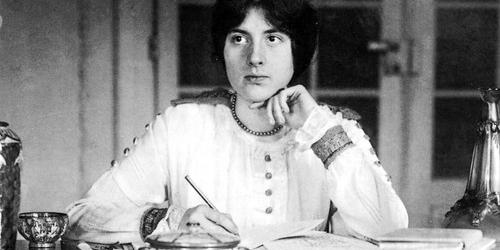
Lili Boulanger

Lili Boulanger was the younger sister of the famed French music teacher Nadia Boulanger and member of a musical family. The first woman to win the Prix de Rome composition award, she died tragically at only 24 and left relatively few finished compositions.

 “It’s  lovely little piece,” Korevaar says of Renouveau, composed when Boulanger was 17. “It’s a very charming poem about spring, and it’s kind of nice to have it in the middle of winter, because we get to have this moment of celebration of all the wonderful things about spring.” 

As a musical adventurer, Korevaar is excited about playing with Ars Nova. “The whole program is fascinating,” he says. “I want to call out Tom (Morgan), because he dreamed this up. I came into it with great enthusiasm and excitement because the music is so wonderful.

“It’s going to be a treat.”

# # # # #

“Lost/Found”
Ars Nova Singers, Tom Morgan, conductor
With David Korevaar, piano

  • Dominick Argento: Peter Quince at the Clavier
  • Lili Boulanger: Renouveau
  • Enrique Granados: Goyescas: Fandango de candil (Fandango by candlelight)
    —Goyescas: La Maja y el ruisenor (The maiden and the nightingale)
    Cant de les estrelles (Song of the stars)

7:30 p.m. Friday, Feb. 7
Mountain View United Methodist Church, 355 Ponca Place, Boulder

7:30 p.m. Saturday, Feb. 8
Bethany Lutheran Church, 4000 E.Hampden Blvd., Cherry Hills Village

In-person and Livestream tickets HERE.
Music from Haydn to Mariachi on a busy weekend

Boulder Phil, Boulder Chorale and Takács Quartet 

By Peter Alexander April 25 at 10:05 p.m.

It’s spring and thoughts at the Boulder Philharmonic turn to romance.

Their next concert under music director Michael Butterman, titled in fact “Spring Romance,” features a fleet and evocative musical meditation on the season, D’un matin de printemps (Of a spring morning) by Lili Boulanger. 

Also on the program to be performed Saturday (April 27; details below) at Macky Auditorium, Spanish/Mallorcan violinist Francisco Fullana will perform Saint-Saëns’s Violin Concerto No. 3 with the orchestra. The program concludes with Tchaikovsky’s Symphony No. 5.

Lili Boulanger

The younger sister of the famous music teacher Nadia Boulanger, Lili died at the tragically young age of 24. The first female winner of the Prix de Rome composition prize, Lili showed precocious musical talent as young as four, when she accompanied her older sister to classes at the Paris Conservatoire. Long overshadowed by Nadia’s success, Lili and her music have become more prominent in recent years. 

Written in 1918, D’un matin de printemps was one of the last works she completed. It was written in versions for solo violin, flute, and piano, for piano trio, and for orchestra. The score’s origin as a solo piece is reflected in passages traded among first chair string players. 

A native of Mallorca, a Spanish island in the Mediterranean, Fullana won an Avery Fisher Career Grant in 2018. A versatile performer, he performs both 19th-century Romantic repertoire with major orchestras world wide, and early music that he has played as artist-in-residence with the ensemble Apollo’s Fire.

Dedicated to and premiered by the Spanish virtuoso Pablo de Sarasate, Saint-Saëns’s Third Concerto is one of his most frequently performed pieces for violin and orchestra. Characterized by colorful themes and virtuoso flourishes, it has often been chosen by young violinists as a debut concerto. The most striking moment comes at the beginning of the finale, when the violinist plays a recitative-like passage before proceeding to an energetic main theme.

One of the composer’s most popular works, Tchaikovsky’s Fifth Symphony is also one of his most emotionally wrought symphonies. Often gripped with insecurity, Tchaikovsky initially thought the Fifth Symphony was a failure. “There is something repellant about it,” he wrote. After Brahms heard it and praised the symphony, however, Tchaikovsky wrote “I have started to love it again.”

The symphony’s dramatic progression has suggested to many listeners that there is an underlying story, or program. The composer, however, insisted that the Fifth—unlike the Fourth and Sixth symphonies—was not programmatic. Regardless of what any listener hears within the score’s drama, however, its emotional force has made it one of the most popular pieces in the orchestral repertoire.

# # # # #

“Spring Romance”
Boulder Philharmonic Orchestra, Michael Butterman, conductor
With Francisco Fullana, violin

  • Lili Boulanger: D’un matin de printemps (Of a spring morning)
  • Saint-Saëns: Violin Concerto No. 3
  • Tchaikovsky: Symphony No. 5

7 p.m. Saturday, April 27
Macky Auditorium

TICKETS

# # # # #

While the Boulder Philharmonic is thinking about Spring, the Boulder Chorale and conductor Vicki Burrichter are musically off to Mexico for a Fiesta de las Luces (Festival of lights).

Their next program, to be presented Saturday and Sunday in Boulder and Longmont (April 27 and 28; see below) features Los Coyotes, an award-winning Mariachi Band from Uvalde, Texas, High School, as well as the Boulder Chorale’s children’s choir Bel Canto. The program is a celebration of Mexican culture in music, including both Mariachi music and other Mexican songs.

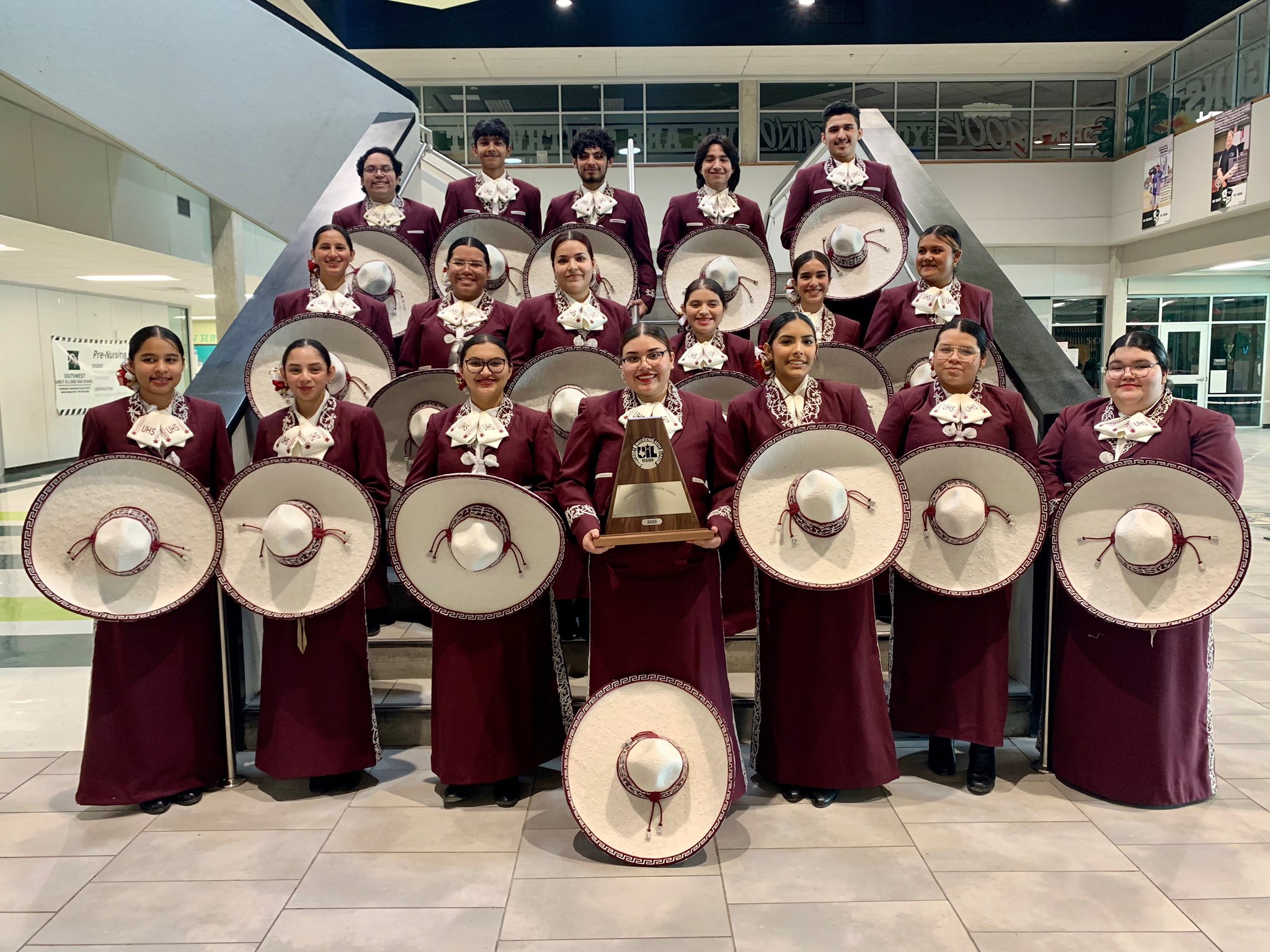
Los Coyotes, Uvalde High School, Texas

Founded in 1999, Los Coyotes won the Texas University Interscholastic League (UIL) Mariachi Championship in 2023. The outcome of the championship included a powerful feature article in Rolling Stone Magazine one year ago. The article brought out, among other things, the consoling impact of Mariachi music in Uvalde after the school shooting of 2022, and how a small program had grown into state champions under their current director, Albert Martinez.

As part of their visit to Colorado to perform with the Boulder Chorale, Los Coyotes have presented a workshop for local Mariachi students at Longmont’s Skyline High School, and have other appearances planned in addition to their concerts with the Boulder Chorale. Their full schedule is available HERE.

Each performance listed below will be preceded at 3:30 p.m. by a presentation by Burrichter and Martinez.

# # # # #

Fiesta de las Luces: Songs of Mexico
Boulder Chorale, Vicki Burrichter, conductor
With Los Coyotes, Mariachi band from Uvalde, Texas, High School, Albert Martinez, director;  and the Boulder Children’s Choir Bel Canto

Program of Mariachi music and Mexican songs arranged for chorus

4 p.m. Saturday, April 27 at First United Methodist Church, Boulder
4 p.m. Sunday, April 28, at Vance Brand Civic Auditorium, Longmont

TICKETS

# # # # #

The Takács Quartet wraps up their 2023–24 season of campus concerts Sunday and Monday (April 28 and 29; see details below). This was the quartet’s 49th season. 

The Sunday performance is sold out, but a few tickets are still available at the time of posting for Monday’s performance, and tickets are also available for the livestream of Sunday’s concert, which will be available online through Monday, May 6.

The program comes from the heart of the Classical/Romantic repertoire, opening with string quartets by Haydn and Schubert. To close out the concert, two additional CU music faculty members—violist Erika Eckert and cellist Meta Weiss—join the quartet to perform Brahms’s String Sextet in G major.

Most of Haydn’s string quartets were published in sets of six, which was the standard for most printed music at the time. Each published set generally has an opus number for the full set, with works numbered 1–6 within the set. The Quartet in D minor, op. 42, is an exception, however, as it stands alone as a single work issued as op. 42. 

It has been speculated that because it is a relatively simple quartet, Op. 42 might have been part of a planned set of three shorter works that were commissioned by two Spanish nobles, but never completed. It is in the standard four movements, in the order Andante ed innocentemente (walking speed and innocently), Minuet—Trio, Adagio and Presto.

Schubert’s String Quartet in B-flat was written in 1814, when the composer was only 17. It was never published during Schubert’s lifetime, so when it finally came out in 1863, it was given the late opus number of 168, even though it was an early work. Schubert wrote the quartet very quickly, completing the first movement in only four and a half hours, and the entire quartet in nine days. With such speed, it is not surprising that it is one of seven quartets Schubert completed in little more than a year.

Takács Quartet. Image by Amanda Tipton Photography.

All his life Brahms was wary of being compared to Beethoven. That likely why it took him 14 years to complete his first symphony, published when he was in his 40s, and why he destroyed his first 20 attempts at writing a string quartet. It is also sometimes speculated that he completed his two string sextets before his three quartets because they were not easily compared Beethoven’s masterful string quartets.

In any case, the Sextet in G major was written when Brahms was living comfortably near the resort town of Baden-Baden. The first movement contains a musical reference to the first name of the singer Agathe von Siebold, to whom Brahms had been briefly engaged some years before. Her significance to the composer is indicated by the fact that when he finished that movement, her wrote in a letter, “Here I have freed myself from my last love.”

Surprisingly, the Sextet was first performed in Boston in October 1866, a month before the European premiere in Zurich.

# # # # #

Takács Quartet
With Erika Eckert, viola, and Meta Weiss, cello

  • Haydn: String Quartet in D minor, Op. 42
  • Schubert: String Quartet in B-flat Major, D112
  • Brahms: String Sextet No. 2 in G Major, Op. 36

4 p.m. Sunday, April 28 SOLD OUT
7:30 p.m. Monday, April 29

Grusin Music Hall, CU Imig Music Building

TICKETS for live performances and for online stream of Sunday’s performance