Coming opera seasons in Colorado

CU Eklund Opera and Opera Colorado announce 2025–’26 seasons

By Peter Alexander March 17 at 5:43 p.m.

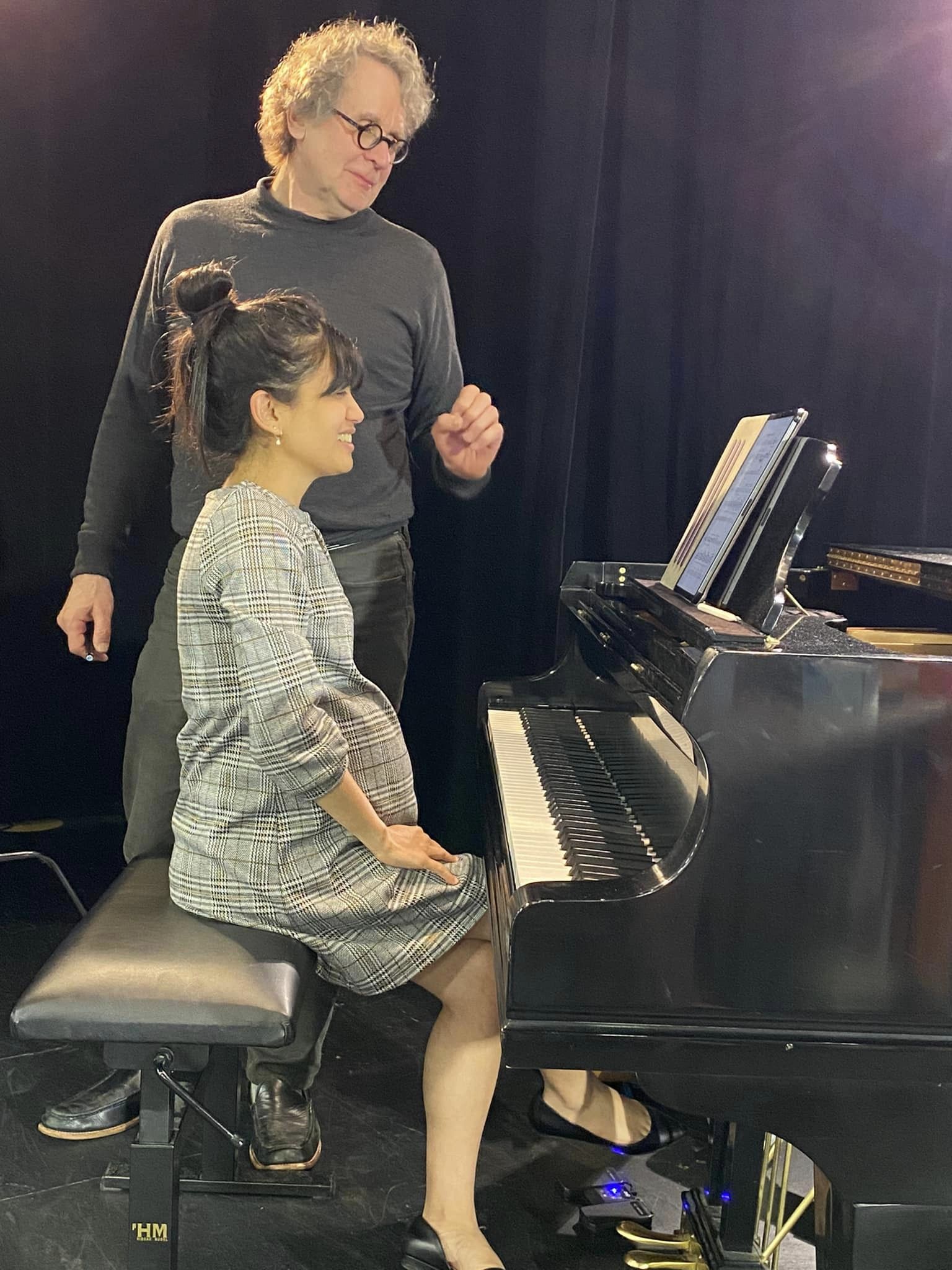
Leigh Holman stepped before the rich, ruby-red curtains at Macky Auditorium yesterday (March 16) afternoon and spoke to the audience.

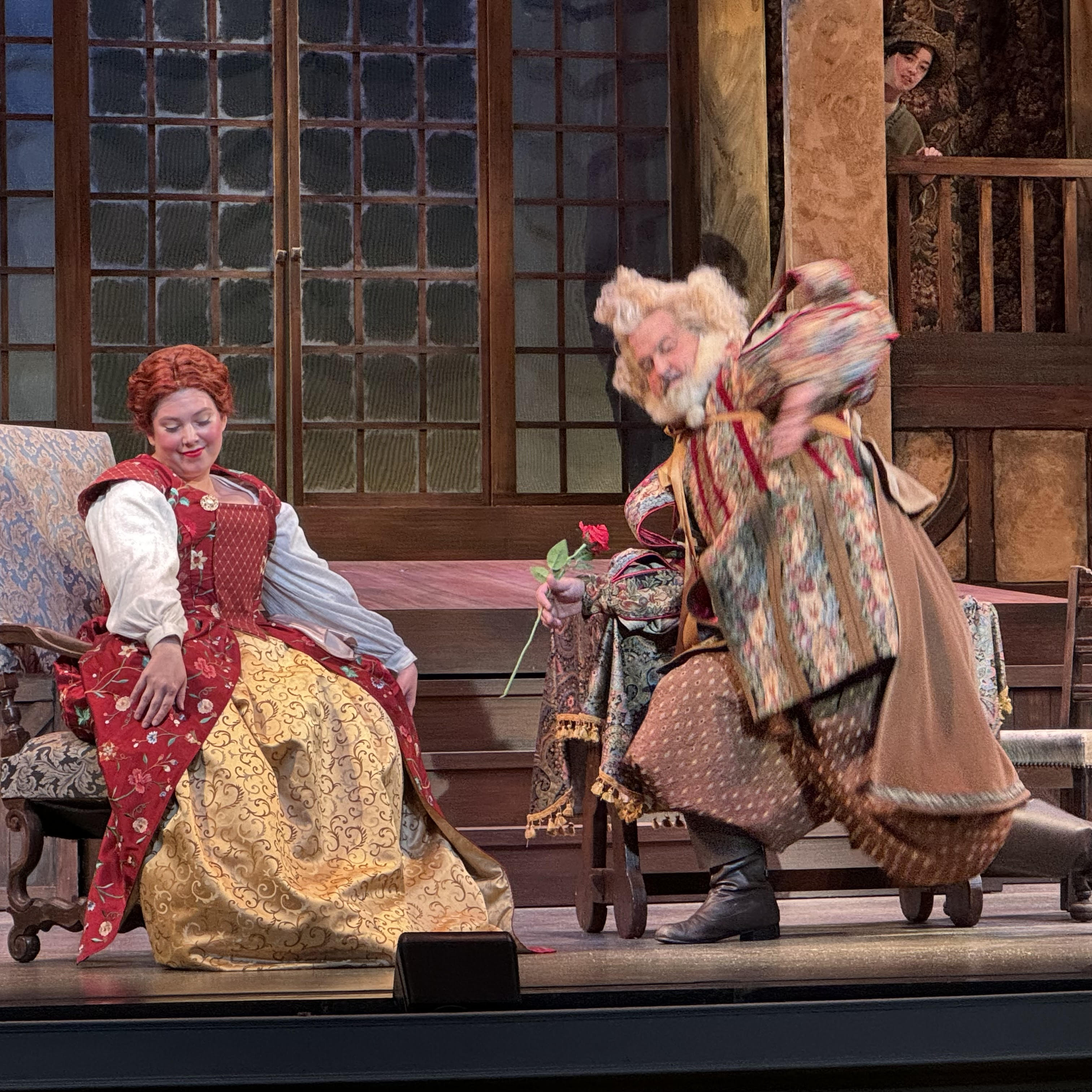
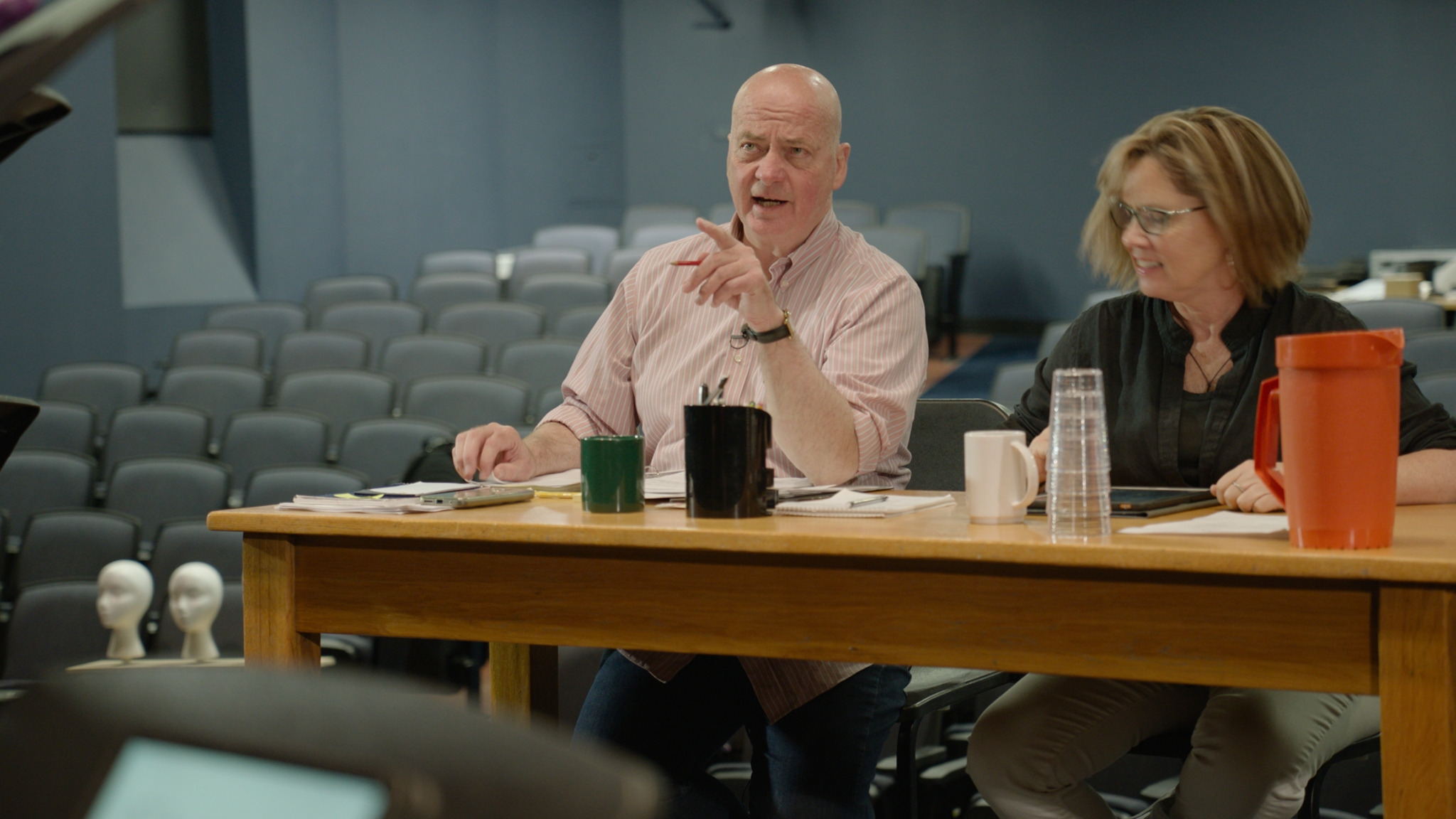
The occasion was the final performance of CU’s production of Gilbert & Sullivan’s Pirates of Penzance. Holman is the director of the Eklund Opera Program at CU-Boulder, and in addition to welcoming the full house in Macky, she made an announcement of interest to opera lovers in the area. She named the works in Eklund Opera’s 2025–26 season—or most of them.
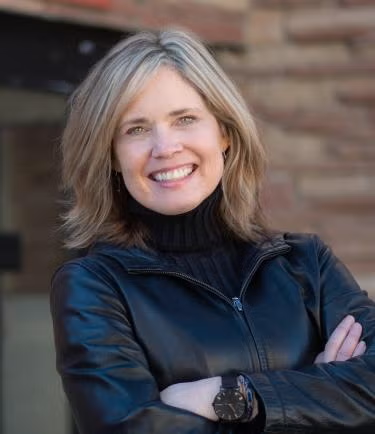
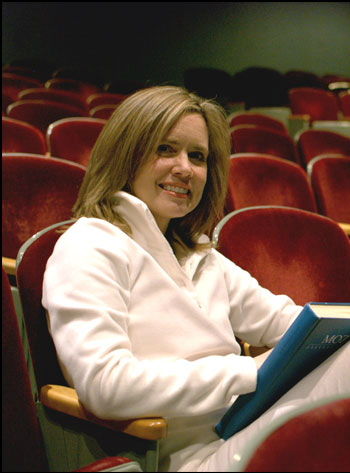
Leigh Holman

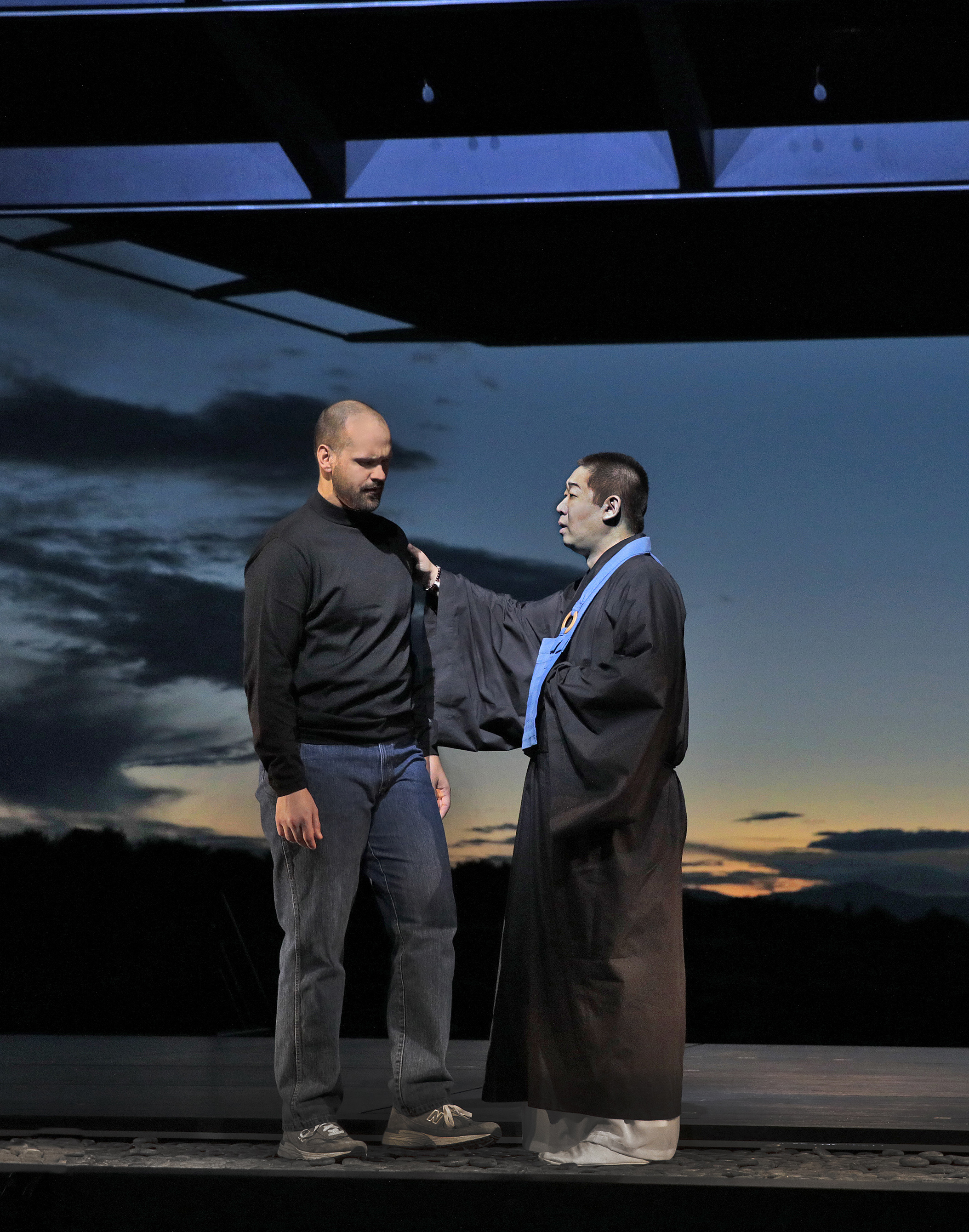
The fall production, she said, will be one of the most successful operas of the past 25 years, Jake Heggie’s Dead Man Walking. Premiered in 2000 by the San Francisco Opera it has since been performed in dozens of productions, at CU in in 2007, Central City Opera in 2014, at the Metropolitan Opera in New York, Houston Grand opera, in university and regional productions around the country, and major houses around the world. 

Based on the memoir of the same name by Sister Helen Prejean, Dead Man Walking features a  libretto by playwright Terrence McNally. The plot revolves around Prejean’s death-row ministry with a convict who was executed for murder in Louisiana in 1984.

Homan then announced that in April, 2026, the Eklund program will present Leoš Janáček’s folk-ish Cunning Little Vixen, a charming and harsh tale of life in the animal world. Finally, she said that the third production, appearing in the March time slot, would be a musical comedy presented in conjunction with the CU program in musical theatre. Contractual obligations, common with the performance of musicals, prevent the release of the show’s title at this time.

Opera Colorado in Denver also has announced the operas that will be their main stage productions in the 2025–’26 season. November will see performances of Verdi’s La Traviata, and in May Opera Colorado will present Puccini’s Madama Butterfly. In the meantime, there will be semi-staged concert performances of Verdi’s Il Trovatore featuring a full cast with the Opera Colorado orchestra and chorus, 7:30 p.m. Saturday, April 26, and 2 p.m. Sunday, May 4, in the Ellie Caulkins  Opera House at the Denver Performing Arts Complex. 

Ellie Caulkins Opera House, Denver

The company’s Calendar of Events lists the dates for all performances and access to the box office for the purchase of individual tickets for the remainder of this season, as well as subscriptions for the ’25–’26 season. 
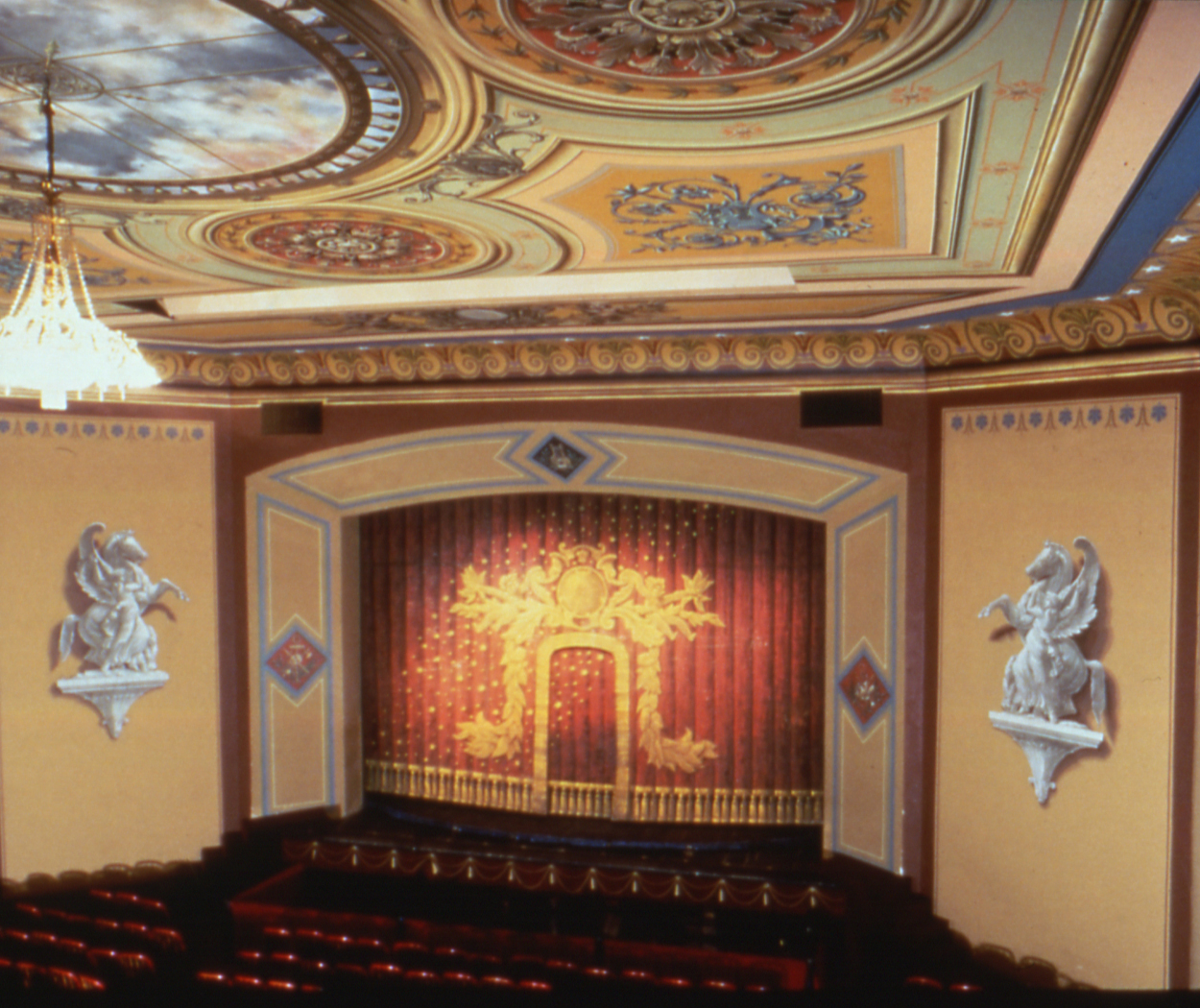
Central City Opera House

Central City Opera’s summer 2025 season has already been announced, but if you missed it, this year’s summer festival at the Opera House in Central City will feature Rossini’s Barber of Seville, Aleksandra Verbelov’s contemporary The Knock, inspired by events during the 2003–’11 Iraq War, and the 1959 Broadway hit Once Upon a Mattress, recently revived in New York and Los Angeles to great acclaim.

The full summer calendar, and access to the purchase of subscriptions and group bookings can be found HERE. Individual tickets will go on sale April 1.

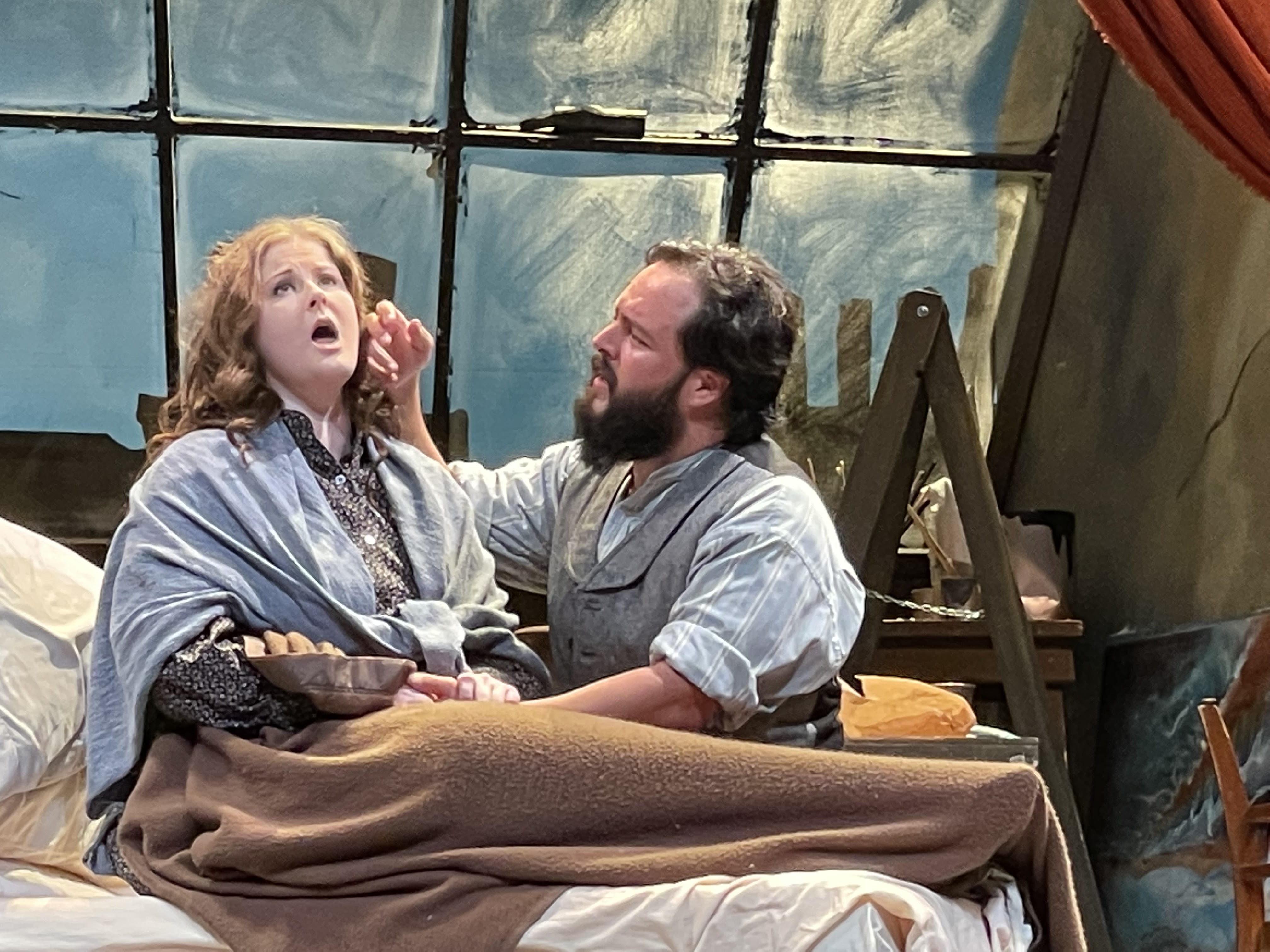
Not in Colorado but within a reasonable day’s drive for people in the Boulder area, the Santa Fe Opera presents productions in a unique and stunning outdoor theater in the New Mexico mountains. Productions for the summer of 2025 will be Puccini’s La Bohème, Mozart’s Nozze di Figaro (Marriage of Figaro), Verdi’s Rigoletto, Benjamin Britten’s Turn of the Screw and Wagner’s Die Walküre

Santa Fe Opera. (c)Bob Godwin/rgbphotography@mac.com

The full calendar for the Santa Fe Opera is located HERE. Tickets can be purchased through the company’s 2025 Season page. 

NOTE: At the request of the Eklund Opera Program, a quote that that could potentially identify the musical to be presented in March, 2026, was removed from the fifth paragraph of this story as of March 13, 2025.
Eklund Opera presents Gilbert & Sullivan

The perennially popular Pirates of Penzance puts in at Macky for the weekend

By Peter Alexander 10:40 p.m. March 12

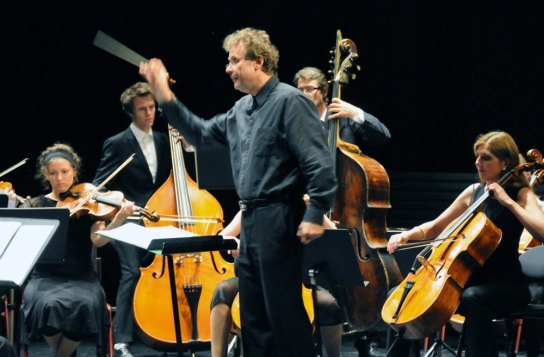
CU’s Eklund Opera Program will present Gilbert and Sullivan’s hilarious Pirates of Penzance Friday through Sunday in Macky Auditorium (March 14–16; details below), and conductor Nicholas Carthy wants everyone to know what to expect.

“It’s a comedy,” he says. “This is not (Shakespeare’s) Henry V! It’s supposed to be ridiculous.”

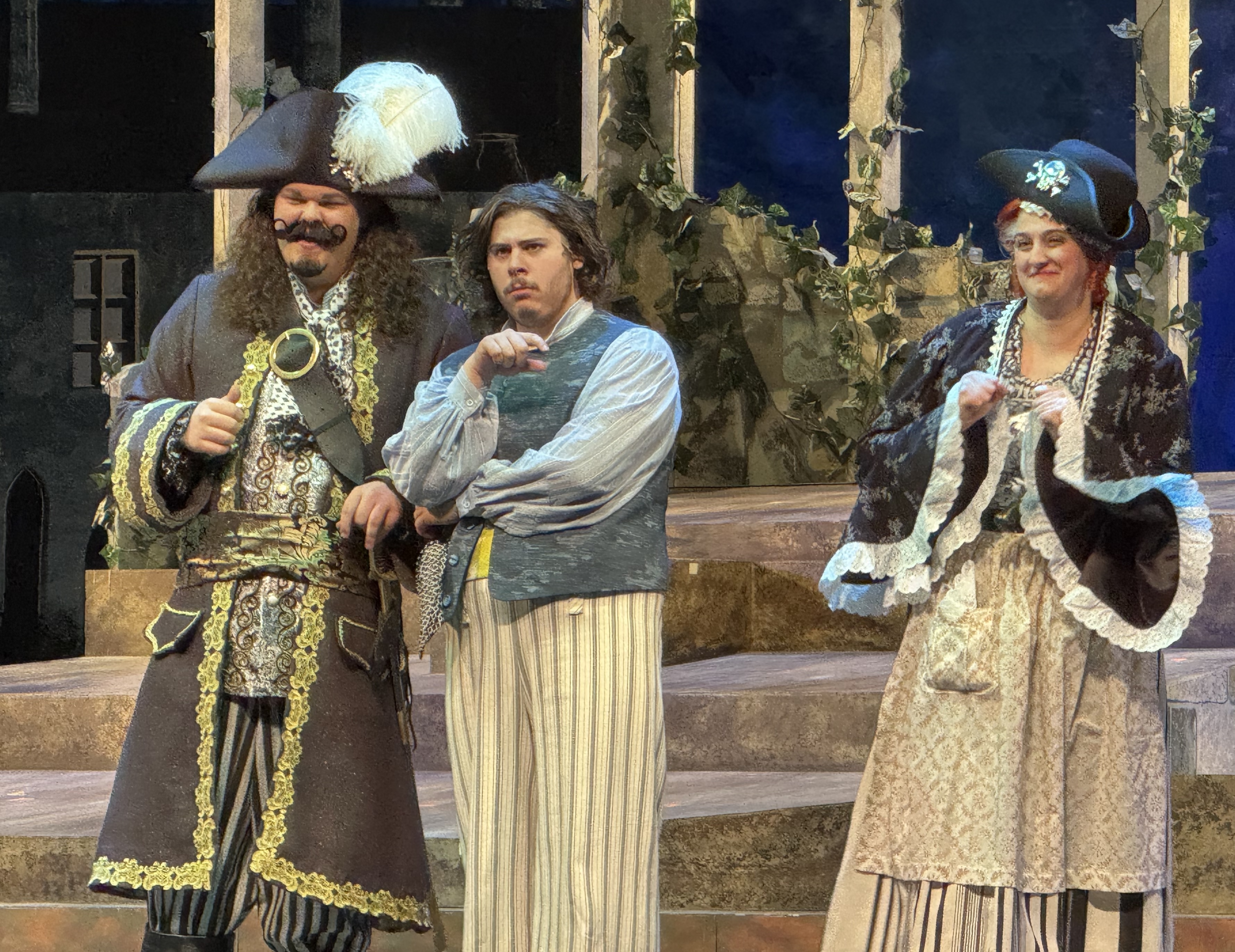
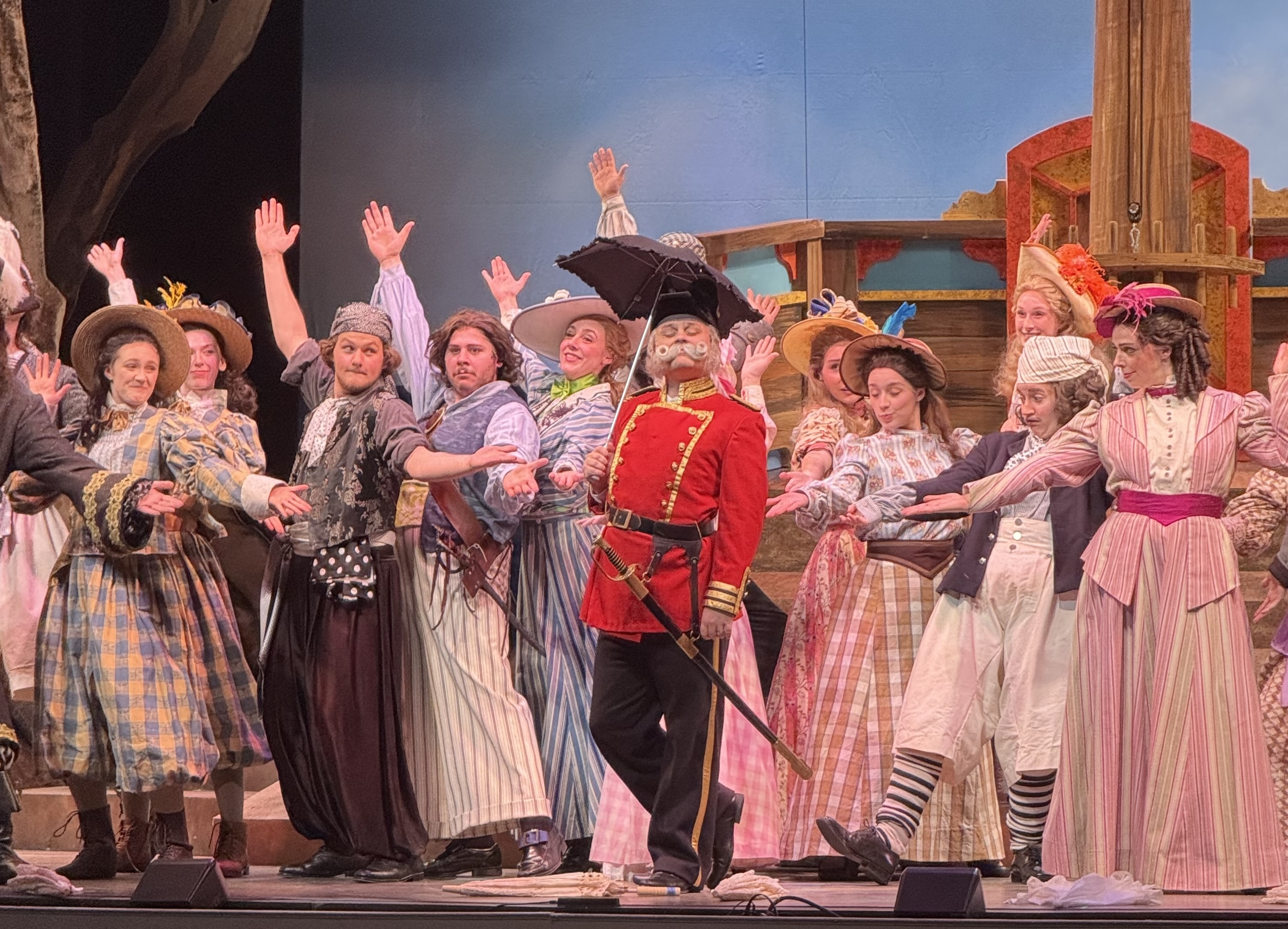
Reese Phillips as Major-General Stanley. Photo by Andrew Konopak.

And ridiculous it is, in some ways. If you don’t know the story, the callow youth Frederic has been apprenticed to a band of soft-hearted pirates through a confusion between a “pirate” and a ship’s “pilot.” He is bound until his 21st birthday, but because he was born on Feb. 29, that won’t happen until he is in his 80s. 

Due to his exaggerated sense of duty, Frederic cheerfully agrees to remain with the pirate band for 60-plus more years, even though he has to postpone marriage to his true love Mabel, one of many wards of the pompous Major-General Stanley. After misadventures with the curiously ineffective pirates and the bumbling police, the day is saved when Frederic’s nursemaid Ruth reveals that the “pirates” are actually noblemen.

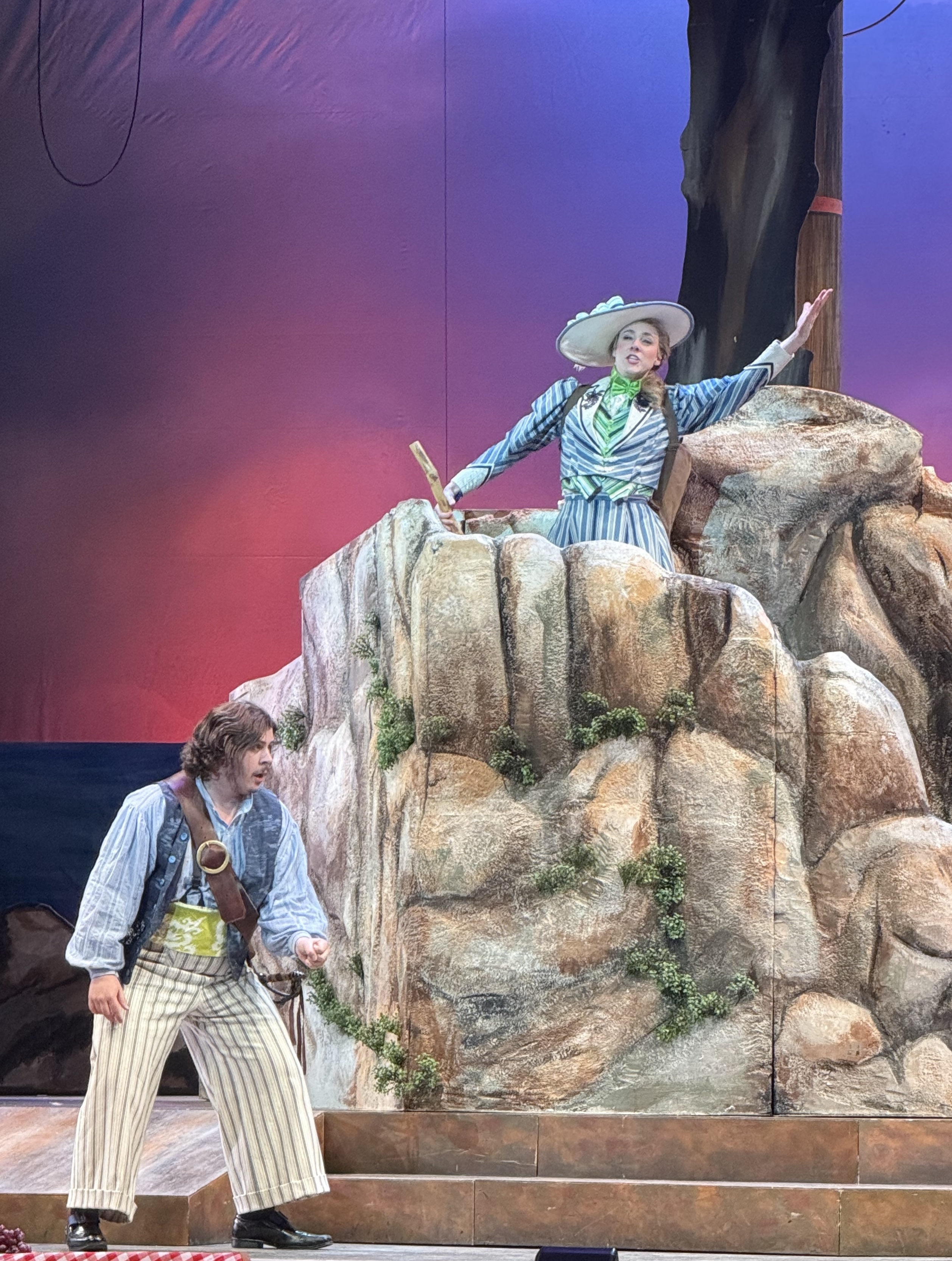
Davian Raggio (Frederic), Madison Falkenstine (Mabel). Photo by Andrew Konopak.

When they declare their loyalty to Queen Victoria, the way is cleared for Frederic and Mabel to marry.

The CU production is stage directed by Leigh Holman, director of the Eklund Opera Program, with choreography by Laura Malpass. The production uses the same sets as previous CU performances in 2014, but with new costumes by Holly Jenkins Evans and new lighting design by Jonathan Dunkle. 

“It will look different,” Holman says, “but in terms of interpretation, we took the same approach as last time. There are many different levels where the show can entertain. There are Gilbert & Sullivan fans that know all the intricacies, and there are people that will learn it as they’re sitting there. Other people will see the slapstick, and they’ll enjoy it too.”

The show must have wide appeal, since it has been selling exceptionally well. According to Holman, “the last show that reached this (many) ticket sales was West Side Story.”

There are several specific aspects of Pirates that Holman and Carthy hopes the audience will recognize. For one, there are clues that the pirates are really from the upper class. For one, “they’re drinking sherry at the beginning,” Carthy says. “If they were real pirates they would be drinking rum.”

At the same time, there is sharp satire of the upper classes. As Carthy puts it, the performers are “having a nod and a wink at the audience, saying, ‘we know what these people are like, and you do too, don’t you?’ Both the audience and the people onstage are in on the joke.”

That pointed satire explains why Gilbert’s text was not popular with the Queen and nobility, even though Sullivan’s music was. “These little barbs against royalty were what Queen Victoria disapproved of,” Carthy says, “which is why Sullivan got knighthood and Gilbert didn’t.”

In one example, the Pirate King, himself a noble, takes a particularly brutal jab at the rigidly “respectable” upper classes. Speaking of piracy, he says, “I don’t think much of our trade, but compared with respectability, it is relatively honest.”

James Robinson (Pirate King), Davian Raggio (Frederic), Carrina Macaluso (Ruth). Photo by Andrew Konopak.

Satire of the upper classes appears in all cultures. It is central to much British literature, but also dates from Roman and Greek theater into the 20th-century. “Gilbert and Sullivan’s policemen are exactly the same as Monty Python’s policemen,” Carthy says. “They are of a particular class and accent—that is a thread through the ages.”  

It is also important to know that Sullivan aimed higher than writing popular potboilers. “Sullivan wanted to be a serious composer and ended up hating Gilbert,” Carthy says. “He wanted to stop (working with Gilbert), but then he lost money in a market crash and had to sign on for another five years.”

Musical evidence of Sullivan’s aspirations is found in throughout the show. “There are little bits of Sullivan as a serious composer, and not just this sort of thing, that we remember him for,” Carthy says, singing an oom-pah accompaniment.

In some places, there are even traces of serious opera, including hints of Donizetti and Rossini. Holman finds these passages especially expressive. “The love duet (between Mabel and Frederic) is beautiful,” she says. “It’s the most sincere thing in the show. That piece is just gorgeous.”

She also hopes you will notice the choreography. “It’s a beast to choreograph, with so much movement,” she says. “Malpass has taken predominantly non-dancers and done amazing jobs with them. (In this show), there’s always something to see, lots of physicality (as well as) great singing!”

Carthy admits that Pirates does not always conform to modern sensibilities. “It’s a piece of its age,” he says.  But he believes its comedy is universal, transcending Victorian sensibilities. “It’s quirky but it works, and it suggests a little depth,” he says.

“Above all, it knows what its audience wants.”

# # # # #

University of Colorado Eklund Opera
Leigh Holman, stage director; Nicholas Carthy, conductor

  • W.S. Gilbert and Arthur Sullivan: The Pirates of Penzance

7:30 p.m. Friday, March 14, and Saturday, March 15
2 p.m. Sunday, March 16
Macky Auditorium

TICKETS

NOTE: The spelling of Eklund Opera was corrected March 13. The original story incorrectly had the spelling as Ecklund.

Eklund Opera presents renewed, colorful Hansel and Gretel

Fairytale opera takes the stage at Macky Friday and Sunday

By Peter Alexander Oct. 23 at 1:50 p.m.

In 1890, the German composer Englebert Humperdinck was asked by his sister, Adelheid Wette, to write some folk-style songs for a Christmas play she was creating for her children.

Their little family play was performed at Christmas, but over the next two years Humperdinck, with Wette’s help, turned those simple songs into one of the most popular full-scale German operas, one that is still produced annually at Christmas time at theaters across Germany. The subject of that opera—and of Wette’s original family entertainment—was the Brothers Grimm’s fairytale Hansel and Gretel.

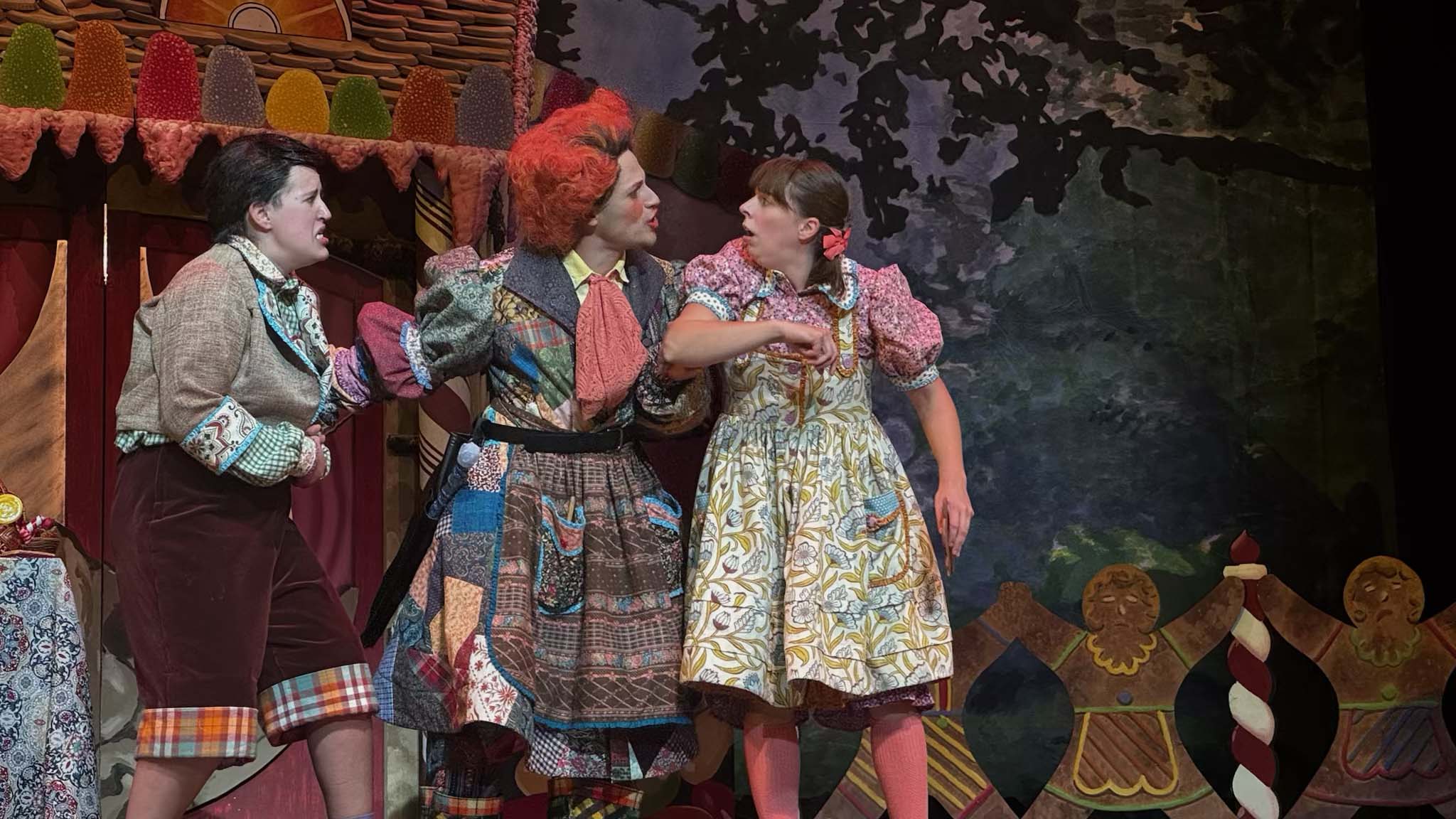
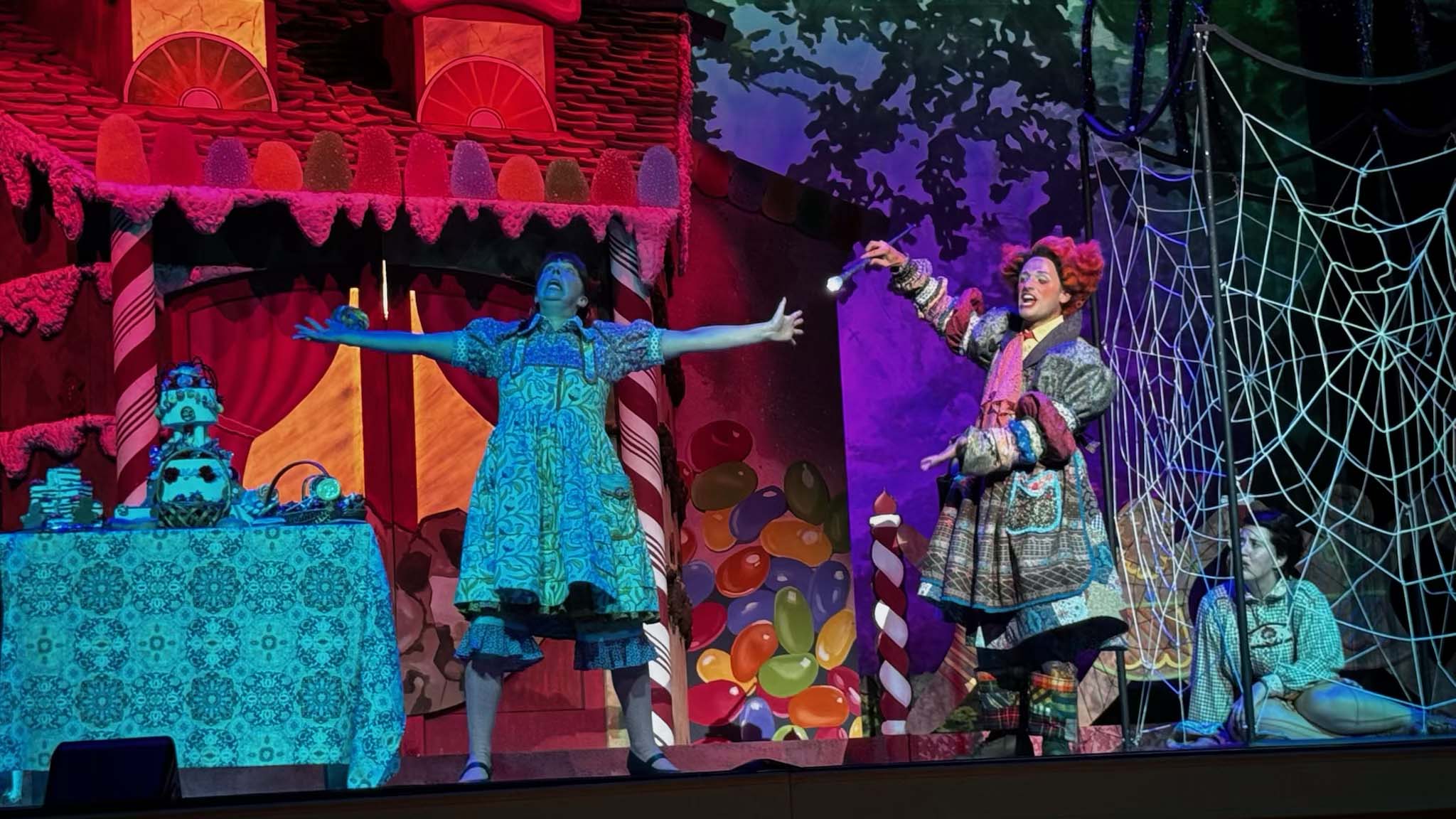
L to R: Salleigh Harvey as Hänsel, Thomas Bocchi as the Witch, Kristina Butler as Gretel in the CU Eklund Opera production of Hansel and Gretel

Humperdinck’s Märchenoper (fairy-tale opera) will be the next production of CU-Boulder’s Eklund Opera Program. And even if it’s a little early to get out the Holiday decorations, it will be given a festive production over the coming weekend (7:30 p.m. Friday and 2 p.m. Sunday, Oct. 25 and 27) in Macky Auditorium. (See ticket information below.)

The musical performance with full orchestra and student singers will be conducted by Nicholas Carthy and stage directed by Leigh Holman, director of the Eklund Opera Program. The sets by Peter Dean Beck, which CU Opera have used before, have been dressed up with new, colorful costume designs by Ann Piano and lighting effects by Jonathan Dunkle. It will be performed in German with English titles.

The story of Hansel and Gretel, which was originally a dark tale of malice and danger, was made milder over a series of transformations, through several editions of the Grimm story and then Wette’s libretto for Humperdinck’s opera. The original evil stepmother who sends the children into peril is turned into, as Carthy puts it, a beleaguered “mother with two children and a headache,” who simply sends the children out to gather strawberries. 

There are lighthearted moments in the opera—the children squabbling at the beginning of the first act, and their father cheerfully returning home after selling all of his brooms—and even in the forest the children are looked over by the Sandman, the Dew Fairy and the 14 angels of the beautiful Dream Pantomime. Even when accosted by the witch, Hansel and Gretel easily evade her evil designs. In the end, the witch is vanquished and all the gingerbread children are returned to life.

Musically, Humperdinck’s score has many folk-like tunes and simple melodies, but it is also full of musical challenges. As Carthy explains, the libretto uses “slightly archaic language, words that have fallen out of use and some of them are very difficult to pronounce. Hansel and Gretel are onstage for most of it, and the witch is a very big part. And then Act III suddenly gets more difficult—all of a sudden the music becomes more difficult to sing, much more difficult to play, much more difficult to conduct.”

The witch’s part can be a particular challenge, Holman says. “I think the Witch’s part is really, really difficult. The timing and the notes are kind of disjointed. It’s hard to find the pitches—seriously!”

Humperdinck worked as an assistant with Wagner, particularly on the late music drama Parsifal, and so his harmonic language and orchestration reflect late Wagner. That too can be a problem, Carthy says, especially when the orchestral sound becomes heavier and darker. “Balance (among the parts) is a problem, keeping it all together is a problem, keeping it transparent is a problem,” he says.

And “it’s a great challenge for the players, because it’s a massive piece,” he adds. “It never stops, as far as the players are concerned, (so it’s) quite an exercise in concentration and stamina. Three fourths of them have never played in a pit, so they are coming in without the experience of playing a long piece and concentrating for that amount of time. It’s invaluable for (the students), but as the conductor you have to know the piece backwards.”

The production uses sets that were designed by Peter Dean Beck and that have been used in previous CU productions of Hansel and Gretel. But this time there will be new costumes by Piano and other touches to bring more color to the stage. 

Kristina Butler as Gretel, Thomas Bocchi as the Witch, Salleigh Harvey as Hänsel (on the ground)

“I asked for a change in this production,” Holman says. “I asked that it not be so literal, a little bit more fantastical. And so we have lots of colors in it, in the costumes but also in other little elements. Even the brooms are colored, red ones and blue ones, so it kind of takes us out of reality and goes back to a storybook.

“We have a new lighting designer, Johnathan Dunkle, and we’re doing some new and interesting things with that. With the witch’s ride we have some lighting effects that we’re working on.”

Another new feature of this production that Holman is excited about is choreography for the 14 angels. “Laura Malpass is the choreographer, and she’s fantastic,” she says. “She teaches in the dance department, and she pulled together 14 trained ballet dancers to portray the 14 angels. It’s less than six minutes and it’s gorgeous.”

In fact, she and Carthy are looking forward to the entire opera. “We’re so excited about this piece,” Holman says. “The music is gorgeous, the orchestra is rich and full and the look of it—the visuals and brand new costumes and what you’re going to see onstage—is beautiful. 

“And it’s short! People are going to get out in two hours and 15 minutes.”

# # # # #

Eklund Opera Theater, Leigh Holman, director
Nicholas Carthy, music director

  • Hansel und Gretel by Englebert Humperdinck
    Libretto by Adelheid Wette

Performed in German with English titles

7:30 p.m. Friday, Oct. 25 and 2 p.m. Sunday, Oct. 27
Macky Auditorium

TICKETS

“Popular Entertainment” anchors 2024 CU NOW

Gene Scheer and Bill Van Horn conjure a musical play from an 18th-century sequel

By Peter Alexander June 12 at 11:50 p.m.

“If it’s a success, write a sequel!”

That’s the commentary of theater veteran Bill Van Horn, who is helping turn just such a sequel from the 18th century into a modern-day operetta—or “popular entertainment about history,” as he describes it. The work in question brings together Van Horn as librettist with Gene Scheer as song writer. Their Polly Peachum, based on the sequel that English dramatist John Gay wrote to his own hugely successful Beggar’s Opera of 1728, will be presented by the CU New Opera Workshop (CU NOW) Friday and Sunday (June 14 and 16; details below)

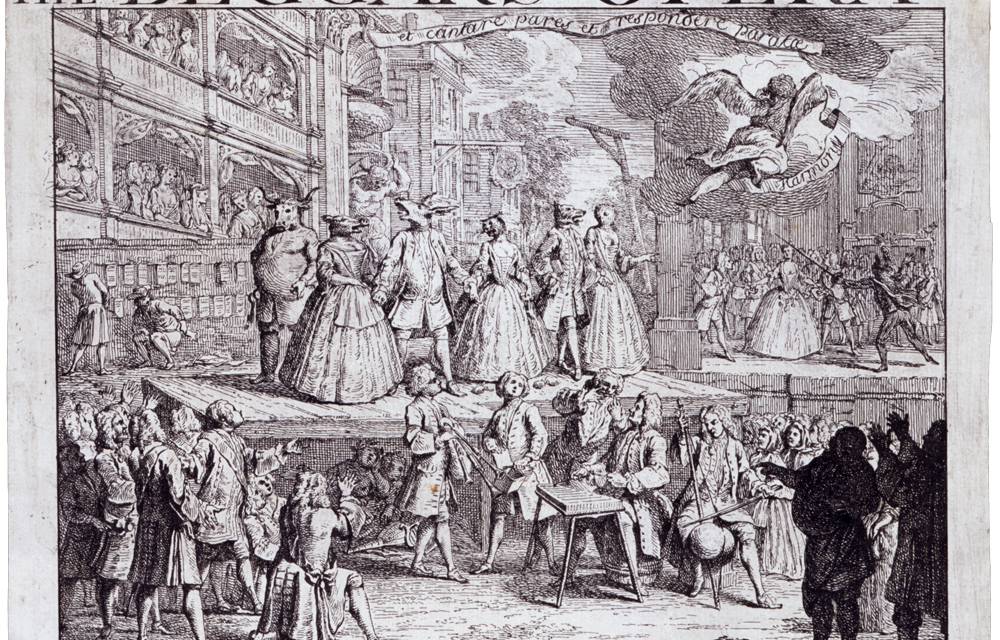
18th-century outdoor performance of Gay’s Beggar’s Opera, engraving by William Hogarth

Between the two performances of Polly Peachum CU NOW will present operatic scenes by composition students Alan Mackwell, Holly McMahon and Joshua Maynard. As part of CU NOW they have participated in the Composer Fellows’ Initiative (CFI), working on their own operatic works with composer Tom Cipullo.

Gene Scheer (l) and Jake Heggie (r) at CU NOW, 2018 (Photo by Glenn Asakawa/University of Colorado)

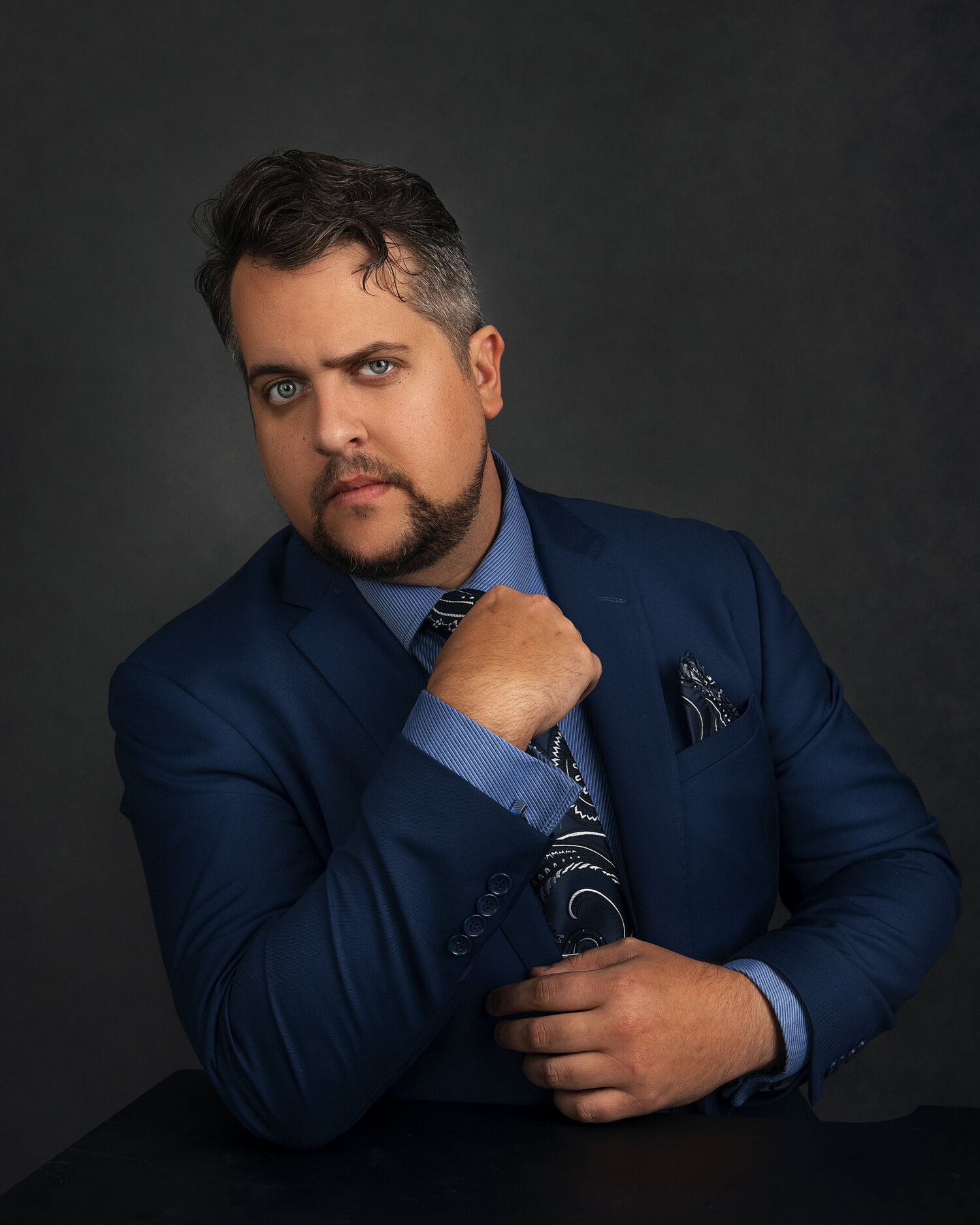
Scheer and Van Horn are both widely experienced in the theater. Scheer has been at CU NOW before, working on new operas as librettist with composer Jake Heggie (Wonderful Life, If I Were You, Intelligence). He has also written librettos for other works by Heggie (Two Remain, Radio Hour) and other composers including Jennifer Higdon (Cold Mountain), and he has written songs and other musical works of his own.

Although he has never been to Colorado before, Van Horn has done almost everything in the theater except, he says, “count money.” As he tells the story, “I started just showing up at theaters saying ‘Is there anything you need to be done?’ Eventually you get asked to be in a play, and I’d sort of take up residence in different theaters.” From that unconventional start, he has gone on to translating plays and operettas, writing plays, adapting plays and directing plays.

The idea for the modern Polly Peachum arose more than 30 years ago, when Scheer was playing the central role of Macheath—aka “Mack the Knife”—in Kurt Weill’s Threepenny Opera, a 20th-century adaptation of Gay’s Beggar’s Opera. His mother gave him a book of The Beggar’s Opera, where he learned that Gay had written a sequel titled Polly Peachum, named for a character in both works.

Bill Van Horn (Photo by Mark Garvin)

“The problem is that the play Polly is not that good,” Scheer says. “I got the idea of doing a prequel. I showed this to (Van Horn), and we developed the idea together, the making of The Beggar’s Opera, in which the world of government intrigue, ham actors, and Jonathan Wild, who was the inspiration for Macheath,” are blended.

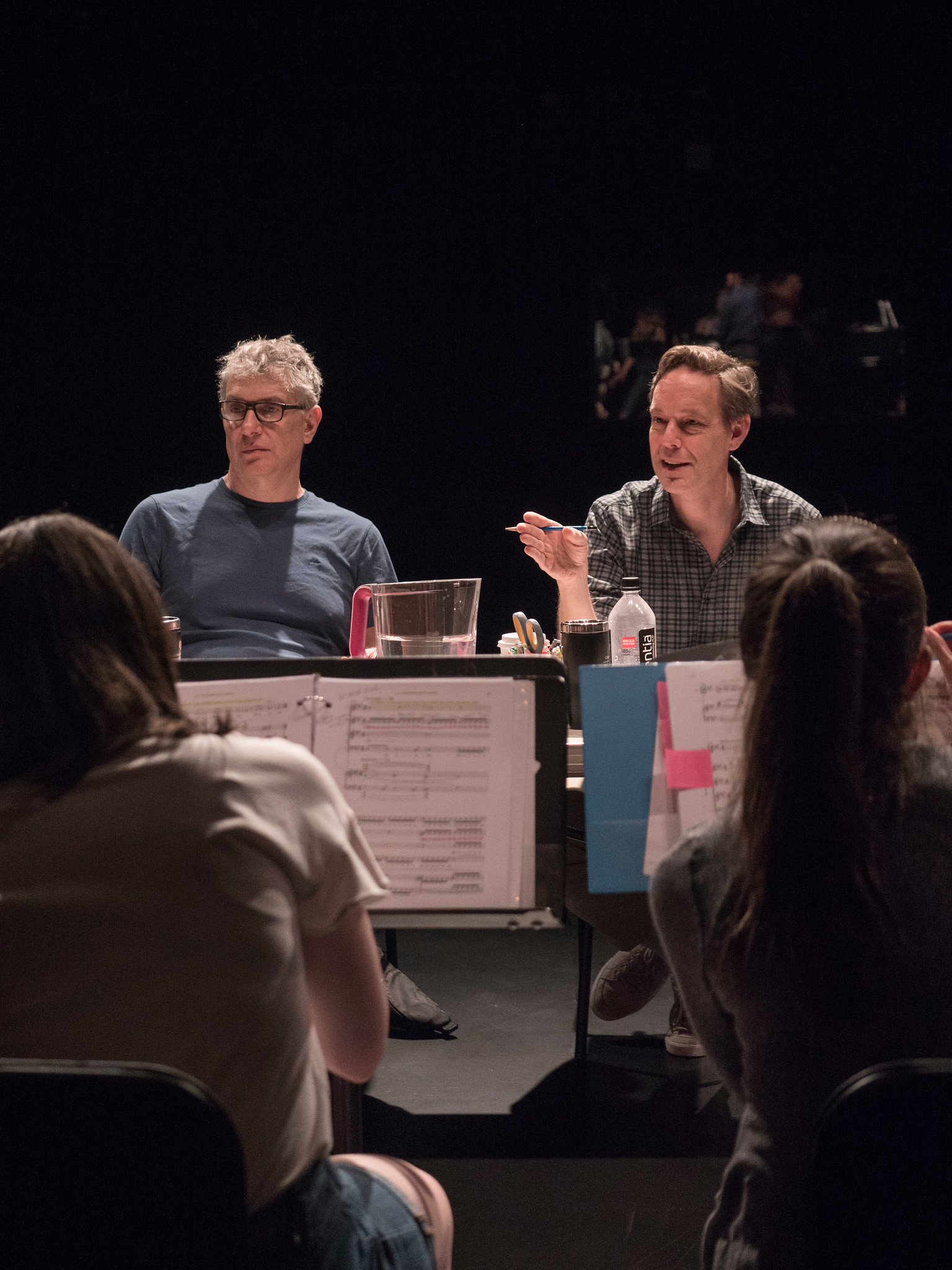
Leigh Holman, the director of CU NOW and CU’s Ecklund Opera Program, says that “(Scheer) told me about this piece two or three years ago, and we’ve been trying to find the right time to bring him here. This was the right time, so we’re so excited for him do this. It’s been amazing so far. This piece has been great for (the students).”

Both Scheer and Van Horn praise the contributions the students have made in rehearsals. “They’re extraordinary,” Scheer says. “They’re teaching us as we teach them. They are all extraordinary singers, they’re extraordinarily well trained.”

“They’re going to be indelibly on my mind as the characters, forever, because they’re the first ones to do it,” Van Horn adds. “It’s in the best tradition of old-school summer stock, where everybody does a little bit of everything. That’s the best kind of theater!”

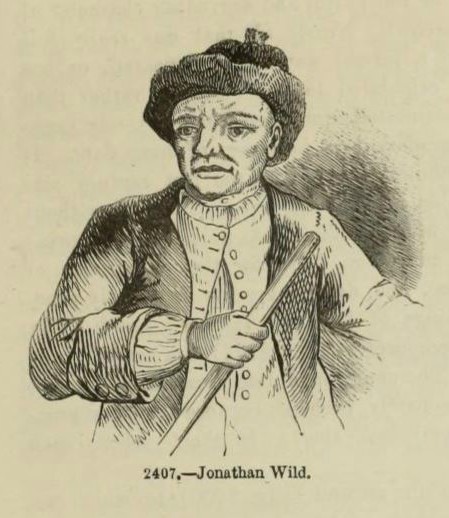
Johnathan Wild, book illustration

In Scheer and Van Horn’s Polly fictional characters, such as Polly Peachum, are combined with real-life characters, including the dramatist Gay and Wild. Of these, it is Wild who is the most outlandish and theatrical character.

“Wild was the ‘thieftaker general’,” Van Horn explains. “He bought things that people stole and then told the owner, ‘I can get this back for you.’” He charged the true owners what seemed like a small portion of the items’ actual value, but the thieves were all working for him and he accumulated an enormous fortune.

“The thieves of London would bring the stolen goods to his warehouse,” Scheer says. “Wild would publish what he had, and people would come and buy possessions that had been stolen from them.”

In the end, Wild got cocky and careless. He was eventually arrested, convicted and sentenced to be hanged in Tyburn Square in London. His hanging in 1725 was a sensational public event that attracted thousands, but Wild drugged himself before the hanging. Although he did not succeed in killing himself, he was in a coma when hanged—which is one way the stage plot diverges from history.

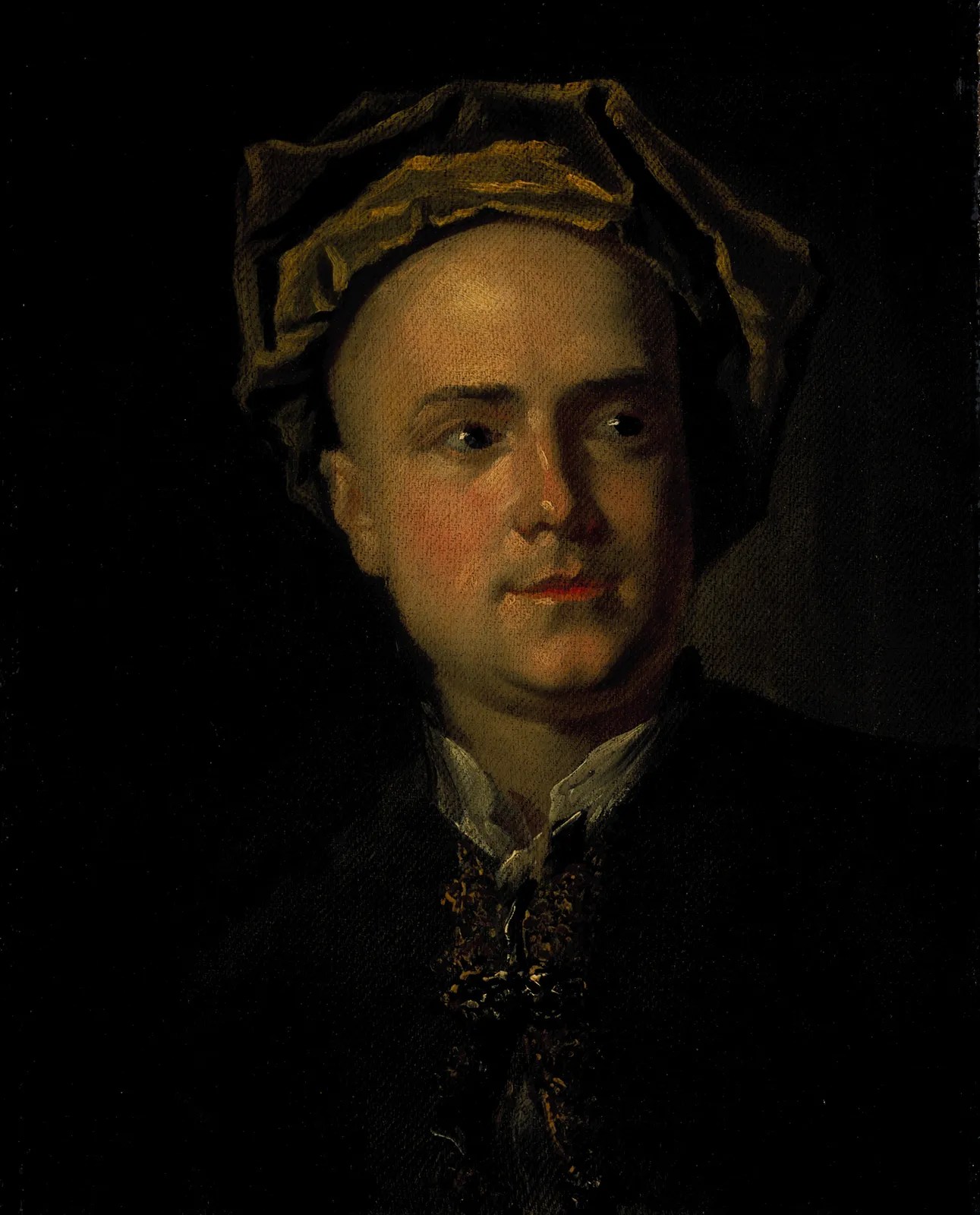
John Gay, oil painting by William Aikman in the Scottish National Portrait Gallery, Edinburgh

In Scheer and Van Horn’s version, the fictional Polly Peachum works for the historical Wild, and the two are lovers. When Wild is arrested, his gang is pursued and Polly hides out in the warehouse. Meanwhile Gay’s manuscript for The Beggar’s Opera is stolen and he goes to the warehouse to purchase it back. Instead he meets Polly, who joins his theater company as a way of hiding from the police. She becomes Gay’s muse as he completes The Beggar’s Opera and they fall in love.

In the meantime, Wild is supposed to be hanged, but instead of taking laudanum, as history has it, he gives it to the minister who comes to administer the last rites. The minister is hanged in his place, and Wild escapes. Polly thinks he is dead until he shows up at the theater. His sudden appearance creates a conventional love triangle, with Polly forced to choose between Wild, the fugitive, and Gay, the theater manager. 

If that sounds familiar, it’s still the same old story. Or as Van Horn says, “If you recognize any parallels with Casablanca, it’s intentional.”

And performances are free.

# # # # #

CU New Opera Workshop (CU NOW)  2024

Polly Peachum
Music by Gene Scheer, book and lyrics by Bill Van Horn and Gene Scheer

7:30 Friday, June 14
2 p.m. Sunday, June 16

Composer Fellows’ Initiative (CFI): Scenes
7:30 p.m. Saturday, June 15

All performances in the Music Theater, Imig Music Building.
Admission is FREE.

Eklund Opera presents Verdi’s madcap Falstaff

‘One of the greatest Italian ensemble operas’ Friday and Sunday

By Peter Alexander Oct. 25 at 5:40 p.m.

“Reverenza!”

That extravagant one-word greeting delivered by Mistress Quickly to the corpulent Sir John Falstaff (“Your reverence!”) sets off all the madcap action of Verdi’s final opera, the comedy Falstaff. A series of hilarious escapades follow, leaving Falstaff dumped in the river at the end of the second act and the butt of a comedic thrashing in the third. In spite of the abuse, it all ends with Falstaff cheerfully proclaiming “All the world’s a jest.” The entire cast joins him for, of all things, a rollicking 10-part fugue.

Melissa Lubecke (Alice Ford) and Andrew Hiers (Falstaff) in Eklund Opera’s Falstaff. Photo by Leigh Holman.

Falstaff will be the fall production of the CU College of Music’s Eklund Opera Company, with performances this coming Friday and Sunday in Macky Auditorium (Oct. 27 at 7:30 p.m., Oct. 29 at 2 p.m.; tickets available HERE). Performances are stage directed by Leigh Holman and conducted by Nicholas Carthy.

The opera is derived from Shakespeare’s Merry Wives of Windsor. Verdi had already retired twice when his publisher passed him the libretto, crafted by the Italian composer Arrigo Boito who also wrote the libretto for Verdi’s Otello. Verdi couldn’t resist, and Falstaff had its premiere in February 1893, when the composer was nearly 80.

The opera has two intertwining plots: Falstaff is trying to woo two wealthy wives in order to get at their fortunes; and one of their husbands, Ford, wants to marry his young daughter Nanetta to his friend Dr. Caius. She, however—in typical comic-opera fashion—is in love with someone her own age, Fenton. And also in comic-opera fashion, the women are far cleverer than the men and hilariously foil both plots.

Falstaff is seldom performed by student opera companies. For one thing, the role of Falstaff requires an experienced singer. As Carthy explains, this is an opera “where, if we get one person in, we can cast around them. So you bring a Falstaff in and it allows you to do one of the greatest Italian ensemble operas there is. Bringing in that one person is a fantastic opportunity to do something (the students) wouldn’t normally do.”

Andrew Hiers. Photo by Anthony Perez.

Eklund Opera has engaged Andrew Hiers (pronounced “hires”), who has performed with the San Francisco Opera Merola program, Opera Colorado, and the St. Petersburg (Fla.) Opera, to sing Falstaff. “He’s really good,” Holman says. “It ups everything a level, both in that it allows the students to do an opera that they might not otherwise be able to do. But also in what he brings, the experience that he has.

“He’s a really great actor, and the students are learning a lot working beside him. Every rehearsal, he’s just going, going, going, never complains, he’s just going. And it’s great for (the students) to see that.”

Other than Falstaff, Holman says, “We had all the other forces, including Quickly, who’s an artist diploma student”—Jenna Clark. That could be a difficult role to cast with students, but Holman says, “she’s really got the gravitas and the voice to pull that off.”

Another challenge is the breakneck pace of the music. “It’s a massive challenge for everybody,” Carthy says. “You don’t have time to do anything before something else comes along. It’s very tough, and we rarely have that sort of pacing in an opera. We’ve done Bohème and Traviata, but even Bohème doesn’t have that wickedness of pace that Falstaff does.”

“I would say the same thing,” Holman says. “It’s a difficult piece. As the director there’s just a lot coming at you.”

Nicholas Carthy

Carthy points out that the same is true for the orchestra and conductor. “Getting a mostly undergraduate orchestra, many (of whom) have never been in a pit before, to play Verdi or anything approaching Falstaff, is always going to be a challenge,” he says. “It’s this massive challenge to coordinate, but thats what I love doing that’s what I’ve spent my life doing.”

After all of Verdi’s dramatic, tragic operas, the speed and lightness of Falstaff is surprising. “It’s got more words, more notes, more melodies than anything else he ever wrote. It’s unlike his other operas in that it’s through-composed—it’s not arias and set pieces,” Carthy says. That lack of arias meant that Falstaff was not an immediate success, but the overall richness of Verdi’s invention has won over critics and musicians alike.

A good example is the love music between Nanetta and Fenton. He has one aria, but otherwise their scenes together are brief, made up of highly distilled lyrical expressions of love that are gorgeous but only last a minute or two. “It’s as if Verdi decided that he had trunks full of melodies to get rid of,” Carthy says. “And so he just threw them all at this thing.”

In Holman’s opinion, this is a do-not-miss performance. “We have wonderful singers with an amazing sense of humor and an amazing sense of comic and dramatic timing,“ she says.

“You’ll laugh the whole time!”

# # # # #

CU Eklund Opera Program
Leigh Holman, director
Nicholas Carthy, music director

  • Verdi: Falstaff

7:30 p.m. Friday, Oct. 27
2 p.m. Sunday, Oct. 29
Macky Auditorium

TICKETS

CU New Opera Workshop presents a show in search of a title

Portions of a new work—for now The Calling—will be performed June 16 & 18

By Peter Alexander June 14 at 11:25 a.m.

Composer Tom Cipullo is seeking a name for his new opera.

Composer Tom Cipullo (l) and Leigh Holman (r), artistic director of CU’s Eklund Opera program.
Photo by Stabio Productions for CU NOW.

Right now it’s The Calling; before that it was The Next Voice you Hear. His work-in-progress is the subject of the 2023 CU New Opera Workshop (CU NOW) in the College of Music, and the first thing Cipullo wanted to do in the workshop was find the right title.

“I think it was the first thing I said when I arrived here,” he says. “I need a better title!” The Calling was suggested by one of the performers, and so far that is the title that everyone likes best.

Conductor Nick Carthy (standing) with pianist Nathália Lato.

But whatever you call it, you can catch a preview this Friday and Sunday at the Music Theater in the CU Imig Music Building (7:30 p.m. June 16 and 2 p.m. June 18; admission is free). Portions of the opera-in-progress will be performed by early-career artists from the CU Eklund Opera program under the direction of conductor Nicholas Carthy and stage director Leigh Homan. They will be accompanied by pianist Nathália Kato.

The libretto, written by Cipullo, tells the intertwining stories of three characters: televangelist Pastor Dove; IRS Agent Cordero, who is investigating Dove’s ministry for potential tax violations; and Dolores Caro, an older woman who supports Dove’s ministry.

Two of these characters are based on models. The televangelist was inspired by someone Cipullo won’t name that he saw interviewed about his extravagant lifestyle. “He was so charming and frightening at the same time that I couldn’t take my eyes off of him,” Cipullo says. But he wants you to know he is not trying to mock the televangelist. 

“I was trying to tell his side of it,” he says. “He’s giving to people. Maybe it’s worth it for these people, what he’s giving them. (It makes) me think, the preacher actually believes he’s doing good.”

Dolores, the homebound contributor to the ministry, is partly Cipullo himself. She is surrounded by old-fashioned consumer goods and feeling left behind by the 21st century. “There’s a lot of me in her,” Cipullo admits. Like Dolores, “I still have a landline. And I can’t figure out how to work this (smartphone)!”

The character of the IRS agent was suggested to Cipullo, and he is more of an original creation. As someone who grew up religious and knows both the Bible and literature, Agent Cordero is an ideal foil to Dove.

With these three characters it would be easy to write a biting satire, but that’s not Cipullo’s game. “I hope it’s more nuanced than that,” he says. “The biting satirical way is the way that a lot of people in New York would look at people who give to televangelists, but I’m more interested in what the people who listen to these televangelists get out of it.”

When pressed, Cipullo says that The Calling is neither satire nor comedy, but both—and partly tragedy, in a way. “It’s all of these,” he says. “I think it is a commentary on the condition of the country, with tragic and comic overtones. Any good opera that wants to touch your heart has to have light moments in it.”

Getting the right balance of ingredients is one purpose of CU NOW and similar workshops. Composers can hear portions of their new works and see what works and what doesn’t, and to write new material when required. Often the performers themselves provide ideas that end up in the finished work—and not just the title.

When he arrived for the workshop, Cipullo says, “I had specific things that I was concerned about, and I had various epiphanies. I didn’t really have the title, there was too much wordiness and (I was concerned about) the momentum and how to shape it.

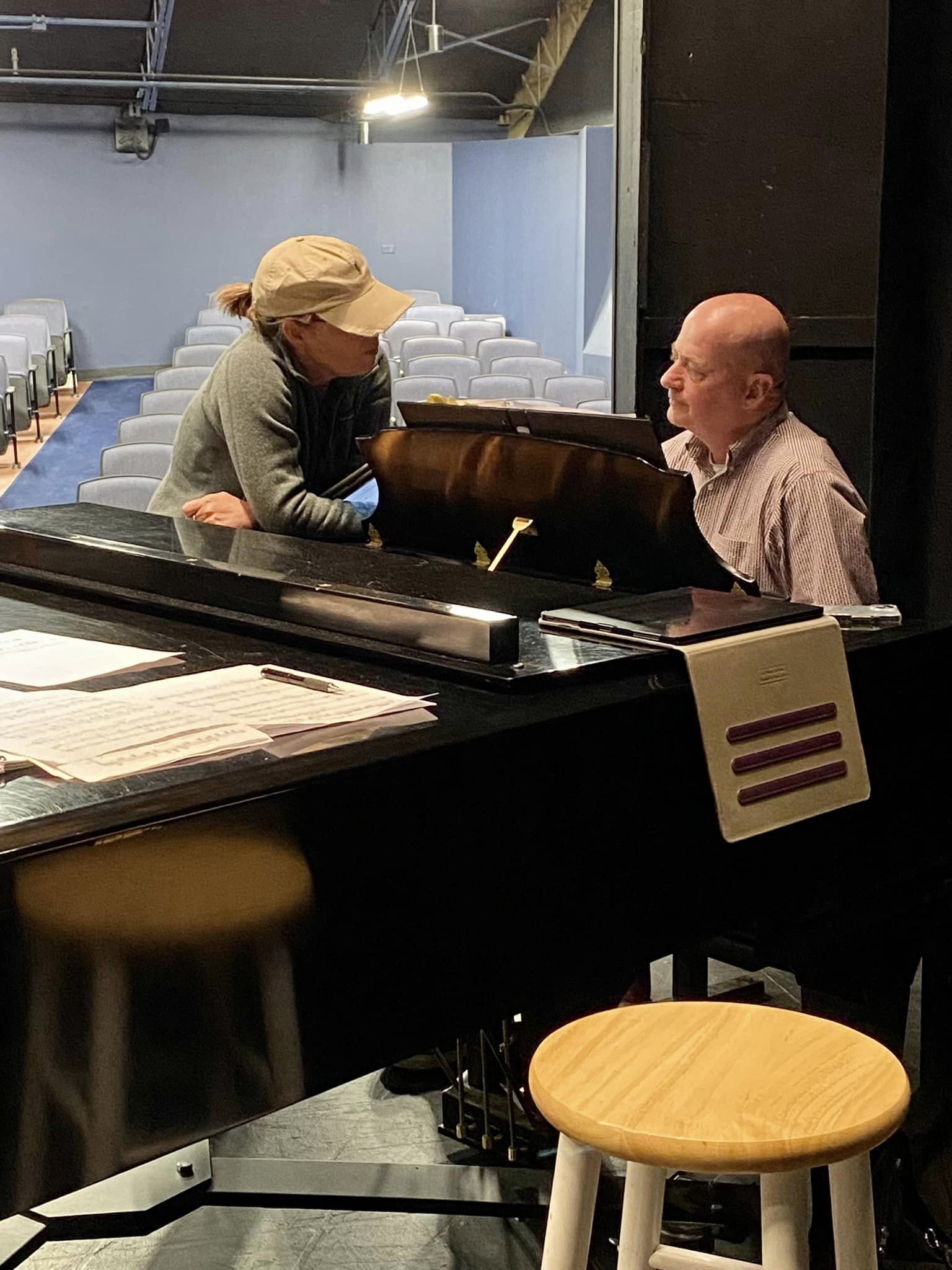
Leigh Holman (l) and composer Tom Cippullo (r) during a rehearsal for ’The Calling.’

“Then there are specific levels—for example, someone’s singing an aria, there are specific musical things. Maybe it’s only a moment, maybe it’s a beat, maybe it’s too long. Maybe something’s wrong. I don’t know what it is, but we have to try to figure out what it is, as a group.”

CU NOW, founded by Holman in 2010, provides a longer working period than most workshops—up to two or three weeks. This gives composers a chance to tackle more changes than they could in a few days, which is valuable to the creative process. Composers who have been part of CU NOW in the past include Cipullo, Kamala Sankaram, Jake Heggie and Mark Adamo.

But Holman makes it clear that CU NOW is first and foremost for the students, giving them experience they will need in their careers. Working with composers, and learning new music on short notice, have become more necessary as more new operas are being produced around the country. At first, she says, the singers struggled to keep up with the changes they had to make overnight. 

But “it’s developed now to they’re begging for music,” she says. “They ask, ‘Did you write me any music last night?’ And Tom is writing new music almost every day and sending it to them every morning, and by 2 o’clock they know it already!”

That experience prepares the students for the facts of professional life today. “This is a golden age of American Opera,” Holman says. “The singers, if they’re going to work, they need to have these skills. When we started, there weren’t other universities doing these workshops and now they’re doing them all over.”

And at this point Cipullo speaks up. “But there’s nothing like this one”! he says.

# # # # # 

CU New Opera Workshop
Leigh Holman, director
Nick Carthy, conductor
Nathália Kato, pianist

The Calling by Tom Cipullo (portions)

Music Theatre, Imig Music Building
7:30 pm. Friday, June 16
2 p.m. Sunday June 18

Free, no tickets required

A stronger Cinderella takes the stage at the Eklund Opera

Massenet’s Cendrillon offers more than a fairy tale, Friday and Sunday at Macky

By Peter Alexander March 16 at 4 p.m.

“She is a sweet girl with a lot of backbone.”

Leigh Holman, director of CU’s Eklund Opera Program, is talking about Cendrillon—real name Lucette—who is the Cinderella character in Jules Massenet’s opera based on the familiar Charles Perrault fairy tale. But if you only know the Disney version of Cinderella, you will meet some deeper characters in Massanet’s opera.

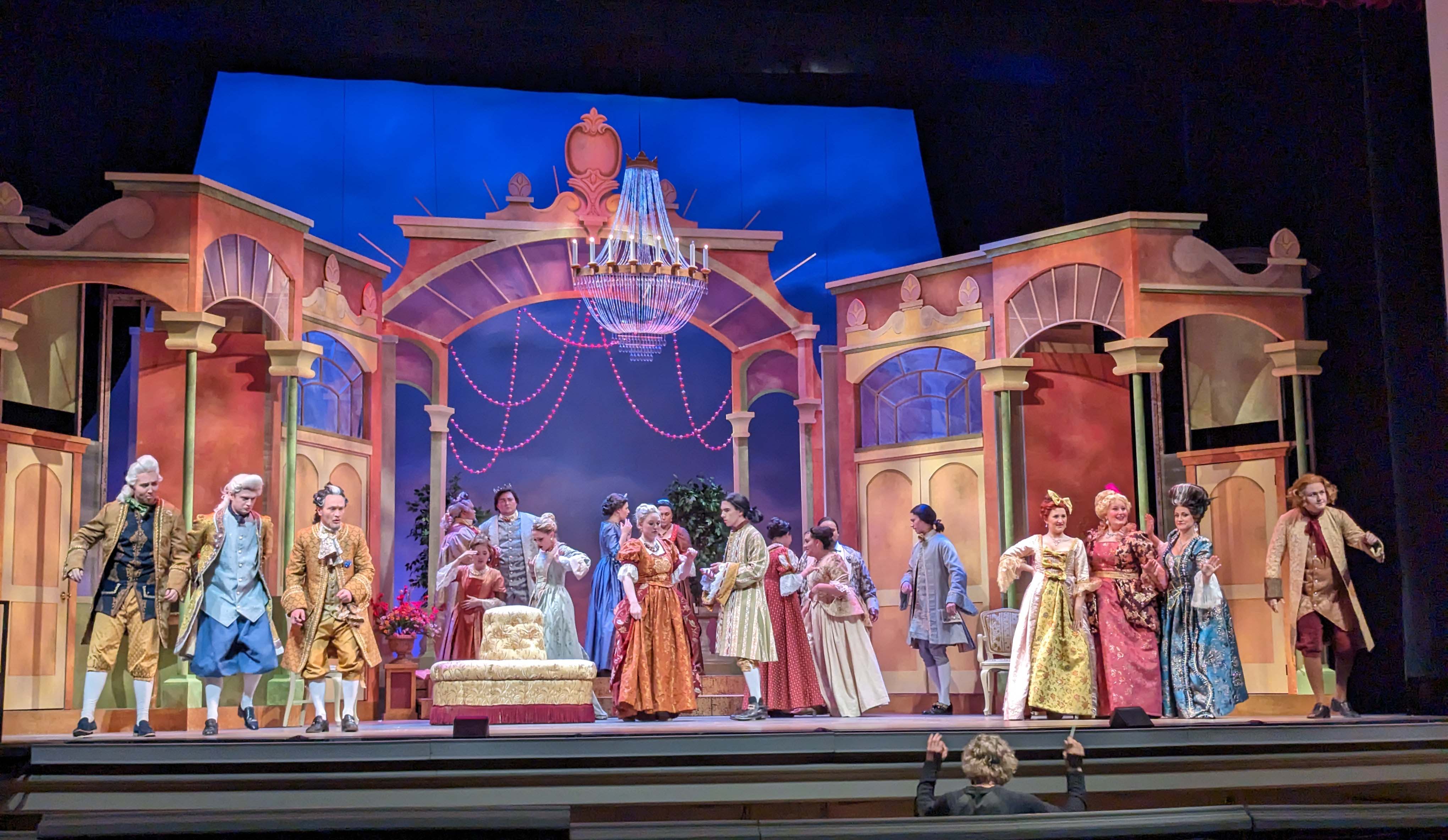
The Eklund Opera’s production of Cendrillon will be performed Friday and Sunday (March 17 and 19; details below) at Macky Auditorium. The cast of CU students will be stage directed by Holman; CU faculty member Nicholas Carthy will conduct the performances. Set deign is by Peter Dean Beck, costumes by Ann Piano.

Eklund Opera production of Massenet’s Cendrillon. Stage design by Peter Dean Beck. Nicholas Carthy conducts. Photo by Glenn Asakawa.

In general outline, the story is the same that everyone is familiar with: after her mother’s death, Cinderella’s father remarried, and her stepmother and two stepsisters mistreat her. There is a fairy godmother, a Prince, and a ball, and Cinderella has to leave at midnight. She and the Prince fall in love and are eventually reunited. That much is familiar.

But there are important differences, too. “This is not our usual fluffy fairy story,” Carthy says. “There is great depth in what happens.” For one thing, Cinderella is a stronger character; when she comes home from the ball and hears her stepsisters gossiping about the mysterious girl at the ball, she resolves to run away and she contemplates suicide. That of course raises the emotional stakes well above the Disney version with its cartoon birds and mice.

The Prince is introduced before the ball. Like Cinderella, he is morose and depressed. Life at court is boring and he’s not interested in his father’s insistence that he select a mate. He also thinks about ending it all to escape his situation. And it does not take a glass slipper for Cinderella to be found; when she and the Prince meet again, they realistically recognize each other right away

Another critical difference is the character of Cinderella’s father. He overhears the stepsisters and realizes how badly they are treating his daughter. “He decides we’re not going to put up with this any more, and I’m going to take you away,” Holman explains. “We’re gong to go back to our farm [where they lived before he remarried], and they have a beautiful duet about that. It’s really gorgeous music.”

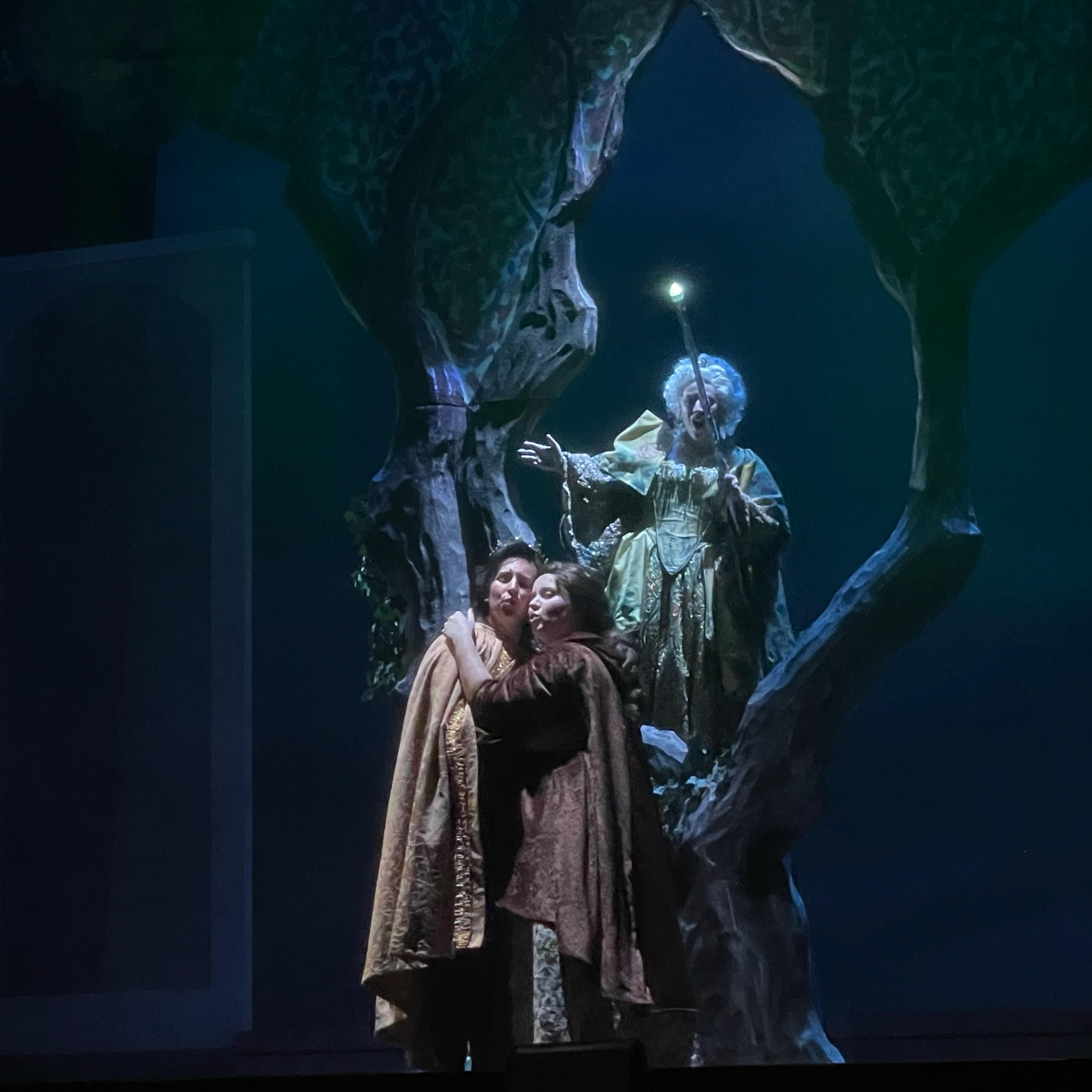
Prince (Jenna Clark), Cendrillon (Anna McMahon) and Fairy Godmother (Alice Del Simone). Photo by Leigh Holman.

For Holman the critical point in the Perrault version of the story, and one that resonates with her personally, is that fact that Cinderella has lost her mother. “Something a lot of productions bring out, and I do, is the fact that Cinderella misses her mom so much. She sings some beautiful music about her mom and how much she misses her.

“And the Prince grew up alone—his mom’s gone, too. So the first time they meet, it’s more than physical attraction; they see themselves in each other. I don’t know if they got married nor not [since that’s not explicitly in the opera], but the great thing that Cinderella gets out of this is that they find each other. So I see Cinderella going from being very lonely, the Prince going from very lonely, to being surrounded by people that love them.”

Holman says that the two students cast in the role of Lucette/Cinderella both embraced the notion of a stronger character than they had known before. “We talked about it from the very beginning,” she says. “We had a long talk about that, and both women have addressed it in different ways, but they carried that into their character.”

Holman sees Cinderella’s dilemma in stark terms. “She’s living in a horrible, violent house, she misses her mother, she misses her former life, and so when she runs away in the woods, it’s not just because she overheard [the stepsisters]. It’s just one thing piled on top of another, and that’s what broke the camel’s back.”

The music is in the lush, romantic style of the late 19th century, with some Wagner influences thrown in. “There are lots of little Wagnerian moments,” Carthy says. “But they are lightened up. They don’t have the same sort of grimness that Wagner tends to have.”

We don’t remember him so much today, but in his time Massenet was massively popular. Carthy sees him as “the Andrew Lloyd Weber of his day,” but in a good way. “Andrew Lloyd Weber steals from everybody, and so did Massenet,” he says. “But the idea of saying that is just the importance that he had. People were all whistling his tunes and there were great Massenet aficionados who went to all of his performances.”

One final important point Holman stresses is that there is more than the usual “happily ever after” in the ending. It’s two people discovering each other in a world that has been hostile. As she explains, “all the women who were trying to get the prince to marry them see the love that they have for each other, and they all become joyful.

“There is a ‘happily every after’ in that, and not just because she found a prince.”

# # # # #

Massenet: Cendrillon
Libretto by Henri Caïn
CU Eklund Opera
Sung in French with English supertitles
Nicholas Carthy, conductor, and Leigh Holman, stage director

7:30 p.m. Friday, March 17
2 p.m. Sunday, March 19

Macky Auditorium

TICKETS

Correction (7 p.m. 3/16): In the original version of the story, the composer Massenet was misspelled as Massanet. Massenet is the correct spelling.

Wei Wu returns to CU, where he started in opera

Now a guest artist in same role, same opera, same set, same stage, ten years later

By Peter Alexander Oct. 20 at 10:10 p.m.

Wei Wu left Beijing in 2008, a young bass singer with his eyes on a career in opera. The first place he came outside of China was Colorado, to study with Julie Simpson at the CU-Boulder College of Music.

He remained in Boulder for five years, singing in most productions during those years, and graduated with a master’s degree in 2013. The first full opera role he sang anywhere was on the Macky stage, in the role of Colline in Puccini’s La Bohéme.

Wei Wu as Colline in the current CU production of “La Bohéme”

This weekend he returns to the Macky stage, in the role of Colline in Puccini’s La Bohéme—and in the very same set as ten-plus years ago! (You can read about the opera and the current production here.) He will appear in all three performances presented by the Eklund Opera program, Friday through Sunday (Oct. 21–23; details below).

“It’s been like 10 years and that was the first production I did, and I’m so happy to be back,” Wu says. “Boulder has been so special to me and to my wife too, because Colorado is the first state I came to. I just love Colorado.”

Indeed, he loves Colorado so much that he has moved back to Boulder permanently. His operatic career is well established, he has an agent who can land roles for him with opera companies around the country, his wife has a job in Boulder, and he still has many friends here who are “more like a family member to us,” he says. After several years in New York, he was happy to return to a place he loves. 

Leigh Holman

Leigh Holman, the director of the Eklund Opera Program and stage director for La Bohéme is equally happy to have him here. “It’s been great for the students for him to work right alongside of them,” she says. “They have the opportunity to ask him questions and get to know him as a person, but also ask him about his experiences as a young artist.”

Wu’s experiences after leaving CU have been a model for rising young singers. After graduating, he landed a position in the Domingo Young Artist Program at Washington National Opera at the Kennedy Center in Washington D.C. From D.C. he moved to New York for several years, in order to be close to auditions and agents that could help him launch into the professional world.

Weigh Wu (r) with Ken Howard (l) as Steve Jobs at the Santa Fe Opera, 2017. Photo by Ken Howard.

He sang with several companies, but his breakthrough came in 2017 when he sang the role of Kōbun, Steve Jobs’s guru, in the world premiere of The (R)evolution of Steve Jobs by Mason Bates at the Santa Fe Opera. I reviewed that production on the Sharpsandflatirons blog, writing that he “sang with a deep resonant bass as Kōbun. In a role filled with both wisdom and wry humor, he captured the changing nuances perfectly.” (See the full review here.)

“That was my career turning point, singing in Santa Fe,” Wu says. “The world premiere brought me many other world premieres, doing more new operas. And on that they did a live recording that won the Grammy!”

His Chinese family has come to visit him in Colorado, but he has not been able to return to Beijing since the pandemic hit. His family played a large role in his interest in music: his grandfather played trumpet in jazz bands in the 1950s, and when he was growing up in the ‘80s, his father had cassette recordings of classical music.

Wu admits to a certain amount of culture shock when he first arrived in the US, and credits Holman with helping him adjust. “She was definitely one of my big mentors during my student years, who opened up my mind and helped me develop a lot,” he says. “She gave me a lot of opportunities to touch something as me.” 

His sang roles that certainly were not stereotyped for an Asian singer, including Jigger in Carousel and the sexually predatory southern preacher Olin Blitch in Carlisle Floyd’s Susannah. Asked about his mastery of Southern English, he said that he has a good ear for accents, then sang out, “Howdy Brethren and sisters!” with a good touch of twang.

After the production of Bohéme in Macky, Wu has some exciting professional engagements coming up. Next will be Tosca in Los Angeles in November and December, and Bellini’s Norma at the Metropolitan Opera in New York in February and March. And The (R)evolution of Steve Jobs continues to pay dividends: he will sing in a new production that was co-commissioned by several companies around the country, including the Utah Opera, where you can see him May 6–14, 2023 in Salt Lake City.

Now that he lives in Boulder, there may be more guest appearances with the Eklund Opera as well. “As long as the schedule works out, I would love to,” he says. 

# # # # #

Giacomo Puccini: La Bohème
CU Eklund Opera, Leigh Holman, stage director
Nick Carthy, conductor

7:30 p.m. Friday, Oct.21, and Saturday, Oct. 22
2 p.m. Sunday, Oct. 23
Macky Auditorium

TICKETS

Eklund Opera brings 19th-century Paris to Macky

Puccini’s La Bohème, opera’s ‘gateway drug,’ Friday through Sunday

By Peter Alexander Oct. 19 at 4:12 p.m.

Leigh Holman

“It’s the gateway drug for opera, because I think it’s the best first opera that anybody could ever see.”

Leigh Holman, the director of CU’s Eklund Opera, is talking about Puccini’s La Bohème, the current CU production that opens Friday at Macky Auditorium (7:30 p.m. Oct. 21). “It’s not only the story and the singing and the music, but the pacing of the piece is brilliant,” she says.

Other performances of the production will take place in Macky Saturday and Sunday (7:30 p.m. Oct. 22 and 2 p.m. Oct. 23; ticket information below). Holman is the stage director of the production, and Nicholas Carthy conducts. Guest artist Wei Wu, a 2013 graduate of CU who is building a professional career in the US, will appear in the bass role of Colline. Other parts and the orchestra will be filled with current CU music students.

Miguel Ángel Ortega Bañales as Rodolfo, Sarah Cain as Mimi

If you don’t know the story, four young starving artists share a garret in Paris. They are poor, making money as they can, but at the start of the opera they are freezing and burning their work to keep warm. One of the four, the writer Rodolfo, meets Mimi, an equally impoverished seamstress, and they fall in love.

Rodolfo and Mimi join the other Bohemians for a Christmas eve dinner at the Café Momus. This scene, filled with families, children, street vendors, waiters and patrons of the café, is brilliant and spirited, introducing Musetta, the fiery girlfriend of Rodolfo’s roommate Marcello. The rest of the opera traces the passions and the breakups of the two couples, until Mimi returns to the garret deathly ill.

The characters’ emotional ups and downs always touch the hearts of audiences. “It’s a brilliant score,” Holman says. “The music’s great, in depicting what anybody’s feeling at any time. And the pacing’s brilliant— just when you think you can’t take any more heartache, somebody’s celebrating and you’re brought along in that.”

Another reason the characters touch people’s hearts is that they are relatable. Just like the Bohemians, most of us have passed through a stage of hopes and struggles at some point in our lives. And at CU the students in the cast are the same age as the characters.

Conductor Nicholas Carthy

Popular as it is, La Bohéme is not easy to produce. Carthy points out that unlike professional companies , CU can’t do whatever they want. “The difference between us and an opera company is that they look at what they want to do and go get the singers; we look at the singers and decide what we want to do,” he says.

The key to performing Bohéme is the role of Rodolfo, which vocally requires a slightly more mature singer than the others. “You have to build it around Rodolfo,” he says. “That’s going to be a slightly older voice.” 

When you have someone who can fit that role, then you put the others in place. In this case, all the parts were cast with students except Colline, one of the four sharing the garret. His role calls for a strong bass, particularly in the aria he sings in Act IV, a farewell to his overcoat. For Colline, CU invited Chinese bass and CU grad Wei Wu back to campus. (Watch here for a separate feature on Wei Wu.)

The score is also a challenge for the conductor. Arturo Toscanini, who conducted the premiere of Bohéme in 1896, once said if you can conduct Bohéme, you can conduct anything. “It’s a massive piece of organization,” Carthy explains, “especially the second act when you’ve got all sort of different chorus voices.

“You’ve got the kids’ chorus singing different things, you’ve got the chorus split into mothers and vendors and waiters, and all the people selling different foods. But it’s the most glorious, glorious thing you can conduct!”

On top of that, the conductor and the orchestra have to be very, very flexible, he says. The tempo keeps shifting throughout, to make the musical phrases expressive. “I told the orchestra, this is music that is so flexible that if you look down, if you’re not concentrating, when you look again I won’t be where you think I am.”

This is a mater of “rubato,” to use the musical term, which means slowing down to stretch one phrase or emphasize one word of the text, then resuming the former tempo. “Taking time isn’t the problem,” Carthy says. “Once you’ve taken the time, it’s getting the momentum back. They find that more difficult. Any orchestra—any professional orchestra would find that.”

Sarah Cain as Mimi and Miguel Ángel Ortega Bañales as Rodolfo in the opera’s final scene

Opera companies around the world, and university opera programs as well, include La Bohéme in their programs again and again. That is a tribute to Puccini’s success in communicating the emotions of the opera’s young characters. And once the emotions reach listener’s hearts, they stay there. “Many opera buffs have been going to operas since they were young,” Holman says. “And they keep coming back to Bohéme.

“Once you get hooked on La Bohéme, we keep those fans forever!”

# # # # #

Giacomo Puccini: La Bohème
CU Eklund Opera, Leigh Holman, stage director
Nicholas Carthy, conductor

7:30 p.m. Friday, Oct.21, and Saturday, Oct. 22
2 p.m. Sunday, Oct. 23
Macky Auditorium

TICKETS

Portions of new opera to be presented Sunday

Kamala Sankaram’s Joan of the City is inspired by homelessness and Joan of Arc

By Peter Alexander June 17 at 5:23 p.m.

Composer Kamala Sankaram says that many of the pieces she writes start with her own imagination and not the way many operas get written— with a commission for a specific performing organization. 

“They start with a crazy idea that I have” Sankaram says. “Then I talk to people and see who also is crazy.” She then works with the “also crazy” people to bring her idea to life.

Kamala Sankaram

For her latest project, an opera titled Joan of the City that combines themes of homelessness with the Joan of Arc story, those conversations led her to Leigh Holman, director of the Eklund Opera Program at the University of Colorado, Boulder, and the New Opera Workshop (CU NOW).

Sankaram has been in Boulder for the past two weeks, composing music and working with students in the opera program to start turning her “crazy idea” into a site-specific opera that will be premiered next year by Opera Omaha. Completed portions of Joan of the City will be performed at 3 p.m. Sunday (June 19) in the Music Theatre of Imig Music Building.

The performance is free and open to the public, and will take place entirely in the Music Theatre space.

The basic idea of the opera is that not one but five Joans will be fighting, not the English invaders in France, but gentrification and other forces creating homelessness in American cities. Starting in five different places within Omaha, the Joans eventually meet up, as audiences move with them through the city.

Sankaram grew up in Southern California, where the car is king, but after she moved to New York she started walking everywhere. “Whenever I go to a new city I’m walking, and I see the homeless community,” she says. “I think it’s important to have people see what does that feel like, to be walking the city, instead of driving by in a car.

“I started thinking about [homelessness] several years ago, and it has become increasingly problematic and prevalent . . . [in] all places across the United States. So the idea was how do you get people to look and see things that they normally look past.”

Another idea was the use of technology, which features in a lot of Sankaram’s work. It is technology that will allow the onsite performances in Omaha to take place in different places across the city, and also will allow audience members to participate in the performance by playing audio from their cell phones.

The final piece of Sankaram’s “crazy idea” was working with homeless agencies—Mary’s Place in Seattle and Micah House in Omaha—to connect the finished work to the homeless community. With her co-creator of Joan of the City, New York-based hybrid-theater director Kristin Marting, Sankaram and the homeless shelters presented writing workshops for the shelter clients.

Leigh Holman (Photo by Glenn Asakawa/University of Colorado)

The work that came from those workshops became the basis of the text for Joan of the City. “The libretto is all these poems that the shelter clients wrote, and then they’re sort of structured on this overall dramatic arc from the Joan of Arc story,” Sankaram explains. “It starts off as arias and then as the Joans meet each other, it turns into duets and trios and finally a quintet.”

Sankaram’s work is an example of the kind of creative and adventurous projects that CU NOW aims to support. Many new works go through a workshop process, but CU NOW is unique in that it offers a longer than average period for composers to work with performers while refining their work. 

The program is largely Holman’s brainchild. She started CU NOW in 2010, and it has offered several composers the opportunity to refine works that were in development, including It’s a Wonderful Life by Gene Scheer and Jake Heggie, which was premiered by Houston Grand Opera in 2016 and performed by the CU Eklund Opera in 2019.

The composers and works are chosen for CU NOW largely through Holman’s contacts in the professional world. “So far nobody has ever submitted anything (for consideration),” she says. “It’s only been knowing somebody or meeting somebody through relationships, or going to see their operas. I just invite them, and they do it because they want to develop their piece and we can provide the students and the facilities and the musicians.”

In addition to the work that is done by an established composer preparing a new piece, there is simultaneously an educational component for young composers. Under the rubric Composer Fellows’ Initiative (CFI), a composer and librettist have been brought in to work with students to develop both their musical skills and their understanding of stagecraft.

Tom Cipullo

This year, the students have been working with composer Tom Cipullo, whose comic opera Hobson’s Choice was featured at CU NOW in 2019, and librettist Gene Scheer, whose was in Boulder for CU NOW last year (Intelligence, with composer Jake Heggie) as well as 2016 (It’s a Wonderful Life). 

“It’s a marvelously thrilling thing to be a part of,” Cipullo says of CFI. The composers in this year’s program “are extraordinary young musicians,” he says. “CFI gives them a push into writing operas. They have an interest, they’re all talented. How much they’ll pursue it, what works they’ll create, who can say, [but] they jumped in and they’re doing some really good things.”

# # # # #

CU Now Opera Workshop
(CUNOW)
Leigh Holman, director

Kamala Sankaram: Joan of the City (portions)

3 p.m. Sunday, June 19
Imig Music Building, Music Theatre (N1B95)

Free