MahlerFest 2025 culminates with tragic symphony

Programs are filled with music of defiance, resistance and remembrance, May 14–18 

By Peter Alexander May 12 at 8:08 p.m.

It all starts with the symphony.

Every year, the Colorado MahlerFest presents one of the symphonic works of composer Gustav Mahler—one of the ten symphonies, or another large-scale symphonic work such as the Lied von der Erde (Song of the earth). For the 38th MahlerFest taking place this week (May 14–18; see programs and other details below), that central work is the Symphony No. 6 in A minor. According to MahlerFest artistic director Kenneth Woods, everything else on the program is chosen to harmonize with the symphony.
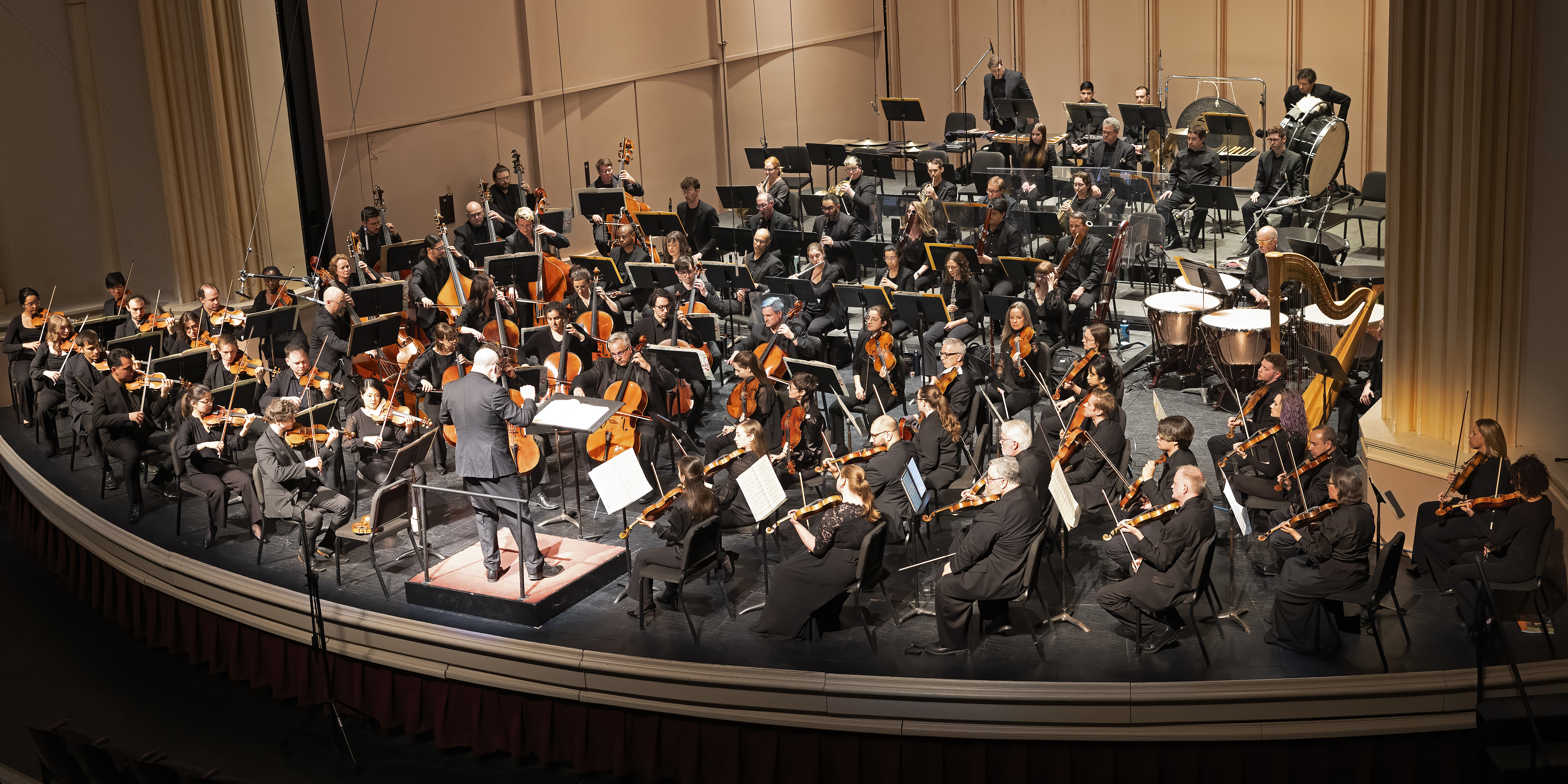
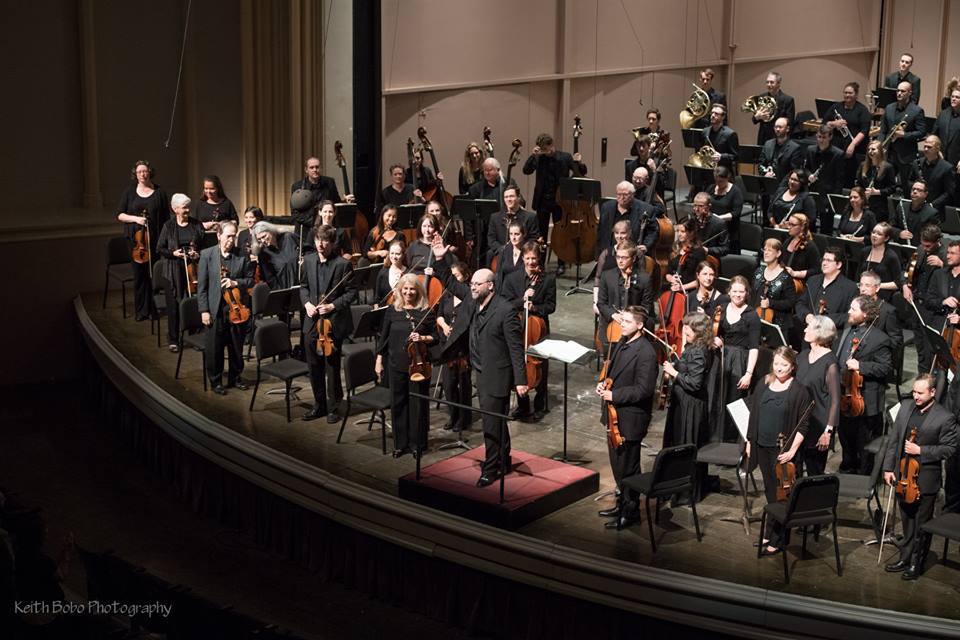
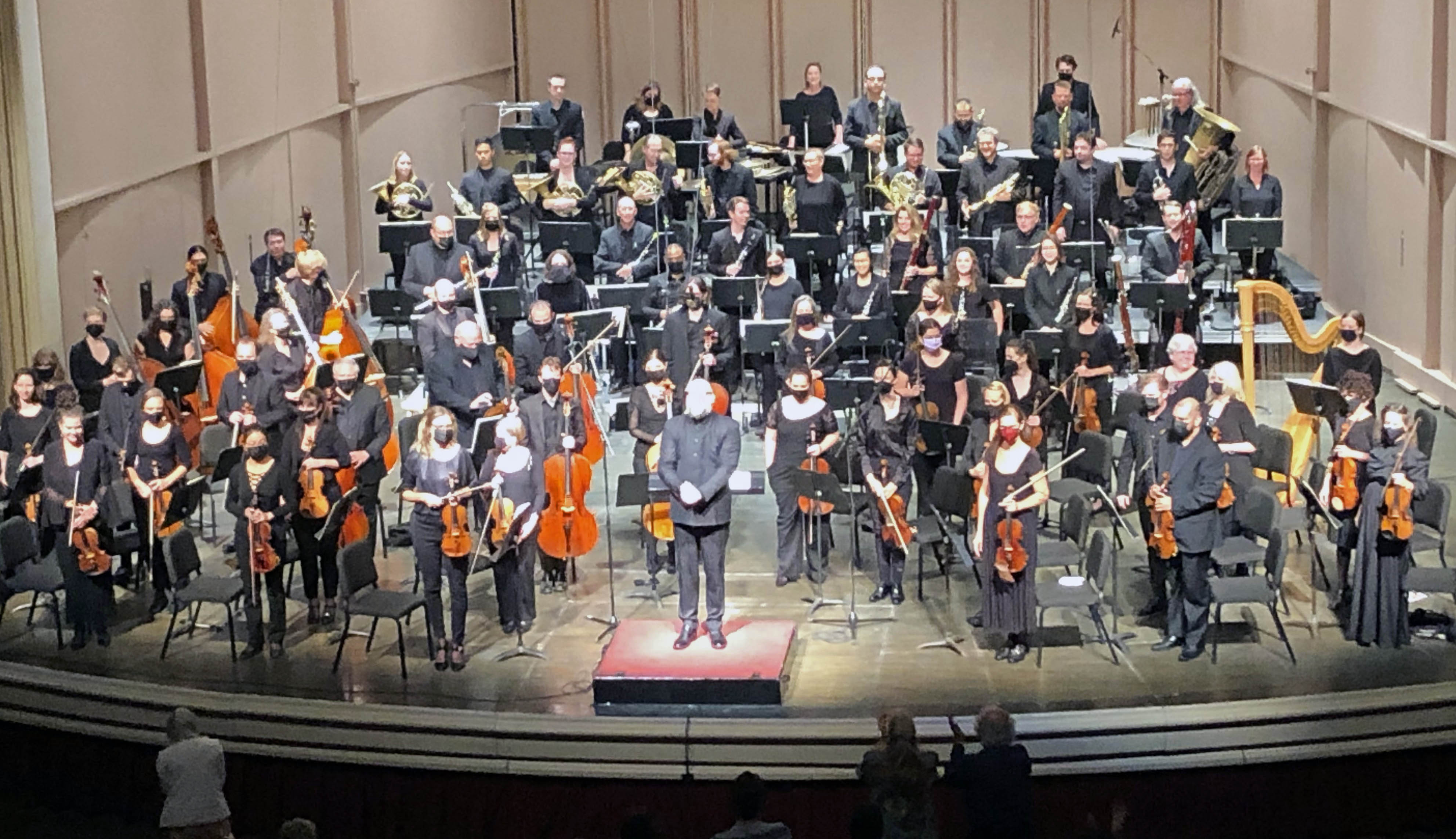
Director Kenneth Woods with the MahlerFest Orchestra. Photo by Mark Bobb.

“It always starts with the Mahler symphony,” Woods says. “Mahler’s Sixth is his only tragic symphony—it’s the only one that ends in a minor key. His late works end slowly and softly, (but) they end with some hint of consolation, where the end of the Sixth is totally and utterly bleak.

The final movement famously includes “hammer blows”—explosive thuds that represent the blows of fate. These loud, dull sounds are traditionally related to events in Mahler’s life: the death of his oldest daughter, the diagnosis of the heart condition that would hasten his death at age 50, and his dismissal from the Vienna State Opera.
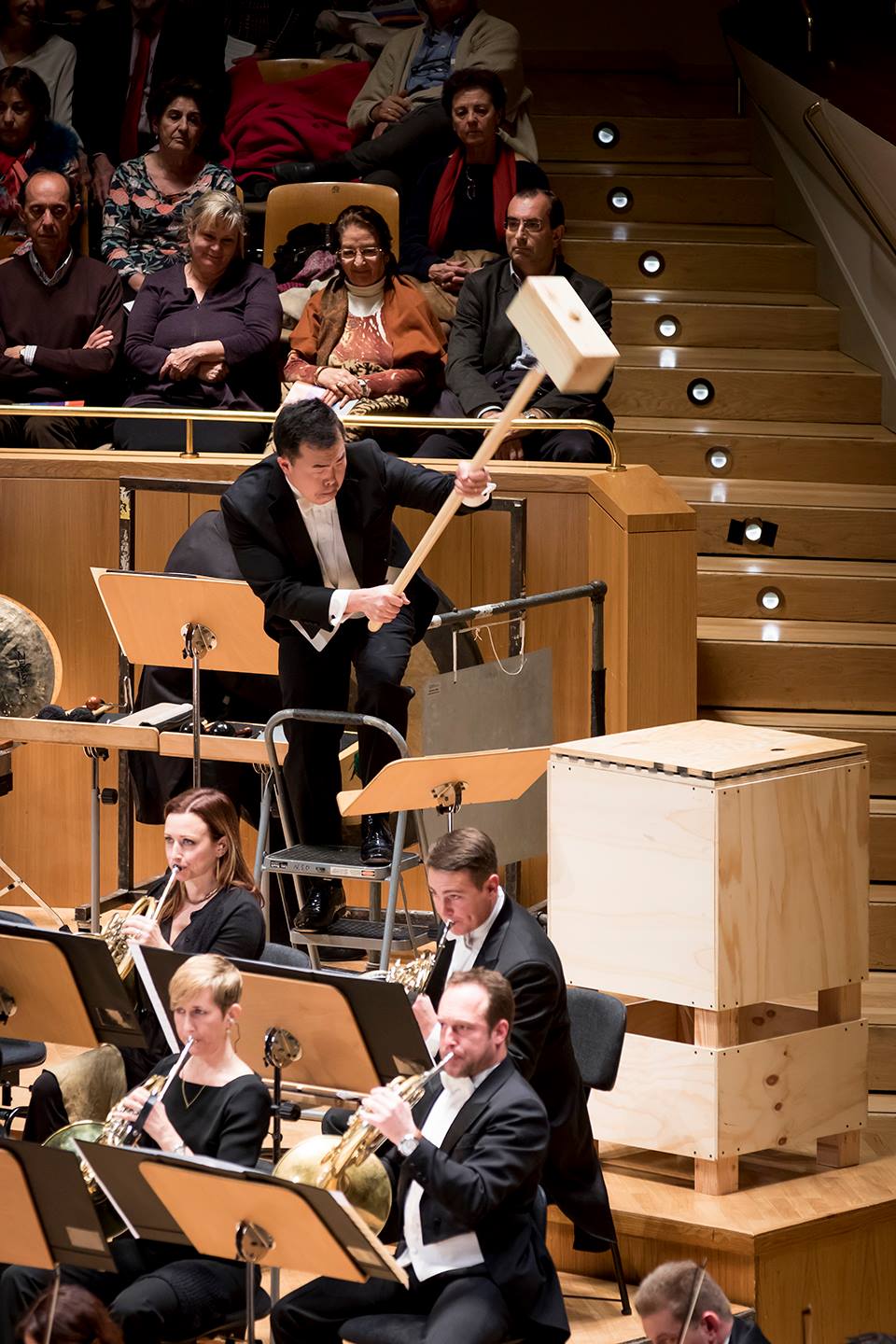
Acting Principal Percussion Eric Shin plays a Mahler Box with the National Symphony Orchestra. Photo by Scott Suchman.

The hammer blows are unique in the symphonic repertoire, and getting the right combination of loud and dull is tricky. Most orchestras have their own custom-made “Mahler Boxes” for the Sixth. They are usually a wooden box that is struck dramatically by a percussionist with a large wooden hammer. 

Mahler contemplated as many as five hammer blows. Some scores include three, the same number as the blows in Mahler’s life. But in the end, Mahler settled on two, perhaps feeling that the third blow was symbolically fatal and should be avoided.

Performances vary, but MahlerFest will include only two. “His final decision was two hammer blows,” Woods says. “Maybe in a more pessimistic era you want to include more, but we decided to do what he wrote, rather than us decide what’s best.”

For Woods, the hammer blows and the bleak ending make the Sixth Symphony even more heroic. “These hammer blows announce the inevitability of destruction and defeat, but the hero fights on ever more bravely,” he says.

He explains the symphony’s ultimate meaning with a pop culture analogy from the film Saving Private Ryan. “When Tom Hanks’s character has finally found Private Ryan, he’s dying and he says to Ryan, ‘earn this.’ I think Mahler’s Sixth is not far away from that in spirit. Mahler takes us through the life of a character who is fighting for a better world—not because he’s going to benefit from it, but we might.

The music that Woods selected for other programs come out of times of struggle and suffering. The titles of the individual programs—“Songs of Protest and Defiance,” “Determination and Defiance”—reflect that perspective. Many of the pieces directly reflect their composer’s experience during the violence of the 20th century, especially the two world wars.
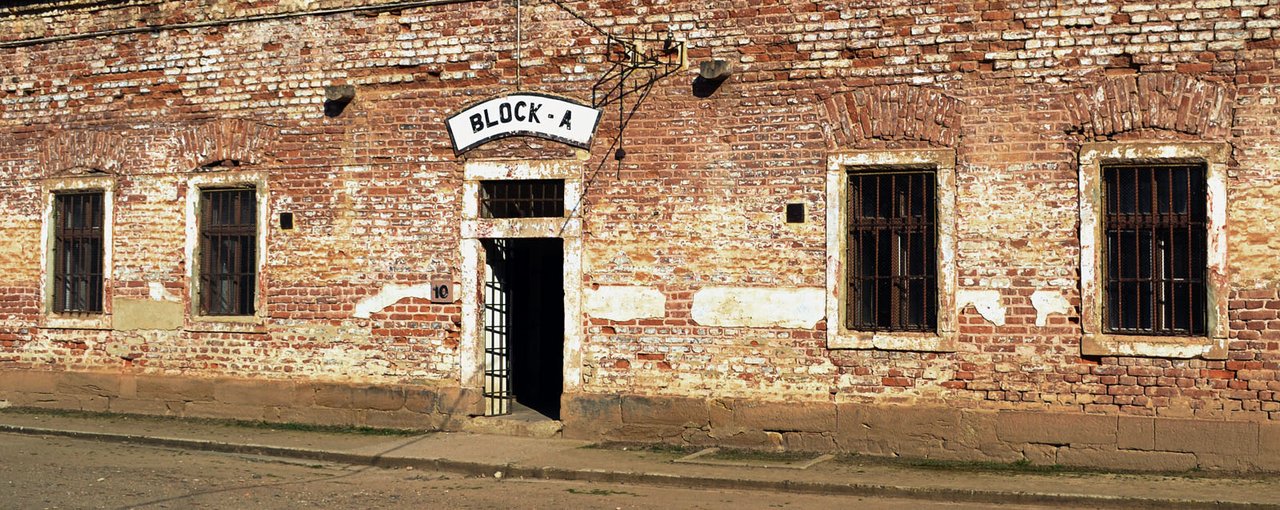
The Terezín Concentration Camp, where Viktor Ullmann wrote Der Kaiser von Atlantis

The festival’s opening night performance Wednesday (7:30 p.m. May 14 at Mountain View United Methodist Church) will present a piece actually written in the Terezín concentration camp in Austria during World War II. Although it was rehearsed in 1944, the Nazi authorities did not allow its performance, and both the composer, Viktor Ullmann, and the librettist, Peter Kien, were murdered at Auschwitz.

Titled Der Kaiser von Atlantis, oder Die Tod-Verweigerung (The Emperor of Atlantis, or The disobedience of death), it is a one-act opera about a power-mad dictator, Kaiser Überall (Emperor Overall) and Death, an overworked soldier who goes on strike. A biting, cynical piece, with the Kaiser an obvious satire of Hitler, it was a courageous statement during wartime.

“Here you have Ullmann in a camp, knowing he’s destined for Auschwitz,” Woods says. “His response was not to say, ‘oh, well,’ but to write incredibly sharp, multi-layered political satire. And dare I say, give the finger to Hitler, who was the model for the Kaiser. Ullmann is a challenge to us, because if he can set a story (mocking) Hitler in a concentration camp, then we shouldn’t feel like we can’t express ourselves directly, about music, or politics, or society.”
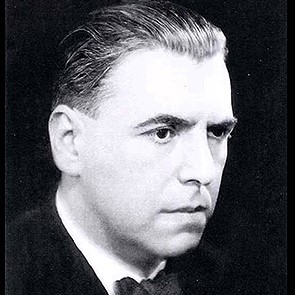
Erwin Schulhoff

Other works during the festival are worthy of attention. On the chamber music program “Determination and Defiance” (7 p.m. May 16 at the Roots Music Project), Erwin Schulhoff was a greatly gifted and widely recognized composer who emerged from serving in World War I with deep emotional scars. “Schulhoff is a particularly poignant case because the music is really touched by genius,” Woods says. 

“Everything I’ve done of his has been a huge discovery. Some of his stuff is biting, satirical, some of it is angular, and the Sextet is a tumultuous, fiery piece.”

On the same chamber program, Shostakovich’s Seventh String Quartet was written in 1959–60, at a particularly difficult time in the composer’s life. “To me, the Shostakovich (String Quartet) is an expression of what it is like to see the clouds on the horizon,” Woods says. “He’s hinting at a world of threats and shadows and whispers.”
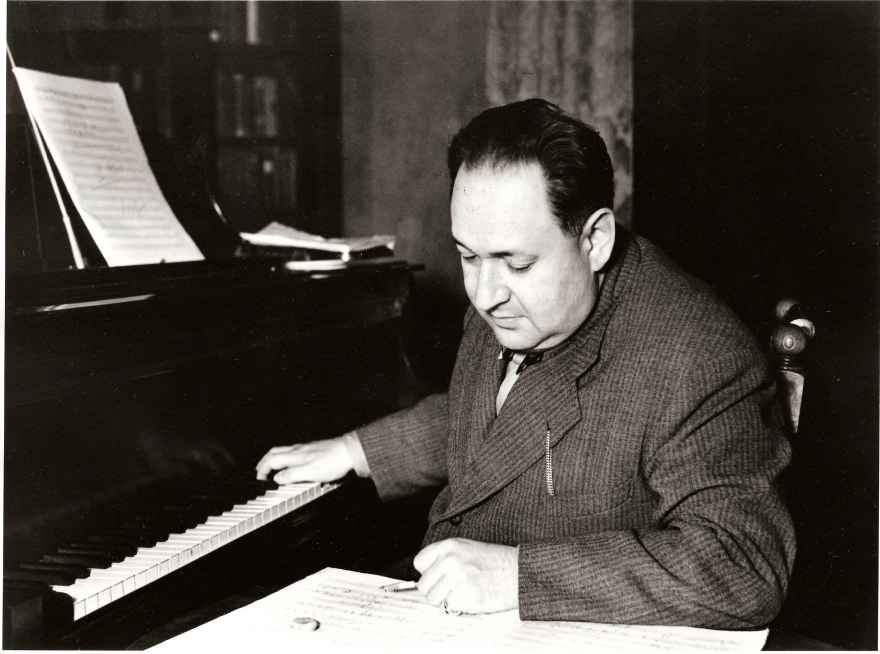
Erich Wolfgang Korngold

Saturday’s orchestral program (7:30 p.m. May 17 in Macky Auditorium) features the Symphony in F-sharp by Erich Wolfgang Korngold, whose career was shaped by World War II. “That’s a fantastic work,” Woods says. “Korngold became a hugely successful opera and concert music composer, and when Hitler came to power, he had to flee.”

Korngold came to the U.S. in 1934. He moved to Hollywood, where he was a film composer, virtually inventing the modern film score in such films as Captain Blood, The Sea Hawk and The Adventures of Robin Hood.

“He felt that he could not write music for the concert hall as long as Hitler was alive,” Woods explains. “Following World War II he began to return to the concert hall. In 1948 he wrote his one and only symphony, which does seem to trace a historical arc of those difficult years.

“We’ve got a first movement that’s very forbidding and violent, a second movement that seems full of frantic activity, then a mournful, soulful adagio like a great lament for the losses of the war, and a finale that is a celebration of peace.”

Finally, Woods singles out the two works on the culminating Sunday concert with the Mahler Sixth (3 p.m. May 18 in Macky Auditorium), Bohuslav Martinů’s Memorial to Lidice and Dismal Swamp by American composer William Grant Still. “On one level (Dismal Swamp) is about the actual Great Dismal Swamp in Virginia, quite a forbidding one,“ Woods says. “But it becomes a pathway to freedom for enslaved people during the Civil War.”
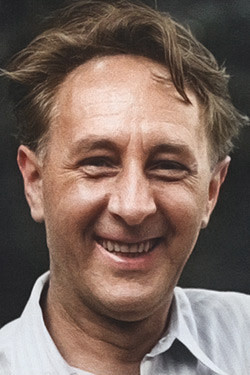
Bohuslav Martinů

One of the most direct and poignant expressions of loss and resistance is Memorial to Lidice by the Czech composer Bohuslav Martinů. In June, 1942, the Nazis obliterated Lidice, a small Czech village outside Prague, in retaliation for the assassination of Reinhard Heydrich, one of the most cruel overseers of the Holocaust. All the men of Lidice were killed, the women and children sent to concentration camps, and the town burned to the ground.

Martinů, who was living in the U.S. heard of the atrocity and wrote an orchestral memorial to the town. “It’s an amazing work,” Woods says.

“You might ask why Martinů thought writing a short piece for orchestra was going to make any difference in the middle of a world war, but the piece has outlived Hitler. (Martinů thought) I’m going to do it because it’s the right thing to do.

“I’m going to write a piece about this atrocity so at least I did something to commemorate it.”

# # # # #

Colorado MahlerFest XXXVIII
“Defiance, Protest, Remembrance”
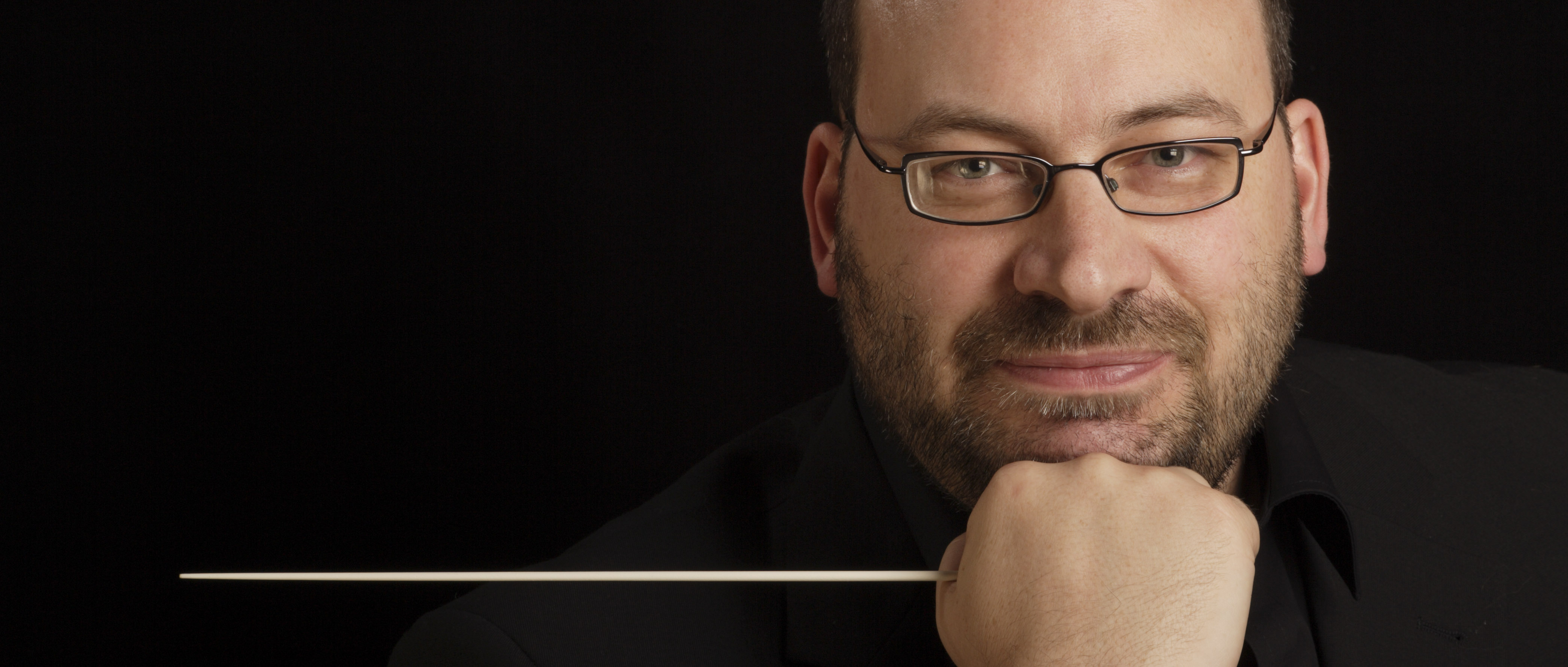
Kenneth Woods, artistic director

FULL SCHEDULE of all MahlerFest XXXVIII events HERE
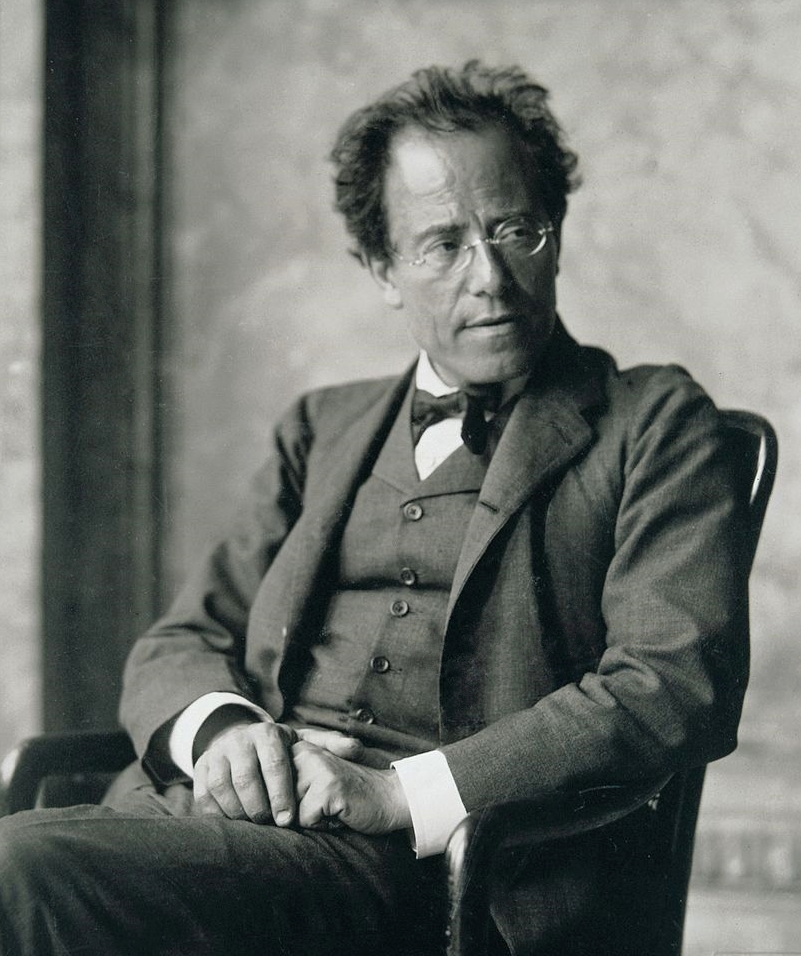
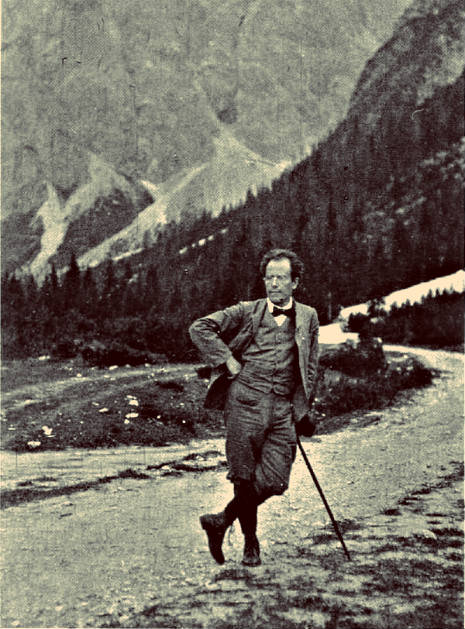
Mahler. Photo by Moritz Nähr.

Musical Performances:

Wednesday, May 14
“Death Goes on Strike”
Colorado MahlerFest Chamber Orchestra, Kenneth Woods, conductor

  • Viktor Ullmann: Der Kaiser von Atlantis, oder Die Tod-Verweigerung (The emperor of Atlantis, or The disobedience of death)

7:30 p.m., Mountain View United Methodist Church, Boulder

Thursday, May 15
Songs of Protest and Defiance
Jennifer Hayghe, piano, with Alice Del Simone, soprano; Hannah Benson, mezzo-soprano; Brennen Guillory, tenor; Andrew Konopak, baritone; Ryan Hugh Ross, baritone; and Gustav Andreassen, bass;.

  • Mahler: “Revelge” (Reveille)
  • Philip Sawyers: Songs of Loss and Regret
  • Mahler: “Der Tamboursg’sell” (The drummer boy)
    —“Wo die schönen Trompeten blasen” (Where the fair trumpets sound)
  • Schubert: “Kriegers Ahnung” (Warrior’s foreboding)
  • Shostakovich:  “Réponse des Cosaques Zaporogues au Sultan de Constantinople
  • (Response of the Zaporozhian cossacks to the sultan of Constantinople) from Symphony No. 14
  • Mahler: “Lob des hohen Verstandes” (Praise of lofty intellect)
  • Spirituals and protest songs TBD

3 p.m., Canyon Theater, Boulder Public Library
Free and open to the public

Friday, May 16
“Determination and Defiance”
MahlerFest chamber music ensembles

  • Gwyneth Walker: “Raise the Roof!”
  • Kevin McKee: “Escape”
  • Ernst Bloch: Suite No. 3 for Solo Cello
  • Shostakovich: String Quartet No. 7 in F-sharp minor, op. 108
  • Erwin Schulhoff: String Sextet

7 p.m., Roots Music Project, 4747 Pearl St., Suite V3A

“Rhythm, Roots & Resonance”
Jones/Butterfield Duo

9 p.m., Roots Music Project

Saturday, May 17
“Celebrating Peace”
Mahlerfest Festival Orchestra, Kenneth Woods, conductor
With Daniel Kelly trumpet

  • Mahler: Todtenfeier
  • Deborah Pritchard: Seven Halts on the Somme, Concerto for Trumpet and Strings
  • Erich Wolfgang Korngold: Symphony in F-sharp, op. 40

7:30 p.m., Macky Auditorium

Sunday, May 18
“Resistance”
Stan Ruttenberg Memorial Concert
Mahlerfest Orchestra, Kenneth Woods, conductor|
With Leah Claiborne, piano

  • Bohuslav Martinů: Memorial to Lidice
  • William Grant Still: Dismal Swamp
  • Mahler: Symphony No. 6 in A minor

3:30 p.m., Macky Auditorium

TICKETS for all ticketed events in MahlerFest XXXVIII may be purchased HERE.

MahlerFest 2024 explores connections 

Mountains, friendship, and wide-ranging influences celebrated

By Peter Alexander May 14 at 1 p.m.

Colorado MahlerFest 2024 comes to Boulder this week, but it might offer a little more than you expect.

Founded in 1988 to bring Mahler’s music to Boulder and the Front Range, in recent years it has expanded its programming way beyond one Austrian composer of big symphonies. And this year, the programming is so diverse—Mahler, Richard Strauss, Schubert, Schoenberg . . . and Jimi Hendrix?—that you might be hard pressed to find the unifying element. (See the festival event schedule below.)

Mahler in the Mountains

The title of this year’s festival—“Mahler and the Mountains”—only offers a hint. But the festival’s music director, Kenneth Woods, has the answer: “We’re trying to explore the idea of connection,” he says. “‘Mahler and the Mountains’ is one very important one. [You also have] Mahler and Richard Strauss, this idea of friendship, and then Mahler and Schubert is the other really good one.”

Bringing in Hendrix might seem like a radical departure (more on that later), but one continuing feature of MahlerFest is the performance of one of Mahler’s symphonies on the final concert. This year it will be the Fourth Symphony on Sunday’s Stan Ruttenberg Memorial Concert (3:30 p.m. May 19, at Macky Auditorium). Sharing the program will be the Prelude to Wagner’s Die Meistersinger and Strauss’s Metamorphosen for 23 strings.

Composed 1899-1900, the Fourth has the smallest orchestra and is in some ways the simplest of Mahler’s symphonies. Expecting a complex and massive work like the Second and Third symphonies, early audiences were disappointed, but more recently the attractive melodies and the joyful finale have made the Fourth a popular entry point for listeners new to Mahler’s music.

“It’s such a gorgeous piece, such a counterbalance to almost everything else he wrote,” Woods says. “It’s so classical, it’s so delicate, it’s so intimate and personal, he reveals something in this piece that he doesn’t show anywhere else. He’s branching out into a much more contrapuntal style (and) using the orchestra one part at a time. It gives it that beautiful transparency that’s not like anything before it.”

Woods says he picked the Meistersinger Prelude for the program because both Mahler and Strauss were heavily influenced by Wagner, and because it features the brass section that the Fourth Symphony barely uses. “We wanted to bring the brass with us to the end of the festival,” he says. “We like our brass section!”

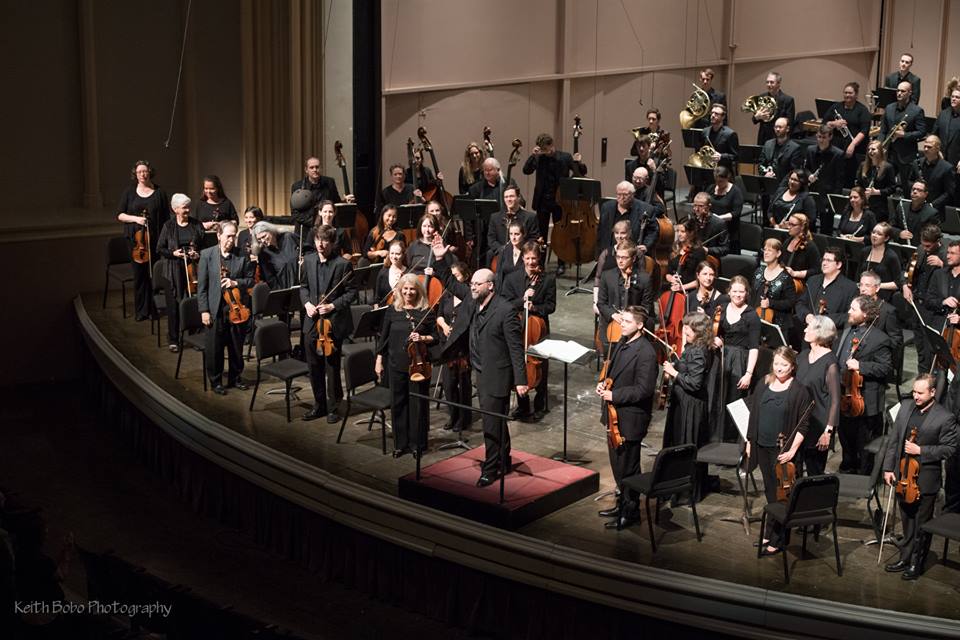
Kenneth Woods with theMahlerFest Orchestra. Photo by Keith Bobo.

Less known than Strauss’s major tone poems and operas, Metamorphosen was one of the composer’s last pieces. And it is one of Woods’s favorites. “I think it might be his greatest work,” he says. “To me, Metamorphosen is the culmination of [Strauss’s] fluidity of musical thought. I don’t  think music could go any further in that direction.”

This year’s MahlerFest also includes an orchestral concert on Saturday (7:30 p.m. May 18, also in Macky). The featured orchestral work connects Mahler, the mountains and Strauss: the Alpensinfonie (Alpine Symphony) that Strauss wrote, in part as a memorial to Mahler. This piece is another of Wood’s favorites, although he has never conducted it before. “I’ve been trying to get a chance to conduct this piece for as long as I can remember,” he says. “I’ve been told ‘No!’ by orchestra managers more times for Alpine Symphony than for any other piece.”

Alphorns. Photo by Christo Vlahos.

The problem is that the Alpine Symphony not only calls for a huge orchestra, running up the costs for organizations that perform it, it also includes alphorns in E-flat that are especially hard to find. These are the long, curved, wooden trumpet-like instruments associated with the Swiss Alps. Because they have no valves, they cannot be transposed. Fortunately, MahlerFest’s provider of alphorns, Salzburger Echo, was able to supply properly pitched alphorns at the last minute so that the festival did not have to improvise a solution. 

“MahlerFest is the perfect place to do (the Alpine Symphony),” Woods says. “To do it here with the Rockies in the background is just magical. It’s an amazing piece, with a strong connection to Mahler. (Strauss) had the idea of something Alpine for over 10 years, but it was only after Mahler died that he started writing as kind of an homage.”

Richard Strauss and Mahler, 1908

Mahler loved the mountains and often hiked in the alps. Strauss’s score describes such an excursion, including a thunderstorm on the summit, but Woods says it stands for much more. “It’s a clear metaphor for the arc of life,” he says, “that striving that it takes to get to a summit, and the fact that none of us get to stay there—we all have to come down eventually.”

Filling out the program is another piece standing for Mahler’s connections to other composers:  his arrangement for full string orchestra of Schubert’s String Quartet in D minor, known as “Death and the Maiden.” Woods points out that arrangements of chamber music, and especially string quartets, for larger ensembles were common in the early 20th century.

“Mahler was in that generation, post Wagner, where everything is getting bigger and bigger,” he explains. “He gets the idea to take some string quartets and arrange them for large string orchestra. It makes it into a different piece in a way and reveals different aspects of the piece. I’m a big fan of (arrangements), and Mahler was, too.”

Other arrangements featured earlier in the festival are not larger, but smaller than the original. During and after World War I, musical resources were strained, and composers were writing pieces for smaller and smaller groups, like Prokofiev’s “Classical” Symphony (1917) and Stravinsky’s Histoire du Soldat (Soldier’s Tale, 1924). Arnold Schoenberg and others started making chamber arrangements of symphonies and other large orchestral pieces by Mahler. 

Richard Strauss

Wednesday’s opening night concert (7:30 p.m. May 15 at Mountain View Methodist Church) will include several of those Mahler arrangements, including movements from the Fourth Symphony, as well as with a chamber version of Wagner’s Siegfried Idyll and Richard Strauss’s revered Four Last Songs. On Thursday, a free concert at the Boulder Public Library Canyon Theater will feature the MahlerFest Brass Quintet playing original works for brass and, yes, a Mahler arrangement.

Friday evening (May 17) brings the most outré part of MahlerFest, including the works furthest removed from Mahler’s orbit. There will be two performances that evening at the Roots Music Project, 4747 Pearl St. in Boulder. The first performance, at 7 p.m., will feature string players from the MahlerFest Orchestra and the Tallā Rouge Duo, a Persian-Cajun fusion viola duo.

The centerpiece of the program will be Schoenberg’s string sextet Verklärte Nacht—a deeply Romantic and descriptive piece still well within Mahler’s orbit. The rest of the program will comprise various ethnic-oriented pieces by Hawaiian/Kanaka Maoli composer Anne Leilehua Lanzilotti, folk/jazz violinist Karl Mitze, and bluesy fiddle pieces by African-American composer Coleridge-Taylor Perkinson.

Starting at 9 p.m., the evening’s second event strays furthest from Mahler and the late 19th century, and brings us back to Jimi Hendrix. Titled “Electric Liederabend: Hendrix Meets Mahler,” the performance will juxtapose one of America’s most creative rock musicians with the composer of big symphonies . 

Woods will showcase his electric guitar and arranging skills, performing his own versions of Mahler—or at least music derived from Mahler—with a small combo. His 9 Reasons: A Meditation on Mahler’s Ninth Symphony will open the program, which also includes his arrangement of music from Elgar’s Cello Concerto and Mahler’s Der Abschied (The farewell).

Jimi Hendrix

Hendrix has his own place on the program, with “Machine Gun” and “Up from the Skies.” There is no mention of “Purple Haze,” but Woods says there could always be an encore. “‘Purple Haze’ is the first song I learned on the guitar,” he says. “When I got my first electric, I bought the ‘How to Play Jimi Hendrix’ book, and ‘Purple Haze’ was the first one I learned.”

While Hendrix once mentioned Mahler as an influence, to most listeners there’s little obvious musical connection between them. However, Woods likes to look deeper into the personalities of the two artists. “I wanted to showcase Jimi’s later development a little bit more, as he got more into the metaphysics and more complicated musical ideas,” he says.

And in the symphonic world, metaphysics and complexity naturally lead to Mahler.

A full schedule of events, including workshops, open rehearsals and pre-concert discussions, with artists’ bios and links for sales for ticketed events, is available on the MahlerFest Web page.

# # # # #

“Mahler & the Mountains”
Mahlerfest 37

Opening Night: “Visions of Childhood”
MahlerFest Chamber Orchestra, Kenneth Woods, conductor
With April Fredrick, soprano, and David Taylor, bass trombone

  • Mahler: Mahlerei, Concertino for bass trombone and chamber orchestra, arr. Schnyder/Horowitz (from Symphony No 4, Scherzo)
  • Richard Strauss: Vier letzte Lieder (Four last songs), arr. Ledger
  • Mahler: Symphony No. 4, First movement, arr. Kenneth Woods
  • Wagner: Siegfried Idyll, arr. Woods
  • Humperdinck: Hänsel und Gretel, “Der kleine Sandmann” (The little sandman) and “Abendsegen” (Evening blessing), arr. Woods
  • Schubert: Die Forelle (The trout), song and variations, arr. Woods
  • Mahler: Des Knaben Wonderhorn, Das irdische Leben (The earthly life), arr. Woods
  • Schubert: Der Tod und das Mädchen (Death and the maiden), song and variations, arr. Woods
  • Mahler: Symphony No. 4, Fourth movement, arr. Stein

7:30 p.m. Wednesday, May 15
Mountain View United Methodist Church, Boulder

Mountains of Brass
MahlerFest Orchestra Brass Quintet
Daniel Kelly and Richard Adams, trumpet; Lydia Van Dreel, horn; Lucas Borges, trombone; and Jesse Orth, tuba

  • Anthony Barfield: Gravity
  • David LeRoy Biller: Little Piece for Brass Quintet (world premiere)
  • Victor Ewald: Quintet No. 3 in D-flat
  • Mahler: Die zwei blauen Augen (The two blue eyes), arr. Michael Drennan
  • Jimi Hendrix: “Angel,” arr. David LeRoy Biller
  • Joan Tower: Copperware
  • Morley Calvert: “Suite from the Monteregian Hills”

3 p.m. Thursday, May 16
Canyon Theater, Boulder Public Library
FREE

Transfigured Night: Schoenberg & More

Members of MahlerFest Orchestra and Tallā Rouge Duo
Alan Snow, Caroline Chin and Sophia Szokolay, violin; Lauren Spalding and Aria Cheregosha, viola; Kenneth Woods and Parry Harp, cello

  • Karl Mitze: Seesaw
  • Anne Leilehua Lanzilotti: Silhouette, Mirror
  • Coleridge-Taylor Perkinson: Blue/s Forms
    Louisiana Blues Strut
  • Schoenberg: Verklärte Nacht (Transfigured Night)

7 p.m. Friday, May 17
Roots Music Project, 4747 Pearl St., V3A, Boulder

Electric Liederabend: Hendrix Meets Mahler
Kenneth Woods, guitar and vocals; David LeRoy Biiler, bass and guitar; Michael Karcher-Young, bass and drums; Michael Baker, drums

  • Mahler: 9 Reasons: A Meditation on Mahler’s Ninth Symphony, arr. Woods
  • Woods: Life/Time
  • Elgar: Malvern Hills Melancholy, arr. Woods from the Cello Concerto in E minor
  • Jimi Hendrix: “Machine Gun”
    —“Up from the Skies/Third stone from the Sun”
  • Mahler: Der Abschied (The farewell), arr. Woods

9 p.m. Friday, May 17
Roots Music Project, 4747 Pearl St., V3A, Boulder

Symposium
Speakers: Jeremy Barham, Joseph Horowitz, Aaron Cohen, Matthew Mugmon, Nick Pfefferkorn and Kenneth Woods

9:30 a.m.–5 p.m., Saturday, May 18
Mountain View United Methodist Church
FREE and live-streamed on YouTube

Strauss and Schubert
MahlerFest Orchestra, Kenneth Woods, conductor

  • Schubert: String Quartet in D minor (“Death and the Maiden”), arr. Mahler
  • Richard Strauss: Eine Alpensinfonie, op. 64

7:30 p.m. Saturday, May 18
Macky Auditorium

Stan Ruttenberg Memorial Concert
MahlerFest Orchestra, Kenneth Woods, conductor
With April Fredrick, soprano

  • Wagner: Prelude to Die Meistersinger von Nürnberg
  • Richard Strauss: Metamorphosen
  • Mahler: Symphony No. 4 in G major

3:30 p.m. Sunday, May 19
Macky Auditorium

Tickets for the full festival or individual ticketed events available HERE

CORRECTIONS: The original version of this story stated that MahlerFest had to use extensions to pitch the alphorns in the proper key. After this story was written, the festival was able to obtain horns pitched in E-flat, as reflected in the later version of the story. And due to an editing error, the Friday night concerts (May 17) were originally listed in the article as taking place on Thursday, May 16. Sharpsandflatirons regrets the error.

MahlerFest will ‘Rise Again’ with 36th season

Film, chamber music, songs, and the massive Second Symphony May 17–21

By Peter Alexander May 16 at 11:15 p.m.

They just keep coming back.

They don’t build nests, but like the swallows to Capistrano, every May a group of musicians return to Boulder. They come here to play in the annual Colorado MahlerFest, for the 36th time this year.

Kenneth Woods with the Colorado MahlerFest Orchestra. Photo by Keith Bobo

This year’s festival, titled “Rise Again,” runs from Wednesday through Sunday, and includes events at Mountain View Methodist Church, the Boedecker Theater at the Dairy Arts Center and Macky Auditorium (May 17–21; full programs and details below).

As it has from the very first MahlerFest, this year’s event culminates in the performance of a major orchestral work: the Symphony No. 2 in C minor that features orchestra, chorus and vocal soloists (3:30 p.m. May 21 in Macky). It is the chorus of the Second Symphony that provides the festival title when they sing “Rise Again! You shall rise again!” This theme is also featured in the other work on the Sunday concert program, “Phoenix Rising” by the living Scottish composer Thea Musgrave.

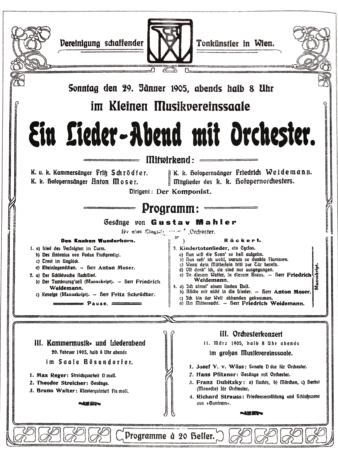
Original poster for Mahler’s 1905 Lieder Concert

Preceding the Sunday performance of “Mahler and Musgrave,” there will be a free symposium titled “Authors and Editors” focusing on the featured work and other aspects of Mahler’s life (9 a.m. to 4 p.m. Saturday, May 20, at Mountain View Methodist, with lunch break).

A recent trend that continues in the 36th MahlerFest is the expansion of the repertoire to composers associated with, or in some way influenced by, Mahler. This development has been driven by artistic director Kenneth Woods, who took over MahlerFest from Robert Olson, the founding director, in 2015. Woods has said that his aim in expanding the repertoire is for the audience to hear more than works by Mahler and to provide context for the Mahler works that are performed.

This year’s concerts leading up to Sunday will present a symphony by Hans Gál, an Austrian composer of the generation after Mahler, and a chamber version of the first act of Wagner’s Die Walküre, which influenced the opening of the Second Symphony (7:30 p.m. Wednesday); a program of solo works (3 p.m. Thursday); a screening of Ken Russell’s loosely biographical 1974 film Mahler (7 p.m. Thursday); a chamber concert of music by Ernst Bloch and Erich Wolfgang Korngold, described in the program as “Mahler’s Musical Heirs” (7:30 p.m. Friday); and a concert recreating a program of Mahler’s song cycles that the composer conducted in Vienna in 1905 (7:30 p.m. Saturday).

Full program listings and details for each concert are given below.

But back to the swallows. One of the most notable aspects of the MahlerFest has been how many musicians develop a deep loyalty to the festival and return year after year. There is even one orchestra member—assistant principal string bass player Jennifer Motycka—who has played in every single MahlerFest, and many others play year after year.

Festival Artist Lauren Spaulding

One of these is violist Lauren Spaulding, who this year is a “Festival Artist”—performers who are chosen to lead orchestral sections or appear as soloists. “There’s something so engaging about playing Mahler with a bunch of cohorts,” she says. “Mahler demands a lot of flexibility and brings a little bit of the European musical traditions that you don’t really see these days in the States with the kinds of demands that they put on auditions— in time and in tune and correct and exactly right with the metronome.”

That flexibility and playing with like-minded musicians are key for Spaulding. She remembers a performance in 2019 of Mahler’s song cycle “Songs of a Wayfarer” as a moment of illumination. “It was beautiful, and playing it with musicians who are so flexible was a humbling experience for me. (That) opened my eyes to the fact that music is living poetry.”

She also singles out artistic director and conductor Kenneth Woods for praise. “Ken is amazing,” she says. “He’s a big reason I keep coming back. He follows what’s on the page, but man does he like make it live!”

For his part, Woods points to the ”friendly social environment within the orchestra, which I think partly comes from people who want to be here. And also just the fact that Boulder’s a fantastic place to spend a week! Everyone’s excited to get here, see the mountains, hear the music, and to see their friends.”

Woods believes that the collegial atmosphere comes partly from the Festival Artists. “We’ve chosen those people very, very carefully that they’re not just really good musicians, but that they’re great colleagues,” he says. “They’re there to inspire but also to encourage and to engage.”

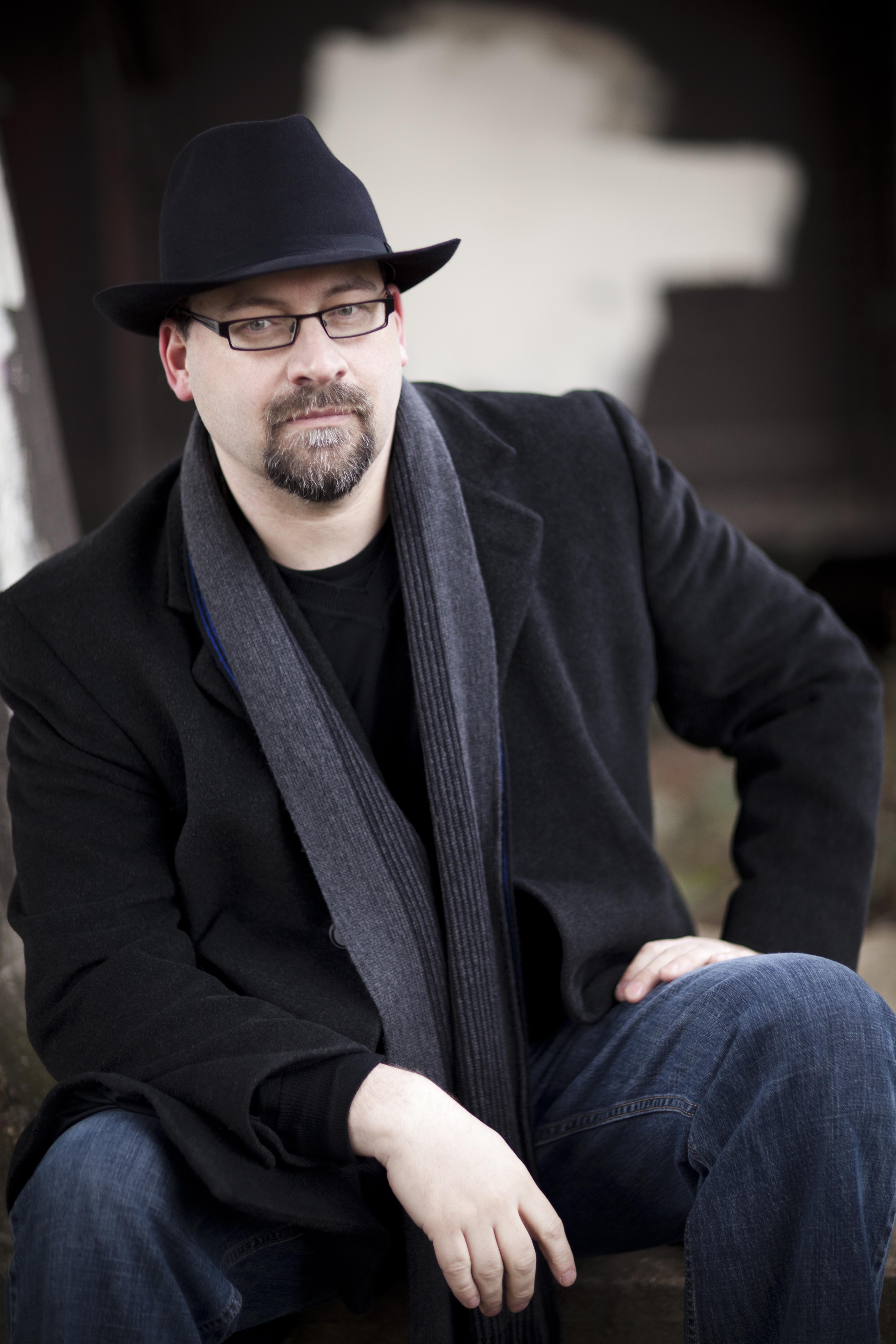
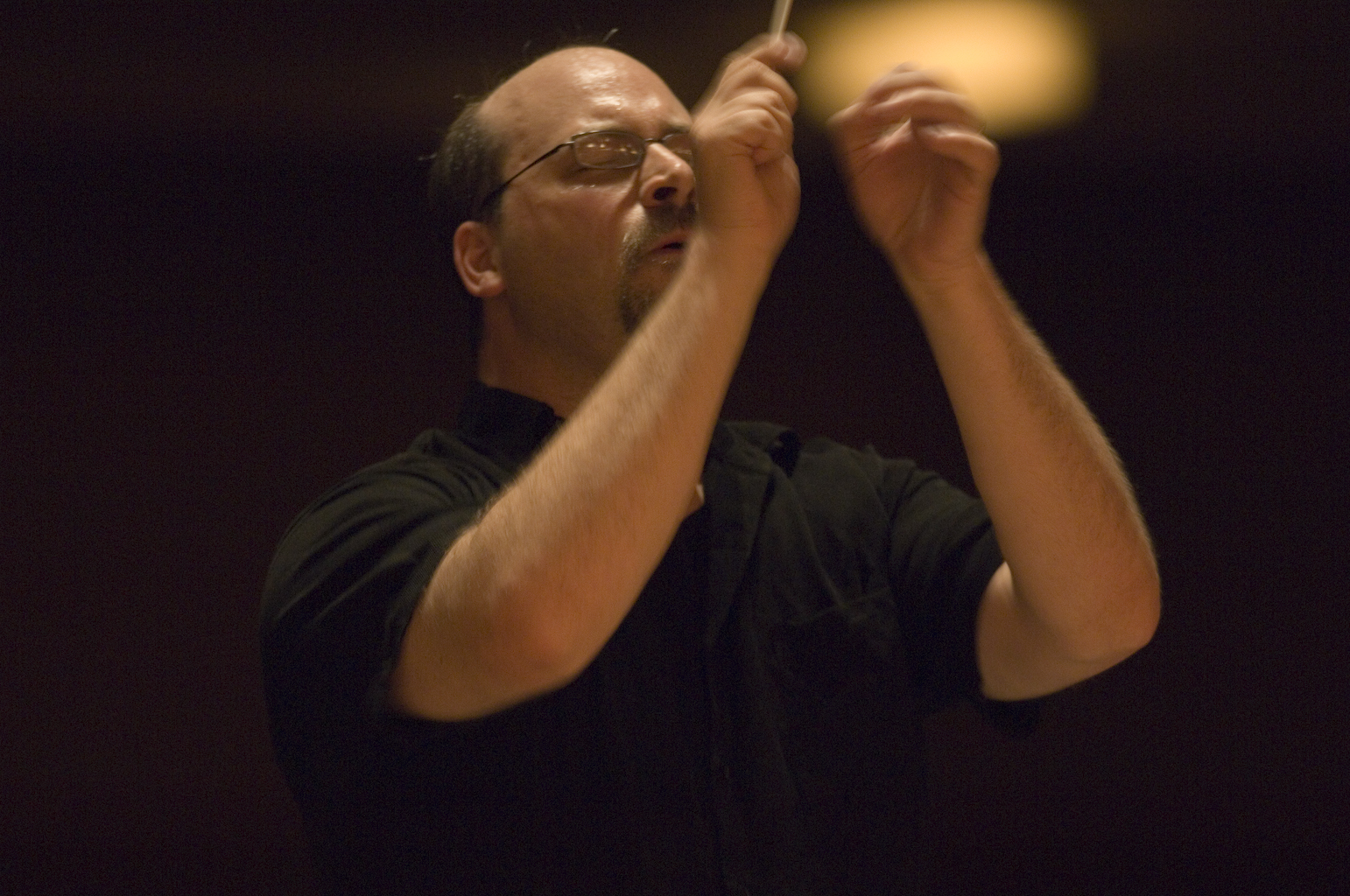
Kenneth Woods

Woods and Spaulding both credit the varied repertoire for attracting musicians. “From day one I wanted to stay true to the core aspects of the festival but to really broaden the repertoire and increase the ambition,” Woods says. “For those who want to push themselves and explore new repertoire, this is a great place to do it.”

It’s definitely the expanded repertoire that brought tenor Brennen Guillory back for his second MahlerFest. He sang the tenor solos in Mahler’s Lied von der Erde (Song of the earth) in 2018, and this year he will be featured as Siegmund in the chamber performance of Wagner’s Die Walküre Act I Wednesday.

“Siegmund is a great role!” he says. “It’s one of those things I really love to sing. It’s a very rewarding piece, it’s kind of got everything.”

Like Spaulding, Guillory says that the conductor is also part of the attraction. “I’ve been working with Ken on and off for probably 20 years,” he says. “He’s a really great conductor to work with—very collaborative, very generous, patient, and he knows the music in and out.”

Finally, Woods wants you to know that the repertoire, while diverse, is more than a potpourri. The programs have been put together with a theme that runs through the festival. “I tried to program the festival so that the introduction of the human voice in (Mahler’s Second Symphony on Sunday) grows out of what we’ve heard earlier in the week. Both (Wagner’s Walküre Wednesday) and the Liederabend (Saturday) are intended to give a sense of Mahler’s roots.”

Woods details the connections between Mahler’s conducting of Wagner and his musical forms, between the Second Symphony and Walküre specifically, and between the songs he wrote and the music in his symphonies. “It’s lovely to see how vocal music informed his writing for the orchestra, and also the close relationship between song and symphony.

“That sense of Mahler the conductor and how that affects his work as a composer is always interesting to me.”

# # # # #

MahlerFest XXXVI: “Rise Again”
Main Events

“Opera and more: Wagner and Gál”
Colorado MahlerFest Chamber Orchestra, Kenneth Woods, conductor
With Stacey Rishoi, soprano, Brennen Guillory, tenor, and Gustav Andreassen, bass

  • Hans Gál: Symphony No. 4 (U.S. premiere)
  • Wagner: Die Walküre, Act I (Arr. for chamber orchestra by Francis Griffin)

7:30 p.m. Wednesday, May 17
Mountain View Methodist Church

“Solo Journeys”
MahlerFest Festival Artists: Zachary DePue, violin; Parry Karp, cello; Hannah Porter Occeña, flute; Daniel Silver, clarinet; and Lauren Spaulding, viola

  • Luciano Berio: Sequenza I for flute
  • Egon Wellesz: Rhapsody for solo viola, op. 87
  • Olivier Messiaen: Abîme des oisseaux (Abyss of the Birds) from Quatuor pour la fin du temps (Quartet for the end of time)
  • Max Reger: Suite in D minor for solo cello
  • Erwin Schulhoff: Sonata for solo violin

3 p.m. Thursday, May 18
Mountain View Methodist Church

Ken Russell’s Mahler
Screening of Ken Russell’s 1974 film Mahler

7 p.m. Thursday, May 18
Boedecker Theater, Dairy Arts Center

“Generation Next—Mahler’s Musical Heirs”
Zachary DePue and Caroline Chin, violin; Lauren Spaulding and Aria Cheregosha, viola; Parry Karp and Kenneth Woods, cello; and Jennifer Hayghe, piano

  • Ernst Bloch: Suite for cello and piano (trans from the Suite for viola)
  • Erich Wolfgang Korngold: String Sextet in D major, op. 10

7:30 p.m. Friday, May 19
Mountain View Methodist Church

MahlerFest XXXVI Symposium—Authors and Editors

  • Renate Stark-Voit, editor of the critical edition of Mahler’s Symphony No. 2
  • Joseph Horowitz, author of The Marriage: The Mahlers in New York
  • Kenneth Woods, MahlerFest artistic director
  • April Fredrick, soprano, opera, concert and recording artist
  • Peter Davison:, author to Wrestling with Angels

9 a.m.–4 p.m. Saturday, May 20
Mountain View Methodist Church; FREE

Mahler’s Liederabend
Recreation of Mahler’s concert in Vienna, Jan. 29, 1905
Colorado MahlerFest Orchestra, Kenneth Woods, conductor
With April Fredrick, soprano; Stacey Rishoi, mezzo-soprano; Brennen Guillory, tenor; and Gustav Andreassen, bass

  • Mahler: Selections from Das Knaben Wunderhorn (The youth’s magic horn)
  • Kindertotenlieder (Songs on the death of children)
  • Rückert-lieder (Songs after Rückert)

7:30 p.m. Saturday, May 20
Macky Auditorium

Stan Ruttenberg Memorial Concert: “Mahler and Musgrave”
Colorado MahlerFest Orchestra, Kenneth Woods, conductor
With April Fredrick, soprano, and Stacey Rishoi, mezzo-soprano
Boulder Concert Chorale, Vicki Burrichter, director

Thea Musgrave: Phoenix Rising
Mahler: Symphony No. 2 in C minor (“Resurrection”)

3:30 p.m. Sunday, May 21
Macky Auditorium

TICKETS for individual performances or packages

You may see the full calendar of events for MahlerFest XXXVI HERE.

NOTE: Typos corrected 5/15. The correct spelling of the soprano soloist is Fredrick, not Frederick.

MahlerFest includes works by Bartók, Casella, guest composer Christopher Gunning

Thirty-fifth festival returns to near-normal with five days of activities

By Peter Alexander May 16 at 10:20 p.m.

It has only been nine months since the COVID-postponed 34th Colorado MahlerFest, but the festival is returning in its usual May slot and with a full schedule this week.

Performances in the 35th festival include the usual Sunday afternoon Stan Ruttenberg Memorial Concert (May 22) in Macky Auditorium featuring a Mahler Symphony—this year the Third— as well as a symposium Saturday. Other events include music for piano (Tuesday), a film screening (Wednesday), chamber music (Thursday), a free concert of film music at the Boulder Bandshell (Friday) and an opera performance (Saturday; see full schedule below). There are also open rehearsals and social events during the week.

Kenneth Woods with the Colorado MahlerFest Orchestra. Phot by Keith Bobo.

Full details and tickets are available on the MahlerFest Web page.

“We’re really excited to do a quote ‘normal’ festival,” MahlerFest’s artistic director Kenneth Woods says. “It will be the biggest festival we’ve done so far.”

The signature event of the festival is the annual performance of a Mahler symphony. That is how the festival was started, and it remains the culmination of the week’s activities. The Third Symphony “is the biggest of the big pieces, the most Mahler-ish of the Mahler symphonies,” Woods says. It will be presented in the first U.S. performance of a new critical edition from the publisher Breitkopf & Härtel.

The Third is indeed a sprawling work in six movements divided into two parts: An opening march, titled “Pan Awakes; Summer Marches In” that lasts 30 minutes or more; and a series of five movements in differing styles and for differing forces, titled respectively “What the flowers in the meadow tell me,” “What the animals in the forest tell me,” “What man tells me,” “What the angels tell me” and “What love tells me.”

In Woods’s words, the opening movement is “a creation myth. It’s incredibly epic.” That exuberant, bold march is followed by a series of more intimate reflections that grew out of Mahler’s reverence for nature. The flowers inspire a graceful minuet, the animals an energetic scherzo that includes a nostalgic offstage posthorn solo.

Kenneth Woods. Photo by Chris Stock.

“What man tells me” is an ominous alto solo using a text from Nietzsche, “O Man! Take heed!” The angels are represented with a folk-like tune accompanied by a children’s chorus imitating bells, and in the final movement the full orchestra without singers brings love’s message in the form of a broad, lyrical slow movement. 

“Modern-day fascination with this piece for me is trying to understand what Mahler means when he says, ‘What the flowers tell me’,” Woods says. “It’s quite remarkable that he’s taking these almost naive ideas and writing huge movement after huge movement of intricate, sophisticated music.

“I see the piece almost as a call to action. It ought to inspire us to listen as Mahler listened, (and) to listen to Mahler’s music as he listened to the flowers. It’s so timely—what was once gentle warnings are now urgent cries of alarm. When you think about Mahler’s evocation of the flora and fauna, and what no longer exists, there is an element of a prophetic warning in the Third Symphony, but a whole lot of hope.”

Since taking over as director of the festival in 2015, Woods has expanded the scope of the festival to include music by composers related to Mahler in one way or another. In addition to the Third Symphony of Mahler, the Sunday concert will feature the world premiere of the 10th symphony of British composer Christopher Gunning.

Christopher Gunning

A prominent composer of film scores who has turned more to the writing of symphonies, Gunning is related to Mahler through the world of film music. Woods points out that the earliest film composers—Franz Waxman, Max Steiner and Erich Wolfgang Korngold—were all Austrian- or German-born musicians who brought the style of Mahler and his contemporaries to Hollywood.

And now, he says, Gunning is returning the film-music style to the symphony, “a kind of musical arc of the last 100 years coming full circle. Gunning is taking where film music got to and going back into that large-scale exploration of sonata form (of the symphony) using the language that it evolved through to him.”

The presence of Mahler’s style in film music will be explored in more depth in the free Friday evening concert at the Boulder Bandshell, in a program titled “Mahler and the Movies.” 

Another work with a distant relationship to Mahler is the opera Bluebeard’s Castle by Bartók, which will be presented in a chamber version Friday. Half a generation younger than Mahler, Bartók wrote the opera in 1911, the year of Mahler’s death, and saw its first performance in 1918.

“It is the most amazing of operas,” Woods says. “I would not try to convince anyone that Bartók and Mahler are in any way the same, but they’re breathing the same air, and feeding from the same streams. What fascinates me is stylistically how far they diverge, but the role of vernacular music in both composers is provocative for its time, and that’s something that does link them in an interesting way.”

Soprano April Fredrick

The chamber version of Bluebeard’s Castle will be presented in a concert performance, featuring soprano April Fredrick as Judith and bass Gustav Andreassen as Bluebeard. Fredrick will speak about the opera at Saturday’s symposium in a talk titled “Self-will and missed connections in Bluebeard’s Castle.”

The rest of the symposium program, and the programs of the other concerts are listed in full below. There is a great deal of music not by Mahler—pieces by Bruckner, Casella, George Crumb, Beethoven, John Williams and others—but for Woods the focus remains firmly on Mahler’s symphonies, regardless of the program content.

“This will be the first year that you can hear some of every single Mahler symphony in the festival, if you come to every event,” he says. “In fact, I can guarantee listeners that they’ll hear some of every Mahler symphony on Friday night (“Mahler and the Movies”)—just not in the way they are used to hearing it.”

# # # # #

Colorado MahlerFest XXXV
“What Mahler Tells Me”

Mahler at the Piano
David Korevaar and Jeremy Reger, piano

  • Bruckner: Symphony No. 3, movements II and IV (arranged by Mahler)
  • Mahler: Symphony No. 3, “Menuetto aus der III. Symphonie” (arranged by Ignaz Friedman)
  • Mahler: Symphony No. 4, movement IV ”Das himmlische Leben” (arranged for piano by Mahler; played by Mahler via piano roll)
  • Mahler: Symphony No. 5, movement I “Trauermarsch” (arranged by Stadl)
  • Mahler: Symphony No. 6, movements II and III (arranged by Alexander Zemlinsky)
  • Mahler: Symphony No. 7, movement V (arranged by Alfredo Casella)

7:30 p.m. Tuesday, May 17
Grusin Hall, CU Imig Music Building

Movie: Under Suspicion
Film Screening of Under Suspicion, starring Liam Neeson and Laura San Giacomo
Film score by MahlerFest guest composer Christopher Gunning

3 p.m. Wednesday, May 18
Boedecker Theater, Dairy Arts Center

Quartets and More
Zachary De Pue, Karen Bentley Pollick and Suzanne Casey, violin; Lauren Spaulding, viola; Kenneth Woods and Parry Karp, cello; and Jennifer Hayghe, piano

  • Christopher Gunning: Piano Trio
  • Alfredo Casella: Cello Sonata No. 1
  • George Crumb: Sonata for solo cello
  • Beethoven: String Quartet No. 16 in F major, op. 13
    III. Lento assai, cantabile e tranquilla
  • Bartók: String Quartet No. 1

4 p.m. Thursday, May 19
Mountain View United Methodist Church

Mahler and the Movies
Colorado MahlerFest Chamber Orchestra, Kenneth Woods, conductorMax Steiner: Music from King Kong (arr. Steven Stanke)

  • Christopher Gunning: The Belgian Detective: Theme from Angela Christie’s Poirot (arr. Kenneth Woods)
  • Franz Waxman: Suite from Sunset Boulevard (arr. Matthew Lynch)
  • Mahler: Adagietto from Symphony No. 5 (arr. Kenneth Woods)
  • Korngold: Suite from Captain Blood (arr. Luciano Williamson)
  • John Williams: Theme from Schindler’s List
  • Gunning: Music from Under Suspicion (arr. Kenneth Woods)
  • George Morton: Mahler, A Final Frontier, Fantasy on themes of Mahler and Courage

6 p.m. Friday, May 20
Boulder Bandshell, 1212 Canyon Blvd.; Free

NOTE: An alternate venue in case of inclement weather will be the Mountain View United Methodist Church.

Symposium
MahlerFest XXXV Symposium

  • Leah Batstone: “Mahler’s Nietzsche: Philosophical Resonances in the Early Symphonies”
  • April Fredrick: “’Now all is darkness’: Self-Will and missed connections in Bluebeard’s Castle
  • Peter Franklin: “Mirroring the world? What a sentimental trombone, a distant posthorn and The Bird of the Night tell us about a symphony”
  • Kenneth Woods: “Interpreting Mahler’s Third Symphony”
  • Nick Pfefferkorn: “Mahler Third Symphony: Insights on the first critical edition from the editor’s desk”

9 a.m.–4 p.m. Saturday, May 21
Mountain View United Methodist Church; Free

Bluebeard’s Castle
Colorado MahlerFest Chamber Orchestra, Kenneth Woods, conductor
April Fredrick, soprano, and Gustav Andreassen, bass

  • Bartók: Bluebeard’s Castle
    Arranged for chamber orchestra by Christopher van Tuinen and Michael Karcher-Young

7:30 p.m. Saturday, May 21
Mountain View Methodist Church

Mahler’s Third Symphony 
Colorado MahlerFest Orchestra, Kenneth Woods, conductor
With Stacey Rishoi, mezzo-soprano, Women of the Boulder Concert Chorale and Boulder Children’s Chorale Festival Choir

  • Christopher Gunning: Symphony No. 10 (World premiere)
  • Mahler: Symphony no. 3

3:30 p.m. Sunday, May 22
Macky Auditorium

More information and tickets for all MahlerFest performances are available HERE.

CORRECTIONS (May 17 at 12 noon): April Fredrick’s family name was corrected; it is not Frederick. Violist Mario Rivera has replaced Lauren Spaulding on the “Quartets and More” program May 19. Due to technical constraints in the venue, there will be no lighting effects in the performance of Bluebeard’s Castle as was originally stated.

34th MahlerFest ends with splendid Festival Finale concert

Fifth symphonies by Philip Sawyers and Gustav Mahler provide fitting climax

By Peter Alexander Aug. 29 at 12:35 a.m.

The Colorado MahlerFest wrapped up its 34th festival season last night at Macky Auditorium (Aug. 28) with a splendid Festival Finale concert under the direction of festival artistic director and conductor Kenneth Woods.

After the planned 2020 festival was cancelled and the 2021 festival postponed from its usual May time slot, this was good news for ardent Mahler fans and other classical music lovers. The program consisted of two fifth symphonies—Mahler’s, and the world premiere of the Fifth by English composer Philip Sawyers. 

Sawyers was selected to pair with Mahler’s Fifth in part because of his affinity with Mahler’s works. He writes large, multi-movement symphonies that cover a wide emotional spectrum, and he makes each work a journey that leads to a definite conclusion. The emotional content is perceptible on the surface. There are distinct, recognizable themes and familiar textural gestures, all making his music welcoming to the audience.

Kenneth Woods and MahlerFest Orchestra receive a standing ovation for their performance of Gustav Mahler’s Symphony No. 5. (Photo by Peter Alexander)

Not that Sawyer’s Fifth Symphony sounds like Mahler as such. He has his own contemporary style and harmonic palette. The influence of Mahler is more evident in the wide expressive profile of the symphony as a whole, and in his use of chamber-like moments in the winds. Like Mahler, he makes extensive use of march-like patterns, and the brass plays an important role.

Of the five movements, the Scherzo fourth movement is the most conventional, with scurrying strings and fluttering woodwind flourishes. A central brass chorale interrupts the rushing sense of movement and creates a brief oasis of calm before the rushing music begins anew in a varied form.

The finale is the most Mahler-esque of the five movement. Like many dramatic movements in Mahler’s symphonies, it begins in media res as it were, in the middle of musical and emotional turmoil. It is a complex, wandering movement, working out the issues suggested by the opening outburst and leading to a satisfyingly tonal ending disturbed only by the slightest suggestion of instability.

Parts of the symphony put me more in mind of Sibelius than Mahler, perhaps because of the lack of anguish in the expressive gestures. Among the hallmarks of his style, Sawyers often works in short sections than swerve rapidly from one mood to another. Weighty unison brass proclamations often interrupt other ideas, becoming almost a cliché of the composer’s style. 

Not that it is anything less than an attractive, intriguing symphony, well worth hearing again. The performance was delivered with attention and affection for the music. Woods and the orchestra made every expressive gesture clear and impactful, providing the full dynamic range that Sawyers call for.

With Mahler’s sprawling and powerful Symphony No. 5, Woods delivered just about the best performance I have heard at MahlerFest. With the exception of some iffy intonation in the brass—but who can blame them at the end of a very long concert?—and some smudged counterpoint in the finale, the orchestra was in top form from beginning to end.

Mahler famously said that the symphony “must be like the world” and the “embrace everything,” and that is almost true of just the first movement of the Fifth. It covers a dizzying array of musical topics, from ceremonial march to sentimental dance. It is this variety that makes Mahler’s symphonies such a challenge to a conductor, who has to maneuver an orchestra through all of Mahler’s minefields of shifting tempos and surging emotional fluctuations.

Woods handled this like the veteran Mahlerian he is. There was never a sense of tentativeness about tempo, any hesitation around entrances, or anything less than full commitment to the extremes of emotional expression. Especially impressive was the third movement Scherzo, a tour-de-force of high-paced peasant dances interrupted by a moment of pure schmaltz, and then a grotesque moment of pizzicato strings, each effective in its turn.

The consoling, gentle Adagietto movement was if anything less convincing than the more overwrought portions of the symphony. It was nevertheless the welcome calm after the clamor of the earlier movements and the ideal foil for the brash, jubilant finale. This was the Mahler that his most passionate fans expect, delivered with confidence and assurance. 

In short, this was a fitting climax to the long delayed festival. 

NOTE: Colorado MahlerFest has announced that the 35th festival will return to its usual time slot next year, with performances May 17–22, 2022, featuring Mahler’s Symphony No. 3 in D minor and the opera Bluebeard’s Castleby Béla Bartók.

Colorado MahlerFest will be virtual, May 13–17

Schedule includes films, a virtual symposium, performances

By Peter Alexander May 6 at 2:30 p.m.

MahlerFest01_square-01Colorado MahlerFest has announced a virtual festival to run May 13–17, with many of the online offerings available beyond those dates.
The online festival was modeled on the original plans for MahlerFest XXXIII, which would have taken place in Boulder over those same dates. Those plans had to be canceled early in April due to the Novel Coronavirus pandemic.

Like the planned live MahlerFest XXXIII, the virtual festival will culminate with a performance of Mahler’s Symphony No. 2, in this case on video.

The full schedule for the virtual festival, available here,  includes performances, films, a virtual symposium and an art gallery, among other offerings. These will be made available at the MahlerFest online page, and will be released at 3:30 p.m. Mountain Daylight Time each day.

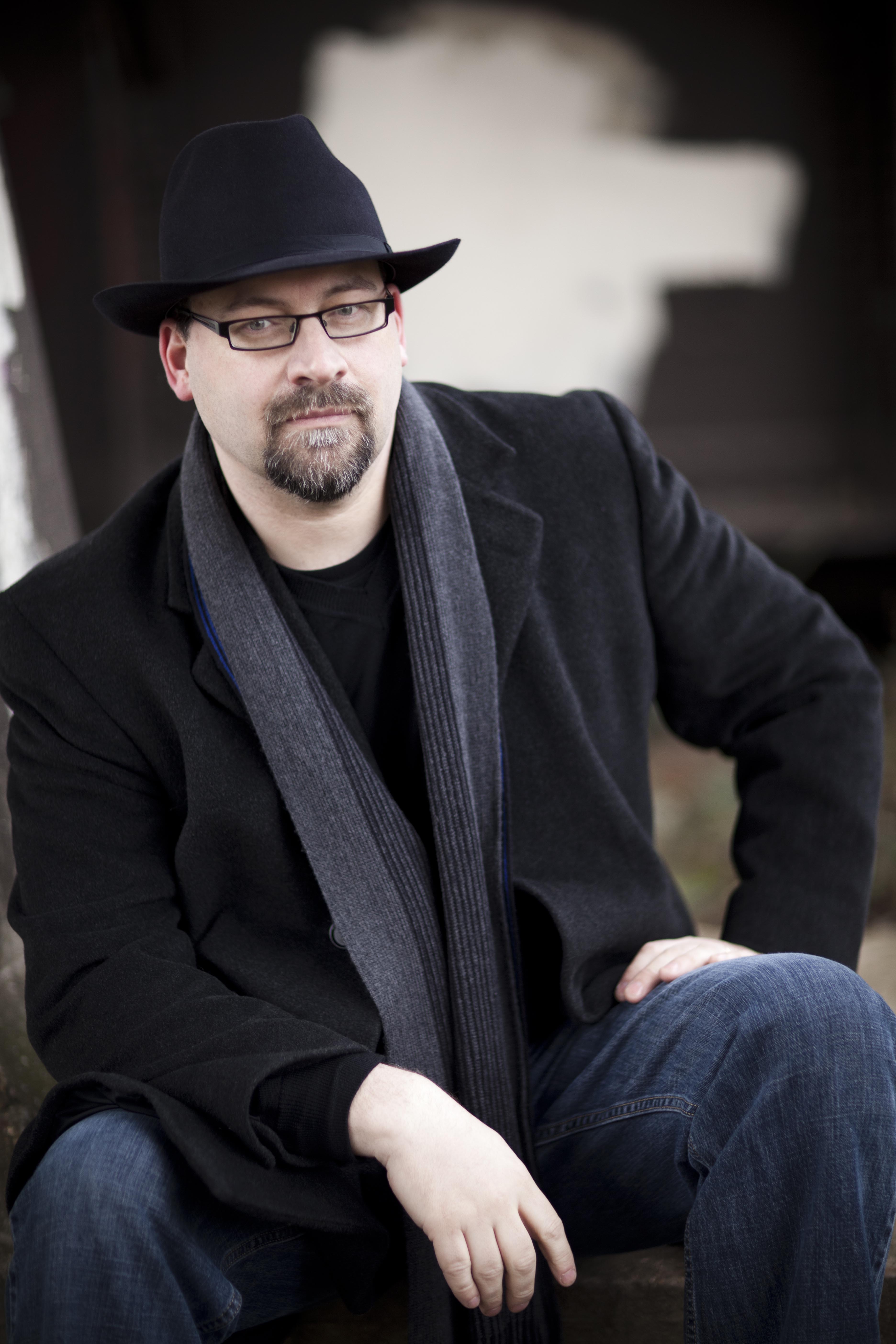
Kenneth Woods

MahlerFesti artistic director Kenneth Woods

In a release issued May 5, MahlerFest artistic director Kenneth Woods is quoted saying, “Canceling this year’s festival was a particularly painful step. We had worked all year to put together what we felt was the most dynamic and ambitious program the festival has ever delivered. Reinterpreting those plans into something we could present online was a new challenge. We are proud of what we have assembled and excited to share it.”

Among the highlights of the online festival will be a message from former Governor John Hickenlooper; a film made for the virtual festival by Gavin Plumley, showing why Mahler is a good composer for life under quarantine; CU distinguished professor and Helen and Peter Weil faculty fellow David Korevaar performing Schubert from his home; interviews and podcasts with musicians who were scheduled to be part of the festival; and other related events.

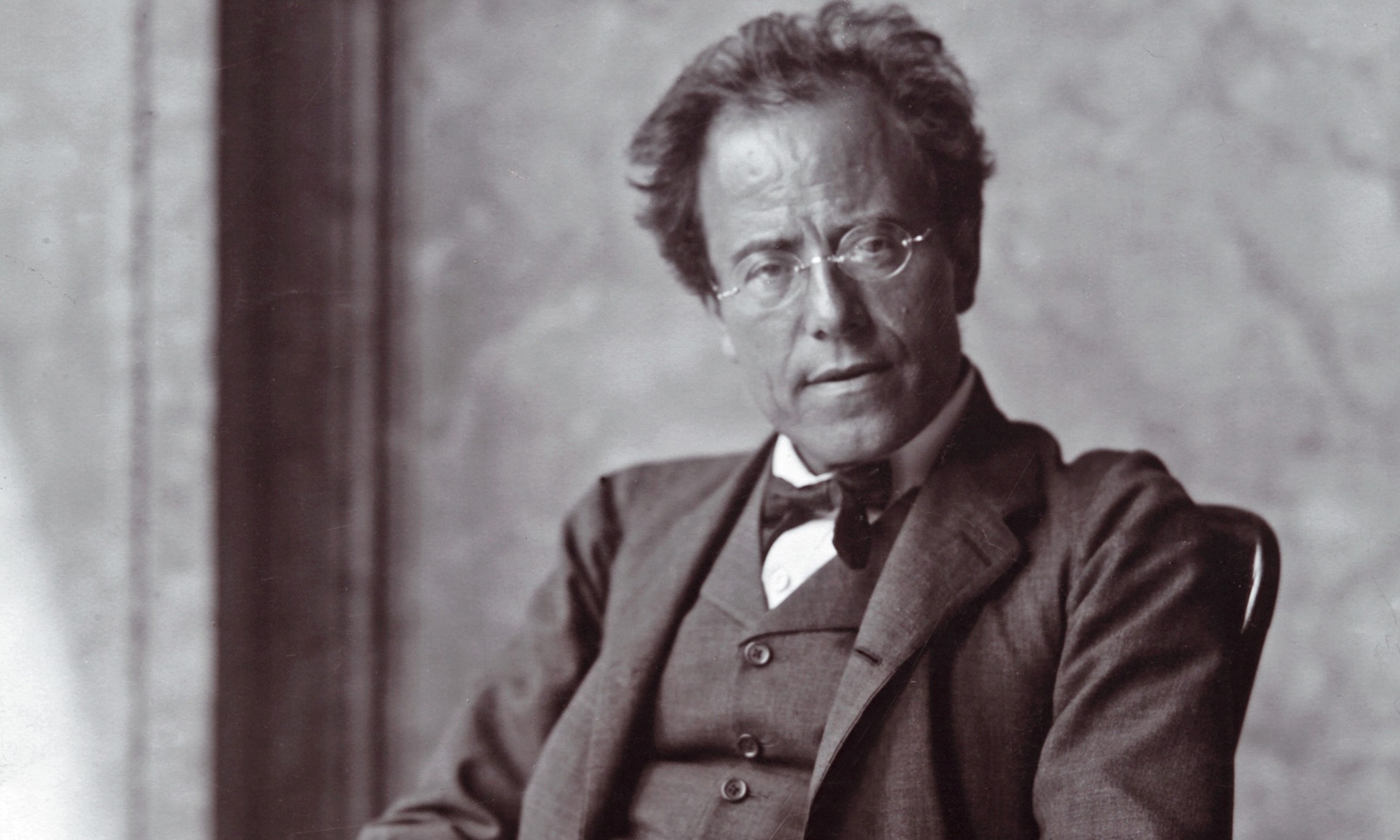
The Austrian composer Gustav Mahler. Photograph by Moriz Nähr. 1907.

Gustav Mahler

Colorado MahlerFest joins list of cancellations

The next festival will be in 2021

By Peter Alexander April 8 at 12:10 p.m.

MahlerFest01_square-01Colorado MahlerFest has announced the cancellation of this year’ festival events. The next MahlerFest will be held May 16–23 of 2021.

This year’s festival would have been the 33rd annual MahlerFest. The planned program, scheduled May 9–17, included a performance of Mahler Symphony No. 2, as well as Act One of Richard Wagner’s Die Walküre and Olivier Messiaen’s Quartet for the End of Time, among other works.

Instead, MahlerFest will present a selection of online content during what would have been this year’s festival week. Information on ticket refunds may be found on the MahlerFest Web page.

Kenneth Woods

Kenneth Woods

A release from MahlerFest included this statement from artistic director Kenneth Woods:

Cancelling this year’s festival was a particularly painful step. We had worked all year to put together what we all felt was the most dynamic and ambitious program the festival has ever delivered. MahlerFest, and the sense of fellowship and discovery it brings, has come to be one of the cornerstones of my professional life, and I shall miss all our musicians and our passionate and engaged audiences this year.

Plans for next year’s festival include a performance of Mahler’s Symphony No. 3. MahlerFest will return to the program planned for this year for the 2022 festival, including the Second Symphony and Act One of Die Walküre.


MahlerFest XXXII offers two orchestral concerts in expanded schedule

Arrangements, by Mahler and of Mahler, are part of the program

By Peter Alexander  May 16, 2019, at 2:35 p.m.

Colorado MahlerFest is growing.

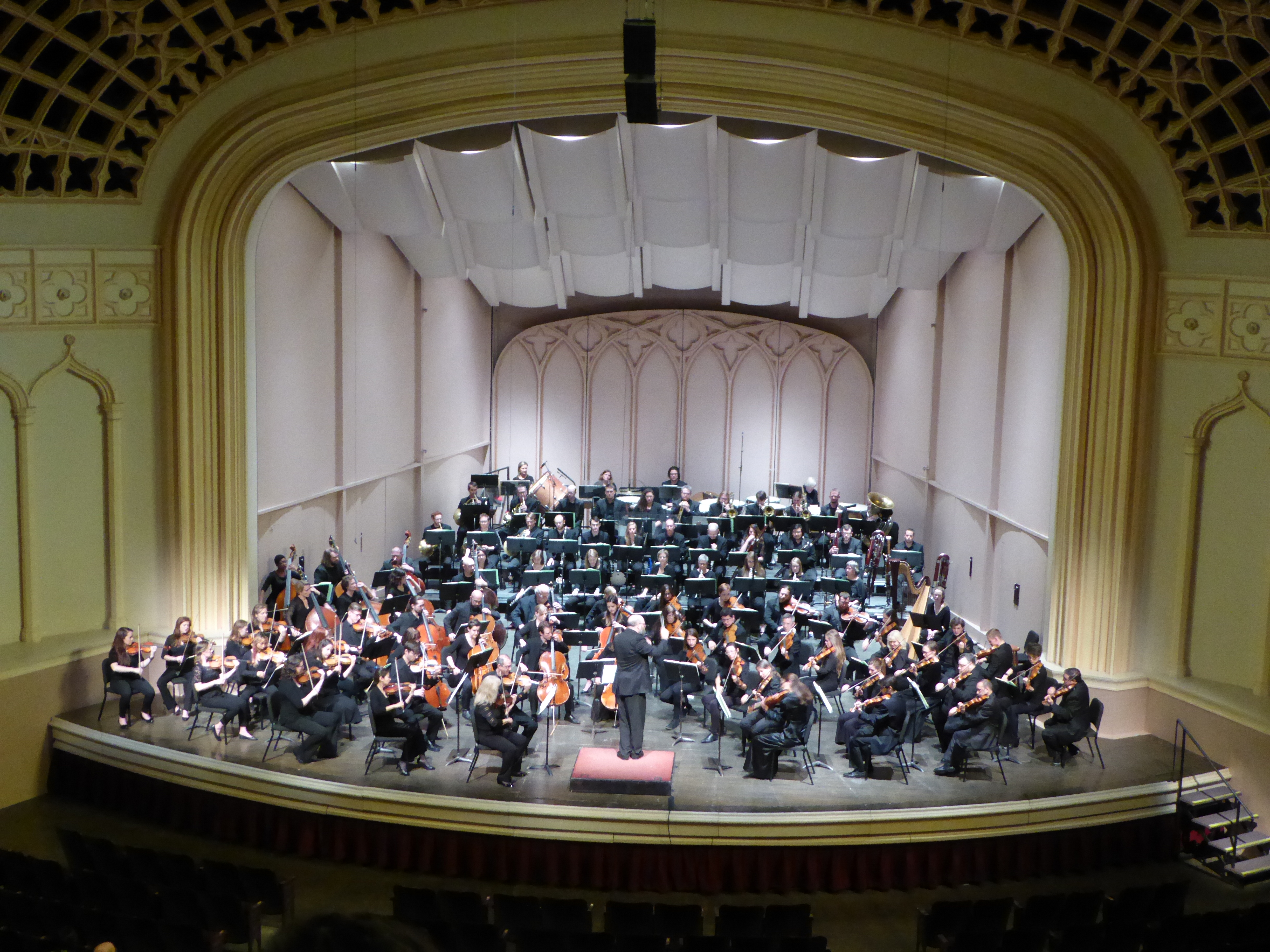
Orchestra from Keith Bobo

Director Kenneth Woods with the MahlerFest Orchestra

This year, the 32nd edition of the festival will feature more repertoire than ever, including two separate orchestra programs in Macky Auditorium on Saturday and Sunday of the festival weekend (May 18–19), and a chamber music concert Friday evening (May 17).

The Festival started in Boulder in 1988 as an opportunity to hear Mahler’s symphonies, which were then not often performed. For many years the orchestra program, featuring one of the symphonies, was performed Saturday and Sunday. That has now changed, with a chamber orchestra concert on Saturday and the large orchestra concert, this year featuring Symphony No. 1, on Sunday.

MahlerFest has gone through nearly the entire symphonic cycle three times. The fourth cycle that starts this year will be the first full cycle under conductor Kenneth Woods, who succeeded festival founder Robert Olsen as director in 2016.

# # # # #

Colorado MahlerFest XXXII

2 p.m. Friday, May 17, at The Academy
Chamber music Concert

Hans Krása: Tanec
Hans Krása: Passacaglia and Fugue for String Trio
Anton Bruckner: String Quintet in F Major

Free

9 a.m.–3:30 p.m. Saturday, May 18
Grusin Hall, Imig Music Buildering, CU Boulder

Program
Free

7:30 p.m. Saturday, May 18, Macky Auditorium
Colorado MahlerFest Chamber Orchestra, Kenneth Woods, conducting
With Joshua DeVane, baritone

Johann Strauss, Jr., arr. Arnold Schoenberg: The Emperor Waltz
Mahler, arr. Schoenberg: Lieder eines fahrenden Gesellen(Songs of a wayfarer)
Viktor Ullmann, arr. Kenneth Woods: Chamber Symphony (String Quartet No. 3)
Beethoven, arr. Mahler: Quartet in F Minor, op 95 (“Serioso”)

3:30 p.m. Sunday, May 19, Macky Auditorium
Stan Ruttenberg Memorial Concert
Colorado MahlerFest Orchestra, Kenneth Woods, conductor
With Zoë Byers, violin

Beethoven, orchestrated by Mahler: LeonoreOverture No. 3
Mahler: Symphony No. 1 in D major. World Premiere of new critical edition
Mahler: “Blumine” Symphonic Fragment. World Premiere of new critical edition
Erich Wolfgang Korngold: Violin Concerto

Tickets
Full schedule for Colorado MahlerFest XXXII here.

Music by Mahler and Sibelius headline MahlerFest XXXI

Festival includes chamber and orchestra concerts with a focus on late works

By Peter Alexander May 11 at 2:10 p.m.

The 31stMahlerFest is all about late artistic transformations.

Woods.orchestra

Kenneth Woods with the MahlerFest orchestra (Photo courtesy of MahlerFest)

The 2018 festival begins Monday, May 14, and culminates Saturday and Sunday, May 19 and 20, with concerts in Macky Auditorium featuring one of Mahler’s major orchestral works, Das Lied von der Erde (The song of the earth). It will be paired with the Seventh Symphony of Jean Sibelius.

Both works represent a farewell in music: Sibelius because he did not write another symphony in the remaining 24 years of his life, and Mahler because Das Lied von der Erde ends with a movement titled “The Farewell.”

KennethWoodsChrisStockheadshot.LoRes023

Kenneth Woods (Photo by Christ Stock)

Beyond the orchestra concerts, the festival week includes other events, among them two chamber music concerts: a ticketed concert at 7:30 p.m. Wednesday at the Dairy Center and a free concert at 2 p.m. Friday in the Academy Chapel. Other events open to the public include rehearsals, a scholarly symposium, and pre-concert lectures. (See the full schedule and list of performers here).

Kenneth Woods, the festival artistic director,says that the expansion of MahlerFest is a result of Mahler’s increasing popularity. “At first, MahlerFest may have been the only place in the Rocky Mountain region where a Mahler symphony was being done,” he says. “Now it’s not the rarity it once was. It’s nice to expand that wheel outward to other composers.”

Read more in Boulder Weekly.

# # # # #

MahlerFest XXXI

Chamber Concert I
Daniel Silver, clarinet, and festival artists
7:30 p.m. Wednesday, May 16
Dairy Center for the Arts

Chamber Concert II
Karen Bentley Pollick, violin; Parry Karp, cello; and Jennifer Hayghe, piano
2 p.m. Friday, May 18
The Academy Chapel (FREE)

Orchestra Concert
Sibelius: Symphony No. 7
Mahler: Das Lied von der Erde
MahlerFest Orchestra, Kenneth Woods, conductor
Stacey Rishoi, mezzo-soprano, and Brennen Guillory, tenor

7:30 p.m. Saturday, May 19 and 3:30 p.m. Sunday, May 20
Macky Auditorium

Full schedule and tickets here.

Kenneth Woods is “very excited” to be stepping into MahlerFest

The festival’s new music director looks forward to the music and the mountains

By Peter Alexander

Kenneth Woods. Photo by  Benjamin Ealovega.

Kenneth Woods. Photo by Benjamin Ealovega.

I spoke to Kenneth Woods, the incoming music director of Colorado MahlerFest, by phone recently. We talked about his vision and plans for the future of the festival, as well as a few personal details that will help introduce Woods to the Boulder audience. (For more on Woods, I highly recommend his blog, A View from the Podium.) Here is a lightly edited and condensed transcript of our conversation:

PA: You are clearly well aware of MahlerFest. Have you attended a performance before, or do you know of the festival by reputation? Have you met Robert Olson?

KW: I’ve never been able to attend a MahlerFest in the past, and I’ve never met Bob (Olson) in person. The degrees of separation between me and Bob, and me and the festival, are very few. I think I first became aware of it through an email listserv called Mahler List, which a lot of Mahler conductors and scholars and aficionados are on. And Colorado MahlerFest has always been a great gathering point for people on that list.

I can remember joining in back in the late ‘90s or early 2000s and everyone would be gearing up for Colorado MahlerFest, talking about what papers were presented, and what repertoire was played. So I became very aware of it then, and the sort of footprint of people who’d come through as speakers and lecturers is pretty astounding. There’s a lot of really interesting debate about key aspects of Mahler scholarship and performance that has come out of people who have spoken there, and the papers presented there, so there has been a lot of real great interest on the musicological side of the festival over the years. It’s a very small world, and particularly so when you get into Mahler. So I’m very excited to be stepping into that.

Gustav Mahler. Photo by Moritz Näher.

Gustav Mahler. Photo by Moritz Näher.

Mahler seems to attract a kind of devotion that other composers don’t—such as people traveling halfway around the world to go to a festival in Boulder. Why do you think that is?

I think part of it comes out of the historical way in which Mahler came into the repertoire. Even when I was growing up in the ‘70s and ‘80s the music was more written about than heard and performed. A performance of it was a rarity—back then you could come across the First and Fourth symphonies sometimes. But a piece like the Sixth or the Seventh or the Ninth was a real rarity.

My understanding is that one of the reasons Bob set up the festival, and one of the things that helped get it going initially, is that the music was not very often performed. For people who love it, there weren’t that many chances to perform it. That’s really changed in the past 15 years. It used to be considered something that only orchestras with the largest base of players and the biggest budgets would ever dare tackle. Of course, nowadays all sorts of youth orchestras and community orchestras play it. But I think for people who grew up in that age, that sense of advocacy and immersion and curiosity sticks with us.

For me working through the symphonies as a listener as a young musician, you had to order the record and wait for it to show up. You had to go looking for it. And the idea that you can go on YouTube now and instantaneously access dozens and dozens of Mahler performances these days—it’s a totally different world! And in that sense, I think MahlerFest means something very different that it probably did 28 years ago. That sense of discovery and immersion is really important. And to have a place that is all about Mahler, where you come and really focus on it for a week, I think is a really important thing for this music.

Kenneth Woods. Photo by Stephanie Yao/The Oregonian.

Kenneth Woods. Photo by Stephanie Yao/The Oregonian.

Do you think the fact that Mahler performances are much more common now than 28 years ago presents a challenge to the festival going forward?

The music is always going to be special and exciting and have great appeal to audiences. Staking out our territory as a place that really owns Mahler, that cares about Mahler—that’s not something that every conductor and every orchestra is well suited to. So it’s good to have a place where we can get back to first principles of Mahler, and really immerse ourselves in it. In terms of contextualizing the music, we’ve only sort of scratched the surface there, so I’m not worried about running out of things to do, anytime in my lifetime at least.

It’s almost a reverse of the paradigm of 30 years ago. At one point MahlerFest was needed because there was nowhere else to go to play and hear the music. Now it’s needed because we need a place where the music isn’t taken for granted, or just a piece that’s good for box office. In that respect, the festival is a very important institution, and one that I think makes a strong claim to being essential to the music.

Do you have any thoughts about next year? Do you expect to continue cycling through the major works, or have you even had time to think about that?

I’ve been thinking about it a lot, and nothing is set or announced. The big question is whether we finish the cycle that Bob has been working on the past several years, which is not quite complete yet, or start over from scratch with the First Symphony next year. I’m somewhat inclined to finish with the two symphonies that he hasn’t done in this cycle, which is Seven and Ten, in the next two years, for a couple of reasons.

The festival has never done the Deryck Cooke version of the Tenth Symphony [which the composer never finished], which was the first and in many ways the most influential. I think that would be a wonderful thing to add to the repertoire of the festival—it’s such an important moment in Mahler scholarship. And I also like the idea of getting to know each other, finding out what possibilities and the strengths and weaknesses are before we start on the next cycle.

Mahler's autograph score of Symphony No. 7.

Mahler’s autograph score of Symphony No. 7.

It could very well be that we start with Seven next year, which is one of my favorites in the cycle and not that often done generally. And then the Tenth Symphony the following year, and then start a fresh cycle in the third year, from the First Symphony onwards.

You did not mention the Eighth Symphony, which has not been done as part of this cycle.

I was a little unclear about where that had fit in the last run of things. I would love to do the Eighth, and it might be that we would do that in the third year. That’s a particularly ambitious one logistically.

From what you’ve seen so far, what do you think is the greatest strength of this festival that you would want to build on?

I think there’s two. The combination of live concert giving with idea sharing is really potent and something that the festival does better than the vast majority. And I think it’s something that can really be built on.

And the other thing is the community spirit that seems to exist within the orchestra and within the festival itself that Bob has obviously nurtured very carefully in terms of this volunteer band with very high standards, high aspirations. People really doing it together as a team out of a sense of shared purpose is something to really build on.

Have you thought about expanding the repertoire to people who were important for Mahler, or were influenced by him, as ways of giving audiences new perspectives on Mahler the composer?

Mahler hiking in the Austrian alps.

Mahler hiking in the Austrian alps.

Yes, absolutely. These things are already on discussion—whether it’s hearing, say, Mahler 1 with Beethoven 4 where there’s an obvious modeling at work between the two pieces, or pairing the Mahler 7 with the Schoenberg First Chamber Symphony, where there’s thematic borrowing between the two pieces.

It would be nice to get into some commissioning over the next two years. I was involved with a festival at Bridgewater Hall in Manchester a few years ago where they commissioned a new work to go with Mahler symphonies in a new cycle, and I thought that worked really, really well. Not all the pieces were masterpieces, but three of four of them were sensational. It was really interesting to hear Mahler in a context alongside music that was written to comment on it or reflect it in some way. It would be nice to see some of that kind of work at the MahlerFest. At the end of the day, commissioning is what becomes the legacy of any artistic institution.

I know you have spent time in Colorado before. Do you know Boulder at all?

I spent a couple of summers in Aspen back in my student days. And I did a chamber music festival way out in the opposite corner of the state, in Durango, maybe 2006 or ‘07?

I do know Boulder quite well. I’ve got a lot of friends that teach at Rocky Ridge up at Estes Park, so I know that part of the world quite well. I’ve done a lot of skiing in Colorado too, but that won’t be happening in May.

There are ski areas that are still open through May, up at the higher elevations.

True. I could come a week early and ski, then do Mahler. That sounds very alpine.

Two things that people in Boulder really care about, aside from music of course, are outdoor recreation and food. Do you have preferences in those areas?

The thing I miss most when I’m in Britain is American beer, so I’m always happy to come back. Fat Tire was always the official beer of Aspen when I was there in past years, so I’ll be happy to catch up with a nice cold Fat Tire once I get to Colorado.

My favorite Colorado food is the Mexican green chili that no other state in the USA does as well, so I’ll be looking forward to that, assuming I can still find it there.

Kenneth Woods. Photo by  Chris Stock.

Kenneth Woods. Photo by Chris Stock.

As far as the outdoor stuff, my parents got my sister and me started with backpacking in the Rocky Mountains when I was about 5 or 6. We spent half of my summers at least in Colorado hiking as a kid. I will very much be looking forward to getting up in the mountains and doing some hiking while I’m out there. And my summers in Aspen I did a lot of road biking. Once you’re in shape, there’s nothing more satisfying than biking up to something like Independence Pass and riding back down. I’ll be looking forward to bringing with or borrowing a bike while I’m there and getting on some hills. It will be humbling the first couple of times, but it’s so spectacular there.