CMF final week features one new work, five composers and Joshua Bell

Festival Finale concert ends with Mahler Symphony No. 1

By Peter Alexander July 26 at 11 a.m.

The 2023 Colorado Music Festival (CMF) is nearing its end up at the Chautauqua Auditorium, but one thing that remains the same all the way to the final concert is the felicitous mix of programming selected by Music Director Peter Oundjian.
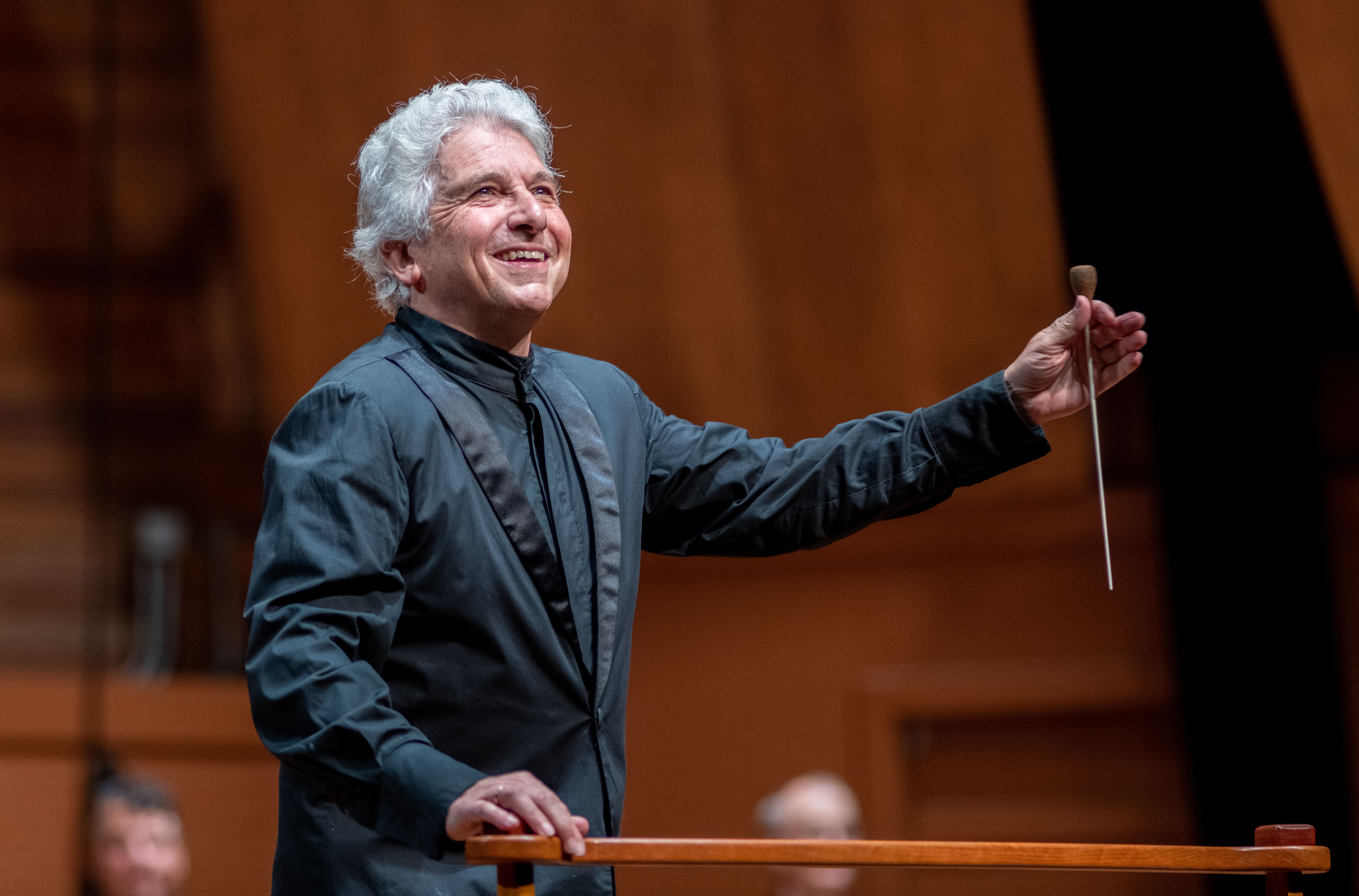
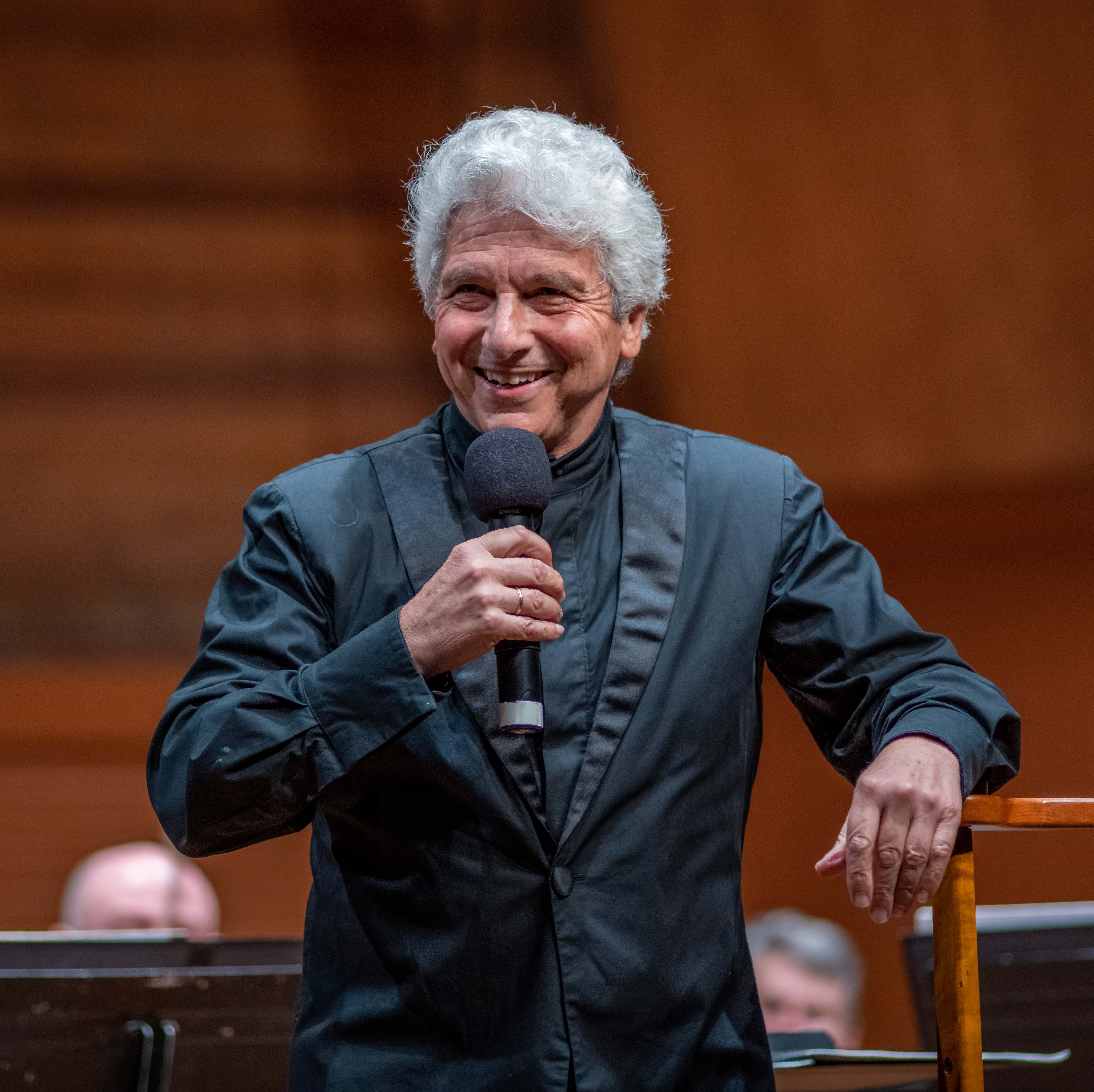
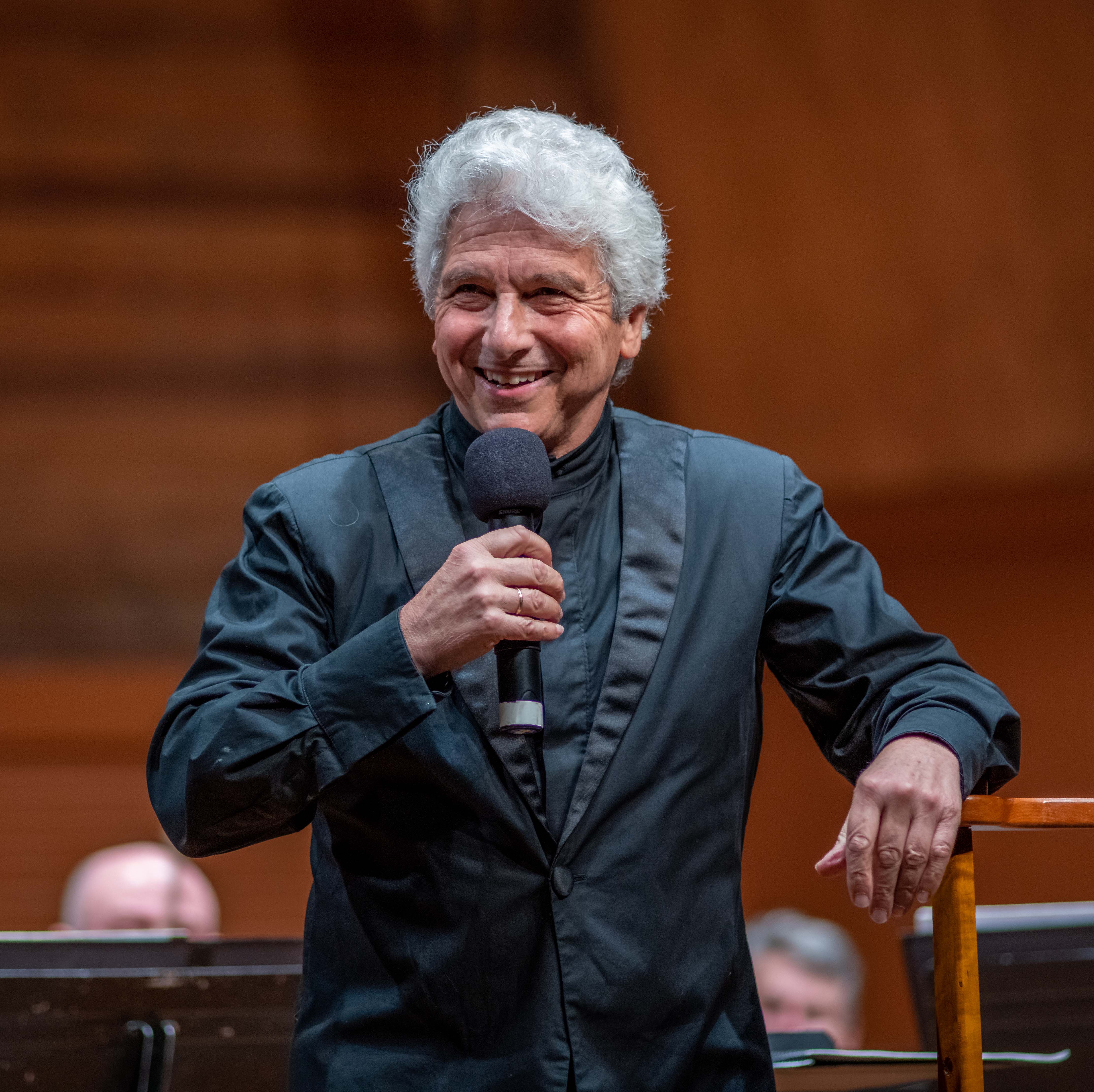
CMF Music Director Peter Oundjian

Since his arrival at the festival as music advisor (2018) and then music director (2019), Oundjian has curated programs that recognize both the most interesting work being done by living composers and the greatest works from the standard repertoire, all performed by creative and adventurous musicians. That mixture continues.

The two final concerts conceived as a pair for Thursday, Aug. 3, and Sunday, Aug. 6 (7:30 p.m. and 6:30 p.m. respectively; see details below) are leading examples. Both concerts feature familiar orchestra works, plus violinist Joshua Bell, certainly one of the most distinctive and accomplished of soloists, playing a series of short pieces that were written for him by five different composers.

Or is it one piece?
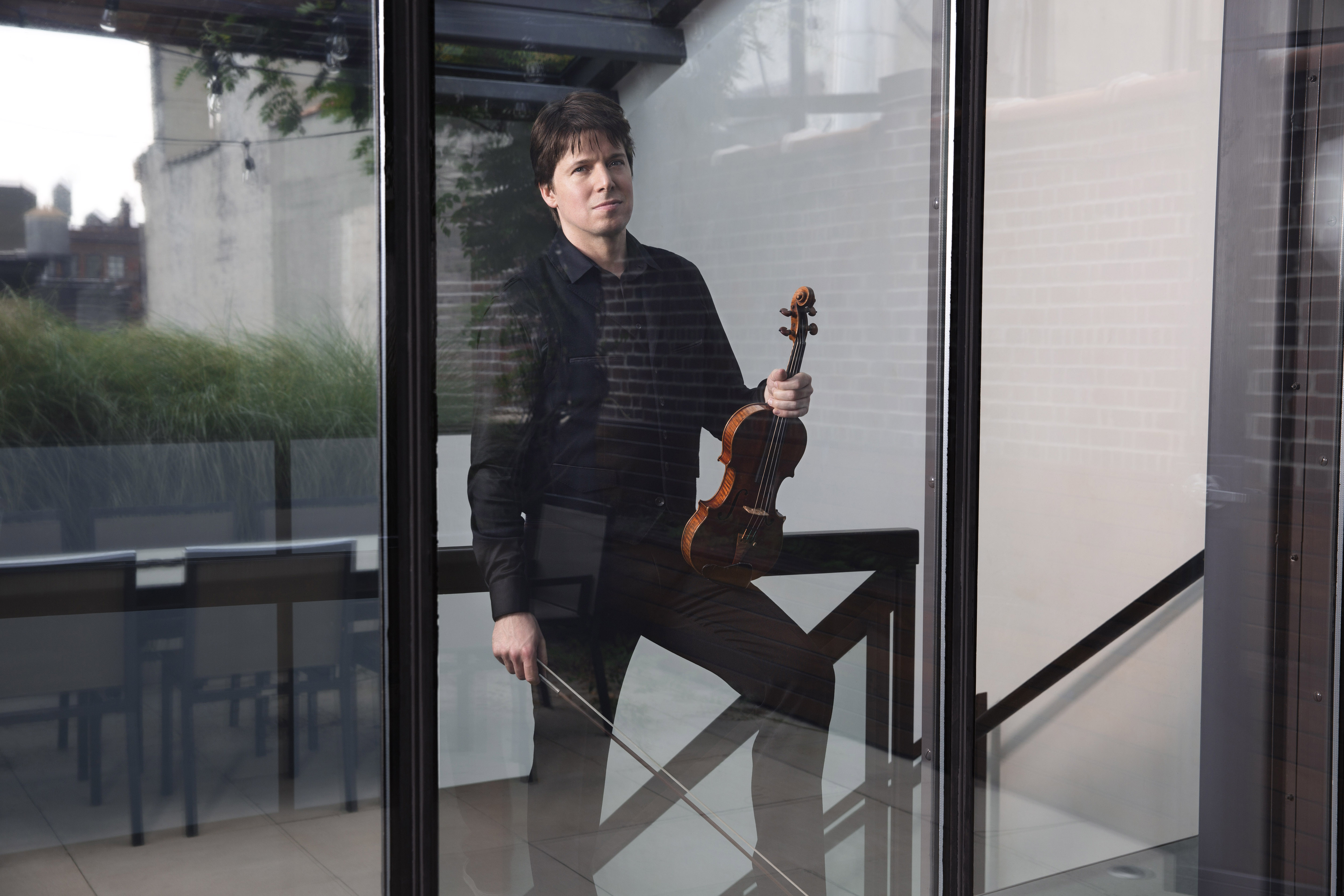
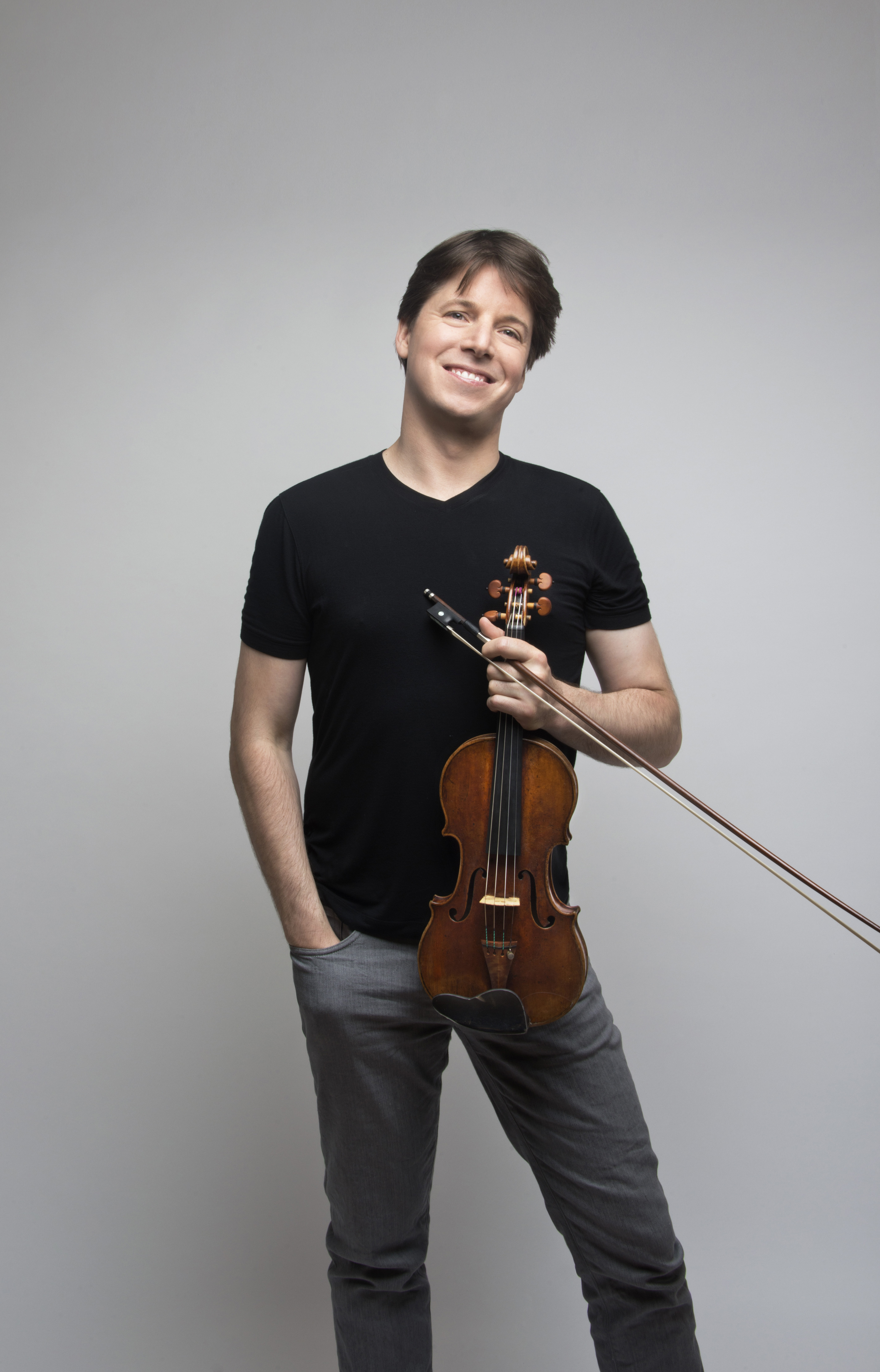
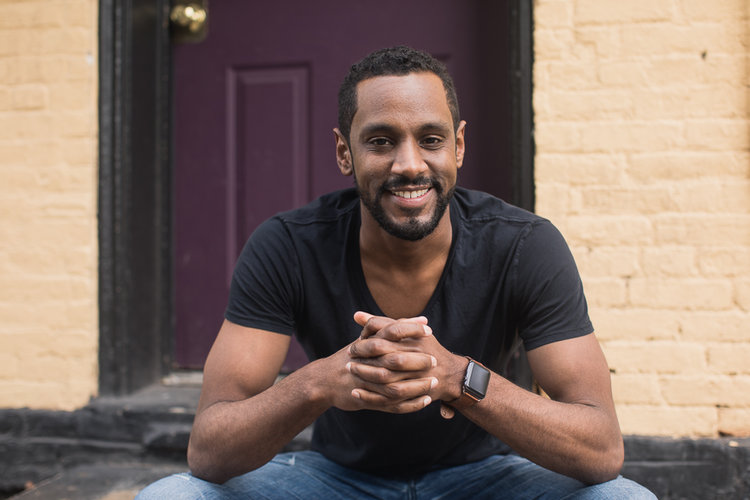
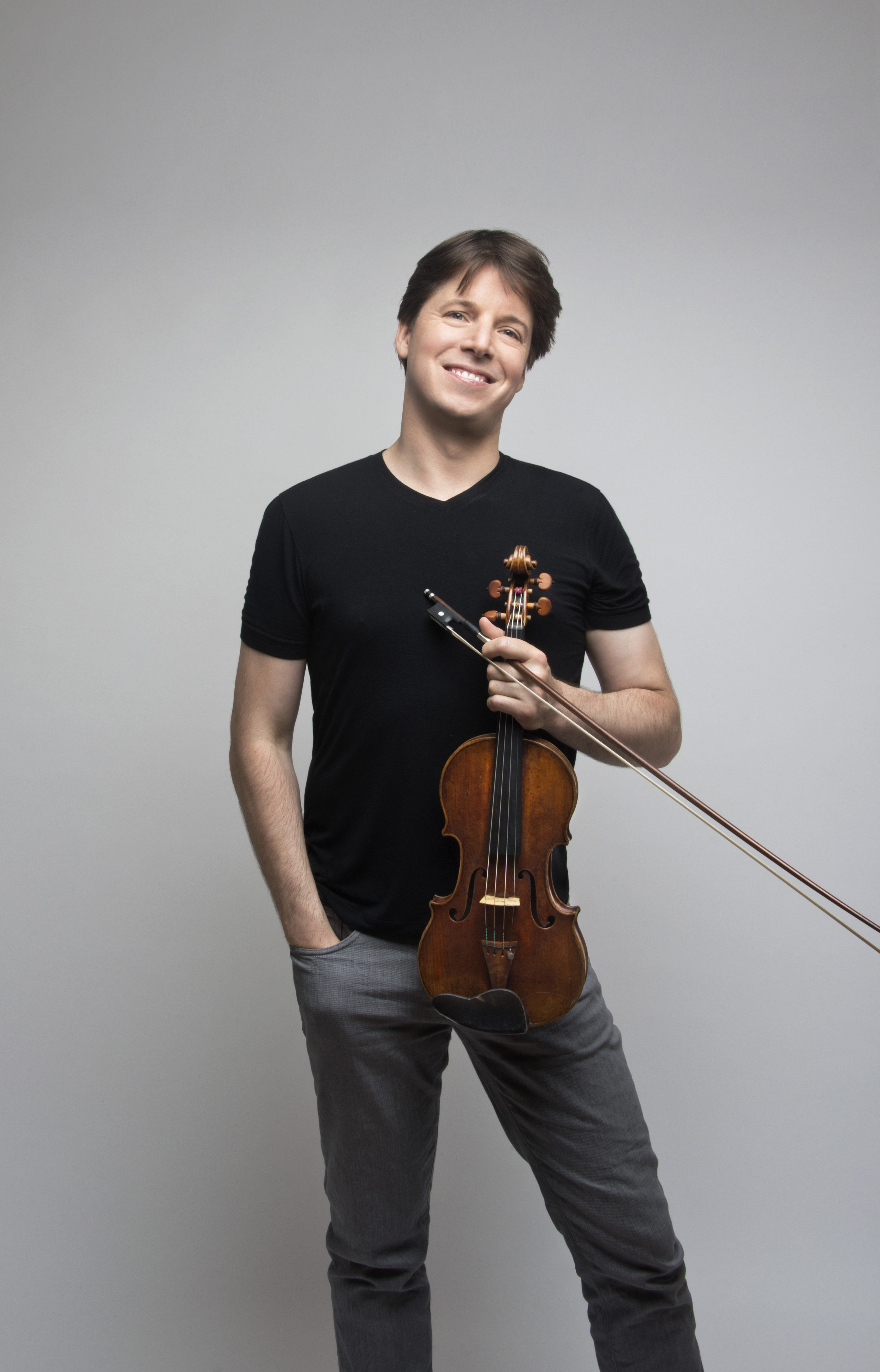
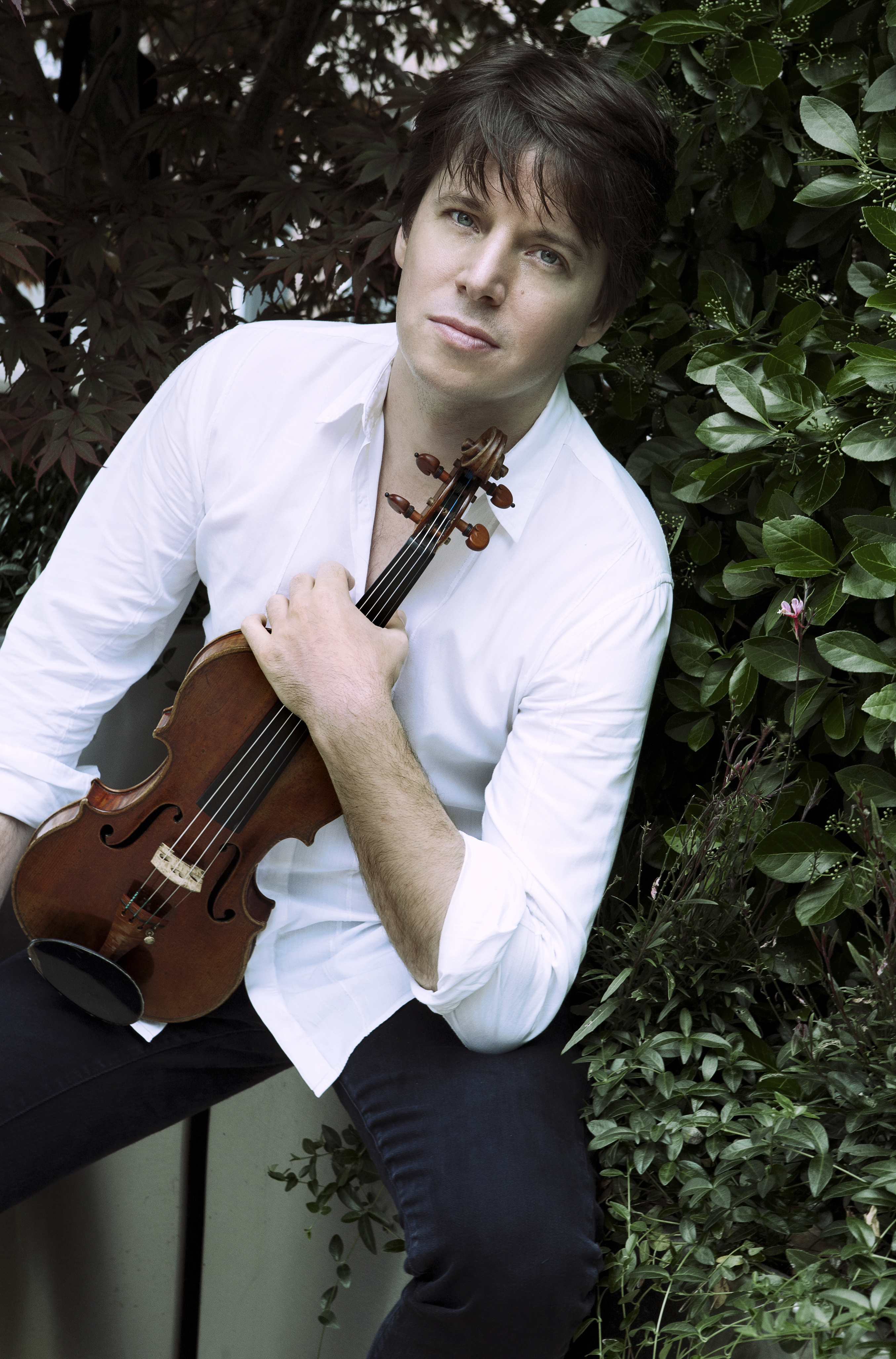
Joshua Bell. Photo by Richard Ascroft

“Talk about a focused idea, I think it’s brilliant,” Oundjian says. Because the finished piece is scheduled for a series of official premieres starting in the fall, Oundjian thought Bell and the composers might like to hear their pieces in a workshop setting, where they could make adjustments.

“In one of my conversations with Josh, I said, ‘Do you want a preview series of performances where you can work the repertoire over an entire week?’ And we both felt it was really great way to introduce a new piece, for everyone including the composers, who I think are all going to be there. We’ll workshop these pieces over the week.”

That piece is The Elements: Suite for Violin and Orchestra. Bell contacted five composers that he knew—Jake Heggie, Jessie Montgomery, Edgar Meyer, Jennifer Higdon and Kevin Puts—and asked each to write a mini-concerto movement for him. To unify the piece, each movement (or are they separate pieces?) was based on an individual element: fire, ether, water, air and earth.

The three movements will be split over the final two concerts, both conducted by Oundjian and featuring Bell as soloist. The movements by Heggie, Montgomery and Meyer (“Fire,” “Ether,” “Water”) will be presented on Thursday, July 3, when they will share the program with Debussy’s La Mer—perhaps inevitable after the movement titled “Water”? 

The movements by Higdon and Puts (“Air” and “Earth”) will follow on the “Festival Finale Concert” Sunday (Aug. 6). They will share the program with Mahler’s Symphony No. 1 in D major. The latter might be the least surprising feature of the final week, but one that history suggests will be embraced by the audience. “We have created a tradition of closing with a Mahler symphony, so that’s going to continue,” Oundjian says.
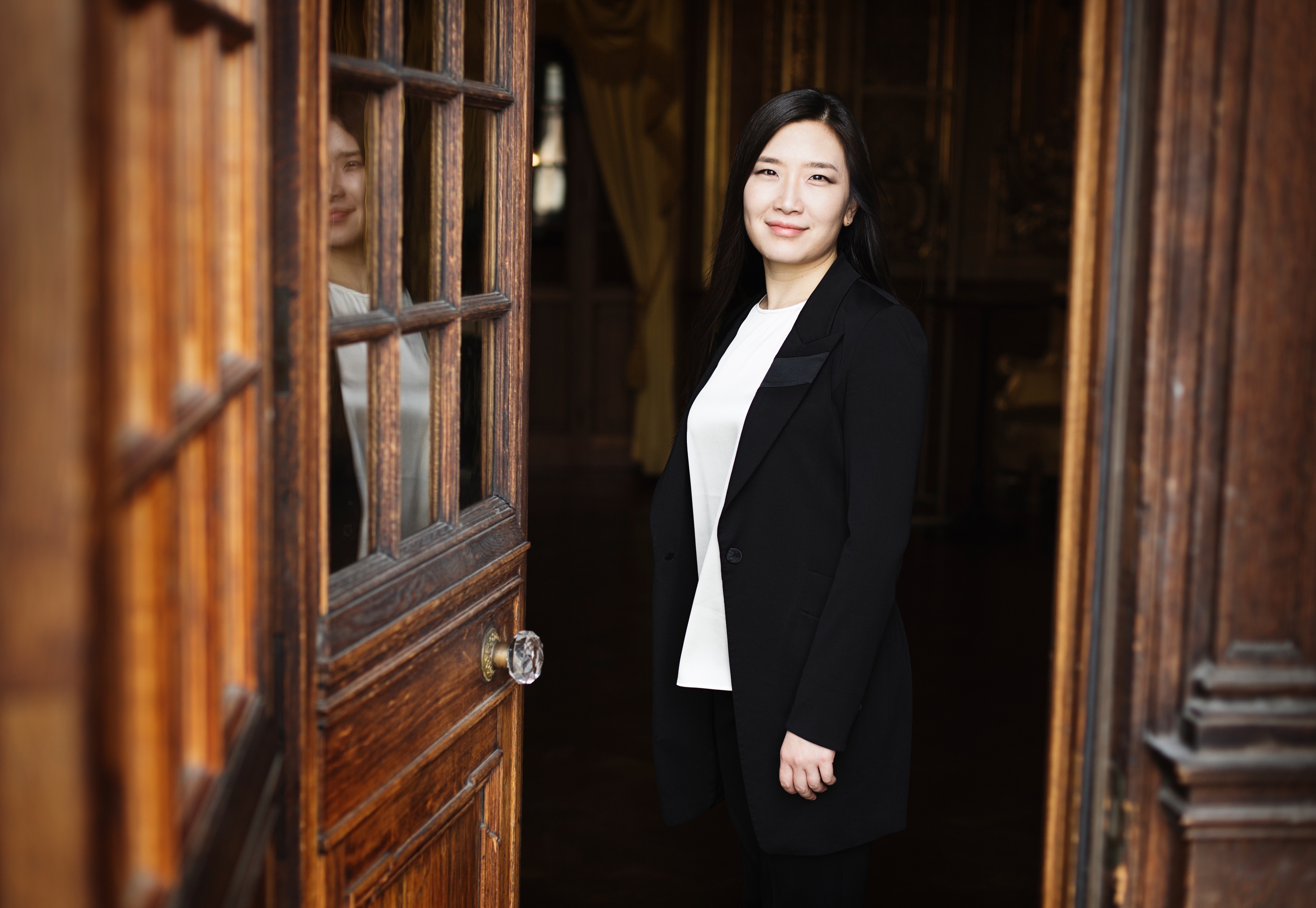
Eun Sun Kim. Photo by Nikolaj Lund

Before the final concerts, there are two separate orchestral programs scheduled for the coming weekend, featuring guest conductors. Korean conductor Eun Sun Kim, whose appointment as music director of the San Francisco Opera starting in 2021 made headlines throughout the musical world. She will lead the Festival Orchestra Thursday and Friday playing Brahms’ gently lyrical Symphony No. 2 in D major. Joining Kim, German-Canadian cellist Johannes Moser will play the Cello Concerto No. 1 of Shostakovich. 

Opening the program will be The Rhapsody of Steve Jobs by Mason Bates. This is based on music from Bates’ opera The (R )evolution of Steve Jobs, which premiered at the Santa Fe Opera in 2017 under the baton of CMF Conductor Laureate Michael Christie. Bates wrote in his program notes that The Rhapsody of Steve Jobs “swirls together many key musical elements” of the opera, including electro-acoustic sound elements that “conjure the excitement of the early Information Age.”
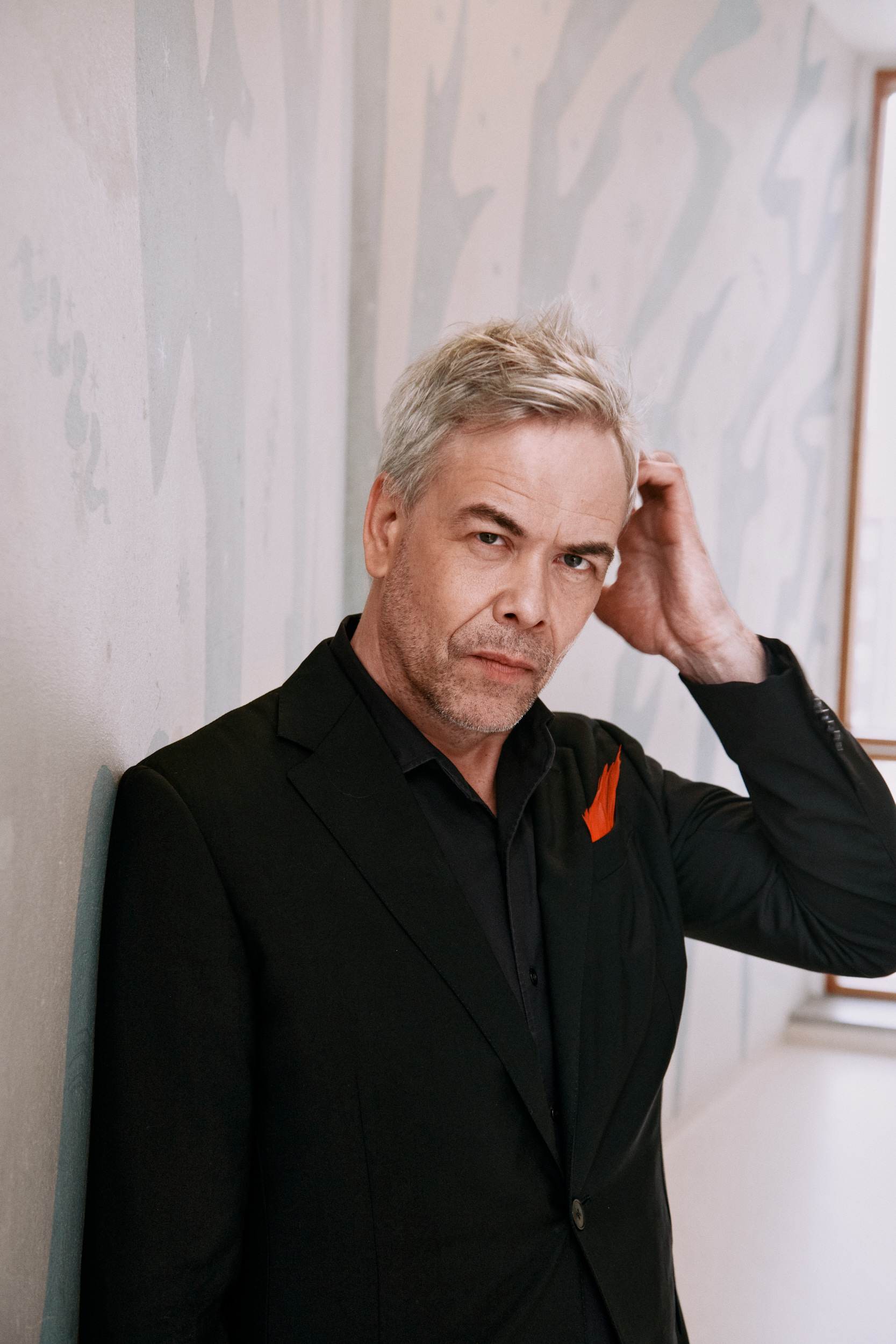
Hannu Lintu. Photo by Veikko Kähkönen

Hannu Lintu, chief conductor of the Finnish Radio Symphony, happened to be on his way to California at the end of July, and as luck would have it, was able to stop off for a single concert at Chautauqua Sunday. “He is an absolutely extraordinary conductor,” Oundjian says. “He conducts major orchestras all over the world, so we’re delighted to have him!”

Like other programs at the CMF this summer, his concert will combine music from different centuries, opening with the 1972 orchestral score Cantus Arcticus by Finnish composer Einojuhani Rautavaara. Subtitled Concerto for Birds and Orchestra, the Cantus incorporates recordings of birds including the shore lark and the whooper swan, collected in northern Finland and near the Arctic Circle.

Moving back a century, Canadian pianist Tony Siqi Yun, first prize winner and gold medalist at the First China International Music Competition in 2019, will play the Schumann Piano Concerto from the mid-19th century with Lintu and the Festival Chamber Orchestra. And one more century: the program will close with Joseph Haydn’s Symphony No 96 in D major. 

One of the 6 symphonies Haydn wrote for his first trip to London 1791–92, No. 96 is known as the “Miracle” Symphony. The name, however, is misapplied; it actually refers  to an incident in 1795, when a chandelier fell at the premiere of Haydn’s Symphony No. 102 without harming the audience, which was crowded to the front of the hall.

No chandeliers will collapse at Chautauqua. No, the miracle of CMF is in the programming, with music from the 18th century to the 21st, familiar favorites mixed with intriguing discoveries. The festival is one of Boulder’s musical treasures, and there are only eleven more days to join the 2023 CMF audience.

# # # # #

COLORADO MUSIC FESTIVAL
2023 Summer Festival, remaining concerts
All performances at Chautauqua Auditorium
7:30 p.m. Thursday, July 27, and 6:30 p.m. Friday, July 28
Festival Orchestra: Eun Sun Kim, conductor
With Johannes Moser, cello

  • Mason Bates: The Rhapsody of Steve Jobs (2021)
  • Shostakovich: Cello Concerto No. 1 in E-flat Major, op. 107
  • Brahms: Symphony No. 2 in D Major, op. 73

6:30 p.m. Sunday, July 30
Festival Orchestra, Hannu Lintu, conductor,
With Tony Siqi Yun, piano

  • Einojuhani Rautavaara: Cantus Arcticus (1974)
  • Schumann: Piano Concerto in A Minor
  • Haydn: Symphony No. 96 in D Major (“Miracle”)

7:30 p.m. Tuesday, Aug. 1
Robert Mann Chamber Music Series: Members of the Colorado Music Festival Orchestra

  • Beethoven: String Trio in C Minor, op. 9 no. 3
  • Debussy: Danses sacrée et profane (Sacred and profane dances)
  • Dvořák: Piano Quintet No. 2 in A Major, op. 81

7:30 p.m. Thursday, Aug. 3
Festival Orchestra, Peter Oundjian, conductor
With Joshua Bell, violin

  • The Elements: Suite for Violin and Orchestra (commissioned by Joshua Bell)
    —“Fire” by Jake Heggie
    —“Ether” by Jessie Montgomery
    —Water” by Edgar Meyer
  • Debussy: La Mer

6:30 p.m. Sunday, Aug. 6: Festival Finale Concert
Festival Orchestra, Peter Oundjian, conductor
With Joshua Bell, violin

  • The Elements: Suite for Violin and Orchestra (commissioned by Joshua Bell)
    —“Air” by Jennifer Higdon
    —“Earth” by Kevin Puts
  • Mahler: Symphony No. 1 in D major

TICKETS

CORRECTION: The original version of this article listed the soloist in the Schumann Piano Concerto on July 30 as Lisa de la Salle. She had to cancel here appearance at CMF; the correct soloist for the Schumann Concerto is Tony Siqi Yun. I apologize for the error.
‘Welcoming’ program opens 2023 Colorado Music Festival

Superstar Joshua Bell shines, dramatic “Pictures” grasp audience

By Peter Alexander June 30 at 1:08 a.m.

The 2023 Colorado Music Festival summer concert series got under way last night (June 29) with an orchestra program that was everything music director Peter Oundjian had promised.

“I think its important,” he has said, that the festival should open with “a very welcoming opening night.” Which indeed it was: an opening flourish, a warm romantic violin concerto warmly played, and a popular orchestra showpiece. Could you ask for more?

Carlos Simon. Photo by Terrance Ragland.

The concert opened with an exciting piece not even two years old, Motherboxx Connection by American composer Carlos Simon. Commissioned by the Sphinx Organization and the University of Michigan Symphony, it was premiered in January, 2022.

Conceived as part of a multi-movement work titled TALES, Motherboxx Connection evokes, in the words of the composer, “multi-faceted aspects of blackness.” All scurry and brilliance, the score exploits the full orchestra. There are rushing strings; syncopated bursts of sound from the brass; chattering woodwinds; and punctuating percussion. Here it was played with brio and precision, providing a sparkling introduction to the 2023 festival.

The musical high point of the evening came with the introduction of violinist Joshua Bell to play Bruch’s dramatic and lushly Romantic Violin Concerto in G minor. Bell is known for his skill with the 19th-centruy Romantic style, and this concerto, composed in 1866, is a perfect match for his playing. 

Joshua Bell. Photo by Lisa Marie Mazzucco.

From the very first note, deep in the violin’s lower register, Bell’s playing had a penetrating warmth and richness that brought the most lyrical moments to life. Here was the greatest virtue of the performance: the lyrical passages sang, and even the softest moments were well projected. Nor was Bell averse to the more heroic moments of this dramatic work, playing them with flair and intensity.

Conductor Peter Oundjian and the orchestra found all the drama and impact in the score. Bell was so well in accord with their interpretation that when not playing toward the audience, he often turned to Oundjian or the orchestra as if to connect more deeply with the other musicians on stage.

If there were any criticism of the performance, it would be that Bell’s playing was so controlled and lyrically shaped that the blazing finale seemed almost subdued. Indeed, you may hear more fiery performances of the Concerto, but you will never hear one more expressive and deeply felt.

Bell and Oundjian had an orchestral encore prepared, and it was one that spoke to the violinist’s strengths: the “Meditation” from Massenet’s opera Thaïs. Bell’s ability to sustain long, rhapsodic melodic lines and spin the softest phrases into silence made an unforgettable performance.

The concert concluded with Mussorgsky’s great showpiece Pictures at an Exhibition in the familiar Ravel orchestration. Never afraid to use the full force of brass and percussion, Oundjian achieved powerfully dramatic effects. I have never heard a more forthright and forceful opening “Promenade”: more than a stroll through the galleries, this was more of a robust hike. But all the better to contrast with the music that followed.

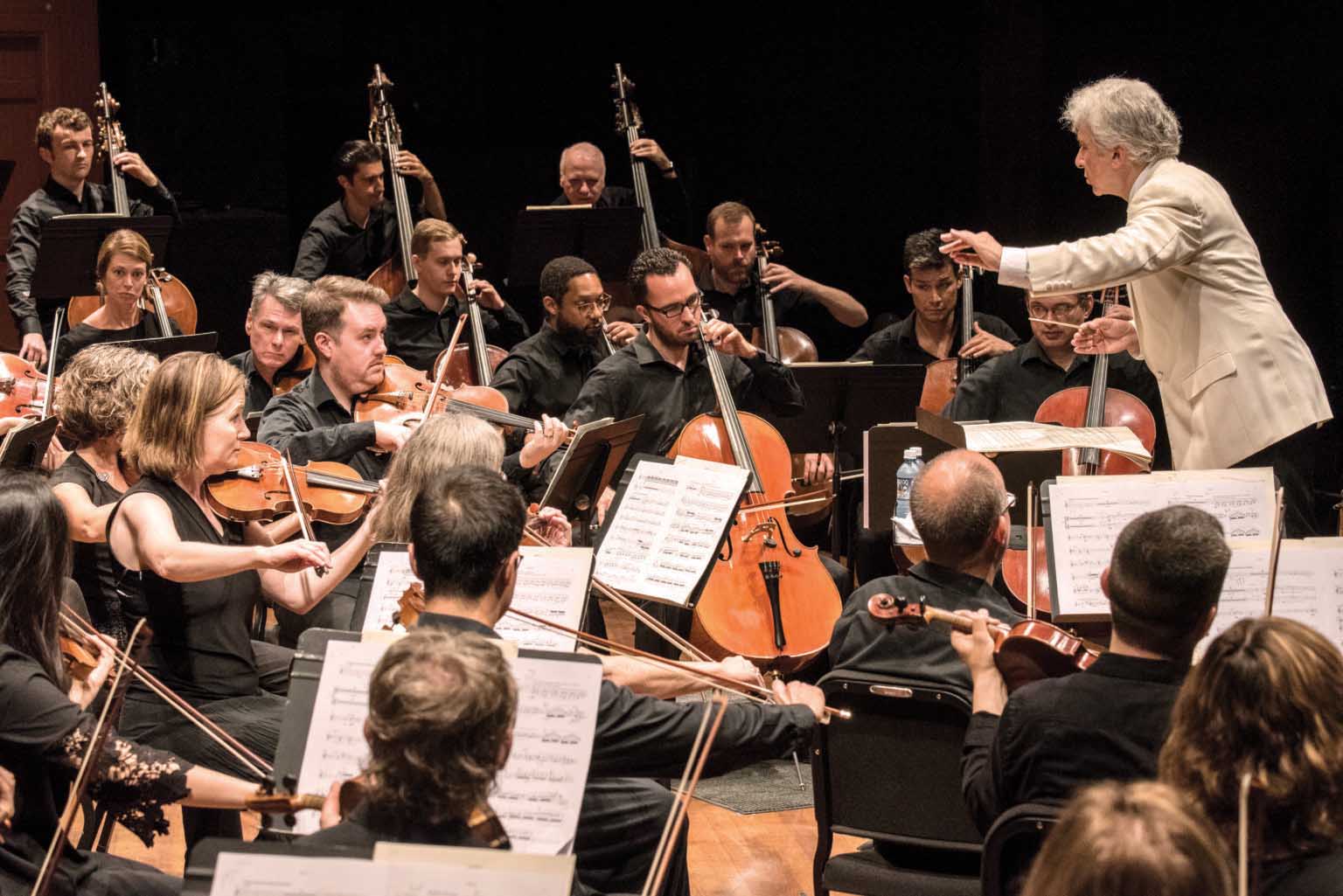
Conductor Peter Oundjian with the CMF Orchestra. Photo by Michael Ensminger.

From the boisterous “Children’s Quarrel” at the Tuileries, to the lumbering oxcart of “Bydlo,” to the delicate “Ballet of Unhatched Chicks,” Oundjian and the orchestra found a strongly characterized sound for each movement. The catacombs were suitably hushed and eerie, and I’m not sure I have ever heard a more violent “Baba Yaga’s Hut.” The entrance into the final sketch, “The Great Gate of Kiev,” was carefully held back, allowing the music to build over time.

With careful control, the “Great Gate” can hardly fail, and it did not. The climactic final chords had exactly the effect that Oundjian—and Ravel—wanted. The audience went away energized. And the festival is off to a scintillating start.

NOTE: The same program will be repeated tonight (June 30) at 6:30 p.m. Ticket are available from the Chautauqua Box Office.

A FINAL DRAMATIC TOUCH: Only in Boulder? Departing patrons were greeted by blazing lights, flashing police cruisers, and a detour from the sidewalk. During the concert a bear had taken up residence in a tree on the Chautauqua grounds. This was just the extra drama a music festival should have at the base of the Flatirons!

A ‘welcoming opening night’ and a birthday at the 2023 Colorado Music Festival

Opening weeks: Joshua Bell plays Bruch, Rachmaninoff turns 150

By Peter Alexander Jun. 27 at 11:25 p.m.

Chautauqua Auditorium

The 2023 Colorado Music Festival (CMF) gets under way at the Chautauqua Auditorium Thursday with what music director Peter Oundjian calls “a very welcoming kind of opening night” (7:30 p.m. June 29; details below).

Peter Oundjian. Photo by Geremy Kornreich

By welcoming, Oundjian probably means comfortable for the audience. Or as he says, “you don’t want to do something too insanely eclectic on the opening night.” And indeed opening night is only a little bit eclectic, with a new piece by American composer Carlos Simon nestled with superstar violinist Joshua Bell playing Max Bruch’s G minor Violin Concerto and Mussorgsky’s evergreen favorite Pictures at an Exhibition in the familiar Ravel orchestral arrangement.

That program will be repeated at 6:30 p.m. Friday. Other events in the opening weeks of the festival are a family concert featuring Peter and the Wolf at 10:30 a.m. Sunday, July 2; and a celebration of the 150th anniversary of Rachmaninoff’s birth Thursday and Friday July 6 and 7, and Sunday, July 9 (times and programs below).

As the 2023 CMF artist in residence, Bell will be featured for the opening night concert, June 29–30; and at the closing two concerts, Aug. 3 and 6, when he will play a pre-premiere read-through of a suite for violin and  orchestra that he commissioned from five prominent American composers. While the later concerts explore Bell’s involvement in the music of our time, the opening night performance of the Bruch Concerto showcases his ability with Romantic music.

Joshua Bell. Photo by Phillip Knott

Oundjian has known Bell since he was 14 and values that ability. “He has always had this rare sort of skill, looking back to when people played in a Romantic fashion, with the repertoire that calls for it,” he says. Bell studied with legendary Russian-American violinist Josef Gingold, who was born in 1907 in Brest-Litovsk in what was then the Russian empire and who is considered one of the last links to the Romantic violin style.

“It was a beautiful old-school approach to the playing and the sound production,” Oundjian says of Gingold’s teaching. “The sound, the expressive fingering, finding a way to express like a singer would—that’s what’s so wonderful about Bell’s playing. He’s like a great singer.”

Bell has been unusually successful in the transition from prodigy at 14, and before, to a successful adult artist. “He’s very, very focused,” Oundjian says. “He’s very disciplined in terms of what his goals need to be, very clear I think in his career.”

The Bruch Concerto, written in 1866, is an ideal vehicle for the Romantic style that Bell represents. “It just never stops being stunningly beautiful,” Oundjian says. As for the rest of the opening program, “Carlos Simon is a great way to open it all up—it has drive and it’s surprising and it’s brand new.” And it’s programmed with Pictures at an Exhibition—”one of the most exciting orchestral pieces ever written.”

Carlos Simon. Photo by Terrance Ragland

Simon is currently composer in residence at the John F. Kennedy Center for the Performing Arts in Washington, D.C., and faculty at Georgetown University. He received the 2021 Medal of Excellence recognizing outstanding classical Black and Latinx musicians from the Sphinx Organization, which also commissioned Motherboxx Connection. The title is derived from the work of the cartoonist duo known as Black Kirby, which in turn is a pun on pioneering cartoonist Jack Kirby’s motherbox, a living computer.

Simon writes in his program notes, “To represent the power and intelligence of the motherboxx, I have composed a short, fast-moving musical idea that constantly weaves in and throughout the orchestra. A majestic, fanfare-like motif also provides the overall mood of strength and heroism. I imagine the motherboxx as an all-knowing entity that is aware of the multi-faceted aspects of blackness.”

For the second week of the festival, Oundjian put together programs that recognize the 150th anniversary of the birth of the great Russian composer Sergei Rachmaninoff. Two different programs will be shared over three concerts, July 6–7 and July 9. “The idea of celebrating the 150th birthday is completely obvious,” Oundjian says. “But what was less obvious was how to celebrate this.”

He thought of two things he could bring to American audiences that they might not know. First was that Rachmaninoff lived in the U.S. many years and eventually gained American citizenship; and the second was the playing of Russian pianist Nicolai Lugansky.

“What I decided was to focus on the great orchestral music, which included piano concertos created or premiered in America,” Oundjian explains. “It felt important for everyone to realize that Rachmaninoff, yes he was of Russian descent, but he died in America. In fact he got his American citizenship just weeks before he died. I think it’s important that we realize that this was his country. And this was where he found the most success and, I wouldn’t say happiness, but lack of unhappiness, more like.”

Those American works include familiar audience favorites—the Third Piano Concerto and the Rhapsody on a Theme of Paganini—but also works that are not well known but that Oundjian wants to bring to people’s attention.

“You have his magnificent Third Symphony which is not often played and I so love it, and the Third Piano Concerto, which was premiered by the New York Philharmonic,” he says. “And you have the other pieces written while he was living in America, the Symphonic Dances, which is an absolute masterpiece, and the Fourth Piano Concerto, which you never hear and is stunningly beautiful and the Paganini Variations which we all know and love.

“It just seemed to make up a beautiful week of celebration of Rachmaninoff in America.”

Nikolai Lugansky

For the concertos, Oundjian chose a pianist he has worked with in the past, but who is not well known in the U.S. “Nikolai Luganski is not well known in America, which is a reason that I thought it would be wonderful to bring him here. People should know about him.

“He plays the Rachmaninoff concerti in a style which is in line with the character and the true soul of Rachmaninoff. Rachmaninoff’s music shouldn’t be overzealously expressed, and Luganski’s playing is so powerful, it’s so spiritual—and (he has) a unique approach to Rachmaninoff that has a purity about it that I wanted to emphasize, because Rachmaninoff was a profoundly sensitive person.”

Oundjian is as pleased with the rest of the scheduled festival as he is with the opening concerts. “I was very fortunate that almost everything that we wanted to present became a reality—which is not always the case,” he says.

“People were available, and wanted to do the repertoire, so it came into place quite smoothly.”

NOTE: The remainder of the 2023 Colorado Music Festival will be previewed in subsequent articles.

# # # # #

COLORADO MUSIC FESTIVAL
Performances June 29–July 9
All performances at Chautauqua Auditorium

7:30 p.m. Thursday June 29 and 6:30 p.m. Friday, June 30: Festival Opening Program
Festival Orchestra, Peter Oundjian, conductor
With Joshua Bell, violin

  • Carlos Simon: “Motherboxx Connection” from Tales: A Folklore Symphony for orchestra
  • Max Bruch: Violin Concerto No. 1 in G minor
  • Mussorgsky: Pictures at an Exhibition (orchestrated by Ravel)      

Family Concert: 10:30 a.m. Sunday, July 2
Festival Orchestra, Kalena Bovell, conductor
With Jennifer Bird-Arvidsson, soprano, and Janae Burris, narrator

  • Bizet: Carmen Suite No. 1
  • Eric Whitacre: Goodnight Moon
  • Samuel Coleridge-Taylor: “Danse Nègre” from African Suite
  • Prokofiev: Peter and the Wolf     

7:30 p.m. Thursday, July 6 and 6:30 p.m. Friday July 7
Festival Orchestra, Peter Oundjian, conductor
With Nicolai Lugansky, piano

  • Rachmaninoff: Piano Concerto No. 3 in D Minor
    —Symphony No. 3 in A Minor      

6:30 p.m. Sunday, July 9
Festival Orchestra, Peter Oundjian, conductor
With Nicolai Lugansky, piano

  • Rachmaninoff: Rhapsody on a Theme of Paganini
    —Piano Concerto No. 4 in G Minor
    Symphonic Dances

TICKETS

Colorado Music Festival announces 2023 concerts

Joshua Bell as artist-in-residence, John Corigliano composer-in-residence

By Peter Alexander Jan. 25 at 11 a.m.

The Colorado Music Festival (CMF) has announced their 2023 summer season at Chautauqua. 

Peter Oundjian. Photo by Geremy Kornreich

The formal announcement of the season was made last night (Jan, 24) at the Center for Musical Arts in Lafayette, which is the sister organization of the CMF. The event was live streamed to the public.

Before the introduction of the concerts by music director Peter Oundjian, executive director Elizabeth McGuire announced that the CMF’s 2022 world premiere performance of Flying On the Scaly Backs of Our Mountains by Wang Jie had reached more than a million listeners world-wide through radio—“more than doubling the reach of the festival over its history with one performance,” she said.

Oundjian has written of the 2023 season, We are so fortunate to bring to you some of the greatest performers alive today, including artist-in-residence Joshua Bell, along with the extraordinary talents of eight of today’s brilliant composers. It is such a thrill to hear today’s voices alongside—and interacting with—groundbreaking voices from the past, giving us a unique window into centuries of the greatest in creativity.”

John Corigliano. Photo by J. Henry Fair

Since his appointment as music director in 2018, Oundjian has made the music of today a focus of the festival. Among the living composers whose music will be performed this summer is John Corigliano, winner of the Pulitzer Prize, four Grammies and an Academy Award. As composer-in-residence, Corigliano will be present at the festival for a concert devoted entirely to his music on July 13 (see full programs below).

Premieres will be presented of works by Jordan Holloway, CU faculty member Carter Pann, and Adolphus Hailstork. All three will be performed on July 16, as the culmination of a week of “Music of Today.” A preview of music by five other living composers will be offered by Bell, who has commissioned a five-movement suite for violin and orchestra from five different composers.

Joshua Bell. Photo by Phillip Knott

The suite, titled Elements, will have its official premiere later, but all five movements will be previewed over two concerts at CMF—the final two concerts of the season (Aug. 3 and 6). The composers who have contributed to Elements are among the most important composers working today: Jake Heggie, Jessie Montgomery, Edgar Meyer, Jennifer Higdon and Kevin Puts.

Bell will also be at CMF for the first week of the festival and will play Max Bruch’s Violin Concerto in G minor on the opening program, June 29 and 30.

A highlight of the 2023 festival will be two programs celebrating the 150th anniversary of the birth of composer Sergei Rachmaninoff (July 6–7 and July 9). Oundjian said that it seemed appropriate in 2023 to perform works composed outside Russia, many of them in the United States which was Rachmaninoff’s home in the later years of his life. These works include the Third and Fourth piano concertos, the beloved Rhapsody on a Theme of Paganini, and the rarely performed Symphony No. 3.

Michael Christie. Photo by Bradford Rogne

Another feature of the 2023 festival of which Oundjian is particularly proud is the continuation of the Robert Mann Chamber Music Series, named for the founding first violinist of the Juilliard String Quartet. In addition to performances by members of the Festival Orchestra, the four-concert series will also feature guest performances by the JACK Quartet, renowned for their performances of contemporary music, and the Brentano String Quartet.

The 2023 festival will also see the return of Music Director Emeritus Michael Christie to conduct concerts on July 20 and 21. Christie was the CMF music director 2000–13.

“Not only does the 2023 season promise to be artistically stunning, I know our audiences will appreciate the way the programming weaves so many diverse, timely, and relevant voices into the fabric of classical music,” executive director Elizabeth McGuire wrote.

Performances this summer will be at 7:30 p.m. on Tuesdays and Thursdays, and 6:30 p.m. Fridays and Sundays. As in past years, Tuesdays will be devoted to chamber music, other days to Festival Orchestra performances. In response to comments from patrons, the Family Concert on Sunday, July 2, has been moved earlier in the day, to 10:30 a.m. Other updates to the festival this year include a new ticketing system through the Chautauqua Box Office, and meals available for pre-order through the ticketing system.

Subscription tickets for the 2023 festival are available here. Single-concert tickets go on sale March 7 through the CMF Web page, or by phone at the Chautauqua Box Office at 303-440-7666. New for 2023, CMF is offering $10 tickets for youth (ages 18 and under) and students with current school identification. More information can be found HERE.

# # # # #

COLORADO MUSIC FESTIVAL
2023 Performance Schedule
All performances at Chautauqua Auditorium

7:30 p.m. Thursday June 29 and 6:30 p.m. Friday, June 30: Festival Opening Program
Festival Orchestra, Peter Oundjian, conductor
With Joshua Bell, violin

  • Carlos Simon: “Motherboxx Connection” from Tales: A Folklore Symphony for orchestra
  • Max Bruch: Violin Concerto No. 1 in G minor
  • Mussorgsky: Pictures at an Exhibition (orchestrated by Ravel)

Family Concert: 10:30 a.m. Sunday, July 2
Festival Orchestra, Kalena Bovell, conductor
With Jennifer Bird-Arvidsson, soprano, and Janae Burris, narrator

  • Bizet: Carmen Suite No. 1
  • Eric Whitacre: Goodnight Moon
  • Samuel Coleridge-Taylor: “Danse Nègre” from African Suite
  • Prokofiev: Peter and the Wolf

7:30 p.m. Thursday, July 6 and 6:30 p.m. Friday July 7
Festival Orchestra, Peter Oundjian, conductor
With Nicolai Lugansky, piano

  • Rachmaninoff: Piano Concerto No. 3 in D Minor,
    —Symphony No. 3 in A Minor

6:30 p.m. Sunday, July 9
Festival Orchestra, Peter Oundjian, conductor
With Nicolai Lugansky, piano

  • Rachmaninoff: Rhapsody on a Theme of Paganini
    —Piano Concerto No. 4 in G Minor
    Symphonic Dances

7:30 p.m. Tuesday, July 11
Robert Mann Chamber Music Series: JACK Quartet

  • Morton Feldman: Structures for String Quartet (1951)
  • Caleb Burhans: Contritus (2010) 
  • Philip Glass: String Quartet No. 5 (1991)
  • Caroline Shaw: Entr’acte (2011)
  • John Zorn: The Remedy of Fortune for String Quartet (2016)

7:30 p.m. Thursday, July 13
Festival Orchestra, Peter Oundjian, conductor
With Timothy McAllister, saxophone

  • John Corigliano: Gazebo Dances (for orchestra) (1974)
    One Sweet Morning for voice and orchestra (2010)
    Triathlon for saxophone and orchestra (2020)

6:30 p.m. Sunday, July 16
World premieres: Festival Orchestra, Peter Oundjian, conductor
With Janice Chandler-Eteme, soprano, and Eric Owens, narrator

  • Jordan Holloway: Flatiron Escapades (world premiere commission)
  • Carter Pann: Dreams I Must Not Speak (world premiere commission)
  • Adolphus Hailstork: JFK: The Last Speech (world premiere)

7:30 p.m. Tuesday, July 18
Robert Mann Chamber Music Series: Brentano String Quartet

  • Mozart: String Quartet in D Major, K499
  • James MacMillan: Memento for string quartet (1994)
    For Sonny for string quartet (2011)
  • Beethoven, String Quartet No. 13 in B-flat Major, op. 130

7:30 p.m. Thursday, July 20, and 6:30 p.m. Friday, July 21
Festival Orchestra, Music Director Emeritus Michael Christie, conductor
With Michelle Cann, piano

  • Ravel: Piano Concerto in G Major
  • Florence Price: Piano Concerto in One Movement
  • Tchaikovsky: Symphony No. 4 in F Minor, op. 36

6:30 p.m. Sunday, July 23
Festival Orchestra, François López-Ferrer, conductor
With Grace Park, violin

  • Mozart: Overture to The Impresario K486
    —Violin Concerto No. 3 in G Major, K216
    —Adagio and Fugue in C Minor, K546
    —Symphony No. 36 in C Major, (“Linz”) K425

7:30 p.m. Tuesday, July 25
Robert Mann Chamber Music Series: Members of the Colorado Music Festival Orchestra

  • Benjamin Britten: Phantasy Quartet for Oboe and Strings, op. 2
  • Francis Poulenc: Sextet in C Major for Piano and Winds
  • Brahms: String Sextet No. 2 in G Major, op. 36

7:30 p.m. Thursday, July 27, and 6:30 p.m. Friday, July 28
Festival Orchestra: Eun Sun Kim, conductor
With Johannes Moser, cello

  • Mason Bates: The Rhapsody of Steve Jobs (2021)
  • Shostakovich: Cello Concerto No. 1 in E-flat Major, op. 107
  • Brahms: Symphony No. 2 in D Major, op. 73

6:30 p.m. Sunday, July 30
Festival Orchestra, Hannu Lintu, conductor,
With Lise de la Salle, piano

  • Einojuhani Rautavaara: Cantus Arcticus (1974)
  • Schumann: Piano Concerto in A Minor
  • Haydn: Symphony No. 96 in D Major (“Miracle”)

7:30 p.m. Tuesday, Aug. 1
Robert Mann Chamber Music Series: Members of the Colorado Music Festival Orchestra

  • Beethoven: String Trio in C Minor, op. 9 no. 3
  • Debussy: Danses sacrée et profane (Sacred and profane dances)
  • Dvořák: Piano Quintet No. 2 in A Major, op. 81

7:30 p.m. Thursday, Aug. 3
Festival Orchestra, Peter Oundjian, conductor
With Joshua Bell, violin

  • The Elements: Suite for Violin and Orchestra (commissioned by Joshua Bell)
    “Fire” by Jake Heggie
    “Ether” by Jessie Montgomery
    “Water” by Edgar Meyer
  • Debussy: La Mer

6:30 p.m. Sunday, Aug. 6: Festival Finale Concert
Festival Orchestra, Peter Oundjian, conductor
With Joshua Bell, violin

  • The Elements: Suite for Violin and Orchestra (commissioned by Joshua Bell)
    “Air” by Jennifer Higdon
    “Earth” by Kevin Puts
  • Mahler: Symphony No. 1 in D Major (“Titan”)