Peter Oundjian led an all-Corigliano program by the CMF Festival Orchestra
By Peter Alexander Jan. 14 at 12:24 a.m.
There are several reasons that John Corigliano is an important composer, and many of them were on display last night (July 13) at the Colorado Music Festival.
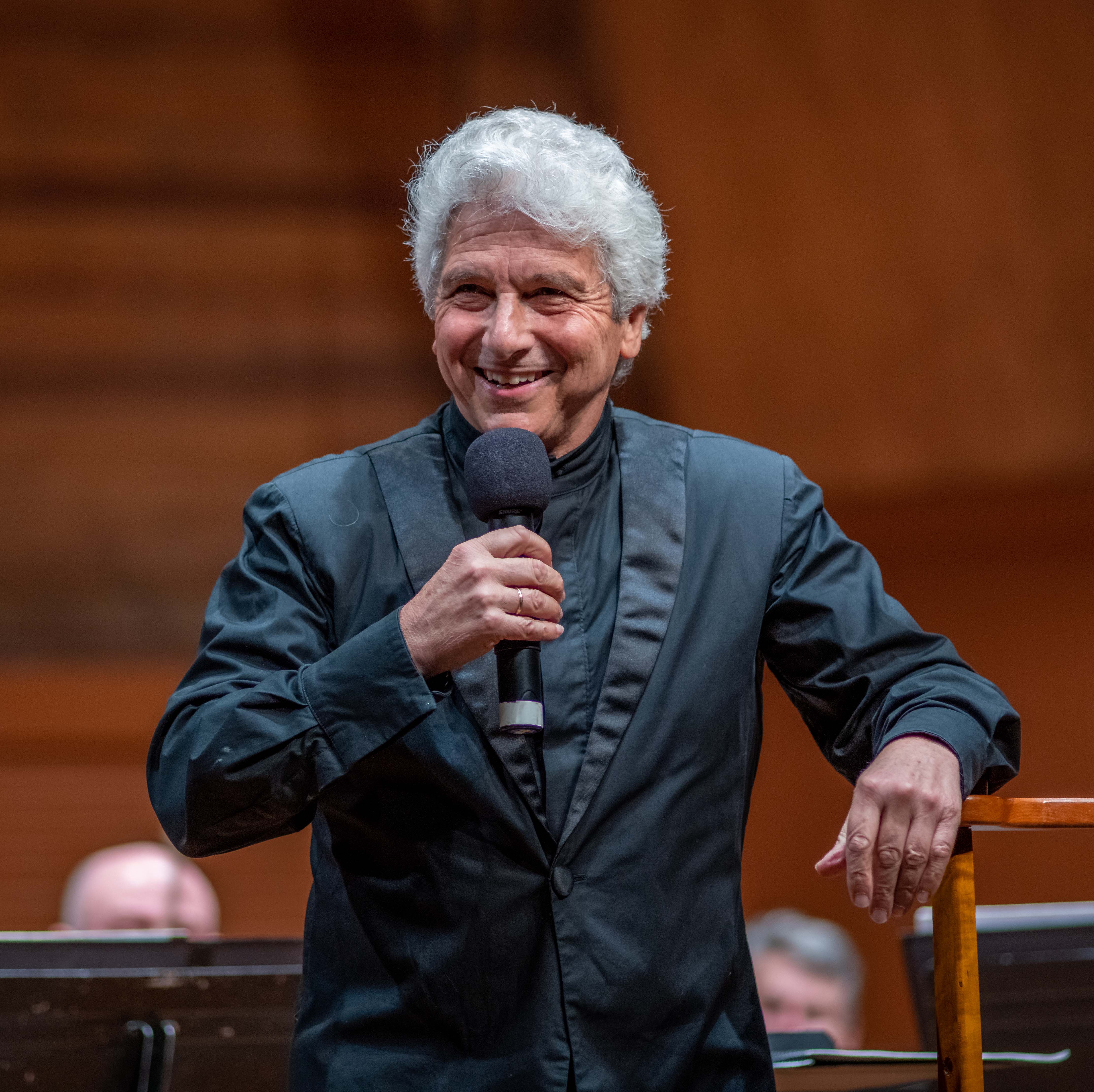
The Festival Orchestra under music director Peter Oundjian played an all-Corigliano program—a rare honor for a living composer that Oundjian has made a feature of his annual “Music of Today” programming. The three pieces on the program spanned not only 50 years of Corigliano’s work, as Oundjian pointed out from the stage; they also displayed some of the breadth and diversity of his creativity.
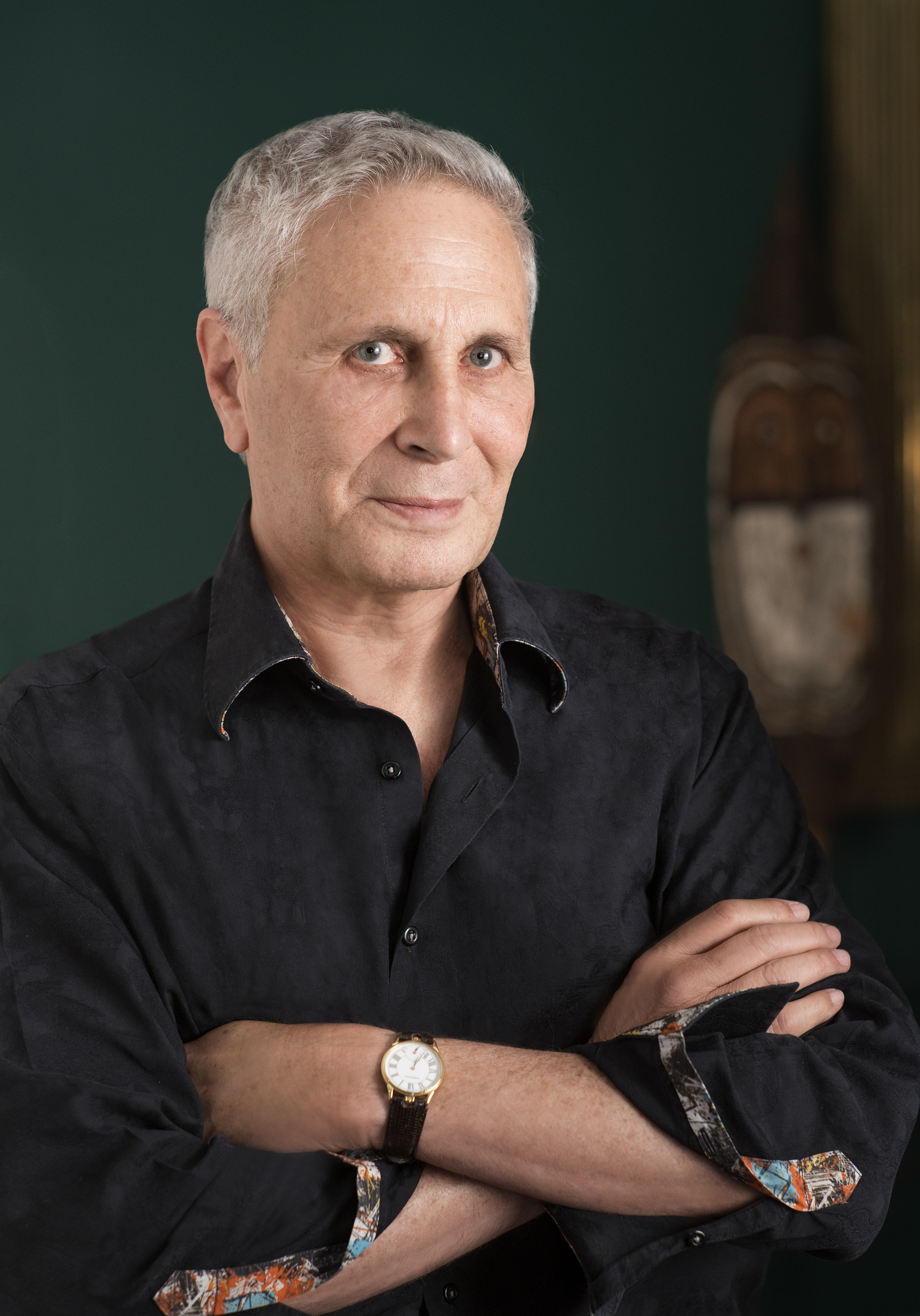
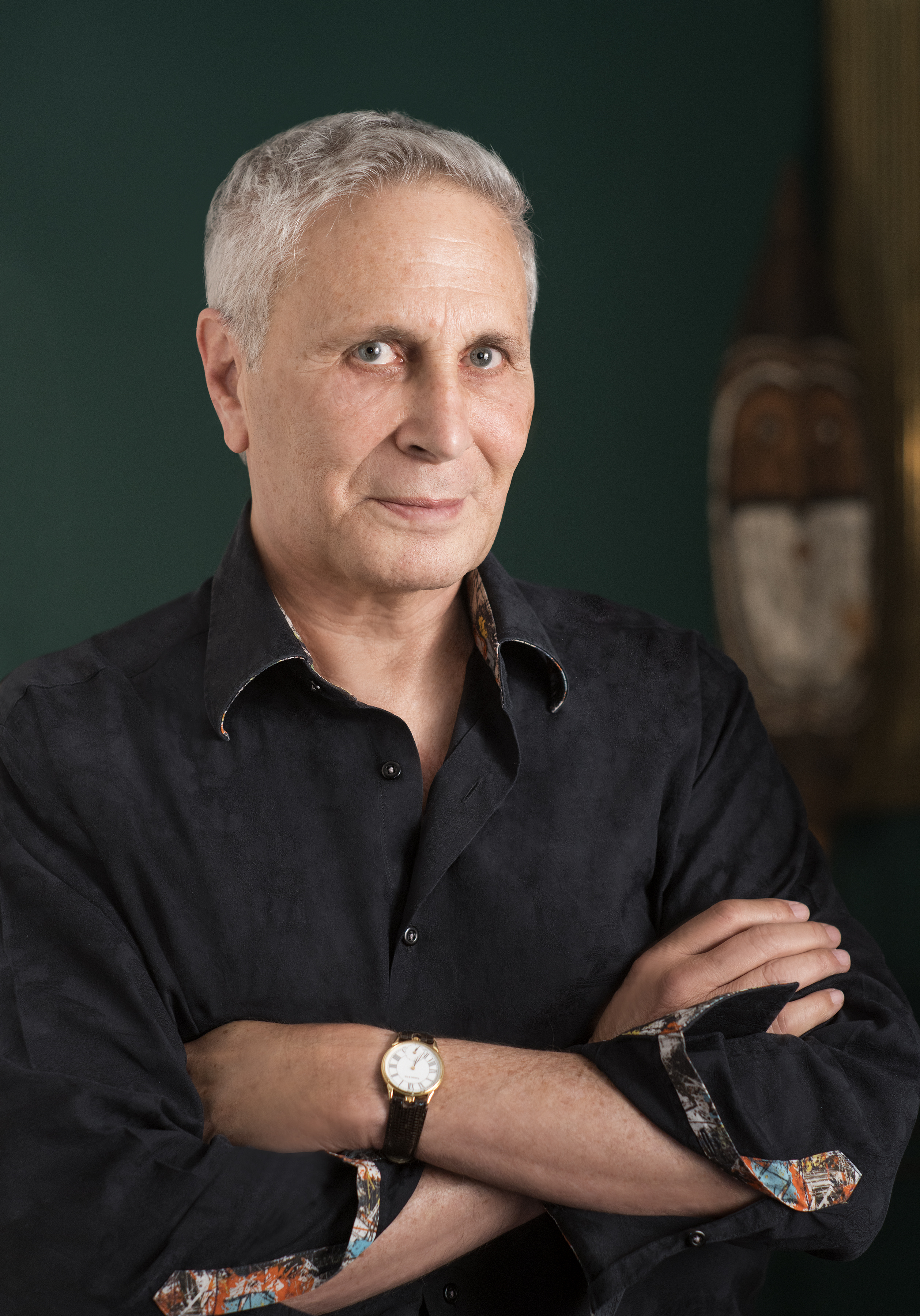
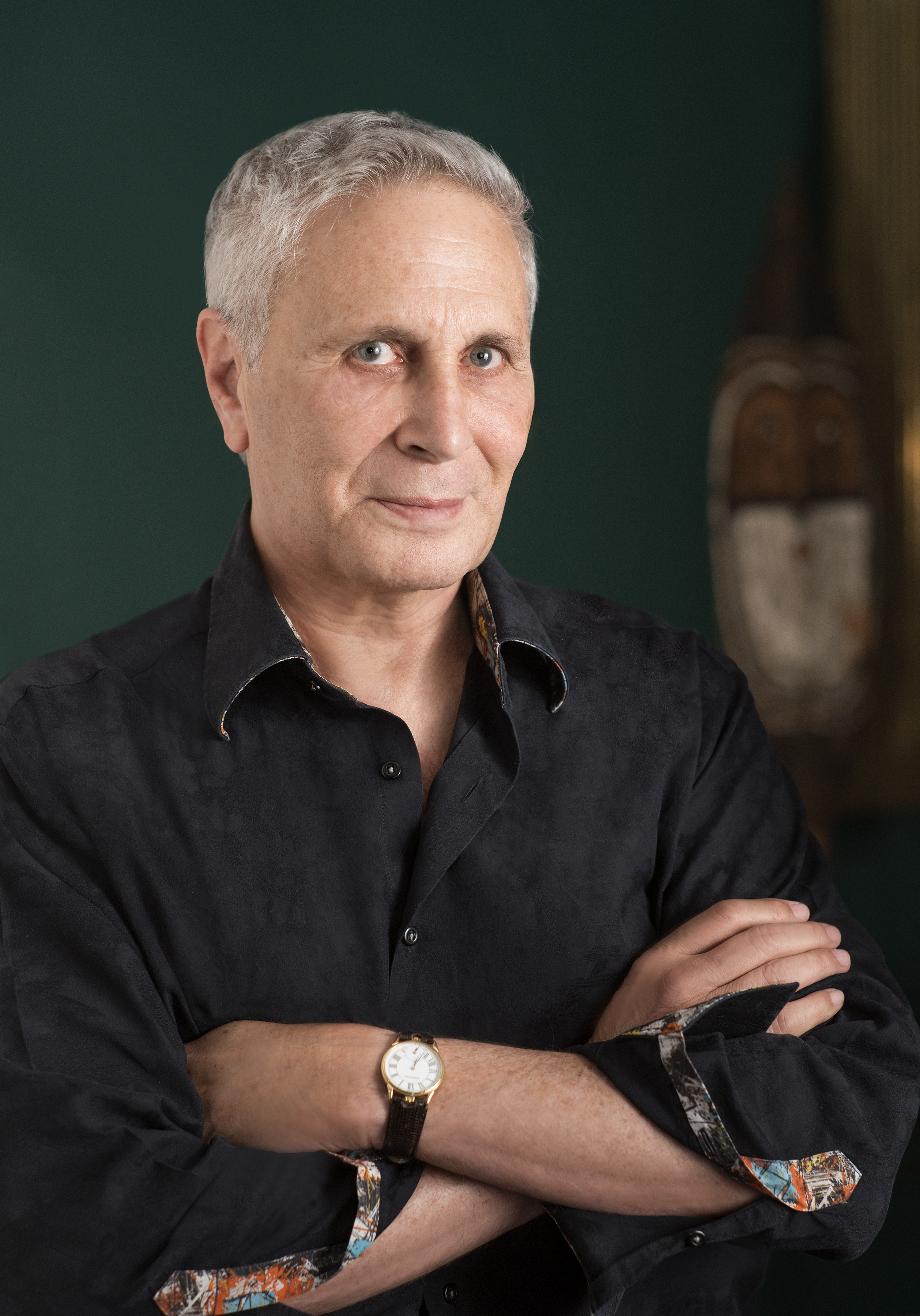
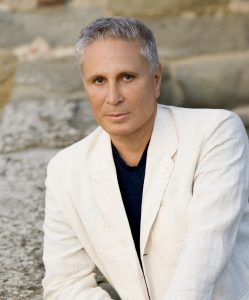
John Corigliano. Photo by J. Henry Fair
That breadth is certainly one of the reasons the Corigliano in important. For last night’s concert, the CMF Orchestra played two pieces that are great entertainment—the Gazebo Dances of 1974, and his recent Triathlon for saxophone and orchestra (2020), played by virtuoso saxophonist Timothy McAllister.
The third piece on the program, One Sweet Morning for voice and orchestra (2011), reaches for greatness, and find it though both texts and their settings. The expressive depth of this piece, commission for the 10th anniversary of the 9/11 attacks, clearly signals Corigliano’s importance. Grammy award winning mezzo-soprano Kelley O’Connor was the soloist.
Opening the program, Gazebo Dances seemed like a continuation of the Tuesday program by the JACK Quartet, titled “New York Stories.” The Dances come straight out of the 1970s New York and Broadway milieu that inspired Leonard Bernstein and others of the times.
Oundjian and the Festival Orchestra captured well the buoyant energy and sweet sentimentality of the Overture movement. The Waltz was just humorous enough, and the dreamy Adagio movement, played with careful attention to balance among the instruments, provided a comforting moment of relaxation before the jolly Tarantella.
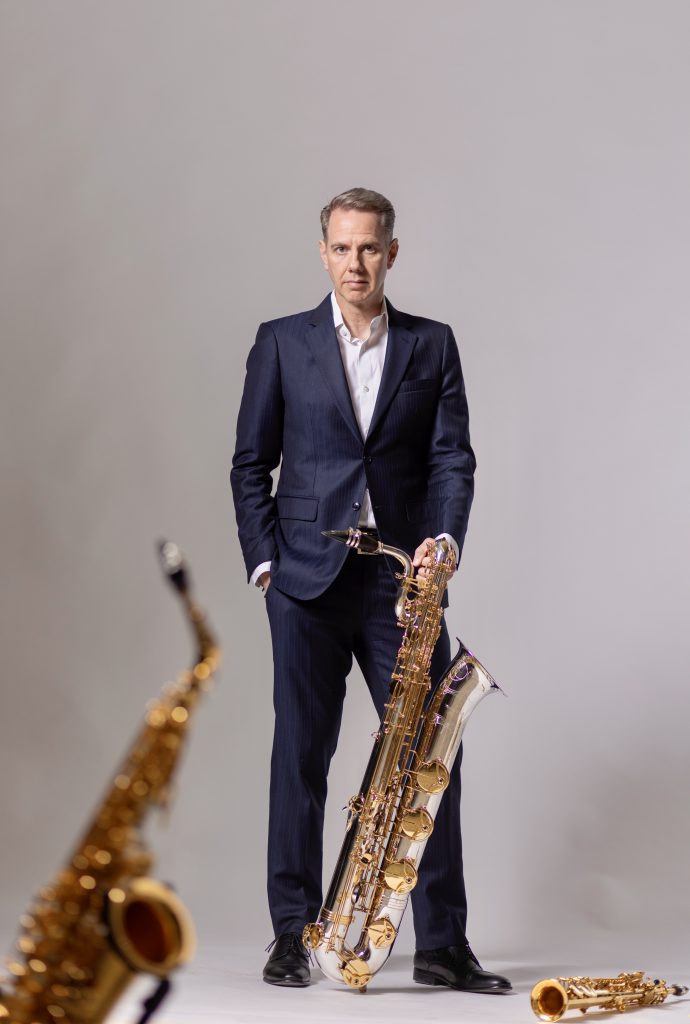
Multi-saxophonist Timothy McAllister
Triathlon requires a saxophonist who is a virtuoso on the soprano, alto and baritone saxes—the three events of the athletic triathlon the concerto represents—and the CMF certainly had that in McAllister. Apparently comfortable in every possible range—and some impossible ones, too—of each instrument, he was unquestionably the medalist of this Triathlon.
The first movement is filled with incredibly virtuosic passages all over the soprano sax. Sadly the balance was not always well judged, but when the soloist emerged from the brassy orchestral texture, blisteringly fast things were going on. McAllister played with silky smoothness on the alto sax for the second movement, even over passages of riverine rapids.
The baritone sax is the boisterous cousin of the other instruments, ideal for all kinds of playful hijinks—and all kind of playful hijinks is what Corigliano asks for and McAllister provided, from loudly slapped keys to slap-tongue blasts. The only thing missing was a return to the screaming heights of the soprano instrument, which is exactly what the score calls for at the end. With a soloist like that, who wouldn’t have fun at the concert?
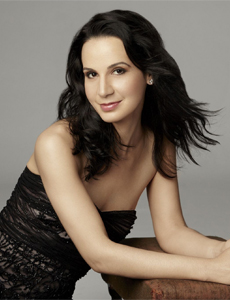
Mezzo-soprano Kelley O’Connor
But it is One Sweet Morning that provided the emotional depths of the evening. Corigliano made inspired decisions picking four poetic texts that lament the horrors of violence and hope for a world without war. The poets could not be more diverse—Polish poet Czesław Miłosz foreseeing the end of the world in 1944, Homer describing the man-to-man brutality of the Trojan War, 8th-century Chinese poet Li Po revealing the anguish of wives and mothers, and pop-song lyricist E.Y. “Yip” Harburg (“Wizard of Oz”) dreaming of a world when “the rose will rise . . . (and) peace will come.”
The texts make an eloquent progression from anguish to brutality to hope, and here is where Corigliano reaches for greatness. Not only has he selected deeply moving poems, he matches each with music that powerfully captures in turn the deep melancholy of Miłosz’s words, the concentrated barbarity described by Homer and Li Po, and the healing grace suggested by Harburg.
Oundjian has a profound grasp of this music, and brought it out through the players. O’Connor sang with control and expressive precision, with no audible strain from the lowest notes to the highest. If she could not be heard during the scenes of war, that was not her fault; the orchestral sound there was as loud as I have heard at Chautauqua, but never uncontrolled.
These three pieces—fun dances, a fervent memorial and a splashy concerto—made up an optimal concert program, and it is one that I will remember as one of my favorite evenings at CMF.
__________
NOTE: The title of John Corigliano’s piece was corrected in the 10th paragraph on 7/14. The correct title is One Sweet Morning, not One Fine Day. We apologize for the error.
Peter Oundjian leads All-Corigliano program, world premieres for ‘Music of Today’
By Peter Alexander July 7 at 12:10 p.m.
The next two weeks of the Colorado Music Festival (CMF) will see the 2023 season in full swing.
The Robert Mann Chamber Music Series—named in honor of the founding first violinist of the esteemed Juilliard String Quartet—gets underway with performances by the JACK Quartet (July 11; program details below) and the Brentano Quartet (July 18). The performance by JACK also initiates a week of “Music of Today” featuring an all-John Corigliano program by the Festival Orchestra with saxophone soloist Timothy McAllister (July 13) and a program with three world premieres by Carter Pann of CU, his former student Jordan Holloway, and Adolphus Hailstork (July 16).
The festival’s third week embraces more familiar repertoire, with some excursions. The Brentano Quartet embellishes a program of Mozart and Beethoven with works by Scottish composer James MacMillan (July 16). CMF Music Director Emeritus Michael Christie marks his return to Chautauqua Auditorium with Tchaikovsky’s familiar Fourth Symphony and an interesting pairing of piano concertos by Ravel and Florence Price performed by Michelle Cann (July 20 and 21). The week closes with an all-Mozart program led by guest conductor François López-Ferrer and featuring violinist Grace Park (July 23).
JACK Quartet. Photo by Shervin Lainez
Known for their committed performances of new music, the JACK Quartet is the musical heir of the mold-breaking Kronos Quartet. “Kronos really paved the way,” first violinist Austin Wulliman says. “They were role models for people in our generation, and JACK modeled the way we commission (new works) after the way Kronos did it.”
Titled “New York Stories,” the July 11 concert features works by five composers: Morton Feldman, Caleb Burhans, Philip Glass, Caroline Shaw and John Zorn. The program came from “an intuitive feeling about New York, which is a place that is so now,” violist John Richards explains. “Cultural changes begin or are reflected very early on in New York, and I feel the longing for ‘before’ as a part of the experience of ‘now’ in New York.
Caroline Shaw. Photo by Kait Moreno
“This program gets into that, through a beautiful, melancholic longing that’s in Caroline Shaw’s (Entr’acte, which is) also filled with the kind of playful experimentation with form and instrumental techniques that can only be done today. It’s a beautiful marriage of those things.”
The players find the same duality in Zorn’s Remedy of Fortune, which they compare to standing in the Cloisters, a museum of medieval art in upper Manhattan, and hearing the sound of visitors’ cell phones alongside the echoes of medieval music.
Zorn is known for pieces inspired by the frenetic pace of early cartoons, but his latest pieces are more varied. “He draws on so many interesting influences now,” Wulliman says. “I hear the music of Alban Berg at the same time that I hear Art Tatum and Beethoven and medieval music.”
Wulliman suggests that when listening to Feldman’s Structures for String Quartet, you think of a painting rather than a narrative. “That’s a helpful inroad to how to listen to it,” he says. “It’s a visual arts approach to the page, where he’s filling our auditory field with splotches, textures and patterns that weave together.”
The least known composer on the program is probably Burhans, whom the JACK players knew as undergraduates at the Eastman School of Music. “The beauty and the emotional catharsis of that piece is a real lynchpin of the program,” Wulliman says. Richards adds that Burhans “joined the choir at Trinity Church Wall Street (in New York), and this music draws from that experience. There’s a beautiful middle section that grows and grows into a prayerful, ecstatic feeling of release.”
John Corigliano. Photo by J. Henry Fair
The most distinctive program of the summer is the concert devoted entirely to works by composer John Corigliano. That almost never happens with living composers, conductor and CMF Music Director Peter Oundjian says, but he also likes to remind people that new music today is not as daunting as it once was.
“I remember a time when if you presented one piece of contemporary music you could loose half your audience,” he says. But Corigliano is from “a generation that got a language that was astonishingly contemporary but acceptable at the same time.”
Oundjian wanted to present works from different parts of the composer’s career. “I said to John, ‘I want to do a piece from each of your periods’,” Oundjian says. “’I want to make you into Beethoven, (with) early, middle and late’.”
From the early period, he chose the Gazebo Dances (1972), which was likely inspired by the music of Leonard Bernstein. A suite in four contrasting movements, it has a Bernstein-like energy and flirtation with popular/Broadway idioms, which is not surprising since Corigliano’s father was concertmaster of the New York Philharmonic under Bernstein.
Next is One Sweet Morning (2010), written to commemorate the anniversary of the 9/11 attacks in New York. “Oh boy is it ever incredibly profound and moving,” Oundjian says. “It’s music of staggering beauty and depth, so it’s a fantastic contrast to the Gazebo Dances.”
The concert will conclude with Corigliano’s most recent concerto, Triathlon for saxophone and orchestra (2020). The soloist will be Timothy McCallister, who was featured last summer. “It’s a complete masterpiece,” Oundjian says. “I don’t know how these brilliant composers get their ideas, but it’s an honor to study the works and prepare to conduct them.”
Adolphus Hailstork. Photo by Jin Hailstork.
The centerpiece of the July 16 concert of world premieres will be JFK: The Last Speech, a work for orchestra, soprano and narrator by Adolphus Hailstork. The soloists will be soprano Janice Chandler-Eteme and bass-baritone Eric Owens as narrator.
The libretto incorporates parts of a speech President John F. Kennedy gave at Amherst College Oct. 26, 1963, 27 days before his assassination in Dallas. Kennedy’s speech was given in honor of poet Robert Frost, who had died nine months before. Neil Bicknell, who heard the speech as an Amherst senior, crafted the libretto combining Kennedy’s words, which will be spoken by the narrator, and Frost’s poetry, which will be sung by the soprano.
A project of the Amherst Class of 1964, JFK: The Last Speech will be performed around the country and at Amherst College this fall. Hailstork writes in his program notes, “My writing will reflect the autumn season, the solemnity of the moment, and the unique oratorical gifts of Kennedy the president and the profound literary gifts of Frost the poet.”
Holloway’s Flatirons Escapades was composed for the 125th anniversary of Boulder’s Colorado Chautauqua. A graduate of CU, Holloway recalls in his program notes both his positive experiences in the Chautauqua Park that served as an inspiration for his score, and the healing quality of the space during times of “anxiety and internal chaos” that “are woven into the piece as well.”
Pann was Holloway’s composition teacher at CU. He writes that his Dreams I Must Not Speak “emerged from a cathartic attempt to realize, in music, three dreams I experience during sleep with noticeable regularity. These are not nightmares nor are they pleasant images, but rather odd and somewhat psychedelic scenes that have remained distinct in my awakened conscience over the years.”
Michael Christie. Photo by Eugene Yankevich
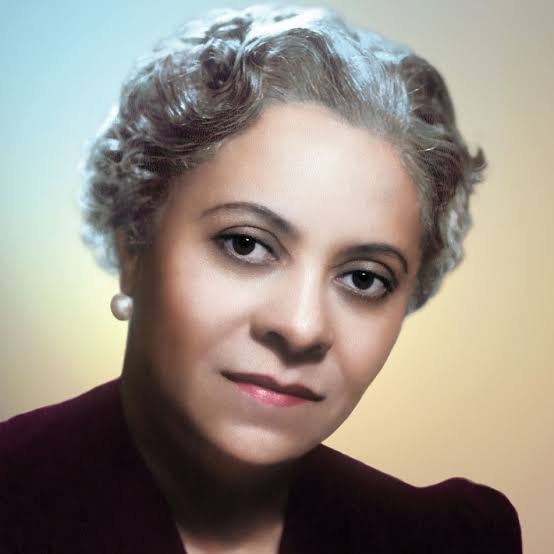
For his return to Chautauqua Auditorium, CMF Music Director Emeritus Michael Christie will team up with pianist Michelle Cann to present concertos by Ravel and the remarkable African-American composer Florence Price. A graduate of the New England Conservatory, Price is recognized as the first African-American woman to have a work played by a major orchestra. “Price is one of these people that when an audience member hears the music, people are just bowled over by the inventiveness, by the grandness of it,” Christie says.
Price played her Piano Concerto in One Movement once in 1934, after which it was thought to be lost. However, some parts were found in 2009 at her former summer home, shortly before it was to be demolished, and other fragments turned up later. The score has been reconstructed, and the concerto has had real success in recent years. Curiously, the Concerto in One Movement actually has three movements, played without break
Florence Price
The combination of Price’s African-American heritage and her classical training led to what Christie calls “this wonderful blending of American and European traditions speaking to each other.” And he finds a parallel for that combination in the Ravel Concerto. “You have Maurice Ravel just oozing with American jazz throughout this piece,” he explains.
“You’re looking Florence Price being influenced by Europe and having her own American language, and then Ravel on the other side of the Atlantic, looking at America through the lens of his own language. So the concertos kind of cross each other, over the ocean.”
The Tchaikovsky Symphony that closes the program is a great showpiece for the orchestra, and it’s also one of the most familiar pieces on the summer program. Christie remembers that when he was music director at CMF, he would “throw lots of new things at the orchestra, and they were just exhausted by the end of the summer. I realized over time that balance (between familiar and unfamiliar pieces) is not only for the audience, it’s for the orchestra too.
“It’s always a relief for an orchestra to be able to kick back and play something that they know inside and out.”
# # # # #
COLORADO MUSIC FESTIVAL Performances July 11–23 All performances at Chautauqua Auditorium
7:30 p.m. Tuesday, July 11 Robert Mann Chamber Music Series: JACK Quartet
Morton Feldman: Structures for String Quartet (1951)
Caleb Burhans: Contritus (2010)
Philip Glass: String Quartet No. 5 (1991)
Caroline Shaw: Entr’acte (2011)
John Zorn: The Remedy of Fortune for String Quartet (2016)
7:30 p.m. Thursday, July 13 Festival Orchestra, Peter Oundjian, conductor With Timothy McAllister, saxophone
John Corigliano: Gazebo Dances (for orchestra) (1974) —One Sweet Morning for voice and orchestra (2010) —Triathlon for saxophone and orchestra (2020)
6:30 p.m. Sunday, July 16 World premieres: Festival Orchestra, Peter Oundjian, conductor With Janice Chandler-Eteme, soprano, and Eric Owens, narrator
Jordan Holloway: Flatiron Escapades (world premiere commission)
Carter Pann: Dreams I Must Not Speak (world premiere commission)
Adolphus Hailstork: JFK: The Last Speech (world premiere)
7:30 p.m. Tuesday, July 18 Robert Mann Chamber Music Series: Brentano String Quartet
Mozart: String Quartet in D Major, K499
James MacMillan: Memento for string quartet (1994) —For Sonny for string quartet (2011)
Beethoven, String Quartet No. 13 in B-flat Major, op. 130
7:30 p.m. Thursday, July 20, and 6:30 p.m. Friday, July 21 Festival Orchestra, Music Director Emeritus Michael Christie, conductor With Michelle Cann, piano
Ravel: Piano Concerto in G Major
Florence Price: Piano Concerto in One Movement
Tchaikovsky: Symphony No. 4 in F Minor, op. 36
6:30 p.m. Sunday, July 23 Festival Orchestra, François López-Ferrer, conductor With Grace Park, violin
Mozart: Overture to The Impresario K486 —Violin Concerto No. 3 in G Major, K216 —Adagio and Fugue in C Minor, K546 —Symphony No. 36 in C Major, (“Linz”) K425
Joshua Bell as artist-in-residence, John Corigliano composer-in-residence
By Peter Alexander Jan. 25 at 11 a.m.
The Colorado Music Festival (CMF) has announced their 2023 summer season at Chautauqua.
Peter Oundjian. Photo by Geremy Kornreich
The formal announcement of the season was made last night (Jan, 24) at the Center for Musical Arts in Lafayette, which is the sister organization of the CMF. The event was live streamed to the public.
Before the introduction of the concerts by music director Peter Oundjian, executive director Elizabeth McGuire announced that the CMF’s 2022 world premiere performance of Flying On the Scaly Backs of Our Mountains by Wang Jie had reached more than a million listeners world-wide through radio—“more than doubling the reach of the festival over its history with one performance,” she said.
Oundjian has written of the 2023 season, “We are so fortunate to bring to you some of the greatest performers alive today, including artist-in-residence Joshua Bell, along with the extraordinary talents of eight of today’s brilliant composers. It is such a thrill to hear today’s voices alongside—and interacting with—groundbreaking voices from the past, giving us a unique window into centuries of the greatest in creativity.”
John Corigliano. Photo by J. Henry Fair
Since his appointment as music director in 2018, Oundjian has made the music of today a focus of the festival. Among the living composers whose music will be performed this summer is John Corigliano, winner of the Pulitzer Prize, four Grammies and an Academy Award. As composer-in-residence, Corigliano will be present at the festival for a concert devoted entirely to his music on July 13 (see full programs below).
Premieres will be presented of works by Jordan Holloway, CU faculty member Carter Pann, and Adolphus Hailstork. All three will be performed on July 16, as the culmination of a week of “Music of Today.” A preview of music by five other living composers will be offered by Bell, who has commissioned a five-movement suite for violin and orchestra from five different composers.
Joshua Bell. Photo by Phillip Knott
The suite, titled Elements, will have its official premiere later, but all five movements will be previewed over two concerts at CMF—the final two concerts of the season (Aug. 3 and 6). The composers who have contributed to Elements are among the most important composers working today: Jake Heggie, Jessie Montgomery, Edgar Meyer, Jennifer Higdon and Kevin Puts.
Bell will also be at CMF for the first week of the festival and will play Max Bruch’s Violin Concerto in G minor on the opening program, June 29 and 30.
A highlight of the 2023 festival will be two programs celebrating the 150th anniversary of the birth of composer Sergei Rachmaninoff (July 6–7 and July 9). Oundjian said that it seemed appropriate in 2023 to perform works composed outside Russia, many of them in the United States which was Rachmaninoff’s home in the later years of his life. These works include the Third and Fourth piano concertos, the beloved Rhapsody on a Theme of Paganini, and the rarely performed Symphony No. 3.
Michael Christie. Photo by Bradford Rogne
Another feature of the 2023 festival of which Oundjian is particularly proud is the continuation of the Robert Mann Chamber Music Series, named for the founding first violinist of the Juilliard String Quartet. In addition to performances by members of the Festival Orchestra, the four-concert series will also feature guest performances by the JACK Quartet, renowned for their performances of contemporary music, and the Brentano String Quartet.
The 2023 festival will also see the return of Music Director Emeritus Michael Christie to conduct concerts on July 20 and 21. Christie was the CMF music director 2000–13.
“Not only does the 2023 season promise to be artistically stunning, I know our audiences will appreciate the way the programming weaves so many diverse, timely, and relevant voices into the fabric of classical music,” executive director Elizabeth McGuire wrote.
Performances this summer will be at 7:30 p.m. on Tuesdays and Thursdays, and 6:30 p.m. Fridays and Sundays. As in past years, Tuesdays will be devoted to chamber music, other days to Festival Orchestra performances. In response to comments from patrons, the Family Concert on Sunday, July 2, has been moved earlier in the day, to 10:30 a.m. Other updates to the festival this year include a new ticketing system through the Chautauqua Box Office, and meals available for pre-order through the ticketing system.
Subscription tickets for the 2023 festival are available here. Single-concert tickets go on sale March 7 through the CMF Web page, or by phone at the Chautauqua Box Office at 303-440-7666. New for 2023, CMF is offering $10 tickets for youth (ages 18 and under) and students with current school identification. More information can be found HERE.
# # # # #
COLORADO MUSIC FESTIVAL 2023 Performance Schedule All performances at Chautauqua Auditorium
7:30 p.m. Thursday June 29 and 6:30 p.m. Friday, June 30: Festival Opening Program Festival Orchestra, Peter Oundjian, conductor With Joshua Bell, violin
Carlos Simon: “Motherboxx Connection” from Tales: A Folklore Symphony for orchestra
Max Bruch: Violin Concerto No. 1 in G minor
Mussorgsky: Pictures at an Exhibition (orchestrated by Ravel)
Family Concert: 10:30 a.m. Sunday, July 2 Festival Orchestra, Kalena Bovell, conductor With Jennifer Bird-Arvidsson, soprano, and Janae Burris, narrator
Bizet: Carmen Suite No. 1
Eric Whitacre: Goodnight Moon
Samuel Coleridge-Taylor: “Danse Nègre” from African Suite
Prokofiev: Peter and the Wolf
7:30 p.m. Thursday, July 6 and 6:30 p.m. Friday July 7 Festival Orchestra, Peter Oundjian, conductor With Nicolai Lugansky, piano
Rachmaninoff: Piano Concerto No. 3 in D Minor, —Symphony No. 3 in A Minor
6:30 p.m. Sunday, July 9 Festival Orchestra, Peter Oundjian, conductor With Nicolai Lugansky, piano
Rachmaninoff: Rhapsody on a Theme of Paganini —Piano Concerto No. 4 in G Minor —Symphonic Dances
7:30 p.m. Tuesday, July 11 Robert Mann Chamber Music Series: JACK Quartet
Morton Feldman: Structures for String Quartet (1951)
Caleb Burhans: Contritus (2010)
Philip Glass: String Quartet No. 5 (1991)
Caroline Shaw: Entr’acte (2011)
John Zorn: The Remedy of Fortune for String Quartet (2016)
7:30 p.m. Thursday, July 13 Festival Orchestra, Peter Oundjian, conductor With Timothy McAllister, saxophone
John Corigliano: Gazebo Dances (for orchestra) (1974) —One Sweet Morning for voice and orchestra (2010) —Triathlon for saxophone and orchestra (2020)
6:30 p.m. Sunday, July 16 World premieres: Festival Orchestra, Peter Oundjian, conductor With Janice Chandler-Eteme, soprano, and Eric Owens, narrator
Jordan Holloway: Flatiron Escapades (world premiere commission)
Carter Pann: Dreams I Must Not Speak (world premiere commission)
Adolphus Hailstork: JFK: The Last Speech (world premiere)
7:30 p.m. Tuesday, July 18 Robert Mann Chamber Music Series: Brentano String Quartet
Mozart: String Quartet in D Major, K499
James MacMillan: Memento for string quartet (1994) —For Sonny for string quartet (2011)
Beethoven, String Quartet No. 13 in B-flat Major, op. 130
7:30 p.m. Thursday, July 20, and 6:30 p.m. Friday, July 21 Festival Orchestra, Music Director Emeritus Michael Christie, conductor With Michelle Cann, piano
Ravel: Piano Concerto in G Major
Florence Price: Piano Concerto in One Movement
Tchaikovsky: Symphony No. 4 in F Minor, op. 36
6:30 p.m. Sunday, July 23 Festival Orchestra, François López-Ferrer, conductor With Grace Park, violin
Mozart: Overture to The Impresario K486 —Violin Concerto No. 3 in G Major, K216 —Adagio and Fugue in C Minor, K546 —Symphony No. 36 in C Major, (“Linz”) K425
7:30 p.m. Tuesday, July 25 Robert Mann Chamber Music Series: Members of the Colorado Music Festival Orchestra
Benjamin Britten: Phantasy Quartet for Oboe and Strings, op. 2
Francis Poulenc: Sextet in C Major for Piano and Winds
Brahms: String Sextet No. 2 in G Major, op. 36
7:30 p.m. Thursday, July 27, and 6:30 p.m. Friday, July 28 Festival Orchestra: Eun Sun Kim, conductor With Johannes Moser, cello
Mason Bates: The Rhapsody of Steve Jobs (2021)
Shostakovich: Cello Concerto No. 1 in E-flat Major, op. 107
Brahms: Symphony No. 2 in D Major, op. 73
6:30 p.m. Sunday, July 30 Festival Orchestra, Hannu Lintu, conductor, With Lise de la Salle, piano
Einojuhani Rautavaara: Cantus Arcticus (1974)
Schumann: Piano Concerto in A Minor
Haydn: Symphony No. 96 in D Major (“Miracle”)
7:30 p.m. Tuesday, Aug. 1 Robert Mann Chamber Music Series: Members of the Colorado Music Festival Orchestra
Beethoven: String Trio in C Minor, op. 9 no. 3
Debussy: Danses sacrée et profane (Sacred and profane dances)
Dvořák: Piano Quintet No. 2 in A Major, op. 81
7:30 p.m. Thursday, Aug. 3 Festival Orchestra, Peter Oundjian, conductor With Joshua Bell, violin
The Elements: Suite for Violin and Orchestra (commissioned by Joshua Bell) “Fire” by Jake Heggie “Ether” by Jessie Montgomery “Water” by Edgar Meyer
Debussy: La Mer
6:30 p.m. Sunday, Aug. 6: Festival Finale Concert Festival Orchestra, Peter Oundjian, conductor With Joshua Bell, violin
The Elements: Suite for Violin and Orchestra (commissioned by Joshua Bell) “Air” by Jennifer Higdon “Earth” by Kevin Puts
Four operas, to be played for 30–80% capacity houses
By Peter Alexander Oct. 26 at 9:15 p.m.
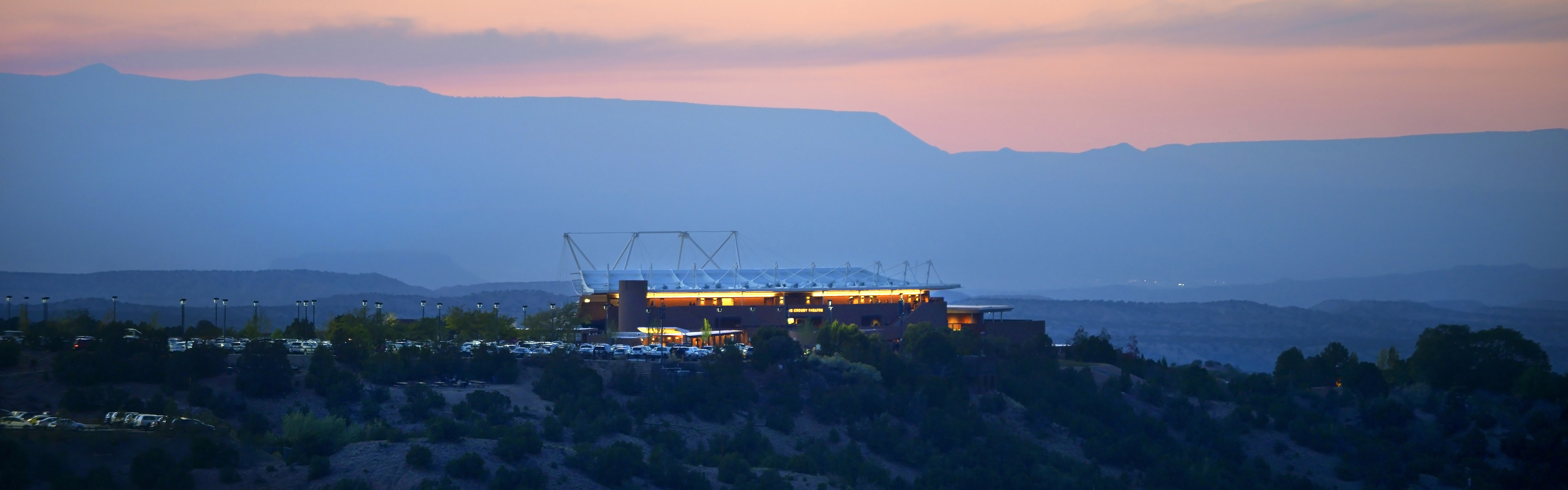
The Santa Fe Opera (SFO) has an advantage these days over most other summer opera festivals: they perform outdoors.
Santa Fe Opera’s open-air theater. Photo by Kate Russell.
In the time of COVID, of course, outdoors is the safest place to be. That fact made it easier for SFO to plan for the coming season.
“The single greatest advantage that we have given the challenges of the coronavirus is that that we are an outdoor venue,” Robert Meya, the SFO’s general director, says.“ Even if we have to reduce our social distancing way down, it’s still going to be a lot safer than any indoor theater.”
Meya announced the summer 2021 season in an online press conference Oct. 21. The season will be reduced—four operas instead of the usual five—to decrease crowding on the grounds of the SFO during rehearsals and work hours for backstage crews. The four operas on the schedule provide an interesting variety of styles, with one each from the 18th, 19th, 20th and 21st centuries.
Robert Meya announces the SFO 2021 season from the stage of the John Crosby Theater.
The season will comprise Mozart’s Marriage of Figaro, Tchaikovsky’s Eugene Onegin, Benjamin Britten’s Midsummer Night’s Dream—ideal for an outdoor summer venue!—and the world premiere of The Lord of Cries by John Corigliano and Mark Adamo. All four had been part of the long-term plan for the coming summer.
A fifth opera that calls for a very large chorus and many extras would have been next to impossible to produce with safe distancing of cast and crew, and was dropped from the schedule.
The open-air “lobby” of the Santa Fe Opera. Insight Foto.
It was important to preserve as much of the 2021 schedule as possible because of contractual commitments by the SFO. “Most of the contracts had been issued,” Meya explains. “Certainly verbally, we had agreements with all of the artists for that season.”
All of the productions planned for 2020 have been moved to 2022 or ‘23, including the world premiere of M Butterfly by Huang Ruo and David Henry Hwang, the return of Wagner to the SFO with Tristan und Isolde, and the company’s first production ever of Dvořák’s Rusalka. “Because we wanted to preserve all of these projects, we had to leapfrog over 2021,” Meya says.
“We were able to save all five projects by slotting them into ‘22 and ‘23. That created a little bit of a domino effect, because we had those plans laid out. We had already built three of these (2020) productions. In March [they were] almost ready to go on stage.”
The dates of those future performances postponed from 2020 will be announced later. “I’m hoping we can go forward with the season announcement for 2022 this coming spring, in the normal pattern of announcing about 14 months out,” Meya says. Stay tuned.
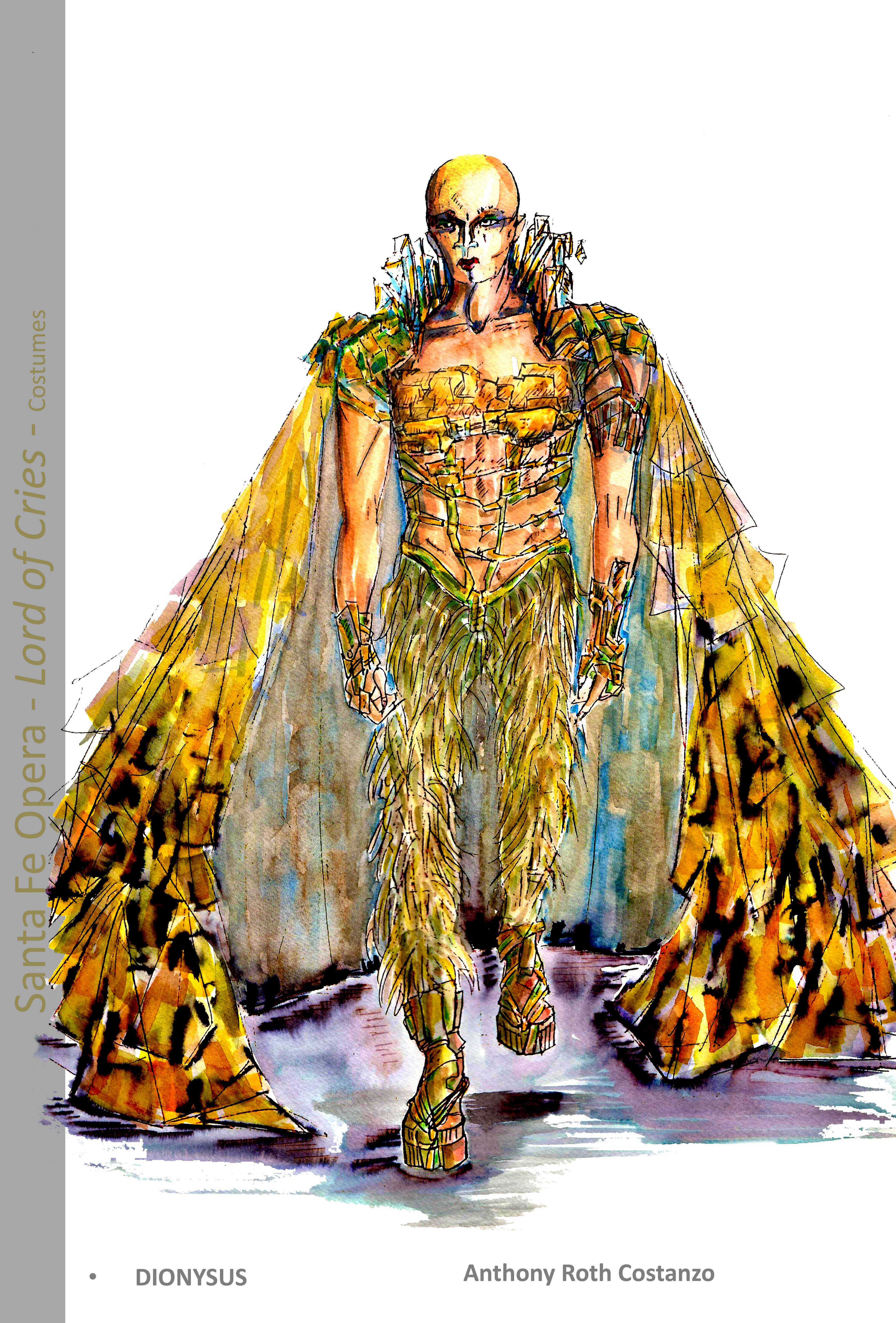
Costume sketch for Lord of Cries. Courtesy of Santa Fe Opera
Of the four operas slated for 2021, the premiere of The Lord of Cries is sure to attract the most attention from the opera world. The 17th world premiere at the SFO, The Lord of Cries is based on two classic works of literature, The Bacchae by Euripides and Dracula by Bram Stoker.
According to the description in the SFO’s news release, “Separated by 24 centuries, The Bacchae and Dracula tell virtually the same timeless story, with the same subversive message: We must honor our animal nature lest it turn monstruous and destroy us. The Lord of Cries begins with a strange, androgynous god returning to earth to offer a mortal three chances to ‘ask for what you want’ or risk the consequences. He materializes in Victorian England in the guise of the eponymous ‘Lord of Cries,’ . . . the irresistible antihero of Dracula.”
The Lord of Cries is the second opera by Pulitzer Prize winner Corigliano, after his 1991 Metropolitan Opera commission, The Ghosts of Versailles. Librettist Mark Adamo is himself a composer who wrote librettos for his own operas, including the 2013 Gospel of Mary Magdalene, which was revised in 2017 for a “CU NOW” workshop production in Boulder.
John Corigliano
Ticket information and full information on all four operas, including casts and synopses, is available on the SFO Web page.
The SFO’s various health strategies, for artists, staff and the public, have been worked out in partnership with CHRISTUS St. Vincent Regional Medical Center in Santa Fe, as well as a Reopening Advisory Group comprised of SFO Board members, staff, and public health experts. Steps to protect the health of the public during the 2021 season include seating reduced to between 30 and 80 percent of capacity, depending on conditions; ticketless entry and staggered arrival times; electrostatic disinfection of high traffic areas; and enhanced ventilation and air purification in elevators and restrooms.
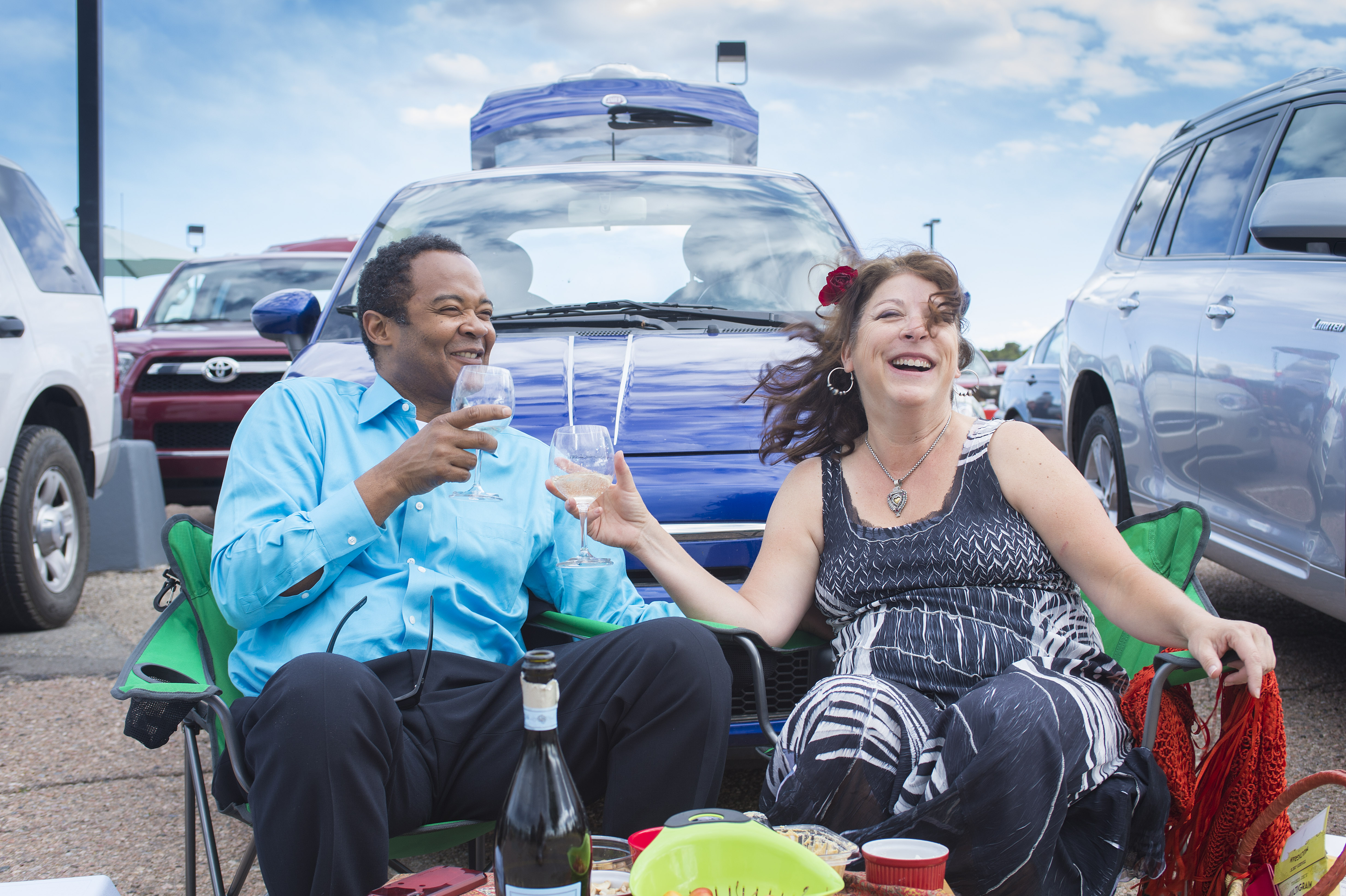
The usual preview dinners and backstage tours will not take place, and the SFO Cantina, a popular gathering place before performances, will be closed. Tailgating picnics will still be permitted in the parking lot, with appropriate distancing.
SFO Tailgaters. Photo by Chris Corrie.
Protecting the health of the artists and others working at the SFO is both a high priority and a complex challenge. Meya explains the steps that will be taken: “The musicians in the orchestra, all of the singers, and of course that includes our apprentices who comprise our chorus—[everyone] rehearsing and performing in close proximity is going to be quarantined upon arrival in the state for 14 days. During that same period they will receive the CCR test as well as the antibody test.
“Once they’re admitted to rehearse on campus, we will have frequent [testing]. All the singers, musicians and apprentices will be tested three times weekly, the backstage crew who can still socially distance to some degree will be tested two times weekly, and everyone else on campus will be tested once weekly.
“Those tests will be the rapid test. We are actually in the process of sourcing those—something like 12,000 tests. We will do the tests on site. We’ll set up a testing station [with] six machines that are going to be running approximately seven hours a day, six days a week with three operators, in order to conduct something like 1000 tests per week.”
The SFO outdoor campus. Photo by Peter Alexander.
In addition to those precautions, the SFO campus is mostly outdoors, with open air rehearsal spaces. But of course the visiting artists and their families will be out in the community as well. “We’re going to ask all of those people to sign a stringent out-of-workplace agreement about what they’re not going to do, like go to bars or restaurants.”
The Santa Fe Opera is one of the very first summer operas to announce full details for their 2021 season. Central City announced long ago that they would move their entire 2020 schedule to 2021, but details of health precautions have not been released. Opera Theater of St. Louis announced Oct. 19—two days before SFO—that they will proceed with an open-air, socially distanced 2021 season.
Considering the dangers posed by the coronavirus, Meya feels very fortunate that the SFO is operating in its unique environment. “We are in that environment that is the perfect marriage of nature and art,” he says. “We’re in such a fortunate position in so many ways. We’re determined to put on a season, and we have been able to announce with a good deal of confidence.
“I feel very positive that we can make this happen and that we can do it safely.”
Valentine’s will be a day for heart-shaped candies; lacy greeting cards; special dinners with your sweetheart; and—thanks to the Boulder Philharmonic—music about a red violin.
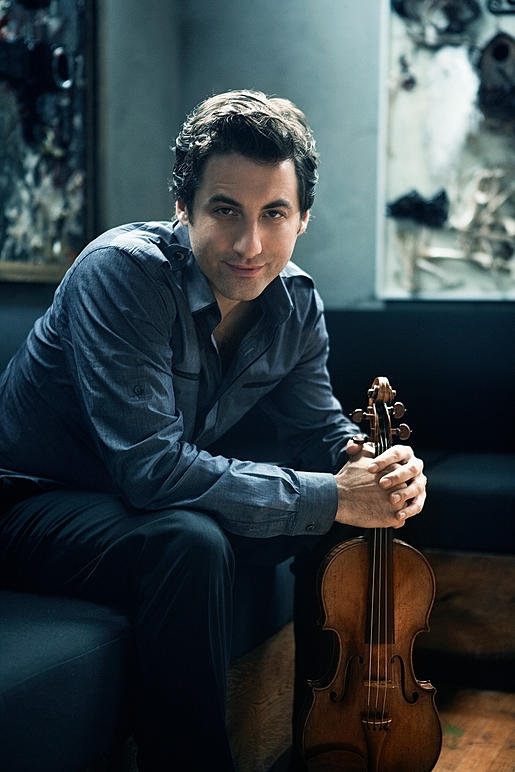
Violinist Philippe Quint will join conductor Michael Butterman and the orchestra Saturday evening (7:30 p.m. Feb. 14 in Macky Auditorium) to perform John Corigliano’s Red Violin Concerto. The concert, titled “Legendary Love,” will also feature the Prelude and Liebestod (Love Death) from Wagner’s Tristan und Isolde and Tchaikovsky’s Fantasy-Overture Romeo and Juliet.
Michael Butterman. Photo by Glenn Ross.
As part of a season of musical “Legends,” a concert on Valentine’s Day suggests obvious possibilities. “Fortunately for us, there is no shortage of good pieces that have dealt with this particular topic—literary couples and so on,” Butterman says. “We thought the date was a mixed blessing (but) we hope that people will choose to make it an evening out and make it part of their Valentine’s plans.”
Philippe Quint. Photo by Lisa Marie Mazzucco.
If you don’t know Corigliano’s Red Violin Concerto, Quint thinks you are in for a treat. “Expect the unexpected,” he says.
“Prepare for an emotional roller coaster. It will really take you from a space of meditation into an absolute emotional frenzy and back, and back again.”
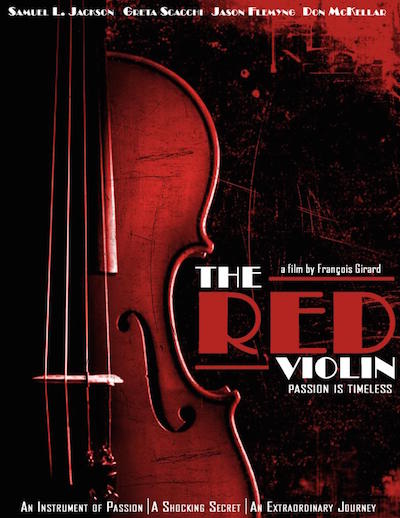
The concerto had its origin in the Academy Award-winning score that Corigliano wrote for the 1998 film The Red Violin. The story of tumultuous and passionate events in the 300-year history of a violin that has literally been varnished with blood, the film featured music played by virtuoso violinist Joshua Bell.
While using music from the film score, the concerto is at least one step removed, since ideas from the film are reworked for a completely different genre. After finishing the film score, Corigliano, whose father was the concertmaster of the New York Philharmonic, created several concert pieces for violin from the film music. When he pulled the Red Violin music into the concerto, he was thinking of the performances he had heard his father give in Carnegie Hall.
“This is my first (concerto) for my first love, the violin,” he has written. “It is an ‘in the great tradition’ kind of concerto, because I wrote it in an attempt to write the piece my father would love to play.”
Quint concurs. “This work is mostly a throwback into the Romantic period of great violin writing,” he says. “It’s a very substantial work, where Corigliano takes it to the next level by adding these really unbelievable effects. There are going to be some sounds that you never heard.”
Philippe Quint. Photo by Philipp Jekker
He particularly points to the concerto’s final movement, which the composer describes as “a rollicking race” between soloist and orchestra. Quint compares that movement to a famous scene from another film: “You remember those Indiana Jones movies, with the huge rock that’s running, and you’re running away. The last movement is really like that rock, it’s coming at you at this crazy speed and you’re trying to get away from it.”
By coincidence, Quint himself plays a violin that is known for the reddish tint of its varnish—although there is no blood involved. It is a Stradivarius violin from 1708—near the age of the red violin of the film—that is known as “The Ruby Strad.”
“I love to speculate that this is the violin that inspired the film,” Quint says. “But it’s a fictional story, so any such claim is false.” Noting that the violin belongs to the Stradivari Society of Chicago, Quint adds, “I feel very, very fortunate to have an opportunity to play on this violin.”
The two pieces that comprise the second half of the concert program are about legendary lovers—Tristan and Isolde, and Romeo and Juliet. Both works date from the second half of the 19th century, Wagner’s Tristan und Isolde from 1859, and Tchaikovsky’s Romeo and Juliet from 1870 (revised in 1880). But though they both celebrate famous love stories, they are in many ways very different.
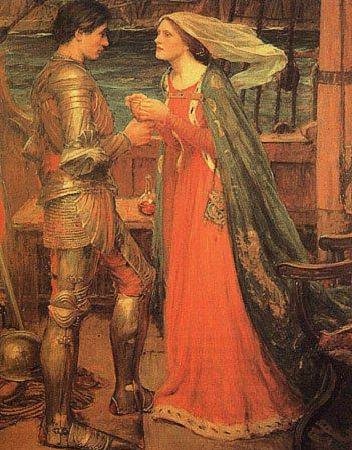
Tristan and Isolde. Painting by John William Waterhouse, 1911.
Often described as the beginning of modernism in music, Wagner’s Tristan und Isolde is famous for the use of chromatic harmonies to extend a feeling of musical tension across an entire 5-hour opera. Even before it had been premiered, Wagner himself made an arrangement pairing the Prelude—the opera’s opening section, today studied in detail by all music students—and the closing passage, Isolde’s Liebestod (Love death).
“What we have in this piece in particular is, not so much the soaring high moments that one feels in romance, but the longing, the anticipation, the tension, the bittersweet aspects,” Butterman says. “That is wholly the function of Wagner’s ability to create tension and almost never quite give it resolution.”
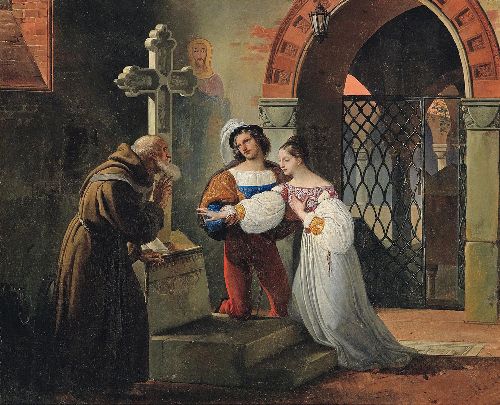
Romeo and Juliet. Painting by Francesco-Paolo-Hayez.
If Wagner’s score lacks the “soaring high moments that one feels in romance,” as Butterman says, that’s just what Tchaikovsky’s Romeo and Juliet offers in its “rhapsodic, passionate melody” representing the lovers.
“The tension that Tchaikovsky creates is not so much with this use of chromatic harmony,” Butterman says, “but with his ability to bring in elements of the conflict between the families with the introduction of brass and percussion.
“You have this soaring theme and all of a sudden (brass and percussion interruptions) and then it goes back to the soaring theme. It’s not a piece where you can follow the story in a linear fashion from beginning to end. I think it is more just ideas from the drama that have gotten mixed together in a 20-minute piece.”
In addition to the Valentine’s Day performance, there will be other events leading up to the concert. From 7:30 to 10 p.m. Wednesday evening (Feb. 11), the Dairy Center in Boulder will present Café Phil—a free open rehearsal of the orchestra with Butterman. This is very much a working rehearsal, and will be without the soloist, but will be a revealing glimpse into the inner workings of the orchestra. Wine, beer, coffee, juice, snacks and pastries are available for purchase until 9:30 p.m.
There is also the opportunity to see the film of The Red Violin, which will be screened at the Dairy Center’s Boedecker Theater. Showings will be at 4 p.m. Wednesday and Friday, Feb. 11 and 13, and at 7 p.m. Thursday, Feb. 12.
# # # # #
Michael Butterman and the Boulder Philharmonic in Macky Auditorium
“Legendary Love”
Boulder Philharmonic, Michael Butterman, conductor Philippe Quint, violin
John Corigliano: Red Violin Concerto Wagner: Prelude and Liebestod from Tristan und Isolde Tchaikovsky: Romeo and Juliet
Café Phil open rehearsal Boulder Philharmonic and Michael Butterman, conductor
7:30–10 p.m. Wednesday, Feb. 11
Dairy Center for the Arts Free
Screenings of The Red Violin 4 p.m. Wednesday, Feb. 11
7 p.m. Thursday, Feb. 12
4 p.m. Friday, Feb. 13
The Dairy Center for the Arts Information and tickets





 Sharps & Flatirons