Central City’s production of ‘Amahl and the Night Visitors’ charms

Performances in tonight in Boulder, Denver Dec. 16–18

By Izzy Fincher Dec. 15 at 11:12 a.m.

A grand procession of extravagantly dressed kings moved through the church.

King Balthazar took the lead, dressed in a crimson robe and headdress covered with gold. Then, came King Kaspar, clad head-to-toe in gold and jewels, and finally King Melchior, with a silky, turquoise and plum colored cape and plumed warrior’s helmet. They each carried luxurious gifts intended for the baby Jesus, including gold, frankincense and myrrh. 

This scene took place during Central City Opera’s performance of Amahl and the Night Visitors by Gian Carlo Menotti last night (Dec. 13) at Boulder’s First United Methodist Church. The performance, directed by Iliana Lucero Barron and conducted by John Baril, offered a heart-warming interpretation of the seasonal classic, filled with the magic of the holiday spirit. 

Aside from the luxurious Magi’s costumes, the production took a minimalistic approach, letting Menotti’s masterfully written music shine through as the central storytelling element. The performance will be repeated in Boulder tonight before heading to Denver for three shows, Dec. 16–18.

Originally commissioned by NBC as the first opera for television in 1951, Menotti’s Amahl and the Night Visitors has since become a beloved Christmas tradition. It tells the story of Amahl, a poor shepherd boy with a disability who lives with his widowed mother. One fateful night, the three Magi stop at Amahl’s house to rest on their way to Bethlehem, leading to a miraculous encounter that changes the young boy’s life.

Over the past 70 years, the opera is said to have been performed more than 2,500 times—in a wide variety of settings from professional opera houses to amateur church and school performances. Over the years, the brief one-hour opera in English, originally intended for children, has proved accessible and enjoyable for diverse audiences of all ages.

For this traveling production, Baron wanted to keep the props and sets to a minimum, to more easily adapt to different venues and offer creative flexibility to the performers. This approach resulted in a rather bare-bones aesthetic. Onstage, the main set piece for Amahl’s house consisted of a wooden door frame, surrounded by stacks of firewood and topped with a hanging sheet. Nearby, stood a few makeshift wooden chairs. This simple set left the stage looking almost too empty, though the church’s massive wooden overhanging cross and towering pipe organ filled out the space.

In the opening scene, Kason Nicholas, a boy soprano from the Colorado Children’s Chorale, established himself as a charming Amahl. Though he seemed a bit hesitant at first, his excitement and well-placed comedic timing soon proved endearing. With his light, clear voice, Nicholas required amplification in the large chapel, especially singing alongside the powerful mezzo-soprano Jennifer DeDominici as his mother. During their duets, their voices sounded well-balanced for the most part, though a few times Nicholas’ higher notes clipped slightly with the mic. 

DeDominici delivered a convincing, nuanced interpretation of Amahl’s mother, realistically portraying her struggle as a single impoverished mother trying to care for a mischievous son with a disability. Her powerful, expressive voice projected through the chapel, commanding Amahl’s and the audience’s attention as her patience wore thin. 

Yet, in brief moments, she showed glimpses of tender love for her son, such as in “Have You Seen a Child” when the three Magi’s descriptions of the holy Christ Child remind her of Amahl. In the final scene, DeDominici shined during one of the opera’s few deeper moments, as she grappled with her inner turmoil and feelings of desperation, love and greed before attempting theft for the sake of her son.

Accompanying these strong soloist performances, Baril’s orchestra, sprawled across the front section of the church pews, sounded wonderful. As the conductor, Baril took full advantage of Menotti’s adept score writing, exploring the different colors and personalities within the music for each character and perfectly timing the comedic musical interchanges with the singers’ lyrics and blocking. In addition, the shepherds chorus and the First United Methodist Church choir sang skillfully and with passion, aiding in the collaborative effort. 

The three Magi, played by Paul Griggsby, Javier Abreu and Jonathan Hays, and their page, Jerome Síbulo, gave solid performances as well. In stark contrast to the humble lives of Amahl and his mother, the kings stood out as symbols of opulence, with their lavish costumes and props as the most eye-catching part of the show. They embodied the grace of nobility, singing clearly and powerfully with a beautiful blend as a cohesive unit. Throughout the opera, they played their crucial role well. 

Despite bringing splendor into Amahl’s simple world, the Magi show him and his mother that the true meaning of the Christmas miracle lies not in wealth but in forgiveness, grace and love.

# # # # #

Gian Carlo Menotti: Amahl and the Night Visitors
Central City Opera, John Baril conductor and
Iliana Lucero Barron, director 

Remaining performances:

7:30 p.m. Wednesday, 14
First United Methodist Church, Boulder
TICKETS

7:30 p.m. Friday and Saturday, Dec. 17 and 18
2 p.m. Sunday, Dec. 18
Trinity Methodist Church, Denver
TICKETS
Central City Opera brings ‘Amahl’ to Colorado cities

Performances in Colorado Springs, Boulder and Denver, Dec. 11–18

By Izzy Fincher Dec. 9 at 2:05 p.m.

Gian Carlo Menotti’s Amahl and the Night Visitors, which Central City Opera brings to Colorado Springs, Boulder and Denver Dec. 11–18, has become a beloved Christmas operatic classic over the past 70 years. But it almost didn’t happen.

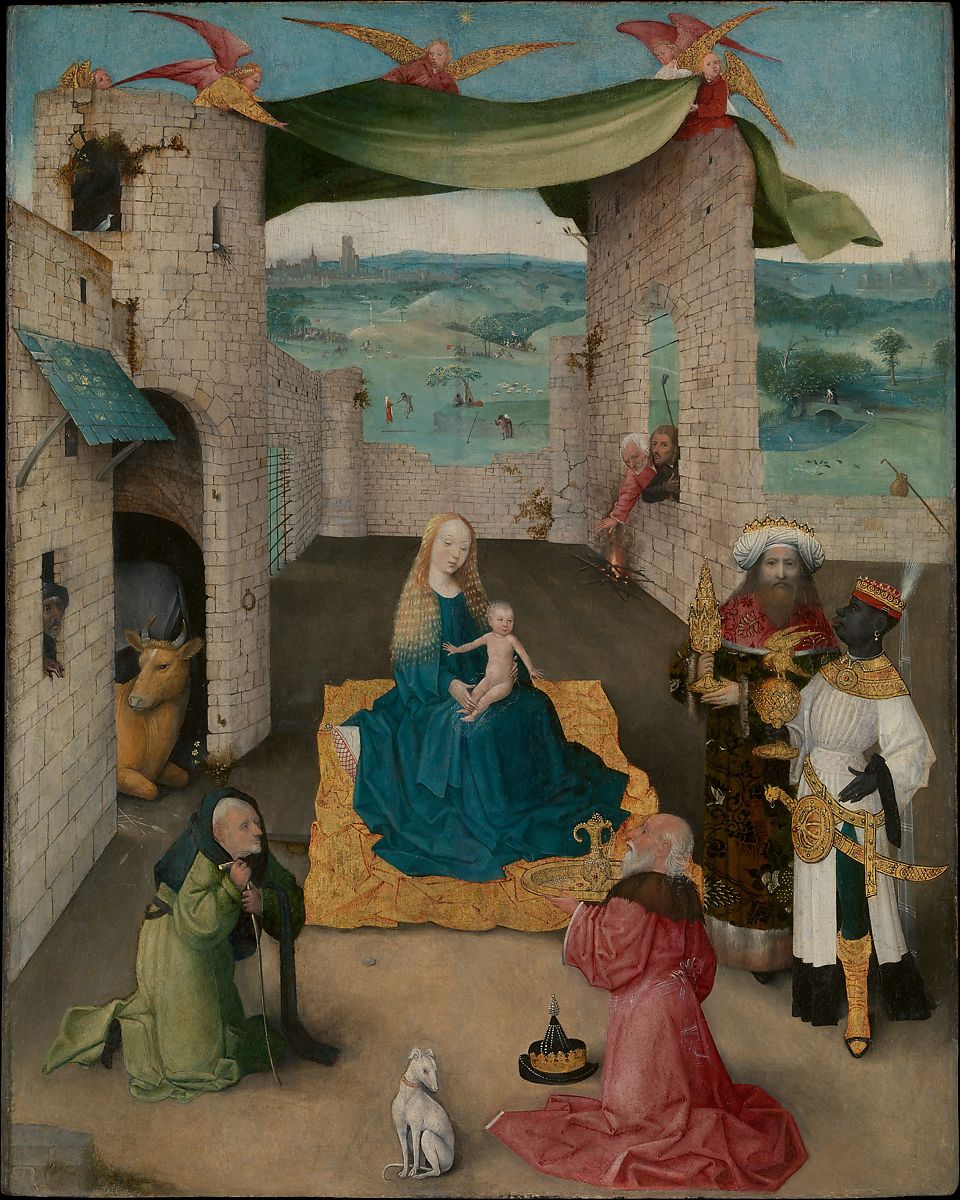
Hieronymus Bosch: The Adoration of the Magi, ca. 1475. The Metropolitan Museum of Art, New York.

In 1951, NBC commissioned Menotti to compose the first opera for television, to be shown during the holiday season. But as the Christmas deadline approached, Menotti struggled to find inspiration for his opera. Then one day at the Metropolitan Museum of Art, he was struck by Hieronymus Bosch’s nativity scene painting, “Adoration of the Magi.”

“I was looking at it, suddenly I heard again, coming from the distant blue hills, the weird song of the Three Kings,” Menotti wrote in the opera’s performance notes. “I then realized they had come back to me and had brought me a gift.”

The painting reminded him of his childhood in Italy, where traditionally the Magi, or the three kings, brought presents for children for Christmas, instead of Santa Claus. He had finally found the inspiration for his NBC opera, a creative retelling of the story of the Magi from the perspective of the disabled shepherd boy Amahl.

This holiday season, Central City Opera will take their traveling production of Amahl and the Night Visitors, conducted by John Baril and directed by Iliana Lucero Barron, on the road. The company will perform in Boulder at 7:30 p.m. Tuesday and Wednesday, Dec. 13 and 14, at the First United Methodist Church (ticket information below).

“In the past couple of years with COVID-19, people have missed holiday traditions,” Pamela Pantos, president and CEO of Central City Opera, says. “So, we wanted to bring this production that people of all ages can enjoy to different communities in the greater Denver-Boulder area.”

Amahl and Night Visitors, a one-hour-long opera in English, is intended to be accessible for a wider audience, including first-time opera goers and younger people. Telling the story from the perspective of the boy Amahl specifically helps to connect with children.

“This is an opera for children because it tries to recapture my own childhood,” Menotti wrote.

The story takes place near Bethlehem, where Amahl and his widowed mother live in poverty. One night, the three Magi, regal foreigners from the East, stop by their humble home on their journey to bring gifts to the baby Jesus. As Amahl and his mother host the noble guests for the night, they face several personal and moral challenges, which eventually lead them to discover the power of forgiveness and healing.

Jennifer DeDominici

“Amahl’s mother is the most realistic character with the biggest arc,” says Jennifer DeDominici, who plays the mother. “Like her, many of us will have cared deeply about someone, so deeply that it made us question our choices and our priorities. Hopefully that person we love will be able to inspire us to be better and keep going, like Amahl does.”

For Central City’s production, the creative team wanted to stay true to the spirit of the opera, while also updating it to be more inclusive for modern audiences. 

Iliana Lucero Barron

“We’re definitely paying attention to what we need to change [in the opera] to make it current and to honor all the changes in regards to social justice for the different communities in our world,” Barron says. 

Barron made several changes to the lyrics, including replacing the word “crippled” with “disabled” when referring to Amahl’s physical condition and avoiding the use of the word “gypsy,” which has historically been used as a racial slur for Romani people. In addition, Barron wanted to incorporate American Sign Language (ASL) in a few key moments throughout the performance for King Caspar, who is deaf.

To highlight Menotti’s beautiful music and storytelling, Barron aims to take a minimalistic approach to the props and sets. This offers greater flexibility for the traveling production in different locations, while also encouraging the audience to use their own creativity to fill in the gaps, she says.

“This opera really lends itself to the imagination,” Barron says. “We are trusting the audience to suspend their disbelief and use their imagination to come into the world we have built.”

Though the story has roots in biblical scripture, Barron hopes the audience will still be able to connect to the overarching themes of generosity and hope, regardless of their religious beliefs.

“The opera shows us the importance of hope, community and powering through the hard times,” DeDominici says. “It reminds that connecting with each other and banding together can give us a sense of abundance.”

# # # # #

Gian Carlo Menotti: Amahl and the Night Visitors
Central City Opera, John Baril conductor and
Iliana Lucero Barron, director

Boulder performances:
7:30 p.m., Tuesday and Wednesday, Dec. 13 and 14
First United Methodist Church

Additional dates, full cast and ticket information HERE.

CORRECTIONS: On Dec. 14, dates in the subhead were corrected to show the performances will be Dec. 11–18, and the spelling of Colorado Springs was corrected in the lead paragraph.

There are No Tragic Endings on Central City Opera MainStage this year

Rollicking comedy and light-hearted drama lead the summer schedule

By Peter Alexander July 8 at 5:30 p.m.

There will be no babies thrown into the fire (Il Trovatore, 2018), or innocent girls murdered in place of a dissolute count (Rigoletto, 2021) at Central City Opera this summer.

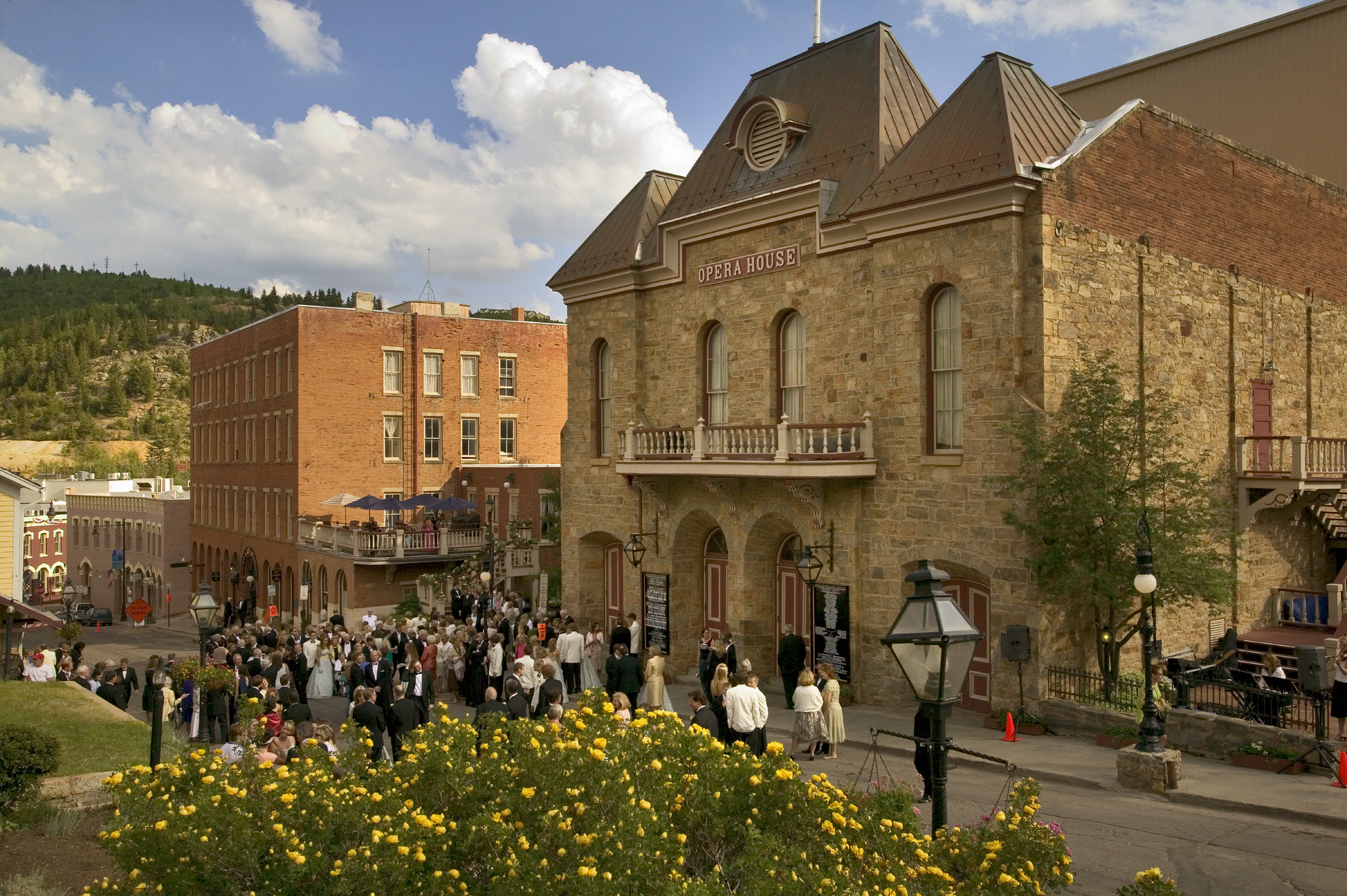
CCO has not been able to perform in their exquisite opera house in Central City since 2019, and between returning to their home and this year’s 90th anniversary, the company wanted a cheerful summer. In the words of Central City Opera chief executive officer Pamela Pantos, the aim was that “after what we’ve all been thorough, people will come and smile, be back in the opera house and enjoy themselves.”

Opening Night at Central City Opera. Featured in Central City Opera’s 75th anniversary book, “Theatre of Dreams, The Glorious Central City Opera—Celebrating 75 Years.”

Both mainstage productions in the Central City Opera House will be light-hearted works: the frothy Viennese confection of Johann Strauss, Jr., Die Fledermaus; and The Light in the Piazza, a Tony-winning Broadway musical by Adam Guettel, which has moments of melancholy but ends happily with boy-marries-girl.

The only darker tones come later in the summer, with a production of Two Remain, a chamber opera by Jake Heggie based on the stories of two Auschwitz survivors. That will be performed at the Martin Foundry in Central City (see dates and time below).

Broadway musicals have often been performed by Central City Opera: Carousel (2021), Man of La Mancha (2015), The Sound of Music (Denver, 2014), Show Boat (Denver, 2013), Oklahoma! (2012) among others. Pantos hopes that there will be ongoing support for musical comedies, for the breadth they bring to the repertoire.

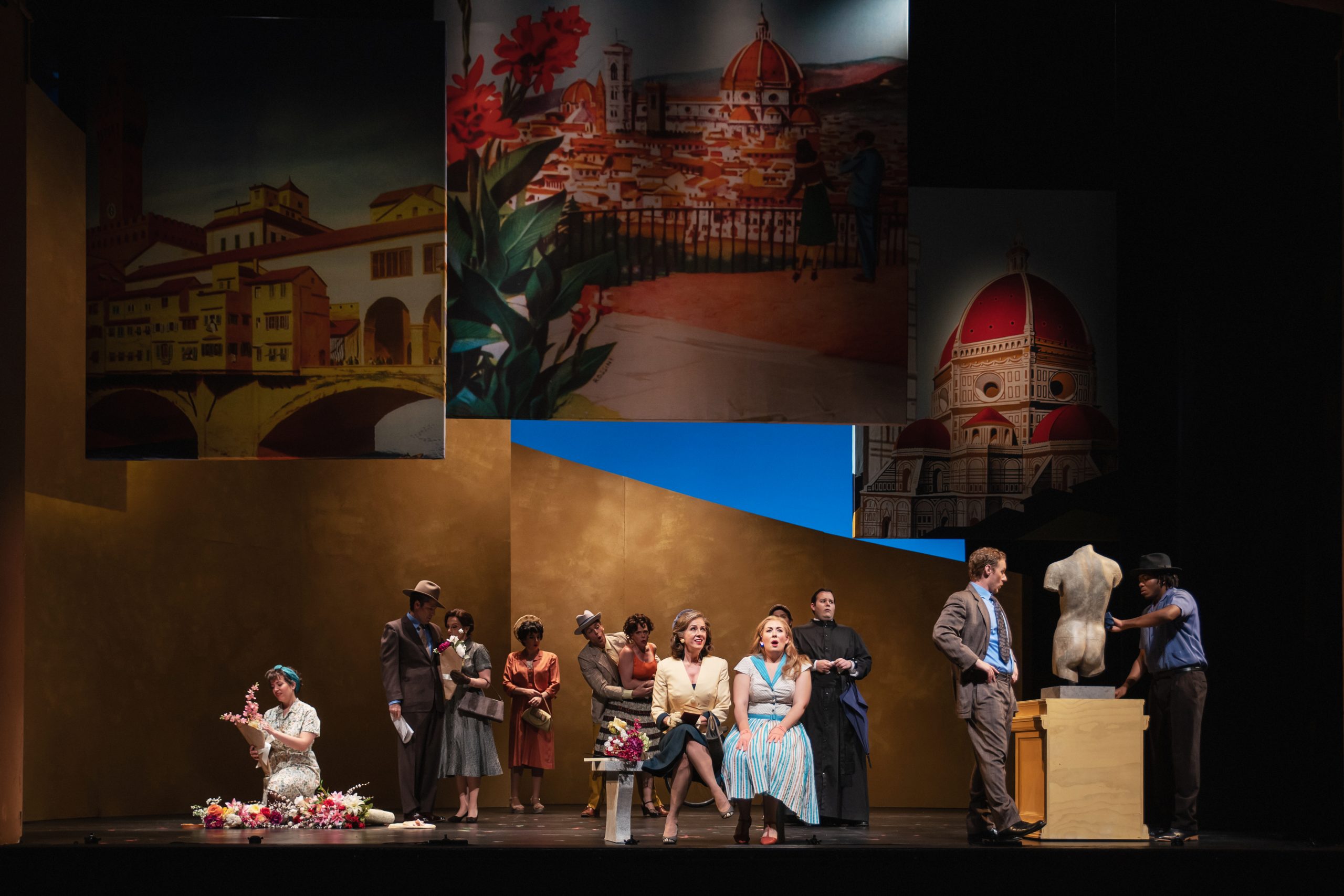
Central City Opera’s production of ‘The Light in the Piazza.’ Photo by Amanda Tipton Photography

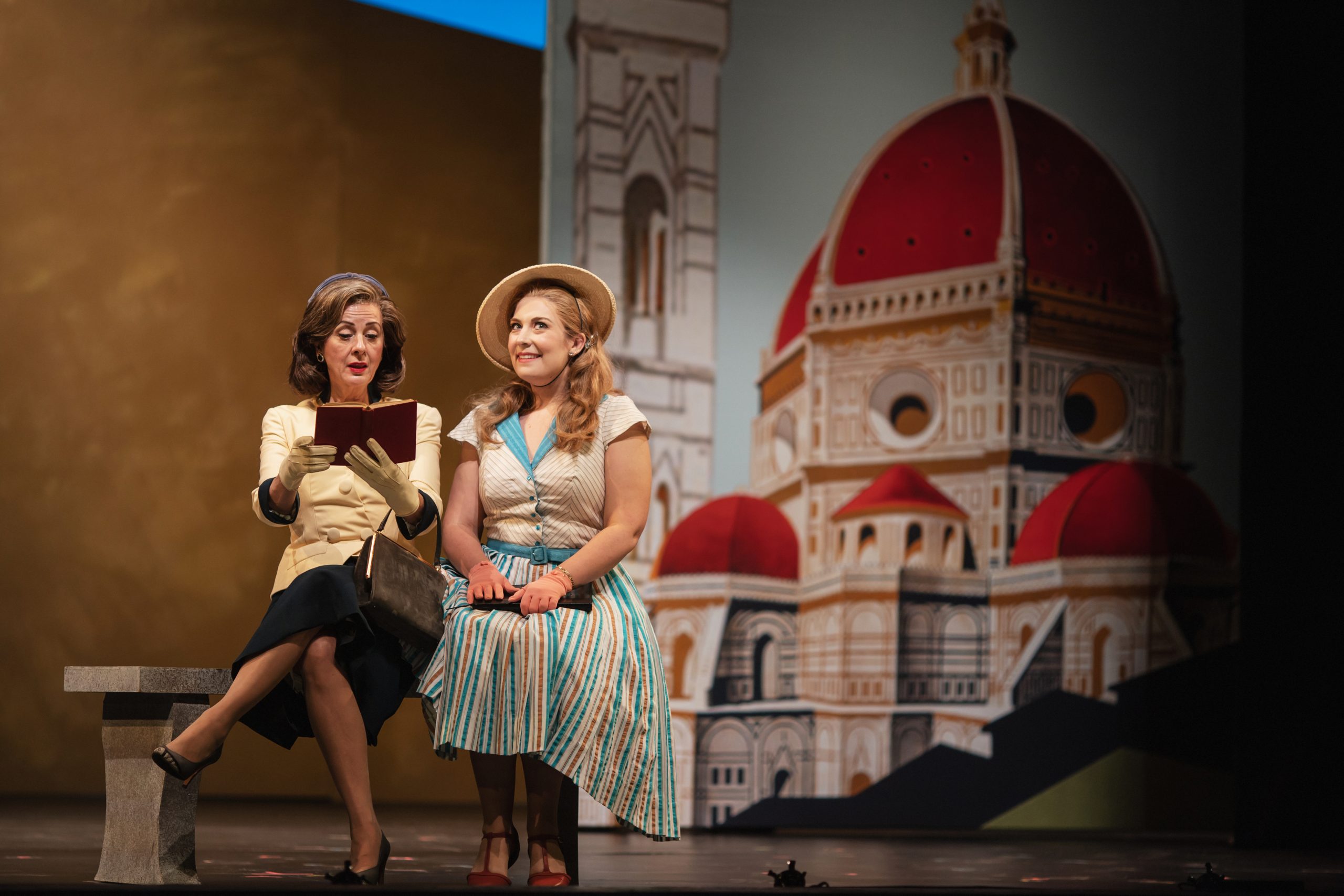
A Light in the Piazza tells the story of 1950s American housewife Margaret Johnson and her daughter Clara—who seems to be developmentally disabled from a childhood accident. This being a musical, Clara falls in love with a handsome young Italian man, and Margaret has to decide if the young couple will be allowed to see each other, and ultimately, to marry.

The conflict revolves around Margaret’s desire to protect her daughter, and to let her live her own life. There are also cultural differences between the Americans and the Italians, which create another level of dilemma for everyone. With her husband busy in the United States, Margaret has to find her own path, just as Clara does.

Rebecca Caine (Margaret Johnson) and Diana Newman (Clara Johnson) in the CCO production of ‘The Light in the Piazza.’ Photo by Amanda Tipton Photography.

“While there are moments of seriousness to the piece, it is quite lighthearted,” Pantos says. “It had a long run on the stage in New York, (and) Tony-winning is always Tony winning! There’s a little bit of melancholy, but beautiful music—it is a romance!”

Composed by the grandson of Broadway legend Richard Rodgers, A Light in the Piazza reflects the style and traditions of 20th-century American Music Theater. Die Fledermaus, however, reflects just as deeply the style and manner of a very different world: that of 19th-century Vienna. There are swirling waltzes (of course), a grand party thrown by a bored Russian count, mistaken identities and masks, and hilarious comedy from beginning to end, all capturing the splendor and decadence of Imperial Vienna.

The plot is almost too complicated to explain, except that it is a tale of foolishness, and of revenge between friends, that starts in an elegant home and ends in a dreary prison, with a glamorous dinner party in between. But even in the prison, everyone comes away happy. The musical numbers will be performed in German but the dialog in English so everyone should be able to follow the story.

Conductor John Baril.

The Viennese musical style, combining elegance and sentimentality, is not always easy for non-native performers. There are unwritten rules for modifying rhythms and tempos that are known to the Viennese, but not necessarily outsiders—kind of like the unwritten rules in American jazz.

“The trick in getting Fledermaus right is all of the little things that aren’t on the page,” conductor John Baril says. “There’s a lot of little Viennese things that are done, especially in waltz tempi. You rush the second beat—it’s not written down that way so you have to explain it to an orchestra.

“And then you also have to get them to not play it when you don’t want it. There’s a lot of little things that are traditions, little slow-downs here and little commas there. None of that is written, it all has to be explained. And getting singers to do that and not just do what’s written on the page can be hard.”

One traditional showstopper is a very flashy Hungarian Czardas, sung by one of the characters in the second act. “It’s one of the most difficult things I’ve ever conducted,” Baril says. “It’s super hard to conduct because again everything that the singer needs to do with that piece, to make it interesting, is not on the page.“

In addition to singing one of the lead characters himself, Baril says he has studied recordings and performances by native Austrian and Viennese conductors. “I’m going to do it the way I want to do it,” he says. “And the way I want to do it is all the Viennese things that I’ve heard done.”

Baril mentions one other challenge to any performances at Central City Opera. “We’re at 8500 ft., and some of the phrasings that you could do at sea level you simply cannot do,” he says. “We never know—there’s no way TO know—when a new artist is coming up here, whether they can adapt.”

The production is one that CCO bought from Virginia Opera and modified to fit their small stage. “I saw the set at Northwestern and it’s beautiful,” Baril says. “It is a set that takes place in Vienna, so it will be as Viennese as we can make it. 

“I love Fledermaus. I think it’s a masterpiece of the order of anything else.”

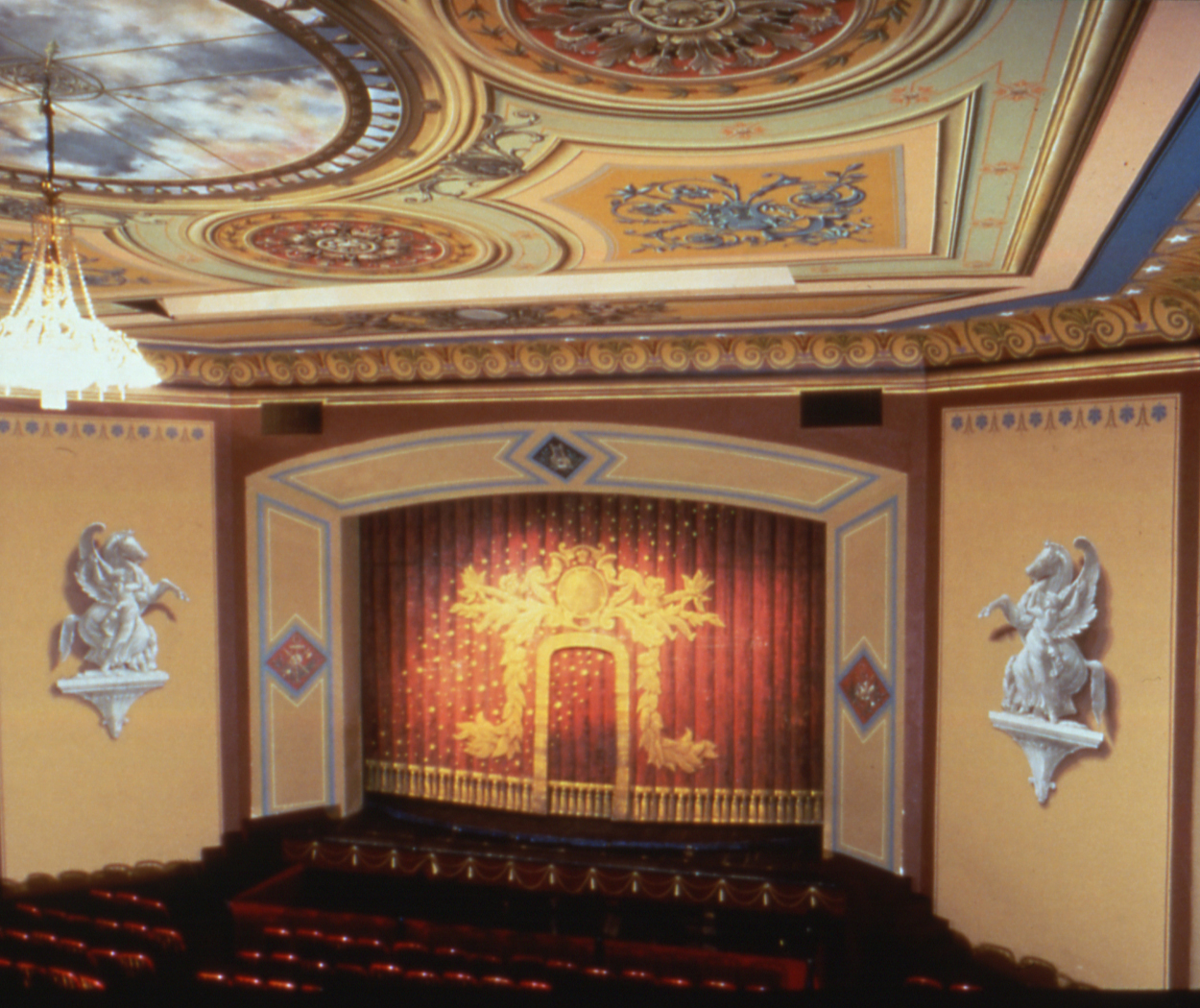
Pantos wants people to make the trip up the mountain to Central City to see the shows, but also just to experience the intimate 550-seat opera house, built in 1878. “Being in such a jewel of a theater and being so close to the stage, you have the unique opportunity of experiencing theater in a way that you’ll never experience it anywhere else,” she says.

The interior of the Central City Opera House

“Because it is such an intimate theater, there is not a bad seat in the entire house. You’re so close to the performers, that it’s exhilarating and the energy literally emanates from the stage and you feel it because its is such a beautiful small theater.”

# # # # #

Central City Opera
Summer 2022 season

The Light in the Piazza
By Adam Guettel and Craig Lucas
Performed in English

Adam Turner, conductor
Ken Cazan, stage director

2:30 p.m. Sunday, July 10; Tuesday, July 12; Sat. July 16; Wednesday, July 20; Friday, July 22; Sunday, July 24; Thursday, July 28
8 p.m. Friday, July 8; Thursday, July 14; Tuesday, July 26

Central City Opera House

Die Fledermaus (The bat)
By Johann Strauss, Jrs., Karl Haffner and Richard Genée
Performed in German with dialog and titles in English

John Baril, conductor
Joachim Schamberger, stage director

8:00 p.m. Saturday, July 9; Friday July 15; Thursday, July 21; 
2:30 p.m. Wednesday, July 13; Sunday, July 17; Tuesday, July 19; Saturday, July 23; Wednesday, July 27; Friday, July 29; Sunday, July 31

Central City Opera House

Two Remain: Memories of Auschwitz
By Jake Heggie and Gene Scheer

Performed in English
John Baril and Brandon Eldridge, co-conductors
Dan Wallace Miller, stage director

7:30 p.m. Saturday, July 16 (sold out); Wednesday, July 20
2:30 p.m. Thursday, July 21 (sold out)
11 a.m. Thursday, July 28

Martin Foundry, 212 Eureka St., Central City

Tickets available through the Central City Opera Web page.

Central City Opera’s Rigoletto at Hudson Gardens packs a punch

Fine cast is led by Alisa Jordheim’s radiant Gilda

By Peter Alexander July 12 at 10:45 p.m.

Central City Opera’s second production of the 2021 festival season, Verdi’s Rigoletto, opened Saturday night (July 10) on a beautiful summer evening at Littleton’s Hudson Gardens.

The season had opened the previous Saturday (July 3) with Rodgers and Hammerstein’s Carousel. The locale, chosen when CCO had to move from the close quarters of their opera house in Central City, proved idyllic for the Rigoletto opening. The opera—condensed to a single 100-minute span with no intermission—successfully used the outdoor location in the conception of the production, and mostly successfully moved the time to a near-present that featured a golf-playing Duke, a curse- and bible-brandishing preacher, and news passed by cell phone.

Galeano Salas as the callow, golf-playing Duke of Mantua. All photos by Amanda Tipton.

In updated productions, the Duke of Mantua has been transformed into a Mafia boss in New York’s Little Italy, a Sinatra-like singer in Vegas, and a skirt-chasing politico modeled on Italy’s Silvio Berlusconi. This is a tempting way to convey the dissolution of the Duke’s court to modern audiences, but it offers a problem, too: Rigoletto himself.

In the original setting, Rigoletto’s status as court jester—forced to amuse the Duke and hated by everyone for his cutting tongue—is visibly apparent from his first entrance. There are no modern equivalents that quite capture that level of degradation and humiliation. In the case of the CCO production, effectively stage directed by Jose Maria Condemi, the other updatings worked well, but Rigoletto’s status remained problematic.

Alissa Jordheim as Gilda.

One example: In the second act, Rigoletto’s daughter Gilda flees from the Duke’s bedroom following her ravishment, to find her father among the courtiers. The impact of this scene lies partly in her immediate recognition of the depravity of his status in the court. But here, there is no dress or other sign of his debased status, which diminishes the impact of their reunion.

In just about every other way I found the updating effective. The Duke as a callow and callous ex-frat-boy surrounded by a posse, Monterone as a Bible-thumping televangelist, the tart Maddalena dressed in a scarlet (get it?) corset—these all worked. The informal dress, adapted for outdoor performances on warm summer nights, was effective. Gilda’s swing was a nice touch, suiting the outdoor venue well. This Rigoletto definitely packs a punch.

Sound was the greatest sacrifice to the outdoor venue. A reduced orchestra—eight strings, 22 players in all—is seated beneath a tent behind the stage. Each of the players and singers is individually mic’d, making the sound technician—seated in a stage-side tent of his own—the most important person you don’t see. Conductor John Baril communicates with the singers via video monitors.

But eight strings is not enough to create the weight you want in Verdi’s score, and the amplification only makes the orchestra sound tinny, not hefty. The woodwinds were often under-powered. The singers came across better, always present and easily understood.

One way the opera was condensed was by reducing the cast. The bevy of courtiers around the Duke was reduced to three named roles and some of the larger scenes and choral numbers were cut. The drama does not suffer from such reductions, but the musical breadth of the score does.

Alissa Jordheim as Gilda and Aleksey Bogdanov as Rigoletto

Of the cast members, Alisa Jordheim as Gilda was the star of the night. Her glittering, burnished soprano and splendid vocal technique made her every scene a delight. The tender wonder and brilliant coloratura of “Caro nome,” her anguished cries in the great Act III quartet, and above all her powerful resolve before sacrificing herself for the Duke—all were both musically and dramatically compelling.

Galeano Salas brought a lovely lyric tenor sound to the role of the Duke of Mantua and was at his best on the solo arias. His phrasing became more fluid as the evening wore on, but occasionally his phrasing was more pedestrian, lacking depth of expression.

In the title role, Aleksey Bogdanov sang with a resonant baritone. He was never less than effective, although his portrayal sometimes seemed directed rather than spontaneous. His best moments were his powerful rage in Act II and his final scene as Gilda dies in his arms, prompting his fierce cry of “Ah! La maledizione!” (Ah! The curse!).

John Paul Huckle as Sparafucile and Michelle Monroe as Maddalena.

John Paul Huckle was a menacing and deep-voiced Sparafucile who brought his small but essential role convincingly to life. Michelle Monroe was exactly as coarse and suggestive as she needed to be as Maddalena without losing vocal effectiveness. Together they made the final act a potent highlight. 

As Monterone, Phillip Lopez gave a hard edge to his voice that matched his character’s harsh pronouncements. All the other roles were filled by a small but resilient cast of capable performers who sang well and made even their entrances across the visible spaces around and behind the stage part of the drama.

Sound issues with the amplified orchestra aside, John Baril conducted with style. He knit the through-composed score together with great effectiveness, building powerful momentum where necessary. The final act storm was driven but underpowered. Condemi’s clear direction of the smallish cast helped propel the story ahead.

Kudos to Central City Opera for finding a venue and a way to produce the season. Opera at Hudson Gardens is a unique experience for Colorado audiences, and one well worth taking in. It was a daunting challenge to move the production to a space that was new to the CCO, even as opera was new for the people at Hudson Gardens. If you don’t believe that it was a challenge for all, go to a performance and look at all the lights hung over the stage, then realize that the space is alternating two different shows. 

Rigoletto continues in repertory at Hudson Gardens through July 30. Tickets are available here.

# # # # #

Rigoletto
Music by Giuseppe Verdi, libretto by Francesco Maria Piave

REMAINING PERFORMANCES:

7 p.m. Friday, July 16; Tuesday, July 20; Thursday, July 22; Saturday, July 24; Wednesday, July 28; Friday, July 30
3 p.m. Wednesday, July 14; Sunday, July 18; Tuesday, July 27

Hudson Gardens, Littleton, Colo.

Tickets