Well shaped performance of “the greatest First Symphony”
By Peter Alexander July 11 at 12:24 a.m.
The world premiere of an engaging concerto for saxophone by American composer Joan Tower topped the bill at the Colorado Music Festival last night (July 10).
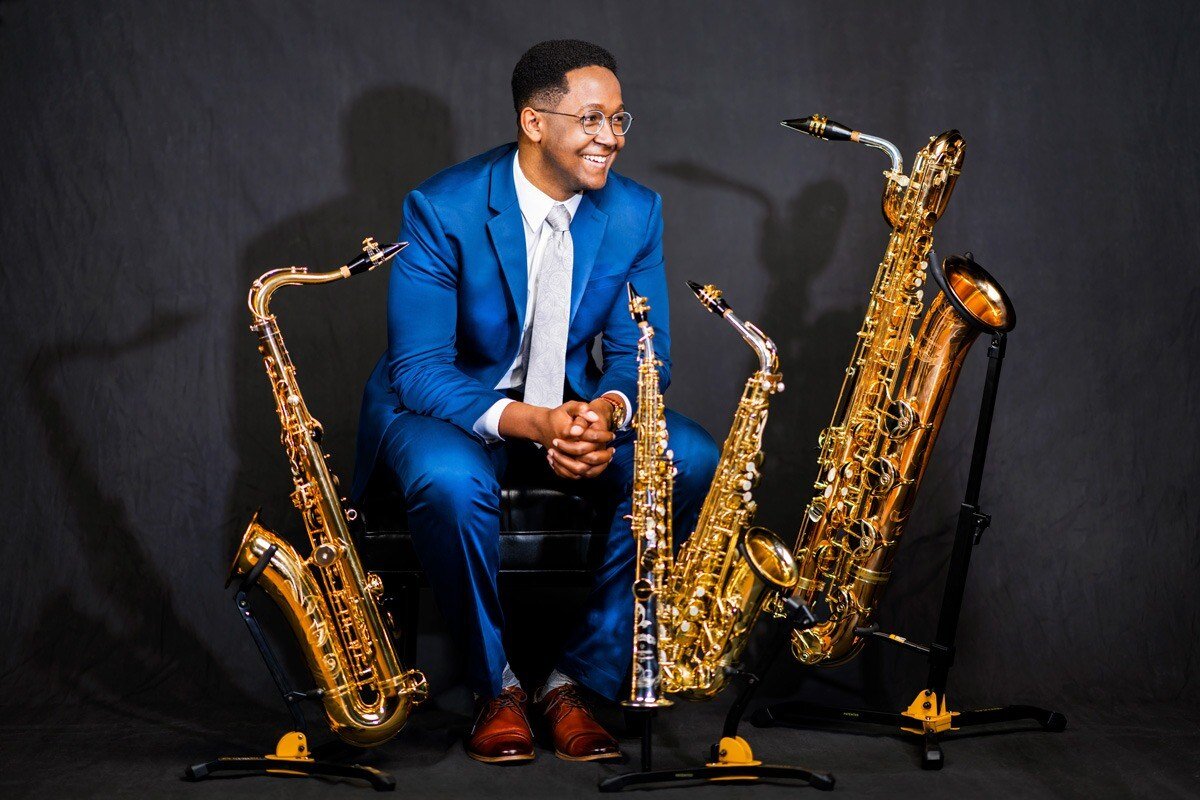
The Festival Orchestra was conducted by CMF music director Peter Oundjian, with Steven Banks as saxophone soloist. Tower was present for the premiere performance of her new score, and spoke briefly before the performance.
Titled Love Returns, the score is derived from a piece for solo piano titled Love Letter that Tower wrote in memory of her late husband after his death in 2022. Poignant, well constructed and emotionally coherent, Love Returns should become part of the concert repertoire for saxophone.
The first of the work’s six movements starts tenderly, with beautiful string sounds providing a warm embrace for the soloist. Over the next three movements, the music grows in intensity, reaching an uneasy high point built from nervous swirls in the saxophone. The Fifth movement is a solo cadenza, developing jumpy fragments of scales.
A virtuosic series of edgy passages leads into the final movement, where the nervous swirls loosen and return to the calm of the work’s opening. This creates a perceptible expressive arc, while the gentle ending suggests a moment of acceptance before the music settles into silence.
With a sweet tone and flawless technique, Banks gave an exemplary performance. The fluidity of his rapid passagework was remarkable, and he moved smoothly through all the shifts of mood and style. He has the ability to fade to silence in even the highest register. If recorded, his performance would create the standard for this valuable new work.
The concert opened with Aaron Copland’s Outdoor Overture, a strongly profiled work written for students at the High School of Music and Art in New York. To recognize the work’s origin, Oundjiuan turned over the podium to the CMF’s young assistant conductor Stefano Boccaci, who lead a bracing performance.
Copland’s alternating sections of vigor and delicacy were well marked. As appropriate for a school piece, all sections of the orchestra have opportunities to step forward. The bright trumpet solos of principal Jeffrey Work were acknowledged at the end, but every section earned recognition.
The concert ended with Brahms Symphony No. 1, which Oundjian likes to call “the greatest first symphony ever written.” Before the performance, he also noted that Brahms took 21 years to complete the symphony, during which time he progressed from a callow young musician to an experienced composer of international rank.
Oundjian and the Festival Orchestra gave a well shaped, controlled performance. The tense introduction to the first movement promised the drama to come. Throughout the engrossing first movement, the music surged from the tiniest pianissimos to full Brahmsian fortes. Oundjian convincingly varied the tempo to match the expressive needs of the score.
The slow second movement was carefully played but never came alive. The third movement projected relaxed good cheer, especially in the strolling music played by the woodwinds. Drama came to the fore again in the finale, which Oundjian built carefully to the climax. I heard bravos and cries of “Oh My God” at the end, signaling how well the symphony reached the audience.
The program will be repeated at 6:30 tonight (July 11) at the Chautauqua Auditorium. Tickets are available through the CMF Web Page.
Hélène Grimaud plays Brahms, Steven Banks premieres sax concerto by Joan Tower
By Peter Alexander July 1 at 11:34 a.m.
The 2025 Colorado Music Festival (CMF) does NOT open with Scheherazade or the Russian Easter Overture, but fans of composer Rimsky-Korsakov should be pleased anyway.
Music director Peter Oundjian says that the first piece on Thursday’s Opening Night concert (7:30 p.m. July 3), Stravinsky’s Feu d’artifice (Fireworks), “sounds like Rimsky-Korsakov on slight uppers.”
CMF music director Peter Oundjian at Chautauqua
That’s intriguing but not surprising: Stravinsky studied with Rimsky-Korsakov, and wrote Feu d’artifice in 1908 as a wedding present for his teacher’s daughter. Calling it “a short orchestral fantasy,” Stravinsky piled on all the brilliant orchestral colors he could muster.
“It’s a fun, wonderful, four-and-a half-minute opening to a season,” Oundjian says. The “Opening Night” Concert will be repeated Sunday at 6:30 (July 6).
Pianist Hélène Grimaud
After all the musical rockets have been fired, the program continues in a more serious vein with Brahms’s First Piano Concerto in D minor, performed by French virtuoso Hélène Grimaud. The second half of the program is given over to Ravel, honoring the 150th anniversary of his birth, with the Suite No. 2 from Daphnis et Chloé and Bolero.
Like all of the CMF concerts this summer, both performances will be in the Chautauqua Auditorium. The full schedule for the first two weeks is listed below.
Grimaud was originally scheduled to play Gershwin’s Piano Concerto, but Oundjian was happy when she said she would rather play Brahms. “I’ve conducted her with that piece several times, and it’s absolutely extraordinary,” he says. “When she said she’d prefer to play the Brahms, I thought OK, it adds real weight, and it’s not a long program anyway.
“(Grimaud) is a very strong musical personality (who plays) with unbelievable color and the most excellent sense of rubato and expressive freedom. I have always thought her playing deeply moving, so I’m thrilled.”
It’s a stretch from the somber weight of the Brahms to the orchestral brilliance of Ravel, but to Oundjian that is part of the plan. “We always want to create wider contrasts,” he says.
“Ravel’s Second Suite (from Daphnis and Chloe) is lush and beautiful and unique to Ravel. And then to do Bolero—it’s a lesson in orchestration, which is just phenomenal. The use of the saxophone and the trombone—it’s an amazing piece!”
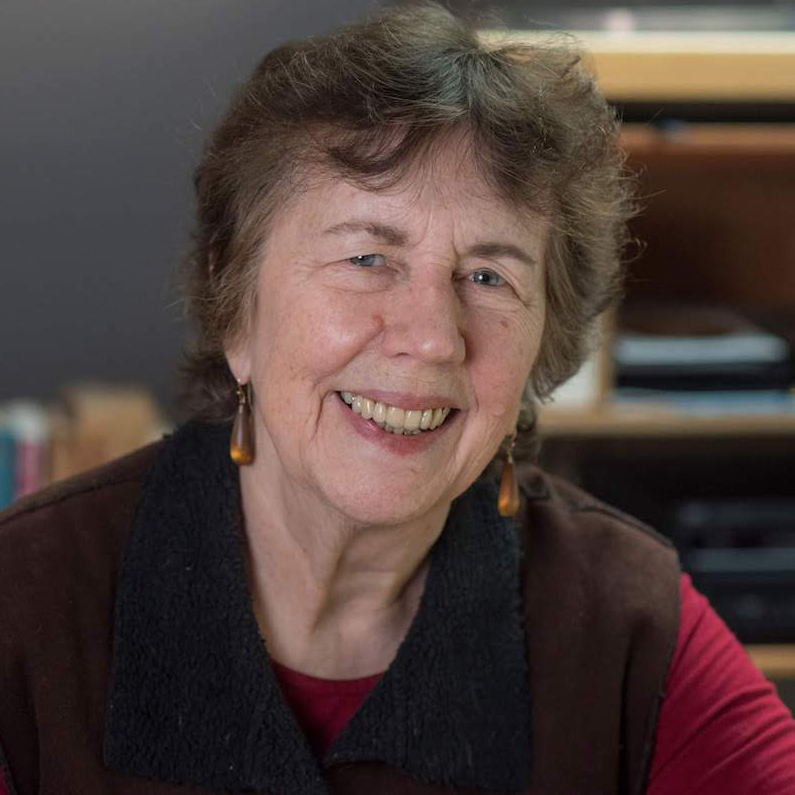
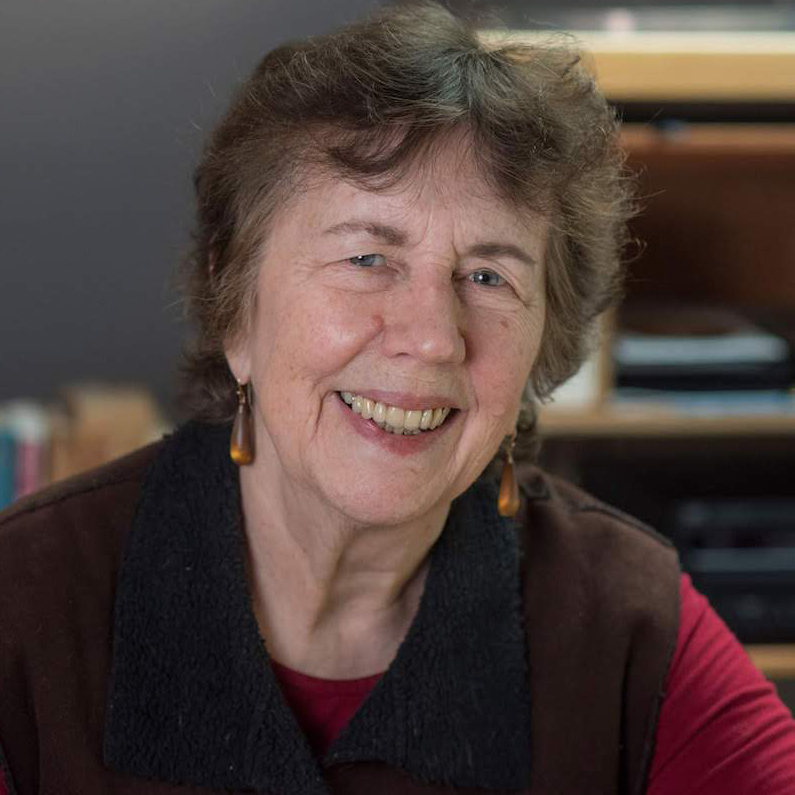
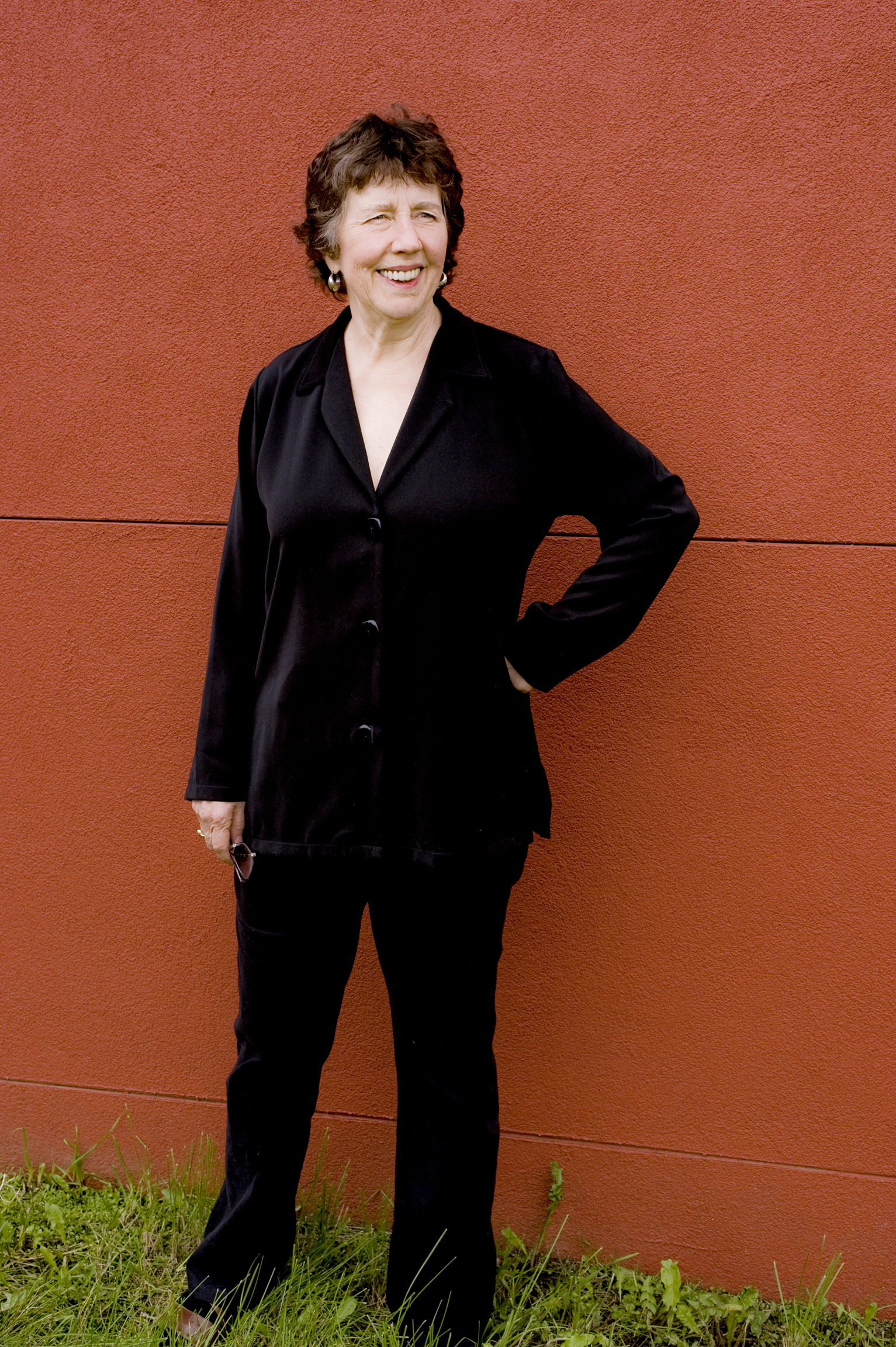
Joan Tower
The second Festival Orchestra concert, Thursday and Friday, July 10 and 11, features the world premiere of Love Returns for saxophone and orchestra by Joan Tower. A long-time personal friend of Oundjian, Tower has been featured at CMF before, including the premiere of A New Day for cello and orchestra in 2021 and a performance of her Concerto for Orchestra last summer.
Steven Banks
Love Returns was written for saxophonist Steven Banks, whom Oundjian describes as “one of the most exquisite musicians I’ve ever met. He’s got so many colors—he makes the saxophone sounds like a flute, like a trombone. And he has impeccable musical taste and limitless technique.”
The score was inspired by a piano piece that Tower wrote in memory of her late husband. “It’s a very important piece for her,” Oundjian says. “It’s very exciting, but also very tender. She and (Banks) have become fast friends.”
The program opens with Copland’s Outdoor Overture, written as part of a campaign called “American Music for American Youth,” which aimed to generate new music for use in schools. Copland’s music is included this summer in honor of the 125th anniversary of his birth.
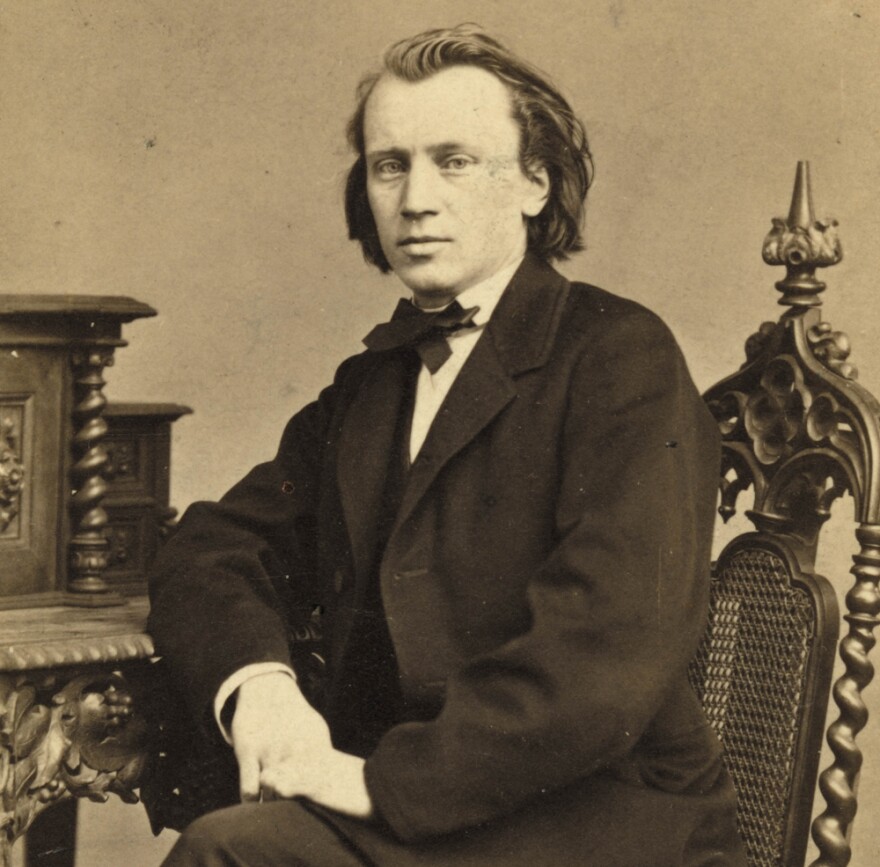
Brahms at the time of his First Symphony
The final piece on the program will be Brahms again, in this case his First Symphony. “The Symphony is exquisite, so powerful—probably the greatest First Symphony ever written,” Oundjian says. He also observes that it was written by a composer who was “young, very handsome, blue-eyed, blond-ish—not the Brahms we imagine as this bearded, sedate individual.”
The symphony has a special place in Oundjian’s life. When he was a student, the imposing German conductor Herbert van Karajan “came to give a masterclass at Juilliard,” he explains. “I was concertmaster of the orchestra and he made me conduct. He was two feet from me!
“I knew that he had asked me to conduct because he wanted to demonstrate that less is more. Conducting students were really trying to show what they had, and he knew that I would not over conduct. He was very complimentary about my conducting. Karajan encouraging me at a very young age was important to me when I was 39 and I couldn’t play the violin any more”—the point in his career when Oundjian turned to conducting
There are tickets available for two other concerts in the first weeks of CMF: a chamber music concert at 7:30 Tuesday, July 8, featuring CMF musicians, and an all-Mozart program under guest conductor Chloé van Soeterstède with violinist Benjamin Beilman at 6:30 the following Sunday, July 13 (full programs below). The annual Family Concert, part of the opening weekend, is sold out.
# # # # #
Colorado Music Festival, Peter Oundjian, music director Thursday, July 3–Sunday, July 13 All performances in Chautauqua Auditorium
Opening Night Festival Orchestra, Peter Oundjian, conductor With Hélène Grimaud, piano
Stravinsky: Feu d’artifice (Fireworks)
Brahms: Piano Concerto No. 1 in D minor
Ravel: Daphnis et Chloé, Suite No. 2 —Bolero
7:30 p.m. Thursday, July 3 6:30 p.m. Sunday, July 6
Family Concert—SOLD OUT Festival Orchestra, Shira Samuels-Shragg, conductor
Sherlock Holmes and the Case of the Missing Maestro
10:30 a.m. Sunday, July 6
Chamber Music Concert Colorado Music Festival musicians
Schubert: String Trio in B-flat major, D471
Prokofiev: Quintet in G minor, op. 39
Brahms: Piano Quartet No. 3 in C minor, op. 60
7:30 p.m. Tuesday, July 8
Festival Orchestra Concert Peter Oundjian, conductor With Steven Banks saxophone
Copland: An Outdoor Overture
Joan Tower: Love Returns for saxophone and orchestra (world premiere)
Brahms: Symphony No. 1 in C minor, op. 68
7:30 p.m. Thursday, July 10 6:30 p.m. Friday, July 11
An Evening of Mozart Festival Orchestra, Chloé van Soeterstède, conductor With Benjamin Beilman, violin
Mozart: Overture to Don Giovanni —Violin Concerto No. 5 in A major, K219 (“Turkish”) —Overture to Le Nozze di Figaro (The Marriage of Figaro) —Symphony no. 34 in C major, K338
6:30 p.m. Sunday, July 13
Tickets to all concerts except the Family Concert available through the CMF Web page.
The Colorado Music Festival (CMF) has announced its summer schedule of concerts at the Chautauqua Auditorium in Boulder.
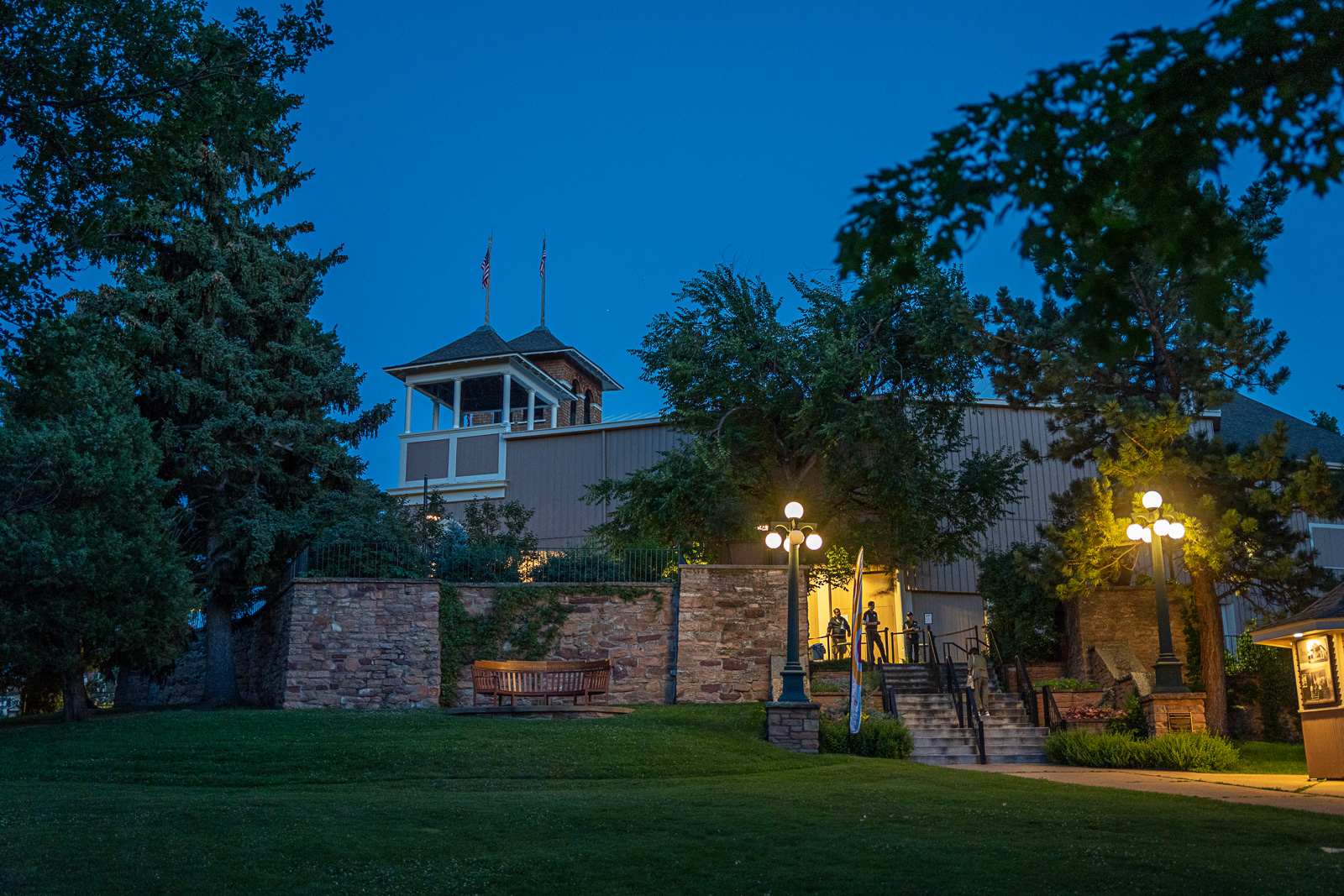
Chautauqua Auditorium. Photo by Geremy Kornreich
The season of 19 concerts will culminate with performances of two different ninth symphonies: Beethoven’s masterpiece, featuring the “Ode to Joy” finale, July 31 and August 1; and Mahler’s Ninth Aug. 3. Both are their composer’s last completed symphony, which has given a special mystique to the number of the “Ninth Symphony.”
Other highlights during the summer include appearances by outstanding solo artists, including pianist Hélène Grimaud playing the Gershwin Concerto in F on the opening night concert July 3 and 6; saxophonist Steven Banks playing the world premiere of Joan Tower’s Love Returns for saxophone and orchestra; and violinist Anne Akiko Meyers playing Eric Whitacre’s Murmur, a CMF co-commission written for her.
Two birth anniversaries will be celebrated during the summer: Ravel’s 150th, with performances of Daphinis et Chloé, Suite No. 2 and Bolero on the opening concert program, and Aaron Copland’s 125th with a performance of Appalachian Spring on July 17 and 18 and AnOutdoor Overture on July 11.
Some younger, rising artists will be featured this summer. Classical guitarist Xuefei Yang will perform Rodrigo’s popular Concierto de Aranjuez July 27. Violinist Benjamin Beilman and conductor Chloé van Soeterstède will appear on an all-Mozart program July 13. Cellist Hayoung Choi and conductor Maurice Cohn will perform July 20, and pianist Yeol Eum Son will appear with conductor Ryan Bancroft July 24 and 25.
This year’s Family Concert, presented at 10:30 a.m. July 6, will be an orchestral mystery, “Sherlock Holmes and the Case of the Missing Maestro.” Shira Samuels-Shragg will conduct the program, in which all of the musicians are suspects and Sherlock Holmes must investigate each of the instrument families.
All of the CMF’s summer concerts and programs are listed below. Tickets to the 2025 Festival will be available for purchase beginning March 4. For information or to purchase tickets for the 2025 festival, visit the CMF Web page, or call the Chautauqua box office at 303-440-7666.
# # # # #
Colorado Music Festival, Peter Oundjian, music director 2025 Summer Season All performances in Chautauqua Auditorium
Peter Oundjian and the CMF Orchestra. Photo by Geremy Kornreich, 2023
Opening Night Festival Orchestra, Peter Oundjian, conductor With Hélène Grimaud, piano
Stravinsky: Feu d’artifice (Fireworks)
Gershwin: Piano Concerto in F
Ravel: Daphnis et Chloé, Suite No. 2 —Bolero
7:30 p.m. Thursday, July 3 6:30 p.m. Sunday, July 6
Family Concert Festival Orchestra, Shira Samuels-Shragg, conductor
Sherlock Holmes and the Case of the Missing Maestro
10:30 a.m. Sunday, July 6
Chamber Music Concert Colorado Music Festival musicians
Schubert: String Trio in B-flat major, D471
Prokofiev: Quintet in G minor, op. 39
Brahms: Piano Quartet No. 3 in C minor, op. 60
7:30 p.m. Tuesday, July 8
Festival Orchestra Concert Peter Oundjian, conductor With Steven Banks saxophone
Copland: An Outdoor Overture
Joan Tower: Love Returns for saxophone and orchestra (world premiere)
Brahms: Symphony No. 1 in C minor, op. 68
7:30 p.m. Thursday, July 10 6:30 p.m. Friday, July 11
An Evening of Mozart Festival Orchestra, Chloé van Soeterstède, conductor With Benjamin Beilman, violin
Mozart: Overture to Don Giovanni —Violin Concerto No. 5 in A major, K219 (“Turkish”) —Overture to Le Nozze di Figaro (The Marriage of Figaro) —Symphony no. 34 in C major, K338
6:30 p.m. Sunday, July 13
Chamber Music Concert Brentano String Quartet
Schubert: Quartet in A minor, D804 (“Rosamunde”)
Anton Webern: Five Movements for String Quartet, op. 5
Brahms: String Quartet No. 3 in B-flat major, op. 67
7:30 p.m. Tuesday, July 15
Festival Orchestra Concert Peter Oundjian, conductor With Anne Akiko Meyers, violin
Copland: Appalachian Spring
Eric Whitacre: Murmur (CMF co-commission)
Ravel: Tzigane
Berlioz: Overture to Béatrice et Bénédict
Tchaikovsky: Romeo and Juliet Fantasy Overture
7:30 p.m. Thursday, July 17 6:30 p.m. Friday, July 18
Festival Orchestra Concert Maurice Cohn, conductor With Hayoung Choi, cello
Respighi: Gli uccelli (The birds)
Tchaikovsky: Variations on a Rococo Theme, op. 33
Beethoven: Symphony No. 1 in C major, op. 21
6:30 p.m. Sunday, July 20
Chamber Music Concert Colorado Music Festival musicians
Nico Muhly: Doublespeak (2012)
Mozart: Quintet for piano and winds in E-flat major, K452
Dvořák: String Quintet No. 3 in E-flat major, op. 97
7:30 p.m. Tuesday, July 22
Festival Orchestra Concert Ryan Bancroft, conductor With Yeol Eum Son, piano
Sofia Gubaidulina: Fairytale Poem (Märchenpoem, 1971)
Beethoven: Piano Concerto No. 3 in C minor, op. 37
Shostakovich: Symphony No. 10
7:30 p.m. Thursday, July 24
6:30 P.M. Friday, July 25
Festival Orchestra Concert Peter Oundjian, conductor With Xuefei Yang, guitar
Tchaikovsky: String Quartet No. 1 in D major, op. 11
7:30 p.m. Tuesday, July 29
Festival Orchestra Concert Colorado Music Festival orchestra and the St. Martin’s Festival Singers Peter Oundjian, conductor With Lauren Snouffer, soprano; Abigail Nims, mezzo-soprano; Issachah Savage, tenor; and Benjamin Taylor, baritone
Michael Abels: Amplify (CMF co-commission)
Beethoven: Elegischer Gesang (Elegiac song), op. 118 —Symphony No. 9 in D minor, op. 125
7:30 p.m. Thursday, July 31 6:30 p.m. Friday, Aug. 1
Festival Finale Colorado Music Festival Orchestra, Peter Oundjian, conductor
Premiere by Gabriela Lena Frank, Concerto by Joan Tower showcase the Festival Orchestra
By Peter Alexander July 22 at 12:15 a.m.
The Colorado Music Festival Orchestra and conductor Peter Oundjian hit the jackpot last night (July 21) with a program of three pieces by women composers.
All three works, by Florence Price, Gabriela Lena Franck and Joan Tower, were performed memorably. Both living composers—Frank and Tower—were present and spoke to the audience.
The concert opened with Price’s Adoration, a piece that she originally wrote for organ in 1951 and that here was performed in a setting for string orchestra. Played tenderly by the Festival Orchestra strings, it is almost too soothing and gentle to serve as an opener. Oundjian and the players thoroughly embraced the mood, creating a comforting start to a program that soon turned adventurous.
Frank’s Kachkaniraqmi (“I still exist” in the Quechua language of her Peruvian forebears) was commissioned by CMF as a concerto for string quartet and string orchestra, written for Boulder’s Takács Quartet and the CMF Orchestra. As an introduction by Oundjian, Frank and Takács violinist Harumi Rhodes spelled out, the commission emerged from a suggestion by CMF contributor and long-time patron Chris Christoffersen for a concerto for the Takács, and then from a friendship between Frank and Rhodes.
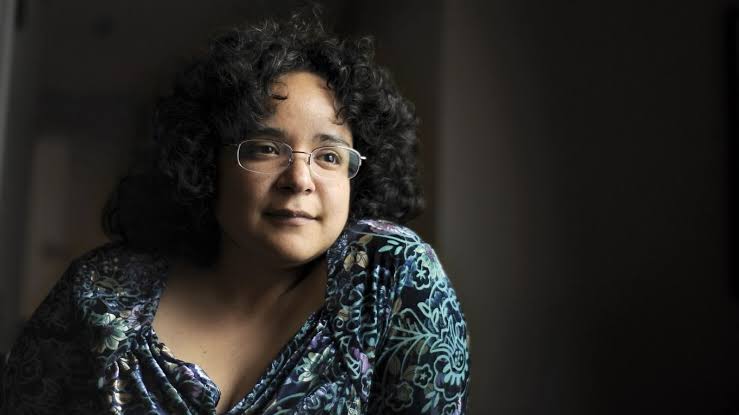
Gabriela Lena Frank
Kachkaniraqmi is a piece of great imagination and creativity. Frank refuses to cozy up to the listener with easy tunes and catchy ideas. In fact, Kachkaniraqmi sounds like no other piece I have heard, but it makes great use of string timbres and textures. It opens with highly individual, sometimes quirky gestures for the solo violist and orchestral violas before moving into a fuller texture. At places, the strings sound like a single instrument, leaping across a large range from top to bottom, and at other times like a large organ moving in full orchestral chords.
The middle section, or second movement, presents a rushing, incessant forward drive. All texture and motion, this portion of the concerto is not hummable, but identifiable musical ideas can be followed as they are passed from section to section over an unrelenting rhythmic foundation. This driven middle section settles into a more contemplative final portion that explores different techniques of string playing to create a startling range of sounds and gentling moods as the music moves toward silence.
Kachkaniraqmi is a remarkable creation, an intriguing piece that I expect will reveal more and more as one listens to it again and again. I hope that the Takács will take the score well beyond Boulder and introduce it to the wider musical world.
The concert concluded with a stunningly complex and difficult piece, Joan Tower’s Concerto for Orchestra. Composed in 1991 for the New York Philharmonic, Chicago Symphony and St. Louis Symphony, it has had modest success in the intervening 33 years. “This piece should be played everywhere!” Oundjian said in his introductory comments, standing onstage with the composer.
Joan Tower
Tower noted that it is a difficult piece to conduct—on top of being very difficult to play—which may be one barrier, but the CMF Orchestra’s performance showed what musical fireworks it sets off when played at the highest level. Clearly, Oundjian had mastered all the shifting meters and tricky rhythms, and the CMF players responded with a virtuoso display.
As expected, there are many solos in the course of the score’s 25+ minutes, for horn, for English horn, for tuba, but more stunning are the intricate passages for whole sections—trumpets, woodwinds, a tricky motive passed up and down from trumpets to horns and back. Often played at a breakneck pace, these are the most virtuosic passages of the concerto, and they were played with precision and confidence by the CMF orchestra.
Other noteworthy moments included a cello section solo that gives a lyrical contrast to the more driving and excitable portions of the score, with the cellos at times divided into parts to create full chords, and at other times reduced to two eloquent solo players. A later softening and lowering of temperature allows two violinists to come forward, before the rhythmic frenzy starts again.
As Tower promised, the percussion players are kept busy, running from instrument to instrument, culminating with a viciously fast running beat by several drums that requires extreme concentration to keep together. This exciting moment, played with perfect precision, leads to a final crashing chord—and inevitably, wild enthusiasm from the audience.
They were still cheering as I gathered my things and snuck out the side door.
Under Oundjan’s leadership, the CMF has established itself as a forward-looking summer festival that all Boulder should support. His thoughtful programming, his embrace of living composers, and the commissioning of new pieces are admirable and exciting. A concert of works by three women, two of them present for the performance, is a perfect illustration of his vision of the festival. On this occasion, it was brilliantly realized.
Correction: Misspellings of string as “sting“ in paragraph six and viciously as “viscously” in paragraph 12 corrected 7/22.
Commissioned premiere and birthday celebrations are early highlights
By Peter Alexander July 1 at 6:27 p.m.
Peter Oundjian at Chautauqua.
Peter Oundjian, artistic director of the Colorado Music Festival (CMF), is brimming with excitement for the coming summer concert season.
“I love every program because I programmed them all!” he says. Nevertheless, when pressed he points to two concerts in the first weeks of the CMF season as especially interesting for audiences.
“One is the world premier of the Gabriela Lena Frank string quartet concerto with the Takács Quartet (6:30 p.m. Sunday, July 21; see full programs July 5–12 below). On that program we’re also playing what I consider to be one of the great American masterpieces of the past five years, the Concerto for Orchestra by Joan Tower.
“The other one is the week before, where I am celebrating the birthdays of Schoenberg and Bruckner with arguably the most beautiful piece that either of them ever wrote (Schoenberg’s Verklärte Nacht and Bruckner’s Fourth Symphony; 6:30 pm. Sunday, July 14). On a Sunday evening, to listen to these two glorious pieces will be beautiful and also a healing experience.”
The festival opens Friday and Sunday (July 5 and 7) with three pieces selected for variety and compatibility. The opening piece, Anna Clyne’s Masquerade was written for the BBC Symphony and premiered at the Last Night of the Proms in London in 2013. That will be followed by Dvořák’s Cello Concerto, one of the pieces the Czech composer wrote while living in the United States.
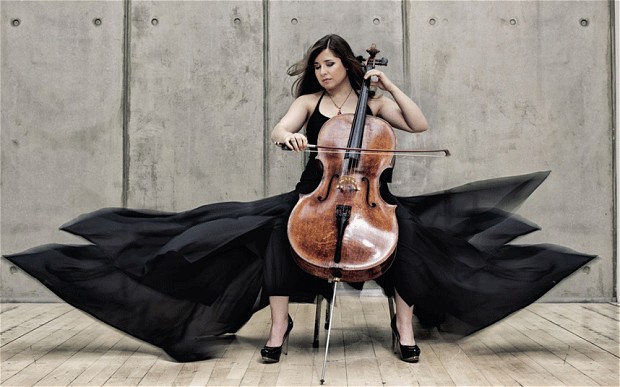
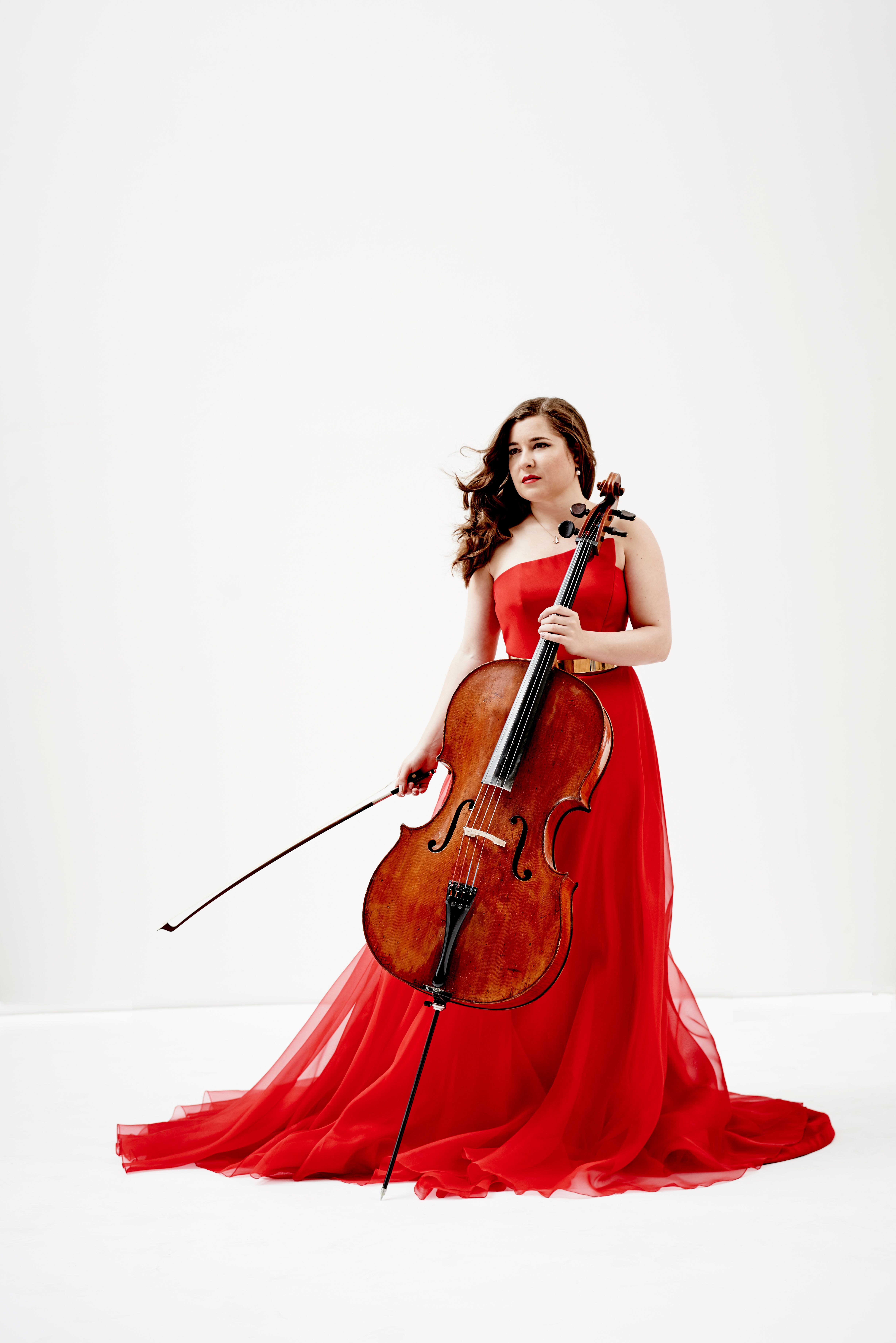
Alisa Weilserstein
Featured soloist for the concerto will be cellist Alisa Weilerstein, whom Oundjian calls “one of the great cellists in the history of the instrument, and an amazing musician. . . . Her Dvořák is spectacular,” he says. “It’s maybe (Dvořák’s) most profound work, because it’s so moving.”
To close the program Oundjian wanted something that would not compete with the intensity of the concerto. “I wanted to have a celebration in the second half,” he says. “I wanted everyone to feel great,” and for that he chose Mendelssohn’s “Italian” Symphony, certainly one of the most cheerful and ebullient pieces in the orchestral repertoire.
The opening week also features the CMF’s annual Family Concert Sunday morning at 10:30 a.m. (July 7), with some light orchestral pieces mixed with some fun, including a piece based on Dr. Seuss’s Green Eggs and Ham. Tuesday sees the first of the summer’s Robert Mann Chamber Music Series concerts, named for the late violinist and founding member of the Juilliard String Quartet. The series will continue the following three Tuesdays at 7:30 p.m.
Festival Orchestra Thursday and Friday pairs, at 7:30 and 6:30 p.m. respectively, start the first week with violinist Vadim Gluzman playing Prokofiev’s Second Violin Concerto, and the iconic 20th-century masterpiece, The Rite of Spring by Stravinsky (July 11 and 12). The program will open with the exhilarating Short Ride in a Fast Machine by the American composer John Adams, who was CMF composer-in-residence in 2022.
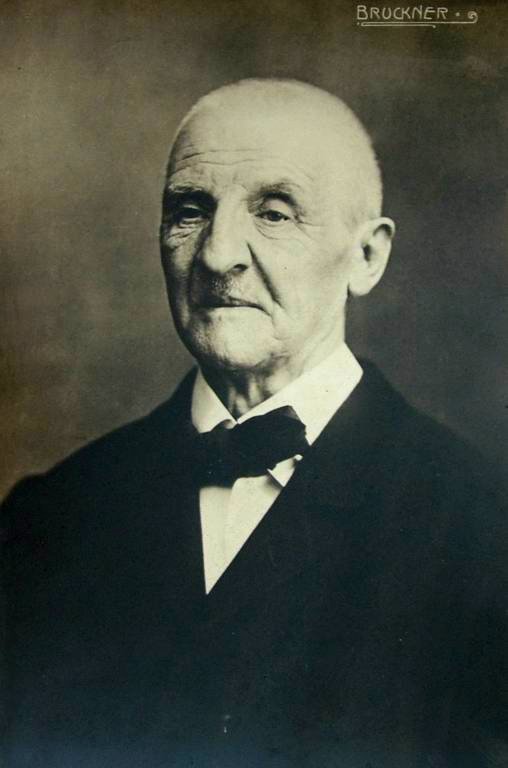
Anton Bruckner
“I did the (July 14) program because it’s the 150th birthday of Schoenberg and the 200th of Bruckner, and I wanted to acknowledge that,” Oundjian says. “I decided, let’s do it in one evening and make it a beautiful experience for everybody! The music is very spiritual (and) both pieces are fantastic to play, in that gorgeous acoustic at Chautauqua.”
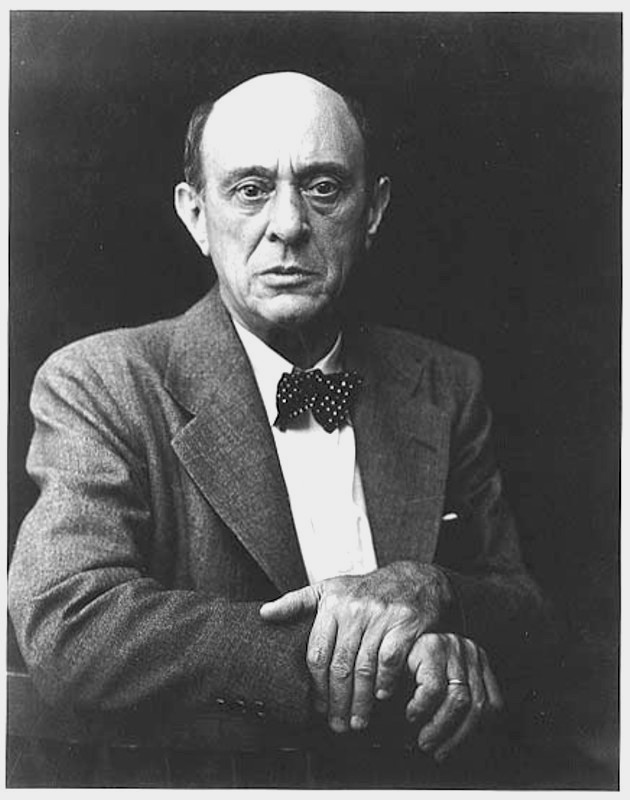
The two composers took Wagner’s music and turned in different directions—Bruckner more conservatively by putting Wagner’s sound into the traditional form of the symphony, Schoenberg, born 50 years later, by pushing beyond Wagner’s harmonic freedom and the limits of tonality.
Arnold Schoenberg
“Bruckner’s Fourth Symphony is probably the most accessible (of his nine symphonies), because it’s fairly compact,” Oundjian says. “It has stunning themes and glorious horn solos, and you really hear the power of the orchestra. I find the music exquisitely beautiful and contemplative. It’s almost surreal in its staggering beauty, to me.”
If you think of Schoenberg only as a thorny modernist, you are missing the earlier works that followed much closer to Wagner than his later works. “Verklärte Nacht is basically like late Wagner, with its glorious string sound,” Oundjian says. “It’s a beautiful string orchestra piece.”
Pianist Olga Kern returns to CMF for concerts July 18 and 19. She will play Rachmaninoff’s Piano Concerto No. 2, which she played at CMF in 2013. The concert, under the direction of Norwegian guest conductor Rune Bergmann, will also feature Prayer by Canadian composer Vivian Fung—a work that had its premiere with a “virtual orchestra” of Canadian musicians during the COVID-19 pandemic—and Edvard Grieg’s Suites from music for the play Peer Gynt, narrated by Kabin Thomas.
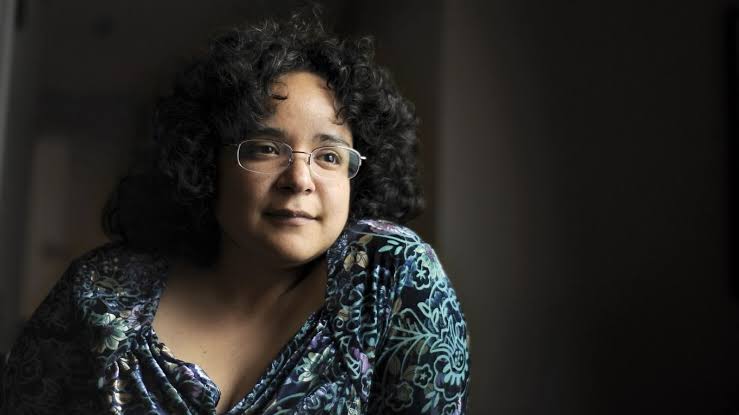
Gabriela Lena Frank
When he was looking for a new work to commission for the 2024 festival, Oundjian thought of a concerto for the Takács Quartet. “I said to (the quartet members), if we were to have a quartet concerto, who would you be interested in approaching, and without hesitation Gabriela’s name came up,” he says. “She is a wonderful composer, Peruvian-American, and a very particular voice.”
Frank will be present for the July 21 premiere, as will Joan Tower, whose Concerto for Orchestra is on the same program.
Frank has written in her program notes, “Kachkanaraqmi, or ‘I still exist’ in the indigenous Quechua language of my Peruvian forbearers, speaks to the resilience, even insistence, of a racial soul through the generations. In this four-movement work, a brief pastoral Andean prelude, a moody mountain soliloquy, a romp of thieving winds, and a lyrical child’s wake utilize the sonorous possibilities of a concerto grosso for string quartet and string orchestra . . . Throughout, re-imaginings of age-old indigenous motifs and rhythms proliferate.”
Joan Tower
The premiere will be part of a concert of all-women composers, opening with Adoration by Florence Price, an early-20th-century African American composer whose works were forgotten for many years but recently have been rediscovered. Written in 1951, Adoration was originally for organ solo but has been arranged posthumously for various ensembles..
Joan Tower’s Concerto for Orchestra was commissioned jointly by the Chicago, St. Louis and New York orchestras, all of whom gave premieres but never played it again. “They always say this about compositions: Getting a commission is hard enough, but try to get second performances,” Oundjian says. “It’s one of those things that has really intrigued me, over my entire career: Let’s find out what’s just premiered in the last few years but has been undeservedly ignored.”
He discovered Tower’s Concerto for Orchestra when he was asked to conduct it in Iceland. “I said, ‘I don’t know that piece!’ I just loved it. It is so dramatic and so beautiful. There are two passages that are some of the most stunning contrapuntal harmony that I know in contemporary music.
“It has tremendous drive and brilliance, and it demands everything from the orchestra.”
# # # # #
Colorado Music Festival, Peter Oundjian, music director July 5–21, 2024 All performances in Chautauqua Auditorium
Opening Night Festival Orchestra, Peter Oundjian, conductor With Alisa Weilerstein, cello
Anna Clyne: Masquerade (2013)
Dvořák: Cello Concerto in B minor
Mendelssohn: Symphony No. 4 in A major (“Italian”)
6:30 p.m. Friday and Sunday, July 5 and 7
Family Concert: Green Eggs and Ham Festival Orchestra, Jacob Joyce, conductor With Really Inventive Stuff and Jennifer DeDominici, mezzo-soprano
Glinka: Overture to Ruslan and Ludmilla
Daniel Dorff: Three Fun Fables
Mendelssohn: Overture to A Midsummer Night’s Dream
Rob Kapilow: Green Eggs and Ham
10:30 a.m. Sunday, July 7
Robert Mann Chamber Music Series Colorado Music Festival musicians
Ernst von Dohnányi: Sextet in C Major
Beethoven: “Duet with two Obligato Eyeglasses” in E-flat major for viola and cello, WoO 32
Schumann: Piano Quartet in E-flat Major, op. 47
7:30 p.m. Tuesday, July 9
Festival Orchestra Concert Festival Orchestra, Peter Oundjian, conductor With Vadim Gluzman, violin
John Adams: Short Ride in a Fast Machine
Prokofiev: Violin Concerto No. 2
Stravinsky: Rite of Spring
7:30 p.m. Thursday July 11 6:30 p.m. Friday, July 12
Bruckner Bicentennial Concert Festival Orchestra, Peter Oundjian, conductor
Arnold Schoenberg: Verklärte Nacht (“Transfigured night”), op. 4
Anton Bruckner: Symphony No. 4 (“Romantic”)
6:30 p.m. Sunday, July 14
Robert Mann Chamber Music Series Colorado Music Festival musicians
Carl Nielsen: Wind Quintet, op. 43
Schubert: String Quintet in C Major, D956
7:30 p.m. Tuesday, July 16
Festival Orchestra Concert Festival Orchestra, Rune Bergmann, conductor With Olga Kern, piano, and Kabin Thomas, narrator
Vivian Fung: Prayer
Rachmaninoff: Piano Concerto No. 2, op. 18
Edvard Grieg: Suites from Peer Gynt
7:30 p.m. Thursday, July 18 6:30 p.m. Friday, July 19
Festival Chamber Orchestra Concert Festival Orchestra, Peter Oundjian, conductor With the Takács Quartet and Gabriela Lena Frank, composer
Florence Price: Adoration
Gabriela Lena Frank: Kachkanaraqmi (“I still exist”; world premiere)
Joan Tower: Concerto for Orchestra
6:30 p.m. Sunday, July 21
Tickets for individual concerts are available through the Chautauqua Box Office Web page.
Cellist Alisa Weilerstein gives dedicated performance of A New Day
By Peter Alexander July 25 at 11:25 p.m.
The Colorado Music Festival presented a major new piece at their concert in Chautauqua Auditorium tonight (July 25).
The Festival Orchestra, conductor Peter Oundjian and cellist Alisa Weilerstein collaborated in the world premiere of A New Day, a cello concerto by Joan Tower that was a CMF commission. A strong and exciting piece, A New Day should quickly find its way into the repertoire. I have no hesitation recommending this powerful concerto to every cellist, conductor and orchestra that would consider taking it up.
Joan Tower. Photo by Bernie Mindrich
The all-Tower concert opened with four trumpeters playing her Fanfare for the Uncommon Woman No. 5. It was, as the program characterizes her style, “bold and energetic,” boldly and energetically played. The players nailed the cinematic brilliance of the fanfare, one of several responses by Tower to Copland’s World War II-era Fanfare for the Common Man.
Oundjian and Tower came onstage to introduce the next piece, one of Tower’s best known: the Grammy-winning Made in America. Premiered in 2005 and written for 68 orchestras in 50 states, Made in America reflects Tower’s feelings about her home country after living several years in South America. It uses the song “America the Beautiful” “inside the piece,” as Tower aptly described it: not really a set of variations, it returns to the song throughout.
As she also explained, the score reflects both positive and negative feelings about the country. There are many passages of darkness and anger, over which the central theme sometimes prevails. It is a well calculated score that propels the audience through many moods and transitions to an ending of great forcefulness. People around me were shouting “bravo,” “brava” and “bravi” all at once.
The CMF Orchestra, which gets better each week, managed the tricky transitions and sudden tempo changes of the score seamlessly under Oundjian’s leadership. Contrasts between delicate, gentle passages and violent, louder ones were well marked, and the slower crescendi flowed smoothly. Brass and percussion—favorite sounds in Tower’s arsenal—were especially impressive.
Next was Tower’s rarely heard Duets, a kind of concerto for orchestra that contrasts a series of duets within the orchestra with dramatic full orchestra outbursts. Tower said she was grateful to the CMF players for performing Duets, since they made her “like the piece again.“
I will not describe any part of this piece as “angry.” When Oundjian used that word from the stage, Tower firmly corrected him that she was not angry. But I will say that the dramatic full orchestral passages become musically very powerful at times.
CMF artistic director Peter Oundjian
That effect was abetted by nature, as a violent thunderstorm broke over the Chautauqua Auditorium during the performance, sometimes obscuring the players. It is a tribute to the orchestra’s range of dynamics that the most delicate passages could be drowned out by the rain, but elsewhere the storm was decisively covered by the orchestra.
What will be most remembered from the performance will be the orchestral explosions rather than the duets of individual instruments. Once again it was the brass section, deftly handling all of their complex passagework, and above all the athletic work of the timpanist that most impressed. Alas, the weather covered some of the wind and string duets that I would have liked to have heard better.
To avoid that happening during the following world premiere, the intermission was extended until the storm had passed and the music could be well heard. This was a good decision, as A New Day is a piece worth hearing well.
The piece makes great use of the cello and its characteristic gestures—long slides, string crossings, rapid figuration, shifts to thumb position high on the cello’s top string. This will be a challenge to any cellist, all within an accessible frame that audiences will enjoy. Based on the stations of a single day, it has an expressive profile that reaches out to the listeners and invites them in.
There are four movements, titled “Day Break,” “Working Out” (with the many possible meanings implied), “Almost Alone” and “Into the Night.” Dedicated to her husband, the piece is in part a celebration of their years together.
Alisa Weilerstein. Photo by Paul Stewart
“Day Break” opens gently but has many shifts of mood. Driving fragments in the cello are reinforced by chugging motion in the orchestra. Every mood and musical idea leads to another transition, building in intensity or relaxing back into tranquility. “Working out” might refer as much to the performance of the soloist as any activities in the day of a person or a relationship. It is fast and at time brilliant, never casual.
“Almost alone” is a calm, lyrical cadenza for the cellist, sometimes supported by beautiful chords from the string sections. “Into the Night” provides a strong contrast to the preceding movement, starting almost frantically and maintaining a high pace for most of the movement. The end provides a return to tranquility, with the concerto ending as gently as it began—signifying, Tower says, “hope for another day with my 94-year-old husband.” Her generosity in sharing that hope with the audience was the most touching moment of all.
Weilerstein performed with a focus that was evident in both the intensity of her playing, and visually as she felt the complex passages of her part. This was virtuosity at a high level, a performance totally dedicated to the music at hand. Tower could not have wanted more effective advocates for her new work, either soloist, conductor, or orchestra.
It was good to hear the work of such a remarkable living composer at Chautauqua. Tower’s command of the orchestra is unequalled, her music is both vivid and accessible, and it is performed widely. It should be heard more often.
Indeed, the entire “Music of Today” series at CMF has been a sensational success. Oundjian and the festival are to be commended for their commitment to living musicians.
Commissioned work by Hannah Lash July 22, all Joan Tower program July 25
By Peter Alexander July 20 at 12:10 a.m.
Hannah Lash always wanted to be a composer.
“One of my earliest memories was that the reason I wanted to take violin lessons was that I wanted to be a composer,” she says. “So I had that thought in my head from a very early age.”
Hannah Lash. Photo by Karjaka Studios
Mission accomplished. Lash started on Suzuki violin, later studied piano and harp, and now teaches composition at Yale. Her new piece Forestallings was co-commissioned by the Colorado Music Festival, where it will be premiered Thursday (July 22) by the Festival Orchestra and conductor Peter Oundjian.
The same program will feature Kevin Puts’s Concerto for Marimba with guest soloist Ji Su Jung and Oundjian’s arrangement of Beethoven’s String Quartet No. 14 in C-sharp minor. The Lash score matches well with Beethoven, since it was originally planned as part of the 2020 Beethoven bicentennial.
In fact, Forestallings was commissioned by CMF and the Indianapolis Symphony to accompany Beethoven’s Symphony No. 2. “I was really happy about that, because I really like that symphony,” Lash says. “It’s underplayed, and I’m really happy when it’s performed. It was fun to find some way of having a relationship to (the symphony).”
Her score does not quote Beethoven, but “gesturally it has touch points,” she says. “The first gesture of the first movement has a great deal to do with Beethoven. Then it goes in very different directions. These moments of opening a window between me and Beethoven were important to me.”
Ji Su Jung
Puts has written that his Concerto for Marimba “reflects my love for Mozart’s piano concertos,” with the influence “mostly in the relationship between the soloist and orchestra.” Listeners may also hear a strong kinship to lyrical moments of Mozart’s concertos.
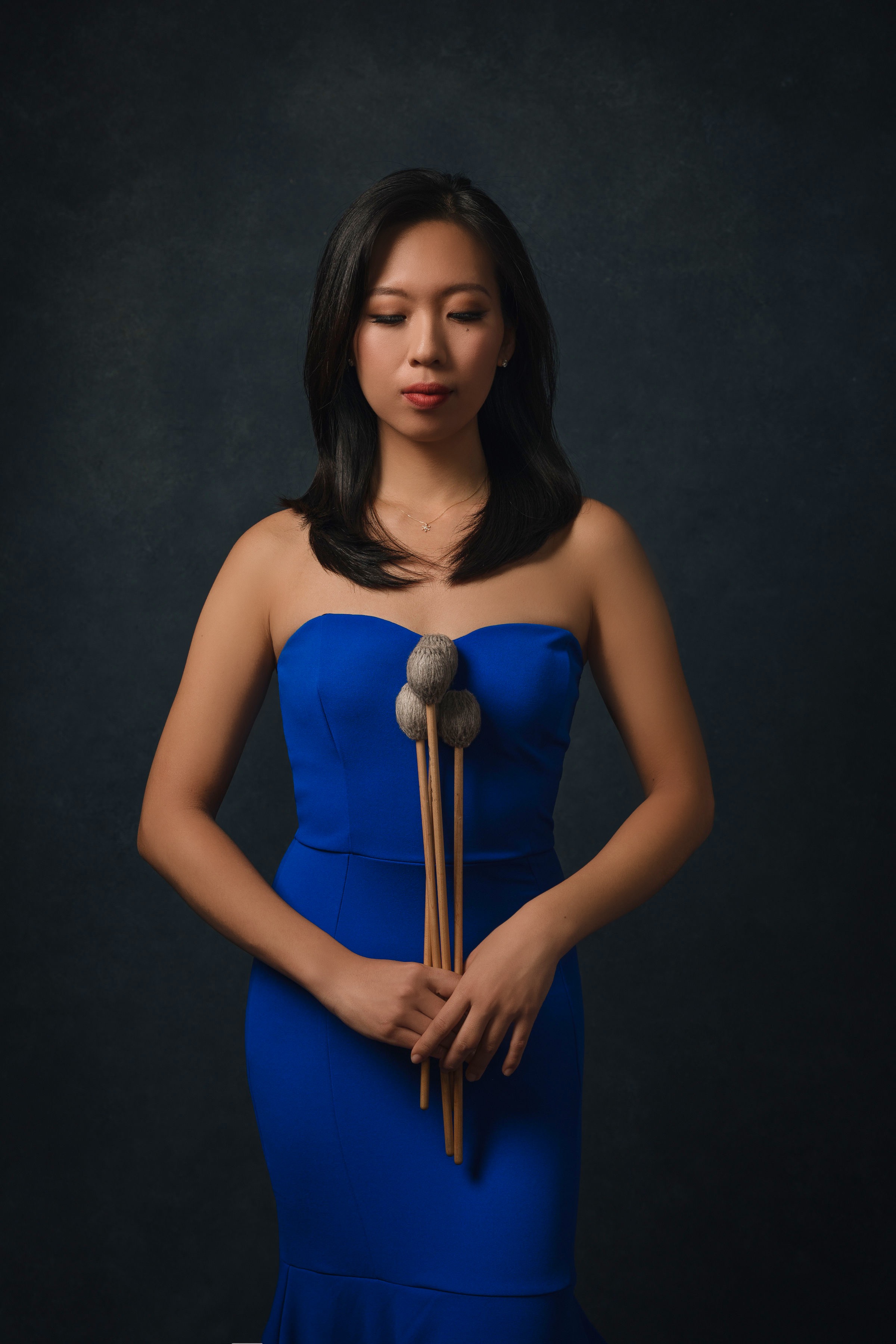
Soloist Jung is a rare musician who started studying percussion as a young child. Born in South Korea, she later came to the United States to study at the Peabody Conservatory and Yale University.
The Lash premiere is part of a concert series that CMF is calling “Music of Today.” The series opens with the St. Lawrence String Quartet on Tuesday (July 20), playing the String Quartet No. 1 by American composer John Adams as well as works by Haydn and Debussy (see full programs below). Adams’s First Quartet was inspired by the St. Lawrence Quartet, to whom it is dedicated. “I was reminded how much the sound of the string quartet is like elevated human discourse,” he wrote. “It’s like speech brought to the highest level.”
Like the Lash, Adams’ quartet was influenced by Beethoven—in this case scherzo movements from two late quartets. While writing the quartet, Adams was also listening to the quartets of Ravel and Debussy, the latter of which closes the St. Lawrence program.
Friday’s “Music of Today” concert (July 23), titled “Kaleidoscope,” comprises entirely music by living composers, with an emphasis on percussion. Jung will be featured again as soloist, along with pianist Christopher Taylor, along with CMF string players and percussionists. The diverse program ranges from the Piano Quintet No. 2 by William Bolcom to Keith Jarrett’s Köln Concert (Part IIC), as well as several pieces for percussion
The final event of “Music of Today” will be a concert on Sunday (July 25) devoted to the music of American composer Joan Tower, including the world premiere of A New Day for cello and orchestra. This program grew from Oundjian’s long friendship with Tower. “Joan is an old friend of mine,” Oundjian says. “She was really dying to write a cello concerto.”
Joan Tower. Photo by Bernie Mindrich
To fulfill that wish, CMF commissioned the work that became A New Day, and chose for soloist Alisa Weilerstein, whom Oundjian has known virtually her entire life. Member of a musical family, and another child musician, Weilerstein started playing cello at the age of four.
A New Day is in part an expression of Tower’s gratitude for every day of life. “As we get older, we begin to treasure and value every day that is given us,” she writes in program notes. “This feeling becomes even stronger when we are able to get past 90. I am not quite there yet, but my husband Jeff is and the closer I get to his passing, the more I treasure every new day.”
Other works on the all-Tower program will be No. 5 in her series of fanfares “For the Uncommon Woman”; Made in America, her setting of “America the Beautiful”; and Duets, an orchestral piece built on duets between individual players in the orchestra.
The next week at CMF opens with a concert in the festival’s Robert Mann Chamber Music series. The program comprises two works by Beethoven, the Quintet for piano and winds and the Septet, played by members of the CMF Orchestra (Tuesday, July 27).
Thursday and Friday, July 29 and 30, see the return of CMF resident artist Augustin Hadelich to play Beethoven’s Violin Concerto with Oundjian and the Festival Orchestra. The program also features two works that are distinctly less known than the Beethoven concerto: Carl Maria von Weber’s Overture to his magic opera Oberon, and the robust and engaging Dances of Galánta by Hungarian composer Zoltán Kodály. Both are works I would welcome more often on orchestral programs.
Finally, the concert on Sunday, Aug. 1 will present more underplayed works, as well as two guests of significant interest. Saxophonist Steven Banks will play the Glazunov Saxophone Concerto and the Concertino da Camera for saxophone and 11 instruments by Jacques Ibert; and longtime CMF supporter and Boulder businessman Chris Christoffersen will narrate Aaron Copland’s Lincoln Portrait.
Also on the program are Copland’s popular Fanfare for the Common Man, which inspired Tower’s fanfares; and Oundjian’s arrangement of a movement from the Second String Quartet of Florence Price, an important early 20th-century African-American composer who is being rediscovered today.
This concert is one of Oundjian’s favorites of the 2021 festival. “I love that program,” he says.
“Steven Banks is incredible. He’s a miraculous musician—honestly, every single note he plays, he’s really charismatic.”
# # # # #
Colorado Music Festival Schedule July 20–Aug. 1 All concerts in Chautauqua Auditorium
7:30 p.m. Tuesday, July 20 St. Lawrence String Quartet
Haydn: String Quartet in D major, op. 20 no. 4
John Adams: String Quartet No. 1
Debussy: String Quartet in G minor, op. 10
7:30 p.m. Thursday, July 22 Peter Oundjian, conductor, with Ji Su Jung, marimba
Hannah Lash: Forestallings (CMF Co-commission)
Kevin Puts: Concerto for Marimba
Beethoven: String Quartet No. 14, op. 131 (orchestrated by Peter Oundjian)
7:30 p.m. Friday, July 23 “Kaleidoscope” CMF Orchestra strings and percussion, with Christopher Taylor, piano, and Ji Su Jung, marimba
Nebojsa Zivkovic: Trio per Uno
Nico Muhly: Big Time for String Quartet and Percussion
Peter Klatzow: Concert Marimba Etudes
Derek Bermel: Turning
Keith Jarrett: The Köln Concert (Part IIC)
Leigh Howard Stevens: Rhythmic Caprice
William Bolcom: Piano Quintet No. 2
6:30 p.m. Sunday, July 25 Music of Joan Tower Peter Oundjian, conductor, with Alisa Weilerstein, cello
Joan Tower: Fanfare for the Uncommon Woman No. 5
Joan Tower: Made in America
Joan Tower: Duets
Joan Tower: A New Day for cello and orchestra (world premiere)
7:30 p.m. Tuesday, July 27 Colorado Music Festival Orchestra members
Beethoven: Quintet for piano and winds in E-flat major, op. 16
Beethoven: Septet in E-flat major, op. 20
7:30 p.m. Thursday, July 29 6:30 p.m. Friday, July 30 Peter Oundjian, conductor, with Augustin Hadelich, violin
Carl Maria von Weber: Overture to Oberon
Zoltán Kodály: Dances of Galánta
Beethoven: Violin Concerto in D major, op. 61
6:30 p.m. Sunday, Aug. 1 Peter Oundjian, conductor, with Steven Banks, saxophone, and Chris Christoffersen, narrator
Copland: Fanfare for the Common Man
Florence Price: String Quartet No. 2 (Movement 2)
Alexander Glazunov: Saxophone Concerto in E-flat major, op. 109
Jacques Ibert: Concertino da Camera
Copland: Lincoln Portrait
The full calendar for the 2021 CMF season can be seen here. Tickets may be purchased through the Chautauqua Web page. Because health restrictions are subject to change over the summer, be sure to check the CMF 2021 tickets FAQ page.



 Sharps & Flatirons