Introducing Jean-Marie Zeitouni, third and final official candidate to lead the Colorado Music Festival
By Peter Alexander
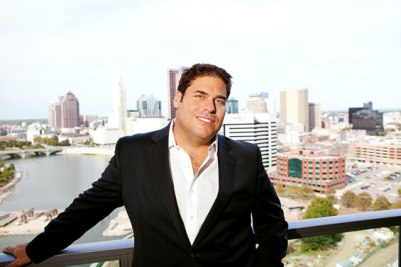
Jean-Marie Zeitouni
Each of the three official candidates to take Michael Christie’s position as music director of Boulder’s Colorado Music Festival has conducted concerts this summer at Chautauqua. When each candidate has visited Boulder, I have taken the opportunity to introduce him (and yes, they are all male). I asked each candidate about his interest and ideas for the festival, and give him a chance to introduce himself to the public. I hope this gives a clearer picture of the strengths of each candidate.
Jean-Marie Zeitouni is the third official candidate to visit CMF this summer, with concerts August 3 and 7–8. (Read about the concerts in Boulder Weekly. To learn more about Zeitouni, you can read his full press biography here.)
Here are his answers to the questions I asked:
PA: Here are my more general questions for you. What interests you most about the Colorado Music Festival?
JMZ: You know, I don’t know much about it yet, but the first thing that attracted me is the quality of the music. I know of the festival, not from the outside world, not from the usual conductor searching. I actually know about the festival from many friends that I have made over the years who play in many different orchestras who go there in the summer, to play with this group. They all told me it’s fantastic, the orchestra is on a very high level, people are there because they want to keep (playing) music in the summer because some orchestras don’t have a big summer season. So it’s really from the musicians’ perspective. I have friends from the St. Louis Symphony, San Antonio Symphony, Montreal Symphony, Hawaii, and I’m forgetting a few but I have many friends who have played or who are still playing in the orchestra—friends from the Oregon Symphony, Omaha Symphony and all across the board who play there—and they said, ‘Oh, it’s a great place, we go there, I mean the mountains and everything, but the orchestra is good, people want to play, they want to sound good.’ So, when I got the phone call to ask me if I was interested to go to this festival and to maybe be considered I said, yes, of course, I’d love to go and to have the experience at least. As for the future we’ll see.
You have partly answered the next question. What do you think are the strengths of the festival?
I’ve seen the variety of the programming. I sat down and I read what was done the first year, and then the second year, and then this series was introduced, and then they tried to have a musical mashup, and then they did—so I’m aware of kind of the buoyancy of the variety of programming and the search for something that’s a little bit different, that will attract the audience. The philosophy seems to be very active, and—I’m sorry, English is not my first language so I’m trying to translate what I‘m saying. The creativity of the programming is basically something that attracts me and of course the quality of the music making for me is the most important.
 You said you’ve looked over the past programming going back 15 years. What ideas would you want to bring to programming?
To me it’s really too early to talk about this right now. I do have some ideas and I’ve tried things over the years on my own, but you have to really to understand a style of festival, a style of community, the mentality of concert goers, even to breathe the air of the place before you can dare say I know what’s good for you and we should do this and we should try this. So it’s not because it’s a non-committal thing, it’s really from the humble place that I’m going to say I need to go there and see it for myself and be listening carefully and be sensitive to that kind of of energy and of people who are there and then I’ll create and adapt if the fit is right, something that will take into consideration the heritage of this festival and its participants, and audience of course.
We hear a lot about the crisis in classical music, with audiences declining and so forth. Andrew Bradford, the new executive director of the festival said he doesn’t believe that classical music is dying. What do you think? Is there a crisis, and how should institutions address it, if there is one?
I agree. I don’t think that classical music is dying at all. There are some places that are actually blooming more than ever. It’s just that there is a model shift in musical institutions and what they do and how they present what they do. The challenge is to be appealing without watering down the content, because the content is ultimately what is important. And so the challenge lies there. There are so many different initiatives that I see all across the United States, but also in Canada and in Europe to bridge the gap between younger generations, or even now middle-age people that were never in contact with this art from early on. There are very successful endeavors, but the mentality of everybody is changing. People don’t commit to buy subscription the way they did 20 years ago; it’s a different model. And I myself am a consumer of entertainment and art, and I don’t shop the way I used to do 20 years ago. I’m not going to buy a whole 12 subscriptions to symphonic concerts, because I want the freedom to go to an event that I want to see—I’m no exception, everybody is like that right now. There’s much more choice out there, and so the challenge lies in making this appealing to people and trying to create an event in which each of the concerts will have some appeal, and at the same time being very careful not to alienate the folks who have been supporting the art form for many, many years. I would say these older people are the, we say in French the “pure-in-heart” followers and they are really there because they love their music and they love their concerts and I think that just as respect for them and the art form the contents should not be watered down. It’s a matter of packaging and it’s a matter of communicating. I’m convinced more than anybody else that the music of Strauss, Mozart and Bernstein or Shchedrin or whoever is the best thing out there and it should be heard by the biggest number of people possible, but I need to get their ear sensitive about this. But it’s a long term. I work in an orchestra in Montreal, and we do different concert formats for different age groups and different levels of sophistication. There are so many different strategies that we can do with good marketing. I’m totally aware of the shift but I’m not discouraged by it at all.
And now I have three less serious questions. Boulder is known as a great city for food. Do you have a favorite cuisine?
Oh boy. I’m a big foodie! I grew up in a family of cooks, and actually my dad’s family were professional pastry chefs. I do have, we’ll say quite an open mind for food. Everyplace I go in the world I read beforehand and try to find the best place to eat, and I go and I also collect wines, so I like pairing food and wine. There’s no end to this so I don’t have any favorite type of food—I’m ready to try everything.
Outdoor activities are important in Colorado. Do you have a favorite outdoor activity?
I’m a golfer. I used to go to Banff every summer in the Rockies, and of course I don’t want to say that it’s the same as Boulder, but there’s this kind of mountain landscape, and we used to go hiking and sightseeing and going to the natural hot springs and all of this, so I enjoyed the hiking and everything. But I’m dead crazy, I’m completely gaga over golf. (Zeitouni explains that would be “complètement gaga” in French.) I’ve golfed in the Rockies before in Canada and it’s an exceptional experience, and I assume that there must be some golfing in Boulder.
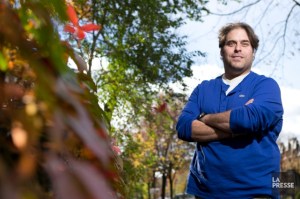
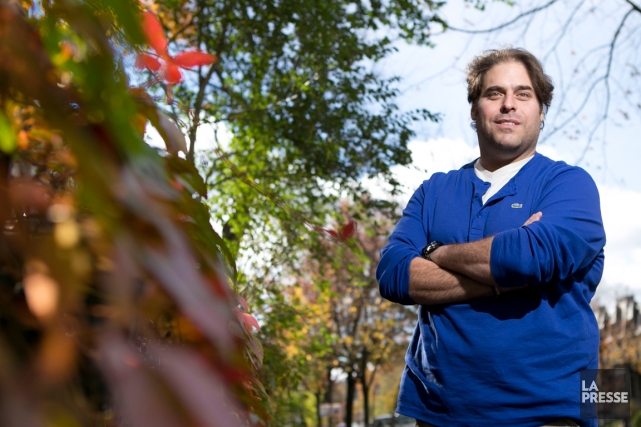
Jean-Marie Zeitouni. Photo by Hugo-Sébastien Aubert, La Presse
This year’s festival overlapped earlier with the soccer World Cup. Are you a a soccer fan, and who do you support?
Of course, yes. I was always growing up a supporter of the Italian team, but they didn’t do so well this year. But they had a better run in the past.
Why is a French Canadian a supporter of the Italian team?
Well, my dad is from Egypt—he’s from Alexandria actually, so (there it is) more Mediterranean and the culture is even more Greek than Arabic if you will. That’s why I know all the pastries and the food form the Mediterranean that I grew up with. This year I think that my favorite team was Argentina. They had a heartbreaking final match, but this was a very special team.


 Sharps & Flatirons