Grace Notes: Nation of Immigrants and Made in America

Boulder Chorale and the Longmont Symphony both strike American theme

By Peter Alexander March 15 at 1:43 p.m.

Taking inspiration from former president Obama’s description of America as “a nation of immigrants,” the Boulder Chorale will present a concert celebrating many of the cultures that have contributed to our national identity.

The concert, to be presented at 4 p.m. Saturday and Sunday at the First Methodist Church in Boulder (March 18 and 19), will be under the direction of Vicki Burrichter, artistic director of the Chorale. Violinist Leena Waite will play “Requiem for Ukraine” by Igor Loboda, and other guest artists will perform music from cultures around the world that have merged on the American continent.
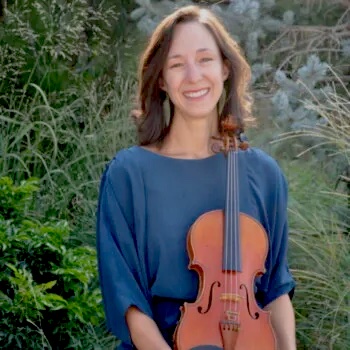
Leena Waite

The program opens with an homage to America’s original inhabitants. “River of Living Waters” by Karen Marrolli, the director of music ministries at a Methodist church in Albuquerque, New Mexico, is based on a Lacquiparlé Dakota melody. That is followed by two songs from Great Britain that describe the journey from the old world to the new: “The Parting Glass” and “The Water is Wide.”

Other cultures celebrated in the program include those of India and China in Asia, and Mexico and Brazil in Latin America. The tour of cultures ends with music of Broadway by Leonard Bernstein, “Take Care of This House,” which is a reminder that Americans should, as Burrichter writes in her program notes, “work together to care for our collective home.” And finally a spiritual that remembers the enslaved people of our continent, Moses Hogan’s “My Soul’s Been Anchored in the Lord.”

“Not all of us have come here by choice,” Burrichter writes. “We hope that ending our concert with a spiritual shows our deep respect for . . . . (African-Americans’) innumerable contributions to American culture and life.”

# # # # #

“A Nation of Immigrants”
Boulder Chorale, Vicki Burrichter, conductor
With Leena Waite, violin
Ensemble of world musicians

Program includes:

  • Karen Marrolli: “Rivers of Living Water” (Lacquiparlé Dakota melody)
  • Traditional Scottish, arr. Desmond Early: “The Parting Glass”
  • Traditional British, arr. Craig Helala Johnson: “The Water is Wide”
  • Igor Loboda: “Requiem for Ukraine”
  • Leonard Bernstein: “Take Care of This House” from 1600 Pennsylvania Avenue
  • Moses Hogan: “My Soul’s Been Anchored in the Lord”
  • Additional repertoire from India, China, England, Mexico, and Brazil

4 p.m. Saturday and Sunday, March 18 and 19
First United Methodist Church, Boulder

TICKETS

 # # # # #

The Longmont Symphony will present the second of two concerts in the current season focusing on American music over the coming weekend, with performances Saturday and Sunday (March 18 and 19; details below) in the Stewart Auditorium of the Longmont Museum.

Titled “The Art of Influence—America: Part II” the program features works that reflect some of the influences that have shaped the sound of American music. Under the direction of conductor Elliot Moore, the orchestra will present the Colorado premiere of Cover the Walls by Ursula Kwong-Brown, Gershwin’s Lullaby, and Aron Copland’s jazzy Clarinet Concerto with soloist Jason Shafer. The program will be filled out by Maurice Ravel’s tribute to the French Baroque tradition, Le Tombeau de Couperin (The tomb of Couperin).

The versatile Kwong-Brown describes herself as “a composer, sound designer and arts technologist” who also is active as research scientist and political activist. A 2010 honors graduate of Columbia University in music and biology, she has had works performed across the United States and overseas. Her catalog includes music for orchestra, chamber ensembles, vocal and choral works, as well as sound design for dance and theater.

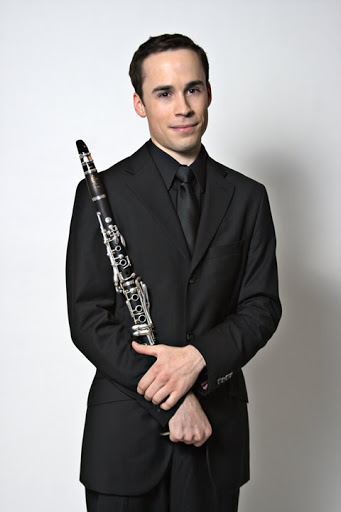
Jason Shafer

A graduate of the Eastman School of Music, Shafer is principal clarinet of the  Colorado Symphony and a member of the adjunct faculty at the University of Northern Colorado. He previously appeared with the LSO in 2021, when he performed Mozart’s Clarinet Concerto. Aaron Copland’s Concerto was commissioned by Benny Goodman, who played the premiere with the NBC Symphony and conductor Fritz Reiner. If not exactly a reflection of Goodman’s jazz style, the concerto is a tribute to his virtuosity.

Originally composed for piano and later orchestrated by the composer, Ravel’s Tombeau de Couperin was written during the difficult years of World War I. Described by the composer as an homage “less to Couperin himself than to French music of the eighteenth century” generally, the colorful orchestral suite includes movements titled Prélude, Forlane, Menuet and Rigaudon

# # # # #

“Made in American 2: The Art of Influence”
Longmont Symphony Orchestra, Elliot Moore, conductor
With Jason Shafer, clarinet

  • Ursula Kwong-Brown: Cover the Walls (Colorado premiere)
  • Copland: Concerto for Clarinet and String Orchestra with Harp and Piano
  • Gershwin:Lullaby
  • Ravel: Le Tombeau de Couperin (The Grave of Couperin)

7 p.m. Saturday, March 18, and 4 p.m. Sunday, March 19
Stewart Auditorium, Longmont Museum

TICKETS

Moore and the Longmont Symphony present “A Portrait of Mozart”

Program ranges from one of Mozart’s earliest to one of his last works

By Peter Alexander April 13 at 10:10 p.m.

Elliot Moore says that he needs a little Mozart right now.

“It’s been such a terrible time,” he says of the past year. “Mozart’s music is what I need. This is important to who I am.”

Elliot Moore

As conductor of the Longmont Symphony (LSO), Moore is in a position to fill that need. And we can all benefit when the LSO presents “A Portrait of Mozart,” a concert featuring works from Mozart’s very earliest years until nearly the last work he wrote. The concert stream will be available at 7 p.m. Saturday, April 17. You may purchase tickets here.

The program opens with the Overture to La finta semplice, K51, Mozart’s very first opera written when he was 12. That is followed by one of his very last completed works, the Clarinet Concerto, K622, featuring Colorado Symphony principal clarinetist Jason Shafer as soloist.

The program concludes with a symphony that falls between these works, the Symphony No. 25 in G minor, K183. Known as the “Little G-minor Symphony” to distinguish it from Mozart’s late Symphony in G minor, K550, it is the first of Mozart’s symphonies to find a permanent place on orchestral programs.

Moore has wrapped the concert into a larger project to make Mozart better known. In addition to the concert itself, there will be a pre-concert discussion about Mozart’s life on Zoom at 7 p.m. Thursday, April 15, that is open to concert ticketholders, and Moore has created a reading list for anyone who wants to go deeper into Mozart’s life. All the details of Moore’s “Mozart Mania” can be found on the LSO Web page

The concert and the project to explore Mozart’s life “is something that I feel is important to who I am,” Moore says. “It’s a way to have some kind of a shared experience that we have not had in over a year, and that’s part of the reason that I had the idea to do this.”

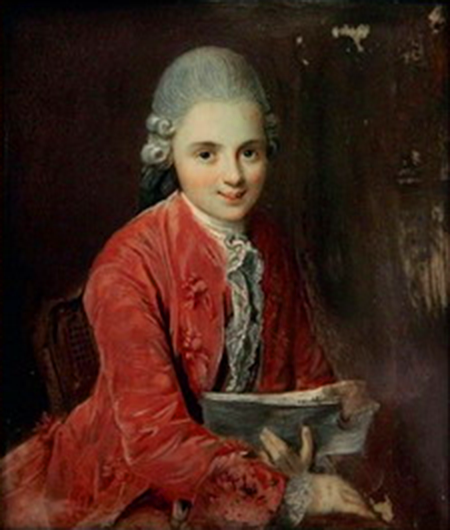
Mozart at age 12

The opera overture “is remarkable for a 12-year old,” Moore says. “I’m not sure it’s much more than that, but I think it’s extraordinary to see some of the first orchestral music a 12-year-old Mozart wrote.”

The overture also provides background to Mozart’s professional life. La finta semplice was written when the boy Mozart was visiting Vienna. His father, Leopold, hoped to have it produced by the court opera, but he made the mistake of overpromoting the work, which annoyed members of the royal family and some of the court musicians. Later the Empress Maria Theresa, who had relatives all over Europe, discouraged her family members from hiring Mozart, describing Leopold and other members of the family as “useless people.”

In other words, this opera, written he was 12, “set the tone for Mozart not being able to get a job” for the rest of his life, Moore says.

Moore chose K183, the “Little G-minor” Symphony, for two reasons. First, it is considered Mozart’s first fully mature symphony, and as such marks a milestone in the composer’s development. 

The other reason is more practical. “I needed to find a work where we could actually fit onstage,” Moore explains. Because Stewart Auditorium at the Longmont Museum is limited in size, the orchestra had to be limited as well. Other symphonies he might have chosen required too many players. “It’s a very tricky balance to put on these kind performances in a pandemic!” Moore says.

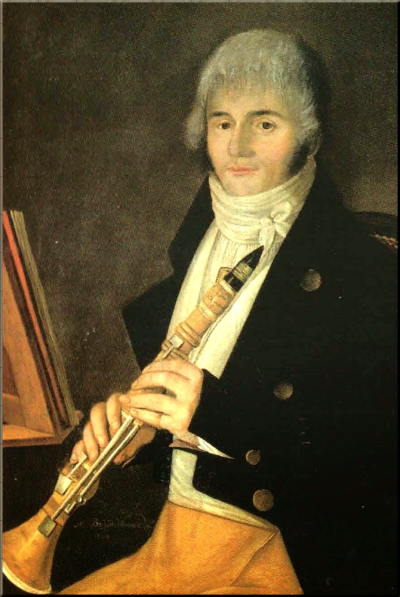
Anton Stadler with 18th-century clarinet

Mozart wrote his Clarinet Concerto in October of 1791, a mere two months before his death. It was written for Anton Stadler, a friend of the composer for whom the concerto, the Clarinet Quintet, and obligato clarinet parts in Mozart’s last opera, La clemenza di Tito, were written. When Mozart rushed to Prague for the premiere of the opera in September 1791, Stadler travelled in the same carriage with the composer and his wife, Constanza.

Stadler was clearly a virtuoso player. The concerto is difficult enough to play well on modern instruments; on the clarinets of his day, it would be a supreme challenge.

It was most likely written for a “basset clarinet,” a clarinet with extended range. That was a custom-made instrument that Stadler owned and played. Few players today have a basset clarinet, but the concerto is well known in a version adapted to the standard modern instrument. 

“It’s a phenomenal piece,” Moore says. “There’s something about the second movement—I ask myself, did he know that this was going to be one of the last slow movements he wrote? I don’t know if I’ll ever know the answer, but boy is it great to be onstage making music.”

Moore is delighted not only to be onstage performing Mozart, but also to share Mozart with the audience. “I have been drawn to Mozart since March 2020, because it makes me feel good,” he says. “If we can share that, and delve a little deeper into this man’s life, it will enrich all our lives.

“At the end of the day, that’s what it’s about.”

# # # # #

Jason Shafer

“A Portrait of Mozart”
Longmont Symphony, Elliot Moore, conductor
With Jason Shafer, clarinet

Mozart: Overture to La finta semplice, K51 (46a)
Mozart: Concerto for Clarinet and Orchestra, K622
Mozart: Symphony in G minor, K183

Stream available 7 p.m. Saturday, April 17

Tickets available here.

The concert will be preceded by a Pre-Concert Talk on Zoom at 7 p.m. Thursday, April 15 that is available to concert ticketholders. For details on this and other activities around the concert, visit the Longmont Symphony Web page