Two Ninths add up to grand finale at CMF

Peter Oudjian to conduct famous last symphonies by Beethoven and Mahler

By Peter Alexander July 26 at 5:00 p.m.

Music director Peter Oundjian will conclude the 49th Colorado Music Festival (CMF) this week with performances of two very different ninth symphonies.
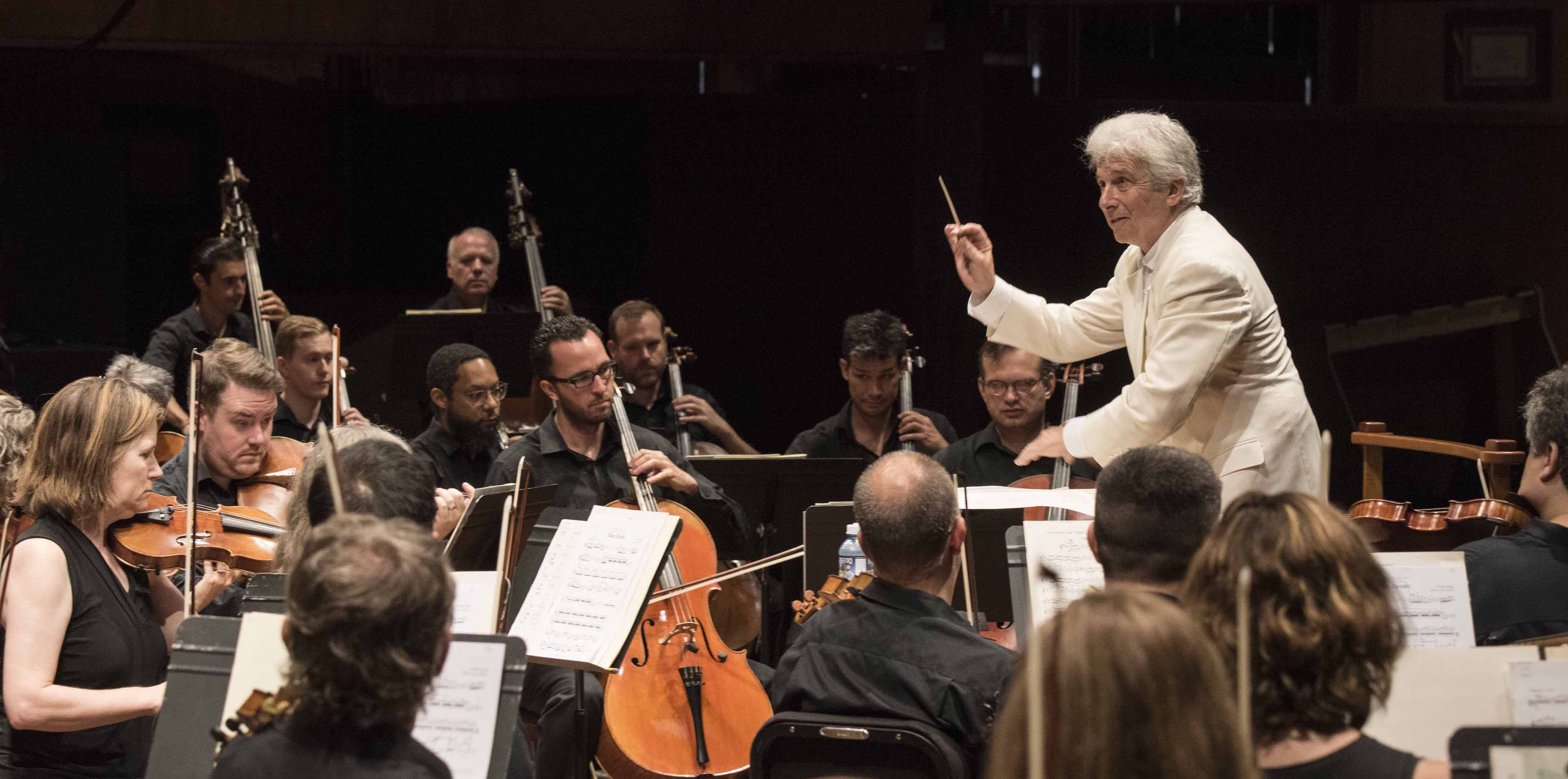
CMF Music director Peter Oundjian conducting the CMF Festival Orchestra

Thursday and Friday will see performances of one of the most famous symphonies ever written, Beethoven’s Symphony No. 9 in D minor for full orchestra, chorus and soloists (7:30 p.m. July 31 and 6:30 p.m. Aug. 1; full programs below). Two shorter works will fill out the program both evenings: Amplify, a short work for orchestra co-commissioned by CMF from composer Michael Abels; and Beethoven’s Elegischer Gesang (Elegiac song), op.118, for string quartet and vocal quartet.
Dover Quartet. Photo by Roy Cox.

The Sunday concert will feature a much less frequently performed Ninth Symphony, that of Gustav Mahler. At 87-plus minutes, the symphony stands alone on the program. “Mahler 9 is just enough of an experience for a listener, or for that matter for an orchestra or even for a conductor,” Oundjian says. “I have done it with other pieces, but I think it’s better just to say, ‘here’s  an epic thing.’ It’s more than fulfilling by any measure.”

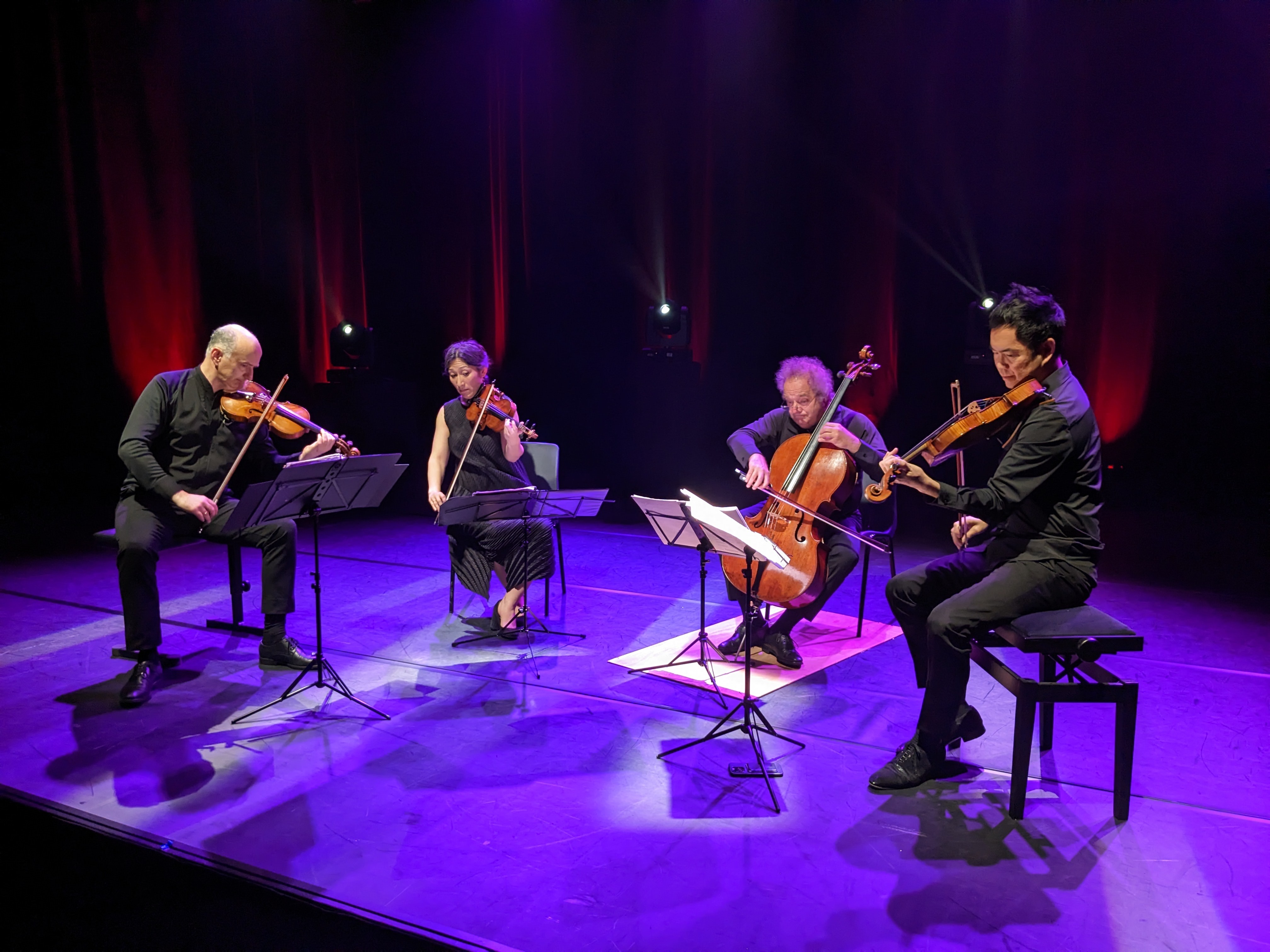
The week begins with a chamber music concert by the Dover Quartet, playing string quartets from the heart of the 19th-century to late Romantic era: music by Schumann, Tchaikovsky and Leoš Janáček. (See program below.) The Dover Quartet was formed by four students at the Curtis Institute in 2008, and is currently the Penelope P. Watkins ensemble in residence at Curtis.

The culmination of Beethoven’s career, the Ninth Symphony was first performed in May of 1824. It was a revolutionary work at the time, both for its great length and for the inclusion of voices in a symphony. When he wrote it, Beethoven was profoundly deaf, at the end of the performance the composer, who was standing onstage, had to be turned around by one of the singers so that he could see the cheering audience.
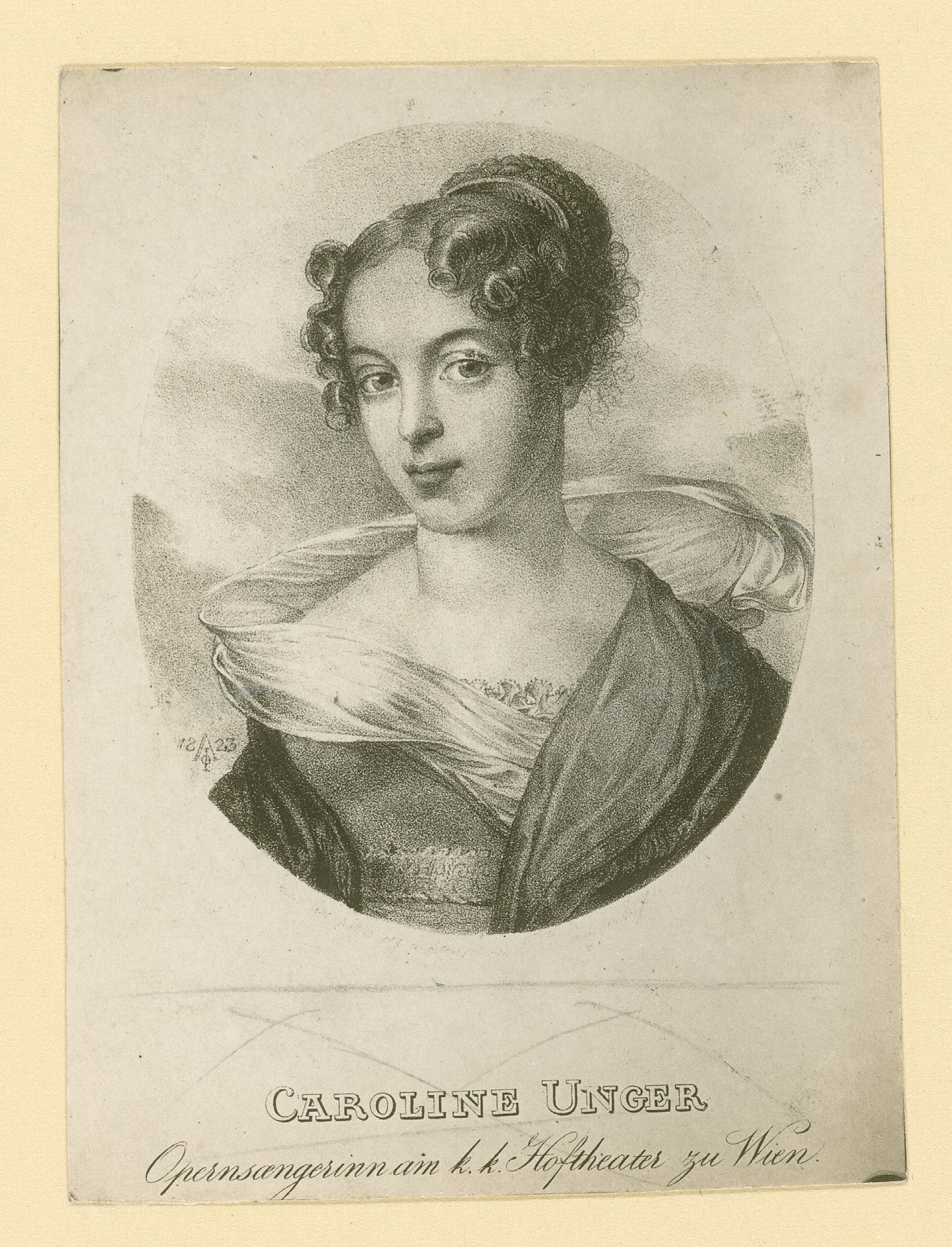
Alto Caroline Unger, who is said to have turned Beethoven to see the cheering audience for the Ninth Symphony.

Today the Ninth Symphony has become the favorite classical piece for celebrations, largely due to its joyful finale based on Friedrich Schiller’s poem “Ode to Joy.” It was famously performed in Berlin in 1989 by Leonard Bernstein and a combined orchestra from East and West Germany to celebrate the fall of the Berlin Wall, with the word “Freude” (Joy) replaced in the text with “”Freiheit” (Freedom).

As much as he loves the entire work, Oudjian says it’s “the profundity, beauty and sense of longing that the slow movement displays” that makes the Ninth a great work. “The depth of this slow movement is for me the peak of the experience,” he says.

“This is among the greatest (musical) variations that was every written. The way he uses the skill of embellishment and transformation among the most important elements (goes) beyond what one could ever imagine.”

Due to the impact of the symphony, and the fact that long after no major composer wrote more than nine symphonies, a legend grew that there was a supernatural limit on the number of symphonies one could write. No one bought into that legend more than Mahler, who avoided as long as possible writing a Ninth symphony. In fact, after his 8th, he called his next major piece Das Lied von der Erde (The song of the earth) rather than a symphony.
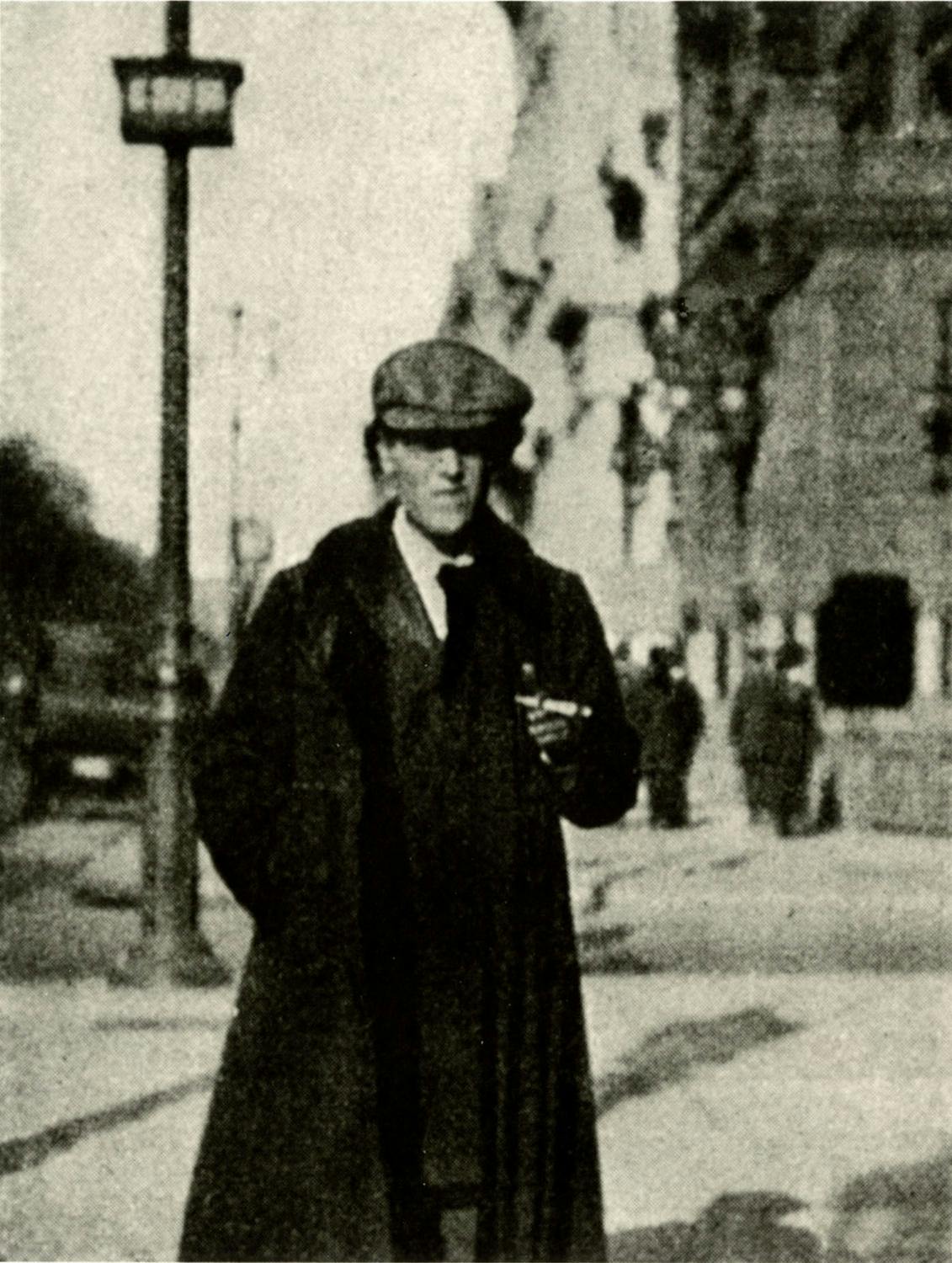
Gustav Mahler in New York shortly after the completion of his Ninth Symphony.

Having safely completed Das Lied, Mahler went on to complete his Ninth Symphony. Ironically, it was still his last completed symphony, although his Tenth has been completed by various editors based on one mostly finished movement and sketches.

As profound as it is, Mahler’s Ninth is not played nearly as often as Beethoven’s. That may be in part because it takes such focus to shape the music over such a long span of time. For Oundjian, the key is to conceive of the performance as a journey.

“[It takes] a tremendous amount of concentration, but you never say ‘Oh my god, I’ve still got to be playing this for 25 more minutes’,” he says. “You’re just thinking about where you are in the journey, and what’s coming and how important this moment is.”

In contrast to Beethoven’s Ninth, Mahler’s Ninth is less a grand celebration and more a final reduction of the symphony into its smallest elements. “Deconstruction is exactly what happens,” Oudjian says. “You have one little gesture that lasts a few notes, then another gesture that removes a couple of notes, and finally just a cadence.”

The key to understanding the Symphony is to hear how the very contrasting movements outline the journey from start to finish. “The first movement is the greatest expression of anguish that you could imagine, but also a strange kind of optimism,” Oundjian says. “The second movement is really bizarre, looking backwards to a simpler time, the Baroque or early classical period.
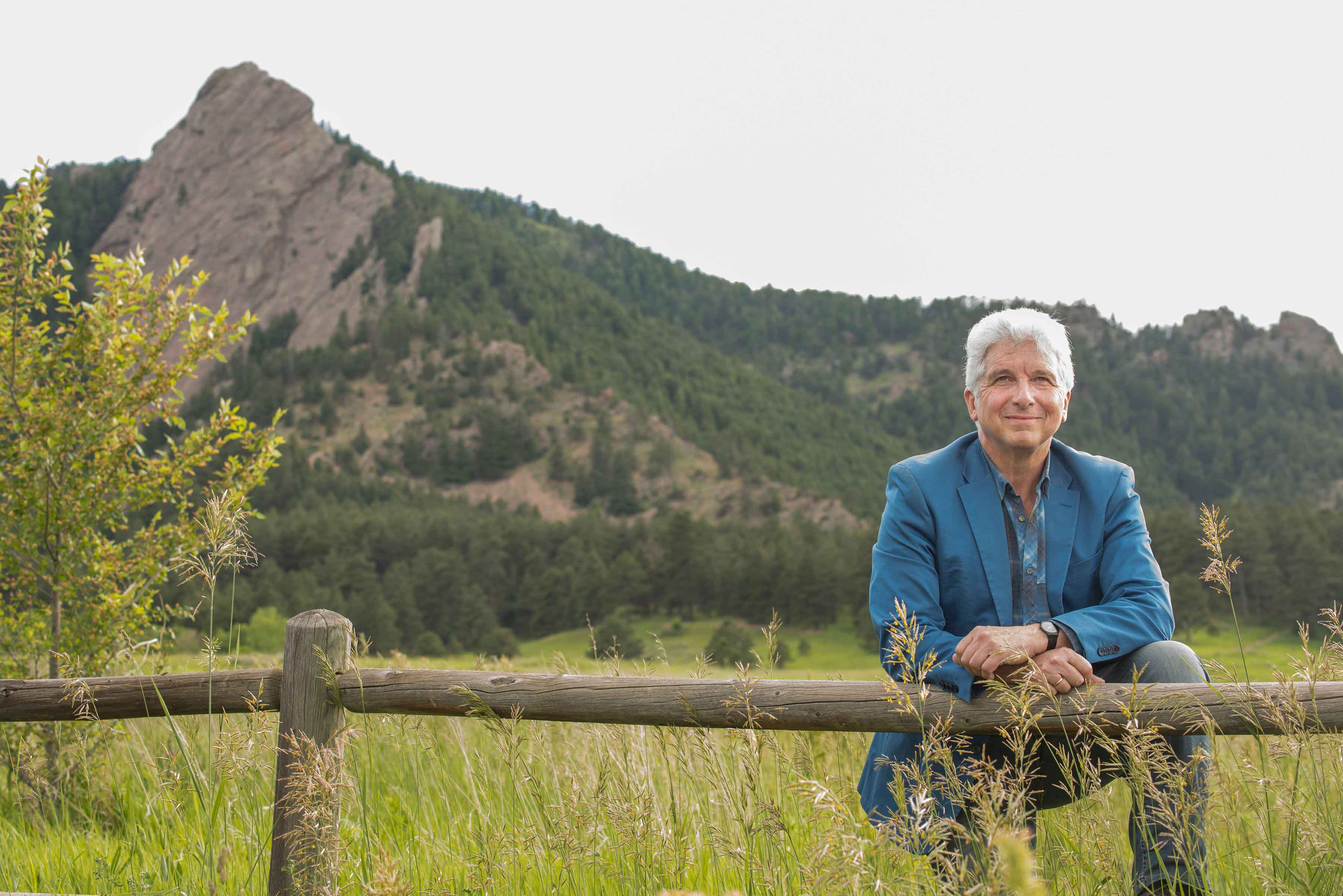
CMF Music Director Peter Oundjian

“The third movement looks forward to modernism in a way that you could never imagine. It sounds like Shostakovich or Hindemith half the time—later composers (who) were very influenced by Mahler. And the final movement is a statement unlike any other. It’s about eternal beauty and longing and possibility, and perhaps the end is an image of the afterlife, or even the journey between one life and the next. But it’s staggeringly beautiful and it uses silences in a way that no composer had ever dared to do.”

And in the end, Mahler’s silences will help close the 49th Colorado Music Festival.

# # # # #

Colorado Music Festival, Peter Oundjian, music director
Tuesday, July 29–Festival Finale, Sunday, Aug. 3
All performances in Chautauqua Auditorium

Chamber Music Concert
Dover Quartet

  • Leoš Janáček: String Quartet No. 1 (“Kreutzer Sonata”)
  • Schumann: String Quartet No. 1 in A minor, op. 41
  • Tchaikovsky: String Quartet No. 1 in D major, op. 11

7:30 p.m. Tuesday, July 29

Festival Orchestra Concert
Colorado Music Festival orchestra and the St. Martin’s Festival Singers
Peter Oundjian, conductor
With Lauren Snouffer, soprano; Abigail Nims, mezzo-soprano; Issachah Savage, tenor; and Benjamin Taylor, baritone

  • Michael Abels: Amplify (CMF co-commission)
  • Beethoven: Elegischer Gesang (Elegiac song), op. 118
    —Symphony No. 9 in D minor, op. 125

7:30 p.m. Thursday, July 31
6:30 p.m. Friday, Aug. 1

Festival Finale
Colorado Music Festival Orchestra, Peter Oundjian, conductor

Mahler: Symphony No. 9

6:30 p.m. Sunday, Aug. 3

Remaining tickets for these performances available through the CMF Web Page.
Takács String Quartet celebrates its 50th season

Mutual respect, love of music and supportive audiences inspire the players

By Peter Alexander Sept. 12 at 9:14 p.m.

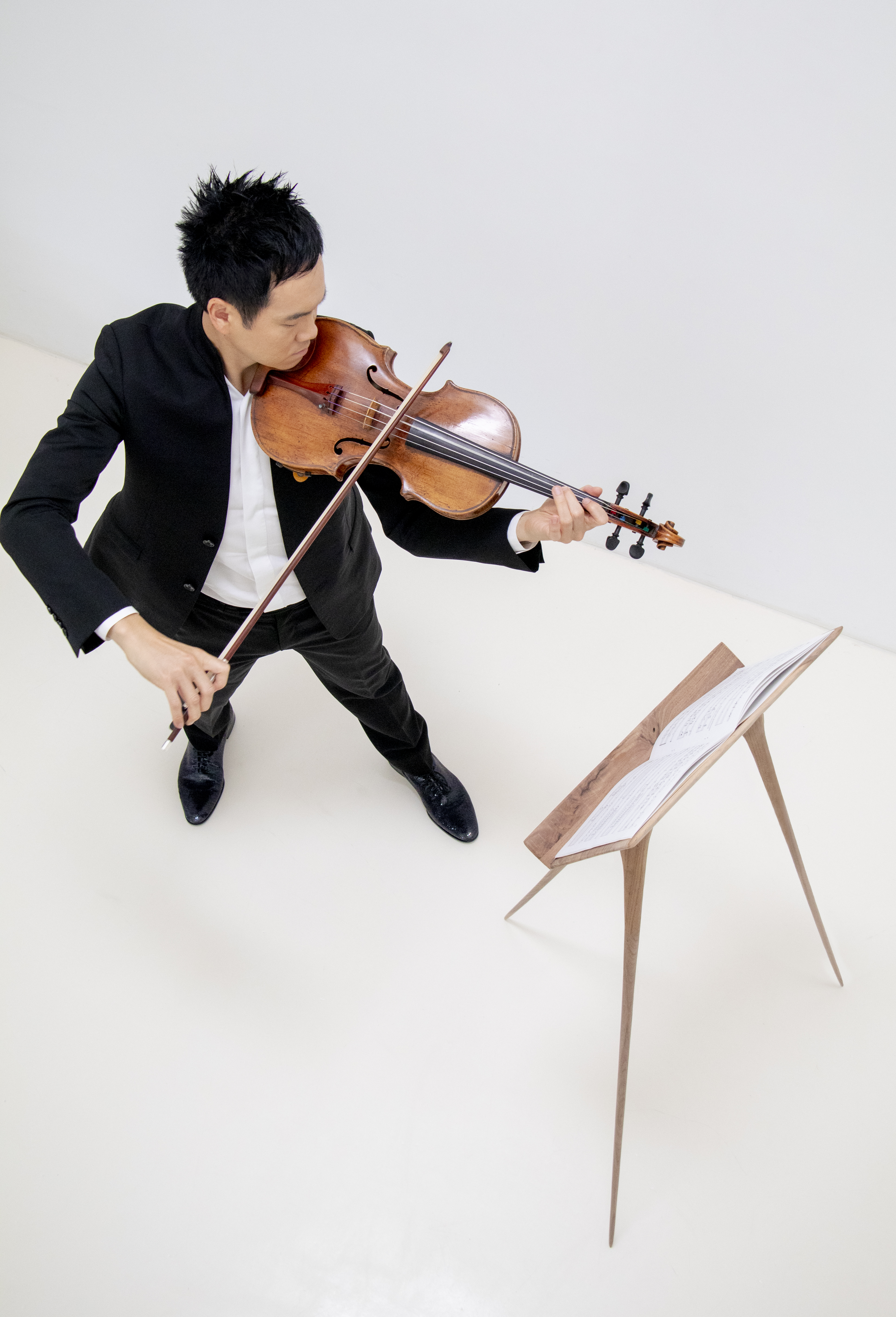
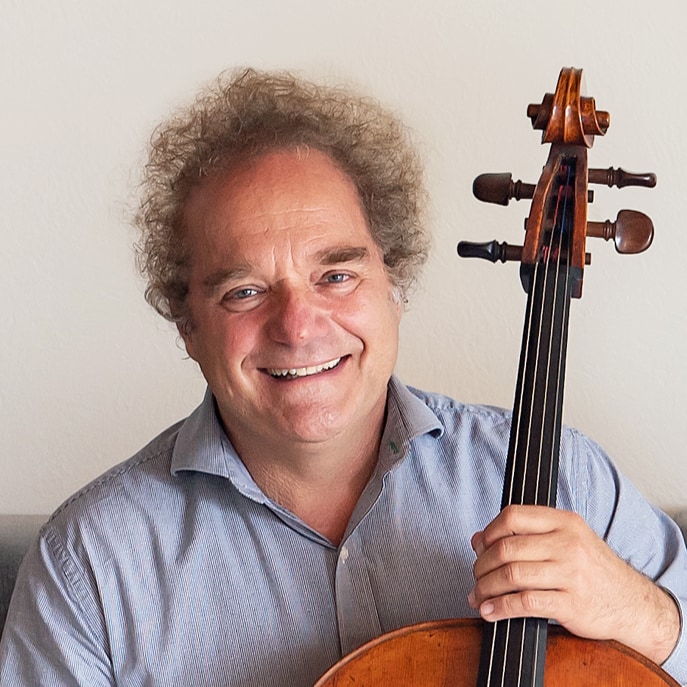
Fifty years is a long time in any job, but that is the landmark that András Fejér, cellist of the world renowned Takács Quartet, is approaching as the quartet enters its fiftieth season, 

András Fejér

The Takács String Quartet was founded in Budapest in September 1975—49 years ago—and has been in residence at the CU College of Music since 1983. The only original member of the quartet still with the group, Fejér is now 70, but he shows no sign of seeking a quiet retirement.

“I’m loving it,” he says about playing in the quartet and continuing the group’s busy concert schedule around the world. “I feel passionate about it, and I cannot imagine doing anything else.”

Fejér and the other members of the quartet—first violinist Edward Dusinberre, second violinist Harumi Rhodes and violist Richard O’Neill—will take the stage at Grusin Music Hall Sunday and Monday (4 p.m. Sept. 15 and 7:30 p.m. Sept. 16) for a standard string quartet program—a 20th century quartet by Leoš Janáček, sandwiched between classical-era works by Joseph Haydn and Beethoven (see full program below). This is a standard Takács program, and Fejér says they have no special plans for the half-century celebration.

“We just do what we are trying to do—classics nicely mixed with contemporary pieces,” he says. “We try to play them as much as we can. It’s a heartwarming mission.”

Richard O’Neill

The newest member of the quartet, O’Neill feels the same way about the busy life in a world-traveling quartet. “The greatest luxury is getting to do what we do,” he says. “I really love travel, even in the worst scenarios. There are things that can go wrong nowadays, but I still get excited to pack my suitcase and go out the door.”

If he likes anything more than travel, it’s playing for the Boulder audience. “The community here is such a unique community and (Boulder is) such an incredibly beautiful place,” he says. “Every concert we’re backstage at Grusin I really like hearing all the people (in the audience) excited to be together.”

O’Neill noticed the musicians’ connection with their audience from his very first Boulder home concerts with the Takács in 2021, but the relationship has not changed over Fejér’s years in the quartet. “We found it extremely supportive here (in 1983), with a wonderfully enthusiastic audience, and that’s how we feel until this day,” he says. “We got the support and the love of the audience, and the way it makes you feel, it’s a wonderful reaction with the audience.”

With all the personnel changes over 50 years—two first violinists, two second violinists, now three violists with the one cellist—the Takács has maintained its place among the top quartets in the world. That’s not because they have one authoritative way of doing things. Fejér identifies their defining quality more in the integrity of their approach to the music. 

“The quality is the combination of expressivity, character and technique,” he says. “There are many ways to interpret the same phrase, many ways to interpret any page of any piece. We are listening to new ideas, because we feel it keeps the process fresh. As our wonderful teacher in Budapest put it, nobody has a letter from Haydn or Beethoven.

Takács String Quartet. Photo by Ian Malkin.

“We are honest, and being honest gives you a major conviction. As long as the message rings true, the audience is happy and immersed in the performance.”

That does not mean that the players always agree. “We had our fair share of arguments, especially when we were young and unwise,” he says. “But the moment we realized that there are many ways, what we can do is (say) ‘OK, in New York we try your idea, and then at Berkeley we will try my idea,‘ and then we will settle down with something. Everybody‘s happy, and then we all have a good giggle afterwards. It‘s great fun.”

O’Neill learned from the outset that every member is included in those conversations, no matter how long they have been with the group. “András could probably pull the seniority card on me, (but) he never does that,” he says.

“What I really love about the Takács is that if any one of us have a reservation, musical or personal about something that we’re doing, the quartet won’t do it. I really respect that. We’re all very distinct individuals, and of course we have our differences, but we respect each other. I think that‘s the magic combination.

“There‘s nothing like being in a group where you really get to know everyone like family,” he says. So whenever the Takács “family” walks onstage, you know they are doing what they love doing together. 

And they love the music. Of the first piece on the current program, Haydn’s Quartet in C Major, op. 54 no. 2, O’Neill says, “I have never played (the piece before), but it’s like vaudeville for music. The humor is so palpable and overt, and I love it. With Mozart, humor is either tinged with sadness or hidden in refinement, but with Haydn it’s unabashed. It’s just flat out funny. It‘s an amazing work.”

Janáček’s Quartet No. 1, however, is not humorous. Known as “The Kreutzer Sonata,” it is based on the Tolstoy novella of that name about a man who kills his wife for having an affair with a violinist with whom she plays Beethoven’s “Kreutzer” Sonata. Written by a composer of many great operas, the quartet is almost operatic in its drama and intensity.

“We adore both quartets (by Janáček),” Fejér says. “The language, the harmonies, the technical realization is so specific to Janáček. You can recognize his music right away. We are talking about murder and jealousy and seemingly idyllic music. We have everything in between idyllic and ‘I’ll kill you!’”

The final piece is one of the most loved works for string quartet, Beethoven’s Quartet in F Major, op. 59 no. 1, one of three quartets Beethoven wrote for the Russian ambassador in Vienna, Count Razumovsky. Originally regarded as audaciously long and difficult, all three are now accepted in the standard repertoire and loved by audiences.

The first of the set is in the key of F major, which in works like the Pastoral Symphony, the Symphony No. 8 and the Romance for violin, inspired some of Beethoven’s most lyrical and melodic music. That quality is evident from the very beginning of the quartet, with a long theme from the cello playing in its richest register. 

“When you start with a cello solo, how can you go wrong?” O’Neill says. “I love the piece very much.”

But equal to the music on the program is the survival of the Takács Quartet over the past 49 years, which few chamber music ensembles have matched and for which the Boulder audience shows its appreciation every year and every concert. Fejér gives what may be the best explanation for that when he says “We are like kids on the playground, enjoying the toys. 

“We are totally involved and just enjoying ourselves.”

# # # # #

Takács String Quartet

  • Haydn: String Quartet in C Major, op. 54 no. 2
  • Leoš Janáček: String Quartet No. 1, (“The Kreutzer Sonata”)
  • Beethoven: String Quartet in F Major, op. 59 no. 1 (“Razumovsky”)

4 p.m. Sunday, Sept 15 and 7:30 p.m. Monday, Sept. 16
Grusin Music Hall
Live Stream: 4 p.m Sunday, Sept. 15 until 11 p.m. Monday, Sept.

In-person and livestream TICKETS

Other fall concerts

Takács String Quartet

  • Beethoven: String Quartet in A minor, op. 132
  • Other works TBA

4 p.m. Sunday, Oct. 13 and 7:30 p.m. Monday, Nov. 4
Live Stream: 4 p.m. Sunday, Oct. 13 through Monday, Oct. 21

In-person and livestream TICKETS

Quartet Integra

4 p.m. Sunday, Nov. 3 and 7:30 p.m. Monday, Oct. 14
Live Stream: 4 p.m. Sunday, Nov. 3 through Monday, Nov. 11

In-person and livestream TICKETS

Santa Fe Opera: Così fan tutte is a mixed bag, Jenůfa a triumph

There’s still time to see the SFO productions

By Peter Alexander Aug. 8 at 9:20 p.m.

The Santa Fe Opera’s current production of Mozart’s Così fan tutte is a very mixed bag.

Musically, the performance I saw was superior. The cast is excellent from top to bottom, and Harry Bicket’s direction captured the Mozartian spirit well. Dramatically, however, the production is relentlessly sententious, sometimes baffling and, for long stretches, visually uninteresting.

First, the musical details: The small orchestra played beautifully, especially the wind solos, of which there are many by clarinets, flutes and horns. One or two tempos I thought were on the slow side, but the sublime beauty of Mozart’s score always shone through.

Cosi3

The five main principals of Così fan tutte: Fiordiligi (Amanda Majeski), Guglielmo (Jarett Ott), Don Alfonso (Rod Gilfry), Ferrando (Ben Bliss) and Dorabella (Emily D’Angelo). Photo by Ken Howard for the Santa Fe Opera.

The singers playing the four lovers around whom Mozart’s artificial world turns—Ben Bliss as Ferrando, Jarrett Ott as Guglielmo, Amanda Majeski as Fiordiligi and Emily D’Angelo as Dorabella—are appropriately young and attractive and vocally outstanding. Their ensembles were beautifully sung and well balanced. The magical trio “Suoave sia il vento,” with Majeski, D’Angleo and Rod Gilfry as Don Alfonso, was especially memorable.

In Dorabella’s first-act aria “Smanie implacabili,” D’Angelo exploited a big, rich voice, singing with great control in spite of stage directions that had her on her back and rolling across the stage. Majeski sang Fiordiligi’s arias with a bright, strong voice, managing the formidable leaps handily.

Cosi2

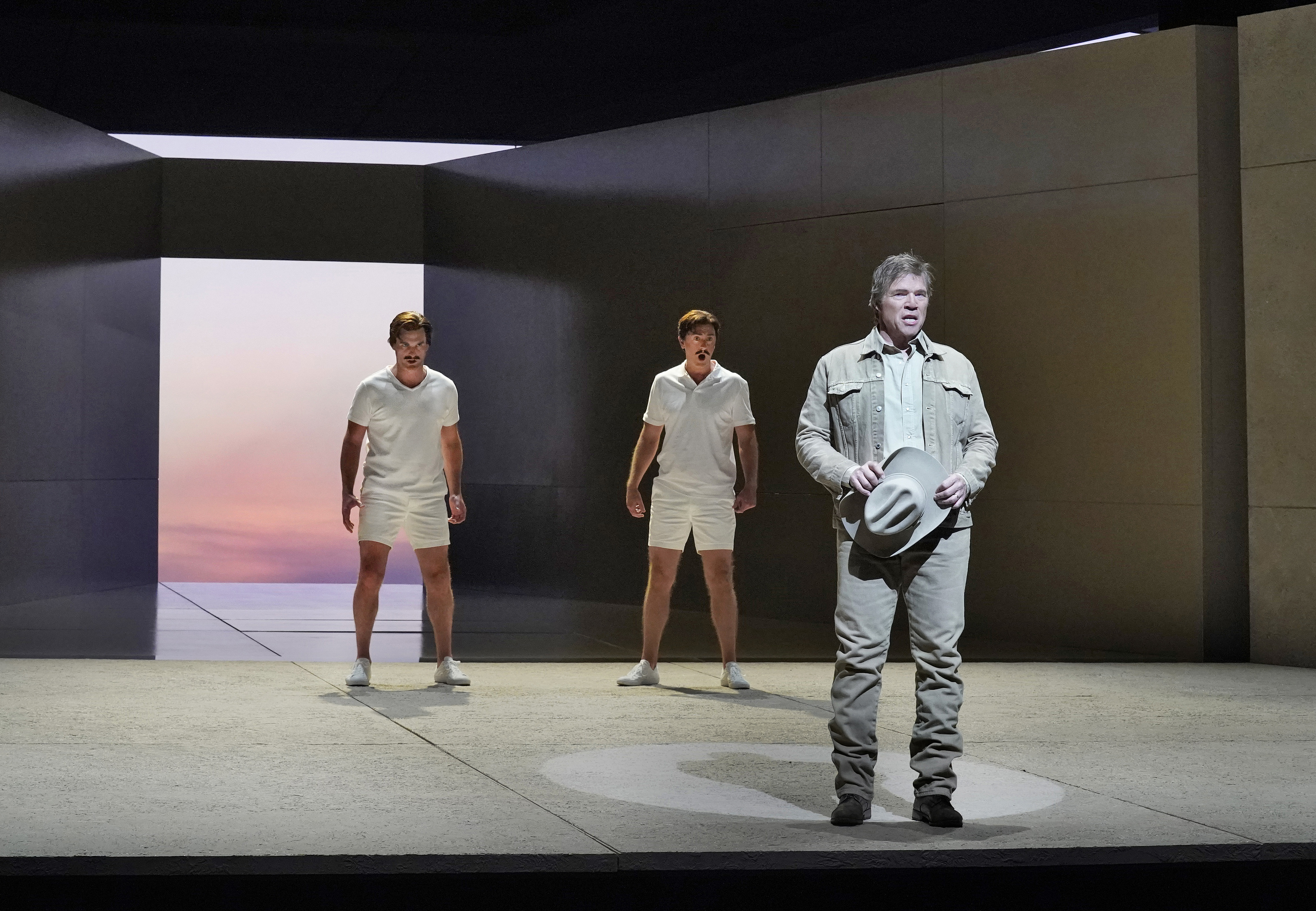
Jarrett Ott and Ben Bliss as the frat-boy lovers Guglielmo and Ferrando, with Ron Gilfry as the cowboy Don Alfonso. Photo by Ken Howard.

Bliss brought a light, flexible tenor to his role as Ferrando. Ott sang Guglielmo with a strong, resonant baritone. Rod Gilfry was occasionally a little rough as Don Alfonso, but his portrayal perfectly matched the production’s concept of Alfonso as a cowboy. Tracy Dahl avoided all the traditional flirty-cutesy clichés for Despina, casting the character as a darker sidekick for Alfonso. As such, she was very effective. Her singing was expressive, if underpowered in the lowest range.

The eternal problem with Così fan tutte is that the story of two men donning disguises to woo each others’ fiancées, if taken literally, is distasteful at best. The betrayal of the women they claim to love is shocking, especially at the moment when the women learn that they have been betrayed and humiliated for the sake of a bet.

Even treated as an allegory, that no one is perfect and we all have to accept the imperfections of our partners, Così can be discomfiting. To avoid that trap, the Santa Fe production jettisoned the period decorations and literal presentation of the plot, paring it down to the barest psychological core. Everything beyond the emotional journey of the six main characters has been eliminated, and that single focus has been insistently pounded home.Some will find that illuminating, but others will be frustrated by the lack of theatrical qualities.

The set by Paul Tate Depoo III places the action inside a stark white box that narrows to the rear and, once all the singers are onstage, closes so that they are trapped inside. Depoo’s blank walls are not enlivened with color, with only the barest of lighting effects to distinguish one area from another. There is no furniture and few props. Only the six principal characters are present. The chorus, singing from offstage, is heard but not seen.

At the two couple’s first entrance into the colorless set, they are dressed in all white—the women in tennis outfits, the men in t-shirts and shorts. In their actions, they are recognizable contemporary types, the women silly sorority girls, the men macho frat boys. Fair enough; they are supposed to be callow and superficial.

Cosi1

Rod Gilfry portrays Don Alfonso as an iconic Cowboy, Photo by Ken Howard.

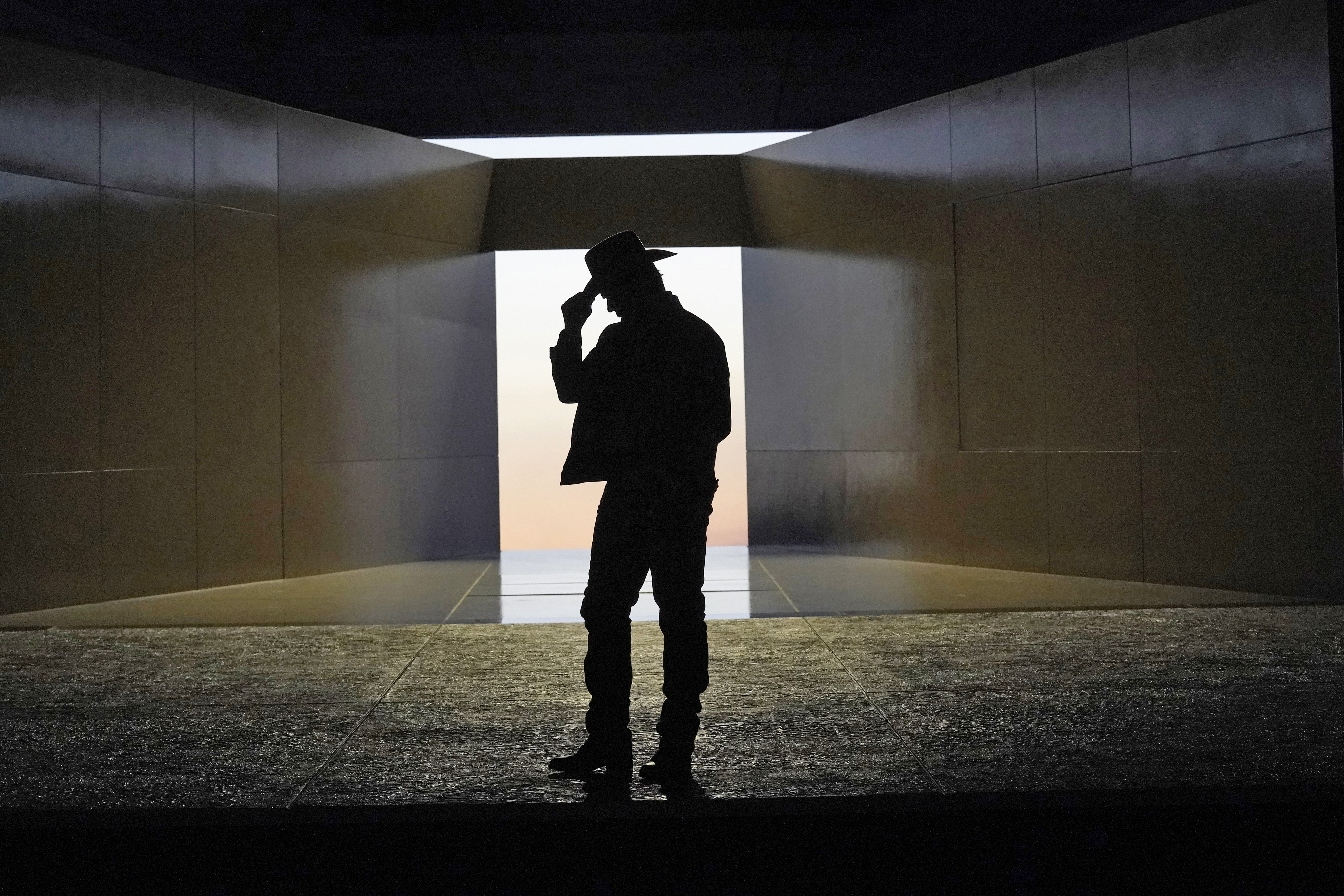
Don Alfonso makes the first entrance, ahead of the white-clad lovers, costumed as a rough-hewn cowboy. In director’s R.B. Schlather’s interpretation, he exerts magical control over the other characters, who stagger back from his voice and are unable to resist his machinations. He oversees virtually everything that happens onstage, sometimes crouching against the outside wall and observing.

From this reduction of the opera to essentials, the characters loose obvious differentiation. The men’s “disguise” is identical blue denim and cowboy hats. The careful distinctions that Mozart and librettist Lorenzo Da Ponte made has to be conveyed through singing and acting.

Schlather and Depoo’s distillation of the opera enhances the impact of the emotions, particularly the betrayal and humiliation that is imposed on the women at the end. That was more viscerally felt than in any production I have seen. But the flip side of the psychological purification is that the opera became correspondingly less visually interesting.

Some portions became a concert performance in costume, with the characters standing in symmetrical configurations, singing in place. At such points, interest wanes. And throughout there were touches that were simply baffling. Why does Despina put on multiple aprons, then engage in comic business with them, distracting from the other singers onstage? Why does she as the magnetic “doctor” continuously fire off sparklers when once would make the point?

And why does the opera end with all four lovers seated across the front of the stage, immobile, during the final scenes, with no action whatever—no evidence of a wedding, no entrances and exits that are in the text, no visual discovery of the women’s betrayal—while Alfonso pours water over each of their heads? If your audience has to puzzle about such things, the point may get missed.

# # # # #

Jenůfa, Leoš Janáček’s breakthrough opera composed in 1903, is one of the great works of the 20th century. It is probably Janáček’s highly individual style, based deeply in Czech language and culture, that has kept it from being performed outside its homeland.

The Santa Fe performances, using a production originally created by the English National Opera, is a welcome opportunity to see this great work, and it is in every way a triumph, something that every Janáček fan and every lover of 20th-century opera should see. Jenůfa has only one more performance, Aug. 15.

Jenufa6

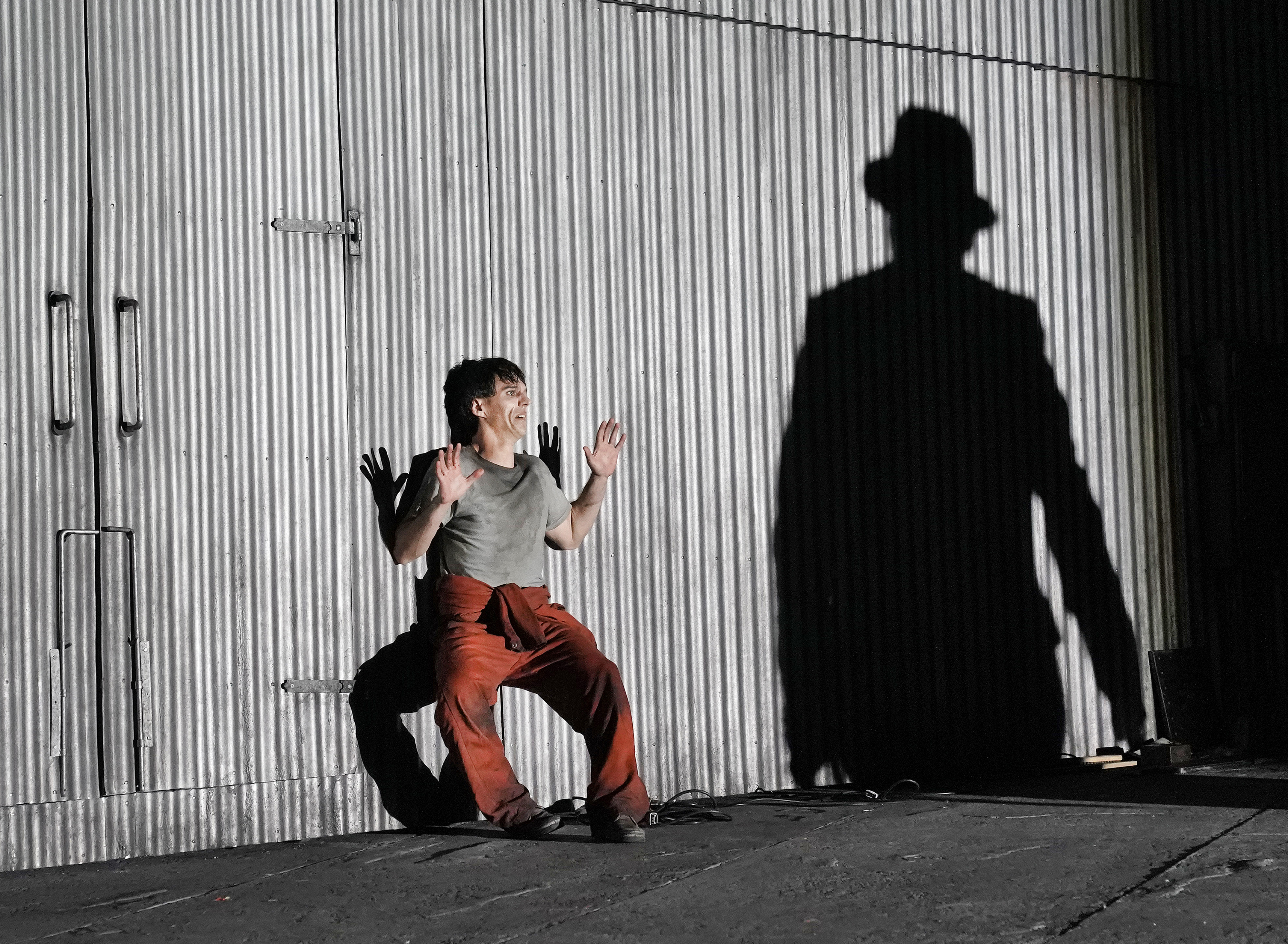
Alexander Lewis as Laca cowers outside the Soviet-era mill of designer Charles Edwards. Photo by Ken Howard.

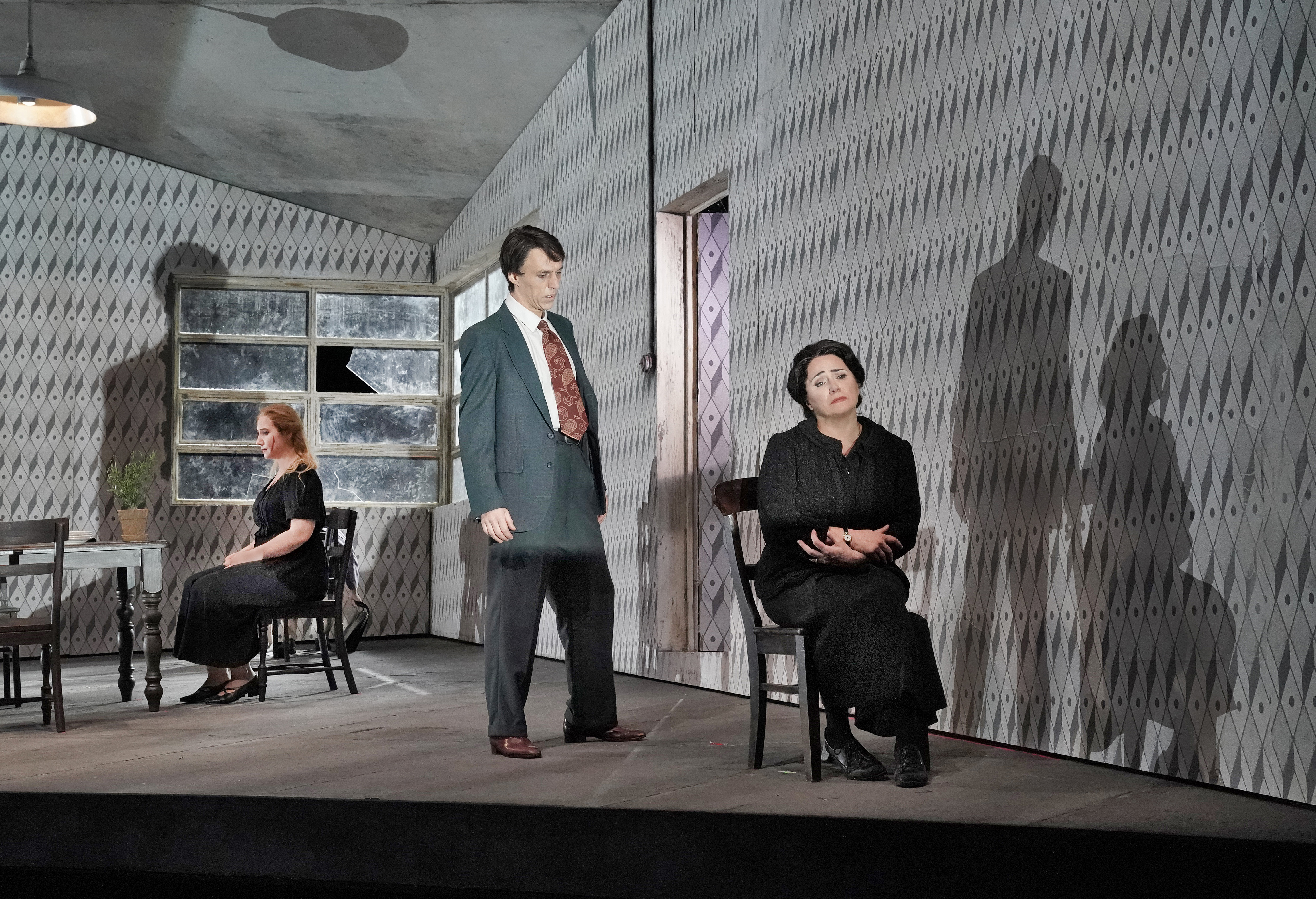
The scenic design of Charles Edwards, costumes by Jon Morrell and direction by David Alden place Jenůfa firmly in the Soviet era. The mill of the first act has dingy corrugated metal walls, and the room where the rest of the opera takes place is authentically shabby. The clothes mark the class of every character, from the mill workers to the mayor, and just like Soviet times, none are fashionable.

To my eyes and ears, this setting fits the story of rural jealousy and violence as well as the original, and deepens the conflicts of social status inherent in the story. Alden’s direction was well attuned to the emotional drama, especially between Jenůfa andLaca, the suitor whose love turns out to be genuine.

Jenufa2

Patricia Racette as Kostelnička (right) with Laura Wilde as Jenůfa and Alexander Lewis as Laca. Photo by Ken Howard.

The excellent cast was led by the powerful Kostelnička of Patricia Racette, a role debut. Racette, who has appeared at Santa Fe for more than 20 years, has previously sung the title role in the same production in Houston and Washington.

Her performance was thrilling, portraying the crucial character of Kostelnička as a whole person. She sang with fire and dramatic passion, particularly in the first-act narration of her unhappy past. Equally memorable was her transformation from the dominating, self-righteous conscience of the village in the first act to the repentant, suffering figure at the end.

Laura Wilde was a sympathetic Jenůfa, someone who is trying to elevate both herself and her village by marrying up and teaching reading to her neighbors. She is visibly reluctant to enter into the drunken celebrations in Act I, and her distaste for her fiancé’s swaggering arrogance was both visible and audible. She used her warm, vibrant sound well.

Jenufa1

Laura Wilde as Jenůfa and Richard Trey Smagur as Števa. Photo by Ken Howard.

As the fiancé, Števa, Richard Trey Smagur was just the kind of thuggish bully the role requires, but does not always get. His shallow attraction to Jenůfa’s beauty and his smug expectation to be admired—qualities portrayed in action and voice—made him repulsive from his very first entrance. His performance strengthened the psychological sinews of the drama and set up his shameful refusal to marry Jenůfa after she had been disfigured.

Laca, Števa’s half brother who attacks Jenůfa in the first act in spite of his genuine love for her, is a tricky role for any singer. It is an exposed balancing act—he has to be angry enough to do violence, but then believable as a repentant lover.

In this regard, I thought the first act was overplayed. Alexander Lewis’s Laca was beyond anger, essentially nasty and uncontrolled, and later he seemed more cowed than supportive to Jenůfa; perhaps this was Alden’s intent. His voice was thin and brittle, neither forceful enough at the outset nor warm enough at the end.

In the smaller roles, veteran Suzanne Mentzer was pleasing as the Grandmother, successful both vocally and in getting a chuckle with her feistiness in the final act. Will Liverman successfully portrayed the mill foreman as a Soviet-era stereotype—a supervisor who seems not to actually do anything. Alan Higgs and Kathleen Reveille had just the right superciliousness as the floridly dressed mayor and his wife.

Jenufa3

L to R: Susanne Mentzer (Grandmother), Kathleen Reveille (Mayor’s Wife), Laura Wilde (Jenůfa), Gina Perregrino (Herdswoman), Alan Higgs (Mayor) and Patricia Racette (Kostelnička). Photo by Ken Howard.

Janáček’s characteristic small orchestral motifs and expressive accompaniments, created so individually and effectively to underline the emotional shifts of the plot, were well managed by conductor Johannes Debus. The orchestra played well, with nicely blended brass and woodwinds.

Sometimes, nature and good luck conspire to enhance performances in Santa Fe. The night I attended, the beautiful sunset above the distant hills behind the theater helped establish the rural setting, and a brief rainstorm later could be taken as symbolic of the emotional storm onstage. Of course, I cannot promise that you will experience the same enhancements Aug. 15, but for every other virtue of the production it is well worth the trip to Santa Fe.

# # # # #

SFO02.Robert Goodwin

Santa Fe Opera house. Photo by Robert Goodwin.

Così fan tutte continues through Aug. 22, Jenůfa through Aug. 15.Tickets for the remaining performances in Santa Fe can be purchased through the calendar on the Santa Fe Opera Web page.