Bass/baritone Ashraf Sewailam, writer/guitarist Izzy Fincher honored by the College of Music
By Peter Alexander April 27 at 7:01 p.m.
The University of Colorado College of Music recently announced honors for students and alumni. Two of the honorees—bass/baritone Ashraf Sewailam and writer/guitarist Izzy Fincher—may be familiar to readers of the Sharpsandflatirons blog, as their names have appeared here many times.
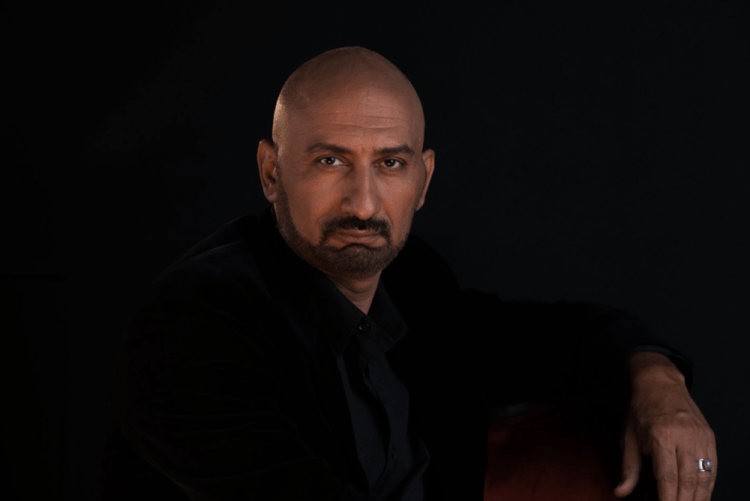
Ashraf Sewailam (CU-Boulder BM ’94, MM ’96, DMA ’08) has been selected to receive the College of Music’s 2023 Distinguished Alumnus Award. As a freelance operatic bass/baritone, Sewailam has appeared around the United States at the Minnesota Opera, Seattle Opera, Washington Concerto Opera and the Metropolitan Opera, among others. His international career has taken him to New Zealand and Australia, and he was a member of the Cairo Opera Company in his native Egypt for eight years.
Ashraf Sewailam
In announcing the award, the College of Music wrote that Sewailam is “an internationally recognized and prize-winning opera star (whose) extensive travels . . . include roles on the world’s most prestigious stages. . . . Sewailam’s stunning career stands out for its range. From serving as a voiceover actor for Disney when he was still living in Cairo . . . to winning over audiences around the world, Sewailam is ‘one of our most successful voice alums,’ according to associate professor of opera Leigh Holman.”
The announcement also states, “Sewailam credits his career accomplishments and accolades directly to the education, professional connections and personal relationships he gained while studying at the College of Music. ‘I couldn’t have started my professional career without having been situated at CU Boulder,’ he says.”
Sewailam first appeared in Sharpsandflatirons in January 2017, when he appeared in a performance of the Pro Musica Chamber Orchestra singing the music of Shostakovich. He has since been noted for performances with the Boulder Bach Festival and at Central City Opera, including roles in The Magic Flute and Il Trovatore.
Most recently, Sewailam was reviewed here in Seattle Opera’s world premiere production of Sheila Silver’s A Thousand Splendid Suns, where I wrote that he “sang beautifully, using his resonant bass to create contrast with the violence that surrounds his family.” He is scheduled to direct Central City Opera’s production of Rossini’s Othello this summer.
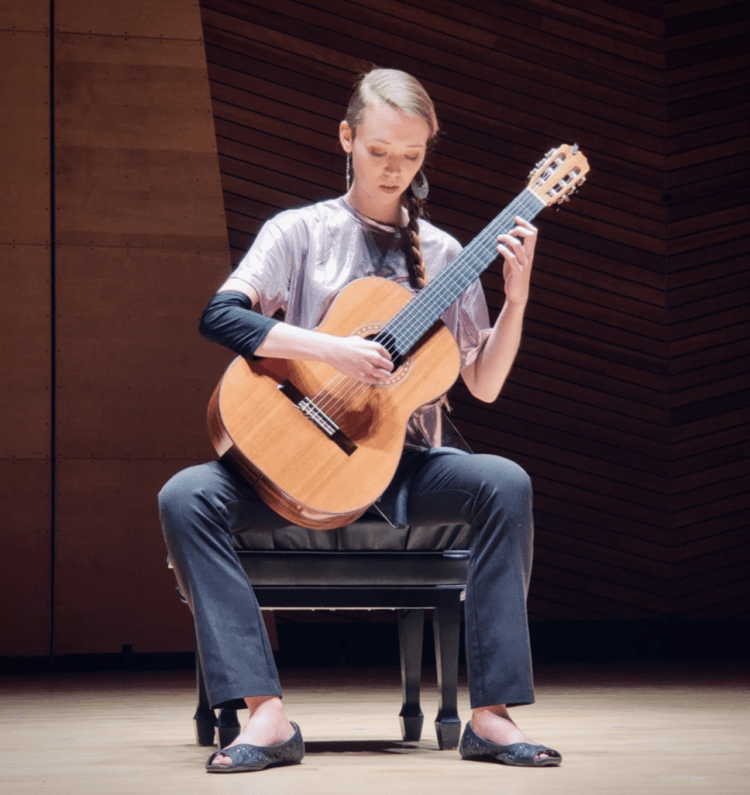
Izzy Fincher
Among current undergraduate students, the College of Music singled out Izzy Fincher as their outstanding graduating senior. Fincher will graduate with a BM in classical guitar performance, a BA in journalism and a business minor, and has also been named outstanding graduate of the CU College of Media, Communications and Information.
Outstanding students in the College of Music are selected each semester based on academic merit, a strong record of musicianship and a record of service and leadership. Fincher will be recognized and deliver a speech at the College of Music commencement ceremony on May 11.
Fincher served an internship with Sharpsandflatirons in the fall of 2020, writing both news articles on the limited events taking place during the COVID shutdown, and opinion pieces on “The White Male Frame” in classical music and “Reflections of a Female, Japanese-American Classical Guitarist.” Since then she has continued to write occasional preview articles and reviews, and she served as both a reporter and editor for the CU Independent. Her senior guitar recital April 23 reflected her research work on female composers of music for guitar.
After graduation, Fincher will attend the University of Wisconsin-Milwaukee to pursue a master’s degree in classical guitar performance under René Izquierdo. An outstanding and insightful writer, her presence at Sharpsandflatirons will be missed.
Holiday favorite will be abridged for younger audiences and sung in English
By Izzy Fincher Dec. 6 at 12 noon
Engelbert Humperdinck’s Hansel and Gretel has been a beloved Christmas-time opera for more than a century. Based on the Brothers Grimm classic fairytale, the opera tells an uplifting story of overcoming hardships and the importance of family.
This December, Boulder Opera will present an abridged, hour-long production of Hansel and Gretel, sung in English. The singers will be accompanied by pianist Aric Vihmeister and cellist Mathieu D’Ordine.
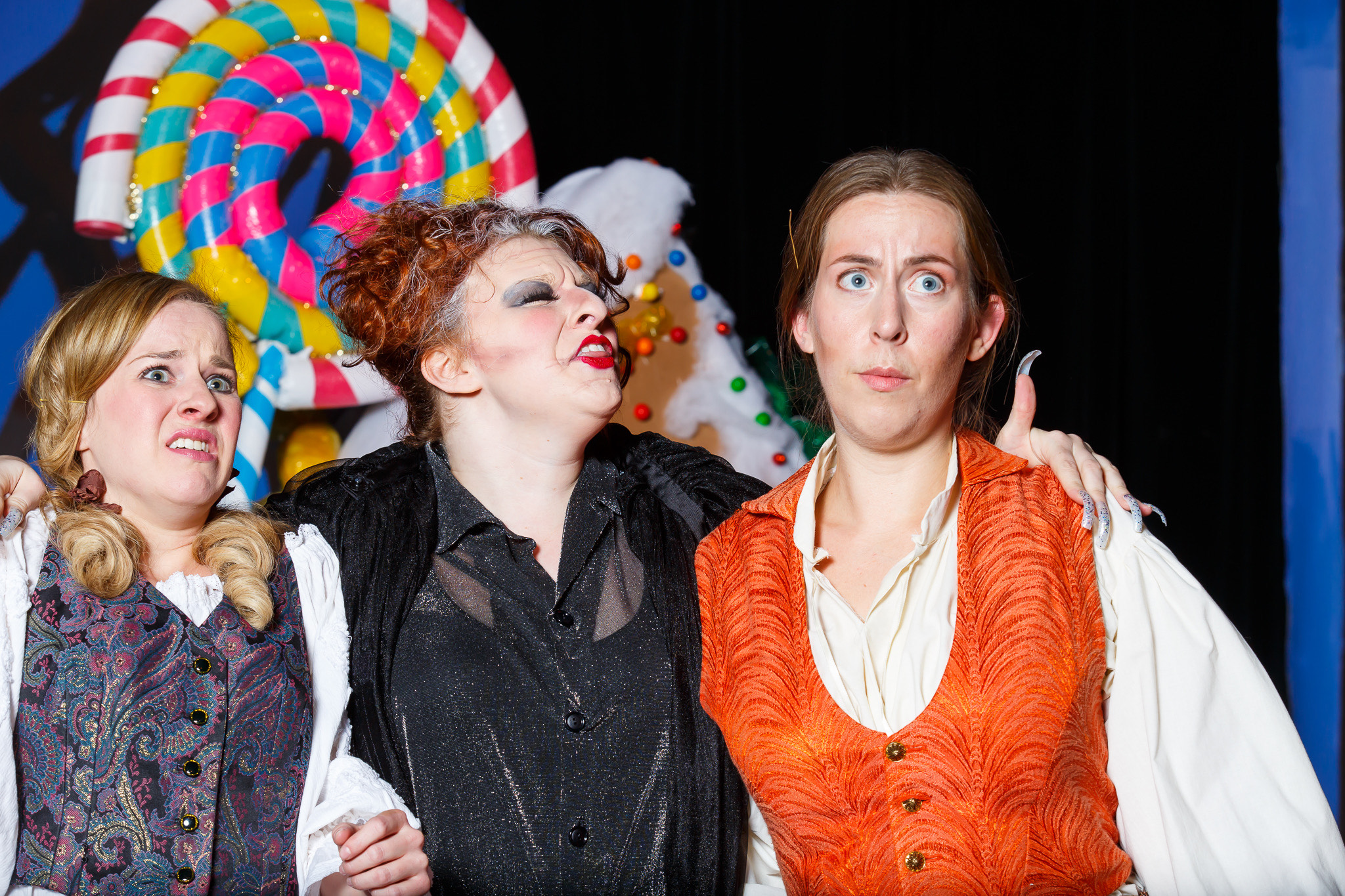
Boulder Opera’s 2014 production of Hansel & Gretel, with Lindsay French (Gretel), Corinne Denny (the Witch) and Genevieve Baglio (Hansel).
The performance will be followed by a Q&A session, hosted by director Brandon Tyler Padgett. As a part of their Family Series, Boulder Opera aims to make this interactive, shorter performance more accessible and engaging for younger audiences.
Boulder Opera executive director Dianela Acosta also plays the Witch in the opera
“We want to give young children access to classical music as a stepping stone to engage with this craft,” says Padgett, who will also be playing the role of Hansel and Gretel’s father.
“We want to develop the next generation of opera lovers,” Dianela Acosta, the executive artistic director of Boulder Opera, says. “The best way to do this is to start at an early age, so [attending operas] becomes a habit.”
To be more family-friendly, the production will highlight the light-hearted, magical aspects of Humperdinck’s fairytale opera, while deemphasizing the darker, more mature themes of poverty and domestic abuse.
“Our focus is on the overarching positive themes within the story—the familial bond of Hansel and Gretel and the natural elements in the world that have benevolent or caring features and want good people to prosper,” Padgett says. “We want to (bring out) the aspects of hope and good over evil.”
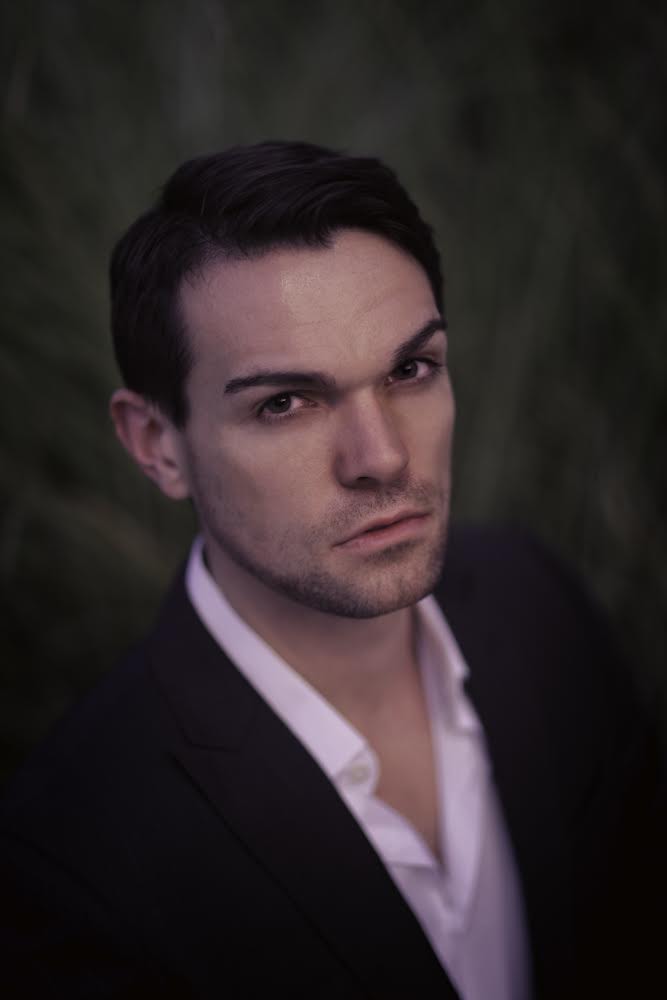
Director Brandon Tyler Padgett also plays the role of the Father
Padgett’s goals for Boulder Opera’s production align with the original purpose of the opera, as a small-scale holiday show for children. In 1889, the composer’s sister Adelheid Wette commissioned him to write a few songs for her children’s show, based loosely on the Brothers Grimm fairytale. Following the public’s enthusiastic response, Humperdinck and Wette decided to expand the show into a full two-hour-long opera, which premiered in Weimar in 1893 under the baton of Richard Strauss.
To appeal to children, Wette decided on a more optimistic adaptation of the Grimm fairytale for her libretto, incorporating additional elements of German folklore. For example, in the forest, Hansel (portrayed here by Leslie Ratner) and Gretel (Melaina Mills) meet the gentle Sandman (Sabino Balsamo), a mythical character in European folklore who sends children to sleep by placing a grain of sand into their eyes and creates beautiful dreams.
After they fall asleep, Hansel and Gretel dream of being protected by 14 angels, which will be portrayed by a teen chorus from the Denver-Boulder area in flowing white costumes. The next morning, the sparkling, elegant Dew Fairy (Balsamo) appears, sprinkling magical dew to awaken the siblings from their peaceful slumber.
With these fantastical elements, Padgett aims to bring out the childlike wonder of Hansel and Gretel as they embark on their adventure, a feeling he hopes will draw the audience into their magical world.
“Hansel and Gretel are always wondering,” Padgett says. “They’re always asking questions. They’re not only hungry for food but they’re also hungry for knowledge and for excitement. They want to be enchanted.”
Despite the fairytale elements, the opera does explore the darker themes of the Brothers Grimm fairytale, although in a less disturbing way. In the original fairytale, due to the shortage of food and the family’s poverty, the children’s stepmother persuades their father to leave Hansel and Gretel in the woods to die, so the couple don’t starve to death. Later, after being abandoned in the woods by their parents, the siblings, hungry and afraid, wander into the bloodthirsty witch’s magical gingerbread house.
In Humperdinck’s opera, the mother (Lauren Bumgarner) is presented as a more likable, yet complicated character. Filled with despair and frustration as her family starves, the mother sends Hansel and Gretel to the haunted forest to pick strawberries. Realizing her mistake, the mother and father later set off into the forest to save their children.
“One of the themes that children tend to have trouble with in this opera is that the parents have fault in this story,” Padgett says. “It’s not because they’re bad people — they are just humans in a desperate situation. So we try to show how desperate their situation is.”
After the performance, Padgett says this issue will be addressed further in the interactive Q&A session, which will offer children an opportunity to engage with the storyline and the music.
“We want to be able to start a dialogue with kids—not only about the beauty of classical music but also how it reflects real life and its problems,” Padgett says. “This can be a real starting place for a lot of human empathy.”
# # # # #
Engelbert Humperdinck: Hansel and Gretel Boulder Opera, Brandon Tyler Padgett, director
Program features works by Adolphus Hailstork, György Kurtág, Alban Berg and Schumann.
By Izzy Fincher Nov. 22 at 9:15 a.m.
Alan Berg’s Lyric Suite from 1926 has been called “a latent opera.” The sweeping, programmatic, six-movement work, mostly built on a 12-tone row, certainly feels like one.
Through hidden musical devices and quotations, Berg depicts his passionate, yet doomed love affair with a married woman, Hanna Fuchs-Robettin. He even uses numerology to turn his and Hanna’s initials a motif of paired notes, A-Bb and B-F for H.B. and H.F. It’s the ultimate musical love letter.
This suite was the centerpiece of the Parker Quartet’s performance in Grusin Hall on Sunday (Nov. 21) as the guest artists for CU Presents’ Takács Quartet series. Despite their eclectic program, which ranged from contemporary works by Adolphus Hailstork, György Kurtág (one of the quartet’s early mentors) and Alban Berg to a string quartet by Schumann, the performance felt cohesive, tied together by themes of love and loss across the centuries.
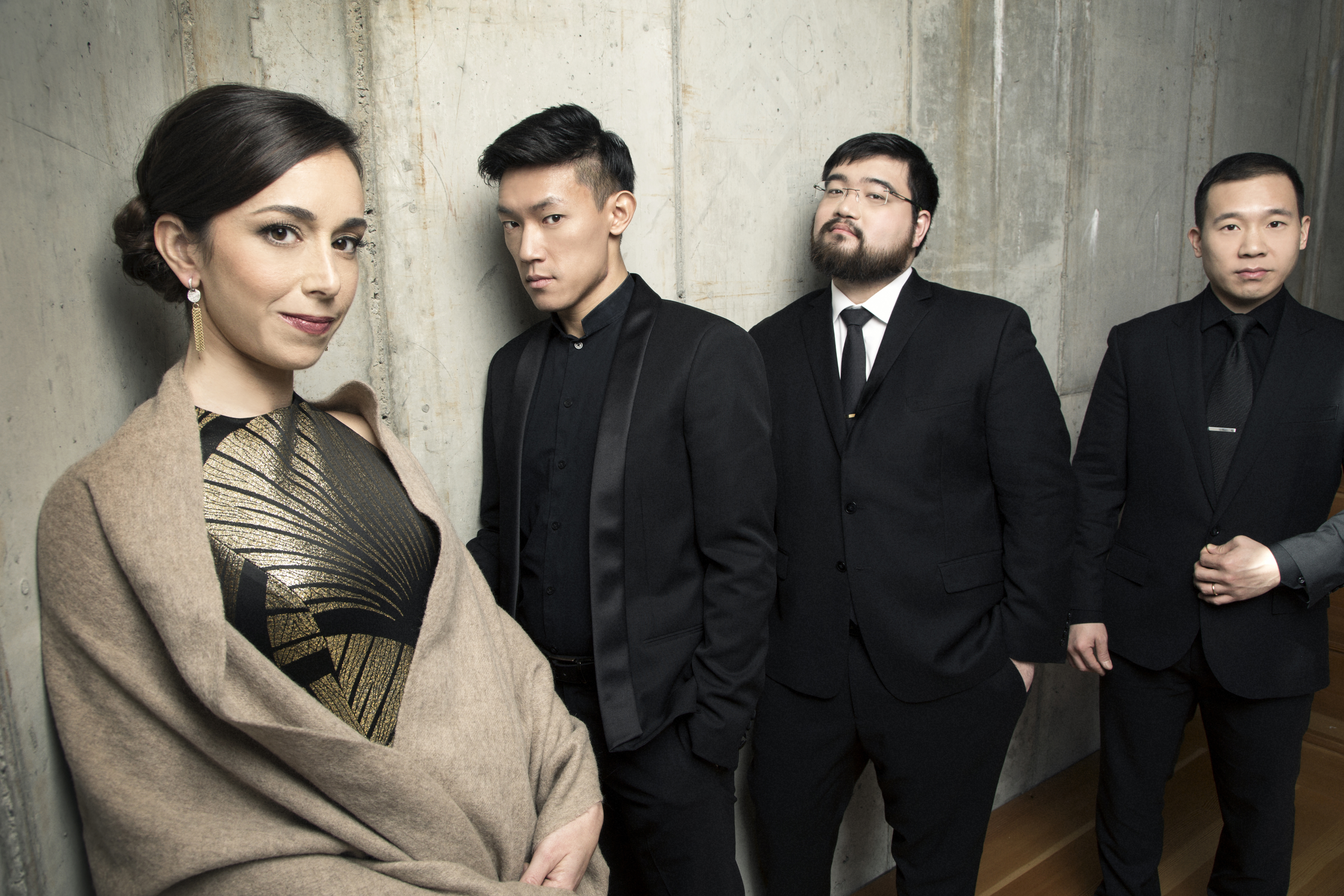
Parker Quartet (L-R: Jessica Bodner, Daniel Chong, Ken Hamao, Kee-Hyun Kim). Photo by Luke Ratray.
Founded in 2002 at the New England Conservatory, the Parker Quartet has established itself as one of leading string quartets for traditional and contemporary repertoire in the U.S. Their 2011 album, Ligeti: String Quartets Nos. 1 & 2, received a Grammy Award for the Best Chamber Music Performance, and they have premiered works by leading contemporary composers, including Jeremy Gill, Augusta Read Thomas and Zosha di Castri. The quartet members are currently artists-in-residence at Harvard University.
The concert opened with the reflective Adagio from Hailstork’s String Quartet No. 1, based on a choral piece written for his Norfolk Unitarian church that is set to a text about being a generous, loving Christian man. Following this, the quartet’s charismatic violinist Daniel Chong introduced the theme of the program: love in its various forms. This would be continued in Kurtág’s Aus der Ferne V (From afar), a brief, mournful work dedicated to his late friend and publisher Alfred Schlee, who rescued many contemporary scores from the Nazis; Berg’s Lyric Suite; and Schumann’s String Quartet No. 3 in A major, a 23rd birthday present for his beloved wife, Clara.
In the evocative Aus der Ferne V, cellist Kee-Hyun Kim drove the piece forward with ominous pizzicato, reminiscent of a heartbeat, over the sustained lines on the violins and viola that exploded in short dissonant bursts before gradually fading away.
This three-minute vignette set the scene for the highlight of the program, Berg’s Lyric Suite, which Chong described as “the most expressive string quartet in the canon” in his introduction. In the suite, the Parker Quartet demonstrated their impressive ability to blend, while bringing different instruments out of the texture as needed, creating a dialogue out of the building and developing motifs. Through their expressive use of colors and dynamics, they also captured the contrasting moods Berg experiences as he falls madly in love and later descends into despair.
In the first movement, marked Allegretto gioviale, the Parker Quartet burst into joyful motion led by Chong’s lively opening gesture. This energy built through the next four movements, which all have expressive names: Andante amoroso, Allegro misterioso—Trio estatico, Adagio appassionato and Presto delirando—Tenebroso.
In the third movement, the hidden initials motif appears most frequently, amidst the combination of wandering pizzicato and warbly lines that sound more chaotically improvisatory than mysterious, an instability the Parker Quartet communicated very well before building to the agitated trio and the dynamic presto that ends with a climactic flourish. The final movement, Largo desolato, which includes the iconic Tristan motif associated with eternal love, demanded the most musical versatility from the musicians, as moments from earlier happier movements appear briefly before sinking into despair.
Following this depressing love story, the Parker Quartet shifted to a light-hearted work for the second half, Schumann’s String Quartet No. 3. After an hour of intense contemporary repertoire, this leap back into an earlier era felt a bit strange. Given the crowd’s excited chatter during intermission, however, a familiar work seemed to be a welcome respite after atonal explorations.
During his career, Schumann only wrote three quartets. They were written together as Op. 41, a birthday present to his wife that was composed in the span of five weeks in 1842. These quartets incorporate elements of Schumann’s influences from Mozart, Haydn, Beethoven, and his friend Mendelssohn, while still retaining his own personal, Romantic style and at times expanding it.
In their animated interpretation of No. 3, the Parker Quartet exhibited their impeccable synchronicity, bow strokes moving as one. With clear, strong downbeats, Kim on cello led this, though perhaps a bit too forcefully in the calmer Adagio molto movement. With the last movement, a showy crowd pleaser marked molto vivace, the quartet ended the performance on an uplifting note, a reminder of the excitement and joy of young love.
The program will be repeated at 7:30 p.m. tonight, Nov. 22, in Grusin Hall. Tickets are available here.
A search for musical identity, community and representation
Editor’s note: Izzy Fincher has just completed an internship through the CU, Boulder, College of Media, Communication and Information, writing for Sharps & Flatirons. You may have read her articles. A conscientious and skilled writer, she has been an important part of our coverage of classical music events in and near Boulder during the fall. It is hoped that she will continue to make occasional contributions to this page. In the meantime, here are her reflections on the other part of her double major, as a female classical guitarist in a world where she is part of a distinct minority. You may learn more about her performing life and hear recordings on her personal Web page.
By Izzy Fincher Dec. 13 1:45 p.m.
As a young classical guitarist, I am still searching for a distinctive musical identity—a nebulous and daunting task.
Izzy Fincher. Photo by Anna Haynes.
I often ask myself, “How is my interpretation unique? Whose story am I telling? How can I embody the composer’s experiences when we are separated by lifetimes, thousands of miles, race, nationality and gender?”
As a mixed-race, Japanese-American woman in classical guitar, I struggle to see myself reflected in the community and repertoire. Like most of the classical music world, I find myself within the white-male frame, telling musical stories by white men.
I began playing guitar at age six. Since then, 83% of my primary teachers have been white men. One hundred percent of my studio at CU-Boulder is white men. Before college, 100% of the guitar repertoire I had played or heard during concerts was written by white men.
These statistics are not offered to criticize my mentors and colleagues, who did their best to support me as a female guitarist. Their advice and guidance has become an integral, guiding force in my musical development, and for that I am grateful.
However, I cannot ignore the impact of existing in less diverse spaces, of seeing the musical world as beautiful and profound, yet also incomplete.
Growing up, I never saw myself as a feminist or an activist. Like many women, I am naturally conflict-averse and a people pleaser. Being an advocate for diversity in my musical community felt too risky.
But now, as I continue to struggle with defining my own musical identity, I feel I can no longer ignore or deny the lack of representation, and I see how choosing silence can be another way of reinforcing the white-male frame.
So, I raise my pen and share the beginning of my journey of telling women’s stories on the classical guitar.
My first experience telling women’s stories came in March of 2020, when I performed Sofia Gubaidulina’s “Serenade” at “Persevering Legacy,” a concert featuring only female composers hosted by the Diverse Musicians Alliance at CU-Boulder. For four minutes, under the hot stage lights of Grusin Hall, I felt the thrill of telling one woman’s story, a moment filled with empowerment and excitement.
While researching repertoire for the concert in 2019, I stumbled across a Spotify playlist entitled “Women classical guitar composers” by Heike Matthiesen, featuring over 600 works for solo guitar by female composers, nearly 30 hours of music. For Matthiesen, this playlist is a form of musical activism, a way to increase awareness and accessibility of female composers’ works for solo guitar.
The playlist stems from her work as a touring classical guitarist and director of “The Archive of Women in Music” in the Center for Art and Media Karlsruhe (Germany). The archive includes 25,000 media by more than 1800 women from 52 countries, from the 9th century to the present day. The classical guitar part of the archive includes over 800 female composers who have written for solo guitar, 600 of which were discovered by Matthiesen. The scores are available for research and personal use only, so Matthiesen’s main focus is connecting classical guitarists with information and then directly with composers, a process she believes could be key to “opening up the canon,” she says.
“I want to be the connection between the archives and the players and audience,” Matthiesen says. “The music is there. Discover it. From the 19th century on to the present, if you are looking for a certain type of repertoire, you can always find a solution with a woman’s name on it. This is something the world needs to know.”
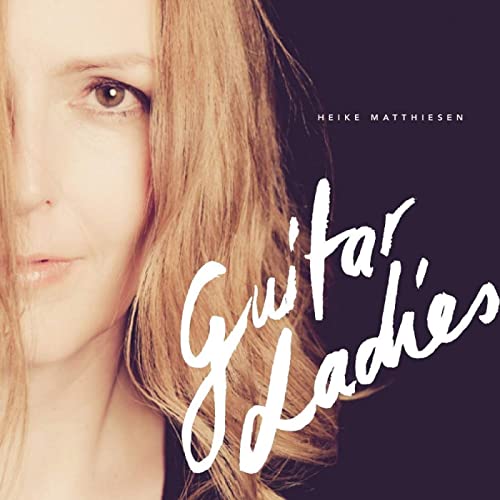
Her work as a musical activist began to garner attention only in the last few years, after the release of her album “Guitar Ladies,” which features works by notable female composers, including Madame Sidney Pratten, María Luisa Anido, Ida Presti, Sofia Gubaidulina, Carmen Guzman, Sylvie Bodorova, Annette Kruisbrink, Tatiana Stachak and Maria Linnemann.
“In 2015, no one was playing (repertoire by) women composers,” Matthiesen says. “I did it for karma points. I was being idealistic. I thought, ‘Nobody will be interested or buy the CD.’ But I had no idea that I was at the right moment in the right place with it. Now suddenly I am the expert for the repertoire.”
Another powerful voice in this movement is Candice Mowbray, a classical guitarist and educator, who leads the guitar program at Shepherd University in West Virginia. Her doctoral thesis from Shenandoah University, which was published in 2012, focused on “Ida Presti as a Solo Performer and Composer of Works for Solo Guitar.”
Ida Presti
Presti (1924-1967), a French classical guitarist and part of the Presti-Lagoya duo with her husband, was one of the most influential female guitarists and composers of the 20th century. Before Mowbray, no one had researched her solo and compositional career in-depth. Besides Presti, Mowbray has collected information about many other female guitarist-composers, which she shares on Facebook and her personal blog.
Presenting lectures at universities and music events is also an important part of Mowbray’s musical activism. In 2020, she gave a lecture “Women in the History of the Classical Guitar” at the Guitar Foundation of America (GFA) festival, the largest and most prestigious competition in the United States, where I first learned about her work.
Candice Mowbray
With her musical activism, Mowbray’s main goal is to share knowledge, which she hopes will inspire classical guitarists to integrate female composers into their teaching and performance careers. She believes raising awareness is the key to creating a more inclusive space in the classical guitar community.
“Women existed this whole time,” Mowbray says. “But when you open a book with 1000 years of music history, there are no women. The history we are studying is a great one, but it is really incomplete.
“My goal was to put these women in the same conversation. When I teach, I say the great guitarists of the 20th century, Andrès Segovia, John Williams, Ida Presti and David Russell. Let’s just change the conversation to include (women).”
Though Mowbray, Matthiesen and other activists have been working for years, the classical guitar community, like the rest of the classical music world, has been particularly receptive to messages about women in 2020.
In 2020, the GFA created a mentorship program “to support and develop talent among classical guitarists of color through instruction, engagement, and career development.” Exaequo, a non-profit run by successful younger classical guitarists, has created a new initiative called “Changing the Canon,” to commission new classical guitar works by nine Black American composers, including several women. Ben Verdery, the head of Yale University’s classical guitar program, updated the graduate student audition requirements to recommend several female composers, including Francesca Caccini, Élisabeth-Claude Jacquet de La Guerre, Emilia Giuliani-Guglielmi, Joan Tower and Hannah Lash.
And this is just the beginning. According to Matthiesen, the heightened awareness around diversity and equity in 2020 is the “perfect time” to advocate for change, a chance for “a golden era for female composers” in the classical guitar community.
“Before, the canon was played by men, dictated by men, and composed by men,” Matthiesen says. “There was no chance to change that. It took more women in the (classical guitar world) to open up the repertoire.”
Though these new opportunities are unprecedented and exciting, the importance of activism has not diminished at all. Our community must actively ride this tidal wave of equality, rather than let it crash suddenly over us and leave us stranded in the sea of under-representation.
Information is power. However, information has to be accessible and spread widely for the power to be transformative. Female composers can’t be relegated to dusty reference books, out-of-print scores or forgotten CDs. They have to exist in our daily conversations, on our music stands and in our concert halls, if we want profound, long-lasting change.
Representation matters. Representation gives diverse musicians the chance to hear and play reflections of themselves and their lives. Representation gives us the space to dream beyond the boundaries of the canon and to imagine with fewer limits.
Though the search for a distinctive musical identity still remains far from easy, an inclusive, representative musical world makes my journey less daunting and more universal. As I walk the path, I know many diverse women have been, are and will be in my shoes, and that we are all united by our love of the classical guitar.





 Sharps & Flatirons