GRACE NOTES: B-minor Mass and string quartet with guitar 

LSO presents Bach’s “Magnum Opus,” Takács Quartet partners with Nicoló Spera

By Peter Alexander April 9 at 5:20 p.m.
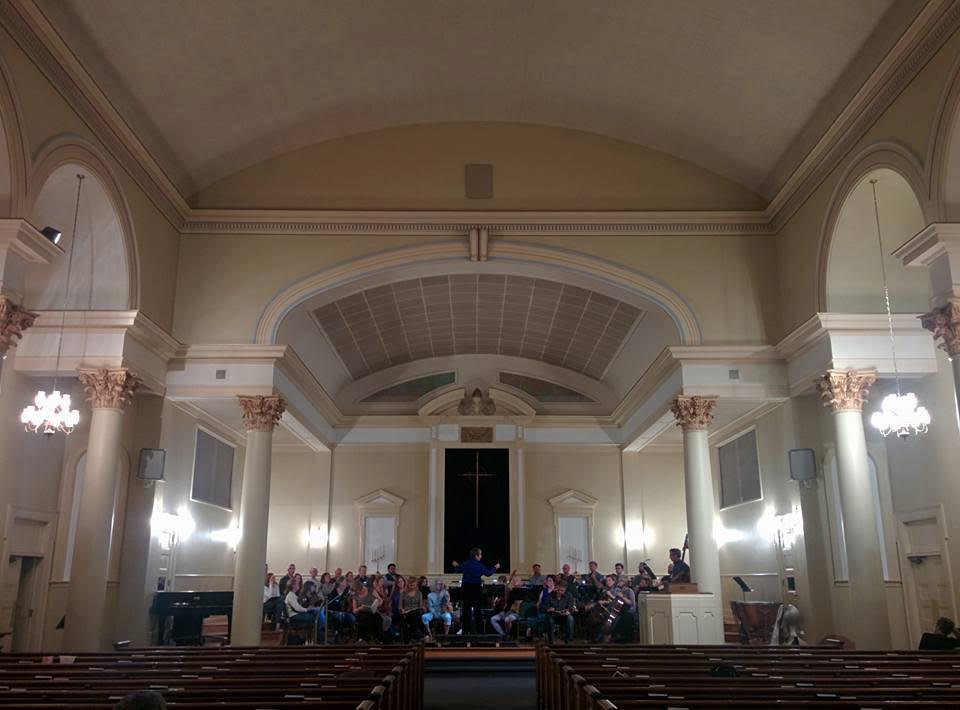
The Longmont Symphony Orchestra (LSO) and conductor Elliot Moore end their season with one of the most significant pieces by J.S. Bach, his monumental Mass in B minor.

The performance of this large-scale work will be Saturday evening at Vance Brand Civic Auditorium in Longmont (7 p.m. April 12; details below). Moore and the LSO will team up with the Boulder Chamber Chorale, a select group from the Boulder Chorale directed by Vicki Burrichter. Soloists will be soprano Dawna Rae Warren, countertenor Elijah English, tenor Joseph Gaines and baritone Andy Konopak.

Choral settings of the Mass ordinary—the five texts sung every week in Catholic church services, as opposed to texts that vary with the liturgical calendar—had a long history in Europe. However, Bach’s setting is too long to be easily incorporated into a normal service, which is why it is generally performed as a concert piece rather than a liturgical mass.
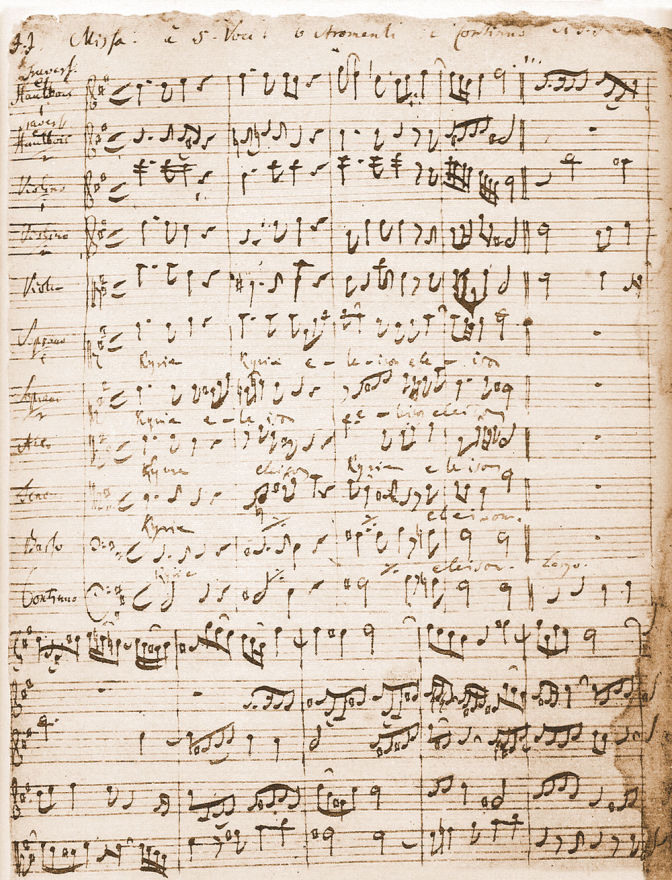
Bach’s manuscript of the B-minor Mass

The structure and composition history of the Mass are complicated. The final work as we know it today comprises the main sections of the Catholic Mass ordinary—Kyrie, Gloria, Credo, Sanctus and Agnus Dei—in 27 separate movements for orchestra, choir and soloists. Bach composed the first two portions of the Mass, Kyrie and Gloria, in 1733. These are the portions that are common to both Catholic and Lutheran services and were theoretically usable at the Lutheran Thomaskirche in Leipzig where Bach was employed. 

Bach presented those two movements to the incoming Elector of Saxony, a Catholic ruler, in 1733. He did not compose the remaining portions of the Mass, which were exclusive to the Catholic services, until  the final years of his life. Some of the music was newly composed, but other movements were reworkings of music from earlier cantatas and other works. 

It is remarkable that a piece written over so many years with many different sources would emerge as a unified work universally revered as one of Bach’s crowning achievements. But the entire B-minor Mass was probably never performed in Bach’s lifetime, and clearly would not have been suitable for a service in Bach’s church. It includes music written over 35 years of the composer’s lifetime, assembled and re-appropriated into a final form dictated by the structure of the Catholic Mass, by a resolutely Lutheran composer.

# # # # #

“A Magnum Opus”
Longmont Symphony Orchestra, Elliot Moore, conductor
With the Boulder Chamber Chorale, Vicki Burrichter, direcotr; Dawna Rae Warren, soprano; Elijah English, countertenor; Joseph Gaines, tenor; and Andy Konopak, baritone

  • J.S. Bach: Mass in B minor

7 p.m. Saturday, April 12
Vance Brand Civic Auditorium

TICKETS

# # # # #

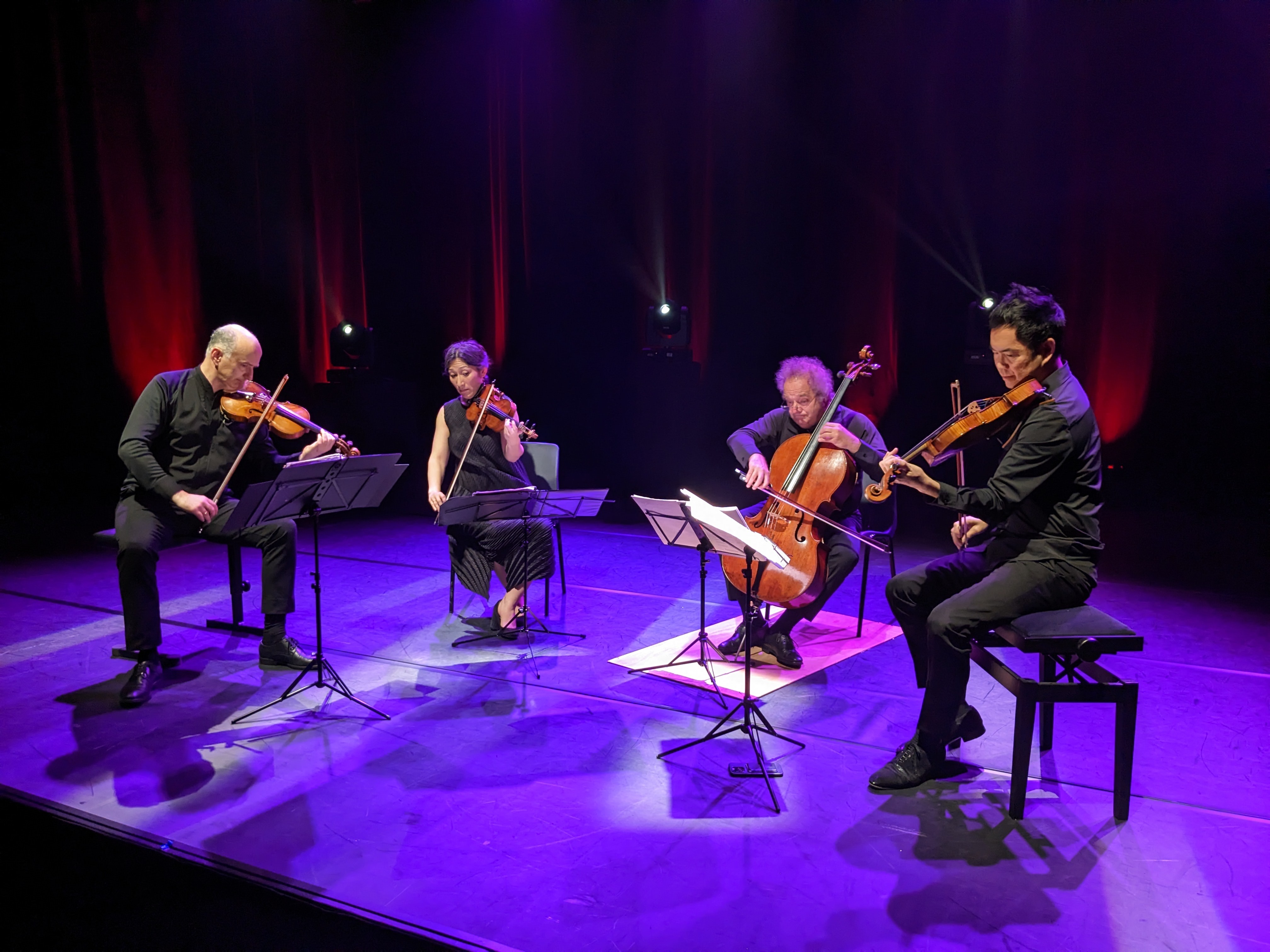
The Takács Quartet and guitarist Nicoló Spera will come together over the weekend for concerts in Grusin Hall on the CU Campus (Sunday, April 13, and Monday, April 14; details below).

Their joint performance of the Quintet for guitar and string quartet by Giacomo Susani will be framed by two works from the standard string quartet repertoire, Haydn’s late Quartet in G major, op. 77 no. 1, written in 1799; and Dvořák’s Quartet in F major, op. 96, composed during the composer’s visit to the Czech immigrant community of Spillville, Iowa, in the summer of 1893.
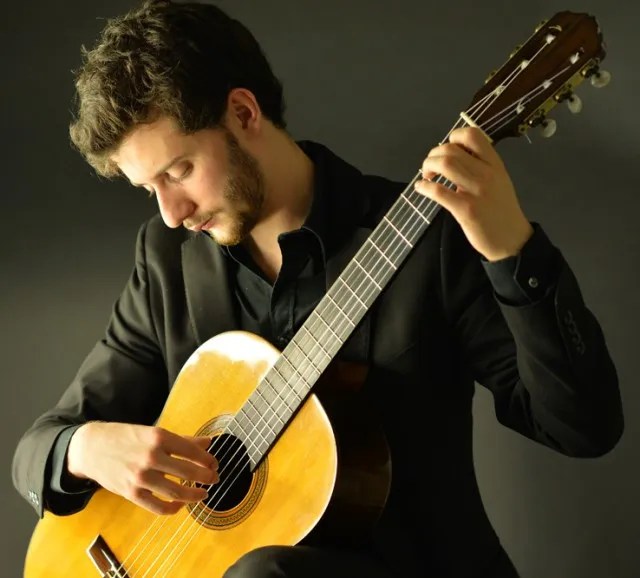
Giacomo Susani

Susani keeps very busy, with a performing career on guitar in Europe and the United States, a compositional career, and as artistic director of the Homenaje International Guitar Festival in Padova, Italy. As a performer he has released four recordings on the Naxos label. He conducted the world premier of his Concerto for 10-string guitar and orchestra in Boulder this past December, with Spera and the Boulder Chamber Orchestra. The Guitar Quintet was written in 2016.

Listeners may be familiar with the string and guitar quintets of Luiggi Boccherini, the best known but not the only works for that combination of instruments. There were several written in the 20th century, including one by Italian composer Mario Castelnuovo-Tedesco. That work is recognized in the last of Susani’s three movements, “Omaggio a Castelnuovo-Tedesco” (Homage to Castelnuovo-Tedesco). The first two movements are titled respectively “La Tempesta” (The storm) and “Liberamente, non trope lento” (Freely, not too slow).

At the age of 67 Haydn began a set of string quartets commissioned by the wealthy aristocratic patron and music lover Prince Lobkowitz. He completed two quartets of a likely set of six, but other projects intervened before he could complete a larger set. The two quartets were published as Op. 77 nos. 1 and 2, and were his final completed string quartets. He only completed two movements of another planned quartet, published in 1806 as Op. 103.
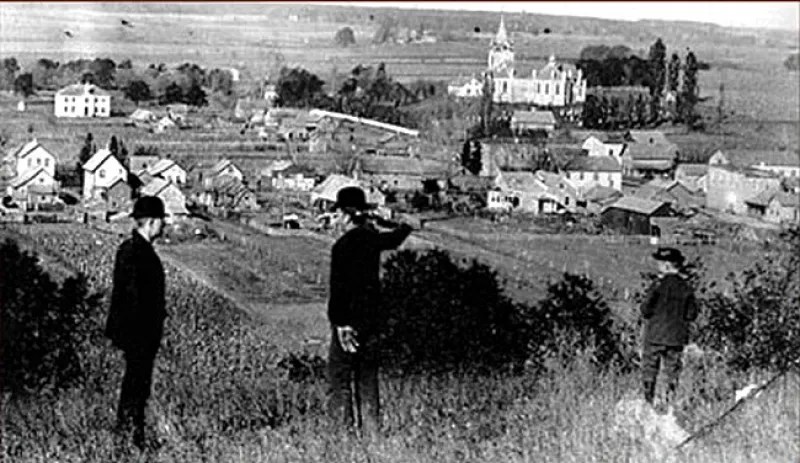
Spillville, Iowa, in 1895, shortly after Dvořák’s visit

Dvořák wrote many of  his best known pieces in the United States. He spent the years 1892–95 as director of the National Conservatory of Music in New York. Intrigued by the idea of a village of Czech immigrants on the Western plains, he spent an idyllic summer in the tiny village of Spillville, Iowa, in 1893. While in the United States he wrote his Symphony No. 9, “From the New World” and his Cello Concerto in New York, and a string quartet and string quintet, now known as the “American” Quartet and Quintet, in Spillville.

Spillville was very much a Czech community, with the people speaking Czech and observing Czech customs that Dvořák found congenial. He frequently played the organ at the local church, which is still standing, and made many friends in the community. 

Dvořák was deeply moved in Spillville, especially by the emptiness of the prairie, perhaps reflected in the Quartet’s melancholy slow movement, and the singing of birds, quoted in the scherzo. Attempts to connect the Quartet’s uncomplicated musical style to American influences have met skepticism. The composer himself once wrote, “I wanted to write something for once that was very melodious and straightforward . . . and that is why it all turned out so simply.

“And it’s good that it did.”

# # # # #

Takács Quartet with Nicoló Spera, guitar

  • Haydn: String Quartet in G Major, op. 77 no. 1
  • Giacomo Susani: Quintet for Guitar and String Quartet
  • Dvořák: String Quartet in F Major, op. 96 (“American”)

4 p.m. Sunday, April 13, and 7:30 p.m. Monday, April 14
Grusin Hall

In-person and streaming tickets HERE.
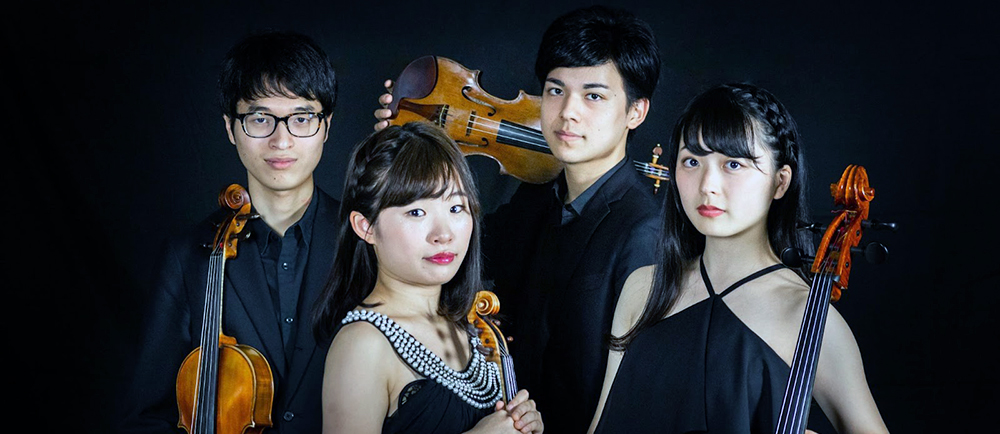
Quartet Integra will perform on Takács series at CU

Prize-winning quartet from Japan will play Haydn, Ligeti and Brahms

By Peter Alexander Oct. 30 at 4:55 p.m.

Quartet Integra, the 2024 guest ensemble on the Takács Quartet’s campus concert series at CU Boulder, will perform in Grusin Music Hall Sunday afternoon and Monday evening (4 p.m. Nov. 3 and 7:30 p.m. Nov. 4; details below).

Following a traditional program format of classical-contemporary-Romantic works, they will perform Haydn’s String Quartet in B minor, op. 33 no. 1, György Ligeti’s String Quartet No. 2 and Brahms’s String Quartet No. 3 in B-flat major. Tickets are available for both in-person and online attendance.

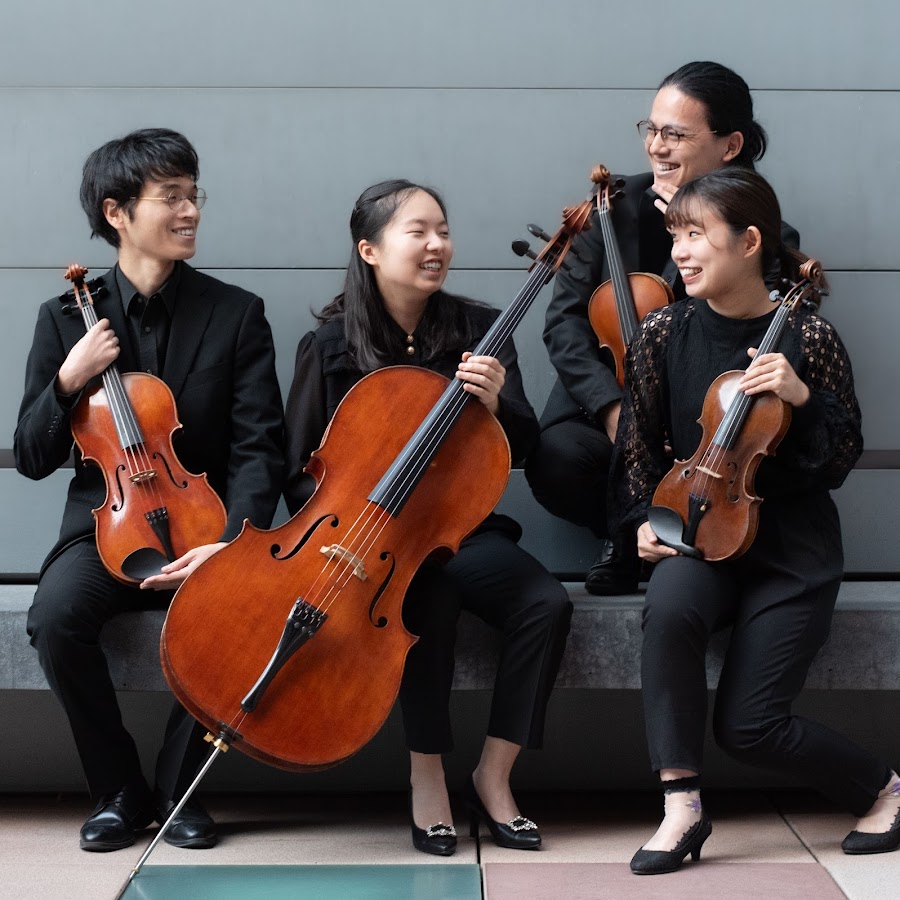
Quartet Integra

The Quartet Integra—violinists Kyoka Misawa and Rinato Kikuno, violist Itsuki Yamamoto and cellist Ye Un Park—formed in 2015 and began their studies at the Toho Gakuen School of Music in Tokyo. They continued their academic work as a quartet as Fellows at the Suntory Hall Chamber Music Academy. They are currently enrolled in the Chamber Ensemble-in-Residence Program at the Colburn School in Los Angeles.

The Quartet won Second Prize and the Audience Award at the 2022 ARD International Music Competition, First Prize at the 2021 Bartók World Competition, and First Prize, the Prize of Beethoven and Grand Prix Award at the 2019 Akiyoshidai Music Competition. Upcoming performances include a New York debut at the Schneider Concert series at the New School, a contemporary recital at Boston Court, a recital as part of the Discovery Series at the La Jolla Music Society and the ECHO Chamber Music Series in El Cajon, California, among others. 

Past festival performances include the Suntory Chamber Music Garden Festival, the Kanazawa, Hukuyama and Takefu International Festivals. Quartet Integra has commissioned many new works from Japanese composers and given more than a dozen world premieres.

In 1779 Haydn’s employer, Prince Nicolaus Esterhazy, granted the composer the right to sell his works to publishers. One of the first sets of works where Haydn took advantage of that freedom was his set of six string quartets, composed in 1781 and known as Op. 33. Haydn wrote to a number of amateur musicians inviting them to subscribe to manuscript copies of the quartets, which he said were written “von einer Neu, gantz besonderer Art” (a new and entirely special way).

There is disagreement whether the six quartets truly represent a “new way” of composition, or the phrase was just salesmanship by Haydn. Either way, the set is regarded as one of Haydn’s major works defining the classical style. In addition to the manuscript parts Haydn offered, the quartets were published separately in Vienna, Berlin and London. Consequently, they were widely known, and may have been the inspiration for the six quartets Mozart wrote 1782–85 and dedicated to Haydn.

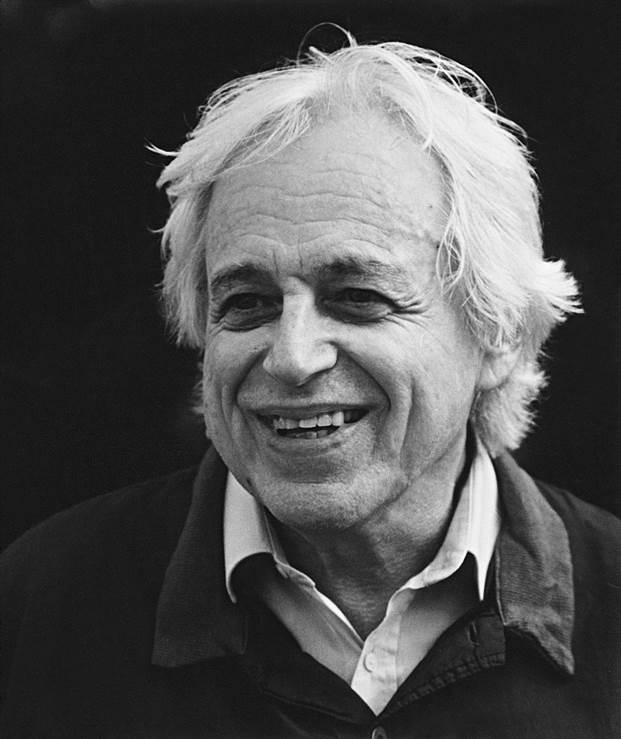
György Ligeti

The second of Hungarian composer György Ligeti’s four string quartets was written in 1968 and dedicated to the La Salle Quartet, who played in the premiere in 1969. The five movements share related material but represent five different styles of musical motion, from gentle lyricism to mechanical pizzicato to fast and aggressive, and other stops in between.

Brahms composed three string quartets that have survived, as well as a large number of early quartets that he destroyed. The one known as his Third Quartet, composed in 1875, was dedicated to Theodor Wilhelm Engelmann, an amateur cellist, in spite of which it contains no major themes or solos for the cello. Later Brahms wrote to Engelmann, “This quartet rather resembles your wife—very dainty but brilliant.”

It is one of Brahms’s most animated and cheerful works. The first and fourth movements are particularly playful, full of bouncing, propulsive rhythms. The central movements—a wistful slow movement and an agitated waltz movement—are move serious in mood.

# # # # #

Quartet Integra

  • Haydn: String Quartet in B minor, op. 33 no. 1
  • György Ligeti: String Quartet No. 2
  • Brahms: String Quartet No. 3, op. 67

4 p.m. Sunday, Nov. 3 and 7:30p.m. Monday, Nov. 4
Grusin Music Hall

In-person and streaming tickets HERE

Takács String Quartet celebrates its 50th season

Mutual respect, love of music and supportive audiences inspire the players

By Peter Alexander Sept. 12 at 9:14 p.m.

Fifty years is a long time in any job, but that is the landmark that András Fejér, cellist of the world renowned Takács Quartet, is approaching as the quartet enters its fiftieth season, 

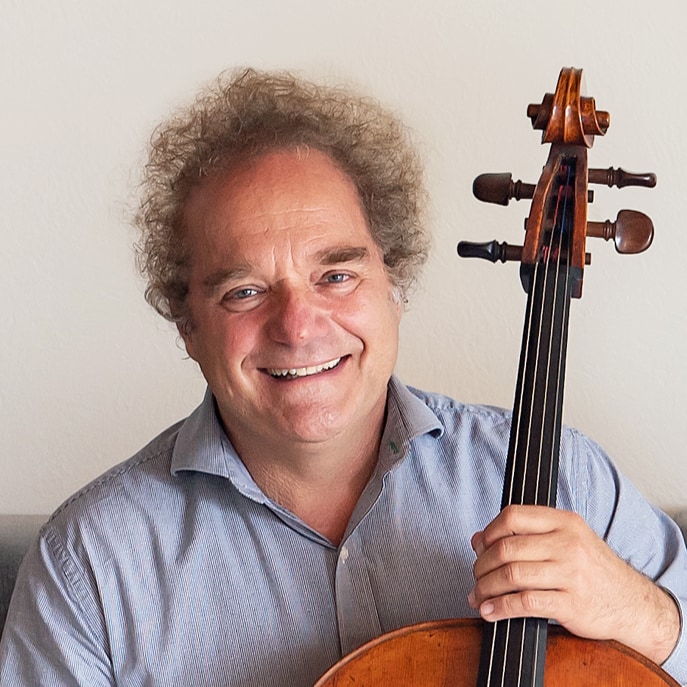
András Fejér

The Takács String Quartet was founded in Budapest in September 1975—49 years ago—and has been in residence at the CU College of Music since 1983. The only original member of the quartet still with the group, Fejér is now 70, but he shows no sign of seeking a quiet retirement.

“I’m loving it,” he says about playing in the quartet and continuing the group’s busy concert schedule around the world. “I feel passionate about it, and I cannot imagine doing anything else.”

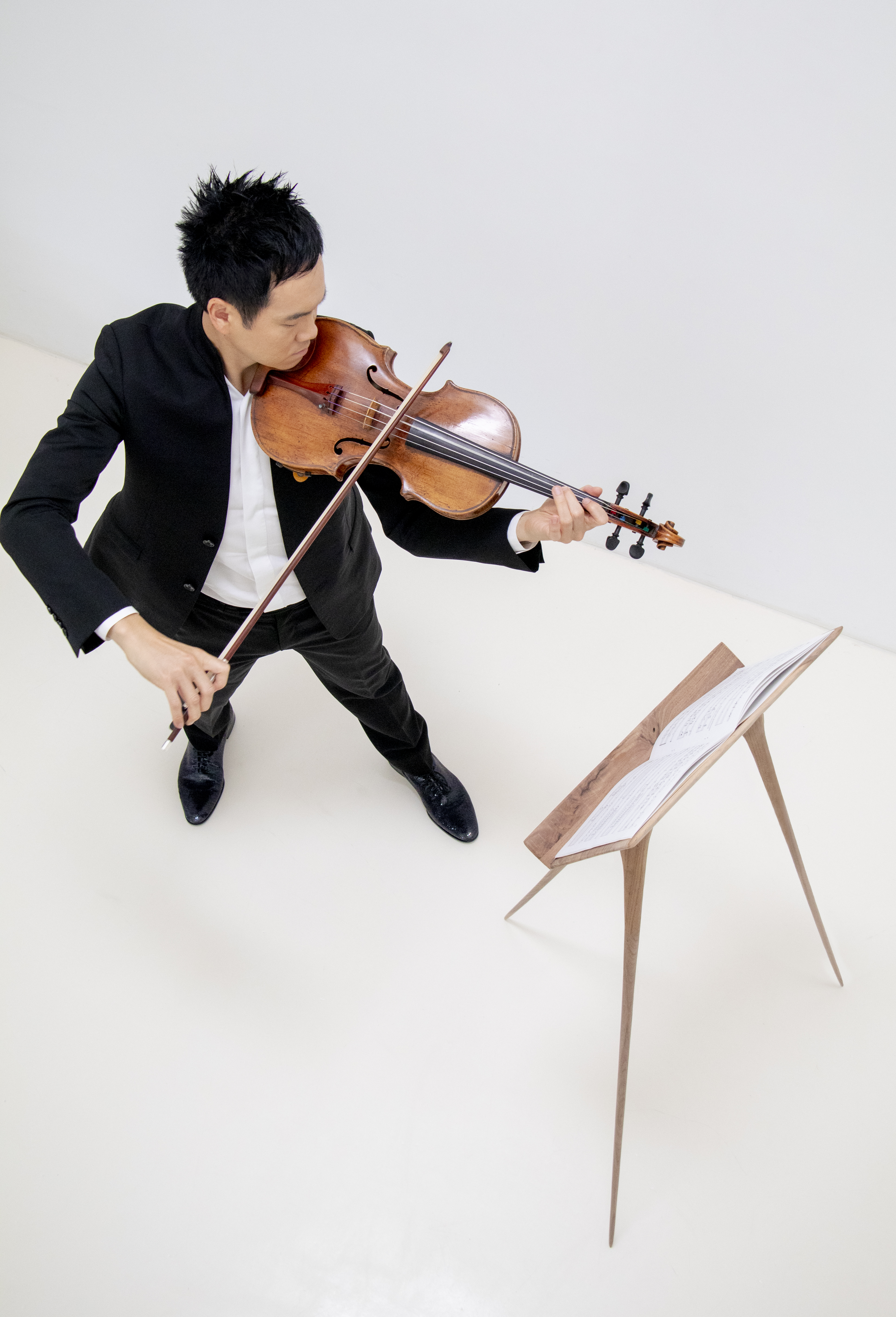
Fejér and the other members of the quartet—first violinist Edward Dusinberre, second violinist Harumi Rhodes and violist Richard O’Neill—will take the stage at Grusin Music Hall Sunday and Monday (4 p.m. Sept. 15 and 7:30 p.m. Sept. 16) for a standard string quartet program—a 20th century quartet by Leoš Janáček, sandwiched between classical-era works by Joseph Haydn and Beethoven (see full program below). This is a standard Takács program, and Fejér says they have no special plans for the half-century celebration.

“We just do what we are trying to do—classics nicely mixed with contemporary pieces,” he says. “We try to play them as much as we can. It’s a heartwarming mission.”

Richard O’Neill

The newest member of the quartet, O’Neill feels the same way about the busy life in a world-traveling quartet. “The greatest luxury is getting to do what we do,” he says. “I really love travel, even in the worst scenarios. There are things that can go wrong nowadays, but I still get excited to pack my suitcase and go out the door.”

If he likes anything more than travel, it’s playing for the Boulder audience. “The community here is such a unique community and (Boulder is) such an incredibly beautiful place,” he says. “Every concert we’re backstage at Grusin I really like hearing all the people (in the audience) excited to be together.”

O’Neill noticed the musicians’ connection with their audience from his very first Boulder home concerts with the Takács in 2021, but the relationship has not changed over Fejér’s years in the quartet. “We found it extremely supportive here (in 1983), with a wonderfully enthusiastic audience, and that’s how we feel until this day,” he says. “We got the support and the love of the audience, and the way it makes you feel, it’s a wonderful reaction with the audience.”

With all the personnel changes over 50 years—two first violinists, two second violinists, now three violists with the one cellist—the Takács has maintained its place among the top quartets in the world. That’s not because they have one authoritative way of doing things. Fejér identifies their defining quality more in the integrity of their approach to the music. 

“The quality is the combination of expressivity, character and technique,” he says. “There are many ways to interpret the same phrase, many ways to interpret any page of any piece. We are listening to new ideas, because we feel it keeps the process fresh. As our wonderful teacher in Budapest put it, nobody has a letter from Haydn or Beethoven.

Takács String Quartet. Photo by Ian Malkin.

“We are honest, and being honest gives you a major conviction. As long as the message rings true, the audience is happy and immersed in the performance.”

That does not mean that the players always agree. “We had our fair share of arguments, especially when we were young and unwise,” he says. “But the moment we realized that there are many ways, what we can do is (say) ‘OK, in New York we try your idea, and then at Berkeley we will try my idea,‘ and then we will settle down with something. Everybody‘s happy, and then we all have a good giggle afterwards. It‘s great fun.”

O’Neill learned from the outset that every member is included in those conversations, no matter how long they have been with the group. “András could probably pull the seniority card on me, (but) he never does that,” he says.

“What I really love about the Takács is that if any one of us have a reservation, musical or personal about something that we’re doing, the quartet won’t do it. I really respect that. We’re all very distinct individuals, and of course we have our differences, but we respect each other. I think that‘s the magic combination.

“There‘s nothing like being in a group where you really get to know everyone like family,” he says. So whenever the Takács “family” walks onstage, you know they are doing what they love doing together. 

And they love the music. Of the first piece on the current program, Haydn’s Quartet in C Major, op. 54 no. 2, O’Neill says, “I have never played (the piece before), but it’s like vaudeville for music. The humor is so palpable and overt, and I love it. With Mozart, humor is either tinged with sadness or hidden in refinement, but with Haydn it’s unabashed. It’s just flat out funny. It‘s an amazing work.”

Janáček’s Quartet No. 1, however, is not humorous. Known as “The Kreutzer Sonata,” it is based on the Tolstoy novella of that name about a man who kills his wife for having an affair with a violinist with whom she plays Beethoven’s “Kreutzer” Sonata. Written by a composer of many great operas, the quartet is almost operatic in its drama and intensity.

“We adore both quartets (by Janáček),” Fejér says. “The language, the harmonies, the technical realization is so specific to Janáček. You can recognize his music right away. We are talking about murder and jealousy and seemingly idyllic music. We have everything in between idyllic and ‘I’ll kill you!’”

The final piece is one of the most loved works for string quartet, Beethoven’s Quartet in F Major, op. 59 no. 1, one of three quartets Beethoven wrote for the Russian ambassador in Vienna, Count Razumovsky. Originally regarded as audaciously long and difficult, all three are now accepted in the standard repertoire and loved by audiences.

The first of the set is in the key of F major, which in works like the Pastoral Symphony, the Symphony No. 8 and the Romance for violin, inspired some of Beethoven’s most lyrical and melodic music. That quality is evident from the very beginning of the quartet, with a long theme from the cello playing in its richest register. 

“When you start with a cello solo, how can you go wrong?” O’Neill says. “I love the piece very much.”

But equal to the music on the program is the survival of the Takács Quartet over the past 49 years, which few chamber music ensembles have matched and for which the Boulder audience shows its appreciation every year and every concert. Fejér gives what may be the best explanation for that when he says “We are like kids on the playground, enjoying the toys. 

“We are totally involved and just enjoying ourselves.”

# # # # #

Takács String Quartet

  • Haydn: String Quartet in C Major, op. 54 no. 2
  • Leoš Janáček: String Quartet No. 1, (“The Kreutzer Sonata”)
  • Beethoven: String Quartet in F Major, op. 59 no. 1 (“Razumovsky”)

4 p.m. Sunday, Sept 15 and 7:30 p.m. Monday, Sept. 16
Grusin Music Hall
Live Stream: 4 p.m Sunday, Sept. 15 until 11 p.m. Monday, Sept.

In-person and livestream TICKETS

Other fall concerts

Takács String Quartet

  • Beethoven: String Quartet in A minor, op. 132
  • Other works TBA

4 p.m. Sunday, Oct. 13 and 7:30 p.m. Monday, Nov. 4
Live Stream: 4 p.m. Sunday, Oct. 13 through Monday, Oct. 21

In-person and livestream TICKETS

Quartet Integra

4 p.m. Sunday, Nov. 3 and 7:30 p.m. Monday, Oct. 14
Live Stream: 4 p.m. Sunday, Nov. 3 through Monday, Nov. 11

In-person and livestream TICKETS

Haydn’s happy creation

By Peter Alexander

There are lightning and thunder, leaping tigers and creeping serpents.

cynthia-katsarellis-2

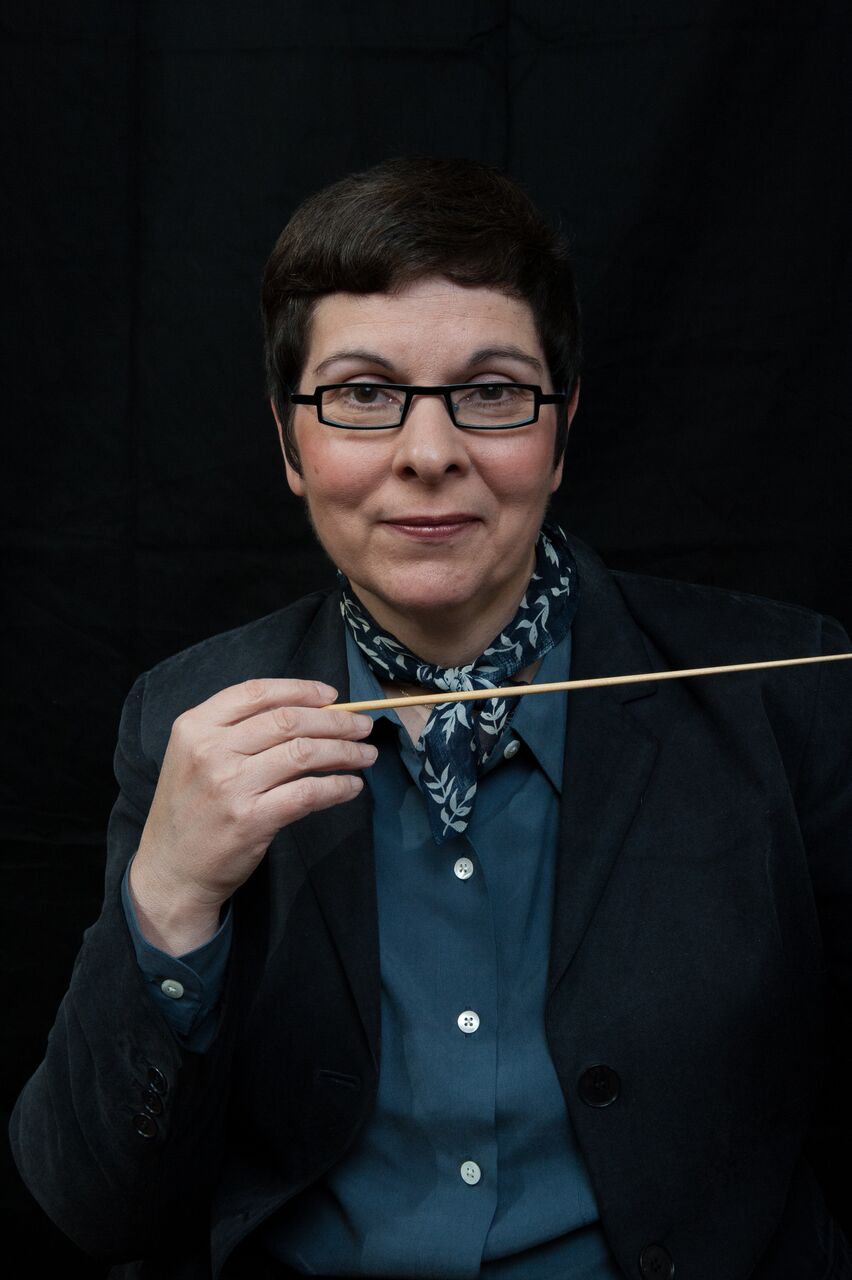
Cynthia Katsarelis

All of that and more are portrayed musically in The Creation by Joseph Haydn, but conductor Cynthia Katsarelis wants you to know that they are happy tigers. “It’s almost two hours of ecstatic happiness,” she says of Haydn’s oratorio, which she will conduct this weekend in Denver and Boulder with the Pro Musica Colorado Chamber Orchestra and the Colorado Masterworks Chorus.

Soloists will be soprano Amanda Balestrieri, tenor Steven Soph and bass Jeffrey Seppala.

joseph_haydn

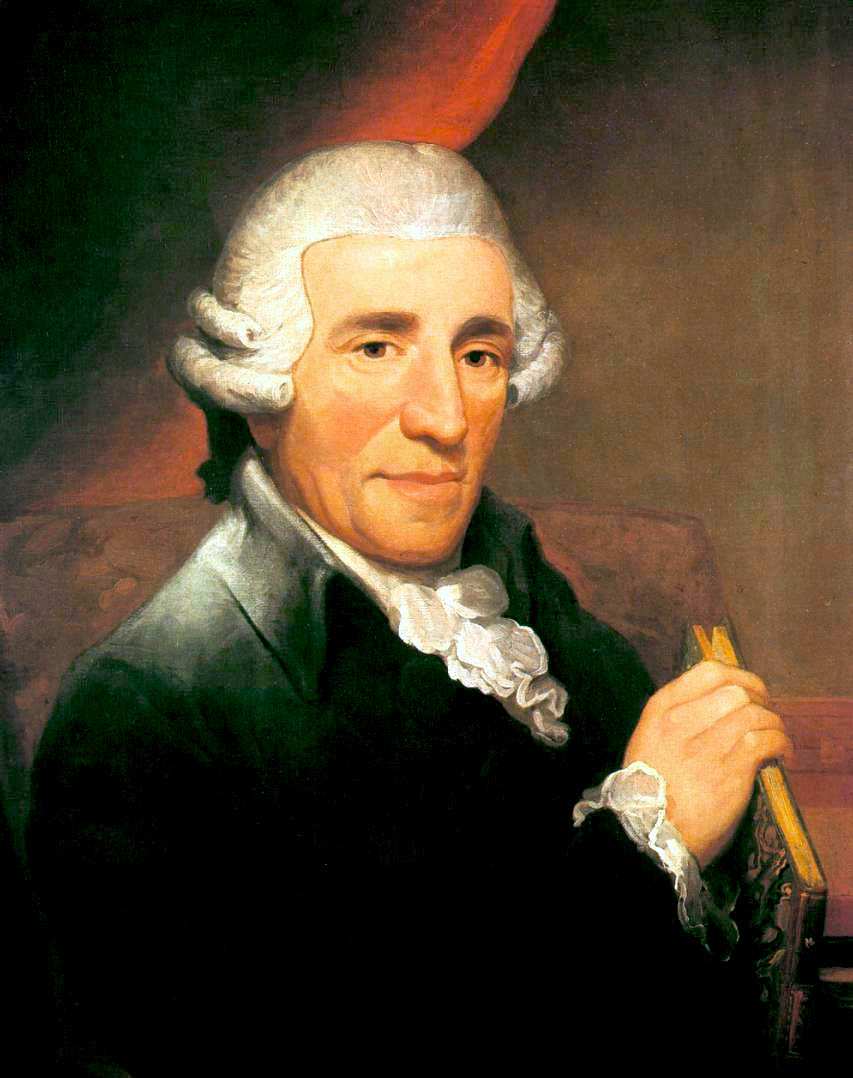
Joseph Haydn

Katsarellis particularly appreciates the cheerfulness of Haydn’s score right now, as an antidote to the tense and threatening times we live in. “I was studying the piece this summer after Orlando and Istanbul and Pakistan and all of these terrible things happening,” she says. “So it was kind of a vacation from all of that.”

And maybe, she says, The Creation offers us more than an escape from what we hear on the news. “The happiness and gratitude expressed in the choruses — this is also who we are,” she says.

“So to some extent The Creation can call to us and remind us that we’re more than what’s happening in the news. We are much more than that.”

Read more in Boulder Weekly.

# # # # #

The Creation by Joseph Haydn

orch-chorus

Pro Musica Colorado Chamber Orchestra and the Colorado Masterworks Chorus
Cynthia Katsarelis, conductor
With soprano Amanda Balestrieri, tenor Steven Soph, and bass Jeffrey Seppala
7:30 p.m. Friday, Oct. 28, Central Presbyterian Church, 1660 Sherman St., Denver
7:30 p.m. Saturday, Oct. 29, First United Methodist Church, 2412 Spruce, Boulder

Tickets