CMF Co-Commission, guests at the festival

Eric Whitacre’s Murmur features violinist Anne Akiko Myers

By Peter Alexander July 13 at 9 a.m.

Peter Oundjian often speaks in superlatives.
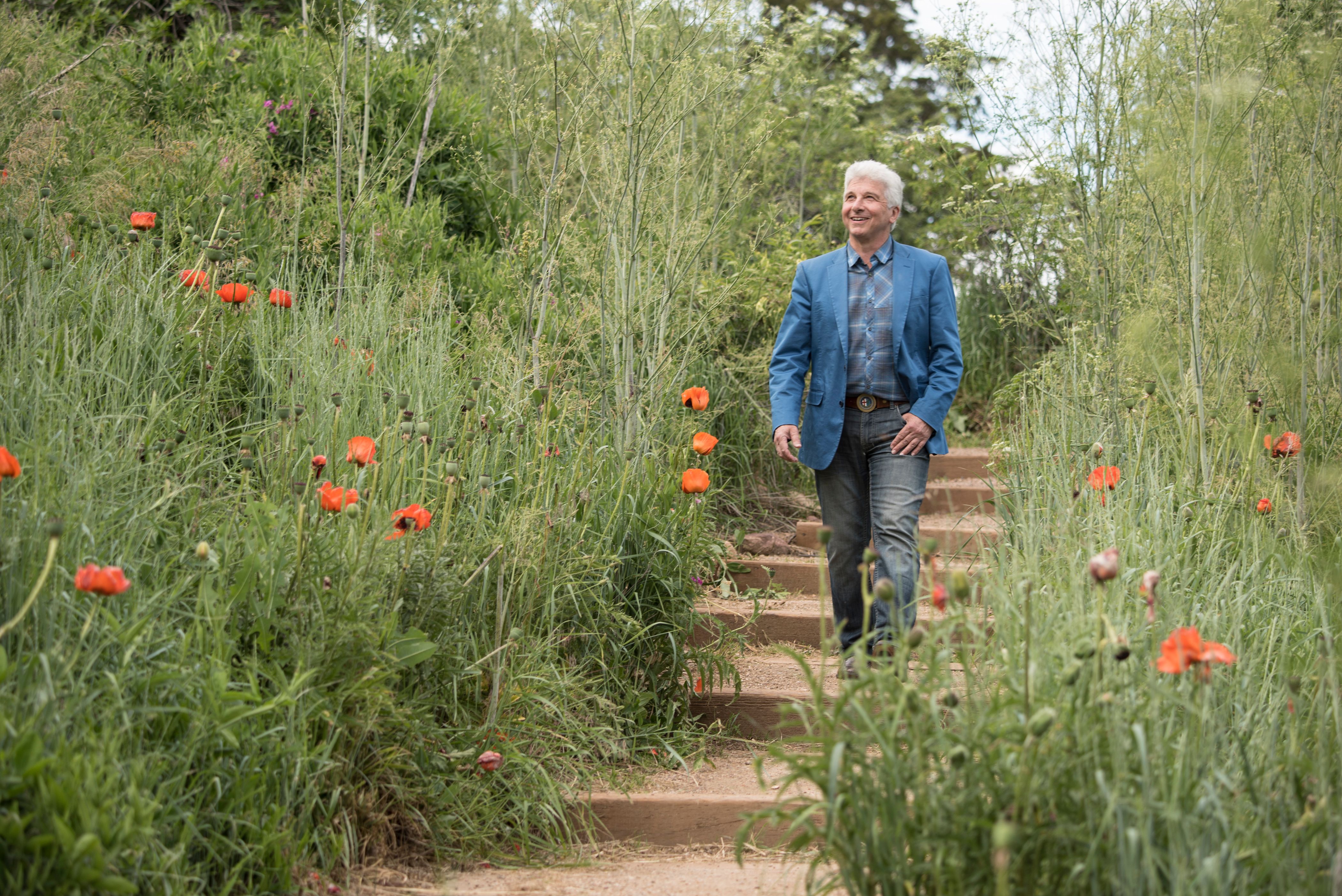
CMF Music Director Peter Oundjian

The music director of the Colorado Music Festival (CMF) says that the next two weeks of the festival (July 15–July 25) includes one of the composer’s “greatest pieces,” an overture that is “absolutely exquisite,” maybe “the most beautiful melody ever written,” and “an exquisite symphony” that is “as close to perfection as you can imagine!” 

You might think he loved the music he will conduct.  

Such enthusiasm tends to be contagious, and usually extends to both musicians and audiences. To find out for yourself, go to the festival’s Web page for tickets. (The full program of concerts for those dates is listed below.)
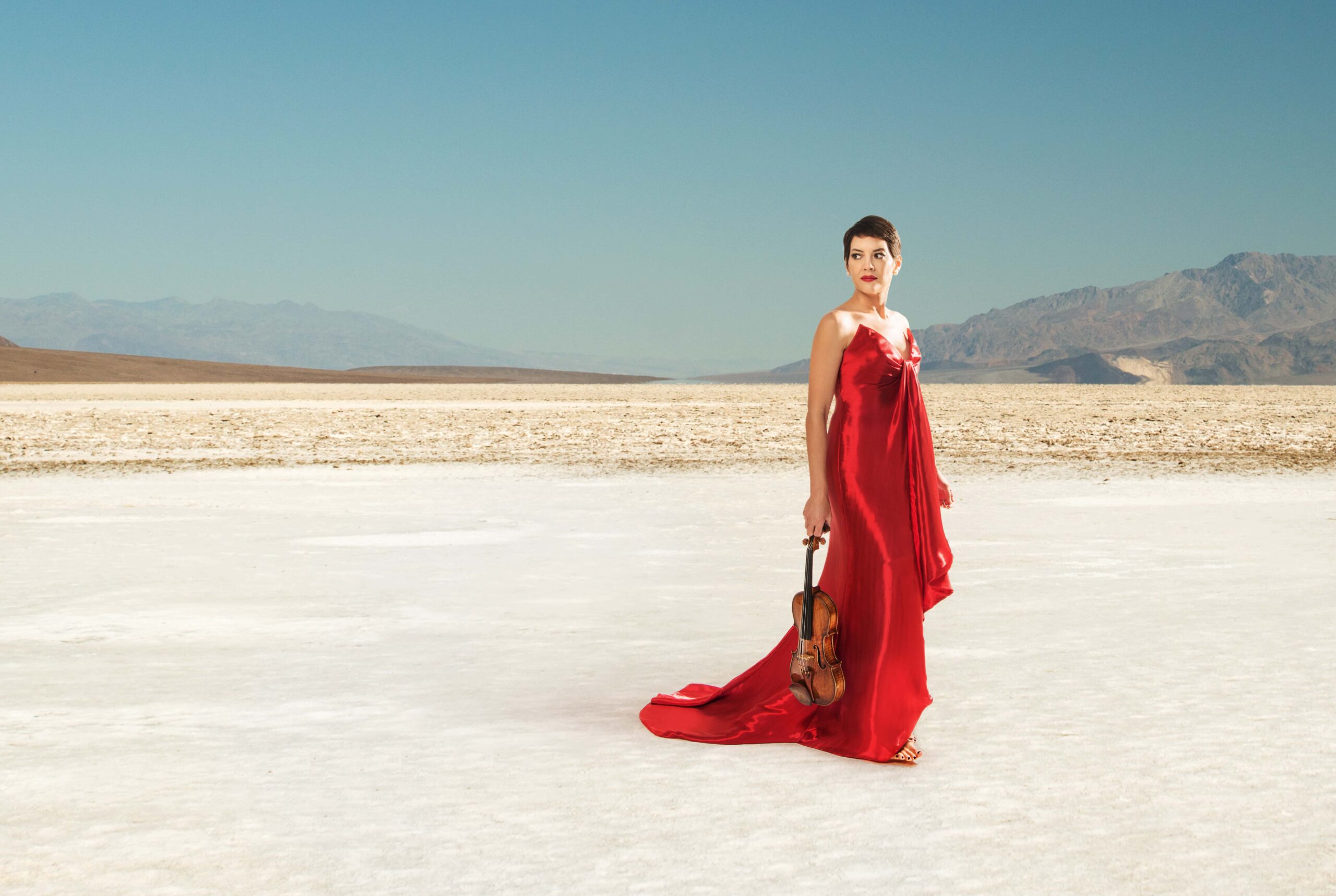
Violinist Anne Akiko Myers. Photo by David Zentz.

The next Festival Orchestra concert on Thursday and Friday evenings (7:30 p.m. July 17 and 6:30 p.m. July 18) features a work co-commissioned by the CMF from composer Eric Whitacre, who is best known for his choral music. Oundjian explained that he met with Whitacre in Los Angeles, “and we had a wonderful chat. I asked him what he was up to, and he already had this plan to write something for (violinist) Anne Akiko Meyers. At that point we said, ‘Let’s do it at the festival!’

Composer Eric Whitacre

“It’s a short, very tender piece, only for strings. It ended up being a memorial to everyone who lost so much in the fires (in Los Angeles the past January). So it’s a very touching piece.”

The program opens with Aaron Copland’s Appalachian Spring, one of the most loved pieces of American concert music. “That’s still one of (Copland’s) great pieces,” Oundjian says. “It epitomizes what we think of as the great middle-20th-century American music.”

After intermission, the program features two works inspired by Shakespeare, and two very different pairs of lovers. First is Berlioz’s Overture to the opera Béatrice et Bénédict, based on the taunting, bickering “merry war” between the two characters in the comedy Much Ado about Nothing. That will be followed by Tchaikovsky’s Fantasy Overture inspired by the tragic teenaged lovers of Romeo and Juliet.

“The second half is one of my favorite little moments (of the summer), because it’s two completely contrasting couples,” Oundjian says. “The Berlioz is absolutely exquisite. And you might think you’ve heard (Tchaikovsky’s Romeo and Juliet) too many times, and then you hear it again, and Oh My God! Is it the most beautiful melody every written?”
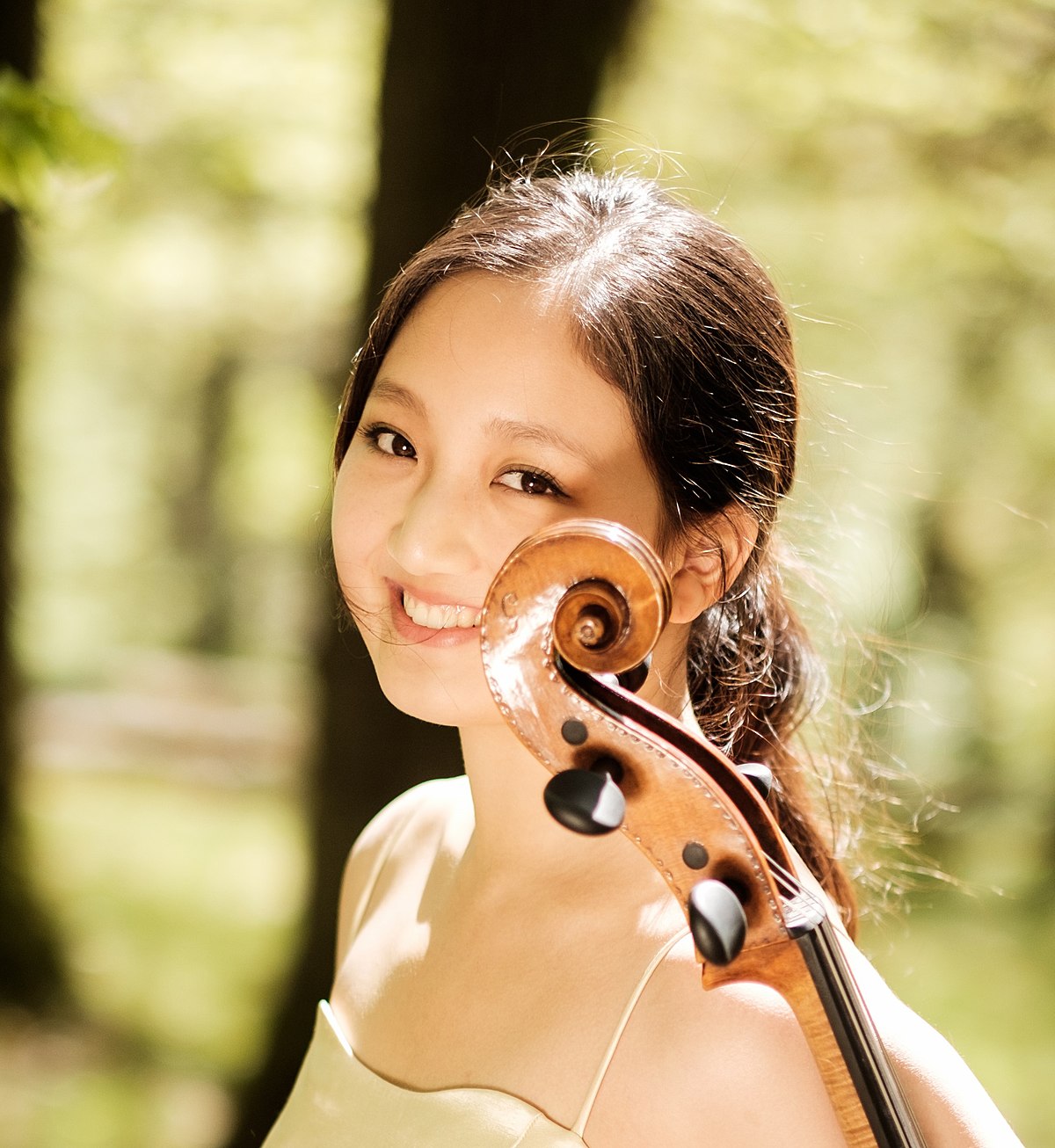
Cellist Hayoung Choi

On the following Sunday, guest conductor Maurice Cohn will lead the orchestra with South Korean/German cellist Hayoung Choi playing Tchaikovsky’s Variations on a Rococo Theme. One of Tchaikovsky’s most popular orchestral works, the Variations were inspired by the style of Mozart. Also on the program is Gli uccelli (The Birds), a suite for small orchestra that, like the Tchaikovsky, was inspired by music of an earlier age—in this case pieces evoking the sounds of birds from the 17th and 18th centuries.

Another guest conductor, Ryan Bancroft of the BBC National Orchestra of Wales and the Royal Stockholm Philharmonic, will lead the CMF orchestra at the end of the following week (7:30 p.m. Thursday, July 24, and 6:30 p.m. Friday, July 25). South Korean pianist Yeol Eum Son will play Beethoven’s Piano Concerto No. 3 in C minor on a program that also includes the Fairy Tale Poem by Russian composer Sofia Gubaidulina, a musical fantasy based on a children’s story.
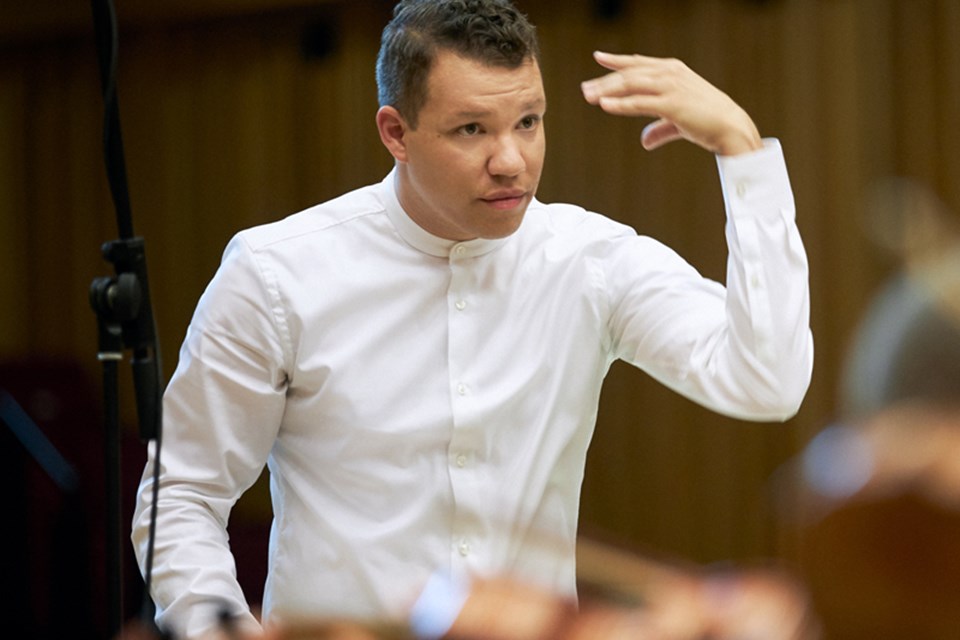
Ryan Bancroft. Photo by Benjamin Ealovega

Gubaidulina’s score portrays the tale of a piece of chalk that dreams of drawing castles and gardens, in spite of being confined to writing words and numbers in a school classroom. At the end, the dream comes true when a boy carries the last little piece of chalk home in his pants pocket.

The program concludes with a more deeply serious Russian work, Shostakovich’s Symphony No. 10. Like many of the composer’s works, the symphony contains esoteric musical symbols, including a musical anagram on letters of the composer’s name, and another musical anagram spelling ELMIRA, which the composer himself noted is similar to a theme from Mahler’s bleak Lied von der Erde (Song of the earth).

Oundjian returns to conduct the Festival Orchestra on Sunday, July 27. Chinese classical guitarist Xuefei Yang will play Joaquin Rodrigo’s Concerto de Aranjuez. Oundjian and the orchestra will play the Dances of Galánta, based on folk dances by the Hungarian composer Zoltán Kodály, and Schubert’s early Symphony No. 5.

“Schubert 5 is an exquisite symphony,” Oundjian says. “Nobody plays Schubert symphonies except maybe the ‘Unfinished,’ but Schubert 5—ah! It’s as close to perfection as you can imagine. If you think about how often pianists play the piano sonatas, or string quartets play the quartets, or the Trout Quintet, the symphonies kind of get ignored.”

Guitarist Xuefei Yang

Not ignored is the Concerto de Aranjuez, arguably the most popular concerto for classical guitar. “I love Concerto de Aranjuez” is Oundjian’s judgment. We haven’t done it in years, so it’s time. And an amazing guitarist, Xuefei Yang. Oh my god what a musician!”

Between the Festival Orchestra concerts there will be Tuesday chamber music concerts by the Brentano String Quartet with music by Schubert and Brahms (7:30 p.m. July 15), and CMF musicians with music by Mozart and Dvořák (7:30p.m. July 22). The full programs and ticket information are listed below.

# # # # #

Colorado Music Festival, Peter Oundjian, music director
Tuesday, July 15–Sunday, July 25
All performances in Chautauqua Auditorium

Chamber Music Concert
Brentano String Quartet

  • Schubert: Quartet in A minor, D804 (“Rosamunde”)
  • Anton Webern: Five Movements for String Quartet, op. 5
  • Brahms: String Quartet No. 3 in B-flat major, op. 67

7:30 p.m. Tuesday, July 15

Festival Orchestra Concert
Peter Oundjian, conductor
With Anne Akiko Meyers, violin

  • Copland: Appalachian Spring
  • Eric Whitacre: Murmur (CMF co-commission)
  • Ravel: Tzigane
  • Berlioz: Overture to Béatrice et Bénédict
  • Tchaikovsky: Romeo and Juliet Fantasy Overture

7:30 p.m. Thursday, July 17
6:30 p.m. Friday, July 18

Festival Orchestra Concert
Maurice Cohn, conductor
With Hayoung Choi, cello

  • Respighi: Gli uccelli (The birds)
  • Tchaikovsky: Variations on a Rococo Theme, op. 33
  • Beethoven: Symphony No. 1 in C major, op. 21

6:30 p.m. Sunday, July 20

Chamber Music Concert
Colorado Music Festival musicians

  • Nico Muhly: Doublespeak (2012)
  • Mozart: Quintet for piano and winds in E-flat major, K452
  • Dvořák: String Quintet No. 3 in E-flat major, op. 97

7:30 p.m. Tuesday, July 22

Festival Orchestra Concert
Ryan Bancroft, conductor
With Yeol Eum Son, piano

  • Sofia Gubaidulina: Fairytale Poem (Märchenpoem, 1971)
  • Beethoven: Piano Concerto No. 3 in C minor, op. 37
  • Shostakovich: Symphony No. 10

7:30 p.m. Thursday, July 24
6:30 P.M. Friday, July 25

Festival Orchestra Concert
Peter Oundjian, conductor
With Xuefei Yang, guitar

  • Zoltán Kodály: Dances of Galánta
  • Joaquin Rodrigo: Concerto de Aranjuez
  • Schubert: Symphony No. 5 in B-flat major, D485

6:30 p.m. Sunday, July 27

Tickets to all concerts available through the CMF Web page

GRACE NOTES: B-minor Mass and string quartet with guitar 

LSO presents Bach’s “Magnum Opus,” Takács Quartet partners with Nicoló Spera

By Peter Alexander April 9 at 5:20 p.m.

The Longmont Symphony Orchestra (LSO) and conductor Elliot Moore end their season with one of the most significant pieces by J.S. Bach, his monumental Mass in B minor.

The performance of this large-scale work will be Saturday evening at Vance Brand Civic Auditorium in Longmont (7 p.m. April 12; details below). Moore and the LSO will team up with the Boulder Chamber Chorale, a select group from the Boulder Chorale directed by Vicki Burrichter. Soloists will be soprano Dawna Rae Warren, countertenor Elijah English, tenor Joseph Gaines and baritone Andy Konopak.

Choral settings of the Mass ordinary—the five texts sung every week in Catholic church services, as opposed to texts that vary with the liturgical calendar—had a long history in Europe. However, Bach’s setting is too long to be easily incorporated into a normal service, which is why it is generally performed as a concert piece rather than a liturgical mass.

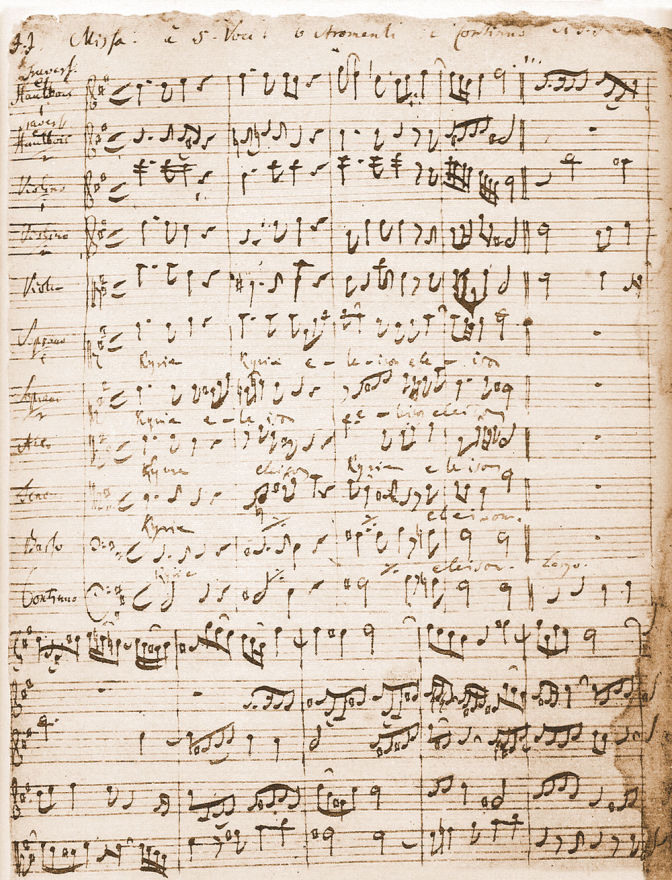
Bach’s manuscript of the B-minor Mass

The structure and composition history of the Mass are complicated. The final work as we know it today comprises the main sections of the Catholic Mass ordinary—Kyrie, Gloria, Credo, Sanctus and Agnus Dei—in 27 separate movements for orchestra, choir and soloists. Bach composed the first two portions of the Mass, Kyrie and Gloria, in 1733. These are the portions that are common to both Catholic and Lutheran services and were theoretically usable at the Lutheran Thomaskirche in Leipzig where Bach was employed. 

Bach presented those two movements to the incoming Elector of Saxony, a Catholic ruler, in 1733. He did not compose the remaining portions of the Mass, which were exclusive to the Catholic services, until  the final years of his life. Some of the music was newly composed, but other movements were reworkings of music from earlier cantatas and other works. 

It is remarkable that a piece written over so many years with many different sources would emerge as a unified work universally revered as one of Bach’s crowning achievements. But the entire B-minor Mass was probably never performed in Bach’s lifetime, and clearly would not have been suitable for a service in Bach’s church. It includes music written over 35 years of the composer’s lifetime, assembled and re-appropriated into a final form dictated by the structure of the Catholic Mass, by a resolutely Lutheran composer.

# # # # #

“A Magnum Opus”
Longmont Symphony Orchestra, Elliot Moore, conductor
With the Boulder Chamber Chorale, Vicki Burrichter, direcotr; Dawna Rae Warren, soprano; Elijah English, countertenor; Joseph Gaines, tenor; and Andy Konopak, baritone

  • J.S. Bach: Mass in B minor

7 p.m. Saturday, April 12
Vance Brand Civic Auditorium

TICKETS

# # # # #

The Takács Quartet and guitarist Nicoló Spera will come together over the weekend for concerts in Grusin Hall on the CU Campus (Sunday, April 13, and Monday, April 14; details below).

Their joint performance of the Quintet for guitar and string quartet by Giacomo Susani will be framed by two works from the standard string quartet repertoire, Haydn’s late Quartet in G major, op. 77 no. 1, written in 1799; and Dvořák’s Quartet in F major, op. 96, composed during the composer’s visit to the Czech immigrant community of Spillville, Iowa, in the summer of 1893.

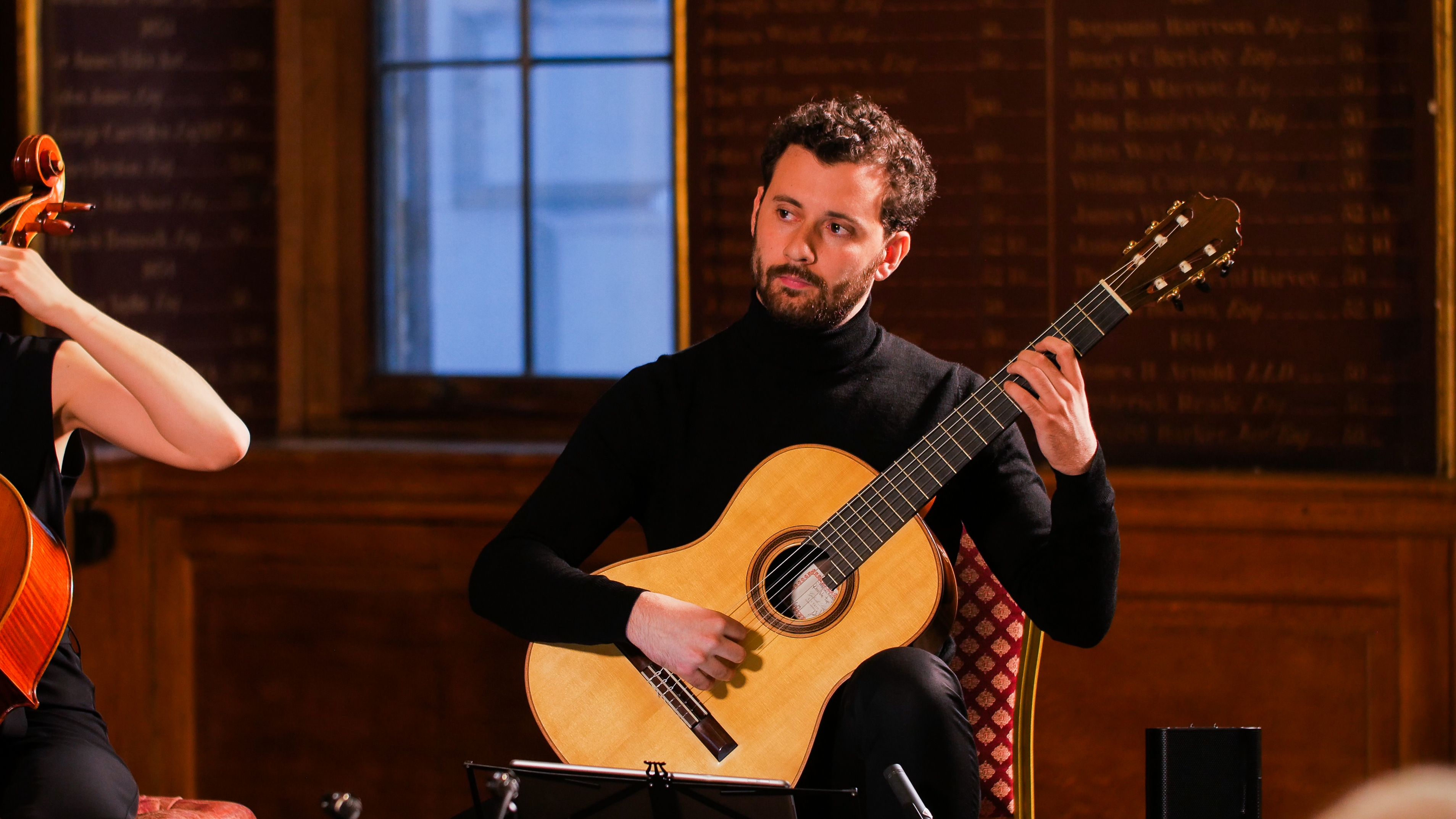
Giacomo Susani

Susani keeps very busy, with a performing career on guitar in Europe and the United States, a compositional career, and as artistic director of the Homenaje International Guitar Festival in Padova, Italy. As a performer he has released four recordings on the Naxos label. He conducted the world premier of his Concerto for 10-string guitar and orchestra in Boulder this past December, with Spera and the Boulder Chamber Orchestra. The Guitar Quintet was written in 2016.

Listeners may be familiar with the string and guitar quintets of Luiggi Boccherini, the best known but not the only works for that combination of instruments. There were several written in the 20th century, including one by Italian composer Mario Castelnuovo-Tedesco. That work is recognized in the last of Susani’s three movements, “Omaggio a Castelnuovo-Tedesco” (Homage to Castelnuovo-Tedesco). The first two movements are titled respectively “La Tempesta” (The storm) and “Liberamente, non trope lento” (Freely, not too slow).

At the age of 67 Haydn began a set of string quartets commissioned by the wealthy aristocratic patron and music lover Prince Lobkowitz. He completed two quartets of a likely set of six, but other projects intervened before he could complete a larger set. The two quartets were published as Op. 77 nos. 1 and 2, and were his final completed string quartets. He only completed two movements of another planned quartet, published in 1806 as Op. 103.

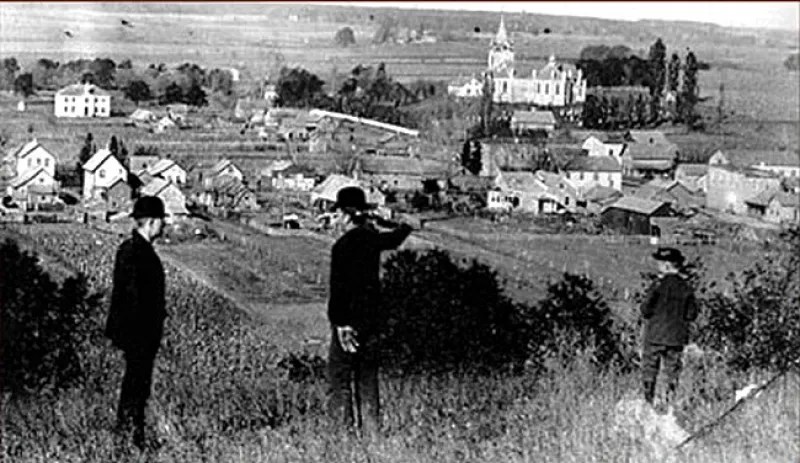
Spillville, Iowa, in 1895, shortly after Dvořák’s visit

Dvořák wrote many of  his best known pieces in the United States. He spent the years 1892–95 as director of the National Conservatory of Music in New York. Intrigued by the idea of a village of Czech immigrants on the Western plains, he spent an idyllic summer in the tiny village of Spillville, Iowa, in 1893. While in the United States he wrote his Symphony No. 9, “From the New World” and his Cello Concerto in New York, and a string quartet and string quintet, now known as the “American” Quartet and Quintet, in Spillville.

Spillville was very much a Czech community, with the people speaking Czech and observing Czech customs that Dvořák found congenial. He frequently played the organ at the local church, which is still standing, and made many friends in the community. 

Dvořák was deeply moved in Spillville, especially by the emptiness of the prairie, perhaps reflected in the Quartet’s melancholy slow movement, and the singing of birds, quoted in the scherzo. Attempts to connect the Quartet’s uncomplicated musical style to American influences have met skepticism. The composer himself once wrote, “I wanted to write something for once that was very melodious and straightforward . . . and that is why it all turned out so simply.

“And it’s good that it did.”

# # # # #

Takács Quartet with Nicoló Spera, guitar

  • Haydn: String Quartet in G Major, op. 77 no. 1
  • Giacomo Susani: Quintet for Guitar and String Quartet
  • Dvořák: String Quartet in F Major, op. 96 (“American”)

4 p.m. Sunday, April 13, and 7:30 p.m. Monday, April 14
Grusin Hall

In-person and streaming tickets HERE.

GRACE NOTE: A Gift of Music

Boulder Chamber Orchestra presents word premiere concerto for guitar

By Peter Alexander Dec. 17 at 2:20 p.m.

The Boulder Chamber Orchestra (BCO) will present their annual Holiday “Gift of Music” featuring guitarist Nicolò Spera Saturday (7:30 p.m. Dec. 21) at the Boulder Adventist Church.

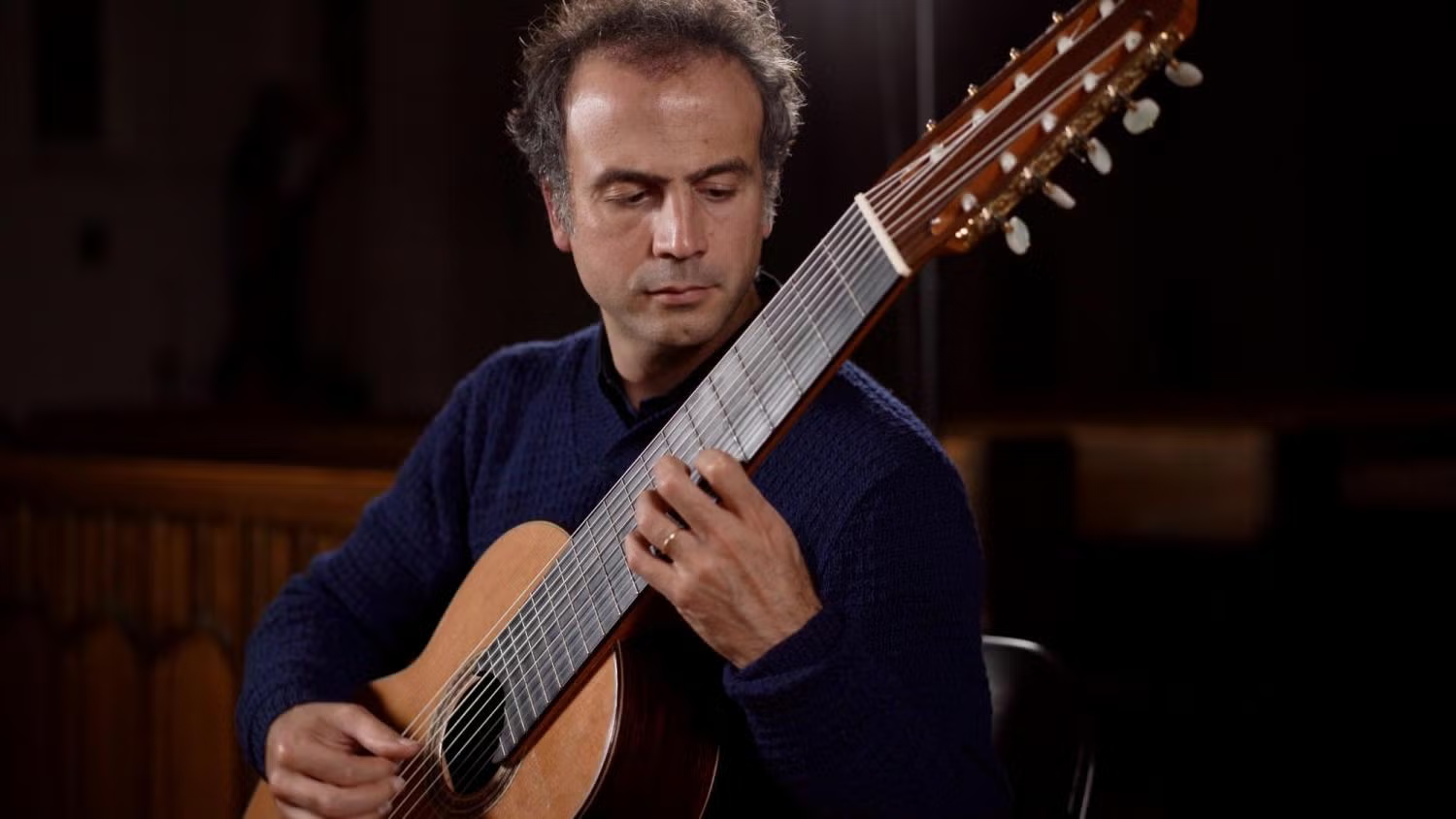
Nicolò Spera

Bahman Saless, artistic director of the BCO, will share conducting duties with Nadia Artman and Giacomo Susani. Spera will play the world premier of Susani’s Concerto for 10-string guitar and orchestra, titled Lungo il Po (Along the Po river), conducted by the composer.

The orchestra’s concertmaster, Annamaria Karacson, will be the featured soloist for the “Méditation” from Thaïs by Jules Massanet, with Saless conducting. He will also lead the orchestra in the program’s closing work, Dvořák’s Czech Suite. Nadia Artman will conduct the opening work on the program, the Prélude from Bizet’s Carmen.

Susani has an active career as a guitar soloist in Europe, and recently presented his Carnegie Hall debut in New York. He taught guitar at the Junior Department of the Royal Academy of Music in London 2019–23, and is currently artistic director of the Homenaje International Guitar Festival in Padua, Italy, and co-artistic director and teacher of the Residenze Erranti, an initiative that supports young artists by providing scholarships for masterclasses, workshops and other events in Milan and Padua.

Giacomo Susani

Susani has recorded four albums on the Stradivarius label. Performances this year included appearances in the UK, at the Paganini Guitar Festival and the Conservatorio G. Puccini in Gallarate, Italy. His Guitar Concerto Lungo di Po is one of several works he has written for guitar.

Lungo il Po is based on a book of the same title by Federica Pocaterra. It was commissioned by Spera, to whom it is dedicated. Susani believes that it is the first concerto written for the unusual 10-string guitar and orchestra. The music includes quoted fragments of the Lamento di Arianna by Claudio Monteverdi, one of the most famous laments of the early Baroque period. 

Dvořák wrote the Czech Suite in 1879 for the German publisher Fritz Simrock, who was the principal publisher for both Dvořák and Brahms. It comprises five movements, three of which are Czech folk dances: a polka, a soudedska—a type of slower dance in triple time—and a furiant—a fast and fiery dance that Dvořák used in several of his works.

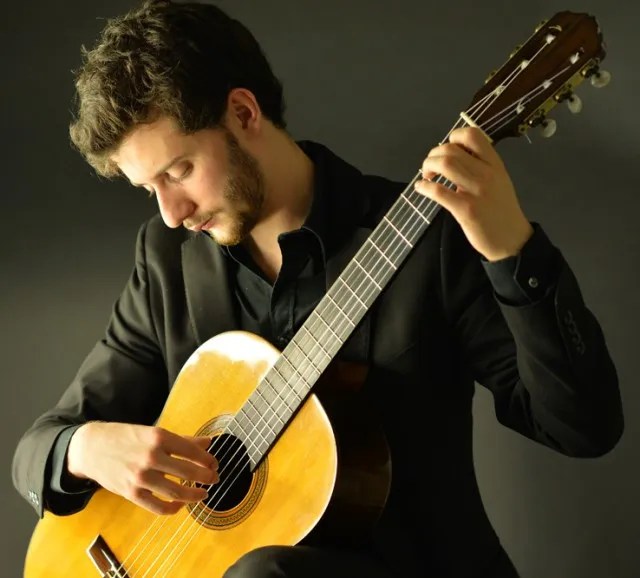
A member of the CU College of Music faculty, Spera is known for playing both the six-string and 10-string guitars, as well as the Renaissance theorbo, a member of the lute family. He holds degrees from the Conservatory of Bolzano, Italy, and the Accademia Musical Chigiana in Siena, Italy, as well as as an artist diploma from the University of Denver and a doctorate from CU, Boulder. In addition to his teaching duties at CU, Spera appears frequently as a solo performer, both locally and internationally.

A native of Moscow, Russia, Artman has appeared as a guest conductor of the BCO in past seasons, and manages Artman Productions in Boulder.

# # # # #

“The Gift of Music”
Boulder Chamber Orchestra, Bahman Saless, conductor
With Nicolò Spera, guitar, and Annamaria Karacson, violin
Guest conductors Nadia Artman and Giacomo Susani

  • Bizet: Prélude to Carmen
  • Giacomo Susani: Concerto for 10-string guitar and orchestra, Lungo il Po (Along the Po river)
  • Jules Massanet: “Méditation” from Thaïs
  • Dvořák: Czech Suite, op. 39

7:30 p.m. Saturday, Dec. 21
Boulder Adventist Church, 345 Mapleton Ave., Boulder

TICKETS

“Guitar Masterworks” program comes to Boulder

Spanish virtuoso Pablo Sáinz-Villegas plays at Macky Saturday

By Peter Alexander Nov. 7 at 2:25 p.m.

Pablo Sáinz-Villegas, a classical guitarist from Logroño, La Roja, near the Basque Country in Northeastern Spain, will perform a program of “Guitar Masterworks” as part of the CU Presents Artist Series in Macky Auditorium at 7:30 p.m. Saturday (Nov. 9; details below).

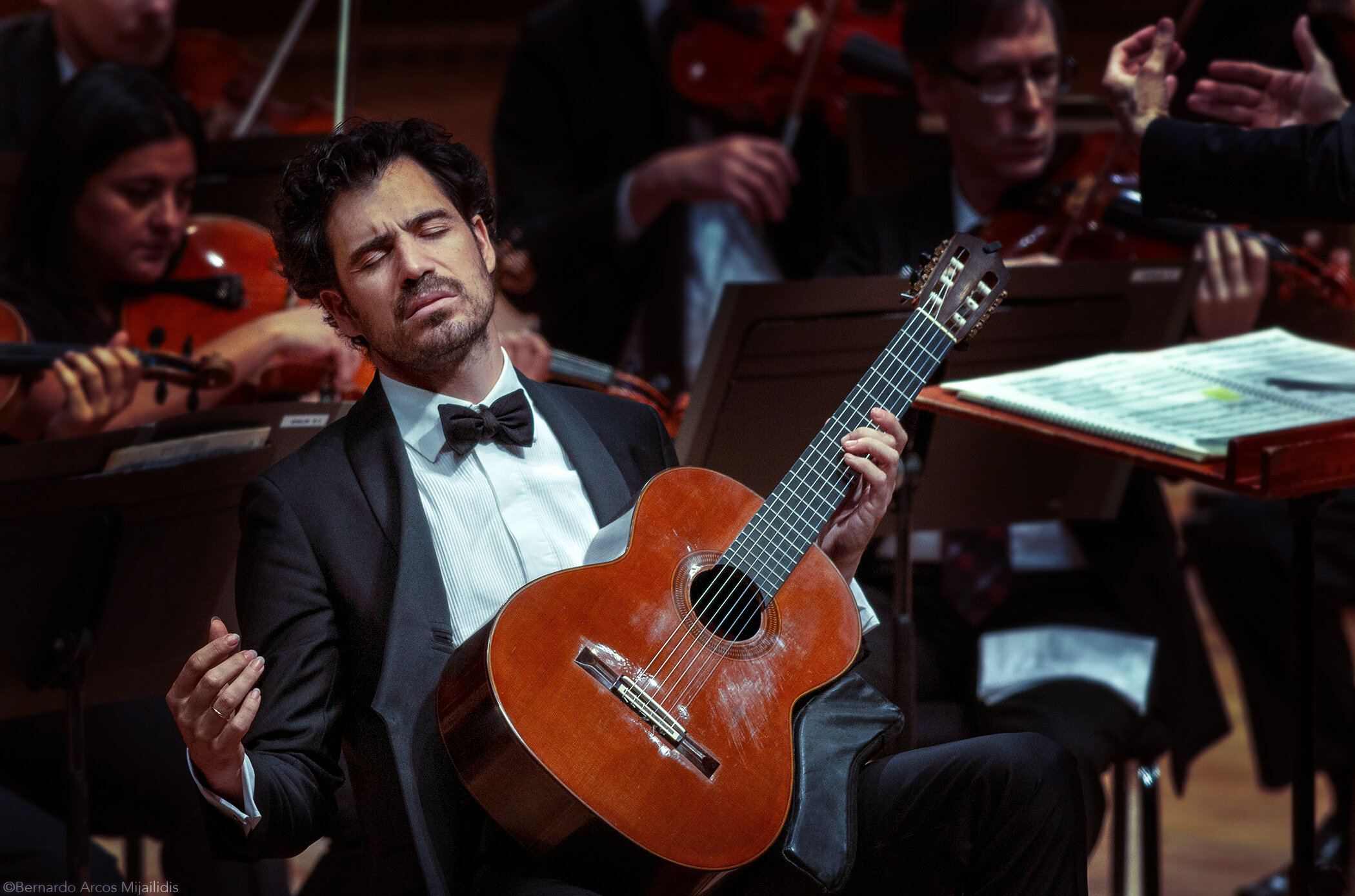
Pablo Sáinz-Villegas. Photo by Bernardo Arcos Mihailidis.

His program will feature his own arrangement of the Chaconne from Bach’s Partita in D minor for solo violin, as well as works by Vila-Lobos, Albéniz, Agustín Barrios-Mangoré and Carlo Domeniconi.

The Five Preludes are the last of many works that Brazilian composer Heitor Villa-Lobos wrote for guitar. Each of the five preludes is titled as an homage. The third is an homage to Bach, but the others recognize aspects of Brazilian life and culture: “The Brazilian Backcountry,” “The Scoundrel from Rio,” “The Brazilian Indians” and “The Social Life.”

The instantly recognizable piece by Isaac Albeniz known as Asturias is one of the most popular works for classical guitar. However, it was originally written for piano and titled simply “Prelude.” The title Asturias (Leyenda) was applied after Albeniz’s death by the German publisher Friedrich Hofmeister when he published it in 1911. Hofmeister also included Asturias in what he called the “complete version” of the Suite española, although Albeniz had not included it as part of a larger work at all.

The piano piece was written to imitate the sound of flamenco guitar, and it has been transcribed for guitar several times, including by the great Spanish guitarist Andrés Segovia. In addition to its wide popularity among classical guitarists, it has also been used in by rock and pop groups, including The Doors and Iron Maiden.

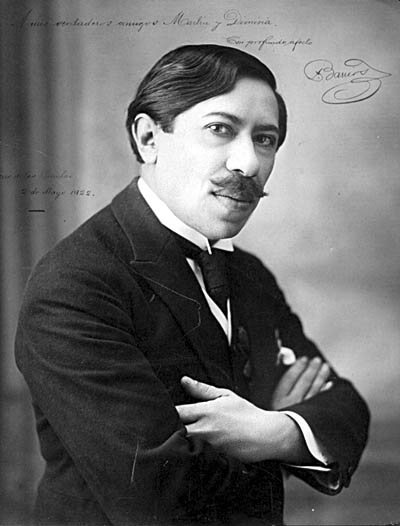
Agustín Barrios-Mangoré

The other composers on the program are well known to guitarists but may not be familiar to classical audiences in this country. Agustín Barrios-Mangoré was a guitarist and composer from Paraguay who lived in the first half of the 20th century. Also known as Nitsuga (Augustin spelled backwards!) Mangore and Augstín Pío Barrios, he began university studies in music and other fields when he was only 15.

He was known for both his brilliantly virtuosic performances on guitar and for his poetry. He had numerous students, including 12 that he taught while living in El Salvador who were known as “The Twelve Mangoreanos.”

Many of his works for guitar were influenced by South and Central American folk music. Un sueño en la floresta (A dream in the forest) is known for its extensive use of complex tremolos and its ending on a high C that requires one more fret than are found on most guitars.

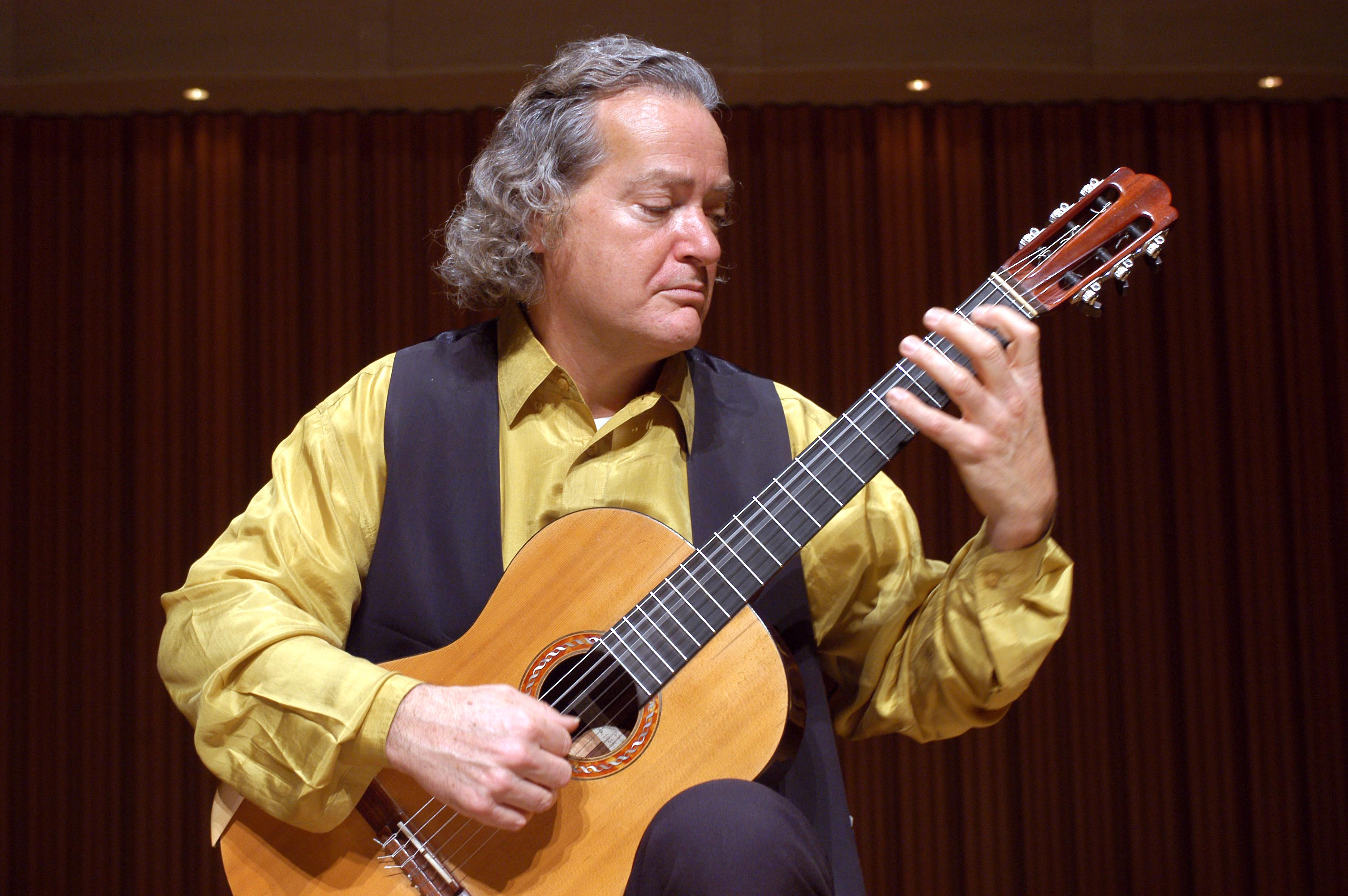
Carlo Domeniconi

Italian guitarist and composer Carlo Domeniconi spent many years living in Istanbul, Turkey. That experience led to Koyunbaba, a suite inspired by Turkish music. The title refers to a region of Turkey, and also means “shepherd.” Domeniconi’s best known work, Koyunbaba uses “scordatura” (an alternative tuning of the strings) to create exotic effects and evoke the Turkish origin of the music.

After musical studies in his native province of La Roja, Sáinz-Villegas has lived and managed his career in New York. Since his debut with the New York Philharmonic with conductor Rafael Frühbeck de Burgos, he has played in more than 40 countries with orchestras including the Berlin Philharmonic, Chicago Symphony, Philharmonic of Israel, Los Angeles Philharmonic, and the National Orchestra of Spain. Most memorably, he has performed before members of the Spanish Royal Family as well as other heads of state and international leaders.

# # # # #

CU Presents Artist Series: Guitar Masterworks
Pablo Sáinz-Villegas, guitar

  • Heitor Villa-Lobos: Five Preludes
  • J.S. Bach: Chaconne from the Partita in D minor for solo violin (arr. Sáinz-Villegas)
  • Isaac Albéniz: Asturias (Leyenda) from Suite Española
  • Agustín Barrios-Mangoré: Un sueño en la floresta (A dream in the forest)
  • Carlo Domeniconi: Koyunbaba

7:30 p.m. Friday, Nov. 9
Macky Auditorium

TICKETS

Pro Musica Colorado will reschedule ‘farewell concert’

Please note that the final concert by the Colorado Pro Musica Chamber Orchestra with conductor Cynthia Katsarelis and guest soloist Nicolò Spera, originally scheduled for April 6, was postponed due to inclement weather and the widespread power outage on that date. The concert will be rescheduled pending the availability of the musicians and the venue. The new date will be announced as soon as arrangements have been confirmed.

You may read the original story here. This is the full program for the concert:

“Nicolò!”
Pro Musica Colorado Chamber Orchestra, Cynthia Katsarelis, conductor
With Nicolò Spera, guitar

  • Jessie Montgomery: Starburst
  • Joaquin Rodrigo: Fantasía para un gentilhombre (Fantasy for a gentleman)
  • Louise Farrenc: Symphony No. 3 in G Minor