Maybe a ghost story in Santa Fe

Britten’s The Turn of the Screw in a hauntingly ambiguous production

By Peter Alexander Aug. 10 at 1:15 p.m.

Editor’s Note: This is one of several posts covering four of the five operas presented this year at the Santa Fe Opera.

Benjamin Britten’s The Turn of the Screw is a challenging opera to produce.

Based on the short story by Henry James, it is a ghost story about a governess who cares for two children living on a remote estate. The children, Miles and Flora, are haunted, and lured into mischief or worse, by the spirits of deceased previous caretakers.

Or are they? 
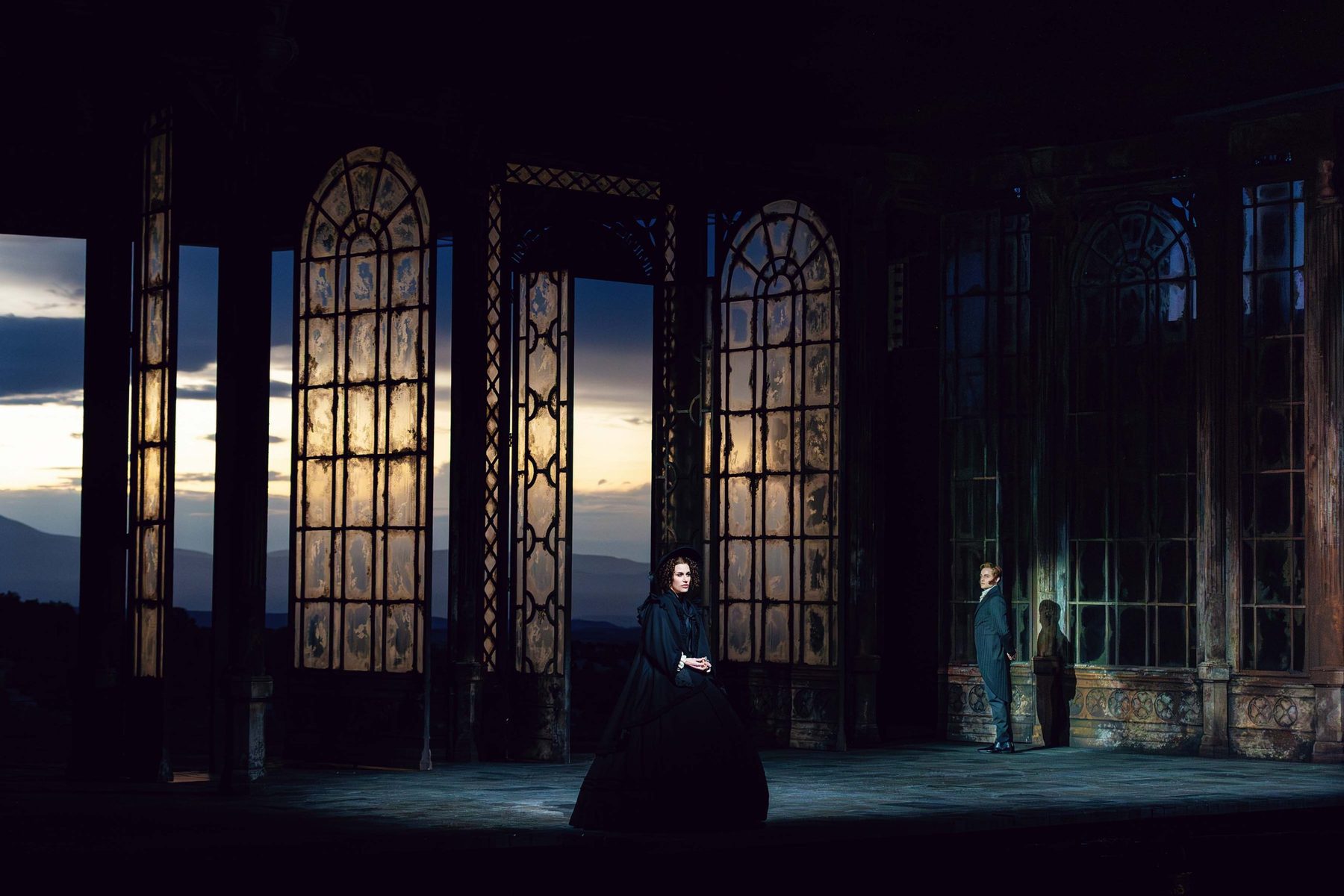
Jacquelyn Stucker (The Governess), Brenton Ryan (Prologue), photo by Curtis Brown for the Santa Fe Opera

As James’ story and the opera both make clear, the question is whether the ghosts are real presences, haunting the house and the children, or the products of the governess’ delusions, phantoms of an unbalanced mind. Whole books have been written on this issue; any production that fails to recognize the question has failed.
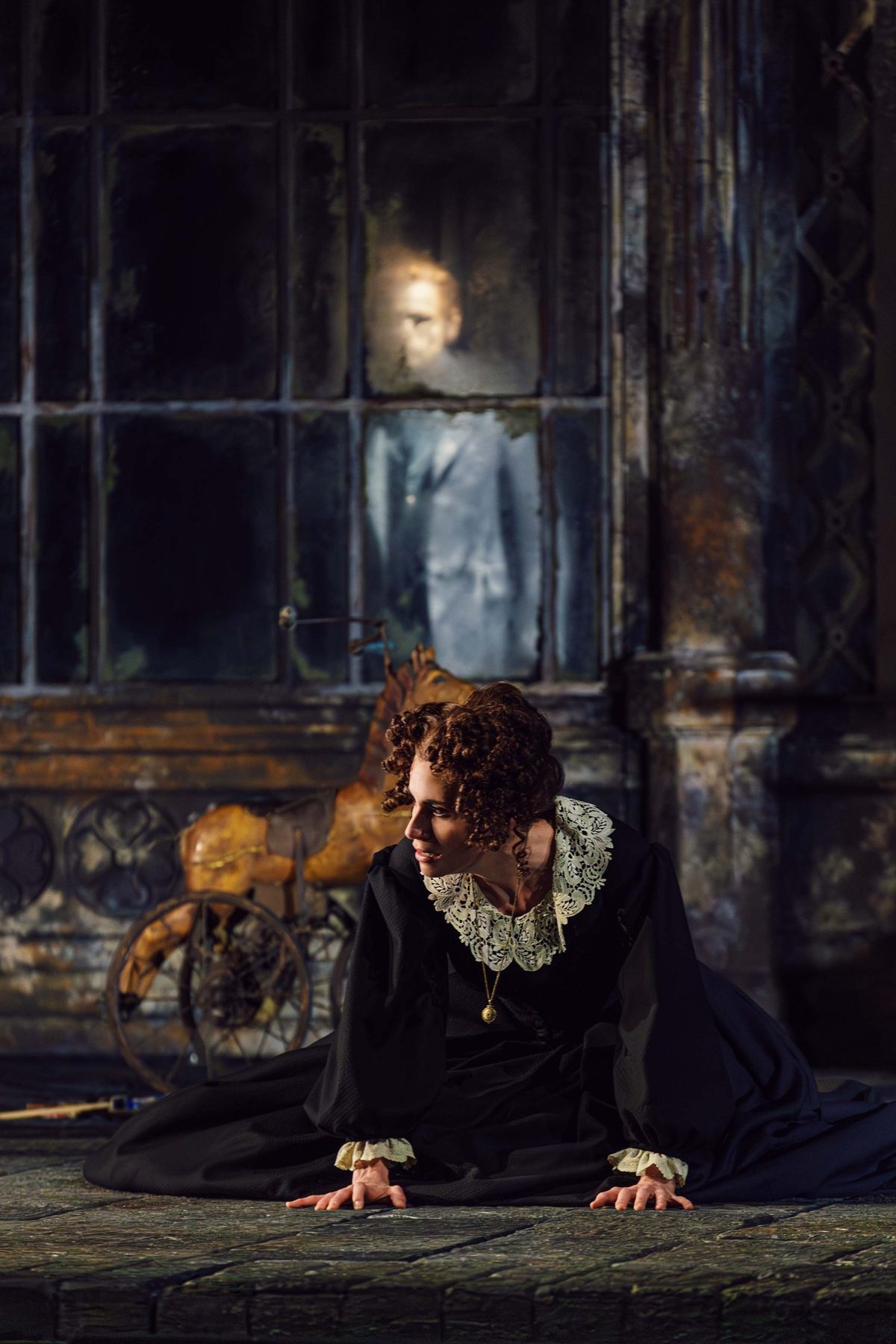
Jacquelyn Stucker (The Governess), Brenton Ryan (Peter Quint), photo by Curtis Brown for the Santa Fe Opera

In that respect, the current Turn in Santa Fe is the most successful I have seen. The relationships among the governess, the children, and the ghosts of Peter Quint and Miss Jessel, are adeptly handled. The problem is that Quint and Jessel sing, so it is necessary to have living actors onstage. How can they remain figments of the Governess’ imagination, when we, the audience, can see them?

A full description of all the astute choices in the Santa Fe production would require a separate essay, but several critical points illuminate the care taken by stage director Louisa Miller. In his first appearance Quint is only a vague apparition, seen though the window. But after Mrs. Grose, the housekeeper, gives names to what has happened in the past, who Peter Quint and former governess Miss Jessel were, suddenly they are seen more clearly, appearing onstage with the governess. This suggests that Mrs. Grose has stimulated the young governess’ overactive, and possibly paranoid, imagination. 

Another telling point is that the children never see the ghosts. When Quint and Jessel are onstage, the children never turn to look at them, in spite of being called by name. Only the governess seems to see and hear the ghosts, and only she speaks to them. So the ghosts, if such they are, remain suggestions more than characters. Anything else can be explained by the fact that Quint and Jessel did interact with—and possibly lead astray—the children in the past. When Quint tells Miles to steal a letter, it could just as reasonably be a young boy’s naughty impulse pushing him to mischief. His later explanation—“I wanted to know what you wrote about us”—rings true.
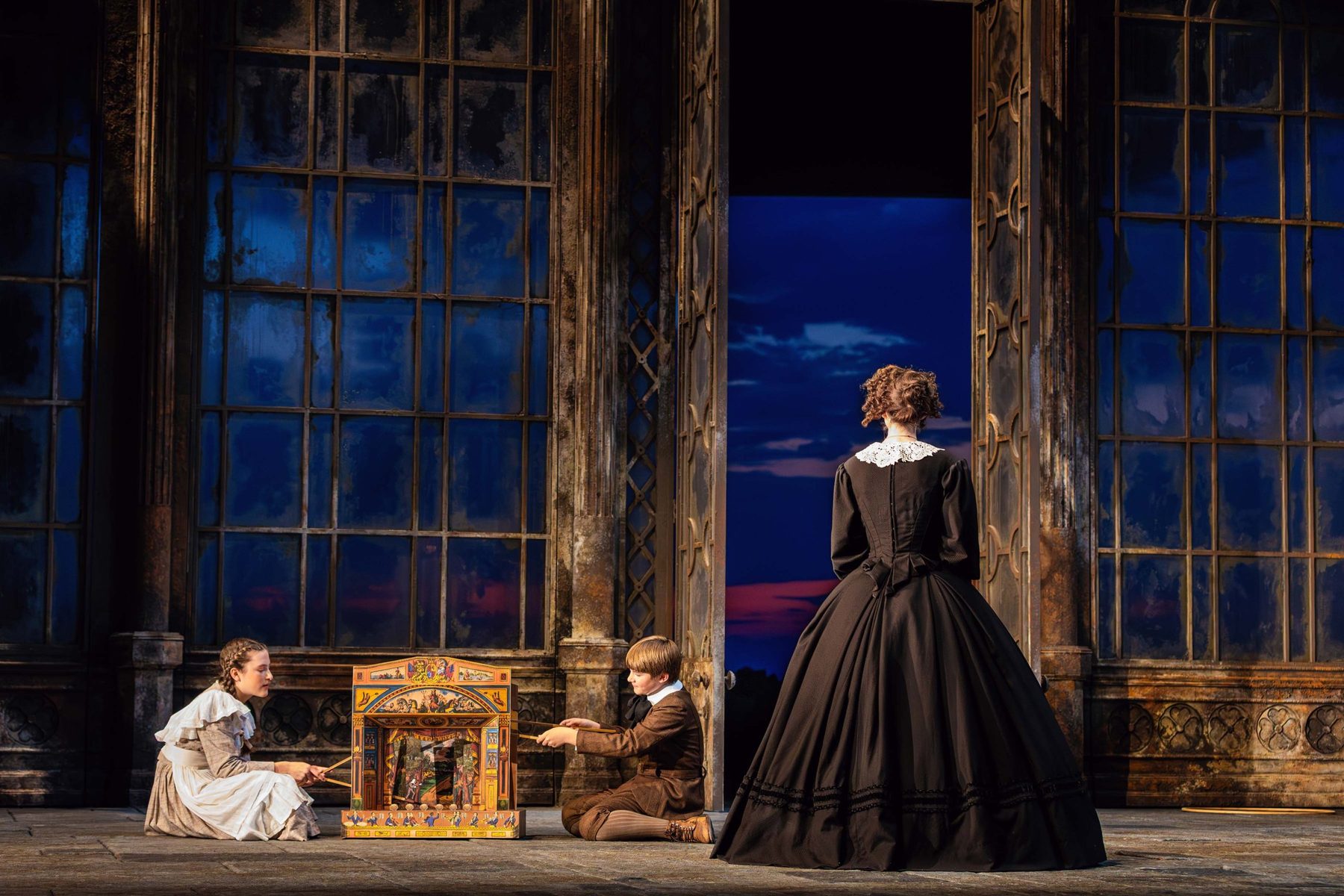
Annie Blitz (Flora), Everett Baumgarten (Miles), Jacqulyn Stucker, photo by Curtis Brown for the Santa Fe Opera

It would be a mistake to overlook one innovation of this production. Britten’s score is divided into scenes and and purely orchestral interludes between them. Miller makes use of the interludes—usually played without action—for symbolic events, or to show the children playing (and kudos for the delightful period play, from hoop trundling to a play theater) with the governess joining in. The plot focuses on the descent to tragedy, ignoring the rest of the children’s lives and their happier interactions with the governess. These pantomime sequences add depth to all of of the characters.

In short, Miller’s direction carefully treads the line between ghost story and psychological case study. (It is useful to recall that Henry James’ brother William is one of the founders of modern psychology). She correctly leaves it to the audience to decide which version of the story is true—or to leave it undecided.

The scenic design is credited to Christopher Oram, as a Canadian Opera Company production that originated at the Garsington Opera in England. It has effectively been fit onto Santa Fe’s stage, where lighting by Malcolm Rippeth successfully adds to the suggestive, murky ambience of the setting.

The Aug. 5 cast was uniformly strong in presenting both music and character. The diction was always clear and understandable, a testament to both Britten’s care in scoring the opera and the singers’ efforts. Brenton Ryan brought a bright tenor voice to both the prologue and the role of Peter Quint. His alluring roulades, tailored for the original Quint of Peter Pears, were unexceptionable. In one of the more telling touches, the staging of the prologue briefly conflates Quint and the absent guardian, raising more questions of motive and reality.

Jacquelyn Stucker was an ideal Governess, with a clear and delicate sound at the outset. She gave a well considered performance; as the opera progressed, she became more unstable and desperate in her characterization, and her tone more brittle and biting in quality. In voice and presence, Jennifer Johnson Cano portrayed a stolid and sometimes baffled housekeeper. She sang with security, blending into the ensemble and never dominating the musical texture.

The two young characters were beautifully performed by treble Everett Baumgarten as Miles and young soprano Annie Blitz as Flora. Baumgarten’s pure sound was always audible, and was alluring in his eerie “Malo, malo.” Blitz’s voice was focused, consistently on pitch but at times piercing.
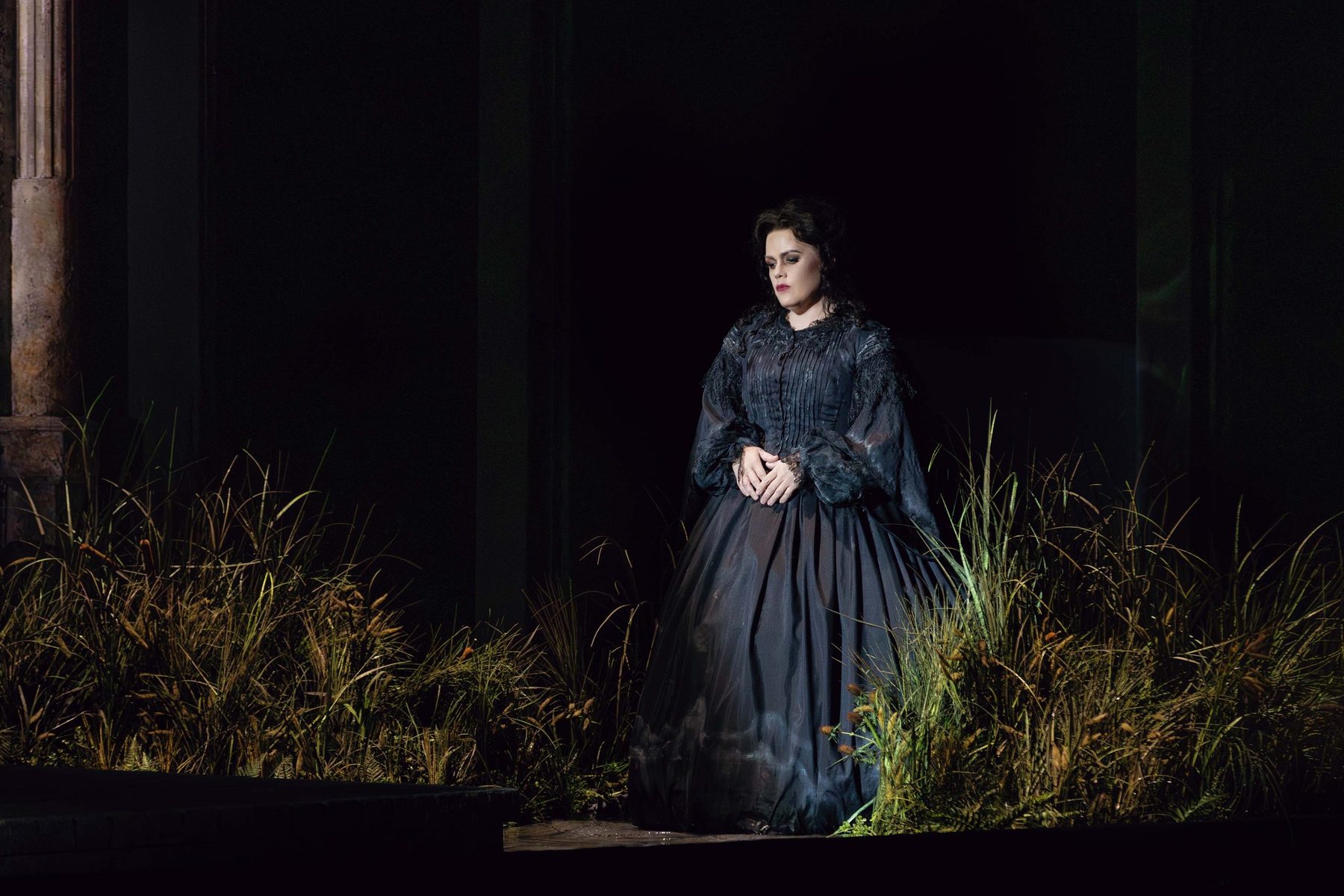
Wendy Bryn Harmer (Miss Jessel), photo by Curtis Brown for the Santa Fe Opera

Wendy Bryan Harper provided a brooding presence as Miss Jessel. Her slightly pushed tone suggested a character under pressure, never quite at ease. Otherwise, little acting was required, as she drifted phantom-like on and off the stage, usually through the onstage pond that represented both the estate’s lake, and its symbolism as a boundary space between the real and unreal.

It would be hard to overpraise the orchestral players in the pit. Britten’s virtuoso score for an ensemble of 13 players was ably led by conductor Gemma New, who convincingly knit the various musical elements together, from scene to interlude to scene, and brought out the shifting moods of the evocative score. While all the players mastered the virtuoso demands of their parts, special notice should be taken of prominent percussion passages throughout.

NOTE: The 2025 performances of Turn of the Screw have come to an end.
Colorado Music Festival continues July 23 to August 4

Guest soloists and a Mahler symphony bring 2024 festival to a close

By Peter Alexander July 18 at 3:20 p.m.

The remaining two weeks of the Colorado Music Festival (CMF) will see a series of guest artists—soloists, conductors and chamber musicians—and culminate with a Mahler symphony.

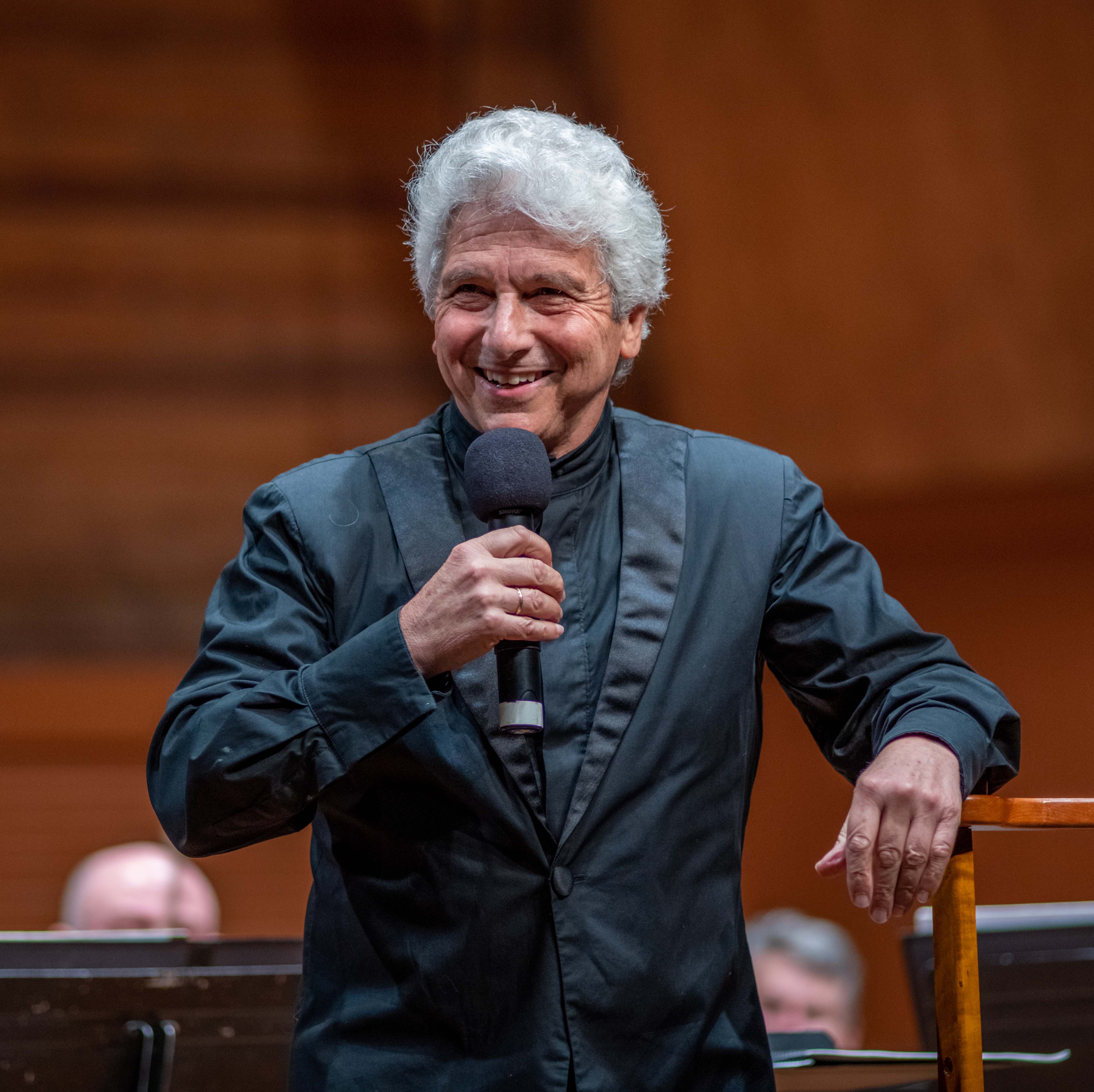
Peter Oundjian, artistic director of the Colorado Music Festival. Photo by Geremy Kornreich.

Ending the summer with Mahler has become a tradition at CMF. “It’s quite conscious,” artistic director and conductor Peter Oundjian says. “We did the Third (Symphony), we did the Fifth. The season of ’21 we ended with Beethoven, because couldn’t have a Mahler symphony”—due to onstage seating restrictions during COVID—but otherwise, Oundjian has made Mahler the preferred festival finale.

Before the season-ending concert Aug. 4, CMF still has intriguing programs of both orchestral and chamber music. Next Tuesday (7:30 p.m. July 23; full programs listed below), the Robert Mann Chamber Music Series continues with a concert by members of the Festival Orchestra. The program will include one of the most loved pieces by Mendelssohn, his String Octet in E-flat, written when the composer was only 16.

Danish String Quartet. Photo by Caroline Bittencourt.

One week later on July 30, the guest chamber group the Danish String Quartet closes the chamber music series with a diverse program of pieces and movements both familiar and unfamiliar. The Danish Quartet, known for creative programming, was originally scheduled in 2021, but due to COVID restrictions had to wait for the 2022 festival.

This summer’s program opens with the minuet from Joseph Haydn’s late quartet Op. 77 no. 2, followed by Three Pieces for String Quartet by Stravinsky and Three Melodies by the 17th-century blind Celtic harpist Turlough O’Carolan. An early divertimento by Mozart and the Third String Quartet by Shostakovich complete the program.

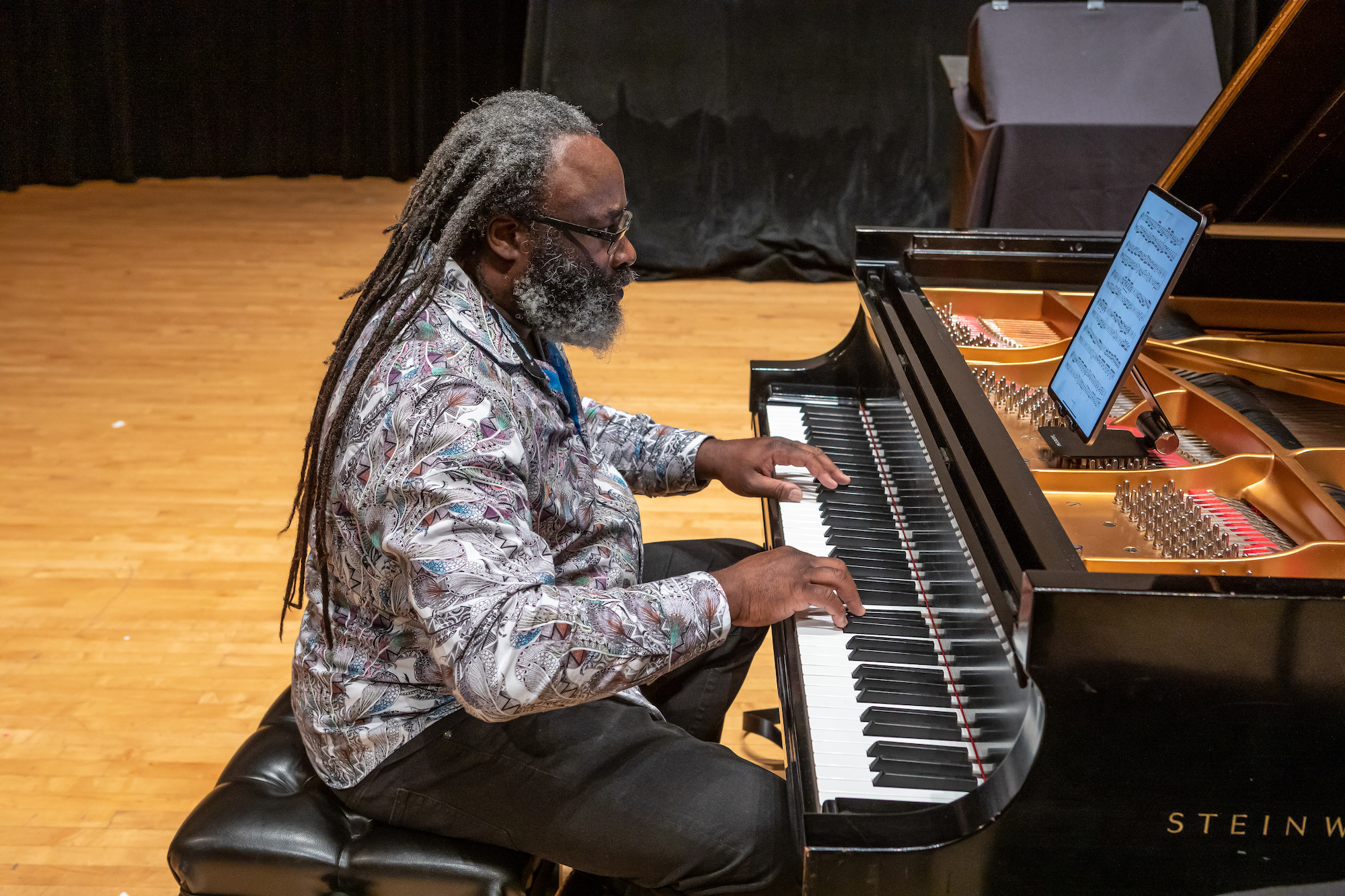
Awadagin Pratt

Pianist Awadagin Pratt will be the guest soloist for the Festival Orchestra concerts July 25 and 26. The first African-American pianist to win the Naumburg International Piano Competition, Pratt has had a protean career, performing with most major American orchestras, appearing on six continents, at the White House by invitation from presidents Clinton and Obama, and on Sesame Street.

Described in the Washington Post as “one of the great and distinctive pianists of our time,” Pratt is known for highly individual artistry and concert dress. A pianist of prodigious technique, he plays a wide ranging repertoire. For his appearance with Oundjian and the Festival Orchestra, Pratt will play a Keyboard Concerto by J.S. Bach and Rounds for piano and string orchestra by Jessie Montgomery. The program will also feature a staple of the large orchestra repertoire, Rimsky-Korsakov’s Scheherazade.

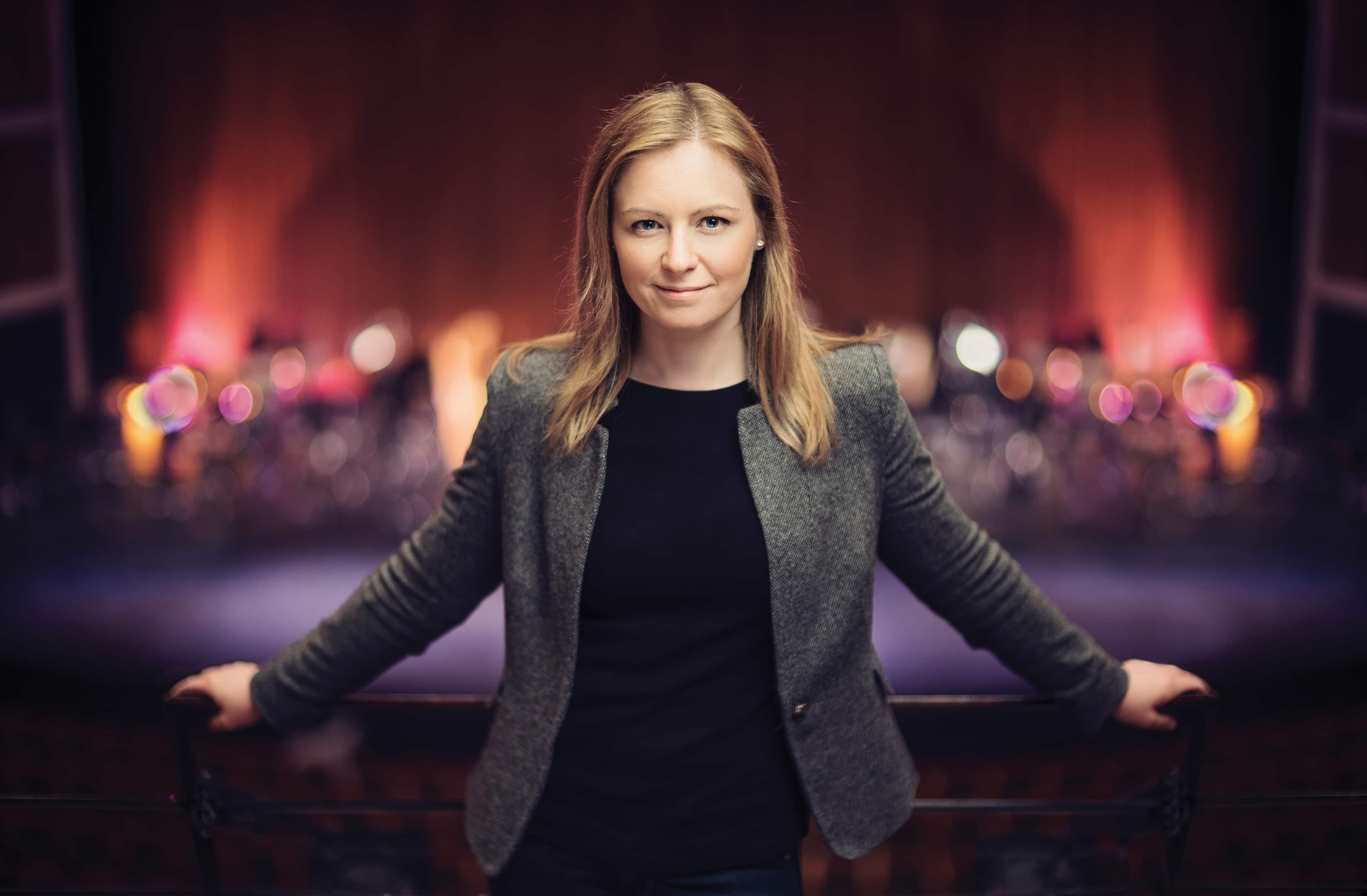
Gemma New. Photo by Anthony Chang.

Two guest artists and a guest conductor will be featured on the Chamber Orchestra concert July 28. Conductor Gemma New, hailed as “one of the brightest rising stars in the conducting firmament” by the St. Louis Post Dispatch, is a native of New Zealand where she leads the New Zealand Symphony. She comes to Colorado on her way to conduct the BBC Proms in London Aug. 16.

The program will feature the piano duo of Christina and Michelle Naughton as guest soloists, performing Mozart’s Concerto in E-flat Major for Two Pianos, K365. Other works on the all-Mozart program are Eine kleine Nachtmusik and the “Haffner” Symphony, No. 35 in D major.

The next Festival Orchestra concert brings another outstanding soloist to Chautauqua: violinist Augustin Hadelich, who has become a CMF favorite since his first appearance at the festival in 2018. He appeared from Oundjian’s home by live stream during the COVID-canceled 2020 season, and returned as artist-in-residence in 2021.

Augustin Hadelich. Photo by Suxiao Yang.

This season he will play the Tchaikovsky Violin Concerto (Aug. 1 and 2) on a program that also includes Two Mountain Scenes by Kevin Puts and Dvořák’s Symphony No. 7 in D minor. The latter, Oundjian says, “is for a lot of people Dvořák’s true masterpiece.

“Obviously the Ninth Symphony (the ‘New World’) is fantastic and the Eighth is so exquisitely beautiful, but Seven is the piece that made him famous. The premiere in London (1885) was kind of an epic moment for him. I have conducted it in a lot of different places, and orchestras love to play it. They know how magnificent it is.”

Puts’s Two Mountain Scenes was commissioned by the New  York Philharmonic and Bravo Vail! “It’s a real showpiece for orchestra, quite original but not forbidding,” Oundjian says. “You’d think living in Colorado it would be performed more often. It’s a wonderful piece!”

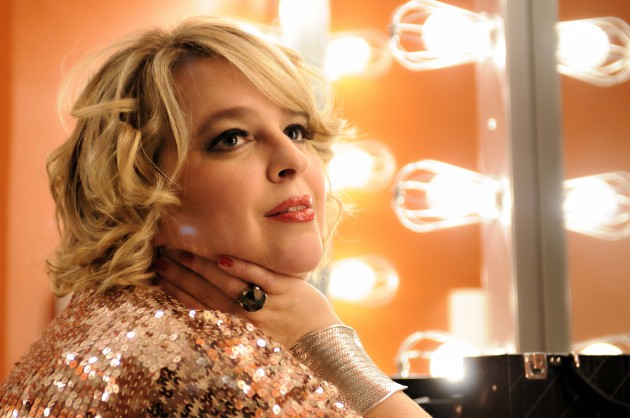
The final concert of the 2024 festival, Sunday, Aug 6, features the final guest artist, soprano Karina Gauvin.  A Canadian soprano who has performed with orchestras from San Francisco to Rotterdam, she will sing Ravel’s Shéhérazade and the final movement of the festival-closing Fourth Symphony of Mahler. And in another form of delight, the concert will open with Johann Strauss Jr.s spirited Overture to Die Fledermaus.

Karina Gauvin. Photo by Michael Slobodian.

Following the pattern of ending the festival with Mahler, it was the Fourth that  generated the rest of the program. Oundjian says that work “is in some ways the most fascinating narrative of all (of Mahler’s) symphonies. It’s like poetry. It also has a chamber quality that is very different from all the other Mahler symphonies.

“There’s something both playful and heavenly about the first movement, and something devilish about the second movement, with its falsely tuned violin that represents the devil. And typical of Mahler scherzo movements, where you have trio sections that are very beautiful and elegant. And then a slow movement, you think, ‘OK, this is the most beautiful music that’s ever been written’!”

The finale the gives the whole symphony the character of childish delight. A setting of a poem describing life in heaven, with everyone living “in sweetest peace” and enjoying endless banquets, it is one of Mahler’s most beguiling movements. It is, Oundjian says, a “wonderful image of heaven in this child-like voice, speaking to us from another place.

“I wanted to put (Ravel’s) Scheherazade with the Fourth Symphony. I think Scheherazade is staggering, with orchestration, the colors, harmonies, the way he uses the vocal line and shapes the vocal line. It’s just magnificent. And then to start it with Fledermaus is pure heaven!”

# # # # #

Colorado Music Festival, Peter Oundjian, music director
Remaining concerts, July 23–Aug. 4, 2024
All performances in Chautauqua Auditorium

Robert Mann Chamber Music Series
Colorado Music Festival musicians

  • Joseph Haydn, String Quartet in C Major, op. 20 no. 
  • Claude Debussy, Sonata for flute, viola and harp
  • Felix Mendelssohn, String Octet in E-flat Major, op. 20

7:30 p.m. Tuesday, July 23

Festival Orchestra Concert
Festival Orchestra, Peter Oundjian, conductor
With Awadagin Pratt, piano

  • J.S. Bach: Keyboard Concerto in A major, S1055 
  • Jessie Montgomery: Rounds for piano and string orchestra (2022)
  • Rimsky-Korsakov: Scheherazade

7:30 p.m. Thursday, July 25
6:30 p.m. Friday, July 26

Festival Chamber Orchestra Concert
Chamber Orchestra, Gemma New, conductor
With Christina and Michelle Naughton, piano duo

  • Mozart: Eine kleine Nachtmusik, K525
    —Concerto in E-flat Major for Two Pianos, K365
    —Symphony No. 35 in D major, K385 (“Haffner”)

6:30 p.m. Sunday, July 28

Robert Mann Chamber Music Series
Danish String Quartet 

  • Joseph Haydn: String Quartet, op. 77 no. 2: III, Andante
  • Stravinsky: Three Pieces for String Quartet
  • Turlough O’Carolan: Three Melodies
  • Mozart: Divertimento in F major, K138
  • Shostakovich: String Quartet No. 3 in F major, op. 73

7:30 p.m. Tuesday, July 30

Festival Orchestra Concert
Festival Orchestra, Peter Oundjian, conductor
With Augustin Hadelich, violin

  • Kevin Puts: Two Mountain Scenes (2007)
  • Tchaikovsky: Violin Concerto in D Major, op. 35
  • Dvořák: Symphony No. 7 in D minor, op. 70 

7:30 p.m. Thursday, Aug. 1
6:30 p.m. Friday, Aug. 2

Festival Finale Concert
Festival Orchestra, Peter Oundjian, conductor
With Karina Gauvin, soprano

  • Johann Strauss: Overture to Die Fledermaus
  • Ravel: Shéhérazade
  • Mahler: Symphony No. 4 in G major

6:30 p.m. Sunday, Aug. 4

Tickets for individual concerts can be purchased from the Chautauqua Box Office.