Seicento and guest artists give a splendid realization of a musical monument

Monteverdi’s 1610 Vespers needs to be seen as well as heard

By Peter Alexander
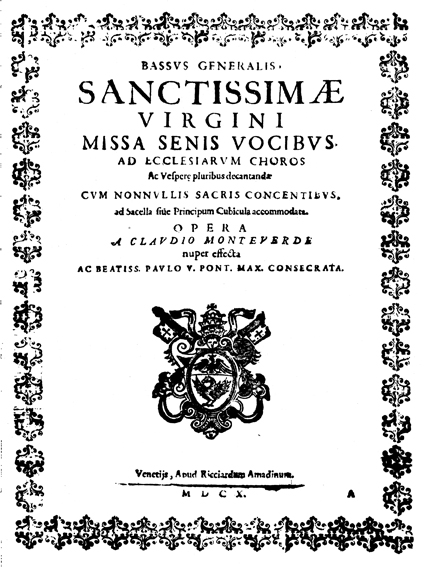
Title page of Monteverdi's 1610 Vespers

Title page of Monteverdi’s 1610 Vespers

Let’s start here: Monteverdi’s 1610 Vespers is one of the greatest, and least known, monuments of European music.

That being the case, we should be especially grateful that conductor Evanne Browne, the Seicento Baroque Ensemble, and artists gathered from the world of historical performance gave us a splendid realization of Monteverdi’s masterpiece, Saturday night in Boulder and Sunday afternoon in Denver (Oct. 24–25).

Printed in Venice in 1610, the Vespers burst upon the musical world at a critical moment in history. The style that had dominated written European music for generations, based in the chant and the modes of sacred music, was giving away to a dramatic style that opened deep levels of personal expression and musical relationships based on major and minor keys. This style led to the creation of opera as we know it, the concerto, the symphony, and ultimately most of the music we hear today.
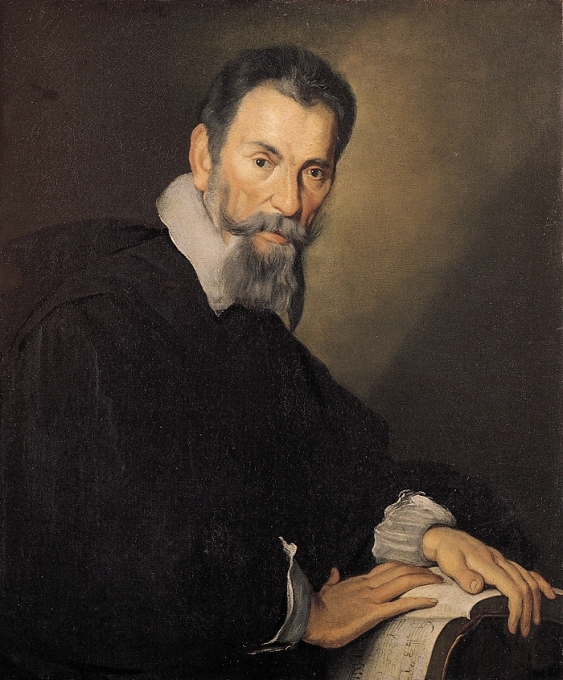
Claudio Monteverdi. Portrait by Bernardo Strozzi.

Claudio Monteverdi. Portrait by Bernardo Strozzi.

More than just a single work, the Vespers comprise an anthology of the musical styles of the early 17th century. Their 90 minutes of music include deeply expressive songs and brilliant instrumental flourishes out of early opera; stunning virtuoso vocal ensembles from late Renaissance courtly madrigals; and powerful choral passages that anticipate Bach in brilliance and contrapuntal complexity. A composer of great genius, Monteverdi here created a work of overwhelming impact.

Or as a scholar of my acquaintance remarked, with only slight hyperbole, “It’s a piece of music that we as a species do not deserve.”

In spite of such veneration from performers and scholars, the Vespers remain little known to the general musical public, because performances are relatively rare. To present them in their entirety requires both technical skill and expertise in the performance styles of the early Baroque. Happily, Seicento’s presentation was on a very high level in both respects. Browne’s apparent ease in managing such a large undertaking and leading a taut, well-paced performance are a testament to her skill as a conductor of Baroque music.
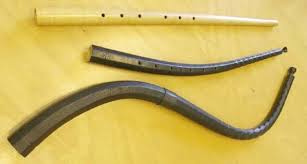
cornettos

cornettos

It is a sign of the depth of the resources available today in the recreation of historical musical styles that a splendid ensemble of specialist players and soloists can be assembled from around the world for performances in Colorado. In addition to singers skilled in the Baroque style, Browne brought together specialized instruments including cornettos (an early wind instrument that has a mouthpiece like the trumpet and fingerholes like the recorder, made of wood and covered in leather), sackbuts (a precursor of the modern trombone) and theorbo (a large lute).
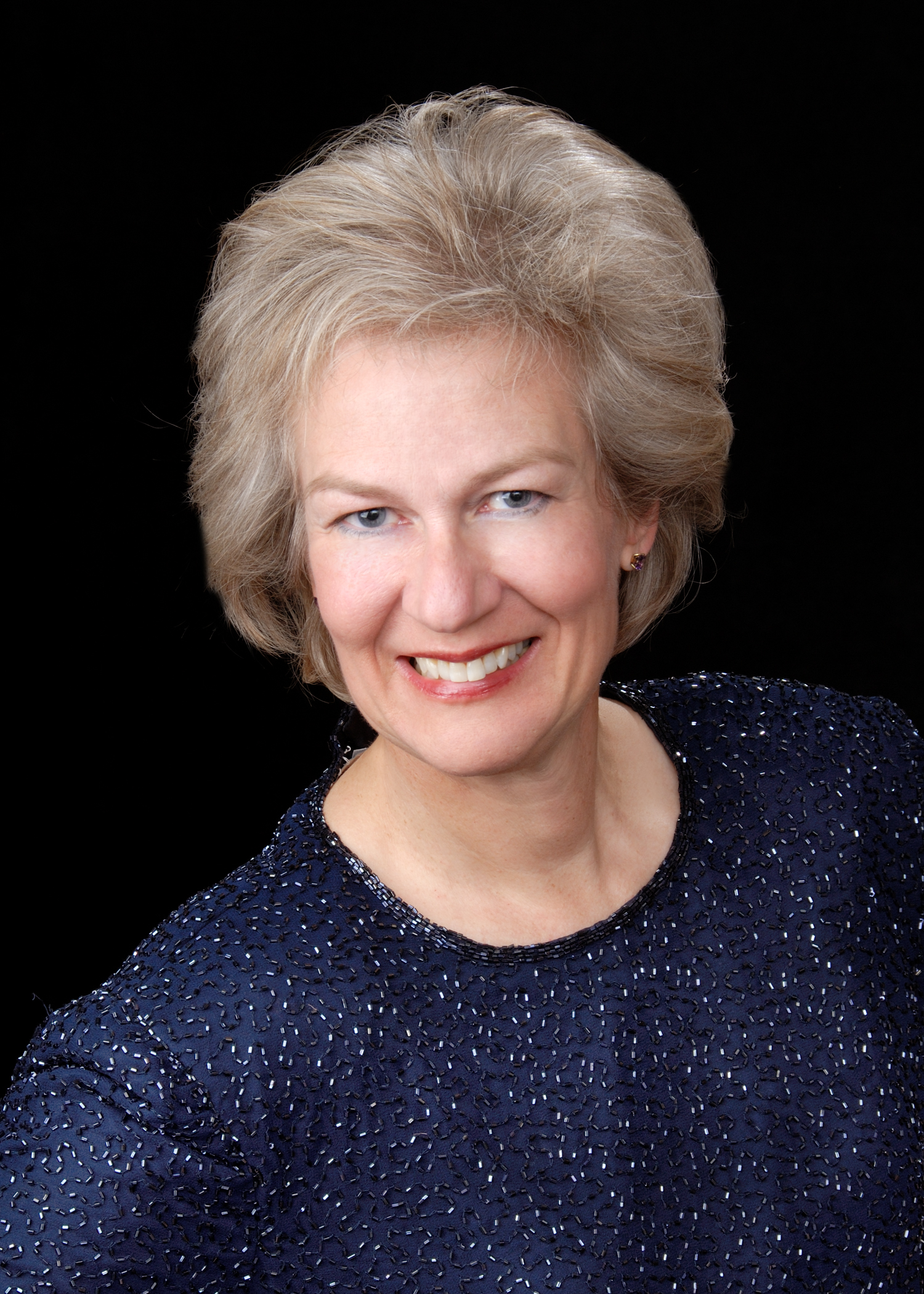
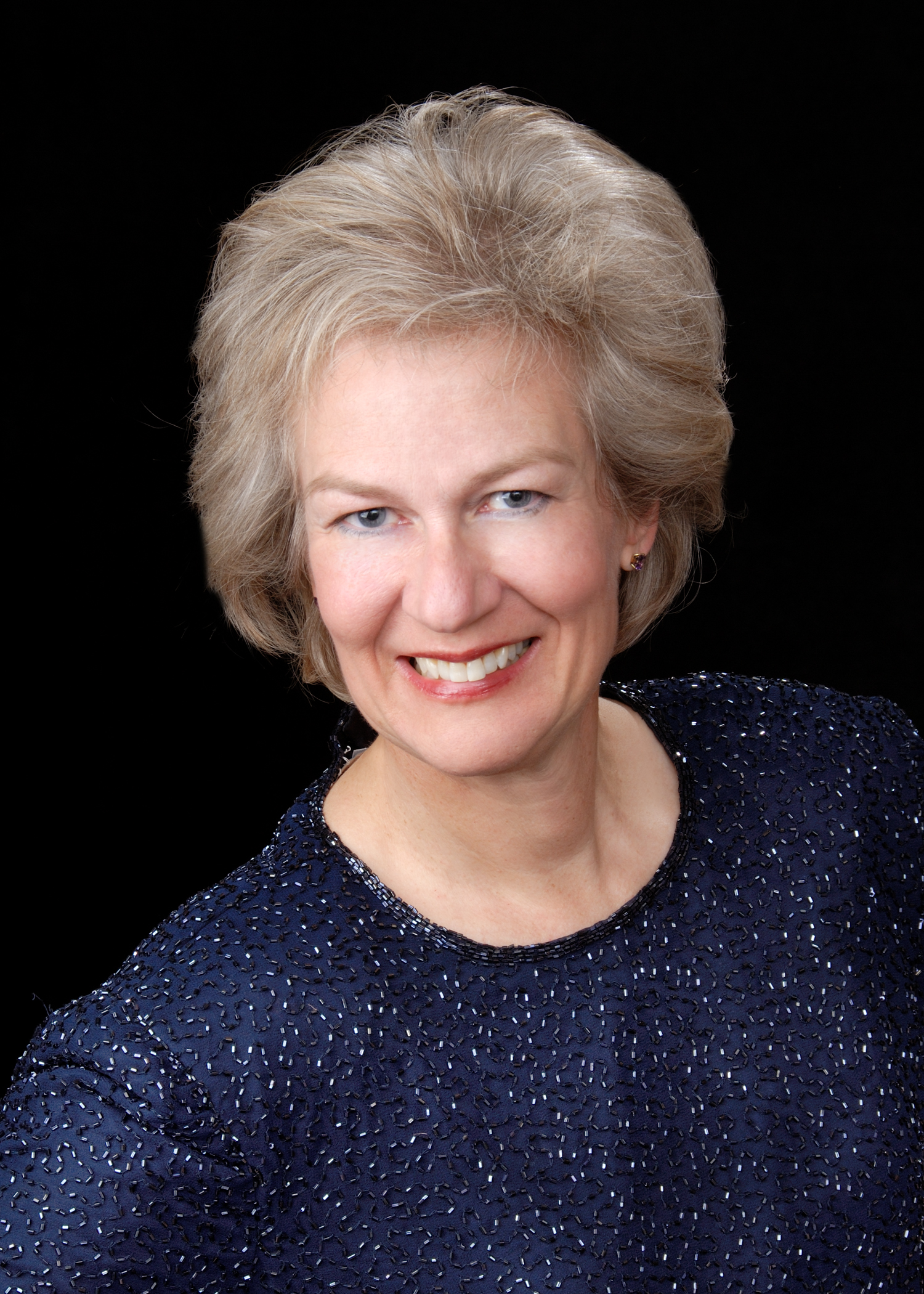
Evanne Browne, artistic director of Seicento

Evanne Browne, artistic director of Seicento

And music lovers in Boulder and Denver can take great pride that a superb conductor, chorus and local soloists formed the foundation of these performances.

In the Sunday performance that I heard Seicento showed great skill with the Baroque style, handling the intricacies of Monteverdi’s vocal parts and filling St. Paul Lutheran and Roman Catholic Church in Denver with a splendid sound. My only reservation was that the size of the group—approximately 40 singers—and the resonance of the space conspired to obscure some details, including parts of the text and some instrumental flourishes. For example, the opening movement, Deus in adjutorium, incorporates the fanfares that also open Monteverdi’s opera Orfeo, but played by Baroque cornettos they could not cut through the choral sound.

On the other side of the same coin, when needed the chorus could create a glorious climax. Their entrance in Audi Coelum, following a series of delicate echo passages, made a powerful impact.

The soloists assembled for this performance were quite impressive. I don’t want to risk slighting anyone by singling out any one for praise, but I have to mention the solo aria-like Nigra sum, the virtuoso ensembles Laetatus sum and Duo Seraphim (the latter more than a duo, and performed without conductor in the manner of a madrigal), and the male quintet of Et misericordia as especially memorable.

Anyone who remembers the bad old days when historic instruments were played inexpertly and out of tune if at all will have been delighted with the quality of playing and accuracy of intonation. With players from the east coast and Europe, Browne assembled an ensemble equal to many specialized groups today. Indeed, some of the players have performed the Vespers dozens if not hundreds of times, and it was a great pleasure to hear a historical performance of such quality.
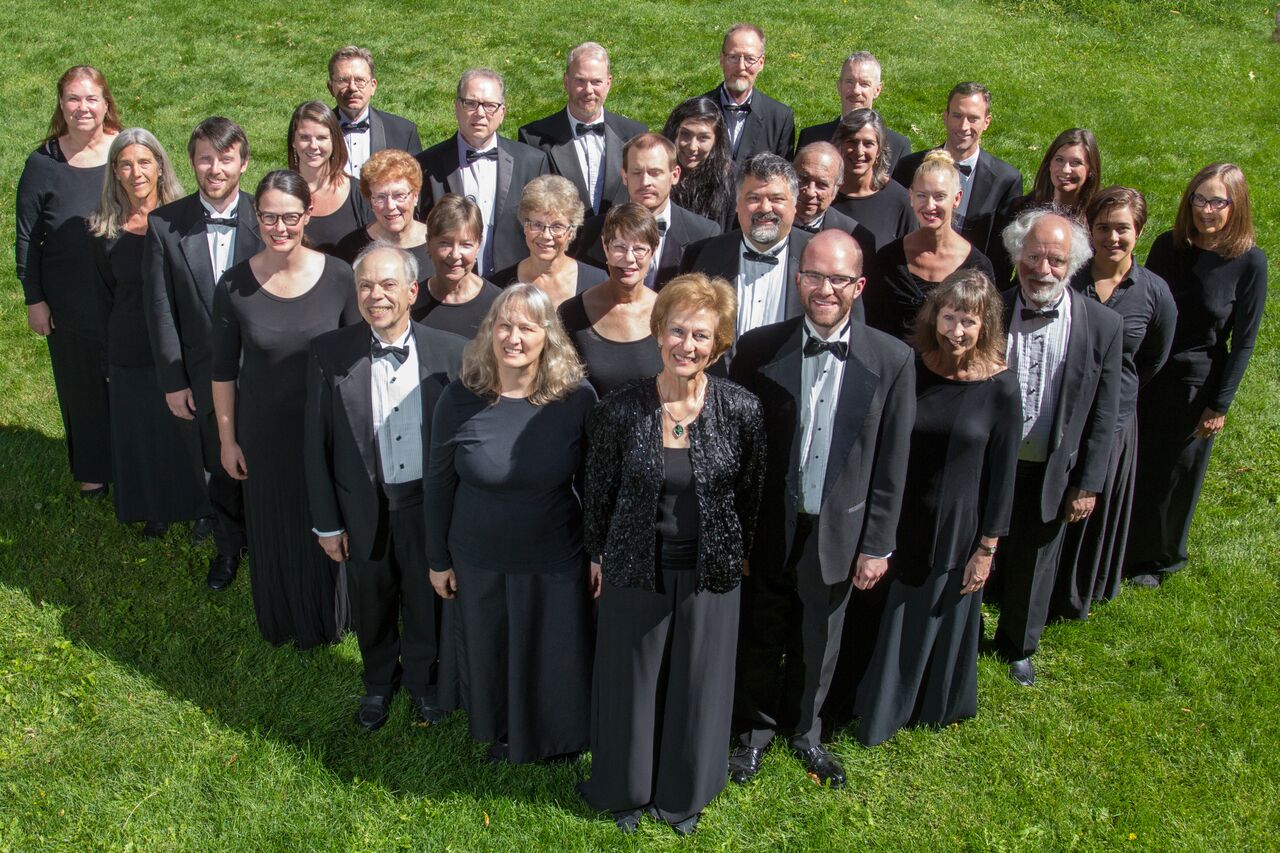
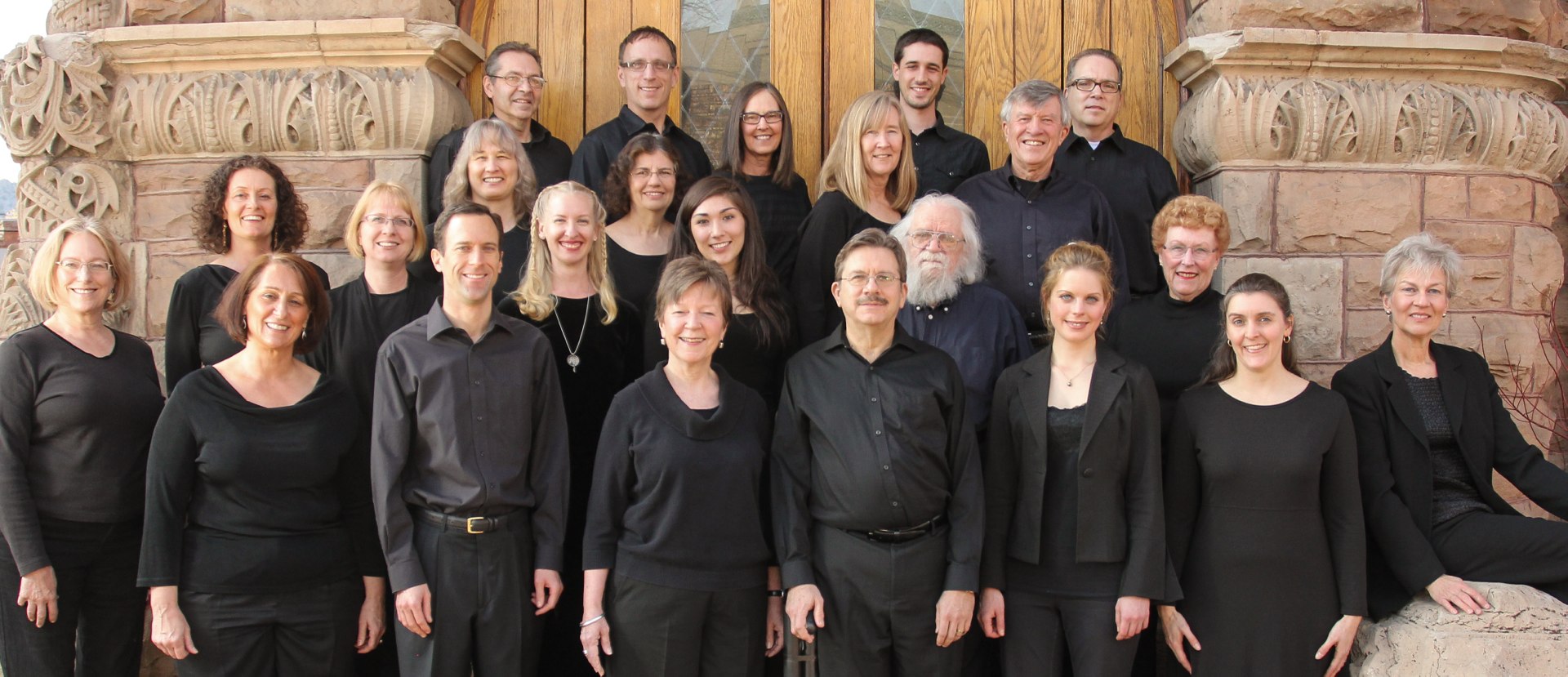
Seicento Baroque Ensemble

Seicento Baroque Ensemble

There were many high points in the performance, of which I will mention only a few. The convergence on a unison for the “Amen” of Laudate pueri was a moment of arresting beauty. To the vocal ensembles previously listed, I should add Pulchra es, another unconducted piece of chamber music. The brilliant Sonata sopra Santa Maria ora pro nobis—itself a miniature masterpiece of early Baroque style—elicited equally brilliant playing from the instrumentalists. And the combination of florid instrumental parts with the serene choral sound in Deposuit potentes was breathtaking.

Finally, the Vespers need be seen as well as heard. There are several wonderful recordings, but none can replace the experience of hearing the Vespers in space, seeing the placement of singers and players, observing as well as hearing the ever-changing combinations of voices and instruments, and hearing the echo effects within the airy space of a church.

And so again: deep gratitude to Browne, to Seicento, and to all the soloists and guest artists for bringing us a performance to be remembered.

Seicento performs the jazz of the 17th century

Monteverdi’s 1610 Vespers: ‘An album that doesn’t have a bad track’

By Peter Alexander

Claudio Monteverdi. Portrait by Bernardo Strozzi.

Claudio Monteverdi. Portrait by Bernardo Strozzi.

Claudio Monteverdi was unhappy in his job.

The year was 1608 and the composer was working in Mantua for the spendthrift Duke Vincenzo Gonzaga. Monteverdi was overworked, he was paid late if at all, and he hated the swampy environment of Mantua. So he did what any artist would do: he put together a portfolio showing skill in all the latest styles, hoping to be hired away from Mantua—hopefully by the Papal Chapel in Rome.

That is the likely story behind Monteverdi’s Vespro della Beata Virgine (Vespers of the Blessed Virgin), known as the “1610 Vespers” for the date the collection was published in Venice. Considered one of the great musical products of the Baroque era, the Vespers return to Boulder and Denver this weekend for performances by Seicento Baroque Ensemble and guest artists under conductor Evanne Browne.

Evanne Browne

Evanne Browne

The guests include vocal soloists and players of historical instruments from the local area, Boston, and Washington, D.C., and Baroque violinist Mimi Mitchell from Amsterdam.

Performances of the complete Vespro della Beata Virgine will be at 7:30 p.m. Saturday, Oct. 24 at First United Methodist Church (1421 Spruce St.) in Boulder, and 2:30 p.m. Sunday, Oct. 25 at St. Paul Lutheran Church (1600 Grant St.) in Denver. There will be a separate concert by the guest soloists, featuring virtuoso vocal music and historical instruments including cornetto and sackbut, at 7:30 p.m. Friday, Oct. 23, at St. Paul Lutheran in Denver. Tickets to all three performances are available here.

Title page of Monteverdi's 1610 Vespers

Title page of Monteverdi’s 1610 Vespers

To create a musical résumé, Monteverdi put together an anthology of Baroque musical styles. It is, in the words of Mark Dobell of the early-music group The Sixteen, “a really great album that just doesn’t have a bad track.”

The ambitious extent of the Vespers, and its compilation of the radical new styles that were to transform music, are what make the Vespers an important work and one that is widely revered by musicians.

The Vespers are not often performed, however, because the challenges they present are monumental: It’s a long work with virtuosic vocal parts and a choir that divides into up to 10 parts. In many ways, Monteverdi’s notation is only an outline of a finished product: the soloists are expected to add ornamentation, and the instrumental parts don’t indicate what instruments should play.

“It’s the jazz of the 17th century, in that we don’t have everything given to us,” Browne says. “We are expected to modify what’s on the page.”

Read more at Boulder Weekly.

For more background, you may view this BBC documentary about the Vespers.

# # # # #

Monteverdi’s Vespers of 1610

Seicento Baroque Ensemble

Seicento Baroque Ensemble

Seicento Baroque Ensemble with guest artists
Evanne Browne, conductor and artistic director

7:30 p.m. Saturday, Oct. 24
First United Methodist, 1421 Spruce St., Boulder

2:30 p.m. Sunday, Oct. 25
St. Paul Lutheran, 1600 Grant St., Denver

Vocal Soloists:
Amanda Balestrieri, soprano
Marjorie Bunday, mezzo-soprano
Rachel Morrissey, alto
Derek Chester, tenor
John Grau, tenor
Daniel Hutchings, tenor
Kenneth Donahue, bass
Zachary Begley, bass

Orchestra leader, Mimi Mitchell, violin (University of Amsterdam)

Soloists’ Concert
7:30 p.m. Friday, Oct. 23
St. Paul Lutheran, 1600 Grant St., Denver

Tickets

Seicento offers Baroque Music for Halloween, scary, fun and gorgeous

Western Hemisphere premiere of a French grand motet from 1690 anchors the program

By Peter Alexander

Conductor Evanne Browne and Seicento

Conductor Evanne Browne and Seicento. Photo by Rich Saxon.

Evanne Browne really loves the music she is conducting for Halloween with Boulder’s Seicento Baroque Ensemble.

The centerpiece of their season-opening concert “Dies Irae: Halloween Goes Baroque,” (7:30 Friday Oct. 31, at St. Paul Lutheran in Denver and Saturday, Nov. 1, at First United Methodist in Boulder) is the recently rediscovered and reconstructed Dies Irae (Day of wrath) by Michel-Richard Delalande, which she describes as “gorgeous” and “luscious. ”

Another piece on the same program by Delalande, De Profundis (From the depths) is “gorgeous, gorgeous.” And J.S. Bach’s funeral motet Der Gerechte kommt um (The righteous must perish), arranged from music by Johann Kuhnau, is also “gorgeous, gorgeous.”

To set the mood for a Halloween concert, Browne turned to organist Kajsa Teitelbaum. “We open this concert with one of the scariest Halloween Baroque pieces written,” Browne says, “the Bach Toccata and Fugue in D minor. Just in case anybody would get the idea that this whole concert is so serious, I think we’re taking a really lively and exciting approach to celebrating Halloween and All-Souls’ Day.”

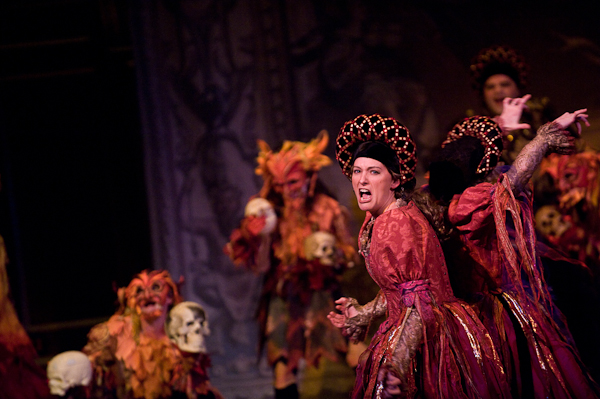
The witches from the Boston Early Music Festival production of Purcell's Dido and Aeneas. Photo André Costantini.

The witches from the Boston Early Music Festival production of Purcell’s Dido and Aeneas. Photo André Costantini.

More Halloween fun will be provided by a scene for witches from Henry Purcell’s opera Dido and Aeneas, which opens with the call “Wayward sisters, you that fright/The lonely traveler by night . . . Appear!” The witches, who keep cackling “Ho, ho, ho, ho, ho,” are clearly up to no good, in spite of their relatively spirited music. They announce their plot to separate the lovers Dido and Aeneas, singing of “The Queen of Carthage, whom we hate.”

If Bach provides some menace and Purcell some light-hearted Halloween fun, the remainder of the program is more serious. The other works are all associated with the liturgy of All Saints or All Souls Day (Nov 1 and 2), the days following Halloween, or All Hallows’ Eve (Oct. 31), in the church calendar; or with liturgical services for the dead.

Michel-Richard Delalande

Michel-Richard Delalande

It was Delalande’s Dies Irae, forming the second half of the concert, that first caught Browne’s attention. A composer and organist at the court of Louis XIV, Delalande is not well known in this country, and the Seicento performance will be the U.S. and Western hemisphere premiere of his Dies Irae.

The text is a rhymed poem from the 13th century that now forms part of the Catholic liturgy for All Souls’ Day and the Requiem Mass. It is the latter context that is most familiar, with the Dies Irae movements from Requiems by Mozart, Berlioz and Verdi being particularly memorable.

“I heard (a commercial recording of Delalande’s piece) months ago, and I thought, this is a work for Seicento,” Browne says. “It’s a fabulous work and needs to be performed, and the French Baroque is a style that we worked on pretty hard in our second year.

“It’s tricky, and it’s got such tremendous tonal chord progressions, and beautiful, beautiful sounds. So after I heard it I thought, well, that’s what we’ll do, and set out to find the music.”

That proved easier said than done. Delalande’s grand motet—a term for sacred music written for orchestra, chorus and soloists—was composed in 1690 for the death of the Dauphine, Princess Marie-Anne-Christine-Victoire, wife of the Grand Dauphin, son of King Louis XIV. It was revised in 1711 at the death of the Dauphin, but then disappeared and was assumed lost.

But as sometimes happens, an unknown copy unexpectedly showed up at an auction in Paris in 1950 and then vanished again after being purchased by a private collector. It was not until 1983—after meeting and wooing the reclusive collector over many years—that the English musical scholar Lionel Sawkins was able to make a microfilm copy of the score, and then only under vanishing late-afternoon light, after being served a five-course meal that took most of the day!

Happily, Browne’s detective work was not nearly as strenuous as that, but she did have to track down Sawkins, make contact through a friend of a friend, and arrange to rent the score and parts for performance. “Because Sawkins knows who has had the score, we know that it has only been performed in the UK, in France, and in Sweden,” Browne says. “And probably fewer than a dozen choirs have actually performed this work in this century, or last century.”

This kind of undiscovered jewel from a little-known repertoire is just the kind of challenge that Browne relishes. “This is the mission of Seicento, to bring the wonderful music of the 1600s to audiences, and mostly music that they probably have never heard,” she says.

SBE in front of FUMC

Seicento Baroque Ensemble. Photo by Rich Saxon.

“We’re different from other groups in town because we’re not just looking at Baroque and thinking high Baroque—Handel, Purcell, Bach. We’re doing the earlier things.”

Much of this earlier music requires special performance techniques that go beyond the notation in the original scores. This is particularly true of the French Baroque, which had a tradition and distinct performance styles that differed from the rest of Europe. Many of those performance traditions were forgotten over time, and have to be studied and relearned by specialists such as Seicento.

Evanne Browne

Evanne Browne

“There is the language issue, there is the ornamentation issue, there’s the stylistic issue,” Browne says. “If you were to perform this piece of Delalande as it’s written, it wouldn’t have that life, that lilt, that glorious sound” that comes from applying the historical performance techniques of French Baroque music.

“And then also we perform with period instruments,” Browne explains. “That brings (the music) to life in a different way. For this concert we’re using Baroque strings and we have a Baroque flute payer joining us. It’s a different sound.”

Several other pieces will benefit from the Baroque performance techniques that Browne and the singers of Seicento have studied, and the “different sound” they get from the historical instruments. Among these will be portions of Delalande’s grand motet of 1689, De Profundis, a setting of a penitential psalm that is often sung in commemoration of the dead.

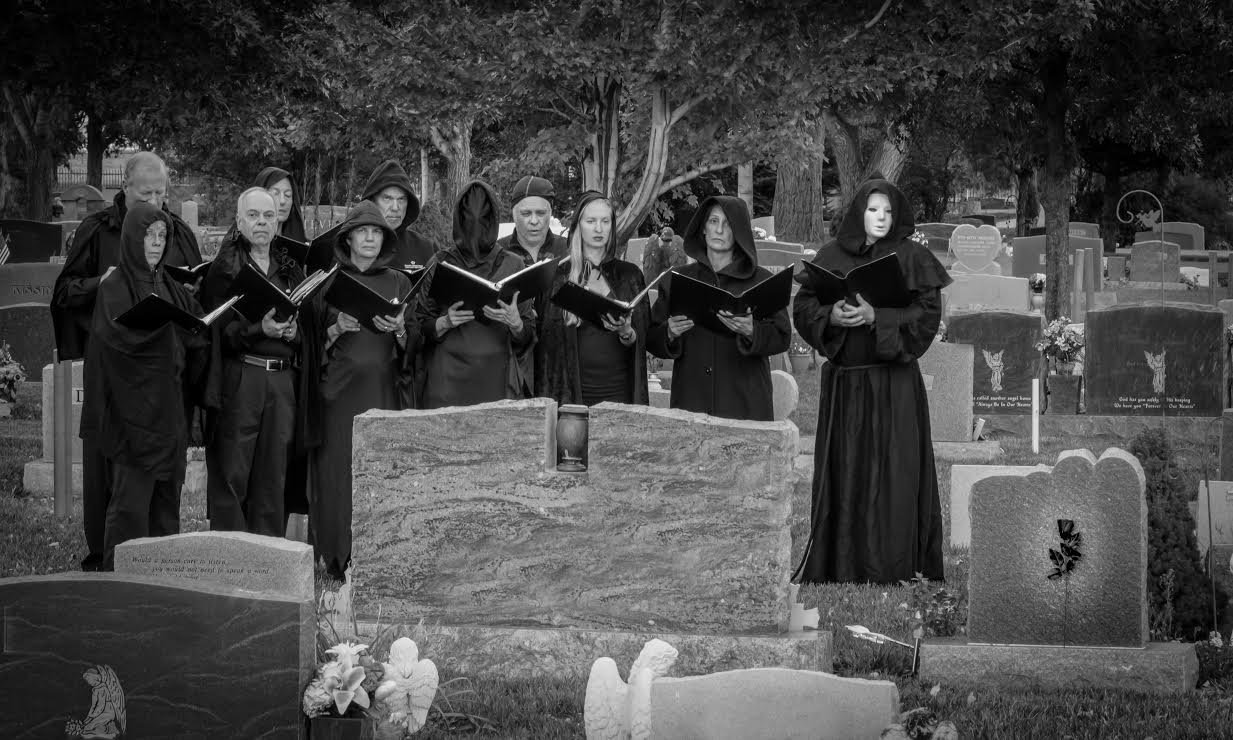
Seicento's singers getting in the mood for Halloween

Seicento’s singers getting in the mood for Halloween. Photo by Rich Saxon.

Also on the program will be three motets for All Saints’ Day, conducted by Seicento’s assistant conductor, Alan Filbert: two by the relatively unknown Pompeo Cannicciari and Vincenzo Bertulosi, and one by the great English Renaissance composer William Byrd. And ending the first half of the concert will be the music of the German composer Johann Kuhnau, arranged by J.S. Bach as the funeral motet Der Gerechte kommt um.

Browne admits that’s a lot of music written for the dead. “There’s a little morbidity to this concert,” she says. “But one of the things that is so exciting to me is that we’re having fun with the idea of Halloween and All Saints.”

And did she mention that the music is gorgeous?

# # #

droppedImage_1

Dies Irae: Halloween Goes Baroque
Seicento Baroque Ensemble and soloists
Evanne Browne, artistic director

7:30 p.m. Friday, Oct. 31
St. Paul Lutheran Church, Denver

7:30 p.m. Saturday, Nov. 1
First United Methodist Church, Boulder

Information and tickets