Baroque music and jazz brought together by Seicento

“Improvisation in Baroque and Jazz,” March 1 and 2

By Peter Alexander Feb. 28 at 10:45 a.m.

Evanne Browne, conductor of Boulder’s Seicento Baroque Ensemble, is the daughter of jazz musicians—“jazz pianist mom and a bass player dad,” she says. “There was a lot of American songbook music going on in our house all the time.”
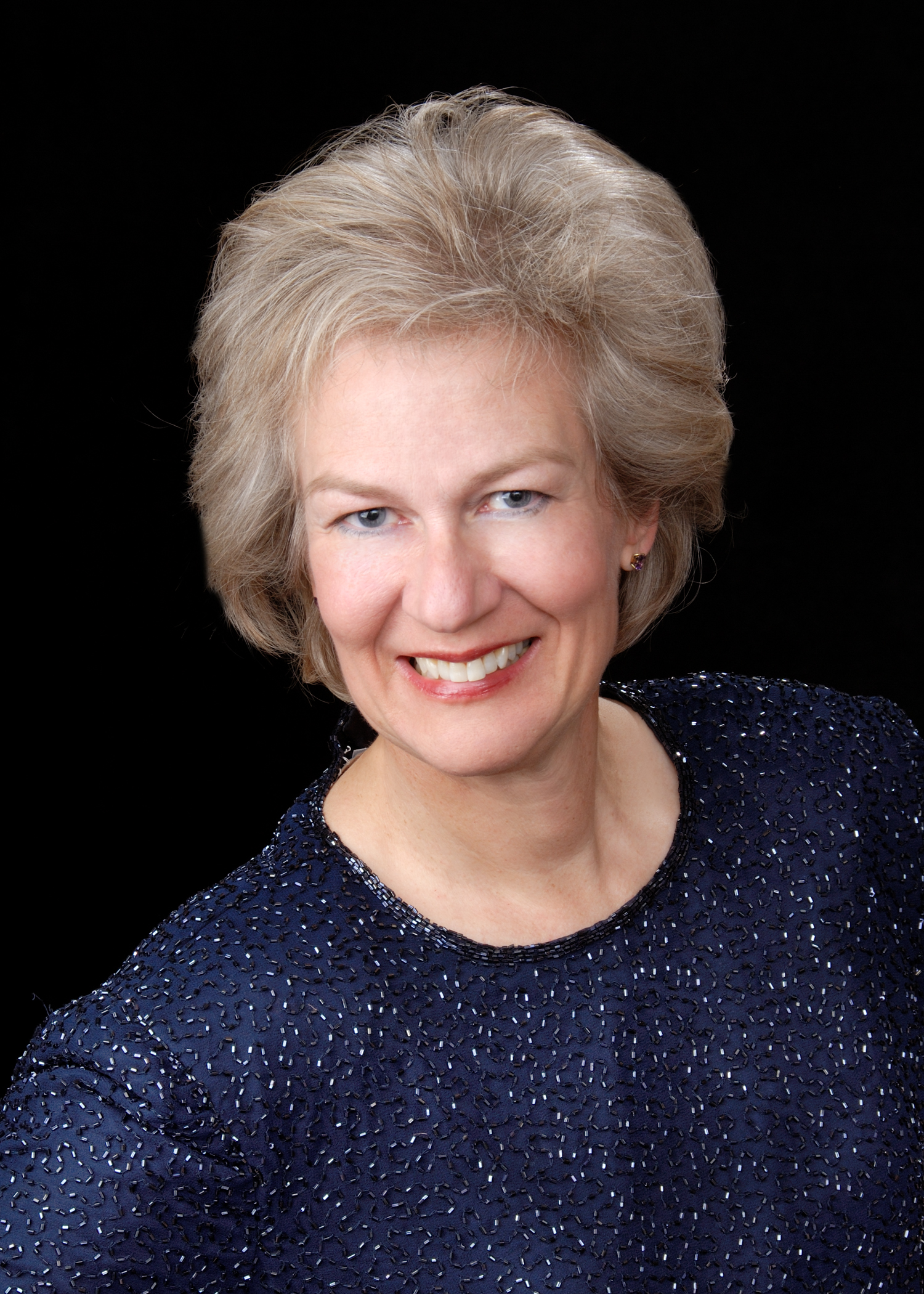
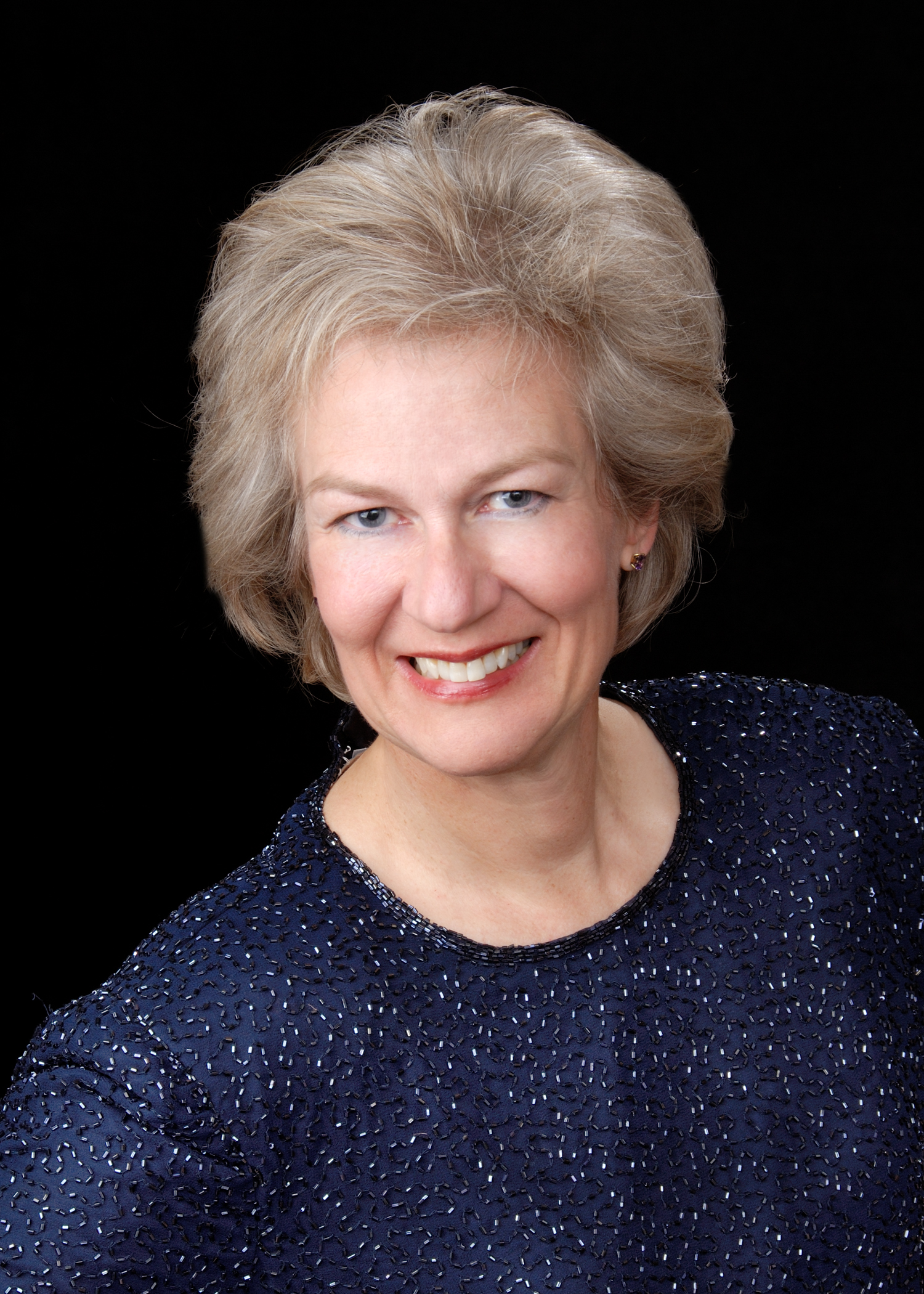
Evanne Browne

It might seem like a long way from jazz and the American songbook to Bach, Monteverdi, and the other specialities of Seicento. But as a trained early music performer, Browne believes the two musical styles are closer than you might think. And her next concert with Seicento will demonstrate that.

The concert, titled “Embellish! Improvisation in Baroque and Jazz” (7:30 p.m. Friday in Longmont and Saturday in Golden; details below), features Baroque music by Couperin, Monteverdi and others, mixed together with jazz by Duke Ellington and Charlie Parker, and even some pops and Broadway numbers (see full program below). In addition to the Seicento choir, performers will be violin and gamba player Tina Chancey, a jazz ensemble led by bassist Mark Diamond, and Seicento apprentice artists.

The inspiration for the program comes from the fact that in the early Baroque a lot of written music was sketchy, often only a bass part and one or two melody lines. Performances could vary, much as performances of jazz standards very from one artist or combo to another. There were traditional bass lines and chord progressions for dances that were filled in differently by different composers, much as the traditional 12-bar blues can be filled in differently by different performers.

“I’ve been thinking for a long time that when you look at charts for jazz and there’s melody and chords, and when you look at a basso continuo part for keyboard (in Baroque music) and there’s a bass line and chords, those things are similar,” Browne explains. “I just kind of started going down the list of what else was similar.”

Since jazz charts and Baroque scores—especially for the early operas by Monteverdi and others—left a lot to be filled in by performers, in both cases fans of the music distinguish between different versions, or realizations, of specific pieces. Another parallel that Browne found was that rhythms are often not played exactly as they are written, but are made more “swingy,” especially for dance music.
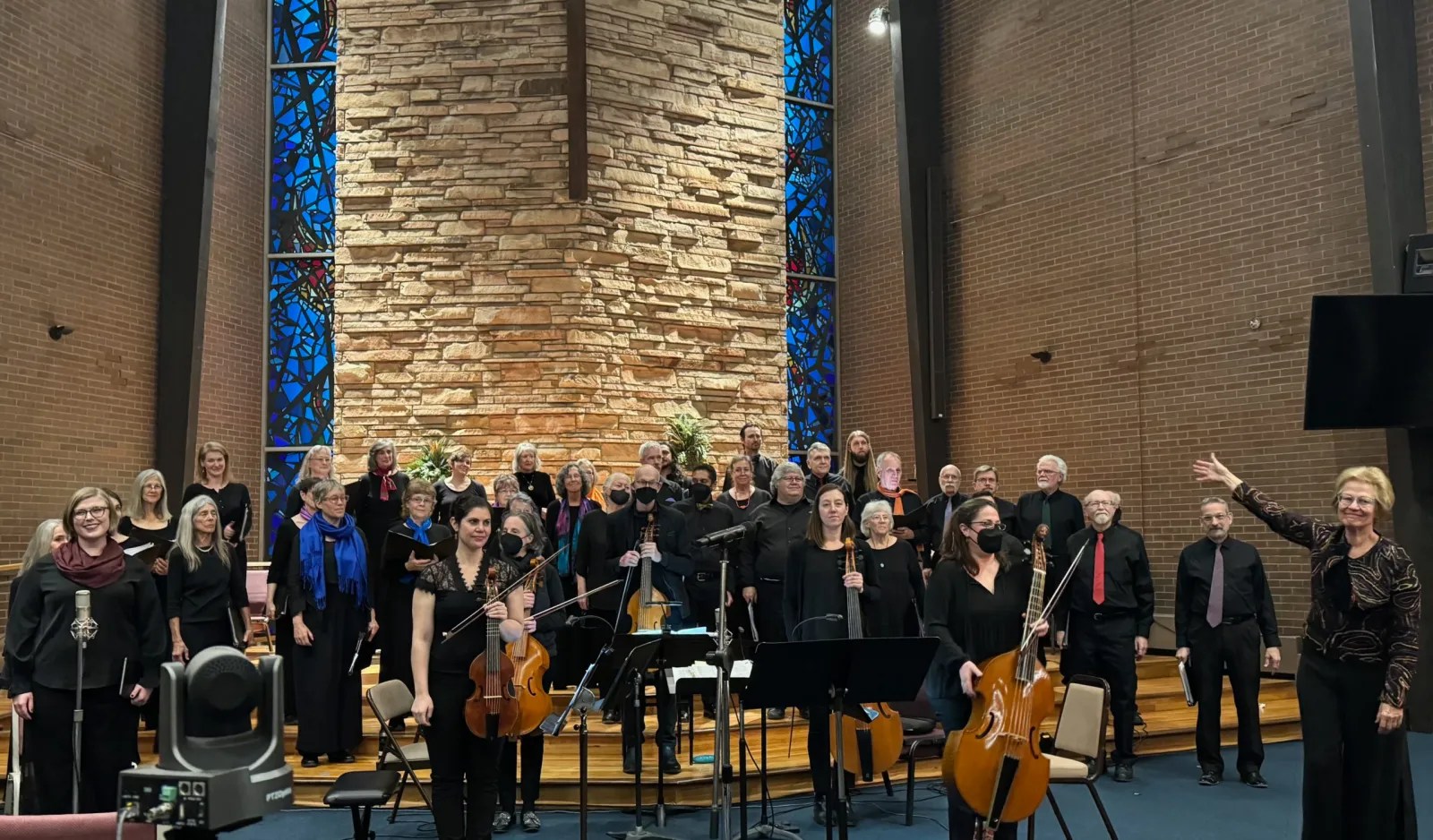
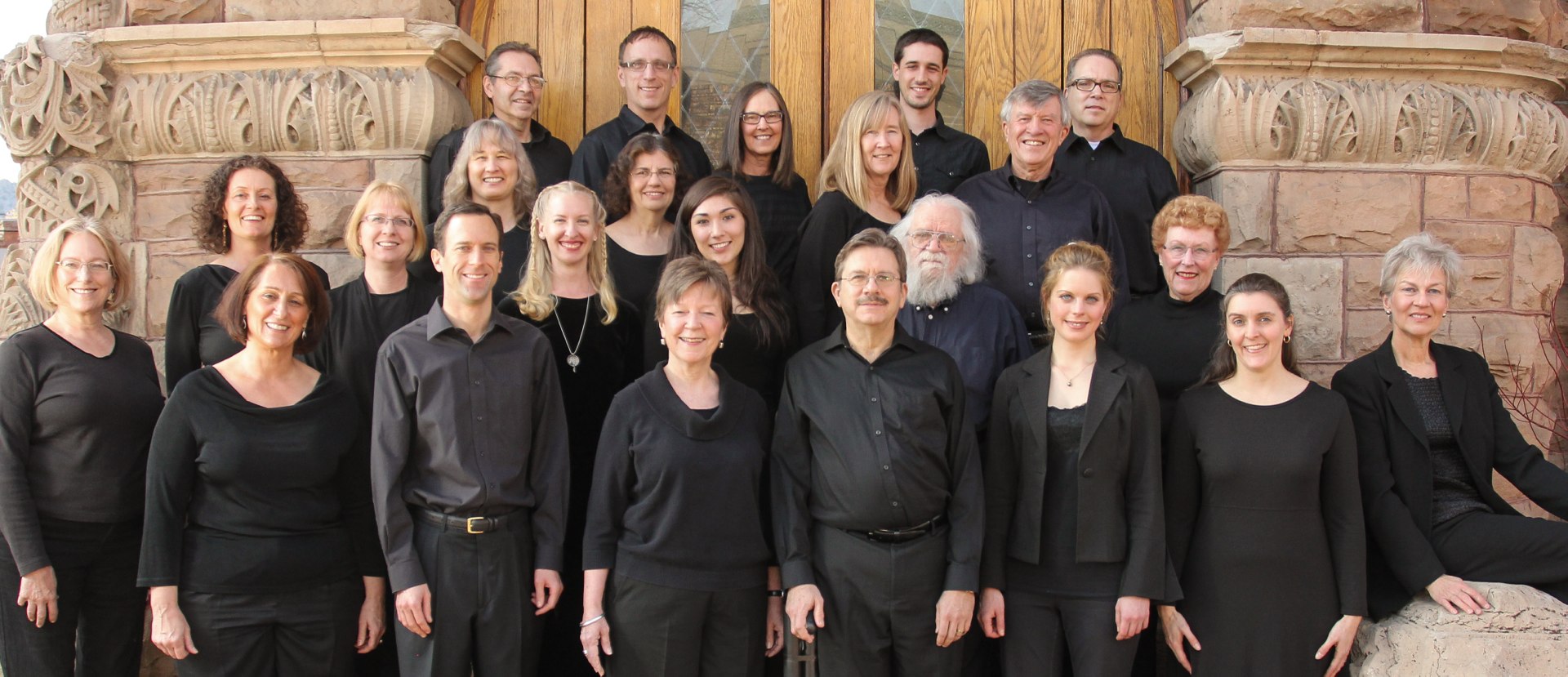
Seicento Baroque Ensemble and conductor Evanne Browne. Photo by Emily Bowman.

In the Baroque era, there was a convention in France called “notes inegales” (unequal notes), where notes on the beat were lengthened and the notes between the beats were shortened, to make the rhythms more pointed. This is not unlike the jazz tradition of “swinging” what are written as even notes. In jazz, Browne says, “you don’t play them ‘straight.’ People would think you were crazy if you did that. It’s exactly what notes inegales are in French.

“In dance music, the need for movement is something that turns duple into triplets and makes that more universally pleasing to us as listeners or performers.”
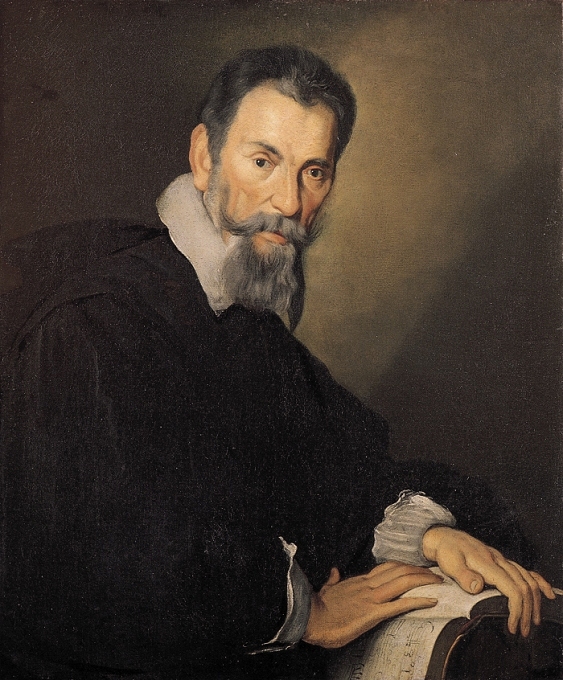
Claudio Monteverdi

As the music from the Baroque period and from jazz and popular idioms alternate on the program, there is one pairing that Browne particularly likes. “The Lamento della ninfa by Monteverdi and ‘Hit the Road, Jack’ are striking together,” she says. In Monteverdi, “we have this four-note bass line that is repeated, and this beautiful lament. Then going right into ‘Hit the Road Jack,’ it’s the same bass line—it’s interesting how that chord progression can be used expressively to emote what is being said.”

Browne has selected other pieces that demonstrate similarities in the structure of Baroque arias and jazz songs, with a slower and explanatory introduction that sets up the situation, followed by the main tune that expresses emotions. They both represent turning points in music, one the rise of dramatic music and opera in early 16th century Italy, and the other the rise of jazz and widely available popular dance music recordings in early 20th-century America.

In addition to examples that have a serious point to make, Browne also selected some parings on the program just because they are fun. Among the latter would be Monteverdi’s duet Bel Pastor dalcui bel guardo (Beautiful shepherd from whose beautiful gaze), which is a conversation between a shepherdess who keeps asking a shepherd if he really loves her, and that is paired with a song from Fiddler on the Roof where Tevye asks his wife Golde, “Do you love me?”

“So here’s these two (pieces)—we haven’t recovered from two centuries of learning about humanity,” Browne says. “We’re still insecure in love! So I thought that was a fun one.”

In fact, the word Browne uses most in describing the program is fun. “It’s a fun program,” she says. more than once.

“I think the audience will be laughing and tapping their toes.”

# # # # #

“Embellish! Improvisation in Baroque and Jazz”
Seicento Baroque Ensemble, Evanne Browne, director
With Tina Chancey, viola da gamba and violin, and jazz ensemble led by Mark Diamond

  • Louis Couperin: Prélude non mesuré (Unmeasured prelude)
  • Billy Strayhorn and Duke Ellington: “Take the A Train” (arr. Gordon Prugh)
  • Marin Marais: Fantasie from the Suite in A minor, Book III
  • Anon: Madre, non mi far monaca (Mother, don’t make me a nun)
  • Giralamo Frescobaldi: Missa sopra Aria della Monaca, Kyrie (Mass on La monaca)
  • Thomas “Fats” Waller: “Honeysuckle Rose”
  • Charlie Parker: “Scrapple from the Apple”
  • Frescobaldi: Così mi disprezzate (So you despise me?)
  • Diego Ortiz: Recercada segunda (Second ricrercar)
  • Claudio Monteverdi: Lamento della ninfa (The nymph’s lament)
  • Percy Mayfield: “Hit the Road, Jack”
  • Monteverdi: Come dolce oggi l’auretta (How sweet is the breeze today)
  • Don Raye and Hughie Prince” “Boogie Woogie Bugle Boy”
  • Monteverdi: Si dolce è’l tormento (The torment is so sweet) (choir, solo and jazz)
    —Bel Pastor dalcui bel guardo (Beautiful shepherd from whose beautiful gaze)
  • Jerry Bock: “Do You love me?” from Fiddler on the Roof
  • Jimmy McHugh: “On the Sunny Side of the Street”

7:30 p.m. Friday, March 1
First Congregational Church, Longmont

 7:30 p.m. Saturday March 2
Calvary Church, Golden

TICKETS  

NOTE: The spelling of conductor Evanne Browne’s name was corrected 2/28. The correct spelling of her last name is Browne.

Seicento offers Baroque Music for Halloween, scary, fun and gorgeous

Western Hemisphere premiere of a French grand motet from 1690 anchors the program

By Peter Alexander

Conductor Evanne Browne and Seicento

Conductor Evanne Browne and Seicento. Photo by Rich Saxon.

Evanne Browne really loves the music she is conducting for Halloween with Boulder’s Seicento Baroque Ensemble.

The centerpiece of their season-opening concert “Dies Irae: Halloween Goes Baroque,” (7:30 Friday Oct. 31, at St. Paul Lutheran in Denver and Saturday, Nov. 1, at First United Methodist in Boulder) is the recently rediscovered and reconstructed Dies Irae (Day of wrath) by Michel-Richard Delalande, which she describes as “gorgeous” and “luscious. ”

Another piece on the same program by Delalande, De Profundis (From the depths) is “gorgeous, gorgeous.” And J.S. Bach’s funeral motet Der Gerechte kommt um (The righteous must perish), arranged from music by Johann Kuhnau, is also “gorgeous, gorgeous.”

To set the mood for a Halloween concert, Browne turned to organist Kajsa Teitelbaum. “We open this concert with one of the scariest Halloween Baroque pieces written,” Browne says, “the Bach Toccata and Fugue in D minor. Just in case anybody would get the idea that this whole concert is so serious, I think we’re taking a really lively and exciting approach to celebrating Halloween and All-Souls’ Day.”

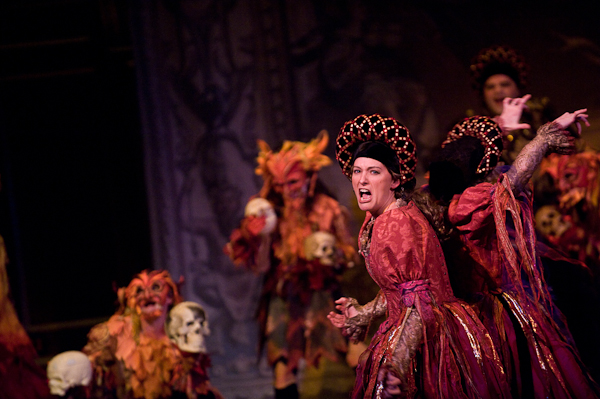
The witches from the Boston Early Music Festival production of Purcell's Dido and Aeneas. Photo André Costantini.

The witches from the Boston Early Music Festival production of Purcell’s Dido and Aeneas. Photo André Costantini.

More Halloween fun will be provided by a scene for witches from Henry Purcell’s opera Dido and Aeneas, which opens with the call “Wayward sisters, you that fright/The lonely traveler by night . . . Appear!” The witches, who keep cackling “Ho, ho, ho, ho, ho,” are clearly up to no good, in spite of their relatively spirited music. They announce their plot to separate the lovers Dido and Aeneas, singing of “The Queen of Carthage, whom we hate.”

If Bach provides some menace and Purcell some light-hearted Halloween fun, the remainder of the program is more serious. The other works are all associated with the liturgy of All Saints or All Souls Day (Nov 1 and 2), the days following Halloween, or All Hallows’ Eve (Oct. 31), in the church calendar; or with liturgical services for the dead.

Michel-Richard Delalande

Michel-Richard Delalande

It was Delalande’s Dies Irae, forming the second half of the concert, that first caught Browne’s attention. A composer and organist at the court of Louis XIV, Delalande is not well known in this country, and the Seicento performance will be the U.S. and Western hemisphere premiere of his Dies Irae.

The text is a rhymed poem from the 13th century that now forms part of the Catholic liturgy for All Souls’ Day and the Requiem Mass. It is the latter context that is most familiar, with the Dies Irae movements from Requiems by Mozart, Berlioz and Verdi being particularly memorable.

“I heard (a commercial recording of Delalande’s piece) months ago, and I thought, this is a work for Seicento,” Browne says. “It’s a fabulous work and needs to be performed, and the French Baroque is a style that we worked on pretty hard in our second year.

“It’s tricky, and it’s got such tremendous tonal chord progressions, and beautiful, beautiful sounds. So after I heard it I thought, well, that’s what we’ll do, and set out to find the music.”

That proved easier said than done. Delalande’s grand motet—a term for sacred music written for orchestra, chorus and soloists—was composed in 1690 for the death of the Dauphine, Princess Marie-Anne-Christine-Victoire, wife of the Grand Dauphin, son of King Louis XIV. It was revised in 1711 at the death of the Dauphin, but then disappeared and was assumed lost.

But as sometimes happens, an unknown copy unexpectedly showed up at an auction in Paris in 1950 and then vanished again after being purchased by a private collector. It was not until 1983—after meeting and wooing the reclusive collector over many years—that the English musical scholar Lionel Sawkins was able to make a microfilm copy of the score, and then only under vanishing late-afternoon light, after being served a five-course meal that took most of the day!

Happily, Browne’s detective work was not nearly as strenuous as that, but she did have to track down Sawkins, make contact through a friend of a friend, and arrange to rent the score and parts for performance. “Because Sawkins knows who has had the score, we know that it has only been performed in the UK, in France, and in Sweden,” Browne says. “And probably fewer than a dozen choirs have actually performed this work in this century, or last century.”

This kind of undiscovered jewel from a little-known repertoire is just the kind of challenge that Browne relishes. “This is the mission of Seicento, to bring the wonderful music of the 1600s to audiences, and mostly music that they probably have never heard,” she says.

SBE in front of FUMC

Seicento Baroque Ensemble. Photo by Rich Saxon.

“We’re different from other groups in town because we’re not just looking at Baroque and thinking high Baroque—Handel, Purcell, Bach. We’re doing the earlier things.”

Much of this earlier music requires special performance techniques that go beyond the notation in the original scores. This is particularly true of the French Baroque, which had a tradition and distinct performance styles that differed from the rest of Europe. Many of those performance traditions were forgotten over time, and have to be studied and relearned by specialists such as Seicento.

Evanne Browne

Evanne Browne

“There is the language issue, there is the ornamentation issue, there’s the stylistic issue,” Browne says. “If you were to perform this piece of Delalande as it’s written, it wouldn’t have that life, that lilt, that glorious sound” that comes from applying the historical performance techniques of French Baroque music.

“And then also we perform with period instruments,” Browne explains. “That brings (the music) to life in a different way. For this concert we’re using Baroque strings and we have a Baroque flute payer joining us. It’s a different sound.”

Several other pieces will benefit from the Baroque performance techniques that Browne and the singers of Seicento have studied, and the “different sound” they get from the historical instruments. Among these will be portions of Delalande’s grand motet of 1689, De Profundis, a setting of a penitential psalm that is often sung in commemoration of the dead.

Seicento's singers getting in the mood for Halloween

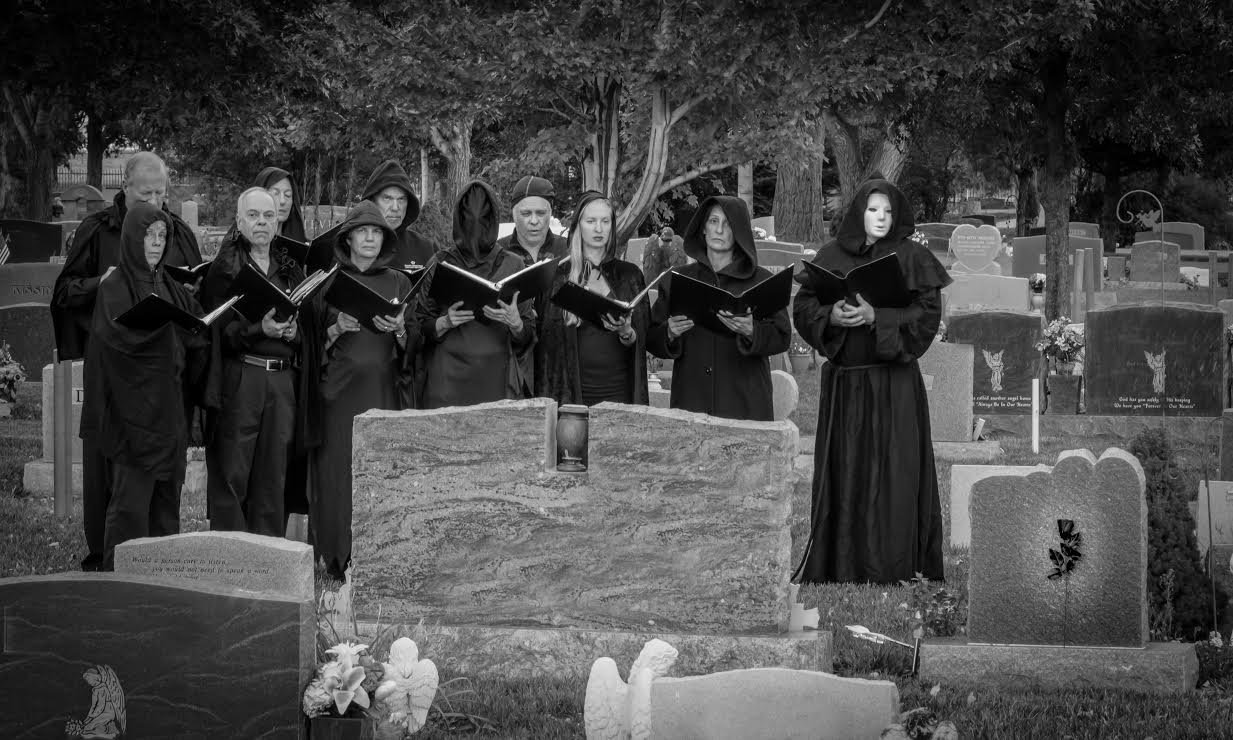
Seicento’s singers getting in the mood for Halloween. Photo by Rich Saxon.

Also on the program will be three motets for All Saints’ Day, conducted by Seicento’s assistant conductor, Alan Filbert: two by the relatively unknown Pompeo Cannicciari and Vincenzo Bertulosi, and one by the great English Renaissance composer William Byrd. And ending the first half of the concert will be the music of the German composer Johann Kuhnau, arranged by J.S. Bach as the funeral motet Der Gerechte kommt um.

Browne admits that’s a lot of music written for the dead. “There’s a little morbidity to this concert,” she says. “But one of the things that is so exciting to me is that we’re having fun with the idea of Halloween and All Saints.”

And did she mention that the music is gorgeous?

# # #

droppedImage_1

Dies Irae: Halloween Goes Baroque
Seicento Baroque Ensemble and soloists
Evanne Browne, artistic director

7:30 p.m. Friday, Oct. 31
St. Paul Lutheran Church, Denver

7:30 p.m. Saturday, Nov. 1
First United Methodist Church, Boulder

Information and tickets