Varied program, mixed results for Boulder Phil

Season opening concert features world premiere

By Peter Alexander Oct. 9 at 12:15 a..m.

The Boulder Philharmonic opened their 2022-23 season last night with a carefully curated and varied program that brought Colorado Governor Jared Polis to Macky Auditorium.
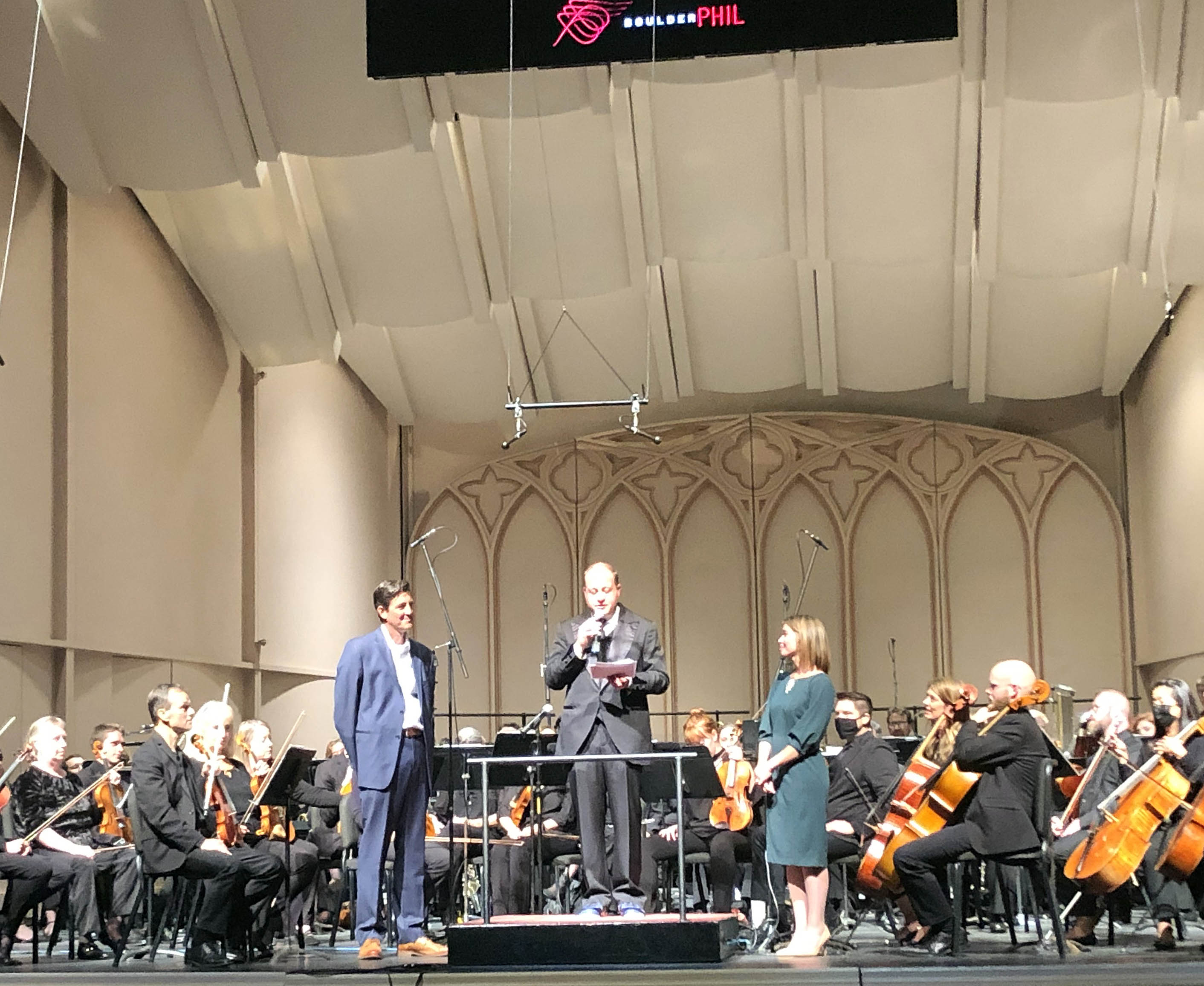
Governor Jared Polis (c) congratulates the Boulder Phil on its 65th anniversary season before last night’s concert. With him are Jonathan Koehn (l), Boulder’s chief sustainability and resilience officer, and Boulder Phil executive director Sara Parkinson (r).

Speaking from the stage before the concert, Governor Polis honored the orchestra for its 65th anniversary season and thanked the players for their artistry during the COVID pandemic. Polis was there with Jonathan Koehn, Boulder’s chief sustainability and resilience officer, also to recognize the concert’s environmental theme, “Hymn to the Earth.”

Michael Butterman then led the orchestra through a program designed to consider climate change as a challenge and a result of hubris and heedlessness. That message was most conspicuous in the world premiere of Ozymandias: To Sell a Planet by composer Drew Hemenger. Identified as an “environmental oratorio,” the score calls for orchestra, chorus and tenor soloist. The music encompasses a wide range of moods, so that the transition from one movement to the next is often dramatic.

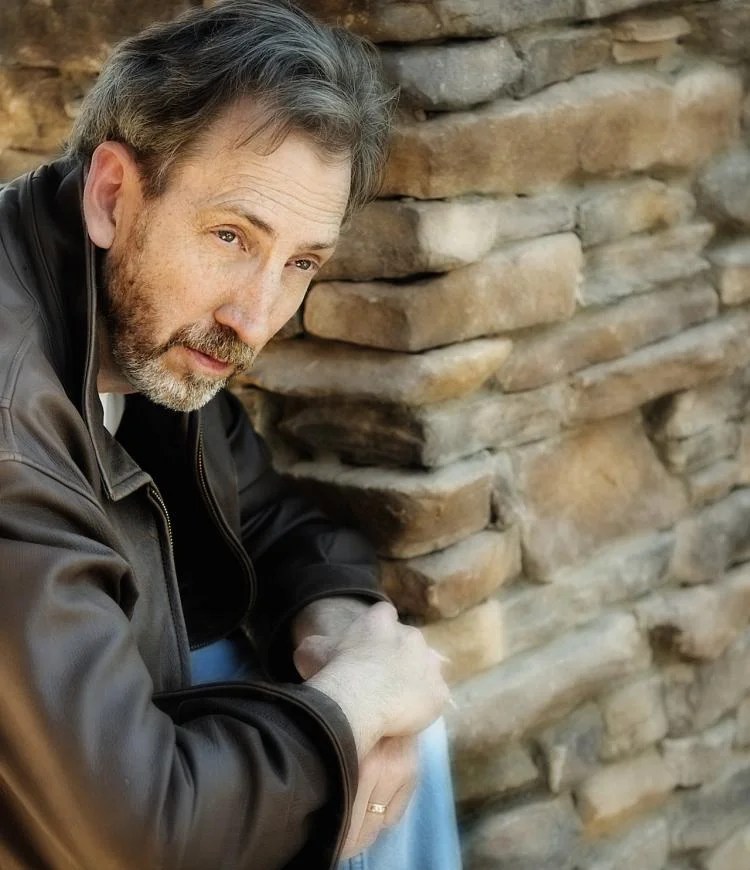
Drew Hemmenger

In five movements it traverses an arc from coexistence with nature to the damage done by the industrial revolution, to a portrait of a society on the verge of collapse, the current state of the environment and finally, a warning of a potential apocalypse to come. The first movement, “Spring is Come,” uses a text from Chief Sitting Bull. This movement essentially an environmental anthem, declaring that “our animal neighbors [have] the same right as ourselves to inhabit the land.” This movement could easily stand alone as an effective choral/orchestral piece with a benign environmental message. 

This jaunty and affirming movement is followed by a setting of Wordsworth’s “The World is Too Much With Us,” an impassioned plea to recognize that “we are out of tune” with the natural world, written at the outset of the industrial revolution. Here tenor Matthew Plenk made a strong impression, managing well transitions from intense anguish to quiet despair. His voice has a penetrating quality that gets edgy when pushed too far, but is otherwise effective.

I had to step out for a moment and so missed the rhythmically charged third movement for orchestra alone, but caught the rest of the oratorio. The third movement incorporates a pedantic UN panel report on the environment (“Oceanic uptake of CO2 has resulted in acidification”), spoken by the chorus. This academic verbiage is effectively combined with words from environmental activist Greta Thunberg and saddened words from Chief Tecumseh. 

Alas, this movement cannot avoid pounding away at the moral, and it casts a didactic shadow over the rest of the piece. The final movement, a setting of Shelley’s darkly prophetic sonnet, Ozymandias, is again very emphatic. 

Hemenger employs a loosely tonal/modal style that speaks directly to the audience with no difficulty. He translates the message of the text directly into musical expression, but the preachy message will not be to everyone’s taste. A few people walked out during the fourth movement and at the end, but whether it was a political or aesthetic protest is uncertain. A handful in the audience stood at the end, and their numbers grew with each curtain call by Butterman and Plenk.

On the whole I judge Ozymandias to be a skillful score that accomplishes just what it aims at. The message will be welcome in some venues, but whether the piece as a whole will go on to more extensive familiarity remains to be seen. It was played well by the Phil and sung with conviction by the newly formed Boulder Philharmonic Chorus.
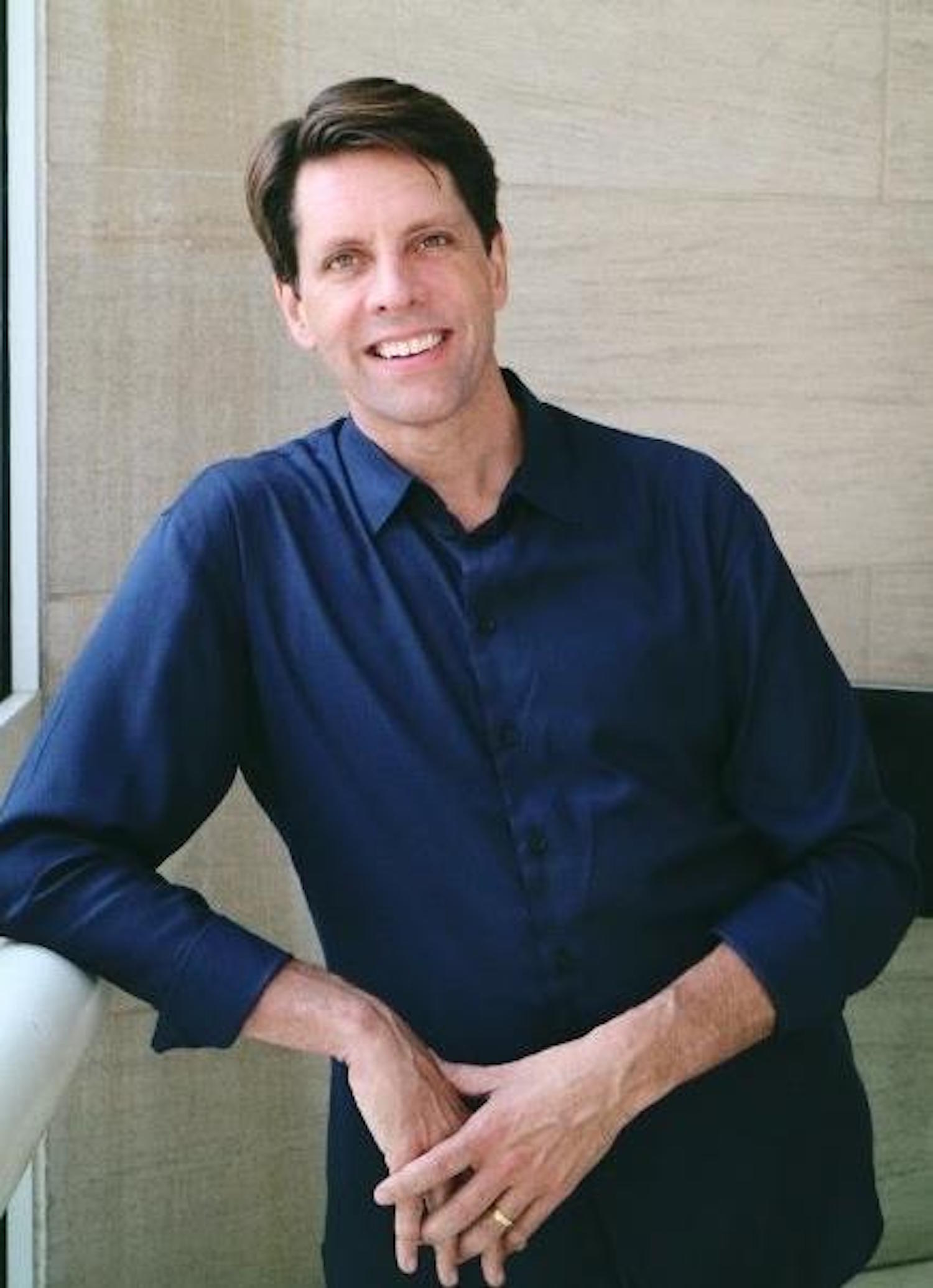
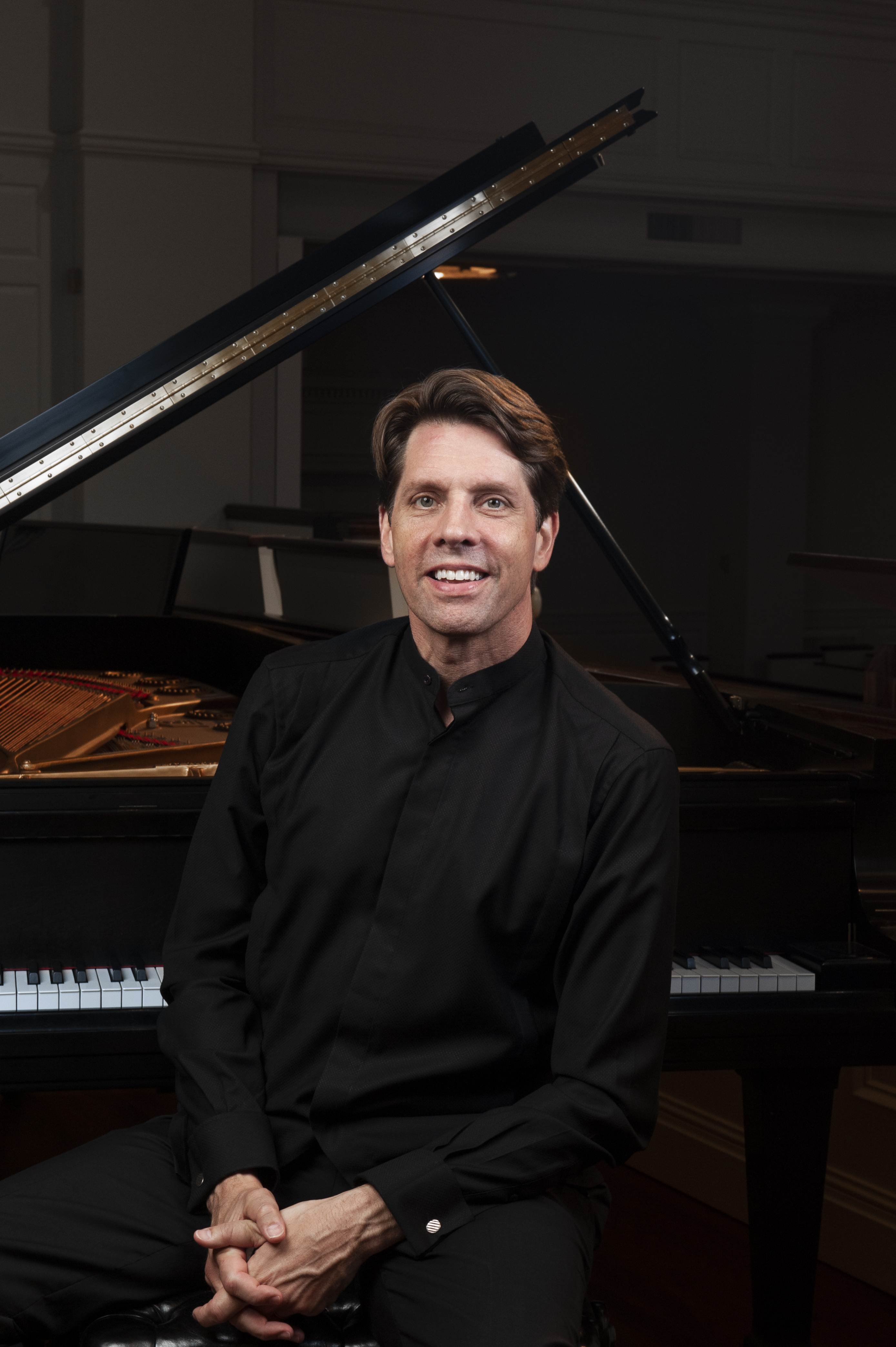
Boulder Phil. Music Director Michael Butterman

The concert had begun with Global Warming by Michael Abels, a piece infused with folkish-tunes and intricate rhythms. The solos in the wind section and percussion were notable, and the opening and ending exchanges between concertmaster Charles Wetherbee and assistant principal cellist Ethan Blake were played with elan. This is a pleasing, short piece that made an ideal opening for the program.

The second half of the concert began with an aptly dark reading of the Overture to Mozart’s Don Giovanni, the first of two pieces that expressed the dangerous heedlessness of the legendary Don Juan figure.  The performance was a little muddy where lightness and clarity are called for, leaving some of the inner voices unclear.

Next up was Siegfried’s Trauermusic (Funeral march) from Wagner’s music drama Götterdämmerung. Here the Philharmonic’s brass section shone, playing with great depth and darkness of tone. The Phil does not have the number of strings to match the weight of the brass, but this was a well paced and pleasing performance.

Butterman saved the best for last with Richard Strauss’ orchestral tone poem Don Juan. The outstanding quality of the performance showed that the Phil’s wind players will rise to the challenges of a virtuoso orchestral score. Individual solos were outstanding, and the horn section clearly relished playing the soaring theme that portrays Don Juan’s charismatic presence—a ringing tune all horn players know from student days and truly love to perform, just as audiences love to hear it.

For the most part, Butterman’s construction of the program worked well. His pacing and control of each piece seemed convincing. Nevertheless, the extreme variety of styles on the program was double-edged: the wide range of moods was always interesting, but it created a slightly fractured effect overall.

Boulder Phil opens 22–23 season with ‘Hymn to the Earth’

World premiere and first appearance of the Boulder Phil Chorus Oct. 8

By Peter Alexander Oct. 6 at 7:10 p.m.

Conductor Michael Butterman and the Boulder Philharmonic Orchestra will open their 2022–23 season Saturday evening (7 p.m. Oct. 8, Macky Auditorium) with a program aimed straight at Boulder’s social and environmental heart.

The Boulder Philharmonic with conductor Michael Butterman

Titled “Hymn to the Earth,” the program includes the world premier of Ozymandias: To Sell a Planet by Drew Hemenger, an environmental oratorio for orchestra, chorus and tenor co-commissioned by the Phil and the Rogue Valley Symphony of Oregon. Its five movements create an arc leading from a vision of unspoiled nature, through the industrial revolution to the current global climate crisis and culminating with Shelley’s dire warning about human arrogance in his great poem “Ozymandias.”

Composer Michael Abels. Photo by Eric Schwabel

The program opens with Global Warming by Michael Abels, a composer best known for his scores for the films of Jordan Peele. Not referring to climate, the title refers to the warming global relations at the end of the Cold War, and in in this context suggests the planetary unity required to face an environmental crisis. 

Works on the second half of the program have the theme of hubris and the consequences of humans’ heedlessness: the Overture to Mozart’s Don Giovanni; Siegfried’s funeral music from Wagner’s Götterdämmerung; and Richard Strauss’ tone poem Don Juan.

Gregory Gentry

The concert will be the first appearance of the Boulder Philharmonic Chorus, the newly-formed choral partner of the Phil, under the direction of Gregory Gentry. Tenor Matthew Plenk, a faculty member at the University of Denver’s Lamont School of Music, will be soloist for Ozymandias.

Ozymandias is a score of remarkable diversity, of both textual sources and musical style. The text draws on poetry by Shelley and William Wordsworth, as well as texts from Native Americans, speeches by climate activist Greta Thunberg, and a definitively unpromising text for music, the 2014 Fifth Assessment Report of the UN’s Intergovernmental Panel on Climate Change (IPCC). (Trust me; Hemenger makes it work.)

The commissioning of Ozymandias started with Butterman, who remembers reading Shelley’s poem many years ago. “I’ve loved that poem since I was a kid,” he says. “It’s short, but the irony of it smacks you in the face. He wrote this not thinking of climate change, but it’s the same hubris.”

Composer Drew Hemenger

The first movement of Hemenger’s score is titled “The Spring is Come,” and is taken from the words of Chief Sitting Bull in 1877, describing a time when the Lakota people lived in harmony with the earth. The second movement is a setting of Wordsworth’s poem from around 1802, “The World Is Too Much with Us.” At the beginning of the industrial revolution, Wordsworth is pointing out that man’s greed is leading to the loss of a connection to nature: “Getting and spending, we lay waste our powers;/Little we see in Nature that is ours.”

The rhythmically driven third movement is entirely orchestral. The title is a Shawnee word, “Migeloti” (pronounced mah-jee-lo-ta), “which means a person who goes around disrespecting and destroying,” Hemenger says. Representing a society of decadence, “it’s like (Ravel’s) La Valse, filled with ecstasy and then collapse at the end.”

The fourth movement contains the chorus speaking text from the IPCC report and Thunberg’s speeches (“all you can talk about is money . . . how dare you!”), and sung texts from Shawnee Chief Tecumseh in 1810, “To Sell a Country.” “That is a preachy movement,” Hemenger admits, but “when you’re going to put that clear language (of the report), there didn’t seem to be any way around it.”

The finale is the setting of “Ozymandias,” ending with the forlorn words “the lone and level sands stretch far away.” The music, Hemenger writes in his program notes, “like the poem, fades away like the blowing dust in the desert.”

Michael Butterman. Photo by Shannon Palmer.

In spite of this message, Butterman hopes the program is not a downer. “I worry that the pieces are saying when you act as if things have no consequences, it doesn’t end well,” he says. “But since climate change is a huge issue that the world needs to pay attention to, and it’s something that many people in Boulder are sensitive to, it strikes me as a natural fit for this orchestra.”

He admires the music that resulted from his initial suggestions to the composer. “The fact that he went into Native American texts, the middle movement which is a latter-day La Valse, all of that was his idea, and I think it’s brilliant. There’s a lot of stuff in a relatively short piece, and I’m very pleased with how it turned out.”

The second half of the concert comprises pieces by Mozart, Wagner and Strauss that are known to classical audiences. While their composition had nothing to do with environmental issues, Butterman hopes the context can add meaning to those works. Particularly the Strauss will add brilliance to the overall program. “It’s so cinematic,” he says. “You get a very good image of this character (Don Juan), his personality, his swagger. Whether you like him or not, there might be something about him that you almost envy.”

For the concert, the Boulder Phil has partnered with the City of Boulder Climate Initiative Department. Members of the city’s climate team will be present at the performance to share climate action ideas and resources, and to collect submission to heir climate audio collage report.

Please note that the Boulder Phil has changed the starting time of their concerts for the season to 7 p.m., instead of 7:30 p.m.

# # # # #

“Hymn to the Earth”
Boulder Philharmonic, Michael Butterman, conductor
With Matthew Plenk, tenor, and the Boulder Philharmonic Chorus, Gregory Gentry, chorus master

  • Michael Abels: Global Warming
  • Drew Hemenger: Ozymandias: To Sell a Planet (world premiere)
  • Mozart: Overture to Don Giovanni
  • Wagner: Trauermusik from Götterdämmerung
  • Richard Strauss: Don Juan

7 p.m. Saturday, Oct. 8
Macky Auditorium

TICKETS

CORRECTION: The original version of this post gave the start time of Boulder Phil concerts as 8 p.m. The correct time this season will be 7 p.m.