By Peter Alexander
Pro Musica Colorado Chamber Orchestra, the third of Boulder’s professional orchestras to get underway this fall, launched their season last night (Oct. 17) with a fine performance of three disparate works.
Very likely few from Boulder heard the concert, as it was held in the Montview Presbyterian Church in Denver—a discouragingly long trek into traffic on US 36 or I-25. The orchestra deserved a larger audience, but I cannot blame those who chose to wait for tonight’s performance (7:30 p.m. Oct. 18) in Boulder’s First United Methodist Church.
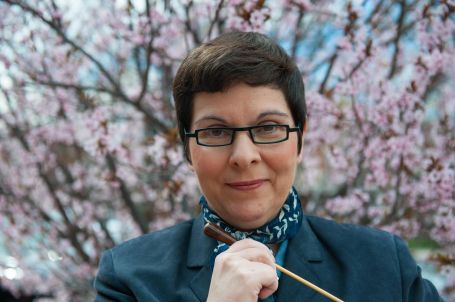
Cynthia Katsarelis. Photo by Glenn Ross.
If you are among those, you will want to hear this intriguingly selected and well played concert. Conductor Cynthia Katsarelis acknowledged that the three pieces on the program—Rakastava for strings and percussion by Jean Sibelius, Samuel Barber’s poignant Knoxville: Summer of 1915 for soprano and chamber orchestra, and Mozart’s Symphony No. 39—have little in common except that they compliment one another very well.
Rakastava, originally written for male chorus and later arranged for strings by the composer, is one of Sibelius’ less known tone poems, and virtually the only one suitable for chamber orchestra. It is a tender portrayal of the meeting and parting of doomed lovers from Finnish legend.
The score was beautifully played by Pro Musica, with a transparency and warmth of sound. Here the chamber orchestra truly performed chamber music, with a careful balance and responsiveness of one part to another and lovely solos in violin and cello. The effect was aided by the highly resonant acoustic of Montview Presbyterian, which enriched the string sound.
The acoustic was more of an issue in the Barber. Soprano Amanda Balastrieri gave an eloquent and emotionally committed performance, but the lengthy reverberation sometimes covered consonants, rendering the text less than ideally clear.
Knoxville: Summer of 1915 is a setting of a prose poem by James Agee, describing an idyllic summer evening from his childhood, when he was wrapped in the warmth and love of his family. A wonderful piece of nostalgia, the text and music seem to yearn for a lost innocence, but it is more than that. The following year, Agee lost his father in a car accident. Perhaps coincidentally, Barber’s father was dying when he was writing the music.
This knowledge shifts the emotional focus away from the description of the warm night to the foreshadowing of the imminent tragedy, and to the words “May God bless my people . . . remember them kindly in their time of trouble; and in the hour of their taking away.”

Amanda Balastrieri, soprano soloist in “Knoxville: Summer of 1915”
Without stifling the nostalgic aspects of the score, both conductor and soloist brought out those shadows. Balastrieri stressed that darker aspect in talking about the piece, saying that recent losses in her family have deepened her understanding of the music.
In performance Katsarelis created a warm sonic cocoon for the opening lines of text, but then sharply attacked the harsh chords that follow the words “my father who is good to me,” making them a portent of things unsaid. Similarly Balastrieri made the words “my good father” and “their taking away” the emotional climax of the piece, rendering the subsequent return to the nostalgic tone all the more poignant. The tender mood, so comfortable at the beginning, now feels fragile.
Often presented by larger orchestras, Barber’s score takes on an especially intimate cast when played by a chamber group. Balastrieri’s clear voice is ideal for Barber’s music, and in Katasrelis she had a congenial and like-minded partner. In spite of the acoustic disadvantages of the high-ceilinged, narrow, deep space, Knoxville: Summer of 1915 left a deep impression.
It was Mozart’s symphony that suffered most from the cathedral acoustics of Montview Church. With a reverberation time of 2 seconds or more, loud chords were still sounding into succeeding softer passages, and in fast tempos one measure overlay the next. The beginning of the Minuet, where the metronomic wind chords should pulse cleanly beneath transparent strings, was especially muddied.
Acoustics aside, Katsarelis and Pro Musica offered a stylish and energetic reading of Mozart’s symphony. The last movement got off to a sparkling start and continued to sparkle in the softer passages. And it would be remiss not to note the delightful wind playing throughout this movement, and the admirable restraint from the trumpets who could easily have overwhelmed the ensemble. Only at the end, encouraged by Katsarelis’ emphatic cues, did they open up to build a climax.
Looking at the symphony as a whole, Katsarelis provided firm control of the structure. Before the performance she spoke briefly of the symphony’s musical journey, away from and back to the home key, as a metaphor for our life’s journey. This is a theme she clearly feels deeply, and it was well reflected in her interpretation, which offered a fully satisfying homecoming at the end.
# # #
Pro Music Colorado Chamber Orchestra will repeat this program tonight (Oct. 18) at 7:30 p.m. in First United Methodist Church in Boulder. Click here for tickets.
For information on the remainder of the season, see the Pro Musica Colorado Web page.


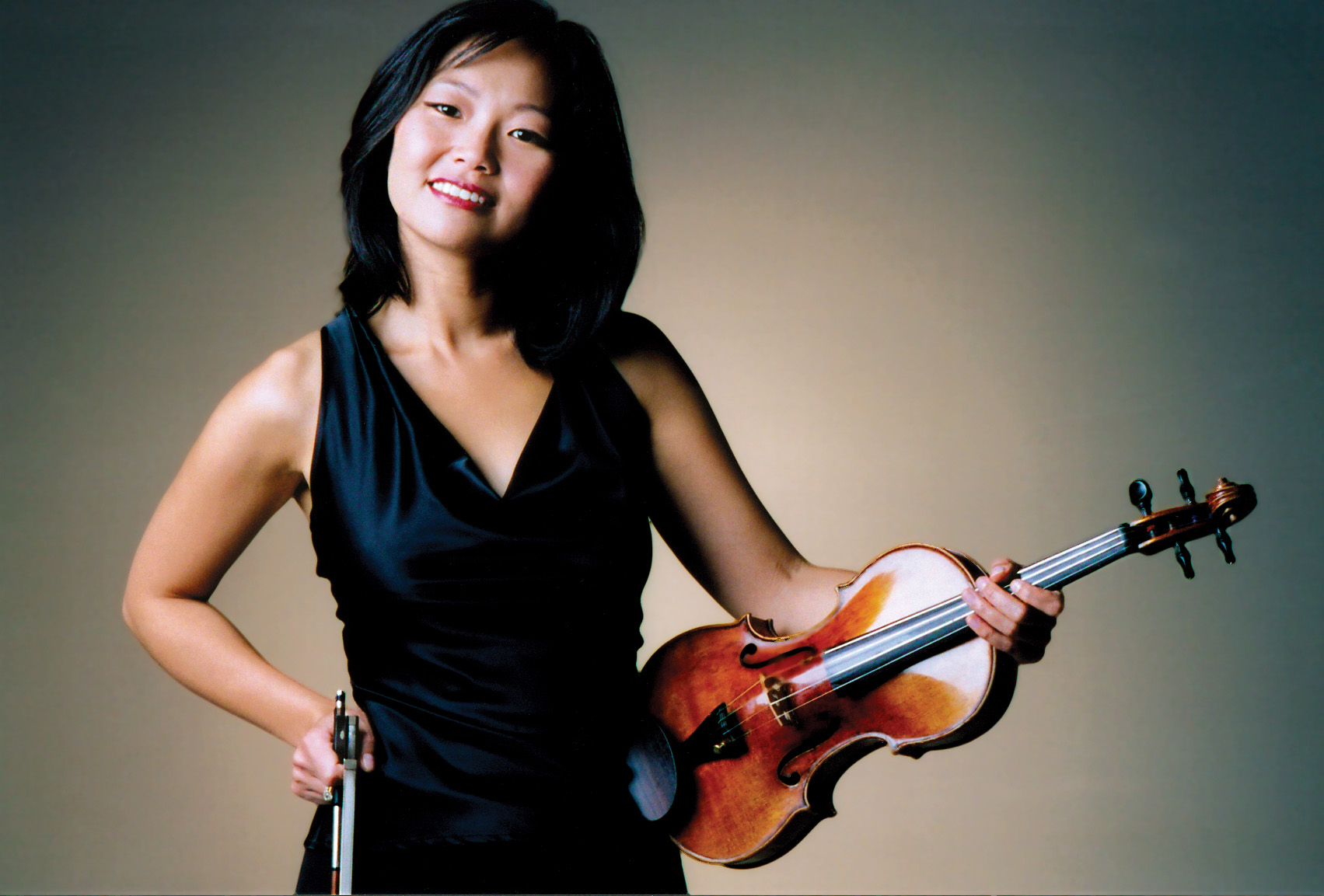 The performances (Friday, Feb. 6, in Denver and Saturday, Feb. 7, in Boulder, both at 7:30 p.m.) will feature violinist Yumi Hwang Williams, concertmaster of the Colorado Symphony as soloist. Other works on the program will be the world premiere of . . . I Give you my Sprig of Lilac by CU composition student Daniel Cox, and the Fantasia on a Theme of Thomas Tallis by Ralph Vaughan Williams.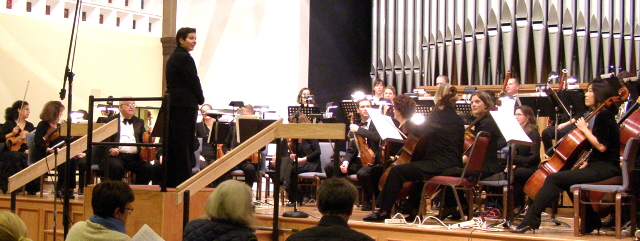


 Sharps & Flatirons