Pro Musica Colorado reschedules final concert

Farewell concert for conductor Cynthia Katsarelism orchestra will be Sunday, May 5

By Peter Alexander May 22 at 9:50 a.m.

The farewell concert for the Colorado Pro Musica Chamber Orchestra and conductor Cynthia Katsarelis, originally scheduled for April 6 and postponed by weather and a power outage, has been rescheduled.

The concert will take place at Mountain View Methodist Church in Boulder at 4 p.m. Sunday, May 5. The soloist will be guitarist Nicoló Spera. The program will be the same as originally announced (see below). You may read the full original story HERE.

* * * * *

“Nicolò!”
Pro Musica Colorado Chamber Orchestra, Cynthia Katsarelis, conductor
With Nicolò Spera, guitar

  • Jessie Montgomery: Starburst
  • Joaquin Rodrigo: Fantasía para un gentilhombre (Fantasy for a gentleman)
  • Louise Farrenc: Symphony No. 3 in G Minor

4 p.m. Sunday, May 5
Mountain View Methodist Church, 355 Ponca Place, Boulder

TICKETS

Pro Musica Colorado will reschedule ‘farewell concert’

Please note that the final concert by the Colorado Pro Musica Chamber Orchestra with conductor Cynthia Katsarelis and guest soloist Nicolò Spera, originally scheduled for April 6, was postponed due to inclement weather and the widespread power outage on that date. The concert will be rescheduled pending the availability of the musicians and the venue. The new date will be announced as soon as arrangements have been confirmed.

You may read the original story here. This is the full program for the concert:

“Nicolò!”
Pro Musica Colorado Chamber Orchestra, Cynthia Katsarelis, conductor
With Nicolò Spera, guitar

  • Jessie Montgomery: Starburst
  • Joaquin Rodrigo: Fantasía para un gentilhombre (Fantasy for a gentleman)
  • Louise Farrenc: Symphony No. 3 in G Minor

Colorado Pro Musica presents farewell concert Saturday

NOW RESCHEDULED for 4 p.m. Sunday, May 5

By Peter Alexander April 2 at 10 a.m.

Boulder will have one less orchestra after this weekend.

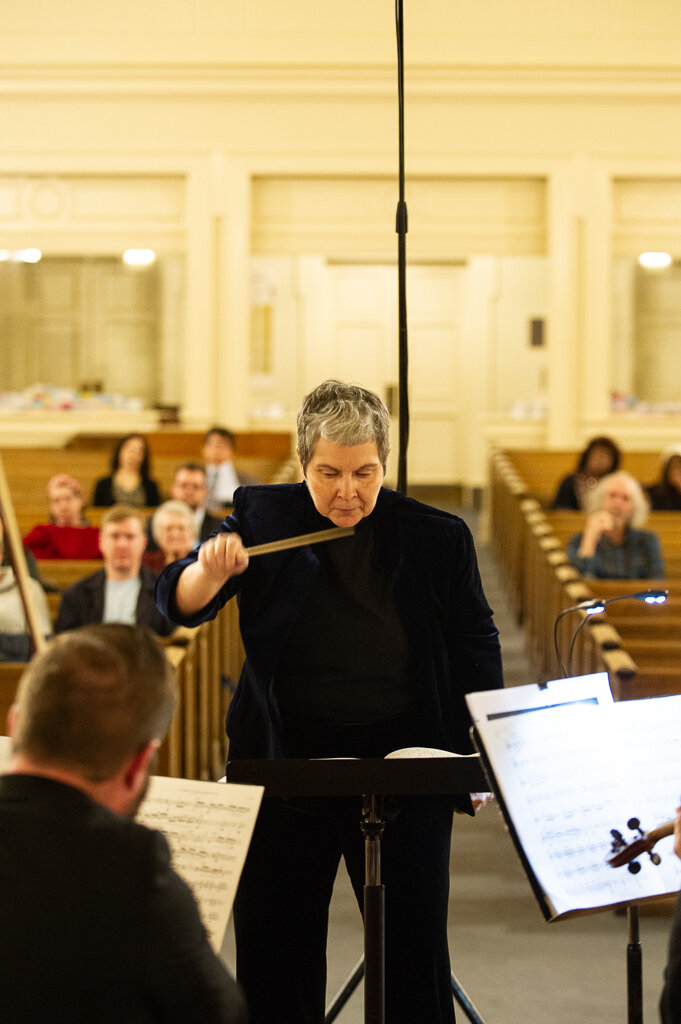
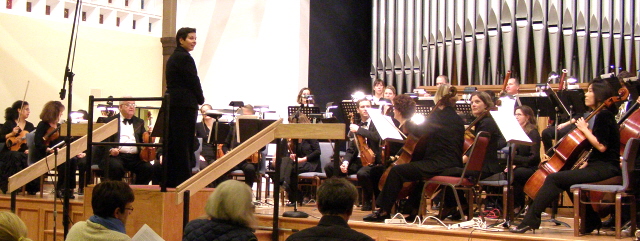
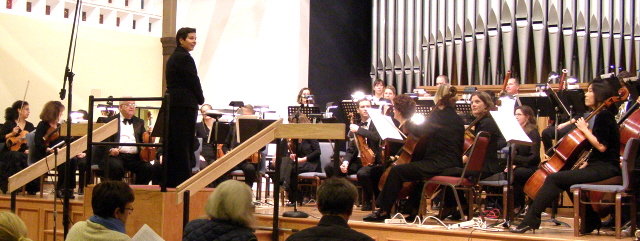
Pro Musica Colorado Chamber Orchestra strings with conductor Cynthia Katsarelis. Photo by Glenn Ross.

The Colorado Pro Musica Chamber Orchestra will play their last concert Saturday (7:30 p.m. April 6; details below), after 17 years of steadfast leadership from conductor and artistic director Cynthia Katsarelis. Katsarelis recently moved from Colorado to South Bend, Ind., where she is on the faculty of Sacred Music at Notre Dame University.

With Katsarelis, Pro Musica’s philosophy has been to to introduce composers from under-represented groups while featuring local soloists. In keeping with this approach, the final program will present two works by women—Starburst by living composer Jessie Montgomery to open the concert, and the Symphony No. 3 by 19th-century French composer Louise Farrenc—and a soloist from the CU faculty, guitarist Nicolò Spera playing the Fantasía para un gentilhombre (Fantasy for a gentleman) by Joaquin Rodrigo.

Montgomery’s Starburst is a short but colorful piece for strings composed in 2012 that has become a popular concert opener. The composer just won a Grammy for her Rounds for piano and orchestra, in a recording by pianist Awadagin Pratt and the ensemble A Far Cry. Pratt will perform Rounds at the Colorado Music Festival this summer (July 25 and 26 at Chautauqua Auditorium).

“It’s become a canonic piece, and it’s a really fabulous opener,” Katsarelis says of Starburst. Pro Musica played it once before, but “it’s good to repeat repertoire sometime,” she says, “especially if it’s right for the program and to highlight the Grammy win.”

 Rodrigo wrote his Fantasía para un gentilhombre in 1954 for the celebrated guitarist Andres Segovia, who gave the premiere in 1958. It has four movements based on dances written for guitar by the 17th-century Spanish composer Gaspar Sanz. 

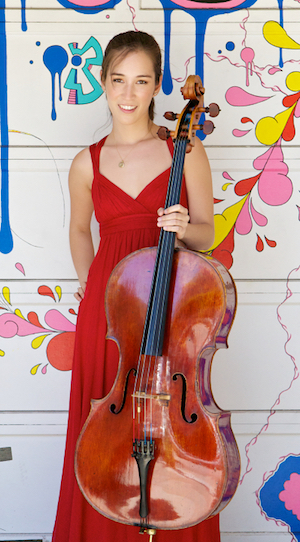
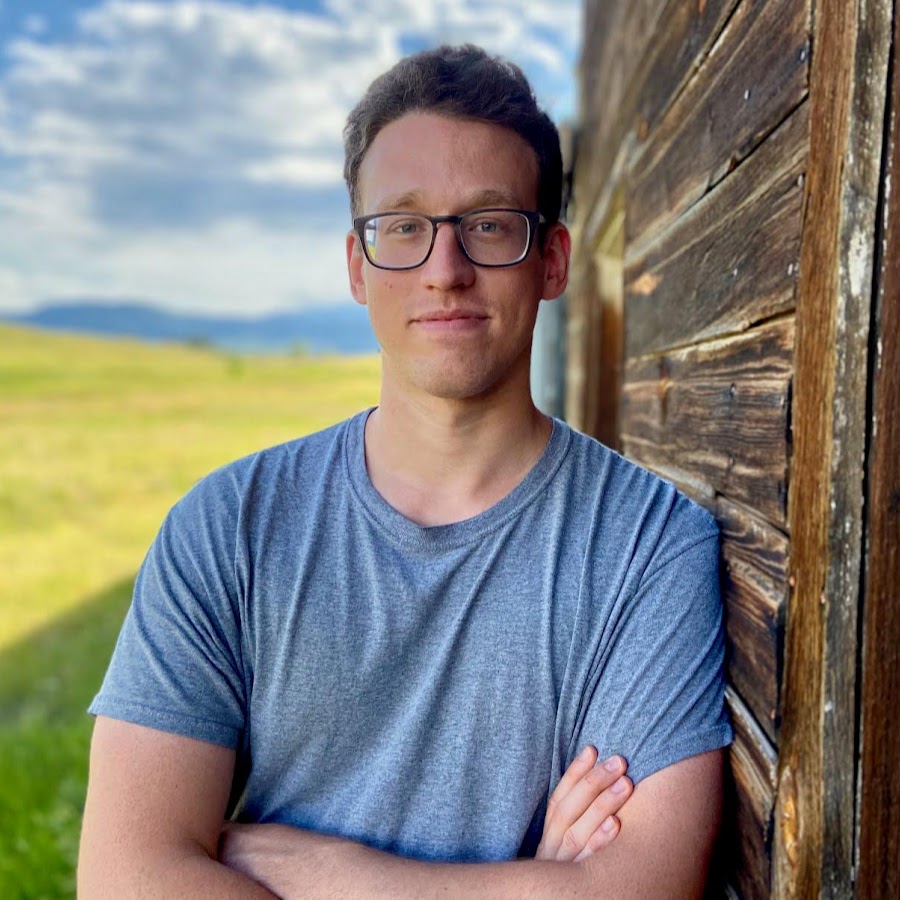
Nicolò Spera

It has become one of the best known concertos for classical guitar. Katsarelis and Spera selected it for this concert, in part because she feels that it fits well with Ferrenc’s symphony. “When you’re working with a soloist, you want to give them the choice and then see whether it fits what you are already thinking,” she explains. 

“It works really well with Ferrenc because it is a neo-classical work built on 17th-century pieces,” Katsarelis says. “Ferrenc was an extremely well versed composer, and another part of her was involved in reviving early music for keyboard. Her husband was a publisher, and together they did like 15 volumes of treasures for the keyboard, all stuff that wasn’t being played at the time.”

Ferrenc studied both piano and composition in Paris. A successful concert pianist, she was appointed professor of piano at the Paris Conservatory in 1852, the only woman to hold that rank in the 19th century. Known as an excellent teacher, she had many students who had distinguished careers.

As a composer, she stuck to the traditional forms for the symphony, of which she wrote three, and other genres. “She had modern sensibilities, like Mendelssohn and Schumann,” Katsarelis says, but “she doesn’t go the way of program music. Even though she doesn’t write programs, her themes seem to be kind of epic.”

The symphony is in four movements, following the standard pattern of the 19th century: An opening fast movement in sonata form, followed by a slow movement, a scherzo and a finale. 

“The first movement has two introductions, a slow one that introduces melodic and harmonic ideas, and then a fast introduction whose main role is to build up the energy to the exposition,” Katsarelis says. “The first theme has the feel of a rustic dance, and the second major theme is like a lyrical waltz.

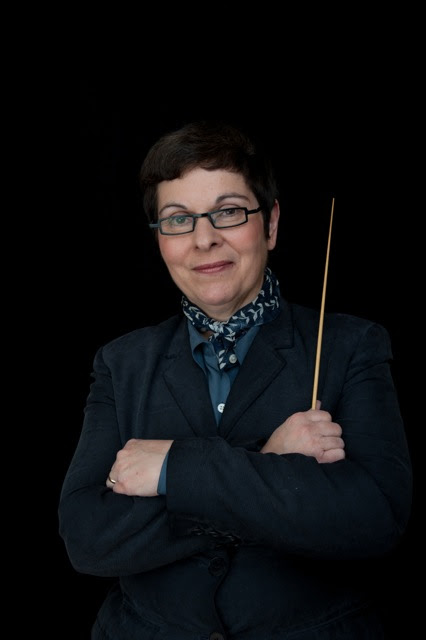
Cynthia Katsarelis. Photo by
Glenn Ross.

“The second movement is what you expect, a slow movement (with) long gorgeous melodies. The third movement is a scherzo, fast and kind of breathless. While it’s moving it’s going through really distant keys, but that gives it the sheen of color, and then the finale has soaring melodies.”

Now settled in South Bend, Katsarelis has already started to build bridges with the local musical community. She has already conducted the South Bend Symphony in a concert with soloists from Notre Dame, and she has plans to continue that collaboration. Looking ahead, “we have aspirations for some pretty big stuff,” she says of her work the the orchestra. “We agreed that we had similar aspirations, and everybody wants more, so that’s really great.”

In the meantime, Saturday’s concert will be a farewell for Boulder for Katsarelis and the Pro Musica. “The plan was to have a really great season and to end with a bang and a party, and to be really proud of everything we accomplished,” Katsarelis says. “I’ll miss the musicians in the orchestra. I’ll miss the patrons and the donors, and the whole vibe of discovery that we always had. 

“My heart is full of gratitude. I want it to be a happy farewell, with happy memories of all that we accomplished.”

* * * * *

“Nicolò!”
Pro Musica Colorado Chamber Orchestra, Cynthia Katsarelis, conductor
With Nicolò Spera, guitar

  • Jessie Montgomery: StarburstJoaquin
  • Rodrigo: Fantasía para un gentilhombre (Fantasy for a gentleman)
  • Louise Farrenc: Symphony No. 3 in G Minor

NOW RESCHEDULED:
4 p.m. Sunday, May 5
Mountain View Methodist Church, 355 Ponca Place, Boulder

TICKETS

GRACE NOTES: Holiday performances everywhere

Popular themes of the 2023 Holidays include the solstice and music of the Baroque

By Peter Alexander Nov. 29 at 2:41 p.m.

The Longmont Symphony and Boulder Ballet start their 2023 series of Nutcracker  performances Saturday afternoon (1 p.m. Dec. 2) at Vance Brand Civic Auditorium with their annual “Gentle Nutcracker.” 

A shortened, sensory-friendly performance designed for neurodiverse individuals, their families and caregivers, the “Gentle Nutcracker” is approximately 90 minutes in length. 

That special presentation will be followed by two full performances Saturday and Sunday of Tchaikovsky’s beloved ballet, with the Christmas party, the Nutcracker Prince, “The Dance of the Sugar Plum Fairy,” and all the other features that have made both the music and the ballet a Holiday favorite (4 p.m. Saturday, Dec. 2 and 2 p.m. Sunday, Dec. 3; details below).

NOTE At the time of writing, there are only a few seats left, mostly in the balcony. There is no guarantee that tickets will be available by the time this story appears.

– – –

Longmont Symphony Orchestra, Elliot Moore, conductor
Boulder Ballet

“Gentle Nutcracker”

1 p.m. Saturday, Dec. 2 NOW SOLD OUT
Vance Brand Civic Auditorium

TICKETS

Tchaikovsky: The Nutcracker Ballet

4 p.m. Saturday, Dec. 2
2 p.m. Sunday, Dec. 3
Vance Brand Civic Auditorium

TICKETS

* * * * *

Conductor Cynthia Katsarelis and the Pro Musica Colorado Chamber Orchestra will present the Christmas portion of Handel’s Messiah Saturday (7:30 p.m. Dec. 2) at Mountain View Methodist Church (details below).

In addition to the Christmas section, chorus and orchestra will perform the much loved “Hallelujah” chorus from Messiah. The program opens with “Adoration” by Florence Price and Mozart’s Divertimento in D major, K136.

The Christmas portion of Messiah is one of three major divisions of the work. It comprises 21 separate movements including the opening Overture, choruses including “For unto us a Child is Born” and “Glory to God,” recitatives, and arias for soprano, tenor and bass soloists. Pro Musica will be joined by the Boulder Chamber Chorale and soloists Jennifer Bird-Arvidsson, soprano; Nicole Asel, alto; Steven Soph, tenor; and Ashraf Sewailam, bass.

– – –

Pro Musica Colorado Chamber Orchestra, Cynthia Katsarelis, conductor
With the Boulder Chamber Chorale and Jennifer Bird-Arvidsson, soprano; Nicole Asel, alto; Steven Soph, tenor; and Ashraf Sewailam, bass

  • Florence Price: Adoration
  • W.A. Mozart: Divertimento in D major, K136 
  • G.F. Handel: Messiah, Part I
  • —“Hallelujah” chorus

7:30 p.m. Saturday, Dec. 2
Mountain View Methodist Church, 355 Ponca Place, Boulder

TICKETS

* * * * *

The CU College of Music presents its annual Holiday Festival this coming weekend, Friday through Sunday in Macky Auditorium (Dec. 8–10; details below).

One of the most popular Holiday events in Boulder, the Holiday Festival features numerous ensembles from the College of Music, each presenting their own selections. Featured groups in this year’s program are the Chamber singers, the Holiday Festival Chorus made up of singers from several groups in the college, the Holiday Festival Orchestra, the Trombone Choir, Holiday Festival Brass, Holiday Festival Jazz, and the West African Highlife Ensemble.

NOTE: At the time of writing, there are limited tickets available for the four performances of the Holiday Festival program. Performances generally sell out, so interested persons should check the CU Presents Web page for availability.

– – –

Holiday Festival, Donald McKinney, artistic director
CU College of Music Ensembles

Chamber Singers, Leila Heil, conductor
Noelle Romberger, graduate conductor

Holiday Festival Chorus
Galen Darrough, Raul Dominguez and Jessie Flasschoen, conductors 
Jun Young Na and Noelle Romberger, graduate conductors

Holiday Festival Orchestra, Gary Lewis, music director 
With Donald McKinney and Nelio Zamorano, conductors

Trombone Choir, Sterling Tanner, conductor

Holiday Festival Jazz, Brad Goode, director

Holiday Festival Brass, Lauren Milbourn, conductor

West African Highlife Ensemble, Maputo Mensah, director

7:30 p.m. Friday, Dec. 8
1 and 4 p.m. Saturday, Dec. 9
4 p.m. Sunday, Dec. 10
Macky Auditorium

TICKETS

* * * * *

Cellist Charles Lee, the principal cellist of the Boulder Philharmonic Orchestra, will join Ars Nova Singers and conductor Tom Morgan for “Evergreen,” the latest edition of their annual celebration of the winter solstice.

The program will be presented four times, once in Longmont (Saturday, Dec. 9), once in Denver (Sunday, Dec. 10) and twice in Boulder (Thursday and Friday, Dec. 14 and 15; times and locations below). The program includes music by the medieval Benedictine abyss Hildegard Bingen, the English Renaissance master William Byrd, and the north German early Baroque composer Heironymus Praetorius. 

Not to be confused with his better known younger contemporary Michael Praetorius, Heironymus is known for his elaborate multi-voices motets. Also on the program are more contemporary works by the living composers Eriks Esenvalds, Jocelyn Hagan and Taylor Scott Davis. 

In a written news release, Morgan sets the stage for this concert timed to nearly coincide with the solstice, writing: “Dark and light, motion and stasis, intimate and universal, deeply familiar and refreshingly new—our season searches for the balance point in all of these, through the power and majesty of the human voice.”

– – –
Ars Nova Singers, Tom Morgan, director
With Charles Lee, cello

“Evergreen”

  • Hildegard of Bingen: O frondens virga
  • Two 15th century English carols
  • Heoronymus Praetorius: In dulci jubilo (à 8)
  • William Byrd: O magnum mysterium
  • Ola Gjeilo: Serenity (O Magnum mysterium)
  • Andrea Casarrubios: Caminante
  • Taylor Scott Davis: Solstice
  • Eriks Esenvalds: Rivers of Light
  • Jocelyn Hagen: Mother’s Song
  • Dan Forrest: The Sun Never Says
  • Michael Head: The Little Road to Bethlehem
  • Arrangements of Holiday songs by Tom Morgan, Joanna Forbes, Alexander L’Estrange and others

7:30 p.m. Saturday, Dec. 9
United Church of Christ, 1500 9th Ave., Longmont

12:30 p.m. Sunday, Dec. 10
St. Paul Lutheran Church, 1660 Grant. St., Denver

7:30 p.m. Thursday, Dec. 14 and Friday, Dec. 15
Mountain View United Methodist Church, 355 Ponca Place, Boulder

TICKETS

* * * * *

CU Presents will round out the university’s holiday performances with Christmas with the Canadian Brass at 7:30 p.m. Tuesday, Dec. 13 in Macky Auditorium.

The Canadian Brass generally announce their program from the stage. Nonetheless, the Christmas set list is more predictable and will likely feature some Canadian Brass favorites, including “Ding Dong Merrily on High,” evergreen Holiday music including “White Christmas” and “Carol of the Bells,” and jazzy arrangements including “Glenn Miller Christmas.”

Founded in 1970, the Canadian Brass has been a recognized and esteemed part of the musical scene for more than 50 years. Touring world-wide, they have made the repertoire of chamber music for brass, and specifically brass quintets, widely appreciated. 

There is still one original member of the quintet, tubist Chuck Dellenbach, while other members have joined over the years. The most recent addition, making her Canadian Brass debut this year, is trumpet player Ashley Hall-Tighe, who first met the members of the Canadian Brass in 2001 as a student in their chamber music residency at the Music Academy of the West.

With more than 10 Christmas albums, the Canadian Brass are especially well known for their holiday performances. Their total recording history currently totals more than 130 albums and more than 2 million sold worldwide.

NOTE: At the time of writing, there are limited tickets available.

– – –

Canadian Brass

“Christmas with the Canadian Brass”

  • Program to be announced from the stage may include:
  • “Ding Dong Merrily on High” (arr. Henderson)
  • Gabrieli: Canzona per sonare No. 4
  • “White Christmas” (arr. Henderson)
  • Mykola Leondovich: “Carol of the Bells” (arr. McNeff)
  • Vince Guaraldi: “Christmas Time is Here” (arr. Ridenour)
  • Glenn Miller: “Glenn Miller Christmas” (arr. Dedrick)

7:30 p.m. Wednesday, Dec. 13
Macky Auditorium

TICKETS

* * * * *

The Longmont Symphony will look back to the 18th century for Candlelight: A Baroque Christmas at 4 p.m. Saturday, Dec. 16, in Vance Brand Civic Auditorium.

Under the direction of Elliot Moore, the featured work on the program will be the Gloria of Antonio Vivaldi. Composed around 1715, it is one of the Venetian composer’s most frequently performed works. Its 12 movements, divisions of the “Gloria” text from the Catholic Mass ordinary, call for chorus, orchestra, and soprano and alto soloists.

Celebrating the holiday season, the Candlelight Concert has long been a part of the Longmont Symphony’s season. There will be candles again this year, although the orchestra has announced that they will be battery-operated this year, rather than relying on a flame.

– – –

Longmont Symphony and Chorus, Elliot Moore, conductor

“Candlelight: A Baroque Christmas”

  • Corelli: Concerto Grosso
  • Handel: “Rejoice greatly” from Messiah
  • Scarlatti: Christmas Cantata for soprano and strings
  • Vivaldi: Gloria

4 p.m. Saturday, Dec. 16
Vance Brand Civic Auditorium

TICKETS

* * * * *

All the choirs of the Boulder Chorale and Boulder Children’s Chorale will join together to present “Season of Light,” their annual concert of music for the holidays, Saturday and Sunday (Dec. 16 and 17; details below).

The concert title refers to the tradition found in many different cultures to use light to counteract the dark of winter and forecast the return of the light in the weeks to come. In the words of the Boulder Chorale’s press information, the program “traces the history and development of many of the world’s most endearing holiday customs, all of which involve lighting up the winter season—from the burning Yule log, sparkling Christmas tree lights and candles in windows, to the lighting of luminaries (often called luminarias) in the American Southwest and the traditional ritual of the Hanukkah menorah.”

Tickets are available both at the door and through the Boulder Chorale Web page. The Sunday performance will also be presented through live streaming, available at the same Web page.

– – –

Boulder Chorale, Vicki Burrichter, artistic director
With Boulder Children’s Chorales, Nathan Wubbena, artistic director

“Season of Light”

Children’s Chorale Bel Canto
Nathan Wubbena, conductor

  • John Rutter: “Angels’ Carol”
  • Flory Jagoda: “Ocho Kandelikas” (arr. Joshua Jacobson)

Children’s Chorale Volante
Kiimberly Dunninger, conductor

  • Franklin J. Willis: “Be the Light “
  • Robert Cohen and Ronald Cadmus: “The Joy of Simple Things”

Chamber Chorale
Vicki Burrichter, conductor

  • John Newell: “Light of Heaven” (text based on the Buddhist vajra guru mantra)

Chamber Choir, Bel Canto and Volante
Nathan Wubbena, conductor

  • Ryan Main: “Go! Said the Star”

Children’s Choir Piccolini
Melody Sebald, conductor

  • “Winter Canon” (arr. Andy Beck)
  • John Henry Hopkins Jr.: “We Three Kings”

Children’s Choir Prima Voce
Anna Robinson, conductor

  • Ruth Ann Schram: “Winter Solstice”
  • “This Little Light of Mine” (arr. Masa Fukuda)

Concert Chorale
Vicki Burrichter, conductor

  • Enya and Nicky Ryan: “Amid the Falling Snow” (words by Roma Ryan, arr. Audry Snyder)
  • Craig Carnahan: “Dancing on the Edges of Time” (words by Rabindranath Tagore)
  • Stephanie K. Andrews : “On Compassion” (words by the 14th Dalai Lama Tenzin Gyatso)

Combined Choirs
Kim Dunninger and Vicki Burrichter, conductors

  • Benji Pasek and Justin Paul: “Do a Little Good” (from Spirited)
  • Franz Gruber/David Kantor: “Night of Silence” (includes “Silent Night”; arr. Nathan Wubbena; Spanish text by Cynthia Garcia-Barrera)

4 p.m. Saturday and Sunday, Dec. 16 and 17
First United Methodist Church, 1421 Spruce St., Boulder

TICKETS

* * * * *

The Boulder Chamber Orchestra will combine its holiday celebration with the music of Beethoven in a program featuring pianist Adam Zukiewicz.

Their “Holidays Celebration with Beethoven” will be at 7:30 p.m. Saturday, Dec. 16 in the Boulder Seventh-Day Adventist Church. Zukiewicz will perform Beethoven’s Piano Concerto No. 2 with the orchestra and conductor Bahmann Saless. 

Other works on the program are Mozart’s Overture to The Marriage of Figaro, conducted by Nadia Artman; Chocolats Symphoniques (Symphonic chocolates) by Maxime Goulet; and the world premiere of the Concerto for Flute and Orchestra by Sylvie Bodrova with the BCO’s principal flutist Cobus DuToit as soloist. 

Part of the reason for combining the holiday music with Beethoven is that the composer’s birthday is believed to be Dec. 16. The date is not certain, since the only documents record his baptism on Dec. 17, but the birthday is traditionally observed on Dec. 16. That would make Dec. 16, the date of the concert, the 253rd anniversary of his birth.

As it happens, the full 2023–24 season has three of Beethoven’s five piano concertos listed. the Third Concerto was played by Petar Klasan Sept. 1, and the Concerto No. 5 (“Emperor:) will be performed with the BCO by  Jennifer Hayghe Feb 3 (7:30 p.m., Boulder Seventh-Day Adventist Church).

Goulet’s Chocolats Symphoniques was previously performed by the BCO on their holidays concert in 2021. The work’s four movements refer to four different flavors of chocolate: “Caramel Chocolate,” “Dark Chocolate,” “Mint Chocolate” and “Coffee-infused Chocolate.”

– – –

Boulder Chamber Orchestra, Bahman Saless, conductor
With Cobus DuTois, flute, and Adam Zukiewicz, piano
Nadia Artman, conductor

“Holidays Celebration with Beethoven”

  • Mozart: Overture to The Marriage of Figaro
  • Maxime Goulet: Chocolats Symphoniques (Symphonic chocolates)
  • Sylvie Bodorova: Concerto for Flute and Orchestra (world premiere)
  • Beethoven: Concerto No. 2 for Piano and Orchestra

7:30 p.m. Saturday, Dec. 16
Boulder Seventh-Day Adventist Church, 345 Mapleton Avenue

TICKETS  

* * * * *

The Boulder Bach Festival (BBF) will present “Handel’s Messiah Reimagined” in their very own version, based on an edition created by music director Zachary Carrettin.

Messiah will be performed by a string orchestra from the BBF’s Compass Resonance (CORE) Ensemble with harpsichord and chamber organ continuo and a 16-voice choir. Five featured solo singers will also perform within the chorus. The entire performance will be presented without conductor.

The program also incudes two a cappella vocal works and a violin concerto b Antonio Vivaldi. The concerto will be played by BBF’s artistic director, Zachary Carrettin, with Baroque guitar continuo played by Keith Barnhart.

– – –

Boulder Bach Festival CORE ensemble
Mara Riley, soprano; Sarah Moyer, soprano; Claire McCahan, mezzo-soprano;
Daniel Hutchings, tenor; and Adam Ewing, baritone
With Zachary Carrettin, violin, and Keith Barnhart, Baroque guitar

“A Baroque Christmas: Handel’s Messiah Reimagined”

4 p.m. Sunday, Dec. 17

Gordon Gamm Theater, Dairy Arts Center, Boulder

TICKETS  

GRACE NOTES: A sellout at CU; RM Chorale; Transfigured Night

All performances of CU’s Chicago are sold out, but RMC and Pro Musica have tickets

By Peter Alexander April 25 at 10:55 p.m.

If the “Merry Muderesses” of Kander and Ebb’s Chicago are your cup of tea, you might be out of luck.

That is, unless you already have your ticket to the CU College Music production this weekend. The five performances in the Music Theatre of the Imig Music Building are completely sold out. The box office has a wait list that you can join HERE.

# # # # #

John Kander and Fred Ebb: Chicago
CU College of Music

7:30 p.m. Thursday–Saturday, April 27–29
2 p.m. Saturday and Sunday April 29 and 30

Music Theater

SOLD OUT

# # # # #

Jimmy Howe, conductor of the Rocky Mountain Chorale, wanted plenty of variety in the group’s spring program.

To achieve that, he hit upon the idea of a “composite mass,” settings of the five sections of the Mass Proper by five different composers. He himself provided the music for the first movement Kyrie, a movement that he described in program notes as “set to mimic classical style.” Other movements are by actual Baroque and Classical-era composers, plus one living composer. 

The Gloria movement is by Vivaldi, the Credo  by Schubert. They will be followed by “The Ground” from the Sunrise Mass of Norwegian-American composer Ola Gjielo, representing the Hosanna movement. The Composite Mass concludes with the Agnus Dei from Joseph Haydn’s Missa in tempore belli (Mass in time of war).

The other major work on the program is The Hope of Living, a five-part work for chorus and string quartet by Jake Runestad. In his description of the score, Runestad wrote “I continue to dwell on the importance and impact of love—love shown to others and love shown to oneself.” Commissioned by the Miami-based choral group Seraphic Fire, the five movements of The Hope of Loving are based on mystical writings about love selected by the composer.

Howe filled out the program with shorter works by himself, Susan Blockoff and Mark Sirrett.

A mixed choir of more than 60 singers, the Rocky Mountain Chorale was founded in 1978. Their repertoire typically includes classical works as well as pop and world folk music.

# # # # #

“Hope of Loving”
Rocky Mountain Chorale, Jimmy Howe, conductor
With Parker Steinmetz, asst. conductor; Walton Lott, piano
Jennifer Crim and Marci Pilon, violin; Aaron Lockhart, viola; Desiree Anderson, cello

Program includes: 

  • Composite Mass:
    —Jimmy Howe: Kyrie
    —Vivaldi: Gloria
    —Schubert: Credo
    —Ola Gjeilo: Hosanna from Sunrise Mass
    —Haydn: Agnus Dei from Missa in tempore belli (Mass in time of war)
  • Jake Runestad: The Hope of Living
    —I. “Yield to Love”
    —II. “Wild Forces”
    —III. “Wondrous Creatures”
    —IV. “My Soul is a Candle”
    —V. “The Hope of Loving”

7:30 p.m. Friday April 28, Heart of Longmont Church, Longmont
7:30 p.m. Saturday, April 29, First Methodist Church, Boulder

TICKETS   
# # # # #

A solar eclipse in the mountains, a magical night in the forest, and a little Mozart: Those are the ingredients of the next program to be presented by the Pro Musica Chamber Orchestra of Colorado Saturday (7:30 p.m. April 29; details below).

The concert, led by Pro Musica’s music director Cynthia Katsarelis, will also feature violinist Harumi Rhodes and violist Richard O’Neill, both members of the Takács String Quartet.

Composer Anne Guzzo

The program opens with The Bear and the Eclipse by Anne M. Guzzo, a faculty member at the University of Wyoming in Laramie. Inspired by and dedicated to the bears of Grand Teton National Park, the score portrays the story of a bear experiencing, and being transformed by, a solar eclipse.

As a bookend to The Bear and the Eclipse, Schoenberg’s Verklárte Nacht closes the program. A work with its feet equally planted in both the richly Romantic style of the late 19th century and the expressionistic style of the early 20th century, it is a musical interpretation of a poem describing a man and woman walking through the forest on a moonlit night. The woman confesses a troubling secret and finds that the man’s love has transfigured the darkness to splendor. 

In her program notes, Katsarelis wrote “I love the stories in both (pieces). One is an origin story for the solar and lunar eclipses . . . and ‘Transfigured Night’ is the story of a woman overcoming the fear of telling her story. . . . The whole program is about human connection in the context of cosmic beauty.”

The central pillar of the program is Mozart’s Sinfonia Concertante for violin, viola and orchestra, featuring the two soloists. Essentially a concerto with more than one soloist, the Sinfonia Concertante was a popular genre in 18th-century Paris and Mannheim, two cities Mozart visited on his travels. “The music is sublimely beautiful and the interaction between the violin and viola soloists is not to be missed,” Kartsarelis wrote. 

# # # # #

“Transfigured Night”
Pro Musical Colorado Chamber Orchestra, Cynthia Katsarelis, conductor
With Harumi Rhodes, violin, and Richard O’Neill, viola

  • Anne M. Guzzo: The Bear and the Eclipse
  • Mozart: Sinfonia Concertante in E-flat major for violin, viola and orchestra, K364 
  • Schoenberg: Verklárte Nacht (Transfigured night)

7:30 p.m. Saturday, April 29
Mountain View United Methodist Church, 355 Ponca Pl., Boulder

TICKETS 
Pro Musica Colorado goes “through the looking glass” Jan. 28

Music from “periods of change:” Haydn, Mozart and Caroline Shaw

By Peter Alexander Jan. 26 at 5:41 p.m.

Pro Musica Colorado Chamber Orchestra celebrates their “Sweet Sixteen” anniversary Saturday (Jan. 28) with a nearly-new piece, a nearly-new soloist on the Boulder classical scene, and one piece from their very first concert.

The concert, at 7:30 p.m. in the Mountain View Methodist Church, will open with Caroline Shaw’s nearly-new and entirely intriguing Entr’acte for strings. Cellist Meta Weiss, who joined the CU faculty in January 2019 but has had little opportunity to perform in Boulder due to the pandemic, will play Haydn’s Cello Concerto in C major. The concert will conclude with Mozart’s Symphony No. 29 in A major, K201, a bright and cheerful piece that was on Pro Musica’s first concert.

Music director Cynthia Katsarelis will conduct.

Caroline Shaw

In her program note for the score, Shaw wrote that the Entr’acte was inspired by the minuet from Haydn’s String Quartet in F major ,op. 77 no. 2, a piece that “suddenly takes you to the other side of Alice’s looking glass. The shift from light and prancing to smooth and graceful . . . is certainly a distinct step into an utterly new place.”

That sense of going “through the looking glass,” which also gave the concert program its title, is what Shaw aims to recreate, but in a contemporary style. “One of the things that I love about her music and this particular piece is its dialog with the past,” Katsarelis says.

“She has nostalgic references to tonality and then it moves along to stuff that’s more modern. She uses some special effects, and kind of melts from the quasi-tonal idea into these special effects, and it’s really cool how she does that. It’s a real dialog with the past.”

Katsarelis particularly enjoys a part of the piece where the players create an effect of whispering. “They rub the bows pitchlessly over the strings,” she explains. “It sounds like whispers, so when we’re taking about a piece that’s in dialog with the past, it’s like ‘I wonder what they’re talking about. Are they talking about Haydn?’”

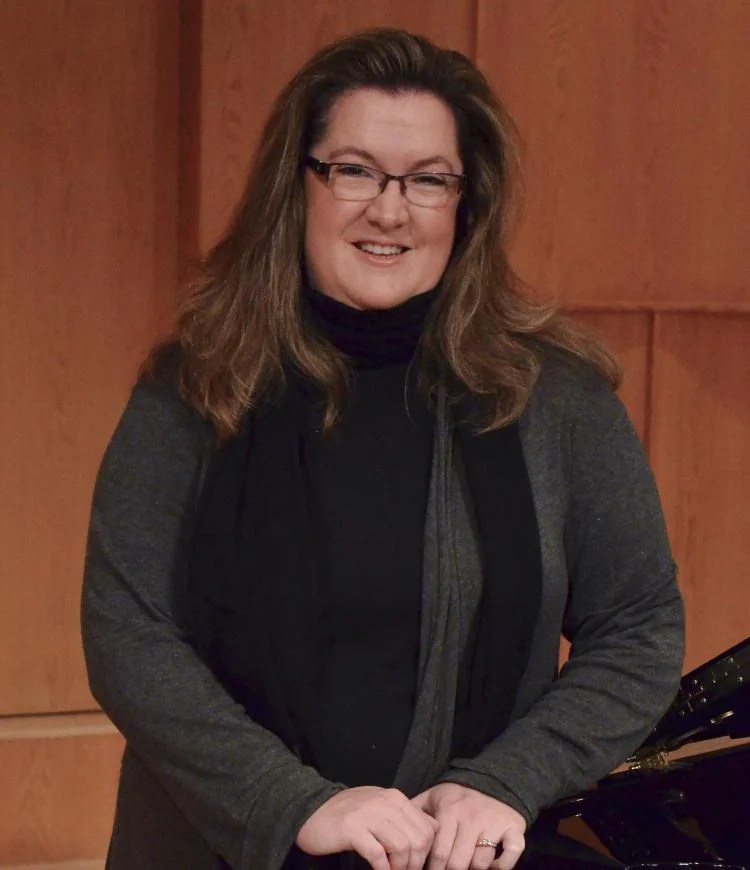
Meta Weiss. Photo by Betty Kershner

From a piece that might be talking about Haydn the program moves to a piece by Haydn, the Cello Concerto in C. Written around 1765, it is one of Haydn’s earlier pieces, and one of the earliest concertos for cello with orchestra to enter the repertoire.

“It’s such a happy piece,” Weiss says. “It’s just a perfect piece of music, it has a little bit of everything for everyone. It’s just so delightful, and it’s delightful to play.”

She knows, because it was the very first concerto she learned, when she was nine years old and studying cello in the San Francisco Bay area. She had been inspired to take up the cello when she heard Yo You Ma perform when she was about three-and-a-half. She went on to study with Joan Jeanrenaud, former cellist of Kronos, and then at Rice University and Juilliard. She came to CU in 2019, after teaching in Australia.

“There is a youthful exuberance to (Haydn’s Concerto),” she says. “We don’t always get that in concertos as cellists. It’s really nice to be able to explore the other side of the cello. And one of the beauties of the piece is that it’s so well written for the cello. It’s so well orchestrated, it’s perfect.”

It’s not surprising that Mozart’s A major Symphony K201 is one of Katsarelis’ favorite pieces that she has conducted. “The amount of repertoire that I’ve repeated is pretty small,” she says. “This will be my third time for Mozart 29. It’s a sublimely beautiful piece that I love.”

Katsarelis mentions that Mozart wrote the symphony in Salzburg, shortly before he moved to Vienna but also right after a trip to Italy, where he studied counterpoint. “He comes home with a great sense of counterpoint,” she says. That counterpoint, she believes, led to the full classical style by adding depth and intensity to the simple melodies and routine accompaniments in style right after the Baroque period.

“To have independent lines, very singing, beautiful lines going on underneath the melody, is a fairly new thing,” she says. ”If you love to enjoy the melodies, fine. If you love the inner voices and interplay, you’ve got it. The counterpoint is doing different things. It’s delighting the ear, it’s setting the mood, it’s adding excitement and complexity. It’s really fantastic.”

And that’s just the first movement. Katsarelis has equal praise for the rest of the symphony. “The slow movement is very singing, and again the inner lines are nice. The minuet is frolicking, and the symphony ends with a wonderful allegro con spirito, nice and fast with more counterpoint answering back and forth, which is really fun. It’s just delightfully enjoyable from start to finish.”

Cynthia Katsarelis with the Pro Musica Colorado Chamber Orchestra

Katsarelis thinks that the program is perfect for these days after COVID has started to recede. We are all still carrying memories of the pandemic, but thinking ahead to days with fewer restrictions.

“Through the looking glass,” she says. “I think that points to the fact that these pieces are all written during periods of change. That’s music looking backwards and forwards, at a time when we are all doing the same thing.”

# # # # # 

“Through the Looking Glass”
Pro Musica Colorado Chamber Orchestra, Cynthia Katsarelis, conductor
With Meta Weiss, cello

  • Caroline Shaw: Entr’acte
  • Haydn: Cello Concerto in C major
  • Mozart: Symphony No. 29 in A major, K201

7:30 p.m. Saturday, Jan. 28
Mountain View United Methodist Church

TICKETS

Rousing Beethoven from Pro Musica Colorado

Folkish new piece by UC grad Ben Morris, “utterly enjoyable” concerto by Florence Price

By Peter Alexander Nov. 20 at 12:15 a.m.

Last night (Nov. 19) conductor Cynthia Katsarelis and the Pro Musical Colorado Chamber Orchestra opened their 2022-23 concert season in the newly-renovated sanctuary of the Mountain View Methodist Church in Boulder.

Cynthia Katsarelis and the Pro Musica Colorado Chamber Orchestra

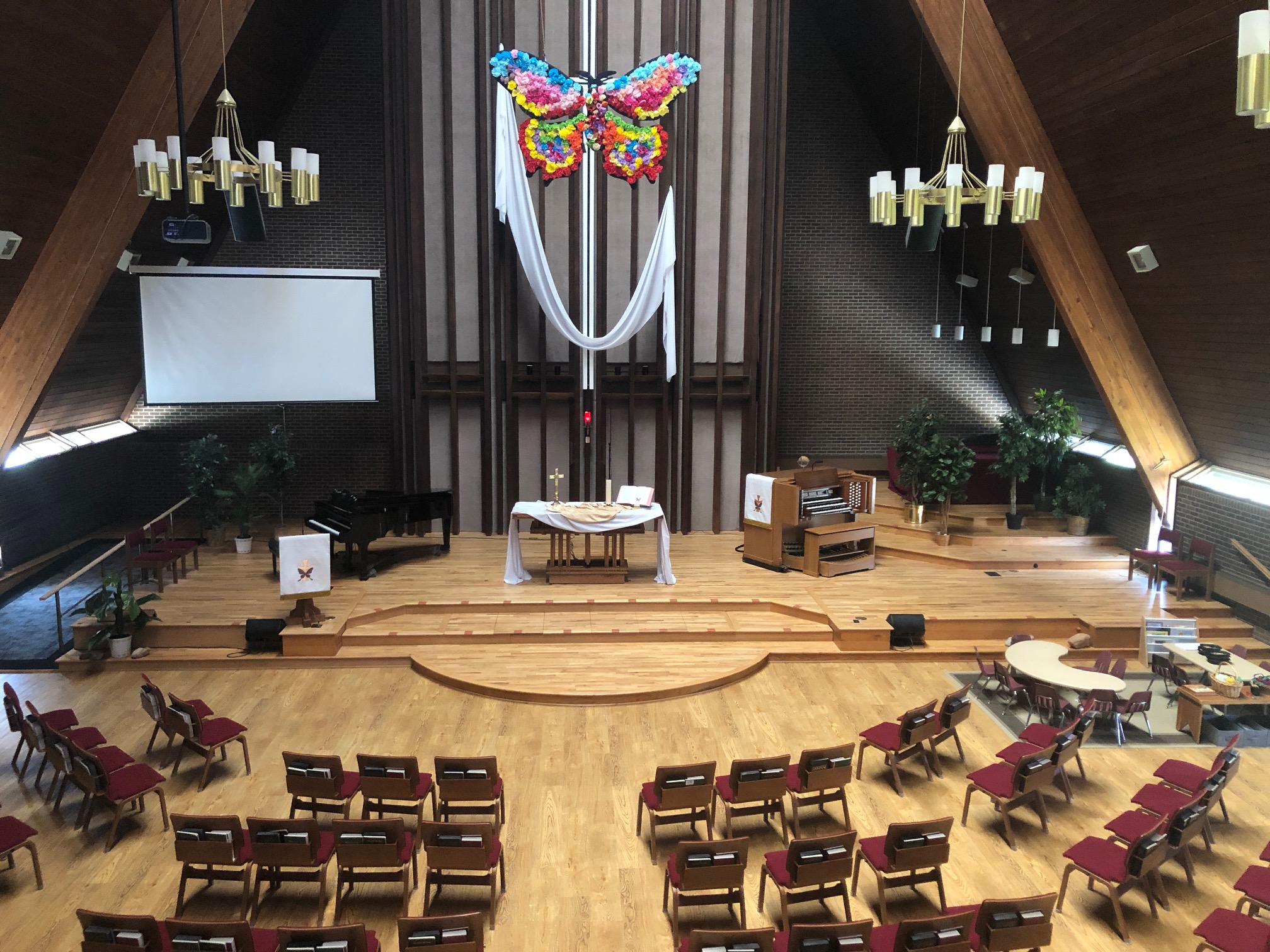
Venue renovations often bring gains and losses, and this was no exception. This is worth noting, because the Mountain View church is being used more as a concert venue. It is a visually attractive space, and offers about the best parking of any venue in Boulder.

The carpet has been removed and replaced with a hard wood floor, and the  pews have been replaced with reasonably comfortable chairs, which is all to the good. The sound is much more lively than before, and it may take performers a while to adjust to the new acoustic. Balance is problematic, as the strings had a hard time being heard over the boosted wind sounds. The wood floor certainly beefed up the bass, although not always in a helpful way. In time performers will likely adjust to the increased resonance.   

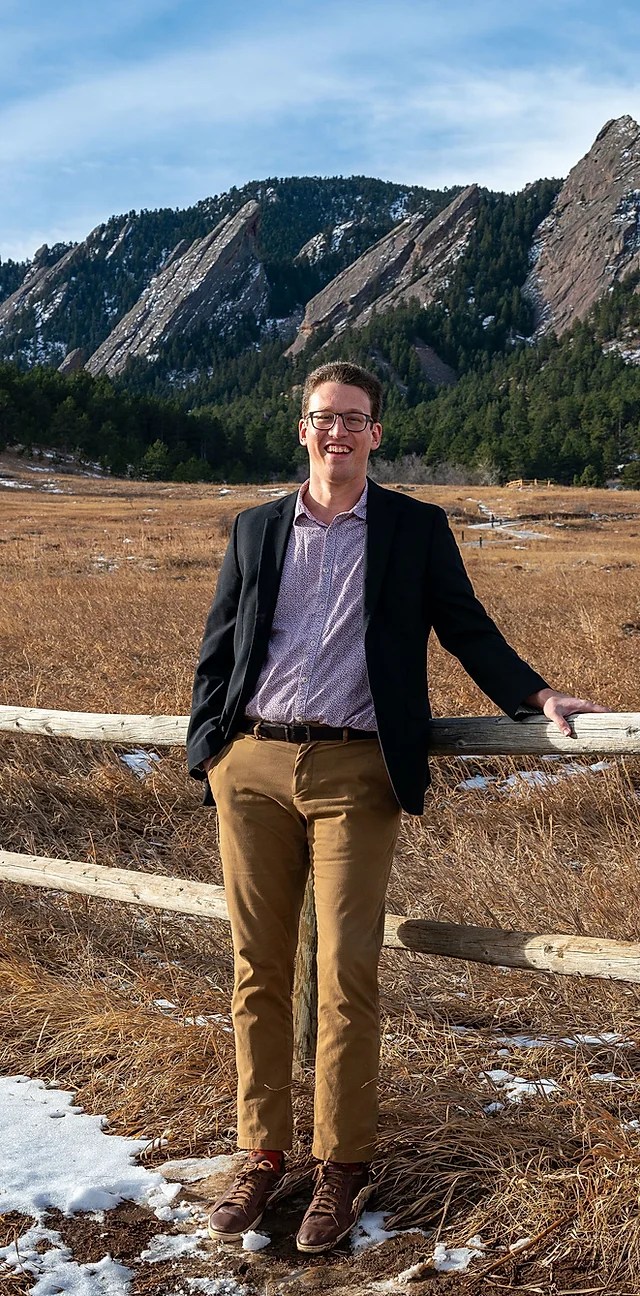
Ben Morris

The concert opened with the world premiere of The Hill of Three Wishes by Ben Morris, winner of the 2021 CU composition Competition. Reflecting the legend of Helgafell , a magical hill in Iceland that grants three wishes to anyone who can walk to the top without looking back, the score has an attractive folkish quality. It is written in a modal style that avoids harsh dissonance and welcomes listeners.

Morris makes great use of instrumental sounds to create a mythic quality that Katsarelis compared to The Lord of the Rings. Opening brass gestures establish the setting. An ancient Icelandic folk song adds a sense of timelessness, and at the end the music drifts atmospherically into silence. From the score I couldn’t tell if Morris was granted his wishes—did he, like Orpheus, submit to the temptation to look back?—but the hike is clearly a pleasant one. The brief score should find willing performers and audience enjoyment.

Another rare adventure was provided by the Piano Concerto in One Movement by Florence Price, whose music from the early 20th century was once forgotten but is being rediscovered. The first African American woman to have her music performed by a major orchestra when her First Symphony was premiered by the Chicago Symphony in 1933, Price was a skilled and accomplished composer. The concerto is symbolic of her fate: the full orchestral setting was lost and only rediscovered in 2019. Pro Musica is among the first to perform it as originally written. 

The concerto is, however, misnamed as it is not truly in one movement. There is a clear cadence and break between the first and second movements, and the dramatic transition from the slow movement to the lively finale parallels many classical concertos. Like many of Price’s works, the score draws on her African American heritage, from the bluesy trumpet and trombone riffs at the outset, to the slow movement that channels dozens of great spirituals, and the juba dance finale that could easily be mistaken for a Joplinesque rag. This is a unique and valuable part of our country’s musical history.

Jennifer Hayghe

Pianist Jennifer Hayghe gamely tackled the difficult solo part—Price herself was a virtuoso pianist—but while she started with a resounding first entrance, at other times balance issues prevented her playing from being clearly heard. Moments of lighter orchestration, with the piano against one or two winds, worked best. As well as I could hear, Hayghe carried off the solo part handily. Special notice should go to flutist Michelle Stanley, oboist Miriam Kapner and cellist Carole Whitney (if the program is to be trusted) for their solos in the second movement.

The finale had compelling energy, but as performed it was essentially an orchestral dance movement with the piano playing along. This is an utterly enjoyable movement, whether it shows off the pianist to full advantage or not. Katsarelis, Hayghe and the Pro Musica deserve our gratitude for bringing a valuable but rarely heard piece to the Boulder audience. Now that the original score has been reassembled, others should take up this concerto.

The concert concluded with a spirited reading of Beethoven’s powerful, popular Seventh Symphony. Audiences are used to hearing it played by larger ensembles, but a smaller orchestra like Pro Musica can bring a welcome muscularity and clarity to this and other classical scores. Once again, however, the lively acoustic was sometimes problematic. The fast rhythmic figures of the first movement and rapid passages in the strings were sometimes obscured by the punctuating chords or lost in the general resonance of the space.

Katsarelis followed all the road signs of Beethoven’s score, outlining both the structure and the drama of the piece.  While some dynamic differences were swallowed in the overall resonance, she kept the tempo and maintained the thrust all the way to the end. That’s just what Beethoven calls for, and it provided a rousing culmination for the concert.

Icelandic Legends and the Spirit of the Dance

Pro Musica Colorado concert has a hopeful message

By Peter Alexander Nov. 17 at 4:48 p.m.

Composer Ben Morris

Conductor Cynthia Katsarelis and the Pro Musica Colorado Chamber Orchestra will present the world premiere of The Hill of Three Wishes by former CU composition student Ben Morris on their next concert, Saturday at Mountain View Methodist Church in Boulder (7:30 p.m. Nov. 19).

The score was selected last year as the winner of an annual competition that Pro Musica holds in collaboration with the CU composition department. The department gives Katsarelis works by several composers, and she selects one composer to receive a commission from a fund that was financed by the late Thurston Manning. Normally the new works are premiered in the spring, but last year’s planned performance was postponed. 

The concert, titled “Apotheosis of the Dance,” opens the Pro Musica 2022–23 season of three concerts. Other works on the program are Florence Price’s Piano Concerto in One Movement, which concludes with an African American juba dance; and Beethoven’s Seventh Symphony in A major, which has such exuberant rhythmic movement that Richard Wagner once called it “the apotheosis of the dance.”

Pianist Jennifer Hayghe, the chair of the CU Roser Piano and Keyboard Program, will be the soloist for Price’s concerto.

“Ben Morris is a wonderful emerging composer,” Katsarelis says. “First of all he really knows what to do with an orchestra. His orchestration is superb, and his colors, and the textures. 

“He has two major influences: a jazz background, but also a Scandinavian (Norwegian) background. And so he gets this Nordic folk music aspect into his music, sometimes with extended jazz chords.”

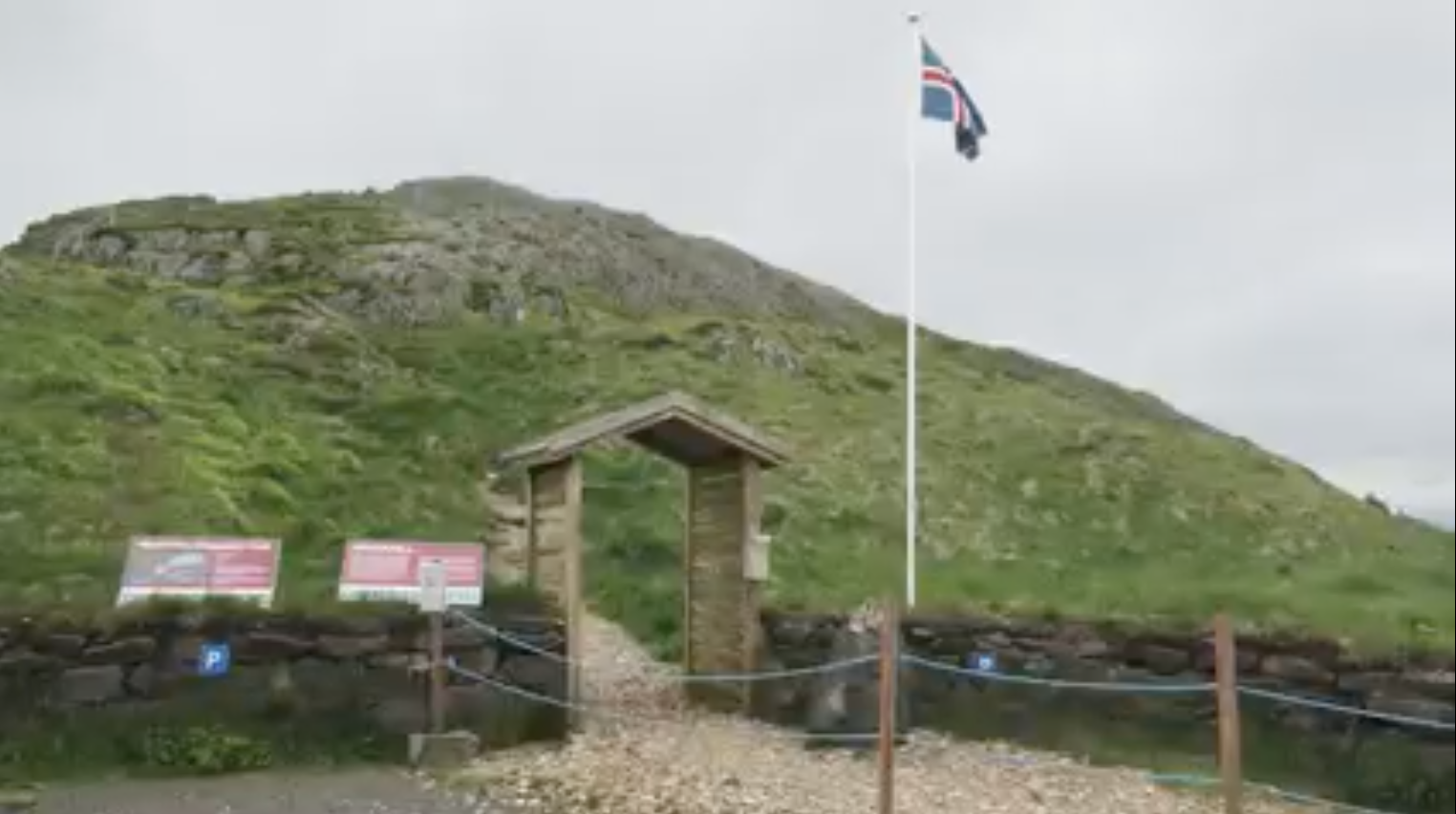
Helgafell, Iceland. Photo by Ben Morris.

The Hill of Three Wishes is based on Helgafell, a site in Iceland that Morris visited. The legend about Helgafell is that if you can hike to the top without looking back, you will be granted three wishes. He incorporated an ancient Icelandic song into the score, which gives the music “a medieval sound,” Katsarelis says. “He weaves it in nicely, and you can really imagine the climb up the hill.”

Price, whose career spanned the first half of the 20th century, was a composer, pianist and organist trained at the New England Conservatory. She was the first African American woman to have music presented by a major orchestra, when her First Symphony was played by the Chicago Symphony in 1933.

For many years, the original score of her Piano Concerto in One Movement was lost, and the piece was known only from a two-piano version. Some orchestral parts were found in Price’s former summer home, and others turned up recently at an auction, allowing the assembly of the original orchestration. That original version has been published and will be used by Pro Musica.

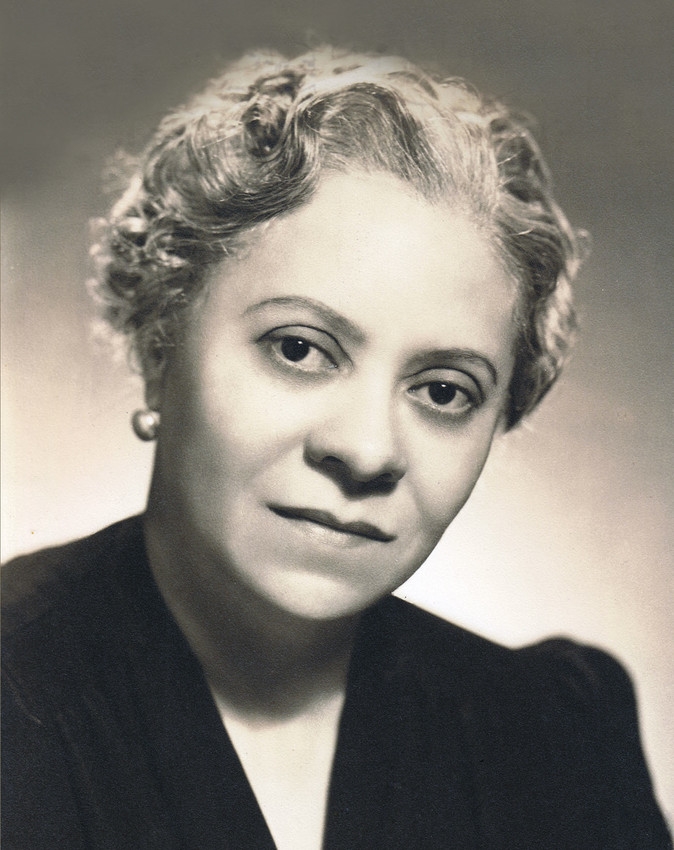
Florence Price. Photo by G. Niledoff.

“Although it’s a piano concerto in one movement, it does have three sections that correspond to a fast first movement, a slow second movement, and then a jolly finale,” Katsarelis says. “The finale is a juba dance, and the whole thing clearly draws on her African American background.

“The second movement is reflective (and) has a call and response aspect to it. The first movement has melodies that you can associate with spirituals, or maybe a blues. It’s quite virtuosic for the piano, which I think speaks to Florence Price’s (skills as a pianist).”

Price was born in Little Rock, Ark., but she and her family joined the Great Migration of Southern Blacks to the north and settled in Chicago. There she became part of what is called the “Chicago Renaissance,” which was akin to the Harlem Renaissance of the 1920s and ‘30s. “She was incredibly active,” Katsarelis says. 

“She belonged to two women’s music clubs, she was playing recitals all the time, she got her symphony performed by the Chicago Symphony, (and) her other symphonies were done by the Women’s Symphony in Chicago and Detroit. She got excellent reviews for the piano concerto and her symphony, and then it all disappeared. Her music is re-emerging, and rightfully so: it’s such a wonderful, authentic, American voice and we owe a great debt of gratitude for her.”

The program concludes with Beethoven Seventh Symphony, which Katsarelis selected for several reasons. “It’s one of his most beloved symphonies for good reason,” she says. “I could have picked a couple of other Beethoven symphonies, but I thought (the Seventh) went so well with the Florence Price, with the juba dance. It’s an incredibly joyful and energetic piece, with long (melodic) lines and moments of insanity—it takes you on a journey!”

Another reason is that she thinks that the symphony, with its joyful ending, speaks to our current time in an important way. “Beethoven’s music is perceived as coming out of that enlightenment philosophy of the common man who can rise above with his achievements,” she says. “That’s something that we always admire.

“Given the challenges of our time, I think it’s an inspirational and hopeful message.”

# # # # #

“The Apotheosis of the Dance”
Pro Musica Colorado Chamber Orchestra, Cynthia Katsarelis, conductor
With Jennifer Hayghe, piano

  • Ben Morris: The Hill of Three Wishes (world premiere)
  • Florence Price: Piano Concerto in One Movement (restored original version)
  • Beethoven: Symphony No. 7 in A major, op. 72

7:30 p.m. Saturday, Nov. 19
Mountain View Methodist Church, 35 Ponca Place, Boulder

Both in-person and online tickets are available HERE.

Grace Notes: Three classical organizations announce 2022–23 seasons

Boulder Chamber Orchestra, Pro Musica Colorado and Boulder Opera

By Peter Alexander Oct. 3 at 5:15 p.m.

With the 2022–23 concert season getting underway, Boulder’s many classical music organizations are getting their season schedules up on the Web. Here are three of the planned seasons for the coming year, from the Boulder Chamber Orchestra, starting Oct. 29; Pro Musica Colorado Chamber Orchestra, starting Nov. 19; and Boulder Opera., starting Dec. 9.

While the seasons include some pretty standard repertoire, including Beethoven and Mendelssohn symphonies and two different renderings of Mozart’s early Symphony in A major, K201, it will also offer pieces that are not standard. These include Beethoven’s Mass in C by the Boulder Chamber Orchestra and Boulder Chamber Chorale, and music by Florence Price and Caroline Shaw by the Pro Musica Colorado Chamber Orchestra.

Here are the respective seasons:

# # # # #

The Boulder Chamber Orchestra opens its season Oct. 29 without conductor Bahman Saless. Guest conductor Giancarlo De Lorenzo and violinist Loreto Gismondi, both from Italy, will perform a mostly Mozart concert featuring that composer’s Violin Concerto No. 4 in D major, K218, and Symphony No. 29 in A major, K201. Opening the concert will be Handel’s “Arrival of the Queen of Sheba” from the oratorio Solomon. 

This concert is part of an exchange between De Lorenzo and Saless, who previously conducted the Italian orchestra with which De Lorenzo is affiliated.

Other orchestral concerts during the year will be “A Gift of Music” on Saturday, December 17, with soprano Szilvia Shrantz, BCO bassist Kevin Sylves and holiday selections; and a performance of music by Beethoven, Brahms and Mendlessohn with violinist Edward Dusinberre on Saturday, Feb. 11, 2023. The season concludes with a performance of Beethoven’s Mass in C with the Boulder Chamber Chorale on Saturday, April 1. Saless will lead these performances.

Concerts by the Boulder Chamber Orchestra will take pace in the Seventh-day Adventist Church, 345 Mapleton Ave. Here is the full season schedule:

7:30 p.m. Saturday, Oct. 29
Boulder Chamber Orchestra with guest conductor Giancarlo De Lorenzo and Loreto Gismondi, violin

  • Handel: “Arrival of Queen of Sheba” from Solomon
  • Mozart: Violin Concerto No. 4 in D major, K218
  • Mozart: Symphony No. 29 in A major, K201

7:30 p.m. Saturday, Dec. 17
Boulder Chamber Orchestra, Bahman Saless, conductor, with Szilvia Shrantz, soprano, and Kevin Sylves, double bass

  • Handel: Selected arias
  • Henry Eccles: Sonata in G minor for double bass and strings
  • J.S. Bach: Concerto in D minor for two violins and orchestra 

7:30 p.m. Saturday, Feb.11
Boulder Chamber Orchestra, Bahman Saless, conductor, with Edward Dusinberre, violin

  • Beethoven: Overture to Egmont
  • Brahms: Violin Concerto
  • Mendelssohn: Symphony No. 4 in A major (“Italian”)

7:30 p.m. Saturday, April 1
Boulder Chamber Orchestra, Bahman Saless, conductor, with the Boulder Chamber Choir

Beethoven: Mass in C

TICKETS  

# # # # #

The Pro Musica Colorado Chamber Orchestra will celebrate its “Sweet 16th” concert season with three programs, presented Nov. 19, Jan. 28, and April 29.

The programs feature several works by women composers, including a woman of color and two living composers, in addition to classic works by Mozart and Beethoven, and a major work of the early 20th century by Arnold Schoenberg. All three performances will be at 7:30 p.m. in Pro Musica’s musical home, Mountain View United Methodist Church at 355 Ponca Place Boulder.

Performances by Pro Musica Colorado will be under the direction of their music director, Cynthia Katsarelis. 

The opening concert will feature pianist Jennifer Hayghe, the chair of the Roser Piano and Keyboard Program at CU-Boulder, playing the Piano Concerto in One Movement by Florence Price. The first female African American composer to have a symphony performed by a major orchestra, Price was well known in the 1930s and 1940s/ After fading from prominence, her name has recently been returning to concert programs.

Other soloists during the season will be cellist Meta Weiss, chamber music coordinator at CU-Boulder, and Takács Quartet members Harumi Rhodes, violin, and Richard O’Neiill, viola. Each concert will be preceded by a pre-concert talk at 6:30 p.m. Here is the full season’s schedule:

7:30 p.m. Saturday, Nov. 19
“Apotheosis of the Dance”
Pro Musical Colorado Chamber Orchestra, Cynthia Katsarelis, conductor, with Jennifer Hayghe, piano

  • Ben Morris: The Hill of Three Wishes
  • Florence Price: Piano Concerto in One Movement
  • Beethoven: Symphony No. 7 in A major, op. 92

7:30 p.m. Saturday, Jan. 28, 2023
“Through the Looking Glass”
Pro Musical Colorado Chamber Orchestra, Cynthia Katsarelis, conductor, with Meta Weiss, cello

  • Caroline Shaw: Entr’acte
  • Haydn: Cello Concerto in C major
  • Mozart: Symphony No. 29 in A major, K201

7:30 p.m. Saturday, April 29
“Transfigured Night”
Pro Musical Colorado Chamber Orchestra, Cynthia Katsarelis, conductor, with Harumi Rhodes, violin, and Richard O’Neill, viola

  • Jessie Lausé: World premiere
  • Mozart: Sinfonia Concertante for violin and viola in E-flat major, K364
  • Arnold Schoenberg: Verklärte Nacht

TICKETS  

# # # # #

Boulder Opera has announced their 11th season, featuring a family-themed production for the holiday season and a French Grand Opera early in 2023.

The first production of the season will be Engelbert Humperdinck’s Hansel and Gretel, which is a perennial holiday event for families with children in Germany and Austria. The Boulder opera production, scheduled for Dec. 9 through 18 at the Dairy Arts Center, will be presented in an abridged English version with narrator. 

Designed as an ideal introduction to opera, the performances will last only one hour, and include a Q&A session after each performance. The performance is suitable for children age three and up.

After the new year, Boulder Opera will present two performances of Manon by Jules Massenet, one of the classics of the French Grand Opera tradition. Performances will be Feb. 18 and 19 in the Dairy Arts Center. Here is the full schedule:

Engelbert Humperdinck: Hansel and Gretel
Boulder Opera, stage directed by Michael Travis Risner
Aric Vihmeisterr, piano, and Mathieu D’Ordine, cello

7 p.m. Friday, Dec. 9
2 and 4 p.m. Sunday, Dec. 11 and Saturday, Dec. 17
2 p.m. Sunday, Dec. 18
Grace Gamm Theater, Dairy Arts Center

TICKETS  

Jules Massenet: Manon
Boulder Opera, Steven Aguiló-Arbues, conductor, and Gene Roberts, stage director

7 p.m. Saturday, Feb. 18
3 p.m. Sunday, Feb. 19
Gordon Gamm Theater, Dairy Arts Center

TICKETS   

Conductor Cynthia Katsarelis and Pro Musica choose ‘Joy’

Music of Tchaikovsky, Bach and Dvořák for Sunday’s concert

By Peter Alexander April 29 at 1:10 p.m.

Conductor Cynthia Katsarelis found inspiration for her next concert in poetry.

In the midst of dire events in Boulder and around the world—the pandemic, the Marshall Fire, and the war in Ukraine—“I was thinking, how are we going to find joy?” she asks. “There’s a wonderful quote by an African-American poet, Toi Derricotte, ‘Joy is an act of resistance.’ It’s really been a source of inspiration.”

The renovated sanctuary of Mountain View Methodist Church

With that in mind, she decided to put together a concert program for the Pro Musica Chamber Orchestra titled “Joy” that would offer joy through music. The concert will be at 3 p.m. Sunday (May 1) in the newly remodeled Mountain View Methodist Church (see details below). 

The program comprises three pieces: Andante cantabile by Tchaikovsky, the Orchestral Suite in B minor by J.S. Bach, and the Serenade for Winds by Dvořák.

Katsarelis found another source of inspiration in the history of her own family, which has ancestral ties to Greece. “I thought a lot about my family in World War I and in World War II,” she says. “They found joy in their lives in the middle of all this, so I was thinking, how are we going to find joy?

Cynthia Katsarelis

“You can find joy going to a concert and hearing great music, connecting to your own humanity but also connecting to the humanity around you—people in the audience, the musicians (and) the artists. So it was really out of the depths that I decided to put on a concert called ‘Joy.’”

Tchaikovsky’s Andante cantabile is a string orchestra version of the slow movements from the composer’s First String Quartet. “It’s just this really beautiful work,” Katsarelis says. “It opens the concert with a lovely wash of the soul and a little tug at the heartstrings.”

It’s inclusion on this program is also a subtle political statement about the war in Ukraine. Katsarelis explains: “You have to remember that Tchaikovsky was a gay man who had to hide it, and was oppressed because of it. Putin has been brutal on the LGBTQ+ community, and when the Russians invaded Ukraine they had a list of people to target (including) LGBTQ+ activists. Tchaikovsky suffered in the society that he was in, and that element’s still there.”

Michelle Stanley

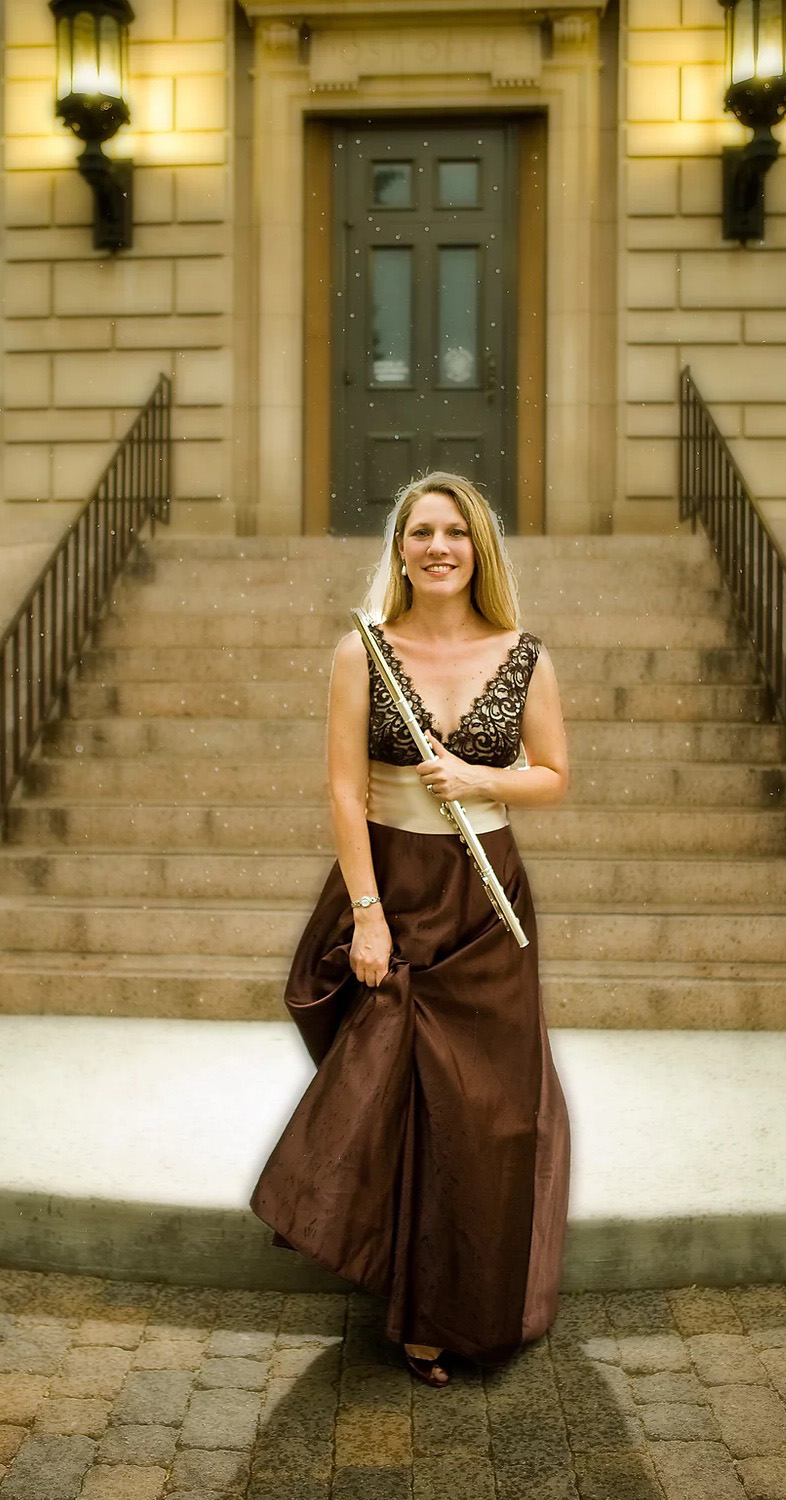
The Orchestral Suite in B minor for flute and strings is one of Bach’s best known works. The featured performer will be Michelle Stanley, Pro Musica’s flutist and a flute professor at Colorado State University.

Katsarelis says that Pro Musica’s approach to Bach’s work would be “historically informed on modern instruments,” meaning that all of the orchestral players will have modern instruments, with their large dynamic range and fuller sound, but they will also make use of Baroque-era conventions in the treatment of rhythms and other details of articulation and interpretation.

“There are some conventions that we follow that are part of the Baroque dance,” Katsarelis says. “There’s a lot about Baroque music that’s suggestions, but you don’t play exactly what’s on the page. We add dynamics, we add articulations, we do the rhythms and in a way that represents the movements (of the different dances).”

The final piece of the “Joy” program is Dvořák’s Serenade for Winds, a piece that Katsarelis has programmed before. She turned to music for winds because she had been able to present music for strings over the past two years, since they can play while wearing masks, but “the winds were out of work for a year and a half during the pandemic,” she says. “And so I thought it was time to do the Dvořák again.”

Dvořák wrote the Serenade in 1878 when he was 37, and included it in an application for an Austrian state award for musicians, which he won. “Brahms was on the jury of that competition and specifically mentioned that he enjoyed that piece,” Katsarelis points out. “It’s a beautiful gem of a piece.

“It’s just lovely to listen to and really nice in character and sophisticated in a way where you don’t have to work at it. It’s very satisfying emotionally and it’s almost like therapy to play and listen to this beautiful piece. And to give the wind players an opportunity to really shine for 25 minutes in a major work is really special for us.”

In fact, Katsarelis hopes that the entire program becomes “almost like therapy” for the audience. “In the depths of everything going on in the world, reaching for joy and happiness felt like the medicine we all need,” she says.

# # # # #

“Joy!”
Pro Musica Chamber Orchestra
Cynthia Katsarelis, conductor, with Michelle Stanley, flute

  • Tchaikovsky: Andante cantabile, op. 11
  • J.S. Bach: Orchestral Suite No. 2 in B minor
  • Antonín Dvořák: Serenade for Winds in D minor, op. 44

3 p.m. Sunday, May 1
Mountain View Methodist Church, Boulder

TICKETS
CORRECTION 4/29: The spelling of poet Toi Derricotte’s name was corrected. It is Derricotte, not Deracotte.