“Guitar Masterworks” program comes to Boulder

Spanish virtuoso Pablo Sáinz-Villegas plays at Macky Saturday

By Peter Alexander Nov. 7 at 2:25 p.m.

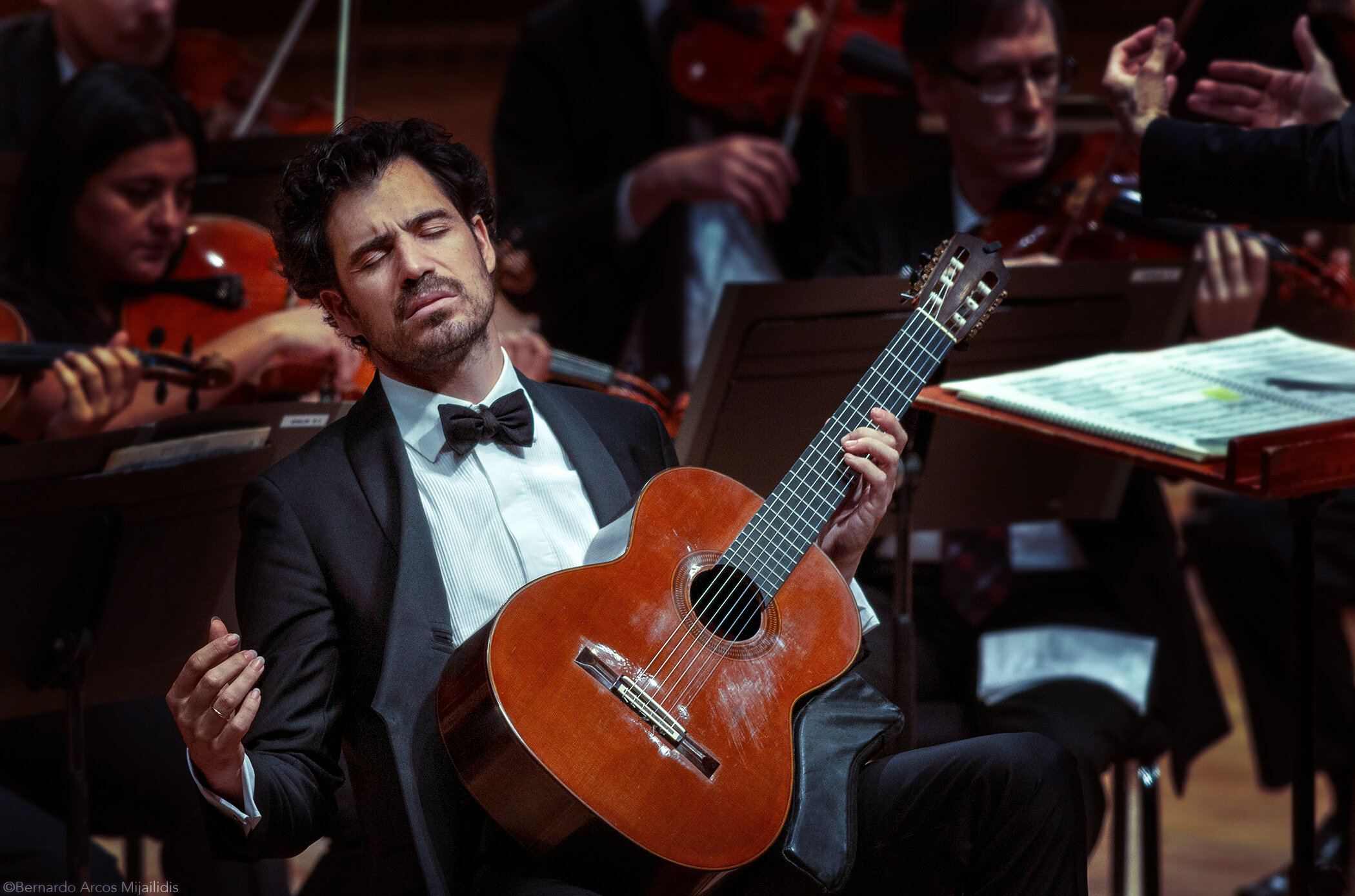
Pablo Sáinz-Villegas, a classical guitarist from Logroño, La Roja, near the Basque Country in Northeastern Spain, will perform a program of “Guitar Masterworks” as part of the CU Presents Artist Series in Macky Auditorium at 7:30 p.m. Saturday (Nov. 9; details below).

Pablo Sáinz-Villegas. Photo by Bernardo Arcos Mihailidis.

His program will feature his own arrangement of the Chaconne from Bach’s Partita in D minor for solo violin, as well as works by Vila-Lobos, Albéniz, Agustín Barrios-Mangoré and Carlo Domeniconi.

The Five Preludes are the last of many works that Brazilian composer Heitor Villa-Lobos wrote for guitar. Each of the five preludes is titled as an homage. The third is an homage to Bach, but the others recognize aspects of Brazilian life and culture: “The Brazilian Backcountry,” “The Scoundrel from Rio,” “The Brazilian Indians” and “The Social Life.”

The instantly recognizable piece by Isaac Albeniz known as Asturias is one of the most popular works for classical guitar. However, it was originally written for piano and titled simply “Prelude.” The title Asturias (Leyenda) was applied after Albeniz’s death by the German publisher Friedrich Hofmeister when he published it in 1911. Hofmeister also included Asturias in what he called the “complete version” of the Suite española, although Albeniz had not included it as part of a larger work at all.

The piano piece was written to imitate the sound of flamenco guitar, and it has been transcribed for guitar several times, including by the great Spanish guitarist Andrés Segovia. In addition to its wide popularity among classical guitarists, it has also been used in by rock and pop groups, including The Doors and Iron Maiden.

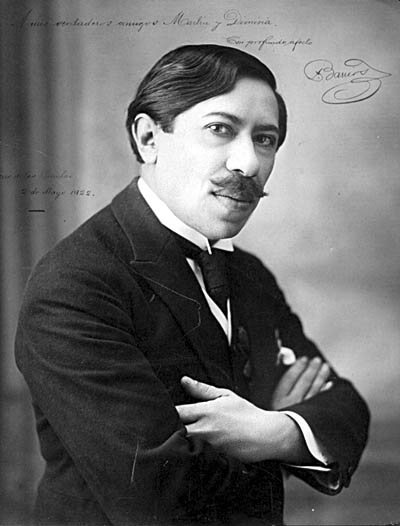
Agustín Barrios-Mangoré

The other composers on the program are well known to guitarists but may not be familiar to classical audiences in this country. Agustín Barrios-Mangoré was a guitarist and composer from Paraguay who lived in the first half of the 20th century. Also known as Nitsuga (Augustin spelled backwards!) Mangore and Augstín Pío Barrios, he began university studies in music and other fields when he was only 15.

He was known for both his brilliantly virtuosic performances on guitar and for his poetry. He had numerous students, including 12 that he taught while living in El Salvador who were known as “The Twelve Mangoreanos.”

Many of his works for guitar were influenced by South and Central American folk music. Un sueño en la floresta (A dream in the forest) is known for its extensive use of complex tremolos and its ending on a high C that requires one more fret than are found on most guitars.

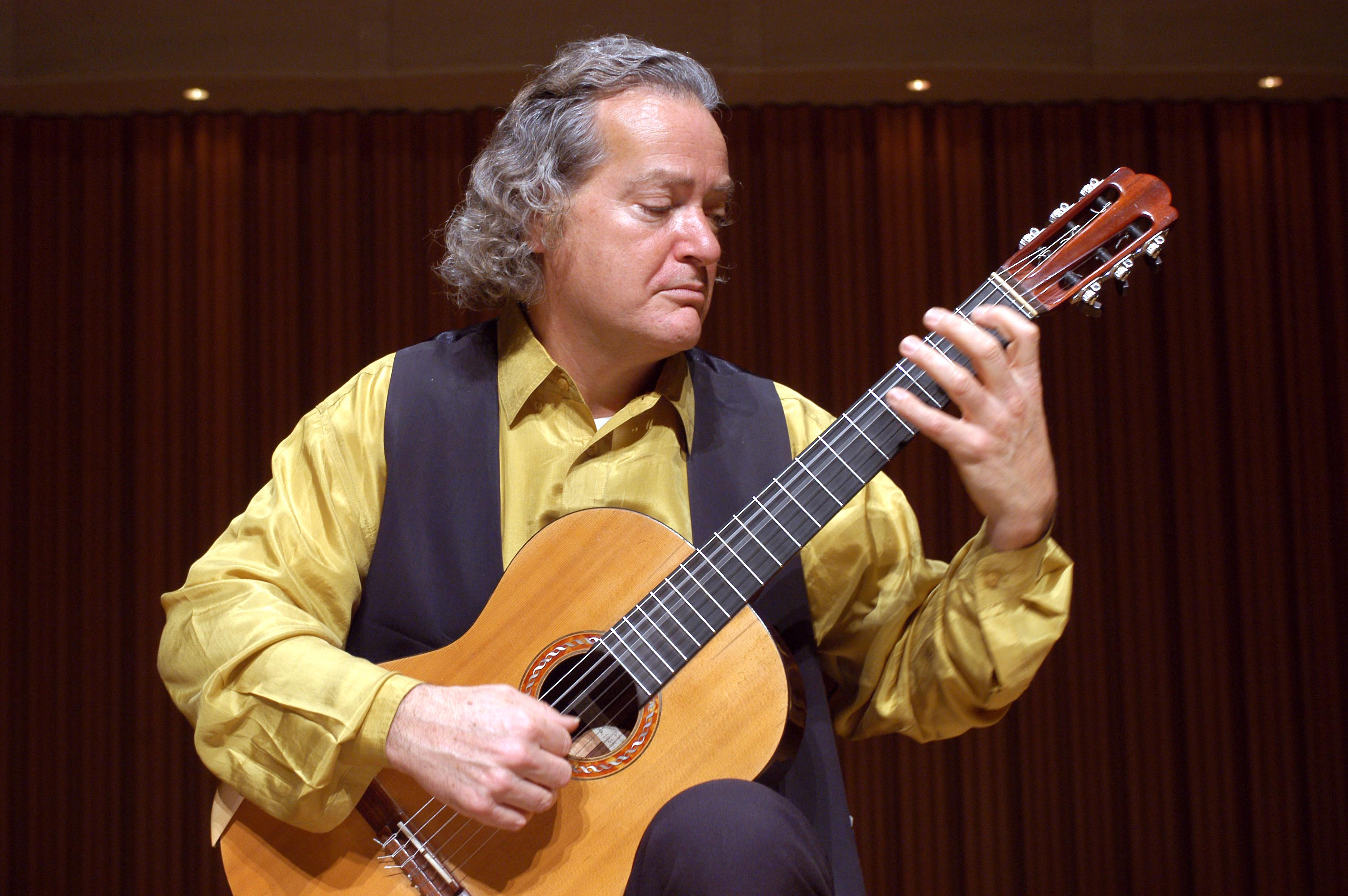
Carlo Domeniconi

Italian guitarist and composer Carlo Domeniconi spent many years living in Istanbul, Turkey. That experience led to Koyunbaba, a suite inspired by Turkish music. The title refers to a region of Turkey, and also means “shepherd.” Domeniconi’s best known work, Koyunbaba uses “scordatura” (an alternative tuning of the strings) to create exotic effects and evoke the Turkish origin of the music.

After musical studies in his native province of La Roja, Sáinz-Villegas has lived and managed his career in New York. Since his debut with the New York Philharmonic with conductor Rafael Frühbeck de Burgos, he has played in more than 40 countries with orchestras including the Berlin Philharmonic, Chicago Symphony, Philharmonic of Israel, Los Angeles Philharmonic, and the National Orchestra of Spain. Most memorably, he has performed before members of the Spanish Royal Family as well as other heads of state and international leaders.

# # # # #

CU Presents Artist Series: Guitar Masterworks
Pablo Sáinz-Villegas, guitar

  • Heitor Villa-Lobos: Five Preludes
  • J.S. Bach: Chaconne from the Partita in D minor for solo violin (arr. Sáinz-Villegas)
  • Isaac Albéniz: Asturias (Leyenda) from Suite Española
  • Agustín Barrios-Mangoré: Un sueño en la floresta (A dream in the forest)
  • Carlo Domeniconi: Koyunbaba

7:30 p.m. Friday, Nov. 9
Macky Auditorium

TICKETS

GRACE NOTES: Prominent violinists and a sold-out Ugly Duckling

Vadim Gluzman, Ray Chen and the Colorado Symphony in Boulder and Longmont 

By Peter Alexander March 19 at 4:06 p.m.

The Boulder Bach Festival (BBF) will present the Ukrainian-Israeli violinist Vadim Guzman in a program that spans centuries, from J.S. Bach to Arvo Pärt.

The final concert of BBF’s 2023–24 season, Gluzman’s performance occurs on Bach’s birthday, at  4 p.m. Thursday, March 21 (Dairy Arts Center; details below). He will perform with the BBF CORE (COmpass Resonance Ensemble) and be joined by BBF music director Zachary Carrettin for Bach’s Double Violin Concerto.

Known for his wide repertoire, Gluzman has premiered works by Sofia Gubaidulina, Michael Daugherty and Pēteris Vasks, among others. His recordings have won numerous awards, including Gramophone magazine’s Editor’s Choice, and Disc of the Month from The Strad, BBC Music Magazine and other publications. He is currently distinguished artist-in-residence at the Peabody Conservatory. He performs on the 1690 ‘ex-Leopold Auer’ Stradivari, on extended loan through the Stradivari Society of Chicago.

# # # # #

“Old and New Dreams”
Boulder Bach Festival CORE with Vadim Gluzman and Zachary Carretttin, violin

Program includes:

  • J.S. Bach: Violin Concerto in A minor, S1040
  • Arvo Pärt: Passacaglia
  • J.S. Bach: Concerto in D minor for two violins, S1043

4 p.m. Thursday, March 21
Gordon Gamm Theater, Dairy Arts Center

TICKETS

# # # # #

The CU Presents Artist Series will feature violinist Ray Chen, who is billed as “redefining what it means to be a classical musician in the 21st century,” together with Hispanic-American pianist Julio Elizalde in a concert program combining serious and lighter works Thursday ( 7:30 p.m. March 21 in Macky Auditorium; details below).

The major works on the program are Beethoven’s Violin Sonata No. 7 in C minor, op. 30 no. 2, and J.S. Bach’s Partita No. 3 in E major for solo violin, S1006. Filling out the program are encore material pieces, starting with Tartini’s showpiece the “Devil’s Trill” Sonata. After the two heavier works, Chen and Elizalde will wrap up the program with Antonio Bazzini’s brilliant “Dance of the Goblins,”  Fritz Kreisler’s arrangement of Dvořák’s Slavonic Dance No. 2, and their own arrangement of “Spain” by Chick Corea.

Beethoven’s Violin Sonata No. 7 is part of a set published in 1803 as “Sonatas for the pianoforte with the accompaniment of violin.” This label reflects an earlier time, when domestic music-making often featured female pianists, who were expected to have more time to practice than their male partners on violin, and who therefore could master more difficult parts. In the case of this Sonata, each movement opens with the piano and the violin part, while it is not insignificant, often follows the lead of the piano. Unusually for a piece named “sonata,” the Sonata No. 7 is in four movements, and the key of C minor marks it as an often dramatic and stormy work.

Bach’s Third Partita is a suite of dances, preceded by a Preludio. It is the last of his set of Six Sonatas and Partitas for solo violin, one of the pinnacles of the solo violin repertoire. In the bright key of E major, it is one of the most cheerful of the set. That is particularly true of the Preludio, a perpetual-motion movement that is one of Bach’s most familiar pieces. Apparently Bach was himself fond of this movement, which he re-used in a version for organ and orchestra in his Cantata No. 29.

Violinist Ray Chen

Chen came to wide attention in the music world when he won first prize in both the Yehudi Menuhin and Queen Elizabeth violin competitions, in 2008 and ’09 respectively. He is known for his use of social media to reach a wider audience, including as a co-founder of the Tonic Website that allows young musicians to practice and learn together.

Born in Taiwan and raised in Australia, he was accepted at Philadelphia’s Curtis Institute at the age of 15. He plays the 1714 “Dolphin” Stradivarius violin on loan from the Nippon Music Foundation and once owned by Jascha Heifetz. 

Pianist Julio Elizalde has been performing as a recital partner with Chen and violinist Sarah Chang for nearly ten years. A native of the San Francisco Bay area, he is a graduate of the San Francisco Conservatory of Music, where he is currently on the faculty, and the Juilliard School. He has collaborated with several living composers including Osvaldo Golijov, Stephen Hough and Adolphus Hailstork.

# # # # #

Ray Chen, violin, and Julio Elizalde, piano

  • Giuseppe Tartini: Sonata in G minor (“Devil’s Trill”; arr. Fritz Kreisler)
  • Ludwig van Beethoven: Violin Sonata No. 7 in C minor, op. 30 no. 2
  • J.S. Bach: Partita No. 3 in E major for solo violin, S1006
  • Antonio Bazzini: La Ronde des Lutins (“Dance of the Goblins”), op. 25
  • Dvořák: Slavonic Dance No. 2 in E minor, op. 72 (arr. Fritz Kreisler)
  • Chick Corea: “Spain” (arr. Elizalde and Chen)

TICKETS

# # # # #

Members of the Colorado Symphony will visit the Longmont Museum’s Stewart Auditorium Saturday (March 23) of present a bilingual concert that tells the story of “The Ugly Duckling.”

The interactive performance in English and Spanish, dubbed a “Mini Música,” will incorporate storytelling, singing and dance. It will be accompanied by a 16-piece orchestra made up of members of the Colorado Symphony.

The performances at 10 and 11:30 a.m. are free, but both are already full with advance reservations.

# # # # #

“The Ugly Duckling” Mini Música
Members of the Colorado Symphony

10 and 11:30 a.m. Saturday, March 23
Stewart Auditorium, Longmont Museum

SOLD OUT

CORRECTION on March 19: the word ”Música,” which had inadvertently dropped out, was restored in the penultimate paragraph of the story about Colorado Symphony’s performance of “The Ugly Duckling.”

Quartet named for a national park in Canada will perform Sunday and Monday at CU

Jasper Quartet will play lyrical pieces by Dvorak, Schumann and Grażyna Bacewicz

By Peter Alexander Feb. 15 at 4:30 p.m.

The Takács Quartet concert series will feature a guest ensemble Sunday and Monday (4 p.m. Feb. 18 and 7 :30 p.m. Feb. 19; details below) that is named for a place none of them have ever visited.

Jasper String Quartet

The Jasper String Quartet is named for the national park in Canada that they have only seen in photos—and a poster in at least one of their homes. “When we started the quartet it was quite difficult to think of a good name,” explains cellist Rachel Henderson Freivogel.

Spirit Island in Jasper National Park, Canada, the most celebrated view in the park. Photo by Peter Alexander

“We thought about things that we really liked to do, and one was being outside in a beautiful place. Our violist at the time said ‘What about Jasper? That’s a really beautiful place!’ And we loved the name, and we wanted to evoke natural beauty. It was easy to pronounce and just felt right to us. The closest we have been is Banff (about 180 miles south of Jasper)—although we do have a big poster of Jasper in my house.”

It is likely they haven’t had time to get to the Canadian park because they are too busy with their music. The professional quartet-in-residence at Temple University’s Center for Gifted Young Musicians, they have released eight albums. Earlier they were graduate quartet-in-residence at Rice University and Yale University with the Tokyo String Quartet, they have won top prizes and numerous chamber music competitions, and were the first ensemble chosen for Yale School of Music’s Horatio Parker Memorial Prize. They are currently in the eighth season of Jasper Chamber Concerts, a performance series founded by the quartet that is currently live-streamed from Philadelphia.

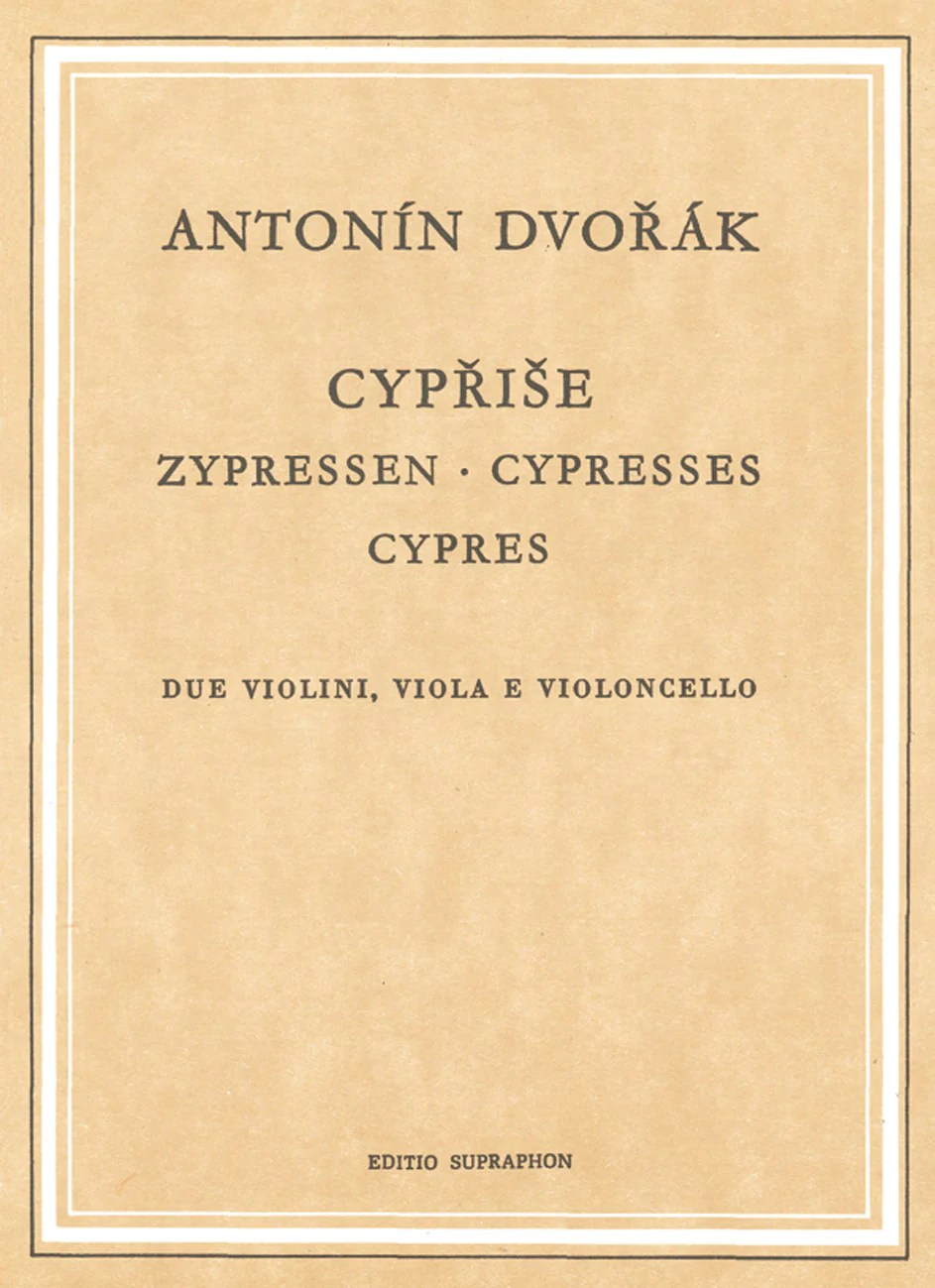
Their program in Boulder exemplifies the Jasper Quartet’s creative approach to programming. It opens with selections from Dvořák’s Cypresses, a set of love songs that the composer set for string quartet. That will be followed by the Quartet No. 4 by the Lithuanian/Polish composer Grażyna Bacewicz, and Schumann’s Quartet No. 1 in A minor.

This specific program evolved from the idea of a concert centered on lyricism, or an expression of love in music. “The Cypresses fit very well into that, since they’re settings of love songs,” Freivogel says. “The Bacewicz string quartet is based somewhat on folk tunes. The second  movement is incredibly lyrical, and I think there’s love there, also. And the third movement [of Schumann’s quartet] is just a beautiful love song.

“We try to pick pieces that really speak to each other in an interesting way. And [these pieces] all work together really well.”

Dvořák arranged 12 out of 18 songs in the original Cypresses cycle for string quartet. Of those 12, the Jasper will play six movements. “It made sense for us to play six of them because of the length of the other pieces,” Freivogel says. “We wanted to create a set that went together and had some contrast in it, because all of them are very, very beautiful. The ones that we selected have a natural flow. Some are very smooth and slow, and others are more exciting.”

Grażyna Bacewicz

Bacewicz is likely the least known composer on the program. “We’ve been wanting to play her music for quite a long time,” Freivogel says. “This is the first program that we constructed with her music, but we would really like to play more of it.

“The first quartet is a piece that our quartet teaches a lot. We got to know this piece by working on it with some great students, and really loved the piece and wanted to play it. It’s very approachable, and there’s a lot of lyricism in the first and second movements. And then the third movement is a very exciting kind of neo-classic dance that goes and goes.”

Schumann wrote three string quartets in 1841–42, a time when he was devoting himself to writing chamber music. The Op. 41 set of three quartets was dedicated to Mendelssohn, but was given as a birthday present to Schumann’s wife, Clara.

“In addition to the slow movement—and I speak for the quartet—I just love Schumann’s style of writing and the beauty in it,” Freivogel says. “You can hear in the first movement how the conversation flows around the quartet. It’s done in such a beautiful way. And seeing it live in person, there’s an energy in the room. You see how we are communicating with each other and having this conversation, and the language is about human feelings.

“I think that that comes through in a joyful and wonderful way.”

# # # # #

Jasper String Quartet
J Freivogel and Karen Kim, violins; Andrew Gonzalez, viola; and Rachel Henderson Freivogel, cello

  • Dvořák: Selections from Cypresses
    I. “I Know that on My Love to Thee”
    II. “Death Reigns in Many a Human Breast”
    III. “When Thy Sweet Glances Fall on Me”
    IX. “Thou Only, Dear One”
    XI. “Nature Lies Peaceful in Slumber and Dreaming” 
    XII. “You Ask Why My Songs”
  • Grażyna Bacewicz: String Quartet No. 4 (1951)
  • Schumann: String Quartet No. 1 in A minor, op. 41 no. 1

4 p.m., Sunday, Feb. 18 and 7:30 p.m., Monday, Feb. 19
Grusin Music Hall

In-person and streaming tickets HERE

GRACE NOTES: Holiday performances everywhere

Popular themes of the 2023 Holidays include the solstice and music of the Baroque

By Peter Alexander Nov. 29 at 2:41 p.m.

The Longmont Symphony and Boulder Ballet start their 2023 series of Nutcracker  performances Saturday afternoon (1 p.m. Dec. 2) at Vance Brand Civic Auditorium with their annual “Gentle Nutcracker.” 

A shortened, sensory-friendly performance designed for neurodiverse individuals, their families and caregivers, the “Gentle Nutcracker” is approximately 90 minutes in length. 

That special presentation will be followed by two full performances Saturday and Sunday of Tchaikovsky’s beloved ballet, with the Christmas party, the Nutcracker Prince, “The Dance of the Sugar Plum Fairy,” and all the other features that have made both the music and the ballet a Holiday favorite (4 p.m. Saturday, Dec. 2 and 2 p.m. Sunday, Dec. 3; details below).

NOTE At the time of writing, there are only a few seats left, mostly in the balcony. There is no guarantee that tickets will be available by the time this story appears.

– – –

Longmont Symphony Orchestra, Elliot Moore, conductor
Boulder Ballet

“Gentle Nutcracker”

1 p.m. Saturday, Dec. 2 NOW SOLD OUT
Vance Brand Civic Auditorium

TICKETS

Tchaikovsky: The Nutcracker Ballet

4 p.m. Saturday, Dec. 2
2 p.m. Sunday, Dec. 3
Vance Brand Civic Auditorium

TICKETS

* * * * *

Conductor Cynthia Katsarelis and the Pro Musica Colorado Chamber Orchestra will present the Christmas portion of Handel’s Messiah Saturday (7:30 p.m. Dec. 2) at Mountain View Methodist Church (details below).

In addition to the Christmas section, chorus and orchestra will perform the much loved “Hallelujah” chorus from Messiah. The program opens with “Adoration” by Florence Price and Mozart’s Divertimento in D major, K136.

The Christmas portion of Messiah is one of three major divisions of the work. It comprises 21 separate movements including the opening Overture, choruses including “For unto us a Child is Born” and “Glory to God,” recitatives, and arias for soprano, tenor and bass soloists. Pro Musica will be joined by the Boulder Chamber Chorale and soloists Jennifer Bird-Arvidsson, soprano; Nicole Asel, alto; Steven Soph, tenor; and Ashraf Sewailam, bass.

– – –

Pro Musica Colorado Chamber Orchestra, Cynthia Katsarelis, conductor
With the Boulder Chamber Chorale and Jennifer Bird-Arvidsson, soprano; Nicole Asel, alto; Steven Soph, tenor; and Ashraf Sewailam, bass

  • Florence Price: Adoration
  • W.A. Mozart: Divertimento in D major, K136 
  • G.F. Handel: Messiah, Part I
  • —“Hallelujah” chorus

7:30 p.m. Saturday, Dec. 2
Mountain View Methodist Church, 355 Ponca Place, Boulder

TICKETS

* * * * *

The CU College of Music presents its annual Holiday Festival this coming weekend, Friday through Sunday in Macky Auditorium (Dec. 8–10; details below).

One of the most popular Holiday events in Boulder, the Holiday Festival features numerous ensembles from the College of Music, each presenting their own selections. Featured groups in this year’s program are the Chamber singers, the Holiday Festival Chorus made up of singers from several groups in the college, the Holiday Festival Orchestra, the Trombone Choir, Holiday Festival Brass, Holiday Festival Jazz, and the West African Highlife Ensemble.

NOTE: At the time of writing, there are limited tickets available for the four performances of the Holiday Festival program. Performances generally sell out, so interested persons should check the CU Presents Web page for availability.

– – –

Holiday Festival, Donald McKinney, artistic director
CU College of Music Ensembles

Chamber Singers, Leila Heil, conductor
Noelle Romberger, graduate conductor

Holiday Festival Chorus
Galen Darrough, Raul Dominguez and Jessie Flasschoen, conductors 
Jun Young Na and Noelle Romberger, graduate conductors

Holiday Festival Orchestra, Gary Lewis, music director 
With Donald McKinney and Nelio Zamorano, conductors

Trombone Choir, Sterling Tanner, conductor

Holiday Festival Jazz, Brad Goode, director

Holiday Festival Brass, Lauren Milbourn, conductor

West African Highlife Ensemble, Maputo Mensah, director

7:30 p.m. Friday, Dec. 8
1 and 4 p.m. Saturday, Dec. 9
4 p.m. Sunday, Dec. 10
Macky Auditorium

TICKETS

* * * * *

Cellist Charles Lee, the principal cellist of the Boulder Philharmonic Orchestra, will join Ars Nova Singers and conductor Tom Morgan for “Evergreen,” the latest edition of their annual celebration of the winter solstice.

The program will be presented four times, once in Longmont (Saturday, Dec. 9), once in Denver (Sunday, Dec. 10) and twice in Boulder (Thursday and Friday, Dec. 14 and 15; times and locations below). The program includes music by the medieval Benedictine abyss Hildegard Bingen, the English Renaissance master William Byrd, and the north German early Baroque composer Heironymus Praetorius. 

Not to be confused with his better known younger contemporary Michael Praetorius, Heironymus is known for his elaborate multi-voices motets. Also on the program are more contemporary works by the living composers Eriks Esenvalds, Jocelyn Hagan and Taylor Scott Davis. 

In a written news release, Morgan sets the stage for this concert timed to nearly coincide with the solstice, writing: “Dark and light, motion and stasis, intimate and universal, deeply familiar and refreshingly new—our season searches for the balance point in all of these, through the power and majesty of the human voice.”

– – –
Ars Nova Singers, Tom Morgan, director
With Charles Lee, cello

“Evergreen”

  • Hildegard of Bingen: O frondens virga
  • Two 15th century English carols
  • Heoronymus Praetorius: In dulci jubilo (à 8)
  • William Byrd: O magnum mysterium
  • Ola Gjeilo: Serenity (O Magnum mysterium)
  • Andrea Casarrubios: Caminante
  • Taylor Scott Davis: Solstice
  • Eriks Esenvalds: Rivers of Light
  • Jocelyn Hagen: Mother’s Song
  • Dan Forrest: The Sun Never Says
  • Michael Head: The Little Road to Bethlehem
  • Arrangements of Holiday songs by Tom Morgan, Joanna Forbes, Alexander L’Estrange and others

7:30 p.m. Saturday, Dec. 9
United Church of Christ, 1500 9th Ave., Longmont

12:30 p.m. Sunday, Dec. 10
St. Paul Lutheran Church, 1660 Grant. St., Denver

7:30 p.m. Thursday, Dec. 14 and Friday, Dec. 15
Mountain View United Methodist Church, 355 Ponca Place, Boulder

TICKETS

* * * * *

CU Presents will round out the university’s holiday performances with Christmas with the Canadian Brass at 7:30 p.m. Tuesday, Dec. 13 in Macky Auditorium.

The Canadian Brass generally announce their program from the stage. Nonetheless, the Christmas set list is more predictable and will likely feature some Canadian Brass favorites, including “Ding Dong Merrily on High,” evergreen Holiday music including “White Christmas” and “Carol of the Bells,” and jazzy arrangements including “Glenn Miller Christmas.”

Founded in 1970, the Canadian Brass has been a recognized and esteemed part of the musical scene for more than 50 years. Touring world-wide, they have made the repertoire of chamber music for brass, and specifically brass quintets, widely appreciated. 

There is still one original member of the quintet, tubist Chuck Dellenbach, while other members have joined over the years. The most recent addition, making her Canadian Brass debut this year, is trumpet player Ashley Hall-Tighe, who first met the members of the Canadian Brass in 2001 as a student in their chamber music residency at the Music Academy of the West.

With more than 10 Christmas albums, the Canadian Brass are especially well known for their holiday performances. Their total recording history currently totals more than 130 albums and more than 2 million sold worldwide.

NOTE: At the time of writing, there are limited tickets available.

– – –

Canadian Brass

“Christmas with the Canadian Brass”

  • Program to be announced from the stage may include:
  • “Ding Dong Merrily on High” (arr. Henderson)
  • Gabrieli: Canzona per sonare No. 4
  • “White Christmas” (arr. Henderson)
  • Mykola Leondovich: “Carol of the Bells” (arr. McNeff)
  • Vince Guaraldi: “Christmas Time is Here” (arr. Ridenour)
  • Glenn Miller: “Glenn Miller Christmas” (arr. Dedrick)

7:30 p.m. Wednesday, Dec. 13
Macky Auditorium

TICKETS

* * * * *

The Longmont Symphony will look back to the 18th century for Candlelight: A Baroque Christmas at 4 p.m. Saturday, Dec. 16, in Vance Brand Civic Auditorium.

Under the direction of Elliot Moore, the featured work on the program will be the Gloria of Antonio Vivaldi. Composed around 1715, it is one of the Venetian composer’s most frequently performed works. Its 12 movements, divisions of the “Gloria” text from the Catholic Mass ordinary, call for chorus, orchestra, and soprano and alto soloists.

Celebrating the holiday season, the Candlelight Concert has long been a part of the Longmont Symphony’s season. There will be candles again this year, although the orchestra has announced that they will be battery-operated this year, rather than relying on a flame.

– – –

Longmont Symphony and Chorus, Elliot Moore, conductor

“Candlelight: A Baroque Christmas”

  • Corelli: Concerto Grosso
  • Handel: “Rejoice greatly” from Messiah
  • Scarlatti: Christmas Cantata for soprano and strings
  • Vivaldi: Gloria

4 p.m. Saturday, Dec. 16
Vance Brand Civic Auditorium

TICKETS

* * * * *

All the choirs of the Boulder Chorale and Boulder Children’s Chorale will join together to present “Season of Light,” their annual concert of music for the holidays, Saturday and Sunday (Dec. 16 and 17; details below).

The concert title refers to the tradition found in many different cultures to use light to counteract the dark of winter and forecast the return of the light in the weeks to come. In the words of the Boulder Chorale’s press information, the program “traces the history and development of many of the world’s most endearing holiday customs, all of which involve lighting up the winter season—from the burning Yule log, sparkling Christmas tree lights and candles in windows, to the lighting of luminaries (often called luminarias) in the American Southwest and the traditional ritual of the Hanukkah menorah.”

Tickets are available both at the door and through the Boulder Chorale Web page. The Sunday performance will also be presented through live streaming, available at the same Web page.

– – –

Boulder Chorale, Vicki Burrichter, artistic director
With Boulder Children’s Chorales, Nathan Wubbena, artistic director

“Season of Light”

Children’s Chorale Bel Canto
Nathan Wubbena, conductor

  • John Rutter: “Angels’ Carol”
  • Flory Jagoda: “Ocho Kandelikas” (arr. Joshua Jacobson)

Children’s Chorale Volante
Kiimberly Dunninger, conductor

  • Franklin J. Willis: “Be the Light “
  • Robert Cohen and Ronald Cadmus: “The Joy of Simple Things”

Chamber Chorale
Vicki Burrichter, conductor

  • John Newell: “Light of Heaven” (text based on the Buddhist vajra guru mantra)

Chamber Choir, Bel Canto and Volante
Nathan Wubbena, conductor

  • Ryan Main: “Go! Said the Star”

Children’s Choir Piccolini
Melody Sebald, conductor

  • “Winter Canon” (arr. Andy Beck)
  • John Henry Hopkins Jr.: “We Three Kings”

Children’s Choir Prima Voce
Anna Robinson, conductor

  • Ruth Ann Schram: “Winter Solstice”
  • “This Little Light of Mine” (arr. Masa Fukuda)

Concert Chorale
Vicki Burrichter, conductor

  • Enya and Nicky Ryan: “Amid the Falling Snow” (words by Roma Ryan, arr. Audry Snyder)
  • Craig Carnahan: “Dancing on the Edges of Time” (words by Rabindranath Tagore)
  • Stephanie K. Andrews : “On Compassion” (words by the 14th Dalai Lama Tenzin Gyatso)

Combined Choirs
Kim Dunninger and Vicki Burrichter, conductors

  • Benji Pasek and Justin Paul: “Do a Little Good” (from Spirited)
  • Franz Gruber/David Kantor: “Night of Silence” (includes “Silent Night”; arr. Nathan Wubbena; Spanish text by Cynthia Garcia-Barrera)

4 p.m. Saturday and Sunday, Dec. 16 and 17
First United Methodist Church, 1421 Spruce St., Boulder

TICKETS

* * * * *

The Boulder Chamber Orchestra will combine its holiday celebration with the music of Beethoven in a program featuring pianist Adam Zukiewicz.

Their “Holidays Celebration with Beethoven” will be at 7:30 p.m. Saturday, Dec. 16 in the Boulder Seventh-Day Adventist Church. Zukiewicz will perform Beethoven’s Piano Concerto No. 2 with the orchestra and conductor Bahmann Saless. 

Other works on the program are Mozart’s Overture to The Marriage of Figaro, conducted by Nadia Artman; Chocolats Symphoniques (Symphonic chocolates) by Maxime Goulet; and the world premiere of the Concerto for Flute and Orchestra by Sylvie Bodrova with the BCO’s principal flutist Cobus DuToit as soloist. 

Part of the reason for combining the holiday music with Beethoven is that the composer’s birthday is believed to be Dec. 16. The date is not certain, since the only documents record his baptism on Dec. 17, but the birthday is traditionally observed on Dec. 16. That would make Dec. 16, the date of the concert, the 253rd anniversary of his birth.

As it happens, the full 2023–24 season has three of Beethoven’s five piano concertos listed. the Third Concerto was played by Petar Klasan Sept. 1, and the Concerto No. 5 (“Emperor:) will be performed with the BCO by  Jennifer Hayghe Feb 3 (7:30 p.m., Boulder Seventh-Day Adventist Church).

Goulet’s Chocolats Symphoniques was previously performed by the BCO on their holidays concert in 2021. The work’s four movements refer to four different flavors of chocolate: “Caramel Chocolate,” “Dark Chocolate,” “Mint Chocolate” and “Coffee-infused Chocolate.”

– – –

Boulder Chamber Orchestra, Bahman Saless, conductor
With Cobus DuTois, flute, and Adam Zukiewicz, piano
Nadia Artman, conductor

“Holidays Celebration with Beethoven”

  • Mozart: Overture to The Marriage of Figaro
  • Maxime Goulet: Chocolats Symphoniques (Symphonic chocolates)
  • Sylvie Bodorova: Concerto for Flute and Orchestra (world premiere)
  • Beethoven: Concerto No. 2 for Piano and Orchestra

7:30 p.m. Saturday, Dec. 16
Boulder Seventh-Day Adventist Church, 345 Mapleton Avenue

TICKETS  

* * * * *

The Boulder Bach Festival (BBF) will present “Handel’s Messiah Reimagined” in their very own version, based on an edition created by music director Zachary Carrettin.

Messiah will be performed by a string orchestra from the BBF’s Compass Resonance (CORE) Ensemble with harpsichord and chamber organ continuo and a 16-voice choir. Five featured solo singers will also perform within the chorus. The entire performance will be presented without conductor.

The program also incudes two a cappella vocal works and a violin concerto b Antonio Vivaldi. The concerto will be played by BBF’s artistic director, Zachary Carrettin, with Baroque guitar continuo played by Keith Barnhart.

– – –

Boulder Bach Festival CORE ensemble
Mara Riley, soprano; Sarah Moyer, soprano; Claire McCahan, mezzo-soprano;
Daniel Hutchings, tenor; and Adam Ewing, baritone
With Zachary Carrettin, violin, and Keith Barnhart, Baroque guitar

“A Baroque Christmas: Handel’s Messiah Reimagined”

4 p.m. Sunday, Dec. 17

Gordon Gamm Theater, Dairy Arts Center, Boulder

TICKETS  

Fall activities are coming to life at the CU College of Music

Takács Quartet, Faculty Tuesday concerts have begun for 2023–24

By Peter Alexander Sept. 14 at 10:30 p.m.

You may still be stuck in a Summer mood—I know I am—but on the CU campus and around the Imig music building, Fall is well under way.

Even more reliable signs of the season than the turning of the leaves, the College of Music’s Faculty Tuesday series and the Takács Quartet’s campus concert series are already ongoing for the 2023-24 year. The Takács will play music of Haydn, Bartók and Beethoven Sunday afternoon and Monday evening (4 p.m. Sept. 17 and 7:30 pm. Sept. 18 in Grusin Hall), in their customary two-performance pairing. They have one more program during the fall (Nov. 5 and 6; program below) and more performances after the first of the year.

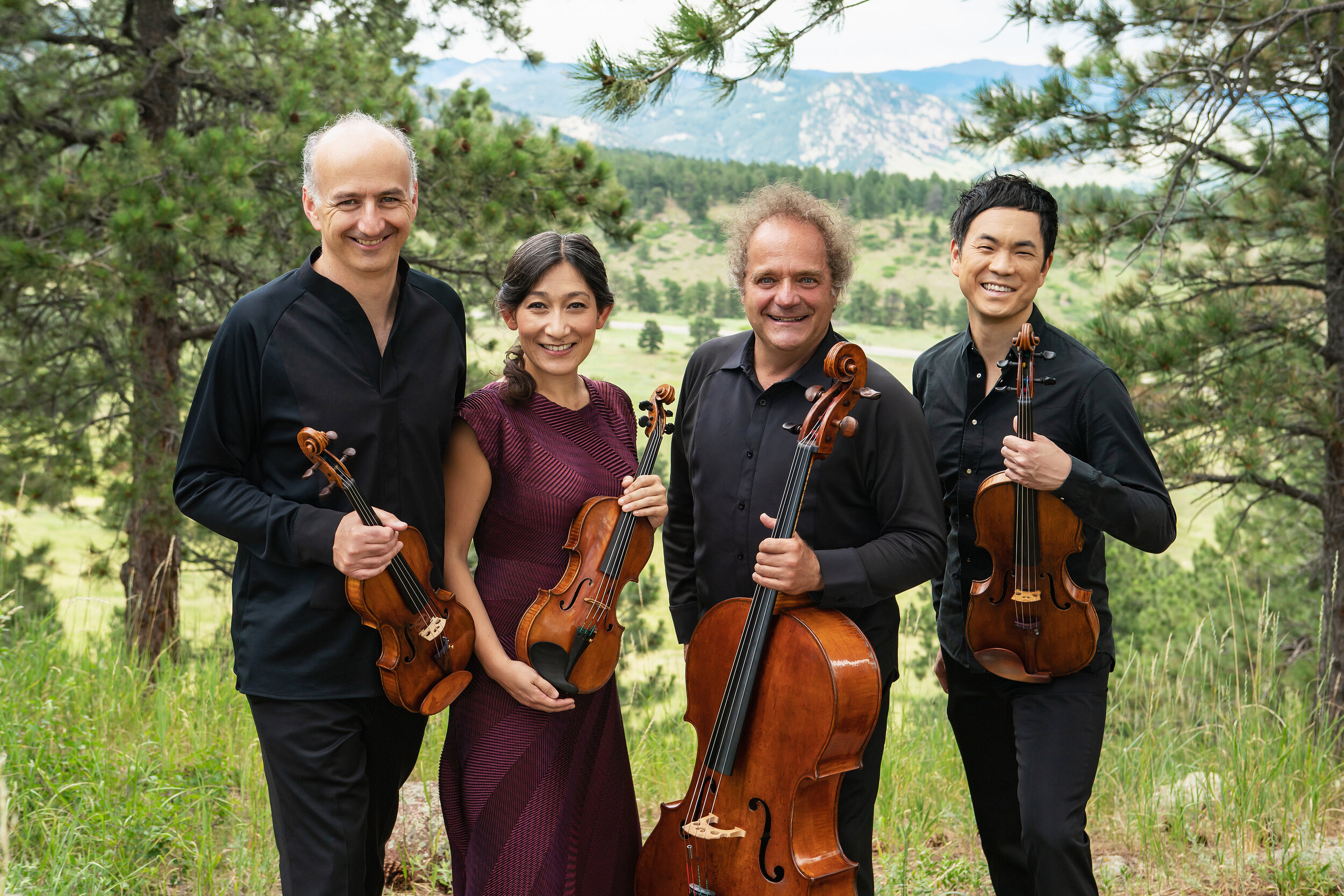
Takács Quartet. Photo by Ian Malkin.

Then next Tuesday (7:30 p.m. Sept. 19, also in Grusin), the quartet’s second violinist Harumi Rhodes and pianist Hsiao-Ling Lin will present the music of Robert Schumann and Beethoven on a faculty Tuesday recital titled “MEMORIA.” The centerpiece of the program features visual art by Michiko Theurer with three short pieces by Kaija Saariaho, performed with cellist Meta Weiss.

The Faculty Tuesday series continues nearly weekly for the remainder of the academic year; listings of all College of Music concerts can be found on the school’s Web page. All Faculty Tuesday performances are free and open to the public.

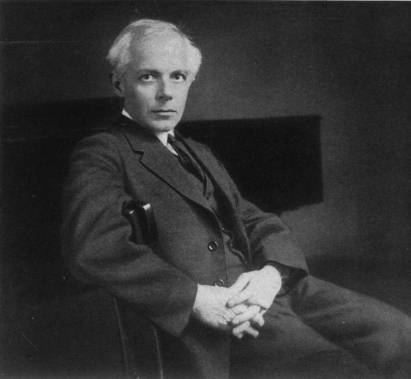
Béla Bartók

Both fall performances by the Takács will feature works by Hungarian composer Béla Bartók. The original membership of the Takács Quartet was entirely Hungarian: the quartet was founded in Budapest by students at the Franz Liszt Academy, and the music of their fellow-Hungarian Bartók was home territory for them. Cellist András Fejér, the one original member and one Hungarian in the Takács today says that is still the case, and has been through all changes in personnel in the group’s history.

“Absolutely,” Fejér says. “Ed (Dusinberre) was the first (new member) with us, and we learned and re-learned them together. And what we found with him, and also with all the new partners, was an immense hunger to enjoy and to interpret in a meaningful way.”

That does not mean that the Takács’s interpretation of Bartók’s quartets doesn’t change. “When we put them to rest for a while and then start practicing again, the questions we ask are completely different,” Fejér says. “Any given problem gets a different light, and we’ve been changing in the interim period. That’s what makes this whole process so fresh and alive and fascinating all of these decades.”

But one thing that remains consistent, he says, is their view of Bartók not as an aggressive modernist but as a Romantic composer. “In spite all the dissonance, we still feel he is a wonderfully Romantic composer,” he says. “Even when it sounds harsh, you realize it should’t sound harsh, it should sound like a village piece, or lonesome mourning. If we attack from that angle, one can discover millions of wonderful things!”

The other composer present in both concerts during the fall semester is Joseph Haydn. For two reasons, Haydn is also central to the Takács’s work. First, Haydn has his own Hungarian connections, having been born on the border between Austria and Hungary and spent long periods of his life in Hungary at the castle of Prince Esterhazy. And he is considered the creator of the string quartet, having written nearly 70 quartets starting before it was a recognized concert genre.

András Fejér

Fejér wants the audience to realize what a creative composer Haydn was. “Just because Haydn is often the first piece we are playing at our concerts, doesn’t mean that it’s a warm-up piece,” he says. “It’s extremely inventive, full of the most wonderful characters. I cannot emphasize (enough) the originality of the pieces, and we are just happy enjoying it. Sometimes even today I cannot quite believe how wonderfully dense—or densely wonderful—they are!”

The other composer represented in the fall programs is Beethoven, whose Quartet in E minor, op. 59 no. 2 is on the opening program Sunday and Monday. That is the second of the three “Rasumovsky” Quartets, written for the Russian Ambassador in Vienna around 1808. In his honor, it includes a Russian folk tune that also appears in Mussorgsky’s opera Boris Gudonov.

Information on the full Takács season and box office information can be found on the Takács Quartet listing through CU Presents. Tickets are available for both in-person attendance in Grusin Hall and for streaming access to the performances.

# # # # #

Takács  Quartet
Fall concert series, 2023
(All concerts in Grusin Hall)

4 p.m. Sunday, Sept. 17
7:30 p.m. Monday, Sept. 18

  • Joseph Haydn: String Quartet in D Major, Op. 71, No. 2
  • Béla Bartók: String Quartet No. 5
  • Ludwig van Beethoven: String Quartet in E Minor, Op. 59, No. 2

4 p.m. Sunday, Nov. 5
7:30 p.m. Monday, Nov. 6

  • Béla Bartók: String Quartet No. 1
  • Joseph Haydn: String Quartet in C Major, Op. 20 No. 2
  • Béla Bartók: String Quartet No. 4

TICKETS for Takács quartet concerts on the CU campus are available from CU Presents.
GRACE NOTES

Sept. 22 at 10:30 a.m.

CU Music grad featured in Opera News

Patrick Bessenbacher (r) as Tony with Christine Honein as Maria in CU production of West Side Story. (Photo by Glenn Asakawa)

Tenor Patrick Bessenbacher, a 2020 graduate of the CU-Boulder College of Music who went on to graduate studies at Juilliard, is featured in the “Sound Bites” column in the October 2022 issue of Opera News.

Bessenbacher, who studied voice with assoc. prof. Matthew Chellis at CU, appeared in several productions of the CU Eklund Opera. He was Lurcanio in Handel’s Ariodante in the spring of 2018, Tony in West Side Story in Macky Auditorium in the fall of 2018,  George Bailey in Jake Heggie’s It’s a Wonderful Life in Macky in 2019, and Benedict in a COVID-influenced online production of Berlioz’s Beatrice and Benedict in 2020. 

Opera News reports that Bessenbacher performed this past summer with Opera Theatre of St. Louis, and will join Florentine Opera in Milwaukee, Wisc., as a Baumgartner Studio Artist for the current season.

The October 2022 issue of Opera News has only just arrived in mailboxes this week, and is available online to subscribers only.

# # # # #

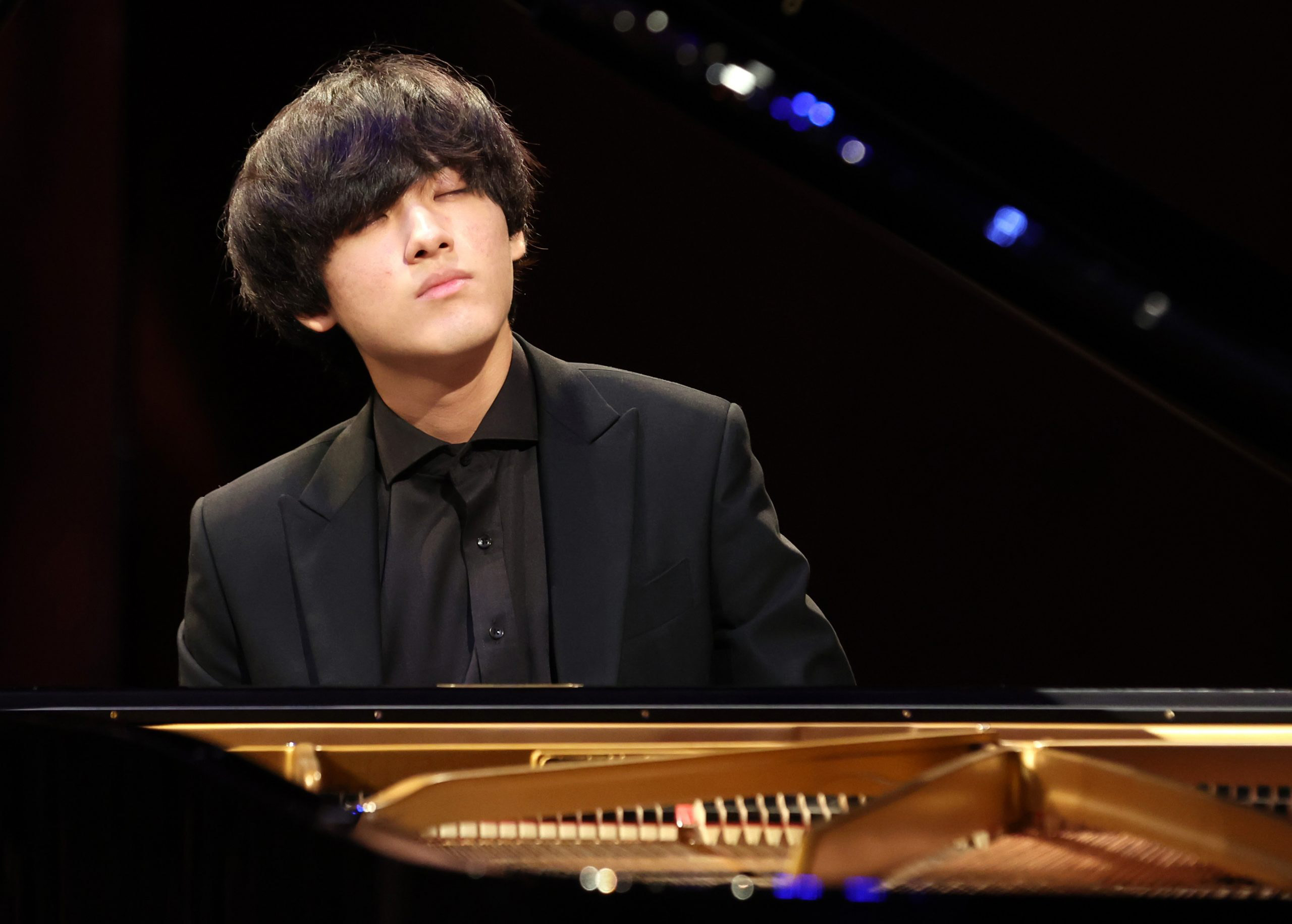
Cliburn Competition gold medalist will play solo recital Monday at Macky

Yunchan Lim

Pianist Yunchan Lim, who at 18 became the youngest gold medalist in the history of the Van Cliburn International Piano Competition in June of this year, will play a solo recital featuring the music of Brahms, Mendelssohn and Liszt at 7:30 p.m. Monday, Sept. 26, in Macky Auditorium.

Lim’s recital is part of the CU Presents Artist Series at Macky. 

In addition to the Gold Medal, Lim won the Audience Award and the Best Performance of a New Work at the 2022 Cliburn Competition. A native of Korea, he was accepted at age 13 into the Korea National Instituted for the Gifted in Arts, where he began studies with Minsoo Sohn. He is currently in his second year at the Korea National University of Arts, where he continues to study with Sohn.

Lim’s complete program will be:

  • Brahms: Four Ballades, op. 10
  • Mendelssohn: Fantasy in F-sharp Minor, op. 28 (“Scottish Sonata”)
  • Liszt: Deux légendes
    —Après une lecture du Dante: Fantasia quasi Sonata

TICKETS
Between tours, Takács Quartet opens fall campus series with Beethoven

CU Quartet in residence will play Grusin Hall Sept. 18–19 and October 30–31

By Peter Alexander Sept. 14 at 11:18 p.m.

It’s hard to keep up with the Takács Quartet.

Takács Quartet. Image by Amanda Tipton Photography

The CU quartet-in-residence is celebrated worldwide, giving them access to the top classical festivals. Over the past summer, they played the Colorado Music Festival in Boulder, the Tanglewood Festival in Lennox, Mass., the Edinburgh Festival in Scotland, at the Snape Maltings in Aldeburgh, England—a venue made prominent by composer Benjamin Britten and tenor Peter Pears—and the Luberon Festival in France.

But now they are back in Boulder, and their local fans can look forward to their annual series of campus concerts, starting this weekend with an all-Beethoven program (4 p.m. Sunday, Sept. 18 and 7:30 p.m. Monday, Sept. 19 in Grusin Concert Hall). Other events during the fall semester will be concerts Oct. 30 and 31, featuring music by Britten, Bartók and Mozart; and concerts Nov. 6 and 7 by the Ivalas Quartet, who concluded a two-year residency with the Takács in May (program tba; other details and ticket information below).

Between the September and October concerts, the Takács will be touring in Japan and Korea. “We’re looking forward to that,” Takács cellist András Fejér says. “They always bring a special joy because they regard culture and classical music very highly, and they are treating us as such wonderful friends.”

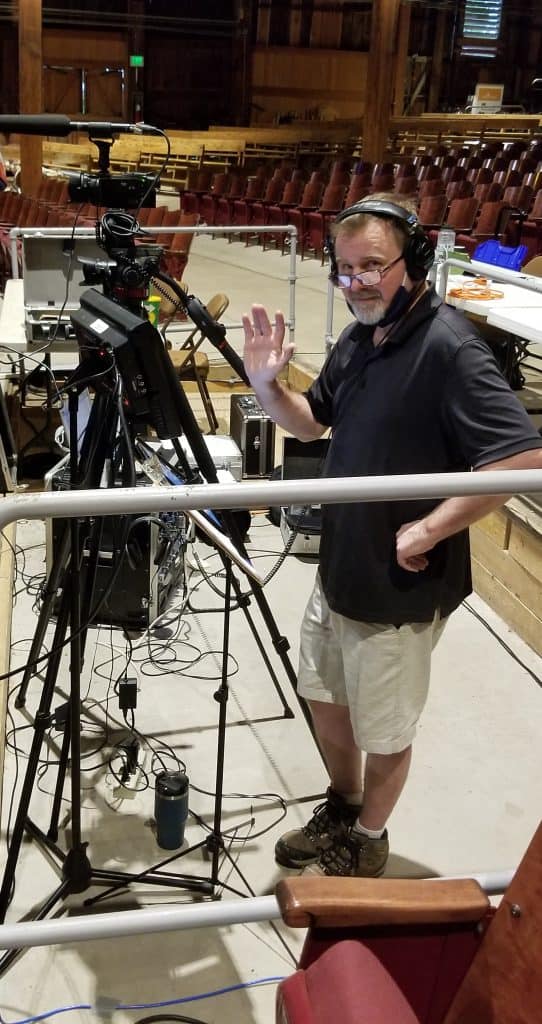
Sound engineer Michael Quam at the Colorado Music Festival

Just this month the quartet released its latest recording, featuring works of Joseph Haydn. The CD, of quartets opp. 42, 77 nos. 1 and 2, and 103, was recorded in the Lone Tree, (Colo.) Arts Center. “We had probably the top American producer, Judy Sherman, and a wonderful, wonderful sound engineer, Mike Quam, whom we got to know at the Colorado Music Festival,” Fejér says.

In addition to working for the Colorado Music Festival, Quam lives and has a recording studio in Boulder. “He’s the most wonderful all-around sound man anywhere,” Fejér says. “We never met anyone like him, so we were very happy.”

In case you are wondering, in addition to the touring and recording and campus concerts, Fejér says “we always make time for (our students)! We have a wonderful new ensemble-in-residence and they are eager and hungry. That’s always a great encouragement for us, because teaching is wonderful!”

The Takács has of course played all of the Beethoven quartets, many times. In the case of the upcoming concert, the choice of an all-Beethoven program is partly from the exploration of familiar repertoire with the ensemble’s newest member, violist Richard O’Neill. “We need to re-learn the Beethoven with our new member,” Fejér says. 

“He’s full of great ideas and he’s got an encyclopedic memory. He’s a great, great all-around artist, so we are very happy to be listening to new ideas, new solutions. It’s all a new dynamic, which I am enjoying tremendously.”

The three quartets chosen for the September concerts span the major periods of Beethoven’s life: Op. 18 no. 5 from Beethoven’s very first set of six quartets published in 1801, in the sparkling key of A major; Op. 95 in the gloomier key of F minor, known as the “Serioso” Quartet, from 1810; and Op. 127 in E-flat major, from 1825.

“We love these pieces,” Fejér says. “They are wonderful pieces. Maybe the audience is not jumping on its feet because of the final effect, but it doesn’t take away from the overall greatness.”

The Quartet op. 127 provides unique challenges, Fejér explains. “Some ensembles might not program it because it’s not so spectacular. It’s so deep, and herein lies the difficulty. Its first and last movement are extremely soft, piano, pianissimo, very ethereal, up in the clouds. It takes work and rehearsing and it’s not easy to make it flow and make it light, ethereal and transparent.”

Fejér explains that the Takács usually has three main areas of work when they rehearse. First is “what we play on tour, which might be pieces we already played many times. And then there’s practicing and getting familiar with new or newish pieces, (and finally) the ones we are planning to record.”

What that means is that rehearsing the program for the October concert will mostly come a little later. About that program—Britten’s String Quartet No. 1, Bartók’s String Quartet No. 6 and Mozart’s String Quartet in D major, K499—Fejér declines to comment right now.

“I might refrain trying to be smart about Britten at this point,” he says. “We recorded (his quartets) eight or nine years ago, but we haven’t played them again. So basically now we’re relearning and discussing what’s new and what’s changed, and what we wish to be changed.

“What matters is how we feel about it today or the next week, so we can be even more convincing and find even more joy in bringing it together.”

# # # # #

Takács Quartet

  • Beethoven: String Quartet in A Major, Op. 18 no. 5
    String Quartet in F Minor, Op. 95 
    String Quartet in E-flat Major, Op. 127

4 p.m. Sunday, Sept. 18
7:30 p.m. Monday, Sept. 19
Grusin Hall, Imig Music Building
In person and live-stream tickets HERE

Takács Quartet

  • Benjamin Britten: String Quartet No.1 
  • Bartók: String Quartet No. 6
  • Mozart: String Quartet in D major, K499

4 p.m. Sunday, Oct. 30
7:30 p.m. Monday, Oct. 31
Grusin Hall, Imig Music Building
In person and live-stream tickets HERE

Ivalas Quartet

  • Program TBA

4 p.m. Sunday, Nov. 6
7:30 p.m. Monday, Nov. 7
Grusin Hall, Imig Music Building
In person and live-stream tickets HERE

______________

NOTE: Due to spell checker error “encyclopedic” first appeared as “encyclopedia.” Corrected on 9/15.

Kronos Quartet returns to Macky with some unfinished business

“Music for Change,” cancelled in 2020, comes back in revised form Jan. 13

By Peter Alexander Jan. 11 at 1:30 p.m.

The Kronos Quartet has some unfinished business in Boulder.

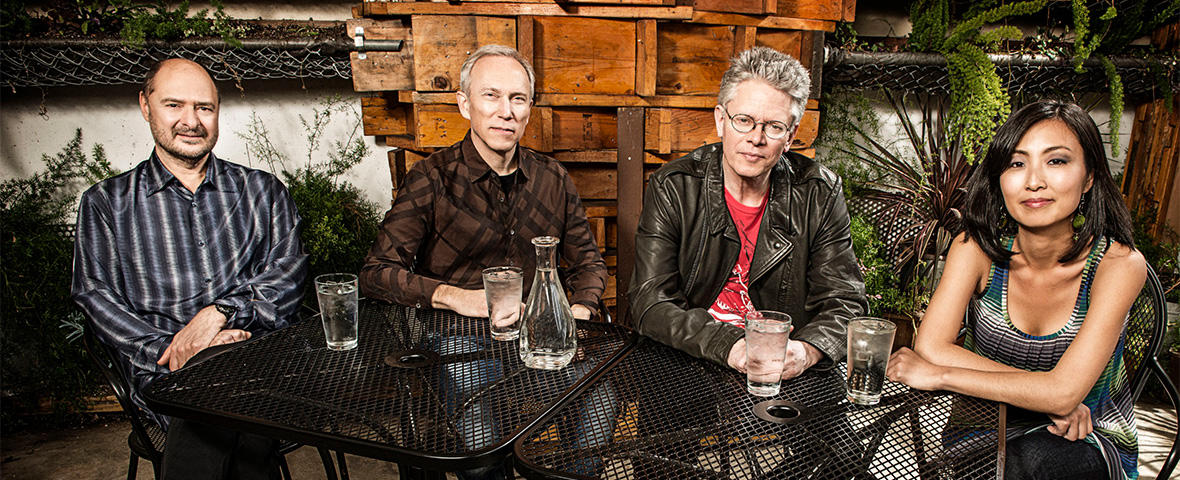
Kronos Quartet: John Sherba, Hank Dutt, David Harrington, Sonny Yang (L-R)

The path-breaking string quartet was scheduled to perform at Macky Auditorium in March of 2020, but like most performances around that time, their concert was cancelled. Now they will return to Macky with a revised version of that same program scheduled for Jan. 13, and—fingers crossed!—so far the visit is still on.

The original 2020 program, titled “Music for Change: The ‘60s, the Years that Changed America,” was organized around protest songs from the 1960s, arranged especially for Kronos. The centerpiece was to have been a celebration of Pete Seeger’s music for his 100th birthday.

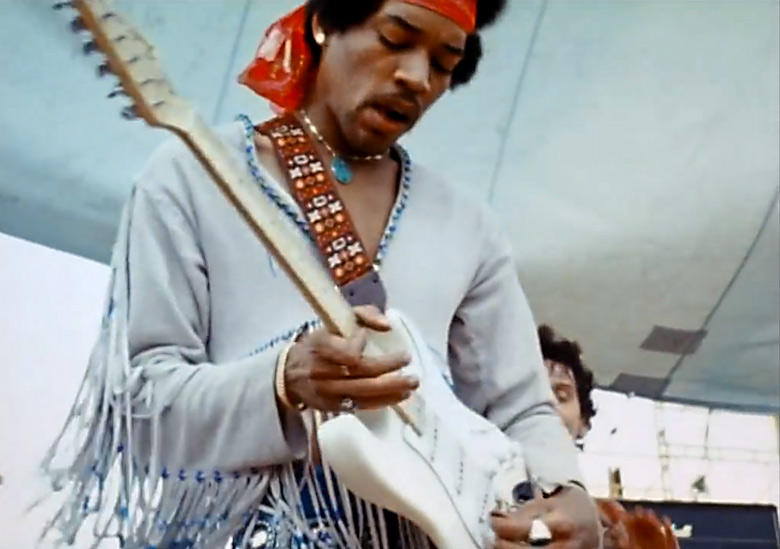
Jimi Hendrix at Woodstock, 1969

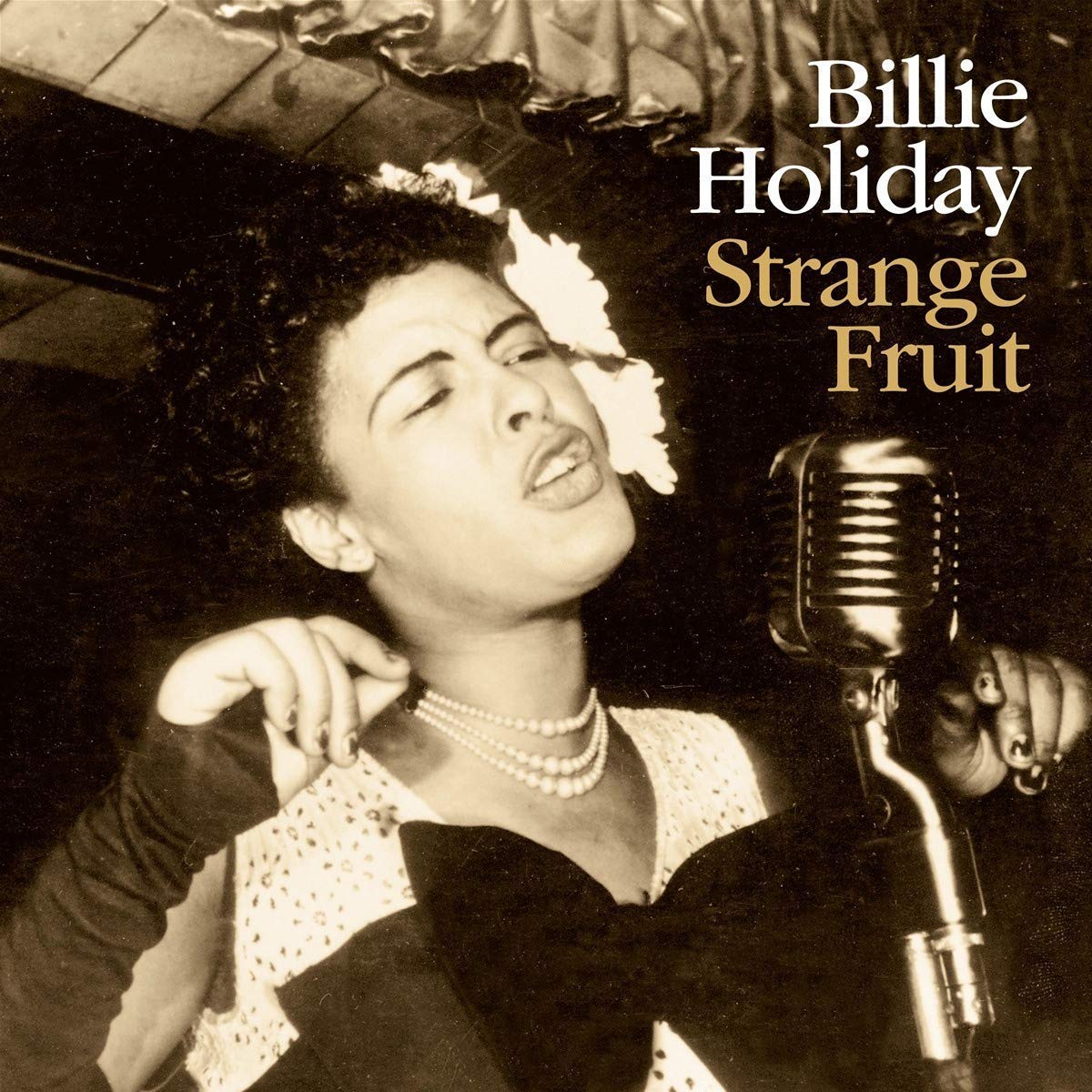
Many of the same pieces are on the program for this year, although the Pete Seeger celebration has been replaced. Music that has survived the transition include arrangements of the “Star Spangled Banner” inspired by Jimi Hendrix‘s famous 1969 performance at Woodstock and “Strange Fruit” inspired by Billie Holliday; “Glorious Mahalia” by Stacy Garrop which features the recorded voices of Mahalia Jackson and Studs Terkel, and “Peace Be Till” by Zachary James Watkins, which incorporates the recorded voice of Clarence B. Jones, Martin Luther King Jr.’s speechwriter.

Added to the program for 2022 are another Mahalia Jackson arrangement, “God Shall Wipe All Tears Away”; an arrangement of John Coltrane’s “Alabama”; “Colonizer (Remix)” by Tanya Tagaq arranged for Kronos; and Michael Gordon’s “Campaign Songs #1,” one of a series of short pieces recorded by the Kronos players separately during the height of the pandemic.

“I wanted to play a concert like we’re going to do in Boulder, years ago,” David Harrington, Kronos’s first violinist and guiding spirit says. “It’s taken many, many years to arrive at the kind of work that we’re able to do now.”

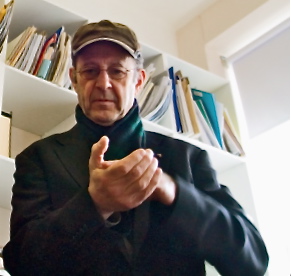
Stebe Reich

The program opens without Kronos playing a single note, with Steve Reich’s Pendulum Music featuring four microphones swinging freely above speakers, creating feedback as they cross directly over the speakers. Eventually all four microphones stop above the speakers, creating a bed of constant feedback from which the Hendrix-inspired “Star Spangled Banner” emerges.

“It’s audacious, the idea that we can start a program with microphones,” Harrington says. “I love that! It sounds like fog to begin with, and then slowly it gets more and more together, to the point where there’s a fabric of pulsating feedback. From that is going to be the ‘Star Spangled Banner’.”

Other works on the program stand out for their impactfulness. One of these is certainly the arrangement of Abel Meerepol’s “Strange Fruit.” Famously sung at the height of the Civil Rights struggle in the 1940s and ‘50s by Billie Holliday, the song describing a lynching became a tortured anthem for the anti-lynching movement. Rejected by Columbia Records, Holliday’s recording on the Commodore label was later entered in the National Recording Registry.

“’Strange Fruit’ is at the solar plexus of American music and American culture,” Harrington says. “The quality of (Holliday’s) voice is definitely in my ear. When we play that piece, her voice is singing inside of me.”

Another piece that came from the Civil Rights struggle is an arrangement of John Coltrane’s “Alabama.” Coltrane wrote the piece as a response to the 1963 bombing of the 16th Street Baptist Church in Birmingham, Alabama, which killed four African-American girls. “The way certain musicians are able to respond to events, and attempt to create a counterbalance, to me is so inspiring,” Harrington says.

Tanya Tagaq

Reflecting the breadth of Kronos’s interests, both musically and politically, is “Colonizer (Remix)” by Tanya Tagaq. An Inuk throat singer from Iqaluktuuttiaq (Cambridge Bay) in Nunavut, Canada, Tagaq wrote the song as a response to performing in what she characterizes as “symbolically colonial spaces.”

“’Colonizer’ is a statement,” Tagaq has written. “There is guilt in complacency. Accountability means taking action.”

The political implications of the program are not accidental, but come out of Harrington’s thoughts about his family. “In 2003 I had just become a grandfather for the first time, and I was thinking about the world (my granddaughter) was going to grow up into,” he says. Historian Howard Zinn told him that political leaders are actually afraid of artists like Kronos, because they know the artists cannot be controlled.

“I thought to myself, if those types are actually afraid of people like me that use violins to communicate, then I am doing what I can do,” Harrington says. The desire to make the world a better place for the coming generations through Kronos’s programming grew from that thought. 

Another quality that characterizes Kronos’s is adventurousness. Their repertoire has ranged over the world and across many musical styles. “I’m so glad that we’ve had the years that we’ve had to explore,” Harrington says. “The only thing that happens when you explore is you find things, and then you want to find more.”

That adventurousness is fueled by Harrington’s curiosity. “How could anybody not be curious?” he asks. “I want to do the most (I can to) ensure that I keep curiosity alive. Learning new things is humanity at its best.”

Not that he thinks he has found all the answers. “People think I know something about music, but I don’t know how it works,” he admits. “As listeners, we’re all in the same boat. You never know when something in music is going to penetrate to the deepest possible place within yourself.

“It’s almost incalculable.”

# # # # #

Kronos photographed in San Francisco, CA March 26, 2013©Jay Blakesberg

“Music for Change”
Kronos Quartet 
David Harrington and John Sherba, violins; Hank Dutt, viola; Sunny Yang, cello
Brian H. Scott, lighting designer, and Scott Fraser, sound designer

  • Steve Reich: Pendulum Music
  • “Star Spangled Banner” (inspired by Jimi Hendrix, arr. Stephen Prutsman and Kronos)
  • Michael Gordon: “Campaign Songs #1”
  • Stacy Garrop: Glorious Mahalia, featuring the recorded voices of Mahalia Jackson and Studs Terkel
  • Antonio Haskell, arr. Jacob Garchik: “God Shall Wipe All Tears Away” (inspired by Mahalia Jackson) 
  • Tanya Tagaq (arr. Tanya Tagaq, Kronos Quartet, and Joel Tarman): “Colonizer (Remix)”
  • Abel Meeropol, arr. Jacob Garchik: “Strange Fruit” (inspired by Billie Holiday)
  • John Coltrane (arr. Jacob Garchik): “Alabama”
  • Zachary James Watkins: Peace Be Till featuring the voice of Dr. Clarence B. Jones

7:30 p.m. Thursday, Jan. 13
Macky Auditorium 
TICKETS
King’s Singers return to Boulder with music familiar and new

‘Christmas with the King’s Singers’ will be December 8 in Macky Auditorium

By Peter Alexander Dec. 2 at 4:30 p.m.

Pat Dunachie can hardly wait to get back onstage. With an audience. In Boulder.

As a member of the King’s Singers, Dunachie was accustomed to traveling and performing about seven months out of every year. And then COVID hit and—nothing. 

“We ended up with two concerts after the 110 we had expected [in 2020], which was really tough,” he says.

King’s Singers at play. Photo by Frances Marshall.

But once the tours started again in September, Dunachie says, “it felt like life was back to normal. And in December we return to the States for a Christmas tour, which I think is a real sign that life is back to normal, and we can get our woolly hats and scarves on. That will feel like normal!”

Early in the 2021 Christmas tour the King’s Singers will appear at Macky to present “Christmas with the King’s Singers,” at 7:30 p.m. Wednesday, Dec. 8.

Read more in Boulder Weekly.

The Parker Quartet: Love Letters across the Centuries

Program features works by Adolphus Hailstork, György Kurtág, Alban Berg and Schumann. 

By Izzy Fincher Nov. 22 at 9:15 a.m.

Alan Berg’s Lyric Suite from 1926 has been called “a latent opera.” The sweeping, programmatic, six-movement work, mostly built on a 12-tone row, certainly feels like one. 

Through hidden musical devices and quotations, Berg depicts his passionate, yet doomed love affair with a married woman, Hanna Fuchs-Robettin. He even uses numerology to turn his and Hanna’s initials a motif of paired notes, A-Bb and B-F for H.B. and H.F. It’s the ultimate musical love letter. 

This suite was the centerpiece of the Parker Quartet’s performance in Grusin Hall on Sunday (Nov. 21) as the guest artists for CU Presents’ Takács Quartet series. Despite their eclectic program, which ranged from contemporary works by Adolphus Hailstork, György Kurtág (one of the quartet’s early mentors) and Alban Berg to a string quartet by Schumann, the performance felt cohesive, tied together by themes of love and loss across the centuries.  

Parker Quartet (L-R: Jessica Bodner, Daniel Chong, Ken Hamao, Kee-Hyun Kim). Photo by Luke Ratray.

Founded in 2002 at the New England Conservatory, the Parker Quartet has established itself as one of leading string quartets for traditional and contemporary repertoire in the U.S. Their 2011 album, Ligeti: String Quartets Nos. 1 & 2, received a Grammy Award for the Best Chamber Music Performance, and they have premiered works by leading contemporary composers, including Jeremy Gill, Augusta Read Thomas and Zosha di Castri. The quartet members are currently artists-in-residence at Harvard University.

The concert opened with the reflective Adagio from Hailstork’s String Quartet No. 1, based on a choral piece written for his Norfolk Unitarian church that is set to a text about being a generous, loving Christian man. Following this, the quartet’s charismatic violinist Daniel Chong introduced the theme of the program: love in its various forms. This would be continued in Kurtág’s Aus der Ferne V (From afar), a brief, mournful work dedicated to his late friend and publisher Alfred Schlee, who rescued many contemporary scores from the Nazis; Berg’s Lyric Suite; and Schumann’s String Quartet No. 3 in A major, a 23rd birthday present for his beloved wife, Clara. 

In the evocative Aus der Ferne V, cellist Kee-Hyun Kim drove the piece forward with ominous pizzicato, reminiscent of a heartbeat, over the sustained lines on the violins and viola that exploded in short dissonant bursts before gradually fading away. 

This three-minute vignette set the scene for the highlight of the program, Berg’s Lyric Suite, which Chong described as “the most expressive string quartet in the canon” in his introduction. In the suite, the Parker Quartet demonstrated their impressive ability to blend, while bringing different instruments out of the texture as needed, creating a dialogue out of the building and developing motifs. Through their expressive use of colors and dynamics, they also captured the contrasting moods Berg experiences as he falls madly in love and later descends into despair. 

In the first movement, marked Allegretto gioviale, the Parker Quartet burst into joyful motion led by Chong’s lively opening gesture. This energy built through the next four movements, which all have expressive names: Andante amoroso, Allegro misterioso—Trio estatico, Adagio appassionato and Presto delirando—Tenebroso. 

In the third movement, the hidden initials motif appears most frequently, amidst the combination of wandering pizzicato and warbly lines that sound more chaotically improvisatory than mysterious, an instability the Parker Quartet communicated very well before building to the agitated trio and the dynamic presto that ends with a climactic flourish. The final movement, Largo desolato, which includes the iconic Tristan motif associated with eternal love, demanded the most musical versatility from the musicians, as moments from earlier happier movements appear briefly before sinking into despair. 

Following this depressing love story, the Parker Quartet shifted to a light-hearted work for the second half, Schumann’s String Quartet No. 3. After an hour of intense contemporary repertoire, this leap back into an earlier era felt a bit strange. Given the crowd’s excited chatter during intermission, however, a familiar work seemed to be a welcome respite after atonal explorations. 

During his career, Schumann only wrote three quartets. They were written together as Op. 41, a birthday present to his wife that was composed in the span of five weeks in 1842. These quartets incorporate elements of Schumann’s influences from Mozart, Haydn, Beethoven, and his friend Mendelssohn, while still retaining his own personal, Romantic style and at times expanding it. 

In their animated interpretation of No. 3, the Parker Quartet exhibited their impeccable synchronicity, bow strokes moving as one. With clear, strong downbeats, Kim on cello led this, though perhaps a bit too forcefully in the calmer Adagio molto movement. With the last movement, a showy crowd pleaser marked molto vivace, the quartet ended the performance on an uplifting note, a reminder of the excitement and joy of young love.  

The program will be repeated at 7:30 p.m. tonight, Nov. 22, in Grusin Hall. Tickets are available here.