Boulder Chamber Orchestra presents string serenades

Clarinetist Kellan Toohey plays Concerto by Gerald Finzi

By Peter Alexander Jan. 21 at 11:12 p.m.

The Boulder Chamber Orchestra will present a concert Saturday featuring their string section (7:30 p.m. Jan. 25; details below), playing one of the great masterworks for strings, Dvořák’s Serenade for Strings.

The concert, under the direction of Bahman Saless, will also feature clarinetist Kellan Toohey playing the Concerto for clarinet and strings by British composer Gerald Finzi. The program also includes the Serenade for Strings by 20th-century Swedish composer Dag Wirén. 
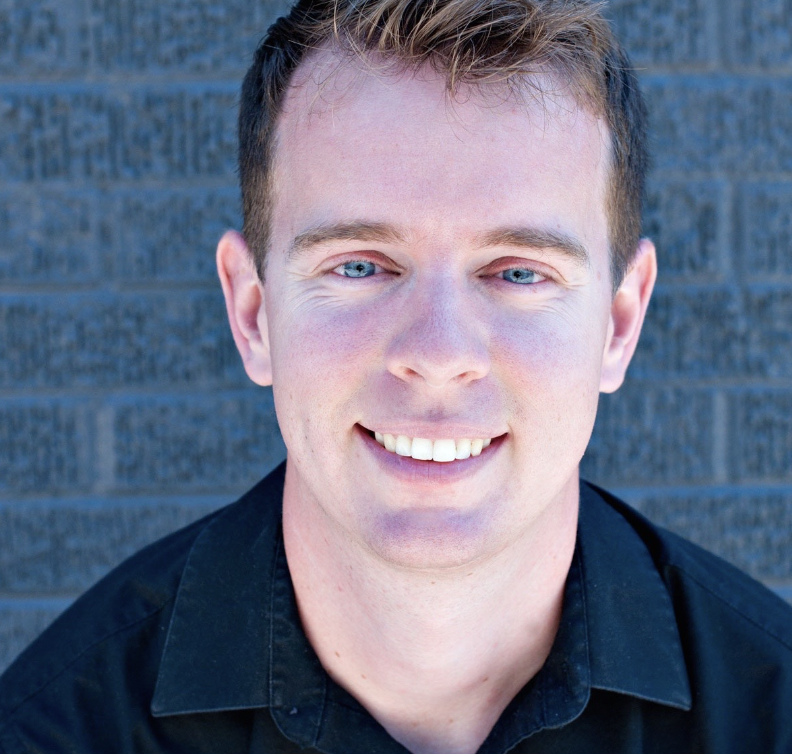
Kellan Toohey

Known mostly as a composer of songs and choral music, Finzi also wrote concertos for clarinet and cello, a Grand Fantasia and Toccata for piano and orchestra, and other instrumental pieces. 

The Clarinet Concerto was written in 1949 for the Three Choirs Festival located in turn in the English cities of Gloucester, Hereford and Worcester, with which Finzi had a long association. The concerto is in three movements, of which the Adagio second movement is the expressive core. The quick rondo finale incorporates an English folk song. Finzi himself conducted the premiere, performed in Hereford by the London Symphony strings and clarinetist Frederick Thurston.

Wirén studied at the Stockholm Conservatory 1926–31, and won a state award that allowed him to live and study in Paris for several years. He wrote a number of orchestral works, including five symphonies and other concert works. His music is generally accessible to audiences, mixing traditional elements with modernist and innovative impulses. 

His Serenade for Strings, composed just after his return to Sweden from Paris in 1937, is his most widely performed work. The composer wrote in his notes for the score, “The purpose of this little Serenade is simply to amuse and entertain, and if the listener, when the last note has faded, feels cheerful and happy, then I have reached my goal.”

Dvořák won the Austrian State Prize in music in 1875—the first of three times that he received that award and the support it offered young composers. It was those awards that gave Dvořák the freedom to purse his work as a composer. One of the judges of the competition was Brahms, who later became an important champion of Dvořák and introduced him to the German publisher N. Simrock. 

In the months after winning the award, Dvořák composed his Fifth Symphony, several pieces of chamber music, and the Serenade for Strings. The Serenade was completed in only 12 days in May, 1875, but not performed until December 1876. One of his most tuneful and cheerful works, the Serenade has remained popular since the first performances. Dvořák was proud enough of the work that he included it with his application for his third state award in 1877.

In addition to performing as the principal clarinetist of the BCO, Toohey also plays with the Fort Collins Symphony, the Wyoming Symphony and the Cheyenne Symphony. He holds a doctorate from CU Boulder and has recorded a CD of music for clarinet and piano by Colorado composers, Scenes from Home

# # # # #

“Strings Sensational”
Boulder Chamber Orchestra strings, Bahman Saless, conductor
With Kellan Toohey, clarinet

  • Dag Wirén: Serenade for Strings
  • Gerald Finzi: Concerto for Clarinet and string orchestra, op. 31
  • Dvořák: Serenade for Strings

7:30 p.m. Saturday, Jan. 25
Boulder Adventist Church, 345 Mapleton Ave.

TICKETS

Michael Butterman returns to Boulder Phil

Concert features world premiere, Bluegrass violin concerto, “New World” Symphony

By Peter Alexander Jan. 13 at 12:30 a.m.

Michael Butterman returned to the Boulder Philharmonic Orchestra yesterday (Jan. 12) to conduct an interesting and worthwhile program, having missed the fall season due to cancer treatments.

Newly bald from chemo therapy, Butterman was welcomed by the Macky Auditorium audience with cheers and applause. He led the full program with his usual energy.

First was the world premiere of Wind, Water, Sand by Stephen Lias, inspired by Colorado’s Great Sand Dunes National Park. It is the third national park-inspired piece by Lias premiered by the Phil, after Gates of the Arctic (2014) and All the Songs that Nature Sings (Rocky Mountain, 2017). Unlike those works, Wind, Water, Sand does not have images to accompany the score. Lias has explained that he wanted this work to spur the listener’s imagination, instead of being linked to specific images of the park.

He also said the music expresses the flow of the three elements that created the park—the wind, the water, and the sand. There are closely related musical ideas that flow at various speeds, just as the three elements flow at different rates within the park.

The score opens with energetic ideas that are wonderfully evocative of motion. The intricate, rippling quality of these opening gestures suggest the wind flowing over the dunes, or the ripples of the stream that runs alongside the dunes. Thereafter, the orchestral sound is colorful and suggestive, but rarely specific enough to signal wind or water. 

The bustling opening gives way to a greater stillness, punctuated by outbursts of sound that I found evocative more of a summer storm than any of the three elements. Exciting contributions from the percussion animate this section, along with dramatic gestures from the brass that evolve into something that seems grander than sand dunes. 

Whatever one imagines, the piece is well structured from beginning to end. With its busy opening, its central section that grows in grandeur, and a return to the opening soundscape, it creates a satisfying whole.

People around me talked of the score having a cinematic quality—I heard mentions of Indiana Jones and Studio Ghibli; clearly the music struck home. On the basis of its musical qualities alone, Wind, Water, Sand deserves a future in concert halls.

Next Butterman introduced violinist Tessa Lark, who performed a piece written for her by Michael Torke. Titled Sky: Violin Concerto, it combines the structure and musical drama of the classical concerto with musical styles that reflect Lark’s fiddling skills from her native Kentucky.

Lark occupied the concerto’s unique sound world like it was home—which in a way it is. She played the dazzling first movement with fire and a Bluegrass virtuosity that elicited spontaneous applause between movements. The wistful second movement—as it is labelled in the score—presents a series of meditative ideas skillfully knit together. And the final movement, now “spirited,” gave Lark the chance to play flashy fiddling licks with energy and bravura. 

The performance was not always ideally balanced in Macky’s uneven acoustic, but that seemed not to detract from the listeners’ enjoyment. Lark’s energetic body language, including bends and emphatic stomps, added to the overall excitement. The audience called Lark back for an encore that combined her country singing skills with down-home fiddling. 

The concert concluded with another piece from America, if not by a living American: Dvořák’s Symphony No. 9, “From the New World.” Butterman and the orchestra gave an expressive performance, marked by strategic variations of tempo. If a little more than I would like, these touches marked out the expressive contours of the familiar symphony. 

The best moment was provided by the brass chorale at the outset of the second movement, resonant and reverent. The movement also featured an eloquent English horn solo on the famous “Goin’ Home” theme that was later adopted into a pseudo-spiritual by one of Dvořák’s pupils. Butterman tore into the final movement at a speedy pace, but again used strategic variations of tempo to outline the expressive contours. 

The winds played strongly throughout, giving the symphony a muscular core, but occasionally overpowering the strings. All the wind solos were well played, including the treacherous horn solos and lovely contributions from the flute and clarinet. 

CORRECTION 1/13: The composer Stephen Lias’ name was incorrectly listed as Michael in the first version of this review.