GRACE NOTES: THE HOLIDAYS MARCH ON

Pinocchio, Winter reveries, Messiah and Swingin’ Brass

By Peter Alexander Dec. 10 at 2:50 p.m.
Boulder Opera Company will present four performances of The Adventures of Pinocchio by English composer Jonathan Dove over the coming weekend (Dec. 14 and 15; details below).

Based on the familiar book by Italian author Carlo Collodi, Dove’s one-hour opera tells the story of the wooden puppet who becomes a boy in 20 brief scenes that range from Gepetto’s hut to the Blue Fairy’s cottage, Funland and the inside of a big fish. Described by Boulder Opera as “A magical opera for all ages,” The Adventures of Pinocchio will be accompanied by an ensemble orchestra led by music director Mario Barbosa, and stage directed by Zane Alcorn.
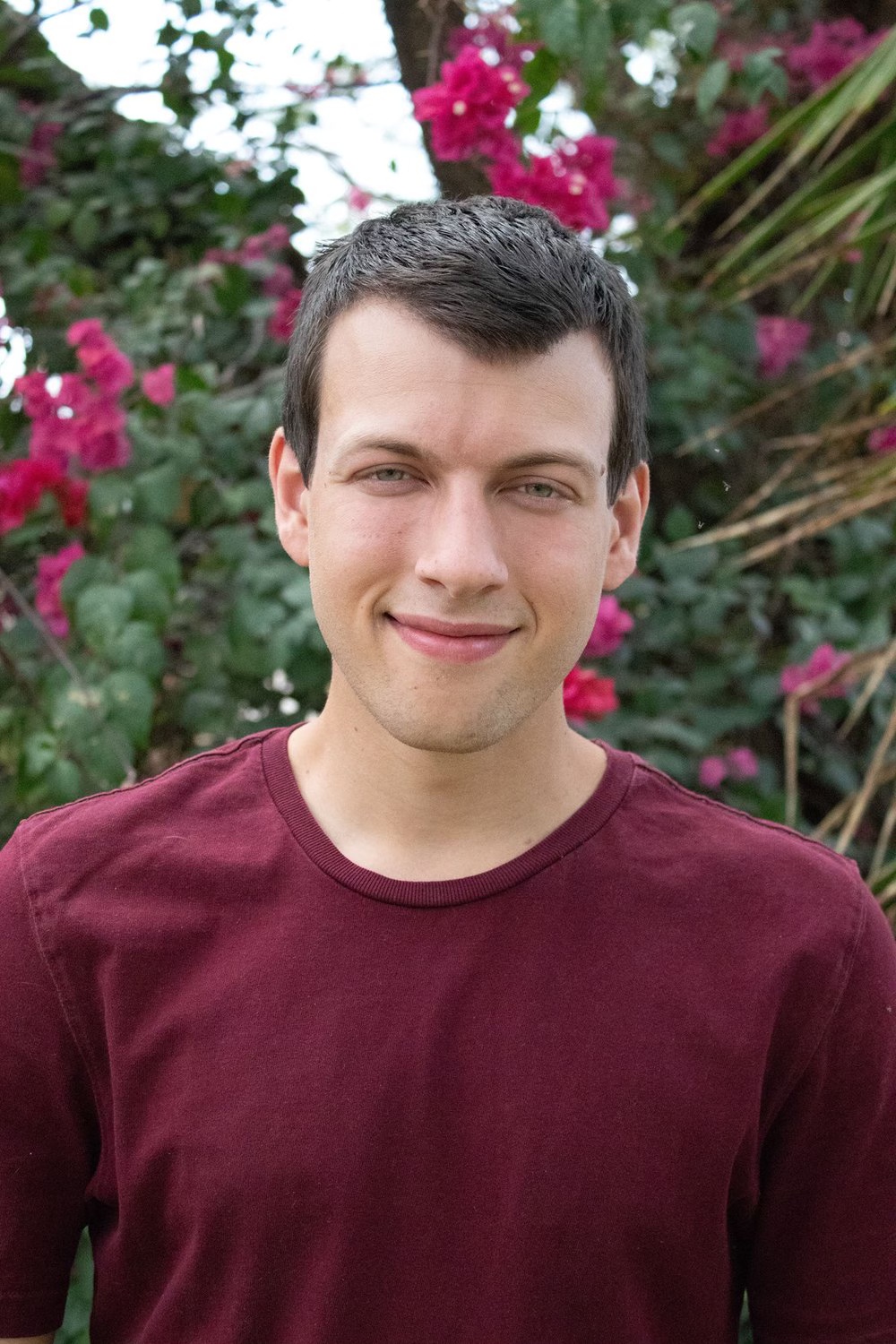
Zane Alcorn

In the company’s press release, Alcorn is quoted saying “Pinocchio is is a coming-of age story meant to subtly teach children how selfishness will always harm you. Whenever Pinocchio makes a selfish choice like skipping school, lying or going to Funland, he is punished rather quickly, but when he helps the community and saves this father, this leads to the ultimate reward, becoming a real boy.”

The moral of the story is, he says, “those who help others help themselves.”

Dove is highly regarded composer of operas, choral works and instrumental music. His opera Flight, based on the real-life experiences of a refugee trapped in the Charles DeGaulle Airport in Paris for 18 years, has been widely performed around the world, including a premiere at the Glyndebourne Festival, at the Opera theatre of St. Louis, Des Moines Metro Opera, Seattle Opera and the Museum of Flight in Washington, D.C.

The Adventures of Pinocchio was commissioned by Opera North and Sadler’s Wells and first performed in Leeds, U.K., Dec. 21, 2007. It has subsequently been performed by Minnesota Opera as well as companies in Germany, South Korea and Russia.

# # # # # 

Boulder Opera
Mario Barbosa, conductor, and Zane Alcorn, stage director

  • Jonathan Dove: The Adventures of Pinocchio

2 and 4 p.m. Saturday, Dec. 14
1 and 3 p.m. Sunday, Dec. 15
eTown Hall
TICKETS

All the constituent groups of the Boulder Chorale will come together to perform “Winter Reverie,” this year’s edition of their annual Holidays program, Saturday and Sunday in Boulder (Dec. 14 and 15; details below). 

Also appearing with the Chorale will be the Boulder Philharmonic String Quartet: Yenlik Weiss and Reagan Kane, violin; Lee Anderson, viola; and Kimberlee Hanto, cello.

In addition to the full Concert Chorale and the adult Chamber Chorale, the performance will feature all four age groups from the Boulder Children’s Chorale: Bel Canto, Volante, Prima Voce and Piccolini. They will each sing alone and together, including a concluding piece with the full adult Concert Chorale. 
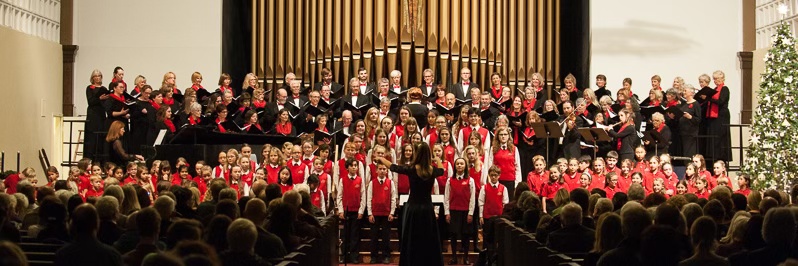
Boulder Chorale and Children’s Chorales at a previous holidays program. Photo by Glenn Ross.

The program opens with the combined children’s groups performing an arrangement of Leroy Anderson’s evergreen Holiday favorite, “Sleigh Ride.” Other performances by the children’s groups include the Jewish traditional song “Maoz Tzur,” “Winter Dreams’ by the prolific composer PINKZEBRA, and the youngest singers performing “Chrissimas Day” with auxiliary percussion accompaniment. 

The adult Chamber Chorale will perform Morten Lauridsen’s setting of the James Agee text “Sure on this Shining Night” and the Magnificat setting of Latvian composer Ēriks Ešenvalds. In addition to traditional holiday numbers, the program also features works by CU faculty member Daniel Kellog and Norwegian composer Ole Gjeilo. The program concludes with the combined adult and children’s ensembles performing in English and Spanish David Kantor’s “Night of Silence/Noche de Silencio,” which incorporates the familiar carol “Silent Night.” Audience members will be invited to sing along.

The director of the adult choirs and co-artistic director of the Boulder Chorale is Vicki Burrichter. Guest director for this concert is Larisa Dreger. Co-artistic director Nathan Wubbena is director of the Children’s Chorale and leads Bel Canto, the oldest children’s group. Directors of the other children’s groups are Anna Robinson, Prima Voce; Larisa Dreger, Volante; and Melody Sebald, Piccolini.

# # # # #

“Winter Reverie”
Boulder Chorale and children’s chorales, Vicki Burrichter and Nathan Wubbena, co-artistic directors
With the Boulder Philharmonic String Quartet and collaborative pianists Susan Olenwine, Caitlin Strickland, Matthew Sebald, Margaret Schraff and Joanna Lynden

  • Leroy Anderson: “Sleigh Ride” (arr. Hawley Ades)
  • Jewish Traditional: “Maoz Tzur” (arr. Matt Podd)
  • Mary Donnelly and George L.O. Strid: “Winter’s Beauty”
  • Christina Witten Thomas: “Snow Song”
  • PINKZEBRA: “Winter Dreams”
  • Morten Lauridsen: “Sure on This Shining Night”
  • Ēriks Ešenvalds: Magnificat
  • English Traditional: “Chrissimas Day” (arr. Shirley W. McRae)
  • Irish Traditional: “Frosty Weather” (arr. Margaret Scharff)
  • French Traditional: “Pat-a-Pan” (arr. Andy Beck)
  • Andrew Parr: “Winter’s Stillness”
  • Jewish Traditional: “Hanerot Halalu: These Chanukah lights we kindle” (arr. Becky Slage Mayo)
  • Daniel Kellog: “Sim Shalom
  • Ola Gjeilo: “Ecce Novum”
    “Tundra”
  • David Kantor: “Night of Silence” (arr. Nathan Wubbena)

3 p.m. Saturday, Dec. 14 and 5 p.m. Sunday, Dec. 15
First United Methodist Church, Boulder
Livestream 5 p.m. Sunday, Dec. 15

In person and livestream TICKETS
The Longmont Symphony Orchestra (LSO) will perform Handel’s Messiah for their annual Holiday “Candlelight Concert” on Saturday (4 p.m. Dec. 14), in the Vance Brand Civic Auditorium. Elliot Moore will conduct.

A longstanding seasonal offering from the LSO, the “Candlelight Concert” has presented Handel’s oratorio in some years, including 2019 and 2022. The latter year also featured a Messiah singalong for audience members to sing the popular choral numbers with the LSO. In other years they have offered “A Baroque Christmas” or other Holiday-themed performances. 

Although not strictly a Christmas piece, since the entire oratorio goes through the Easter story and the Resurrection, Messiah is undoubtedly one of the most popular pieces of the Christmas season. The first section tells the Christmas story in music that has touched audiences since the first performance in Dublin in 1742. 

# # # # #

Candlelight Concert
Longmont Symphony Orchestra and Longmont Chorale, Elliot Moore, conductor
With Julianne Davis, soprano; Elijah English, countertenor; Charles Moore, tenor; and Andy Konopak, bass-baritone

  • Handel: Messiah

4 p.m. Saturday, Dec. 14
Vance Brand Civic Auditorium
TICKETS 

The Boston Brass brings their Holiday show, “Christmas Bells are Swingin’,” to Macky Auditorium at 7:30 p.m. Saturday, Dec. 14. They will be joined for the performance by the Brass All-Stars Big Band, an ensemble recruited by the Boston Brass from local musicians, including members of the CU College of Music Faculty.

Founded in 1986, the Boston Brass performs brass quintet arrangements of classical music and jazz standards as well as original works for brass. They have toured throughout the United States and to more than 30 countries world wide. In addition to they quintet performances, they also perform with orchestras, bands and jazz bands.
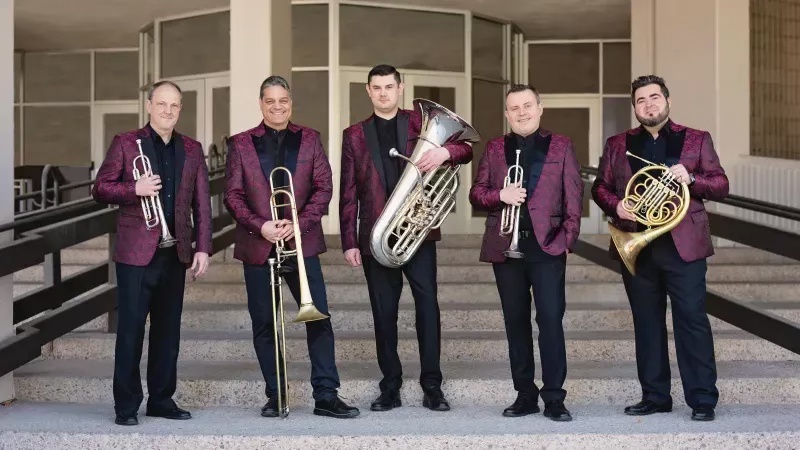
Boston Brass

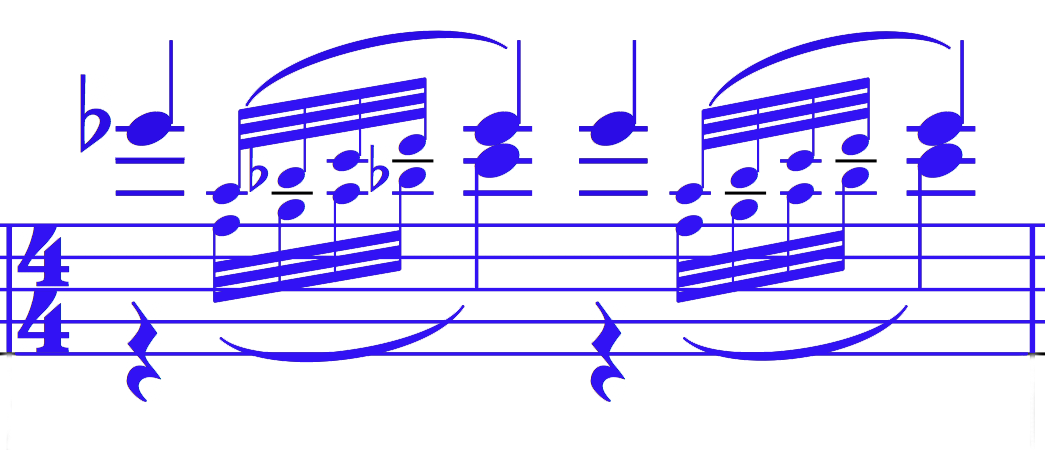
Their numerous recordings include one released in 2007 with the same title as their Macky program—“Christmas Bells are Swingin’”—recorded with the Syracuse University Wind ensemble. Pieces on both the CD and the Macky concert program include arrangements of three dances from The Nutcracker, the Sousa-carol blend “Jingle Bells Forever,” and Irving Berlin’s “White Christmas.”

Other works on the concert program are Stan Kenton’s arrangement of “Joy to the World” and several familiar Christmas Carols, including “God Rest Ye Merry Gentlemen,” “Angels We Have Heard on High,” and “The Holy and the Ivy.”

The Boston Brass’s latest album, titled “Joe’s Tango,” features the world premiere of Five Cities Concerto by Jorge Machain. Recorded with the University of Nevada-Las Vegas Wind Orchestra, the album also features New York Philharmonic trombonist Joe Alessi performing with the Boston brass.  

# # # # #

“Christmas Bells are Swingin’”
Boston Brass and Brass All-Stars Big Band

  • Anon.: “God Rest Ye Merry Gentlemen” (arr. Ralph Carmichael)
  • John Henry Hopkins, Jr.: “We Three Kings of Orient Are” (arr. Carmichael)
  • Traditional: “Angels We Have Heard on High” (arr. Carmichael)
  • Tchaikovsky: Dances from The Nutcracker (arr. J.D.Shaw)
  • Robert W. Smith: “Jingle Bells Forever” (arr. Shaw)
  • “The Grinch” (arr. William Russell)
  • “Ho, Ho, Ho” (arr. Rick DeJonge)
  • Traditional: The Twelve Days of Christmas (arr. Carmichael)
  • Leroy Anderson: “Sleigh Ride” (arr. Shaw)
  • Jack Rollins: “Frosty the Snowman” (arr. Shaw)
  • Franz Xaver Gruber: “Silent Night” (arr. Chris Castellanos)
  • Anon.: “Good King Wenceslas” (arr. Carmichael)
  • Henry Gauntlett: “Once in Royal David’s City” (arr. Carmichael)
  • Traditional: “The Holly and the Ivy” (arr. Carmichael)
  • David Cutler: “Faithful”
  • Irving Berlin: “White Christmas” (arr. Shaw)
  • Anon.: “Greensleeves” (arr. Shaw)

7:30 p.m. Saturday, Dec. 14
Macky Auditorium
TICKETS

GRACE NOTES: From Brahms to Taylor Swift

Mini Chamber concert in Boulder and Groovin’ in Longmont

By Peter Alexander Nov. 19 at 11:40 p.m.

The Boulder Chamber Orchestra (BCO)will present “Mini-Chamber 2,” the second of its chamber music programs for the 2024–25 season, Saturday (7:30 p.m. Nov. 23; details below).

The program features guest pianist Adam Żukiewicz performing quintets for piano and strings by Brahms and Théodore Dubois with members of the BCO string sections. Żukiewicz appeared on a Mini-Chamber concert last spring, and will be the soloist with the orchestra when they perform in New York in Zankel Hall at Carnegie Hall next spring.

Dubois was a prominent French composer in the late 19th and early 20th centuries. After winning the Prix de Rome in1861, he became organist and choirmaster at several churches in Paris and was professor of harmony at the Paris Conservatory 1871–91 and composition until 1896. He became director of the Conservatory in 1896, but had to resign from the position over his hostility to the adventurous student works of Ravel.

Adam Żukiewicz

Dubois was as conservative in his compositions as he was as a leader of the Conservatoire. He wrote orchestral chamber and choral works. most of which have disappeared from the standard repertoire, while his theoretical books are still used for teaching.

Brahms wrote in Piano Quintet in F minor over a number of years, first as a string quintet, then as a sonata for two pianos. The first version dates to 1861, and the final form, the Quintet for piano and strings, was completed in 1864 and premiered in 1868. Widely considered one of the great works of chamber music from the 19th century, it comprises four movements that last around 45 minutes in performance.

A native of Poland, Żukiewicz has studied at the Royal Academy of Music in London and the Jacobs School of Music at Indiana University, and holds a doctorate from the University of Toronto, where he also served on the faculty. He won first prize both the 2011 Canada Trust Music Competition and the 2012 Shean Piano Competition in Canada, and was a medalist at several other contests. Since 2018 he has been a judge for the Steinway Piano Competition.

# # # # #

Boulder Chamber Orchestra: Mini-Chamber 2
Adam Żukiewicz, piano, with members of the BCO

  • Théodore Dubois: Piano Quintet in F major
  • Brahms: Piano Quintet in F minor, op. 34

7:30 p.m. Saturday, Nov. 23
Boulder Adventist Church

TICKETS

# # # # #

The Boulder Philharmonic Orchestra will repeat its “Groove” concert, first presented at Planet Bluegrass in September, next Monday at the Dickens Opera House in Longmont (6:30 p.m. Nov. 25).

The concert is one in the Boulder Phil’s new “Shift” series, designed to bring the orchestra’s musicians into informal spaces and present them in smaller groups. Each program in the “Shift” series will be presented first at Planet Bluegrass in Lyons, and then taken to smaller venues in Longmont and Boulder.  

“Groove” features the Boulder Philharmonic String Quartet, principal players from each of the orchestra’s string sections. The program includes music by pop sensations from Lizzo to Taylor Swift alongside pieces by living composers including Philip Glass and Jessie Montgomery. And neither a pop sensation nor living, Vivaldi shows up on the program with one piece as well. 

# # # # #

“Groove”
Boulder Philharmonic String Quartet: Ryan Jacobsen and Hilary Castle-Green, violin; Stephanie Mientka, viola; and Amanda Laborete, cello

  • Takashi Yoshimatsu: Atomic Hearts Club Quartet, Movement I
  • Justin Bieber: “Peaches” (arr. Alice Hong)
  • Dinuk Wijeratne:Two Pop Songs on Antique Poems: “Letter from the afterlife”
  • Carlos Simon: “Loop”
  • Michael Begay: “Forest Fires”
  • Lizzo: “ Good As Hell” (arr. Alice Hong)
  • Jessie Montgomery: “VooDoo Dolls”
  • Philip Glass: String Quartet No. 3: VI “Mishima/Closing”
  • Taylor Swift: “All Too Well” (arr. Alice Hong)
  • Wijeratne: Two Pop Songs on Antique Poems: “I will not let you go”
  • Ed Sheeran: “Shape of You” (arr. Alice Hong)
  • Due Lipa: “Dance the Night” (arr. Zack Reaves)
  • Jessica Meyer: “Get into the NOW”: III. “Go Big or Go Home”
  • Vivaldi: Summer: Movement III (arr. Naughtin)

6:30 pm. Monday, Nov. 25
Dickens Opera House, Longmont

TICKETS

Quirky, delicious and profound program at CMF

Quintets by Nielsen and Schubert on chamber series

By Peter Alexander July 17 at 12:15 a.m.

Last night’s chamber music concert at the Colorado Music Festival (July 16) offered the kind of program that makes the festival such a valuable cultural asset.

The program comprised two quintets, both treasures of the chamber repertoire, one of them a rarity in concert, the other a deeply loved and profound gem. The first was the Quintet for Winds by the Danish composer Carl Nielsen, the other the Quintet in C major for strings by Schubert. The opportunity to hear both on the same program is most unusual. It is what CMF, with its deep roster of top professional players, can offer its audiences that few other venues can match.

Nielsen’s Wind Quintet is a quirky and delicious piece that is seldom heard in concert. Indeed, one of the joys of the concert was hearing a piece live that is rarely found outside recordings, and it is a testament to the quality of the players from the CMF Orchestra that a genuinely tricky piece seemed, not quite easy but comfortable to play. As an amateur clarinetist I was blown away by Louis DeMartino’s rich, warm clarinet sound, but the other players—Vivian Cumplido Wilson, flute; Zac Hammond, oboe and English horn; Wenmin Zhang, bassoon; and Roy Femenella, horn—were also consistently terrific.

The performance was marked by impeccable precision within the ensemble. The give and take between the parts, within a changeable texture marked by frequent imitation between instruments, was handled brilliantly. Such a level of ensemble is not easily reached with an informal group assembled for a single concert.

One of the challenges of the wind quintet genre is finding the right balance with five very different instruments. Matching a flute with a horn, or a clarinet with an oboe, requires careful listening, and it is a challenge that the CMF players consistently overcame. Not once did I hear a player covered, or obscured by a different tone quality.

String players face a different challenge, especially when they have a limited time to form an ensemble. While they can match each others’ sounds more easily than the winds, and thereby create a unified tone quality, much like an organ, within that harmonized sound small deviations of style become more perceptible. Indeed, there are elements of style that can only be polished when players have known each other over time. (Boulder audiences know this quality from the resident Takács Quartet, who will be featured on Sunday’s CMF Orchestra concert; see the CMF calendar for details and tickets.) 

There were occasional smudged passages, and moments of interpretive uncertainty in last night’s Schubert, both signs of a temporary ensemble. Likewise, the dance-like third movement seemed briefly to be pulling ever so slightly apart, and the thick chords at the movement’s opening were not always ideally balanced.

But it is the positive side of the ledger that dominated. The long slow crescendo at the start of the slow movement built beautifully, and the Finale had great unity of ensemble and well executed group rubato, creating a deeply expressive musical flow and a strong ending. The individual players—Kevin Lin and Kate Arndt, violin; DJ Cheek, viola; Austin Huntington and Britton Riley, cello—all performed beautifully, and the audience showed appreciation with a standing ovation at concert’s end.

Finally, I have to note that the Chautauqua Auditorium was well under half full. The audience, while appreciative, was far less than the delightful and fulfilling program deserved. Do yourself a favor: look up the chamber concerts on the CMF calendar. You will find rare and rich rewards among them.

Pro Musica Colorado will reschedule ‘farewell concert’

Please note that the final concert by the Colorado Pro Musica Chamber Orchestra with conductor Cynthia Katsarelis and guest soloist Nicolò Spera, originally scheduled for April 6, was postponed due to inclement weather and the widespread power outage on that date. The concert will be rescheduled pending the availability of the musicians and the venue. The new date will be announced as soon as arrangements have been confirmed.

You may read the original story here. This is the full program for the concert:

“Nicolò!”
Pro Musica Colorado Chamber Orchestra, Cynthia Katsarelis, conductor
With Nicolò Spera, guitar

  • Jessie Montgomery: Starburst
  • Joaquin Rodrigo: Fantasía para un gentilhombre (Fantasy for a gentleman)
  • Louise Farrenc: Symphony No. 3 in G Minor

GRACE NOTES: Takács Quartet with guest pianists

Joyce Yang in Macky Friday, David Korevaar in Grusin Sunday and Monday

By Peter Alexander Jan. 10 at 3:10 p.m.

Pianist Joyce Yang, silver medalist at the Van Cliburn International Piano Competition at the age of 19, will be joined by the Takács Quartet for a concert at Macky Auditorium Friday (7:30 p.m. Jan. 12; details below).

Joyce Yang. Photo by K.T. Kim

The pairing of her solo performances and chamber music with the Takács recalls her appearance at the Cliburn Competition in 2005, when she won Best Performance of Chamber Music. In fact, she will play the same piece with the Takács they played together in Ft. Worth for her prize-winning performance: Dvořák’s Piano Quintet in A major—a work they also have played for the Lincoln Center Great Performers series.

Chamber music has been a large art of Yang’s career ever since the Cliburn competition. In addition to performances with the Takács, she has played with the Emerson Quartet on the Mostly Mozart Festival and has a standing partnership with the Alexander String Quartet, with whom she has recorded Mozart’s Piano Quartets.

Other works on Friday’s program include selections from Tchaikovsky’s Seasons and Rachmaninoff’s Preludes, op. 32. The first half of the program concludes with one of the great virtuoso showpieces of the piano repertoire, Guido Agosti’s arrangements of the “Infernal Dance,” “Berceuse” and “Finale” from The Firebird by Stravinsky. 

The least familiar of the solo piano pieces will be the selections from Tchaikovsky’s Seasons. A set of 12 pieces sketching each of the 12 months, the pieces were published monthly throughout 1876 in a St. Petersburg music journal. Each of the pieces has a subtitle that was provided by the publisher.

Dvořák’s Quintet forms the second half of the program. One of the composer’s most performed chamber works, the Quintet was actually the second such work Dvořák wrote. It began as an attempt at a revision of the earlier quintet, also in A major, written when the composer was 31. Unsatisfied with that work—which he had since discarded— Dvořák decided instead to write a completely new work. In the usual four-movement structure, the Quintet No. 2 features many hallmarks of the composer’s mature style including a Dumka—a movement alternating mournful and rapid, happy sections—and a Bohemian folk dance for the third movement.

# # # # #

Joyce Yang, piano, with the Takács  Quartet

  • Tchaikovsky: Selections from The Seasons
  • Rachmaninoff: Three Preludes
  • Stravinsky: Firebird Suite (arr. Guido Agosti)
  • Dvořák: Piano Quintet No. 2 in A major, op. 81

7:30 p.m. Friday, Jan. 12
Macky Auditorium

TICKETS

# # # # #

The Takács Quartet will kick off their spring concert series with another performance featuring a pianist joining them in a quintet.

This program—to be performed Sunday and Monday, Jan. 14 and 15 (details below)—will feature CU distinguished professor of piano and Helen and Peter Weil Faculty Fellow David Korevaar for the Piano Quintet in A minor of Florence Price. Other works to be performed by the Takács will be the Italian Serenade for string quartet by Hugo Wolf and Bartók’s String Quartet No. 1.

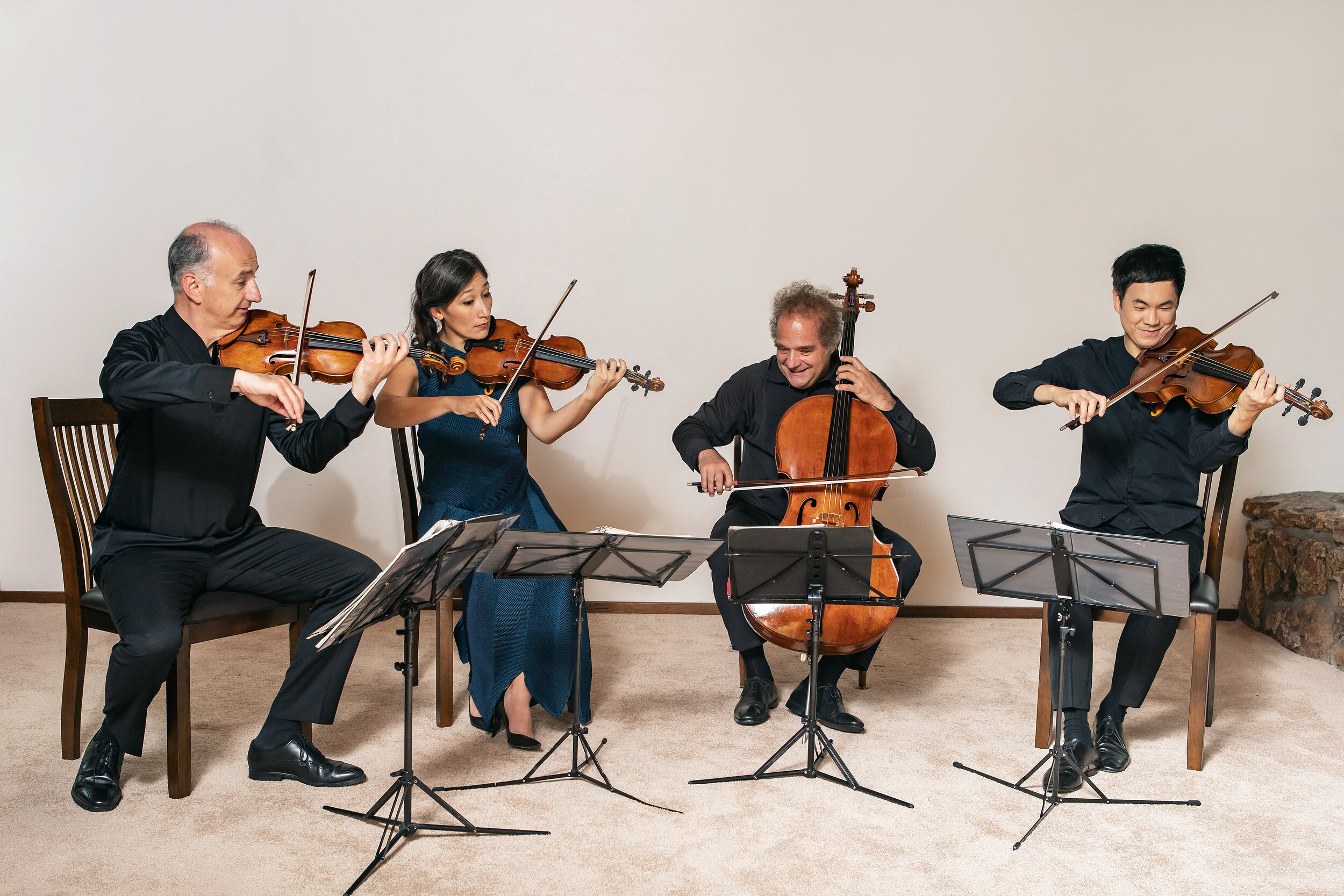
Takács Quartet. Image by Amanda Tipton Photography.

The early 20th-century African-American composer Florence Price has recently been rediscovered by orchestras and chamber music organizations across the U.S. The 2009 find of a trove of manuscripts in what had been her summer home in the village of St. Anne, Ill.,including previously unknown violin concertos and a symphony, has led to increased interest in her music. 

A native of Little Rock, Ark., Price studied at the New England Conservatory of Music and spent most of her life in Chicago, where she continued her education and worked as an organist for silent films. In 1933 her First Symphony was premiered to critical acclaim by the Chicago Symphony.

The Quintet in A minor was written in 1935, shortly after the premiere of the symphony. Price’s heritage is reflected in the third movement, titled “Juba”—a dance characterized by rhythmic hand-clapping that was associated with celebrations by enslaved Black people on Southern plantations.

Wolf’s Italian Serenade is often heard in its version for string orchestra but was originally written for quartet. Planned as part of a large, multi-movement work, the brief Serenade survives as a stand-alone work that is one of the most cheerful pieces by a composer whose largely unhappy life ended in an asylum. This is undoubtedly his best known chamber work, as most of his compositions were song collections by German poets from Goethe to Heine and Eichendorff.

The inspiration for Bartók’s first String Quartet, written in 1908, is often said to have been his rejection by the violinist Stefi Geyer,  as suggested by the mournful tone of the first movement. On the other hand, he got over the rejection well enough to marry someone else within a year.

The quartet is in three large, interconnected movements. Bartók had just stared collecting Hungarian folk songs by 1908, and other than the last movement, they had little influence on the First Quartet. In general the quartet is more Romantic in nature and less adventurous than his later quartets. The premiere of the First Quartet was given in 1910 by the Waldbauer-Kerpely Quartet, to whom Bartók dedicated his Second Quartet.

# # # # #

Takács Quartet with David Korevaar, piano

Hugo Wolf: Italian Serenade for string quartet
Bartók: String Quartet No. 1
Florence Price: Piano Quintet in A minor

4 p.m. Sunday, Jan. 14
7:30 p.m. Monday, Jan. 15
Grusin Hall

In person and digital TICKETS